


As one of the largest providers of development finance, China has increasingly integrated NGOs into its global development strategies. Chinese NGOs are not merely service providers; they are also instruments of public diplomacy, soft power projection, and people-to-people exchange. Examining where and why Chinese NGOs choose particular locations and how the Chinese government shapes their location choice is essential for understanding shifting development paradigms, the evolving role of civil society in international relations, how authoritarian regimes leverage NGOs to advance their foreign policy objectives, and the long-term implications for civic infrastructure development worldwide.
A rich body of literature has identified three distinct factors affecting NGO location choices at the international or subnational levels: (1) community needs; (2) access to resources, labor, and beneficiaries; and (3) political support (e.g., Bielefeld and Murdoch Reference Bielefeld and Murdoch2004; Brass Reference Brass2012; Fruttero and Gauri Reference Fruttero and Gauri2005; Kim Reference Kim2015). These studies, however, have yielded inconsistent findings across contexts. Moreover, they predominantly focus on Western NGOs, which typically operate with greater autonomy and possess more extensive experience in international development than their non-Western counterparts. The insights gleaned from these studies may not fully capture the unique characteristics of NGO–government relations and the strategic considerations faced by NGOs operating in authoritarian regimes like China, where governments influence NGO affairs more significantly (Kang and Han Reference Kang and Heng2008; Li, Lo, and Tang Reference Li, Lo and Tang2017; Zhan and Tang Reference Zhan and Tang2016). While studies on Chinese civil society and its role in international development highlight the macroenvironment shaping Chinese NGOs’ global ventures, governmental influence, and strategies (e.g., Hasmath and Hsu Reference Hasmath and Jennifer2021; Spires Reference Spires2024; Wang Reference Wang2023; Reference Wang2025), there is little systematic and quantitative analysis of Chinese NGOs’ location choices and the mechanisms that drive their global operations.
This paper represents the first attempt to systematically examine the location choices of Chinese NGOs in their global expansion. Using an integrative, multimethod design, we first draw on in-depth interviews with relevant stakeholders to explicate the mechanisms of government-guided NGO alignment, where Chinese NGOs align their activities with government priorities through various government mandates, incentives, and signals. A set of testable hypotheses is proposed. Second, we test the hypotheses using a novel dataset compiled from multiple sources, including data on Chinese NGOs’ international projects, Chinese government aid flows, United Nations General Assembly (UNGA) voting records, and a range of political and development indicators (Li and Tang Reference Li and Tang2026). This approach allows us to explore both the theoretical underpinnings of NGO–government alignment and the empirical patterns shaping Chinese NGOs’ global footprint.
Our findings contribute to two key areas of literature. First, in the field of NGO–state relations, we show that Chinese NGOs operate under significant governmental influence not only domestically but also in their international development work. They are more likely to locate projects in countries with more Chinese government-financed aid and development projects. This effect is particularly pronounced when government projects have been established in a country for at least five years, suggesting a temporal dimension to the interplay between state influence and NGO operations. This finding underscores the extent to which NGOs in authoritarian regimes are embedded in state strategies, challenging conventional notions of NGO autonomy in Western contexts and raising concerns about whether the spread of government-dominated NGO operations would undermine the relative autonomy of civil society worldwide.
Second, in the domain of international relations, we find that Chinese NGOs, intentionally or not, serve as important agents of public diplomacy and foreign policy. They are more likely to locate projects in countries with a socialist legacy or those less aligned with China in UN affairs, reflecting a strategic orientation that aligns with China’s broader foreign policy goals. Existing studies on international development have focused primarily on how Northern international NGOs (INGOs) internationalize their operations in Southern developing states to promote global development. With the United States’ diminished commitment to international aid, the rise of emerging powers such as China, Brazil, and India, and the increasing salience of South–South cooperation (Chin and Quadir Reference Chin and Quadir2012; Mawdsley Reference Mawdsley2012), NGOs from the South are also internationalizing their work (Henry and Sundstrom Reference Henry and Sundstrom2021). However, the questions of how they engage in global development initiatives and to what effect remain largely unexplored. Our findings provide important implications for understanding how authoritarian states mobilize civil society actors as tools of soft power and global influence. While our analysis is observational and limited in causal claims, in-depth stakeholder interviews support the argument that government directives play a pivotal role in shaping NGO location choices.
In the following, we first introduce the research background—the emergence of Chinese NGOs as global actors. We then draw on relevant literature on NGO location choices and state–NGO relations, particularly in the context of authoritarian regimes. We outline our theoretical framework and hypotheses, drawing on insights from qualitative interviews. Following the Data and Methods section, we present the empirical results and discuss the broader implications for development studies and international relations, as well as reflections on future research directions.
The Emergence of Chinese NGOs as Global Actors
China has emerged as the world’s largest source of international development finance (Woods Reference Woods2008), outspending all other bilateral and multilateral sources of aid and credit to the developing world, including the US and the World Bank (Parks et al. Reference Parks, Malik, Escobar, Zhang, Fedorochko, Solomon and Wang2023). While forging a new path in development assistance (De Haan Reference de Haan2011), the Chinese party-state has been encouraging Chinese NGOs to “go out” through its Belt and Road Initiative (BRI), as well as the recently inaugurated Global Development Initiative and Global Security Initiative.
The NGO sector in China has experienced significant growth over the past few decades. According to China’s Ministry of Civil Affairs, the number of NGOs reached 901,870 by the end of 2021, and these organizations are active in diverse fields, such as education, social services, culture, business services, agriculture and rural development, and environmental protection. Most NGOs have been working on domestic social and environmental issues in China. However, some have increasingly engaged in international activities, ranging from sporadic donations to establishing long-term projects and overseas offices. NGOs in China are categorized into three types: foundations, social groups, and private nonenterprise units, each with unique structures and functions. These NGOs differ in their relationships with the government, ranging from highly embedded organizations—such as government-organized NGOs (GONGOs), which are closely tied to state institutions through funding, personnel arrangement, or management—to more independent grassroots NGOs that operate similarly to their Western counterparts. While GONGOs often serve as extensions of government policy and advance state priorities, grassroots NGOs are more community-driven and focus on addressing local social or environmental needs, though they still operate within the confines of state regulations.
Initially, Chinese NGOs were not included in the government’s agenda for international engagement. In 1990, the Eighth Five-Year Plan encouraged Chinese businesses—primarily state-owned enterprises—to consolidate existing markets and actively explore new ones outside China. This “going-out” strategy was formally outlined in the Tenth Five-Year Plan in 2001. Following the introduction of the Regulations on the Administration of Foundations in 2004, several foundations, including the China Youth Development Foundation (a GONGO),Footnote 1 the China Foundation for Poverty Alleviation (a GONGO),Footnote 2 and the Huamin Charity Foundation (a private family foundation),Footnote 3 began launching philanthropic projects overseas. These efforts, however, were largely experimental, with limited resources and short project durations.
With the launch of the BRI in 2013 and the expansion of South–South cooperation, the Chinese government began to recognize NGOs’ crucial role in bridging informational gaps and cultivating mutual understandings among stakeholders. In 2016, the general offices of the Central Committee of the Chinese Communist Party and the State Council jointly issued the Opinions on Reforming the Management System of Social Organizations to Promote the Healthy and Orderly Development of Social Organizations, reinforcing the link between the BRI and the going-out of Chinese NGOs. The announcement proposed that the government should “guide domestic social organizations step by step to carry out overseas exchange programs, join international NGOs … play a supporting and supplementary role in foreign economic, cultural, scientific and technological, educational, and environmental protection exchanges, and act as an important platform in people-to-people communication between China and other countries” (General Office of the Central Committee of the Communist Party and General Office of the State Council of China 2016). In 2017, the Ministry of Civil Affairs issued the Action Plan for Chinese Social Organizations to Promote People-to-People Connectivity along the Belt and Road (2017–20), in which NGOs were recognized for their strategic role in fostering the “People-to-People Bond” within BRI countries (Belt and Road Portal Reference Belt and Portal2017). A new aid agency—the China International Development Cooperation Agency—was established in 2018, introducing a holistic approach to China’s international development strategy. In 2021, the Fourteenth Five-Year Plan for the Development of Social Organizations explicitly stated that the Ministry of Civil Affairs would “steadily facilitate the ‘going out’ of domestic social organizations, carry out overseas cooperation in an orderly manner, enhance the ability of China’s social organizations in the participation of global governance, and improve the influence of Chinese culture and China’s ‘soft power’” (State Council Information Office 2021).
Despite the expanding presence of Chinese NGOs overseas, studies of Chinese civil society in the global context remain in their infancy (Spires Reference Spires2024). Some studies focus on the macroenvironment shaping NGOs’ international endeavors and the broader implications for global civil society (e.g., Hasmath and Hsu Reference Hasmath and Jennifer2021; Li and Dong Reference Li and Dong2018). For example, Hsu, Hildebrandt, and Hasmath (Reference Hsu, Hildebrandt and Hasmath2016) highlight how host-country politics and regulatory frameworks affect Chinese NGOs’ global activities. Wang (Reference Wang2023) examines the different layers of state influence on NGOs’ overseas operations. Spires’s (Reference Spires2024) recent book examines Chinese NGOs’ encounters with global civil society, including policies that facilitate the internationalization of Chinese civil society and the many remaining questions. Tan and Huyse (Reference Tan and Huyse2021) show that Chinese foundations have limited capacity to engage concretely in overseas initiatives. These studies show that Chinese NGOs are severely constrained by the political, legal, and resource environments in which they operate. Given the limited support available to them, NGOs’ location choices are strategically vital to their operations and survival.
Another line of studies analyze how NGOs strategize to navigate the complexities of international development. Deng (Reference Deng2019) identifies several factors—international exchange frequency, capacity, and leadership—driving Chinese foundations to launch overseas charities. Farid and Li (Reference Farid and Li2021) discuss how INGOs act as intermediaries for China’s going-out strategy by providing expertise in global development, building international capacity for Chinese NGOs, and facilitating the transfer of global norms. Wang (Reference Wang2025) finds that Chinese NGOs mainly adopt “soft charity” and “diplomatization” discourses to present their international charitable activities, seeking legitimacy from the Chinese state and the public. Xia (Reference Xia2024) identifies four strategies Chinese environmental NGOs employ when engaging with the green BRIFootnote 4—civil diplomacy, development partnership, service provision, and outside reform—positing that the green BRI has provided political opportunities for NGOs to shape policy and its implementation. Liu and Bennett (Reference Liu and Bennett2025) view Chinese NGOs as knowledge and political actors that help to accumulate, produce, and disseminate knowledge on China’s environmental issues across domestic and international spaces. Li and Farid (Reference Li and Farid2025) examine the collaborative policy entrepreneurship between INGOs and Chinese GONGOs, highlighting how they employ diverse transnational mechanisms to promote the greening of the BRI. These studies suggested that, while guided by the Chinese government, NGOs can exercise agency in determining the scope and strategies of their global engagements.
Collectively, these studies demonstrate that Chinese NGOs actively engage in international development despite constraints, including limited political support and organizational capacity. They also approach the complex landscape with caution and strategic planning to navigate the underlying intricacies. Below, we draw on existing theories and studies to examine how various political factors may influence NGOs’ location choices, a topic that has not been systematically and empirically explored in the current literature.
Theoretical Perspectives
With China’s and other non-Western countries’ growing role in global development and the sharply diminished US commitment to supporting development projects worldwide, understanding non-Western NGOs’ project location choices is critical, as these decisions have far-reaching implications not only for the effectiveness and sustainability of service delivery and resource allocation but also for the broader dynamics of international development and diplomacy (Bielefeld, Murdoch, and Waddell Reference Bielefeld, Murdoch and Waddell1997; Brass Reference Brass2012; Fruttero and Gauri Reference Fruttero and Gauri2005). Scholars have typically focused on three key factors to explain Western NGOs’ location choices. The community-needs explanation views NGOs as “saintly” charitable organizations that locate projects in communities with significant service needs (Brass Reference Brass2012). NGO project location choices are thus expected to correlate with community-needs indicators, such as recipient countries’ per capita income and levels of economic and social development (Koch et al. Reference Koch, Dreher, Nunnenkamp and Thiele2009). Despite the intuitive nature of this logic, research findings on the impact of needs on NGO location choices are inconsistent. Some studies have confirmed that NGO donations are directed to areas in need. Bielefeld and Murdoch (Reference Bielefeld and Murdoch2004) find that nonprofits tend to locate their services where they are most needed. Koch and colleagues (Reference Koch, Dreher, Nunnenkamp and Thiele2009) find that poorer countries receive more NGO aid. Similarly, Kim (Reference Kim2015) finds that communities with higher income inequality tend to have more nonprofits, supporting the community-needs perspective. Avellaneda, Johansen, and Suzuki (Reference Avellaneda, Johansen and Suzuki2017) find that the human development index (HDI) significantly drives Japanese NGOs to operate in Latin American countries. By contrast, Joassart-Marcelli and Wolch (Reference Joassart-Marcelli and Wolch2003) show that nonprofits engage in more activities in relatively affluent urban areas rather than in very poor areas. Fruttero and Gauri (Reference Fruttero and Gauri2005) find that NGOs tend to establish new programs not in communities with the greatest need, but in areas where they previously had no presence.
The second perspective assumes that NGOs choose their locations for “self-serving” convenience to reduce certain operational risks or to leverage built-in benefits. For example, Koch and colleagues (Reference Koch, Dreher, Nunnenkamp and Thiele2009) challenge the notion that NGOs prefer “difficult” environments in developing countries, suggesting instead that they tend to operate more in democratic countries. In addition, NGOs tend to locate in areas with preexisting NGOs or business activities to exploit such clustering effects as shared infrastructure, human and social capital, resource availability, and information and knowledge spillovers (Bielefeld and Murdoch Reference Bielefeld and Murdoch2004). For example, Cooley and Ron (Reference Cooley and Ron2002) argue that clustering can help NGOs to survive in challenging markets. Marchesini da Costa (Reference Marchesini da Costa2016) finds that the main predictor of nonprofit entry in Brazilian municipalities is a high preexisting density of nonprofits in that area.
The third explanation indicates that NGOs follow government priorities when entering and operating in foreign markets due to resource dependence on their home governments. Fisher (Reference Fisher1997) argues that NGOs’ relationships with their home governments can be ambivalent and dynamic, and they follow their donors back home rather than choose their locations autonomously. Koch, Westeneng, and Ruben (Reference Koch, Westeneng and Ruben2007) show that officially funded NGOs in Germany and Norway follow the country-wise distribution of their donors. Sirisena and Shneor (Reference Sirisena and Shneor2018) find that NGOs enter countries with better relations with their home government. Stroup (Reference Stroup2012) shows strong parallels between the targets and methods of INGOs and those of their home governments’ foreign policy priorities, as manifested in the regulatory frameworks for NGOs, political opportunity structures, resource flows, and social networks. US NGOs like CARE International, for example, avoided criticizing the US government’s invasion of Iraq in 2003 so that they could operate on the ground in Baghdad.
The current literature has focused on Western NGOs and examined all three factors—community needs, logistical convenience, and political factors—in varying contexts. This paper focuses specifically on how political factors shape Chinese NGOs’ location choices, as NGOs operating in authoritarian regimes must carefully manage their complex and nuanced relationships with the government. In such regimes, governments often view NGOs as potential political threats, formally and informally restrict their activities, and crack down on dissenting organizations if needed (Heiss Reference Heiss and Davies2019). These realities compel NGOs to be highly politically sensitive to strengthen their operational legitimacy. From this perspective, we propose the concept of government-guided NGO alignment to explain how Chinese NGOs’ global activities and location choices are directed or shaped by various government mandates, incentives, and signals, both domestically and internationally.
Government-guided NGO alignment may occur at two levels: (1) alignment with project-level government initiatives and (2) alignment with cross-country political affinity. These two levels reflect how NGOs navigate the political landscape to optimize operations and align with broader geopolitical considerations. At the project level, NGOs locate their projects in areas where the government has already established development initiatives to facilitate institutional support, secure access to resources, and ensure smoother program implementation. At the cross-country level, political affinity between China and host countries manifests in two aspects: cross-country alignment in global affairs (measured by UNGA voting alignment) and shared socialist legacies. Both aspects are key to the strategic calculus of NGOs seeking to attune to the geopolitical environment.
To investigate how government-guided NGO alignment influences NGOs’ location choices in China’s global development initiatives, we adopt a multimethod approach that integrates qualitative and quantitative methods. According to Morse (Reference Morse2016), using two or more methods in a study constitutes a multimethod approach, which, as Johnson, Onwuegbuzie, and Turner (Reference Johnson, Onwuegbuzie and Turner2007) argue, enhances data interpretation and conclusions by providing a broader analytical spectrum. This integrative approach links qualitative and quantitative components within a single research program (Seawright Reference Seawright2016). Specifically, our qualitative in-depth interviews with Chinese NGOs, INGOs, and other stakeholders in China’s development strategy,Footnote 5 such as industry associations, Chinese government officials, and scholars (see online appendix 1), help to develop theoretical expectations about how government-guided NGO alignment shapes location decisions. They probe how NGOs perceive their role in China’s international development, interpret and respond to subtle political cues, and incorporate them into their decision-making processes. The interviews reveal nuanced strategies NGOs employ to align their development objectives with state expectations and the challenges they face in maintaining credibility across diverse political environments. This qualitative evidence helps to validate and contextualize the assumptions and arguments drawn from the literature, providing a foundation for developing testable hypotheses. Following this, the fixed-effects regression analysis empirically tests whether such alignment systematically affects NGOs’ location choices.
Government-Guided NGO Alignment: Mechanisms and Hypotheses
Traditionally, the aid architecture has been dominated by a Western model aimed at advancing the political interests of the US and European countries, with a strong focus on humanitarian relief, medical assistance, human rights advocacy, and democracy promotion. Most aid efforts originate from North America and Western Europe, targeting regions such as Asia, Africa, and Latin America. However, emerging donors—growing nations with expanding economies—are now reshaping global development through foreign assistance (Walz and Ramachandran Reference Walz and Ramachandran2011). For example, Mulakala and Waglé (Reference Mulakala, Waglé and Mulakala2015) highlight the rise of the South and a new age of South–South cooperation in which countries prioritize investment and development over poverty reduction or altruism. This approach rejects hierarchical “donor–recipient” dynamics and instead frames aid as an equal partnership. Countries following this model often link aid to resource access, integrating it into broader economic exchanges rather than treating it as stand-alone assistance.
Some scholars see the rise of emerging donors as a challenge to Western norms. Woods (Reference Woods2008) describes the changing landscape of development assistance as a “silent revolution,” arguing that emerging donors are not overtly seeking to overturn or replace the rules of multilateral development assistance but are quietly offering alternatives, which could weaken the bargaining power of Western donors while exposing outdated and ineffective standards. Critics like Naim (Reference Naim2007), however, contend that emerging donors, such as China, provide “rogue aid”—nontransparent, politically motivated assistance that undermines development, stifles progress, and ultimately harms citizens.
The divergent views underscore the importance of understanding how China is reshaping global development norms and practices. A defining feature of China’s foreign aid and international development strategy is the state’s prominent role in directing and coordinating these activities. Using the notion of “coordinated credit spaces,” Chin and Gallagher (Reference Chin and Gallagher2019) illustrate how the party-state in Beijing sets the overarching national and global objectives, guiding and at times directing policy banks, commercial banks, and enterprises to finance and implement development projects and aid programs. Within this state-led framework, formal regulations and informal political norms compel managers in state-owned enterprises and policy banks to embrace political roles and manage political expectations (Gong Reference Gong2021). The logic of political appropriateness prevails in their decision making.
Beyond the top-down view, the civil society perspective, exemplified by NGOs’ location choices and their dual role as aid recipients and implementers (Banks, Hulme, and Edwards Reference Banks, Hulme and Edwards2015), is crucial for understanding the interplay between China’s development strategy, state priorities, local needs, and partnership-driven aid models. Within a state-led international development framework, Chinese NGOs receive directives from the government to engage in overseas programs through both explicit and implicit channels. Before the 2016 Charity Law, NGOs were subject to the dual administration system, which required a professional management unit—usually composed of government agencies—to supervise their operations on top of the Civil Affairs offices responsible for NGO registration and management. While eliminating the supervisory agency requirement, the Charity Law strengthened government control over NGO operations by tightening annual reporting requirements and severing the ties between domestic grassroots NGOs and foreign donors (Spires Reference Spires2020). Thus, NGOs in China operate in a precarious environment in which their survival and success depend on whether they can aid the government in claiming credit for good work without meddling in domestic governance (Teets Reference Teets2013). They must also embed themselves within the party-state by engaging in government certification programs, establishing party branches, and forming alliances with party-state agencies (Hsu and Jiang Reference Hsu and Jiang2015; Luo, Zheng, and Long Reference Luo, Zheng and Long2023; Nie and Wu Reference Nie and Wu2022; Teets Reference Teets2018).
When engaging in international projects, Chinese NGOs continue to operate under government guidance (Wang Reference Wang2023; Xia Reference Xia2024). The Chinese government identifies priority regions for economic and diplomatic engagement in formal policy frameworks, such as the BRI. The state encourages NGOs to act as goodwill ambassadors and operate in regions with significant BRI investments, such as certain African nations. NGOs are mobilized through government-organized platforms, such as the China NGO Network for International Exchanges, established in 2005 under the guidance of the Chinese Communist Party Central Committee’s International Department to facilitate NGO engagement in state-led projects. Following the 2015 Nepal earthquake, the China NGO Network for International Exchanges mobilized Chinese NGOs to support disaster relief and reconstruction efforts, thereby strengthening China’s regional presence in South Asia. It also arranged for Chinese NGOs to visit countries with strong diplomatic ties to China—bringing with them donated items such as water purifiers, solar streetlights, micro–power stations, and medical supplies—and to sign memoranda of understanding with local governments or organizations to formalize commitments to follow-up programs.Footnote 6 Implicit channels, however, are subtler, relying on informal pressures such as expectations embedded in government–NGO dialogues or state-controlled funding opportunities. For example, NGOs may receive grants tied to specific geographic or thematic priorities, indirectly steering their location choices.Footnote 7
This dual approach ensures alignment without coercion, preserving the appearance of NGO autonomy while aligning their activities with state goals.Footnote 8 Moreover, the government employs incentives and sanctions to reinforce compliance. NGOs that align with state priorities gain access to resources, certifications, and political legitimacy, enhancing their operational capacity and domestic standing. Conversely, noncompliance risks exclusion from funding, regulatory scrutiny, or even dissolution, creating a robust incentive structure that shapes location decisions. Mulakala, Bush, and Ji (Reference Mulakala, Bush and Ji2021) reveal a deeply intertwined relationship between overseas Chinese NGOs and the Chinese government: NGOs can significantly enhance the government’s soft power and foreign policy agenda, but their effectiveness also relies on government support. During our field research, one interview respondent indicated, “ [NGO name] goes out to establish friendly relations between Chinese companies and local communities. When designing projects, it does not consider local needs but focuses more on how to carry out the project in a way that brings goodwill from the local people toward the Chinese people and helps Chinese companies integrate into the community.”Footnote 9
Chinese NGOs were nudged, explicitly or implicitly, by INGOs to expand beyond national borders and support the BRI. Following a tightening of civil society space, exemplified by the Overseas NGO Management Law implemented in 2017, INGOs operating in China must redefine their value-adding contributions by participating in “global China” and helping China as a globally responsible investor and developer (Farid and Li Reference Farid and Li2021; Plantan, Leutert, and Strange Reference Plantan, Leutert and Strange2025). The Chinese government often engages with INGOs through bilateral agreements or state-sponsored forums, subtly encouraging them to prioritize projects aligned with national interests. INGOs, in turn, refer expertise, funding, and networks to Chinese NGOs through program grants or capacity-building initiatives.Footnote 10 As one interviewee stated, INGOs are agenda setters for going-out Chinese NGOs by providing programmatic support that channels and shapes their engagement in China’s overseas activities. For example, Global Witness’s forest campaign supported Chinese NGOs operating in Myanmar in response to Chinese-led deforestation and timber smuggling in northern Myanmar. Similarly, International Rivers, in reaction to Chinese hydropower development in Southeast Asia, supported Chinese NGOs working on river conservation and antidam initiatives in this region.Footnote 11 The Ford Foundation supports organizations such as the China Association for NGO Cooperation and the China Environmental Paper Network in projects in Indonesia. In 2020, the German NGO Stiftung Asienhaus developed a civil society dialogue within the BRI, aiming to create enabling spaces of exchange, learning, and solidarity for civil society organizations from China, Southeast Asia, and Europe (Klabisch and Straube Reference Klabisch and Straube2023). The combination of funding, methods, and tools from INGOs, along with Chinese NGOs’ human resources and practical experience, can be highly effective.Footnote 12
Government officials often expect NGOs to engage in community activities, such as education and healthcare, that complement infrastructure projects, help to mitigate local resistance, and foster positive perceptions of Chinese investment.Footnote 13 Under government-guided NGO alignment, NGOs may locate their projects near government or enterprise initiatives to help address emerging community needs or problems. The resulting synergy may help to amplify the state’s diplomatic reach while providing NGOs with a clear operational mandate.
Chinese NGOs recognize the benefits of operating in regions where the government and enterprises have already established infrastructure, networks, and resources. Leveraging these local assets not only aids project implementation but also grants Chinese NGOs some legitimacy and protection that may be lacking in other regions.Footnote 14 In countries with Chinese government involvement, Chinese NGOs may receive indirect support or endorsement, enabling them to navigate local contexts more seamlessly and forge relationships more efficiently. This strategic alignment is not merely opportunistic but is shaped by a calculated assessment of survival within China’s tightly controlled civil society. By aligning with state priorities, NGOs secure operational stability and access to state-controlled resources, such as information networks and diplomatic channels, which are critical for international operations. As one respondent stated, “[t]here are over 10,000 fast-growing Chinese companies in Ethiopia, all of which have community engagement needs and are willing to invest in it.”Footnote 15 Therefore, Chinese NGOs seek strategic alignment by deliberately locating their projects near government and enterprise projects.
H1: NGOs tend to locate more projects in countries with more Chinese government-financed development projects.
There is a temporal dimension to government-guided NGO alignment and its effects. As shown in the business literature, windows of opportunity in government regulations and policies, such as the five-year plan cycle, shape business investment projects. While firms may defer investment amid uncertainty, investments may surge once policy clarity emerges, often coinciding with the waning years of a five-year plan (Chen, Li, and Xin Reference Chen, Li and Xin2017; O’Toole, Morgenroth, and Ha Reference O’Toole, Edgar and Ha2016). Hodler and Raschky’s (Reference Hodler and Raschky2014) study on regional favoritism also showed delays between the central government’s funding allocation decisions, the funds’ arrival in selected regions, and subsequent development effects.
Similarly, NGOs typically become aware of government projects first and subsequently need time to strategize, plan, and coordinate their overseas initiatives to align effectively with these projects. When government projects are underway in host-country communities, significant community problems may necessitate NGO involvement to help soften local tensions. However, the demand for NGO involvement may diminish near project completion. Additionally, NGOs often face diminishing resources toward the end of a project, making it difficult for them to continue operations without government support.
H2: a time lag exists between the initiation of government and NGO projects, and NGO project initiations plateau as government projects saturate.
Political affinity between countries—that is, the degree of ideological or diplomatic alignment between the donor and recipient countries—may shape NGO location choice. Existing studies have shown that the political interests of Western donors influence their foreign aid allocation decisions as they use aid to reward allies, punish enemies, build coalitions, and sway public opinion in recipient countries (e.g., Dreher et al. Reference Dreher, Fuchs, Parks, Strange and Tierney2018; Stone, Wang, and Yu Reference Stone, Wang and Yu2022). When a recipient country shares similar political values or governance structures as the donor country, NGOs may encounter fewer regulatory hurdles, greater access to resources, and more opportunities to collaborate with local authorities. In the case of Chinese NGOs, political affinity may manifest in the prioritization of countries that align with China’s positioning in international affairs or its socialist legacy. Such political affinity can reduce political friction, enhance host-government receptivity, and reduce operational barriers.
Each country’s voting record in the UNGA reflects its interests and values in the international arena. These voting records are often used as a proxy for political alignment in international affairs (Alesina and Dollar Reference Alesina and Dollar2000; Vreeland and Dreher Reference Vreeland and Dreher2014), as countries with similar voting records are likely to have established diplomatic ties and acted as strategic partners in geopolitics. Chinese NGOs may choose to operate in countries more politically aligned with China to signify their support of China’s geopolitical interests, thereby enhancing their legitimacy and operational capacity.
H3: NGOs tend to locate more projects in countries with higher political alignment with China in international affairs, as evidenced by similar UNGA voting patterns.
Countries with a shared socialist legacy often share similar ideological and political tendencies, such as a preference for centralized governance, state-led development, and skepticism toward Western liberal norms. These countries typically maintain long-standing diplomatic and cultural ties, which can enhance trust and cooperation, making it easier for Chinese NGOs to establish operations in these regions. As Nye (Reference Nye2004) suggests, soft power relies on shared values and cultural affinity, and a common socialist heritage can enhance host countries’ receptivity to Chinese NGOs. Wang (Reference Wang2021) highlights that Chinese NGOs often focus on practical, state-supported development projects such as infrastructure construction, agricultural development, and healthcare, which resonate with the priorities of host countries with a socialist legacy.
H4: NGOs tend to locate more projects in countries with a socialist legacy than in those without one.
Data and Methods
To test the hypotheses, we developed a novel panel dataset by combining data from multiple sources, including Wang’s (Reference Wang2021) Chinese NGO Internationalization Database, Custer and colleagues’ (Reference Custer, Dreher, Elston, Escobar, Fedorochko, Fuchs and Ghose2023) Chinese development finance data, and other sources.
Dependent Variable
The dependent variable measures the number of NGO-initiated projects for each country and year and is based on the data compiled by Wang (Reference Wang2021), who draws on sources from the China Foundation Center database; major media platforms (e.g., China Development Brief); NGOs’ annual reports, official websites, and policy reports; and geolocated Chinese NGOs’ international humanitarian and development assistance projects or donations implemented between 2005 and 2020. The database comprises 949 international donations and projects from over 130 Chinese NGOs in more than a hundred countries. We examined the nature of these projects and found that 47% involve donating money and goods, such as school supplies, scholarships, free lunches, and medical supplies; 26% involve building infrastructures, such as schools and hospitals for local communities; 17% are related to medical assistance, such as providing free cataract surgery to host-country residents; and the rest involve volunteering, training, and environmental sustainability.
Due to data limitations, we lack detailed information about the exact magnitude of each project, such as donation amount, beneficiary counts, or project duration. NGOs’ project descriptions indicate that these overseas projects vary in size and duration. In our dataset, large initiatives are broken down into multiple smaller projects by country and year. For instance, the China Foundation for Poverty Alleviation spent RMB 40 million (approximately USD 6.2 million) in 2019 on its overseas Panda Pack project, which delivered school supplies to children in more than 10 countries. Similarly, the Chinese Red Cross Foundation’s Silk Road Fraternity Fund, which focuses on international development projects in countries participating in China’s BRI, recorded an annual expenditure of RMB 13 million (USD 2 million) in 2019. This fund supported efforts such as sending medical teams to Pakistan and providing free surgeries for children with cataracts or congenital heart disease in Mongolia.
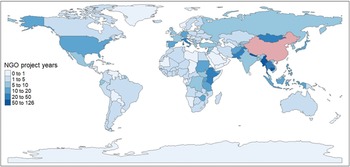
As figure 1 shows, geographic proximity seems to be a pivotal factor influencing NGOs’ location choices. When going global, Southeast Asia stands out as a favored destination. Notably, Myanmar attracted the highest number of projects from Chinese NGOs (126), followed by Nepal (108), Cambodia (62), and Laos (47). Additionally, several African countries have seen a considerable influx of Chinese NGO initiatives. For example, Ethiopia received 36 projects between 2005 and 2020, while Kenya received 21. In contrast, Latin America exhibits a notably lower presence of Chinese NGO initiatives.
Aggregated Number of International Projects by Chinese NGOs (2005–20)
Note: The concentration in Europe and the US arises exclusively from COVID-19-related donations. Projects spanning multiple years or countries are recorded for every year and country of origin. Longer projects thus feature more heavily as they suggest stronger NGO engagement.

Independent Variables
The first independent variable is the number of Chinese government-financed development projects in a given country and year between 2000 and 2020. The measure is derived from the Global Chinese Development Finance Dataset, version 3.0 (Custer et al. Reference Custer, Dreher, Elston, Escobar, Fedorochko, Fuchs and Ghose2023), which was officially released in November 2023. The dataset captures 20,985 projects that were officially committed, implemented, or completed across 165 low- and middle-income countries supported by loans and grants from official-sector institutions in China (totaling USD 1.34 trillion). A key feature of the dataset is its comprehensive scope, covering all regions, sectors, sources, and types of financial and in-kind transfers from government and state-owned institutions in China. To examine the lagged effect of government development projects on NGO projects, we included the lagged forms of the independent variable in different models.
UN Agreement
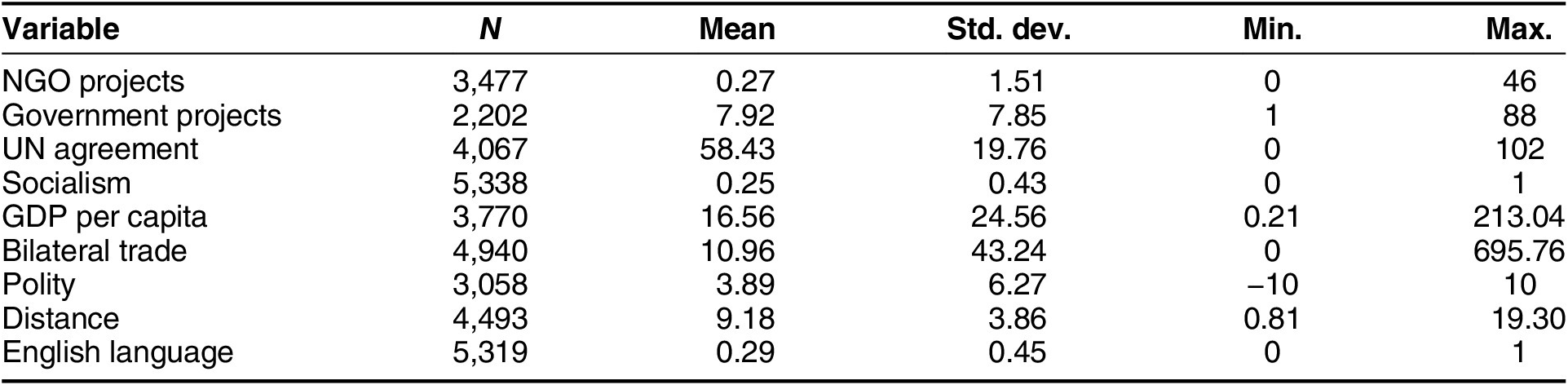
Existing studies often use a recipient country’s voting behavior in the UNGA to proxy for political alignment between donor and recipient countries, demonstrating that developing countries get more aid and better terms from donors when they have closer political ties to the donor (Dreher, Nunnenkamp, and Thiele Reference Dreher, Nunnenkamp and Thiele2011). Following this approach, we use data from Bailey, Strezhnev, and Voeten (Reference Bailey, Strezhnev and Voeten2017) to calculate the number of times a country votes the same as China in UNGA roll calls (either both voting yes, both voting no, both voting abstentions, or both being absent). The variable ranges from zero to 102, with a mean of 58.43. It reflects the country’s relative geopolitical positioning vis-à-vis China on various global issues, such as human rights, globalization, geopolitical conflicts, (nuclear) disarmament, or illicit traffic. To illustrate the international variation, of the 93 yearly UN roll calls between 2000 and 2020, 73 of Cambodia’s votes aligned with China’s, whereas only 15 of the US’s did. We expect that host countries more politically aligned with China, as measured by their UNGA voting records, receive more NGO projects.
Socialism
This dummy variable measures whether a country is socialist, has a socialist past, or has a constitutional reference to socialism (World Population Review 2024). We expect that socialism will partly reflect a country’s ideological similarity to China and will be positively associated with NGO projects.
Control Variables
We also include several variables in the analysis to control for needs and convenience factors, such as gross domestic product per capita, polity, distance, and language. Descriptive statistics for all variables are presented in table 1.
Descriptive Statistics

GDP per Capita
Existing studies have used recipient countries’ GDP per capita as a key indicator of need, consistently influencing aid allocation. The variable measures a country’s per capita GDP in 2014 US dollars, sourced from the World Bank. We expect a negative effect of GDP per capita on NGO projects. While the measure is far from comprehensive, it strongly correlates with various measures of living standards, such as HDI.
Bilateral Trade
Studies have shown that aid allocation decisions often follow trade and investment patterns, with donor countries prioritizing regions where they have significant economic stakes (Dreher, Nunnenkamp, and Thiele Reference Dreher, Nunnenkamp and Thiele2011). Countries with robust trade relationships or bilateral aid agreements with China may view Chinese NGOs as partners that complement and reinforce existing economic ties, leading to greater institutional support and fewer regulatory obstacles. To examine whether NGOs are affected by commercial motivations, we use bilateral trade, measured as the sum of imports and exports between China and the host country in US dollars (Conte, Cotterlaz, and Mayer Reference Conte, Cotterlaz and Mayer2022), as a proxy for China’s trade interests. We expect a positive relationship between bilateral trade and NGO projects.
Polity
To test the potential effects of host countries’ institutional quality, we use the polity2 variable from the Polity IV Project (Marshall and Gurr Reference Marshall and Gurr2020). This variable is a 21-point index, with the highest value, 10, corresponding to a fully institutionalized democracy and the lowest value, −10, denoting the most autocratic regime. The relationship between polity and NGO projects is likely insignificant due to China’s long-standing principle of noninterference in host countries’ internal affairs and prior quantitative findings (Dreher and Fuchs Reference Dreher and Fuchs2015). However, it is also likely that the relationship is negative as Chinese NGOs may favor countries with regime types similar to China’s.
Distance
This variable measures the distance in kilometers between a country’s capital city and Beijing, using data from Conte, Cotterlaz, and Mayer (Reference Conte, Cotterlaz and Mayer2022). We expect the variable to be positive because NGOs may prefer locations closer to their headquarters for cost, convenience, or psychological reasons. As Dong (Reference Dong2021) indicates, Chinese NGOs tend to cluster in Southeast Asia partly because, compared with other regions such as Africa, Southeast Asia is the closest region to China, which helps to reduce travel costs and facilitate communication.
English
We also add a binary indicator equal to one if the host country’s official language is English (Mayer and Zignago Reference Mayer and Zignago2011). We expect that NGOs tend to favor English-speaking countries for convenience. Although not the first language for Chinese NGO staff, English remains the most widely taught and used foreign language in China. Chinese NGO staff are generally more proficient in English than in other foreign languages, especially those used in Africa, Latin America, or Southeast Asia. Hence, English is the most practical and accessible working language when Chinese NGOs operate abroad.
Model Specification
The data show that the majority of country-time pairs do not have NGO projects, indicating a high proportion of zero values in the dependent variable, a discrete count variable. Therefore, we use a Poisson pseudo-maximum likelihood estimator. This estimator is consistent under heteroskedasticity and a high propensity of zero values (Silva and Tenreyro Reference Silva and Tenreyro2006; Reference Silva and Tenreyro2011). We present results from the population-averaged (PA) and fixed-effects (FE) models. PA models can help to estimate the overall, cross-country relationship between the number of NGO projects and key predictors—including government-financed development projects, agreement within the UN, and socialism—answering, for example, the question, “Do countries with a higher government-financed development projects, on average, have more NGO projects?” PA models do not explicitly control for unobserved country-specific effects and instead provide a population-level estimate. Country- and year-FE models, by contrast, can help to explain variation within countries over time while controlling for unobserved time-invariant factors unique to each country, such as distance and the English language. FE models can help to answer questions such as, “Controlling for unobserved, country-specific factors, is an increase in government projects within a country associated with more or fewer NGO projects?”
Results
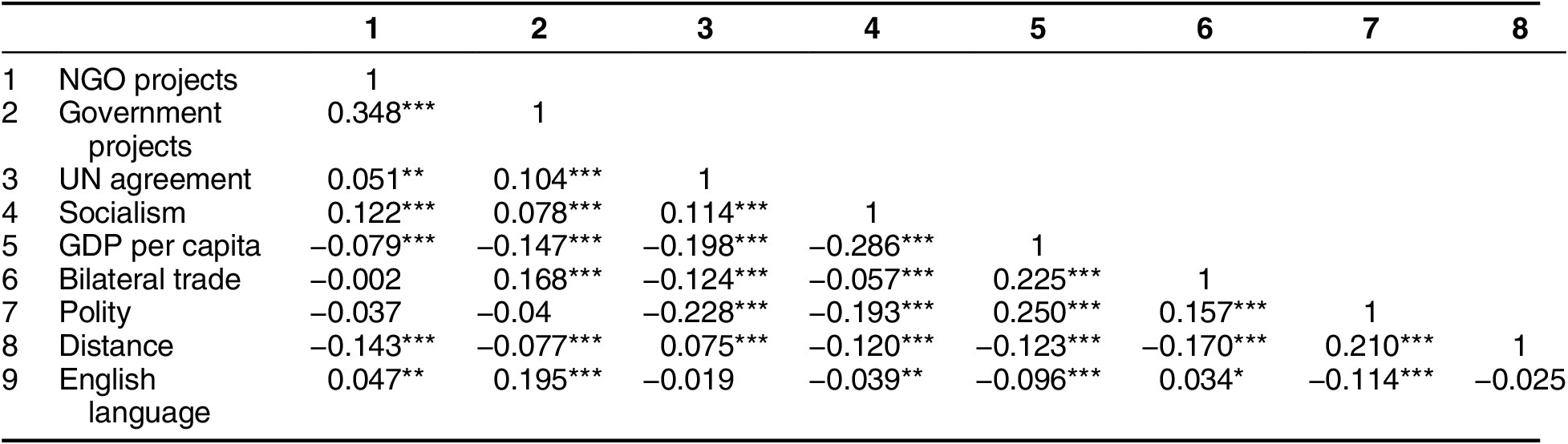
In table 2, most bivariate correlations were statistically significant at the 0.05 level or higher. The strength and pattern of the correlations suggested that the variables were distinct constructs. The highest correlation coefficient was between government projects and NGO projects (r = 0.348, p < 0.001).
Bivariate Correlations

Note: ∗ p < 0.05; ∗∗ p < 0.01; ∗∗∗ p < 0.001.
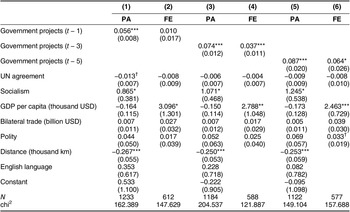
Table 3 presents the results from both PA and FE models. The results indicate that government projects (t − 1) are statistically significant in predicting NGO projects in the PA model (β = 0.056, p < 0.001), suggesting that countries with more government-financed development projects, on average, have more NGO projects. The coefficient for government projects (t − 1) in the FE model is not statistically significant, suggesting that, controlling for unobservable, country-specific factors, an increase in government-financed development projects within a country does not lead to more NGO projects.
Regression Results for NGO Projects

Note: Standard errors in parentheses. † p < 0.10; ∗ p < 0.05; ∗∗ p < 0.01; ∗∗∗ p < 0.001.
However, when the lags increase to three and five years, respectively, the coefficients for government projects become statistically significant in all PA and FE models, suggesting that NGOs follow government-financed development projects when choosing where to locate their operations. This finding falsifies the null hypothesis in favor of the alternative hypothesis H1.
A closer look at the PA models shows that the size of the coefficients for government projects increases as these projects become more established over the years: government projects (t − 1) (β = 0.056, p < 0.001), government projects (t − 3) (β = 0.074, p < 0.001), and government projects (t − 5) (β = 0.087, p < 0.001). A similar pattern also exists in the FE models. These suggest that the relationship between government-financed development projects and NGO projects strengthens over time and peaks when government projects have been in place for five years, thereby rejecting the null hypothesis associated with H2. In terms of magnitude, the FE model shows that an additional government project is associated with an (e0.064 − 1) × 100 = 7% increase in NGO projects five years later. For example, NGOs carried out 12 projects in Nepal in 2018, with an additional government project in the country corresponding to roughly one additional NGO project (increasing from about 12 to 13).
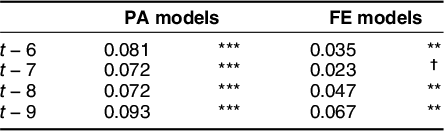
Table 4 summarizes the changes in coefficients for longer lags (t − 6 to t − 9), which, in conjunction with the main results (t − 1, t − 3, t − 5), demonstrate the evolving trend of the lagged effects of government-financed development projects on NGO projects. The magnitude and significance levels of the coefficients for government projects in both the PA and FE models increase from t − 1 to t − 5. The coefficients begin to decline at t − 6 and continue to decline at t − 7 and t − 8, suggesting that the effects of government-financed development projects on NGO projects increase in the first five years and plateau thereafter. These findings reflect broader systemic coordination, whether intentional or unintentional, between NGOs and state initiatives in the project location selection process. Governmental influence over Chinese NGOs extends beyond domestic operations and influences their behavior even when they engage in global development projects.
Estimation Results from More Years of Lags

Note: † p < 0.10; ∗ p < 0.05; ∗∗ p < 0.01; ∗∗∗ p < 0.001.
In addition, the results show that UN agreement is marginally significant only in model 1 (β = −0.013, p < 0.1) but not in other models. In addition, the coefficients are negative across models, which runs counter to H3—that Chinese NGOs tend to locate their projects in countries more politically aligned with China. The result shows that, albeit with weak statistical support, there are more NGO projects in countries that are less aligned with China in their UN voting. This strategic targeting aligns with the traditional Chinese saying, “Converting an enemy into a friend” (hua di wei you), reflecting a long-standing cultural emphasis on building harmony and transforming adversarial relationships into cooperative ones. This finding represents a significant departure from most existing research, which shows a positive association between political alignment and NGO activity. For instance, Koch and colleagues (Reference Koch, Dreher, Nunnenkamp and Thiele2009) find that UNGA voting alignment is positively associated with NGO projects, suggesting that NGOs tend to operate in countries with which their back-donor governments maintain friendly ties. Even outside the Chinese context, countries like India exhibit similar tendencies, cooperating more frequently with states that vote similarly in the UNGA. Recent evidence from Stone, Wang, and Yu (Reference Stone, Wang and Yu2022) also finds that Chinese firms, under state influence, systematically invest more in politically aligned countries. However, our findings challenge these patterns by showing that Chinese NGOs actively target countries less politically aligned with China. This suggests a deliberate strategy to project soft power, signaling China’s willingness to engage constructively with countries beyond its traditional political alliances, thereby enhancing its reputation and influence on the global stage.
Socialism has a large and positive effect on NGOs’ project allocation across all three PA models. This suggests that NGOs allocate their projects to countries with a socialist background or history, thereby rejecting the null hypothesis associated with H4. Countries with a socialist legacy frequently serve as strategic allies or regions of interest in China’s public diplomacy. The shared ideological affinity between Chinese government-guided NGOs and these countries facilitates smoother collaborations and strengthens ties within shared historical and political frameworks. For instance, China’s partnership with Serbia in the Balkans reflects a deliberate, strategic effort rooted not only in historical ties but also in China’s broader role in the transnational expansion of capital (Todorova Reference Todorova2018). Such dynamics underscore the complex interplay between state priorities, historical legacies, and the strategic deployment of NGOs in global development.
Robustness Check
We conducted three robustness checks. First, we replaced government projects with government lending—that is, the amount of official Chinese-backed finance per capita—to examine how the number of NGO projects is associated with Chinese development finance. Regarding project counts, the Chinese government funds more projects in health, education, and governance than in the economic, infrastructure, and production sectors. However, if we look at the dollar amounts, the Chinese government invests far more in the energy, transportation, industry, mining, and construction sectors than in education, health, and governance. In addition, government projects are visible manifestations of foreign aid, and NGOs can more readily identify and respond to them.
By contrast, government lending is a less tangible form of support. Therefore, government projects and lending capture different aspects of Chinese foreign aid, and we expect government projects to have more salient effects on NGO location choice than government lending programs. In online appendix 2, we replaced the number of government projects with the per capita amount of government lending in the estimation models. Similar to results from government project models, government lending is a significant predictor of NGO projects when lagged by three or five years, and its effects are generally stronger in PA models than in FE models. The results for the control variables are largely consistent with the main results.
Second, the NGO data cover NGO projects from 2005 to 2020, and our analysis included lags in the independent variables. We constructed a new dataset using AidData’s Global Chinese Official Finance Dataset, 2000–14, version 1.0 (Dreher et al. Reference Dreher, Fuchs, Parks, Strange and Tierney2022). With these data, we had more overlapping years when using t − 3 and t − 5 lags to estimate the number of NGO projects, as the 2014 aid data were used to predict the 2019 NGO data. The results are consistent with the main results (see online appendix 3).
Third, we conducted additional analysis by replacing the polity2 variable with the polyarchy measure from the Varieties of Democracy dataset, as Polity’s formal coverage ended in 2018 due to funding changes. The results, shown in online appendix 4, remain largely similar, providing additional support for the robustness of our findings. Additionally, we conducted additional analyses using HDI to replace GDP per capita. HDI is a composite measure of a country’s development based on three key dimensions: life expectancy (health), education (years of schooling), and standard of living (income per capita). This broader measure captures aspects of development beyond just economic output. We found that the results remain largely unchanged when using HDI (see online appendix 5), further confirming the robustness of our findings.
Discussion and Conclusion
For over half a century, international development has been primarily dominated by the Western model. However, the rise of emerging powers, such as China, is reshaping global development through an alternative model. China has begun to integrate NGOs into its strategy, recognizing their role in fostering people-to-people exchange and projecting soft power. This evolving competition has prompted Fukuyama’s (Reference Fukuyama2016) critical question: whose development model will prevail, the West’s or China’s? This study contributes an important piece to the puzzle by examining the role of NGOs in China’s global development initiatives and their implications for this broader shift in the global development paradigm.
Our study reveals that most needs and convenience factors are not statistically significant in predicting Chinese NGOs’ location choices, except that NGOs tend to place their projects in economically disadvantaged countries experiencing rapid economic growth and in countries closer to Beijing geographically. Our research extends the political perspective on NGO location choices by highlighting two levels of political influence: the project level, where NGOs align with government-led projects, and the cross-country level, where NGOs consider geopolitical factors such as international political alignment and shared socialist legacies. We found a significant effect of project-level factors—that is, NGOs aligning project locations with government-led initiatives. However, such government-guided NGO alignment has temporal limitations. The impact of government projects on NGO initiatives tends to peak within the initial five-year period, beyond which such effects plateau or even decline, reflecting the transient nature of the alignment. In addition, cross-country political affinity has mixed effects: NGOs tend to place more projects in countries with a shared socialist legacy, but UNGA voting patterns do not matter in most models. These findings demonstrate the strong explanatory power of the government-guided NGO alignment concept and highlight the intricate relationship between governmental initiatives and NGO activities beyond national borders. In China, where regulations and oversight govern NGO operations, locating projects in countries with more Chinese government-financed aid and development projects and higher levels of political affinity enables Chinese NGOs to strategically capitalize on the legitimacy and resources associated with government-backed projects, thereby enhancing their capacity to carry out development projects overseas.
While resource dependencies play a critical role in shaping Western NGOs’ location choices, survival and legitimacy considerations are more important for NGOs from authoritarian countries. Authoritarian governments often adopt a multipronged approach to exert control, employing tactics such as regulatory oversight, financial incentives, and subtle coercion to align NGOs with state priorities. Through this approach, authoritarian governments may further politicize their NGOs’ operations, both domestically and internationally.
Previous research has used various terms to characterize the relationship between NGOs and the Chinese government. For example, Ni and Zhan (Reference Ni and Zhan2017) introduced the concept of embedded government control, illustrating how governmental influence permeates NGOs’ operations and decision making, potentially undermining their autonomy and independence. Despite varying layers and forms of governmental influence on their internationalization, Chinese NGOs do have some autonomy and agency in designing and implementing projects overseas (Wang Reference Wang2023). Therefore, the notion of government-guided NGO alignment not only acknowledges the constraints imposed by governmental influence but also the agency NGOs maintain in strategically aligning their activities with governmental objectives, whether voluntarily or through regulatory mandates.
This research has several limitations and provides fruitful avenues for future research. First, government-guided NGO alignment is a multifaceted concept that entails synchronizing various elements and coordinating diverse actors. This alignment encompasses goals, strategies, resources, and approaches between government agencies and NGOs. However, our study captures only one form of followership, where NGOs follow government projects when siting their international projects. Future studies may examine how NGOs align with the government, their strategies, and effects.
Second, NGOs are integral to global civil society in international development. They are tasked with aligning their efforts with those of the Chinese government and collaborating with Chinese companies in their corporate social responsibility and community projects. They must also forge partnerships with INGOs. However, the alignment between government initiatives and NGO projects may not necessarily yield effective synergy among diverse actors. One respondent indicated, “Chinese overseas investment and NGOs going out remain parallel. There is a lack of collaboration between Chinese enterprises and NGOs involved in overseas investments to facilitate local community engagement, promote corporate social responsibility, enhance understanding between enterprises and local populations, and undertake development projects.”Footnote 16 In another instance, a respondent recounted that a Chinese NGO approached a Chinese company in Ethiopia to help improve community relations. After deliberation, the company opted to donate money to a local church instead. “When companies go out, they often fight alone, hopping on one leg. Their approach to community relations is outside the scope of our development discourse on community communication logic.”Footnote 17 Future research may investigate how Chinese NGOs work with different stakeholders on the ground to promote development.
Third, our focus on the number of NGO projects is constrained by data limitations, as we cannot capture project magnitude and quality. Important details, such as donation sizes, beneficiary counts, project durations, and overall impact, remain unavailable, making it difficult to fully assess their significance and effectiveness. Additionally, our unit of analysis is at the project level, limiting our ability to examine organization-level predictors. For example, we lack sufficient data to examine how GONGOs and grassroots NGOs differ in their preferences for project locations, or how organizational characteristics such as capacity, leadership, and embeddedness with the Chinese government influence their location choices in global development initiatives. Future research could address these limitations by (1) integrating more detailed data on project scale and quality, and (2) shifting the focus to the organizational level to better understand the strategic and structural factors shaping NGO engagement in global development efforts, as well as the impact of government-guided alignment on organizational performance and sustainability.Footnote 18
Fourth, in the international arena, homegrown Chinese NGOs are expected to serve as conduits for soft power projection and for cultivating people-to-people connections in local communities. However, Chinese NGOs often struggle to engage with the local community. They may collaborate with local groups on specific initiatives, such as inviting international or local NGOs to undertake drinking-water projects. Still, they are rarely able to foster genuine strategic collaboration, in which different actors deliberate on shared interests and shared theories of change.Footnote 19 Therefore, two critical questions are, “What are the peculiarities of Chinese practices, processes, patterns, and policies?” and “How do Chinese NGOs localize and implement their initiatives in host-country communities?” We encourage future research to examine the on-the-ground implementation strategies and community engagement approaches that Chinese NGOs have adopted in recipient countries. Further research is needed to examine (1) the extent to which China’s approach to development aid reinforces the economic exchange model that deviates from the traditional Western approach to foreign aid, and (2) whether Chinese NGOs’ overseas activities enhance or undermine the overall development of civil society in host countries.
Last but not least, this paper focuses on the mechanisms that shape Chinese NGOs’ location choices for international development projects, and we did not examine the specific effects of these NGOs’ development efforts in host countries. Chinese NGOs operating abroad often face a “liability of foreignness,” characterized by operational restrictions, funding challenges, and cultural and social barriers that hinder project implementation. Understanding the outcomes and impacts of Chinese NGOs’ overseas projects is essential for evaluating the effectiveness and sustainability of their global development initiatives. We encourage future research to analyze the tangible and broader implications of Chinese NGOs’ involvement in international development and global civil society.
Overall, our study opens a new avenue of research on the internationalization of NGOs from the Global South, with significant implications following USAID’s closure in July 2025—a turning point for international development, particularly for Western nonprofits operating in the region. Historically, USAID has been a key driver of initiatives supporting health, education, food security, and civil society development. Its absence creates a vacuum that alternative models, such as China’s state-led development approach and its increasingly active NGOs, might attempt to fill. News reports have highlighted growing interest in these initiatives. Yet it remains an open question whether China’s development model and NGOs can serve as a compelling alternative to Western development paradigms. The constrained capacity, limited transparency and accountability, limited experience with participatory approaches, and heavy state dependence of Chinese NGOs may leave a wider gap in civil society development in the Global South.
Supplementary material
To view supplementary material for this article, please visit http://doi.org/10.1017/S1537592726104368.
Data replication
Data replication sets are available in Harvard Dataverse at: https://doi.org/10.7910/DVN/FYRJUB.
Acknowledgments
We would like to thank Julian Pallinger, Doudou Chen, Irene Fanglin Liu, and Lin Xu for their excellent research assistance, and the dedicated NGO staff and other experts who generously and candidly shared their time and knowledge with us. This research is funded by the General Research Fund (Project No. 17621623) and Collaborative Research Fund (CRF–C7030-24G) of the Research Grants Council of the Hong Kong Special Administrative Region.


 Open access

