

The evolving technology of genomic science has evoked wildly diverging reactions. In 1990, Dr. Martin Rechsteiner led a letter-writing campaign by over 50 academics, including Nobel laureates, arguing that the nascent Human Genome Project was a waste of money and urging the government to cease funding it (Utz, Reference Utz2024). But almost two decades later, reflecting on the success of the Project, Dr. Francis Collins was thrilled to “have caught the first glimpse of our own instruction book, previously known only to God.” He promised a revolution in medicine and scientific research (Collins, Reference Collins2007). Like many other spinoffs of the Human Genome Project, the technology of genomic biobanks continues to evoke mixed reactions, reflecting its mix of benefits and risks. On the one hand, scientific DNA databases generate new capacities for genetic research, medical diagnosis and treatment, and strategies to protect public health (Lander Reference Lander2019). In the criminal justice arena, DNA databases contribute to determining guilt and innocence and exonerating those falsely convicted (National Research Council, 2009). On the other hand, genomic biobanks threaten violations of privacy along with discrimination and administrative or scientific error. Critics warn that reliance on these new technologies could crowd out societal reforms that would improve health and reduce crime (Dierickx & Borry, Reference Dierickx and Borry2009; Greely, Reference Greely2007; Joyner et al., Reference Joyner, Paneth and Ioannidis2016).
Unlike many new technologies, the contents of biobanks are literally personal, and the outcomes of their use can readily be recognized as matters of life and death. This direct personal impact, along with the mixture of risks and gains, calls for not only institutional and expert management but also consultation with the public (De Vries, et al. Reference De Vries, Raymond and Kim2019; Machado & Silva, Reference Machado and Silva2015; O’Doherty et al., Reference O’Doherty, Hawkins and Burgess2012). Residents of a democratic polity have the right to weigh in on such questions as how to balance improved outcomes against threats of surveillance, whether the technology deserves their tax dollars, and whether they would be willing to contribute to a biobank. Most generally, policymakers need to know the values that Americans bring to consideration of appropriate uses of scientific and forensic DNA databases.
This normatively important pursuit of public input, however, runs into an empirical challenge: scholars question whether the lay public is capable of expressing meaningful views on science and technology topics about which they know little (Miller, Reference Miller1998, Reference Miller2004; Snow et al., Reference Snow and Dibner2016). This is a particular concern with respect to biobanks, since researchers have found that publics have limited awareness and knowledge about them (e.g., Domaradzki & Pawlikowski, Reference Domaradzki and Pawlikowski2019; Gaskell et al., Reference Gaskell, Gottweis, Starkbaum, Gerber, Broerse, Gottweis and Soulier2013; Gaskell & Gottweis, Reference Gaskell and Gottweis2011). In addition, unlike some new technologies, DNA databases are not enmeshed in visible political debates (Hochschild, Reference Hochschild2021), so people cannot fall back on partisan heuristics as a substitute for direct knowledge. Thus, when asked for their opinion, most will be developing views de novo . This presents a conundrum for public consultation: how do you ask the public to weigh in on a topic they know little to nothing about and have no reliable cues for evaluating? Thus, in this article, we investigate not only what the public thinks about genetic biobanks but whether one can trust what they have to say.
Scholars have queried publics for their views on genetic biobanks since the early 2000s. As we show in the next section, publics around the world hold viewpoints as diverging, and often as emphatic, as our opening quotes from experts suggest. Yet, this scholarship is incomplete. Substantively, there are surprisingly few studies on public views of forensic biobanks and, to our knowledge, no published studies comparing public views of forensic as compared with scientific biobanks.Footnote 1 Further, researchers mostly focus on topics having to do with administration of scientific biobanks, such as consent procedures and likelihood of participation; other topics, such as government management or societal use of genetic biobanks, are largely overlooked. Methodologically, most publications on lay perspectives are cross-sectional studies, either qualitative or quantitative; few re-interview participants or combine qualitative and quantitative measurements. In addition, most studies of lay perspectives on scientific biobanks involve convenience samples or representative samples of patient groups, not representative samples of national publics.
Our evidence addresses these limits: we interview large representative samples of Americans at two points in time; we query them about views on both forensic and scientific DNA databases and on government involvement; and we include qualitative as well as quantitative measures of opinion. This survey design enables comparison across topics and over time, and allows us to assess the quality of Americans’ thinking about biobanking. This is a first-of-its-kind study within the U.S. context and, to our knowledge, outside the United States as well. Although our most recent survey was conducted in 2017, we know of no representative survey on biobanking conducted since then; in the concluding section, we discuss the possibility that views have changed substantially since 2017. Most importantly, our central message is not temporally bound: we expect, and provide evidence for the assertion, that members of the lay public are willing and able to express coherent and meaningful views, which are fairly stable over time, on new and complex technologies about which they know little.
Within that broad assertion, we provide several more specific findings. We find much more support than opposition for both kinds of biobanking, but many people also appear to hold seemingly mixed or neutral views. Biobanking attitudes are relatively stable over six years. Demographic characteristics such as gender and race have relatively weak links to biobanking opinion, while views are only somewhat structured by political ideology. In contrast, respondents’ knowledge of genetics and their expressed values or interests are closely associated with their opinions of biobanks. Some respondents distinguish between biobanks, endorsing one but not the other, suggesting the capacity for fairly sophisticated judgments. Taken together, these findings imply that respondents are providing meaningful, interpretable expressions of opinion — not merely “non-attitudes.”
Most broadly, in methodological terms, our analyses demonstrate the value of systematic investigation through feasible, scalable surveys using a combination of open- and close-ended questions. In substantive terms, our analyses support the argument that public officials and other decision makers should take perspectives of the lay public into account as they engage in the development and management of biobanks and other societal uses of new technologies.
Genetic and genomic biobanks in the United States
Genetic biobanks became common in many countries in the early 2000s in the form of large, organized collections of anonymized DNA samples used for scientific research, evidence in the criminal justice system, or other publicly relevant purposes. The core technology is the same, but it has been implemented differently for forensic and scientific DNA databases. Thus, considering them both broadens the institutional contexts and societal purposes to which our results apply.
Scientific DNA databases in the United States have been characterized largely by great variation in their purposes, contents, and modes of collection. Hospitals, universities or research centers, advocacy organizations, pharmaceutical companies, and companies selling direct-to-consumer genetic tests have developed genetic biobanks with a focus on their own research purposes; as a result, for years, the data were incompatible (Boyer et al., Reference Boyer, Whipple, Cadigan and Henderson2012). Coordination is growing; consortia can now combine separate genomic databases into a sample with hundreds of thousands of, or even a million or more, cases (Grotzinger et al. Reference Grotzinger, Werme, Peyrot, Frei, de Leeuw, Bicks and Smoller2026).Footnote 2 Scientific biobanks remain uncommon in the United States’ public sector; after about a decade in operation, the largest—the federal government’s All of Us research program—has collected not quite 250,000 genome sequences (The All of Us Research Program Genomics Investigators, 2024).
Scientific biobanks are administered in accord with a wide array of federal and state mechanisms. The most directly focused law, the 2008 Genetic Information Nondiscrimination Act, focuses on controlling legitimate uses of named individuals’ personal genetic information rather than on anonymized biobanks. Other relevant rules have in general been designed with different targets or purposes, and then expanded to include biobanks.Footnote 3
Forensic DNA databases have a different history and scope—characterized by shared purposes, tightly controlled specificity and consistency, and rapid mandated growth. They are entirely within the public sector. A 1994 federal law authorized a national DNA index, embedded within the FBI’s broader Combined DNA Index System [CODIS]. The purpose of CODIS is to coordinate the collection, storage, comparison, and management of forensic DNA samples across the United States (FBI, n.d.b). DNA databases at all levels of government, from local to international, are closely regulated; as of 2019, U.S. federal law had been revised or updated at least 10 times since 1994 (Hochschild, Reference Hochschild2021), and every state has a set of laws and regulations. Anonymized samples in forensic biobanks consist of 20 specified segments of presumably non-coding DNA and can be directly compared with one another within CODIS. All American states now collect mandatory DNA samples from those convicted of a felony, and many collect samples from misdemeanants, undocumented immigrants, and/or people arrested for felonies. CODIS now includes about 27 million samples from offenders, arrestees, and crime scenes (Bell & Butler, Reference Bell and Butler2022; FBI, n.d.a).
Literature review
Public support for scientific and forensic biobanks
Our review of the literature focuses on lay perspectives on scientific, then forensic, biobanks. Where they are available, we draw from high-quality meta-analyses and multi-country studies, while giving particular attention to the United States.
One multi-country study and two meta-analyses reveal an expansive research literature showing considerable support worldwide for medical or scientific DNA biobanks. Reviewing 61 scholarly articles with quantitative and/or qualitative evidence since 2000, Domaradzki and Pawlikowski (Reference Domaradzki and Pawlikowski2019) find that majorities of publics in all 20 surveyed countries (plus two pan-European surveys) supported biobanking. Support generally exceeded 75%, and ranged from 84 to 98% in the 22 studies focused on the U.S. public.
However, despite great heterogeneity across countries, the studies in Domaradzki and Pawlikowski’s meta-analysis consistently find that willingness to actually participate in a biobank is lower than is general support. Gaskell and his colleagues (Gaskell et al., Reference Gaskell, Gottweis, Starkbaum, Gerber, Broerse, Gottweis and Soulier2013) similarly find reluctance in the 2010 Eurobarometer to be directly involved. Fewer than half of publics in European Union member states would “probably” or “definitely” participate in a biobank, with agreement ranging from over 80% in Sweden to only 25% in Latvia. In their survey of residents of 22 countries, Middleton et al. (Reference Middleton, Milne, Almarri, Anwer, Atutornu, Baranova and Morley2020) similarly find a majority of respondents “unwilling or unsure about donating their anonymous DNA and medical information for use by researchers” (p. 745).
Garrison and her co-authors (Garrison et al., Reference Garrison, Sathe Nila, Antommaria, Holm, Sanderson and Clayton2016), however, find contrasting results in an evaluation of 51 articles reporting attitudes of American patients or the public more generally. At least seven-tenths of study participants were willing to participate in a scientific biobank and to give broad consent to sharing their genetic data (although often they preferred more specific forms of consent if available). Similarly, in a 2014 nationally representative study of the U.S., De Vries et al. (Reference Vries, Raymond, Kim, Krenz, Ryan, Lehpamer and Scott2016) find that 68% of the public “would donate tissue samples and medical information to the biobank, so that the biobank can use them for any research study that it allows, without further consent from me” (p. 7–8). Reflecting on these conflicting sets of findings, Middleton et al. (Reference Middleton, Milne, Almarri, Anwer, Atutornu, Baranova and Morley2020) conclude that Americans tend to have more trust in biobank administrators than do people in other nations. Questions remain, however, due to differences in survey techniques and samples.
In the arena of scientific biobanks, multiple sources of data conflict. We discovered a different problem in the arena of forensic biobanks: there are few published academic articles at all on public views of forensic DNA databases, and almost none using U.S. representative survey data. Machado and Silva (Reference Machado and Silva2019) examine 11 peer-reviewed studies with quantitative results, finding only two (Gamero et al., Reference Gamero, Romero, Peralta, Carvalho and Corte-Real2007; Gamero et al., Reference Gamero, Romero, Peralta, Real, Guillén and Anjos2008) with a nationally representative sample (in those cases, of Spain). The best available U.S. evidence comes from seldom-analyzed non-scholarly surveys. As early as 2000, four-fifths of registered American voters favored “a national DNA databank with DNA collected from all criminals” (Democratic Leadership Council, 2000). Six years later, two-thirds endorsed a requirement for a DNA sample from all adults (Harris Poll/Wall Street Journal, 2006). The scarce evidence from other countries suggests that Americans’ support for nationwide forensic biobanks may be unusually high; at about the same time, only two-fifths in the United Kingdom endorsed a national DNA database of all residents (YouGov, 2008), while fewer than half of respondents to a survey in Spain supported a nationwide DNA database for forensic use (Gamero et al., Reference Gamero, Romero, Peralta, Carvalho and Corte-Real2007).
Overall, abstracting from variations due to the range of countries, item wording, date, and survey house effects, the literature mostly shows strong support for medical or scientific biobanking, but less support for personally participating in a biobank or for widespread forensic biobanks. The United States may be an exception, given evidence of roughly equal levels of support for both types of biobanks.
Demographic correlates
Findings are mixed with regard to demographic correlates of views of genetic biobanks, perhaps because, especially for forensic biobanks, they are drawn from a few, mostly unrepresentative, samples.
As a general pattern, racial or ethnic minorities express lower support than those from other groups. Members of minority groups also seek more control or regulation than others (Domaradzki & Pawlikowski, Reference Domaradzki and Pawlikowski2019; Garrison et al., Reference Garrison, Sathe Nila, Antommaria, Holm, Sanderson and Clayton2016). Respondents with more education or more knowledge about biobanking are usually more willing to participate in a biobank than those with less education or knowledge (Critchley et al., Reference Critchley, Nicol, Otlowski and Stranger2012; Domaradzki & Pawlikowski, Reference Domaradzki and Pawlikowski2019; Gaskell et al., Reference Gaskell, Gottweis, Starkbaum, Gerber, Broerse, Gottweis and Soulier2013). Men are usually more enthusiastic than women (Garrison et al., Reference Garrison, Sathe Nila, Antommaria, Holm, Sanderson and Clayton2016; Gaskell et al., Reference Gaskell, Gottweis, Starkbaum, Gerber, Broerse, Gottweis and Soulier2013). Findings are mixed with regard to age (Domaradzki & Pawlikowski, Reference Domaradzki and Pawlikowski2019).
Evidence about demographic correlates with respect to views on forensic genetic biobanks differs somewhat. Machado and Silva (Reference Machado and Silva2019) find that those with more education or knowledge, as well as older respondents, tend to be less willing to donate DNA. Some of their evidence shows women to be more enthusiastic than men about collecting DNA for forensic use. In a few studies, ethnic or racial minorities oppose forensic DNA biobanks more than those of European descent (Machado & Silva, Reference Machado and Silva2019). Finally, in one study of New Zealand residents, political conservatives favor forensic DNA use more than do others (Curtis, Reference Curtis2014).
We caution that all of these findings are based on a thin, generally unrepresentative base. The most consistent result is racial and ethnic minorities’ lower support for both types of biobanks. It may be the case that highly educated individuals are more interested than others in participating in a scientific biobank but less interested in participating in forensic DNA databases. Women and men may also differ in relative support depending on the type of biobank. No reliable conclusions can be drawn about political correlates of biobanking attitudes because of lack of study, or about age because of conflicting results.
Rationales for views of biobanking
A number of studies explore people’s reasoning for their views on scientific biobanks, especially their willingness to participate. In their systematic review, Domaradzki and Pawlikowski (Reference Domaradzki and Pawlikowski2019) find that altruism, duty, and an interest in helping others often motivate a stated intention to donate. More specifically, respondents hope to contribute to generating new knowledge, developing new medical therapies and cures, and finding concrete health benefits for themselves and those close to them. In a review of 13 studies on biobank enrollees, Nobile et al. (Reference Nobile, Vermeulen, Thys, Bergmann and Borry2013) similarly find that both altruism and expectation of receiving health-related information, services, or other benefits are motivatorsFootnote 4 (see also Critchley et al., Reference Critchley, Nicol and McWhirter2017). Finally, nearly all studies highlight the importance of trust in institutions as a determinant of biobank participation (Critchley et al., Reference Critchley, Nicol, Otlowski and Stranger2012; Domaradzki & Pawlikowski, Reference Domaradzki and Pawlikowski2019; Gaskell et al., Reference Gaskell, Gottweis, Starkbaum, Gerber, Broerse, Gottweis and Soulier2013; Nobile et al., Reference Nobile, Vermeulen, Thys, Bergmann and Borry2013). Concerns about privacy and data insecurity—especially breaches that could lead to concrete harms (Garrison et al. Reference Garrison, Sathe Nila, Antommaria, Holm, Sanderson and Clayton2016; Gaskell et al., Reference Gaskell, Gottweis, Starkbaum, Gerber, Broerse, Gottweis and Soulier2013)—are common. One survey of the U.S. public, for example, found that nine-tenths of respondents would be “somewhat” (26%) or “very” (64%) “concerned about ‘protecting my privacy’ if they were to take part in the proposed cohort study” (Kaufman et al., Reference Kaufman, Murphy-Bollinger, Scott and Hudson2009, 645).
Once again, evidence is sparse in the search for explanations of views on forensic biobanks. There are some parallels with rationales for engaging with scientific biobanks; supporters perceive that the gains from improved crime-fighting and the delivery of justice outweigh risks. In an opt-in, online study of over 600 highly educated Portuguese, Machado and Silva (Reference Machado and Silva2016) find that those willing to participate accepted “normalization” of forensic DNA databases in Portugal, and sought to contribute to the collective good by assisting criminal justice. Conversely, reasons for doubt or resistance to contribution included concerns about misuse of DNA, fear of discrimination and stigma, concern about surveillance and infringement of civil liberties, and lack of confidence in institutions. The rest of the scant forensically oriented literature generally concurs (Curtis, Reference Curtis2014; Wilson-Kovacs et al., Reference Wilson-Kovacs, Wyatt and Hauskeller2012).
In sum, across both types of biobanks, majorities of study participants seek to advance the public good while protecting their own interests. Concerns about privacy or discrimination are often intertwined with mistrust of biobanking and relevant institutions. Although not always theorized as such, these studies suggest that lay people draw on common values and interests, sometimes with different conclusions, to construct and explain their attitudes toward and behavioral intentions regarding biobanks.
Public knowledge and capabilities
Surveys make clear that the public knows little about biobanks, especially scientific ones; two-thirds of respondents in a study of U.S. patient populations had not heard of them (Domaradzki & Pawlikowski, Reference Domaradzki and Pawlikowski2019). Neither had 78% of a national sample of Australians (Critchley et al., Reference Critchley, Nicol and McWhirter2017). The same results were obtained in a representative, survey-based study of Europe in 2010 (Gaskell et al., Reference Gaskell, Gottweis, Starkbaum, Gerber, Broerse, Gottweis and Soulier2013).
These findings reinforce longstanding concerns about scientific, and specifically genetic, literacy (Hurle et al., Reference Hurle, Citrin, Jenkins, Kaphingst, Lamb, Roseman and Bonham2013; Miller 1987; Miller, Reference Miller2004; Snow et al., Reference Snow and Dibner2016). The implications of this line of research threaten to undermine the findings discussed thus far. If the public knows little about biobanks, how can they form, and eventually explain, meaningful opinions about them? Attitudes expressed on surveys may be what public opinion researchers call non-attitudes—expressions made up on the spot, perhaps to satisfy the researcher or save face, that are both meaningless and ephemeral (Converse, Reference Converse and Apter1964; Converse, Reference Converse1974; Schuman & Presser, Reference Schuman and Presser1980).
But perhaps not. Despite showing little lay knowledge of biobanks, the literature also provides reasons to doubt the claim of non-attitudes. The evidence shown above, that people draw on widely shared values and interests to explain their biobanking attitudes, accords with social scientists’ understanding of how the lay public forms other judgments in conditions of low information (Goren, Reference Goren2012; Kinder, Reference Kinder, Gilbert, Fiske and Lindzey1998). In addition, expected correlations between variables—such as between familiarity with DNA or trust in biobanking institutions and willingness to donate one’s DNA to a biobank (e.g., Critchley et al., Reference Critchley, Nicol, Otlowski and Stranger2012; Middleton et al., Reference Middleton, Milne, Almarri, Anwer, Atutornu, Baranova and Morley2020), or between racial status and attitudes toward collecting DNA in the criminal justice system—suggest logical constraint, linking associated ideas in people’s minds (see Converse, Reference Converse and Apter1964).
The most distinctive feature of our study uses this line of reasoning to investigate how meaningful survey participants’ perspectives really are. After asking respondents to state how willing they would be to participate in a scientific and (separately) forensic biobank, we asked them to explain that choice. We coded rationales into interest- and value-based categories and examined the strength of links between rationales and level of biobanking support. Our panel design (surveying where possible the same people six years apart) also enables us to conduct a test that is a staple of public opinion research seeking to guard against non-attitudes: examining the extent to which biobanking attitudes are stable across time (Converse, Reference Converse and Apter1964; Kinder, Reference Kinder, Gilbert, Fiske and Lindzey1998). Finally, examining the views of people who endorse one but not both types of DNA database allows us to judge whether respondents are attuned to the different uses of the same technology—another indicator of whether expressed opinions are genuine attitudes.
Hypotheses
Our hypotheses are as follows:
Hypothesis 1 (Overall support): In the aggregate, most Americans support scientific and forensic biobanks.
Hypothesis 2 (Demographic differences): H2a . Black and Hispanic Americans are less supportive of both types of biobanks than White Americans. H2b . Respondents with higher levels of education or genetic knowledge support scientific biobanks more than those with less. H2c . Men are more supportive of scientific biobanks than women.
Hypothesis 3 (Individual stability over time): Individual respondents tend to express similar views on biobanks at survey time 1 and time 2, indicating relatively stable attitudes.
Hypothesis 4 (Reasons): When asked to do so, most survey respondents provide coherent reasons for their willingness, or lack of willingness, to participate in a biobank.
Hypothesis 5 (Reasons and views): Reasons for biobank participation, coded into general value or interest categories, are sensibly associated with support for or opposition to biobanking, including over time.
Methodology
We examine Americans’ views on genetic biobanks with two original surveys. Knowledge Networks (now Ipsos) conducted Genomics, Knowledge, and Politics [GKAP 1] in 2011. Respondents were sampled from their KnowledgePanel, a probability-based web panel designed to be representative of the U.S. adult population.Footnote 5 There were 4,291 completed surveys, including Black and Latino oversamples, with a Spanish-language option. We conducted a second KnowledgePanel survey [GKAP 2] in 2017 (N = 1,777). All 2011 participants who remained in the KnowledgePanel were invited to participate in GKAP 2. Ipsos also recruited additional respondents to improve representativeness of the second cross-section and to reach the target for respondents. We analyze both cross-sections as well as the panel that completed both the 2011 and 2017 surveys (N = 959).Footnote 6 We use post-stratification weights in quantitative analyses to improve representativeness.
Key measures
Our analyses focus on four pairs of questions. (See Appendix E for definitions and question wording.) After reading a brief definition of scientific biobanksFootnote 7 followed by a query on how much they had heard or read about them (90% indicated little or no knowledge), respondents were asked about (1) support or opposition to government funding and (2) willingness/unwillingness to contribute a DNA sample for medical or scientific research. A textbox followed that question with a query about (3) why they would (or would not, depending on their prior response) contribute a sample. Later on, the survey included a question about (4) the balance between societal good and harm in medical or scientific biobanking. We asked parallel questions about forensic biobanks (45% had heard little or nothing about them).Footnote 8
Open-ended response coding
We used a mix of inductive and deductive logics to develop coding schemes to evaluate explanations for (un)willingness to contribute a DNA sample to the two types of biobanks. Two of the authors read through the responses (unattached to respondent information) to promote matching between the eventual formal coding scheme and the comments (Charmaz, Reference Charmaz2014). Since most respondents explained their stances with normative and goal-oriented language, although expressed colloquially, most statements could be coded into categories representing (1) widely shared human values, (2) applied values specific to biobanks, and/or (3) interests related to the self/family, social group, or society.
Our final set of codes clusters responses into eight categories. Two are broad political values (authority and autonomy); one value is epistemic (knowledge); and two values are domain-specific (health and justice). By a separate logic, the remaining three interest-based categories focus on benefits or harms that may accrue to the self or family, to one or more social groups, and to society in general. (We anticipated finding references to religion or religiosity but found very few such mentions and so excluded this value from the final coding scheme.) Each open-ended response is coded into all relevant categories. The coding scheme also includes an “other” category for responses that fit into none of the eight categories. (The coding scheme is in Appendix D.) As defined for coders’ use, the open-ended response categories are:
Authority: Promote societal order, under appropriate authority; prefer hierarchical society and/or strong leaders.
Autonomy: Sanctity of individual self-determination; protect privacy and choice against illegitimate control; mistrust authorities.
Knowledge: Knowledge is an intrinsic good and/or useful; endorse experts; evidence of, or interest in, acquisition of knowledge.
Health (scientific biobanks only): Actions can affect health; use DNA to cure disease or promote health.
Justice (forensic biobanks only): The correct criminal justice outcome benefits society and individuals; use DNA to punish crime, protect innocents, and exonerate the falsely convicted.
Self or family: Individuals can legitimately pursue interests of self or family; focus on material benefit or avoiding material harm.
Group: Represents group interest or perspective; concern about fair treatment of group(s).
Society: Benevolence toward generalized others and concern for their good; eager to help others and promote societal progress.
A research assistant with no knowledge of our research questions or expectations, and no access to other respondent information, coded the open-ended data. The RA received substantial training and continuing oversight from two of the authors over several months. About 70% of respondents provided a meaningful response that could be coded,Footnote 9 yielding over 8,500 responses receiving at least one code. Of those, 86 to 93% (depending on year and biobank type) are coded as expressing one or moreFootnote 10 of the eight values.
To check coding reliability, the author who was not involved with developing the coding scheme or training and supervising the RA randomly drew a sample of 2,000 open-ended responses (500 from each open-ended question on each survey) and independently coded each sampled response. The intercoder reliability for the double-coded responses is high (average Cohen’s kappa and Krippendorff’s alpha range from .72 to .85, respectivelyFootnote 11). The percentage of complete agreement is 73%, also high considering that about 20% of responses received multiple codes (Kurasaki, Reference Kurasaki2000). (See Table A in Appendix A for more reliability statistics.)
Demographic variables
The quantitative analyses include demographic variables typically used in surveys on science and technology topics: racial or ethnic identification, age, gender, education, income, and religiosity. We also include measures of conservative-liberal political ideology and knowledge of genetics.Footnote 12
Results
Aggregate views of scientific and forensic biobanks
As we note in the literature review, earlier studies show strong support in the United States for genetic biobanks. Generally in accord with Hypothesis 1 (overall support for biobanking), GKAP results show majority or plurality support, virtually no outright opposition, and many people with neutral or mixed views. (See Figure 1 for results from 2017; 2011 results are available in Appendix A.) In 2017, half perceived “more good than harm” with respect to scientific biobanks, most of the rest (45%) opted for equal good and harm, and only 5% chose “more harm than good.” For forensic biobanks, slightly more—58%—answered “more good than harm”; slightly fewer (38%) were neutral, and again 5% anticipated more harm than good. Almost two-thirds of respondents were at least “somewhat willing” to contribute a DNA sample to a scientific biobank; three-fifths would do the same for a forensic biobank. Finally, 65% of Americans supported government funding of scientific biobanks, and even more—over 80%—endorsed funding of forensic biobanks.
Positive views of biobanks, GKAP 2017. Note: 95% confidence intervals from two-tailed t-tests. Knowledge scale based on knowledge of genetics: “Low knowledge” is defined as a score of 0–3, “Medium” as 4–5, and “High” as 6–7 of 7.

Figure 1. Long description
From top to bottom, the three bar charts display responses to Good to society, Willing to contribute, and Support govt funding. Each chart has the same x-axis categories: Total, Men, Women, Black NH, Hispanic, White NH, 18-29, 30-49, 50-64, 65+, Less than HS, HS degree, Some college, College degree plus, Liberal, Moderate, Conservative, Low knowledge, Med knowledge, High knowledge. For each group, two bars are shown: blue for Scientific and tan for Forensic biobanks. In Good to society, Forensic bars are generally higher than Scientific, with the largest gap for ideological conservatives (Forensic 66, Scientific 50) and the highest values for those with a high level of genetics knowledge (Forensic 72, Scientific 68). For willing to contribute, Forensic bars slightly lower or similar to Scientific, and highest willingness among those with high genetics knowledge (Forensic 64, Scientific 74). Support govt funding shows the largest differences, with Forensic support consistently higher, especially for conservatives (Forensic 82, Scientific 56) and 65+ (Forensic 89, Scientific 69). Error bars indicate 95 percent confidence intervals for each value.
These results are similar in 2011 and 2017 across all six questions. Overall, they indicate somewhat greater endorsement of forensic than scientific biobanks (though less willingness to participate) and very little outright rejection of either. While on balance the public leans in favor of biobanks, support is lower than reported in prior work.
Demographic characteristics
We refer again to Figure 1. We focus here on bivariate associations in order to understand characteristics independently and to better compare our findings to those in prior research. (We provide multivariate regression analyses with controls in a later section.)
Demographic findings are generally in accord with Hypothesis 2. Prior work finds that racial and ethnic minorities express more caution than do others about biobanks. GKAP shows the same pattern for Black Americans, though not for Hispanics. Extant research also shows that those who are highly educated or scientifically knowledgeable are often more enthusiastic about scientific biobanking but possibly less so about forensic biobanking. GKAP results concur but with interesting nuance: those knowledgeable about genetics are more supportive of biobanks across the board; however, the well-educated tend to be more supportive of scientific biobanks but not forensic biobanks. Prior results further suggest that men are more likely to support scientific biobanks while women may be more enthusiastic about forensic biobanks. Our study found no difference for scientific biobanks but relative enthusiasm among women for forensic biobanks. Finally, published findings are limited and mixed with respect to age and ideology. GKAP shows older Americans more inclined to see more good than harm than others. Respondents who identified as liberal endorsed scientific biobanks more than others, but generally did not differ from conservatives in their support for forensic biobanks. This contradicts the one previous study that examined political ideology, in the context of forensic biobanks (Curtis, Reference Curtis2014). Overall, most demographic categories show fairly small distinctions. The consistent exception is stronger support in both arenas among those with greater genetics knowledge.
Stability over time
Having shown the array of views across biobank types, survey items, and respondent characteristics, our next question is how to evaluate those views. If most lay people know little or nothing about biobanks, can their views be understood as genuine opinions rather than non-attitudes?
We first answer that question by examining whether views of respondents are stable across the two surveys. Figure 2 reveals relatively stable views in the aggregate, especially for a person’s willingness to contribute. We see greater change for support for government funding, which increases for scientific biobanks over time but decreases for forensic.
Over-time stability in positive attitudes toward biobanks, GKAP 2011 and 2017. Note: “Willing to contribute DNA” includes “willing” and “somewhat willing.” “Support gov’t funding” includes “strongly support” and “somewhat support.”
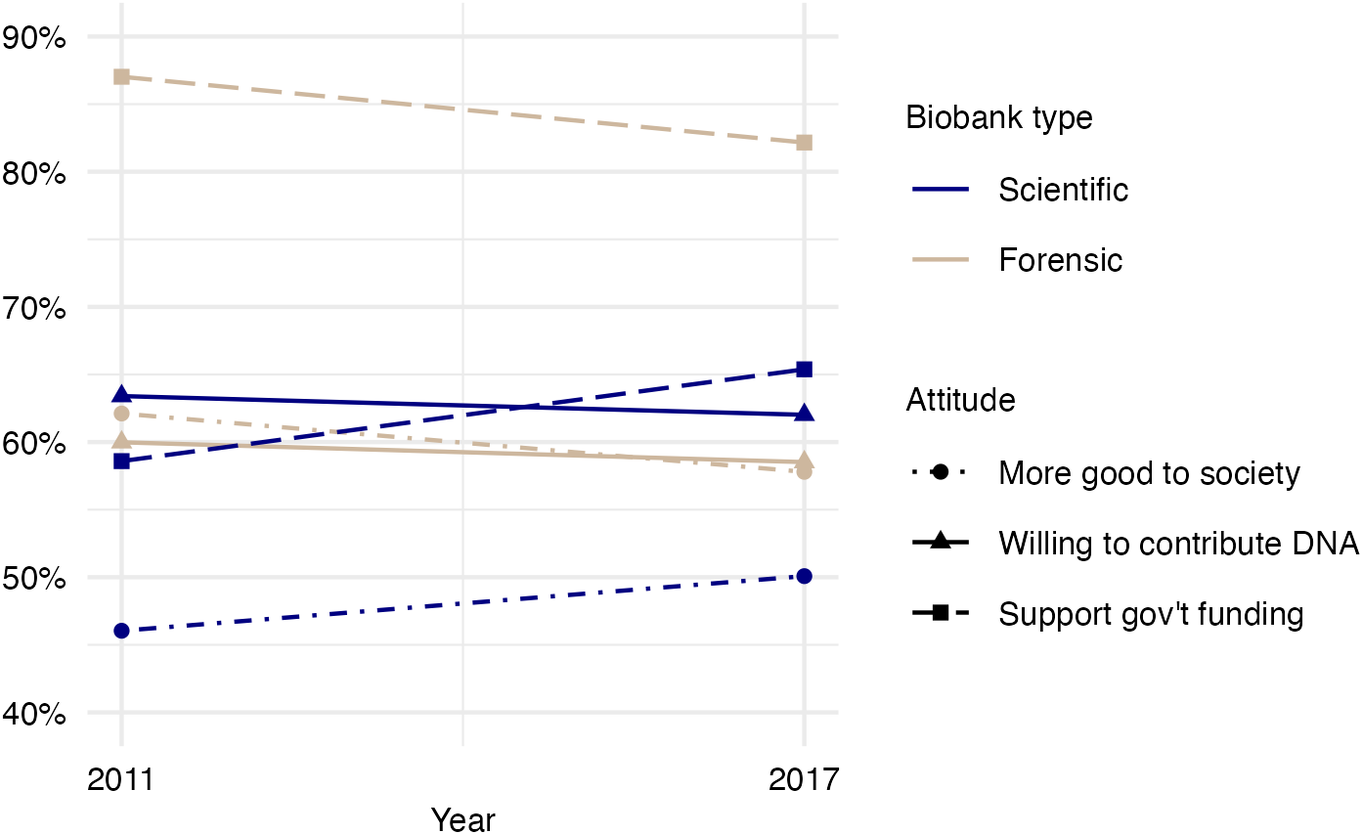
Figure 2. Long description
The x-axis is labeled Year with tick marks at 2011 and 2017. The y-axis is labeled with percentages from 40 percent to 90 percent in increments of 10 percent. There are two biobank types: Scientific (blue lines) and Forensic (tan lines). Three attitudes are tracked: More good to society (dotted line with circles), Willing to contribute DNA (solid line with triangles), Support government funding (dashed line with squares). For Scientific biobanks, ‘More good to society’ rises from about 46 percent in 2011 to about 50 percent in 2017, ‘Willing to contribute DNA’ is stable near 64 percent, and ‘Support government funding’ rises from about 60 percent to 65 percent. For Forensic biobanks, ‘More good to society’ declines from about 62 percent to 59 percent, ‘Willing to contribute DNA’ remains stable at about 60 percent, and ‘Support government funding’ declines from about 87 percent to 83 percent. The legend at the right clarifies line styles and colors for each attitude and biobank type.
Such aggregate analyses may disguise substantial intra-individual change, however, with positive and negative movement canceling out in the aggregate. Thus, we examine the extent of such change for panelists who remained in Ipsos’ KnowledgePanel from 2011 through 2017. Figure 3 depicts individual-level change for views on good/harm, willingness to donate, and government funding for both types of biobanks. Blue (or dark gray) represents perfect attitude stability; dark green and dark tan (or medium gray with + or −) represent a small change (one unit of a three-point answer scale, or two units of a four-point answer scale); light green and light tan (or light gray with + or −) represent an attitude reversal.
Individual-level attitude change among panelists from 2011 to 2017. Note: The legend quantifies the magnitude of individual-level change between 2011 and 2017. “Small” is a 1-point change for 3-category responses or 1–2 points for 4-category responses. “Max” is a 2-point or 3–4-point change for 3- and 4-category response options, respectively.

Figure 3. Long description
The chart contains six stacked bars arranged in two rows and three columns. Columns represent attitude domains: Good versus harm, Contribute DN A, and Government funding. Rows represent biobank types: the top row is Scientific biobanks, the bottom row is Forensic biobanks. Each bar is segmented vertically by change magnitude and direction, with color coding: light tan for maximum negative, dark tan for small negative, dark blue for no change, dark green for small positive, and light green for maximum positive. For Scientific biobanks: Good versus harm shows 1 percent max negative, 17 percent small negative, 64 percent no change, 17 percent small positive, 2 percent max positive. Contribute DNA shows 1 percent max negative, 26 percent small negative, 48 percent no change, 21 percent small positive, 3 percent max positive. Government funding shows 19 percent small negative, 53 percent no change, 28 percent small positive. For Forensic biobanks: Good versus harm shows 1 percent max negative, 21 percent small negative, 64 percent no change, 11 percent small positive, 2 percent max positive. Contribute DNA shows 5 percent max negative, 24 percent small negative, 46 percent no change, 22 percent small positive, 3 percent max positive. Government funding shows 2 percent max negative, 28 percent small negative, 53 percent no change, 17 percent small positive. The legend at the bottom defines the color coding for change magnitude and direction.
Between 46 and 64% of participants, depending on the item, offered the exact same answers to these questions after six years. Of the responses that shifted, nearly all (87 to 100%) changed by only one point of a three-point scale or two points of a four-point scale. Only up to 8% of all responses changed the maximum amount of two or more points. In short, individuals’ attitudes were quite stable over six years—considerably more than depicted in the canonical works that raised concern over non-attitudes (see especially Converse, Reference Converse and Apter1964). In sum, these results support Hypothesis 3 (individual stability over time).
Reasons for (Un)willingness to participate in a biobank
We next consider Hypothesis 4, which addresses respondents’ reasons for their (un)willingness to contribute to a biobank. Are respondents capable of offering coherent, meaningful rationales for the view they just expressed regarding willingness (or lack thereof) to participate in a biobank? Table 1 summarizes responses. Columns A and B give the proportion of coded responses that fall in each value or interest category, while columns C and D give the proportion of respondents invoking a given value/interest who are willing to contribute a DNA sample to a biobank. Thus, for example, in Column A, we see that 24% of the coded respondents in GKAP 1 invoke the value of “autonomy” in explaining the respondent’s (un)willingness to contribute to a scientific biobank. In Column C, we see that only 10–14% of the respondents invoking autonomy are willing to contribute a DNA sample to a scientific biobank.
Proportion of participants coded into value or interest categories, and proportion of each category willing/somewhat willing to contribute to DNA biobank. (GKAP 2011 and 2017)

Table 1. Long description
Beginning at the top row, the coded response categories are Authority, Autonomy, Knowledge, Self or family, Group, Society, Health or Justice, and Other (substantive). For each category, values are presented horizontally across four main column groups: Column A and Column B show the proportion of total coded responses mentioning value or interest for Scientific and Forensic contexts, respectively, in 2011 and 2017. Column C and Column D show the proportion in each category who are somewhat willing or willing to contribute to a DNA biobank for Scientific and Forensic contexts, respectively, in 2011 and 2017. For Authority, proportions are less than 1 percent in Columns A for both years, 5 percent and 6 percent in Columns B, 92 percent and 100 percent in Column C, and 76 percent and 73 percent in Column D. Autonomy shows 24 percent in Columns A, 17 percent in Columns B, 14 percent and 10 percent in Column C, and 10 percent and 4 percent in Column D. Knowledge is 37 percent and 41 percent in Columns A, 7 percent and 6 percent in Columns B, 95 percent and 97 percent in Column C, and 87 percent and 88 percent in Column D. Self or family is 22 percent and 16 percent in Columns A, 28 percent in Columns B, 80 percent and 77 percent in Column C, and 83 percent and 75 percent in Column D. Group is 1 percent in Columns A and B, 63 percent and 81 percent in Column C, and 39 percent and 15 percent in Column D. Society is 15 percent and 11 percent in Columns A, 8 percent in Columns B, 96 percent and 97 percent in Column C, and 97 percent and 95 percent in Column D. Health or Justice is 19 percent and 26 percent in Columns A, 40 percent and 43 percent in Columns B, 98 percent in Columns C, and 88 percent and 81 percent in Column D. Other (substantive) is 8 percent and 9 percent in Columns A, 16 percent and 14 percent in Columns B, 22 percent and 19 percent in Column C, and 14 percent and 11 percent in Column D. Coded responses total 3,100 and 1,254 for Scientific, and 2,994 and 1,185 for Forensic, in 2011 and 2017, respectively. Asterisks indicate 30 or fewer respondents. Totals exceed 100 percent as responses may be coded into multiple categories.
Note: Columns A and B represent the percentage of all responses coded into a given value or interest category. Columns C and D represent the percentage of responses within a value or interest category that were willing/somewhat willing to contribute to a biobank. Denominator is all open-ended responses that had substantive meaning, regardless of whether they fell into our defined value or interest categories. Proportions are weighted within each cross-section. Totals exceed 100% because responses could be coded into multiple value categories. * indicates 30 or fewer respondents.
The meanings behind the data in Table 1 are best understood by considering the coding criteria and examples of coded comments for each value or interest:
Autonomy and Authority: Respect for authority is seldom invoked but is strongly associated with willingness to engage with biobanks. Nearly all references are in the forensic arena. Typical responses include “in order to help the police,” “if order by the cort to do so. and its by law. Then I will,” or simply “the law is the law.”Footnote 13
Autonomy, in contrast, is one of the most common explanations, almost always invoked as a reason for not contributing to a biobank. About a fifth of responses in both years and both arenas assert autonomy. Dozens of respondents write simply “privacy,” “my rights,” “it’s mine,” or “my choice” (the latter appears especially in the medical arena). Some expand on the theme: “My DNA is no one else’s business; neither the gov’t or some ‘biobank’ needs my DNA for any reason, and I would not donate a specimen for the specific reasons of PERSONAL FREEDOM & FREEDOM FROM INTRUSIVE LAWS!!!!!”
As this comment suggests and the literature review reinforces, claims to privacy or control over property are often entwined with mistrust in institutions. This combination usually brings with it a vehement tone, with much capitalization and assertive punctuation. The theme of mistrust tends to be generalized beyond the medical or scientific arena, often to an amorphous “they”—for example, “NOT KNOW ENOUGH AND MAKES YOU SOMEWHAT FEEL LIKE BEING A GUINEA PIG AND USE FOR THEIR OWN PERSONAL EXPERIMENTS.” Occasional responses display more or specific knowledge: “It’s about trust. I heard about Henrietta Lacks died of cervical cancer and her tissues lives on in medical science labs w/o her consent nor her family consent.” In the forensic domain, occasional responses focus on criminal justice officials or the police, but the government in general is almost always the focus: “THE GOVERNMENT KNOWS TOO MUCH ALREADY.”
Reasons based on autonomy are unique in their occasional framing as political or legal philosophy: “The Fourth Amendment of the US Constitution protects Americans from unreasonable search and seizure of property, and other forms of scrutiny without probable cause.” But not all are philosophical: “get your swabs out of my face!”
Knowledge: We describe the invocation of knowledge as an epistemic value. Display of or enthusiasm for knowledge is the most prominent category in the scientific domain, where it is almost always associated with willingness to contribute a DNA sample. In contrast, knowledge is uncommon in the forensic domain—although, when used, it is also strongly associated with participatory intent.
Some responses invoking knowledge to explain participation link respect for knowledge to personal experience in using evidence: “I’m an attorney, and know that science-based evidence carries far more weight than, for example, confessions.” More often, responses showing respect for knowledge focus on the desire for more rather than possession of enough. Brief but telling answers such as “curious,” “interesting,” and “truth” are common. For some respondents, the pursuit of knowledge is personal: “My son has a blood disease that produces blood clots in his body at any reason. The doctors at XXXX clinic don’t know what causes it.” Others speak in more abstract terms: “I THINK IT WILL BE GREAT TO KNOW AND FIND OUT THINGS.” Another knowledge-based theme demonstrates understanding of why the respondent’s DNA would be informative. The word “sample” or “sampling” occurs frequently: “If my sample is useful, I think is great to collaborate and is painless, easy, very practical process for the person.”
More generally, knowledge may be valued instrumentally (“We always make better decisions if we have more information.”) or intrinsically (“I believe in advancing scientific knowledge and helping people who want to do research—even if it will never help me personally.”).
Self, Group, and Society: Some reasons for (un)willingness to donate a DNA sample revolve around interests rather than values. They focus on the person him- or herself, or on people whom a respondent represents or wishes to help. A focus on the self or family is second in popularity only to justice in the legal arena, although it is not quite as prominent in the scientific arena. It is mostly associated in both arenas with willingness to contribute a DNA sample.
In the scientific arena, some people express general hope that “It might help me and my ancestors.” Others seek to prevent or cure diseases such as “Alzheimer’s Disease (that affects people in my family).” In the forensic arena, respondents often express concern about crimes affecting themselves or a family member: “Having my info on file may help solve a crime where I am the victim.”Footnote 14 In contrast, a link between self- or family-based interest and unwillingness to contribute often involves perception of a risk of material or mental harm: “Because I’m not likely to be committing serious crimes and would not want to take the chance that a DNA test turns out a false positive for my sample.” Sometimes people in this category simply reject any implicit bargain between self and society: “Nothing to do with me. Unless it was to clear my name, I would not be interested.”
An assertion of interest in the self or family frequently occurs in conjunction with autonomy. For example, “I would want to know, first, what safeguards there were in terms of my privacy; and to think through what the implications would be if the DNA showed I was at risk for a serious disease, etc.” But advocacy for self or family can also be linked to interest in helping others. Regarding scientific biobanks, one person said, “IF MY OWN CHILDREN OR ANY DEPENTANTS of my FAMILY can someday be helped by my willingness to do this, and of course other folks, who might be helped…THEN SO BE IT.” A criminal justice example similarly focuses on intertwined personal and public benefits: “If you are innocent you have nothing to hide. It could exonerate you right off, saving the public and me time and money.”
Based on fears of discrimination reported in prior literature, we expected to receive rationales invoking a social group to which a respondent belonged or in which they felt an interest. As Table 1 shows, however, and despite societal discussion of group differences or discrimination in the genomics arena, almost no responses referred to any social group. This is particularly striking given that we defined “social group” broadly to include groups characterized by race, religion, profession, or anything else.Footnote 15
Nonetheless, the few evocations of social groups are intriguing. One person would not contribute to a scientific biobank “because as an African American I understand the United States has a history of exploiting the use of cells from African Americans.” Conversely, another would contribute to a forensic biobank because “historically, being African American, the justice system has not always been in my favor. Hopefully, with concrete DNA evidence we can continue to free innocent men and women convicted of crimes they did not commit.”
Finally, interest in helping society in general falls between the most and least popular explanations. It is overwhelmingly associated with willingness to contribute to both types of DNA databases. Hundreds of respondents wrote that they wished “to help” or a synonym. Some expressed broad moral commitments—“for the better of the human race” (scientific), or “Yes I would be more willing to help. These are people lives we are talking about” (forensic). Others wrote about their hope for societal progress. Examples include: “ Me gusta contribuir con los avances para un futuro mejor. Y ser parte de nuevas curas para generaciones futuras seria un honor.”Footnote 16 And, “to allow future generations to distinguish between the DNA of law abiding citizens and rule out the bad.” More than a few treated the questions as a moral test: “that’s the kind of person I am” or “because I’m a good person.”
Health and Justice: The final two rationales proffered for levels of biobank participation are paired, domain-specific values—health in the scientific and justice in the forensic arena. About a fifth of scientific responses focus on health, and about two-fifths of forensic responses focus on justice. Health is almost always associated with willingness to contribute to a scientific biobank, as is justice with regard to a legal biobank.
Many health responses use the words “cure,” “disease,” “health,” “treat,” or close synonyms. For example, “May help … study/develop treatment/cures for diseases.” Comments often invoke optimism and faith in the benevolence and efficacy of the medical and scientific professions. Optimism is sometimes grounded in knowledge of success—“[I]f certain drugs can be used to better benefit people with certain genetic markers, why would we not want to fund that research and contribute to the breakthrough?”—and sometimes in the experience of failure: “If there was something that I could do to help someone figure out what causes anyone to have a stroke or what else could be done to prevent diabetes I would not think twice about [contributing].”
Justice too usually suggests optimism or faith in the efficacy and benevolence of the criminal justice system. “Fair” or its synonyms is a common term: contributing to a forensic biobank will help “to keep the justice system honest and fair.” This faith can be general—“BECAUSE I BELIEVE IT HELPS OUR COUNTRY TO BE SAFE FROM BAD PEOPLE”—or specific—“I believe that are many innocent people in our current prison system and would like to see this change.”Footnote 17
The examples quoted here could be multiplied many times over. To some degree, they reinforce prior qualitative research on biobanking: GKAP respondents emphasize their own and their family’s interests, are concerned about privacy and suspicious of societal authorities or governmental institutions, and express altruistic and caring sentiments. But some of our findings go beyond or even contradict prior research. We find a strong commitment to advancing knowledge, and we uncover a sharp contrast between respect for authority and commitment to autonomy. For the first time, we see evidence that respondents invoke different values in connection with the distinct arenas and purposes of biobanking. Finally, in contrast to prior studies, we see a surprising lack of framing around group identity or interest, or around religious faith and experience.
Associations between values and opinions
Expressed opinions about biobanks are largely stable over six years. Most respondents offer rationales for their views that are interpretable, connected with moral systems, and sensibly linked to the view being expressed. Those two findings enable the third analysis of the threat to public opinion surveys’ legitimacy encapsulated in the term “non-attitude.” This is Hypothesis 5, focused on the coherence of the relation between reasons and attitudes. At the individual level, how closely are value and interest rationales connected, immediately and over the long run, to the respondent’s expressed opinions? We answer this question by using multivariate regression to examine whether there exists psychological constraint (as Converse, Reference Converse and Apter1964 operationalizes the concept) between respondents’ open-ended statements and their closed-ended opinions regarding biobanks. Ceteris paribus , we anticipate that respondents who invoke the values of authority, pursuit of knowledge, and health or justice, or who express an interest in helping others in society, are likely to favor forensic or scientific biobanks—believing they do more good than harm and supporting government funding. With slightly less confidence, we have the same expectation regarding self and family interest. Conversely, we expect those who value autonomy and, more tentatively, those who invoke interest in a social group, to be less favorable.
Using the full cross-sectional samples for both 2011 and 2017, Figures 4 and 5 provide results for the good/harm and government funding outcome variables regressed onto the open-ended rationales as well as the controls. All displayed variables range from 0 to 1 for ease of interpretation and comparison of coefficient sizes. Scientific and forensic biobank models are presented separately, as are the survey years (2011 in blue [dark gray] circles and 2017 in beige [light gray] triangles).Footnote 18 Though the outcome variables are ordinal, we estimate the models with ordinary least squares regression (Angrist & Pischke, Reference Angrist and Pischke2009). The results are very similar with logistic regression (see Tables C and D in Appendix A). The models include all demographic variables, but we display only those with results that are substantial in size and of theoretical interest.
Associations between attitudes toward scientific biobanks and expressed values/interests. Note: OLS estimation with 95% confidence intervals from two-tailed t-tests. N = 3,804 in 2011 (blue circle with dotted line) and N = 1,585 in 2017 (beige triangle with solid line). Other non-Hispanic races are not shown. Models include controls for age, gender, household income, education, and religiosity. Reference categories are non-Hispanic white for race/ethnicity and liberal for political ideology. The knowledge scale consists of seven equidistant points ranging from 0 to 1. All F statistics are significant with p < 0.001.

Figure 4. Long description
The left panel plots the association between values, interests, and demographics with the belief that DNA samples do more good than harm. The right panel plots the same predictors with support for government funding of biobanks. Both panels share the same y-axis, listing Authority, Autonomy, Knowledge, Self, Group, Society, Health, Moderate, Conservative, Black non-Hispanic, Hispanic, and Knowledge scale from top to bottom. The x-axis in both panels ranges from negative 0.5 to positive 0.5, representing the strength and direction of association. For each variable, blue circles with dotted lines represent 2011 data, and beige triangles with solid lines represent 2017 data, each with 95 percent confidence intervals. Authority and Knowledge show the strongest positive associations in both years and panels. Conservative shows negative associations. The Knowledge scale is positively associated in both years. Adjusted R-squared values and F statistics are reported below each panel, indicating model fit. All F statistics are significant with p less than 0.001.
Associations between attitudes toward forensic biobanks and expressed values/interests. Note: See Figure 4 Note.

Figure 5. Long description
The left panel shows a horizontal dot plot with the title ‘Use of DNA samples will do more good than harm (1), equal amounts (0.5), or more harm than good (0) to society.’ The right panel shows a similar plot titled ‘Gov't funding: strongly support (1); somewhat support (0.67); somewhat oppose (0.33); strongly oppose (0).’ Both panels have the same y-axis labels, listed from top to bottom: Authority, Autonomy, Knowledge, Self, Group, Society, Justice, Moderate, Conservative, Black, non-Hisp, Hispanic, Knowledge scale. For each label, two data points are plotted: a beige triangle for 2011 and a blue circle for 2017. The x-axis ranges from negative 0.50 to positive 0.50. In both panels, most data points cluster near zero, with some positive associations for Authority, Knowledge, and Justice, and negative or near-zero associations for Conservative and Black, non-Hispanic. The bottom of each panel lists adjusted R-squared values: left panel, 0.136 and 0.155; right panel, 0.103 and 0.153. F-statistics are also provided: left panel, F(25,3778)=24.9; F(23,1561)=13.7; right panel, F(25,3778)=18.4; F(23,1561)=13.5.
In Figure 4, as we anticipated, authority, knowledge, society, and health are associated with positive views of scientific biobanks; autonomy is associated with more negative views. In all but one instance (authority in 2011 for good/harm), these coefficients meet standard thresholds for statistical significance (p < .05). Self and group are not systematically related to attitudes about scientific biobanks. (See Appendix B, Tables 2–5 for full regression tables.) To make these results more concrete, a respondent invoking authority in 2017 on average expresses 0.44 more support than others for government funding of scientific biobanks, a more than one-category (.33) difference in question response. The demographic effects are relatively small by comparison, with the exception of ideology in the funding models (with moderates and conservatives less interested in funding than liberals)Footnote 19 and genetics knowledge in both models.
In Figure 5, as we anticipated, authority and justice are associated with support for forensic biobanks. Those who value autonomy are skeptical of these biobanks.Footnote 20 Findings elsewhere are mixed, and, overall, effect sizes are smaller. With respect to the closed-ended demographic measures, genetic knowledge is once again strongly associated with the outcomes—even more so than are the open-ended values—but coefficients on the other demographic or political variables are small and usually not statistically significant.
As a final step in this analysis, we consider a possible causal impact of rationales on survey respondents’ biobanking attitudes. To do so, we regressed panel participants’ attitudes as conveyed in 2017 on their open-ended rationales expressed in 2011, along with closed-ended demographic controls (see Figure 6). (See Appendix B, Tables 6–9, for full regression tables.) Most associations discussed above persist over time,Footnote 21 and these results are fairly robust to the addition of a control for panelists’ attitudes on the same survey question expressed in 2011. By controlling for 2011 attitudes, we can evaluate the extent to which values expressed in 2011 predict 2017 attitudes, net of the like-attitude held in 2011. Figure 6 reveals substantial attitude stability across the two survey years, meaning that our analyses provide a stringent test of whether values underpin attitudes. (The relative attitude stability also explains why coefficient sizes for the value- and interest-based rationales are smaller in these over-time models.)
Predicting 2017 attitudes using 2011 values/interests (panelists only). Note: Figure 4 Note applies, with the exception that the samples include only respondents who completed both 2011 and 2017 surveys (N = 846).

Figure 6. Long description
Top left panel predicts 2017 attitudes on whether DNA samples do more good than harm in a scientific context. The y-axis lists predictors: 2011 attitude, Authority, Autonomy, Knowledge, Self, Group, Society, Health, Moderate, Conservative, Black non-Hispanic, Hispanic, Knowledge scale. The x-axis ranges from negative 0.50 to 0.50. Most coefficients cluster near zero, with 2011 attitude showing the largest positive effects. Adjusted R-squared is 0.231 with 2011 attitude, 0.152 without. Top right panel predicts 2017 support for government funding in a scientific context, using the same predictors. 2011 attitude again shows the strongest positive effects. Adjusted R-squared is 0.261 with 2011 attitude, 0.168 without. Bottom left panel predicts 2017 attitudes on DNA samples in a forensic context. The same predictors are used; 2011 attitude and Society have the largest positive coefficients. Adjusted R-squared is 0.183 with 2011 attitude, 0.133 without. Bottom right panel predicts 2017 support for government funding in a forensic context. 2011 attitude is again the strongest predictor. Adjusted R-squared is 0.245 with 2011 attitude, 0.108 without. Across all panels, confidence intervals are shown for each coefficient, and most non-attitude variables have small or near-zero effects.
Relationship between attitudes on scientific and forensic biobanks
Our findings thus far support the claim that survey respondents can offer intelligible, meaningful views on complex technologies about which they know little. A final exploratory analysis remains, based on the fact that our examination has considered scientific and forensic biobanks in parallel fashion. We have noted differences in responses to the two types of biobanks, but we have not yet engaged with the relationship between views of scientific and forensic biobanks.
Data from the 2017 survey show that 50% of respondents hold unequivocally positive views of scientific biobanks’ effect on society (saying they do “more good than harm” to society). Separately, 58% hold such views of forensic biobanks. Are these respondents enthusiastic about both biobanking types, or only one? If the former, these respondents may be expressing a general enthusiasm for innovation in genomics technology (and others expressing general caution or opposition). If the latter, they may care more about the particular use of new genomics technology.
Table 2 displays a cross-tabulation of the “good/harm” questions for each biobank type. A plurality (41%) of 2017 GKAP respondents believe that both scientific and forensic biobanks are more likely to do good than harm to society. In total, 9% hold this positive view of scientific biobanks only and 17% for forensic biobanks only. Just 2% believe both types of biobanks will do more harm than good.
Crosstabulation of scientific and forensic biobank support, GKAP 2017
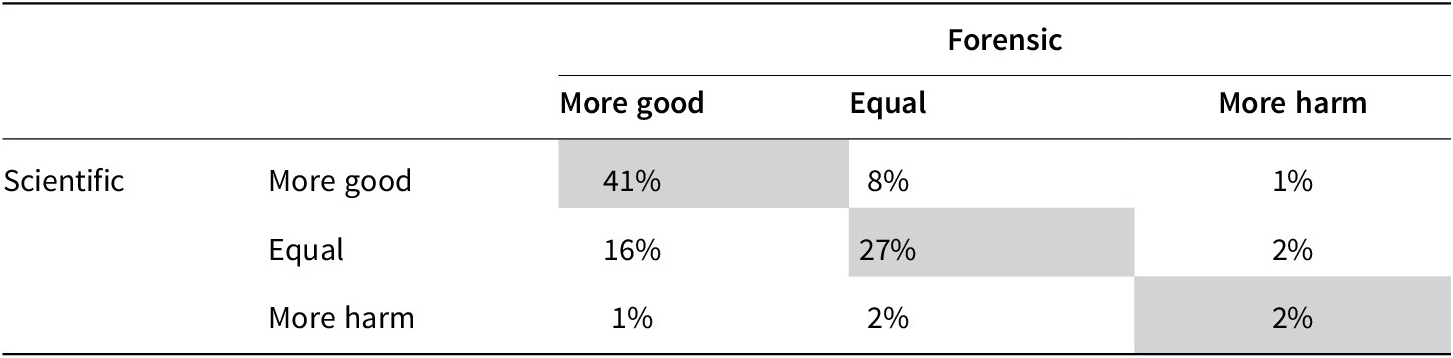
Table 2. Long description
The table consists of three scientific support rows—‘More good’, ‘Equal’, and ‘More harm’—each intersecting with three forensic support columns—‘More good’, ‘Equal’, and ‘More harm’. In the first row, ‘More good’ scientific support aligns with 41 percent ‘More good’, 8 percent ‘Equal’, and 1 percent ‘More harm’ forensic support. The second row, ‘Equal’ scientific support, corresponds to 16 percent ‘More good’, 27 percent ‘Equal’, and 2 percent ‘More harm’ forensic support. The third row, ‘More harm’ scientific support, matches 1 percent ‘More good’, 2 percent ‘Equal’, and 2 percent ‘More harm’ forensic support. The highest concentration is in the ‘More good’ scientific and forensic intersection at 41 percent, while the lowest values are found in the ‘More harm’ categories.
To better understand this pattern, we ran a multinomial logistic regression with the outcome variable being biobank supporter type: (1) supporter of both types of biobanks, i.e., those who view both types of biobanks as doing more good than harm to society, (2) supporter of only scientific biobanks, (3) supporter of only forensic biobanks, and (4) respondents who are neutral or negative about both types of biobanks, i.e., those saying biobanks will do equal amounts of good and harm or more harm than good. Predictor variables are identical to those in previous regression models. Table 3 presents the log odds for the three different supporter types, with those who are neutral or opposed as the reference category.
Associations between biobank supporter type and values/interests.
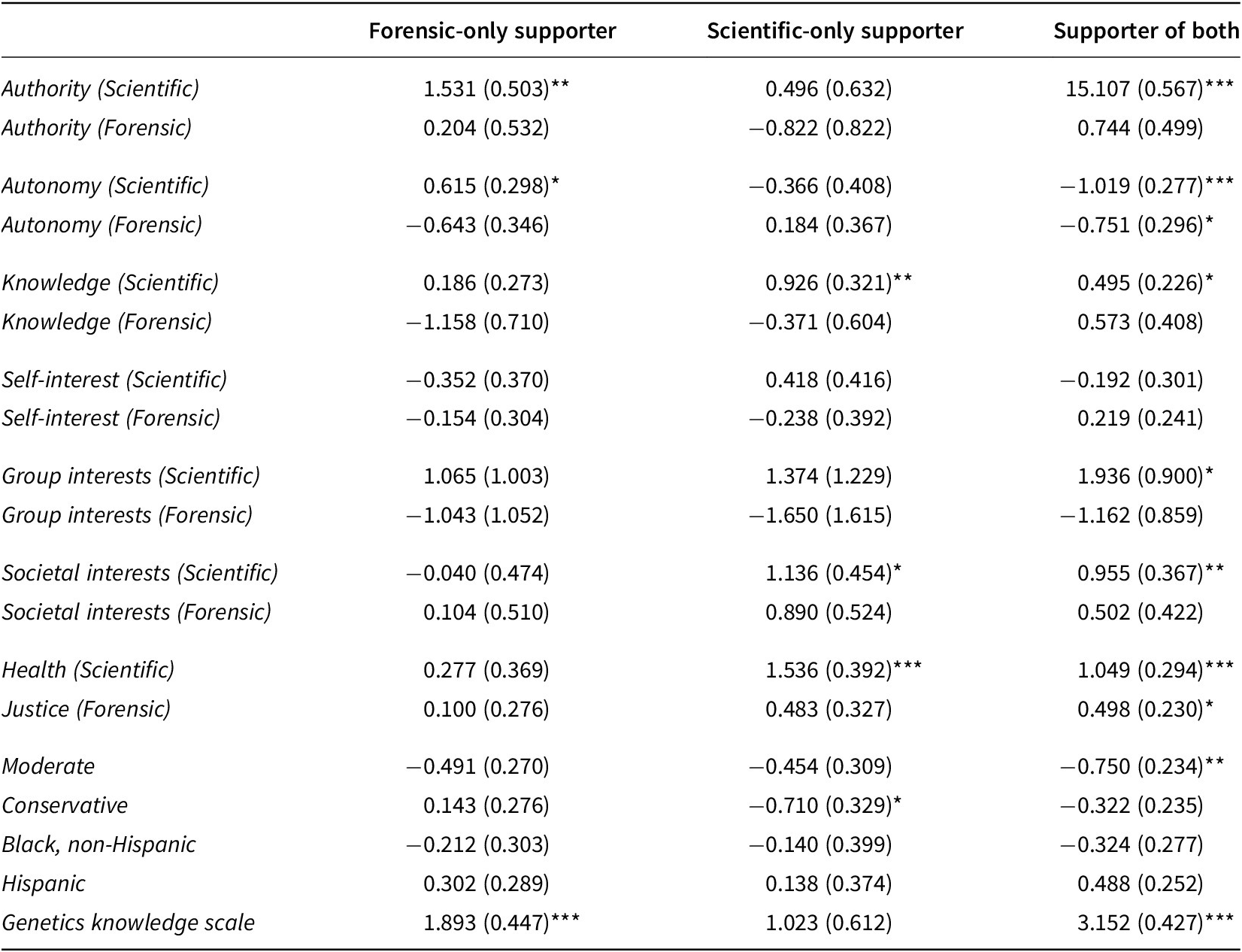
Table 3. Long description
The table has rows for values and interests and three columns for supporter types: forensic-only, scientific-only, and supporter of both. Each cell shows the log odds (standard error) for that value or interest, with asterisks indicating significance. For Authority (Scientific), forensic-only is 1.531 (0.503) double asterisk, scientific-only is 0.496 (0.632), both is 15.107 (0.567) triple asterisk. For Authority (Forensic), forensic-only is 0.204 (0.532), scientific-only is minus 0.822 (0.822), both is 0.744 (0.499). For Autonomy (Scientific), forensic-only is 0.615 (0.298) single asterisk, scientific-only is minus 0.366 (0.408), both is minus 1.019 (0.277) triple asterisk. For Autonomy (Forensic), forensic-only is minus 0.643 (0.346), scientific-only is 0.184 (0.367), both is minus 0.751 (0.296) single asterisk. For Knowledge (Scientific), forensic-only is 0.186 (0.273), scientific-only is 0.926 (0.321) double asterisk, both is 0.495 (0.226) single asterisk. For Knowledge (Forensic), forensic-only is minus 1.158 (0.710), scientific-only is minus 0.371 (0.604), both is 0.573 (0.408). For Self-interest (Scientific), forensic-only is minus 0.352 (0.370), scientific-only is 0.418 (0.416), both is minus 0.192 (0.301). For Self-interest (Forensic), forensic-only is minus 0.154 (0.304), scientific-only is minus 0.238 (0.392), both is 0.219 (0.241). For Group interests (Scientific), forensic-only is 1.065 (1.003), scientific-only is 1.374 (1.229), both is 1.936 (0.900) single asterisk. For Group interests (Forensic), forensic-only is minus 1.043 (1.052), scientific-only is minus 1.650 (1.615), both is minus 1.162 (0.859). For Societal interests (Scientific), forensic-only is minus 0.040 (0.474), scientific-only is 1.136 (0.454) single asterisk, both is 0.955 (0.367) double asterisk. For Societal interests (Forensic), forensic-only is 0.104 (0.510), scientific-only is 0.890 (0.524), both is 0.502 (0.422). For Health (Scientific), forensic-only is 0.277 (0.369), scientific-only is 1.536 (0.392) triple asterisk, both is 1.049 (0.294) triple asterisk. For Justice (Forensic), forensic-only is 0.100 (0.276), scientific-only is 0.483 (0.327), both is 0.498 (0.230) single asterisk. For Moderate, forensic-only is minus 0.491 (0.270), scientific-only is minus 0.454 (0.309), both is minus 0.750 (0.234) double asterisk. For Conservative, forensic-only is 0.143 (0.276), scientific-only is minus 0.710 (0.329) single asterisk, both is minus 0.322 (0.235). For Black, non-Hispanic, forensic-only is minus 0.212 (0.303), scientific-only is minus 0.140 (0.399), both is minus 0.324 (0.277). For Hispanic, forensic-only is 0.302 (0.289), scientific-only is 0.138 (0.374), both is 0.488 (0.252). For Genetics knowledge scale, forensic-only is 1.893 (0.447) triple asterisk, scientific-only is 1.023 (0.612), both is 3.152 (0.427) triple asterisk. Asterisks denote significance: triple for p less than 0.001, double for p less than 0.01, single for p less than 0.05. Reference categories are non-Hispanic white for race/ethnicity and liberal for political ideology. All estimates control for age, gender, income, education, and religiosity. The genetics knowledge scale ranges from 0 to 1.
Note: *** p < 0.001, ** p < 0.01, * p < 0.05. Log odds from multinomial logistic regression with standard errors in parentheses. The reference category includes those who are neutral or opposed to both biobank types. All estimates include controls for age, gender, household income, education, and religiosity. Reference categories are non-Hispanic white for race/ethnicity and liberal for political ideology. The genetics knowledge scale consists of seven equidistant points ranging from 0 to 1. Other non-Hispanic races are not shown. N = 1,585 and Pseudo R2 = .165. Full results are shown in Appendix B, Table 10.
Beginning with the demographic variables, identifying as a conservative (versus liberal) is negatively correlated with being a scientific-only supporter. Having more genetics knowledge, as measured by our closed-ended knowledge scale, is positively related to supporting forensic biobanks only or both. Turning to values, we find mostly intuitive results. Respondents valuing knowledge, societal interest, and health in the scientific context are more likely to be scientific-only or both-type supporters. Valuing autonomy in either scientific or forensic domains is negatively associated with being a supporter of both biobank types, while—less intuitively—those who value autonomy in the scientific domain are more likely than others to be forensic-only supporters.Footnote 22 Finally, valuing authority (in the scientific domain only) is positively associated with supporting both types of biobanks as well as forensic biobanks only.
In sum, just as demographic variables do little to explain support for biobanking in general, they contribute little to understanding why some people distinguish between societal uses of DNA databases. The two notable exceptions are political ideology and genetics knowledge. We find more support for the idea that individuals can use important values or interests to discern differences between societal uses of genomics, although there are also some unexpected linkages that deserve exploration in further research.
Discussion and conclusion
To our knowledge, our study represents the first study of Americans’ views on forensic biobanks with a representative sample of the public, and the first to compare views on scientific and forensic biobanks with representative samples. We find that the American public at the time of our surveys on balance supports both types of biobanks but is somewhat more enthused about forensic ones. In contrast, many convey mixed or neutral views regarding both types of biobanks—but very few express grave concerns, contrary to what some conventional wisdom suggests.
Our study is also the first to examine views on both scientific and forensic biobanks over time. We find views to be remarkably stable over six years, suggesting that members of the public are expressing meaningful views, not non-attitudes.
Finally, our study is unique in probing Americans’ rationales for their willingness to participate in both types of biobanks. Despite little familiarity with biobanks, respondents’ interest- and value-based rationales are coherent, often heartfelt, and generally logically associated with support for, or opposition to, biobanks. Respondents who invoke authority, devotion to knowledge, and interest in furthering societal health or justice tend to support biobanking. Those who invoke autonomy (often framed as mistrust) tend to oppose biobanking. In contrast, the only demographic characteristic that is consistently associated with levels of support for, or opposition to, biobanking is evidence of strong genetics knowledge.
We want to acknowledge two important limitations of our research. The first is that our study is primarily a descriptive study of public opinion and does not inquire deeply into causes of opinion and opinion change beyond individuals’ values. We want to acknowledge that the information environment, especially mainstream and social media, likely plays a significant role in biobanking opinion—directly as well as indirectly, via discussions of the utility of genomics for public purposes. Perhaps the best-known example of this is the popular crime drama CSI: Crime Scene Investigation. Indeed, the fact that Americans were more enthused about forensic than scientific biobanks could in part stem from that program (see Brewer & Ley, Reference Brewer and Ley2010). Other possible influences include popular books, such as The Immortal Life of Henrietta Lacks (Skloot 2011). We do not have a direct measure of media exposure in our survey; however, we do have a media proxy in the form of the question “how much have you heard or read about [type of biobank].” If we add this measure to the models depicted in Figures 5 and 6, we find a positive association with biobank support, similar to the effects of the knowledge scale. (The one exception to this pattern is that the media attention proxy is not associated with saying that scientific biobanks are likely to do more good than harm to society.) Note that including this variable in the models does not substantively change the coefficients on other variables. We also want to point out that, in a separate set of models, we show that our results do not vary by level of knowledge about genetics (see Appendix C).
A second limitation of our study is the fact that the most recent of the GKAP surveys was completed in 2017. This raises the question of their contemporary relevance, especially given recent salient events such as the Black Lives Matter protest movement and the COVID-19 pandemic. Gallup Poll’s Social Series survey data provide one way to track changing views in recent years (Gallup.com, n.d.). The proportion of respondents reporting very little confidence in the criminal justice system has risen steadily from 27% in 2011 to 32% in 2017 and finally to 37% in 2025. Both Republicans and Democrats lost confidence. Among Republicans, those with very little confidence increased from 20 to 29%. Among Democrats, those with very little confidence increased from 25 to 40%. By comparison, the proportion of Americans expressing “very little confidence” in the medical system held steady at about 25% of the population from 2011 to 2017. Mistrust then declined, rose, and ended at 28% in 2025. Republicans and Democrats have not differed systematically since 2011. With these data in mind, it is plausible that, across party lines, Americans’ support for forensic biobanks has declined since our last survey in 2017; however, we see no reason to think that views of scientific biobanks have changed.
Possible temporal changes also do not challenge our most important set of findings—those addressing democratic competence. Given the opportunity in open-ended text boxes, most respondents were eager to explain their views on genetic biobanks, provided cogent observations that reflected and made sense of their level of support, and proved able to engage with differences between the two types of biobank. Americans’ perspectives also remained remarkably stable at the individual level over a six-year period. We conclude that lay persons are willing and able to offer relevant, meaningful opinions that can help policymakers determine the societally appropriate role of genomic biobanks in the criminal justice and scientific arenas. While lay people are by definition not experts, they have what Thomas Dietz (Dietz, Reference Dietz2013) calls “community expertise.” In a democratic polity, they ought to have the opportunity to inform debates over the development, use, and regulation of new technologies.
Supplementary material
The supplementary material for this article can be found at http://doi.org/10.1017/pls.2026.10022.
Acknowledgments
We thank Maya Sen for her many contributions to the 2011 survey and the project surrounding it, and Cara Kupferman, Claire Sukumar, Ifeoma White-Thorpe, Ryan Zhang, and especially C.J. Passarella for superb research assistance. We also thank Soubhik Barari, Dan Carpenter, Dalton Conley, Jamie Druckman, Stanley Feldman, Erika Franklin Fowler, and Patrick Sturgis as well as participants in the Harvard American Politics Research Workshop for very helpful feedback on earlier drafts. Note that Meredith Dost is Assistant Professor of Political Science and International Relations at Carleton College as of fall 2026. Names are listed in alphabetical order; the authors contributed equally to this article.
Data availability statement
Data and replication code are available at https://doi.org/10.7910/DVN/YFVVUX
Financial support
We gratefully acknowledge funding to Jennifer Hochschild and Maya Sen from the Robert Wood Johnson Foundation Investigator Award in Health Policy Research.
Competing interests
All authors declare that they have no conflicts of interest.
Ethical standards
This study received Institutional Review Board approval from the Committee on the Use of Human Subjects at Harvard University (approval # F19928-101). All participants consented in writing to participate in this research, and all data received by the researchers were anonymized. Appendix E provides details on the human subject protections of the survey provider.
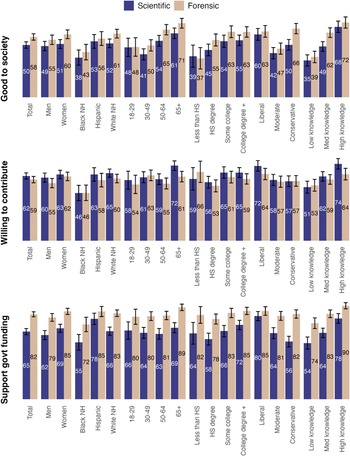
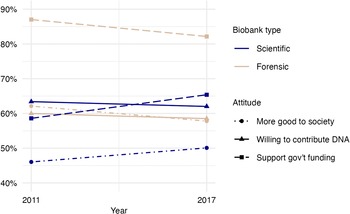
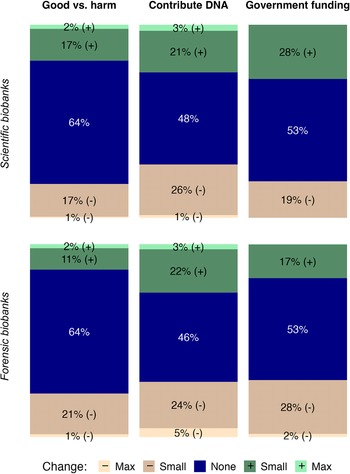
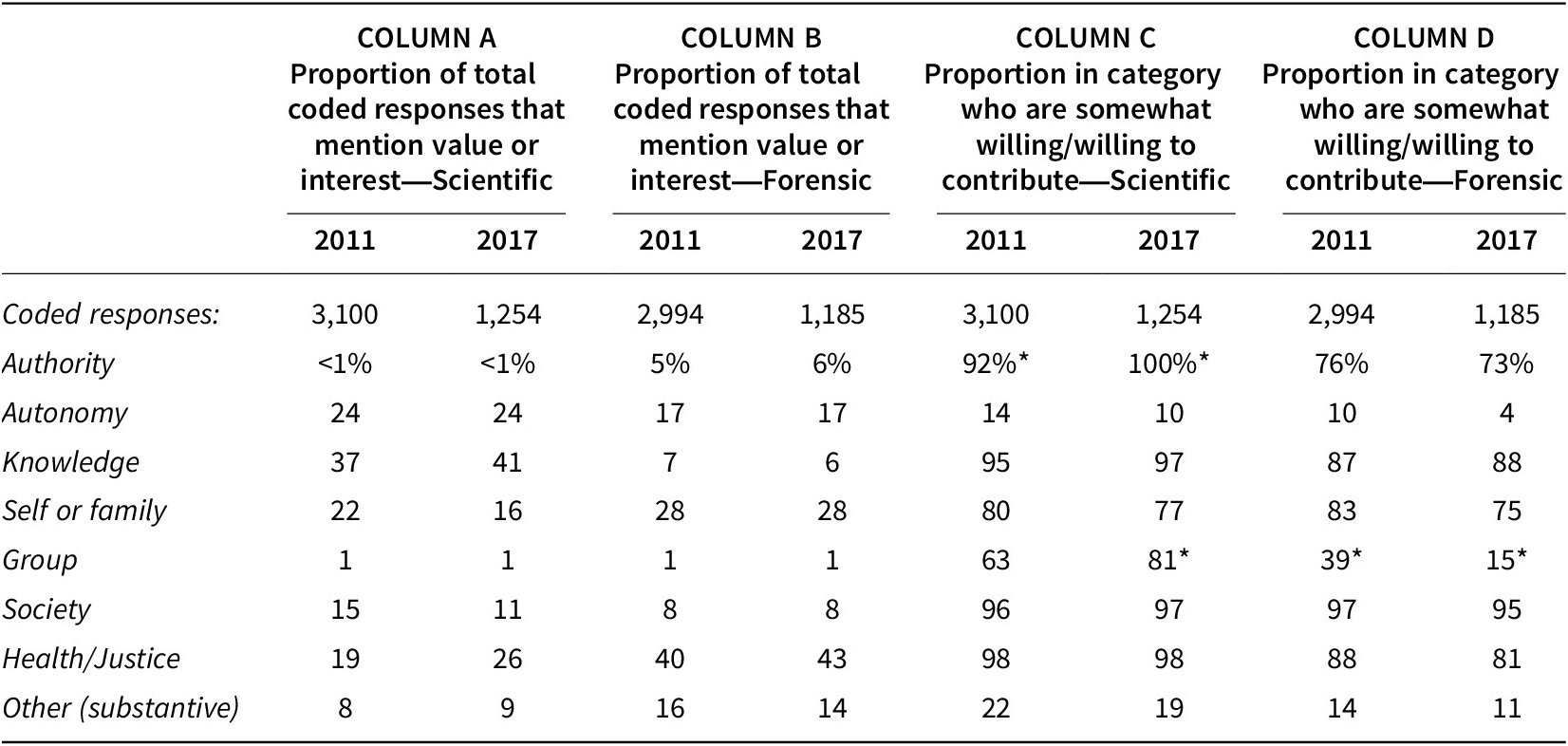
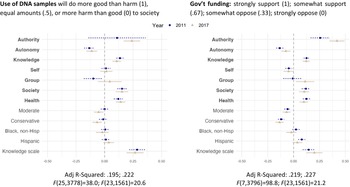
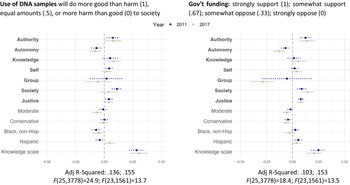
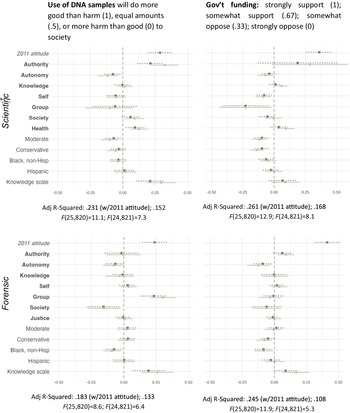
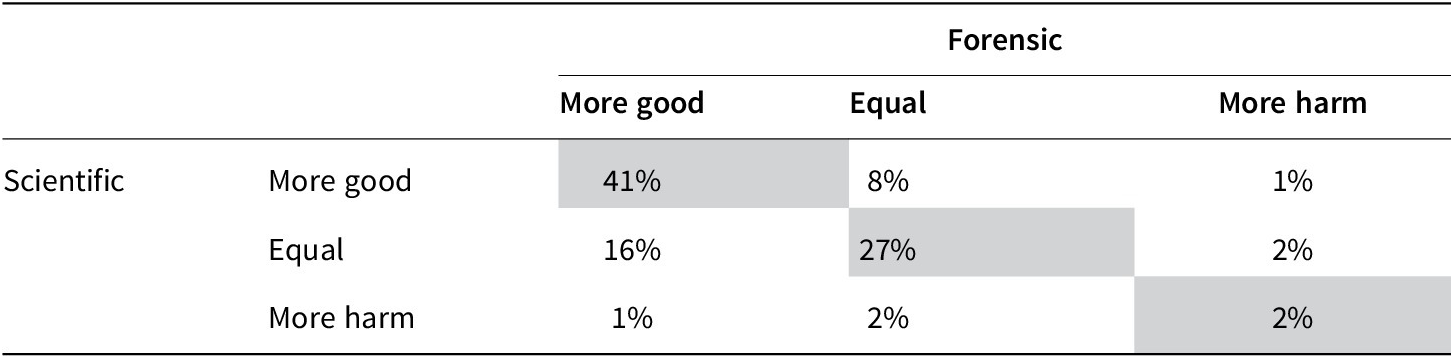
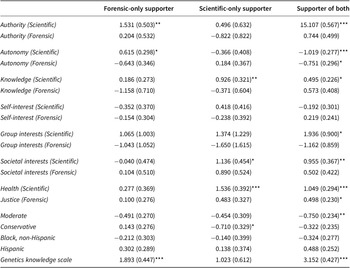


 Open access

