


-
Understand the nature of anxiety disorders in children and adolescents, including their range, epidemiology and presentation
-
Comprehend the complex aetiological influences (e.g. genetics, family environment, brain development) on the pathogenesis of these disorders
-
Appreciate the assessment process for anxiety disorders in this group and the variety of treatment options, encompassing psychological therapies and psychoactive medications
Anxiety is an uncomfortable experience characterised by emotional (e.g. unease, distress), cognitive (e.g. fears, worries, helplessness), physiological (e.g. muscle tension) and behavioural (e.g. avoidance) changes. The anxious child commonly focuses on the future, fearful of danger, either specific or undefined. Anxiety that is excessive or contextually or developmentally inappropriate, causing significant distress and/or functional impairment, can be classified as an anxiety disorder. Although rarely recognised, too little anxiety might also be considered ‘disordered’: callous unemotional traits may be such a manifestation (manifestation Reference Frick, Lilienfeld and EllisFrick 1999).
In ICD-10, anxiety disorders are classified into a cluster of related conditions: separation anxiety, generalised anxiety, social phobia, panic disorder and simple phobias (World Health Organization 1992). Although beyond the remit of this chapter, anxiety can feature in other psychiatric conditions. In obsessive–compulsive disorder (OCD), obsessions generate anxiety which the individual then tries to neutralise through compulsions. Indeed, DSM-5 defines and differentiates obsessions and compulsions through their causal relationships with anxiety (American Psychiatric Association 2013). This may be a simplification: although compulsions may initially relieve anxiety, they can aggravate it as the disorder progresses (Reference Heyman, Mataix-Cols and FinebergHeyman 2006). Reference Swedo, Leonard and GarveySwedo et al (1998) describe separation anxiety as a characteristic feature of the proposed ‘paediatric autoimmune neuropsychiatric disorders associated with streptococcal infections’ (PANDAS) subset of OCD, although recent research disputes this (Reference Murphy, Storch and LewinMurphy 2012). Anxiety also occurs in post-traumatic stress disorder (PTSD), particularly when traumatic memories are triggered. Avoidance behaviour and hypervigilance are common and can be seen as an adaptive response to avoid further dangers, albeit one that is excessive, distressing and/or impairing. Anxiety in PTSD may relate to dysfunction of the hypothalamic–pituitary–adrenal (HPA) axis.
From an evolutionary perspective, anxiety is an emotional response intrinsically shaped by natural selection: its very purpose is to ensure safety, avoid danger and keep the individual alive (at least long enough to pass on their genes). Anxiety is therefore a normal and important facet of human experience and functioning.
The various subtypes of anxiety disorder probably evolved to give a selective advantage of superior protection against particular kinds of danger (Reference Marks and NesseMarks 1994). Yet commonalities exist between these subtypes, for example in their shared behavioural responses (Table 1). Again, this may be evolutionarily driven, reflecting a need for flexibility in dealing with uncertain or indefinable threats. Furthermore, physiological and behavioural responses useful against one type of danger are likely to protect against other types as well. Indeed, our hunter-gatherer ancestors would have faced multiple threats: predators, starvation, climate, falls and exposure.
Evolutionary protective roles associated with anxiety-related behaviours

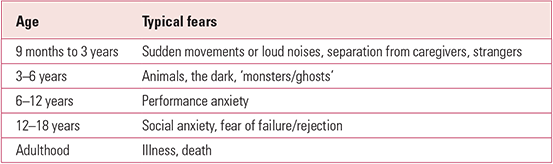
The shifting manifestation of anxiety through different developmental stages may also have an evolutionary basis (Table 2). Fears tend to occur at the age they become adaptive: for example, fear of animals occurs from 2 to 3 years old, when there is increased exploration, and this may have a protective value. In adolescents, developing cognitive maturity endows individuals with a growing capacity to imagine and ruminate on abstract threats. The developmental aspect of anxiety is an important consideration: what is seen as normal for a young child may be considered a disorder in an older child. So, for example, screaming when separated from a mother may be quite normative in a preschool child, but in an 11-year-old it would be unusual.
Fear and its typical developmental stages
Epidemiology
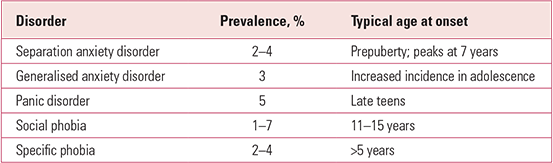
Anxiety disorders are some of the most prevalent psychiatric disorders in children and adolescents, particularly among girls (Table 3). They also frequently co-occur: at least one-third of children presenting with an anxiety disorder meet the criteria for two or more subtypes. Moreover, general comorbidity with other psychiatric disorders – including oppositional defiant disorder and attention-deficit hyperactivity disorder (ADHD), substance misuse and depression – is approximately 40%; comorbidity with depressive disorder is about 28%. Anxiety disorders are frequently found in autism spectrum disorders, with rates as high as 84% (Reference Muris, Steerneman and MerckelbachMuris 1998).
Epidemiological characteristics of anxiety disorders in children and adolescents
Clinical features of anxiety disorders
The ICD-10 diagnostic criteria for all types of anxiety disorder stipulate the presence of both emotional and physiological symptoms, either in a specific feared situation or for a specific duration.
Separation anxiety disorder
Separation anxiety disorder is an excessive and/ or developmentally inappropriate anxiety about separation from attachment figures. Excessive worrying about the figure's welfare may also occur. Impairment might include school refusal (possibly exacerbated by specific school anxiety), avoidance of visiting friends’ homes or difficulty sleeping alone. The ICD-10 criteria include onset before 6 years of age and duration of at least 4 weeks.
Generalised anxiety disorder
Generalised anxiety disorder encompasses multiple and persistent worries (e.g. regarding family, friendships, school or appearance) not restricted to any one situation or object, lasting at least 6 months. Comorbidity (e.g. with depression) is particularly common. In ICD-10, diagnostic criteria for children and adolescents are differentiated from those for adults. The former include an additional ‘difficult-to-control worries’ criterion, and requires three or more physical symptoms from six, a condensed list to reflect the reduced prominence of autonomic arousal in children.
It is not clear yet what modifications will be made in the revised version, ICD-11, although Reference ShearShear (2012) proposes various changes for the adult criteria, including a requirement that worry must occur frequently and/or excessively, focusing the somatic criteria on restlessness and muscle tension, and permitting the diagnosis even in the presence of other anxiety disorders. Interestingly, these criteria are already present in the ICD-10 children's diagnosis.
Social phobia and social anxiety disorder of childhood
Social phobia is accompanied by an excessive fear of embarrassment or scrutiny. Avoidance of particular social situations reinforces the associated anxiety and could eventually impede social skills development and, at the most extreme, result in debilitating social isolation. In DSM-5, ‘social phobia’ is a single category, but in ICD-10 it is differentiated from ‘social anxiety disorder of childhood’ (American Psychiatric Association 2013). Social anxiety disorder of childhood occurs at a developmental stage at which social anxiety reactions are appropriate – diagnostically, it must manifest before 6 years of age – but in an affected child they involve significant severity, persistence or impairment lasting for at least 4 weeks. In contrast, social phobia reflects social anxiety later in life, and includes blushing, shaking, or fear of vomiting, micturition or defecation; no minimum duration of symptoms is given.
Emmelkamp (2012) argues that ICD-11 should also include a minimum symptom duration for social phobia, following the new inclusion of a minimum 6 months’ duration in DSM-5. Reference Wittchen, Stein and KesslerWittchen et al (1999) distinguish between generalised social phobia (across multiple settings) and non-generalised: the former is associated with greater chronicity, impairment and comorbidity. Autism spectrum disorder is a differential (particularly where social isolation is a function of impaired social communication and/or lack of social interest rather than frank anxiety) or commonly comorbid diagnosis.
Specific or simple phobias
Specific or simple phobias are defined by excessive fear of specific objects or situations that provoke an immediate anxiety response on exposure, causing significant distress and/or functional impairment, for example because of avoidance. Reference FyerFyer (1998) describes subtypes relating to: animals, specific situations, nature/environment (e.g. water, heights) and blood injury. Not only do they differ in their triggers, they may also vary with respect to symptomatology, age at onset and heritability. Blood injury phobia, for example, has a distinct biphasic physiological response. Some typical fears held by children and adolescents are described in Table 2. The DSM-5 criteria no longer require the individual to recognise that their anxiety is excessive or unreasonable: instead, the onus is on the clinician to determine whether anxiety is disproportionate to the situation.
This particular DSM-5 criterion of due proportion also relates to agoraphobia, which encompasses an often overlapping cluster of phobias relating to at least two of crowds, public places, leaving home and travelling alone. Various specific worries may reinforce the anxiety, including fears of collapsing, being left helpless in public and being unable to escape. Persistent avoidance may result in the experience of minimal anxiety, so that the agoraphobia escalates until the individual becomes housebound.
Panic disorder
Panic disorder involves repeated and unexpected attacks of severe anxiety not restricted to any particular situation, accompanied by multiple physical symptoms. It often originates from the occasional panic attack in adolescence, although only a small proportion of young people who have such attacks subsequently develop the disorder. Anticipatory anxiety about future attacks or their perceived implications (e.g. losing control, being judged) is common. In keeping with ICD-10, DSM-5 has now separated agoraphobia and panic disorder into distinct entities, particularly as many individuals with agoraphobia do not experience panic symptoms.
Assessment
Children and young people with anxiety disorders may not present to services overtly complaining of anxiety. They may also have difficulty articulating their experiences or be confused or embarrassed by them. Nevertheless, making an early diagnosis is important, as many anxiety disorders remain untreated in the community, causing distress and impeding academic and social functioning.
Assessment should differentiate between developmentally appropriate fears and anxiety disorders. It should also consider potential aetiological factors and developmental influences. Differential and comorbid diagnoses include autism spectrum disorder, oppositional defiant disorder, ADHD, depression and PTSD. Differentiating between diagnoses can be challenging given the overlapping symptoms. For example, fatigue, irritability, and sleep and concentration problems can occur in both generalised anxiety and depression.
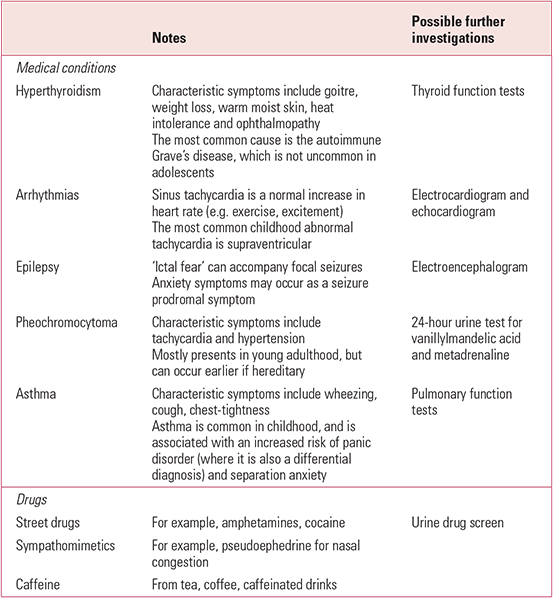
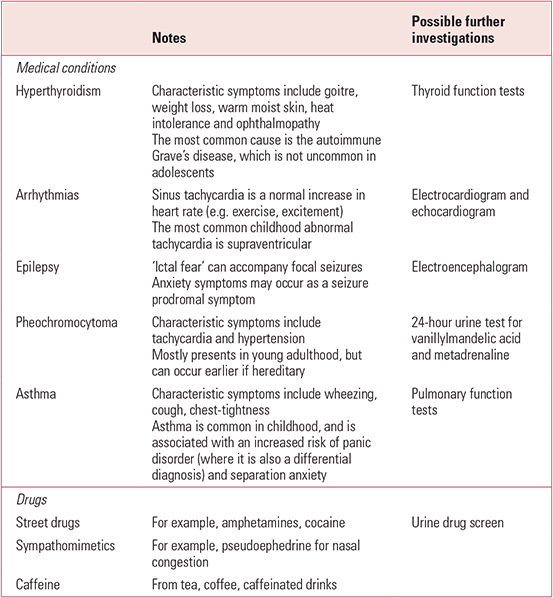
History-taking should aim to exclude medical disorders and drugs that can mimic or provoke anxiety states (Table 4). If an organic disorder suggests itself, it can be followed up through physical examination and targeted investigations (BMJ Evidence Centre 2016). Liaison with general practitioners and/or paediatricians may be indicated.
Medical conditions and drugs that can mimic anxiety symptoms, with potential further investigations
Validated self-report scales, such as the Multidimensional Anxiety Scale for Children (MASC; Reference March, Parker and SullivanMarch 1997) and the Screen for Child Anxiety Related Disorders (SCARED; Reference Birmaher, Khetarpal and BrentBirmaher 1997), have shown correlation with anxiety severity and treatment effects. Clinician scales include the Pediatric Anxiety Rating Scale (PARS; Research Unit on Pediatric Psychopharmacology Anxiety Study Group 2003). Assessment should also focus on the distress and impairment to the individual and their family. This would include suicidality, which is increased in anxiety disorders. Adolescents may also resort to alcohol and other substances as ways of coping.
Aetiology
Despite their symptomatic variation, anxiety disorders may share some common aetiological or pathophysiological characteristics.
Temperament
Research suggests a relationship between preexisting personality traits and later anxiety disorders. One such trait is inhibited temperament, or behavioural inhibition, defined by Kagan and colleagues as a tendency to show apprehension to novel or unfamiliar situations, together with raised reactivity of the sympathetic nervous system (Reference Kagan and SnidmanKagan 1999). Such behavioural inhibition in early childhood is a risk factor for anxiety, particularly social phobia, later in childhood and adolescence (Reference Perez-Edgar and FoxPerez-Edgar 2005). Similar associations have been reported for shyness and an anxious-resistant attachment style. The 21-year longitudinal study by Reference Goodwin, Fergusson and HorwoodGoodwin et al (2004) showed that anxious/ withdrawn behaviour at 8 years of age increased the risk of anxiety disorders and depression in adolescence and young adulthood.
However, the relationship is complex, it varies according to the study (Reference Degnan, Almas and FoxDegnan 2010) and much of the association may lie at the extremes of temperament (Reference Kagan, Snidman and McManisKagan 2002). Furthermore, other moderating factors (e.g. peer rejection, exclusion and victimisation) play a significant role as the child develops.
Genetics
Family studies indicate an association between parental anxiety and depression and anxiety disorders in offspring. The association appears to be largely non-specific (in terms of anxiety subcategory), except for a particular relationship between parental panic disorder and offspring separation anxiety disorder (Reference Biederman, Monuteaux and FaraoneBiederman 2004).
Twin studies in adults suggest that generational transmission is primarily accounted for by non-shared environmental and genetic factors, with a heritability of about 40% for panic, generalised and agoraphobic anxiety, and specific phobias (Reference Hettema, Neale and KendlerHettema 2001). Such studies in children show more variation. For example, Reference Bolton, Eley and O'ConnorBolton et al (2006) reported a heritability of 60% for specific phobias and 73% for separation anxiety disorder, whereas Reference Eley, Rijsdijk and PerrinEley et al (2008) found the figures to be 46% and 14% respectively. Both studies show significant influence of non-shared environmental factors. However, the latter study also shows a significant shared environmental contribution for specific phobia (at 0.27, as for non-shared factors), which suggests that familial factors (such as parental overprotection or control) may be as influential as non-shared factors (e.g. conditioning) for this disorder.
Furthermore, research indicates both common and distinct genetic aetiologies across some types of anxiety and affective disorder. For example, generalised anxiety and major depressive disorders appear to share a common genetic aetiology, but diverge in their non-shared environmental factors. Twin studies in adults indicate a similar genetic substrate underlying panic disorder and generalised anxiety disorder, but a distinct one for specific phobias (Reference Hettema, Prescott and MyersHettema 2005). Another twin study showed a shared genetic diathesis between adult-onset panic attacks and earlier separation anxiety disorder, but not for what was previously called childhood overanxious disorder (Reference Roberson-Nay, Eaves and HettemaRoberson-Nay 2012). The paediatric anxiety twin study by Reference Eley, Rijsdijk and PerrinEley et al (2008), however, showed no significant genetic covariation between specific phobias, separation anxiety and social phobia, implying distinct biological substrates for each.
Twin studies therefore indicate that genetic factors endow a broad susceptibility to anxiety in general as opposed to a specific disorder. This again may reflect an evolutionary ‘balancing act’ between specialisation (to deal potently with specific threats) and generalisation (necessary for protection against several types of danger arising from the evolutionary coexistence of multiple threats). There is probably a stronger relationship between genetic factors and various neuropsychological processes (including behavioural inhibition) or traits (e.g. neuroticism), rather than specific psychiatric disorders.
Finally, adult molecular genetic studies suggest serotonin transporter dysfunction, although paediatric studies are few. Reference Fox, Nichols and HendersonFox et al (2005) explored gene–environment interaction and showed that children with a combination of the short 5-HTT allele and low social support had increased risk for behavioural inhibition.
Neuroimaging and neuropsychology
The few neuroimaging studies conducted with children have shown some interesting structural findings. Replicating results in adults, Reference Koolschijn, van IJzendoorn and Bakermans-KranenburgKoolschijn et al (2013) found an association between reduced left hippocampal volume and higher scores for anxiety and depression on the Child Behavior Checklist. Reference Milham, Nugent and DrevetsMilham et al (2005) found reduced left amygdala grey matter volume associated with anxiety disorders. Intriguingly, a pilot follow-up study showed recoveries in amygdala grey matter volume after successful 8-week intervention with selective serotonin reuptake inhibitors (SSRIs) or psychotherapy.
Various studies have explored relationships between early temperament and neuroanatomy or neurophysiology. Reference Schwartz, Wright and ShinSchwartz et al (2003) used functional magnetic resonance imaging (MRI) to show that adults who had had an inhibited (compared with uninhibited) temperament at 2 years old showed greater amygdala signal response to novel faces. Reference Schwartz, Kunwar and GreveSchwartz et al (2010) subsequently used structural MRI to show that adults who had had a low-reactive temperament in infancy showed greater left orbitofrontal cortex thickness, whereas those who had had high reactivity showed greater right ventromedial prefrontal cortex thickness. Functional MRI research in young people with generalised anxiety disorder has shown that variations in state anxiety modulate associations between attention and activation in a ‘fear circuit’ encompassing the amygdala, ventral prefrontal cortex and the anterior cingulate cortex (Reference McClure, Monk and NelsonMcClure 2007).
Reference PinePine (2007) has attempted to unify neuroimaging research (e.g. amygdala–prefrontal circuitry abnormalities) with affective and cognitive research (e.g. memory, learning, emotional regulation and fear conditioning) in a single neuropsychological model. This describes various information-processing biases in anxiety disorder: for example, the tendency to direct attention towards environmental threats, and appraise such threats as particularly meaningful and dangerous. The development of neural substrates underlying the fear response and anxiety is likely to involve complex gene–environment interplay, including the influence of early life experiences (Reference Fox, Nichols and HendersonFox 2005).
Parent–child interactions and the family environment
Retrospective and observational studies have found that parental over control, rejection and modelling of anxious behaviours are consistently and significantly associated with childhood shyness and paediatric anxiety disorders (Reference Degnan, Almas and FoxDegnan 2010). Specifically, aspects of parenting behaviour (e.g. oversolicitous, intrusive or controlling parenting), style (e.g. authoritarian, permissive, low-proactive and low-supportive parenting as perceived by children, or overprotective parenting as reported by parents), psychopathology (e.g. parents diagnosed with panic disorder and/or depression), personality (e.g. maternal neuroticism) and the parent–child relationship (e.g. insecure attachment) have been linked to heightened behavioural inhibition and/or anxiety in children. Parenting factors are therefore likely moderators of the relationship between behavioural inhibition and the development of childhood anxiety. However, the degree to which the child's anxiety has a reverse influence on parenting is unclear. These parenting styles are also implicated in other child psychiatric disorders.
Such parenting may hinder the development of autonomy, resulting in a child who experiences the environment as more threatening and less safe. Lack of parental emotional availability, for example as a result of social adversities such as overcrowding, poverty and marital discord, may impede parents’ ability to help contain their children's anxieties; children living in families where there are such chronic stressors are more likely to experience insecurity and to feel anxious and fearful. Also, parents who themselves have increased trait anxiety and sense of threat may exacerbate the perception of threat in these children and obstruct the development of coping skills; modelling may therefore be a significant contributing factor.
Parent–child interaction also, of course, occurs in utero, and research shows that maternal stress or anxiety in pregnancy can influence psychopathology in the offspring (Reference GloverGlover 2011). Reference Bergman, Sarkar and O'ConnorBergman et al (2007) showed that prenatal stress predicts observed fearfulness in the offspring. Reference Van den Bergh and MarcoenVan den Bergh & Marcoen (2004) used multiple regression analysis to show that maternal state anxiety in the second (but not the third) trimester correlates with anxiety in 8- and 9-year-olds. Reference O'Connor, Heron and GloverO'Connor et al (2002) showed that antenatal anxiety (but not depression) in late pregnancy is independently associated with behavioural/emotional problems in 4-year-olds.
Prenatal stress may also lead to neuroanatomical changes in offspring, such as reduced hippocampal and grey matter volume (Reference GloverGlover 2011), consistent with neuroimaging data discussed above. From an evolutionary perspective, the effects of prenatal stress on fetal neurodevelopment may allow offspring to readily adapt to the same potentially stress-inducing environment as experienced by the mother. Reference GloverGlover (2011) also suggests that outcomes become non-adaptive if the manifesting anxiety is excessively extreme for the respective environment.
Traumatic life events
Traumatic events predispose not only to PTSD, but also to various anxiety disorders, particularly specific phobia and social phobia (Reference McLaughlin, Greif Green and GruberMcLaughlin 2012). Reference Pine, Cohen and JohnsonPine et al (2002) longitudinal study found that adverse life events in adolescence were associated with symptoms of generalised anxiety disorder in adulthood, but only in females.
Respiratory dysregulation
Recurrent dyspnoea, particularly in asthma, is a risk factor for paediatric anxiety disorders such as panic and separation anxiety (Reference Goodwin, Pine and HovenGoodwin 2003). Sensitivity to carbon dioxide, a respiratory stimulant, has also been found in children with anxiety disorders, particularly separation anxiety (Reference Pine, Klein and Roberson-NayPine 2005).
Interventions
The National Institute for Health and Care Excellence (NICE) guideline on generalised anxiety and panic disorders in adults covers principles that can be extrapolated to children and adolescents (NICE 2011). For example, early psychoeducation can help families understand the condition and provide reassurance, and self-help may encompass written and electronic materials. Interventions with a significant evidence base include cognitive–behavioural therapy (CBT) and SSRI medication. It is important to ascertain the expectations and preferences of the young people and their families and to make treatments developmentally appropriate.
CBT and psychological therapy
As already mentioned, the NICE guideline recommends CBT for anxiety disorders. It incorporates both cognitive (e.g. reframing, positive self-talk, challenging unhelpful thoughts, and weighing up evidence for and against expected events) and behavioural processes (e.g. systematic desensitisation, exposure and response prevention for specific phobias, relaxation training, modelling and rewarding wanted behaviour, and role-play).
Depending on the anxiety disorder and the child's age, either cognitive or behavioural strategies can be emphasised. Various manuals (e.g. Reference StallardStallard 2002) provide accessible material for both clinician and patient. Family and school can support the child and help with graded exposure tasks and experiments such as those described by Reference Kendall, Robin and HedtkeKendall et al (2005).
Two relatively recent meta-analyses of psychological therapies for anxiety disorders in children and young people (Reference Ishikawa, Okajima and MatsuokaIshikawa 2007; Reference Reynolds, Wilson and AustinReynolds 2012) also included a few trials relating to PTSD and OCD (Table 5). Both meta-analyses showed significant effect sizes for CBT, which remained significant but attenuated when analysis was limited to studies with an active control methodology (as opposed to waiting-list or treatment-as-usual groups). Both reported that involving parents had a positive but, perhaps surprisingly, relatively minor effect.
A comparison of two meta-analyses of the efficacy of psychological therapies for anxiety disorders
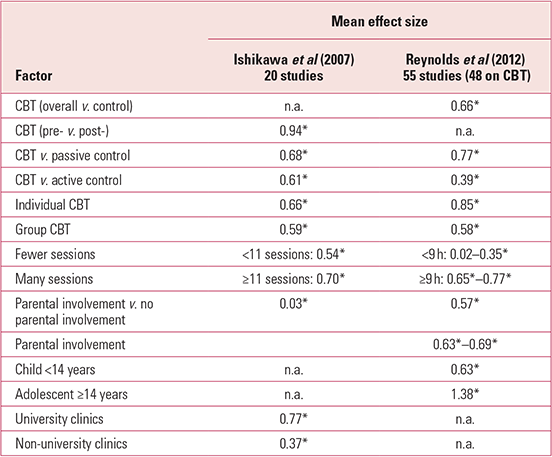
These two meta-analyses also yielded some divergent data, possibly because of their differing inclusion criteria, number of studies included, date of publication and outcome measures. While the Ishikawa team found little difference in effect size between delivering fewer versus many sessions, the Reynolds team showed that having less than 9 hours of therapy reduced the effect size and less than 4 hours had minimal therapeutic effect. And whereas the Ishikawa team demonstrated little difference in effect size between group and individual CBT, the Reynolds team showed a particularly high effect size for individual CBT. However, delivering CBT to a group may arguably enhance efficiency and provide peer support and reassurance. An open trial has recently shown evidence supporting a novel CBT package (Emotion Detectives Treatment Protocol) delivered to a group of children with various anxiety and depressive disorders (Reference Bilek and Ehrenreich-MayBilek 2012).
Computerised CBT packages such as Stressbusters (Reference Abeles, Verduyn and RobinsonAbeles 2009) have now been developed for childhood anxiety disorders. Their advantages and disadvantages are listed in Box 1 (Reference Richardson, Stallard and VellemanRichardson 2010). Two randomised controlled trials (RCTs), each with over 70 participants, showed significant differences between CBT (using the BRAVE-ONLINE package) and control groups. Furthermore, remission rates in the treatment groups were approximately 75% at 6 months (Reference March, Spence and DonovanMarch 2009) and at 12 months (Reference Spence, Holmes and MarchSpence 2006). Spence et al's study also included a clinic-based CBT arm; overall results showed no significant difference between internet- and clinic-delivered CBT.
Potential advantages
Reduces potential stigma of attending mental health service
May be easier to share personal information with a computer than face to face
Young people are a ‘digital native’ generation, at ease with technology
Useful if there are problems accessing face-to-face CBT (e.g. availability, waiting lists)
Packages accessible anytime, anywhere
Standardised outcome measures can be built into software packages
Potential disadvantages
Evaluation often shows high drop-out rate
Problematic if difficulties with internet access
Needs significant self-motivation to complete all modules
Difficulty re-creating all the specific and complex elements of face-to-face therapy, as well as therapeutic rapport
The evidence base for other forms of psychological therapy is less robust. Family therapy may help where dysfunctional patterns of family interaction influence the child's anxiety symptoms. Parents may also need support for their own difficulties with anxiety and/or separation to prevent them from exacerbating their child's symptoms.
Pharmacotherapy
Although NICE guidelines on paediatric social anxiety recommend that medication not be ‘routinely’ offered (NICE 2013), a Cochrane review concludes that several RCTs demonstrate SSRIs to be effective and generally well-tolerated treatments for paediatric anxiety disorders (Reference Ipser, Stein and HawkridgeIpser 2009). From 14 RCTs of SSRIs and SNRIs (serotonin–noradrenaline reuptake inhibitors) for paediatric anxiety disorders, the combined treatment response was significantly greater with medication (58.1%) than with placebo (31.5%), with NNT of 4. The NICE guidelines for adults advise that medication or CBT be tried if self-help or psychoeducational groups are unsuccessful, or if there is significant impairment. However, in children, research has shown added efficacy of combining medication with CBT (Reference Walkup, Albano and PiacentiniWalkup 2008). In practice, medication tends to be used in combination with psychological therapy where possible, and is perhaps most considered in older children with more severe symptoms, taking into account side-effect profiles and comorbid conditions.
Pharmacotherapy practice has shifted away from tricyclic antidepressants towards SSRIs for childhood anxiety disorders. These have a stronger evidence base and safer side-effect profiles, including relative safety in overdose. Research has demonstrated the efficacy of fluoxetine and fluvoxamine for paediatric social phobia, generalised anxiety disorder and separation anxiety disorder (Research Unit on Pediatric Psychopharmacology Anxiety Study Group 2001; Reference Birmaher, Axelson and MonkBirmaher 2003). Two studies support efficacy and tolerability of sertraline for childhood generalised anxiety disorder (Reference Rynn, Siqueland and RickelsRynn 2001; Reference Walkup, Albano and PiacentiniWalkup 2008); Walkup et al's study also included participants with social phobia and separation anxiety.
In studies of children and adolescents, the therapeutic use of SSRIs has been associated with suicidal ideation and non-fatal suicidal acts (of the order of 4%, v. about 2% in placebo groups), although the benefit of using them might outweigh the risk of emergent suicidal behaviour (Reference Hawton, Saunders and O'ConnorHawton 2012). This risk appears to relate to other diagnoses as well as depression. For depressive disorder, the Medicines and Healthcare products Regulatory Agency (MHRA; 2003) and NICE advise that only fluoxetine has a favourable risk–benefit profile, making it the first-line SSRI for depression. However, a recent reevaluation by NICE of evidence on depression has shown no increase in suicidal ideation in young people treated with antidepressants and psychological therapy compared with those treated with psychological therapy alone (Reference Hopkins, Crosland and ElliottHopkins 2015).
Although the situation regarding the relationship between suicidality and antidepressants in anxiety disorders is less clear, the Cochrane review of antidepressant use in paediatric anxiety disorders (Reference Ipser, Stein and HawkridgeIpser 2009) indicated an absolute rate of suicidal ideation of approximately 1%, primarily those taking paroxetine or venlafaxine. In the UK, no antidepressants are currently licensed for paediatric anxiety disorders, although sertraline and fluvoxamine are licensed for paediatric OCD.
There is little evidence to support the use of non-antidepressant medication. Studies have failed to show significant efficacy of benzodiazepines, and their side-effects, for example behavioural disinhibition, are a risk. Such side-effects can also occur for buspirone, although case reports and open studies have shown some efficacy. There have been few studies of beta blockers. Further information on pharmacotherapy in paediatric anxiety disorder can be found in Reference Sinita, Coghill and Huline-DickensSinita & Coghill (2014).
Prognosis
Studies evaluating longitudinal outcomes indicate that childhood anxiety disorders generally remit. For example, the prospective study by Reference Last, Perrin and HersenLast et al (1996) on children with a mean age of 12 years found that recovery rates over 3–4 years were 96% for separation anxiety disorder, 86% for social anxiety disorder, 80% for overanxious disorder, and about 70% for specific phobia and panic disorder. The prognosis for anxiety disorders depends on type of disorder, comorbidity, age at onset and severity at baseline. The 2-year longitudinal study by Reference Broeren, Muris and DiamantopoulouBroeren et al (2013), exploring developmental trajectories for various types of childhood anxiety symptoms, also showed that high levels of initial behavioural inhibition correlated with 2-year trajectories of higher anxiety.
A review by Reference WeemsWeems (2008) describes some inconsistencies across different research studies. For example, prospective longitudinal studies of childhood anxiety disorders have reported estimates of stability from 4 to 80%. These studies may show wide variability for many reasons (e.g. disorder type, age at onset, the informant, the sample, and the method and duration of assessment). Age at onset may be a significant factor, since there are specific age differences in the predominant expression of the symptoms of childhood anxiety: epidemiological data on the age at onset of anxiety disorders are generally consistent with the normative trajectories of fear development (Tables 2 and 3).
Concerning the prediction of adult-onset anxiety disorders, studies often point to little specificity. The community epidemiological study by Reference Bittner, Egger and ErkanliBittner et al (2007) showed that various anxiety disorders in childhood predicted anxiety and other psychiatric disorders in adolescence; the only exception was that generalised anxiety disorder specifically predicted only conduct disorder. In contrast, the longitudinal study by Reference Pine, Cohen and GurleyPine et al (1998) showed that adolescent social phobia predicted primarily social phobia in adulthood, whereas simple phobias predicted primarily simple phobias. They also found broad associations between generalised anxiety, panic and major depressive disorders, with a particularly strong association between adolescent depression and adult generalised anxiety disorder. The 7-year longitudinal study by Reference Aschenbrand, Kendall and WebbAschenbrand et al (2003) explored whether childhood separation anxiety specifically constitutes a precursor for later panic disorder and agoraphobia, but found no evidence of this. Overall, adolescent anxiety or depression predicts an approximate two- to threefold increase in risk for adult anxiety disorders (and for suicide attempts, psychiatric admissions, and alcohol and substance misuse).
Reference WeemsWeems (2008) argues for heterotypical continuity in anxiety disorder: although an individual's anxiety disorder may remit and return, often as a different disorder type, underneath lies a core maladaptive anxiety emotion that exhibits a larger degree of continuity. Various aetiological factors (e.g. genetic, temperamental, neuropsychological, interpersonal and environmental) may influence the emergence and course of anxiety disorders; normative developmental changes may also affect their trajectory and expression into specific disorders.
Conclusions
Paediatric anxiety disorders are relatively common and often disabling. They increase the risk of psychopathology in adult life, especially anxiety and depressive disorders. This chapter has necessarily presented a succinct review of a vast topic. The changing classifications require clinicians to be familiar with diagnostic criteria in order to detect these disorders, which are so often comorbid with other childhood psychiatric presentations. Research evidence is accumulating about the aetiology of these conditions, the contribution of genetics and environmental events, and the influence of parent and family interactions. Insights into the neuroimaging and neuropsychological findings are intriguing. Increasing our understanding of evidence-based interventions, including the role of psychopharmacology, is essential so that targeted interventions can be used to inform and support families and improve children's symptoms.
MCQs
Select the single best option for each question stem
-
1 Fear of the dark is most commonly observed in children aged:
-
a 9 months to 3 years
-
b 3–6 years
-
c 6–9 years
-
d 9–12 years
-
e 12–15 years.
-
-
2 The prevalence of panic disorders in late teens is:
-
a 0.5%
-
b 1%
-
c 2.5%
-
d 5%
-
e 10%.
-
-
3 As regards CBT for paediatric anxiety disorders, it is not true that:
-
a components may include reframing, systematic desensitisation, and exposure and response prevention
-
b there is evidence for efficacy of group-delivered CBT
-
c it specifically references psychological processes such as projection, displacement and acting out
-
d it is recommended by NICE guidelines
-
e there is evidence for efficacy of computerized CBT.
-
-
4 An inhibited temperament has been defined by Kagan et al as:
-
a a disinterest in new experiences, with suppression of the parasympathetic nervous system
-
b apprehension of novel situations, with raised reactivity of the sympathetic nervous system
-
c distress at the absence of the primary caregiver, with increased cortisol levels
-
d a marked fear of strangers, with increased activity in the left dorsolateral prefrontal cortex
-
e disregard for apparent danger, with increased activity in the HPA axis.
-
-
5 Which of the following medications is currently licensed for paediatric OCD?
-
a Buspirone
-
b Fluoxetine
-
c Sertraline
-
d Risperidone
-
e Escitalopram.
-
MCQ answers

| 1 | b | 2 | d | 3 | c | 4 | b | 5 | c |






eLetters
No eLetters have been published for this article.