

Population projections show that the number of First Nations people in Canada is expected to increase by 40 per cent between 2006 and 2031 (Malenfant & Morency, Reference Malenfant and Morency2011). A disproportionate amount of the growth will be among those aged 60 and older, who are expected to more than triple in number to 184,334 by 2031 (Malenfant & Morency, Reference Malenfant and Morency2011). First Nations populations have higher rates of many age-related chronic diseases compared with other populations in Canada (First Nations Information Governance Centre [FNIGC], 2012; Malenfant & Morency, Reference Malenfant and Morency2011; Reading, Reference Reading2009; Riediger, Lix, Lukianchuk, & Bruce, Reference Riediger, Lix, Lukianchuk and Bruce2014) with documented younger average age of onset for some conditions, such as diabetes, renal disease, and dementia (Jacklin, Walker, & Shawande, Reference Jacklin, Walker and Shawande2012). In addition, older First Nations adults are more likely to report experiencing more than one chronic condition concurrently (FNIGC, 2012; Wilson, Rosenberg, & Abonyi, 2011). This confluence of factors produces a complex set of health care needs in a population that reports experiencing higher than average barriers in accessing health care (FNIGC, 2012). However, in the face of multiple competing pressures, little priority has been placed on improving infrastructure and organization of health and support services to address the projected increases in age-related chronic conditions and accompanying increases in frailty (Withrow, Amartey, & Marrett, Reference Withrow, Amartey and Marrett2014).
In contemporary aging research, particular emphasis has been placed on frail, older adults with complex health needs (Bunn et al., Reference Bunn, Burn, Goodman, Rait, Norton, Robinson and Brayne2014). Frailty is a syndrome in older adults that represents a reduction in physiological reserve, a limited ability to resist environmental stressors, and an increased risk of functional decline (Bergman et al., Reference Bergman, Ferrucci, Guralnik, Hogan, Hummel, Karunananthan and Wolfson2007; Strandberg & Pitkala, Reference Strandberg and Pitkala2007). To date, no investigations have been made into frailty levels for First Nations populations; collaborative community-based research is required to explore the multiple facets of aging well in First Nations communities. How do First Nations people experience aging and navigate complex health systems with complex medical conditions within complex social and historical conditions? What does “frailty” mean for First Nations people and communities?
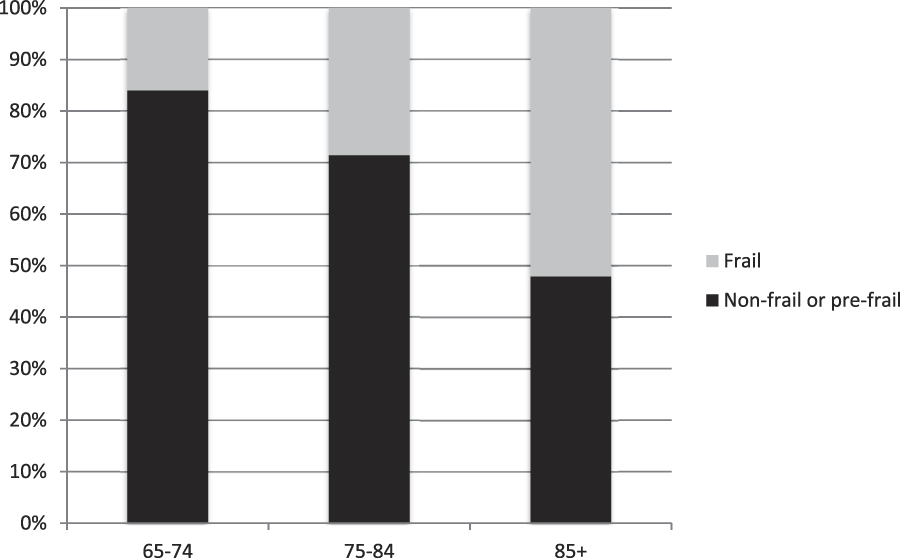
As a starting point, we aimed to apply a definition of frailty that has been validated in the general Canadian population (Hoover, Rotermann, Sanmartin, & Bernier, Reference Hoover, Rotermann, Sanmartin and Bernier2013) to First Nations populations using data from the First Nations Regional Health Survey Phase 2. Hoover et al. (2013) at Statistics Canada developed and validated a frailty index for use with Canadian Community Health Survey (CCHS) data. The CCHS-based frailty index has been shown to predict hospitalizations and institutionalization rates for community-dwelling older adults in the general Canadian population. There is a clear linear relationship between age group and frailty prevalence among seniors (Figure 1), with 16 per cent of the Canadian population aged 65–74 being classified as frail, rising to 52 per cent of those aged 85 and older (Hoover et al., Reference Hoover, Rotermann, Sanmartin and Bernier2013). This direct relationship between age and frailty at a population level, and the approximate level of frailty by age group, have been repeatedly shown using other Canadian data sources, including the National Population Health Survey (Rockwood, Song, & Mitnitski, Reference Rockwood, Song and Mitnitski2011; Song, Mitnitski, & Rockwood, Reference Song, Mitnitski and Rockwood2010) and the Canadian Study on Health and Aging (Jones, Song, Mitnitski, & Rockwood, Reference Jones, Song, Mitnitski and Rockwood2005; Rockwood et al. Reference Rockwood, Howlett, MacKnight, Beattie, Bergman, Hébert and McDowell2004).
Frailty patterns over age groups in the general Canadian population. Canadian Community Health Survey, as published by Hoover et al. (2013)
Access to reliable data describing health status and health systems use among First Nations populations in Canada has been a perennial challenge. This often leaves communities and organizations with limited ability to adequately predict and plan for health services (Minore, Katt, & Hill, Reference Minore, Katt and Hill2009). A vital component of any effort to improve health outcomes for older First Nations people and to plan for the future is the use of high-quality, relevant, and accessible data – and these data must be used in ways that reflect indigenous conceptions of health and well-being, respect First Nations governance of data, and promote culturally safe health and supportive care. The First Nations Regional Health Survey (FNRHS) represents First Nations people living on-reserve and in northern First Nations communities. The development, governance, and implementation of the FNRHS are done by First Nations across Canada and built around the principles of OCAP® (First Nations ownership, control, access, and possession of their own data and information). It is also based on the First Nations Regional Health Survey cultural framework, which conceptualizes health from First Nations perspectives as the “total health of the total person in the total environment” (Dumont, Reference Dumont2005, pg. 15).
The primary objective of the study described in this article was to apply a frailty index that was validated in the general Canadian older population to describe aging experiences in First Nations populations living on-reserve and in northern communities. The results are a key step in documenting the experiences of older First Nations people at a national level from a First Nations perspective.
Methods
Data Source
The FNRHS is a cross-sectional survey and is the only source of national health-related First Nations on-reserve data that is fully under First Nations ownership and control. Phase 1 of the survey began in 1996. Data are available for phases 1 and 2 of the FNRHS, and data collection is currently under way for Phase 3. Data for the FNRHS Phase 2 were collected between June 2008 and November 2010 in 216 First Nations communities across Canada (outside of Nunavut). The sample is designed to represent First Nations populations living on-reserve and in northern communities (above the 60th parallel). In all, 5.6 per cent of the target population was sampled in the FNRHS Phase 2 (FNIGC, 2012), and the response rate was 73.6 per cent. For the FNRHS Phase 2, the sample design incorporated a two-stage sampling strategy: the first stage involved the selection of communities to participate in the survey. First Nations communities were stratified by region, sub-region, and community size (large [1,500+ people], medium [300–1,499 people], and small [<300 people]). Large communities were automatically included, whereas medium and small communities were randomly selected with equal probability within their respective strata. The second stage of sampling pertained to the selection of individuals within each community sampled. Community members were identified using band membership lists. Data were gathered to represent eight categories of the community population (gender by four age groups). The sampling rate within each community was determined as a function of the overall sub-region probability (within regions) and the probability of selection of the community (within sub-region).
Individual responses were weighted, using registry counts from indigenous and Northern Affairs Canada, to reflect, with greater accuracy, the representation of the population by the sample. We randomly selected participants from community membership lists, stratified by age group and sex. We obtained informed consent for participation in the survey but not for linkage of survey results to other data sets. If the selected participant was not able to provide informed consent or to complete the questionnaire due to cognitive impairments, a proxy was used. Interviews were computer-assisted or paper-based and took, on average, 46 minutes to complete.
At a national level, the First Nations Information Governance Centre (FNIGC) coordinates the development and implementation of the FNRHS and centrally holds the national data in ways that are in keeping with First Nations principles of OCAP. We undertook this study on aging and frailty in First Nations communities in full collaboration with the FNIGC, respecting First Nations ethical protocols for research involving First Nations as defined under OCAP and as outlined in the Tri-Council Policy Statement: Ethical Conduct for Research Involving Humans, Chapter 9 (Canadian Institutes of Health Research, Natural Sciences and Engineering Research Council of Canada, and Social Sciences and Humanities Research Council of Canada, 2014). The FNIGC provided an anonymized data file of the 2008–2010 FNRHS Phase 2 as well as ongoing guidance on research questions, interpretation, and methodology. The analyses were conducted on-site at the First Nations Data Centre under strict privacy and confidentiality protocols. The file included all 11,043 respondents to the adult survey (available at fnigc.ca), which was administered to participants aged 18 and older.
Variable Definitions
Social and Cultural Determinants of Health
We obtained social, demographic, and cultural variables from self-reported responses to the questions on the FNRHS Phase 2 and selected a wide range of variables on the basis of their relevance to aging and health over the life course. To guide the selection of variables, we drew on the FNRHS Cultural Framework (Dumont, Reference Dumont2005) as well as the Integrated Life Course and Social Determinants Model of Aboriginal Health (Reading & Wien, Reference Reading and Wien2009). This approach ensured that the cross-sectional evaluation espoused by the FNRHS was contextualized as an accumulation of risk, exposures, and outcomes across the life course that include indigenous-specific considerations, such as colonization and contemporary political realities. Selected social determinants focused on living environment, food security, traditional culture and education, residential school attendance, and lifestyle factors. This helped to ensure that the oft-considered proximal determinants were placed into the context of the more distal determinants of health and well-being.
Chronic Conditions
We described the unadjusted prevalence of health conditions experienced by First Nations people aged 65 and older living on-reserve and in northern communities. This was based on the self-reported response to the question: “Have you been told by a health care professional that you have any of the following health conditions?” In total, 28 chronic health conditions were asked in the FNRHS, and those in Table 1 were chosen to structure the frailty index to most closely replicate the CCHS-based frailty index that was validated for the general population of Canada.
Description of deficits included in the FNRHS-based frailty index
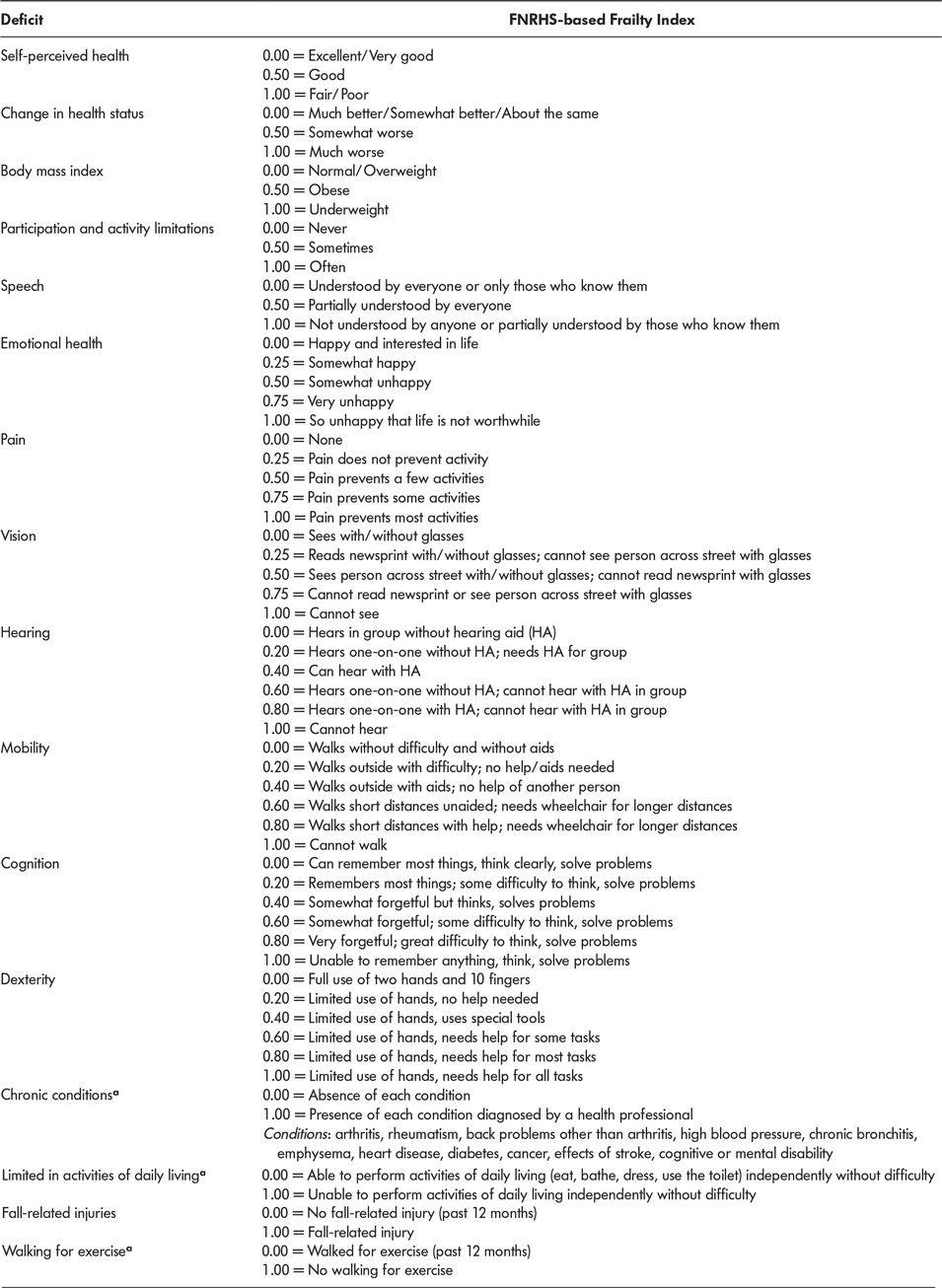
Note. CCHS = Canadian Community Health Survey. FNRHS = First Nations Regional Health Survey.
a The FNRHS-based frailty index differed from the CCHS-based frailty index in the following ways.
• Chronic conditions: CCHS asked if the condition had lasted (or was expected to last) at least 6 months. CCHS included combined arthritis or rheumatism, combined chronic bronchitis or emphysema, urinary incontinence, Alzheimer’s disease/dementia (instead of cognitive or mental disability).
• Activities of Daily Living: CCHS considered each ADL as a separate variable whereas FNRHS had only one ADL variable. CCHS included preparing meals; getting to appointments and running errands; doing everyday housework; personal care such as washing, dressing, moving inside the house; and looking after personal finances.
• Walking for exercise: CCHS had a 3-month timeframe.
Life Balance and Well-Being
We also considered a set of four variables about life balance that engender a First Nations-based view of well-being as a balance in the physical, emotional, mental, and spiritual. The questions asked, “How often do you feel that you are in balance in the four aspects of your life (physical, emotional, mental, and spiritual)?” For each, the possible responses were All the time, Most of the time, Some of the time, Almost none of the time. We created binary variables that combined “all” with “most of the time” and “some” with “almost none of the time”.
Frailty Outcome
We modified a frailty index that was developed using variables from the CCHS and was validated with the general Canadian population over age 65 (Hoover et al., Reference Hoover, Rotermann, Sanmartin and Bernier2013). The original index employed an accumulation of deficits approach to measuring frailty whereby the number of deficits that a person experienced was divided by the total number of deficits included in the index to create a frailty score between 0 and 1. Higher scores indicated higher levels of frailty. The original index contained 30 deficits and a scoring algorithm for different levels of each deficit. Deficits included self-rated health, body mass index, change in health status, and function related to vision, hearing, mobility, cognition, pain, and so on among other items. The index was created according to established criteria for creating frailty indices from existing survey data (Searle, Mitnitski, Gahbauer, Gill, & Rockwood, Reference Searle, Mitnitski, Gahbauer, Gill and Rockwood2008). The original validation exercise determined that “frail” was defined as a score above 0.21. An additional “pre-frail” category emerged between scores 0.10 and 0.21.
Using the FNRHS, we were able to map 26 of the 30 deficits in the original index. Table 1 is a complete listing of deficits in the adapted version, with key differences highlighted in the footnote. Overall, 76.7 per cent of the adult surveys in the FNRHS were not missing information in any of the deficits included in the frailty index calculation; 13.8 per cent were missing one deficit; and 6.2 per cent were missing two to five deficits. We coded the frailty index score as missing when there were more than five deficits missing (3.4% of cases).
Analysis
We conducted all analyses in the First Nations Data Centre at the FNIGC offices in Ottawa, Canada, under the supervision of FNIGC staff. We used SPSS version 20 with the Complex Sampling Module to account for the sampling design in the FNRHS.
We created a profile of First Nations seniors living in First Nations communities by calculating percentages and 95 per cent confidence intervals across selected social determinants of health that are measured in the FNRHS. We also determined the most prevalent health conditions affecting First Nations seniors (aged 65 and older) by ranking the unadjusted prevalence of the health conditions in the FNRHS. We tested bivariate relationships between frailty and (1) the selected socio-demographic/cultural determinants of health, (2) the self-rated health and life balance outcomes (as a validation approach), and (3) the most common chronic conditions, using chi-square tests. To account for spurious associations that might have arisen from conducting multiple comparisons, we adjusted our threshold for statistical significance to a more conservative p = 0.01. We also calculated crude and age/sex adjusted odds ratios for each with 95 per cent confidence intervals. As part of the frailty profile, we calculated the age-specific frailty prevalence for ages 65–74, 75–84, and 85 and older for comparison with the estimates produced for the general Canadian population by Hoover et al. (Reference Hoover, Rotermann, Sanmartin and Bernier2013). In addition, for exploratory purposes to better understand the patterns of frailty in First Nations populations, we produced age-specific frailty estimates for middle-aged adults aged 45–54 and 55–64 years.
Results
Overall, 1,820 people aged 65 and older responded to the FNRHS, representing a weighted count of 20,824 people and 8 per cent of the First Nations adult population living on-reserve or in northern First Nations communities.
Social Determinants of Health Profile of First Nations Seniors aged 65 and Older
Table 2 provides a snapshot of key social and cultural determinants of health for First Nations seniors living on-reserve and in northern communities. In all, slightly more First Nations seniors were women (54.2%) than men (45.8%). Slightly over half of First Nations seniors were from rural, remote, or special access communities (55.0%), and 44.3 per cent lived outside of their First Nations community at some point. More than nine out of 10 First Nations seniors reported living in uncrowded living conditions (92.8%), and 62.8 per cent reported being food secure.
Social determinants of health profile for First Nations seniors (age 65 and older) living on-reserve and in northern First Nations communities (weighted n = 20, 824)
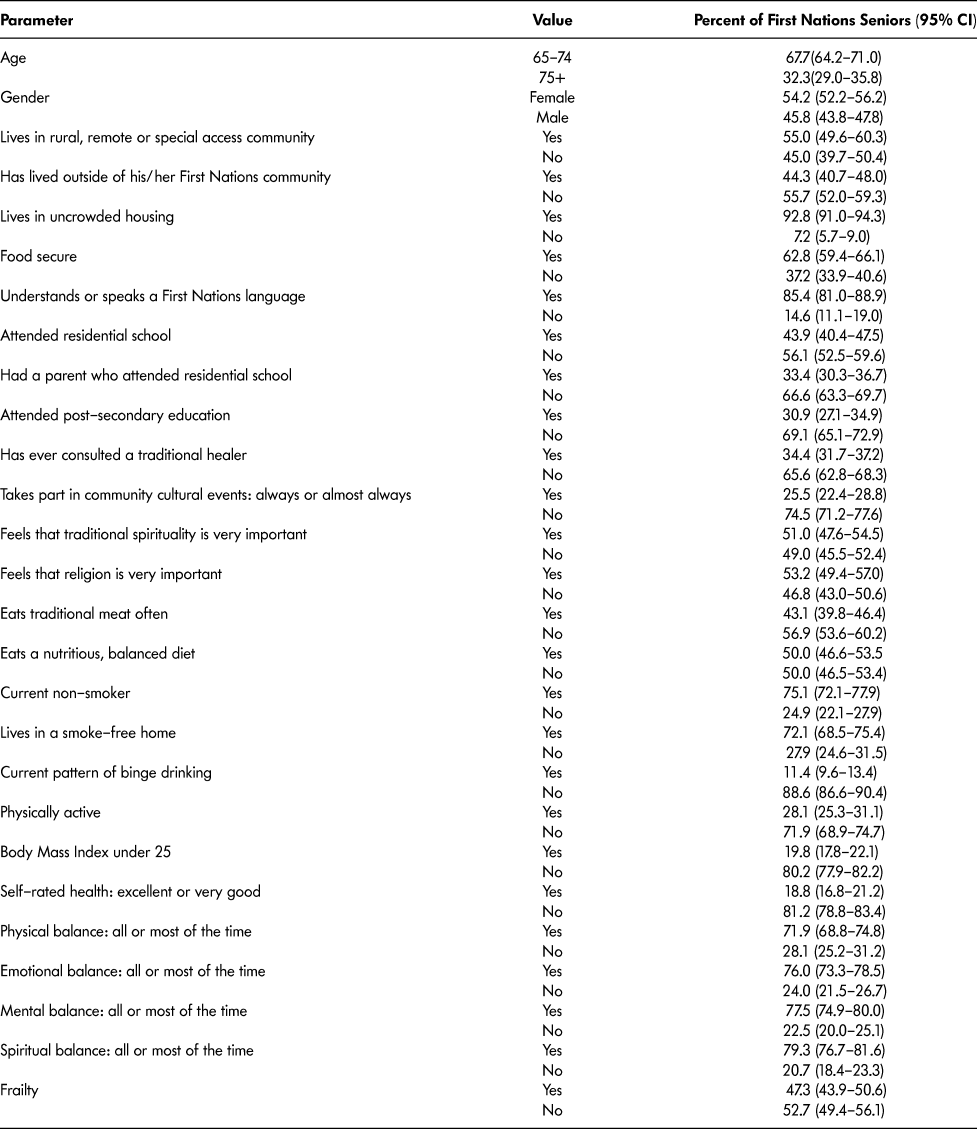
A substantial majority (85.4%) of the seniors understood or spoke a First Nations language, and roughly half (51.0%) reported that traditional spirituality was important to them despite high levels of direct experience with cultural assimilation in the form of residential school attendance (43.9%). Over half (53.2%) reported that religion (as distinct from traditional spirituality) was important. A quarter (25.5%) of seniors reported regularly taking part in community cultural events. Thirty-one per cent had pursued some form of post-secondary education, and 34.4 per cent had consulted a traditional healer at some point. Half (50.0%) of First Nations seniors reported eating a nutritious, balanced diet. Three quarters (75.1%) were non-smokers, and 72.1 per cent reported living in a smoke-free home. The majority avoided unhealthy relationships with alcohol, with 88.6 per cent reporting no current binge-drinking behaviours. There were high rates of overweight and obesity, with 4 in 5 reporting a body mass index (BMI) over 25. Only 28.1 per cent reported being at least moderately physically active despite 42.6 per cent reporting no activity limitations resulting from physical or mental health conditions.
On measures of well-being, First Nations seniors demonstrated low levels of excellent or very good self-rated health (18.8%), yet high levels of physical (71.9%), emotional (76.0%), mental (77.5%), and spiritual (79.3%) balance.
Health Conditions Profile of First Nations Seniors aged 65 and Older
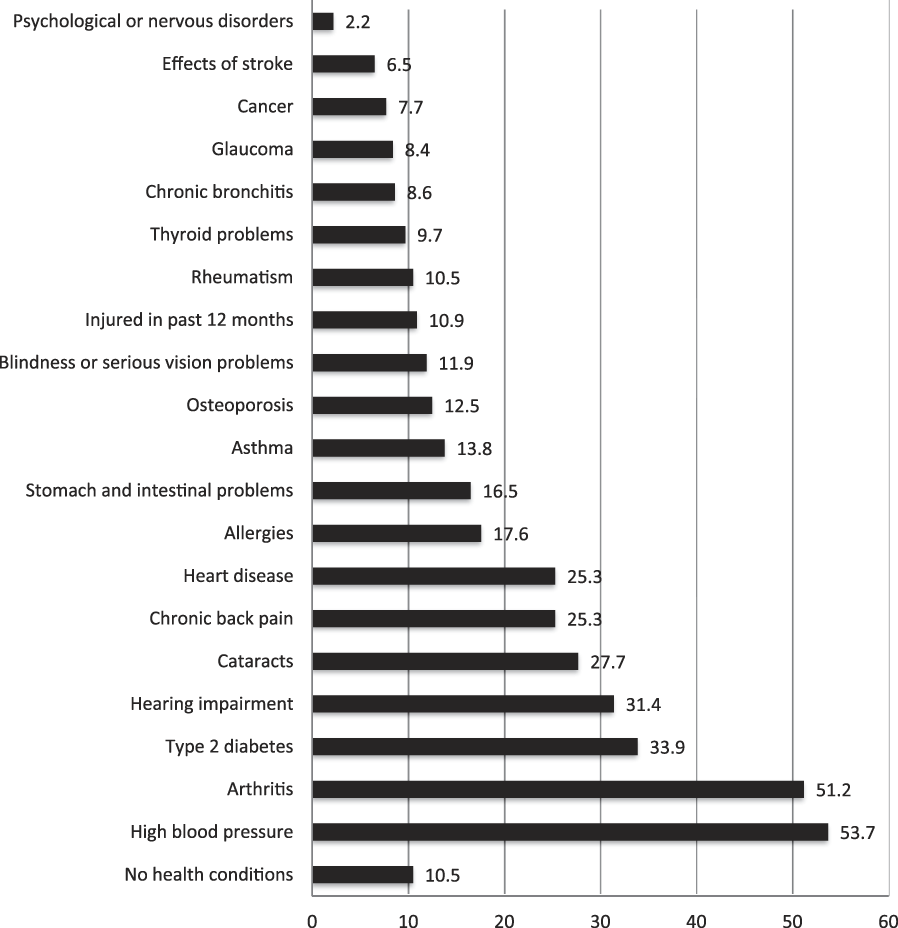
Figure 2 depicts the reported health conditions of First Nations seniors living on-reserve and in northern First Nations communities. Only 10.5 per cent of First Nations seniors reported having no health conditions. The most prevalent health conditions reported were as follows: high blood pressure (53.7%), arthritis (51.2%), type 2 diabetes (33.9%), hearing impairment (31.4%), cataracts (27.7%), chronic back pain (25.3%), and heart disease (25.3%). Of note, although only 10.9 per cent of the older group reported being injured in the past 12 months, half (53.2%, 95% CI [43.7–62.5]) of those injuries were because of a fall or trip (not shown in Figure 2).
Unadjusted prevalence of reported chronic health conditions among First Nations adults aged 65 and older living in First Nations communities per 100 population
Frailty Profile for First Nations Seniors
All told, 47.3 per cent (95% CI [43.9–50.6]) of First Nations people aged 65 and older were classified as frail. Table 3 displays the socio-demographic and health-related variables that had a statistically significant relationship with frailty at a bivariate level (p < 0.01). First Nations women had a higher prevalence of frailty than men, with a 63 per cent elevated odds of being frail than did men. Other variables that significantly increased the odds of being frail included a belief in traditional spirituality (adjusted odds ratio [AOR] = 1.42, 95% CI [1.12–1.81]) and having consulted a traditional healer (AOR = 2.01, 95% CI [1.51–2.68]). Frailty was inversely associated with higher levels of physical activity and with having a current pattern of binge drinking, both of which indicate robust levels of physical health.
Frailty profile for First Nations seniors (age 65 and older) living on-reserve and in northern First Nations communities (weighted n = 20, 305a)

a Approximate value. Missing values vary slightly by indicator.
b Referent category.
Not surprisingly, the strongest relationships and most substantially elevated odds ratios were between frailty and self-rated health (AOR = 9.00, 95% CI [6.25–12.93]) and the most common individual health conditions, many of which are components of the frailty index. Of the health conditions, the highest odds of frailty were for the two pain-related conditions: arthritis (AOR = 8.81, 95% CI [6.66–11.67]) and chronic back pain (AOR = 7.26, 95% CI [5.21–10.11]). Clear inverse relationships were also evident between frailty and the measures of physical, emotional, mental, and spiritual balance.
Age and Frailty
Because frailty did not show the increasing pattern with age that we would have expected, we examined the other adult age groups and plotted frailty by age group (Figure 3). The expected increase in frailty occurred at younger ages, between the 35–44 and 55–64 age groups. At age 65, approximately 50 per cent of the population was categorized as frail, with insubstantial further declines with increased age. In a supplemental appendix available online, we provide the social and cultural snapshot and the frailty profile for younger First Nations adults aged 35−64 years.
Frailty categories across age groups in First Nations people living on-reserve and in northern First Nations communities

Discussion and Conclusions
This study is the first published health profile of First Nations seniors living in First Nations communities across Canada. The most striking and policy-relevant finding was the evident early-onset frailty that appears to be affecting First Nations communities. Previous research indicates that frailty predicts death, hospitalization, institutionalization, falls, and worsening health status, independently of age (Hoover et al., Reference Hoover, Rotermann, Sanmartin and Bernier2013; Mitnitski, Graham, Mogilner, & Rockwood, Reference Mitnitski, Graham, Mogilner and Rockwood2002; Searle et al., Reference Searle, Mitnitski, Gahbauer, Gill and Rockwood2008). First Nations frailty levels in the 45–54-year-old age group were similar to those for aged 65–74 in the general population, which has substantial consequences on the need for supportive services and ongoing management of pain and disability in First Nations communities, particularly through home care services. In First Nations communities, home care services are under the jurisdiction of the federal government (in contrast to the provincial home care systems that are offered off-reserve). First Nations leadership, service providers, and families must be aware of the need for a distinct mix of services in their communities for people who are younger than what the typical age criteria specifies for home care services. This need for support has substantial implications for policy and care delivery planning with the goal of ensuring that First Nations adults can thrive in their communities.
These findings concur with those of a recent study of frailty in older Aboriginal populations in remote Australia (Hyde et al., Reference Hyde, Flicker, Smith, Atkinson, Fenner, Skeaf and Lo Giudice2016). The researchers found that, similar to our findings, frailty occurred at younger ages in Aboriginal people. They found that 54.9 per cent of 45–49-year-old remote Aboriginal people were already classified as frail. However, they found that, unlike our findings, the frailty rates continued to rise substantially through older age categories, up to 83.3 per cent in those aged 80 and older. This may reflect a difference in the way that frailty was measured, as they were able to include key age-related deficits such as incontinence. However, it may also reflect a policy-driven limitation of studying issues of aging in First Nations communities at a population level. Because health care on-reserve primarily falls under the responsibility of the federal government, there are key health-related policies that determine which older people can stay living in First Nations communities. The federal programs include time limits on travel reimbursements for the management of chronic conditions (for example, dialysis for renal failure), and this prompts people with complex medical needs to relocate to urban centres. As such, the FNRHS 2 sampling frame includes only older people who have remained healthy enough to continue to live in First Nations communities, leading to a potential survivor bias in recruitment for our study.
The younger frailty profile of ages 20–30 in First Nations communities is consistent with findings related to earlier onset of specific conditions, such as dementia (Jacklin et al., Reference Jacklin, Walker and Shawande2012). A key limitation of our study was the lack of information on two important age-related conditions: dementia and urinary incontinence. This may have resulted in an underestimation of frailty in the FNRHS because those two conditions were part of the original CCHS-based frailty index and are important contributors to frailty. The CCHS combined arthritis and rheumatism as one chronic condition whereas the FNRHS counted them separately. Similarly, chronic bronchitis and emphysema were combined in the CCHS and counted separately in the FNRHS. Despite these differences in the way that specific chronic conditions were counted, the frailty index score was calculated independently in each of the surveys using the total number of “deficits” as the denominator for the index. Thus, the indices are understood to have been constructed as similarly as possible but are not identical to one another. Importantly, the questions about chronic conditions were asked differently in the CCHS and the FNRHS. Unlike the FNRHS respondents, the CCHS respondents were specifically asked if their conditions had lasted (or were expected to last) six months or longer.
We found that most common conditions reported in First Nations seniors were high blood pressure (53.7%), arthritis (51.2%), and diabetes (33.9%). In the general Canadian population, using data from the 2009 CCHS, the three most commonly reported chronic conditions were high blood pressure (52.9%), arthritis (43.4%), and back problems (28.6%). Diabetes ranked seventh at 17.2 per cent (Ramage-Morin, Shields, & Martel, Reference Ramage-Morin, Shields and Martel2010). For a direct comparison between populations, we would need to standardize by age (because First Nations seniors are younger than seniors in the general population) and sex (because First Nations seniors are more likely to be male than seniors in the general population). Although non-standardized proportions are presented because they are important for First Nations communities in understanding the profile of health conditions in older First Nations people, comparisons with non-First Nations rates likely underestimate the differential prevalence of some chronic conditions that are important drivers of frailty levels. For example, arthritis generally increases with age and is more common in women (Statistics Canada, 2010). Because arthritis was associated with an 8-fold increase in the odds of being frail, it is likely a key driver in increased frailty levels and must be a key consideration in service planning for First Nations adults. In addition, the higher prevalence of diabetes and its important association with 3.5 times increased odds of frailty must be a strong consideration in driving the markedly higher levels of frailty among First Nations seniors.
These frailty-related findings, coupled with the high rates of many chronic conditions, reflect a medically complex population that often has limited access to health and health services. Despite this, the population reports high levels of wellness as reflected in the responses to the questions about physical, emotional, spiritual, and mental balance. This paradox warrants further investigation to explore the meanings of aging, frailty, and age-related wellness among First Nations adults.
We applied a frailty index that was validated for the Canadian population over age 65 to a First Nations adult population, including those under age 65. This is an important first step in exploring and further validating frailty in First Nations contexts; however, further validation and development of appropriate indices is necessary for this application. This index was developed using an accumulation-of-deficits approach based on mainstream models of disability, health, and function. However, in general, deficit-based understandings of health are inconsistent with indigenous models of well-being that are based on balance and strengths. Further qualitative and quantitative research on the meaning and intersection of frailty, wellness, and vitality for First Nations adults is an important line of work that is the subject of current funded research in Ontario, Canada. Although we were limited in this current study to cross-sectional, self-reported data and a deficit-based model of frailty, future work is needed to ensure that new measures of age-related frailty and resilience are developed that reflect indigenous knowledge and that can be modeled in relation to community and individual strengths. Associated outcomes of frailty and resilience can be assessed using longitudinal, community-driven data collection combined with health services data. Enhanced data would provide opportunities for communities and service organizations to evaluate the impact of programs and the trajectories of the younger frail and non-frail First Nations adults to determine the factors associated with resilience over the life course.
At present, the FNRHS does not sample adequate numbers of older people to enable First Nations communities to use the FNRHS frailty index at a community level. However, it can be used to establish national and regional baselines using a measure that is comparable to the general Canadian population. This study provides compelling evidence that First Nations populations are experiencing age-related multimorbidity and functional challenges at younger ages than the general population of Canada. This analysis of frailty as a clinical, deficit-based concept using a validated frailty index is a starting point for measuring age-related frailty and wellness from a First Nations perspective. In addition, the high levels of multimorbidity in First Nations adult populations highlight the importance of a holistic view of health and well-being that is a strength of the frailty index approach because it is not based simply on individual chronic conditions. As we have highlighted, one of the key limitations in using a deficit-based frailty measure is that it frames aging in a negative way. Importantly, a culturally informed index of age-related wellness in First Nations communities would not simply be an inverse of frailty and could be framed using the FNRHS cultural framework (Dumont, Reference Dumont2005) as a starting point. Through community-driven research approaches, First Nations people aging in First Nations communities can take these concepts and reframe them to better reflect their worldview and experiences.
Supplementary Material
To view supplementary material for this article, please visit https://doi.org/10.1017/S0714980817000319


 Open access

