


INTRODUCTION
Individual hosts, including humans in many communities around the globe, typically harbour chronic helminth infections (Petney and Andrews, Reference Petney and Andrews1998; http://www.thiswormyworld.org). These helminths have great potential to alter a multitude of aspects of the within-host environment (e.g. the host's immune response, energetic reserves and utilization strategies and, ultimately, survival), with important implications for the host's ability to fight potentially harmful, coinfecting microparasitic pathogens (e.g. virus, bacteria or protozoa) (Cox, Reference Cox2001; Graham et al. Reference Graham, Cattadori, Lloyd-Smith, Ferrari and Bjornstad2007; Pedersen and Fenton, Reference Pedersen and Fenton2007; Fenton et al. Reference Fenton, Lamb and Graham2008; Graham, Reference Graham2008; Griffiths et al. Reference Griffiths, Pedersen, Fenton and Petchey2011). Given this, various papers have suggested that on-going helminth infections may increase susceptibility to pathogen infection and exacerbate the escalation of disease, leading to a number of calls to incorporate deworming into control programmes targeting some of the most serious human pathogens such as HIV, tuberculosis and malaria (Bentwich et al. Reference Bentwich, Kalinkovich, Weisman, Borkow, Beyers and Beyers1999; Harms and Feldmeier, Reference Harms and Feldmeier2002; Druilhe et al. Reference Druilhe, Tall and Sokhna2005; Harris et al. Reference Harris, Podolsky, Bhuiyan, Chowdhury, Khan, LaRocque, Logvinenko, Kendall, Faruque, Nagler, Ryan, Qadri and Calderwood2009). However, such calls have proven controversial, with suggestions that such deworming may increase disease severity in some circumstances (e.g. Nacher, Reference Nacher2006).
Recently a Cochrane review (Taylor-Robinson et al. Reference Taylor-Robinson, Maayan, Soares-Weiser, Donegan and Garner2012) reviewed available evidence on the success of deworming programmes, and found great variability in their benefits across and within studies. Again, however these findings were not without controversy; see, for example, Hawkes (Reference Hawkes2012) for a supportive commentary on this review, and Bundy et al. (Reference Bundy, Walson and Watkins2013) for an alternative view. While this review did not specifically examine the use of deworming in the context of coinfection, it raises the possibility that there may be similar levels of variability in the effects of incorporating deworming into pathogen control programmes. What is not clear at present is whether such variability is unpredictable ‘noise’, meaning there would be little hope for generating clear guidelines for coinfection management between different systems or even different locations of the same system, or whether the variability is predictable, arising from (possibly subtle) differences in quantifiable processes between studies. If the latter is the case then there may be hope for understanding the nature of those processes and developing coherent and effective guidelines for the control of pathogens under helminth coinfection.
A major obstacle for understanding how deworming may help the management of pathogenic diseases is the multitude of ways in which helminths can interact with other (non-helminth) microparasitic pathogens. Within-host interactions between helminths and pathogens can alter the likelihood of pathogen establishment, subsequent growth and replication rates, the rate of clearance from the host, disease severity and, ultimately, transmission potential at the population level (e.g. see Petney and Andrews, Reference Petney and Andrews1998; Cox, Reference Cox2001; Griffiths et al. Reference Griffiths, Pedersen, Fenton and Petchey2011 for reviews). Therefore, understanding the outcome of coinfection is far from straightforward, and a variety of empirical (Lello et al. Reference Lello, Boag, Fenton, Stevenson and Hudson2004; Behnke et al. Reference Behnke, Gilbert, Abu-Madi and Lewis2005; Jolles et al. Reference Jolles, Ezenwa, Etienne, Turner and Olff2008; Ezenwa et al. Reference Ezenwa, Etienne, Luikart, Beja-Pereira and Jolles2010; Telfer et al. Reference Telfer, Lambin, Birtles, Beldomenico, Burthe, Paterson and Begon2010) and theoretical (Fenton, Reference Fenton2008; Fenton and Perkins, Reference Fenton and Perkins2010; Fenton et al. Reference Fenton, Viney and Lello2010; Ezenwa and Jolles, Reference Ezenwa and Jolles2011) approaches have been used to assess the occurrence of parasite interactions in nature, and their possible implications for parasite dynamics. However, previous mathematical models have either not examined how different mechanisms of interspecific interaction alter the outcome of coinfection, or have not considered their effects at both the individual level (host health) and the population level (disease transmission) or have not examined the quantitative effects of helminth burdens on coinfection dynamics. This last point is important because it is quite likely that the magnitude of coinfection effects will vary with helminth burden, meaning that it may not be sufficient to simply consider a host to be coinfected or not, but that it is necessary to consider how heavily that host is infected with helminths. Finally, deworming is rarely 100% effective (Basáñez et al. Reference Basáñez, French, Walker and Churcher2012) so the outcome of a given coinfection, and the benefits (or not) of deworming, could be highly context-dependent, with potentially subtle variations depending on the mechanisms and magnitude of any interspecific interaction between helminths and pathogens, and the pre- and post-treatment helminth burdens. To date these factors have not been accounted for in any theoretical or empirical study of helminth-pathogen coinfection.
Here I use a general theoretical framework to explore the quantitative effects of helminth infection and deworming (the reduction in, but not necessarily elimination of, mean worm burden across a host population) on three aspects of helminth-pathogen coinfection: (1) the expected lifespan of the host following pathogen infection, an individual-level measure, (2) the pathogen's basic reproduction number, a population-level measure, and (3) the evolution of pathogen virulence, all under different forms of within-host interspecific parasite interaction. I show that the effect of the helminth on the pathogen under each scenario can be highly context-dependent, depending not only on the form of interaction between the parasites but also on the quantitative level of helminth infection. However, a better understanding of these processes can lead to insight into the circumstances under which deworming may be either beneficial or detrimental in the context of pathogen coinfection.
MODELLING FRAMEWORK
Baseline epidemiological model
In all that follows I assume a simple host–microparasite–macroparasite system, where ‘microparasite’ refers to a pathogen (e.g. virus, bacteria or protozoa) which causes acute, and potentially severe, infection, replicating within the host before being cleared. The term ‘macroparasite’ refers to a parasitic helminth, which may cause chronic infections and, in what follows, is assumed to be present within the host prior to infection by the microparasite. For clarity I assume the relatively simple scenario of just a single helminth species coinfecting with a single microparasitic pathogen species, with no other species or pathogen strains occurring within the host population. The epidemiological dynamics of this system are described using a hybrid model (Fenton Reference Fenton2008; Fenton et al. Reference Fenton, Lamb and Graham2008), previously developed by amalgamating standard host–microparasite and host–macroparasite frameworks (see Fig. 1 for a schematic representation of the model, Table 1 for definitions of all parameters, and Appendix 1 for model equations). The model tracks changes in the number of hosts that are either susceptible to (S), infected by (I) or recovered from (R) the pathogen (the total host population, H, is given by S+I+R). It is assumed that the helminth infection is unaffected by the presence of the pathogen, and the burden of helminth infection is assumed constant throughout the duration of pathogen infection (Fenton (Reference Fenton2008) considers more complex scenarios where the helminth population is dynamic and may be affected by the presence of the pathogen). It should be emphasized that the intention of these analyses is to derive general insight into how different helminth interactions can affect coinfecting pathogens, and so this framework is intentionally generic and is not assumed to match any disease system in particular; while these general predictions and guidelines are highly informative, the model would have to be tailored and parameterized in order to make accurate predictions about any specific system of interest.
Schematic diagram of the helminth–pathogen co-infection model (see Table 1 for parameter definitions).

Definitions of baseline parameters and state variables

Pathogen transmission is determined by the product of three processes: (1) the per capita contact rate between individuals; (2) the level of infectiousness of those infected hosts (e.g. the level of shedding of infectious particles), which together are subsumed into a single parameter β V (where the subscript ‘V’ is used throughout for ‘virus’ (although the same framework applies for other microparasites such as bacteria or protozoa) to denote parameters specific to the pathogen); and (3) the probability of transmission given contact between a susceptible and infected individual (π; a measure of host susceptibility to infection). Hence β V determines the number of infectious contacts per unit time, and π describes the proportion of those contacts that result in infection; the need for this distinction is explained below. Infected hosts recover from the pathogen at rate σ V and achieve lifelong immunity. All hosts die at background mortality rate, b, or through the detrimental impact of the pathogen, which increases host mortality by rate α V. Finally, although helminths are typically thought to cause host morbidity, mortality can occur at high worm burdens. For that reason I make the simple assumption that helminths can increase host mortality at a burden-dependent (but low) per capita rate α W (the subscript ‘W’ is used throughout for ‘worms’, to denote parameters specific to the helminths) multiplied by the mean helminth burden M (thereby assuming, for simplicity, that the overall impact of the helminth on its host increases linearly with burden).
The expected host lifespan following pathogen infection under helminth coinfection
Given the above framework, it is possible to calculate the mean expected lifespan of the host following pathogen infection (Appendix 2):
 $$L = {\rm \;} \displaystyle{1 \over {\sigma _{\rm V} + \theta _1}} + \displaystyle{\sigma \over {\sigma + \theta _1}} \displaystyle{1 \over {\theta _2}}, $$
where θ 1=b+α v+α w and θ 2=b+α wM. Clearly, a coinfecting helminth may alter the impact of the pathogen on its host, either directly by increasing host mortality, or indirectly by affecting the development of the pathogen or the host's ability to clear it. I therefore use equation (1) to explore how changes in mean helminth burden (M), and different forms of within-host interaction between the helminth and the pathogen species (via functional links between M and the pathogen-specific parameters in the model; see below), influence L.
Pathogen's basic reproduction number under helminth coinfection
Equation 1 describes how a coinfecting helminth may affect the impact of a pathogen at the individual host level. However, helminths are also likely to affect the spread of the pathogen at the population level. Given the epidemiological framework above, the basic reproduction number of the pathogen (R 0,V) is:
 $$R_{0,{\rm V}} = \; \displaystyle{{\beta _{\rm V} \pi H} \over {b + \sigma _{\rm V} + \alpha _{\rm V} + \alpha _{\rm W} M}}$$
(Fenton, Reference Fenton2008), which describes the initial potential for spread of the pathogen through a population of susceptible hosts. Using this equation I explore how mean worm burden (M) affects R 0,V under the various interaction scenarios described below.
The evolution of pathogen virulence (αV) under helminth coinfection
The evolution of pathogen virulence has been, and continues to be, a major focus of evolutionary research. Typically the associated theoretical work assumes that virulence is an unavoidable consequence of the pathogen's exploitation of the host, necessary for the pathogen to fuel its replication and subsequent transmission (Levin and Pimentel, Reference Levin and Pimentel1981; Anderson and May, Reference Anderson and May1982; Bremermann and Pickering, Reference Bremermann and Pickering1983; Ewald, Reference Ewald1983; Frank, Reference Frank1996). Although these initial models have been greatly expanded upon (Antia et al. Reference Antia, Levin and May1994; Bull, Reference Bull1994; Lenski and May, Reference Lenski and May1994; Bonhoeffer et al. Reference Bonhoeffer, Lenski and Ebert1996; Ganusov et al. Reference Ganusov, Bergstrom and Antia2002; Restif and Koella, Reference Restif and Koella2003; Boots et al. Reference Boots, Hudson and Sasaki2004; Fenton et al. Reference Fenton, Lello and Bonsall2006; Day et al. Reference Day, Graham and Read2007; Kamo et al. Reference Kamo, Sasaki and Boots2007; Alizon, Reference Alizon2008a, Reference Alizon2008b; Alizon and van Baalen, Reference Alizon and van Baalen2008b; Frank and Schmid-Hempel, Reference Frank and Schmid-Hempel2008; Mideo et al. Reference Mideo, Alizon and Day2008; Carval and Ferriere, Reference Carval and Ferriere2010), they have so far ignored one ubiquitous component of virtually every pathogen's environment in natural populations: the presence of coinfecting helminths.
To model the evolution of pathogen virulence under helminth coinfection, I follow the standard (although not uncontroversial: Lipsitch and Moxon, Reference Lipsitch and Moxon1997; Ebert and Bull, Reference Ebert and Bull2003; Alizon et al. Reference Alizon, Hurford, Mideo and Van Baalen2009) assumption of a trade-off between increased pathogen infectivity (captured within the parameter β V) and the damage caused to the host (α V); that is β V increases with α V (e.g. Ewald, Reference Ewald1983; Frank, Reference Frank1992; Bull, Reference Bull1994; Lenski and May, Reference Lenski and May1994; May and Nowak, Reference May and Nowak1995; Bonhoeffer et al. Reference Bonhoeffer, Lenski and Ebert1996; Ebert and Herre, Reference Ebert and Herre1996; Day, Reference Day2003; Bolker et al. Reference Bolker, Nanda and Shah2010). I follow this assumption, recognizing on-going debate regarding its applicability, to ensure a clear connection between the present work and the large body of theory that has been developed around this basic framework. As is well known for such models, if there is no relationship between β V and α V then evolution will act to maximize infectiousness (β V will increase indefinitely) and virulence (α V) will diminish to zero (Anderson and May, Reference Anderson and May1982). In addition, if there is a linear or accelerating relationship between β V and α V (such that large increases in β V can be achieved with relatively small increase in α V) then evolution will select for ever-increasing values of both. Similar results hold for all scenarios explored in this paper. I therefore focus attention on the more interesting case where there is a saturating relationship between β V and α V, such that progressive increases in transmission (β V) come at the cost of rapid increases in host mortality (α V). Specifically, I assume the functional relationship:
 $$\beta _{\rm V} = \; \displaystyle{{\beta _{{\rm V,}\,{\rm MAX}} \alpha _{\rm V}} \over {k + \alpha _{\rm V}}}, $$
where β V,MAX is the maximal value of β V (at high α V) and k is the half-saturation constant, determining the rate of approach to the maximum (β V initially increases at rate β V,MAX/k as α V increases from small).
Invasion analysis (Appendix 4) shows that, under the simple assumption of no coinfection by multiple strains of the pathogen, evolution will act to maximize the pathogen's basic reproduction number (equation 2). Hence, in what follows I ignore potential complexities that may arise from coinfection by multiple pathogen strains, and consider the optimal level of pathogen virulence (α V*) as the value of α V that maximizes R 0,V, found by inserting the assumed β V–α V trade-off relationship (equation 3) into equation (2), differentiating with respect to α V, setting equal to 0 and solving for α V (Appendix 4).
Incorporating within-host interactions between the pathogen and coinfecting helminths
Helminths may interact in a variety of ways with coinfecting pathogens. Here I modify the baseline framework described above to examine a range of possible mechanisms of interaction, either positive (synergistic) or negative (antagonistic), affecting different aspects of pathogen life-history. Due to a lack of quantified empirical information on how the strength of these various potential interactions vary with worm burden, in each case I assume the simplest possible relationships, typically linear where possible or constrained to prevent biologically impossible scenarios from occurring (e.g. probabilities exceeding 1, or rates becoming negative). As will be seen from the results, the quantitative outcome of each scenario can depend quite sensitively on the relationship between worm burden and the interaction strength; hence there is a clear need to obtain more precise, quantified measures of these relationships from empirical studies. Nevertheless, the simple scenarios presented here offer clear general insight into when and how such interactions may affect pathogen spread, impact and evolution.
Here I consider three scenarios:
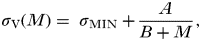
(1) Helminths alter the ability of hosts to clear coinfecting pathogens (interaction via recovery, σ V). Helminths frequently have the potential to immune-modulate their hosts, damping a wide range of specific and non-specific immune effectors (Maizels et al. Reference Maizels, Balic, Gomez-Escobar, Nair, Taylor and Allen2004; van Riet et al. Reference van Riet, Hartgers and Yazdanbakhsh2007). Furthermore, an established (albeit over-simplified) paradigm of coinfection immunology is that hosts may face a trade-off under coinfection, such that they are not able to mount maximal immune responses against both helminth and pathogen infections; helminths typically stimulate one arm of the host's immune response (the Th2 arm), which may inhibit the host from mounting an effective Th1 response against coinfecting viruses or bacteria (Abbas et al. Reference Abbas, Murphy and Sher1996). Although highly simplified, both these concepts suggest that on-going infection by helminths may reduce the host's ability to clear pathogen infections (i.e. a positive, synergistic, effect of helminth infection on the pathogen). I modelled this scenario by assuming an inverse relationship between mean worm burden (M) and the host's recovery rate from the pathogen (σ V):
(4)where σ MIN (⩾0) is the minimum recovery rate from pathogen infection and A and B are constants (units: worms time−1 and worms, respectively) that determine the rate of decline in recovery rate with increasing helminth burden (Fig. 2A). $$\sigma _{\rm V} (M) = \; \sigma _{{\rm MIN}} + \displaystyle{A \over {B + M}},$$Fig. 2.
Assumed interspecific interactions between helminth and pathogen, showing the relationship between mean worm burden (M) and (A) host recovery rate from the pathogen (σ V) under a positive interaction, (B) host recovery rate from the pathogen under a negative interaction and (C) host susceptibility to pathogen infection (π).
Alternatively, helminths may increase the ability of hosts to clear coinfecting pathogens (e.g. Knowles et al. 2013), either via physical means (helminths interfere directly with pathogens or their sites of infection) or via the host's immune response (hosts are able to clear pathogen infections faster in the presence of helminths than in their absence). Hence, helminths may have a negative, antagonistic, effect on co-infecting pathogens via recovery. I modelled this scenario by assuming a positive relationship (assumed, for simplicity, to be linear) between mean worm burden and pathogen recovery rate:
(5)where C (worm−1 time−1) determines the rate of increase in recovery rate with increasing worm burden (Fig. 2B).$$\sigma _{\rm V} (M) = \; \sigma _{{\rm MIN}} + CM,$$(2) Helminths alter host susceptibility to pathogen infection (interaction via host susceptibility to the pathogen, π). As in the first part of scenario 1, hosts may struggle to mount effective immune responses against both helminths and pathogens but this may occur prior to pathogen infection, such that helminth infection reduces the ability of the host to prevent the pathogen from infecting in the first place (i.e. a positive effect of the helminth on the pathogen). I modelled this scenario by assuming a saturating relationship between worm burden and susceptibility to pathogen infection (π):
(6)where π MIN (>0) is the minimum degree of host susceptibility, D determines the maximum degree of host susceptibility (such that the maximum π MIN+D⩽1) and E is a constant (units: worms) that, together with D, determines the rate at which susceptibility initially increases with worm burden (Fig. 2C).$$\pi (M) = \; \pi _{{\rm MIN}} + \displaystyle{{DM} \over {E + M}},$$In addition I explored the opposite scenario, whereby helminth infection decreases host susceptibility to pathogen infection (a negative effect on the pathogen via π). Here I assumed a functional relationship between mean worm burden and susceptibility to the pathogen similar to that shown in Fig. 2A:
(7)where F and G are constants (units: worms).$$\pi (M) = \; \pi _{{\rm BASE}} + \displaystyle{F \over {G + M}},$$(3) Helminths alter the detrimental effect to the host of the pathogen (interaction via pathogen virulence α V). So far I have assumed that worm and pathogen effects on host mortality (α W and α V) act additively. However, it is quite possible that the presence of helminths would either diminish or exacerbate the detrimental impact to the host of coinfecting pathogen infection (Griffiths et al. Reference Griffiths, Pedersen, Fenton and Petchey2011). As an example of the former, the harmful effects of infection may arise from immunopathology (e.g. a major factor leading to severe cerebral malaria is the occurrence of a harmful inflammatory (Th1) response; Hartgers and Yazdanbakhsh, Reference Hartgers and Yazdanbakhsh2006). In this scenario the presence of helminths can reduce disease severity by stimulating counteractive Th2 or Treg responses. I model this positive interaction by assuming a decreasing relationship between worm burden (M) and pathogen virulence (α V):
(8)where α V,BASE (units: time−1) determines the maximum pathogen virulence when there are no helminths present (M=0), and J (units: worms) influences the rate of reduction in virulence with increasing helminth burdens.$$\alpha _{\rm V} (M) = \; \displaystyle{{\alpha _{{\rm V,}\,{\rm BASE}} \; J} \over {J + M}},$$


Alternatively, the presence of helminths may exacerbate pathogen damage, for example by reducing the host's somatic maintenance. I model this negative interaction by assuming an increasing (linear) relationship between helminth burden and pathogen virulence:
 $$\alpha _{\rm V} (M) = \; \alpha _{{\rm V,}\,{\rm MIN}} (1 + KM),$$
where α V,MIN (units: time−1) and K (units: worm−1) are constants. Note that, in both these cases, I assume these alterations of pathogen virulence arise through increased or decreased ability of the host to manage the damage caused by the presence of the pathogen, but do not alter the pathogen's replication or transmission rate. This distinction is especially important when considering how coinfection affects the evolution of pathogen virulence under these scenarios (Appendix 4).
In each of the above cases I inserted the relevant function (equations 4–9) into equations (1) and (2) and, for each scenario, explored the effect of varying the mean helminth burden (M) on the expected lifespan of the host (L), the pathogen's basic reproduction number (R 0,V), and the evolution of pathogen virulence (α V*). Once again, it should be emphasized that these analyses are not intending to replicate any specific host-helminth–pathogen system, and so parameter values and the quantitative levels of predicted responses are purely arbitrary. However, by examining a range of interaction scenarios, this work reveals important context dependencies in the effects of helminth coinfection, and deworming, on coinfecting pathogen dynamics and host health.
RESULTS
Impact of within-host interactions on expected host lifespan following pathogen infection (L)
The different forms of within-host interaction between coinfecting helminths and pathogens have important qualitative and quantitative effects on the host's expected lifespan. Overall most forms of within-host interaction tend to result in host life expectancy following pathogen infection reducing with increasing helminth burdens (Fig. 3). Hence, reducing mean helminth burdens through deworming will tend to increase mean life expectancy under most scenarios considered. Clearly the magnitude of this relationship will depend, at least in part, on the damage caused by the helminths themselves; more benign helminths (low α W) will only cause a gradual reduction in host lifespan with increasing burdens. Furthermore, when coinfecting helminths either exacerbate the damage caused by the pathogen or reduce the ability of the host to clear the pathogen, the expected host lifespan can drop very rapidly with increasing worm burdens. However, when helminths either increase the host's ability to clear the pathogen or reduce the damage caused by the pathogen, low to intermediate worm burdens tend to be beneficial to the host, increasing life expectancy over that seen in helminth-free hosts (Fig. 3). It is only when worm burdens reach very high levels that host lifespan is reduced, as the helminth's own detrimental impact on the host at high burdens becomes detrimental to the host. Hence, in these cases, although deworming is likely to be beneficial to heavily infected individuals, it can result in a reduction in host survival in those with intermediate worm burdens under these scenarios.
Effect of mean worm burden (M) on the expected host lifespan following pathogen infection, relative to the baseline lifespan in the absence of helminth infection (L rel), under the different interspecific interactions shown. Parameter values: H=20, β V=55 t −1, π=0·05, α V=8 t −1, b=0·1 t −1, α W=0·001 w −1t −1, σ V=2 t −1, A=100 w t −1, B=50 w, C=0·05 w −1t −1, D=0·1, E=200 w, F=100 w, G=2040 w, J=60 w, K=0·01 w −1, σ MIN=2 t −1, α V,BASE=8 t −1, α V,MIN=8 t −1, π ,MIN=0·05, π ,BASE=0·001.

Impact of within-host interactions on the pathogen's basic reproduction number (R0,V)
Firstly it should be noted that, even in the absence of any explicit interaction between parasites, increasing helminth burden results in a reduction in R 0,V, due to a decrease in duration of the pathogen's infectious period through helminth-induced host mortality (Fig. 4). Clearly, the less virulent the helminth is (low α W), the more gradual this reduction in R 0,V will be. Hence, deworming treatments that reduce mean worm burdens will tend to increase the pathogen's rate of spread through the host population.
Effect of mean worm burden (M) on the pathogen's basic reproduction number (R 0,V) under the different interspecific interactions shown. Parameter values are the same as used in Fig. 3.

The reduction in R 0,V with increasing worm burden is exacerbated when there is an explicit negative (antagonistic) within-host interaction between helminths and pathogens, either via an increased ability of the host to clear the pathogen, reduced susceptibility of the hosts to pathogen infection, or increased host mortality due to the pathogen (Fig. 4, dashed lines). However these reductions in R 0,V happen for different reasons, at different scales of organization. When helminths increase the host's ability to clear pathogen infection, or when helminths increase the rate of pathogen–host mortality, R 0,V is reduced due to a decrease in the mean duration of pathogen infectiousness (a within-host effect). However, when helminths protect hosts from pathogen infection by reducing host susceptibility, R 0,V is reduced due to a reduction in the availability of susceptible hosts (a between-host effect). Therefore, although similar relationships between helminth burdens and the pathogen's basic reproduction number are seen under all three antagonistic scenarios, they are happening for very different reasons.
When there is a positive (synergistic) interaction between helminths and coinfecting pathogens, under any of the mechanisms examined, the relationship between mean helminth burden and pathogen spread becomes more complex (Fig. 4, solid lines). In all cases, there is initially a net positive effect of coinfecting helminths on R 0,V as mean helminth burdens increase from rare; low to intermediate worm burdens are beneficial to pathogens due to their effects on the host's ability to evade or remove or tolerate pathogen infection. In each case, however, there becomes a point at which the detrimental effect that the helminths themselves have on the host's survival, and hence the pathogen's infectious period, becomes sufficiently strong to override its direct synergistic effect on the pathogen, resulting in an overall negative effect of high worm burdens on R 0,V. The point at which these curves turn over (i.e. the burden at which the net effect of helminths on R 0,V changes from being positive to negative) is inversely related to the helminth's own virulence (α W; see Appendix 3). Hence, relatively benign helminths (low α W) are more likely to have a net beneficial effect on coinfecting pathogens, and will continue to do so at higher burdens, than more pathogenic helminths. Overall, under a positive interaction between helminth and pathogen, deworming could either increase or decrease the pathogen's R 0, depending on the initial worm burden, the efficacy and coverage of treatment (the number or proportion of worms killed) and the pathogenicity of the helminth itself.
Impact of within-host interactions on the evolution of pathogen virulence (αV*)
In general, increasing helminth burdens tend to select for increased virulence in coinfecting pathogens, even in the absence of any explicit interaction between them (Appendix 4; Fig. 5). This is because the helminth's own detrimental impact to the host reduces the duration of infectiousness of the pathogen (the more worms, or the more pathogenic those worms are, the shorter the host's lifespan, and hence the shorter the duration of pathogen infectiousness), thereby reducing the pathogen's fitness. Effectively, since the duration of pathogen infectiousness is reduced by the presence of coinfecting helminths, the pathogen has little to lose by increasing its exploitation rate, and so it pays to increase its transmission rate (β V) at the expense of its virulence (α V). Similar results have previously been shown simply by increasing host's natural mortality rate (Anderson and May, Reference Anderson and May1982; Ebert and Bull, Reference Ebert and Bull2003; Alizon et al. Reference Alizon, Hurford, Mideo and Van Baalen2009). Hence, in many ways, the impact of helminths in this scenario can simply be considered an environmental factor that increases the background rate of host mortality. However, as described below, if those helminths dynamically alter the pathogen's life-history via a within-host interspecific interaction, then alternative outcomes may be possible.
Effect of mean worm burden (M) on the pathogen's optimal virulence (α V*) under the different interspecific interactions shown. Parameter values are the same as used in Fig. 3, with the addition of: k=50 w, β V,MAX=400 t −1.

The different mechanisms of parasite interaction can alter the magnitude, and even direction, of pathogen virulence evolution. First, interactions that affect host susceptibility to pathogen infection (either positively or negatively) have no additional impact on pathogen evolution over that of helminths that do not interact with the pathogen (see Appendix 4); by only altering whether a pathogen infects, not how long it infects for, such interactions impose no additional selection on pathogen virulence. Second, helminth interactions that either increase the rate of host recovery from pathogen infection (a negative effect on the pathogen), or reduce the rate of host mortality due to the pathogen (a positive effect on the pathogen), can both strongly select for higher levels of pathogen virulence than in the absence of any interaction (Fig. 5), but for very different reasons. Under the former scenario, the increased host recovery rate means that the pathogen's duration of infectiousness is dramatically reduced, especially at high helminth burdens, selecting for faster host exploitation rates by the pathogen. Under the latter scenario, by reducing host mortality rate but allowing the pathogen to maintain a high transmission rate, the helminths effectively reduce the cost of high pathogen exploitation, allowing it to evolve high transmission (and hence virulence) levels. In all these cases deworming would have the added benefit of selecting for reduced virulence in the pathogen.
There are, however, two exceptions to this general pattern. First, when the helminth exacerbates pathogen-induced host mortality (a negative effect on the pathogen), this selects for reduced pathogen virulence with increasing helminth burdens (Fig. 5), as it now pays the pathogen to prolong host lifespan in order to maximize transmission potential. Deworming in this case would have the unfortunate side-effect of selecting for increased pathogen virulence. Second, when helminths reduce the host's ability to clear the pathogen (a positive effect on the pathogen), the direction of selection on pathogen virulence can vary depending on the level of helminth infection; low levels of infection can select for reduced pathogen virulence, whereas high levels of infection select for increased virulence (Fig. 5). When helminth infection levels are low, the interaction via recovery dominates, and a (small) increase in helminth burdens reduces the host's ability to clear the pathogen, prolonging its duration of infectiousness, leading to reduced host exploitation rates. However, at high helminth burdens, their detrimental impact on host mortality dominates, reducing the pathogen's infectious period, and selecting for increased virulence. In this case, deworming will either select for reduced or increased pathogen virulence, purely depending on the underlying mean worm burden.
DISCUSSION
There is considerable interest in the development of integrated control programmes that incorporate deworming components to improve the treatment of many important human pathogens (e.g. HIV, tuberculosis, malaria: Bentwich et al. Reference Bentwich, Kalinkovich, Weisman, Borkow, Beyers and Beyers1999; Harms and Feldmeier, Reference Harms and Feldmeier2002; Druilhe et al. Reference Druilhe, Tall and Sokhna2005; Harris et al. Reference Harris, Podolsky, Bhuiyan, Chowdhury, Khan, LaRocque, Logvinenko, Kendall, Faruque, Nagler, Ryan, Qadri and Calderwood2009). The present work shows that the outcome of such deworming programmes may be highly context-dependent, with counterintuitive, and potentially undesirable, consequences for the spread, persistence and severity of disease caused by a microparasitic pathogen. Recent papers (Taylor-Robinson et al. Reference Taylor-Robinson, Maayan, Soares-Weiser, Donegan and Garner2012; Bundy et al. Reference Bundy, Walson and Watkins2013) have highlighted the variability between studies in the benefits of deworming, and inconsistency of evidence in support of it. The results presented here may help to shed some light on those results in the context of coinfection. In particular, the ecological and evolutionary impacts of deworming programmes would depend, possibly quite subtly, on the specific mechanism of interaction between helminths and other coinfecting pathogens, and on the precise pre- and post-treatment helminth burdens. Hence, without a quantitative understanding of how helminths affect the development, survival or susceptibility to coinfecting pathogens, it could be hard to interpret observed individual- or population-level responses to helminth infection or deworming strategies. However, these results are also encouraging, by showing that apparently highly variable or counterintuitive responses to infection or deworming may not simply be random noise, and hence totally unpredictable, but rather they arise from the balance of several interacting processes, such as the quantitative impact of coinfecting helminths on both the pathogen and the host, and the scaling relationships from within-host to population-level processes. Hence, by understanding the mechanism of within-host interaction and the quantitative levels of infection it may be possible to predict the likely impact of coinfection, and subsequent effects of deworming, on host health, pathogen spread and evolution.
At the individual level, high helminth burdens are likely to decrease host life expectancy (and, presumably, increase host morbidity, as is typical for most parasitic helminths). As such there would seem to be direct benefits of deworming, alleviating individual suffering and mortality (e.g. Bundy et al. Reference Bundy, Walson and Watkins2013). However in terms of the indirect benefits, in the context of coinfection, deworming may prove detrimental to the individual. In particular if the individual has low to moderate levels of helminth infection, and those helminths either increase the host's ability to clear the pathogen or if the helminths reduce the pathogen's detrimental impact to the host (e.g. through immuno-modulatory effects that reduce immunopathology; Hartgers and Yazdanbakhsh, Reference Hartgers and Yazdanbakhsh2006), then removing those helminths will result in a reduction in host life expectancy (Fig. 3), or an otherwise detrimental effect on host health (e.g. Nacher, Reference Nacher2006). Clearly the quantitative benefits of deworming on host life expectancy are going to depend on the pathogenicity of the worms. Typically helminth infections are thought to primarily cause host morbidity (e.g. Little et al. Reference Little, Basanez, Breitling, Boatin and Alley2004a), only causing significant mortality under very high infection levels (although increases in helminth burdens have been shown to cause increases in human mortality in some cases; Little et al. Reference Little, Breitling, Basanez, Alley and Boatin2004b; Walker et al. Reference Walker, Little, Wagner, Soumbey-Alley, Boatin and Basanez2012). Depending on the relationship between worm burden and excess host mortality, the results presented may be modified. For example, if helminths only affect mortality at very high burdens, a step function may be more appropriate, resulting in the net effect on host life expectancy resembling Fig. 3, but with a more pronounced benefit of helminth infection, and corresponding detriment of deworming, under the two interaction scenarios described above. Alternatively, if excess host mortality initially increases rapidly with helminth burden and then saturates (e.g. Little et al. Reference Little, Breitling, Basanez, Alley and Boatin2004b; Walker et al. Reference Walker, Little, Wagner, Soumbey-Alley, Boatin and Basanez2012) then the initial benefits of light helminth infections on host lifespan are less likely to occur.
At the population level, previous theory (Fenton, Reference Fenton2008; Jolles et al. Reference Jolles, Ezenwa, Etienne, Turner and Olff2008; Ezenwa and Jolles, Reference Ezenwa and Jolles2011) has shown that the outcome of helminth coinfection on a pathogen's R 0 can depend on the balance of various, potentially opposing, mechanisms of interaction. However, the present framework goes further than previous studies by explicitly incorporating the quantitative effect of varying helminth burden (M), rather than just a qualitative measure of being infected or not. In so doing, the present model shows that the magnitude and even qualitative direction of the net balance of opposing forces can vary depending on the mean helminth burden considered. If the helminth acts antagonistically to the pathogen then deworming will always benefit the pathogen, increasing its basic reproduction number (Fig. 4, dashed lines). However, if there is a synergistic effect of the helminth on the pathogen (Fig. 4, solid lines) the net effects of deworming may either be beneficial to the pathogen, increasing its basic reproduction number (R 0,V), thereby reducing the community-wide benefits of control, or detrimental (decreasing R 0,V), providing added community-wide value to treatment, depending purely on the quantitative level of helminth infection.
Importantly, comparing Figs 3 and 4 shows that the individual- and population-level benefits of deworming may conflict with each other, depending on the underlying mechanism of interaction. For example, if the helminth exacerbates the severity of disease caused by the pathogen (Figs 3 and 4, dashed blue lines) then deworming (reducing helminth burden) could dramatically increase host life expectancy (Fig. 3) but would also increase the pathogen's rate of spread throughout the host population (Fig. 4). Therefore, for certain within-host interactions between helminths and coinfecting pathogens, it may not be possible to have beneficial treatment effects at both the individual and population levels, such that reductions in population-level prevalence following a deworming programme may be counteracted by an increase in disease severity at the individual level.
Coinfection studies to date have typically focused on the ecological effects of interspecific parasite interactions. However, I also explore the evolutionary consequences of helminth–pathogen coinfection, showing that most deworming programmes would be predicted to select for reduced pathogen virulence under the scenarios considered here (Fig. 5). Even in the absence of an explicit interaction, the presence of coinfecting helminths may reduce host survival and hence the duration of the pathogen's mean infectious period, thereby selecting for increased virulence. However if the presence of the helminth exacerbates disease severity, or if helminths restrict the ability of the host to clear the pathogen, then deworming can select for increased pathogen virulence, particularly when pre-treatment helminth burdens are low (Fig. 5). Clearly, for such results to be relevant, any deworming effort would need to be maintained for sufficiently long for the pathogen to respond evolutionarily. Typically many (although by no means all) deworming programmes have been relatively short-lived, and follow-up studies typically show that worm burdens rapidly bounce back to pre-treatment levels once treatment has ceased (Bundy et al. Reference Bundy, Thompson, Cooper, Golden and Anderson1985; Njongmeta et al. Reference Njongmeta, Nfon, Gilbert, Makepeace, Tanya and Trees2004). In such cases, we may expect a rapid return to selection for pre-treatment levels of pathogen virulence.
This evolutionary analysis builds on a large body of theory exploring the evolution of pathogen virulence in response to intraspecific coinfection (Frank, Reference Frank1992, Reference Frank1996; Bull, Reference Bull1994; Levin and Bull, Reference Levin and Bull1994; Nowak and May, Reference May and Nowak1994; May and Nowak, Reference May and Nowak1995; van Baalen and Sabelis, Reference van Baalen and Sabelis1995; Mosquera and Adler, Reference Mosquera and Adler1998; Read and Taylor, Reference Read and Taylor2001; Alizon, Reference Alizon2008b; Alizon and van Baalen, Reference Alizon and van Baalen2008a). In those models a distinction is often made between coinfections involving related strains, which tend to select for reduced virulence through kin selection (Frank, Reference Frank1992, Reference Frank1996; Chao et al. Reference Chao, Hanley, Burch, Dahlberg and Turner2000; Schjorring and Koella, Reference Schjorring and Koella2003; Lively, Reference Lively2005), and those involving unrelated strains which can select for increased virulence (e.g. due to competition between strains via cross-immunity, or replacement by more virulent strains, in the case of super-infection) (Bonhoeffer and Nowak, Reference Bonhoeffer and Nowak1994; May and Nowak, Reference May and Nowak1994; van Baalen and Sabelis, Reference van Baalen and Sabelis1995; Frank, Reference Frank1996; Mosquera and Adler, Reference Mosquera and Adler1998). Under interspecific coinfection, as explored here, the species involved may come from very different taxa (e.g. viruses or bacteria coinfecting with parasitic helminths), and so the analysis presented here connects closest with the previous theory on unrelated intraspecific strains. It is shown here that negative interactions between coinfecting helminths and pathogens, similar to those between competing strains in the intraspecific coinfection literature, can select for increased virulence. However, the present work extends that theory considerably by, firstly, considering the effect of quantitative levels of infection (i.e. varying helminth burdens, rather than simply the presence or absence of coinfection) and, secondly, by exploring a wider range of possible mechanisms of interaction than those typically assumed in the intraspecific coinfection literature. Hence, existing models of intraspecific coinfection are not sufficient to capture the full range of within-host interactions seen in natural multi-parasite disease systems.
Overall this paper shows there is considerable context dependence in the ecological, clinical and evolutionary impact of helminths on coinfecting pathogens. From an empirical point of view, this suggests that studies that sample from different areas or different time points of the same system, with the same underlying mechanism of interspecific interaction, may see very different effects of coinfection, purely depending on the infection burdens in each sample. Hence, studies that attempt to infer the direction of an interspecific parasite interaction purely from observed patterns of association between coinfecting parasites may result in conflicting, or erroneous, results. Furthermore, the work presented here shows that variability between studies in the effects of deworming treatments can be explained and understood through a quantitative understanding of the precise mechanisms of interspecific parasite interactions (i.e. not just whether they are antagonistic or synergistic, but whether they act on host susceptibility, pathogen replication, immune-mediated clearance etc.), ideally across a realistic range of helminth infection loads. Clearly to achieve this for a specific disease system is not a trivial task, and the present simple and highly generalized model would need to be explicitly tailored to capture the relevant aspects of that system. However, by incorporating such quantitative empirical measurements within such a theoretical framework, we may be able to better understand the occurrence and impacts of interspecific parasite interactions, and develop effective integrated control programmes appropriately.
ACKNOWLEDGEMENTS
The author would like to thank Nicole Mideo, Amy Pedersen, Sarah Knowles and Sarah Reece for invaluable discussions and comments throughout the development of this work.
FINANCIAL SUPPORT
This work was funded by grants from the Natural Environment Research Council (NERC; NE/G007349 and NE/G006830).
Appendix 1: The theoretical framework for helminth-pathogen coinfection
The baseline epidemiological framework is described by the equations:
 $$\displaystyle{{{\rm d}S} \over {{\rm d}t}} = aH - bS - \alpha _{\rm W} MS - \beta _{\rm V} \pi SI,$$
 $$\displaystyle{{{\rm d}I} \over {{\rm d}t}} = \beta _{\rm v} \pi SI - I(b + \alpha _{\rm v} + \sigma _{\rm w} M),$$
 $$\displaystyle{{{\rm d}R} \over {{\rm d}t}} = I\sigma _{\rm V} - R(b + \alpha _{\rm W} M),$$
where the total host population, H=S+I+R.
Appendix 2: Calculating the expected host lifespan following pathogen infection
The expected lifespan of a host following pathogen infection, L, is given as:
 $$\eqalign{L = & {\rm Expected}\;{\rm time}\;{\rm to}\;{\rm recovery}\;{\rm or}\;{\rm death}\;{\rm during}\cr &\;{\rm infection}\! +\! {\rm Probability}\;({\rm recovery}\;{\rm before}\;{\rm death}) \cr & \times {\rm Expected}\;{\rm remaining}\;{\rm time}\;{\rm to}\;{\rm death}\cr & {\rm given}\;{ \rm recovery}.} $$
Given the framework outlined in Appendix 1, this is:
 $$L = \; \displaystyle{1 \over {\sigma + \theta _1}} + \displaystyle{\sigma _{\rm V } \over {\sigma + \theta _1}} \displaystyle{1 \over {\theta _2}}, $$
Where θ 1=b+α v+α wM and θ 2=b+α wM. From this, if the host never recovers from pathogen infection (σ V=0), the mean host life expectancy following pathogen infection is 1/θ 1. If the host recovers immediately from infection (σ V→∞), the mean host life expectancy is 1/θ 2.
Appendix 3: Analyses of the mean helminth burden at which the net effect of the helminth on the pathogen's basic reproduction number (R 0,V) reverses, under different direct positive interaction scenarios
As shown in Fig. 4 there is a tendency for a humped relationship between mean helminth burden and R 0,V under positive (synergistic) interspecific interactions. The helminth burden at which the relationship turns over in each case (M′) can be found by differentiating the appropriate equation for R 0,V with respect to M, setting equal to zero and solving for M. Here I present those analyses for each of the three positive interaction scenarios shown in Fig. 4.
1. Positive interaction via reduced recovery from pathogen infection
Here the equation for R 0,V is:
 $$R_{{\rm 0,V}} = \; \displaystyle{{\beta _{\rm V} \pi H} \over {\left( {b + \alpha _{\rm V} + \alpha _{\rm W} M + \sigma _{{\rm MIN}} + \displaystyle{A \over {B + M}}} \right)}}\; $$
giving 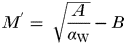 $M^' = \; \sqrt {\displaystyle{A \over {\alpha _{\rm W}}}} - B$.
2. Positive interaction via increased susceptibility to pathogen infection
Here the equation for R 0,V is:
 $$R_{{\rm 0,V}} = \; \displaystyle{{\beta _{\rm V }H\left( {\pi _{{\rm MIN}} + \displaystyle{{DM} \over {E + M}}} \right)} \over {(b + \alpha _{\rm V} + \alpha _{\rm W} M + \sigma _{\rm V} )}}\; $$
giving
 $$M^' = \; - \displaystyle{{E\pi _{{\rm MIN}}} \over {\pi _{{\rm MIN}} + D}} +\! \displaystyle{{\sqrt {ED((b + \alpha _{\rm V} \!+ \sigma _{\rm V} )(\pi _{{\rm MIN}} +\! D) - \alpha _{\rm W} E\pi _{{\rm MIN}} )}} \over {\sqrt {\alpha _{\rm W}} (\pi _{{\rm MIN}} + D)}}.$$
3. Positive interaction via reduced damage to the host
Here the equation for R 0,V is:
 $$R_{{\rm 0,V}} = \; \displaystyle{{\beta _{\rm V} \pi H} \over {\left( {b + \displaystyle{{\alpha _{{\rm V,}\,{\rm BASE}} \; J} \over {J + M}} + \alpha _{\rm W} M + \sigma _{\rm V}} \right)}}\; $$
giving
 $$M^' = \; \sqrt {\displaystyle{{\alpha _{{\rm V,}\,{\rm BASE}} \; J} \over {\alpha _{\rm W}}}} - J.$$
In all cases the mean helminth burden at which the relationship with R 0,V turns over is inversely related to the per capita helminth virulence (α W).
Appendix 4: Analyses of evolution of pathogen virulence under different interspecific interactions with coinfecting helminths
Invasion analysis
To explore the evolution of pathogen virulence under coinfection I use an invasion analysis approach. Here it is assumed there are two pathogen ‘strains’ (denoted by the subscripts 1 and 2 in what follows), which differ in their virulence and any relevant parameters via assumed functional links to virulence. For simplicity we assume these two pathogen strains cannot coexist within the same host individual, with the first strain to infect being assumed to prevent infection of that host by the other strain. By extension of the single-strain framework presented in Appendix 1, this leads to the following system of equations for the dynamics of the 2-strain system:
 $$\displaystyle{{{\rm d}S} \over {{\rm d}t}} = aH - bS - \alpha _{\rm W} MS - S(\beta _{{\rm V},1} \pi _1 I_1 + \beta _{{\rm V,2}} \pi _2 I_2 ),$$
 $$\displaystyle{{{\rm d}I_1} \over {{\rm d}t}} = S\beta _{{\rm V,1}} \pi _1 I_1 - I_1 \Gamma _1, $$
 $$\displaystyle{{{\rm d}I_2} \over {{\rm d}t}} = S\beta _{{\rm V,2}} \pi _2 I_2 - I_2 \Gamma _2, $$
 $$\displaystyle{{{\rm d}R} \over {{\rm d}t}} = \sigma _{{\rm V,1}} I_1 + \sigma _{{\rm V,2}} I_2 - R(b + \alpha _{\rm W} M),$$
where  $\Gamma _1 = b + \alpha _{{\rm V,1}} + \sigma _{{\rm V,1}} + \alpha _{\rm W} M\; $ and $\; \Gamma _2 =b +\alpha _{{\rm V,2}}+ \sigma _{{\rm V,2}} + \alpha _{\rm W} M$ and H=S+I 1+I 2+R. This system has three steady states (where variables are listed in the order (S, I 1, I 2, R), and equilibria are denoted by ‘*’):
 $$E0 = (0,\;0,\;0,\;0),$$
 $$\eqalign{{\rm E1} = &\left( {\displaystyle{{\Gamma _1} \over {\beta _{{\rm V,1}} \pi _1}}, \; \; \displaystyle{{aH^* - S^* (b + \alpha _{\rm W} M)} \over {S^* \beta _{{\rm V,1}} \pi _1}}, 0,}\right. \cr \tab \left. \quad \displaystyle{{\sigma _{{\rm V,1}} I_1 ^*} \over {b + \alpha _{\rm W} M}}} \right)$$
and
 $$\eqalign{ E2 =& \left( {\displaystyle{{\Gamma _2} \over {\beta _{{\rm V,2}} \pi _2}}, \; \; 0,\; \displaystyle{{aH^* - S^* (b + \alpha _{\rm W} M)} \over {S^* \beta _{{\rm V,2}} \pi _2}}}, \right. \cr \tab \quad \left.\displaystyle{{\sigma _{{\rm V,2}} I_2 ^*} \over {b + \alpha _{\rm W} M}}} \right).}$$
From this it is clear that the two pathogen strains cannot coexist; either strain 1 or strain 2 will win out and exclude the other. To determine the conditions under which either of these outcomes happens we calculate the Jacobian of the system:
 $$J = \; \left| {\matrix{ {a - b - \alpha _{\rm W} M - I_1 ^* \beta _{{\rm V,1}} \pi _1 + I_2 ^* \beta _2 \pi _2 - \Omega} & {a - S^* \beta _{{\rm V,1}} \pi _1} & a & {a + S^* \beta _{{\rm V,2}} \pi _2} \cr {I_1 ^* \beta _{{\rm V,1}} \pi _1} & {S^* \beta _{{\rm V,1}} \pi _1 - \Gamma _1 - \Omega} & 0 & 0 \cr 0 & {\sigma _{{\rm V,1}}} & { - b - \alpha _{\rm W} M - \Omega} & {\sigma _{{\rm V,2}}} \cr {I_2 ^* \beta _{{\rm V,2}} \pi _2} & 0 & 0 & {S^* \beta _{{\rm V,2}} \pi _2 - \Gamma _2 - \Omega} \cr}} \right|,$$
where the Ω's are the eigenvalues of the system. If we assume we are at stable state E1, where strain 1 (the ‘resident’) is at endemic equilibrium with the host, and strain 2 (the invading mutant) is initially vanishingly rare (I 2 ≈ 0), the Jacobian simplifies to:
 $$J = \; \left| {\matrix{ {a - b - \alpha _{\rm W} M - I_1 ^* \beta _{{\rm V,1}} \pi _1 - \Omega} & {a - \Gamma _1} & a & {a + \displaystyle{{\Gamma _1 \beta _{{\rm V,2}} \pi _2} \over {\beta _{{\rm V,1}} \pi _1}}} \cr {I_1 ^* \beta _{{\rm V,1}} \pi _1} & { - \Omega} & 0 & 0 \cr 0 & {\sigma _{{\rm V,1}}} & { - b - \alpha _{\rm W} M - \Omega} & {\sigma _{{\rm V,2}}} \cr 0 & 0 & 0 & {\displaystyle{{\Gamma _1 \beta _{{\rm V,2}} \pi _2} \over {\beta _{{\rm V,1}} \pi _1}} - \Gamma _2 - \Omega} \cr}} \right|.$$
This matrix has four eigenvalues, the first three of which correspond to those of the 3×3 sub-matrix in the top left corner of J, representing the single-strain (I 1) system; as stated above, we assume the resident strain 1 is at endemic equilibrium with the host and so the stability criteria for this sub-matrix are fulfilled (Ωi<0, i∈{1, 2, 3}). Therefore stability of J is determined solely by the positivity of the eigenvalue in the bottom right entry of J:
 $$\Omega _4 = \; \displaystyle{{\Gamma _1 \beta _{{\rm V,2}} \pi _2} \over {\beta _{{\rm V,1}} \pi _1}} - \Gamma _2. $$
If this eigenvalue is negative then state E1 is stable and strain 2 cannot invade. However, if it is positive then strain 2 invades and replaces strain 1; this happens when:
 $$\displaystyle{{\beta _{{\rm V,2}} \pi _2} \over {\Gamma _2}} \gt \displaystyle{{\beta _{{\rm V,1}} \pi _1} \over {\Gamma _1}}, {\rm \; or\;} R_{{\rm 0,V2}} \gt \; R_{{\rm 0,V1}}. $$
In other words, the winner is the strain with the highest basic reproduction number. Hence, the optimal level of virulence is the one that maximizes R 0,V, leading to the analyses presented in the main text.
Expressions for the optimal level of virulence under each interaction scenario
1. Baseline model (no explicit interaction between helminths and pathogen)
Under the assumption of a saturating trade-off between virulence and transmission (equation 3, main text), the basic reproduction number for the pathogen in the absence of any explicit interaction with the helminth is:
 $$R_{{\rm 0,V}} = \; \displaystyle{{\beta _{{\rm V,MAX}}\pi H} \over {(k + \alpha _{\rm V} )(b + \sigma _{\rm V} + \alpha _{\rm V} + \alpha _{\rm W} M)}}.$$
To find the optimal virulence (the value of α V that maximizes the above expression), we differentiate equation (A1) with respect to α V, set equal to zero and solve for α V. In the absence of any explicit interaction between the helminth and pathogen, this results in:
 $$\alpha _{\rm V} ^* = \; \sqrt {k(b + \sigma _{\rm V} + \alpha _{\rm W} M)}, $$
showing, first, that evolution tends to select for intermediate levels of pathogen virulence (0⩽α V*⩽∞) and second that, in the absence of any interaction between helminths and pathogen, the presence of the helminth tends to select for increased pathogen virulence due to the reduced host life expectancy shortening the pathogen's infectious period at high worm burdens. The rate at which this happens depends on the magnitude of the helminth's per capita virulence; benign helminths (low α W) would only impact on pathogen virulence at very high burdens.
2. Positive effect of helminths on pathogen, via reduced host recovery from infection
Here we insert the relationship between mean worm burden (M) and host recovery (σ V) from equation (4) in the main text into equation (A1) and solve to obtain the following expression for the optimal pathogen virulence under this positive interaction via recovery:
 $$\alpha _{\rm V} ^* = \; \sqrt {\displaystyle{{k(A + (B + M)(b + \sigma _{{\rm MIN}} + \alpha _{\rm W} M))} \over {B + M}}}. $$
3. Negative effect of helminths on pathogen, via increased host recovery from infection
Inserting the relationship between mean worm burden (M) and host recovery (σ V) from equation (5) into equation (A1) provides the following expression for the optimal pathogen virulence under this negative interaction via recovery:
 $$\alpha _{\rm V} ^* = \; \sqrt {k(b + \sigma _{{\rm MIN}} + (\alpha _{\rm W} + C)M)}, $$
which has the same functional form, in terms of the effect of helminth burden, as the relationship in the absence of any explicit interaction between helminths and the pathogen, although the absolute optimal virulence is increased in this case due to the parameter C, which determines the strength of the interspecific interaction.
4. Positive effect of helminths on pathogen, via increased host susceptibility to infection
Inserting the relationship from equation (6) into equation (A1) provides the following expression for the optimal pathogen virulence under this positive interaction via host susceptibility:
 $$\alpha _{\rm V} ^* = \; \sqrt {k(b + \sigma_{\rm V} + \alpha _{\rm W} M)}, $$
which is the same as the expression in the absence of any explicit interaction between the helminth and pathogen. Hence, although this form of interaction affects the pathogen's basic reproduction number, it does not affect selection on pathogen virulence.
5. Negative effect of helminths on pathogen, via reduced host susceptibility to infection
Inserting the relationship from equation (7) into equation (A1) provides the following expression for α V*:
 $$\alpha _{\rm V} ^* = \; \sqrt {k(b + \sigma_{\rm V} + \alpha _W M)} $$
which, again, is the same as the expression in the absence of any interaction between helminth and pathogen.
6. Positive effect of helminths on pathogen, via reduced host damage caused by pathogen
Inserting the relationship from equation (8) into equation (A1) provides the following expression for the optimal pathogen virulence under this positive interaction via host damage:
 $$\alpha _{\rm V} ^* = \; \sqrt {\displaystyle{k \over J}(J + M)(b + \sigma_{\rm V} + \alpha _{\rm W} M)}. $$
7. Negative effect of helminths on pathogen, via increased host damage caused by pathogen
Inserting the relationship from equation (9) into equation (A1) provides the following expression for the optimal pathogen virulence under this positive interaction via host damage:
 $$\alpha _{\rm V} ^* = \; \sqrt {\displaystyle{{k(b + \sigma_{\rm V} + \alpha _{\rm W} M)} \over {(1 + KM)}}}. $$


 Open access

