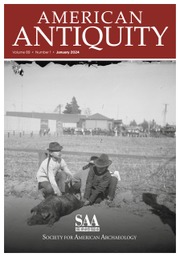


As American empire expanded throughout the twentieth century, extractive industries had profound impacts on lived landscapes at unprecedented scales. American power in Southeast Asia reverberated through global trade and labor dynamics, fundamentally altering the exploitation of resources and displacing or disrupting millions of lives. Questions arise regarding the responses of inhabitants within these transformed landscapes to the encroachment of extractive industries and American empire. Moreover, how did manifest destiny extend across the Pacific, bridging such seemingly distant frontiers as the redwood forests of California and the lush jungles of the Philippines? These events are echoed in physical environments, material culture, and human interactions with space.
To investigate, we adopted an interdisciplinary approach combining historical, contemporary, industrial, and landscape archaeology. Using drone-mounted lidar, ethnoarchaeology, historical photography, and nondestructive remote-sensing methods, we explored the American hardwood lumber extraction industry in Bikol, Philippines, between 1898 and 1987.
Our research delved into how extraction shaped present-day landscapes through the establishment of rail lines, transportation systems, and communication networks; environmental alterations; deforestation; ecological shifts; and land-usage transformations. Simultaneously, we investigated how the Bikolano populace responded to the presence of American empire by looking at settlement patterns, place-names, and the ways inhabitants engaged with transformed surroundings. Additionally, we questioned whether corporate endeavors were a mere extension of mainland colonialism or something more intricate.
Our archaeological investigation provided deep insight into the intensive resource extraction synonymous with American colonialism in the Philippines. We expected to uncover narratives encompassing capital and labor dynamics, the environmental consequences of extractive industries, and tangible evidence of continuities between American colonialism across distinct frontiers. Archaeology is able to provide glimpses into the lives of workers in contexts whose history is typically centered on the stories of “great men”—the capitalists (Shackel and Palus Reference Shackel and Palus2006). Within this context and given our chosen methods, settlement patterns of a combined local and migrant workforce seemed a promising subject for analysis. With archaeological parallels provided by Stewart's (Reference Stewart2017, Reference Stewart2020) archaeology of toxic landscapes and industrial waste, Lawrence and colleagues’ (Reference Lawrence, Davies, Hil, Rutherfurd, Grove, Turnbull, Silvester, Colombi and Macklin2023) characterization of mine wastes as part of the archaeological record, Hardesty's (Reference Hardesty2010) archaeology of mining in the American West, and Meniketti's (Reference Meniketti2016) and Franzen's (Reference Franzen2020) archaeology of the American logging industry, we expected to be able to contribute to the ongoing dialogue about archaeologies of empire and environment (Rosenzweig and Marston Reference Rosenzweig and Marston2018) by investigating the long-term environmental impacts of American logging. Because discussions of historical archaeology on American frontiers (Dixon Reference Dixon2014; Hardesty Reference Hardesty1981) often characterize American frontier sites as related to the frontier concept, landscape transformation, migration and diaspora, and industrial capitalism, we predicted continuities between American logging in the Philippines and other American frontiers. Likewise, historical arguments suggest that there ought to be visible continuities between even far-flung American imperial frontiers because of American attitudes toward frontiers and their landscapes (Drinnon Reference Drinnon1997; Gibson and Whitehead Reference Gibson and Whitehead1993; Immerwahr Reference Immerwahr2019).
It was therefore reasonable to hypothesize that industrial development would dictate infrastructure development, incentivize settlement and migration, and simultaneously exert detrimental effects on the environment. We argue that, in response, Bikolanos exerted agency in determining settlement and migration patterns. Their expertise influenced industrial strategies as they made delicate trade-offs both to subsist within and deplete their environment, driven by the lure of wages, food, and shelter. These hypotheses challenge preconceived notions by painting American presence in the Philippines as a nuanced extension of mainland settler colonialism, albeit adapted to prioritize extraction rather than settlement.
The investigation yielded evidence that both supported and disrupted our initial hypotheses. Key findings included the following: (1) the transformative role of mechanization in shaping landscapes by influencing settlement patterns and routes and by driving development, (2) the substantial influence of workers in shaping the landscape through their settlement decisions, and (3) the unexpected direct links to mainland American frontiers. The implications of these discoveries resonate across historical, archaeological, and ongoing narratives concerning American empire. They shed light on the empire's geographical reach, its role in modernization, and its far-reaching consequences for landscapes and lives.
Placing the Authors
In academic writing, cultural self-placement promotes honesty, clarity, and redress (Hartemann Reference Hartemann2021). My (Robin Meyer-Lorey) social position as a White, male Californian from an educated, upper-middle-class upbringing mirrors that of many American colonial administrators from a century ago. I am acutely aware that a key historical source we rely on is Charles Tebbe, a middle-class 24-year-old White male. Educated as a forestry engineer at the University of California, Tebbe ventured to Bikol in 1932 to oversee changes to the logging operations of the Cadwallader-Gibson company. Now I, a 26-year-old White male educated as an archaeologist at the University of California, am here to recount my own journey to Bikol in 2022, 90 years later, with the aim of studying the same logging operation. Given this parallelism, I tried to center the perspectives of Bikolano individuals. Our collaboration with those whose narratives have not been elevated was of paramount importance. We aspired to have a diverse array of pertinent voices contribute to this narrative.
In contrast, Stephen Acabado grew up in the very locality where the extensive resource extraction took place. His mother's family migrated to the region, enticed by the economic opportunities provided by industries that sprouted around logging activities. As such, some of this article's content stems directly from his lived experiences.
Themes and Conversations
The impacts of American colonial presence in the Philippines have been little studied archaeologically. Compared to the Spanish regime, the United States’ rule over the Philippines was both short and recent. The American colonial era began after the Spanish-American War ended in 1898 and was in full swing following the Philippine-American war that lasted from 1899 until 1902. The Philippines gained independence after the end of World War II—placing America's short rule in sharp contrast to Spain's 330+ years of control over the archipelago. However, the American regime was uniquely intertwined with twentieth-century modernization and global capitalism.
Discussions about the United States’ role as a colonial power throughout the twentieth century are complicated by the fact that its principles of free governance conflict with the logic of maintaining power on a global scale (Immerwahr Reference Immerwahr2019; Perkins Reference Perkins1962). Because US colonial history continues to be negotiated, it is even more important to conduct archaeological investigations that reveal the physical evidence of American colonial activities. In this article we (1) engage with the history of American colonialism overseas; (2) explore the continuities between US settler colonialism on mainland frontiers (like California) and the US administration of territories abroad (like the Philippines); and (3) address archaeological questions regarding relationships among extractive industries, landscapes, and communities.
We use archaeology to study the activities of American states, people, businesses, and colonial subjects beyond the geographical bounds of the Americas. Franzen (Reference Franzen2020:189) points out that “there is also a context for the archaeology of industrial logging in America that goes beyond our continent.” For much of the time frame of these investigations, the Philippines was a US territory, making its people subjects of the United States and increasingly subject to North American cultural influence, including a culture of exploiting natural resources, industrialization, and the accumulation of wealth.
We adopt approaches to archaeology that are involved with both the historical and the contemporary. We make use of historical sources like Tebbe's archival photo-diary and aerial imagery held at the National Archives (NARA) to answer archaeological questions about landscape modification and industry. Hardesty (Reference Hardesty2010) points out the importance of using written documents, landscapes, architecture, and archaeology to accurately reconstruct the mining frontier in the American West, and we apply a similar approach to our research area. We are concerned with archaeological material—artifacts, features, structures, sites, and landscapes—but evidence of this material may be merely photographs or descriptive documents held in archives; yet they become even more valuable when informed by or used to inform field investigations. Our questions extend into the contemporary world because landscape changes and colonial structures are ongoing, and decolonization and redress are still necessary.
Acabado and Martin (Reference Acabado and Martin2020) and Flewellen and colleagues (Reference Flewellen, Alicia, Justin, Jones and White III2022) used archaeology to engage with the present and prepare for the future through community creation and community-led heritage conservation. Meyer-Lorey worked in and alongside the Bicol Archaeological Project, a community-focused archaeology project led by Acabado. He also had the benefit of guidance from other Bikolano scholars, particularly Hermel Pama, in formulating questions and approaches during the earliest stages of research. Dunnavant's (Reference Dunnavant2020) archaeological investigation of maritime routes to explore the recent past was inspirational: using archaeology to study recent history can provide more (and different) evidence to add to and critique historical narratives, especially when conducting a creative analysis of space and the landscape.
For this investigation, landscape is a representation of the interaction between the environment, humans, and both natural and human-made systems. Because everything exists in a social world for humans, the landscape can be understood as a natural environment that includes humans, a system of resources and actors, an expression of social or political power, and a lived experience—all at once (Balée Reference Balée2006; Clark Reference Clark1987). Influenced by both Dunnavant (Reference Dunnavant2020) and Corcoran-Tadd and colleagues (Reference Corcoran-Tadd, Hung, Antczak, Malatesta and Hofman2021), archaeological investigation not just of sites but also of routes that are actively shaped both by humans and the natural world is key. De Leon (Reference De Leon2015) provides examples not only of addressing the contemporary but also actively investigating the present with archaeological questions—after all, many of the ecological trends and colonial structures discussed here are within living memory and continue to affect people.
Acabado and colleagues (Reference Acabado, Koller, Liu, Lauer, Farahani, Barretto-Tesoro, Reyes, Martin and Peterson2019; Findley et al. Reference Findley, Bankoff, Barretto-Tesoro, Hamilton, Kay, Acabado, Amano, Kaplan and Roberts2022) exemplify the value of archaeological landscape modeling to understand responses to colonialism. They employ land-use models to sum up the unique pericolonial past in Ifugao. Tsim Schneider's (Reference Schneider2021) The Archaeology of Refuge and Recourse highlights how colonial structures like the California missions fit into a larger lived and understood landscape. Machines, railways, industry, and capital are focal points and catalysts of change, but they can also be understood as components in local and migrant workers’ lives and landscapes. Schneider's discussions of place memory and mobility link to local people's memory of place-names and their reuse of defunct rail lines, as discussed by Pama (Reference Pama2014).
Humans have social relationships not just with each other but also with other species and the surroundings (Balée Reference Balée2006). Machines, railways, and all human-built tools for transportation and communication are included in these relationships: they alter the physical environment and simultaneously shape the landscape as it is perceived, experienced, and understood by people. Clark (Reference Clark1987) defines industrial archaeology as a discipline that centers machines as one part of larger social systems and landscapes. An industrial landscape involves all the relationships of labor, capital, ownership, resources, communication, and power. Environment and industry are in fact closely related, even in post–Industrial Revolution contexts in which it is common to view industry and environment as separate forces in conflict with one another. Shackel and Palus (Reference Shackel and Palus2006) show that industrial archaeology has a unique ability to help negotiate the memory of industrial contexts, especially by highlighting workers’ lives in stories that often center on “great men.” In Siruma, where Jacob Chetvernia is remembered as “the father of Tandoc,” we provide more evidence for the choices of workers in shaping landscape. Hardesty's (Reference Hardesty2007) “global-change archaeology” is an example of how these historical, ecological, and archaeological approaches can be applied to help understand the links between past human–environmental interactions, present environmental issues, and future planning.
Colonialism carried out by the United States has been both settler and extraction focused. In both Spanish and US colonial regimes, the extraction of labor and resources has been integral to the displacement of Indigenous peoples, complicating the relationship between what are sometimes viewed as separate forms of colonialism. Corcoran-Tadd and colleagues (Reference Corcoran-Tadd, Hung, Antczak, Malatesta and Hofman2021) discuss the degree to which Spanish mining shaped the displacement and movement of Indigenous people, and Van Buren (Reference Van Buren, Panich and Gonzalez2021) shows that native people in Spanish colonial contexts were involved in global systems of labor, trade, and commerce. Voss (Reference Voss2008) deepens notions of Indigenous involvement with global imperial systems by pointing out the importance of gender and race to labor in the colonial Spanish Americas; this racialization of labor dynamics continued to evolve under American rule. Schneider (Reference Schneider2021) uses the term “free-market genocide” to define the unique way that the US government tacitly enabled and encouraged industries to do the dirty work of extracting resources and displacing native people. This pattern relates directly to Madley's (Reference Madley2017) discussion of the California genocide, in which mining, logging, and farming were all implicated: all three often relied on extracting native labor, typically with deadly results.
In these examples, extractive colonialism was a key part of settler colonialism, especially for the United States. When viewing the entire Pacific Basin as a continuous context that the United States first treated as a frontier and then increasingly as directly controlled territories, the relationships between such seemingly unrelated activities as extraction in the Philippines and settlement in California become clearer (Gibson and Whitehead Reference Gibson and Whitehead1993).
The archaeology of extractive colonial contexts provides frameworks for understanding how Bikolanos’ participation in industrial landscape change could reflect agency and resistance, even as their culture changed in response to incentives brought by American colonialism. Gaughwin's (Reference Gaughwin1992) archaeological study of mining and logging in Tasmania and Meniketti's (Reference Meniketti2016) excavations of a lumber mill site in California exemplify how archaeology can reveal the landscape impacts of extractive industries not only on the ecology and environment but also on the formation of communities and spaces around industrial infrastructure. Shackel (Reference Shackel, Dobres and Robb2000) shows that archaeology focused on workers can highlight the agency of wage laborers in extractive contexts, whereas Panich and colleagues (Reference Panich, Hylkema and Schneider2021) provide a valuable framework for seeing resistance not just by the static maintenance of precolonial activities but also through continued changes in tradition.
Hardesty (Reference Hardesty1981:69) proposes that the American Western frontier can be defined as an “ecological community under transformation because of . . . technological modification or competition, and . . . colonization patterns.” The broadening of the frontier into an ecological community that includes humans is valuable when discussing the long-term environmental and human effects of colonialism. Meanwhile, Dixon (Reference Dixon2014) argues that historical archaeology in the American West should integrate colonialism, postcolonialism, landscape transformation, migration, and industrial capitalism. We argue that American colonial frontiers extended far beyond the geographical West of the US mainland and that the frameworks of both Hardesty (Reference Hardesty1981) and Dixon (Reference Dixon2014) are applicable to a historical archaeology of the American colonial Philippines.
The following studies also helped shape our investigation: Hardesty (Reference Hardesty2010) does an archaeology of systems, settlements, households, rail lines, and infrastructure to study the mining frontier in the American West, providing an apt model for this research. Stewart's (Reference Stewart2024; Stewart et al. Reference Stewart, Jungkind and Losey2020) archaeology of industrial waste in Alberta, Canada, illustrates how communities can form in relation to the long-term environmental impacts of industry. Venovcevs's (Reference Venovcevs2021) archaeological investigation of a Soviet-era monotown—a town designed as the most rational way to turn nature into resources by investing in a single industry—shows how the “unruly heritage” of environmental damage caused by the Soviet Union continues to be dealt with by modern residents, often through the reuse of industrial remains, a pattern that is also represented in Siruma. The prevalence of the recycling trade in Siruma and the ways that landscape and industry shaped each other make all these concepts useful. We also turned to the work of Corcoran-Tadd and colleagues (Reference Corcoran-Tadd, Hung, Antczak, Malatesta and Hofman2021), who used three case studies to highlight persistence, appropriation, and erasure of Indigenous routes in early Spanish colonial contexts in the Americas, focusing on the interplay of extraction and mobility. They argue for the importance of routes, not just sites, in landscape archaeology and discuss the power of material resources to shape routes through their unique physical traits. In Siruma, tropical hardwoods did not float, necessitating cranes and railways that, even though they are defunct, continue to shape routes.
Historical Background: Manifest Destiny in the Pacific Basin
In 1845, journalist John O'Sullivan coined the term manifest destiny to encapsulate the spirit of righteous inevitability with which the United States would sweep across the North American continent, displacing Native peoples, settling whites, and mastering the land. By the 1890s, manifest destiny had reached its foregone conclusion: the United States stretched from sea to shining sea. Yet the frontier was not just a geographical region—it was also a metaphysical space wherein the nation was built (Drinnon Reference Drinnon1997; Gibson and Whitehead Reference Gibson and Whitehead1993; Immerwahr Reference Immerwahr2019). From the western shores of California to the eastern shores of mainland Asia, the entire Pacific basin was explored and exploited by American frontiers-people throughout the 1800s. As the United States became the dominant power in the Pacific over the course of the nineteenth century, California, Oregon, Washington, Alaska, Hawaii, other Pacific islands, Southeast Asia, and China were all frontiers, whether maritime, agrarian, mining, missionary, military, mercantile, or some combination thereof (Gibson and Whitehead Reference Gibson and Whitehead1993). By the twentieth century, the old European empires were struggling to hold onto power, and the United States was poised to cement its position. As Teddy Roosevelt put it, “I should welcome almost any war, for I think this country needs one.” He got it, in the form of the Spanish-American War. While Spain was fighting revolutionaries in Cuba, the Philippines, and elsewhere, the United States swooped in with trumped-up accusations of Spanish wrongdoing, and the beleaguered Spanish found an easy out: although they could never surrender the Philippines to the Filipinos, they could honorably cede it to other White men in the United States (Immerwahr Reference Immerwahr2019:65–72).
As of 1898, the Philippines was a US colony by law. It was by far the most populous colonial holding. By 1940, it had a population of more than 16 million, comparable in size to California at the time. Soon after its acquisition, the language of “colony” was shifted to “territory,” putting the Philippines in line with the “western territories” that had been the target of US expansion for the previous century (Immerwahr Reference Immerwahr2019:11, 76–77). This continuity was more than just conceptual, thematic, or symbolic, however.
American colonialism in the Philippines carried three primary throughlines from American colonialism on the US mainland: (1) the on-the-ground mechanics of gaining and holding power were shaped by lessons learned during the military subjugation and removal of Native Americans from the US interior (Berger Reference Berger2015; Williams Reference Williams1980); (2) empire building was tied to racialization and education—much as Native Americans were reeducated in a bid to, as Captain Richard Pratt put it, “kill the Indian and save the man,” racism and education were used as moral imperatives for colonialism and tools to “create and maintain . . . identity among Filipinos that benefits the United States” (Milligan Reference Milligan2000:110; see also Drinnon Reference Drinnon1997; Paulet Reference Paulet2007; Schueller Reference Schueller2019; Williams Reference Williams1980); and (3) capital was empowered to engage in free-market extraction in American frontiers as a means to extract value from labor and resources (Meniketti Reference Meniketti2016; Schneider Reference Schneider2021). This third facet is the primary focus of our research.
Given the presence of other industries, why focus on lumber? The sugar industry surpassed lumber in wealth and output, but it relied on an antiquated Spanish-era plantation model that was kept functional by the efforts of its powerful owners (examples of “Indigenous capital”) and their sway with the American colonial regime (McCoy Reference McCoy1992:108–109). Lumber, in contrast, was more directly controlled by American economic interests and was tied to modernization, mechanization, and industrialization. In The Archaeology of the Logging Industry, Franzen (Reference Franzen2020) points out that logging in America often influenced later settlement, and the nature of its infrastructure, workforce, and rapid depletion of resources set it apart from other extractive industries.
Spanish colonialism also used logging. However, the reason that this investigation begins with the American colonial period and not the Spanish is the two huge differences between Spanish and American logging operations: organization and mechanization. The Spanish extraction of lumber was tied to urbanization in growing cities like Manila and shipbuilding for the galleon trade. But it did not operate through a corporate structure, relied on local hand labor rather than mechanization and on a large migrant workforce, and did not extract wood at industrial scales through practices like clear-cutting (Bankoff Reference Bankoff, Bankoff and Boomgard2007a).
According to Bankoff (Reference Bankoff, Bankoff and Boomgard2007a), Spanish and American attitudes toward forests were similar, but there were fundamental differences in organization and technology. Although widespread deforestation had already begun under Spanish rule, Bankoff (Reference Bankoff2007b) highlights that forest loss was around 22,000 ha per year under Spanish rule; it rose to more than 126,000 ha annually under the American regime. At the same time, it is important to note that Spanish logging relied on hand labor, followed a more selective approach when choosing lumber, and attempted to encourage conservation; American logging was defined by mechanized clear-cutting (Bankoff Reference Bankoff, Henley and Nordholt2015; Luyt Reference Luyt2016). The factories, rail lines, and machines that we are primarily concerned with only came about under American rule, even if the Spanish Empire did initiate the earliest forms of extractive logging in the Philippines. Unfortunately, there is a dearth of information about the impact of Spanish logging in Bikol, but given the nature of Spanish and American logging practices, it is reasonable to think that much of the environmental effects of mechanized logging seen today in our research area began under the American colonial regime. A future investigation into the links between and comparative environmental impacts of logging under the Spanish, American, and Marcos regimes in this region would be very valuable. However, this investigation was primarily concerned with the environmental and landscape effects of mechanized logging as they related to American empire and to American attitudes toward frontiers.
Because of the American lumber industry's close ties to the process of modernization, examining local relationships to logging and rail may also be emblematic of much larger processes taking place throughout the American colonial regime, such as the “exploitation of abundant natural resources, technological innovation, rapid industrialization, immigration, and the accumulation but unequal distribution of great wealth” (Franzen Reference Franzen2020:1).
In California, the US government empowered corporations to dislocate Native Americans through extraction in the form of the logging trade. Frontier settler colonialism was tied to environmental racism and long-term ecological effects that disproportionately harmed those deemed to be in the way of white settlers or whose labor was exploited for the benefit of whites (Van Sant et al. Reference Van Sant, Milligan and Mollett2021). The timber industry not only created intense landscape change and displaced native people but also affected immigration, community creation, and conflicts over what constitutes a “productive” environment (Buckley Reference Buckley2000; Meniketti Reference Meniketti2016).
The American logging that this research covers is within living memory. In the period between 1946 and 1986, the activities and scale of American sawmill operations increased to their highest point (Pama Reference Pama2014:50). In 1949, the plywood plant of Woodworks Inc. was opened in Tandoc to celebrate the seventieth birthday of Jacob Chetvernia, a Russian-American businessman who, as mentioned, is now fondly remembered by residents as “the father of Tandoc” (Figure 1; see Reyes Reference Reyes1950; Pama Reference Pama2014). Many residents of the Bikol region can recall stories of their grandparents moving to the region for work at the sawmills, and some remember the factories themselves.
A gear from the Woodworks plywood factory marks a memorial to Jacob F. Chetvernia in Tandoc. On the bottom portion of the gear is inscribed “Father of Tandoc.” Photograph courtesy of Robin Meyer-Lorey. (Color online)

In Ragpa Kan Pagkaba'go (Pama Reference Pama2014:122), residents describe how settlements once named after local plant species were renamed: “The villages that sprung from the location of the train stations adopted the stations’ rather unimaginative names, merely to mark distances: ‘Milya Tres,’ ‘Milya Kwatro,’ and so forth.” However, one resident spoke about the names with a metaphor that helps characterize the local understanding of both industry and the environment: “Su mga pangaran na hale sa balagon yaon pa. Su balagon na nagdadalagan, mayo na” (The names coming from vines are still there. The vine which ran is not anymore there; interview with residents at Sawmill in Lagonoy, June 6, 2010). Referring to the defunct rail line as a vine that no longer runs through the land is not just colorful imagery but also indicates how people in the region now make sense of the complex relationships of industry, landscape, extraction in the past and in human life today.
We chose to do research in Siruma, at the northern tip of Bikol (Figure 2). Bikol was the site of the most intensive logging by American companies (Pama Reference Pama2014). Although rail lines and logging activities were expansive, the stretch between Tandoc and Tamban port is well documented by historical accounts, and the anthropological work along this same route provides the ethnographic groundwork for this research. Pama's Reference Pama2014 ethnography is an invaluable complement to Meyer-Lorey's informal interviews with residents. Interviews conducted by a scholar able to speak to residents in their own regional language and with a similar cultural lens should form the basis of ethnographic research. Meyer-Lorey reached out to Pama before the onset of fieldwork, and he encouraged us to pursue the geographic, spatial, environmental, and ecological components of American industry in this key stretch of the Bikol region.
Bikol is in the southern peninsula of Luzon, the largest island of the Philippines. Research sites Tandoc and Tamban are identified with factory icons and are located in Siruma, the northern peninsula of Camarines Sur.

The Cadwallader-Gibson company operated sawmills in Camp Isarog (near modern Tamban) and the Lagonoy district (to the east of Siruma) since the early 1900s. Hardwood logs were scouted out in interior forests and cut down with machines. Because these tropical hardwoods did not float, they were loaded onto trains and brought into the sawmills. There, they were sorted, processed, and loaded by cranes onto ships for export. In 1932 and 1933, a 24-year-old logging engineer Charles Tebbe identified inefficiencies at the Camp Isarog mill and set up a new mill site in Tandoc; while there he took many photos (see Figures 3–5; Supplemental Figures 1–10).
A clear-cut area around a workman's hut with the forest visible in the background. An incomplete railroad cut is seen in the bottom right of the image.

Forests were not the only ecosystems exploited: coral was pulled up from a reef in Tandoc's harbor, crushed, and used as railroad ballast.

The rail platform pier allowed products to be loaded onto large cargo ships. The pier is still in use but is now paved over.

Workers’ settlements flourished, and a canteen, hospital, machine shop, pier, and other essentials were built in Tandoc. Meanwhile, the port in Tamban continued to serve the Lagonoy region's wood exports. In 1935, Quirco Abadilla (Reference Abadilla1935) scouted the region for white clay deposits, citing the presence of lumber rail lines and a large workforce as further incentives for setting up mining operations there.
During World War II, the Pacific theater began to heat up, industrial equipment soared in value, and there was a mill fire at Tandoc. The Cadwallader-Gibson company cashed out, selling their equipment. During the war, Japanese forces occupied Tandoc so they could use the pier and rail line, and they set up a military base on nearby Butauanan Island.
After the war, US relief funds were sent to Tandoc, and in 1949, Jacob Chetvernia set up his Woodworks plywood operation to take advantage of the existing rail lines and port. The operation built two artificial freshwater lakes, a kiln for bricks, and expanded the workers’ settlement into a bustling company town that included trams, paved roads, a hospital, a school, and more. In 1987, the Marcos regime ousted foreign logging operations. The Woodworks company packed up and left, and the steel was torn up from disused railroad tracks. Later, the modern road was said to have been paved over the rail bed. Today, both Tandoc and Tamban have concrete piers; the one in Tandoc is made of concrete poured over the old rail platform. Tamban is a rapidly growing town suffering from erosion in the nearby hillsides and relying on “reclaiming” land from the Tambang River, whereas residents in Tandoc continue to recycle industrial remains from the logging and plywood operations.
Maps and Archival Materials
Local lore suggests that the modern road in Tandoc was paved over the rail line after the steel was torn out. This can be tested by referring to historical maps and aerial photography that include the rail line. Abadilla (Reference Abadilla1935), when surveying for white clay deposits, produced one such map (Supplemental Figure 11); white clay mining is now one of the major industries in Siruma. We followed the example of Hammer and Ur (Reference Hammer and Ur2019) to add time depth to our aerial photography data. Aerial spy photography collected by the United States in January 1945 covered part of the research area between modern-day San Vicente (Campo Cuatro) and Sagrada (Campo Seis). After gaining access to these photos from NARA, we created an orthomosaic of the overlapping images and georeferenced it to generate topographic data and trace visible sections of the rail line (Supplemental Figure 12). A close-up of San Vicente from this historical footage is visible in Supplemental Figure 13.
By combining interviews and satellite imaging, a pattern emerges: along the main thoroughfare from north to south through Siruma, many of the towns have place-names that reflect origins tied to the logging industry (Table 1; Figure 6). When we overlaid the historical map and images on a modern satellite map and traced the rail lines, it became clear that the road does in fact follow the rail line, but other offshoots of the rail were not paved over in the same way. In the historical aerial photography, Campo Cuatro (now San Vicente) is clearly visible, with small, deforested clearings along the rail line, one of which corresponds to Campo Seis (now named Sagrada).
Settlements Shown in Figure 6.

Modern satellite map showing an overlay of historical extent of the rail lines mapped by Abadilla (circa 1935) in red; the rail lines visible in aerial photography (January 4, 1945) are in purple. Almost the entire extent has been directly paved over to form the modern road (shown in teal). (Color online)

Historical documents include an account by Tebbe of his work in 1932 and 1933. It describes the lumber operation and the reason why certain locations were chosen for the mill rail lines, discusses the Americans’ relationships with Bikolano workers, reveals connections to the California and Pacific Northwest logging industries, and provides insight into how worker settlements were formed. His photos provide a visceral impression of mechanized landscape modification that no verbal description can fully convey.
Tebbe oversaw the construction of a new mill site at Tandoc because the mill at Camp Isarog was so designed that fumes took a long time to clear out and logs dried slowly. The new site at Tandoc was well ventilated and ideally positioned for building out infrastructure and shipping logs on large vessels.
Tebbe had cut his teeth in the redwood forests of California, and every American he worked with had some connection to California or the Pacific Northwest. For example, Tebbe asked a respected friend to lend his expertise: “Wes drew from his long experience in the Pacific Northwest where he had run big spreads, and effected substantial savings” (Reference Tebbe1967:28).
Of course, there were only a few Americans working in Siruma. Their goal was to train and use Filipino workers, whose wages were much lower, to perform the labor. This was in line with American colonial strategies: as early as 1908, propaganda work was carried out in Bikol to increase interest in forestry and encourage locals to carry out logging work (Ahern Reference Ahern1909:11). Many of these workers were highly skilled and provided their own knowledge to shape the logging operation. As Tebbe explained, “Martin and one other Filipino, Conrado Pineda, were to be my assistants in the engineering work. Pineda, like Martin, was exceptional. . . . The prestige that attached to these new jobs was enormous and not to be jeopardized by carelessness or failure. The catskinner in particular was on a pedestal . . . just like Slim, the locomotive engineer” (Tebbe Reference Tebbe1967:12, 33). Tebbe learned from locals how to tell which trees were rotten by knocking on their trunks, and higher-level workers helped determine rail routes and logging strategies at a larger scale. This is corroborated by Gatmaytan's (Reference Gatmaytan2023) ethnographic work in the southern Philippines, which suggests that lumber companies exploited Indigenous knowledge to increase profits. Many Bikolanos carried over experience from the Spanish regime to the American—they seemed to treat Tebbe as a patrón who could be looked to for support in aspects of life outside work, including mediating marital disputes. Tebbe (Reference Tebbe1967:21) was unfamiliar with this older colonial framework but seemed happy to step into the role.
Most importantly, Tebbe (Reference Tebbe1967:43, 18) provided a valuable record of how industry catalyzed migration, settlement, and landscape change:
As the days passed, labor came in from farther and farther distances. . . . If they had been a day or two or three on the way, they wouldn't have eaten in that time. . . . They used my cook house for a meal or two, spent one night in the bunkhouse and never returned. I went out along the line to see if they had bunched it, but they were still on the job. Each contract group had raised a kobo kobo right alongside its cut, which it preferred to my fancy facilities. . . . Several concentrations of cabins for the natives who worked in the woods had been placed at intervals along the right-of-way.
Mechanization was a catalyst for landscape change: according to Tebbe, new equipment reduced costs by two-thirds. The new profitability enabled by mechanized logging created wealth that drew in labor, shaping migration and settlement. The infrastructure constructed by the lumber company also provided protection from the elements in a region prone to typhoons, offering a promise of stability to workers. The rapid growth and development of Tandoc provide a perfect example of the impacts of these incentives. Extraction of lumber and thus deforestation took place at a much faster pace, and machines enabled the crushing of large quantities of stone to create even more fill for rail lines. There is some evidence that Tebbe (Reference Tebbe1967:10) foresaw the long-term environmental effects of logging: “Evidence of erosion would be much more apparent . . . if not for the shallow root systems of the forest trees.” It seems obvious that large-scale deforestation would then result in erosion, but profit was king in the American colonial regime.
Methods
Archaeologists often acknowledge that excavation is inherently destructive. Methods that do not disrupt archaeological context in the process of data collection are therefore attractive and in this case were also ideally suited to the scale of the research area and the nature of our questions. This project used remote-sensing techniques (satellite imaging, historical aerial photography, drone lidar, and drone photography); ethnography (interviews, place-name analysis, and community input; see Figure 7); ground survey; mapping; and historical research. Yet, “low-impact” and “nondestructive” methods do not necessarily mean “nondisruptive” methods; even low-impact methods involve some level of communication with stakeholders. Being part of an archaeological project with significant existing community partnerships helped a great deal in creating positive attitudes toward drone flights and the deliverables they produced.
Tandoc resident identifies the base of a water tower once used for plywood production. Photograph courtesy of Robin Meyer-Lorey. (Color online)

Remote sensing was our method of choice not only because it is low impact but also because it is practical: an inexpensive drone equipped with a camera or a lidar sensor can gather data for use in monitoring forests, tracking human ecological impacts, gauging land use, and finding archaeological sites (Anderson et al. Reference Anderson, Westoby and James2019).
Our archaeological applications of remote sensing were informed by Chase and colleagues’ (Reference Chase, Chase, Weishampel, Drake, Shrestha, Slatton, Awe and Carter2011) use of lidar for studying land modification; Acabado and coworkers’ (Reference Acabado, Koller, Liu, Lauer, Farahani, Barretto-Tesoro, Reyes, Martin and Peterson2019) use of photogrammetry for 3D mapping to display the extent of modern rice terraces in Ifugao, Hammer and Ur's (Reference Hammer and Ur2019) use of archival aerial photos for landscape archaeology, and Larrain and colleagues’ (Reference Larrain, Greco and Tarrago2021) approach using local high school students to aid researchers in mapping Inka architecture. With collaboration from Partido State University and local community members, we used a combination of these approaches to facilitate data collection.
The Zenmuse L1 lidar sensor mounted to a Matrice 300 RTK drone with an Emlid Reach RS+ RTK base station enabled high-resolution aerial photography of the long-term effects of deforestation, with photogrammetry and lidar data targeted at 3D mapping of specific points of interest: defunct rail lines, lumber-processing factories, and workers’ settlements. Lidar data were processed through DJI Terra, LiDAR360, and ArcGIS Pro. Photogrammetry was processed using Agisoft Metashape. At Tamban we flew a combined lidar and photogrammetry mission at 200 m. Rain caused minor interference with the lidar data. At Tandoc we flew two lidar missions to map the barangay (ward or district) and detect industrial remains through tree cover. We then flew one photogrammetry mission to generate an orthomosaic of the nearby barangay Homestead and generated two orthomosaics from RGB data collected during lidar flights over Tandoc. We determined that, given the scale of the route, satellite imaging and interviews would be more efficient for investigation of the road and the settlements along it.
We supplemented ethnographic accounts produced by local scholar Pama (Reference Pama2014) with our own interviews conducted with the help of local contacts like Father Eric Bobis. All these sources in combination created a model of deforestation, erosion, and human ecological impacts during the American colonial era. Place-name analysis, settlement mapping, and historical and ethnographic accounts filled in ecological history with details about internal economic migration, settlement, and people's relationships to landscape as reconfigured by industry.
This research served as a pilot model for developing a pipeline for the long-term storage and distribution of 3D data, which is in line with our goals of creating open-access and interactive materials. The digital assets produced by this study will remain open-access and interactive for the benefit of community members and future researchers (https://dal.ucla.edu/AmericanIndustryBikol/). Local scholars can make use of this data, local government units (LGUs) have requested access to maps and 3D models of their barangays, and local priests have used aerial photography and 3D models of their churches.
Data
Interviews and Survey
In July 2022, we arrived in Tamban port with Father Eric, the Bicol Archaeological Project's (BAP) primary community contact and a representative of the Catholic Church, and Earl Hernandez, a Bikolano and fellow BAP researcher. We did a survey of the town and took GPS points for a large concrete slab that was a component of the old rail platform and for a concrete foundation of a crane that was used to load and unload logs. Both structures were nestled between and beneath people's homes and businesses. From an interview with Annie Cabral, captain of the barangay—head of the smallest political unit in the Philippines—we learned about the status of land reclamation in Tamban and subsequent erosion on the opposite bank, as well as the ongoing challenges facing development efforts in the barangay: expanding settlement, erosion, and flooding. We also learned that the rail line used to run along the river and bring in lumber from Lagonoy.
Tebbe's (Reference Tebbe1967) account corroborates the existence of a port at this location, near the first Cadwallader-Gibson logging camp, Camp Isarog, so named for its views of Mount Isarog. We conducted one drone flight over Tamban. The lidar data were not as clean as we would have liked due to the high humidity and visible water vapor in the air, but this scan still produced a detailed elevation model (Figure 8).
Lidar elevation model of Tamban port with points classified as structures overlayed in red; 28.5% of the occupied area in Tamban sits at an elevation at high risk of flooding. (Color online)

It is important to rely on local people's definition of flooding, because the risk associated with seasonally rising waters can be subjective. Cabral indicated the elevation below which flood waters put homes and businesses at risk. The extent of flood risk became clearer when we combined this community-sourced flood elevation with the elevation model derived from the lidar scan. Using aerial photos and the orthomosaic of the town in ArcGIS, we calculated the total area of the town that included modern buildings and then the percentage of that area lying below the elevation at risk of flooding. We found that the flood plain extends to endanger 28.5% of the occupied area of Tamban (Figure 8).
Two days after our arrival in Tamban, Hernandez, Father Eric, and Meyer-Lorey visited Tandoc. We met up with local Catholic priest Father Serafin Amaro and conducted a ground survey, taking 32 GPS points of concrete and iron structures that belonged to Jacob Chetvernia's Woodworks plywood operation. We circled the two artificial freshwater lakes built by the plywood company and examined the pier, which once was a wooden rail platform and is now a concrete promontory. We also interviewed several residents; most were interested in what we were doing and, when told about the project, wanted to offer their perspective. The priests Father Eric and Father Serafin Amaro put residents at ease with their mere presence. The research would not have been possible without their work in communicating with residents and translating both ways, in real time.
One elderly woman told us that her father had worked for the plywood company. At that time there were three streets running parallel to the sea, a tram, uniform company homes, a hospital, school, canteen, sex workers, a train platform on the pier, and large ships in the harbor. The entire surrounding area had been deforested, and in the 1960s, Typhoon Breda washed two of the three paved streets into the ocean.
A former clerk for the plywood company told us that many residents built their homes from reject material from the factory. After the company left in 1987, all the homes were dismantled and recycled by residents, and the steel from the railroad was pulled up and sold for scrap. Many workers resided in Barangay Homestead, a nearby settlement over which we later flew the drone based on this account.
Near the end of our pedestrian survey, a child who had been following us led us to a home where we met a couple who lived in a house built atop an old concrete platform and surrounded by industrial remains. One of the pair was the daughter of a man who guarded the large saw whose base occupied their front yard. Their home used many old bricks that had been fired in the factory's kiln. She told us that while her children work in the city (Naga), she takes care of their children here in Tandoc. Her husband gave us a tour of the remains near their home, identifying the base of a water tower, several saws, a basin that had been used to treat logs with chemicals, and a sawdust wash. The couple showed us concrete remains that they had crushed up to sell to a construction company and a pit from which residents had dug up valuable iron.
Lidar and Aerial Photography
We then conducted several drone flights over Tandoc and the nearby settlement of Homestead. We took aerial photos of Homestead and Tandoc and did two lidar scans of Tandoc, one to cover the whole settlement and one low, slow flight targeted on the center of the industrial remains. These photos show the extent of the artificial freshwater lakes, factory structures, and current buildings through tree cover (Figures 9 and 10). The effects of deforestation and cash cropping are visible as well: after clear-cutting, rapid erosion from rains leaves thin clayey soil that can no longer support larger trees like hardwoods. There are now stretches of reddish soil, low grasses, or palm plantations established to produce profitable crops—bananas, coconuts, copra, palm oil, and abaca fiber—from depleted soil.
Orthomosaic of Tandoc with GPS points for industrial remains marked in red. The two artificial freshwater lakes, the modern road paved over old rail bed, and the concrete pier that once was a rail platform are visible. (Color online)

Lidar elevation model of Tandoc shows the features highlighted in Figure 9 even more clearly. The full extent of the artificial lakes is shown; the dams used to retain water are visible at the northern end of each lake. The raised rail bed leading to the pier, on top of which the modern road is paved, is also clearly visible. (Color online)

Analysis
The data implicate mechanization as the most important catalyst for the formation of the current lived landscape in Bikol. Industrialization shaped the landscape by creating routes, incentivizing settlement, and damaging the environment; these patterns are mirrored in other archaeological contexts shaped by extraction, including the logging industry of the western United States (Franzen Reference Franzen2020). In addition to patterns of extraction and landscape formation, deep and direct ties to US mainland frontiers are represented in the individual people who oversaw the logging industry. Tebbe and his colleagues’ connections to California and the Pacific Northwest illustrate that US colonial frontiers were related through a large, pan-Pacific context. As in the United States, the logging industry in Bikol shaped settlement, transport, and the environment: pillars of the lived landscape that reflect the industrial past today. This is complicated by other activities like farming, which can also cause deforestation or prevent forests from recovering after clear-cutting. It is not certain how much of the landscape change here is entirely due to American logging, but it is not uncommon for logging to make way for other industries like farming (Franzen Reference Franzen2020). The prevalence of cash cropping suggests that this pattern is also at play in Bikol, but Pama (Reference Pama2014) claims that depleted soil left by clear-cutting is not suitable for most forms of farming.
Remote-sensing data reinforce the notion of a link between the rail lines built by American companies, worker settlements, and present-day towns and roads. There is historical and ethnographic evidence of erosion, environmental degradation, and long-term challenges for current residents. The impacts on local community have been deep and extensive—for example, recycling and repurposing of industrial ruins are important parts of the lives of many residents today in the areas surrounding former factories.
A comparison of the historical map of rail lines to modern roads and settlement place-names clearly shows that many worker settlements that were built along the rail line to extract lumber from the interior grew into sizable settlements. After the rail lines were torn up to recycle the steel they were made of, the road was built to connect these settlements. It therefore follows the arc of the old rail line and may be built on its foundation. The legacy of American companies has shaped settlement patterns and routes of transit and communication and is reflected in some modern place-names; for example, the settlement named “Homestead” and “Tamban” port, an American mispronunciation of “Tambang.”
Aerial photos, historical documents, and interviews reveal that most of these settlements are still growing despite environmental challenges such as flooding; settlement is still largely focused on former industrial spaces. Aerial photos and interviews reveal the extent of land reclamation and its effects on erosion, while interviews and historical documents tell a story of rapid econdomic intensification in former mill site towns. This represents a reuse and recycling of industrial spaces that were not planned for large-scale development, with resulting harmful environmental and ecological consequences.
Lidar scans show factory structures still visible through the tree cover, although their analysis is complicated by the tendency of residents to build modern habitations and businesses in, on, around, and often out of industrial remains. This pattern is illustrated by the household discussed earlier, the town of Tandoc whose center is dominated by two still-used artificial lakes, and Tamban's development surrounding the old rail platform, loading crane, and pier. Aerial photos also reveal the extent of deforestation, replacement with cash crops like palm trees, and subsequent erosion.
Interviews revealed some of the incentives for residents to settle and live in former industrial contexts, even with their associated environmental risks. As beautifully exemplified by the four generations of the household who have lived by the foundations of a massive saw, many interviewees discussed family histories involving ancestors who moved to the region to work for the lumber companies, followed by multiple generations residing in spaces defined by industry. Initially many families moved because of a sense of pride in the wealth that industry brought; later, they settled here because the presence of infrastructure and the value of industrial remains for recycling. Because industrial developers had no incentive to foresee future ramifications, the consequences of development started by companies play out: a small port becomes a bustling municipality that has trouble supporting its population because of a lack of space, residents rely on land reclamation and cash cropping in deforested areas, and subsequent erosion and flooding occur.
A combination of ethnography and historical documents shows how employment catalyzed migration and shaped social relationships. Many workers traveled for days without food just to work as contractors on the rail line, and many settled along the tracks. Employment with the lumber companies was prestigious, and skilled laborers received relatively high wages. Bikolanos navigated the spaces built by industry while also making their own places in the form of settlements. The companies constructed many buildings, but Bikolanos responded according to their needs: they chose sometimes to occupy company homes and at other times to build their own settlements. It is also interesting to note that many Bikolanos were already accustomed to a colonial regime, which affected their expectations of Americans and in turn influenced American colonizers’ behavior. Bikolanos’ participation shaped the direction of colonialism and landscape modification through their input, expertise, and labor.
Implications
The data suggest that mechanization was the primary catalyst for shaping the landscape in the form of settlements, routes, and people's relationships to the environment. When we say “catalyst,” we do not mean “cause.” The causes of landscape change during the American colonial period in Bikol were Bikolanos’ varied responses to a new colonial regime. However, the factor that enabled the types and scale of landscape modification evidenced in the archaeological record was mechanization. At the same time, the unique materiality of tropical hardwood lumber encouraged investment in mechanization—cranes and rail lines—which in turn shaped landscape through routes and settlement. This reflects Hardesty's (Reference Hardesty2010) discussions of mining archaeology in the American West, in which the infrastructure used to extract resources shaped the material reality of current landscapes. The infrastructure used to extract resources is directly related to the material characteristics of the raw materials; these relationships between ecology, landscape, and industry dovetail with Corcoran-Tadd and colleagues’ (Reference Corcoran-Tadd, Hung, Antczak, Malatesta and Hofman2021) argument that the materiality of resources must be considered an active player in extractive colonial contexts.
The influence of industry on all aspects of landscape went far deeper and extended more broadly than expected. Although this research did not investigate the long-term effects of toxicity in this landscape, one may compare our findings to Stewart's (Reference Stewart2017) “toxic landscapes” and Lawrence and coworkers’ (Reference Lawrence, Davies, Hil, Rutherfurd, Grove, Turnbull, Silvester, Colombi and Macklin2023) “mine wastes as archaeological landscapes” because of the continued relevance of the refuse and detritus of industrial production to people's construction of the landscape. Hardesty's (Reference Hardesty2007) global change archaeology is a lens that brings into focus how historical attitudes toward the landscape continued to be relevant as people navigated the consequences of these attitudes in changing ways. Boom towns continued to develop rapidly even after companies left, and the initial onset of industry influenced more than settlement, transit, communication, and the environment (as if those changes were not immense enough). It also drew in Japanese occupation during World War II and the later arrival of other industries (plywood, white clay mining) due to the presence there of an established infrastructure and a large workforce. The influx of more industries created even greater environmental consequences. This stacking, or layering, of industries is also reflected at other mechanized frontiers. Franzen (Reference Franzen2020) points out that in the US logging industry deforestation from logging often made way for farming and provided commodities for other industries. For example, Meniketti's (Reference Meniketti2016) archaeological investigation of the Loma Prieta mill shows that logging, rail, farming, and water management all relied on each other and were developed by the same company.
The incentives for Bikolanos to stay and continue to develop spaces defined by industry were different and greater than expected. Companies provided employment and security, but there was more that kept people invested in the logging industry. While industry boomed, Bikolanos had a consequential degree of influence on industrial and colonial strategies. Even after industries left, pride, attachment, a sense of ownership and belonging, and the monetary value of industrial remains all encouraged settlement activities that further exacerbated the landscape impacts of industry. This pattern strengthens and complicates Venovcevs's (Reference Venovcevs2021) framing of ecological damage as a form of unruly heritage by showing how industry, ecological damage, and heritage all can consist of and contribute to one another. Unruly heritage becomes even more complex in light of Panich and coworkers’ (Reference Panich, Hylkema and Schneider2021) argument for seeing resistance through changes in tradition. Native people in California missions used colonial materials like glass to make arrowheads, which can be seen as a refutation of colonialism. A similar kind of refutation or, at least, a complex, unforeseen reversal of colonial patterns can be reflected to some degree in Bikolanos’ use and reuse of American colonial spaces and materials as they extract what value they still can from the remains of industrial systems that once extracted value from their labor.
And, lastly, ties to US mainland frontiers were far more direct than expected. More than a spiritual continuation of manifest destiny, the physical changes in Bikol's land continued processes of landscape change that were taking place in the American West. These changes are relevant to the discussions of American frontiers by Hardesty (Reference Hardesty1981) and Dixon (Reference Dixon2014), making it increasingly clear that the archaeology of the American frontier need not be limited to the mainland United States. It may be useful to think of Southeast Asia and the Pacific West not as two distinct frontiers but as two parts of a larger frontier system that spanned the Pacific (Gibson and Whitehead Reference Gibson and Whitehead1993). The same strategies, from the top down and at an individual level, were applied in US westward expansion and in the Philippines.
This implies that for the United States the line between settler colonialism on the mainland and extractive colonialism overseas is not clearly defined. Extraction played a critical role in displacing Native people as a part of settler colonialism. Clearly, for the United States, this strategy was enmeshed with capital, free markets, mechanization, and modernization—perhaps it was even the primary method of enacting demographic and landscape changes to create productive environments (Franzen Reference Franzen2020; Madley Reference Madley2017; Schneider Reference Schneider2021). In the case of logging in Siruma, however, the inverse is also true: the strategies of settler colonialism influenced the shape of corporate extraction. The settlement of corporations in the Philippines mirrors the settlement of White populations in the American West, with similar results in demographic changes, the extraction of resources, the mechanization and modernization of frontiers, and harmful effects on local ecologies and human populations.
Future Research
The future of this research lies in local capacity building and connections to other US colonies. Much of the history this research covers is within living memory and engages with local people's interest in their hometowns and histories. At the same time, the industrial development cataloged here has resulted in ecological harm, meaning this data can inform LGUs’ conservation efforts. For example, at Tamban aerial imagery and elevation modeling could help shape future development.
In this study, an accessible lidar technique—mounting a Zenmuse L1 on a Matrice 300 RTK—yielded useful elevation models in dense tropical forests. However, when using lidar for contemporary and historical archaeology, anomalies identified under tree cover must be surveyed on foot to determine age. Even so, lidar and photogrammetry are unparalleled tools for enabling archaeologists to engage with space in three dimensions.
In the future, it may be valuable to investigate the long-term structuring role of industry on landscape (as in Tamban) and the way that early industries (the Cadwallader-Gibson mill at Tandoc) influenced later industries and colonial activities. Further research at the sites discussed here and at the mills at Camp Isarog and Lagonoy might reveal the extent to which pre-American settlements and routes may have shaped industry. Research into the possible toxicity and contamination of activities like plywood production could add another dimension to landscape impacts. Perhaps the most critical next step would be a comprehensive study of deforestation and other ecological impacts caused by logging under the Spanish and American empires and later the Marcos regime and current Philippine government. There is simply not yet enough information to finely differentiate the extent and effects of each era of logging practice beyond the estimates we relied on here. More broadly, the archaeology of other American frontiers in the Pacific basin—California, Oregon, Washington, Alaska, Hawaii, other Pacific islands, and Southeast Asian sites—could reveal more patterns, complicate the story, and improve understanding of American empire.
We hope that more research will continue this story and will represent a diverse array of relevant voices, especially those of local scholars and descendants of factory workers.
Acknowledgments
This work would not have been possible without the assistance of the Archdiocese of Caceres, Father Eric Bobis, Father Serafin Amaro, and all the residents and LGUs of Tamban and Tandoc. Likewise, Bikolano scholars Earl Hernandez and Hermel Pama were instrumental. UCLA undergraduate Kamilla Rosales created the Spanish-language abstract. The Bicol Archaeological Project, Partido State University, the Philippine Commission on Higher Education (CHED), the Philippine Journal of Science Editorial Office, and the Philippine Department of Science and Technology all provided support and resources. The UCLA Library system, Young Research Library, UCLA Cotsen Institute, and the Cotsen Digital Archaeology Lab provided material and resources. We are also indebted to the reviewers for their insightful comments.
Funding Statement
Funding for this research was provided by the UCLA Program for Early Modern Southeast Asia (PEMSEA), UCLA Center for Southeast Asian Studies, UCLA Graduate Research Mentorship Program, and the Steinmetz Travel Award.
Data Availability Statement
All data used in this research are available at https://dal.ucla.edu/AmericanIndustryBikol/.
Competing Interests
The authors declare none.
Supplemental Material
For supplemental material accompanying this article, visit https://doi.org/10.1017/aaq.2024.24.
Supplemental Figure 1. Three of Tebbe's 1933 photographs documenting logging in Bikol with captions.
Supplemental Figure 2. Tebbe 1933 photograph with caption.
Supplemental Figure 3. Two Tebbe 1933 photographs with captions.
Supplemental Figure 4. Two Tebbe 1933 photographs with captions.
Supplemental Figure 5. Three Tebbe 1933 photographs with captions.
Supplemental Figure 6. Three Tebbe 1933 photographs with captions.
Supplemental Figure 7. Tebbe 1933 photograph with captions.
Supplemental Figure 8. Tebbe 1933 photograph with captions.
Supplemental Figure 9. Two Tebbe 1933 photographs with captions.
Supplemental Figure 10. Two Tebbe 1933 photographs with captions.
Supplemental Figure 11. Abadilla's (1935) map of white clay deposits, including logging rail lines.
Supplemental Figure 12. Orthomosaic comprised of archival aerial imagery (January 1945) superimposed over modern satellite map of the research area; rail lines and settlements indicated.
Supplemental Figure 13. Archival aerial photograph taken January 4, 1945, of San Vicente settlement.


 Open access

