




Introduction
Sub-Saharan Africa (SSA) is home to more than one-tenth of the global population. Currently, this region is experiencing rapid rural-to-urban migration, accompanied by a nutrition transition that has led to a significant surge in the prevalence of obesity, resembling transformations witnessed in the global north over a century ago(Reference Lobstein, Jackson-Leach, Powis, Brinsden and Gray1–Reference Caballero3). Both obesity and diet intricately impact the immune and metabolic systems, resulting, among others, in alterations in susceptibility to infections and inflammation-mediated diseases(Reference She, Mangat, Tsai, Proctor and Richard4–Reference Muscogiuri, Pugliese, Laudisio, Castellucci, Barrea and Savastano6). These dysregulations significantly contribute to the rapid increase in diet-related non-communicable diseases (DR-NCDs), and these diseases are now projected to become the leading cause of mortality in SSA within the next decade, surpassing infectious diseases for the first time in history(Reference Wang, Naghavi, Allen, Barber, Bhutta and Carter7–Reference Barry, Impouma, Wolfe, Campos, Richards and Kalu9).
The rural-to-urban transition, coupled with the population explosion during urbanisation, further compromises the provision of health and social services and may lead to higher urban adult mortality, particularly owing to the scarcity of resources in SSA(Reference Menashe Oren and Stecklov10,Reference Günther and Harttgen11) . Furthermore, agriculture, especially the small-scale farms common in many rural communities, primarily rely on seasonal rains and indigenous seeds, making their yields vulnerable to the effects of climate change(Reference Calzadilla, Zhu, Rehdanz, Tol and Ringler12,Reference Kitole, Mbukwa, Tibamanya and Sesabo13) . This dependency may compromise the availability of fresh crops and pasture for animals, intensifying the nutritional transition, potentially leading to increased consumption of convenience foods and adversely affecting health in these areas(Reference Tapkigen, Harding, Pulkki, Atkins and Koivusalo14).
Research has shown that diet strongly influences the function of the immune system, with consequences on factors such as biological ageing and susceptibility to diseases, particularly NCDs(Reference Zmora, Suez and Elinav15–Reference Bruins, Van Dael and Eggersdorfer19). However, there is still a lack of consensus regarding what constitutes a healthy global diet(Reference Cena and Calder20). The Mediterranean and Japanese diets, despite their contrasting compositions, have both been correlated with reduced rates of inflammation, obesity and cardiometabolic diseases(Reference Guasch-Ferré and Willett21,Reference Tada, Maruyama, Koba, Tanaka, Birou and Teramoto22) . African heritage diets are also believed to offer health benefits, including the potential to mitigate obesity and cardiometabolic diseases(Reference Muyonga, Nansereko, Steenkamp, Manley and Okoth23–Reference Chandrasekara and Josheph Kumar25).
In Tanzania, similar to many countries in SSA, the focus of prior research centred on quantitative assessment of dietary intake in efforts to combat undernutrition(Reference Bain, Awah, Geraldine, Kindong, Sigal and Bernard26). However, owing to the current shift in disease trends towards DR-NCDs, there is an urgent need to investigate the mechanisms underlying these proposed health benefits and the influence of the increasing shift from these African heritage diets to more Western-style diets that is driven by urbanisation in SSA(Reference Nel and Steyn27). Moreover, SSA showcases remarkable diversity in genetic, environmental and lifestyle factors(Reference Campbell and Tishkoff28,Reference Scheinfeldt, Soi, Lambert, Ko, Coulibaly and Ranciaro29) , which have been shown to substantially influence variations in disease susceptibility and treatment outcomes(Reference Temba, Vadaq, Wan, Kullaya, Huskens and Pecht30,Reference Gurdasani, Barroso, Zeggini and Sandhu31) . Research on the impact of these genetic and non-genetic factors on the immune system and health status across African populations is urgently needed and would yield crucial insights to address the healthcare challenges currently plaguing SSA.
This paper presents a narrative review on the heritage diets of diverse tribes in northern Tanzania, highlighting their diversity and the potential health consequences of the ongoing nutrition transition. We emphasise the need for intensified research efforts to unravel the influence of the diverse African heritage diets on the immune and metabolic systems and their potential role in mitigating the escalating trends in obesity and NCDs in SSA.
Tanzanian heritage diets: bridging culture, nutrition and health
Tanzania is located just south of the equator along the eastern coast of SSA, with a population of about 62 million people(32). Tanzania is a melting pot of cultural diversity, hosting over 100 distinct tribes, each with its culinary traditions accompanied by unique staple foods whose knowledge is typically passed on orally from generation to generation. As a result, there exists a noticeable gap in documented records detailing these heritage diets, leaving their health benefits largely unexplored.
Most heritage Tanzanian diets are plant-based(Reference Raschke, Oltersdorf Phd, Elmadfa, Wahlqvist, Cheema and Kouris-Blazos33), with exceptions found among pastoralist tribes such as the Maasai(Reference Biss, Ho, Mikkelson, Lewis and Taylor34) and hunter–gatherer populations such as the Hadzabe(Reference Marlowe35). These heritage diets are rooted in locally grown/foraged seasonal crops/plants that are prepared using traditional food preparation techniques including mechanical grinding, salting, fermentation and sun drying; which stand in stark contrast to modern methods that often involve the addition of preservatives, sweeteners and various other chemicals(Reference Hotz and Gibson36–Reference Welch and Mitchell38). In this review, we explore the diverse diets of the Maasai, Chagga, Pare and Hadzabe tribes, unravelling the composition of their unique diets and discussing the effects of the ongoing nutrition transition on the health of these tribes.
The Maasai
The Maasai are a pastoralist tribe residing in northern Tanzania that historically had a nomadic lifestyle, constantly moving every few months in search of pasture for their large herds of livestock. Seasonal variations in their diet were closely tied to the availability of fresh pastures for their livestock. These were predominantly cows and goats, and they provided them with their primary dietary staples of milk, fresh blood and meat(Reference Biss, Ho, Mikkelson, Lewis and Taylor34,Reference Saitabau39,Reference Pressler, Devinsky, Duster, Lee, Glick and Wiener40) . Milk (kulee) is consumed raw or mixed with blood or herbal decoctions. Blood (olaroi) is drawn from live animals (a sustainable practice) and consumed fresh, coagulated or blended with milk as a protein-rich beverage. Fresh meat, often fatty with a high cholesterol content, is roasted over open flames (Ingiring-naapejo), boiled in herbal broths or sun-dried for preservation. Trade with neighbouring agrarian tribes supplements their diets with maize, plantains, and beans, used in dishes like ‘Oloshoro’ (boiled maize and green plantains combined with milk and herbs). Notably, a 2023 survey documented integration of more than seventy-eight wild plant species into Maasai meals, including roots (e.g. Ficus thonningii), stems (e.g. Vigna parkeri) and fruit/seeds(Reference Clement, Runyogote, Raymond and Chacha41).
Despite a diet high in saturated fats and red meat, the Maasai have traditionally shown normal serum lipid concentrations and low incidences of hypertension and cardiovascular diseases(Reference Biss, Ho, Mikkelson, Lewis and Taylor34,Reference Mann, Shaffer, Anderson, Sandstead, Martin and Lane42,Reference Taylor and Ho43) . This apparent paradox can be partly attributed to their genetic adaptations in lipid metabolism(Reference Biss, Ho, Mikkelson, Lewis and Taylor34,Reference Wagh, Bhatia, Alexe, Reddy, Ravikumar and Seiler44) . In addition, the use of herbal decoctions is a rich source for anti-microbial, anti-inflammatory and immune-modulating nutraceuticals. However, their contribution to the health of the Maasai remains an area for further research(Reference Saitabau39,Reference Roulette, Njau, Quinlan, Quinlan and Call45) .
The Chagga and Pare
The Chagga and Pare inhabit the fertile slopes of Mount Kilimanjaro and Pare Mountains and practice integrated farming. The Chagga diet comprises a diverse array of staples including plantains, which are usually boiled/steamed (e.g. machalari, which is a mixture of cooked green plantain and meat) or fermented into a beverage (Mbege). Mbege is brewed slowly over 3–5 days and has a low alcohol content of 1–3% when fresh(Reference Kubo and Kilasara46). In addition, they grow cereal crops such as finger millet, sorghum and maize, which are primarily consumed as a stiff porridge (ugali) or local breads. Ugali and tubers (taro, yams and cassava) are paired with legumes (kidney beans and pigeon peas), sour milk or meat stews. The Chagga diet also contains a myriad of fresh green vegetables such as amaranth (mchicha), spinach and okra, that add fibre, essential vitamins and phytochemicals(Reference Manach, Scalbert, Morand, Rémésy and Jiménez47). Locally sourced seasonal fruits such as avocados and bananas further enrich each meal. Although the Chagga diet is mainly plant-based, there is a balanced inclusion of animal products in most meals. During festive occasions, the Chagga ceremonially slaughter goats or cows, roasting the meat and boiling fresh blood into a thick broth known as kisusio.
The beneficial immune and metabolic effects of the traditional Chagga diet were recently shown in a dietary intervention study conducted in young, healthy men in the Kilimanjaro region of northern Tanzania(Reference de Boer, Kool, Broberg, Mziray, Hedberg and Levenfors48). Study participants who consumed the Chagga diet were observed to have a reduced proinflammatory response while those who consumed Mbege showed enhanced cytokine responses to Candida albicans and increased production of the immunomodulatory cytokine interleukin-10.
The Pare tribe shares the Chagga’s plant-based dietary pattern, but leverage proximity to freshwater sources (Nyumba ya Mungu Dam, Lake Jipe and the Ruvu stream from Nyumba ya Mungu) to incorporate fish (e.g. tilapia and sardines) and crustaceans into their diet, often smoked or sun-dried. Starchy tubers (cassava and yams) and green leafy vegetables also dominate Pare dishes, supplemented by legume-based stews and fermented cereals. Like the Maasai, the Pare also commonly use local herbal remedies from plants such as Vangueria infausta (mdaria) and Marattia fraxinea (nandu) with known anti-microbial properties(Reference Marlowe49).
The Hadzabe
The Hadzabe are one of the last remaining hunter–gatherer tribes(Reference Marlowe35,Reference Marlowe and Berbesque50) . Historically, their diet relied on game meat (buffalo, antelope, jackals and warthog), tubers (e.g. Vigna frutescens), berries (e.g. Grewia spp.), baobab fruits and wild honey(Reference Crittenden51,Reference Pontzer, Wood and Raichlen52) . Their diet is composed of ∼65% carbohydrates (mainly fibrous tubers), 24% protein (lean game meat) and 11% fats (from nuts and marrow)(Reference Barnicot, Bennett, Woodburn, Pilkington and Antonis53). Unique preparation techniques include roasting tubers coated in ash to reduce toxins, harvesting raw honeycombs and sun-drying game meat for preservation. In addition, the Hadzabe diet limits the addition of salt and is devoid of processed additives.
The Hadzabe generally show low adiposity and minimal prevalence of cardiometabolic diseases(Reference Barnicot, Bennett, Woodburn, Pilkington and Antonis53,Reference Pontzer, Raichlen, Wood, Mabulla, Racette and Marlowe54) . However, owing to the secluded nature of the Hadzabe, there is limited research into the factors influencing their good health. In a small study by Pontzer and colleagues, energy expenditure in adult Hadzabe (mean age 39·9 years for women and 33·2 years for men) was comparable to adults in Europe and the USA (mean age 41·1 years for women and 44·2 years for men), despite higher physical activity levels in the Hadzabe. These findings hint at the complex interaction between environmental exposures such as diet, exercise and genetics in shaping their cardiometabolic health; however, this warrants further research(Reference Blurton Jones55).
While some Hadzabe people still maintain their traditional and isolated way of life, there is an increasing trend of settling into communal living, adopting modern crops such as rice and maize, and gaining access to contemporary healthcare facilities(Reference Poti, Braga and Qin56). This ongoing transition provides a unique opportunity to examine how lifestyle changes, including diet and physical activity, influence human adaptation and contribute to the development of diet-related NCDs.
Impact of nutrition transition on health in Tanzania
Heritage diets across diverse ethnic groups are naturally devoid of processed or ultra-processed foods, whose increased consumption has been linked to rising rates of obesity and DR-NCDs in the global north(Reference Pagliai, Dinu, Madarena, Bonaccio, Iacoviello and Sofi57,Reference Lieberman58) . According to the concept of evolutionary mismatch, as suggested by Lieberman, our inherited genes conferred a survival benefit to our ancestors who lived in a nutrient scant environment, but become maladaptive in our current environment where nutrients are abundant(Reference Neel59). Similarly, the thrifty genotype hypothesis proposed by Neel suggests that inorder to maximise survival in an environment where nutrients were scarce, there was a positive selection for genes that maximised storage (adiposity) but limited energy expenditure(Reference Pallangyo, Mkojera, Hemed, Swai, Misidai and Mgopa60). According to these two concepts, the current rise in NCDs could be attributed to our inability to adapt to the rapid dietary changes associated with modern nutrition transitions.
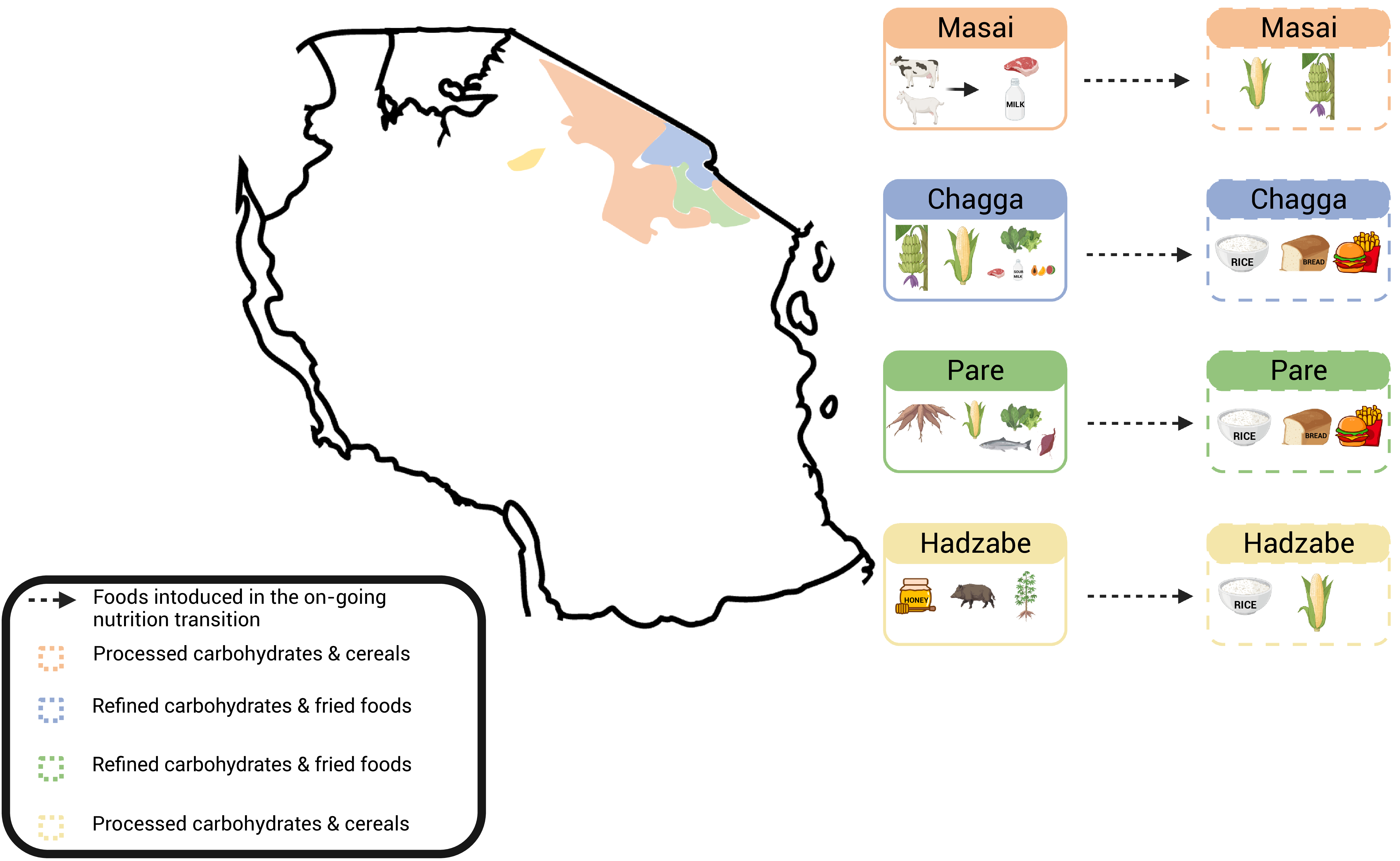
In line with this, a nutrition assessment conducted in Tanzania in the early twentieth century by the Max Planck Nutrition Research Unit (1930–60), revealed minimal obesity and NCD rates when much of the population still adhered to local heritage diets(Reference Raschke, Oltersdorf Phd, Elmadfa, Wahlqvist, Cheema and Kouris-Blazos33). In stark contrast, by 2020, an estimated 5% of men and 16% of women in Tanzania were obese. These rates are projected to double by the year 2035, emphasising the deleterious impact of the ongoing nutrition transition(Reference Lobstein, Jackson-Leach, Powis, Brinsden and Gray1). The situation is particularly concerning in urban communities. A large survey of approximately 7000 adults living in Dar Es Salaam, Tanzania’s largest city, found that 34·8% and 32·4% of screened participants were overweight and obese, respectively(Reference Zubery, Kimiywe and Martin61). Similar trends were observed in another survey of urban white-collar workers, where 31·1% were overweight and 37·8% were obese(Reference Njelekela, Negishi, Nara, Tomohiro, Kuga and Noguchi62). Though the burden is highest in urban populations, this narrative review will explore the effects of nutrition transition across the four ethnic groups previously discussed. Figure 1 summarises the main dietary changes occurring during this transition.
A map of Tanzania depicting tribe location, their respective staple foods and the changes in diet during the currently ongoing nutrition transition. Created with BioRender.com/6kslkr3.

Despite historically low obesity and cardiovascular diseases rates, the Maasai have witnessed a notable increase in hypercholesterolaemia (3·3% to 53·7%) among women and hypertension in both women (5·4% to 19·1%) and men (6·7% to 25·2%) between 1987 and 1998(Reference Mbalilaki, Masesa, Stromme, Hostmark, Sundquist and Wandell63). Conversely, according to a 2010 study that assessed the effects of nutrition transition on diet and health of the Maasai, 82% of the Maasai adhered to a high-fat, high-protein low-carbohydrate diet, resulting in obesity rates over 90% lower than urban counterparts, whom predominantly consumed a low-protein, high-carbohydrate diet(Reference Mandha, Buza, Kassimu and Petrucka64). Maasai also had notably lower rates of obesity (3% in the Maasai v. 34% in urban residents) and hypertension (4% in the Maasai and 21% in the urban residents)(Reference Mandha, Buza, Kassimu and Petrucka64). However, two follow-up surveys conducted in 2015 and 2020 revealed a rising prevalence of hypertension (21·4% and 25·7%, respectively)(Reference Khamis, Senkoro, Mwanri, Kreppel, Mfinanga and Bonfoh65,Reference Diarz, Leyaro, Kivuyo, Ngowi, Msuya and Mfinanga66) . The 2015 study from Mandha and colleagues also reported very low rates of type 2 diabetes (<1%) and impaired glucose tolerance (<3%), suggesting robust metabolic health in the Maasai(Reference Khamis, Senkoro, Mwanri, Kreppel, Mfinanga and Bonfoh65). In another study conducted in 2020, Diarz and colleagues studied dietary patterns in Maasai living in the Ngorongoro conservation area, where most still adhere to their traditional nomadic lifestyle(Reference Adhikary, Barman, Ranjan and Stone67). Surprisingly, over one-third reported the use of additional table salt in their meals, 10% were hypertensive, 37% had pre-hypertension and nearly a fourth had hyperlipidaemia; all are established risk factors for cardiovascular disease(Reference Guasch-Ferré, Satija, Blondin, Janiszewski, Emlen and O’Connor68). Moreover, a 2022 review indicated a gradual shift towards a high-carbohydrate, low-protein and low-fat diet, raising concerns about potential health consequences that require further investigation(Reference Pressler, Devinsky, Duster, Lee, Glick and Wiener40).
Despite earlier claims linking red meat consumption with cardiovascular diseases, a 2019 meta-analysis of thirty-six randomised controlled trials (RCT) found inconsistencies in this relationship(Reference Lescinsky, Afshin, Ashbaugh, Bisignano, Brauer and Ferrara69). Similarly, a 2022 burden-of-proof study reported little evidence linking the consumption of unprocessed red meat to an increased risk for cardiovascular diseases, type 2 diabetes or cancer(Reference Micha, Wallace and Mozaffarian70). These findings are in line with earlier Maasai-focused research(Reference Biss, Ho, Mikkelson, Lewis and Taylor34,Reference Mann, Shaffer, Anderson, Sandstead, Martin and Lane42) , and more recently, a 2020 study that found no association between red meat consumption and hypertension risk, though an increased risk of dyslipidaemia was observed among Maasai consuming more than 250 grams of red meat per week(Reference Adhikary, Barman, Ranjan and Stone67). It is important to note that the Maasai may have different genetic adaptations and primarily consume unprocessed meat, while in many industrialised nations, processed meat consumption is higher and has been linked to adverse health outcomes, including cardiovascular diseases and cancer(Reference Micha, Wallace and Mozaffarian70–Reference Murtagh, Murphy and Boone-Heinonen73). In addition to diet, the Maasai typically walk long distances, which contributes to their good cardiovascular health(Reference Murtagh, Nichols, Mohammed, Holder, Nevill and Murphy74,Reference Shakoor, Feehan, Apostolopoulos, Platat, Al Dhaheri and Ali75) . However, the nutrition transition, marked by, among others, increased consumption of processed carbohydrates, is also accompanied by a more sedentary lifestyle. Diet and physical activity are closely interlinked, both playing an important role in the risk of NCDs and other health conditions.
In contrast to the conventional Western dietary pattern, the Chagga and Pare tribes traditionally consume mainly plant-based diets rich in fibre and phytochemicals that play a role in immune modulation(Reference Ding, Jiang and Fang76,Reference Romier, Schneider, Larondelle and During77) , gut health(Reference Scalbert, Manach, Morand, Rémésy and Jiménez78) and cardiometabolic disease prevention(Reference Temba, Kullaya, Pecht, Mmbaga, Aschenbrenner and Ulas79). Although local data are limited, our data from the 300-Tanzania-functional genomics (FG) study, as well as a recent randomised controlled diet intervention trial, support the impact of diet on the immune system in urban- and rural-living individuals of the Kilimanjaro region, the majority of whom belong to the Chagga tribe(Reference de Boer, Kool, Broberg, Mziray, Hedberg and Levenfors48,Reference Temba, Pecht, Kullaya, Vadaq, Mosha and Ulas80) . In the 300-Tanzania-FG study, urban dwellers had a pro-inflammatory profile compared with rural dwellers. Using a multi-omics approach, including untargeted plasma metabolomics, we identified diet-derived polyphenols among the key metabolites associated with reduced inflammation. Polyphenols act as immunomodulators by interacting with immune cell receptors and influencing immune pathways, including the regulation of inflammasome activation(Reference Romier, Schneider, Larondelle and During77,Reference Ferreira, Vieira, Sá, Malva, Castelo-Branco and Reis81) .
Gut microbiota analysis in the 300-Tanzania-FG cohort, compared with Dutch adults, showed a gradient transition in microbial composition from rural- to urban-Tanzanian to Dutch samples(Reference Stražar, Temba, Vlamakis, Kullaya, Lyamuya and Mmbaga82). Rural inhabitants, who mainly consumed a heritage Chagga diet, exhibited a high abundance of Prevotella copri, an abundant microbe also reported in the Hadzabe(Reference Smits, Leach, Sonnenburg, Gonzalez, Lichtman and Reid83). Moreover, rural living is associated with greater exposure to environmental microbes, a factor further enhanced by the consumption of fermented beverages such as sour milk and Mbege (Reference Gupta, Paul and Dutta84). This exposure contributes to greater gut microbial diversity, which has been linked with a healthy gut, reduced inflammation and a lower risk of NCDs(Reference Le Chatelier, Nielsen, Qin, Prifti, Hildebrand and Falony85). In contrast, Western-style diets, which are increasingly replacing the Chagga diet, typically have low dietary fibre and have been implicated in immune and metabolic dysregulation that contributes to the development of the metabolic syndrome and its associated diseases(Reference Christ, Günther, Lauterbach, Duewell, Biswas and Pelka86–Reference Xie, Alam, Marques and Mackay89). Mouse studies have shown that mice fed a Western-style diet showed increased myelopoiesis with a pro-inflammatory shift in these cells, as evidenced by enhanced cytokine production. This inflammatory phenotype, among others is dependent on inflammasome activation, induced by cholesterol crystals formed by excessive consumption of saturated fats(Reference Christ, Günther, Lauterbach, Duewell, Biswas and Pelka86,Reference Christ, Lauterbach and Latz90,Reference Bianchini, Möller-Ramon, Weber, Megens and Duchêne91) . In addition, the high fat and sugar content of Western-style diets has been linked to gut dysbiosis and increased intestinal permeability, which promote local and systemic inflammation(Reference Di Vincenzo, Del Gaudio, Petito, Lopetuso and Scaldaferri92,Reference Agus, Denizot, Thévenot, Martinez-Medina, Massier and Sauvanet93) . Furthermore, microbiome-derived metabolites play a role in regulating energy metabolism, and their dysregulation has been implicated in obesity and the metabolic syndrome(Reference Geng, Ni, Sun, Li and Feng94,Reference Cuevas-Sierra, Ramos-Lopez, Riezu-Boj, Milagro and Martinez95) .
Several studies have explored the lifestyle of hunter–gatherer communities to gain evolutionary insights into human adaptation and the emergence of NCDs. Gurven and colleagues observed that the heightened risk of early mortality among Hadzabe children was primarily from acute infections (70%), likely owing to the lack of essential childhood vaccinations, and injury (20%) rather than malnutrition. Hadzabe who reached adulthood, often reached remarkably long lifespans, comparable to those in Western societies, with individuals living into their 80s(Reference Gurven and Kaplan96). In stark contrast to industrialised nations such as the USA, where nearly half of the adult population is obese(97), Hadzabe adults exhibit minimal obesity rates (less than 2%) and maintain low body fat percentages: approximately 14% in men and 21% in women(Reference Blurton Jones55). Despite their high intake of wild honey and carbohydrate-rich tubers, their fasting glucose levels remain within the healthy range(Reference Pontzer, Raichlen, Wood, Mabulla, Racette and Marlowe54). Although some members of the tribe have resisted forgoing their foraging lifestyles, a growing number of Hadzabe now live in settlements and have introduced modern crops into their diet(Reference Poti, Braga and Qin56). The long-term health implications of this transition remain largely unknown, but studying these changes could provide insights into how evolutionary dietary adaptations may become maladaptive in the context of nutrition transitions, ultimately contributing to the development of DR-NCDs.
Embracing tradition: the role of heritage diets in preventing DR-NCD
Although low-to-middle-income countries (LMICs) account for about one-third of the global population, the World Health Organization estimates that they contribute to approximately 80% of global deaths from NCDs(98,99) . This pattern mirrors historical trends observed in high-income countries, where the rise in NCDs followed shifts towards consumption of highly processed, high-fat and low-fibre diets(Reference Popkin, Adair and Ng2,Reference Malik, Willett and Hu100) . The health consequences of urbanisation and increased access to globalised and processed foods in SSA demand urgent investigation, considering genetic and environmental differences between African populations and those in the global north. Our previous findings show that Tanzanian adults living in the Kilimanjaro region are more pro-inflammatory compared with Dutch adults(Reference Temba, Vadaq, Kullaya, Pecht, Lionetti and Cavalieri101). This proinflammatory state may be attributed to evolutionary genetic selection and environmental exposures, which likely shaped immune responses in high infectious disease settings(Reference Barreiro and Quintana-Murci102,Reference Boahen, Temba, Kullaya, Matzaraki, Joosten and Kibiki103) . However, in the context of urbanisation and obesogenic environments, this inflammatory predisposition may become maladaptive, contributing to the rapid rise of NCDs in SSA.
Policymakers often rely on data and insights from the global north to guide NCD prevention strategies, which typically emphasise promoting the consumption of more plant-based diets, while reducing the intake of: simple sugars, red meat and processed foods(104). However, a one-size-fits-all approach may be unsustainable and may not provide equal benefits across different populations. This concern is particularly relevant in many LMICs, where a double burden of malnutrition exists, with under-nutrition and over-nutrition coexisting in the same population. Moreover, as demonstrated by the diverse heritage diets and cultural practices discussed earlier, the health benefits of dietary patterns are also influenced by genetics and environmental factors(Reference Campbell and Tishkoff28,Reference Gurdasani, Barroso, Zeggini and Sandhu31) .
Many heritage diets consumed in Tanzania and SSA rely on locally sourced, predominantly plant-based nutrients rich in phytochemicals and dietary fibres. Evidence supports the role of phytochemicals, such as polyphenols, in modulating the immune system, reducing inflammation and cardiometabolic dysfunction; the underlying pathologies which precede NR-NCDs(Reference Ding, Jiang and Fang76,Reference Romier, Schneider, Larondelle and During77,Reference Ferreira, Vieira, Sá, Malva, Castelo-Branco and Reis81,Reference Khurana, Venkataraman, Hollingsworth, Piche and Tai105) . Polyphenols and other nutraceuticals can modulate cellular enzymes and transcription factors involved in inflammatory pathways, hence exerting anti-inflammatory effects(Reference Rahman, Marwick and Kirkham106,Reference Ding, Jiang and Fang107) . Moreover, traditional food preservation methods such as the addition of ashes, fermentation, sun-drying and salting, eliminate the need for chemical preservatives that are linked to increased risk for cardiovascular diseases and cancer(Reference Micha, Wallace and Mozaffarian70–Reference Murtagh, Murphy and Boone-Heinonen73). In contrast, switching to a Western-style diet not only reduces the intake of dietary fibre and phytochemicals, but also leads to excessive consumption of industrially processed foods, sweetened beverages and salt, which were largely absent from traditionally prepared meals(Reference Clemente-Suárez, Beltrán-Velasco, Redondo-Flórez, Martín-Rodríguez and Tornero-Aguilera108). Numerous studies have linked this diet to inflammation, obesity and the increased risk for development of NR-NCDs(Reference de Boer, Kool, Broberg, Mziray, Hedberg and Levenfors48,Reference Christ, Günther, Lauterbach, Duewell, Biswas and Pelka86,Reference Christ, Lauterbach and Latz90) .
Furthermore, the high fibre content of Tanzanian heritage diets promotes a diverse and healthy gut microbiome, leading to the production of bioactive metabolites that regulate immune and metabolic systems(Reference Makki, Deehan, Walter and Bäckhed87,Reference Xie, Alam, Marques and Mackay89) . Conversely, gut dysbiosis has been linked to metabolic disturbances, systemic inflammation and increased intestinal permeability, facilitating bacterial translocation and promoting the progression of NCDs(Reference Di Vincenzo, Del Gaudio, Petito, Lopetuso and Scaldaferri92,Reference Geng, Ni, Sun, Li and Feng94) . Moreover, fermented foods such as sour milk and Mbege act as probiotics, promoting gut microbiome diversity and overall metabolic health(Reference Franz, Huch, Mathara, Abriouel, Benomar and Reid109–Reference Leeuwendaal, Stanton, O’Toole and Beresford111).
Strengths and limitations
Tanzania is home to over 100 tribes, each with its own unique dietary heritage, providing a rich tapestry of nutritional practices. One major strength of this review is its focus on a diverse selection of tribes in northern Tanzania, which allows us to capture a wide range of traditional dietary practices and offer insights into how these practices may impact health outcomes. By choosing a narrative review approach, we were able to delve deeply into the limited literature available on this topic, synthesising detailed qualitative insights that might have been lost in a more structured scoping review. However, this approach also presents certain limitations. The reliance on available literature means that our review is constrained by the depth and quality of existing research, which is sparse in this area. In addition, focusing on a subset of tribes in northern Tanzania may not fully represent the dietary practices of all Tanzanian tribes, thereby limiting the generalisability of our findings. Despite these limitations, the narrative review approach was deemed the most appropriate method given the exploratory nature of this study and the current state of the literature.
Conclusions
The rapid urbanisation and nutritional transition occurring in SSA have contributed to an alarming rise in obesity and DR-NCDs. To date, there is sparce data on the health impacts of Africa’s diverse heritage diets, highlighting the need for comprehensive documentation and scientific investigation into the mechanisms underlying their health benefits across different populations. The nutrient diversity of African heritage diets may uncover bioactive compounds and pathways that influence the interplay between nutrition, metabolic regulation and immune function, broadening our understanding on the role of nutrition in health and disease.
However, these traditional diets are rapidly replaced by Western-style dietary patterns, putting them at risk of disappearance. Available evidence suggests that heritage diets offer immunomodulatory and cardiometabolic benefits, which could play a role in mitigating DR-NCDs. Therefore, we emphasise the urgent need to document, scientifically evaluate these diets to unravel the underlying mechanisms contributing to their health benefits. Given the limitations of cross-sectional studies, scientific assessment could include urban v. rural comparisons and short-term dietary intervention studies, which can provide valuable insights into causal associations and their effects on DR-NCDs. Findings from such research, coupled with the use of locally available resources, could guide evidence-based public health policies and support the development of locally adapted and sustainable dietary strategies for addressing obesity and DR-NCDs in SSA.
Data availability statement
Not applicable.
Acknowledgements
Our sincere appreciation goes to Dr R. Mwageni from the KCMC University library for assisting with the literature search. The abstract figure was created in BioRender. Kisali, E. (2025) https://BioRender.com/kuij7md.
Financial support
The Joint Programming Initiative: A Healthy Diet for a Healthy Life (JPI-HDHL) and ZonMW (TransMic and TransInf projects).
Competing interests
The authors declare no conflict of interest.
Authorship
E.P.K. wrote the manuscript. R.A.K., M.V.M., M.V.D.B. and M.G.N. edited the manuscript. Q.D.M. and G.S.T. conceptualised the paper and edited the manuscript. All authors read and approved the final version of the manuscript.
Ethical standards
Not applicable.
Patient consent
Not applicable
Permission to reproduce material from other sources
Not applicable.
Clinical trial registration
Not applicable.

 Open access

