

There is limited research to date examining how mothers and fathers differentially influence sons’ and daughters’ anxiety. There are a plethora of studies examining the role mothers play in children's social–emotional development; however, the different role fathers play in their children's development and within the family has been under-acknowledged (Bögels & Brechman-Toussaint, Reference Bögels and Brechmann-Toussaint2006).
Attachment Theory
Herbert (Reference Herbert, Ollendick, King and Yule1994) suggested that understanding the aetiology of childhood anxiety is a complex journey through a theoretical minefield. There are several theories pertaining to the familial transmission of anxiety, but many ignore the complexity of family dynamics that underpin anxiety development.
Attachment theory describes how infants become attached or bonded to adults and how this influences emotional development. Bowlby (1963) asserted that an attachment between parent and child must be warm, intimate and continuous in order to ensure the normal development of the child. Attachment theory has been applied most often and most consistently to early childhood, but the importance of attachment at later stages of development cannot be overlooked in comparison.
During middle childhood the role of the caregiver is to be available and ready to respond when called upon to ensure a secure base for the child. However, intervention at this stage of development need not be preemptive, but is required only when it is obviously necessary. The role, therefore, of the parent as secure base during middle childhood is that of a waiting role (Bowlby, Reference Bowlby1988). Self-reliance occurs when the attachment figure provides a secure base from which the child can develop a balance between maintaining proximity to the familiar and the desire to explore the unfamiliar. If the base is insecure or the parent intervenes too soon or too often, the results can be anxiety and dependency in the child.
Children continue to use their parents as a secure base as they move into middle childhood and adolescence; however, the frequency and intensity of attachment behaviour declines in middle childhood (Bowlby, Reference Bowlby1969). As a result, attachment and its consequences to emotional development have not been extensively explored in middle childhood. However, in one study, Bohlin, Hagekull and Rydell (Reference Bohlin, Hagekull and Rydell2000) examined the association between attachment and social anxiety in children from infancy to middle childhood. It was found that children who were classified as securely attached when they were infants, were less socially anxious during middle childhood than were children in the remaining classifications. The authors thus concluded that early attachment histories are a precursor to social and emotional adaptation in middle childhood.
More recently, Brumariu and Kerns (Reference Brumariu and Kerns2010) showed that children who had secure attachments with their mother during infancy reported lower levels of somatic complaints and lower generalised anxiety during middle childhood. Furthermore, children who displayed anxious-ambivalent attachment styles as infants experienced higher levels of separation anxiety in middle childhood. Costa and Weems (Reference Costa and Weems2005) revealed that mothers with higher levels of anxiety also experience higher levels of anxious attachment beliefs. These anxious attachment beliefs resulted in anxious mothers engaging in overly involved, dependent, and intrusive interactions with their child. Costa and Weems concluded that this interaction style may prevent children from facing fear-provoking events and/or may send the message that particular stimuli are threatening or dangerous, thus increasing or reinforcing children's anxiety.
To date, most attachment research has focussed on mother–child attachment, with the influence of father–child attachment on emotional development needing further exploration. Preliminary research into father–child attachment has suggested that a secure father–infant attachment may be particularly important to children developing autonomous behaviour in social situations (Grossman et al., Reference Grossmann, Grossmann, Fremmer-Bombik, Kindler, Scheurer-Englisch and Zimmermann2002; Lamb, Reference Lamb1980).
It appears that attachment is associated with childhood anxiety. However, given the reciprocal relationship of parent–child attachment, the degree to which parents and children individually contribute to this relationship warrants further investigation. Moreover, attachment theory ignores not only gender differences within parents but also gender of child.
Sex Differences in How Parenting Behaviours Influence Children's Anxiety
Field, Ball, Kawycz and Moore (Reference Field, Ball, Kawycz and Moore2007) investigated the mechanism through which maternal and paternal behaviours are associated with children's anxiety. Forty-one children (24 boys and 17 girls) aged between six and 10 years participated. Field et al. showed that a punitive parenting style influenced the effect threat information has on children's fear beliefs. Moreover, negative father–child interactions significantly influenced the effect of threat information on children's fear beliefs and negative father–child interactions also influenced the degree to which the absence of threat information might create fear beliefs. Field et al. argued that parents who engage in an authoritarian parenting style prime their children to readily attend to threatening information about novel stimuli. Furthermore, negative father–child interactions may prime children to develop fear responses to novel stimuli in the absence of information to the contrary.
Similarly, Aunola and Nurmi (Reference Aunola and Nurmi2005) attempted to explore whether mothers’ and fathers’ parenting style predicted children's anxiety. These authors found that high maternal psychological control coupled with high affection were associated with the expression of high anxiety-related problems in children. Furthermore, high paternal psychological control was associated with high anxiety in children. The researchers, however, noted that not all fathers participated in the study. Interestingly, children whose fathers did not complete questionnaires reported a higher level of anxiety-related problems in comparison to those children whose fathers did return questionnaires. Aunola and Nurmi did not discuss why fathers of anxious children are less likely to participate in research than fathers. However, the finding demonstrates one of the difficulties faced by researchers attempting to recruit fathers. Further, the anxiety levels of parents and how this might influence parent–child interactions was not explored.
Bögels, Bamelis and van der Bruggen (Reference Bögels, Bamelis and van der Bruggen2008) investigated differences in parent–child interactions in families, including children and parents with an anxiety disorder and those without an anxiety disorder. Bögels et al., (Reference Bögels, Bamelis and van der Bruggen2008) showed that fathers of anxious children were less supportive of their partner during interactions than were fathers of non-anxious children. There was no difference between the level of maternal rejection and maternal partner support displayed by mothers of anxious and non-anxious children; however, mothers of anxious children tended to display higher levels of control than did mothers of non-anxious children. Moreover, fathers with an anxiety disorder were more rejecting of their children, were more controlling during interactions, and dominated the conversation regarding the child's fears more so than did fathers without an anxiety disorder. Interestingly, mothers with an anxiety disorder did not display significantly different behaviours during interactions than did mothers without an anxiety disorder.
Overall, it would seem that a controlling and authoritarian parenting style is associated with anxiety-related problems in children. Moreover, the way in which fathers support and communicate with their children may influence children's anxiety.
Parent–Child Interactions and Support
It appears that certain maternal and paternal parenting styles are associated with children's anxiety; however, in order to further understand the differential contribution mothers and fathers might make to sons’ and daughters’ anxiety, research into parent–child interactions and support is needed.
Matthewson, Burton-Smith, and Montgomery (Reference Matthewson, Burton-Smith, Montgomery and Bowles2005) examined the types of support sons and daughters received from their mother and father and whether these might differentially predict children's anxiety. Only 39 families participated in this study. The study revealed a sex difference in the pattern of parental support variables that predicted sons’ and daughters’ anxiety. For sons, parental anxiety and sons’ satisfaction with their mothers’ emotional support significantly predicted sons’ anxiety. In terms of daughters’ anxiety, the results showed that the more satisfied girls felt with their fathers’ informational support, and the more effective fathers felt as instrumental support providers, the higher the daughters’ anxiety. This finding was contrary to hypotheses. Matthewson et al. concluded that there may be a level of informational and instrumental support from fathers that is counterproductive in alleviating daughters’ anxiety. However, this finding needed to be replicated and explored further in a larger sample.
Matthewson et al. (Reference Matthewson, Burton-Smith, Montgomery and Bowles2005) also revealed that the more satisfied daughters were with their mothers’ companionship, and the more effective mothers felt as informational support providers, the higher the daughters’ anxiety. Furthermore, fathers’ anxiety was associated with daughters’ anxiety. The existence of different gendered predictions of anxiety by parental support suggested different gender-specific mechanisms for the amelioration of anxiety through parental intervention. It also indicated that fathers’ support may be particularly important in shaping daughters’ anxiety levels.
In a larger sample of 52 families, Matthewson, Burton-Smith, and Montgomery (Reference Matthewson, Burton-Smith, Montgomery, Voudouris and Mrowinski2008) found that the more satisfied daughters were with their father's emotional support and companionship the lower their anxiety. Moreover, mothers’ anxiety, not fathers’ anxiety, predicted some of the variance in daughters’ anxiety. In terms of the factors associated with sons’ anxiety, the more effective mothers felt as companions to their sons and the less anxious fathers reported being, the lower sons’ state anxiety was. The results of Matthewson et al. (Reference Matthewson, Burton-Smith, Montgomery and Bowles2005, Reference Matthewson, Burton-Smith, Montgomery, Voudouris and Mrowinski2008) suggested that mothers and fathers play important roles in protecting their children against anxiety. Moreover, the parent–child relationship with the opposite-sex parent may be crucial in alleviating children's anxiety. Given that parental anxiety appears to be an important predictor of children's anxiety, it is essential to explore how parenting influences mothers’ and fathers’ wellbeing.
Parenting and Psychological Wellbeing
Few studies have focused on how the parent–child relationship impacts parents’ wellbeing, and even fewer have examined how parenting influences fathers’ wellbeing in particular. Palkovitz (Reference Palkovitz2002) maintained that parenting gives fathers a sense of continual commitment and responsibility, and changes their sense of self in a psychologically positive way. Eggebeen and Knoester (Reference Eggebeen and Knoester2001) examined whether fatherhood predicted fathers’ wellbeing. These authors revealed that men with children living elsewhere had significantly lower levels of life satisfaction and higher levels of depression than did fathers who lived with their children. Moreover, the more involved fathers were with their children (regardless of whether their children lived with them or not), the more satisfied they were with their lives and the more they socialised with others. Therefore, social support provides fathers with greater coping resources and sense of self, which in turn facilitates greater involvement with their children. Eggebeen and Knoester concluded that fatherhood greatly shapes the lives of men. Furthermore, parenting may shape the lives of men in different ways compared with the way parenting shapes the lives of women. It is, however, unclear how mothers and fathers differentially predict sons’ and daughters’ anxiety and how mothers’ and fathers’ psychological wellbeing might mediate these relationships.
A Theory of the Roles Parents Might Play
Based on the limited number of studies that include mothers and fathers, Bögels and Phares (Reference Bögels and Phares2008) proposed a theory of the dissimilar roles mothers and fathers might play in protecting their children against anxiety at various stages of child development. Bögels and Phares argued that when their children are infants, fathers can protect children against anxiety through play and encouraging appropriate risk taking behaviour. Mothers, on the other hand, can protect their infants against anxiety through warm care and protection (providing a secure base). Fathers of preadolescents can protect their children from anxiety by helping to facilitate their child's entry to the wider social world and by fostering independence in their child. Mothers can guard against anxiety in their preadolescent children by maintaining close personal relationships with their child and promoting the development of their child's social networks (similar to Bowlby's waiting role mentioned previously). Fathers who continue to promote independence in their adolescents and allow their adolescent to undertake the transition to the outside world, and mothers who ‘let go’ of their adolescent, will be acting to safeguard their child against anxiety-related problems.
Bögels’ and Phares’ (Reference Bögels, Bamelis and van der Bruggen2008) provide a promising model of how mothers and fathers might differentially impact upon children's emotional development. It is the only model that considers the different roles mothers and fathers play in children's social–emotional development from infancy to adolescence. However, the model does not take into account the impact parent's psychological wellbeing might have on their ability to undertake their roles and it has not yet been extensively empirically tested.
The Present Study
Further information regarding gender differences in various aspects of the parent–child relationship is needed, along with how these aspects of the parent–child relationship, particularly the father–child relationship, influences children's anxiety. Moreover, given that parental anxiety appears salient in influencing children's anxiety (e.g., Matthewson et al., Reference Matthewson, Burton-Smith, Montgomery and Bowles2005, Reference Matthewson, Burton-Smith, Montgomery, Voudouris and Mrowinski2008), it is important to explore how the parent–child relationship impacts parents’ anxiety and whether this impact is different for mothers and for fathers. This study, therefore, aims to test and expand Bögels’ and Phares’ (Reference Bögels, Bamelis and van der Bruggen2008) model by focusing on families with children in the preadolescent stage of development.
The aims of the present study were:
1. To explore which elements of the parent–child relationship are most important in predicting children's anxiety. Specifically, do mothers and fathers differentially predict sons’ and daughters’ anxiety?
2. Given that parental anxiety has been found to be a salient predictor of children's anxiety, this study also aims to explore which elements of the parent–child relationship influence parents’ anxiety and if these are different for mothers and fathers.
The following hypotheses were explored:
1. In line with Matthewson et al. (Reference Matthewson, Burton-Smith, Montgomery and Bowles2005), Field et al. (Reference Field, Ball, Kawycz and Moore2007) and Bögels’ and Phares’ (Reference Bögels, Bamelis and van der Bruggen2008), it was expected that the more effective parents consider themselves to be in communicating with their children, the lower children's anxiety would be. Further, there would be a cross-gender effect i.e. father-child communication would predict lower levels of daughters’ anxiety and mother-child communication would predict lower levels of sons’ anxiety. Moreover, parental involvement would be associated with lower levels of children's anxiety, regardless of gender of parent and child.
2. Consistent with Eggebeen and Knoester (Reference Eggebeen and Knoester2001), it was expected that parental support, satisfaction with parenting and parental involvement would be the most salient predictors of parental anxiety regardless of the gender of parent.
Method
Participants
The participants included parents and children from 52 Tasmanian families. Following approval from the Tasmanian Social Sciences Human Research Ethics Committee (SS HREC) and the Tasmanian Department of Education, these families were recruited from seven primary schools in southern Tasmania, from parental information letters left at schools. Signed consent forms were required preceding data collection.
A total of 35 schools in Tasmania were approached to participate, and 1,715 information letters were distributed. Sixty-three signed consent forms were returned to the researcher. Out of the 63, three families were not eligible to participate due to being single-parent families, one family was uncontactable, and seven families withdrew from the study prior to interview. Reasons for withdrawing from the study given to the researcher included: time constraints, changes in personal circumstances such as illness and moving interstate.
Eight of the 52 participating families had two children within the required age range of eight to 12 years. Within the sample there were 30 sons (M = 9.67; SD = 1.24) and 30 daughters (M = 9.57; SD = 1.25), 52 fathers (M = 43.90; SD = 5.56) and 52 mothers (M = 41.46; SD = 5.15).
Materials
The materials in this study included the Parent–Child Relationship Inventory (PCRI; Gerard, Reference Gerard2002). The PCRI is a 78-item, self-report questionnaire that assesses parents’ attitude toward their children and toward parenting. It is based on a 4-point scale ranging from Strongly agree to Strongly disagree and provides a description of the parent–child relationship through its seven content scales. The seven content scales include: the Parental Support Scale (SUP), which measures the level of social-emotional support the respondent receives from significant others; the Satisfaction with Parenting Scale (SAT), which assesses the amount of enjoyment and fulfillment the respondent receives from being a parent; the Involvement Scale (INV), which examines the respondent's knowledge of their child and level of involvement in their child's life; the Communication Scale (COM) assesses the respondent's perception of how effectively they communicate with their child; the Limit Setting Scale (LIM) focuses on the respondent's experience of disciplining their child; the Autonomy Scale (AUT), which measures the respondent's ability to promote independence in their child; and the Role Orientation Scale (ROL), which examines the respondent's attitude about gender roles in parenting.
Gerard (Reference Gerard2002) maintains that low scores on the PCRI scales, with the exception of the Role Orientation Scale, are indicative of problematic parenting. For example, low scores on the Involvement Scale indicate a parent with little interest in their child's activities.
Gerard (Reference Gerard2002) reported good internal consistency of the PCRI with alpha coefficients ranging from .70 (SUP scale) to .88 (LIM scale). In a sample of 22 parents retested after one week, Gerard yielded test–retest coefficients ranging from .68 (COM scale) to .93 (LIM scale). In a sample of 82 parents retested after 5 months, test–retest coefficients ranged from .44 (AUT scale) to .71 (ROL scale and SUP scale). Gerard maintained that these coefficients are acceptable for measures of attitude that may fluctuate over time.
The materials also consisted of the State-Trait Anxiety Inventory for Children (STAI-C; Spielberger, Reference Spielberger1973) to measure children's anxiety and the State-Trait Anxiety Inventory (STAI; Spielberger, Reference Spielberger1983) to measure parents’ anxiety. The STAI and STAI-C consist of two separate self-report scales measuring state and trait anxiety. The State Anxiety Scale (SA) consists of 20 statements pertaining to how one feels ‘right now’ and the Trait Anxiety Scale (TA) consists of 20 statements pertaining to how one ‘generally’ feels. The STAI is based on a 4-point scale (Not at all to Very much so for the SA scale; Almost never to Almost always for the TA scale). The STAI-C is based on a 3-point scale (e.g., item 1 on the SA scale is ‘I feel . . . very calm, calm or not calm’; the TA scale consists of Hardly ever, Sometimes or Often). The STAI is a widely used measure of state and trait anxiety in adults and it has good validity and reliability (Spielberger, Reference Spielberger1983).
The STAI-C was developed to provide an operational measure of SA and TA in children. This measure is also considered to have good validity and reliability (e.g., Spielberger; Reference Spielberger1973; Muris, Merckelbach, Ollendick, King & Bogie, Reference Muris, Merckelbach, Ollendick, King and Bogie2002). The STAI-C has been used extensively to assess TA and SA in 9- to 12-year-old children with and without anxiety. The STAI-C was originally constructed and standardised for children in grades 4 to 6; however, Papay and Spielberger (Reference Papay and Spielberger1986) demonstrated that the STAI-C can also be used to assess anxiety in younger children provided it is administered individually. Papay and Spielberger have argued that the STAI-C is a valid and reliable measure of anxiety in kindergarten to grade 6 level children.
The Revised Children's Manifest Anxiety Scale (RCMAS; Reynolds & Richmond, Reference Reynolds and Richmond1985), subtitled ‘What I Think and Feel’ was also administered to participating children in order to explore different manifestations of anxiety. The RCMAS is a brief 37-item instrument assessing children's anxiety as manifested through physiological anxiety (PA), worry/ oversensitivity (W/O) and social concerns/concentration (SC). The RCMAS therefore has three scales accordingly. The RCMAS was designed for use with individuals aged 6 to 19 years. It is a self-report inventory in which respondents indicate Yes or No to each item. Yes responses indicate that that item is descriptive of the respondent's emotions or behaviours. The higher the score from summing each ‘yes’ response on each subscale, the higher the respondent's anxiety level. Further, the RCMAS provides a score for overall anxiety. The RCMAS also has a ‘Lie’ subscale to detect acquiescence, social desirability or deliberate faking of responses. Reynolds and Richmond (2002) suggested that items can be read to children, if reading ability is a concern.
Reynolds and Richmond (Reference Reynolds and Richmond1985) reported good overall internal consistency measure and moderate test–retest reliability. Muris et al. (Reference Muris, Merckelbach, Ollendick, King and Bogie2002) assessed the psychometric properties of the RCMAS along with other measures of children's anxiety. Muris et al. showed that RCMAS had good internal consistency and it was found to be highly correlated with the STAI-C Trait Anxiety Scale.
Procedure
Information letters and consent forms were distributed to families via the seven participating schools inviting them to participate. Participation was voluntary and no incentives for participation were given. All measures were administered to family members as structured interviews. Each participating parent and child were interviewed separately to minimise the possibility of family members influencing each others’ answers. Interviews took place either face-to-face at the University of Tasmania or over the telephone and took approximately 15–30 minutes per person. Family members were interviewed in one of the following orders: mother-child(ren)-father; father-child(ren)-father; child(ren)-mother-father or child(ren)-father-mother. Children were not interviewed last to avoid parental influence on children's answers. Parents completed the PCRI specifically in relation to the child who participated in the study.
Design and Analyses
This investigation followed a correlational design. In order to investigate the contribution each parent–child relationship variable might make to sons’ and daughters’ anxiety a number of stepwise multiple regression analyses were conducted using measures from the PCRI as predictors. The outcome variables in the multiple regression analyses were sons’ and daughters’ SA and TA as measured by the STAI-C, and PA, W/O and SC as measured by the RCMAS. In order to ensure the stability of regression analyses in the small sample and to test the differential contribution mothers and fathers make to children's anxiety, predictor variables were entered into separate regression analyses in parental pairs; that is, mothers’ and fathers’ scores on each of the PCRI scales were entered into the regression equation separately. Each analysis was conducted for sons and daughters respectively.
To examine the contribution each parent–child relationship variable might make to mothers’ and fathers’ anxiety Stepwise Multiple Regression Analyses were conducted. In order to ensure the stability of regression analyses in the small sample, initial Pearson's r correlations were conducted. Predictor variables included in the regression analyses were the parent–child relationship variables that were significantly correlated with the outcome variables, thus reducing the number of predictor variables used in each analysis. The outcome variables in the multiple regression analyses were mothers’ and fathers’ TA as measured by the STAI. Each analysis was conducted for fathers and mothers respectively. The predictor variables pertaining to the opposite-gender parent were also entered separately in order to explore the separate impact the parent–child relationship from the other parent's point of view has on the target parent's anxiety.
Results
Mothers’ and fathers’ raw scores on each subscale on the PCRI were converted into means and standard deviations displayed in Table 1. The mean scores of mothers and fathers in this sample fall within the 50th percentile indicating that, on average, the parents in this sample reported behaviours and attitudes that Gerard (Reference Gerard2002) considers congruent with good parenting.
Means and Standard Deviations for Mothers’ (n = 52) and Fathers’ (n = 52) Perceptions of the Parent–Child Relationship

Note: SUP = Parental Support scale; SAT = Satisfaction with Parenting scale; INV = Involvement scale; COM = Communication scale; LIM = Limit Setting scale; AUT = Autonomy scale; ROL = Role Orientation scale.
Children's scores on the STAI-C and RCMAS were converted into means and standard deviations and are presented in Table 2.
Means and Standard Deviations for Anxiety Reported by Boys (n = 30) and Girls (n = 30)

Note: SA = State Anxiety, TA = Trait Anxiety, PA = Physiological Anxiety, W/O = Worry/Oversensitivity and SC = Social Concerns/Concentration.
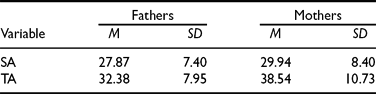
Parents’ scores on the STAI were also converted into means and standard deviations. These are presented in Table 3.
Means and Standard Deviations for Anxiety Reported by Fathers (n = 52) and Mothers (n = 52)
Note: SA = State Anxiety, TA = Trait Anxiety.
Predictors of Children's Anxiety
Predictors of Sons’ Anxiety (n = 30)
Mothers’ communication was the only significant predictor of sons SA, β = −.45, t(29) = 7.42, p < .001, and it predicted a significant proportion of the variance in sons’ SA, R2 = .18, F(1,29) = 7.2, p = .01. No significant predictors of sons’ TA, PA, W/O and SC could be identified from the range of predictor variables included in this study. It is important to note that none of the father–child relationship variables predicted sons’ anxiety.
Significant Predictors of Daughters’ Anxiety (n = 30)
Daughters’ SA was significantly predicted by fathers’ communication, β = −.42, t(29) = 6.17, p = .02, and it predicted a significant amount of the variance in daughters’ SA, R2 = .14, F(1,29) = 5.9, p = .02.
Mothers’ satisfaction with parenting was the only significant predictor of daughters’ TA, β = −.37, t(29) = 4.49, p < .001, and it accounted for a significant amount of the variance in daughters’ TA, R2 = .11, F(1,29) = 4.5, p = .04. No significant predictors of daughters’ PA, W/O and SC could be identified from the range of predictor variables included in this study.
Predictors of Parents’ Anxiety
Significant Predictors of Fathers’ Anxiety (n = 52)
Fathers’ TA was significantly predicted by fathers’ perception of parental support at step 1, β = −.42, t(51) = −2.7, p = .01, and it accounted for a significant amount of the variance in fathers’ TA, R2 = .16, F(1,51) = 10.8, p = .01. Fathers’ communication significantly predicted fathers’ TA at step 2, β = −.26, t(51) = −2.0, p = .05, and it accounted for an additional proportion of the variance, ΔR2 = .06, F(1, 51) = 7.8, p = .01.
Fathers’ SA was significantly predicted by fathers’ satisfaction with parenting, β = −.38, t(51) = −2.9, p = .01, and it accounted for a significant amount of the variance in fathers’ SA, R2 = .15, F(1,51) = 8.6, p = .01.
Separate stepwise multiple regression analyses investigating the impact the mother–child relationship has on fathers’ TA and SA were conducted. Fathers’ TA was significantly predicted by mothers’ AUT rating, β = −.33, t(51) = −2.5, p = .02. It also predicted a significant amount of the variance in fathers’ TA, R2 = .09, F(1,51) = 6.1, p = .02.
Mothers’ AUT rating was also a significant predictor of fathers’ SA, β = −.33, t(51) = −2.8, p = .01, and it predicted a significant amount of the variance in fathers’ SA, R2 = .12, F(1,51) = 8.1, p = .01.
Significant Predictors of Mothers’ Anxiety (n = 52)
Mothers’ TA was significantly predicted by their own perceptions of parental support at step 1, β = −.46, t(51) = −4.4, p < .001, and it accounted for a significant proportion of the variance in mothers’ TA, R2 = .30, F(1,51) = 22.4, p < .001. Mothers’ communication significantly predicted their TA at step 2, β = −.45, t(51) = −4.4, p < .001, and it accounted for an additional proportion of the variance in their TA, ΔR2 = .19, F(1, 51) = 24.7, p = .001.
Mothers’ communication significantly predicted their SA, β = −.54, t(51) = −4.5, p < .001, and it predicted a significant proportion of the variance in mothers’ SA, ΔR2 = .27, F(1, 51) = 20.0, p = .01.
Separate multiple regression analyses were conducted to explore the impact the father-child relationship has on mothers’ TA and SA. Mothers’ SA was significantly predicted by fathers’ COM rating, β = −.32, t(51) = −2.4, p = .02, and it predicted a significant amount of the variance in mothers’ SA, R2 = .09, F(1,51) = 5.7, p = .02. No father–child relationship factors were significant predictors of mothers’ trait anxiety.
Discussion
The aims of this study were to (1) investigate which elements of the parent–child relationship are most important in predicting children's anxiety, and (2) explore which elements of the parent–child relationship influence parents’ anxiety.
Predictors of Children's Anxiety
It was predicted that parental communication would significantly influence children's anxiety. Moreover, parental involvement would significantly predict children's anxiety, and mothers’ autonomy would also influence children's anxiety. This was partially supported by the findings that mothers’ perception of their ability to communicate with their child was associated with their sons’ state anxiety, and the fathers’ perception of their capacity to communicate with their child was associated with their daughters’ state anxiety. Mothers’ communication efficacy predicted a modest 18% of the variance in sons’ SA and fathers’ communication efficacy predicted 14% of the variance in daughters’ SA. Parental involvement was not found to be a significant predictor of children's anxiety. However, maternal satisfaction with parenting was somewhat associated with daughters’ trait anxiety and predicted 11% of the variance. This indicates that daughters’ emotions are, to some extent, sensitive to the level of enjoyment and pleasure mothers are receiving from their parenting role.
The findings that communication efficacy reported by the opposite-sex parent was a significant predictor of both sons’ and daughters’ anxiety provides further reinforcement to some of the findings revealed in Matthewson, Burton-Smith and Montgomery (Reference Matthewson, Burton-Smith, Montgomery and Bowles2005, Reference Matthewson, Burton-Smith, Montgomery, Voudouris and Mrowinski2008). The results of the present study indicate that fathers’ communication plays a role in influencing their daughters’ situational anxiety and mothers’ communication plays a part in influencing their sons’ situational anxiety. In both instances the relationship between parental communication and children's anxiety was negative, indicating that the better parents are in interacting with their children on a verbal level, the lower their children's state anxiety tends to be. Therefore, fathers of daughters with the ability to talk with their children and display empathy may play an important role in protecting their daughters against anxiety. Moreover, mothers of sons with this communication ability may be instrumental in protecting their sons against anxiety. Importantly, the findings show that it is not predominately the mothers’ influence on sons’ and daughters’ anxiety, but fathers have a role as well, and it is important for daughters’ experience of anxiety.
The present findings gives further credence to Bögels et al.'s (Reference Bögels, Bamelis and van der Bruggen2008) results and Field et al.'s (Reference Field, Ball, Kawycz and Moore2007) findings, which showed that fathers’ communication style and communication skill are important determinants of children's fear and anxiety. The present study has further refined this observation by showing that the quality of father communication is particularly salient to daughters. Therefore, the way in which fathers communicate with their daughters and the way mothers communicate with their sons appears to be a predictor of sons’ and daughters’ anxiety. This study further demonstrates the importance of cross-gender parent–child relationships and the significant role fathers play in influencing children's (particularly daughters’) anxiety.
Predictors of Parents’ Anxiety
It was expected that parental support, satisfaction with parenting and parental involvement would be the most salient predictors of parents’ anxiety regardless of gender. Parental support was found to be the most salient predictor of mothers’ and fathers’ anxiety, which accounted for 30% and 16% of the variance in mothers’ and fathers’ anxiety respectively. Satisfaction with parenting was found to be the next most important predictor of fathers’ anxiety, which accounted for 15% of the variance. On the other hand, mothers’ perceived ability to communicate with their children was the second most important predictor of mothers’ anxiety, which accounted for 30% of the variance in mothers’ TA and 27% of the variance in mothers’ SA.
The results showed that mother's ability to promote independence in their child predicted a reasonable amount of the variance in their partner's anxiety. This finding suggests that the mother's relationship with her children might mediate fathers’ anxiety much more strongly than the reverse being the case.
The finding that parental support was the most salient predictor of mothers’ and fathers’ anxiety is consistent with Eggebeen and Knoester (Reference Eggebeen and Knoester2001), who found that fathers who were more involved with their children and were more satisfied with their lives, the more they socialised with others. It is fair to argue that the more fathers access their social networks, the more satisfied they are with their lives and this social support provides fathers the resources to be involved with their children in a manner that protects children against anxiety.
The present study also revealed that satisfaction with parenting was a significant predictor of fathers’ anxiety. This finding corresponds with those of Eggebeen and Knoester (Reference Eggebeen and Knoester2001), who found a relationship between fathers’ satisfaction with their lives and parental involvement. The present study showed that the second most important predictor of mothers’ anxiety was their ability to communicate with their children. This finding connotes that mothers’ anxiety is lower when they perceive themselves as having good communication between themselves and their child. It may be that good parent–child communication enables mothers to know what is happening in their child's life and is an effective means of providing their child with support, which helps mothers to maintain low levels of anxiety.
Theoretical and Clinical Implications
The present study highlights the equal importance of the father–child relationship compared to the more researched and apparently more salient mother–child relationship. Moreover, it appears from the present results that the parent of the opposite gender to the child is more salient than the same-sex parent in mediating children's anxiety.
Preadolescence sees important milestones in children's cognitive development. During preadolescence children develop the ability to adopt the perspective of others and their conversations with others is characterised by deeper and more diverse content. Parents must alter the way in which they communicate with their children during this stage of development in order to facilitate a healthy trajectory into adolescence (Collins, Harris, & Susman, Reference Collins, Harris, Susman and Bornstein1995). In fact, the present study indicates that there is gender differentiation in how parent–child communication influences children's anxiety acquisition at this stage of development.
Bögels’ and Phares’ (Reference Bögels, Bamelis and van der Bruggen2008) model of the different roles mothers and fathers might play in protecting their children against anxiety at different stages of child development asserts that fathers of preadolescents can protect their children from anxiety by helping to facilitate their child's entry to the wider social world and by fostering independence in their child. Mothers, on the other hand, can guard against anxiety in their preadolescent children by maintaining close personal relationships with their child and promoting the development of their child's social networks. The findings of the present study indicate that effective parent–child communication may be the mechanism by which mothers and fathers achieve their roles outlined by Bögels’ and Phares’ model. Moreover, parent–child communication appeared to be an important predictor in common to both parental and child anxiety. It would also seem that the roles parents play in influencing children's anxiety differ according to whether their child is a son or daughter.
The finding that parental support was the most salient predictor of mothers’ and fathers’ anxiety is not surprising and highlights how important support from others is to effective parenting and parents’ emotional wellbeing. Satisfaction with parenting was found to be a significant predictor of fathers’ anxiety, showing that being satisfied in the parenting role is particularly important for fathers’ emotional wellbeing, and it seems that it may be more important to fathers’ emotional wellbeing than it is for mothers. Mothers’ ability to communicate with their children appears more important than parental satisfaction in predicting their anxiety. As previously mentioned, it may be that good parent–child communication enables mothers to know what is happening in their child's life and is an effective means of providing their child with support, which helps mothers to maintain low levels of anxiety. Fathers, on the other hand, need to feel satisfied with their role as parent in order to maintain emotional wellbeing.
There are a number of clinical implications of this study. First, fathers should not be ignored in interventions programs focusing on the treatment or prevention of children's anxiety. In intervention programs involving parents, both parents should be encouraged to participate and the contribution the father–child as well as the mother–child relationship makes to children's anxiety must be addressed. Moreover, clinicians need to be mindful of how mothers and fathers communicate with their children at this stage of development and facilitate parent–child communication that does not impinge on the child's ability to develop self-efficacy.
Limitations and Directions for Future Research
The present study consisted of a small, middle class sample. Further research exploring children's anxiety and the factors influencing it should be based on a larger, representative sample. Moreover, children participating in the study were considered to have nonclinical levels of anxiety. Important information about the childhood experience of anxiety can been gleaned from nonclinical samples; however, further studies should aim to include samples of children with and without clinical levels of anxiety in order to make comparisons and further generalisations.
The study included only intact families with mothers and fathers living together with their biological children. Future research needs to include families where fathers (or mothers) do not live with their children, stepparents and adoptive parents. Future research needs to consider the different experience of these families and how these relationships impact children's anxiety. In particular, the impact of the father–child relationship in separated families on children's anxiety should be explored along with the impact of the stepfather–child and adoptive father–child relationship on children's anxiety. Future research should also examine gender differences in parenting strategies employed by parents and how this might influence children's anxiety.
The range of parent–child relationship variables found to be predictive of mothers’ and fathers’ anxiety and the substantial amount of variance accounted for in the present study shows that parents’ relationships with their children significantly impact parents’ emotional wellbeing. In examining the total amount of variance accounted for in the regression analyses, parental anxiety is more strongly connected to perceptions of the parent–child relationship than is child anxiety. This may be due to the fact that both measures originate in parents, therefore any interpretation is necessarily constrained by methodological issues such as who the informant is. It would be important to ensure that further studies examining the impact of the parent–child relationship on children's and parents’ anxiety obtains reports from both parents and children. Furthermore, observational studies exploring gender differences in interactions within parent–child dyads would be useful in providing a more objective assessment of the impact parent–child relationships have on children's anxiety development.
Acknowledgments
We thank the families and schools who participated in this study.



