


Children's conduct problems and parental depressive symptoms often coexist whilst also augmenting each other (Goodman et al., Reference Goodman, Rouse, Connell, Broth, Hall and Heyward2011; Silberg, Maes, & Eaves, Reference Silberg, Maes and Eaves2010). When parents participate in a parenting program to reduce their child's conduct problems, changes in conduct problems and in parental depressive symptoms may be related. In other words, parental depressive symptoms may increase or decrease depending on improvements, or lack thereof, in children's conduct problems. The purpose of this study, which is based on a large pooled sample of 10 randomized trials, was to identify whether and how changes in children's conduct problems and maternal depressive symptoms co-occur. Our specific objectives were to (a) ascertain any co-occurrence of change in conduct problems and maternal depression and (b) assess the influence of participation in a parenting program on this co-occurrence. Specifically, we sought to identify the existence of any subgroup of families where participation in a parenting program results in co-occurring improvement in both children's conduct problems and maternal depressive symptoms and any subgroup of families where a lack of improvement in children's conduct problems co-occurs with increased maternal depressive symptoms. We use the term maternal depression because most parents in the pooled sample were mothers (98%).
We gratefully conducted this study to honor the legacy of Dr. Thomas Dishion. Tom never took it for granted that families and children would benefit from well-intended intervention programs. He was highly productive in testing the sources of differential responses of families to parenting programs, and he encouraged colleagues and mentees to explore how characteristics at multiple levels (e.g., neighborhood, cultural, family, child, and genetic factors) may help account for heterogeneity in intervention outcomes (e.g., Connell, Stormshak, Dishion, Fosco, & Van Ryzin, Reference Connell, Stormshak, Dishion, Fosco and Van Ryzin2018; Fosco, Van Ryzin, Stormshak, & Dishion, Reference Fosco, Van Ryzin, Stormshak and Dishion2014; Gardner et al., Reference Gardner, Connell, Trentacosta, Shaw, Dishion and Wilson2009; Hyde, Waller, & Burt, Reference Hyde, Waller and Burt2014; Lochman, Dishion, Boxmeyer, Powell, & Qu, Reference Lochman, Dishion, Boxmeyer, Powell and Qu2017; Pelham, Dishion, Tein, Shaw, & Wilson Reference Pelham, Dishion, Tein, Shaw and Wilson2017; Shaw et al., Reference Shaw, Sitnick, Brennan, Choe, Dishion, Wilson and Gardner2016; Smith et al., Reference Smith, Berkel, Hails, Dishion, Shaw and Wilson2018). In addition, Tom's work on peer deviancy training was ground-breaking both in showing how plausible, theory-based interventions carry the potential for harm and in interrogating the mechanisms and conditions under which youth did not benefit (e.g., Dishion, McCord, & Poulin, Reference Dishion, McCord and Poulin1999). While contributing much to a lively literature on heterogeneity in intervention benefits, he also recognized that the field has not been very good at identifying the families that benefit less or more. He advocated for methodologically innovative ways to explore differential intervention benefits and identify subgroups of families in which interventions may have harmful (collateral) effects. In this paper, we use such novel approaches, repeated measures latent class analysis and latent transition analysis, to explore co-occurring change in children's and mothers' mental health in response to participation in a parenting program designed to address children's conduct problems.
Parenting Programs for Children's Conduct Problems
Parenting programs are the primary strategy used to reduce children's conduct problems. Most programs are based on relational and social learning perspectives. Relational perspectives posit that conduct problems originate from a lack of warmth and nurturing from parents, distorting the affectionate bond between parents and children's cognitive models on social relationships (e.g., Cassidy & Shaver, Reference Cassidy and Shaver2008; Maccoby & Martin, Reference Maccoby, Martin, Mussen and Hetherington1983). Social learning perspectives posit that conduct problems are shaped by coercive parent–child interactions in which parents and children unwittingly reinforce aversive behavior in each other, leading to interaction patterns that become increasingly difficult to manage (e.g., Patterson, Reid, & Dishion,Reference Patterson, Reid and Dishion1992). Parenting programs based on these perspectives support parents to improve their relationship with their child, for example through positive involvement and child-led play, and to reinforce positive child behavior and avoid reinforcement of conduct problems, for example through proactive and nonharsh discipline techniques (Kaehler, Jacobs, & Jones, Reference Kaehler, Jacobs and Jones2016). There is robust evidence that these programs reduce children's conduct problems at various stages of its development (Leijten et al., Reference Leijten, Gardner, Melendez-Torres, Van Aar, Hutchings, Schulz, Knerr and Overbeek2019; Weisz & Kazdin, Reference Weisz and Kazdin2017).
Little is known about possible co-occurrences of intervention benefits, or a lack thereof. For example, do positive changes in parental mental health depend on how much the program improves children's conduct problems, and vice versa? In the present study, we sought to examine whether maternal depressive symptoms change together with change in children's conduct problems. While the main effects of parenting programs on children's conduct problems and parental depressive symptoms are well studied (e.g., Bennett, Barlow, Huband, Smailagic, & Roloff, Reference Bennett, Barlow, Huband, Smailagic and Roloff2013; Leijten et al., Reference Leijten, Gardner, Landau, Harris, Mann, Hutchings and Scott2018), the extent to which these effects depend on each other is largely unknown.
Children's Conduct Problems and Maternal Depressive Symptoms
Several mechanisms explain the co-occurrence of children's conduct problems and maternal depressive symptoms. First, maternal depression puts children at risk for conduct problems through genetic transmission (Singh et al., Reference Singh, D'onofrio, Slutske, Turkheimer, Emery, Harden and Martin2011); children of depressed mothers more often have a genetic vulnerability to developmental mental health problems themselves. Second, ‘third variable’ family characteristics such as socioeconomic disadvantage and its accompanying factors, such as living in a more deprived and violent neighborhood, and increased risks for physical illnesses, contribute to both maternal depressive symptoms and children's conduct problems, explaining why the two often co-occur (Galea et al., Reference Galea, Ahern, Nandi, Tracy, Beard and Vlahov2007; Shaw & Shelleby, Reference Shaw and Shelleby2014). Third, maternal depressive symptoms may be a barrier for parents to engage in, or successfully complete, programs to support optimal parenting practices, thereby limiting the opportunity for children to benefit from these programs (Rostad, Moreland, Valle, & Chaffin, Reference Rostad, Moreland, Valle and Chaffin2018).
More importantly for purposes of this study, maternal depressive symptoms and children's conduct problems also influence each other more directly. The debilitating nature of depression makes the, already difficult, job of parenting more challenging, negatively affecting the quality of the parenting that children receive (Lovejoy, Graczyk, O'Hare, & Neuman, Reference Lovejoy, Graczyk, O'Hare and Neuman2000). Already in infancy, mothers who suffer from depression more often engage with their children in ways that are less sensitively attuned (e.g., Murray, Fiori-Cowley, Hooper, & Cooper, Reference Murray, Fiori-Cowley, Hooper and Cooper1996), compromising mother–child bonding with long lasting negative effects on children's mental health (Moehler, Brunner, Wiebel, Reck, & Resch, Reference Moehler, Brunner, Wiebel, Reck and Resch2006). In addition, depressive symptoms may distort mothers' perceptions of their children's behavior, making them vulnerable to negative thoughts, such as thinking that their children do not appreciate their efforts or do not wish to be close to them (Callender, Olson, Choe, & Sameroff, Reference Callender, Olson, Choe and Sameroff2012). Furthermore, depressive symptoms make it more challenging for mothers to be sensitive to their children's needs and to provide warmth and consistent, nonharsh discipline (Dette-Hagenmeyer & Reichle, Reference Dette-Hagenmeyer and Reichle2014; Lovejoy et al., Reference Lovejoy, Graczyk, O'Hare and Neuman2000), something children need in order to prevent their conduct problems from intensifying (Patterson et al., Reference Patterson, Reid and Dishion1992). Evidence that treatment for maternal depression has positive effects on children's conduct problems (e.g., Cuijpers, Weitz, Karyotaki, Garber, & Andersson, Reference Cuijpers, Weitz, Karyotaki, Garber and Andersson2015), further supports the causal link between maternal depressive symptoms and children's conduct problems.
Conduct problems, in turn, can contribute to maternal depressive symptoms, by placing a considerable burden on parents and challenging parental self-efficacy (Meltzer, Ford, Goodman, & Vostanis, Reference Meltzer, Ford, Goodman and Vostanis2011). More specifically, mothers may feel like they have little control over their child's behavior (Harrison & Sofronoff, Reference Harrison and Sofronoff2002) or that they are to blame for their child's disruptive behavior (Moses, Reference Moses2010). Mothers may develop feelings of helplessness, thereby losing the confidence, and potentially the motivation, to redirect or correct the child's behavior—experiences that may contribute to depressive symptoms (Jones & Prinz, Reference Jones and Prinz2005; Weaver, Shaw, Dishion, & Wilson, Reference Weaver, Shaw, Dishion and Wilson2008).
Effective parenting programs may therefore benefit both children's conduct problems and maternal depressive symptoms. For example, familiarization with techniques that help to redirect the child's behavior may increase mothers' perceived control over that behavior and reduce feelings of helplessness and inadequacy (Bennett et al., Reference Bennett, Barlow, Huband, Smailagic and Roloff2013). In turn, less disruptive and more sociable child behavior provides mothers with experiences of connectedness and warmth (Combs-Ronto, Olson, Lunkenheimer, & Sameroff, Reference Combs-Ronto, Olson, Lunkenheimer and Sameroff2009; Wiggins, Sofronoff, & Sanders, Reference Wiggins, Sofronoff and Sanders2009), which could diminish depressive symptoms. Lastly, the increased activity, often rewarding activity, that comes with participating in a parenting program (e.g., attending weekly sessions and working successfully on practice assignments) may for some mothers function as some form of behavioral activation, a key component of effective treatment for depression (Cuijpers, Van Straten, & Warmerdam, Reference Cuijpers, Van Straten and Warmerdam2007). Indeed, there is some evidence, albeit less consistent than for children's conduct problems, that parenting programs reduce maternal depressive symptoms (Bennett et al., Reference Bennett, Barlow, Huband, Smailagic and Roloff2013; but see Leijten et al., Reference Leijten, Gardner, Landau, Harris, Mann, Hutchings and Scott2018, for conflicting evidence). Importantly, rather than being a secondary outcome of parenting programs, reduced levels of maternal depression may be one possible mechanism accounting for the positive effects of parenting programs on children's conduct problems (Hutchings, Bywater, Williams, Lane, & Whitaker, Reference Hutchings, Bywater, Williams, Lane and Whitaker2012; Shaw, Connell, Dishion, Wilson, & Gardner, Reference Shaw, Connell, Dishion, Wilson and Gardner2009).
Co-occurring Change
We chose to study co-occurring change because we hypothesized that changes in children's conduct problems and maternal depressive symptoms in part depend on each other. The effects of parenting programs on children's conduct problems and maternal depressive symptoms are typically analyzed either in separate models or in a mediation model, with reduced maternal depressive symptoms as a putative mediator of program effects on children's conduct problems (e.g., Hutchings et al., Reference Hutchings, Bywater, Williams, Lane and Whitaker2012; Shaw et al., Reference Shaw, Connell, Dishion, Wilson and Gardner2009). Such a mediation model assumes that changes in maternal depression precede changes in children's conduct problems. Yet, arguably new skills are learned and practiced as early as after the very first session of a parenting program, and hence, changes in mothers' attitudes and behaviors may affect children's behavior and maternal mental health from very early on, and almost simultaneously. This is consistent with clinical impressions from parenting groups, where parents often report feeling rewarded by success in early home practice assignments, for example seeing their child's pleasure during responsive play. These change processes cannot be captured by traditional mediation models that assume a period of change in parents first, before change in children starts (Weeland et al., Reference Weeland, Chhangur, Jaffee, Van der Giessen, Matthys, Orobio de Castro and Overbeek2018a, Reference Weeland, Chhangur, Jaffee, Van der Giessen, Matthys, Orobio de Castro and Overbeek2018b). Instead, we hypothesized the existence of subgroups of families with different patterns of co-occurring change, or lack thereof, in children's conduct problems and maternal depressive symptoms. More specifically, we hypothesized that participation in a parenting program for children's conduct problems predicts these patterns such that the program leads to co-occurring improvement in maternal depressive symptoms and children's conduct problems for some families and to increased maternal depressive symptoms in families where children's conduct problems fail to improve.
Individual Participant Data (IPD) Meta-Analysis
The study of individual differences in program benefits, especially in multivariate models that test co-occurring change in two outcomes, requires a sufficiently large sample size to identify co-occurring change patterns. We achieved this by using IPD meta-analysis. This approach synthesizes individual family level data from multiple trials, allowing us to use both variance between and within trials to estimate differential program benefits, increasing statistical power and generalizability (Curran & Hussong, Reference Curran and Hussong2009). In our case, this meant we were able to use the individual family level data from a large pooled sample to identify clusters of families based on co-occurring change in conduct problems and maternal depression. In addition, because all trials had randomly allocated families to conditions, any differences in clusters between conditions can be interpreted as causal effects of the parenting program.
In addition to increasing statistical power, IPD meta-analysis maximizes transparency and minimizes bias, particularly selective outcome reporting and publication bias, by including all available data. Because these bias-reducing benefits of IPD only apply if data from a large proportion of eligible trials can be obtained and included, we carefully predefined the trials we sought to include; we focused only on trials of the Incredible Years parenting program in Europe.
A key advantage of including trials of Incredible Years, for the current study, is the similarity of the Incredible Years program content to that of many other established parenting programs (see Kaehler et al., Reference Kaehler, Jacobs and Jones2016, for an overview), even though its strong emphasis on a collaborative group approach is somewhat different from some other programs. This increases the likelihood that our findings can be generalized to other established parenting programs (e.g., Parent Management Training—Oregon, Forgatch & Patterson, Reference Forgatch, Patterson, Weisz and Kazdin2010), provided they use a similar delivery approach (e.g., Parents Plus Program; Sharry, Hampson, & Fanning, Reference Sharry, Hampson and Fanning2003). Findings may in part be different for programs that adopt another approach, such as those delivered individually, in some cases at home and/or using video-feedback (e.g., Parent–child Interaction Therapy; Zisser & Eyberg, Reference Zisser, Eyberg, Weisz and Kazdin2010; Family Check-Up; Dishion & Kavanagh, Reference Dishion and Kavanagh2003). In addition, the Incredible Years program has shown robust effects in independent evaluations across a number of countries (Leijten, Melendez-Torres, Knerr, & Gardner, Reference Leijten, Melendez-Torres, Knerr and Gardner2016), and it has been widely disseminated in several European countries. This further increases the relevance of our findings. Importantly, all of the European trials of the Incredible Years program were conducted independently of the US-based program developer (Webster-Stratton), and those European countries in which Incredible Years programs have been delivered tend to have relatively similar health and social care systems when compared with, for example, the USA. This allows for sufficient homogeneity in the usual services that children received across trials, and thus supports the comparability of the synthesized data. Lastly, the existence of active research networks for Incredible Years in Europe was helpful in obtaining data from a near-complete set of trials.
Methods
Design and procedure
We obtained individual participant data from an almost complete set (88%) of 15 trials on the effects of the Incredible Years parenting program for children ages 2–10 years across six countries in Europe. The study protocol for integration of the first 14 trials is published on www.spi.ox.ac.uk/parentingIPD, and the details of how the data were harmonized are published in Leijten and colleagues (Reference Leijten, Gardner, Landau, Harris, Mann, Hutchings and Scott2018). Data from the 15th trial (Weeland, Chhangur, et al., Reference Weeland, Chhangur, Van der Giessen, Matthys, Orobio de Castro and Overbeek2017) were added later, following the same data harmonization procedures because the study finished after the original data integration project. Procedures were approved by the Departmental Research Ethics Committee of the University of Oxford.
Ten of the 15 trials were eligible for inclusion in the present study. Of the five trials that were not eligible, two trials (Morpeth et al., Reference Morpeth, Blower, Tobin, Taylor, Bywater, Edwards and Berry2017; Weeland, Chhangur, et al., Reference Weeland, Chhangur, Van der Giessen, Matthys, Orobio de Castro and Overbeek2017) contained no data on maternal depression; two trials (Leijten et al., Reference Leijten, Raaijmakers, Orobio de Castro, Van den Ban and Matthys2017; Menting et al., Reference Menting, Orobio de Castro, Wijngaards-de Meij and Matthys2014) contained data on maternal depressive symptoms at baseline only; and one trial contained no data on children's conduct problems (because of the children's young age—toddlerhood; Hutchings, Griffith, Bywater, & Williams, Reference Hutchings, Griffith, Bywater and Williams2017). Details of the included trials are in Table 1.
Characteristics of the included trials in the individual participant data meta-analysis
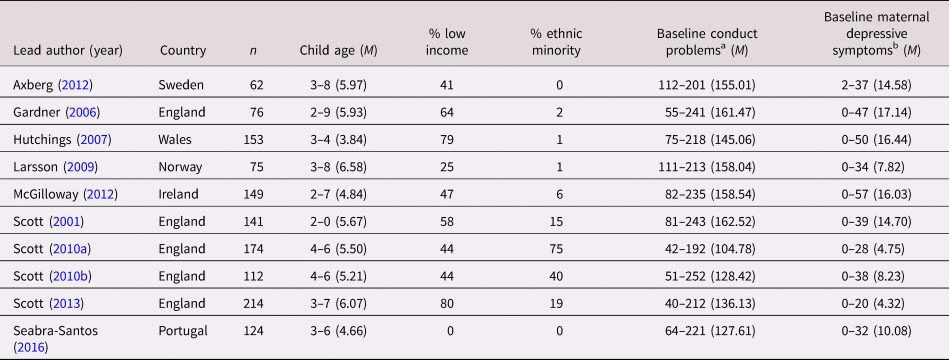
a Possible range of conduct problems (Eyberg Child Behavior Inventory) 36–252.
b Possible range of depressive symptoms (Beck Depression Inventory) 0–36.
Participants
The total integrated sample from 10 trials included 1280 families (753 intervention; 527 control condition—some trials used a 2:1 allocation ratio). Children ranged in age from 2 to 10 years (M = 5.33; SD = 1.30; 36% girls). The socioeconomic status of participant families was diverse (52% low income; 61% low educational level; 36% single parent; 29% no employed parent in the household), and 20% reported to be from an ethnic minority. We used data from one parent (98% mothers) because most trials included data from only one parent. In terms of categorical definitions, 43% of the children showed severe conduct problems (see Burns & Patterson, Reference Burns and Patterson2001, for norm scores), and 19% of the mothers showed moderate to severe depression (see Veerman, Dowrick, Ayuso-Mateos, Dunn, & Barendregt, Reference Veerman, Dowrick, Ayuso-Mateos, Dunn and Barendregt2009, for norm scores).
Intervention and Control Condition
Families in the intervention condition were offered the Incredible Years parenting program (Webster-Stratton & Reid, Reference Webster-Stratton, Reid, Weisz and Kazdin2010). The number of sessions ranged 12 to 19 across trials, depending on the timing and context of the trials; older versions and prevention (versus treatment) versions of Incredible Years include fewer sessions. Across trials, parents attended on average 68% of the sessions (range M percent sessions attended = 55–91%). With regard to the professionals delivering the sessions, 63% were trained as clinical psychologists and 31% were already certified Incredible Years trainers before the start of the trial. To monitor program fidelity, 100% of the staff completed checklists of completed and omitted session activities after each session, and 80% of the staff received weekly or fortnightly supervision. The control condition was either a waitlist (7 trials), minimal intervention (e.g., a phone helpline; 2 trials), or care as usual (1 trial).
Measures
Conduct problems
The most frequently used measure for parent-reported children's conduct problems in children was the Eyberg Child Behavior Inventory—Intensity Scale (ECBI; Eyberg & Ross, Reference Eyberg and Ross1978). Two trials used the Parental Account of Children's Symptoms (PACS; Taylor, Schachar, Thorley, & Wieselberg, Reference Taylor, Schachar, Thorley and Wieselberg1986). We converted PACS scores into ECBI scores using norm deviation scores (see Leijten et al., Reference Leijten, Gardner, Landau, Harris, Mann, Hutchings and Scott2018, for this procedure). ECBI and PACS scores correlated r = .71. Internal consistency ranged α = .79 to α = .95.
Maternal depression
The most frequently used measure for maternal depressive symptoms was the Beck Depression Inventory (BDI; Beck, Ward, Mendelson, Mock, & Erbaugh, Reference Beck, Ward, Mendelson, Mock and Erbaugh1961); one trial used the Brief Symptom Inventory—depression subscale (BSI; Derogatis & Spencer, Reference Derogatis and Spencer1982); and one trial used the General Health Questionnaire (GHQ; Williams & Goldberg, Reference Williams and Goldberg1988). BSI and GHQ scores were converted to BDI scores using norm deviation scores. Internal consistency ranged α = .87 to α = .93.
Analytic Strategy
There are several approaches to identify patterns of co-occurring change in two outcomes (here, conduct problems and maternal depression). One approach is to model classes with similar scores over time, using repeated measures latent class analysis (RMLCA); another is to model families' transitions between classes that exist at either time point (i.e., baseline and posttest), using latent transition analysis (LTA). We chose to conduct both approaches, first, to make sure our findings do not hinge on the approach chosen, and second, because each approach explores slightly different aspects of the research question. Specifically, RMLCA answers the question, first, how changes in children's conduct problems and maternal depression co-occur over time, and second, whether the Incredible Years program increases the likelihood of certain patterns of co-occurring change. LTA answers the question whether the Incredible Years program, relative to control, causes parents to move classes between baseline and post-test times, for example to classes defined by less severe problems, or to classes defined by equally severe conduct problems and more severe maternal depression (if such a class exists).
RMLCA treats all manifest indicators, some of which relate to repeated measurement occasions of the same variable, as describing underlying response patterns in the data. That is to say, respondents can be categorized as belonging to a class characterized by both baseline and post-test responses to a set of indicators (here, conduct problems and maternal depression). It is then possible to test whether a covariate (here, Incredible Years vs. control) predicts ‘belonging’ to a class. In our case, this allowed us to distinguish different classes based on co-occurring change in conduct problems and maternal depressive symptoms, thereby potentially identifying, first, how changes in maternal depressive symptoms depend on changes in children's conduct problems, and second, whether participation in the Incredible Years program makes some patterns of co-occurring change more likely than others.
In contrast, LTA describes classes separately for each measurement wave (e.g., a class of families with clinical levels of both conduct problems and maternal depression and a class of families with mild levels of both), and it seeks to understand how and if families move between latent classes (e.g., from a class of clinical problems to a class of mild problems). In an LTA model, classes are estimated based on baseline conduct problems and depression scores, and again based on post-test conduct problems and depression scores. The role of the covariate (here, Incredible Years vs. control) is to test if patterns of movement between latent classes differ over the levels of the covariate; that is, are families in the intervention condition more likely to move from one class to another as compared with families in the control condition? In our case, we were specifically interested to ascertain: (a) if families in the intervention condition were more likely to move to a class with less severe conduct problems and maternal depression, indicating co-occurring improvement (if such a class exists); (b) if families in the intervention condition who moved to a class with similar, or more severe conduct problems, did so more often if this class was characterized by more severe maternal depression, indicating that if Incredible Years fails to improve children's conduct problems, this co-occurs with a worsening of maternal depression (and vice versa).
We chose to combine RMLCA and LTA because they are complementary in their approaches to examining patterns of change through belonging to a certain class (RMLCA) and patterns of change as indicated by moving between classes (LTA). For both RMLCA and LTA, the number of classes in each model is determined by a combination of significance testing, fit indices (e.g., the Bayesian information criterion [BIC] and scaled relative entropy), and theoretically informed judgment. We predominantly focused on the degree to which improvements in model fit slowed down when we tested models with more classes.
For the RMLCA, we allowed the residual variances for each indicator to vary across classes, and tested models with two to four classes. We chose a four-class model based on model fit and interpretability, and we related intervention status to class membership in a one-step model, converting multinomial regression coefficients into probabilities of membership by intervention status.
For the LTA, we tested between two and four classes at baseline, and then compared baseline classes with classes estimated on post-test data. We fixed indicator variances to be equal across classes and across waves because of the classes estimated and to preserve interpretability between classes and between waves. A four-class solution did not converge satisfactorily, so we retained two-class and three-class solutions. A common assumption in LTA is that the measurement of classes is identical at baseline and posttest, even if a family's class membership changes at baseline and posttest. In other words, the assumption is that, for example, a class of severe conduct problems and clinical depression exists at both baseline and posttest, with the same within-class mean level of conduct problems and depression at both time points. However, examination of two-class and three-class solutions estimated at baseline and posttest indicated that while maternal depression appeared to be commensurate between classes, conduct problems decreased across all classes. We therefore did not require conduct problem means to be equal between baseline and posttest between analogous classes. This means that the classes do not have the same meaning at both time points. In our case, we were primarily interested in between-condition differences in to what classes family moved. We examined how intervention status predicted movement between classes by testing a one-step interaction model between class membership at baseline and intervention status in predicting class membership at posttest. We directly estimated probabilities of movement between classes for intervention and control families using a probability parametrization.
We accounted for the fact that data came from 10 different trials by using clustered standard errors, as the number of parameters to be estimated in each model was greater than the number of trials (or level 2 clusters), a situation to be avoided in multilevel structural equation modeling. Use of fixed effects (i.e., dummy variables by trial) would have ‘flattened out’ substantively informative heterogeneity in risk distributions between classes. All analyses assumed, as is standard in most latent variable models estimated using full information maximum likelihood, that data were missing at random; that is, that missingness was a function of other variables in the model. This is a weaker assumption than ‘missing completely at random’ but a stronger assumption that ‘not missing at random,’ which would require a number of additional modeling assumptions to implement. All analyses were conducted in Mplus version 8.2 (Muthén & Muthén, Reference Muthén and Muthén2018).
Results
Descriptive Results
Across trials, baseline scores for children's conduct problems and maternal depressive symptoms encompassed almost the full possible range, from no or minimal symptoms to severe clinical levels of conduct problems and depression (Table 1). This reflects the fact that the 10 trials targeted a wide range of families, from prevention samples at schools in inner-city London and Sure Start samples in Wales, to treatment samples in outpatient psychiatric clinics in Norway and Sweden. This variation in conduct problems and maternal depressive symptoms was both a key benefit and central to our analyses—the ability to identify classes based on conduct problems and depressive symptoms depends on variation in conduct problems and depression.
Baseline levels of children's conduct problems and maternal depression correlated such that, as expected, mothers of children with more severe conduct problems experienced more depressive symptoms (r = .32, p <.001). An overview of the main effects of Incredible Years in the original full pooled sample, including a main effect on reduced conduct problems (β = −.35, p <.001), and no main effect on maternal depressive symptoms (β = −.08, p = .095), is presented in Leijten and colleagues (Reference Leijten, Gardner, Landau, Harris, Mann, Hutchings and Scott2018).
Identifying Class Membership Using Repeated Measures Latent Class Analysis (RMLCA)
Because significance testing did not suggest meaningful differences between classes in the RMLCA, we identified a four class model as most theoretically and substantively salient (Table 2). Classes differed mainly in terms of severity of conduct problems and maternal depressive symptoms. Conduct problems and maternal depressive symptoms were least severe in Class 1 and most severe in Class 4. The association between (baseline) conduct problems and maternal depressive symptoms seemed relatively linear between Classes 1, 2, and 3, with mothers of children with more conduct problems experiencing more depressive symptoms, but families in Class 4 somewhat diverged from this pattern. While children's conduct problems in Class 4 were only somewhat more severe than in Class 3 (M Class 4 = 162; M Class 3 = 153; a 0.25 SD difference), maternal depressive symptoms were much more severe than in in Class 3 (M Class 3 = 13; M Class 4 = 27; a 1.35 SD difference). This suggests that among the children with severe conduct problems, two family types can be distinguished: those in which maternal depressive symptoms are elevated, but mild, and those in which maternal depressive symptoms are moderate to clinical. Details on model fit and class selection are presented in Table 3.
Co-Occurrence of children's conduct problems and parental depression in families with varying levels of baseline problem severity, based on RMLCA
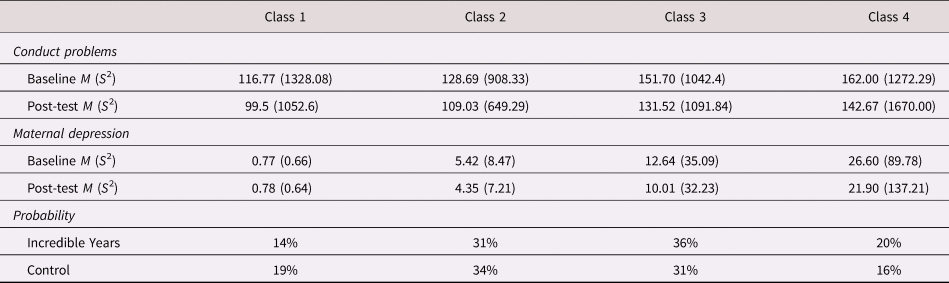
Note: Incredible Years significantly predicted class membership. Families who received Incredible Years were more likely to be in Class 3 or 4. RMLCA = repeated measures latent class analysis.
Model fit of the repeated measures latent class analysis (RMLCA) and the latent transition analysis (LTA)

Intervention status predicted class membership such that families randomized to the Incredible Years parenting program, relative to families in the control condition, were more likely to be in Class 3 or 4, than in Class 1 or 2. This suggests that a pattern of severe baseline problems and a reduction in conduct problems (Class 3), or severe baseline problems and a reduction in both conduct problems and maternal depression (Class 4) was more typical in families who had participated in Incredible Years.
Co-Occurring Change in Conduct Problems and Maternal Depression (RMLCA)
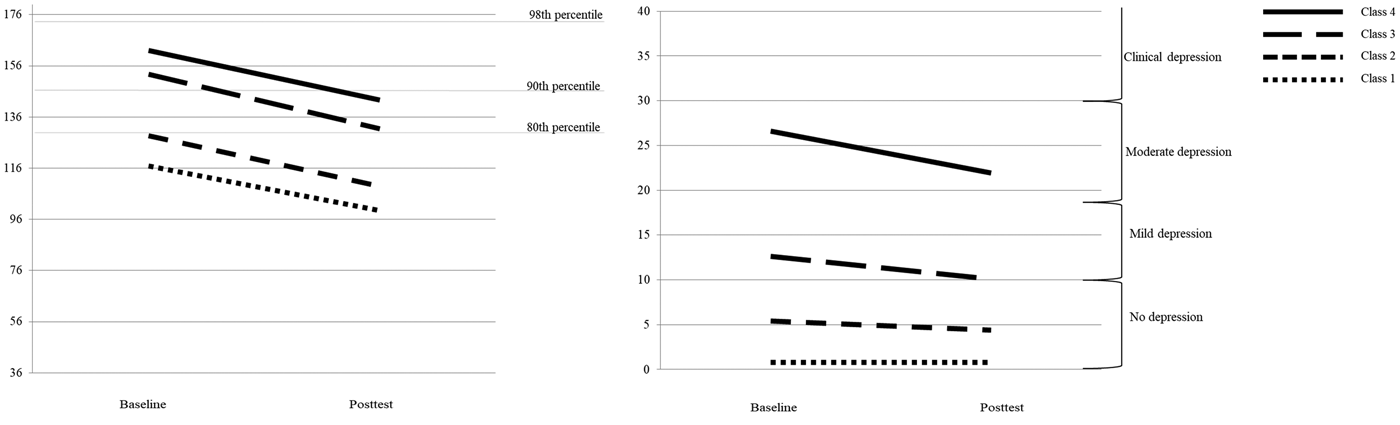
There was little evidence of co-occurring change in conduct problems and maternal depressive symptoms (Figure 1). Conduct problems reduced to a similar extent in all classes, and depressive symptoms typically did not change, except for a reduction in Class 4 (i.e., in families with the most severe baseline problems). There was no evidence for a subgroup of families where conduct problems did not improve, or where they worsened. In line with this, there was no subgroup of families where maternal depressive symptoms intensified (in co-occurrence with a lack of improved conduct problems).
Co-occurring change in four classes of families in conduct problems (left) and maternal depression (right). Intervention status (Incredible Years [IY] versus control) predicts class membership: Class 4 IY 20% Control 16%; Class 3 IY 36% Control 31%; Class 2 IY 31% Control 34%; Class 1 IY 14% Control 19%.
Identifying Change in Class Membership Using Latent Transition Analysis (LTA)
LTA, where classes are identified separately at baseline and at posttest (as opposed to the RMLCA, where classes are based on baseline and post-test scores combined), sheds light on the likelihood that families change from one class to another, and whether these changes are predicted by intervention status. LTA identified three classes at baseline (Table 4) that were similar to Classes 2, 3, and 4 identified by the RMLCA. The largest group at baseline (66%) included families with moderate levels of conduct problems (M = 132; around 80th percentile; Burns & Patterson, Reference Burns and Patterson2001) and minimal depression (M = 5; 0–13 is considered minimal). A smaller group included families with severe levels of conduct problems and mild to moderate depression (M = 19; 14–19 is considered mild). Lastly, a small but meaningfully separate group (7%; N = 90) showed similar levels of conduct problems as families in Class 3, but they demonstrated clinical levels of depression (M = 35; > 29 is considered severe). Classes were largely similar at posttest, with slightly lower levels of conduct problems in all classes. Maternal depression scores were held constant for classes at baseline and classes at posttest due to a lack of change on this measure.
Baseline probability for each class, based on latent class analysis
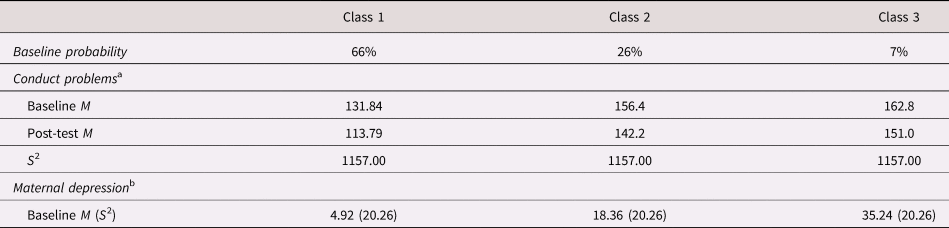
a Variances (S 2) in conduct problems scores were held constant.
b Mean maternal depression score was held constant at baseline and post-test, because there was no evidence of ‘secular’ decrease between assessment points.
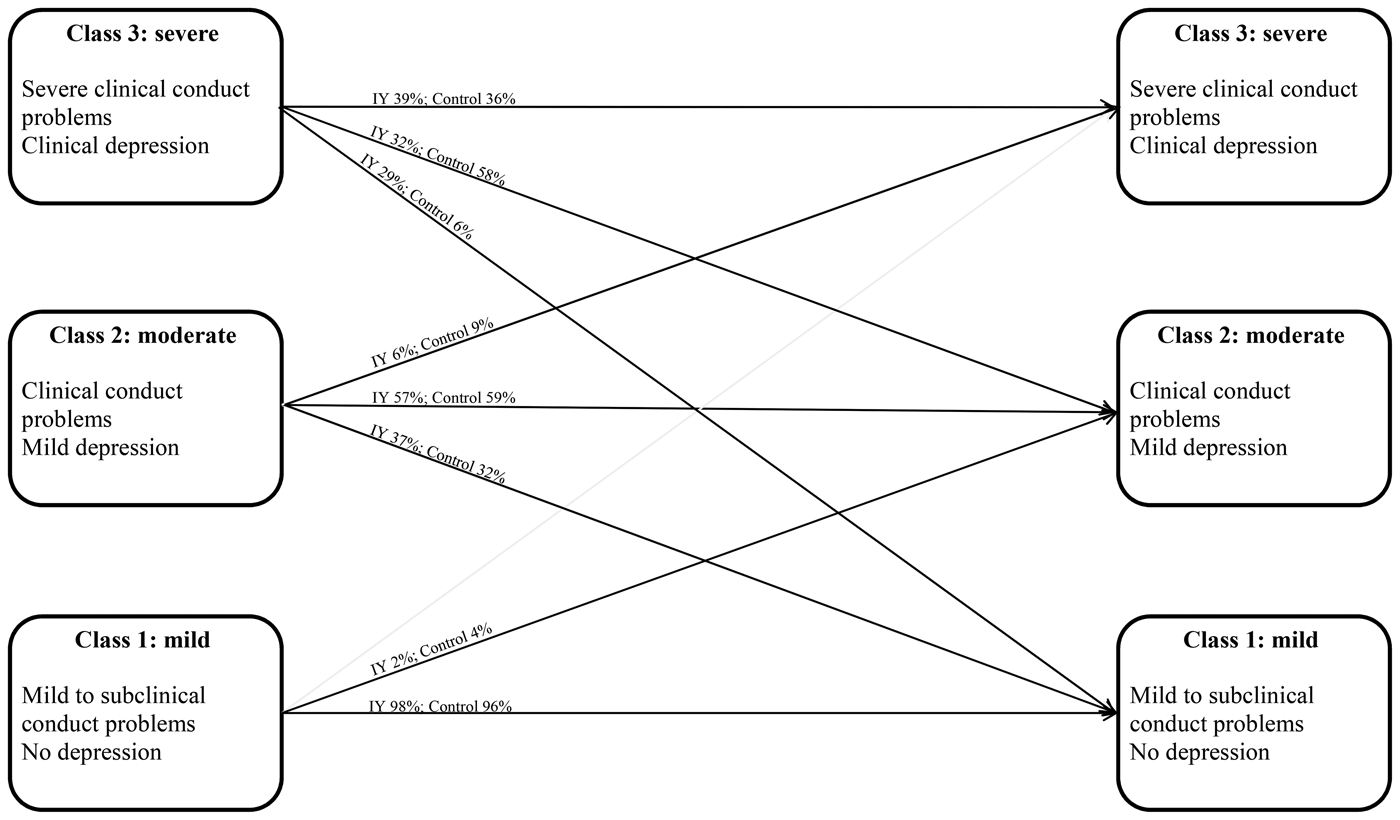
Intervention status predicted the likelihood that families moved to another class. This was especially the case for families in Class 3—those with the most severe conduct problems and maternal depression. Families in this group who were assigned to Incredible Years had a 32% likelihood to move one class down (to Class 2: severe conduct problems and mild depressive symptoms) and a 29% likelihood to move two classes down (to Class 1: mild conduct problems and minimal depressive symptoms). Families from this group who were assigned to the control condition had a likelihood of 58% and 6% to move to Class 2 and Class 1, respectively. In other words, intervention and control families in Class 3 had a similar likelihood to move to another class (intervention 61%; control 64%), but intervention families had a larger chance to have a more substantial move, indicating greater improvement (i.e., from Class 3 to Class 1).
This finding provides some evidence for co-occurring change of conduct problems and maternal depressive symptoms such that when Incredible Years reduced children's conduct problems more strongly, it also reduced maternal depression more strongly. Families from Class 2 and 1, with milder problems than families from Class 3 and 4, were less likely to change to another class, regardless of intervention status (Figure 2). There was thus no evidence for co-occurring change in conduct problems and maternal depressive symptoms for families with milder problems, due to an overall lack of change in these families.
Results of the latent transition analysis: intervention and control families in Class 3 had a similar likelihood to move to another class, but intervention families had a larger chance for a move indicating greater improvement (i.e., from Class 3 to Class 1). Change is more similar in Class 2, and it is largely absent in Class 1.
Discussion
We tested whether children's conduct problems and maternal depressive symptoms change together when parents participate in the Incredible Years parenting program for their children's conduct problems. We identified different response patterns to determine whether maternal depressive symptoms improve if children's conduct problems improve and whether maternal depressive symptoms worsen if children's conduct problems fail to improve. Our findings provide limited evidence for co-occurring change and showed that families with the most severe co-occurring conduct problems and maternal depression were most likely to benefit.
The latent longitudinal classes we identified were mostly defined by problem severity, not by change. Specifically, among families of children with subclinical to severe conduct problems, we identified two types: those in which maternal depression is elevated, but subclinical, and those in which maternal depression is subclinical to clinical. This could be interpreted such that some mothers are more negatively affected by their child's conduct problems than others and/or that conduct problems in some children are at least partly driven by maternal depression, while conduct problems in other children have different origins. In line with previous findings indicating larger effects in treatment settings, compared with prevention settings (e.g., Leijten et al., Reference Leijten, Gardner, Melendez-Torres, Van Aar, Hutchings, Schulz, Knerr and Overbeek2019; Weisz & Kazdin, Reference Weisz and Kazdin2017), families with more severe problems at baseline were most likely to benefit from Incredible Years in terms of improvement in both conduct problems and maternal depressive symptoms. For most other families, conduct problems improved, but maternal depressive symptoms did not change. There was no evidence that maternal depressive symptoms intensified in families of children where conduct problems showed less improvement.
Incredible Years led to co-occurring improvement in conduct problems and maternal depressive symptoms in a small subgroup of families with the most severe problems, at both the child and parent levels. It is well-known that children with more severe problems at baseline often benefit more in terms of reduced conduct problems (e.g., Leijten et al., Reference Leijten, Gardner, Melendez-Torres, Van Aar, Hutchings, Schulz, Knerr and Overbeek2019; Menting, Orobio de Castro, & Matthys, Reference Menting, Orobio de Castro and Matthys2013), although this effect is not always identified in individual trials (e.g., Seabra-Santos et al., Reference Seabra-Santos, Gaspar, Azevedo, Homem, Guerra, Martins and Moura-Ramos2016; Weeland, Chhangur et al., Reference Weeland, Chhangur, Van der Giessen, Matthys, Orobio de Castro and Overbeek2017). Our findings suggest that these families may improve on multiple fronts at the same time—on both child and maternal mental health. This may be because these families have the most room for improvement. In addition, especially in families most vulnerable for parent and child mental health problems, symptoms of children's conduct problems and parental depression might form a feedback system in which these symptoms reinforce each other—a feedback system that parenting programs strive to break (Gonzalez & Jones, Reference Gonzalez and Jones2016).
Our finding that conduct problems improved in all classes (i.e., subgroups of families) may at first seem to contradict findings that considerable numbers of children do not benefit from parenting programs. We do not think that this is the case. In this age period, children's conduct problems typically reduce in both intervention and control conditions (e.g., Van Aar et al., Reference Van Aar, Leijten, Orobio de Castro, Weeland, Matthys, Chhangur and Overbeek2019) as part of normal maturational changes (Sentse, Kretschmer, De Haan, & Prinzie, Reference Sentse, Kretschmer, De Haan and Prinzie2017; Shaw, Lacourse, & Nagin, Reference Shaw, Lacourse and Nagin2005). This has implications for generating hypotheses, and interpreting findings, about potential collateral effects of children's failure to improve more in a parenting program than they would had they not received the program. Our findings suggest that even if children do not improve more than would be expected due to average maturation effects, their parents on average still perceive improvement in their behavior. These perceptions of improvement may prevent maternal depressive symptoms from worsening.
An alternative explanation for our findings is that even if maternal depressive symptoms are negatively affected by a lack of substantial improvement in children's conduct problems, parenting programs may provide other benefits for maternal mental health that counterbalance this. For example, most parents like the group format of Incredible Years, perceiving it as supportive, nonjudgmental, and encouraging (e.g., Furlong & McGilloway, Reference Furlong and McGilloway2012; Seabra-Santos, Gaspar, Azevedo, Homem, & Pimentel, Reference Seabra-Santos, Gaspar, Azevedo, Homem and Pimentel2011). The social support and normalization of family mental health problems that the group format provides may prevent depressive symptoms to worsen in mothers whose children fail to benefit from the program.
Our findings may not necessarily generalize to individually delivered parenting programs, despite the often large overlap in program content (e.g., Parent–child Interaction Therapy; Zisser & Eyberg, Reference Zisser, Eyberg, Weisz and Kazdin2010). While group-delivered programs have the benefit of offering observational learning and social support, individually-delivered programs have the benefit of being able to more flexibly adapt program content and pace to address intrapersonal issues such as maternal depression, in some cases in the privacy of parents' homes (Niec, Hemme, Yopp & Brestan, Reference Niec, Hemme, Yopp and Brestan2005). Some studies suggest parents prefer individually delivered programs (Wymbs et al., Reference Wymbs, Cunningham, Chen, Rimas, Deal, Waschbusch and Pelham2016). Head-to-head comparisons of group- versus individually-delivered programs suggest similar levels of effectiveness for both conduct problems and parental mental health (Niec, Barnett, Prewett, & Shanley, Reference Niec, Barnett, Prewett and Shanley Chatham2016; Sonuga-Barke et al., Reference Sonuga-Barke, Barton, Daley, Hutchings, Maishman, Raftery and Little2018), but more, and better powered, comparisons are needed to understand whether some families benefit more from some formats than others.
Our findings do not necessarily imply that families where parents perceive no or little improvement in their child's behavior are not harmed in other ways than intensified maternal depression. Parents make a substantial investment by participating in 12 to 19 weekly parenting group sessions. When the program does not provide the benefits parents expected or hoped for, this could perhaps increase parents' dysfunctional attributions that they do not have the ability to influence their child's behavior or that their child is unwilling to change (e.g., Sawrikar & Dadds, Reference Sawrikar, Hawes, Moul and Dadds2018), or it may lead to a reluctance to seek mental health support in the future. Our IPD meta-analysis unfortunately did not allow us to test the likelihood of these outcomes. That said, our finding that families with less severe problems derived little benefit from Incredible Years suggests that screening families on both child and maternal mental health may be helpful to identify families who might be less likely to benefit from the Incredible Years parenting program.
We tested our research questions in two ways, using RMLCA and LTA, in a well-powered pooled sample of 1280 families. Neither approach identified families where limited improvement in children's conduct problems co-occurred with worsened maternal depression. This strengthens our confidence that such a group indeed did not exist in the included samples. There may be individual families that show this pattern, but our analyses provide no evidence that this is a systematic, re-occurring pattern in a significant number of families. Because of the variety in settings and countries where Incredible Years was implemented (i.e., from families seeking help at outpatient psychiatric clinics to families in socioeconomically deprived neighborhoods) and countries (i.e., six different countries), our findings do not pertain to a limited number of specific, highly controlled settings, and they potentially generalize across settings and countries.
At the same time, several limitations of our pooled data merit attention. First, both conduct problems and maternal depressive symptoms were measured using parent report. While effects of parenting programs on observed child behavior tend to be of similar magnitude as effects on parent-reported child behavior (Menting et al., Reference Menting, Orobio de Castro and Matthys2013), parent-reported and observed measures of child behavior correlate only modestly (Moens, Weeland, Van der Giessen, Chhangur, & Overbeek, Reference Moens, Weeland, Van der Giessen, Chhangur and Overbeek2018). In our case, using parent-reports of conduct problems seems both a strength and a limitation. On the one hand, using parents as informants is in line with our particular interest in how parents' perceptions of change in child behavior would relate to changes in maternal depressive symptoms. On the other hand, we cannot rule out the possibility that co-occurring change is explained by parental factors—especially maternal depression may influence mothers' perceptions of children's conduct problems (Callender et al., Reference Callender, Olson, Choe and Sameroff2012). It would therefore have been good to corroborate children's level of conduct problems with observational measures. In our pooled dataset, these were available for only a small subset of the trials and would therefore not have given us the required statistical power. Moreover, observational data tends to be more difficult to harmonize across trials than questionnaires because of their different scales (e.g., frequency counts versus Likert scales) and lack of norm scores.
Second, most trials included only one post-intervention assessment. We were therefore able to test co-occurring change during the parenting program only (i.e., between baseline and posttest). We were unable to test co-occurring change after the program had ended and the order and direction of effects. While the effects of parenting programs on children's conduct problems on average sustain in the months and years after the program (Van Aar, Leijten, Orobio de Castro, & Overbeek, Reference Van Aar, Leijten, Orobio de Castro and Overbeek2017), longer-term effects of parenting programs on parental mental health are less systematically studied.
Third, as in most parenting program evaluation studies, most data came from mothers. It is of yet unclear whether the relation between parental depressive symptoms and children's conduct problems is mainly similar or different for mothers and fathers (e.g., Connell & Goodman, Reference Connell and Goodman2002; Gross, Shaw, Moilanen, Dishion, & Wilson, Reference Gross, Shaw, Moilanen, Dishion and Wilson2008). The last decade has seen an increase in recommendations for how researchers can engage fathers more (e.g., Panter-Brick et al., Reference Panter-Brick, Burgess, Eggerman, McAllister, Pruett and Leckman2014), and we encourage replication of our findings once data from sufficient numbers of trials with larger numbers of fathers can be synthesized.
This study is part of an initiative to honor the legacy of Dr. Thomas Dishion, who, through continuous critical appraisal of even our most promising interventions for youth mental health, contributed to a more refined understanding of the processes that underlie effective and ineffective intervention efforts. Our findings suggest that, at least for the Incredible Years parenting program, there is no evidence to suggest that maternal depressive symptoms intensify in families where children fail to benefit from the parenting program. By using novel theoretical and methodological approaches to continuously improve our understanding of families' responses to interventions, we can keep honoring Tom's commitment to providing our youth with the best possible interventions for their mental health.
Acknowledgments
We gratefully acknowledge the researchers, practitioners, and families who participated in each of the original trials on the effects of the Incredible Years parenting program.
Financial Support
This study was partly funded by the National Institute of Health Research (NIHR) Public Health Research Programme (PI Gardner). In addition, Vashti Berry's time is supported by the NIHR Collaboration for Leadership in Applied Health Research and Care South West Peninsula (NIHR CLAHRC South West Peninsula). The views expressed are those of the authors and not necessarily those of the NHS, the NIHR or the Department of Health. This work was also supported by The Centre for the Development and Evaluation of Complex Interventions for Public Health Improvement (DECIPHer), a UKCRC Public Health Research Centre of Excellence. Joint funding (MR/KO232331/1) from the British Heart Foundation, Cancer Research UK, Economic and Social Research Council, Medical Research Council, the Welsh Government and the Wellcome Trust, under the auspices of the UK Clinical Research Collaboration, is gratefully acknowledged. G.J. Melendez-Torres is on the staff of DECIPHer.
Conflict of Interest
Judy Hutchings and Maria Filomena Gaspar report personal fees for the delivery of leader training for Incredible Years. The remaining authors declare no competing or potential conflicts of interest.


 Open access

