Breast-feeding reduces risk for a myriad of adverse health outcomes in both infant and mother(Reference Johnston, Landers and Noble1–Reference Stuebe4). Consequently, the American Academy of Pediatrics recommends six months of exclusive breast-feeding (infant consumes breast milk only with no regular consumption of other solids or liquids other than necessary micronutrients or medications) and breast-feeding with appropriate complementary foods for one year or beyond(Reference Johnston, Landers and Noble1). Most women in the USA do not breast-feed for these recommended durations(5). Rates are even lower in the low-income population(6), which has higher risk of many of the health conditions prevented by breast-feeding(Reference Braveman, Cubbin and Egerter7, Reference Smedley, Stith and Nelson8). In order to improve breast-feeding rates in this population, many public health initiatives have implemented peer counselling (PC) breast-feeding support programmes. Breast-feeding education and support delivered by paraprofessionals has been shown to be at least as effective as, if not more effective than, education and support delivered by health professionals(Reference Gross, Resnik and Cross-Barnet9–Reference Renfrew, McCormick and Wade11). Peer counsellors are typically women recruited from the community who have had a positive breast-feeding experience and are trained to provide breast-feeding support, education and technical assistance to their peers(Reference Chapman, Morel and Anderson12, Reference Rossman13). This model has demonstrated efficacy in improving breast-feeding initiation rates, breast-feeding duration and exclusive breast-feeding duration in the low-income population(Reference Jolly, Ingram and Khan14).
Procedures for implementing PC programmes vary considerably. Heterogeneity between and within programmes inhibits comparisons of the efficacy of programme protocols on breast-feeding outcomes. To our knowledge, there are no studies in which the relationship between types and quantity of contacts and breast-feeding outcomes is investigated in the USA. Jolly et al. conducted a meta-analysis of PC programmes and concluded that higher-intensity PC programmes (≥5 contacts planned) had a significantly increased positive effect on any breast-feeding duration compared with lower-intensity programmes (<5 contacts planned), but this effect was not seen with exclusive breast-feeding duration(Reference Jolly, Ingram and Khan14). A 2010 review of PC programmes by Chapman et al. concluded that there is a need to better define ‘prenatal, perinatal, and postnatal service delivery modes (phone, hospital/clinic based, home visits)’ and ‘dosage needed (number of contacts…) for achieving specific breast-feeding outcomes’(Reference Chapman, Morel and Anderson12). A 2012 Cochrane review elucidated that programmes offering in-person support were more effective than programmes offering phone or combined phone and face-to-face support(Reference Renfrew, McCormick and Wade11).
The objective of the present study was to investigate how programme components – both individually and in combination – were associated with timing of any breast-feeding and exclusive breast-feeding discontinuation in 5886 women prenatally enrolled in a PC breast-feeding support programme. To realize the objective of this aim, we tested the hypotheses that: (i) hospital visits improve breast-feeding outcomes; (ii) home contacts improve breast-feeding outcomes to a greater extent than phone contacts; and (iii) increased overall contacts improve breast-feeding outcomes. This research contributes to the understanding of how individual and combinations of components of a PC programme impact any breast-feeding and exclusive breast-feeding discontinuation and will allow, for the first time, evidenced-based design and adaptation of PC programmes to increase efficacy.
Methods
The Breastfeeding Initiative Program
The Breastfeeding Initiative (BFI) Program is operated through Michigan State University Extension and the Special Supplemental Nutrition Program for Women, Infants, and Children (WIC); it is administered by the Michigan Department of Community Health and aims to provide breast-feeding education and support for low-income women using the PC model. The BFI Program was established in 1993. This and similar programmes served as a template for the Loving Support Program practised by WIC agencies (P Benton, personal communication, 13 February 2014). Participants are eligible for the BFI Program if they are WIC-eligible (<185 % of the poverty level) and most participants are recruited through their local WIC agencies.
Peer counsellors are recruited from the community and are required to have a high-school diploma, transportation and a positive breast-feeding experience. Peer counsellors receive basic breast-feeding and home visiting training, as well as ongoing education and support from International Board Certified Lactation Consultants (IBCLC). Following programme protocols developed by the state programme leaders and consulting programme IBCLC, peer counsellors aim to have at least one in-person contact with the participant in the prenatal period followed by monthly phone calls up until the baby’s birth. Mothers may enrol at any time during the prenatal period. Additionally, peer counsellors aim to visit participants in the hospital shortly after delivery if this policy is established in the local hospital, and/or to phone participants within 2d following delivery, and/or to make at least one home visit as soon as possible after hospital discharge and another during the first month postpartum. The typical protocol is to call participants weekly during the first month postpartum and monthly through the first year of breast-feeding. Therefore, standard programme guidelines call for 1–3 in-person contacts in the prenatal and early postnatal period. The standard quantity of phone contacts is dependent on the length of time the mother remains in the programme and are as follows: 2–6 phone contacts for participants enrolled less than 1 month postpartum, 4–8 phone contacts for those enrolled 1–3 months postpartum, 7–11 phone contacts for those enrolled 4–6 months postpartum, 10–14 phone contacts for those enrolled 7–9 months postpartum, and 12–17 phone contacts for those enrolled over 9 months postpartum. Participants remain enrolled in the programme until they discontinue breast-feeding, choose to withdraw from the programme while breast-feeding, or until the infant is 1 year of age.
Data collection
Mothers’ demographic characteristics were collected by the peer counsellors at enrolment and infants’ characteristics were collected at the first postpartum contact. At each postnatal visit, mothers were asked if they had introduced any solids or liquids to the infant other than breast milk to determine if the mothers had ceased exclusive breast-feeding. Exclusive breast-feeding was determined by subtracting the infant’s date of birth from the date solids or liquids other than breast milk were introduced for mothers who initiated breast-feeding following delivery. Any breast-feeding duration was determined by subtracting the infant’s date of birth from the date the mother reported discontinuing breast-feeding at the first contact with the peer counsellor after discontinuation. For mothers who withdrew from the programme while breast-feeding, any breast-feeding duration was censored at the last known date of breast-feeding. Exclusive breast-feeding duration was censored at the same date if the infant was exclusively breast-feeding at the time the mother withdrew from the programme. The number and types of contacts were categorized as hospital (following delivery), home, phone and other (which included mail, texts or in-person contacts outside the participant’s home in a wide variety of settings including the WIC clinic, public venues, etc.). ‘Other’ contacts encapsulated any form non-standard contact between the peer counsellor and participant. Data were entered into a database and inspected for inconsistencies and discrepancies by BFI Program staff. The study was conducted according to the guidelines laid down in the Declaration of Helsinki and all procedures involving human subjects/patients were approved by the Institutional Review Board at Michigan State University. The present study is a secondary analysis of the data collected for prenatal enrollees from October 2005 to September 2011; it was considered exempt because all data were de-identified before they were used for research purposes.
Statistical analysis
The statistical software package Stata version 12·0 was used for all statistical analyses. Participants were described according to their breast-feeding duration and compared using χ 2 analysis. The survival analysis function was used to create survival curves demonstrating the probability of continuing breast-feeding for those who initiated breast-feeding. Cox proportional hazards models were utilized to calculate hazard ratios (HR) and 95 % confidence intervals for predictors of any breast-feeding discontinuation (mother has ceased providing breast milk to her infant) by 6 months postpartum and exclusive breast-feeding discontinuation (mothers has ceased providing only breast milk to her infant) by 3 months postpartum. This method allowed for the censoring of data, thereby permitting use of data from participants who withdrew from the programme while breast-feeding (those who were lost to follow-up). The model-building strategy was to test all individual variables using log rank tests and include all variables with P<0·2 in the final multivariable-adjusted model.
To test the efficacy of the standard BFI Program protocol described above, χ 2 tests were used to determine the likelihood of any breast-feeding for specific durations (<1 month, 1–3 months, 4–6 months, 7–9 months and >9 months) according to whether participants received an ‘optimal’ quantity of in-person (hospital+home contacts) and phone contacts. A range of ‘optimal’ phone contacts was included for each time period considered in order to accommodate variation in participant needs. In order to understand the role of the combination of contacts when controlling for demographic factors and censoring those who withdrew from the programme while breast-feeding, we again utilized Cox regression. The primary predictor variable was the combination of contacts received from the peer counsellor (optimum in-person/optimum phone, optimum in-person/less than optimum phone, etc.), and results were adjusted for demographic variables included in the Cox proportional hazards model above. This process was repeated using exclusive breast-feeding duration as the outcome variable.
For analysis of exclusive breast-feeding, values were considered invalid if duration exceeded 7 months, was longer than breast-feeding duration, or if no date was entered for introduction of formula/solids or if this date was implausible (e.g. preceded date of birth).
Results
Participant characteristics and programme components
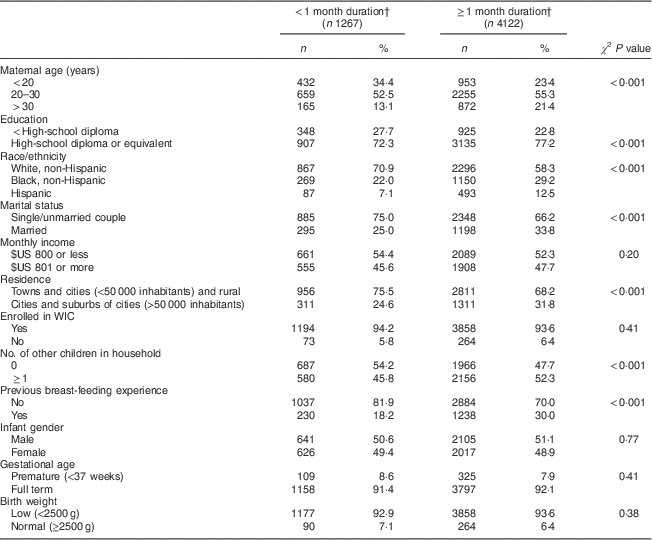
From 2005 to 2011, 5886 women enrolled in the BFI Program prenatally. Of the 5429 participants who initiated breast-feeding, 52·0 % of women remained in the programme breast-feeding for 3 months, 33·5 % remained in the programme breast-feeding for 6 months and 14·7 % remained in the programme breast-feeding for 1 year postpartum. While 68·0 % of participants discontinued breast-feeding before 1 year, 17·3 % withdrew from the programme while breast-feeding, so we were not able to ascertain their time of breast-feeding discontinuation. Maternal and infant demographic characteristics for women prenatally enrolled who initiated breast-feeding are described in Table 1. The majority of participants were 20–30 years of age, with a high-school education, non-Hispanic White, unmarried, living in small towns/cities or rurally, enrolled in WIC, and had a monthly income of $US 800 or less and no prior breast-feeding experience. Participants eligible for, but not enrolled in, WIC were more likely to be Hispanic and less likely to be non-Hispanic White (χ 2; P<0·001), but were otherwise demographically similar to those enrolled in WIC. Compared with those who breast-fed for at least 1 month, those who breast-fed for less than 1 month were more likely to be younger, white and unmarried, and were less likely to have a high-school diploma or previous breast-feeding experience (P<0·001 for each variable).
Participant characteristics by any breast-feeding duration among low-income women (n 5886) enrolled prenatally in a peer counselling breast-feeding support programme, Michigan, USA, 2005–2011

WIC, Special Supplemental Nutrition Program for Women, Infants, and Children.
Data are presented as n and %.
† n for individual variables may vary due to missing or incomplete data.
A small proportion of participants received a visit from the peer counsellor while in the hospital after delivery (13·5 %; n 795). Participants received a mean of 2·5 (sd 2·5) home contacts (range: 0–26 contacts; interquartile range: 1–3 contacts), 5·2 (sd 4·4) phone contacts and 1·1 (sd 2·0) other contacts from their peer counsellor (8·9 (sd 6·5) total contacts). The mean length of time participants were enrolled in the programme was 31·3 (sd 20·7) weeks, including a mean of 21·3 (sd 18·4) weeks postnatally.
Compared with participants who were included in the any breast-feeding and exclusive breast-feeding analyses, participants with missing information (primarily from not providing information on specific demographic characteristics at enrolment) were more likely to be non-Hispanic Black. Participants with missing information were more likely to not have a high-school education and to live in a large city/suburb and have an infant who was premature and/or low birth weight. The differences in breast-feeding outcomes between those who were missing information and those who were not were generally relatively small.
Breast-feeding duration
Within the study period, 92·2 % of prenatal enrollees initiated any breast-feeding, and there were valid breast-feeding duration data for 99·3 % of these participants (Fig. 1). Participants who initiated breast-feeding breast-fed for a mean of 21·3 (sd 18·4) weeks (interquartile range: 5·0–37·6 weeks) while in the programme.
Flowchart of data inclusion for prenatal enrollees in the Michigan Breastfeeding Initiative Program 2005–2011
In general, the hazard of discontinuing any breast-feeding decreased as time progressed within the first year postpartum (Fig. 2). Of the participants who initiated any breast-feeding, 77 % were still breast-feeding at the end of the first month, 55 % were breast-feeding at the end of 3 months, approximately 40 % were breast-feeding at the end of 6 months and 26 % were still breast-feeding at 1 year. The unadjusted and multivariable-adjusted Cox proportional hazards models describing the association between peer counsellor contacts and risk of discontinuation are shown in Table 2. Of all maternal and infant characteristics tested, all were significant (based on our model-building criterion of P<0·2) except infant sex in univariate models. Results varied little after adjustment for maternal and infant characteristics. There was no difference in the overall hazard of breast-feeding discontinuation between women who received a peer counsellor visit in the hospital and those who did not. Subsequent χ 2 analysis revealed that, compared with mothers who did not receive a hospital visit, mothers who did receive a hospital visit from their peer counsellor were more likely to breast-feed for at least 1 month (75·6 % and 81·9 %, respectively; χ 2: P<0·001). All other types of peer counsellor contacts, however, were highly significant (Table 2). For every one additional home contact the participant received, there was a 10 % reduction in the hazard ratio of discontinuing breast-feeding by 6 months postpartum (P<0·001). Similarly, for every one additional phone contact the participant received, there was an 11 % reduction in the hazard ratio (P<0·001), and every one additional ‘other’ contact conferred a 7 % reduction in the hazard ratio of discontinuation by 6 months postpartum (P<0·001).
Kaplan–Meier survival curves demonstrating the estimated probability of any breast-feeding for those who initiated breast-feeding ( ) and of exclusive breast-feeding for those who initiated exclusive breast-feeding (
 ) among low-income women (n 5886) enrolled prenatally in a peer counselling breast-feeding support programme, Michigan, USA, 2005–2011
Cox proportional hazards models of any breast-feeding discontinuation at 6 months postpartum and exclusive breast-feeding discontinuation at 3 months postpartum among low-income women (n 5886) enrolled prenatally in a peer counselling breast-feeding support programme, Michigan, USA, 2005–2011

HR, hazard ratio; WIC, Special Supplemental Nutrition Program for Women, Infants, and Children.
*P<0·05, **P<0·01, ***P<0·001.
† Results adjusted for other types of contacts.
‡ Results additionally adjusted for all variables listed and county of enrolment.
§ Home, phone and other contacts treated as continuous variables.
In the final multivariable-adjusted model, women who had at least a high-school diploma or its equivalent (HR=0·90 (95 % CI 0·81, 1·00); P<0·05) and previous breast-feeding experience (HR=0·78 (95 % CI 0·69, 0·87); P<0·001) had a significantly reduced risk of discontinuing breast-feeding by 6 months postpartum. Mothers who had an infant who was premature had an increased hazard of discontinuing breast-feeding by 6 months postpartum (HR=1·25 (95 % CI 1·07, 1·46); P<0·01). The likelihood ratio χ 2 score increased with the addition of the second model, demonstrating a more complete fit.
Exclusive breast-feeding duration
During the study period, valid data on exclusive breast-feeding were collected for 70 % of women who initiated breast-feeding. Of these, 78 % initiated exclusive breast-feeding (i.e. exclusively breast-fed for at least 1 d; Fig. 1). For those who initiated exclusive breast-feeding, mean exclusive breast-feeding duration was 11·1 (sd 9·8) weeks (interquartile range: 2·0–20·9 weeks).
A survival curve was generated for exclusive breast-feeding for 6 months postpartum, as this is the recommended exclusive breast-feeding duration (Fig. 2). Of the participants who initiated exclusive breast-feeding, approximately 60 % were exclusively breast-feeding at the end of month 1 postpartum, 38 % were exclusively breast-feeding at 3 months and only 6 % were exclusively breast-feeding at 6 months postpartum. The Cox proportional hazards model with significant predictors of discontinuation of exclusive breast-feeding by 3 months postpartum is shown in Table 2. Of all maternal and infant characteristics tested, only residence and infant sex were not significant predictors of exclusive breast-feeding discontinuation in univariate analysis. Similar to the results for breast-feeding duration, there was little difference in the association of the types of contacts according to whether they were adjusted for maternal and infant characteristics. There was no variation in hazard according to whether the participant received a visit from her peer counsellor while in the hospital. For every one increase in the home contacts received, there was an 8 % decrease in the hazard of discontinuing exclusive breast-feeding by 3 months postpartum (P<0·001), and the hazard was reduced by 10 % for every additional phone contact (P<0·001) and by 7 % for every additional other contact (P<0·01).
The only maternal demographic characteristic that was a significant predictor of discontinuation in the final model was previous breast-feeding experience (HR=0·83 (95 % CI 0·72, 0·97); P<0·05). The likelihood ratio χ 2 score increased with the addition of the second model, demonstrating a more complete fit.
Programme protocols
Percentages of participants breast-feeding for specified durations according to whether the participant received ‘optimal’ in-person and phone contacts (described above) are presented in Table 3. In general, the likelihood of breast-feeding for a longer duration decreased for those who received less than ‘optimal’ or ‘optimal’ in-person contacts, but increased for those receiving more in-person contacts than was considered optimal (P<0·001). Conversely, the likelihood of breast-feeding for a longer duration tended to increase for those who received less than the ‘optimal’ quantity of phone contacts, but decreased for those receiving an ‘optimal’ quantity. The results for those receiving more phone contacts than was considered optimal were mixed, but there was less likelihood of breast-feeding for longer durations for those in this category (P<0·001). These trends persisted for exclusive breast-feeding duration (Table 4). To explore whether results would be altered if those with unknown breast-feeding durations were eliminated (those who withdrew from the programme while breast-feeding), the data were analysed without these participants and results were nearly identical (data not shown).
Any breast-feeding duration according to receipt of ‘optimum’ BFI Program protocolsFootnote † among low-income women (n 5886) enrolled prenatally in a peer counselling breast-feeding support programme, Michigan, USA, 2005–2011

BFI, Breastfeeding Initiative.
Data presented are percentages of women in each category.
† Based on BFI Program guidelines for scheduled prenatal phone contacts and home visits, early postnatal hospital and home visits, and postnatal phone contacts.
‡ In-person contacts include visits in the hospital after delivery and home visits. ‘Optimal’ is defined as 1–3 contacts regardless of time in programme.
§ The ‘optimal’ quantity of phone contacts is dependent on time in programme: <1 month=2–6 contacts; 1–3 months=4–8 contacts; 4–6 months=7–11 contacts; 7–9 months=10–14 contacts; >9 months=12–17 contacts.
Exclusive breast-feeding duration according to receipt of ‘optimum’ BFI Program protocolsFootnote † among low-income women (n 5886) enrolled prenatally in a peer counselling breast-feeding support programme, Michigan, USA, 2005–2011

BFI, Breastfeeding Initiative.
Data presented are percentages of women in each category.
† Based on BFI Program guidelines for scheduled prenatal phone contacts and home visits, early postnatal hospital and home visits, and postnatal phone contacts.
‡ In-person contacts include visits in the hospital after delivery and home visits. ‘Optimal’ is defined as 1–3 contacts regardless of time in programme.
§ The ‘optimal’ quantity of phone contacts is dependent on time in programme: <1 month=2–6 contacts; 1–3 months=4–8 contacts; 4–6 months=7–11 contacts; 7–9 months=10–14 contacts; >9 months=12–17 contacts.
A vast majority of participants (92·2 % of those with any breast-feeding and 91·2 % of those with exclusive breast-feeding data) received five out of the nine potential combinations of programme protocols (Table 5). Compared with women who received an ‘optimal’ quantity of both in-person and phone contacts, those who received the other most common protocols had a reduced hazard of discontinuing any breast-feeding by 6 months postpartum and exclusive breast-feeding by 3 months postpartum in both the unadjusted and adjusted models. In line with the previous results, the lowest hazard of discontinuation occurred for those who received greater than ‘optimal’ in-person contacts and less than ‘optimal’ phone contacts (P<0·001 for any and exclusive breast-feeding), followed by those who received ‘optimal’ in-person contacts and less than ‘optimal’ phone contacts (P<0·001 for any and exclusive breast-feeding).
Cox proportional hazard of discontinuing any breast-feeding by 6 months and exclusive breast-feeding by 3 months according to BFI Program protocols

BFI, Breastfeeding Initiative; HR, hazard ratio; WIC, Special Supplemental Nutrition Program for Women, Infants, and Children.
*P<0·05, **P<0·01, ***P<0·001.
† Results adjusted for mother’s age, race/ethnicity, marital status, education, income level, WIC enrolment, residence, presence of other children in the household, previous breast-feeding experience, county of enrolment, and infant birth outcome and birth weight.
‡ Results adjusted for mother’s age, race/ethnicity, marital status, education, income level, WIC enrolment, presence of other children in the household, previous breast-feeding experience, county of enrolment, and infant birth outcome and birth weight.
§ In-person contacts include visits in the hospital after delivery and home visits. ‘Optimal’ is defined as 1–3 contacts regardless of time in programme.
|| The ‘optimal’ quantity of phone contacts is dependent on time in programme: <1 month=2–6 contacts; 1–3 months=4–8 contacts; 4–6 months=7–11 contacts; 7–9 months=10–14 contacts; >9 months=12–17 contacts.
Discussion
The objective of the present study was to investigate and understand how individual and combinations of programme components were associated with any breast-feeding and exclusive breast-feeding discontinuation. For any breast-feeding, the hazard of discontinuation was the highest in the first 2 months and levelled off at approximately 6 months. The rates for exclusive breast-feeding, conversely, decreased sharply in the first month and began to decline steeply again at 4 months, an age at which previous research has demonstrated many women begin introducing solids to their infants(Reference Clayton, Ruowei and Perrine15). The rates for any and exclusive breast-feeding in the present study were higher than those seen in the general low-income population in Michigan, in which only 8·5 % of women breast-feed until 1 year and only 5·9 % of women exclusively breast-feed for 6 months(16). It is possible this reflects both an increased intent to breast-feed among participants enrolling in the programme and the BFI Program intervention itself.
In agreement with prior findings, women who were married, had more education and previous breast-feeding experience were at lower risk of breast-feeding discontinuation, both in the comparison of those discontinuing breast-feeding before 1 month with those who breast-fed at least 1 month and in the adjusted regression models(5, Reference Bolton, Chow and Benton17, Reference Tenfelde, Finnegan and Miller18). In contrast to prior findings, however, age and race were not significant predictors of risk of discontinuation in the final models(5, Reference Tenfelde, Finnegan and Miller18, Reference Jones, Kogan and Singh19). This may be an effect of a more complete model that included programme protocols to explain outcomes. In an analysis of predictors of exclusive breast-feeding in the general population, ethnicity was a significant predictor, but race was not(Reference Jones, Kogan and Singh19). The lack of differences between race/ethnicity groups is surprising, but the results suggest that a PC programme can be effective in eliminating racial/ethnic disparities in breast-feeding rates in low-income populations through the use of increased support and education. A majority of the participants (71·4 %) in the present study had the same race/ethnicity as their peers, but this factor was not a significant predictor of breast-feeding duration or exclusive duration in preliminary analysis.
To our knowledge, ours is the first individual study to examine the relationship between quantity and types of contacts between peer counsellors and participants and breast-feeding outcomes (duration and exclusivity) in the USA. Counter to our first hypothesis, those who received a contact from their peer counsellor while in the hospital did not have a significantly decreased risk of discontinuation compared with those who did receive a contact. Measurement of whether a participant received a hospital contact may not be an accurate reflection of her experience with breast-feeding support and education while in the hospital, as many hospitals employ Lactation Consultants or other breast-feeding professionals to assist mothers postpartum. The data did demonstrate, however, that women who received a visit from their peer counsellor while in the hospital were more likely to breast-feed for at least 1 month, although this was a small proportion of the population. The period immediately following delivery is a crucial time for establishing successful breast-feeding. However, mothers may not access health services, such as PC, until after this period. Although peer counsellors in the BFI Program aim to visit mothers in their homes as soon after delivery as possible, this ideal may not be actualized; further investigation into the impact of a hospital visit from the peer counsellor after delivery on breast-feeding outcomes is needed.
Consistent with our additional hypotheses, each of the other types of contacts did have a significant impact on breast-feeding success. The reduction in risk for additional home visits is in agreement with a randomized controlled trial in peri-urban Mexico, in which the authors demonstrated increased exclusive breast-feeding success in participants receiving six home visits compared with those receiving three or no visits(Reference Morrow, Guerrero and Shults20). Home, phone and other contacts all had similar relationships with the reduction in risk of any breast-feeding discontinuation by 6 months postpartum and exclusive breast-feeding discontinuation by 3 months postpartum. Although it is tempting to infer that phone contacts were as effective as home contacts at decreasing risk, this is not supported by prior literature(Reference Renfrew, McCormick and Wade11). More likely, the similar relationships may signify that peer counsellors were able to deliver support and education by the appropriate types of contacts at the appropriate times postpartum. It must also be recognized that phone contacts are the most highly correlated with any breast-feeding duration (r=0·41; P<0·001) and exclusive breast-feeding duration (r=0·39; P<0·001) as phone contacts become the primary method of contact in the later postpartum period; in general, the longer a participant stays in the programme breast-feeding, the more phone contacts she receives. Home contacts, conversely, typically occur in the prenatal and early postnatal period and are not necessarily dependent on length of time in the programme.
The relative importance of home contacts compared with phone contacts is demonstrated in the analyses concerning ‘optimal’ programme protocols. In general, greater in-person contacts and fewer phone contacts were associated with more beneficial breast-feeding outcomes. These results are consistent with a Cochrane review of PC programmes that concludes that face-to-face contacts are more efficacious than phone contacts(Reference Renfrew, McCormick and Wade11). The protocols of the present programme were determined by breast-feeding professionals. It may be advantageous, however, to reconsider the quantity and types of contacts that are considered ‘optimal’, as those receiving ‘optimal’ contacts, both in-person and phone, were the most likely to breast-feed for less than 1 month. This may be, in part, due to the higher likelihood of women in this group being younger, unmarried, and having a lower education and no prior breast-feeding experience, all of which are risk factors for early termination(5, Reference Bolton, Chow and Benton17, Reference Tenfelde, Finnegan and Miller18). There were no differences in infant gestational age or birth weight between those who breast-fed for less than 1 month and those who breast-fed for at least 1 month that would explain shorter breast-feeding durations. Considering the trends across time periods, however, these findings warrant further investigation into programme protocols that result in improved breast-feeding outcomes. Although increased home visits seem to result in longer any breast-feeding and exclusive breast-feeding duration, offering more in-person contacts may not be practical for many programmes due to the high cost and potential liability of home visiting. These data demonstrate that phone contacts can be effective if not over-utilized but reinforce the importance of including home visiting in PC breast-feeding support programmes.
Strengths and limitations
The data utilized in the present study were collected prospectively throughout the participants’ breast-feeding experience, thus decreasing the risk of recall bias. The large sample size in the study increases both reliability and generalizability to other low-income prenatal enrollees in PC breast-feeding support programmes. Using Cox proportional hazard regression allowed for the valid use of participant information for those who withdrew from the programme while breast-feeding or were lost to follow-up, thus reducing the risk of bias from eliminating this selected proportion of the population.
The data utilized in the study were collected for the purposes of a public programme rather than for research use. One important limitation was the wide variety of contacts summarized in the ‘other’ category, which ranged from texts and mailings to visits in the WIC clinic or impromptu meetings in the community. Although the variety of communications in this category makes it difficult to draw specific conclusions, it is evident that this type of contact was impactful. This is most likely because these contacts were tailored to the specific needs of the individual participants, a crucial tenant of PC breast-feeding support programmes. In addition, there was a large proportion of women (30 %) for whom there were no reliable exclusive breast-feeding duration data. This was due, in part, to low documentation of this variable in the early study period, which increased by over 25 % by the end of the study period. Although the rates of exclusive breast-feeding are much higher in this population compared with the low-income population in Michigan in general(16), this is consistent with the higher rates of any breast-feeding noted, for which there are near complete data.
Although examining the effects of protocols is necessary for programme evaluation, in the case of a PC breast-feeding support programme, the results must be interpreted with caution. Despite that most types of contacts did show a benefit in reducing risk of any and exclusive breast-feeding discontinuation, it must be kept in mind that the quantity and types of contacts are not only dependent on programme protocols, but also on the needs of the participants and the discretion of the peer counsellors. Therefore, a participant with more breast-feeding problems, who may be at higher risk of breast-feeding discontinuation, may actually receive more contacts from her peer counsellor than a woman for whom breast-feeding is going smoothly and is at low risk of discontinuation. Additionally, this analysis only describes the impact of the quantity, rather than the quality, of contacts between the peer counsellors and participants. Although peer counsellors receive consistent training, it is likely that some peer counsellors are more effective than others. At the time of this analysis, the BFI Program typically employed one peer counsellor in each county and results were adjusted for county of enrolment. Thus, differences in the quality of programme implementation were indirectly controlled for.
Conclusion
PC breast-feeding support programmes have been shown to improve breast-feeding outcomes in the low-income population, although programme protocols and the degree of efficacy have largely been heterogeneous in nature. The present study demonstrates that specific programme components may have an appreciable impact on any and exclusive breast-feeding discontinuation and may even attenuate the impact of maternal and infant characteristics that typically increase risk for discontinuation. The current study demonstrates the importance of in-person contacts between participants and trained peer counsellors compared with phone contacts and further demonstrates that the combination of in-person and phone contacts may have an appreciable impact on breast-feeding outcomes.
Acknowledgements
Acknowledgements: The authors thank Pat Benton for providing insight into the Breastfeeding Initiative Program and its data system. Financial support: This project has been funded in part by the Kellogg Foundation (grant P3020823), as well as by graduate funding provided by Michigan State University Extension and the Special Supplemental Nutrition Program for Women, Infants, and Children (WIC) administered by the Michigan Department of Community Health. The funders had no role in the design, analysis or writing of this article. Conflict of interest: None. Authorship: M.R.R and B.H.O designed the research; M.R.R. analysed the data; M.R.R., J.M.K. and B.H.O. wrote the paper; M.R.R. had primary responsibility for the final content; all authors have read and approved the final manuscript. Ethics of human subject participation: The study was conducted according to the guidelines laid down in the Declaration of Helsinki and all procedures involving human subjects/patients were approved by the Institutional Review Board at Michigan State University. The present study is a secondary analysis of the data collected for prenatal enrollees from October 2005 to September 2011; it was considered exempt because all data were de-identified before they were used for research purposes.