Book contents
- Frontmatter
- Contents
- Preface
- Introduction
- 1 Somaesthetics and Care of the Self: The Case of Foucault
- 2 The Silent, Limping Body of Philosophy: Somatic Attention Deficit in Merleau-Ponty
- 3 Somatic Subjectivities and Somatic Subjugation: Simone de Beauvoir on Gender and Aging
- 4 Wittgenstein's Somaesthetics: Explanation and Melioration in Philosophy of Mind, Art, and Politics
- 5 Deeper into the Storm Center: The Somatic Philosophy of William James
- 6 Redeeming Somatic Reflection: John Dewey's Philosophy of Body-Mind
- Select Bibliography
- Index
Preface
Published online by Cambridge University Press: 05 June 2012

Book contents
- Frontmatter
- Contents
- Preface
- Introduction
- 1 Somaesthetics and Care of the Self: The Case of Foucault
- 2 The Silent, Limping Body of Philosophy: Somatic Attention Deficit in Merleau-Ponty
- 3 Somatic Subjectivities and Somatic Subjugation: Simone de Beauvoir on Gender and Aging
- 4 Wittgenstein's Somaesthetics: Explanation and Melioration in Philosophy of Mind, Art, and Politics
- 5 Deeper into the Storm Center: The Somatic Philosophy of William James
- 6 Redeeming Somatic Reflection: John Dewey's Philosophy of Body-Mind
- Select Bibliography
- Index
Summary
Contemporary culture increasingly suffers from problems of attention, overstimulation, and stress. We are further plagued by a growing variety of personal and social discontents generated by deceptive body images. This book argues that improved body consciousness can help relieve these problems and enhance one's knowledge, performance, and pleasure. If body consciousness is a topic unlikely to comfort conventional philosophical tastes, this is not because philosophy has always ignored the body, as too many somatic advocates are fond of complaining. The body in fact exerts a very powerful (though generally negative) presence in philosophy's persistent privileging of mind and spirit. Its dominantly negative image – as a prison, distraction, source of error and corruption – is both reflected and reinforced by the idealistic bias and disregard for somatic cultivation that Western philosophers generally display.
We must not forget, however, that philosophy in ancient times was practiced as a distinctly embodied way of life in which somatic disciplines frequently formed an important part, even if such disciplines sometimes assumed a more body-punishing character in philosophies where mind and soul were thought to achieve more freedom and power through severe somatic asceticism. Plotinus, for example (according to his admiring biographer Porphyry), was so “ashamed of being in the body” and so keen to transcend it that he not only drastically limited his diet but even “abstained from the use of the bath.”
Information
- Type
- Chapter
- Information
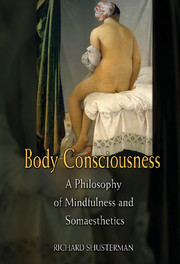
- Body ConsciousnessA Philosophy of Mindfulness and Somaesthetics, pp. ix - xviPublisher: Cambridge University PressPrint publication year: 2008
Accessibility standard: Unknown
Why this information is here
This section outlines the accessibility features of this content - including support for screen readers, full keyboard navigation and high-contrast display options. This may not be relevant for you.Accessibility Information
Accessibility compliance for the PDF of this chapter is currently unknown
and may be updated in the future.