


Nutrition is a key element in geriatric health, and nutritional screening/assessment is a key component in comprehensive geriatric evaluation. Timely screening can help detect early signs of nutritional imbalance and enable intervention to prevent emerging nutritional problems. The Mini Nutritional Assessment (MNA) is one of the most widely used and studied nutrition screening/assessment tools. It was developed and validated with clinical data of patients in Europe and USA in the 1990s for grading the nutritional risk of older adults in Western countries(Reference Guigoz, Vellas, Garry, Vellas, Guigoz, Garry and Albarede1–Reference Vellas, Villars and Abellan3). Although the tool has been used to assess the nutritional status of non-Caucasian elderly such as the Japanese(Reference Kuzuya, Kanda and Koike4, Reference Izawa, Kuzuya and Okada5), for the best results, it should be modified according to population-specific cultural and anthropometric features in order to maintain content equivalency of the tool whenever it is applied to a population different from that for which it was designed(Reference Chumlea6, Reference Chumlea7).
For this reason, we have modified the MNA according to Taiwanese dietary habits and anthropometric features(Reference Tsai, Ho and Chang8–Reference Tsai, Lu and Chang12). Due to differences in dietary habit, we have slightly altered the questions dealing with protein intake by emphasising more on the frequency of consumption rather than number of servings. We have also adopted the Taiwanese-specific anthropometric cut-points which were derived from a dataset of a study representing Taiwanese aged 65 years or older(Reference Tsai, Ho and Chang8). A version with these modifications (called MNA-Taiwan version-1, MNA-T1) has been shown to improve the ability of the tool in grading the nutritional status and predicting the follow-up mortality risk of the Taiwanese elderly(Reference Tsai and Ku13).
Because of the difficulty in correctly measuring weight and height of frail elderly and also our belief that mid-arm circumference (MAC) and calf circumference (CC) are better indicators of health status than BMI for older elderly, we have also attempted to test a modified scale without involving BMI(Reference Tsai, Ku and Tsai14). We displaced BMI from the scale and redistributed the assigned BMI score (3 points) to MAC and CC (1 point to MAC and 2 to CC) to create a new version called the MNA-Taiwan version-2 (MNA-T2). The rationale for the modifications was based on the fact that MAC and CC, in addition to reflecting subcutaneous body fat, also reflect lean body mass and functional status(Reference Tsai, Ku and Tsai14), and thus can reflect overall functional status better than BMI(Reference Luchsinger, Lee and Carrasquillo15, Reference Reid, Naumova and Cararello16). The reassigning of the score was also based on the consideration that CC reflects functional status better than MAC except during the very late stage of functional decline(Reference Chumlea7). This modified version has been shown to at least maintain and in many cases improve the predictive ability of the scale in elderly residing in the community, care centres and nursing homes, as well as in patients with mental disorders or on haemodialysis(Reference Tsai, Ho and Chang9–Reference Tsai, Lu and Chang12). Although results from all these studies suggest that MAC and CC can substitute BMI in the scale without compromising the grading ability of the scale, the predictive ability of these two modified tools has yet to be tested with a more robust standard.
In developing nutrition assessment tools, we are always confronted with the difficulty of selecting a universally accepted ‘gold standard’ for validating a tool. Long-term survivability, although not a ‘gold standard’, can most probably be considered a robust standard. Thus, in the present study we attempted to use this indicator to validate the grading ability of the two modified versions of the MNA, MNA-T1 and MNA-T2.
Methods
Data of the present study were from the ‘Survey of Health and Living Status of the Elderly in Taiwan’ (SHLSET), a population-based longitudinal cohort study initiated in 1989 aimed to gain an understanding of the role of socio-economic, environmental, lifestyle and healthcare parameters on health, wellbeing and quality of life of older Taiwanese(17–Reference Chang and Hermalin19). Participants were selected originally from non-institutionalised citizens according to a multi-stage national probability sampling process. Subjects in the cohort were interviewed every 2–4 years for specific purposes. A total of five rounds of interviews (in 1989, 1993, 1996, 1999 and 2003) were completed between 1989 and 2003. Data up to the 2003 survey are available for research studies. All five surveys contained a core component but each contained additional components for specific purposes. The 1999 survey contained a special component for assessing the nutritional status and that was the basis for our choosing the 1999 dataset as baseline for the present investigation. The 2003 survey was the latest dataset available and thus served as the end-point of the present study.
In each survey, trained interviewers accompanied by local health workers conducted in-home, face-to-face interviews. If a participant was unable or unavailable to have an interview, a proxy respondent, usually a close relative or caregiver of the participant was interviewed. The 1999 survey involved all 4915 remaining participants in the cohort and the youngest was aged 53 years. Of the 4915 participants, 4440 were successfully traced and interviewed for the 2003 survey(Reference Chang and Hermalin18, Reference Chang and Hermalin19). Although the original sample (in 1989) included only non-institutional individuals, by 1999 (baseline of the present study) some were living in long-term care facilities. The present study included all available (2802) participants who were aged 65 years or older in 1999. Mortality data were based on records maintained by the survey study, but also confirmed by records of the National Health Insurance Program, or the National Household Registration.
Baseline nutritional status of each subject was evaluated with the original (MNA-O) and two modified versions (MNA-T1 and MNA-T2) of the MNA. The MNA-T1 was essentially the same as the original version, except it adopted population-specific anthropometric cut-points(Reference Tsai, Ho and Chang9). The MNA-T2 omitted the BMI question and redistributed the weighted score of BMI to the MAC and CC items in the scale(Reference Tsai, Ku and Tsai14). The study also analysed self-reported number of falls, hospital length of stay, times stayed in long-term care institutions, functional status (Activities of Daily Living (ADL) scale(Reference Katz, Down and Cash20) (degree of dependency)), psychological stress (Center for Epidemiologic Studies Depression Scale (CES-D) score)(Reference Radloff21) and life satisfaction(Reference Diener, Emmons and Larsen22), both at baseline and end-point.
Spearman's correlation analysis was performed to determine the strength of the relationship between subjects' MNA scores and hospital length of stay, number of emergency visits and ADL status in 1999 and 2003. Cox regression analysis was performed to determine the significance of age- and sex-adjusted hazard ratios (relative mortality risks) among groups classified with various versions of the MNA. Age- and sex-adjusted survival curves were also shown to demonstrate differences in survival rates among these groups.
All statistical analyses were performed with SPSS (version 12.0; SPSS, Inc., Chicago, IL, USA). Statistical significance for all analyses was evaluated at α = 0·05.
The present study was conducted according to the guidelines laid down in the Declaration of Helsinki and all procedures involving human subjects were approved by government-appointed representatives. Written informed consent was obtained from all subjects. The anonymity of the subjects was preserved at all times.
Results
Table 1 shows the characteristics of subjects. Over half of the participants (59 % men and 54 % women) were aged 65–74 years; 35 % men and 39 % women were aged 75–84 years and the rest, 6 % men and 8 % women, were aged 85 years or older. The majority of participants (69 % of men and 92 % of women) had had 6 years or less of formal education. Approximately 37 % of men and only 4 % of women were current smokers and 36 % of men and 3 % of women were past smokers; 26 % of men and only 4 % of women drank alcohol one time or more per month; and 7 % of men and 1 % of women were current betel-nut chewers and about 5 % of men and 4 % of women were past chewers. Approximately 60 % of men and 48 % of women reportedly exercised at least three times per week; the rest two times or less per week. Roughly 15 % of men and 24 % of women had had a fall one or more times, 24 % of men and 19 % of women had had hospitalisation for ≥ 1 d, and 2·1 % of men and 1·4 % of women had stayed in care-homes during the past 12-month period.
Characteristics (% within sex) of subjects at baseline

* ≥ 30 min per session.
The patterns of nutritional status graded with the three versions of the MNA are shown in Table 2. Overall, the original MNA graded 2·9 % of men and 2·8 % women malnourished, and 15·1 % of men and 21·2 % women at risk of malnutrition; the MNA-T1 graded 2·3 and 1·7 % malnourished, and 12·0 and 15·6 % at risk; and the MNA-T2 graded 2·0 and 1·5 % malnourished and 12·3 and 14·8 % at risk for men and women, respectively. With Bonferroni correction, the patterns graded with the two modified versions were significantly different from that graded with the original MNA (both P < 0·001), whereas the distributions between the two modified versions were not significantly different from each other (Z = − 2·45; P>0·017). The proportions graded malnourished or at risk of malnutrition increased with age.
(Percentages)
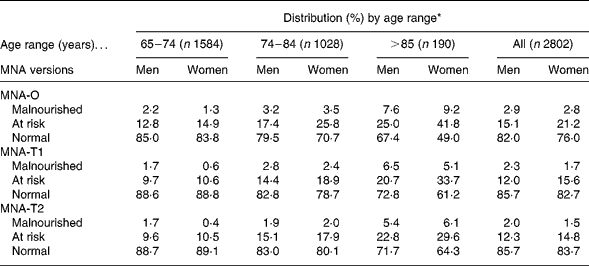
MNA-O, MNA Taiwan modified original version; MNA-T1, MNA Taiwan modified version-1; MTA-T2, MNA Taiwan modified version-2.
* Analyses with the Friedman test showed significant differences among the patterns predicted with the three versions in each age range group (all P < 0·001). Post hoc Wilcoxon signed-rank tests showed that the patterns predicted with the original MNA were significantly different from that predicted with the respective MNA-T1 (all P < 0·001) and MNA-T2 (all P < 0·001) whereas no differences were observed between the patterns predicted with MNA-T1 and MNA-T2 (all P>0·017) after Bonferroni correction.
The follow-up 4-year mortality rates were 70·9, 37·9 and 15·3 % for elderly rated malnourished, at risk of malnutrition and normal, respectively, according to the MNA-O; 73·7, 42·4 and 16·2 %, respectively, according to the MNA-T1; and 77·6, 43·5 and 16·2 %, respectively, according to the MNA-T2 (Table 3). For elderly graded malnourished, the mortality rate for the first follow-up year was high, nearly 37 % for the original scale, and 45·6 and 38·8 % for the two modified versions, respectively; the rate went down to about 20 % for the next 3 years. For individuals rated at risk of malnutrition, the follow-up year 1 mortality rates were 11·4, 12·8 and 15·1 % according to the three respective versions. The yearly rate stayed above 10 % for all three groups for the next 3 years. For individuals rated normal at baseline, mortality rates increased gradually, from slightly above 3 to 4–5 % during the next 4 years for all three versions.
(Number of subjects and percentages)

MNA-O, MNA Taiwan modified original version; MNA-T1, MNA Taiwan modified version-1; MTA-T2, MNA Taiwan modified version-2.
* Significantly different from the respective MNA-O group (χ2 test).
† n in category.
Table 4 shows the Spearman's correlation coefficients (r) of the MNA scores with the major health parameters evaluated at baseline (1999) and end-point (2003), respectively. The scores of all three versions of the MNA were significantly correlated with self-view health status, ADL score, CES-D score, life-satisfaction score and hospital length of stay in 1999 and 2003, respectively. The strengths of all correlations were stronger with all indicators examined in 1999 than in 2003. Also, among the three MNA versions, the MNA-T2 showed the strongest correlation with each of these health parameters, followed by the MNA-T1, and the least with the original version in both years.
Spearman's correlation coefficients (r) of the Mini-Nutritional Assessment (MNA) scores with health indicators at baseline (1999) and end-point (2003)
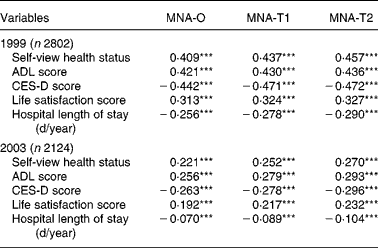
MNA-O, MNA Taiwan modified original version; MNA-T1, MNA Taiwan modified version-1; MTA-T2, MNA Taiwan modified version-2; ADL, Activities of Daily Living; CES-D, Center for Epidemiologic Studies Depression Scale.
*** P < 0·001.
Figure 1 shows the age- and sex-adjusted survival curves and Cox regression analysis of the relative mortality risk. The survival curves among the three predicted nutritional categories were significantly different from each other in all three versions. The relative mortality risk was approximately 7 times for those rated malnourished and 2·5 times for those rated at risk of malnutrition compared with those rated normal according to Cox regression analysis adjusted for age and sex.
Age- and sex-adjusted 4-year follow-up survival curves stratified by nutritional status graded with the original Mini-Nutritional Assessment (MNA) (a), MNA Taiwan modified version-1 (MNA-T1) (b) and MNA Taiwan modified version-2 (MNA-T2) (c), respectively. Cox regression analysis (adjusted for age and sex) showed significant differences in 4-year survival rates among the three groups in all versions (all P < 0·001). The hazard ratios (relative mortality risks) for normal, at-risk and malnourished elderly were: 1·0 (reference), 2·39 (95 % CI 1·99, 2·88) and 6·59 (95 % CI 4·94, 8·79), respectively, graded with the original MNA; 1·0, 2·55 (95 % CI 2·11, 3·08) and 6·40 (95 % CI 4·63, 8·85) graded with the MNA-T1 and 1·0, 2·66 (95 % CI 2·20, 3·21) and 6·79 (95 % CI 4·83, 9·53) graded with the MNA-T2.

Discussion
Results of the present population-based 4-year longitudinal study show that the MNA is effective not only in grading the nutritional status but also in predicting the long-term mortality risk of older Taiwanese adults. Elderly who were rated malnourished or at risk of malnutrition had greatly increased risk of follow-up death compared with those who were rated normal nutritionally. During the first year following the rating, the risk of death was about 15-fold for those who were rated malnourished and 4- to 5-fold for those who were rated at risk compared with those who were rated normal, according to the two modified versions.
Grading the nutritional status
The strength of relationships between the MNA scores with several key health indicators including self-view health status, ADL score, CES-D score, life-satisfaction score and hospital length of stay suggests that among the three MNA versions, the MNA-T2 is the most capable in reflecting the health status of an individual, followed by the MNA-T1 and then the original MNA. These relationships lasted, although got weaker, 4 years after the rating. The original MNA rated significantly greater proportions of subjects malnourished or at risk of malnutrition compared with the two modified versions (MNA-T1 or MNA-T2), whereas the two modified versions produced similar results. It is understandable that the original version would rate greater proportions of elderly malnourished or at risk of malnutrition because it was designed for Westerners who usually have higher anthropometric cut-points compared with Eastern Asians. By adopting the population-specific anthropometric cut-points, the MNA-T1 corrected the population-related anthropometric bias. The MNA-T2, which further substituted the BMI item with expanded scores of MAC and CC items, appeared to have further improved the grading ability of the tool.
A tool without BMI (thus requiring no weight and height measurements) is greatly needed for individuals in less developed countries where bathroom scales are not a common item. An attempt to construct a BMI-free nutritional assessment for the Chinese elderly was attempted by Woo et al. (Reference Woo, Chumlea and Sun23). Using the MNA as a guide, the group developed the Chinese Nutrition Screen (CNS) without involving any anthropometric indicators. However, perhaps because of the lack of anthropometric measures, the CNS had a moderate predictive ability, with an overall κ coefficient of 0·5 based on a two-level (normal or at risk of malnutrition) rating made by two physicians. The CNS can identify about 90 % of individuals considered normal but only about 60 % of individuals considered at risk of malnutrition.
Predicting survivability
The present study has demonstrated that the MNA-T2 is at least equal to and perhaps slightly better than the MNA-T1 in predicting 4-year follow-up mortality in this population-based sample. It suggests that the MNA, in addition to being effective in rating the nutritional status, is also effective in predicting long-term mortality risk of elderly in general. The ability of the MNA to predict mortality risk has been observed in a few smaller-scale or shorter-term studies(Reference Tsai, Ku and Tsai14, Reference Beck, Ovesen and Osler24, Reference Persson, Brismar and Katzarski25). Beck et al. (Reference Beck, Ovesen and Osler24) observed a mortality risk of 49 % v. 17 % for elderly at risk of malnutrition compared with those who were rated normal in the ‘Survey in Europe of Nutrition in the Elderly’ (SENECA) Study whereas Persson et al. (Reference Persson, Brismar and Katzarski25) observed a 40 % mortality risk in 1 year and 80 % in 3 years v. a mortality of 20 % in 1 year and 50 % in 3 years in eighty-three geriatric (aged 83 (SD 7) years) acute in-patients rated malnourished v. those who were well nourished. In an earlier study we have shown that the MNA-T1 is effective in predicting follow-up 6-month mortality risk in nursing home elderly(Reference Tsai, Ku and Tsai14).
Malnutrition increases the risk of mortality and is also an independent predictor of mortality in older adults(Reference Sullivan, Wall and Lipschitz26, Reference Robertson and Montagnini27). In older adults, undernutrition is closely tied to high mortality risk. Undernutrition weakens immunity and increases disease and mortality risk. On the other hand, morbidity and impaired mobility can aggravate the development of malnutrition, forming a vicious cycle. Thus, the ability to predict long-term mortality risk, perhaps, can be considered a robust test for validating a nutritional assessment tool.
Relationship of Mini Nutritional Assessment score with other indicators
The results of the present study also demonstrate a clear association of the graded nutritional status with several health-related indicators. The proportion of elderly malnourished and at risk of malnutrition increased with age. Results rated with the MNA-T2 were similar to those rated with the MNA-T1. It again suggests that the MNA-T2 is an acceptable alternative to the MNA-T1. CC and MAC can replace BMI in the scale without compromising the predictive ability of the tool.
The MNA-T1 rated 439 of 2802 individuals (15·7 %) undernourished (malnourished+at risk of malnutrition fractions). Among those rated as undernourished with the MNA-T1, 17·1 % (fifty-five out of 439) died within 1 year compared with 3·3 % (seventy-nine out of 2363) of subjects rated normal (17·8 and 3·3 %, respectively, according to the MNA-T2). These results suggest that the MNA would be of value in serving as a screening tool for health promotion purposes at the population level. It is possible to identify the18 % high-risk individuals that account for about 50 % of the total mortality risk. However, it should also be reminded that undernutrition is not the only risk of mortality in the elderly. Many other risk factors such as hypertension, type 2 diabetes, CHD, stroke, accidental injury or suicide are usually not associated with undernutrition. Other assessments would be needed to identify individuals having other types of risk.
The results of the present study again confirm the observation that the MNA not only is effective in predicting nutritional status, but can also predict general health status and the mortality risk of elderly. Elderly rated malnourished have a higher care-need(Reference Izawa, Kuzuya and Okada5). Together with other indicators, the MNA might become a powerful tool for evaluating the long-term care needs of frail elderly. Although the MNA in its long-form is named an assessment tool, it probably serves the best as a screening tool because the tool does not pinpoint the exact nutritional problems nor does it identify the causes. Comprehensive examination would be needed to determine the exact nutritional problems and the intervention strategies.
Limitation of the study
Although the study involved a relatively large population-representative sample of 2802 elderly subjects, it still could not adequately represent elderly with special health conditions such as kidney failure, impaired cognition or dementia. The low percentages of subjects aged older than 85 years (6–8 %) could also limit the generalisability of the results. The long-term survivability/mortality-predicting ability of the MNA was treated as a ‘gold-standard’ in the present study, but many deaths might not be related to malnourishment and thus could not be predicted with this tool.
Conclusion
Based on the ability of the MNA to predict long-term follow-up mortality risk and also the relationship of the MNA scores with ADL and hospital length of stay, both the MNA-T1 and -T2 have been shown to be effective in grading the nutritional status of older Taiwanese. The MNA-T2, a tool without BMI, is an acceptable alternative to the MNA-T1. It can be implemented more conveniently and efficiently and it can make periodic nutritional screening/assessment a more realistic goal in geriatric care.
Acknowledgements
The present study received no specific grant from any funding agency in the public, commercial or not-for-profit sectors. The authors wish to thank the Bureau of Health Promotion, Department of Health of Taiwan for providing the dataset for the present study.
A. C. T. designed and directed the study and was the main writer of the manuscript, S. F. Y. conducted the statistical analysis and J. Y. W. collated all statistical information.
All authors read, revised and approved the manuscript.
All authors declare that there is no conflict of interest of any kind involved in the present study.
Supplemental Appendix 1 is available online only at http://journals.cambridge.org/action/displayJournal?jid=bjn



