




Introduction
The ethnographic film Ongka's Big Moka (Nairn Reference Nairn1974) follows the titular character, a Kawelka Big Man in highland New Guinea, as he attempts to organise a large-scale ceremony called a moka. Browbeating kin and countrymen, Ongka finally manages to assemble enough pigs, cash and other valuables to host a moka. But just as things seem to be going as planned, a big man in another village dies and one of Ongka's rivals spreads a rumour that sorcery was at work. The mood is upset; the moka and Ongka's glory, postponed.
Ongka's Big Moka is a reminder of how common the experience of failure is in human endeavours. Everyone fails. A lot. Individuals fail, as do institutions, governing bodies, settlements, states and societies. While we can debate endlessly what exactly constitutes failure, we nevertheless recognise it at scales ranging from discrete individual activities (e.g. making a pot, roasting a pig) through to long-term social trajectories (e.g. the evolution of political systems).
Given its mundanity and metaphysical complexity, it is surprising that archaeological theory has engaged little with failure—at least at certain scales. Archaeological and historical analysis has long dealt with ‘big-F’ failures, such as the fall of empires, social collapse and site abandonment. But if archaeologists are willing to consider failure at the macro scale, they are less inclined to consider the cultural and historical significance of ‘small-f’ failures. These include the micro-scale snafus that plague everyday life—breaking pots, losing personal adornments, or ruining a meal—as well as the meso-scale errors, such as poor settlement planning and architectural failures. Failed rituals, such as Ongka's moka, exist at this scale and are quite common; in fact, there is a rich body of ethnographic literature on this topic (e.g. Geertz Reference Geertz1957; Schieffelin Reference Schieffelin and Hüsken2007). Indeed, rituals might be expected to increase in intensity, frequency and risk of failure when societies are faced with larger-scale challenges, such as schisms or environmental degradation.
While archaeologists have occasionally taken these lessons to heart (e.g. Smith Reference Smith2015), there remains a significant theoretical and interpretative lacuna surrounding failure. In this article, we explore why it may be that archaeologists have traditionally eschewed failure as an explanatory device and how we might reinstate it in our explanatory frameworks. We maintain that failure, at all scales, is an essential feature of the human condition and including it in reconstructions of ancient societies is therefore imperative. Indeed, excluding small-f failure from the interpretative toolbox is tantamount to denying the humanity of past peoples. Moreover, we argue that a more self-conscious exploration of failure within archaeological interpretations can help us better understand social and historical processes.
Towards a definition of failure
For many phenomena (e.g. consciousness, culture, domestication), devising a watertight definition is deceptively difficult. Failure is no different. In the simplest case, we think of failure as an individual not achieving an intended outcome. But add in context and perspective and things become complicated. This is due to three inter-related factors: temporal framing, scale and intentionality.
Temporal framing—where we begin and end the narrative—determines how we identify failure. Ongka's moka is exemplary: after the filmmakers had left, Ongka was finally able to host his big moka (Nairn Reference Nairn1974). Perhaps, then, Ongka did not fail; he simply experienced a setback. It all depends on where one starts and ends the story. In a similar vein, the process of learning a craft often involves making mistakes along the way (Gómez Coutouly et al. Reference Gómez Coutouly, Gore, Holmes, Graf and Goebel2021). Hence, the archaeological discourse on education and childhood rarely uses the word ‘failure’, although we, as educators, know that not all mistakes are learned from.
Temporal framing also affects the evaluation of failure or success at larger scales. For example, some effects of agriculture (e.g. soil erosion, salinisation, overgrazing) are known to have led to the failure of the very systems agriculture initially promoted (Butzer Reference Butzer2012). It could be said in these cases that agricultural subsistence strategies were failures, despite supporting so-called complex societies, monument building and population growth. One can usually adjust the temporal framing that brackets a series of events to recast success as failure and vice versa.
Issues of scale refer to the size of the entity that fails and, therefore, the ultimate costs of an error. One can assess the success or failure of an individual performing a discrete task (e.g. knapping a blade), of a group performing a project (e.g. building a house), or of a community pursuing a long-term project (e.g. terracing). We refer to these as small-f failures. One can also think about failure at the level of a society, a species or an ecosystem—big-F failures. Failure at one scale does not necessarily preclude success at another, as the agriculture example above demonstrates. Moreover, as societies are not coherent entities, but rather composites full of contradictions, the success of the group and failure of the individual, or vice versa, are common. That parts of a social system can succeed while others fail is an issue explicitly raised by McAnany and Yoffee (Reference McAnany and Yoffee2010: 5–6) who urge researchers of social collapse to ask what collapses? After all, ritual traditions, language, foodways and the self-conscious expression of identity frequently persist well after the alleged collapse of civilisations (e.g. Maya, Assyrian; McAnany & Yoffee Reference McAnany and Yoffee2010). There is a large degree of ambiguity in the identification of failure. Hence, the sage-like protagonist of Bob Dylan's song ‘Love Minus Zero/No Limit’ (1965) “knows there's no success like failure /And that failure's no success at all”.
This point leads into the issue of intentionality. This is not the place to engage with the philosophy of intentionality and theory of mind or to enter into a discussion of the complexities of discerning intentionality in the archaeological record (Davis Reference Davis1992), but we must grapple with the common usage of the word ‘failure’ as a mismatch between intention and outcome. Relying on this definition runs into two issues: first, a mistake in the short term can lead to a success in the long term, as discussed above; and second, one must differentiate failure from misfortune, which is difficult to achieve in daily life, much less in the archaeological record. To return to Ongka's moka, one could argue that Ongka failed because he did not adequately account for his rival's ability to take advantage of current events; that he succeeded because he knew that, in the end, he would be able to throw his moka, despite present circumstances; or, that he did not fail because what happened was an externality, something not under his control and thus not his fault. Perspective is important here. We often ascribe intention to ourselves when things go our way and bad luck when they do not, and to our rivals the opposite.
In this vein, it is also important to consider—as Van Oyen (Reference Van Oyen2023) does in an examination of an abandoned wine-production facility in Tuscany during the first century AD—the risks associated with failure. Specifically, who can and who cannot afford to fail? Van Oyen points out that it is often a privilege to be able to raise one's expectations, assume risk, and absorb the costs of failure. It takes a degree of success or inherited privilege to fail. If intentionality is implied by failure, then it also (often) implies power.
Joyce (Reference Joyce, Bille and Sorensen2016) discusses another issue with intentionality: it is difficult to ascribe failure to discrete intentions when applied at the extra-individual scale, the scale at which many cultural processes take place. Joyce examines failure in the context of an episode of nuclear waste contamination in New Mexico in 2014, noting how a series of events led to the accidental purchase of the wrong kind of cat litter. Traditional cat litters contain silicate minerals such as kaolinite and diatomaceous earth, which can absorb and stabilise liquid radioactive waste. However, at some point along the bureaucratic decision-making chain, the request for cat litter led to the purchase of organic cat litter, which did not contain those crucial minerals. The use of this cat litter subsequently precipitated the bursting of a containment drum.
In archaeological approaches, a definition of failure must therefore be flexible regarding the scales and questions at hand. It must recognise that temporal framing can always be adjusted to flip the script. And it must deal cautiously with intentionality or, perhaps, as Joyce (Reference Joyce, Bille and Sorensen2016) suggests, conceptualise a more distributed form of agency. In some cases, especially those of small-f failures, it may make sense to include intentionality. At larger scales (e.g. a state), intentionality becomes more of a hindrance, and one is probably better served by defining these failures as not persisting, not performing, or losing efficacy.
Why do archaeologists not like the f-word?
The archaeological literature on big-F failure is extensive, but archaeologists seem less willing to confront failure at the smaller end of the scale. This is odd since we are regularly faced with kiln wasters, poorly made lithics, shoddy construction and other testaments to the slip-ups of past peoples. While it is true that errors sometimes become the subject of discussion, archaeologists often play with temporal framing, scale, intentionality, or even the subject of an action, as if to soften the blow. For example, Olausson (Reference Olausson2008) argues that the inability of most people to master complex lithic techniques could lead to a situation in which those who do master them can garner prestige. Rather than multiple, widespread failures, the technical ineptitude of the majority becomes the backdrop against which success emerges. Similarly, work on the archaeology of apprenticeship treats poorly made artefacts as representative of the learning process (e.g. Wendrich Reference Wendrich2013; Rivero Reference Rivero2016; Gómez Coutouly et al. Reference Gómez Coutouly, Gore, Holmes, Graf and Goebel2021). Thus, widening the temporal framework, failure is recast as a stepping stone to success.
Other archaeological interpretative tendencies conspire against the recognition of failure. One is the assumption that culture is adaptive. While we agree that culture is adaptive in the broadest sense of the term, a simplistic adaptationist perspective that assumes optimality at every turn leaves little room for failure. Another problem is posed by the concept of agency, which initially offered a theoretical framework to assess the interplay between individuals and societies (Dobres & Robb Reference Dobres and Robb2000). Agency theory does not prohibit the identification of failure, but some archaeological applications devolve into celebrations of individuality, treating the archaeological record as a landscape cratered with the triumphs of rational actors (Patterson Reference Patterson2005). Reduced to methodological individualism, simplistic approaches to agency theory leave little room to admit error. Again, this need not be the case; indeed, more sober agency-based approaches view social structures as restricting the actions of individuals who tend, inescapably, to fail (e.g. Gardner Reference Gardner2016).
Cultural relativism presents another obstacle. Consider, for example, Lemonnier's (Reference Lemonnier2002) contention that technology is primarily social. What appears as a poor choice from a utilitarian standpoint may make sense within its cultural context. We certainly agree that this is often the case. But taken too far, the argument risks condemning archaeological explanation to a logical tautology: one cannot detect failure because one assumes there is a socially meaningful reason for what appears faulty. Anyone who argues that a certain form of house construction or pot manufacture was a failure is vulnerable to accusations of technological determinism, ignorance of the cultural system, or even Eurocentrism (e.g. Blanco-González Reference Blanco-González2015).
And then there is that ‘old chestnut’, ritual.
What is it about ritual that is mysterious or inaccessible, and what is accessible about behaviors we consider nonritual? These two sets of assumptions create circular arguments about ritual and material culture. If it is odd, it must be ritual; ritual is mysterious, so mysterious things are ritual (Gazin-Schwartz Reference Gazin-Schwartz2001: 267).
Unfortunately, while researchers have laid out clear criteria for the identification of ritual deposits to avoid such interpretative abuse (e.g. Gazin-Schwartz Reference Gazin-Schwartz2001; Fogelin Reference Fogelin2007; Swenson Reference Swenson2015), archaeologists often do not employ them. Human error is expected to produce things and behaviours that are, practically speaking, unexpected. But if the unexpected is presumed to be ritual, then even the biggest blunders go unnoticed.
Discussion: let them fail
Archaeologists hesitate in the face of failure, especially of the small-f variety. To cite one example, a few years ago various news outlets (e.g. Lewis Reference Lewis2016; Stankiewicz Reference Stankiewicz2016) reported that excavators in Denmark had unearthed an intact Bronze Age ceramic vessel containing heavily charred remains. The researchers concluded that the pot represented a failed attempt at making cheese, which led its owner to throw out the pot rather than attempt to clean it. Despite the media attention, it is notable that (to our knowledge) this finding has yet to be published in a peer-reviewed venue. While there are many possible reasons why a study does not make it into print, or may take several years to do so, we cannot help but wonder if the lack of publication, in this case, reflects the bias against failure in archaeological interpretation. A more pertinent question is, why is it so difficult to draw examples of small-f failure from the literature? Surely, the material record must be full of other examples similar to the Danish cheese meltdown. If we are surrounded by the material record of failures today, why are we so reluctant to imagine them in the past?
Historians shine a light in this darkness. Ancient texts provide some of the most obvious examples of mistakes in the past, even occasionally showing evidence of corrections in the form of marginalia or scraping of manuscripts. One example is CBS 8536, a Babylonian mathematical cuneiform tablet dating to the second millennium BC (Lutz Reference Lutz1920). The tablet lists pairs of sexagesimal numbers: the first a sequence of increasing numbers (1, 2, 3,…), the second the product or quotient of the first and another number. It contains a few errors (Figure 1). For example, column 1, line 16 reads: igi 28 | 2 13 20. That is: “[60 divided by] 28 equals 2 + 13/60 + 20/3600”. Those following along with a calculator will immediately spot the problem: the equation is false. Sixty divided by 28 is 2  ${1 \over 7}$ (or 2.142857…), which can be approximated as.“igi 28 | 2 8 34” (i.e. 60/28 = 2 + 8/60 + 34/3600). Alternatively, 60/27 = 2 ${2 \over 9}$ (or 2.222222…), which is exactly 2 + 13/60 + 20/3600. Thus, another correct formula, favoured by Lutz (Reference Lutz1920: 251) in his translation of the tablet, is “igi 27 | 2 13 20”. We can easily see how such a mistake may have been made. In cuneiform numerals, 27 is written by placing two ten-signs alongside seven one-signs. The scribe, in their haste to produce a long table of quotients, simply impressed one one-sign too many.
Extract from a Babylonian mathematical tablet (CBS 8536) showing errors. The first column reads “igi n”, which roughly translates as “the reciprocal of n is…” and means, in sexagesimal terms, 60/n. The cuneiform “igi” is highlighted in purple to distinguish it from the numerical notation. The second column shows the quotient. Lines highlighted in red indicate errors. Redrawn after Lutz (Reference Lutz1920).

One wonders about the ramifications of this failure. If the scribe were a student, they risked corporal punishment—in Bronze Age Mesopotamia, beatings were the punishment for failure in the classroom (Kramer Reference Kramer1949: 205). But if the tablet were used, say, for drawing plans for a building or doling out grain to dependents, there may have been more wide-reaching effects. One can imagine the Bronze Age equivalent to the 1999 Mars Climate Orbiter fiasco, when the simple failure to convert from the imperial to the metric system (pounds to Newtons) led to the loss of NASA's $125m spacecraft (Pollack Reference Pollack1999).
How can we build failure into archaeological theory without the crutch of historical texts? We recognise that failure is often in the eye of the beholder, that it is subject to issues of scale and temporal framing, and that identifying failure depends to some extent on grappling with intentionality. These philosophical roadblocks notwithstanding, there is a path forward. We must remember that what we call big-F failures are already well integrated into archaeological theory via the abundant literature on ‘collapse’. Perhaps the most effective way to account for small-f failure in archaeological theory is to insert it more actively into ‘trowel's edge’ interpretations. This means taking seriously the possibility that walls to nowhere and poorly built structures reflect not, as we may hope, socially meaningful constructions, but rather human error or plans that never came to fruition. Such an approach may lead to more valuable conclusions about larger-scale social processes.
Among the Late Bronze Age remains at Ashkelon (c. 1500–1150 BC), for example, is a disconnected 15m-long wall, built with mud bricks conforming to Egyptian royal cubit units, neatly stacked as alternating ‘heads and stretchers’. On discovery, only three courses remained standing and nothing resembling occupation floors could be associated with the wall. Some mud bricks were eroded but there was little evidence for destruction anywhere throughout the layer. In light of these findings, the excavators suggested that the wall was an incomplete feature of a planned garrison building, construction of which may have started after pharaoh Merneptah's conquest of the city around 1208 BC (Stager et al. Reference Stager, Schloen, Master, Press, Aja, Stager, Schloen and Master2008: 256–8). Egypt maintained hegemony of the region for only some 25 years. The small-f failure to complete the building thus provides material evidence for the big-F failure of Egyptian dominance in the southern Levant at the end of the Late Bronze Age.
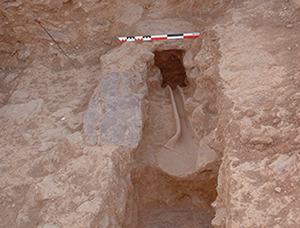
Taking stock of failure in the archaeological record presents the opportunity to understand social and historical problems in new ways and to evaluate different historical narratives. A good example concerns the spread of Minoan influence across the Aegean throughout the second millennium BC. Initially perceived as a forceful expansion of Minoan culture and the installation of local sympathisers (‘Minoan thalassocracy’), more recent scholarship has focused on how local populations borrowed and emulated Minoan styles for specific purposes (Broodbank Reference Broodbank2004; Knappett Reference Knappett2018). Attention to small-f failure can help to define these processes and, while it may be difficult to understand whether the deployment of certain symbols was effective or not, archaeologists can assess the success or failure of functional material culture. Thus, Cunningham (Reference Cunningham, Letesson and Knappet2017) highlights a series of errors in the construction of buildings at the Cretan site of Palaikastro, chief among them the drainage system of a domestic structure (SE Building of Block M). The base of the drain comprised close-fitting ashlar stones covered with worked stone slabs, but the incline leading to the street drainage system was too steep (the slope is 1/12; modern plumbers aim for a gentler 1/48 gradient) and likely caused damage (Cunningham Reference Cunningham, Letesson and Knappet2017: 38). The drain was later fitted with a terracotta channel to correct the problem (Figure 2). This example represents a small-f failure to replicate the renowned Minoan sewage systems found at Knossos and other places—even at smaller villages such as Hagia Traidh, where Minoan sewer systems were still functional in the early twentieth century (Angelakis et al. Reference Angelakis, Kayoulaki, Dialynas, Angelakis and Rose2014). Palaikastro shows that the adoption of drainage systems across the Minoan world depended on local interpretations and a trial-and-error approach.
Failed drainage system in a domestic structure (SE Building of Block M) at Palaikastro, Crete (photograph reproduced with permission of Jan Driessen and Tim Cunningham).

In fact, architectural mistakes are evident at the SW Building of the same Palaikastro block as well. Cunningham (Reference Cunningham, Letesson and Knappet2017: 40-42) notes that several rooms were remodelled, probably as a result of water damage, and converted to serve other purposes. Elsewhere, soft and brittle stone was used for flooring even though it quickly eroded and broke apart. Given the unique style and design of Block M at Palaikastro, several scholars have suggested a connection to or influence by Knossos. As these architectural features were short-lived and never renewed, Cunningham suggests a scenario in which local elites (or those emulating them) attempted to create visually stunning architecture, but ended up failing to achieve structural soundness.
Conclusions
Failures at the micro- and meso-scale are often the result of poor decision-making, screw-ups, and rank incompetence. Despite the mundaneness of such failings, in our experience, archaeologists tend to avoid discussing such quintessentially human shortcomings. Perhaps archaeologists simply wish to give people from another, temporally distant culture the benefit of the doubt. But we suspect a more salient, if base, reason: archaeologists want to imagine themselves digging sites once occupied by competent individuals, uncovering the achievements of skilled minds and hands, not the remains of fools. Yet at best, we argue, such sentiments promote a naïve perspective on human nature and, at worst, betray archaeologists’ susceptibility to an awed worship of the past.
Keeping an eye out for failure means daring to think pessimistically (or realistically) about the past and eschewing the temptation to idealise it. In doing so, we have the potential to explore more facets of the human condition and better understand large-scale social processes, such as the spread of styles and technologies. Above all, reimagining failure in the archaeological record means granting our past subjects an essential component of their humanity. In the words of Alexander Pope, to err is human. It is time we extended such humanity to the past.
Acknowledgements
We thank Bridget Alex, Jeffrey Dobereiner, Noa Corcoran-Todd and Ari Caramanica for fruitful discussions. Thanks also to Ilaria Patania and Ido Koch and the comments provided by two anonymous reviewers. We happily own up to any mistakes.


 Open access

