



Fruits and vegetables (F&V) are essential components of a healthy diet to meet the requirements of growth, development and maintenance throughout one’s life cycle. Adequate daily intake of F&V has been associated with reduced risk for CVD( Reference Mikkila, Rasanen and Raitakari 1 – Reference Dauchet, Amouyel and Hercberg 3 ), stroke( Reference Bazzano, He and Ogden 4 ), type 2 diabetes( Reference Carter, Gray and Troughton 5 ) and certain types of cancer( Reference Maynard, Gunnell and Emmett 6 , Reference Papas, Giovannucci and Platz 7 ), all of which are major causes of mortality and morbidity in the Eastern Mediterranean Region (EMR)( Reference Brug, Tak and Te Velde 8 ). Also, increased intake of F&V promotes satiety, decreases energy intake and has been associated with better weight-related outcomes and successful weight-loss treatment for adolescents( Reference Nystrom, Schmitz and Perry 9 ).
The 2002 Joint FAO/WHO Expert Consultation on Diet, Nutrition and the Prevention of Chronic Diseases recommends a minimum of 400 g/d of F&V, an equivalent of ≥5 servings of F&V/d. The recommendation excludes potatoes and other starchy tubers( 10 ). As the protective role of F&V on non-communicable diseases (NCD) became well established, the World Health Organization (WHO)( 11 ) adopted an initiative in 2003 to promote their consumption and called to standardise their definitions to facilitate multi-national comparison. In 2004 the World Health Assembly adopted the Global Strategy on Diet, Physical Activity and Health, which aims to promote F&V consumption around the world and to assist member states in implementing national strategies emphasising the improvement of diet to reduce diseases and death associated with them( 12 ).
Though there is a trend for an increased global production of fifteen types of fruits and fifteen types of vegetables between 1998 and 2003( 13 ) and despite the evident benefits of adequate intake of F&V, multi-national Western dietary surveys indicate that most adolescents are not consuming the recommended amount of F&V( Reference Neumark-Sztainer, Story and Hannan 14 – Reference Vereecken, De Henauw and Maes 17 ). Longitudinal trends show that US adolescents decreased their daily intake of F&V along the spectrum of adolescence( Reference Larson, Neumark-Sztainer and Hannan 18 ). Only 9–14 % of Chinese adolescents (n 2977) consumed the minimum recommended daily intakes of F&V( Reference Zhang, Chen and Chen 19 ). Among Ghanaian adolescents, 56 % (n 1195) rarely ate fruits and 48 % rarely ate vegetables( Reference Doku, Koivusilta and Raisamo 20 ). Global School-based Student Health Survey (GSHS) data from seven developing African countries revealed that 77·5 % of adolescents (n 17 656) did not meet the daily recommended intake of F&V( Reference Peltzer and Pengpid 21 ).
To the best of the authors’ knowledge there is limited information available on the prevalence of F&V consumption among adolescents in EMR countries. EMR includes twenty-two diverse countries from two continents, Asia and Africa. Differences in risk behaviours, such as inadequate intake of F&V, have not been studied in the region. Also, potential factors associated with F&V consumption have not been well researched in the region.
The following were the objectives of this study( Reference Mikkila, Rasanen and Raitakari 1 ): to estimate differences in the proportion of 13–15-year-old adolescents who reported consuming F&V ≥5 times/d across eleven EMR countries based on GSHS data( Reference Mirmiran, Noori and Zavareh 2 ); and to explore potential within-country differences in the proportion of students taking F&V ≥5 times/d based on sex, age and BMI of the study sample.
Methods
Study data
The study is based on a large cross-section of school students from eleven countries in the EMR who participated in GSHS between 2005 and 2009. The GSHS is a collaborative surveillance project coordinated by WHO with the goal of helping countries measure and assess behavioural risk factors and protective factors among students aged 13–17 years( 22 , 23 ).
The GSHS is based on voluntary participation of nations. A two-staged cluster sampling standardised process is applied to produce representative country samples. First, schools are selected with probability proportional to sample size. Second, classes within schools are randomly selected. All students in the sampled classes are eligible to participate irrespective of age. Data are collected using a self-administered questionnaire. The questionnaire consists of ten sets of core questions that allow cross-country comparison, core-expanded questions and country-specific questions. Core sets address the leading causes of morbidity and mortality among children and adults worldwide. One of the core sets is ‘dietary behaviours’, which is the source of data for the current study. Questionnaires were translated into appropriate languages and pilot tested for comprehension. Students from selected classes completed the survey during one regular period using computer-scannable answer sheets. Additional details on GSHS methodology and study design are described elsewhere( 22 , 23 ).
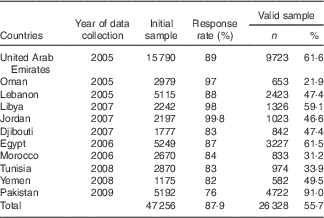
By the end of January 2012, there were only eleven publicly available country data sets( 23 ) from the EMR countries that undertook the GSHS, and these were included in this study. One country, Jordan, had data sets for 2 years, 2004 and 2007; only the latest set was included to minimise the gaps of years among countries. The remaining countries had only one data set. The collective sample from the eleven countries comprised 47 256 school students. A stepwise exclusion process was applied. Observations with missing response to the core questions of fruit or vegetable consumption were excluded. Next, students with missing age, sex, weight, or height were excluded as all of them were required to calculate the BMI. Finally, students aged <13 and >15 years were excluded as the objective of the study was to describe the F&V consumption patterns of schoolchildren aged 13–15 years. As a result, the valid study sample included 26 328 adolescents, 55·7 % of the initial sample.
BMI (weight (kg)/height (m2)) was calculated using the self-reported weight and height information. Age- and sex-specific z-scores for BMI of the study sample were calculated using the recommended 2007 Lamda Mu Sigma (LMS) method. BMI was classified thus: z-score cut-off values >+1 sd were considered overweight, z-score cut-off values +1 to −2 sd were considered normal weight, and z-score cut-off values <−2 sd were considered underweight( 24 , 25 ). Severe underweight and obesity were clustered with underweight and overweight, respectively.
Total country population and population of adolescents aged 13–15 years, by GSHS year of survey, were obtained from the World Bank. Data on annual production and on the export and import of F&V for the respective years of the GSHS were obtained using the agriculture item groups ‘fruit excl melons, total’ and ‘vegetables and melons, total’ from FAOSTAT at http://faostat.fao.org/site/291/default.aspx. The data were used to calculate the per capita availability of F&V of each country for the year of GSHS (Table 3).
Assessing the consumption of fruits and vegetables
The dietary behaviours core module in version 2003–2008 of the GSHS has five questions and that of version 2009–2012 has seven questions. Both versions have two identical questions on F&V consumption( 22 , 23 ):
-
∙ during the past 30 days, how many times per day did you usually eat fruit, and
-
∙ during the past 30 days, how many times per day did you usually eat vegetables?
Both questions were based on seven response categories ranging from I did not eat, to <1 time/d, 1 time/d, 2 times/d, 3 times/d, 4 times/d to ≥5 times/d. Country-specific examples of fruits and vegetables were referenced in both questions( 10 ).
The recommended daily intake of F&V based on the Joint FAO/WHO Expert Consultation on Diet, Nutrition and the Prevention of Chronic Diseases is a minimum of 400 g of F&V/d (excluding potatoes and other starchy tubers): an equivalent of ≥5 servings/d. However, the two questions in the GSHS noted above only provide frequency of intake rather than servings per day. The per day frequency of intake of F&V does not represent the actual servings, whereas the term serving/day implies both frequency and quantity of intake. For the purpose of this study, and because GSHS data provide only frequency of daily intake of F&V with no reference to portion sizes, consumption of F&V ≥5 times/d was used as a general and proxy cut-off measure for adequate intake of F&V.
Statistical analyses
The χ 2 statistic was employed to investigate whether the sample proportions with reference to ‘adequate F&V consumption among adolescents’ (≥5 servings/d) differ significantly across countries. A P value <0·05 was considered statistically significant. Then, the Marascuilo procedure( Reference Marascuilo 26 ) was used to identify the proportions that differ significantly by comparing all possible pairs of proportions; results are presented in Table 4. Also, the χ 2 statistic was employed to investigate within-country differences in the proportion of adolescents consuming F&V ≥5 times/d based on age, sex and BMI groups (Table 5). Statistical analyses were conducted using Microsoft Excel and SPSS 19.
Results
The overall initial response rate of the GSHS in the eleven EMR countries was 87·9 %. The largest response rate was from Jordan (99·8 %) and the lowest was from Pakistan (76 %). The final valid study sample after all exclusions was 26 328 (55·7 %) of the total initial sample (Table 1). The characteristics of the study population before and after exclusion are shown in Table 2. There are more male adolescents (55 %) than there are female adolescents in the valid sample. The majority of students (66·9 %) fall within the normal-weight BMI. On the basis of the gross national incomes (GNI) of the year of data collection, seven of the countries were classified in either the low-income or the lower-middle-income category. Across the pooled sample, only 19·4 % of adolescents reported consuming F&V ≥5 times/d. Djibouti as a lower-middle-income country, with a low per capita availability of F&V (0·094 tonnes/year), had the highest reported prevalence of adolescents (40·4 %; n 842) eating F&V ≥5 times/d. Pakistan had the lowest per capita availability of F&V (0·068), as well as the lowest prevalence of adolescents consuming F&V ≥5 times/d (10·0 %, n 4722). It is interesting to note that Pakistan ranked second, after Egypt, in producing 1 192 330 tonnes and third in exporting F&V (912 873 tonnes); nevertheless, it ranked first in F&V imports and had the lowest per capita availability of F&V. The only high-income country, the United Arab Emirates, ranked second after Pakistan in imports of F&V had the highest per capita availability (0·409) (Table 3).
Global School-based Student Health Survey year of data collection, and initial and valid sample sizes of eleven Eastern Mediterranean Region countries (Numbers and percentages)
Characteristics of the study sample before and after exclusionFootnote * (Numbers and percentages)
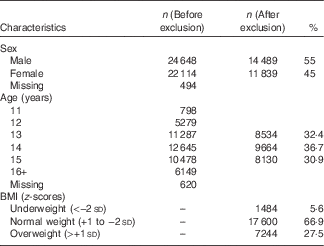
* n Before elimination for BMI was not calculated as the calculation for BMI according to z-score relies on critical points of sex and age. The exclusion of missing data on sex or age took place before BMI was calculated.
Gross national income (GNI), population and per capita availability of fruits and vegetables (F&V), and prevalence of consuming F&V ≥5 times/d in eleven Eastern Mediterranean Region countries based on Global School-based Student Health Survey (GSHS) year of data collection

* GNI per capita Atlas Method in current US dollars based by year of GSHS (http://data.worldbank.org/indicator/NY.GNP.PCAP.CD/countries?display=default).
There were a number of cross-country statistically significant differences in the prevalence of adolescents reporting consuming F&V ≥5 times/d. For instance, the prevalence in the United Arab Emirates was significantly lower (P<0·0001) than that of Oman, Lebanon, Jordan, Djibouti, Morocco and Tunisia. On the other hand, it was significantly higher (P<0·0001) than that of Libya and Pakistan. Pakistan had a significantly (P<0·0001) lower prevalence (10·0 %) of adolescents consuming F&V ≥5 times/d compared with the other countries, except Libya (Table 4).
Differences in prevalence of adolescents’ consumption of fruits and vegetables among eleven Eastern Mediterranean Region countries

For each country ‘i’, the number in the first row indicates the observed difference in sample proportions with country ‘j’, and the number in the second row indicates the corresponding P-values.
*Significant differences at P<0·05.
Comparisons of frequencies within age, sex and BMI categories are presented in Table 5. Overall, the proportion of students taking F&V ≥5 times/d tended to decrease as age increased: more 13- (n 1806) and 14-year-old (n 1836) adolescents reported consuming F&V ≥5 times/d compared with 15-year-old students (n 1470). When countries were examined separately, a similar trend was found in seven of the countries. However, in the case of Jordan, Djibouti and Morocco the proportions of teens consuming F&V ≥5 times/d increased with age, whereas it appeared to fluctuate in Pakistan, with more 14-year-old adolescents (n 215) meeting the cut-off intake frequency for F&V. For most of the countries, there are significant differences (P<0·0001) in the proportion of adolescents consuming F&V ≥5 times/d in the three age groups. Exceptions were seen in four countries – Oman, Libya, Morocco and Yemen – where the frequencies among the three age groups did not differ significantly (P<5 %). As for the sex factor, the total results show that more males (n 2972) than females (n 2140) reported intake of F&V ≥5 times/d; all countries showed a similar trend, except Libya. The differences in the proportions of males and females were significant (P<0·04−P<0·0001) in all countries but three – Oman, Libya and Djibouti. With respect to BMI, more adolescents with normal BMI (n 3346) compared with underweight (n 314) and overweight (n 1452) adolescents met the cut-off for adequate intake of F&V. The observed pattern is consistent and significant in all countries (P<0·0001).
Within-country differences in proportions of fruit and vegetable consumption by age, sex, and BMI

Discussion
It should be noted that the study only examined the prevalence of adequate consumption of F&V among adolescents using a proxy approach-based frequency of intake per day. The GSHS data on F&V consumption is based on reported daily frequency of intake with no reference to portion sizes. Thus, meeting the criterion of consuming F&V ≥5 times/d is not equivalent to consuming F&V ≥5 servings/d. Also, GSHS data are gathered by means of a self-reported questionnaire: a method that is subject to recall errors and under/overreporting( Reference De Vriendt, Huybrechts and Ottevaere 27 ). Nevertheless, the study is based on a large sample size from the GSHS that has a sound sampling process. Also, it included eleven EMR countries with diverse GNI and variable per capita availability of F&V.
The observed lack of trend in the relationship between adequate F&V consumption among adolescents and the GNI of the eleven EMR countries is not consistent with that reported among adults. On the basis of the Prospective Urban Rural Epidemiology study, a positive trend between healthy eating (including intake of higher amounts of F&V) and the gross domestic product (GDP) of countries has been noted; consumption of F&V increased with increased GDP( Reference Teo, Lear and Islam 28 ). In addition, the per capita availability of F&V in the eleven countries was not seen to be in synchrony with the patterns of the prevalence of consumption. This could be because of a lack of infrastructure of food supply chains for highly perishable commodities( 29 ). It is strategically important to understand the interrelated aspects of accessibility and affordability, and any other factors contributing to the consumption of F&V in these countries( Reference Rahim, Sibai and Khader 30 ). EMR countries could explore the available opportunities to expand the availability of F&V presented by Aid for Trade, which has a built-in venue to increase F&V supply( Reference Lachat, Otchere and Roberfroid 31 ).
As noted, only 19·4 % of adolescents in the eleven EMR countries met the cut-off value for F&V consumption. The findings lend concern about the inadequacy of F&V intake among adolescents in light of the association between F&V consumption and NCD diseases( Reference Mikkila, Rasanen and Raitakari 1 – Reference Papas, Giovannucci and Platz 7 ). Overall, the prevalence of taking F&V ≥5 times/d in the eleven EMR countries is comparable to that reported in other nations. Using the same cut-off for adequate F&V, only 22·3 % of American adolescents in the Youth Risk Behavior Surveillance (YRBS)-2009 study were found to consume an adequate amount of F&V per day( Reference Eaton, Kann and Kinchen 32 ). In Brazil, only 23 % of the teens consumed five F&V a day( Reference Rieth, Moreira and Fuchs 33 ).
Intake of F&V in other countries within the EMR is even lower. Although not included in the present study, Kuwaiti male and female adolescents were reported to consume more vegetables (3·8 v. 3·5 times/week) and fruits (3·4 v. 2·8 times/week). The prevalence of F&V intake ≥7 times/week was reported by 26 % of males v. 22·1 % of females for vegetables and by 17·5 % of males v. 11·8 % of females for fruits( Reference Allafi, Al-Haifi and Al-Fayez 34 ). The weekly mean frequency is extremely low, indicating even a lower daily and therefore inadequate intake in this group. It is interesting to note that the intake frequency of vegetables is much higher than that of fruits in Kuwaiti adolescents. This could be attributed to not excluding potatoes in such types of studies. In Australian adolescents, the prevalence of adequate intake of both F&V decreased substantially when juices and potatoes were excluded( 35 ). Variations in assessment approaches should be accounted for when comparing results.
The propensity for more males reporting intake of F&V ≥5 times/d seen in the current study is also similar to that of adolescents in the USA, where more males (23·9 %) consumed adequate F&V compared with females (20·5 %) in the YRBS-2009 study( Reference Eaton, Kann and Kinchen 32 ). Australian male adolescents had slightly higher intake compared with females (based on ≥1–3 and ≥2–4 servings/d of F&V, respectively)( 35 ). Kuwaiti male teens were also reported to have a significantly higher mean weekly intake frequency of vegetables (P=0·02) and fruits (P=0·001) compared with female teens( Reference Allafi, Al-Haifi and Al-Fayez 34 ). Nevertheless, the consumption of F&V among female adolescents in other nations including Palestine( Reference Al Sabbah, Vereecken and Kolsteren 36 ), USA( Reference Neumark-Sztainer, Story and Hannan 14 ) and Norway( Reference Bere, Brug and Klepp 37 ) was reported to be higher, with different criteria used for assessing adequate F&V intake.
Decreased intake with increased age seen in the eleven EMR countries is also reported among adolescents in other areas including the USA( Reference Larson, Neumark-Sztainer and Hannan 18 , Reference Eaton, Kann and Kinchen 32 ) and Australia( 35 ). The adverse relationship between F&V intake and age has been shown to start from early adolescence( Reference Di Noia and Contento 38 ) and may persist into late adolescence and adulthood( Reference Mikkila, Rasanen and Raitakari 1 , Reference Neumark-Sztainer, Story and Hannan 14 , Reference Hall, Moore, Harper and Lynch 39 ). Several factors could be behind the decreased tendency of consuming adequate F&V in this cycle of life. As age increases, there is a lower preference towards F&V and a lower frequency of family dinners( Reference Granner, Sargent and Calderon 40 ). The observed trend with BMI in this regional study is also in line with that seen among seventh-grade adolescents from the Teens Eating for Energy and Nutrition at School (TEENS) study and might be related to perceptions about weight. Boys and girls perceiving being underweight ate significantly fewer servings of F&V per day than those perceiving to be in the normal-weight group. Also, boys and girls perceiving being overweight consumed significantly fewer servings of F&V per day than those having normal weight( Reference Nystrom, Schmitz and Perry 9 ). Among 11-year-old Greek children, BMI did not associate with F&V intake significantly( Reference Koui and Jago 41 ). Similar to what is noted in the current study was reported in a large sample (n 246 995) of middle-aged Australian men and women. Compared with the overweight group, normal-weight men were more likely to be in the highest vegetables, fruits and combined F&V intake quartiles and were less likely to have 5 servings of F&V/d( Reference Charlton, Kowal and Soriano 42 ). An increased intake of F&V may promote BMI reduction among adolescents( Reference Hart, Jelalian and Raynor 43 ) and may be an effective dietary strategy to control weight and reduce the risk for obesity. However, a study on the association between F&V intake and a change in BMI did not show a beneficial effect, and thus it was suggested that F&V recommendations should not be based on a beneficial effect on weight regulation( Reference Field, Gillman and Rosner 44 ).
Aside from age, sex and BMI, correlates of F&V intake among adolescents might be variable and interrelated. Less is known about the socioeconomic, cultural, psychosocial and environmental determinants of the consumption of F&V among adolescents in the EMR. Findings from the project EAT interdicted that home availability explained 45 % and test preference explained 28 % of the variances in F&V intake among adolescents( Reference Neumark-Sztainer, Wall and Perry 45 ). Self-efficacy, parent and peer modelling, family and peer normative beliefs, and social and health outcome expectations were found to be correlated with F&V intake among adolescents( Reference Granner and Evans 46 ), whereas the socio-environmental factors related to school environment were availability and accessibility of F&V, nutrition education and food safety( Reference Neumark-Sztainer, Story and Hannan 14 , Reference Nago, Verstraeten and Lachat 47 ). Such factors have not been evaluated, and further studies are warranted to explore the inter-association among them and intake of F&V in the EMR countries.
Interpretation of results from studies assessing adequate intake of F&V needs to be carried out in a careful manner. It is clear that consumption of French fries and juices is popular among adolescents, and could inflate the estimated reported intake. The mean vegetable servings for American female adolescents decreased from 2 (sd 1·6) to 1·8 (sd 1·6) servings/d and that for male adolescents dropped from 1·8 (sd 1·6) to 1·6 (sd 1·5) servings/d when French fries were excluded( Reference Neumark-Sztainer, Story and Hannan 14 ). The proportion of Australian children aged 9–16 years consuming ≥2–4 servings/d of vegetables decreased from 19 to only 2 % when potatoes were excluded. Likewise the proportion of children reported consuming ≥1–3 servings/d of fruits declined from 90 to 51 % after exclusion of fruit juices among 9–13-year-old children, and declined from 24 to 1 % among 14–16-year-old adolescents( 35 ). It is worth noting that the definition of fruit juice is distorted among the general public and might not mean 100 % juice but fruit drinks, with mass-processed products falling under juices. Thus, while a product might contain no more than 30 % juice concentrate by volume, the public perceives such products as fruit juices. Therefore, studies should carefully consider these aspects that might inflate the actual intake of F&V.
Adolescence is characterised by rapid growth and increased nutrient needs; with that, it is an important time to intervene with F&V intake to meet nutrient needs and develop dietary patterns that may persist into adulthood. Efforts to increase F&V intake through promotion initiatives have been proven effective( Reference Ammerman, Lindquist and Lohr 48 , Reference Knai, Pomerleau and Lock 49 ). WHO noted insufficient policy response and progress in curbing the burden of NCD; it has been and is calling countries to increase the action of NCD risk factors, including unhealthy diet, to reduce the preventable and avoidable burden of morbidity, mortality and disability due to NCD. A multi-sectoral collaboration and cooperation at national, regional and global levels is called by WHO for populations to reach the highest attainable standards of health and productivity at every age( 50 ).
The availability of policy documents for national NCD policies, programmes and action plans in low- and middle-income WHO member countries (n 140) is not clear. Only 47 % of such countries were found to have policy documents, but only a small fraction of them proposed actions to promote healthier diets and physical activity. National policy actions to improve F&V consumption were particularly low in low- and middle-income EMR countries; only three countries were reported to have such documents that target the general public. Djibouti, which has the highest prevalence of adolescents (40·4 %) taking F&V ≥5 times/d, has a document on a national policy action to promote family plantations and consumption of F&V. Jordan, ranked fifth among the eleven EMR countries in the prevalence of F&V intake (27·1 %), was found to have a national policy action to organise campaigns emphasising the importance of F&V. Policy action in Iran was to address poor dietary habits and promote the consumption of F&V( Reference Lachat, Otchere and Roberfroid 31 ). The impact of such action plans needs to be studied to understand their effectiveness, to share information, and to establish databases on best practices at national and regional levels to promote adequate intake of F&V. Other EMR countries should adapt policies aiming to increase F&V intake and prioritise action plans along such policies if a reduction in the low prevalence of F&V intake is desired to reduce the impact of such a modifiable risk factor associated with NCD.
The great majority of adolescents in the eleven EMR countries did not meet adequate F&V consumption levels based on the proxy of eating F&V ≥5 times/d. Interventions in EMR countries should be prioritised to increase the intake of F&V among adolescents. Adolescents are swamped with palatable low-dense nutrient foods. Understanding limitations would be strategically important if governments are to intervene in order to increase the prevalence of adequate F&V intake. Interventions should take into consideration the psychosocial, environmental and socio-environmental factors influencing F&V intake within countries. Further research is needed to identify effective interventions and policy approaches geared towards improving the availability and accessibility of F&V as well as increasing their consumption in EMR countries.
Acknowledgements
The authors would like to thank all our reviewers who have contributed to shaping this article.
This research received no specific grant from any funding agency, commercial or not-for-profit sectors.
The authors of this study have contributed as follows: M. F. A. A.: conceived the idea, formulated the research questions, helped in data extraction and coding, and contributed to writing the initial draft. L. K. A. S.: formulated the research questions, guided data processing, and wrote the final version of the article. S. B.: helped in data analyses, wrote the methods, and critically reviewed the article.
The authors declare that there are no conflicts of interest.



