



A diet high in fruits and vegetables (F&V) can protect against numerous diseases (e.g. diabetes, heart disease, cancer)( Reference Van Duyn and Pivonka 1 ). Inadequate consumption of F&V in the USA is well documented and is especially problematic among youth( Reference Kimmons, Gillespie and Seymour 2 ). Of further concern, youth of lower socio-economic status (SES) consume inadequate amounts of F&V compared with their higher-SES counterparts( Reference Hanson and Chen 3 ). Inadequate F&V consumption is largely due to the lack of accessibility and affordability, problems often seen in health-disparate and low-income areas, especially among blacks( Reference Hanson and Chen 3 ). Due to the low intake of F&V in youth from low-SES backgrounds, there is a need to promote F&V intake among this population.
One potential intervention approach to address insufficient F&V intake among youth from disadvantaged regions, and the focus of the present research, is the use of community gardens (CG). A CG is a shared gardening space and can provide food, physical and social benefits to participants( 4 ). CG have been implemented in various settings including schools, after-school programmes and places of worship in the USA and abroad( Reference Davis, Ventura and Cook 5 – Reference Somerset and Markwell 7 ). CG have been used to increase access to F&V and have demonstrated effectiveness in increasing F&V self-efficacy, preference and other theoretical constructs related to behaviour change( Reference Robinson-O’Brien, Story and Heim 8 , Reference Langellotto and Gupta 9 ). However, few published CG studies have focused on youth from low-SES backgrounds( Reference Robinson-O’Brien, Story and Heim 8 – Reference Williams and Dixon 10 ).
Community-based participatory research (CBPR) is defined as a collaborative research effort between researchers and community members to address the community’s needs( Reference Israel 11 ). The collaborative nature of CBPR may assist in reaching vulnerable populations and help to reduce health disparities within disadvantaged communities( Reference Horowitz, Colson and Hebert 12 – Reference O’Toole, Aaron and Chin 14 ). Despite these strengths, and as recently recognized in a seminal review, CBPR approaches have not been utilized in conjunction with CG efforts for youth( Reference Robinson-O’Brien, Story and Heim 8 ). The CG programme reported here was planned and implemented as part of a community–academic partnership, highlighting a key component of CBPR in which the community partners are involved in all phases of the research process, including problem assessment( Reference Minkler, Blackwell and Thompson 13 ).
Originating in 2009, the Dan River Partnership for a Healthy Community (DRPHC) is a community–academic partnership operating under CBPR principles. The DRPHC’s mission is ‘to foster community partnerships to combat obesity in the Dan River Region through healthy lifestyle initiatives’( 15 ). Detailed elsewhere, community stakeholders developed six causal models for obesity and identified CG as a priority initiative to address the nutrition causal model( Reference Zoellner, Motley and Wilkinson 16 ). To advance this identified priority, the DRPHC formed a nutrition subcommittee which included site leaders of housing authorities, religious leaders and congregation members with gardening or farming experience, extension agents with agricultural and nutrition expertise, and Virginia Tech researchers from the Department of Human Nutrition, Foods, and Exercise.
Given the interest in CG, the nutrition subcommittee initiated a series of regional garden forums and pilot projects targeting CG in the region( 15 ). The annual forums serve as an opportunity for community members to contribute new ideas for progression of the CG initiative and as a platform for dissemination of results to community members. The first pilot project was a mixed-methods study conducted in the summer of 2010. Results indicated that perceptions and interest of community members for participating in a CG were high and that children in the region would be interested in participating in a CG programme and eating food grown from a garden( Reference Zoellner, Zanko and Price 17 ).
Subsequently, a mixed-methods case study was conducted in 2011 to explore the potential public health impact of six CG that had been recently established in the Dan River Region( Reference Zanko, Hill and Estabrooks 18 ). These CG included two church-based, two school-based and two community-based gardens. These organizations were successful in securing local funding to support the initiative and start-up costs of their gardens( Reference Kelder, Perry and Klepp 19 ). Interviews and focus groups revealed that garden leaders and participants were enthusiastic about impacts of the CG, expressed interest in continuing to garden and requested educational programming to accompany the CG initiative. Yet the degree to which low-income persons and youth were being involved in the CG efforts was unclear. Additionally, although there was general consensus and enthusiasm for engaging youth in gardening combined with nutrition education, the coalition partners were unsure of the potential of such a programme to succeed. These results and concerns were discussed at the second annual CG forum and attendees expressed desire to implement a youth-based CG programme in the region.
Based on this progress, the next goal was to engage youth in regional CG efforts. At this point, the DRPHC had successfully secured funding to establish CG programmes in partnership with the regional public housing authority. Two sites within the housing authority that had active on-site youth programming were identified as partners for these efforts. Leaders from these two sites were already partners in the larger DRPHC and had been involved in the grant development process. Therefore, the objective of the summer 2012 project was to explore the feasibility of an experiential theory-based CG and nutrition education programme for youth living in public housing. Using Bowen and colleagues’ recommendations for designing a feasibility study, the present research reports on four focus areas, including demand, acceptability, implementation and limited-effectiveness testing( Reference Bowen, Kreuter and Spring 20 ).
Research methods
The present mixed-methods study was guided by recommendations for designing a feasibility study( Reference Bowen, Kreuter and Spring 20 ). Given the early stage of development of the youth CG programme, four focus areas were used to evaluate feasibility, including demand, acceptability, implementation and limited-effectiveness testing. The 10-week theory-based experiential education programme was implemented at the youth centres of two housing authorities between May and August of 2012. The study was conducted according to the guidelines laid down in the Declaration of Helsinki and all procedures involving human subjects/patients were approved by the Institutional Review Board at Virginia Tech. Parents provided written informed consent and youth provided oral assent prior to study activities.
Study area and participants
The Dan River Region is situated in south central Virginia and north central North Carolina. All counties in this region meet the medically underserved area/population classification, with high indices of poverty, low educational attainment and health disparities( 21 ). There are no regional data specific to the nutrition, health or well-being of youth. However, low-SES, rural and African-American populations in Virginia consistently experience higher mortality rates and poorer health status across a variety of outcomes when compared with higher-SES, urban and non-black Virginians( 22 ). Two public housing sites that were active members of the DRPHC and predominantly served families were targeted by this project. Internal census data from the two housing authority sites indicate that 97 % of housing residents were black, 85 % of the households were headed by single women, and more than 125 households had two or more children under the age of 14 years. Of these children, 45 % were male. Additionally, the income limit for public housing is <$US 17 500 annually per family.
Recruitment and participants
The partnering adult site leaders were familiar with youth and families at each location and had roles to engage youth in directed activities and distribute recruitment materials and flyers; in some instances, visiting families in their homes to provide programme information. Researchers also spent time at each site to inform potential participants about the programme. Using a community-friendly approach, eligibility criteria were broad. The only inclusion criteria were youth to be 5–17 years of age and both the youth and parent had to reside full-time at the housing authority.
Of the forty-three enrolled youth, the majority (n 42; 97·7 %) were African American. The mean age was 8·7 years and included twenty (46·5 %) males and twenty-three (53·5 %) females. BMI Z-scores indicated that the majority of youth were overweight (34·1 %) or obese (18·2 %). When compared with the internal housing authority census data, the enrolled youth were representative in terms of race and gender.
Programme development and delivery
The CG educational material was adapted from the Junior Master Gardener curriculum( Reference JMG 23 ), including changes to incorporate nutrition-focused lessons, to align more closely with the Social Cognitive Theory( Reference Bandura 24 ) and to address cultural relevance for the targeted youth (Table 1). One example of a modification for cultural relevance is the use of a popular line dance and song in place of the standard song for teaching proper hand washing during the Food Safety lesson. There are two versions of the Junior Master Gardener curriculum (i.e. level one for grades 3–5 and level two for grades 6–8). The level one curriculum was chosen for this pilot as it was intended for the younger age range. Lessons were chosen based on learning objectives, including providing experiential learning experiences in the garden and perceived ease of delivery by the researchers. To supplement the Junior Master Gardener curriculum with nutrition-focused content, publicly available information from the US Department of Agriculture’s MyPlate website( 25 ) was used. The Social Cognitive Theory focuses on how behaviours can be acquired and maintained through reciprocal determinism( Reference Bandura 26 ) (the interrelation between a person’s behaviour and his/her environment) and incorporates various constructs to promote behaviour changes such as knowledge, self-efficacy, outcome expectations, goal setting and reinforcement. This theory is commonly used for understanding and changing health behaviours( Reference Baranowski, Mendlein and Resnicow 27 ), is useful when working with youth to influence health behaviours( Reference Lytle and Achterberg 28 ) and may significantly promote improved dietary habits( Reference Resnicow, Davis-Hearn and Smith 29 ).
Curriculum overview corresponding to Social Cognitive Theory (SCT) constructs; gardening and nutrition education programme for youth living in public housing, Dan River Region of south-central Virginia, USA, 2012
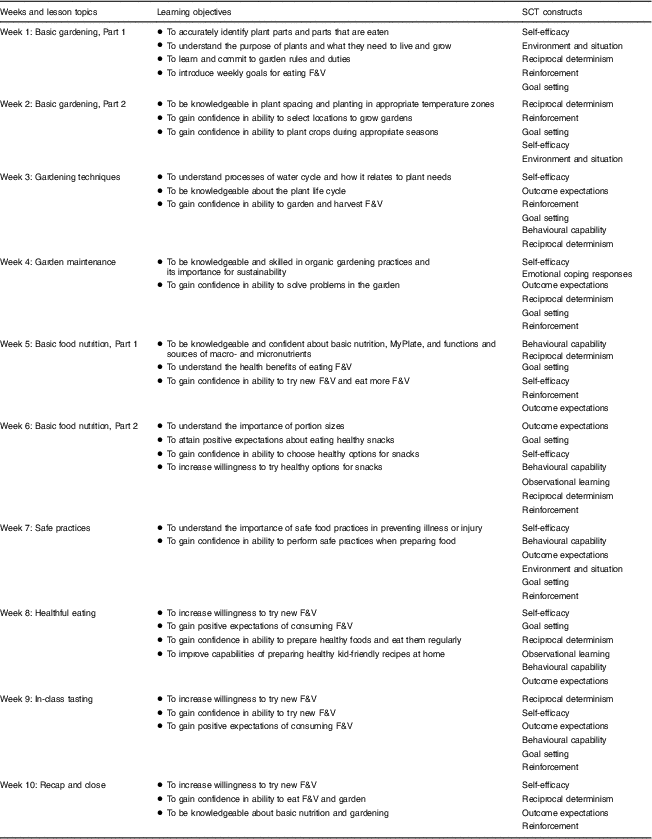
F&V, fruits and vegetables.
Each site had access to a garden. One site had established a garden in the previous year and had six to eight raised beds enclosed in a locked fenced area. The second site had not previously had a garden and had limited space to create one. Thus, three hanging pots and four large gardening containers were used. Researchers delivered the programme once weekly at both sites, providing approximately 60 min of interactive gardening or nutrition education and 30 min of hands-on gardening. Weeks 1–4 focused on gardening and weeks 5–9 focused on nutrition education. Week 10 featured a review of key concepts and a graduation ceremony. To increase participants’ engagement throughout the programme, two reward systems were created, one to promote meeting weekly goals (i.e. paper cut-outs of growing plant) and one to increase programme participation (i.e. star stickers for active participation). The programme was offered during regular operating hours at the youth centres at each site. The programme was intended for the youth enrolled; however, no restrictions were set for other residents. Thus, unenrolled youth and siblings and parents of enrolled children would often attend the lessons.
In addition to the housing authorities’ site leaders’ role in problem identification (e.g. identified CG as a regional priority initiative( Reference Zoellner, Motley and Wilkinson 16 , Reference Zoellner, Zanko and Price 17 ), collaboration in the nutrition subcommittee and grant funding, and recruitment of youth), they also assisted in the planning, initiation and maintenance of the gardens. Site leaders were provided with and trained to use a standard scale and log book to measure and record produce harvested from the garden. Site leaders were also informally instructed in basic garden maintenance techniques to be applied with the youth in during the days when the academic team was not present to deliver the programme. For example, the site leaders supervised the watering, weeding and harvest of the gardens during the programme. Due to timeline constraints with the grant and planning/training logistics, the site leaders were not directly involved in adaptation or delivery of the curriculum. However, the opportunity to more fully involve the site leaders in curriculum delivery was seen as a future goal, and site leaders were encouraged to and often attended the sessions as a training opportunity.
Feasibility measures
As illustrated in Table 2, measurement focused on four areas of feasibility including demand, acceptability, implementation and limited-effectiveness testing( Reference Bowen, Kreuter and Spring 20 ).
Target, measure and sample questions corresponding to feasibility areas of focus; gardening and nutrition education programme for youth living in public housing, Dan River Region of south-central Virginia, USA, 2012
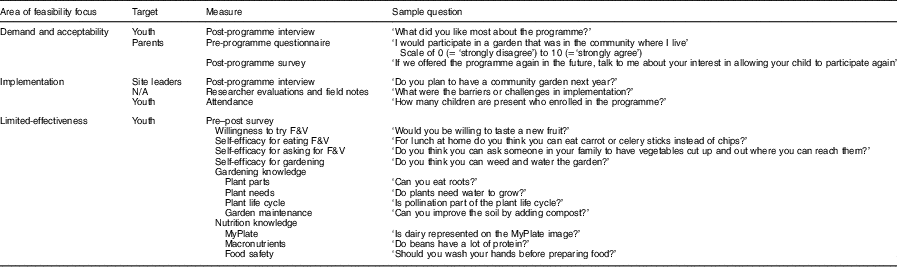
N/A, not applicable; F&V, fruits and vegetables.
Demand and acceptability
Demand examines the extent that a new programme will be used by the participants. Acceptability reflects the degree to which a programme is viewed as satisfactory by the participants. These constructs were measured in the youth, parents and site leaders. For the youth, post-programme interviews were conducted, including eight open-ended questions pertaining to enjoyment of the programme, perceived benefits of participating in the programme and suggestions for programme improvement. For the parents, twenty-nine pre-programme quantitative questions were asked, including beliefs about maintaining a garden, the expected benefits of working in a garden, confidence in participating in a garden and general interest in gardening. At post-programme, parents were asked to self-complete eight open-ended questions related to demand and acceptability. For the two site leaders, post-programme interviews included nine open-ended questions pertaining to recruitment experience, data collection perception, demands of continuing to provide a garden and use the curriculum, and perceived benefits or acceptability of the programme.
Implementation
Implementation is the degree to which a programme is delivered as intended. Implementation measures were completed by the three Virginia Tech researchers who delivered the programme to assess feasibility of implementation. Evaluations were completed after programme delivery, each week, at each site. Consensus among the three evaluators was achieved through discussion of the session. Three questions reflected the extent to which the lesson was delivered as intended and the barriers and facilitators to delivery. Additionally, field notes were used to document opportunities and challenges for curriculum implementation. Finally, weekly attendance records were used to measure the proportion of youth participating.
Limited-effectiveness testing
Limited-effectiveness refers to the potential of a programme to be successful while tested in a limited way; in this case, low statistical power. Limited-effectiveness was tested using measures that were assessed at baseline and follow-up. All data collectors were trained according to a standardized protocol. Interview-administered surveys included previously validated measures (i.e. willingness to try F&V( Reference Thomson, McCabe-Sellers and Strickland 30 ), self-efficacy for eating F&V( Reference Geller, Dzewaltowski and Rosenkranz 31 ), self-efficacy for asking for F&V( Reference Domel, Thompson and Davis 32 )), as well as measures developed for the purposes of the study (i.e. expectations for eating F&V, self-efficacy for gardening, gardening knowledge and nutrition knowledge). These measures were primarily chosen based on core constructs from the Social Cognitive Theory( Reference Bandura 24 ), the theoretical framework guiding the study. Based on previous literature, yet recognizing limitations with adequate power, we hypothesized trends of improvements for each of these measures. Additionally, height and weight were measured using a portable stadiometer and Tanita body fat analyser (model TBF-310GS), respectively.
Data analysis
All data were managed and analysed by the researchers who delivered the programme. Qualitative data from post-programme interviews were transcribed verbatim( Reference Creswell 33 ). Two researchers then generated a list of codes from the initial review of the transcripts. Subsequently, three researchers independently coded the transcripts and met to resolve disagreements and build consensus through discussion of the codes. Similarly, field notes were reviewed and evaluated for recurring themes regarding barriers, facilitators and other observations. Data entry and analysis for the quantitative measures were conducted in the statistical software package IBM SPSS Statistics for Windows, version 20·0. Descriptive statistics were used to summarize variables and Cronbach’s α was used to assess the reliability of each scale at baseline, with the exception of the knowledge-based scales. Since the Cronbach’s α for outcome expectations for eating F&V was below the level of acceptability, results are not reported. For all the limited-effectiveness measures that are detailed in Table 4, overall effects were tested with repeated-measures ANOVA. An intent-to-treat analysis using the last observation carried forward method (i.e. for non-completers, baseline value is substituted for post-intervention value (assumes a zero change)) was used, along with analysis using complete cases only( Reference DeSouza, Legedza and Sankoh 34 ). Findings did not vary by approach; therefore, intent-to-treat results are presented. A critical value of 0·05 was used for significance testing. Using a standard equation for reporting effect sizes on a single-group, pre–post study design (i.e. (average pre-test score – average post-test score)/average sd), estimated effect sizes are also reported.
Results
Demand and acceptability
Of the forty-three enrolled youth, twenty-five (58·1 %) completed the post-programme interviews. As detailed in Table 3, the majority of youth expressed positive impressions with the most liked components including food sampling, games and gardening experiences. The most common suggestions for improving recruitment and programme engagement were increased distribution of printed materials and door-to-door solicitation.
Emergent codes and quotes reflecting youths’ experiences and impression of the gardening and nutrition programme for youth living in public housing, Dan River Region of south-central Virginia, USA, 2012
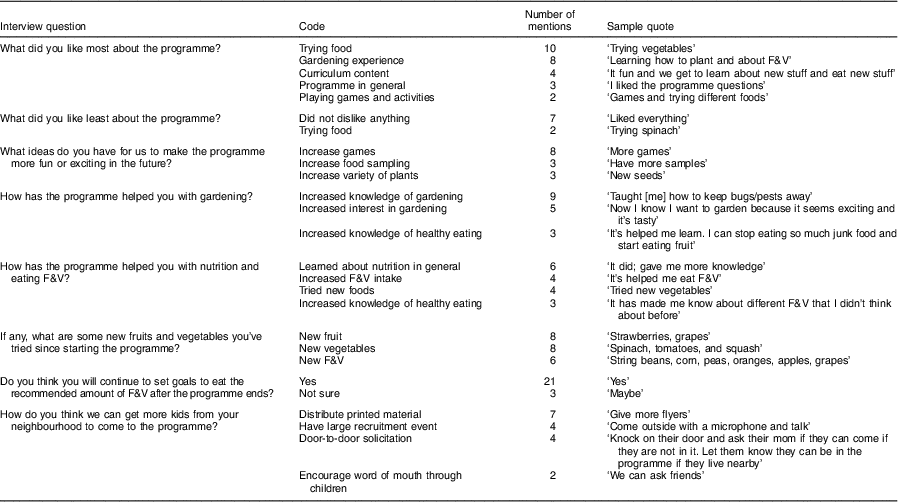
F&V, fruits and vegetables.
Twenty-five parents completed the pre-programme questionnaire. Expected benefits of working in a garden averaged 5·36 (sd 0·90; 7-point scale where 1=‘extremely unlikely’, 7=‘extremely likely’). Beliefs about maintaining a garden averaged 5·25 (sd 1·34; 7-point scale where 1=‘extremely unenjoyable’, 7=‘extremely enjoyable’). Confidence in participating in a garden averaged 3·65 (sd 1·12; 5-point scale where 1=‘not at all confident’, 5=‘very confident’). Interest in gardening averaged 7·85 (sd 1·92; 10-point scale where 1=‘strongly disagree’, 10=‘strongly agree’). Fifteen parents also completed the post-programme questionnaire. Most (87 %) confirmed that the time of day that the programme was offered was convenient. Some (53 %) expressed that their children demonstrated new asking behaviour in requesting fruits, vegetables or new preparation methods for vegetables. When asked about their interest in allowing their children to participate in a future gardening programme, the majority (93 %) indicated that they noticed an increase in their child’s confidence in gardening and would allow their child to participate in a CG programme again.
Both site leaders expressed several benefits of the programme. Both described better cohesion and positive interactions among the youth who participated in the programme. They also observed an increase in the children’s willingness to try F&V that were served as part of the summer feeding programme. Lastly, both also expressed intentions to continue to have a garden and excitement at the possibility of having the programme delivered again in the following summer.
Implementation
The extent to which lessons were delivered as intended was measured on a 5-point scale (i.e. 1=‘not at all’, 5=‘completely’) and averaged 4·60 (sd 0·88). Field notes revealed various facilitators and barriers to implementation. The most commonly recorded barrier was noise and distractions from the children. This resulted in the need to stop delivery and focus on classroom management, which detracted from the lessons. Conversely, the most frequently noted facilitator was the involvement of site leaders. While site leaders did not deliver content, their established role as a respected authority figure was essential to classroom management. Another noteworthy challenge was the presence of parents during the lessons. Parents would often answer questions before allowing the children the opportunity to answer. Also, parents would vocalize their disdain for certain F&V which was perceived by the researchers as a possible hindrance to participants’ willingness to try F&V. Similar issues were noted in the garden. Children were often distracted, requiring time to manage crowd control. During times when a crop was ready for harvest and an impromptu tasting opportunity was available, parents and other onlookers would express negative comments about sampling food directly from the garden. Again, site leaders’ relationship with the youth was beneficial during food sampling activities as they role modelled the behaviour of trying unfamiliar foods. Youth weekly attendance averaged 4·80 (sd 0·63) and 4·40 (sd 1·07) out of 10 sessions, at the site with raised beds and site with containers, respectively.
Limited-effectiveness
Of the forty-three youth enrolled, thirty-two (74·4 %) completed follow-up assessments. Compared with those retained, youth who were lost to follow-up did not vary significantly by race, age or gender. As detailed in Table 4, significant improvements were found for self-efficacy for asking for F&V, overall gardening knowledge, knowledge of plant parts (sub-category of gardening knowledge) and knowledge of MyPlate categories. Estimated effect sizes for these outcomes were moderate, ranging from 0·30 to 0·40. However, the knowledge of food safety decreased significantly at follow-up. There were no significant effects on willingness to try F&V, self-efficacy for eating F&V, self-efficacy for gardening, other knowledge sub-categories or overall nutrition knowledge. Nevertheless, the majority of non-significant effects trended in a positive direction (six of eight variables).
Limited efficacy measures, using last observation carried forward (n 43), before and after participation in the gardening and nutrition programme for youth living in public housing, Dan River Region of south-central Virginia, USA, 2012
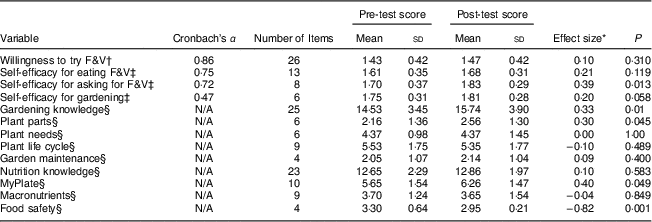
F&V, fruits and vegetables; N/A, not applicable.
Repeated-measures ANOVA were used to test effects.
* (Average pre-test score – average post-test score)/average sd.
† Responses were on a 3-point scale: 0=‘not willing’; 1=‘may be willing’; 2=‘willing’.
‡ Responses were on a 3-point scale; 0=‘no’; 1=‘maybe’; 2=‘yes’.
§ Responses coded as 1=correct; 0=incorrect.
Discussion
The present feasibility study explored the demand and acceptability, implementation and limited-effectiveness of a theory-based experiential gardening and nutrition programme through collaborative CBPR efforts. The study addresses recommendations for utilizing CBPR in CG efforts( Reference Robinson-O’Brien, Story and Heim 8 ) and builds on community-identified research priorities of the DRPHC( 15 , Reference Zoellner, Zanko and Price 17 , Reference Zanko, Hill and Estabrooks 18 ). Given the early stages of the youth-based CG programme in the region, it was apparent that a feasibility project would be most appropriate( Reference Bowen, Kreuter and Spring 20 ). Bowen and colleagues( Reference Bowen, Kreuter and Spring 20 ) describe three feasibility questions that represent the phases of intervention development: ‘can it work?’, ‘does it work?’ and ‘will it work?’. The ‘can it work?’ question was the driving basis to understand the programme and to define additional research priorities. The quantitative and qualitative feasibility findings provide important insights on understanding if CG can work in public housing authority systems within the Dan River Region.
To our knowledge, the present study is the first one published to jointly implement gardens within low-income housing settings and deliver a gardening and nutrition programme specifically targeting low-income youth living in public housing settings. Although there are several reviews that illustrate the effects, benefits and challenges of CG( Reference Robinson-O’Brien, Story and Heim 8 , Reference Langellotto and Gupta 9 ), there is a lack of published CG feasibility studies with which to compare our study findings. Of one known study, a thesis describes the feasibility of a garden-based nutrition programme delivered to pre-school children( Reference Lewis 35 ). It was concluded that delivering such a programme was feasible, based on a positive response to at least 80 % of questions asked of teachers who delivered the programme; yet other measures of feasibility (e.g. implementation) were not addressed. In our study, the demand and acceptability findings indicate the high potential of the programme to be used and be suitable for the youth, parents and site leaders. The implementation findings demonstrate that the programme can be implemented by researchers with a high level of fidelity. On the contrary, the feasibility outcomes also reveal several issues that can threaten the likelihood of programme success, such as classroom management, lack of specific components geared towards the parents at the educational/experiential sessions and intermittent programme attendance. Future efforts should consider redefining and/or narrowing the age range eligibility (e.g. 8–13 years), refining programme curriculum (e.g. increase food sampling activities in each weekly module) and developing targeted recruitment and retention strategies (e.g. offer alongside the US Department of Agriculture’s summer feeding programme). Due to interest among parents and their desire to participate, incorporating specific parent components may also improve the success of the programme outcomes.
Most youth-based CG research focuses solely on efficacy/effectiveness or outcome measures( Reference Heim, Stang and Ireland 36 – Reference Reynolds, Franklin and Binkley 41 ). Outcomes from the limited-effectiveness measures in our project both refute and support other studies( Reference Morgan, Warren and Lubans 37 , Reference Morris, Neustadter and Zidenberg-Cherr 38 ). There were no differences in willingness to try F&V, although other studies have documented that experiential gardening with increased exposure to F&V is effective in increasing children’s willingness to try F&V( Reference Morgan, Warren and Lubans 37 , Reference Birch, McPhee and Shoba 42 ). On the contrary, we found significant improvements of F&V self-efficacy, whereas one other study did not( Reference Heim, Stang and Ireland 36 ). Similar to our knowledge findings, numerous other studies have revealed mixed results for changes in nutrition and/or gardening knowledge( Reference Robinson-O’Brien, Story and Heim 8 ). Taken as a whole, our study yielded relatively similar results to previous youth-based CG studies, which indicate promising, yet mixed findings across a variety of theoretical and behavioural outcomes( Reference Robinson-O’Brien, Story and Heim 8 ). Importantly, our estimated effect sizes provide an indication of the number of youth who will be needed in future programming to achieve adequately power for statistical testing on behavioural outcomes. Based on our limited-effectiveness feasibility findings, areas for future direction may include a stronger study design with a control arm, a larger sample and opportunities to revise effectiveness measures (e.g. refine theory-based measures based on item statistics, add measures of F&V intake/behaviour, reduce the number of self-reported items, add observation items for willingness to try).
Both residential-based and school-based CG have advantages and challenges in engaging youth( Reference Williams and Dixon 10 , Reference Blair 43 , Reference Ozer 44 ). For the current study, the gardens were supported by the housing authority, established on site and located at the youth centres within the neighbourhoods which the housing authority operates year round to serve residents. This convenient location allowed the children to participate without concern for transportation and allowed the gardens to be maintained by site leaders. Also, the youth centres provide free on-site snacks, lunch and dinner, which provides an opportunity to incorporate fresh produce from the garden and discuss. These benefits may contribute to a higher likelihood of sustainability of the garden and the programme in the community. One potential disadvantage of using housing authorities is the variability in the presence of the youth. As mentioned previously, all youth participating in the programme lived in single female-headed households. Visitation with the second parent as well as participation in other summer activities and vacations could interfere with consistent attendance. In contrast, school-based gardens provide can also provide unique opportunities when compared with residential-based gardens, such as integration of gardening and nutrition lessons with standard curriculum. Some studies implemented in schools have demonstrated increases in willingness to try F&V( Reference Morris, Neustadter and Zidenberg-Cherr 38 , Reference Cason 45 ), F&V consumption( Reference McAleese and Rankin 46 , Reference Ratcliffe, Merrigan and Rogers 47 ) and nutrition knowledge( Reference Morris, Neustadter and Zidenberg-Cherr 38 , Reference Cason 45 , Reference Ratcliffe, Merrigan and Rogers 47 – Reference Parmer, Salisbury-Glennon and Shannon 49 ). Notably, improvements in school-based outcomes (e.g. academic enhancement, environmental awareness and social development( Reference Williams and Dixon 10 , Reference Blair 43 , Reference Ozer 44 )) have also been achieved, although with mixed effects. One notable disadvantage to school gardens is the time period in which schools are usually closed during the summer, which prevents youth from participating in a peak growing season and poses concern for maintenance( Reference Ozer 44 ).
While many programmes directed to youth focus exclusively on nutrition outcomes or school-based outcomes, there are future opportunities for simultaneously targeting school-based learning and behavioural outcomes. An effort to bridge residential-based and school-based gardens could enhance the attributes and reduce the challenges of each. For example, hands-on workshops and trainings could be provided through PTA (Parent–Teacher Association) meetings throughout the school year. Knowledge and skills gained could allow parents, youth and other community members to be involved in the maintenance of the school garden during the summer break and in the residential garden. Additionally, workshops provide an opportunity to train faculty, staff and community members in quantitative research techniques to objectively evaluate F&V consumption. For the present study, youth and staff were instructed on how to use a scale to measure produce harvested from the garden. However, this did not capture changes in F&V purchase or consumption in the home. The use of additional objective measures, such as direction observation (e.g. plate waste) or other dietary assessment techniques, could provide evidence for the effectiveness of CG in improving F&V consumption and behaviours( Reference Dhingra, Sazawal and Menon 50 , Reference Williamson, Allen and Martin 51 ).
Potential limitations of the present study include the absence of a control group, small sample size, wide age range and varying level of attendance. These factors may explain some of the discrepancies with the prior literature. Other studies with larger samples have demonstrated that groups with education and experience have better outcomes when compared with a control group( Reference Morgan, Warren and Lubans 37 , Reference Morris, Neustadter and Zidenberg-Cherr 38 ). Additionally, many studies cluster youth by two or three grades( Reference Parker, Siewe and Denney 39 – Reference Reynolds, Franklin and Binkley 41 ). In our study, to accommodate the goals and objectives of the housing authority, youth centres aimed at providing enjoyable and enriching activities to youth under 18 years old, youth in our programme had a much larger age range (i.e. 5–17 years). However, to promote appropriateness of lesson content and age-appropriate measures, this approach may be revised for future programming and age eligibility will be reduced to a tighter range as seen in other similarly designed studies( Reference Lewis 35 , Reference Morgan, Warren and Lubans 37 , Reference Morris, Neustadter and Zidenberg-Cherr 38 ). Despite these limitations, the present study served its purpose in further establishing community–academic partnerships and providing feasibility data from which to revise, improve and expand the programme.
In its design, this current study used four of the eight focus areas set forth in the guidelines by Bowen and colleagues for designing feasibility studies( Reference Bowen, Kreuter and Spring 20 ). Demand, acceptability, implementation and limited-effectiveness were deemed the most relevant given the early stages of development for this CG initiative and they allowed us to determine the potential utility of a gardening and nutrition education programme. Additional areas of focus such as adaptation, integration and expansion should be used to guide the development, implementation and evaluation of future phases. For example, adaptation examines programme performance when implemented with modifications or to a different population, whereas integration reflects the extent that a new programme can be incorporated into an existing system and expansion measures the degree to which a tested programme can be expanded to provide a new programme. In the context of the CBPR nature of this CG initiative, one of the most important future opportunities is to more fully involve the housing authority leaders in programme adaptations, curriculum delivery and data collection activities. Future efforts to secure funding should carefully consider the time and resources needed to more fully engage the housing authority leaders. Strategically promoting the capacity of the housing authorities to implement and evaluate the programme will be critical to long-term sustainability. Likewise, deliberate efforts to actively engage the older youth at the sites to assist in planning, implementation and evaluation activities should be incorporated. Expanding to include these additional areas of focus, as presented by Bowen and colleagues, will allow for future evaluation aimed at answering the ‘does it work?’ and ‘will it work?’ questions. Importantly, the results from this 2012 CG programme were disseminated back to the community in spring 2013 at the third annual CG forum. Due to positive reception of the programme from community members, site leaders, youth and parents, efforts are currently underway to improve the programme and expand it to involve more stakeholders and youth using the CBPR approach.
Given the documented lack of F&V intake and accessibility among low-SES youth across numerous health-disparate regions, other health and nutrition-related practitioners and researchers may apply the lessons learned in this feasibility study to investigate theory-driven attempts to target youth with CG programmes. Results and lessons learned from this feasibility study provide insights to continue exploring CG as a culturally relevant CBPR approach to address F&V access, knowledge and health behaviours within low-income youth in the Dan River Region.
Acknowledgements
Acknowledgements: The authors recognize efforts from members of the Dan River Partnership for a Healthy Community (DRPHC) nutrition subcommittee, especially Tawanna Fountain, and the entire DRPHC coalition. They thank the graduate and undergraduate students from Virginia Tech for their assistance in data collection, including Ramine Alexander, Angie Bailey, Jessica Li, Nicole Olive, Maggie Reinhold, Clarice Waters and Grace Wilburn. Financial support: Funding for this project was provided, in part, by the Virginia Foundation for a Healthy Youth. The Virginia Foundation for a Healthy Youth had no role in the design, analysis or writing of this article. Conflict of interest: None. Authorship: J.Z., K.G. and J.L.H. conceptualized and drafted the paper. Each author contributed to further development and revisions of the paper and approved the final submission. J.Z. and J.L.H. contributed to securing grant funding for the project and oversaw conceptualization of the study design, measurement and evaluation. Other co-authors assumed a unique role in execution of the project including: C.C. and F.B. directed participant recruitment and garden maintenance; K.G., F.R. and L.M. managed curriculum development and delivery. Ethics of human subject participation: All materials and procedures were approved by the Institutional Review Board at Virginia Tech.



