

Introduction
On the second day of September in 1970, fifteen-year-old Maryann Stroud wore a pair of “neat, clean, green plaid pants or slacks” to class at Lakes Senior High School, located in a suburb outside Tacoma, Washington.Footnote 1 For doing so, Maryann was suspended from school and was sent home by the principal, Loren J. Mann, with an accompanying note that read: “This is to notify you that your daughter, Maryann Stroud, has been sent home until such a time as she will meet the standards of dress and grooming of the School District.”Footnote 2 Facing serious consequences if she continued to challenge the school’s dress code, which entailed being deemed truant and even legally ordered to attend reform school, Maryann did not return to school. Instead, with the support of her parents, Maryann filed a lawsuit against her principal and school district in which the American Civil Liberties Union (ACLU) served as lead plaintiff. At the time, Lakes Senior High School students were beholden to the district “Dress and Grooming” code, which for girls, specified they must wear
properly fitted and appropriately styled clothing. Pants, slacks, and jeans are acceptable only when authorized by the building principal during particularly inclement weather or when special school events or activity prescribe informality in dress. [Girls must have] neat and appropriate hair styles and color.Footnote 3,
It is worth mentioning the boys’ dress code did not forbid any particular clothing items. Maryann simply wanted to wear pants to school, and her parents encouraged her to do so, believing the district’s gendered-pant prohibition, and its exclusionary disciplinary actions, to be unconstitutional.Footnote 4
Maryann’s experience with Lakes Senior High School’s restrictive, sex-based dress code was not necessarily unique. By the early 1970s, many schools throughout the country had published and enforced specific gendered dress codes with the belief that they were educating students to fulfill their expected roles in society. Using metropolitan Seattle as its case study, this article evaluates the evolution of dress codes over different eras and, pairing this overview with an analysis of social and political events of each era, seeks to establish a better understanding of current exclusionary policies and their widespread use.
The Seattle-Tacoma area is a particularly valuable site to evaluate the evolution of school dress codes, because its uniquely complex racial, ethnic, and cultural landscape defied the dominant Black/White binary that shaped much of the rest of the country.Footnote 5 Washington educators’ strong emphasis on Americanization and citizenship during periods of national transformation positioned schools as arenas for shaping normative identities. Distinguished by a rare convergence of racial, ethnic, gender, and class diversity, Seattle-Tacoma offers a richly intersectional lens through which to examine how dress codes functioned as tools of assimilation, control, and identity formation.
In national school culture and official Seattle records, there was a clear shift from informal “how to dress” expectations in the 1950s to formally enforced “dress codes” in the 1990s and thereafter. This transition from student-led, extracurricular clothing norms to administrator-driven, published regulations reflected school administrations’ responses to broader social and political movements in U.S. history. While notions of respectability, modesty, and specific class, racial, and gender roles were present in both informal and formal dress codes, changes in these expectations often aligned with school leadership’s reactions to significant political and cultural events.
Since their inception, dress requirements in schools have been dictated by prevailing gender standards. In the Girls’ Clubs and Boys’ Clubs dominant in the first half of the twentieth century, gender roles were clearly defined through girls’ responsibility to influence the comportment of others through their attire and modest conduct. These rules of convention were essentially White, middle-class, formal standards of interaction.Footnote 6 In the midst of the civil rights and feminist movements in the 1960s and 1970s, there were clear instances where students pushed back against the inequity of girls’ dress code requirements (such as inability to wear pants), but it was not until the late 2010s that standard sex-based dress codes were challenged and revised. For example, the Seattle School Board implemented a ground-breaking gender-neutral dress code in 2019,Footnote 7 and in 2022 the Washington Office of Superintendent Public Instruction issued a guidance that “school dress codes should be gender-neutral and should not restrict a student’s clothing choices on the basis of gender.”Footnote 8
In October 2022, the United States Government Accountability Office (GAO) published a lengthy report that claimed modern-day dress codes in public schools predominantly target the attire of girls, that girls of color are disproportionally disciplined for dress code violations, and that girls and students of color are more subject to exclusionary discipline.Footnote 9 The GAO’s official recommendation to US congressional leaders was that the Department of Education should provide information on equity and safety in school dress codes to remedy the current inequity across the nation.
The connection between girls’ clothing and morality is not new. The question is: How did this connection shape official policies influencing a student’s access to education? The 2022 GAO report found that schools with higher percentages of Black and Hispanic students were more likely to enforce strict dress codes. Moreover, these schools had “statistically significant higher rates of discipline that removes students from the classroom” and have been linked to the criminalization and pushout of girls in schools.Footnote 10 While dress codes have been debated in legal and policy contexts, there has been little historical evaluation of how clothing standards have determined students’ perceived worthiness to enter educational spaces. The research for this article will bridge that gap, providing a historical foundation to understand and reform contemporary policies that continue to disproportionately harm marginalized students.
School dress codes are not merely guidelines about appropriate attire; they function as instruments of educational gatekeeping. Although over 90 percent of public schools in the United States enforce dress code policies, the significance of these policies lies not in their existence, but in what they reveal about access to education, the reinforcement of social norms, and the regulation of student identity.Footnote 11 In their enforcement of dress codes, school leaders use student dress requirements to assert authority, shape behavior, and determine who belongs, often excluding girls—especially girls of color—from public learning spaces based on the subjective and inconsistent judgments of administrators.
In the 1950s, attire requirements in schools were typically informal and socially enforced. These clothing norms reflected dominant gender roles and sought to unify students through visual conformity. At a time when national attention focused on school desegregation and civic cohesion, gendered appearance standards served as a stabilizing force within the classroom. By contrast, the late 1960s and 1970s introduced significant challenges to these norms. Civil rights movements and key moments of social reckoning shifted dress requirements from being tools of conformity to flashpoints of expression, with students increasingly using their clothing to assert individuality and resist control.
This period marked the beginning of legal and cultural battles over the boundaries of student expression in secondary schools. The Supreme Court’s decision in Tinker v. Des Moines Independent Community School District (1969) affirmed that students do not “shed their constitutional rights to freedom of speech or expression at the schoolhouse gate,” but the ruling represented the start of a protracted struggle rather than a definitive resolution.Footnote 12 In the decades that followed, lower court rulings and the Supreme Court’s refusal to hear subsequent dress code cases signaled an era of uncertainty. During the 1980s and 1990s, schools responded by increasing the formalization of dress codes and introducing more punitive enforcement mechanisms. These efforts often disproportionately targeted girls, especially girls of color. From the 1950s to the 1990s, dress code policies and their enforcement were used to police the bodies of students of color long after the legal desegregation of schools.
Understanding why dress codes emerged as a focal point of protest when they did reveals a broader shift in authority over youth behavior and in who holds regulatory power. Central to this story are decisions by school boards to implement and enforce mandatory dress codes. Focusing on metropolitan Seattle, this study traces a historical shift between two distinct phases of student attire regulation: one in which dress norms were shaped by social clubs and maintained through peer pressure and shared expectations, and another in which school districts formalized dress codes and enforced them through official disciplinary measures.
Perhaps the hope is that schools have become more inclusive, tolerant spaces over time; however, the historical record of dress code enforcement complicates that view. Rather than signaling progress, the increasingly formal and punitive nature of dress codes reflects deeper anxieties about youth autonomy, femininity/masculinity, and race. This study brings attention to the everyday experiences of students within schools and how they experience forms of control. In doing so, it uncovers how dress codes have contributed to the maintenance of racial and gender hierarchies within public education. Dress codes, as both policy and practice, offer a powerful lens into how the state interacts with young people and how students experience the boundaries of belonging within public education.
PART I: School Dress as Assimilation (1950s and Earlier)
In the immediate pre- and post-war eras, there were significant cultural changes in the United States that affected children and teenagers in schools. As society, culture, media, and foreign policy changed dramatically between 1930 and 1950, school districts and leaders tried to maintain order and structure in educational institutions. Regulating student behavior (including their attire and grooming) served as a sort of assimilation strategy. As migration and immigration shifted US demographics in every region, educators in Washington State strengthened “citizenship” education, focusing on teaching students how to be the best democratic citizens. As had been true throughout the country since the Progressive Era, many of these Americanization programs were built on ideas of democracy and citizenship that reflected the customs, lifestyles, and habits of native-born, White, middle-class Americans.Footnote 13
Educational historians who have written about the Pacific Northwest have emphasized a particular feature that it shares with the US West in general: a “distinctive history of race, racism(s), and racialization” that has been unstable, malleable, and constantly shifting.Footnote 14 The multifaceted ethno-racial landscape of the Seattle-Tacoma area “never fit into a simple Black/White racial binary” in that it included descendants from “Mexico, China, Japan, Hawaii, Europe, Africa, and elsewhere.”Footnote 15 The ethno-racial demographic of Seattle-Tacoma provides a unique social environment of “constructed and contested hierarchies of power and privilege,” into which this study will add intersections of sex and gender identity.Footnote 16
In the early 1900s, Seattle Public Schools developed an extracurriculum with the goal of fostering unity among students to “eliminate causes of friction between factions.”Footnote 17 One component of this curriculum was the creation of Girls’ Clubs and Boys’ Clubs for the high schools. These clubs served as a broader umbrella under which all other organizations and student groups were organized. The Girls’ Club program was established in 1906 with a specific aim—to involve the female students in welfare and charitable efforts—but it eventually enveloped the entirety of the female experience in Seattle’s various high schools.Footnote 18 Within these gendered clubs were different committees that oversaw various elements of students’ experiences in school. For instance, as historian Jennifer Preisman notes, “the Standards Committee helped girls ‘uphold high ideals of dress’ and choose appropriate clothing for school.”Footnote 19
The Girls’ Clubs and Boys’ Clubs in Seattle high schools remained central over the subsequent decades, growing in scope and significance. They were deemed as “‘essential to the wellbeing of the school community’ in the 1940s and 1950s as they were in the 1930s.”Footnote 20 As the scope of the clubs – and specifically the scope of the Girls’ Clubs—broadened, the entirety of a girl’s social life in high school came to revolve around the club. When they began high school, all female students were welcomed into the Girls’ Club and were provided with an older “Big Sister” whose role was to help the incoming girl navigate the norms and expectations of the institution.Footnote 21
The Seattle Public Schools archives feature abundant records of the Girls’ Club and Boys’ Club activities throughout their existence. In their various materials, Girls’ Clubs clearly took on the responsibility of educating their members on specific, gender-based expectations regarding morality and citizenship. Carried over from previous decades was the gender-based cultural expectation that girls and women were responsible for the moral fabric of their communities and institutions. Instilling these values within girls was so important because when they eventually grew into women, they would be responsible for modeling and teaching “correct behavior.” Through the Girls’ Clubs, an unofficial curriculum served to make sure girls were prepared for the moral role that womanhood would require of them in modern society.Footnote 22
In the post-war era, Seattle educators embraced a national movement of democratic character education.Footnote 23 Educators believed that girls needed an education shaped by their expected social roles, which made morality and behavioral training central to the Girls’ Club mission. In the view of educators, a girl’s appearance and behavior not only shaped her own reputation but also influenced broader social morals and expectations.Footnote 24 This expectation demonstrates how girls and women had a public responsibility—often viewed in civic terms—for the actions of others. Consequently, Girls’ Clubs made “fine womanhood” and morality education crucial to their mission.Footnote 25
The earliest documented dress standard for girls in Seattle Public Schools appears in the 1933 “Girls’ Club Code,” a set of guiding principles recited by club members. To show their commitment to the Girls’ Club and its three core principles of “Refinement, Simplicity, and Democracy,” members would recite:
We disapprove of the excessive use of cosmetics …
We approve of the policy of “hands off” in friendships between boys and girls.
One who can express herself without slang is more clever than she who makes a practice of using it.
Gum chewing is in poor taste.
We disapprove of attendance at public dances and rinks unchaperoned.
We believe that a well-bred girl will discourage smoking …
We believe a girl who does not conduct herself in a lady-like manner at all times reflects on her home and family …
We believe that cleanliness is next to godliness.
Simplicity, neatness, and appropriate dress are essential to a high school girl’s appearance.
We disapprove of conspicuous hose.
We approve of a dress length regulated to suit the individual.
We believe that school shoes should be well fitting and with moderate heels …
We believe in friendliness and disapprove of snobbishness and cliques.Footnote 26
The framing in the “Girls’ Club Code” directly tied together the heavily shouldered moral responsibility of girls with the way they were expected to dress and groom. In the same space where girls drew moral lines of “hands off” policies around boys and the horrors of unchaperoned dances and rinks, they affirmed their belief in cleanliness and looking down on the excessive use of cosmetics.
Each year, Grover Cleveland High School in Seattle printed a “C” Book for all students. “C” Books were miniature, individually typed and bound student guidebooks distributed by the student body leadership. In the earliest available “C” Book in Seattle Public Schools Archives from 1934, the Girls’ Club pages feature a section titled “Appropriate Dress”:
To be in good taste a girls’ [sic] dress for school should be simple and inexpensive. Cleveland girls have adopted a standard dress the middy and dark skirt with or without a dark sweater. This is not compulsory, but a large number of girls wear it by choice either all or part of the time. Sensible shoes with moderate heels should be worn. The well dressed girl avoids excessible [sic] cosmetics and extreme fads in dress for school.Footnote 27
In contrast, the “Boys’ Club” pages from the 1934 “C” Book fail to mention any type of dress code for male students.
In the 1940s, questions of dress and grooming were formalized into curricular objectives. While Girls’ Clubs and Boys’ Clubs remained active through the 1950s, they were not the only venue through which students were being taught clothing standards. In the school district’s Home and Family Living handbook (see Figure 1), girls were required to learn “basic principles of being well dressed.”Footnote 28 These principles were integrated into the formal curriculum for girls: In Homemaking I, a girl’s grooming and appearance was measured through her own self-rating using a “check-list for personal appearance and neatness.”Footnote 29 In Homemaking III, two to three weeks of the semester were dedicated to the unit “Being Well Dressed,” where girls were evaluated by their “choice of woolen garments during the semester.”Footnote 30
Home and Family Living curriculum pamphlet, Seattle Public Schools, 1946.

Figure 1 Long description
The page titled 'The Secondary School' discusses the importance of secondary education for girls, focusing on developing skills for homemaking and personal growth. The text is printed in a serif font, organized in two columns. Key points include the development of study habits, responsibility and appreciation for the arts. The right side features several small black-and-white photos with captions, depicting girls engaged in home economics activities such as sewing and cooking. Captions describe activities like 'Girls learn to care for their clothes' and 'Girls learn to cook for their families.' The layout includes a large heading at the top, body text in columns and photos with captions on the right.
Educators and administrators believed that wholesome appearance standards led to better behavior in schools. In something as seemingly inconsequential as dress and grooming, girls were taught their worth, and that their dress and grooming were not only personal responsibilities but also carried weighty social consequences, reinforcing the idea that their appearance extended far beyond themselves.
In the early 1950s, a new section titled “Common Sense” was added to the annual issue of the “C” Book that addressed dress and appearance standards for both female and male students:
The first impression you make is by your personal appearance, and it is often a lasting one. Let it speak for you, not against you. Be prepared to sell yourselves to others on sight.
Girls—remember that the greatest art often conceals art. The beholder should be impressed by your natural beauty.
Boys, don’t pass off too lightly the family’s remarks on your hair, teeth, fingernails, neckties, or clothing. Why not take time to correct your faults and improve your appearance?
Remember! Of all things you wear, your appearance is the most important.Footnote 31
What is interesting here in the direct comparison of girls’ and boys’ “common sense” appearance is the difference in the appeal to the two groups. When addressing the boys, the language is very straightforward and almost pleads to convince the boys: “Why not take time to correct your faults and improve your appearance?” Here, the boys’ appearance is not intrinsically tied to their worth but may serve as an added benefit to the worth they already possess. The female students, however, are offered a different message: Direct worth is tied to their appearance. Girls are reminded that their beauty, their worth, and their character can shine through their performance of “natural beauty.”
Historian Gael Graham noted a shift in 1950s culture that directly affected students nationally. It was predicated by a juvenile delinquency scare that added urgency to school campaigns to control students.Footnote 32 One way this manifested was in parents who “pressured school officials to establish dress codes, hoping that conformity in dress could contain student behavior.”Footnote 33 This likely contributed to the shift in the attire guidelines in the annual “C” Book beginning in the early 1950s, for both female and male students.Footnote 34
As programming expanded for Girls’ Clubs and Boys’ Clubs from their inception into the 1950s, administrators and educators used gender-oriented education, clubs, activities, and extracurricular activities to develop affinity within the respective groups. Historian Paula S. Fass analyzed the participation of New York City teens from the 1930s and 1940s and found that ethnicity was the most salient factor in determining who did or did not participate in various aspects of high school and who felt empowered or disempowered.Footnote 35 However, Seattle Public Schools appeared to respond to divisions among demographic groups by emphasizing one’s gender as a unifying category, in an effort to minimize other forms of difference.
This is an important point: From the perspective of Seattle Public Schools, gendered factions were acceptable and even encouraged over identity-based groupings along the lines of race and ethnicity, even though those racial disparities (including those caused by policies like redlining and segregation) were an unavoidable reality.Footnote 36 Seattle’s White population and the administrators of its public secondary schools may have been wishfully thinking they could avoid addressing racial disparities in their schools and communities by pretending they do not exist. This claim is hard to prove with certainty, since the racial distribution of Seattle Public Schools students was not recorded until 1957, just a few years after the Supreme Court’s ruling in Brown v. Board of Education (1954) that it was unconstitutional to separate children in public school on the basis of race.Footnote 37
In fact, in the first Seattle School Board meeting that followed the monumental Brown v. Board of Education ruling, there was no mention of it—board members simply believed that the court ruling did not apply to the situation in Seattle since there was no de jure segregation at the time. Frances Owen, the school board’s president, recalled, “We had some discussions among ourselves about the fact that we couldn’t do anything about the housing … Our feeling at the time was ‘it was not our fault that the schools were segregated,’ and I think we interpreted the 1954 decision in those terms.”Footnote 38
The situation was not much better in Pierce County, home to Tacoma School District, about thirty miles south of Seattle. While ethnically and racially diverse like other areas of the Pacific Northwest, Tacoma School District did not begin recording its racial demographics until 1963, nine years after the Brown v. Board ruling.Footnote 39 Unsurprisingly, the blindness of Seattle’s and Tacoma’s school officials to de facto segregation in their communities led to a contentious and delayed rollout of desegregation efforts and a failure to properly reallocate resources to students of color.
While the unofficial dress and clothing guidelines issued by the Girls’ Clubs did not distinctly refer to White-based beauty standards, it is reasonable to assume, given that White/Caucasian students likely made up the majority of the Seattle-Tacoma public school population,Footnote 40 that the guidelines did not leave room for deviation from such standards.Footnote 41 Maxine Leeds Craig described the efforts of Black mothers and daughters to adhere to gendered, racialized beauty standards in schools:
Black mothers incorporated existing gender norms into their efforts to properly raise daughters amid the hostility of white racism. Many young African American girls learned to behave and appear well groomed in the context of lessons about their obligation to the race… . Regular hair straightening that began in late childhood was one way that almost all of the women I interviewed learned that straightened hair was an unquestionable norm.Footnote 42
Through the 1950s, in the Seattle-Tacoma area gendered dress and grooming requirements were used to unite students by sex and were meant to distract students from differences and factions based on other ethnic or cultural identities. The peer clubs’ expectation was that students of color would adhere to gendered beauty standards—left unsaid was the expectation that they would also uphold White-centered beauty standards.
Dress and grooming rules were largely overlooked because students, families, and schools were focused on more immediate concerns like segregated schooling, educational tracking, and corporal punishment. Among the many ways students were categorized, gender-based discrimination was often treated as a socially acceptable method for stereotyping and controlling children. Up to this point, the creation and social enforcement of gendered dress codes had been student-led. Beginning in the 1960s, there was a distinct shift by administration officials and school districts to establish and enforce dress code policies, which were always dictated by gender.
PART II: School Dress as Free Speech (1960s-1970s)
As one might assume, the lack of de jure segregation did not safeguard against de facto segregation in Seattle’s schools and neighborhoods. Seattle eventually had to reconcile its supposed equity with its actual inequity in its city and its schools. In 1960, the Seattle-King County Municipal League began a study of school segregation, urging the school board to adopt and implement a formal plan to balance racial representation in schools. For the 1963-1964 school year, many community members and organizations worked to develop the first initiative to desegregate schools in Seattle, which they called the Voluntary Racial Transfer (VRT) program. While this was viewed as a step forward, it put significant demands on the community to successfully implement it: Student families needed to volunteer to transfer to other schools based on the “racial imbalance” of each school, and transferees were required to provide their own transportation.Footnote 43
In a similar vein, beginning in 1966 the Tacoma School District responded to community pushback to de facto segregated schools by creating optional enrollment programs for students in its center-city schools, which served the majority of Tacoma’s minority student populations.Footnote 44 The following year, the school board rejected an open-enrollment policy for the entire school district.Footnote 45 In April 1970, the Washington State Board of Education and State Board Against Discrimination issued a joint policy requiring the elimination of racial segregation in the state’s public schools.Footnote 46 One month later, Tacoma school officials announced plans to convert the one remaining segregated school into a magnet program.Footnote 47
Seattle’s schools took much longer to follow suit. With all its setbacks, the VRT remained the primary form of school desegregation until the “Seattle Plan” was adopted in 1977-1978, which included two-way, publicly funded busing efforts of all public school-aged children (except kindergarteners).Footnote 48 For the fourteen years between the implementation of the VRT and the Seattle Plan, community members, religious organizations, educators, and activists worked tirelessly for Seattle, first to acknowledge that segregation existed in their schools, and second to rectify the problem in a way that did not solely burden communities of color. Whether or not desegregation of Seattle’s schools was ever truly achieved is a point that is still debated—with contemporary scholars and news outlets contending that Seattle’s neighborhoods and schools remained segregated as recently as 2024.Footnote 49
In the midst of the Seattle-Tacoma schools’ reckoning with segregated schooling in the 1960s and 1970s, the Pacific Northwest was also swept into the national flurry of legislation surrounding student rights. Tinker v. Des Moines Independent Community School District (1969), perhaps the country’s most well-known case involving student appearance, marked a pivotal shift in how student expression was treated in public education. For the first time, the Supreme Court recognized that students retain constitutional rights within schools, famously declaring that they do not “shed their constitutional rights to freedom of speech or expression at the schoolhouse gate.”Footnote 50 The ruling struck down the suspensions of Mary Beth Tinker, John Tinker, and Christopher Eckhardt for wearing black armbands to school protesting the Vietnam War, affirming that their action constituted “symbolic speech” protected by the First Amendment.
Before this decision, schools operated largely under the doctrine of in loco parentis, which granted administrators broad authority similar to that of parents, including full control over appearance, behavior, and discipline. Tinker challenged that model by introducing a new standard: school officials could not restrict student political expression unless it caused a disruption of classwork or a “substantial disorder or invasion” of other students’ rights.Footnote 51 Washington State did not escape the pull of the student rights movement and the political fervor it stirred in youth. As school districts began officially implementing and enforcing student dress requirements, they experienced significant pushback both in schools and in courtrooms.
Through the end of the 1960s and into the early 1970s, school administrators and district officials became much more involved with establishing and enforcing student clothing and appearance requirements. Where the clothing requirements of the 1930s, 1940s, and 1950s were determined by social clubs and “enforced” through social methods such as imposed conformity and peer pressure, the 1970s and 1980s saw school districts determining student dress requirements, publishing them in widely distributed pamphlets, and disciplining students they deemed disobedient through official administrative channels.
In 1970, the Clover Park School District, located in the suburbs southwest of Tacoma, released an official dress and grooming code:
The business of the school is education. Therefore, the school will expect the student to appear as he would for a place of business. This may vary for individual students.
Dress and grooming should enhance the student’s natural appearance. The maturing student, by his general bearing and attire, shows respect for himself and for those around him….
The aim is not “conformity” but “good taste.” “Good taste” in dress and grooming includes, though it not limited to, the following standards:
Boys—Properly fitted, clean, and appropriate clothing worn as intended. Neat and appropriate hair cuts—hair worn off the collar, ears and eyes. Beards and excessive sideburns are not considered appropriate.
Girls—Properly fitted and appropriately styled clothing. Pants, slacks, and jeans are acceptable only when authorized by the building principal during particularly inclement weather or when special school events or activity prescribe informality in dress. Neat and appropriate hair styles and color.Footnote 52
There are many interesting points here: First, the dress and grooming code plainly stated that “the aim is not ‘conformity’ but ‘good taste,’” when it seems the code’s very aim for was conformity. In line with previous dress requirements analyzed from earlier decades, Clover Park School District listed specific clothing items that were generally not permitted for female students but did not offer a parallel list for male students. Hairstyles and colors, including male facial hair, was a category not generally covered in the Girls’ and Boys’ Club standards of the past. The idea of “good taste” as the reason, and the key criterion, for school clothing requirements seems quite feeble and vague. It was this nebulous notion of “taste” that judges cited as a weak foundation on which to base dress code requirements, and the reason why case decisions such as Scott v. Board of Education (1969) deemed that such policies potentially infringe on student rights and expression.Footnote 53
Another possible explanation for the shift toward written dress codes and discipline policies was the release of a 1970 joint manual for school boards, published by the National School Boards Association (NSBA) and the US Department of Health, Education and Welfare, on how to create a policy codification system. In the report, the NSBA claimed that as many as half of the nation’s twenty thousand school boards did not have a manual of written policies and that societal troubles emerging in the 1960s “infected the life-blood of the nation’s system of public education.”Footnote 54 The NSBA’s solution was to provide an itemized list of school board policy topics for each school board to cover in writing and to disseminate to its members. Included in that list of items under the “Students” section was a recommendation to include a written dress code policy.
For Grover Cleveland High School in Seattle, the “C” Book that had been written by students in earlier decades morphed into the Cleveland High School Student Handbook through most of the 1970s and 1980s. No longer exclusively written and circulated by students, the new Student Handbook was written by the Student Handbook Committee.Footnote 55 The shift toward official dress and grooming requirements at the school and/or district level, complete with retribution for nonconformers, did not go uncontested. Where administrators viewed the requirements as producing a clearly defined, streamlined standard of appearance for students across the board, students viewed them as infringements on their individuality, expression, and freedom of speech, and they fought back.
By early 1970, Maryann Stroud, a student at Lakes Senior High School in the Clover Park School District, had been suspended multiple times for wearing pants to school without prior approval from the principal and was ultimately threatened with expulsion. Maryann did not return to school and instead, with the support of her parents, filed a lawsuit against her principal and the school district, with ACLU as lead plaintiff.
The court documents indicate significant back-and-forth between the plaintiffs, Maryann and her parents, and the defendants, Principal Loren Mann and Clover Park School District. The Strouds did not only take issue with the fact that Maryann was prohibited from wearing pants while the male students were permitted to wear them, but also with the way in which Principal Mann chose to execute discipline. In the initial “Statement of the Case” filed in the Superior Court in Pierce County, the Strouds’ attorney stated that Mann had a history of defending the school district’s sexist code, and would continue to do so by “suspend[ing] any student who attends school dressed in violation of [the] code, until such a time as that student complies.”Footnote 56
Stroud’s counsel, Jan E. Peterson, laid out the issue in the plainest of terms: “Therefore there is a conflict: the School District chooses to enforce the dress code while plaintiffs choose to violate the dress code. The question there raised—is their dress code constitutional?”Footnote 57
The events that followed are only discernible through ACLU court document copies, since the case never reached the courtroom. Maryann and her parents filed for a temporary restraining order from the school district, asking that she be allowed to forgo the suspension and continue attending school (wearing pants as she pleased) until the court had determined whether her rights were violated. Maryann was not alone in her show of resistance: Her attorney claimed, “There has been considerable controversy over the Clover Park dress and grooming code, and the defendants are threatened with other lawsuits on behalf of students testing the constitutionality of the dress and grooming code.”Footnote 58
By the end of that school year, there was a joint filing from the plaintiffs’ and defendants’ counsels to strike Stroud v. Mann from the docket. By May 1971, the Clover Park School District had changed its dress and grooming policy to permit female students to wear slacks and pants to school like their male counterparts. Students in the 1970s pushed back against their schools and districts and prompted real policy change regarding many aspects of student life, including clothing requirements. At this point, it was still legal in the US to discriminate based on sex. Maryann’s legal team was leaning into the “free expression” argument, in addition to claiming that the dress code was sexist, because student expression (at least in its political form) was protected. It wasn’t until the Supreme Court 1971 ruling in Reed v. Reed that sex-based discriminatory policies were assumed unconstitutional and required more scrutiny under the Fourteenth Amendment.Footnote 59
School districts and school boards revised their dress codes and student conduct policies often directly in response to social and legal pressure, rather than through voluntary reform. In 1971, the Seattle School Board began issuing a pamphlet each year titled Statement of Rights and Responsibilities, which it continued to publish into the 1990s. Borrowing the rights-based language of the era’s movements, the Seattle School District declared in 1970 that it recognized:
the primary intent of society in establishing the public school is to provide an opportunity for learning. That the students have full rights of citizenship as delineated in the United States Constitution and its amendments. That citizenship rights must not be abridged, obstructed, or in other ways altered except in accordance with due process of law. That education is one of these citizenship rights.Footnote 60
In the Tinker ruling, Justice Abe Fortas specified that the case did not concern “the length of skirts or the type of clothing, [nor] hair style or deportment.”Footnote 61 That caveat limited the ruling’s usefulness in subsequent cases involving dress codes, particularly those related to gender norms or personal style. In the years that followed, courts often rejected First Amendment claims related to student clothing unless students could prove that their appearance carried explicit political meaning. While some students, like Maryann Stroud in Tacoma, challenged the enforcement of dress policies during this era, they often did so without clear legal precedent on their side.
This viewpoint deserves some pushback: The fact that Justice Fortas and similarly minded judges did not view student dress and grooming as politically expressive did not make it so in the lives of students themselves.Footnote 62 Legally, the argument may have been correct, but the lived experiences of female students and the work of historians directly contradict the assumption that attire and grooming are not political. For Maryann, wearing pants to school was a politically expressive act that she waged against the sexist clothing requirements and discipline she subsequently received. In 1970, as far as the court was concerned, sexism was not constitutionally problematic. It was not officially considered a political act of expression to push back on sexism in dress codes for Maryann and the many other students who did so.
The rulings in the large majority of post-Tinker cases did not view students’ appearance (with a specific emphasis on their hair) as ‘symbolic expression,’ and thus deemed it unprotected by the First Amendment or the Fourteenth Amendment.Footnote 63 However, to the women and men of the Black Power movement, dress and appearance were powerful symbols of resistance, identity, culture, and revolution. This movement included secondary students, with Black youth adopting Black Power aesthetics and rhetoric to challenge their curricula, school dress codes, and discipline policies.Footnote 64 These young activists played a crucial role in localizing the national movement within public education, using their bodies and wardrobes as sites of resistance.
In Ain’t I a Beauty Queen?, historian Maxine Leeds Craig describes at length the protests in which Black women deliberately engaged through their dress and grooming. In 1967 Baltimore, a woman was expelled from her historically Black college for her hairstyle: “By the time she was expelled the Afro was seen as a statement of real defiance… . If she dared to wear her hair like that she was dangerous.”Footnote 65
According to Craig, Black schoolgirls in the late 1960s were often the first in their families to wear natural hairstyles and to adopt Afrocentric styles of dress, some facing judgment or harassment for doing so.Footnote 66 Beauty became a political site where racial pride, femininity, and power intersected. What needs to be acknowledged here is the perspective that intersectionality provided (and still provides)—that there was a unique burden placed on women of color where dress and appearance were both tools of political liberation and instruments of control.Footnote 67 The extra dimension of girlhood only added to the impossible expectations and strict constraints on young girls to look and behave a certain way based on their race, sex, and age.
Students in the 1960s and 1970s used clothing and hairstyles to assert their rights to free speech and expression. School districts, often through the courts, pushed back to assert control in their schools. School officials in the metro Seattle area pushed back in a similar fashion. The litigation beginning in the 1960s and extending into the 1970s showed that the definitions of student rights were increasingly in flux and that students believed they could advocate for their rights through judicial channels. A closer examination of when and why school districts enforced dress codes and how students pushed back reveals the specific ways that girls used dress and appearance-related resistance to challenge sex-based and race-based rights infringements.
In this context, evidence from metropolitan Seattle shows that there was not a single understanding of how the First Amendment applied to student expression through dress and appearance.Footnote 68 The lived experiences of girls in school during this era show that even if there was a singular understanding, in this specific context, it likely would not have included them.
PART III: School Dress as Control (1980s-1990s)
Most school policy changes related to dress and grooming after the 1970s were driven by fear—fear of drugs, violence, protest, student activism, and the loss of institutional control. During the 1980s and 1990s, as the United States experienced a renewed cultural and political climate of fear, particularly concerning violence and social difference, educators and administrators responded by increasing their enforcement of dress codes. In the late 1980s and early 1990s, media coverage and bipartisan political rhetoric fueled widespread panic about crime and disorder. According to the Federal Bureau of Investigation, reported violent criminal offenses in the US peaked in 1991, suggesting that some of these fears were not entirely unfounded.Footnote 69
In Suburban Crisis, historian Matthew Lassiter argues that the dominant narrative of the US drug crisis as a primarily urban, non-White issue is historically inaccurate.Footnote 70 In reality, drug use surged in White suburban communities from the 1960s through the 1980s, but public policy and media coverage racialized the crisis. During the Reagan and Bush administrations, political momentum shifted toward punitive criminal enforcement, and media-driven fear of youth drug culture contributed to the rise of zero-tolerance school policies. Public schools became battlegrounds where anxieties over race, drugs, and youth culture were codified in strict, reactive, racialized student dress codes.Footnote 71
The shift in clothing and appearance guidelines extending from the 1980s into the 1990s was clearly evident in Seattle metro public schools. New versions of the Cleveland High Schools’ “C” Book, referred to since the late 1970s as the Cleveland High School Student Handbook, cast aside the gender-specific sections from the “C” Books of old, but continued to educate students on relevant matters, including lockers, student dress, textbooks/materials, and personal property. In the student handbook from the 1983-1984 school year, the “Student Dress” section read:
Students are expected to be appropriately attired. Gym attire, play wear or clothing which cause safety or health problems, or cause school disruption can not be worn. Students will not be allowed to enter classes if they are inappropriately dressed. Students who are in violation will be sent home.Footnote 72
Here we see significant evolution from the dress requirements of the 1950s: In addition to being administration-led instead of student-led, there are no longer specific gendered-based expectations here, but there are new threats of punishment for those who do not adhere to the dress and grooming requirements.
By including the phrase “students who are in violation will be sent home,” districts and administrators indicated that school attire was important enough to require exclusionary discipline measures to enforce.Footnote 73 Recent education policy research has linked exclusionary discipline to a range of negative outcomes for students, including lower academic performance, reduced engagement, higher dropout rates, increased risk of incarceration, and elevated levels of school violence and antisocial behavior.Footnote 74 At the time these policies were implemented, exclusionary discipline was not viewed in as negative a light as it is today (especially since some people now compare it to corporal punishment), but it is reasonable to assume that students at that time were experiencing many of the same harmful effects as those documented today in current research.Footnote 75
On April 20, 1999, the fear of violent crime converging in schools was realized when two male students opened fire at Columbine High School in Littleton, Colorado, killing thirteen people and injuring twenty-one more. Rising crime, fear of violence, gun access rates, and school shootings may not seem like they have anything to do with students’ clothing and appearance—but in the 1990s, school administrators and officials made it so. Between 1992 and 1996, twelve states enacted laws allowing school districts to formulate dress and/or uniform regulations for students, including Washington (in 1996).Footnote 76
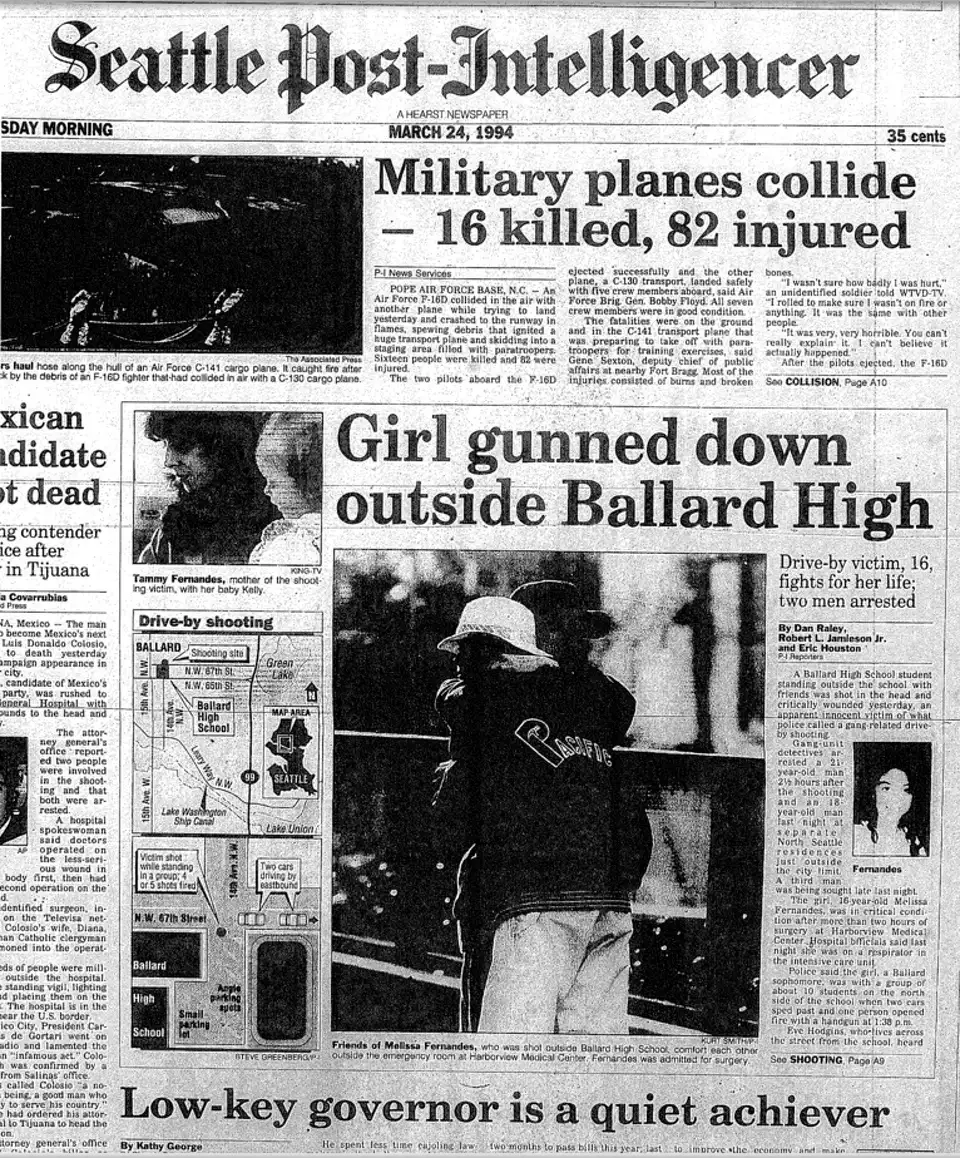
Partially inspired by ratification of the Washington Violence Prevention Act of 1994 (E2SHB 2319) which included a section allowing school district boards to require dress codes, uniforms, and include “more stringent discipline,” the Seattle School Board voted to “officially encourage” school leaders to enforce dress codes in their schools.Footnote 77 Many local school leaders were ready to act by the time the Seattle School Board voted to encourage school leaders to implement dress policies. South Shore Magnet Middle School principal John W. German had been researching and considering uniform implementation since 1992.Footnote 78 Board member Don Nielsen was one of the most active instigators of dress code adoption and uniform policy implementation. In a memorandum sent to the entire school board on March 25, 1994, Nielsen provided insight into his rationale and that of the school board at the time:
My own feeling is that it is time to seriously consider a dress code for our schools. It is also time to consider what other ideas we can think of to help our principals instill some discipline into their schools and hopefully into our society. The recent shooting at Ballard should be all the incentive we need to begin looking at different ways to create a disciplined lifestyle conducive to learning into our students. One of the fastest ways to do this is to allow schools to implement dress codes.Footnote 79
There are several things that Nielsen’s memo reveals about the state of school dress requirements in the early 1990s. His statement that “it is time to seriously consider a dress code for our schools” seems to imply that no type of dress or appearance standard for Seattle Public Schools students had been communicated—but that was not true. From the time the Girls’ Clubs and Boys’ Clubs had been developed in the 1930s, to the Cleveland High School Student Handbook in 1984, to the “Students Rights and Responsibilities” pamphlets (eventually renamed to “The Basic Rules of Seattle Public Schools”) that circulated widely through the mid-2000s, there was never a time when student clothing requirements were not mentioned by schools or the school district.Footnote 80 The implication Nielsen was making was off base, because the student responsibility to “dress appropriately for school in ways that will not cause safety or health problems, or disruptions” was already established in pamphlets circulated by Seattle Public Schools the very year he recommended a dress code to the school board.Footnote 81 One may assume, then, that Nielsen was referring to a more specific, itemized list of appropriate school clothing and measurement standards, like many of the dress codes written in the 1990s and early aughts. From an administrator’s perspective, such a list would be easier to measure and enforce.
Another interesting insight from Nielsen’s letter was that he specifically felt inspired to regulate male students through dress codes, even though the dress codes from the 1990s (and since) target female students significantly more.Footnote 82 The National Women’s Law Center (NWLC) published two separate comprehensive studies in 2018 and 2019 evaluating dress codes and subsequent discipline in Washington, DC, schools.Footnote 83 In one of those studies, the NWLC concluded that “many schools across the country have different dress codes for girls and boys based on sex stereotypes… . Even dress codes that are the same for boys and girls may nonetheless rely on—and reinforce—sex stereotypes.”Footnote 84
Generally, dress code policies and enforcement have focused on different gender-based concerns: For female students, the emphasis has been on “immodest” or sexualized clothing that purportedly causes distraction, while for male students, attention has centered on clothing associated with gang membership, violence, or drug paraphernalia.Footnote 85 In the 1990s, schools began to more clearly separate dress code rules for girls and boys, echoing earlier distinctions like those made by the Girls’ and Boys’ Clubs. They also created increasingly specific restrictions for boys’ clothing—similar to those that had long governed girls’ dress, just in different ways. These gendered distinctions aimed to maintain safety and order in schools by enforcing behavioral norms rooted in both sex-based stereotypes and racial assumptions.
Given that Nielsen directly cited the shooting at Ballard High School earlier that year as justification for stricter clothing policies, it is important to consider the contrasting demographics of the two schools: the school where the shooting incident occurred, and the school where uniforms were first implemented. The Ballard incident was reported as a gang-related drive-by shooting, reinforcing racialized fears about youth culture that were prevalent in Seattle at the time.Footnote 86 Ballard High School, located in North Seattle, had a student population that was 73 percent White. In contrast, South Shore Urban Environmental Magnet Middle School Middle School, situated in South Seattle, served a student body that was 84 percent students of color.Footnote 87
Although the two schools sat on opposite ends of the district’s boundaries, it was South Shore—not any of the North Seattle schools—that was selected as the first secondary school in the district to implement a mandatory uniform policy. This decision, and the broader pattern of uniform policy rollouts that followed, reflected the racialized geography of school discipline. The decisions made by education officials in Seattle reflected the patterns identified in Matthew Lassiter’s research, which shows that fear of youth culture, particularly when associated with race, influenced punitive school policies across the United States during the 1980s and 1990s.Footnote 88
Although school uniforms were common (and continue to be) in many countries and cultures around the world, they had not been widely adopted in US public schools. In the 1990s, as part of a broader push for greater control and discipline, many school districts began experimenting with uniforms in what became known as the School Uniform Movement. For some administrators, uniforms offered a tangible solution to concerns about student behavior, academic performance, and growing fears related to fashion trends and school violence. South Shore Urban Environmental Magnet Middle School in South Seattle was selected to pilot a uniform policy beginning in the 1995-1996 school year. In a draft letter written for families, Principal John German outlined the rationale behind the decision and the hoped-for outcomes of implementing uniforms at South Shore:
For several months now, the word “uniforms” has been the center of many learning community discussions… . In accordance with all that I have read, uniforms would be another way of presenting a very studious/professional setting for your child. Parents who have discussed the idea of a uniform school note that there are other urban metropolitan areas such as Lo[s] Angeles and New York who have been wearing mandatory uniforms to public school… . We at South Shore … would like to be on the cutting edge of change for the betterment of the children in this school.Footnote 89
South Shore Magnet Middle School was the first secondary school in Seattle to implement a mandatory uniform policy.Footnote 90 In an effort to ensure a smooth rollout, school administrators hosted meetings and produced a wide range of communication materials including letters, notices, and pamphlets (See Figure 2). They even featured students modeling the uniforms in promotional materials aimed at parents and families. The most comprehensive resource, a pamphlet titled “South Shore to Present New School Attire and Uniforms for 1995-1996,” included detailed information about the uniform policy—such as pricing, fit, purchasing instructions, clothing diagrams, and testimonials from Parent-Teacher-Student Association leaders. Across these materials, administrators outlined at least six intended benefits of the new policy:
1. Educational improvements, including “lower absenteeism, fewer tardies, truancies, referrals to the office for behavior problems and less suspension and expulsions”
2. Reduced clothing costs for families
3. Encouragement of student neatness and personal discipline
4. Elimination of “label competition” and visible class differences
5. Improved student self-image and stronger school unity
6. Economic advantages for the school as a whole
South Shore Notice, Seattle Public Schools, May 1995.

Figure 2 Long description
The left page of the notice titled 'South Shore Notice' announces new school attire and uniforms for 1995-1998. It includes black-and-white images of students wearing the proposed uniforms, which consist of shirts, ties and trousers. The right page provides examples of clothing designs and prices, featuring sketches of uniform pieces such as shirts, pants and skirts. Text boxes describe the uniform policy and pricing details. The layout is structured with headings and sections for easy reading.
The pamphlet’s tone was upbeat and clearly aimed to encourage students and families to support the new uniform policy. Given the broader school, community, and political climate of the mid-1990s, it is understandable that an urban public school like South Shore would align with the national trend toward adopting uniforms. Notably, however, despite the promotional materials and internal messages from Principal German and the school, no citations or references to research supporting the claimed benefits of uniforms were provided. Nielsen, like many administrators and educators at the time, believed that implementing a specific dress code would reduce misbehavior and violence. However, these claims were not supported by research at the time and were instead based largely on personal feelings and impressions rather than empirical evidence. In the Seattle School Board motion, Nielsen wrote: “The Seattle School Board recognizes that appropriate dress tends to foster appropriate behavior, and that inappropriate dress is often accompanied by inappropriate behavior.”Footnote 91
This marks a critical point in the evolution of dress code policy. During a decade when dress codes expanded dramatically in both their prevalence and the level of detail regulating student appearance, this nationwide adoption occurred largely without support from reliable educational research. Across dress code documents, uniform policy guidelines, administrative discourse, and student handbooks, numerous justifications were offered in favor of stricter appearance standards—but these claims were rarely backed by valid evidence. School boards, administrators, educators, and families often embraced these policies not based on data, but in response to broader cultural anxieties and the prevailing social climate.
In response to Washington statute RCW 28A.320.140, which, in part, authorized public schools to adopt required uniform policies in 1996, the ACLU began preparing to challenge the constitutionality of the new statute.Footnote 92 In a memorandum to the ACLU Washington Board of Directors, attorney Lucy Lee Helm explained that the ACLU’s challenge regarding the constitutionality of uniform policies rested on whether or not public schools would be infringing upon students’ First Amendment rights of expression. Helm helpfully described the distinction between dress codes and uniform policies: “Even to the extent that these dress code cases are helpful to an analysis of school uniform policies, they are also distinguishable because they deal with codes prohibiting certain discrete types of clothing that a student may wear, rather than mandating the clothing students must wear.”Footnote 93 Helm argued the primary difference between public schools being permitted to implement dress codes and being permitted to mandate uniforms, from the perspective of First Amendment rights, was that in one students do have a choice, even though it is a limited one, while in the other, students have no choice.
Since the mid-to-late 2000s, numerous research studies and legal analysis have examined the long-standing claims about dress codes and uniforms, finding that much of the available evidence contradicts the arguments made in support of these policies during the 1990s and early 2000s. A recent study published in 2022 found that “in general, students in schools that required school uniforms did not demonstrate better social skills, internalizing and externalizing behavior, or school attendance as compared with students in schools without school uniforms. These associations were true across both public and private schools. There was, however, some indication that low-income students in schools that required uniforms demonstrated better school attendance than low-income students in schools that did not.”Footnote 94 There have not been studies that conclusively prove that students are worse off academically or behaviorally when they are required to wear uniforms, but many researchers have concluded that the claims made in the 1990s about uniform benefits were, and are, unsupported by data.Footnote 95
Despite a growing body of educational research challenging the idea that controlling student clothing leads to improved behavior or safer schools, many administrators, teachers, families, and students still feel that strict dress codes (especially uniforms) achieve those goals. In 2000, the Tacoma School District adopted a policy allowing individual schools to decide whether to implement uniforms. By 2010, all nine of Tacoma’s middle schools had chosen to require them.Footnote 96 In contrast, most suburban districts surrounding Tacoma, including Clover Park, have no uniform mandates. This reflects a broader national trend in which public school uniform policies are concentrated in urban districts that serve economically disadvantaged students and have disproportionately higher populations of students of color.Footnote 97
Administrators and educators in the 1980s and 1990s increasingly turned to dress codes as tools to assert control over school environments in response to rising political and cultural anxieties. A legal study published in the Journal of Law and Education in 2000 found that “eighty-five percent of the principals believed that a dress code was needed at their school,” with support strongest among middle and high school principals.Footnote 98 While these shifts were often made with the sincere belief that stricter clothing policies would improve safety and academic performance, later research has cast doubt on the effectiveness of such measures. This development coincided with a broader national trend in which schools responded to racialized fears—particularly around youth culture, drugs, and violence—by enacting increasingly punitive policies that disproportionately affected students of color.Footnote 99 The adoption of uniform policies in urban districts like Seattle and Tacoma reflects how local decisions were shaped by these national narratives. In this way, school dress codes functioned not only as disciplinary tools, but also as expressions of the cultural and political climate that linked student appearance to broader fears of social disorder.
PART IV: School Dress as Resistance (2000s and Onward)
In its 2022 report on public school dress codes, the United States Government Accountability Office (GAO) highlighted common language used nationally, such as “no straps smaller than three adult fingers” and “torn areas [of clothing] must be less than the size of a tennis ball.”Footnote 100 Such vague methods of evaluating student dress began in the 1990s and became widespread in the 2000s, leading to inconsistent and often subjective interpretations by administrators and teachers of what counted as “appropriate dress.” Television, media, and news coverage in the 1990s and early 2000s played a significant role in shaping changes to student dress and appearance policies, influencing the adoption of stricter dress codes and encouraging schools to join the broader public school uniform movement. However, the explosion of social media in the 2010s and onward brought severe, critical, policy-altering light on discriminatory dress codes and discipline in the United States.
Students were able to utilize public outcry about their school dress codes as a means of resistance and power. In 2014, a group of students from a middle school in New Jersey started the hashtag campaign #IAmMoreThanADistraction to call out their schools’ unfair dress code requirements and discipline of female students.Footnote 101 Through widely used social media platforms like Twitter, Instagram, and Facebook, the movement circulated flyers prompting changes in school dress codes throughout the country, declaring:
Thousands responded to the hashtag by affirming the original post or sharing their own experiences and photos of outfits they were wearing when they were found in violation of a school dress code (or “coded”).
Important research was published in the 2010s – a report by Kimberle Williams Crenshaw, Priscilla Ocen, and Jyoti Nanda, and an article by Rouhollah Aghasaleh –that focused on the intersection of racism and sexism in US school dress codes specifically targeting Black girls.Footnote 103 Guided by previous research, the NWLC published two extensive reports titled Dress Coded and Dress Coded II, which dove headfirst into the experience of Black girls in DC schools and their acts of protest against racist and sexist dress codes.Footnote 104 The NWLC reports directly called out each DC high school for its dress code and its (some would call illegal) discipline unfairly targeting girls of color.
In 2017, an NPR online article titled “When Black Hair Violates the Dress Code” shone a critical light on discriminatory dress code policies that targeted and disciplined Black children for their natural hair, which often led to race-based shame and exclusionary discipline.Footnote 105 In 2019 NBC reported a pattern of Black children being reprimanded or disciplined in their schools because their natural hair violated dress and grooming guidelines.Footnote 106 Three of the reported incidents were captured on video, highlighting both the discriminatory nature of dress codes and the growing role of social media and news coverage in challenging these practices during the 2010s and 2020s.
In 2021, student Drew Jarding conducted a social experiment in his school that he covered in a series of TikTok videos: He wore the same outfits as his female friends to see who would get written up first for a dress code violation. In his videos, Jarding shared that most of his female friends were quickly written up for violations, before they made it to their lunch break, while he was never written up (even when he started to wear outfits more revealing than his female friends’). His viral videos were featured on a news segment on Good Morning America.Footnote 107 Jarding’s viral moment drew national attention to an issue that was (and still is) familiar to many female secondary students across the United States: constant, strict monitoring and discipline of what they wore to school.
From the late 1990s up through the present, the state and federal judicial systems have been met with another flurry of interest surrounding challenges to student dress and grooming regulations and disciplinary actions. As was the case in the 1960s-1980s, there has not been a uniform pattern regarding case rulings. The location of cases and their circumstances have had a significant effect on the interpretation of and rulings about dress code policies. Notably, in 1995 the Montana Supreme Court sided with a Native American student who challenged school policy prohibiting long hair for male athletes, citing the policy’s infringement on religious and cultural expression.Footnote 108 A 2008 case in Dallas (which was settled out of court) entailed the disciplining of a Black student for wearing his hair in braids, which continued to raise questions around Equal Protection concerns and racialized hair codes.Footnote 109 When a public high school in 2014 required its boys’ basketball players to keep their hair short, the court found the sex-based grooming policy violated the Equal Protection Clause and thus was unconstitutional.Footnote 110
The US Supreme Court declined to hear an appeal in Peltier v. Charter Day School, allowing the Fourth Circuit’s ruling to stand against the North Carolina school’s enforcement of a skirts-only dress code for girls.Footnote 111 Although the court dismissed the prosecution’s Title IX claims, it found the policy violated the Equal Protection Clause of the Fourteenth Amendment. Compared with earlier cases from the 1960s and 1970s that challenged sex- and race-based dress and grooming standards, this post-2000s case reflects a meaningful shift in how the courts interpret student rights related to expression, identity, and appearance. Yet in cases across the country involving racially enforced hair policies, rulings have failed to consistently recognize student rights. A recent example occurred in 2024, when a Texas court ruled in George v. Barbers Hill Independent School District that a school district’s suspension of a Black high school student for dreadlocks exceeding prescribed length limits did not violate the state’s CROWN Act, which prohibits discrimination based on hairstyles associated with a particular race or culture.Footnote 112 Since Tinker v. Des Moines, the number of legal challenges involving student dress and grooming has grown significantly, but there remains a lack of clear legal standards, consistency, and interpretation across jurisdictions.
Between 1994 and 2019, the Seattle Public Schools school board encouraged individual school leadership teams throughout the district to develop, implement, and enforce a dress code that felt appropriate for their respective students and school environment. At the forefront of a national movement toward either reforming dress codes or abolishing them altogether, the Seattle School Board implemented what it referred to as a “gender-neutral” or “universal” dress code, beginning in the 2019-2020 school year for all district schools.Footnote 113
The new “universal” dress code read:
Students must wear:
Top (shirt, blouse, sweater, sweatshirt, tank, etc.)
Bottom (pants, shorts, skirt, dress, etc.)
FootwearFootnote 114
Accompanying the new clothing and appearance guidelines was a list of forbidden elements/items (including pornographic clothing, drug paraphernalia, hate speech, and gang affiliation) and a list of “core values” to guide administrators and educators in their enforcement of the new dress code.Footnote 115 The core values section discusses safeguards against hairstyle discrimination and gender-based targeting, including:
• Students have the right to be treated equitably. Dress code enforcement will not create disparities, reinforce or increase marginalization of any group, nor will it be more strictly enforced against students because of racial identity, ethnicity, gender identity, gender expression, gender nonconformity, sexual orientation, cultural or religious identity, household income, body size/type, or body maturity;
• Students and staff are responsible for managing their personal distractions; and
• Students should not face unnecessary barriers to school attendance.Footnote 116
Seattle’s new dress code directly addressed various themes and concerns raised by activists through social media and in news coverage: There were candid references to hair discrimination, inequitable enforcement, awkward interactions with faculty and administrators trying to enforce arbitrary and subjective rules, gender nonconforming and transgender students, and even the admission that others are “responsible for managing their personal distractions.”
Although Seattle’s public schools were not the first to implement a universal dress code, their decision drew widespread attention across the state. District officials received strong support from other educational leaders in Washington. Explaining the new changes, Seattle Public Schools legal counsel Ronald Boy highlighted the connection between student dress and school policy:
There is just this really deeply ingrained belief about school dress codes. But when you really kind of break it down …… then people have the chance to reflect and be like, “Oh, yeah, that doesn’t really make sense.” … They’re just based on these silly, old-fashioned ideas that, for some reason … it took us a long time to kind of grow out of.Footnote 117
Since the late 2010s, Seattle and Tacoma public schools have taken opposite approaches to regulating student dress: Seattle implemented a universal, gender-neutral dress code meant to reduce bias and eliminate uneven discipline based on a student’s race, gender, or body type. District leaders made public goals to protect student expression and prevent subjective enforcement by teachers and administrators. Tacoma, on the other hand, doubled down on strict dress control by embracing uniforms in nearly all of its middle schools. This model emphasized order and discipline through appearance, assuming that control over clothing leads to better behavior and academic focus. These two approaches reveal just how unsettled the issue of school dress remains. While one district tried to remove the harm of biased enforcement, the other relied on control as a solution to larger problems. For students, these choices affect more than their outfits—they shape how they experience school, how freely they can express themselves, and whether they feel seen in the classroom or targeted for exclusionary discipline.
The evolving dress code policies in the Seattle-Tacoma area reflect broader national questions about the role of appearance requirements in public education and the consequences of enforcing strict visual norms. Across the US, rigid dress codes have disproportionately targeted students in urban, non-White communities, often relying on racial and gender stereotypes to justify punishment for hairstyles, clothing fit, or cultural expression. In recent years, social media and news coverage have played a powerful role in exposing the unequal enforcement of these policies—bringing student voices to the forefront and turning local incidents into national conversations. Viral videos, student-led protests, and public campaigns have pressured schools and districts to confront the harm caused by dress codes that punish identity rather than behavior.
While Seattle and Tacoma responded in different ways, both are navigating a climate marked by greater scrutiny and accountability. At the center of this shift is a growing ethical question: Should students be removed from classrooms, suspended, or sent home simply because of their appearance? The concern deepens when appearance requirements reflect or intersect with race, gender, or cultural identity. As awareness grows, there is an increasing recognition that dress codes must evolve not only for the sake of consistency or order, but also to uphold the dignity and inclusion of every student.
Conclusion
Scholar Meredith Neville-Shepard’s research into the effects of school dress code discipline on individual female students and overall school culture links dress code enforcement on young girls to aggressive misogyny in schools and youth relationships.Footnote 118 In a 2019 study, Neville-Shepard named in academic terms what girls have been feeling all along. In NWLC student interviews, in features from Education Week and Business Insider, and in reports published by Rethinking Schools and the ACLU (among others), secondary school-age girls and their families expressed feelings of shame, inequality, hyper-sexualization, objectification, racial prejudice, and homophobia in their schools.Footnote 119
When female students are excluded from learning or shamed for their appearance, it underscores the urgent need for schools and society to reform policies so that all students, regardless of gender, have equal access to education. When school leaders disproportionately discipline or target students of color for their appearance, they expose the racial bias embedded in students’ day-to-day schooling. The heaviest burden, then, lies on the shoulders of girls of color, pressured to make sure their young bodies uphold appropriate expectations of femininity and racialized beauty standards just to gain entrance to public spaces of learning.
In addition to dress codes disproportionately policing the appearance of girls of color, Black girls are often adultified, denying them the presumption of innocence, vulnerability, and protection afforded to White girls (or those who pass as White). Monique Couvson directly connects harsher discipline, policing, adultification, and surveillance of Black girls in school to their pushout toward the criminal justice system.Footnote 120 Black girls are suspended, expelled, and referred to law enforcement at much higher rates than their peers, often for nonviolent offenses like dress code violations. Many of Couvson’s 2016 findings were echoed by the GAO in 2022.
In its 2022 Report to Congressional Addressees, the GAO declared that “nearly every public school district in the nation required students to adhere to a dress code … and lay out disciplinary consequences for violating the dress code.”Footnote 121 The GAO received specific funding to examine how school dress codes and related disciplinary actions may violate students’ civil rights, and to assess effective practices for creating fair and equitable dress code policies. In addition to overlapping with Couvson’s work, the GAO arrived at findings consistent with other studies like those produced by the NWLC in 2018: Dress codes targeted female students; students of color were disciplined more often for dress code violations; students were unable to represent their religious and cultural identities through clothing; LGBTQI+ students often felt unsafe and unprotected; the “measurement” of dress code violations usually required that adults touch students’ bodies; and most dress code enforcement included subjective interpretation that often lead to shame-based disciplinary measures and/or exclusionary methods of discipline.Footnote 122
The GAO strongly recommended that congressional leaders provide information on equity and safety in school dress codes for public school administrators and educators, and acknowledged that a standardized, equitable dress code was urgently needed to protect students in schools.Footnote 123 As of 2026, no official guidance on equitable dress code practices appears on the Department of Education’s website or in its policy updates, and no formal implementation has been issued. The GAO still lists the status of this recommendation as “open” and that Department of Education has stated their “efforts are ongoing.”Footnote 124
Metropolitan Seattle provides valuable insight into how a policy system that started with the presumably good intentions voiced by student organizations ballooned into a system marked by an erratic series of recycled policies and enforcement that caused students harm. While one cannot undo the past, schools in the Seattle metro have also shown there is room to adapt old policies and, informed by their history, implement new, better ones supported by educational research. But this is not a singular case, as future scholarship on this subject may confirm. Metropolitan Seattle’s policies and enforcement of student dress and grooming are but one example of a large, prevalent, yet-unsolved issue.
While the evolution of dress and grooming standards seemed to gradually change over time, often reflecting major events of the era, two specific moments stand out as key catalysts that shifted how clothing and appearance standards were mandated and enforced in schools: the students’ rights litigation movements spanning the late 1960s and the 1970s, and the reactionary national dress code movements marked by tough-on-violence policies and ethno-racial fear starting in the 1990s and continuing into the 2000s.
Modern research and cases like Seattle provide concrete guidance for resolving this issue within US public schools. By evaluating the different gendered, racialized standards and expectations required of girls and boys in schools, we better understand the overall experiences of children in school, including those of marginalized groups: the ways in which they are excluded, held to different, higher standards, penalized in different ways, and in some instances, traumatized. Through dress code reform, public schools in the United States can correct the policies of the past and show what it is they truly value in their spaces of education.
Historian Maxine Leeds Craig described the weighty symbolic meaning that clothing can take on:
When and where there is repression, what a woman does when she gets dressed in the morning may be considered political. Wearing or not wearing a veil, disobeying laws that prohibit transgender dressing, or wearing a large Afro in an institution that seeks to diminish the formation of racial alliances are all actions that can serve as challenges to domination. When the context shifts to accommodate forbidden expressions, powerful symbols can return to being pieces of cloth.Footnote 125
Ultimately, this is not a story about dress codes—this is a story about the ways that we have neglected girlhood, racism, and institutional power in schools. Dress codes show us how each of these elements have evolved over time, and ultimately, that conditions haven’t necessarily evolved for the better. Dress codes are not about clothing; they are about power. In both the past and the present, standards for children’s attire have been used time and again to deny equitable educational access to those who do not conform to dominant norms of gender, race, and respectability.
Mallory Hutchings-Tryon is a PhD candidate in Social and Cultural Foundations of Education at the University of Washington. She has over a decade of teaching experience in secondary and higher education and has contributed to international human rights curricula. Her work lies at the intersection of education history and feminist/gender studies, with a sustained focus on educational access and opportunity. She gratefully acknowledges the support of her mentors, colleagues, and family.


 Open access