


The obesity epidemic affects more than one-third of the US population, with obesity contributing to substantial morbidity and mortality from cancer and CVD( Reference Flegal, Carroll and Kit 1 – Reference Flegal, Kit and Orpana 4 ). Despite public health efforts to combat obesity through established dietary guidelines, dietary intake of nutrient-dense foods is suboptimal among US adults, which may contribute to energy imbalance and subsequent obesity. The majority of US adults do not meet requirements for intake of the most nutrient-rich fruits and vegetables, like whole fruits and dark green, orange and red vegetables( Reference Guenther, Dodd and Reedy 5 – 9 ). In addition, adherence to recommended guidelines for dietary intake of whole grains, fruits and vegetables appears lowest among those at lower socio-economic levels and among non-Hispanic Blacks and Mexican Americans, likely contributing to disparities in prevalent obesity and cardiovascular risk in the US population( 10 , Reference Kirkpatrick, Dodd and Reedy 11 ).
Prior studies suggest that the majority of the US population has knowledge and awareness of existing dietary guidelines( Reference Wright and Wang 12 ). However, a disconnect persists between knowledge of and adherence to recommended guidelines. While limited access to healthful foods due to environmental( Reference Lovasi, Hutson and Guerra 13 , Reference Diez Roux and Mair 14 ) or socio-economic factors( Reference Rehm, Monsivais and Drewnowski 15 ) likely promotes this disconnect, psychosocial barriers including inadequate social support, perceived behavioural control or general knowledge of appropriate dietary habits also appear to play an important role( Reference Shaikh, Yaroch and Nebeling 16 ).
Perceived diet quality (PDQ) is another psychosocial factor that may perpetuate poor dietary habits. Individuals may perceive their dietary intake to be of higher quality than defined by objective measures of dietary intake based on dietary guidelines or recommended dietary patterns. Inaccurate perceptions of dietary intake have been associated with limited intention to change adverse dietary behaviours, such as high dietary fat consumption( Reference Brug, Van Assema and Kok 17 ). Research suggests that a substantial portion of the US population has inaccurate perceptions of diet quality, with almost 40 % of household meal planners or preparers perceiving their diet to be of higher quality than suggested by objective diet quality( Reference Variyam, Shim and Blaylock 18 ). However, studies of PDQ only examined single dietary components, such as fat or fruits and vegetables, in isolation( Reference Brug, Van Assema and Kok 17 , Reference Lechner, Brug and De Vries 19 ) or categorized individuals in the study population based on dietary intake without accounting for the excessive intra-individual variation associated with the use of a single 24 h dietary recall for sampled populations( Reference Variyam, Shim and Blaylock 18 ).
The relationship between PDQ and diet quality as measured by a Dietary Approaches to Stop Hypertension (DASH) index score has not been studied. Comparison of PDQ with measured diet quality evaluated by a DASH index score can provide key insights into dietary habits of the US population. In brief, the DASH diet was examined in two multi-centre, randomized controlled feeding trials( Reference Appel, Moore and Obarzanek 20 ). The original trial found that the DASH diet, which is rich in fruits, vegetables and low-fat dairy products, and low in saturated and total fat, significantly reduced blood pressure. The menus ensured a 2·5-fold increase in intake for the nutrients of concern – Ca, K, Mg and dietary fibre – between the DASH diet and the control diet( Reference Karanja, Obarzanek and Lin 21 ). A follow-up trial – the DASH Sodium Trial – found that a reduction of Na intake in conjunction with the original DASH diet reduced blood pressure further( Reference Sacks, Svetkey and Vollmer 22 ). The DASH diet has been associated with weight loss( Reference Appel, Brands and Daniels 23 ), weight maintenance( Reference Svetkey, Stevens and Brantley 24 ) and reduced risk for chronic diseases, including hypertension and CVD( Reference Sacks, Svetkey and Vollmer 22 , Reference Appel, Brands and Daniels 23 ). The DASH Eating Plan aligns with federal dietary guidelines for the US population( 8 ) and was designed to translate the DASH diet into a dietary pattern that could be used for broader implementation. Several DASH indices have been developed for nutritional epidemiological studies based on the DASH Eating Plan( Reference Gunther, Liese and Bell 25 – Reference Mellen, Gao and Vitolins 28 ). Prior studies comparing food-based and nutrient-based DASH indices suggest that each type of index consistently captures key features of the DASH dietary pattern (PE Miller, A Cross, S Krebs-Smith et al., unpublished results). Therefore, comparison of perceived and objective diet quality as measured by a nutrient-based DASH index can relate PDQ to both overall dietary intake and intake of key nutrients. Additionally, understanding perceived and objective diet quality can highlight areas for focused nutritional education in public health interventions targeting dietary habits.
Therefore, we sought to understand the relationship between PDQ and objective diet quality in a nationally representative US adult population using data from the 2005–2006 National Health and Nutrition Examination Survey (NHANES). We characterized overall diet quality as measured by total DASH index scores and individual DASH dietary components across levels of PDQ in the overall US population and population subgroups, accounting for sociodemographic confounders.
Experimental methods
National Health and Nutrition Examination Survey overview
The NHANES is a series of cross-sectional surveys designed by the National Center for Health Statistics of the Centers for Disease Control and Prevention. The survey is conducted using a multistage, stratified sampling design to assess the health and nutritional status of a nationally representative sample of the civilian, non-institutionalized US population( 29 ). In-home medical histories were conducted to gather demographic, socio-economic and health-related information, and participants underwent health examinations and completed a 24 h dietary recall and a dietary behaviour questionnaire at mobile examination centres. The 24 h recall for each participant was conducted in-person with English- or Spanish-speaking dietary interviewers. The study was conducted according to the guidelines laid down in the Declaration of Helsinki and all procedures involving human subjects were approved by the National Center for Health Statistics Research Ethics Review Board. Written informed consent was obtained from all participants in the study. Further details about NHANES have been previously reported( 29 ).
Sample demographics
Age, race and ethnicity, education and poverty income ratio categories were defined using self-reported demographic data from 2005–2006 NHANES. Models were run on four distinct age groups: 19–30 years, 31–50 years, 51–70 years and 71+ years. Racial and ethnic groups were characterized based on responses to questions about race and Hispanic origin. We included non-Hispanic Whites, non-Hispanic Blacks and Mexican Americans who reported a single racial identity because the group sample sizes were adequate for separate evaluation and estimates( Reference Kirkpatrick, Dodd and Reedy 11 ). Level of education was defined as 0–11 years, 12–15 years and 16+ years. Poverty income ratio is the ratio of income to the federal poverty threshold based on family composition and size, and this parameter was used to develop cut-offs for three income subgroups: lowest (≤130 % of the poverty threshold), middle (131 %–185 %) and highest (>185 %)( Reference Kirkpatrick, Dodd and Reedy 11 ). Weight and height were measured during NHANES physical examinations and used to calculate BMI as weight in kilograms divided by the square of height in metres( 30 ).
Dietary intake
Data from a 24 h dietary recall administered by trained interviewers were used to determine participants’ dietary intake. Only day 1 of the 24 h recall data was used because the majority of participants completed day 1 testing during the examination at the mobile examination centre. Nutrient intake estimates for the population were generated using the US Department of Agriculture's Food and Nutrient Database for Dietary Studies (FNDDS) Version 3·0, which is the data analysis software and associated food composition databases used to analyse the NHANES 2005–2006( 31 ). The 24 h recall data were processed as described previously( 31 ).
Dietary Approaches to Stop Hypertension index score
To evaluate the dietary intake of US adults based on the DASH dietary pattern, we computed nutrient-based DASH index scores as originally described by Mellen et al.( Reference Mellen, Gao and Vitolins 28 ). The nine targeted nutrients in the DASH index are those that would be expected to be higher (i.e. protein, fibre, Mg, Ca and K) or lower (i.e. total fat, saturated fat, Na and cholesterol) with greater adherence to the DASH diet. This method uses nutrient densities derived from absolute targets associated with a 8786 kJ (2100 kcal) diet for men and women. Twenty-four hour dietary recall data from NHANES were used to estimate DASH index scores by assigning 0, 0·5 or 1 point for each of the nine target nutrients (total fat, saturated fat, protein, cholesterol, fibre, Mg, Ca, K, Na). All nutrient intake data were derived solely from foods. Individuals who met the goal for each component received 1 point, those who met an intermediate goal – defined as the mid-point between the DASH diet goal and the nutrient content of the DASH control diet – received 0·5 points, and those meeting neither goal received 0 points. As shown in Table 1, the optimal micronutrient targets are energy-adjusted (per 4184 kJ (1000 kcal)): ≥14·8 g for fibre, ≥238 mg for Mg, ≥590 mg for Ca, ≥2238 mg for K, ≤71·4 mg for cholesterol and ≤1143 mg for Na. Optimal goals for macronutrient intakes are as a percentage of total energy intake: ≥18 % for protein, ≤27 % for total fat and ≤6 % for saturated fat. The nutrient components were summed to obtain an overall DASH index score (score range of 0 to 9 points). A DASH index score of 9 points represented optimal accordance with the DASH dietary pattern. An index score of 0 points was classified as suboptimal to the target goals of the DASH diet pattern. A total DASH index score of approximately ≥4·5 points was considered accordant with the DASH dietary pattern( Reference Mellen, Gao and Vitolins 28 ).
Nutrient targets for the DASH index scoreFootnote †,Footnote ‡,Footnote §
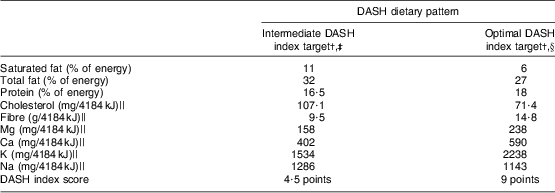
DASH, Dietary Approaches to Stop Hypertension.
† Intermediate and optimal DASH index targets were derived from the nutrient composition of the DASH dietary pattern.
‡ Nutrient components equally weighted with 0·5 points for aligning with the intermediate target of each component of the DASH index.
§ Nutrient components equally weighted with 1 point for aligning with the optimal target of each component of the DASH index.
|| 4184 kJ=1000 kcal.
Perception measures
To assess PDQ in the overall US population and population subgroups, we used the Diet Behavior and Nutrition questionnaire (DBQ) of the 2005–2006 NHANES. The DBQ contains questions and data relevant to nutrition and dietary behaviours( 32 ). NHANES participants answered the question ‘In general, how healthy is your overall diet?’ on a 5-point Likert scale, with possible answers ranging from ‘excellent’ to ‘poor’. Participants’ responses to this question were used to generate PDQ scores. PDQ was scored as ‘high’ for those who perceived their diet to be ‘excellent’ or ‘very good’, ‘medium’ for those who perceived their diet to be ‘good’ and ‘low for those who perceived their diet to be ‘fair’ or ‘poor’. This method was used for categorization of diet quality perception in prior studies( Reference Brug, Van Assema and Kok 17 – Reference Lechner, Brug and De Vries 19 ).
Study population
For the study population, we included data on non-Hispanic White, non-Hispanic Black and Mexican-American US adults aged 19 years or older with reliable 24 h dietary recall data and non-missing responses for the survey question about PDQ from the NHANES 2005–2006 survey. The final study population was 4419 NHANES participants.
Statistical analysis
To account for the complex survey design of NHANES, we used SURVEY procedures in the statistical software package SAS version 9·2. The χ 2 test was used to compare baseline characteristics of the NHANES population across PDQ levels. A sample-weighted F test was used to compare energy intake across PDQ levels. We used sample-weighted, multivariate linear regression models to determine the population mean intakes of DASH dietary components and DASH index scores across categories of PDQ. All linear trends were determined from multivariate linear regression models adjusting for age, sex, race, education and poverty income ratio. Adjusted models were derived for the overall population and stratified by race/ethnicity and BMI categories. There was little statistical difference between unadjusted and adjusted model results; therefore, only adjusted results are shown. Two-sided P values <0·05 were considered statistically significant.
Results
Sample-weighted baseline characteristics for the 2005–2006 NHANES population across categories of PDQ are shown in Table 2. Thirty-three per cent of the US adult population had high PDQ, or perceived their diet as excellent or very good. US adults with high PDQ were more likely to be older, non-Hispanic Whites, with higher levels of education and income, and with normal BMI. Adults with high PDQ consumed the least amount of kilojoules as compared with those with medium or low PDQ.
Baseline characteristics of the 2005–2006 NHANES population (age ≥19 years, n 4419) across categories of PDQ
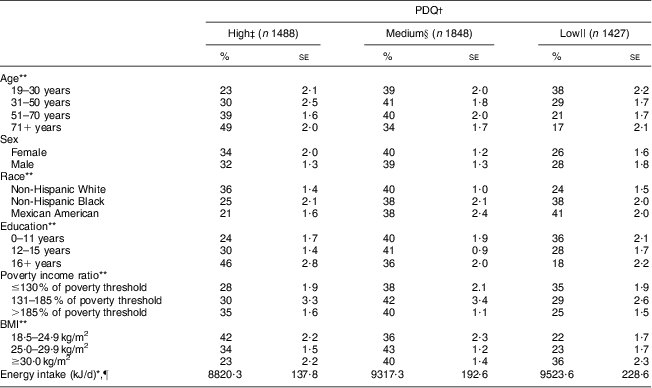
NHANES, National Health and Nutrition Examination Survey; PDQ, perceived diet quality.
*P < 0·05, **P < 0·0001 across PDQ levels.
†The reported percentages represent the distribution of persons within each demographic and BMI category. PDQ represents the answer to the question ‘In general, how healthy is your overall diet?’ on a 5-point Likert scale with possible answers ranging from ‘excellent’ to ‘poor’.
‡High represents ‘excellent’ or ‘very good’ PDQ.
§Medium represents ‘good’ PDQ.
||Low represents ‘fair’ or ‘poor’ PDQ.
¶These data are presented as means with their standard errors.
Table 3 displays adjusted population mean intakes of DASH components and total DASH index scores across PDQ groups, with mean intakes expressed as nutrient densities (percentage of total energy or per 4184 kJ (1000 kcal)). Mean intake of total and saturated fat, as a percentage of total energy, increased with decreasing PDQ. For the remaining target nutrients (including protein, fibre, Mg, Ca and K per 4184 kJ (1000 kcal)), the population mean intake decreased with lower PDQ, with the exception of cholesterol and Na for which population mean intakes were similar across PDQ levels. Moreover, US adults with high PDQ had greater adjusted mean intake than the DASH target recommendations for saturated fat (10·5 (se 0·2) v. 6·0 % of energy), cholesterol (141·3 (se 4·3) v. 71·4 mg/4184 kJ (1000 kcal)) and Na (1595·5 (se 36·6) v. 1143·0 mg/4184 kJ (1000 kcal)). Those who reported high PDQ also had higher DASH scores than participants who had medium or low PDQ (mean score: 3·0 (sd 0·1) v. 2·6 (sd 0·04) v. 2·5 (sd 0·1) points, P-trend = 0·0002); however, none of the average DASH index scores across the three PDQ levels reflected DASH accordance (score ≥4·5 points).
Adjusted population mean intakes of DASH components (and their standard errors) across categories of PDQ for the 2005–2006 NHANES population (age ≥19 years, n 4419)Footnote †
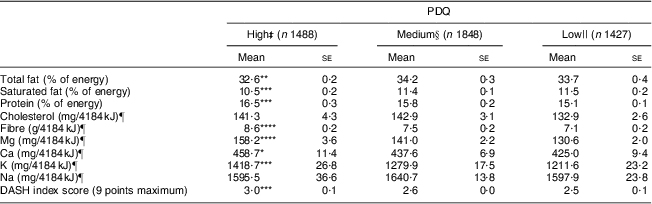
DASH, Dietary Approaches to Stop Hypertension; NHANES, National Health and Nutrition Examination Survey; PDQ, perceived diet quality.
* P < 0·05, **P < 0·01, ***P < 0·001, ****P < 0·0001 across PDQ levels; PDQ represents the answer to the question ‘In general, how healthy is your overall diet?’ on a 5-point Likert scale with possible answers ranging from ‘excellent’ to ‘poor’.
† Adjusted for age, sex, race, education and poverty income ratio.
‡ High represents ‘excellent’ or ‘very good’ PDQ.
§ Medium represents ‘good’ PQD.
|| Low represents ‘fair’ or ‘poor’ PDQ.
¶ 4184 kJ=1000 kcal.
When stratified by race/ethnicity, similar trends were seen among non-Hispanic Whites for DASH nutrient intakes across PDQ levels as compared with the overall population (Table 4). In contrast, non-Hispanic Blacks had similar population mean intake of total fat, saturated fat, cholesterol, Ca and Na across PDQ levels. Among Mexican Americans, there were no significant differences in DASH nutrient intakes across PDQ levels. Non-Hispanic Whites and Blacks with high PDQ had a higher total DASH index score than those with medium or low PDQ (mean score for non-Hispanic Whites: 3·0 (sd 0·1) v. 2·6 (sd 0·01) v. 2·5 (sd 0·1) points, P-trend<0·01; mean score for non-Hispanic Blacks: 2·7 (sd 0·1) v. 2·3 (sd 0·1) v. 2·2 (sd 0·1) points, P-trend < 0·01). There was no statistically significant difference in total DASH index scores across the PDQ levels for Mexican Americans (mean score: 3·1 (sd 0·2) v. 3·0 (sd 0·1) v. 2·9 (sd 0·1) points, P-trend > 0·5). Mexican Americans with low PDQ had a higher total DASH index score than non-Hispanic Whites and Blacks with low PDQ. Non-Hispanic Whites, Blacks and Mexican Americans across all PDQ levels consumed diets that scored below the total DASH target score (≥4·5 points).
Adjusted population mean intakes of DASH components (and their standard errors) across categories of PDQ by racial/ethnic group for the 2005–2006 NHANES population (age ≥19 years, n 4419)Footnote †
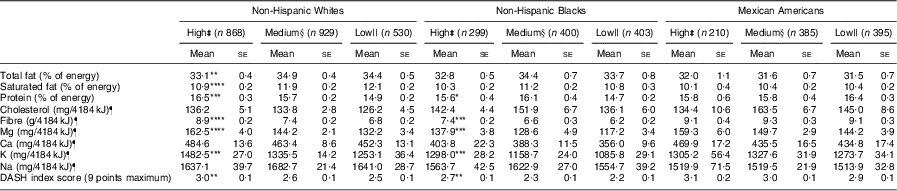
DASH, Dietary Approaches to Stop Hypertension; NHANES, National Health and Nutrition Examination Survey; PDQ, perceived diet quality.
* P < 0·05, **P < 0·01, ***P < 0·001, ****P < 0·0001 across PDQ levels; PDQ represents the answer to the question ‘In general, how healthy is your overall diet?’ on a 5-point Likert scale with possible answers ranging from ‘excellent’ to ‘poor’.
† Adjusted for age, sex, race, education and poverty income ratio.
‡ High represents ‘excellent’ or ‘very good’ PDQ.
§ Medium represents ‘good’ PDQ.
|| Low represents ‘fair’ or ‘poor’ PDQ.
¶ 4184 kJ=1000 kcal.
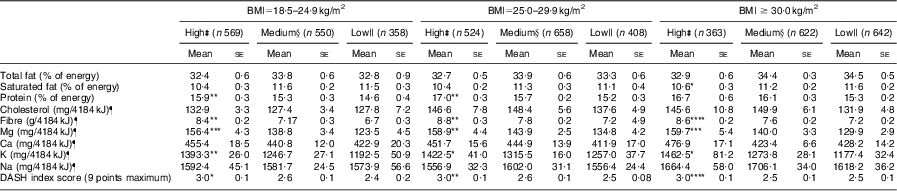
Those with high PDQ who were of normal weight or overweight had significantly higher intakes of protein, fibre, Mg and K (Table 5). In comparison, obese adults with high PDQ also reported higher intakes of fibre, Mg and K, and had a lower intake of saturated fat, as compared with obese individuals with medium or low PDQ. Within each of the BMI categories, there were no differences in cholesterol, Ca or Na intake across PDQ levels. In addition, reported intakes of saturated fat and Na and overall DASH index scores within each of the BMI categories were suboptimal as compared with DASH dietary pattern targets.
Adjusted population mean intakes of DASH components (and their standard errors) across categories of PDQ by BMI for the 2005–2006 NHANES population (age ≥19 years, n 4419)Footnote †
DASH, Dietary Approaches to Stop Hypertension; NHANES, National Health and Nutrition Examination Survey; PDQ, perceived diet quality.
* P < 0·05, **P < 0·01, ***P < 0·001, ****P < 0·0001 across PDQ levels; PDQ represents the answer to the question ‘In general, how healthy is your overall diet?’ on a 5-point Likert scale with possible answers ranging from ‘excellent’ to ‘poor’.
† Adjusted for age, sex, race, education and poverty income ratio.
‡ High represents ‘excellent’ or ‘very good’ PDQ.
§ Medium represents ‘good’ PDQ.
|| Low represents ‘fair’ or ‘poor’ PDQ.
¶ 4184 kJ=1000 kcal.
Discussion
In summary, US adults who perceived their diet to be of higher quality were more likely to consume a diet with a higher DASH index score, with greater consumption of essential nutrients, like protein and fibre, and lower consumption of dietary fat, as compared with those who perceived lower diet quality. However, there was little difference in dietary intake of cholesterol and Na across levels of PDQ. Despite having relatively higher DASH index score, US adults who perceived highest diet quality still did not meet recommendations for dietary intake based on individual nutrient components and total DASH index scores. The relationship between PDQ and objective diet quality measured by the DASH index was present among non-Hispanic Whites and Blacks and across BMI strata, independent of sex, age and socio-economic status. However, there was scant evidence of a relationship between perceived and objective diet quality among Mexican Americans.
The present study highlights several key issues regarding diet quality perception and objective measures of diet quality for the US adult population. First, use of the DASH index extends previous work on diet quality perception by highlighting key dietary nutrients where PDQ does not align with objectively measured diet quality. The discrepancy between the average DASH index score and the target DASH index score among non-Hispanic Black and White adults who perceived high diet quality is consistent with previous work showing that US adults who perceived their diet as excellent or very good had a Healthy Eating Index (HEI) of only 67 points on a 100-point scale, with 100 being optimal( Reference Variyam, Shim and Blaylock 18 ). Regarding key nutrients, we have shown that dietary fat intake is not optimal and above recommended levels, even among those who perceive their diet to be of higher quality; this finding had not previously been established among US adults but had been seen previously in a Dutch population( Reference Brug, Van Assema and Kok 17 ). Additionally, saturated fat intake among obese US adults with high PDQ, while lower than intake among obese adults with medium or low PDQ, was above optimal levels and similar to intake among normal-weight and overweight adults. Similar saturated fat intake may contribute to future weight gain among normal-weight and overweight adults. However, dietary intake under-reporting must also be considered when interpreting intake results for overweight and obese adults( Reference Johansson, Wikman and Ahren 33 ). We have also demonstrated clinically significant differences in dietary fibre and K intakes across PDQ levels for US adults, particularly when compared with the Adequate Intakes for dietary fibre and K established by the Institute of Medicine( 34 , 35 ). Finally, we have identified Na, saturated fat and cholesterol as nutrients where populations with all levels of PDQ consumed well above recommended amounts. In particular, Na and cholesterol are dietary nutrients for which the adult population appears to have the most difficulty complying with recommended guidelines and these findings are potentially due to poor-quality dietary choices available in the food environment( Reference Lovasi, Hutson and Guerra 13 ).
Controversy exists regarding the importance of complying with established guidelines for dietary cholesterol intake. Specifically, US dietary guidelines focus on precise limits for cholesterol intake and international dietary guidelines focus more on limiting saturated fat and trans-fat intakes, with little consensus on ways to reconcile the different approaches( Reference Brownawell and Falk 36 ). With regard to Na intake, our findings support a need for public health interventions and policy-based initiatives to specifically focus on lowering consumption of Na, which would improve the alignment of the population's dietary intake with DASH dietary patterns and improve the cardiovascular health of the US population( Reference Appel, Angell and Cobb 37 , Reference Lloyd-Jones, Hong and Labarthe 38 ). Excess consumption of Na over DASH dietary guidelines, even in the segment of the population that perceives its diet to be healthy, is likely related to the ubiquitous nature of Na in the US diet( 39 ). More than 75 % of Na consumed by the US population is provided in packaged foods or foods purchased in restaurants, and the largest food source for Na is breads and rolls, foods that one might not necessarily expect to affect Na intake( 39 ). Consequently, recommendations by the Institute of Medicine for food manufacturers and restaurants to limit Na in prepared foods may be essential to reduce Na intake in the US population( 39 ).
Second, these findings suggest the objective diet quality for US adults is likely to be poor, even for those adults who perceive their diet to be of highest quality. Therefore, it may be important to develop novel methods of increasing adherence with recommended dietary guidelines in addition to targeting food policy. Wright and Wang previously showed that there was no significant relationship between perceptions of diet quality and awareness of the existence of dietary guidelines after adjustment for race, sex, education and income for US adults from the 2005–2006 NHANES( Reference Wright and Wang 12 ). However, much less is understood about the relationship between perceptions of diet quality and understanding of existing dietary guidelines. One might hypothesize that better understanding of dietary guidelines may improve objective diet quality at all levels of PDQ. Future interventions may also investigate the use of tailored education based upon an individual's dietary intake to identify ways to better align nutrient intake with dietary guidelines. Typically, images like those used in the MyPlate dietary guidance and other educational tools for promoting nutritional recommendations tend to focus on depicting foods and food groups that should be consumed based on dietary guidelines( 40 ). To complement efforts underway with MyPlate in depicting food groups, new computer- or mobile device-based diet applications could incorporate concrete visual images of foods that serve as the top sources of specific nutrients of concern or foods that provide the highest amounts of those nutrients( Reference Lechner, Brug and De Vries 19 ). For example, the ‘Salty Six’ campaign from the American Heart Association and American Stroke Association was designed to depict and educate about the six foods that provide the highest amounts of dietary Na for the US population( 41 ).
Finally, we have demonstrated differences in PDQ within racial/ethnic and socio-economic sub-populations, unlike prior studies of PDQ in more homogeneous populations( Reference Brug, Van Assema and Kok 17 , Reference Lechner, Brug and De Vries 19 ). Non-Hispanic Blacks and Mexican Americans had a low likelihood of perceiving high diet quality, which could relate to differential access to nutritional resources in neighbourhood environments( Reference Wright and Wang 12 ). However, for Mexican Americans, there was little difference in nutrient intakes or overall DASH dietary scores across levels of PDQ, which may be related to generally higher DASH scores within this racial/ethnic population. In addition, it may also indicate that PDQ is not adequately assessed by the current questionnaire in this population. Tailored questions about PDQ, particularly questions that can identify sources of these perceptions, may identify differentiating factors that associate with objective diet quality among Mexican Americans; this is an area for future study.
The strengths of the present study include a large, multi-ethnic population sample of the community-dwelling US adult population, standardized data-gathering methods and rigorous data quality control, all of which improve the generalizability of the study findings. However, there are several limitations to the study. First, self-reported dietary intake for measurement of objective diet quality is subject to response bias due to social desirability, which may lead to underestimations of diet quality differences across the PDQ groups. Also, the use of single 24 h dietary recall data can lead to misclassification derived from distributions which have not taken into account intra-individual variation. The use of means rather than distributions alleviates this concern; however, use of means requires an assumption of a lack of bias in the data( 32 ). In addition, limitations with capturing Na intake by 24 h recall data do exist( Reference Willett 42 ). For instance, systematic error in assessment of Na intake with 24 h recall can occur due to under-reporting of intake by participants( Reference Espeland, Kumanyika and Wilson 43 ). Response bias may also lead to misclassification errors in PDQ, particularly with use of a single-item question to ascertain PDQ. The single-item question used to measure PDQ has not been tested for reliability or validity; however, it is the main method used to measure PDQ in prior studies and is a part of the validated DBQ. There may also be limitations regarding the reliability of PDQ measurements in racial/ethnic populations; particularly in the Mexican-American population. Use of a nutrient-based DASH index to measure objective diet quality also has limitations. Because the DASH trial was designed to test a dietary pattern, rather than a single nutrient or macronutrient, food-based DASH index scores may have been more instructive than this nutrient-based DASH index score. However, food- and nutrient-based indices both appear to capture key features of the DASH dietary pattern. Therefore, use of the nutrient-based index provides insight into how PDQ aligns with the DASH dietary pattern. Moreover, the approach used by Mellen et al. in developing a nutrient-based DASH index score is consistent with the nutrient goals that were inherent in the design of the DASH trials and research utilizing the DASH Eating Plan as a whole( Reference Mellen, Gao and Vitolins 28 ).
Conclusions
In conclusion, higher PDQ among US adults is associated with higher diet quality as measured by a nutrient-based DASH index. However, even among adult populations with the highest PDQ, measured diet quality was not accordant with DASH recommendations, particularly for Na intake. Public health efforts to align actual diet quality with dietary guidelines for the US adult population could account for PDQ as a potential psychosocial barrier to improving dietary habits. In addition, more research is needed to define measures of PDQ that reliably identify differences in perceived and objective diet quality across all racial and ethnic US populations.
Acknowledgements
Sources of funding: Funding for T.M.P.-W. and P.A. was provided by the Division of Intramural Research of the National Heart, Lung, and Blood Institute (NHLBI) of the National Institutes of Health (NIH). The Division of Intramural Research at NHLBI, NIH had no role in the design, analysis or writing of this article. Conflict of interest: None. Ethics: The NHANES protocol was approved by the National Center for Health Statistics Research Ethics Review Board. Authors’ contributions: T.M.P.-W., P.E.M., T.A.-C. and J.R. contributed to the development of the study questions and analytical strategy. Data analyses were conducted by T.M.P.-W., P.E.M., P.A., T.A.-C. and J.R. T.M.P.-W. and P.A. drafted the manuscript and all authors critically reviewed and revised versions. All authors read and approved the final manuscript. Acknowledgements: The authors thank Lisa Kahle for data preparation and programming, and the NHANES survey participants for their willingness to provide information that is widely used for research to improve public health.



