





Introduction
Effective weed management is essential for sustaining soybean productivity and economic returns. In 2022, soybean was grown on approximately 35 million hectares in the United States, yielding 116 million metric tons and generating US$60.7 billion in revenue (USDA-NASS 2024). Glufosinate has become an important herbicide option for U.S. soybean growers due to several converging factors. Widespread resistance to glyphosate, coupled with the ongoing evolution of resistance to other herbicide sites of action, such as inhibitors of acetolactate synthase (ALS) (categorized by the Herbicide Resistance Action Committee [HRAC] and Weed Science Society of America [WSSA] as a Group 2 herbicide), protoporphyrinogen oxidase (PPO; HRAC/WSSA Group 14), synthetic auxins (HRAC/WSSA Group 4; for example, 2,4-D and dicamba), and key very-long-chain fatty acid (VLCFA) inhibitors such as S-metolachlor and pyroxasulfone, which are applied preemergence, has limited the efficacy of many currently available weed management options (Heap Reference Heap2025; Kerr et al. Reference Kerr, Concepcion, Strom and Riechers2023). Moreover, glufosinate’s low volatility reduces the risk of off-target movement, making it an appealing option in stacked-trait herbicide-resistant crop technologies (Takano and Dayan Reference Takano and Dayan2020). Although herbicide discovery efforts have intensified, novel broad-spectrum, nonselective herbicides are not anticipated in the near term (Dayan Reference Dayan2019). The broad-spectrum, postemergence activity of glufosinate against both grasses and broadleaf weeds, including herbicide-resistant Amaranthus species, has driven widespread adoption of soybean varieties with glufosinate-resistance traits (Shyam et al. Reference Shyam, Chahal, Jhala and Jugulam2020; Striegel et al. Reference Striegel, Eskridge, Lawrence, Knezevic, Kruger, Proctor and Hein2020).
Glufosinate efficacy is significantly influenced by environmental and operational factors. Environmental conditions such as humidity, rain, solar radiation, and temperature at the time of application can significantly affect glufosinate performance (Landau et al. Reference Landau, Bradley, Burns, DeWerff, Dobbels, Essman, Flessner, Gage, Aaron, Jhala, Johnson, Johnson, Lancaster, Lingenfelter, Loux, Miller, Owen, Sarangi, Sikkema, Sprague, Werle, Young and Williams2025; Reddy et al. Reference Reddy, Zablotowicz, Bellaloui and Ding2011; Takano and Dayan Reference Takano and Dayan2021). Specifically, suboptimal conditions, including low humidity and cooler temperatures, can reduce glufosinate absorption and translocation in weeds (Takano and Dayan Reference Takano and Dayan2021). Operational factors, such as herbicide application rates, carrier volume, droplet size, weed growth stage at application, time of day, and adjuvant selection, also strongly influence glufosinate efficacy (Copeland et al. Reference Copeland, Culpepper, York and Steckel2021; Creech et al. Reference Creech, Henry, Werle, Sandell, Hewitt and Kruger2015; Duenk et al. Reference Duenk, Soltani, Miller, Hooker, Robinson and Sikkema2023; Takano and Dayan Reference Takano and Dayan2021). However, overreliance on glufosinate, particularly when combined with suboptimal application practices and/or unfavorable environmental conditions, could increase the risk of resistance evolution. Glufosinate-resistant weeds have already been confirmed in the United States, including Palmer amaranth in Arkansas (Priess et al. Reference Priess, Norsworthy, Godara, Mauromoustakos, Butts, Roberts and Barber2022a; Carvalho-Moore et al. Reference Carvalho Moore, Norsworthy, Souza, Barber, Piveta, Meiners and Porri2025) and in North Carolina (Jones et al. Reference Jones, Cahoon, León and Everman2022), and Italian ryegrass (Lolium multiflorum Lam.) in Oregon (Avila-Garcia et al. Reference Avila-Garcia, Sanchez-Olguin, Hulting and Mallory-Smith2012).
Available experimental data frequently do not adequately represent regional variability in weed communities, environmental conditions, and stakeholder practices. Therefore, survey-based research becomes important for capturing localized differences and informing regionally targeted management strategies. For instance, Palmer amaranth is a prevalent and most troublesome weed species in southern regions of the United States (Riar et al. Reference Riar, Norsworthy, Steckel, Stephenson, Eubank and Scott2013; Van Wychen Reference Van Wychen2022; Webster and Nichols Reference Webster and Nichols2012), whereas waterhemp and giant ragweed (Ambrosia trifida L.) dominate in northern soybean production areas (Chudzik et al. Reference Chudzik, Nunes, Arneson, Arneson, Conley and Werle2024; Ugljic et al. Reference Ugljic, Mobli, Oliveira, Proctor, Dille and Werle2025; Van Wychen, Reference Van Wychen2022). Regional differences in preemergence herbicides and other management practices further contribute to variability in weed control outcomes (Jones et al. Reference Jones, Cahoon, León and Everman2022). Targeted surveys offer critical insights by capturing real-world practices and perceptions across diverse production environments, thereby enabling more precise management recommendations and guiding future research.
To address these knowledge gaps, researchers from the University of Wisconsin-Madison and the University of Arkansas conducted a multiregional survey targeting soybean growers, pesticide applicators, agronomists, and industry representatives. The objectives of this survey-based research were to evaluate 1) stakeholder perceptions of glufosinate efficacy, 2) regional glufosinate application practices, and 3) key environmental and operational factors influencing herbicide performance.
Materials and Methods
We conducted an online survey using the Qualtrics platform (Qualtrics, Provo, UT) to evaluate glufosinate use patterns and stakeholder perceptions of its weed control efficacy in U.S. soybean production systems. The survey was distributed through a publicly accessible link, promoted across digital media platforms (e.g., Twitter/X), university Extension service mailing lists, and commodity group communications between Fall 2021 and Spring 2022. The survey targeted a variety of stakeholders involved in soybean production, including growers, crop consultants, Extension personnel, pesticide applicators, and industry representatives, with a specific emphasis on Arkansas and Wisconsin due to their contrasting agroecological conditions, distinct weed management challenges, and the geographic expertise of researchers involved in the project.
The survey consisted of 25 questions (Supplementary Appendix S1) structured into seven thematic sections. The first section gathered demographic data, professional roles, and the geographic scope of participants’ operations. The second section collected information about soybean production practices, including hectares managed, water management (irrigated versus rainfed), and tillage approaches. The third section aimed to identify major weed management challenges, focusing on problematic weed species and suspected herbicide resistance issues. The fourth section explored glufosinate-specific application practices, including herbicide formulations, application rates, target weed species, spray nozzle types, carrier volumes, application timing, and targeted weed growth stages. In the fifth section, respondents assessed glufosinate efficacy and ranked various environmental and operational factors (e.g., temperature, humidity, nozzle type, weed size) based on their perceived influence on herbicide performance. The sixth section addressed adjuvant use practices, testing and consideration of spray water quality parameters (pH and hardness), and tank-mixture strategies employed by respondents. Finally, the seventh section asked participants to describe glufosinate using a single word and invited them to suggest research and Extension priorities related to glufosinate stewardship and application practices for the subsequent 5 yr.
Survey data were exported to Microsoft Excel (Microsoft Corporation, Redmond, WA) for initial processing and then summarized using R Statistical Software (v. 4.3.1; R Core Team 2023). Data cleaning, management, and summarization were conducted using the dplyr and tidyr packages, while visualizations were created with ggplot2. Responses to an open-ended question, “What research or Extension efforts with glufosinate would you like to see conducted in the next five years?” were systematically coded and thematically grouped to identify prevalent priorities and emerging needs. Additionally, open-ended responses were analyzed for term frequency and prominence using text-mining workflows in R (tm, SnowballC, and wordcloud), following methods adapted from Butts et al. (Reference Butts, Kouame, Norsworthy and Barber2022). Responses were preprocessed by transforming text to lowercase, removing punctuation, numbers, and common English stop words, and standardizing white space. A document-term matrix was constructed, from which individual word frequencies were calculated and subsequently visualized using an illustrative word cloud with a customized color palette to depict the relative importance and prevalence of descriptive terms provided by stakeholders.
Results and Discussion
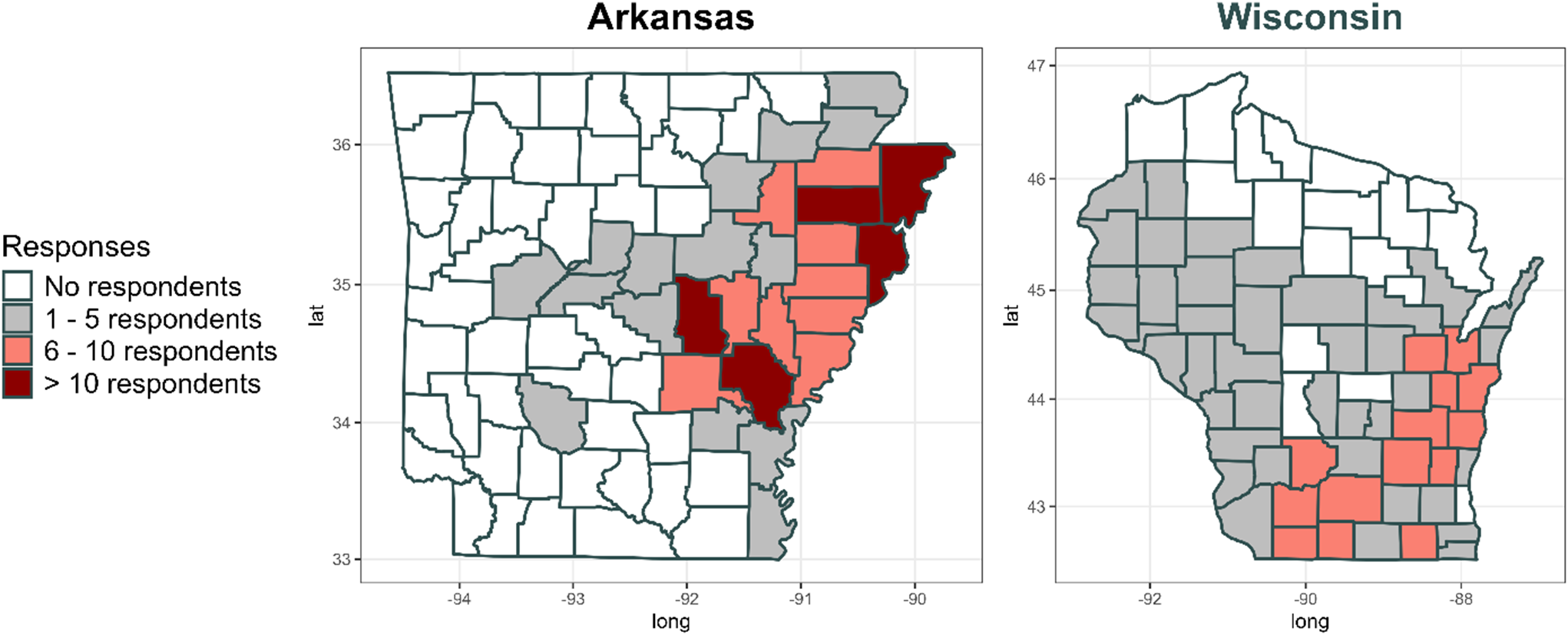
A total of 96 respondents from Arkansas and 76 respondents from Wisconsin participated in the survey. The geographic distribution of respondents in both states closely mirrored major soybean production regions (Figure 1) (USDA-FAS 2024). In Arkansas, respondents were primarily farmers (45%) and consultants/agronomists (39%), with smaller representation from Extension (11%), industry (3%), applicators (1%), and other roles (1%). In Wisconsin, respondents included consultants/agronomists (55%) and farmers (29%), with fewer participants from industry (11%), other roles (4%), Extension (1%), and none identifying as applicators. Survey respondent profile and regional distribution, hectares covered, glufosinate product preference and application rate, and suspected resistance in weed species according to respondents can be found in Supplementary Tables 1–5, respectively.
Geographic distribution of survey responses from counties in Arkansas and Wisconsin. Counties are color-coded based on the frequency of responses, with darker shades indicating higher response rates.

Key Weed Species and Suspected Resistance Concerns
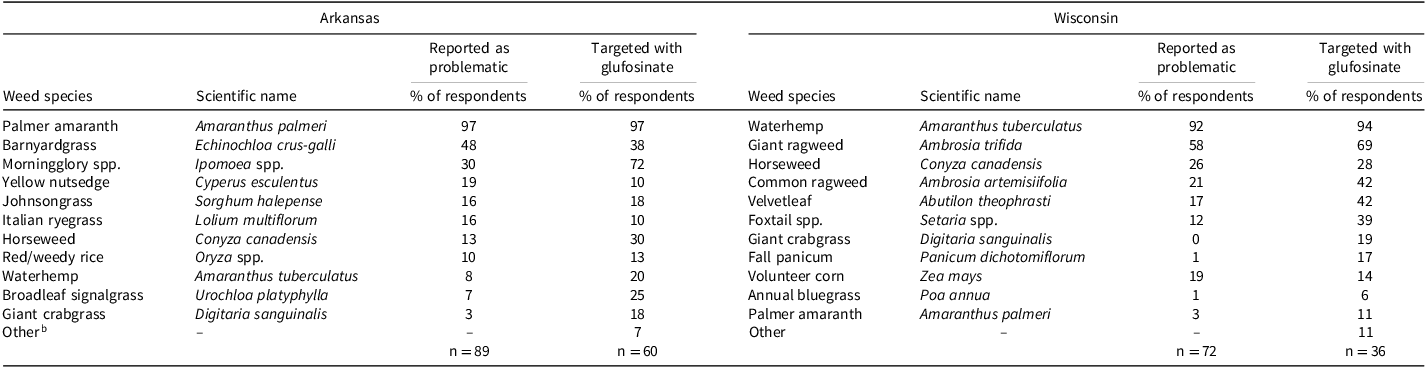
The most frequently reported problematic weed species and weeds targeted by glufosinate in soybean production systems are summarized in Table 1. In Arkansas, Palmer amaranth was identified as the most problematic species (97% of respondents), followed by barnyardgrass [Echinochloa crus-galli (L.) P. Beauv.] (48%), morningglories (Ipomoea spp.) (30%), and yellow nutsedge (Cyperus esculentus L.) (19%). In Wisconsin, waterhemp was most frequently reported (92%), followed by giant ragweed (58%), horseweed (Conyza canadensis L.) (26%), and common ragweed (Ambrosia artemisiifolia L.) (21%).
Most problematic weed species and those targeted with glufosinate application by survey respondents. a

Table 1. Long description
The table compares the most frequently reported problematic weed species and those targeted by glufosinate in soybean production systems in Arkansas and Wisconsin. It has two main sections: one for Arkansas and one for Wisconsin, each with three columns: Weed species, Reported as problematic, and Targeted with glufosinate. Arkansas section: Row 1: Palmer amaranth, Amaranthus palmeri, 97 percent of respondents, 97 percent of respondents. Row 2: Barnyardgrass, Echinochloa crus-galli, 48 percent of respondents, 38 percent of respondents. Row 3: Morningglory spp., Ipomoea spp., 30 percent of respondents, 72 percent of respondents. Row 4: Yellow nutsedge, Cyperus esculentus, 19 percent of respondents, 10 percent of respondents. Row 5: Johnsongrass, Sorghum halepense, 16 percent of respondents, 18 percent of respondents. Row 6: Italian ryegrass, Lolium multiflorum, 13 percent of respondents, 10 percent of respondents. Row 7: Horseweed, Conyza canadensis, 13 percent of respondents, 30 percent of respondents. Row 8: Redweedy rice, Oryza spp., 10 percent of respondents, 13 percent of respondents. Row 9: Waterhemp, Amaranthus tuberculatus, 8 percent of respondents, 20 percent of respondents. Row 10: Broadleaf signalgrass, Urochloa platyphylla, 7 percent of respondents, 25 percent of respondents. Row 11: Giant crabgrass, Digitaria sanguinalis, 3 percent of respondents, 18 percent of respondents. Row 12: Other, 7 percent of respondents, 7 percent of respondents. Wisconsin section: Row 1: Waterhemp, Amaranthus tuberculatus, 92 percent of respondents, 94 percent of respondents. Row 2: Giant ragweed, Ambrosia trifida, 58 percent of respondents, 69 percent of respondents. Row 3: Horseweed, Conyza canadensis, 26 percent of respondents, 28 percent of respondents. Row 4: Common ragweed, Ambrosia artemisiifolia, 21 percent of respondents, 42 percent of respondents. Row 5: Velvetleaf, Abutilon theophrasti, 17 percent of respondents, 42 percent of respondents. Row 6: Foxtail spp., Setaria spp., 12 percent of respondents, 39 percent of respondents. Row 7: Giant crabgrass, Digitaria sanguinalis, 9 percent of respondents, 19 percent of respondents. Row 8: Fall panicum, Panicum dichotomiflorum, 7 percent of respondents, 17 percent of respondents. Row 9: Volunteer corn, Zea mays, 19 percent of respondents, 14 percent of respondents. Row 10: Annual bluegrass, Poa annua, 1 percent of respondents, 6 percent of respondents. Row 11: Palmer amaranth, Amaranthus palmeri, 3 percent of respondents, 11 percent of respondents. Row 12: Other, 11 percent of respondents, 36 percent of respondents.
a Because respondents could select up to three weed species, the total number of weed species reported exceeded the number of participants in each state.
b Other species reported in Arkansas included cocklebur (Xanthium strumarium), copperleaf (Acalypha spp.), prickly sida (Sida spinosa), redvine (Brunnichia ovata), sicklepod (Senna obtusifolia), Texas gourd (Cucurbita texana), Texas panicum (Panicum texanum), and trumpetcreeper (Campsis radicans). Other species reported in Wisconsin include burcucumber (Sicyos angulatus), cereal rye (Secale cereale), and volunteer wheat (Triticum aestivum).
Weeds that respondents targeted with glufosinate are reported in Table 1. Arkansas respondents most frequently reported targeting Palmer amaranth (97%), followed by morningglories (43%), barnyardgrass (23%), and horseweed (18%). In Wisconsin, respondents primarily targeted waterhemp (94%), along with giant ragweed (25%), common ragweed (15%), and velvetleaf (Abutilon theophrasti L.) (15%). Glufosinate was also reported for annual grass management in both states. In Arkansas, it was primarily applied (38%) for barnyardgrass control (Table 1). In Wisconsin, foxtails (Setaria spp.) and giant crabgrass [Digitaria sanguinalis (L.) Scop.] were the predominant targets (39% and 19%, respectively), reflecting glufosinate’s broad-spectrum efficacy across diverse soybean weed communities.
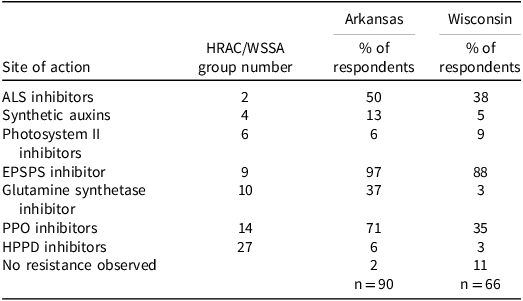
Survey responses further indicated widespread concern about herbicide resistance across multiple sites of action (SOAs), with most reports centered on Amaranthus species (Table 2). In Arkansas, suspected resistance was most frequently reported for 5-enolpyruvylshikimate-3-phosphate synthase (EPSPS) inhibitors (HRAC/WSSA Group 9) (97%), followed by PPO inhibitors (HRAC/WSSA Group 14) and ALS inhibitors (HRAC/WSSA Group 2). Suspected resistance to glutamine synthetase (GS) inhibitors (HRAC/WSSA Group 10; glufosinate) was also reported by 37% of respondents. In Wisconsin, resistance concerns were dominated by waterhemp, with suspected resistance reported for EPSPS inhibitors (88%), ALS inhibitors (38%), and PPO inhibitors (35%), whereas suspected resistance to GS inhibitors was minimal (3%). These patterns align with published reports documenting multiple herbicide–resistant Palmer amaranth in mid-southern states (Brabham et al. Reference Brabham, Norsworthy, Houston, Varanasi and Barber2019; Carvalho-Moore et al. Reference Carvalho Moore, Norsworthy, Souza, Barber, Piveta, Meiners and Porri2025; Foster and Steckel Reference Foster and Steckel2022; Heap Reference Heap2025; Salas et al. Reference Salas, Burgos, Tranel, Singh, Glasgow, Scott and Nichols2016) and expanding multiple herbicide resistance in waterhemp populations in the Midwest (Faleco et al. Reference Faleco, Oliveira, Arneson, Renz, Stoltenberg and Werle2022; Hamberg et al. Reference Hamberg, Ramawatar, Owen and Licht2023; Shergill et al. Reference Shergill, Barlow, Bish and Bradley2018).
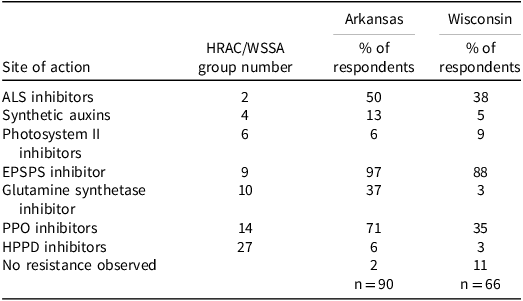
Table 2. Long description
A table comparing suspected herbicide resistance across different sites of action in Arkansas and Wisconsin. The table has 9 rows and 4 columns. Column headers are Site of action, HRAC/WSSA group number, Arkansas % of respondents, and Wisconsin % of respondents. Row 1: ALS inhibitors, 2, 50, 38. Row 2: Synthetic auxins, 4, 13, 5. Row 3: Photosystem II inhibitors, 6, 6, 9. Row 4: EPSPS inhibitor, 9, 97, 88. Row 5: Glutamine synthetase inhibitor, 10, 37, 3. Row 6: PPO inhibitors, 14, 71, 35. Row 7: HPPD inhibitors, 27, 6, 3. Row 8: No resistance observed, 2, 2, 11. Row 9: n=90, n=66.
a Abbreviations: ALS, acetolactate synthase; EPSPS, 5-enolpyruvylshikimate-3-phosphate synthase; HPPD, 4-hydroxyphenylpyruvate dioxygenase; PPO, protoporphyrinogen oxidase; HRAC, Herbicide Resistance Action Committee; WSSA, Weed Science Society of America.
b There were 90 respondents from Arkansas and 66 from Wisconsin. Because respondents could select up to three weed species, the total number of weed species reported exceeded the number of participants in each state.
c Group numbers correspond to sites of action as defined by the HRAC and WSSA classification system.
d In Arkansas, respondents most often associated suspected resistance with Palmer amaranth (Amaranthus palmeri) to WSSA/HRAC Groups 2, 4, 9, 10, 14, 15, and 27. In Wisconsin, suspected resistance was most often linked to waterhemp (Amaranthus tuberculatus) to Groups 2, 4, 9, 10, and 14; and to giant ragweed (Ambrosia trifida) to Groups 2, 6, 9, and 14. See Supplementary Table 5 for information about other species.
Reports of suspected resistance to additional herbicide groups in Wisconsin were less frequent, including to synthetic auxins (HRAC/WSSA Group 4), photosystem II inhibitors (HRAC/WSSA Group 5), and 4-hydroxyphenylpyruvate dioxygenase (HPPD) inhibitors (HRAC/WSSA Group 27).
Glufosinate Use and Application Practices in Arkansas and Wisconsin Soybean Production Systems
In Arkansas, 84% of respondents reported incorporating glufosinate into their weed management programs, whereas 53% of respondents in Wisconsin said they used glufosinate. Survey responses were collected between Fall 2021 and Spring 2022, and glufosinate use in Wisconsin has continued to increase since then (R. Werle, personal observation). Earlier and more widespread adoption in Arkansas was driven by severe infestations of glyphosate-resistant Palmer amaranth (Riar et al. Reference Riar, Norsworthy, Steckel, Stephenson, Eubank and Scott2013; Salas et al. Reference Salas, Burgos, Tranel, Singh, Glasgow, Scott and Nichols2016). In contrast, glufosinate use in Wisconsin has accelerated more recently in response to increasing prevalence of herbicide-resistant waterhemp across the U.S. Midwest, which remains a major management challenge in the region (Chudzik et al. Reference Chudzik, Nunes, Arneson, Arneson, Conley and Werle2024; Faleco et al. Reference Faleco, Oliveira, Arneson, Renz, Stoltenberg and Werle2022; Hamberg et al. Reference Hamberg, Ramawatar, Owen and Licht2023; Shergill et al. Reference Shergill, Barlow, Bish and Bradley2018; Ugljic et al. Reference Ugljic, Mobli, Oliveira, Proctor, Dille and Werle2025).
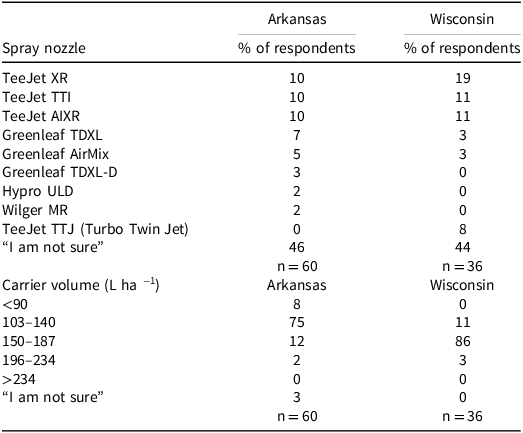
Respondents’ choice of spray nozzle is summarized in Table 3. In Arkansas, 10% of respondents reported using either TeeJet Extended Range (XR), Turbo TeeJet Induction (TTI), or Air Induction Extended Range (AIXR) nozzles, whereas Wisconsin respondents most often reported using TeeJet XR nozzles (19%), followed by TTI and AIXR (both 11%). However, many respondents in both Arkansas (46%) and Wisconsin (44%) were unsure which nozzle type they used. This may reflect that few respondents identified themselves as applicators; nevertheless, because nozzle selection is a key determinant of spray coverage and droplet spectrum, these results indicate a need for continued education and communication among all parties involved in herbicide applications to ensure appropriate nozzle selection for contact herbicides such as glufosinate.
Spray nozzles used for glufosinate application and carrier volume as reported by survey respondents.a,b

Table 3. Long description
The table compares spray nozzle preferences and carrier volumes between respondents in Arkansas and Wisconsin. It has two main sections: spray nozzle preferences and carrier volumes. The spray nozzle section lists various nozzle types and the percentage of respondents using each in Arkansas and Wisconsin. Notable preferences include TeeJet XR, TeeJet TTI, and TeeJet AIXR. The carrier volume section lists different volume ranges and the percentage of respondents using each range in Arkansas and Wisconsin. The table also includes the total number of respondents for each state. Key trends include a significant percentage of respondents unsure about their nozzle type and a preference for specific carrier volumes in each state.
a Abbreviations: AIXR, air induction extended range; MR, medium range; TDXL, TurboDrop XL; TDXL-D, TurboDrop XL-D; TTI, Turbo TeeJet Induction; ULD, ultra lo-drift; XR, extended range.
b Manufacturers: TeeJet Technologies, Glendale Heights, IL. Greenleaf Technologies, Covington, LA. Hypro, Pentair-Hypro, New Brighton, MN. Wilger Industries, Lexington, TN.
Carrier volume preference according is summarized in (Table 3). In Arkansas, most respondents (75%) indicated applying glufosinate in the 103 to 140 L ha−1 range, with fewer reporting applying 150 to 187 L ha−1 (12%) and a small subset reporting applying <90 L ha−1 (8%). Wisconsin respondents reported higher carrier volumes, with 86% indicating they applied 150 to 187 L ha−1 and 11% reporting 103 to 140 L ha−1. These patterns are relevant because glufosinate efficacy is strongly coverage-dependent, and carrier volume can interact with droplet size to influence deposition and control consistency. Butts et al. (Reference Butts, Samples, Franca, Dodds, Reynolds, Adamas, Zollinger, Howatt, Fritz, Hoffman and Kruger2018) reported that Palmer amaranth control with glufosinate declined as droplet size increased, particularly at lower carrier volumes, although extremely coarse sprays still maintained ≥90% of maximum observed control across carrier volumes (47 to 187 L ha−1). Carrier volume affects droplet density and leaf coverage; for contact herbicides such as glufosinate, increasing the carrier volume can improve uniform deposition and help maintain control when drift-reducing, coarser droplets are used, although responses may plateau once adequate coverage is achieved (Butts et al. Reference Butts, Samples, Franca, Dodds, Reynolds, Adamas, Zollinger, Howatt, Fritz, Hoffman and Kruger2018; Creech et al. Reference Creech, Henry, Werle, Sandell, Hewitt and Kruger2015). The nozzle and carrier-volume responses herein reinforce the value of broader educational efforts focused on nozzle selection, droplet spectrum, and carrier volume as controllable drivers of glufosinate efficacy and application success (Butts et al. Reference Butts, Barber, Norsworthy and Davis2021).
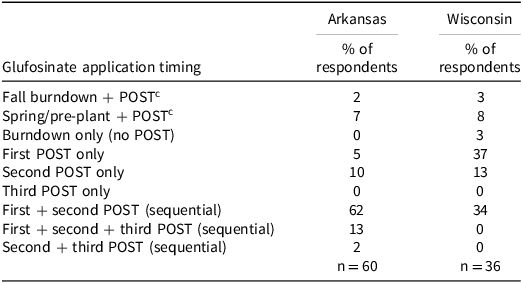
Glufosinate application timing patterns are summarized in Table 4. Respondents could select multiple choices, depending on their placement of glufosinate in their herbicide program within a season. In Arkansas, most respondents (62%) reported using glufosinate in a sequential first + second postemergence program, and an additional 13% reported a first + second + third sequence; fewer respondents indicated postemergence use confined to a single pass (10% second postemergence only; 5% first postemergence only) or a second + third postemergence sequence (2%). Herein, “burndown + postemergence” indicates glufosinate use in a fall or spring/pre-plant burndown followed by at least one postemergence glufosinate application later in the season; using this definition, burndown inclusion was uncommon but present in Arkansas (7% spring/pre-plant included, 2% fall burndown included). In Wisconsin, 37% of respondents reported a first postemergence application only and 34% reported a first + second postemergence sequence, whereas 13% reported a second postemergence application only. Burndown inclusion accounted for a smaller share of responses (8% spring/pre-plant included, 3% fall burndown included), and 3% reported burndown-only use with no postemergence glufosinate applications. Heavier reliance on sequential postemergence applications in Arkansas is consistent with management challenges posed by the extended emergence and rapid growth of Palmer amaranth, which often necessitate timely sequential herbicide applications to maintain acceptable control (Kouame et al. Reference Kouame, Butts, Norsworthy, Davis and Piveta2024; Meyer and Norsworthy Reference Meyer and Norsworthy2020). Arkansas soybean production occurs in a mixed row-crop landscape where soybean (∼1.23 million hectares planted in 2024) and upland cotton (∼263,000 planted hectares) are both major commodities, and guidance offered by state university Extension personnel and others explicitly treats cotton as a common rotational crop for soybean (Ashlock et al. Reference Ashlock, Mayhew, Windham, Keisling, Klerk, Beaty and Lorenz2014; USDA-NASS 2024). This matters for glufosinate exposure history because glufosinate/glyphosate-resistant cotton cultivars (including GlyTol and LibertyLink, both produced by BASF, Research Triangle Park, NC; and WideStrike, produced by Corteva Agriscience, Indianapolis, IN) were already dominant and were planted on 70% to 75% cotton-planted hectares in 2013 in Arkansas, Mississippi, North Carolina, South Carolina, and Tennessee (Cahoon et al. Reference Cahoon, York, Jordan and Seagroves2015). Alongside this, in-season glufosinate use increased sharply after glufosinate-resistant crops were commercialized, rising 137-fold, from 34.3 metric tons in 2007 to 4,705 metric tons in 2019 (Priess et al. Reference Priess, Norsworthy, Godara, Mauromoustakos, Butts, Roberts and Barber2022a). Consistent with sustained selection pressure in Arkansas, glufosinate-resistant Palmer amaranth accessions from Arkansas have been confirmed by dose-response, and mechanistic studies have linked resistance in an Arkansas accession to increased copy number and expression of chloroplastic GS2 (Priess et al. Reference Priess, Norsworthy, Godara, Mauromoustakos, Butts, Roberts and Barber2022a; Carvalho-Moore et al. Reference Carvalho-Moore, Norsworthy, González-Torralva, Hwang, Patel, Barber, Butts and McElroy2022). These patterns provide more context for why a larger share of Arkansas respondents reported suspected glufosinate resistance (37%; Table 2).

Table 4. Long description
The table presents the percentage of respondents from Arkansas and Wisconsin who prefer different glufosinate application timings. It has 9 rows and 3 columns. The columns are labeled 'Glufosinate application timing', 'Arkansas % of respondents', and 'Wisconsin % of respondents'. The rows list different application timings and their corresponding percentages for each state. Notable trends include a higher preference in Arkansas for sequential postemergence applications, particularly 'First + second POST (sequential)' at 62 percent, compared to Wisconsin's 34 percent. Wisconsin shows a higher preference for 'First POST only' at 37 percent, while Arkansas has 5 percent. Both states show low percentages for 'Burndown only (no POST)' and 'Third POST only'.
a Abbreviation: POST, postemergence.
b Respondents could select multiple choice related to their glufosinate application timing for this question.
c Respondent said they incorporate glufosinate in burndown applications with at least one or more POST glufosinate application.
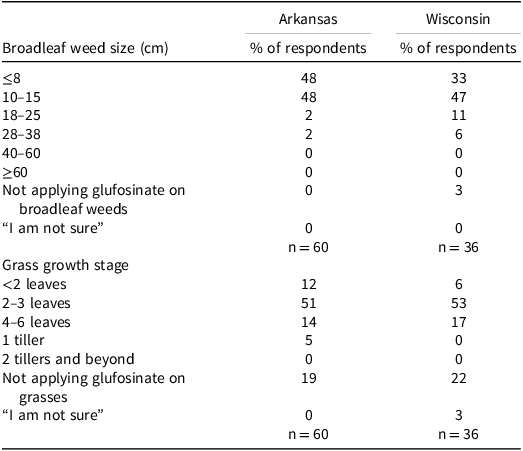
In both states, respondents reported they typically applied glufosinate to broadleaf weeds ≤15 cm tall and grasses at the 2- to 3-leaf stage (Table 5). These results are consistent with those reported by Jones et al. (Reference Jones, Cahoon, León and Everman2022), that most survey respondents in North Carolina targeted weeds at 5 to 10 cm, reinforcing the broadly held perception that small weed size is critical for glufosinate performance. These practices align with research demonstrating that glufosinate performance declines rapidly as weed size increases. Steckel et al. (Reference Steckel, Wax, Simmons and Phillips1997) reported ≥80% control of several species when treated at 10 cm in height, with reduced efficacy at 15 cm, and consistently poor control of common lambsquarters even at higher rates. Kouame et al. (Reference Kouame, Butts, Norsworthy, Davis and Piveta2024) similarly found that Palmer amaranth was most consistently controlled when <7.5 cm tall, whereas applications to larger plants often resulted in survivors. Additional studies confirm that postemergence control is typically maximized when weeds are treated early, often <10 cm in height, although problematic species such as velvetleaf can remain difficult to manage (Coetzer et al. Reference Coetzer, Al-Khatib and Loughin2001; Craigmyle et al. Reference Craigmyle, Ellis and Bradley2013; Duenk et al. Reference Duenk, Soltani, Miller, Hooker, Robinson and Sikkema2023). These results highlight the importance of timely applications to small weeds as an important management practice to sustain glufosinate performance.
Average size of broadleaf weeds during glufosinate application according to respondents.

Table 5. Long description
The table compares the size of broadleaf weeds and grass growth stages during glufosinate application in Arkansas and Wisconsin. It has 14 rows and 4 columns. The columns are labeled Broadleaf weed size (cm), Arkansas % of respondents, and Wisconsin % of respondents. The row labels include different sizes of broadleaf weeds and grass growth stages. The values in the table represent the percentage of respondents for each category. For broadleaf weed size, the categories are <=8 cm, 10-15 cm, 18-25 cm, 28-38 cm, 40-60 cm, >=60 cm, not applying glufosinate on broadleaf weeds, and I am not sure. For grass growth stage, the categories are <2 leaves, 2-3 leaves, 4-6 leaves, 1 tiller, 2 tillers and beyond, not applying glufosinate on grasses, and I am not sure. Notable trends include a high percentage of respondents applying glufosinate to broadleaf weeds 15 cm tall and grasses at the 2- to 3-leaf stage in both states.
Time of Day and Environmental Factors Affecting Glufosinate Performance
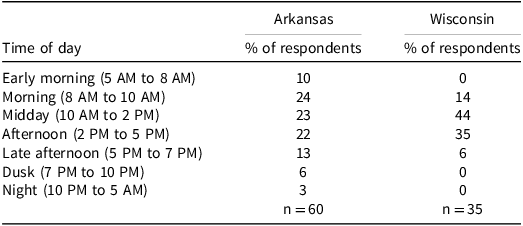
In Arkansas, applications were more evenly distributed throughout the day, with most occurring between 8:00 AM and 5:00 PM, although a small proportion of respondents reported applying at dusk (6%) or at night (3%) (Table 6). In Wisconsin, applications were more concentrated between 10:00 AM and 5:00 PM, with 6% of respondents indicating applying later in the day (5:00 PM to 7:00 PM). Time of day is an important determinant of glufosinate activity because efficacy is closely linked to photosynthetically active radiation (PAR; 400–700 nm) and associated plant metabolic processes (Takano and Dayan Reference Takano and Dayan2020, Reference Takano and Dayan2021).
Time of day when applying glufosinate according to survey respondents.

Table 6. Long description
A table comparing the time of day preferences for applying glufosinate among survey respondents in Arkansas and Wisconsin. The table has 8 rows and 3 columns. The columns are labeled 'Time of day', 'Arkansas', and 'Wisconsin'. The 'Time of day' column lists different times of day: Early morning (5 AM to 8 AM), Morning (8 AM to 10 AM), Midday (10 AM to 2 PM), Afternoon (2 PM to 5 PM), Late afternoon (5 PM to 7 PM), Dusk (7 PM to 10 PM), and Night (10 PM to 5 AM). The 'Arkansas' and 'Wisconsin' columns show the percentage of respondents who prefer applying glufosinate during each time of day. Row 1: Early morning (5 AM to 8 AM), Arkansas: 10 percent, Wisconsin: 0 percent. Row 2: Morning (8 AM to 10 AM), Arkansas: 24 percent, Wisconsin: 14 percent. Row 3: Midday (10 AM to 2 PM), Arkansas: 23 percent, Wisconsin: 44 percent. Row 4: Afternoon (2 PM to 5 PM), Arkansas: 22 percent, Wisconsin: 35 percent. Row 5: Late afternoon (5 PM to 7 PM), Arkansas: 13 percent, Wisconsin: 6 percent. Row 6: Dusk (7 PM to 10 PM), Arkansas: 6 percent, Wisconsin: 0 percent. Row 7: Night (10 PM to 5 AM), Arkansas: 3 percent, Wisconsin: 0 percent. Row 8: n=60 for Arkansas, n=35 for Wisconsin.
Glufosinate performance is consistently enhanced when light intensity is high, with peak activity typically observed during midday periods. Takano and Dayan (Reference Takano and Dayan2021) reported that glufosinate efficacy is strongly PAR-dependent, with greater activity when light is high that both favor herbicide action and limit recovery following glutamine synthetase inhibition. Consistent with this, Montgomery et al. (Reference Montgomery, Treadway, Reeves and Steckel2017) observed higher horseweed control following midday applications (92%) compared with applications at sunrise (63%) or sunset (88%). Similarly, Sellers et al. (Reference Sellers, Smeda and Johnson2003) reported reduced velvetleaf control with evening applications, attributed in part to “leaf droop” that can reduce spray interception, and concluded that several hours of sunlight following treatment are important for maximizing glufosinate performance.
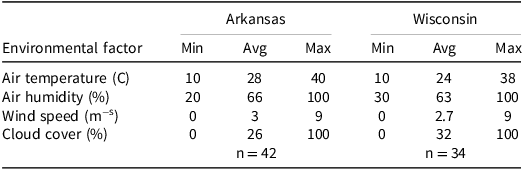
Environmental conditions reported during glufosinate applications are summarized in Table 7. Air temperature ranged from 10 to 40 C, with mean temperatures of 28 C in Arkansas, and 24 C in Wisconsin. Average relative humidity during glufosinate application was 66% in Arkansas and 63% in Wisconsin. Wind speeds were low (3.0 m s−1 in Arkansas; 2.7 m s−1 in Wisconsin), although maximum values reached 9.0 m s−1 in both states. Average cloud cover was 26% in Arkansas and 32% in Wisconsin. Although many applications occurred under conditions considered acceptable, the broad range, particularly at cooler temperatures and lower humidity, could contribute to reduced glufosinate activity.
Air temperature, air humidity, wind speed, and cloud cover during glufosinate application according to survey respondents.

Table 7. Long description
The table compares environmental conditions during glufosinate applications in Arkansas and Wisconsin. It has four rows and six columns. The columns are labeled Arkansas Min, Arkansas Avg, Arkansas Max, Wisconsin Min, Wisconsin Avg, and Wisconsin Max. The rows are labeled Air temperature (C), Air humidity (percent), Wind speed (m s), and Cloud cover (percent). Row 1: Air temperature (C), Arkansas Min 10, Arkansas Avg 28, Arkansas Max 40, Wisconsin Min 10, Wisconsin Avg 24, Wisconsin Max 38. Row 2: Air humidity (percent), Arkansas Min 20, Arkansas Avg 66, Arkansas Max 100, Wisconsin Min 30, Wisconsin Avg 63, Wisconsin Max 100. Row 3: Wind speed (m s), Arkansas Min 0, Arkansas Avg 3, Arkansas Max 9, Wisconsin Min 0, Wisconsin Avg 2.7, Wisconsin Max 9. Row 4: Cloud cover (percent), Arkansas Min 0, Arkansas Avg 26, Arkansas Max 100, Wisconsin Min 0, Wisconsin Avg 32, Wisconsin Max 100.
This interpretation aligns with that reported by Landau et al. (Reference Landau, Bradley, Burns, DeWerff, Dobbels, Essman, Flessner, Gage, Aaron, Jhala, Johnson, Johnson, Lancaster, Lingenfelter, Loux, Miller, Owen, Sarangi, Sikkema, Sprague, Werle, Young and Williams2025), who evaluated glufosinate performance across 1,635 to 2,441 unique weather environments, depending on species, from North American herbicide evaluation trials. Using ≥85% control as a benchmark for successful performance, they found that efficacy was significantly less likely when glufosinate was applied when air temperatures were ≤25 C, relative humidity ≤70%, or solar radiation ≤23 MJ m−2 d−1, although relative humidity was of lesser importance for predicting probability of successful control of waterhemp and morningglory. Sensitivity to environmental conditions differed among weed species, with the strongest limitations observed in giant foxtail (Setaria faberi Herrm.), followed by waterhemp and morningglory species. Glufosinate performance can be strongly weather-dependent and highlight the importance of aligning applications with favorable temperature, humidity, and light conditions whenever possible (Landau et al. Reference Landau, Bradley, Burns, DeWerff, Dobbels, Essman, Flessner, Gage, Aaron, Jhala, Johnson, Johnson, Lancaster, Lingenfelter, Loux, Miller, Owen, Sarangi, Sikkema, Sprague, Werle, Young and Williams2025). From the raw survey responses, most applications in both states were reported to occur under warm conditions. In Arkansas, 92% of respondents reported applying glufosinate when the average air temperature was ≥25 C, and 30% reported an average relative humidity >70% during application. In Wisconsin, 76% reported applying glufosinate at ≥25 C, and 20% reported relative humidity >70%. These responses suggest that warm temperatures were more frequently considered than high humidity when timing glufosinate applications, though it cannot be determined from survey data alone whether this reflects intentional prioritization or the ambient conditions typical of the application period.
Adjuvant Use, Water Quality, and Cation Management
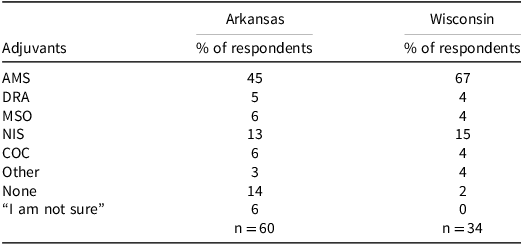
Table 8 summarizes adjuvant use reported by respondents from Arkansas and Wisconsin. Ammonium sulfate (AMS) was the most frequently used adjuvant in both states (Arkansas 45%; Wisconsin 67%). Use of nonionic surfactants was reported by 15% respondents in Arkansas, and 13% in Wisconsin. Drift reduction agents, methylated seed oil, and crop oil concentrate were reported at low frequencies. In Arkansas 14% of respondents indicated no use of adjuvants, and 2% in Wisconsin. Reliance on AMS in Wisconsin may reflect a higher likelihood of hard water conditions relative to Arkansas, where divalent cations can reduce glufosinate activity unless water is first conditioned (Devkota and Johnson Reference Devkota and Johnson2016). For example, Pratt et al. (Reference Pratt, Kells and Penner2003) reported that AMS mitigated glufosinate efficacy losses in hard water by reducing antagonism from Ca2+ and Mg2+ ions, thereby improving herbicide absorption.
Use of adjuvants with glufosinate applications according to survey respondents. a

Table 8. Long description
A table comparing adjuvant use in Arkansas and Wisconsin. The table has 9 rows and 3 columns. The columns are labeled Adjuvants, Arkansas, and Wisconsin. The rows are labeled with different adjuvants and their usage percentages. Row 1: AMS, 45, 67. Row 2: DRA, 5, 4. Row 3: MSO, 6, 4. Row 4: NIS, 13, 15. Row 5: COC, 6, 4. Row 6: Other, 3, 4. Row 7: None, 14, 2. Row 8: I am not sure, 6, 0. Row 9: n=, 60, 34. The table shows the percentage of respondents using each adjuvant in the two states.
a Abbreviations: AMS, ammonium sulfate; COC, crop oil concentrate; DRA, drift reducing agent; MSO, methylated seed oil; NIS, nonionic surfactant.
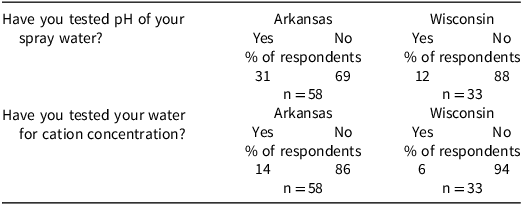
Water quality testing practices were infrequent (Table 9). Testing spray water pH was reported by 31% of respondents in Arkansas and 12% in Wisconsin, and testing for cation concentration was reported by 14% and 6% of respondents, respectively. Because glufosinate efficacy can be reduced under alkaline pH and in the presence of divalent cations (Devkota and Johnson Reference Devkota and Johnson2016; Butts et al. Reference Butts, Norsworthy, Barber, Burgos and Ross2020), the low frequency of routine water testing suggests that adjuvant decisions are often made without confirmation of carrier-water conditions. Although AMS can alleviate antagonism and improve performance under certain conditions (Pratt et al. Reference Pratt, Kells and Penner2003; Soltani et al. Reference Soltani, Nurse, Robinson and Sikkema2011), its value is not universal, because water hardness can vary across regions and water sources (USGS 2018). These findings support Extension efforts to increase awareness and adoption of spray water testing and improve stakeholders’ ability to interpret results, enabling adjuvant selection (AMS or alternatives) to be tailored to carrier-water conditions and maximize herbicide performance.
Water pH and cation concentration testing as reported by survey respondents.

Table 9. Long description
The table compares water quality testing practices in Arkansas and Wisconsin. It has two main questions: Have you tested pH of your spray water? and Have you tested your water for cation concentration? Each question has responses from Arkansas and Wisconsin. The table has four rows and three columns. The columns are labeled Arkansas, Wisconsin, and the rows are labeled with the questions and the responses. Row 1: Have you tested pH of your spray water? Yes, 31 percent of respondents in Arkansas and 12 percent in Wisconsin. No, 69 percent of respondents in Arkansas and 88 percent in Wisconsin. n equals 58 for Arkansas and n equals 33 for Wisconsin. Row 2: Have you tested your water for cation concentration? Yes, 14 percent of respondents in Arkansas and 6 percent in Wisconsin. No, 86 percent of respondents in Arkansas and 94 percent in Wisconsin. n equals 58 for Arkansas and n equals 33 for Wisconsin.
Glufosinate Tank-Mix Practices and Antagonism Risk
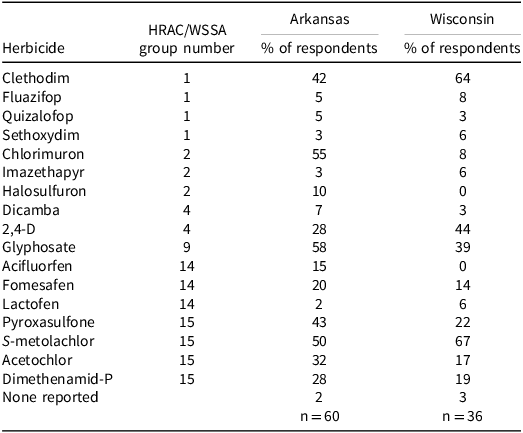
Glyphosate was most frequently applied with glufosinate (reported by 58% of Arkansas respondents; 39% of Wisconsin respondents) (Table 10). Among acetyl-CoA carboxylase (ACC) HRAC/WSSA Group 1 herbicides, clethodim was the most common (42% in Arkansas, 64% in Wisconsin), whereas fluazifop, quizalofop, and sethoxydim were selected less often. Group 4 synthetic auxins were also reported, with 2,4-D selected by 28% of Arkansas respondents and 44% of Wisconsin respondents, while dicamba was reported less frequently in both states (7% in Arkansas, 3% in Wisconsin). Reported tank mixtures with dicamba reflect respondents’ practices at the time of the 2022 survey, and label status may differ in subsequent years, because over-the-top dicamba applications are no longer feasible (SDSU 2025).

Table 10. Long description
The table compares the percentage of respondents in Arkansas and Wisconsin who reported using various herbicides. It includes 16 rows and 4 columns. The columns are labeled Herbicide, HRAC/WSSA group number, Arkansas % of respondents, and Wisconsin % of respondents. The herbicides listed include Clethodim, Fluazifop, Quizalofop, Sethoxydim, Chlorimuron, Imazethapyr, Halosulfuron, Dicamba, 2,4-D, Glyphosate, Acifluorfen, Fomesafen, Lactofen, Pyroxsulfone, S-metolachlor, Acetochlor, Dimethenamid-P, and None reported. Each row provides the percentage of respondents from Arkansas and Wisconsin who reported using each herbicide. Notable trends include higher usage of Clethodim and Glyphosate in Wisconsin compared to Arkansas, and lower usage of Dicamba in both states.
a Abbreviations: HRAC, Herbicide Resistance Action Committee; WSSA, Weed Science Society of America.
b There were 60 respondents from Arkansas and 36 from Wisconsin. Because respondents could select more than one herbicide as their choice, the total number of herbicides exceeded the number of participants in each state.
Tank mixture selections reported in Table 10 may reflect regional weed communities and management priorities. In Arkansas, respondents reported frequently including multiple herbicides from various WSSA/HRAC groups, including Group 14 herbicides such as fomesafen (20%) and acifluorfen (15%), and Group 2 herbicides such as chlorimuron (55%). In Wisconsin, Group 14 herbicides included fomesafen (14%) and lactofen (6%), and Group 2 herbicides (chlorimuron 8%; imazethapyr 6%). Group 15 residual herbicides were commonly reported being used in both states (78% in Arkansas, 64% in Wisconsin). S-metolachlor was the most frequently reported Group 15 herbicide (50% in Arkansas, 67% in Wisconsin), and Arkansas respondents also reported using pyroxasulfone (43%), acetochlor (32%), and dimethenamid-P (28%). A few respondents reported using glufosinate without additional tank-mix herbicides (2% in Arkansas, 3% in Wisconsin). These patterns likely reflect localized resistance challenges and trait-system constraints. In Arkansas, widespread glyphosate-resistant and ALS inhibitor–resistant Palmer amaranth has increased reliance on multi-way mixtures that commonly include Group 14 and residual herbicides, consistent with earlier work describing compatibility and performance of PPO inhibitor + glufosinate programs (Culpepper et al. Reference Culpepper, York, Batts and Jennings2000; Everman et al. Reference Everman, Clewis, York and Wilcut2009). In Wisconsin, reported tank mixtures of Group 4 herbicides (e.g., 2,4-D) align with weed targets (e.g., waterhemp and giant ragweed) and soybean trait options that permit in-crop use of 2,4-D, including where additive or synergistic responses with glufosinate have been documented (Ganie and Jhala Reference Ganie and Jhala2017).
In 2021, approximately 95% of U.S. soybean acreage was planted with genetically engineered, herbicide-tolerant cultivars, and nearly 55% of that acreage carried the dicamba-tolerance trait (BASF 2021; USDA-ERS 2022). Over-the-top dicamba applications to dicamba-tolerant soybean were re-registered for use by the U.S. Environmental Protection Agency in February 2026 for the 2026 and 2027 growing seasons, so dicamba can again be used in-crop in registered systems in both Wisconsin and Arkansas (US EPA 2026). However, current product labels prohibit over-the-top use of dicamba in a tank mixture with AMS or AMS-containing products, whereas AMS is commonly used to optimize glufosinate performance, particularly where hard water occurs, typically in the Midwest. Consequently, although dicamba remains an available option in dicamba- and glufosinate-tolerant soybean systems, its inclusion can constrain one of the most common water-conditioning strategies when using glufosinate. Moreover, dicamba should not be framed as a uniformly advantageous glufosinate tank-mix partner, because co-application responses are species- and context-dependent and have been antagonistic in some Palmer amaranth studies (Priess et al. Reference Priess, Popp, Norsworthy, Mauromoustakos, Roberts and Butts2022b). In contrast, Enlist E3 soybean allows in-crop use of 2,4-D choline, glyphosate, and glufosinate, enabling legal 2,4-D + glufosinate programs where this trait package is adopted (USDA-APHIS 2020).
Several commonly reported mixtures warrant attention due to evidence of antagonism. The high use of glufosinate + glyphosate mixtures in Arkansas (58%) may reduce grass control. For example, Meyer et al. (Reference Meyer, Norsworthy and Kruger2021) reported lower efficacy of such mixtures on barnyardgrass and broadleaf signalgrass [Urochloa platyphylla (Munro ex Wright) R. Webster]. Likewise, glufosinate + clethodim mixtures, reportedly used in both Arkansas (42%) and Wisconsin (64%), can be prone to reduced control of certain grass species under suboptimal conditions or at lower rates. In addition to biological antagonism, Meyer et al. (Reference Meyer, Norsworthy and Kruger2021) observed that glufosinate mixed with glyphosate or clethodim produced larger spray droplets and fewer finer droplets, which may limit foliar coverage and reduce efficacy for contact-active herbicides.
The frequent inclusion of residual herbicides, particularly those in HRAC/WSSA Group 15, in glufosinate-based programs in both states may suggest efforts to extend control of later-emerging weed cohorts and reduce reliance on repeated postemergence applications, which aligns with resistance management principles that emphasize herbicide layering and diversification (Arsenijevic et al. Reference Arsenijevic, Bernards, DeWerff, Arneson, Smith and Werle2025; Aulakh and Jhala Reference Aulakh and Jhala2015; Norsworthy et al. Reference Norsworthy, Ward, Shaw, Llewellyn, Nichols, Webster, Bradley, Frisvold, Powles, Burgos, Witt and Barrett2012). Tank-mixture patterns reported by survey respondents reinforce that glufosinate is typically integrated into broader multi-herbicide, multi-tactic programs rather than used as a standalone postemergence solution, findings that similar to those reported by Jones et al. (Reference Jones, Cahoon, León and Everman2022) in North Carolina.
Perceptions of Glufosinate Efficacy and Research Needs Among Surveyed Soybean Stakeholders
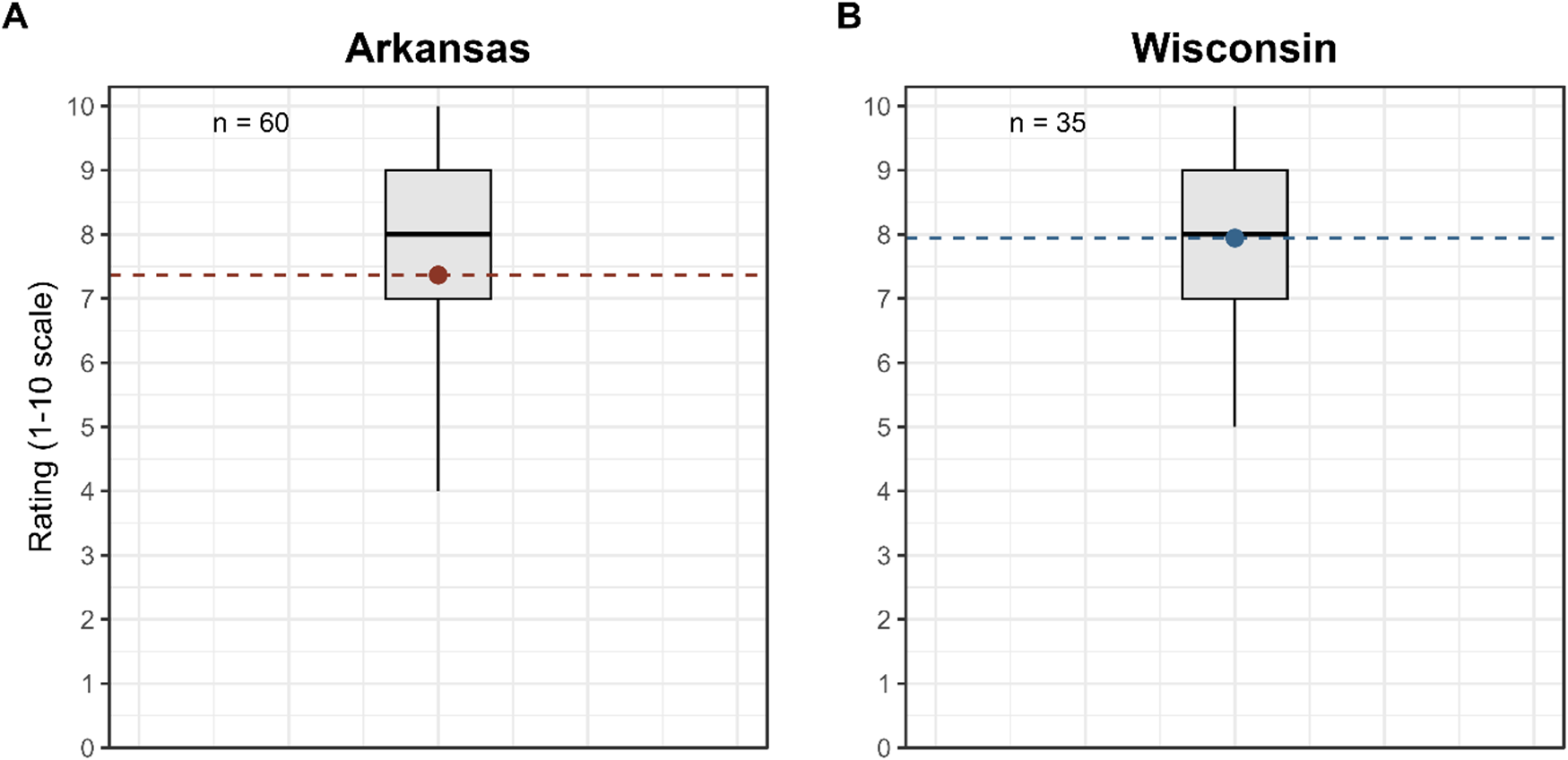
Survey respondents in both Arkansas and Wisconsin reported moderate levels of glufosinate efficacy, with mean ratings of 7.4 (±0.21) and 7.9 (±0.24), respectively, on a 1 to 10 scale, where 1 indicated very poor control and 10 indicated excellent control (Figure 2). While these ratings suggest that glufosinate is generally perceived as being effective, they are lower than would be expected for consistently reliable weed control, which is typically rated above 9 on this scale (≥90%). Ratings from respondents in Arkansas spanned a wider range, with a broader interquartile range and several responses in the 4 to 6 range, indicating that some respondents experienced more variable outcomes, potentially reflecting variation in weed pressure, herbicide resistance, application practices, or environmental conditions during glufosinate use.
Boxplots showing survey respondents’ ratings of glufosinate efficacy on a scale from zero to 10, where zero indicates complete failure and 10 indicates complete control. A shows responses from Arkansas, and B shows responses from Wisconsin. Red and blue dots and their respective dashed lines indicate the mean rating for each state.

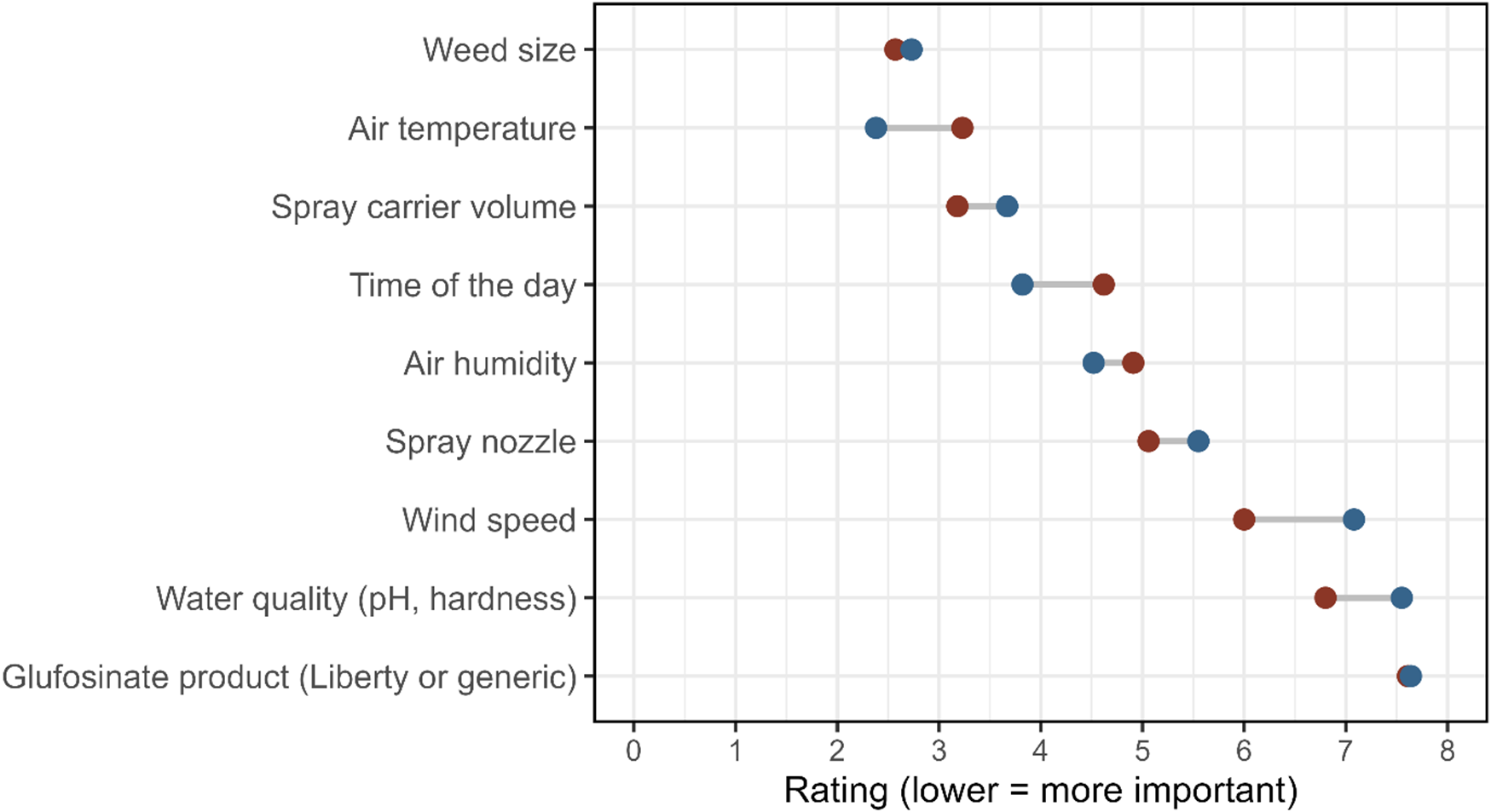
Weed size at application, spray carrier volume, and air temperature received the lowest (most important) mean ratings for influencing perceived glufosinate efficacy, respectively (Figure 3). The highest (least important) mean ratings were assigned to glufosinate product formulation (Liberty 280 SL; BASF, St. Louis, MO vs. generic), spray water quality (pH and hardness), and wind speed. Mean ratings were similar in both states for most factors, and air temperature received a lower mean rating by Wisconsin respondents, indicating greater perceived importance. In general, respondents prioritized application timing and conditions that directly influence contact herbicide performance over product formulation and other secondary factors, indicating broad agreement between the states on the most and least critical drivers of perceived glufosinate efficacy.
Mean importance ratings (0–8 scale; lower values indicate greater importance) assigned by survey respondents to factors influencing perceived glufosinate efficacy. Points show state-level means for Arkansas (red; n = 60) and Wisconsin (blue; n = 34), and gray segments connect state means within each factor. Factors are ordered by the pooled mean rating across states (most important at top).

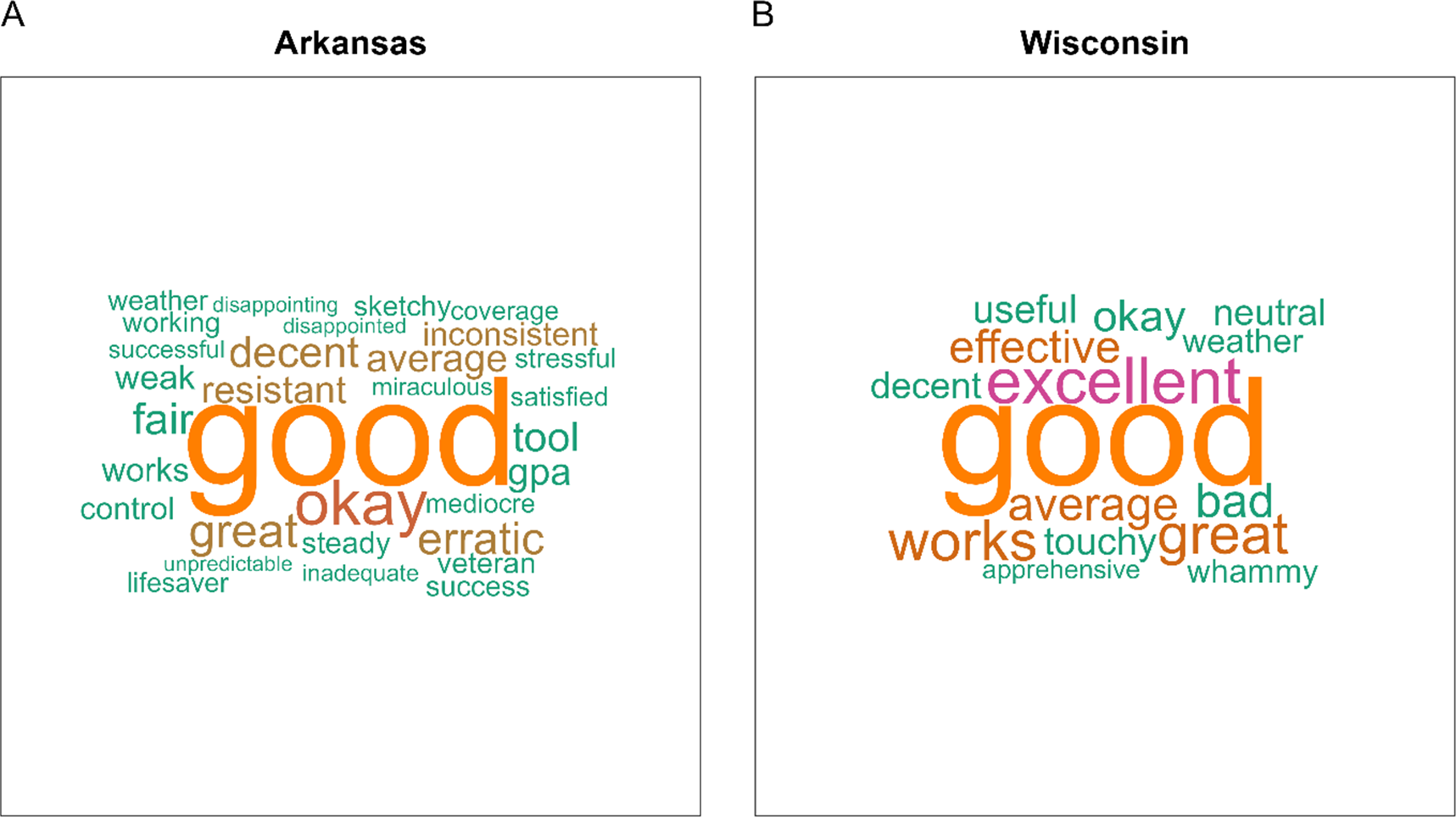
Word clouds illustrate stakeholder perceptions of glufosinate efficacy based on open-ended survey responses from Arkansas (left) and Wisconsin (right) (Figure 4). The term “good” was most frequently mentioned in both states (32% in Arkansas, 43% in Wisconsin), reflecting generally favorable impressions. Respondents in Arkansas provided a mix of positive and critical descriptors, including “great,” “okay,” “erratic,” “resistant,” and “inconsistent,” reflecting varied experiences likely tied to more complex resistance scenarios, particularly with Palmer amaranth. In contrast, Wisconsin respondents highlighted more uniformly positive terms such as “excellent” (11%) and “effective” (6%), suggesting more consistent performance under local conditions, potentially due to lower suspected resistance to glufosinate. These qualitative insights complement our quantitative findings and underscore the need to tailor glufosinate-based programs to regional weed management challenges.
Stakeholder perceptions of glufosinate in soybean production systems weed management, visualized through word frequency word clouds derived from open-ended survey responses in Arkansas (A) and Wisconsin (B). Word size and color correspond to the frequency of each term mentioned with the respective state, with larger and more intensely colored words appearing more frequently. Responses reflect stakeholder impressions of glufosinate-based weed control programs across two distinct agroecological regions.

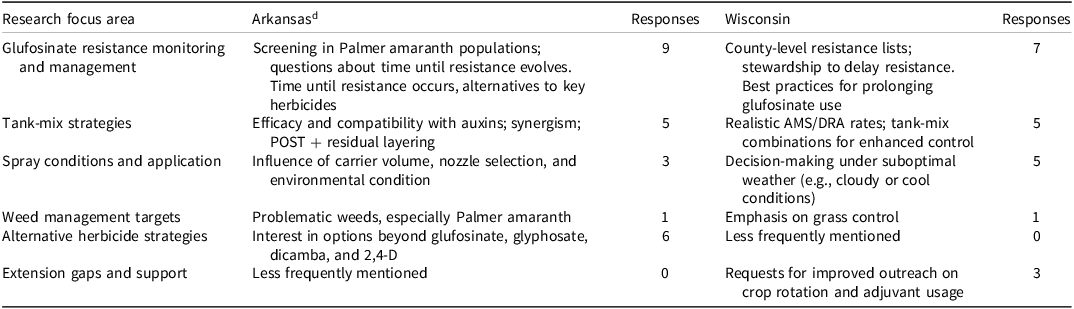
Survey respondents in Arkansas and Wisconsin mentioned a range of future research and Extension priorities related to glufosinate use (Table 11). Both groups emphasized the importance of tank-mixture strategies, including the influence of adjuvants, residual layering, and synergism with auxin herbicides. Arkansas respondents expressed particular concern about resistance screening in Palmer amaranth and emphasized a need for understanding how quickly resistance may evolve. Wisconsin respondents more frequently requested county-level resistance documentation, more realistic adjuvant research, and decision-making under suboptimal environmental conditions. Several Arkansas respondents also emphasized the need for research on glufosinate application technology, including carrier volume, nozzle selection, and environmental drivers of performance. In contrast, Wisconsin respondents more frequently prioritized improved grass control and greater emphasis on crop rotation, reflecting interest in rotational systems (e.g., soybean-corn or inclusion of small grains/forages) that enable alternative herbicide sites of action and timings, disrupt weed life cycles, and reduce reliance on repeated postemergence herbicide applications within continuous soybean production. These differences reflect localized agronomic challenges but also underscore a shared interest in improving the stewardship and consistency of glufosinate efficacy.
Research and Extension priorities related to glufosinate use, based on open-ended survey responses from Arkansas and Wisconsin soybean stakeholders.a–e

Table 11. Long description
The table compares research and extension priorities related to glufosinate use between Arkansas and Wisconsin. It has six rows and five columns. The columns are labeled 'Research focus area', 'Arkansas', 'Responses', 'Wisconsin', and 'Responses'. The rows are labeled with different research focus areas: Glufosinate resistance monitoring and management, Tank-mix strategies, Spray conditions and application, Weed management targets, Alternative herbicide strategies, and Extension gaps and support. Each row provides specific details and the number of responses from Arkansas and Wisconsin for each focus area. For example, under Glufosinate resistance monitoring and management, Arkansas has 9 responses mentioning screening in Palmer amaranth populations and questions about time until resistance evolves, while Wisconsin has 7 responses mentioning county-level resistance lists and stewardship to delay resistance.
a Abbreviations: AMS, ammonium sulfate; DRA, drift reducing agent; POST, postemergence.
b Responses were collected from an open-ended survey question: “What research or Extension efforts with glufosinate would you like to see conducted in the next 5 years?”
c Responses were manually coded into thematic categories by the authors based on key agronomic topics.
d Research focus areas represent thematic categories defined by the authors after manually coding open-ended survey responses.
e Text under Arkansas and Wisconsin columns summarizes recurring themes or representative examples of stakeholder responses within each category. These are not verbatim responses but synthesized statements reflecting multiple respondents.
Practical Implications
Survey responses from Arkansas and Wisconsin highlight practical factors that most consistently determine glufosinate performance in soybean systems but also illustrate the complexity of glufosinate-based control programs and the need for site-specific strategies grounded in herbicide compatibility, resistance management, and environmental stewardship. The greatest opportunities to improve control are within applicator control, including treating small weeds (≤10 cm), selecting the appropriate carrier volume and nozzle droplet spectrum to maximize coverage, and aligning applications with favorable conditions, when possible, particularly at midday when light is high, and when temperatures are warm and humidity is adequate. Although many respondents said they use AMS, they rarely tested the spray water, despite evidence that water hardness and pH can reduce glufosinate activity. This gap may be especially relevant in the Midwest, where hard water is more common and can increase the likelihood of reduced efficacy without conditioning. Tank-mixture decisions also deserve attention. Foliar herbicide partners such as PPO inhibitors and synthetic auxins can enhance the spectrum of weeds that can be controlled and improve flexibility, but they require careful attention to application timing, compatibility, adjuvant selection, and spray parameters to maintain efficacy and limit resistance selection. An additional and often overlooked consideration is whether application parameters (nozzle type, droplet size, and carrier volume), should be optimized for glufosinate or for the tank-mix partner. Because glufosinate is a contact herbicide, it generally benefits from finer droplets and higher carrier volumes to maximize leaf coverage and deposition uniformity, whereas systemic tank-mix partners can often tolerate coarser, drift-reducing sprays without substantial efficacy loss. When these herbicides are mixed, practitioners face an inherent trade-off in which optimizing for one component may compromise performance of the other. This tension is particularly relevant for frequent mixtures with glyphosate or Group 1 herbicides, which may already compromise grass control and reduce coverage through antagonistic effects, further underscoring the importance of deliberate, informed spray technology decisions when glufosinate is deployed in combination with other tank-mix partners. In Arkansas, where Palmer amaranth resistance concerns are greatest, emphasis should remain on using a diversity of herbicides and monitoring for resistance to limit further selection. In Wisconsin, where glufosinate remains a key postemergence option for controlling resistant waterhemp and ragweed, preserving consistent performance will depend on application stewardship, including timely applications, optimized spray technology, and strategic tank-mix selection integrated with nonchemical tactics (e.g., cereal rye cover crop, reduced soybean row spacing) as part of site-specific weed management.
Supplementary material
To view supplementary material for this article, please visit https://doi.org/10.1017/wet.2026.10118
Acknowledgments
We thank the soybean growers, consultants, agronomists, and industry representatives from Arkansas and Wisconsin who participated in the survey. We also thank the county Extension educators who helped distribute the survey.
Funding
This research received no specific grant from any funding agency, commercial or not-for-profit sectors.
Competing interests
The authors declare they have no conflicts of interest.


 Open access

