





There is more evidence than ever before that our food system is connected to major contemporary challenges, from increasing rates of food insecurity, nutrient deficiency, obesity and non-communicable diseases to climate change, soil degradation, water pollution and biodiversity loss(Reference Parsons, Hawkes, Wells, Thow and Hawkes1–Reference Clark, Macdiarmid and Jones3). To address the rising burden of diet-related health issues, manage the significant environmental impacts of food production and tackle food insecurity for a growing global population, we must shift towards healthier and more sustainable dietary patterns(Reference Willett, Rockström and Loken4–Reference Mason and Lang6). A change in diets, however, is just part of the solution(Reference Springmann, Clark and Rayner7). The availability and accessibility of foods that support healthy and sustainable diets are influenced by a complex network of actors and activities within our food system(8–Reference Hasnain, Ingram and Zurek10). The need for food systems transformation to achieve better outcomes for both people and the planet is now undeniable(Reference Webb, Benton and Beddington11). This transformation will require actors across the food system to adapt their activities and the reassessment of policies to send clear signals to food system actors(Reference Ingram and Thornton12).
Beans, peas and other pulses such as chickpeas and lentils, which are all types of legumes, have been identified as an accessible and affordable solution to our global health and environmental challenges(13,14) . There are at least fifty types of edible legumes consumed around the world. There is a broader range of legumes that are not grown for human consumption, including non-food legumes such as clover or vetch, that can be included in agricultural systems as animal feed(Reference Scheuermann, Wood and Gordon15) or for their wider benefits for the environment or agricultural production systems(Reference Ditzler, van Apeldoorn and Pellegrini16).
Legumes for human consumption have been identified as the food group associated with the greatest increase in life expectancy(Reference Fadnes, Økland and Haaland17). Their high dietary fibre content, in particular, is linked to a reduced risk of mortality and lower incidence of a range of non-communicable diseases(Reference Reynolds, Mann and Cummings18). There is a growing body of evidence for the nutrition and health benefits of legumes, mostly relating to beans and pulses, which are high in protein and fibre, low in saturated fat and sodium and rich in a broad range of micronutrients, particularly iron, zinc and folate(Reference Dahl19,Reference Hall, Hillen and Garden Robinson20) . A systematic review found that daily intakes of 150 g of pulses (minimum-maximum: 54–360 grams per day (g/d); cooked) are associated with increased satiety, healthier body composition, improvements in blood pressure, blood lipid profile and inflammation biomarkers and a lower risk of cardiovascular disease (CVD)(Reference Ferreira, Vasconcelos and Gil21). Wider health benefits include improved gut microbiota composition and activity and reduced risk of type 2 diabetes and several types of cancer(Reference Didinger and Thompson22). Recommended intakes vary across international food-based dietary guidelines(Reference Hughes, Pearson and Grafenauer23). Some refer to legumes, and some to pulses, resulting in a confused body of terminology across dietary guidelines(Reference Didinger and Thompson24). Generally, 100 g of cooked pulses per d has been suggested to promote nutritional adequacy across a range of micronutrients(Reference Marinangeli, Curran and Barr25), and one cup of pulses daily makes a substantial contribution to daily fibre intakes(26). At 21 g/d, the global mean daily consumption of all types of legumes indicates they are under-consumed in many nations(Reference Semba, Ramsing and Rahman27). UK consumption data is scarce, but two UK government datasets show that intakes are suboptimal. Mean daily purchases of beans, peas and other pulses are 28 g/d(Reference Lane, Wells and Reynolds28), while mean daily consumption of beans and pulses (excluding peas) is 13 g/d per person(Reference Lane, Wells and Reynolds29).
Legumes form a key component of sustainable diets, and their production supports a wide range of improved environmental outcomes(Reference Willett, Rockström and Loken4,26,Reference Horril, Maguire and Ingram30) . While many types of legumes are grown for animal feed(Reference Scheuermann, Wood and Gordon15), they can provide an alternative to meat and other animal sources of protein in human diets. Legume production typically has much lower environmental impacts, and notably lower greenhouse gas emissions, than animal-sourced protein(Reference Clark, Springmann and Rayner31,Reference Poore and Nemecek32) . This is primarily because legumes form a symbiotic relationship with soil bacteria called rhizobia. Rhizobia allow legumes to ‘fix’ nitrogen from the atmosphere into the soil, reducing the need for fertiliser and improving soil quality and productivity(Reference Balázs, Kelemen and Centofanti33). As fertilisers contribute significantly to agricultural greenhouse gas emissions, growing legumes can help to reduce agricultural contributions to climate change(Reference Magrini, Anton and Cholez34). Supporting reductions in fertiliser can also improve water quality by reducing the impacts of run-off from farmland soils into rivers and streams(Reference Einarsson35). Additionally, there is evidence that legume cropping systems can reduce farmland biodiversity loss(Reference Iannetta, Hawes and Begg36,Reference Kaljonen, Ott and Huttunen37) . The wider environmental benefits of growing legumes, known as ‘ecosystem services’, hold great promise to increase the environmental sustainability of European food systems(Reference Ditzler, van Apeldoorn and Pellegrini16). Despite these significant benefits, production of edible legumes in Europe is low, with heavy reliance on imports to meet consumer demand(Reference Scheuermann, Wood and Gordon15,Reference Balázs, Kelemen and Centofanti38) .
Evidence for the benefits associated with increased legume consumption and production has sparked a significant increase in research interest and activity across multiple disciplines(Reference Iannetta, Hawes and Begg36,Reference Lovegrove, O’Sullivan and Tosi39,40) . But the extent of current research on legumes has not been documented. This lack of clarity prevents effective planning of future research and increases the possibility of duplication of effort. Therefore, the aim of this review was to understand the scope and spread of academic research on legumes underway or registered in the UK and to identify research gaps or opportunities. This was achieved using a novel prospective mapping review methodology, to clarify future research priorities in food systems and other research fields. The focus of this mapping review was edible legumes – namely beans, peas and other pulses. Given the known complexities in balancing the production of legumes for human consumption with the demands for animal feed and ecosystem services, a food systems approach was adopted, and the wider category of legumes was included.
Methods
Study design: Prospective mapping review of research in the UK
The design of this study was a prospective mapping review. This approach is an adaptation of traditional mapping reviews, which retrospectively map and categorise existing published literature on a topic(Reference Grant and Booth41). A prospective mapping review is a novel methodology that spans multiple disciplines and anticipates the scope of forthcoming evidence on a topic, acting as a route to identifying research gaps. In this study, projects commenced or in progress in the last five years were identified and mapped against the value chain to visualise research gaps across the food system. This method supports other ‘horizon scanning’ or foresight research methods applied in food and health research(42,43) .
An adapted version of the mapping review method was applied to address the research aims of this study and followed a six-stage process, summarised in Figure 1. All stages were conducted by one researcher. Ethical approval was not required for this study because no human participants were involved.
Prospective mapping review stages.

Stage 0: Problem formation through existing networks
Stage 0 was the problem formation stage for this prospective mapping review. An event, the ‘Beans as a Vehicle for Food System Transformation’ summit in September 2023 formed the basis of this stage. The event was not arranged by the research team but was co-convened by the BeanMeals research project(40), Beans is How(14) and the Agrifood for Net Zero Network(44). This event brought together researchers, projects, companies and other interested parties working to raise the profile of beans; case studies were presented and research priorities across the food system were explored(Reference Horril45). In November 2023, a second event, the ‘Options for Change’ workshop, was convened by BeanMeals, bringing together similar stakeholders to progress discussions within the emerging community of interest. These events provided insights into research activity in the UK, highlighting specific research teams, where the research was occurring (both geographically and along the value chain), and the types of food being researched. At this stage, it was not clear to the authors or the wider community of interest what other research was underway in other academic settings, and it was difficult to identify research gaps. Further stages were subsequently designed to map the research underway or planned.
Stage 1: Refining the research questions
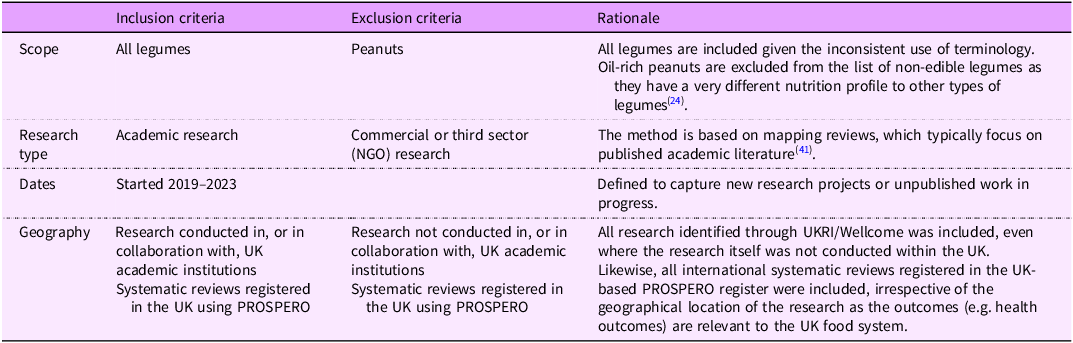
Using the eligibility criteria in Table 1, the research questions for this review were defined as: (1) What academic research on beans, peas, pulses and other legumes is underway or registered in the UK?
Eligibility criteria

(2) What is the scope and spread of this research across the value chain, and where are the research gaps or opportunities?
Stage 2: Sampling
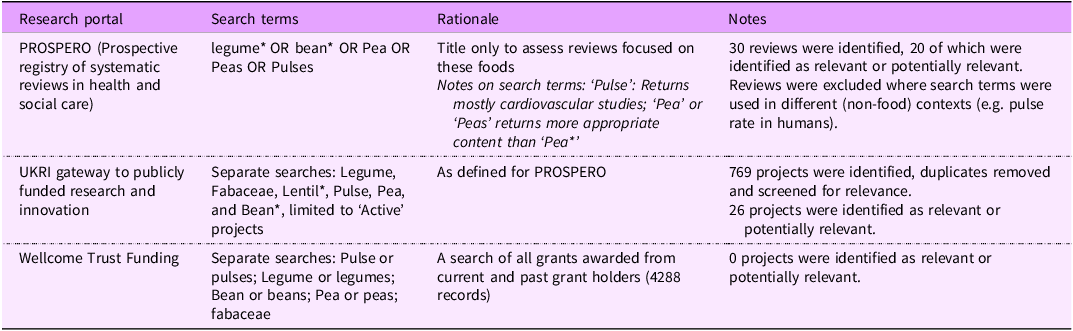
During November 2023, a desktop review of research activities was completed using three UK research portals. The search terms used are summarised in Table 2. The portals accessed were PROSPERO – International prospective register of systematic reviews (https://www.crd.york.ac.uk/PROSPERO/), UKRI Gateway to publicly funded research and innovation (https://gtr.ukri.org/) and Wellcome Trust Funding (https://wellcome.org/grant-funding/people-and-projects/grants-awarded). Eligibility criteria are set out in Table 1. All searches were limited to English language projects underway between 2019 and 2023. All research identified through UK Research and Innovation (UKRI)/Wellcome was included, even where the research itself was not conducted within the UK. Likewise, all studies registered in the UK-based PROSPERO register were included, irrespective of the geographical location of the research.
Portals and search terms

Stage 3: Data extraction
For each research project identified as meeting the inclusion criteria, data on food/crop type and value chain stage were extracted. The area of research focus was also defined thematically by the authors. Data were extracted in Microsoft Excel and represented visually using Datawrapper(46,47) .
Stage 4: Value chain mapping
A highly simplified visual representation of the UK value chain for beans, peas and pulses was developed following Stage 0. Development of this visual map was informed by wider literature on value chain mapping(Reference Ponte, Gereffi and Raj-Reichert48). Few edible legume varieties are grown in the UK, and only fava (faba) beans and peas are grown commercially at scale(Reference Nicholson and Jones49). The supply chains for other types of beans, peas and pulses, which meet the majority of UK demand through import, can be long and fragmented(Reference Abraham and Pingali50). The purpose of the visual representation therefore involved mapping broad categories of activities that take place in the UK from production or import to consumption and waste disposal. A detailed and complex value chain map for a wider range of legume crops was beyond the scope of this study. Research identified at Stages 0–3 was mapped to the value chain, using the area of research focus identified from project abstracts at Stage 4. If research projects included more than one activity in the value chain, all activities were included.
Stage 5: Identifying research gaps and opportunities
The main clusters of research activity, potential research gaps and opportunities were identified using the value chain diagram and described narratively.
Results
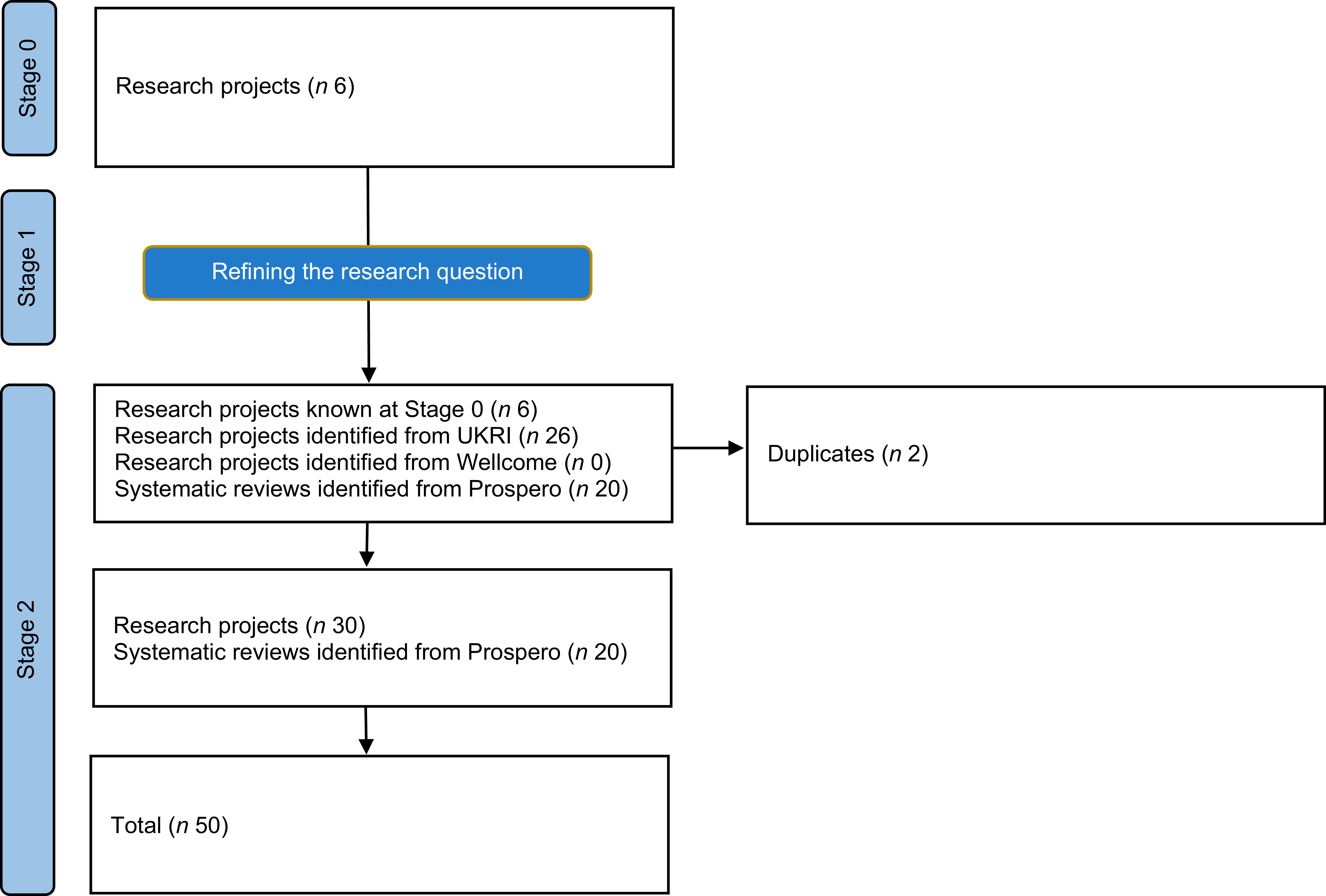
A total of fifty research projects met the inclusion criteria, comprising twenty systematic reviews and thirty research projects. Figure 2 provides a flow chart of the research activities, adapted from PRISMA(Reference Page, McKenzie and Bossuyt51).
Summary of UK research activities ongoing or starting in 2023, broken down by the stages of this prospective mapping review.

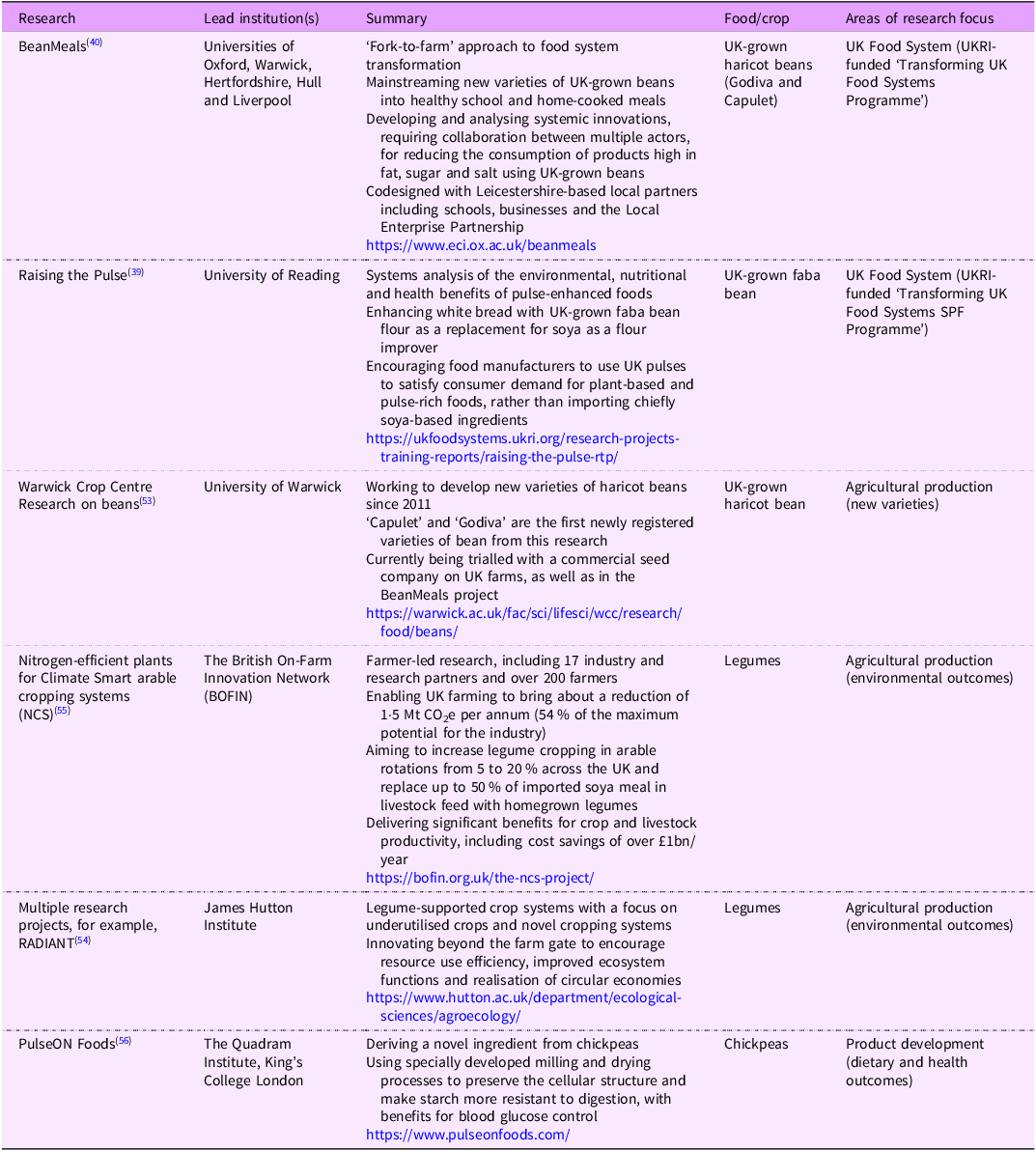
The six research projects identified at Stage 0 are summarised in Table 3: BeanMeals(40) and Raising the Pulse(Reference Lovegrove, O’Sullivan and Tosi39), both of which form part of the Transforming UK Food Systems Programme(52); research at the Warwick Crop Centre(53) on new varieties of haricot beans; research on legumes at the James Hutton Institute(54); The British On-Farm Innovation Network’s work on nitrogen-efficient plants for Climate Smart arable cropping systems(55); and research at the Quadram Institute on novel ingredients from chickpeas(56).
UK academic research activity on beans, peas and pulses known at stage 0

Research Question 1: Identifying the scope and spread of academic research on legumes underway or registered in the UK
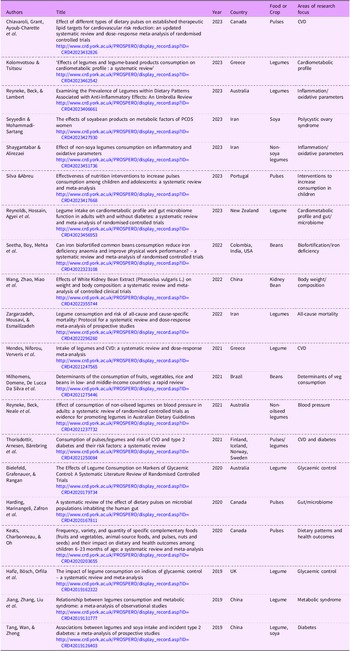
The desktop review undertaken at Stage 2 identified twenty systematic reviews relating to legumes through PROSPERO. An additional twenty-six relevant research projects funded by UKRI were identified. No relevant projects were funded by the Wellcome Trust. After deduplication, a total of fifty research activities met the defined inclusion criteria, comprising twenty systematic reviews and thirty research projects, as summarised in Figure 2.
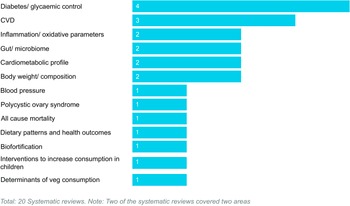
The details of each of the fifty included research studies are presented in Table 4. Of the twenty systematic reviews included, most focused on health outcomes associated with overall intake of ‘legumes’ (n 12) rather than specific types of beans (n 4), pulses (n 4) or peas (n 0). Key areas of research interest included diabetes/glycaemic control (n 4), CVD (n 3), inflammation and oxidative parameters (n 2), gut health/microbiome (n 2) and body weight/body composition (n 2). Other areas of interest being examined by single systematic reviews included biofortification, blood pressure, cardiometabolic profile, polycystic ovary syndrome, all-cause mortality, approaches to increase consumption among children and determinants of vegetable consumption, including beans (Figure 3). Only one of the identified systematic reviews was being conducted in the UK. Other systematic reviews were being conducted by researchers in China (n 3), Iran (n 3), Australia (n 3), Canada (n 3), Greece (n 2), New Zealand (n 1), Brazil (n 1), Portugal (n 1) and multi-country (non-UK) teams (n 2). The scope of these reviews extends beyond legumes grown and consumed in the UK, but nutrition and health impacts associated with consumption are universally applicable. They are included here because they are registered in the UK-based PROSPERO register; irrespective of study location, this analysis of nutrition/health outcomes contributes to the wider international evidence base that impacts UK food policy and practice.
Summary of systematic reviews (2019–2023) relating to legumes identified through PROSPERO

Note: Projects identified at https://www.crd.york.ac.uk/PROSPERO/ in November 2023.
Systematic reviews (2019–2023) relating to legumes, by theme.

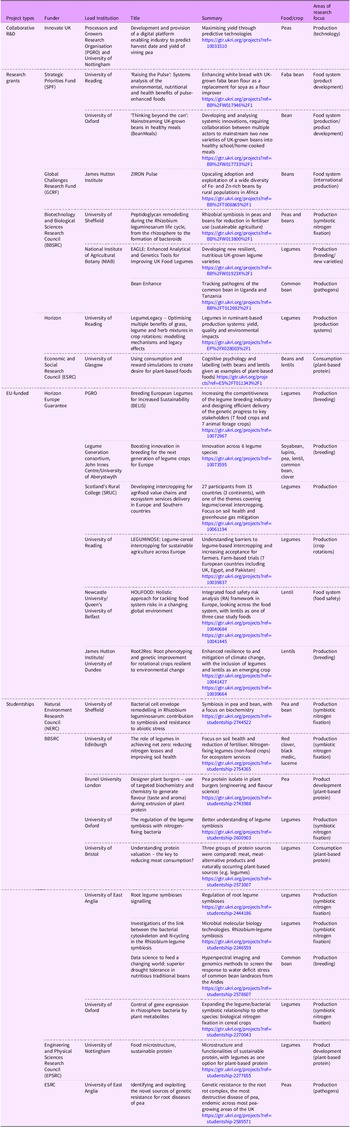
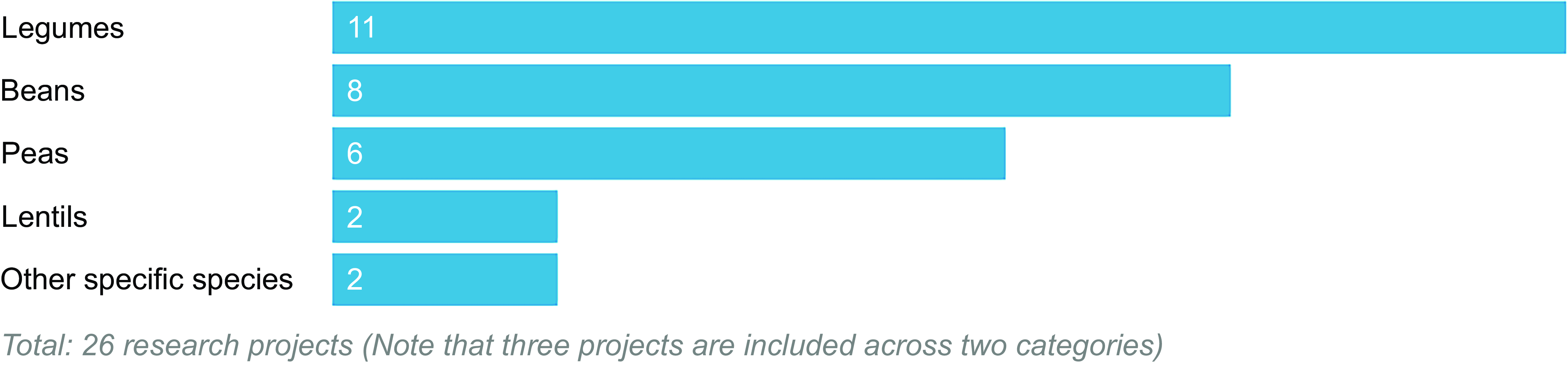
The twenty-six UKRI-funded research projects identified that related to legumes included research grants (n 8), EU-funded projects (n 6), studentships (n 11) and collaborative R&D projects (n 1). The research projects are detailed in Table 5 and presented by crop in Figure 4. Most studies focused on the general category of legumes (n 11) rather than beans (n 8), peas (n 6), lentils (n 2), other species such as lupins or clover (n 2) or pulses (n 0). When grouped by area of research focus (Figure 5), most projects (n 7) focused on interventions to increase crop productivity, including the use of legumes in crop rotations to reduce fertiliser inputs and improve soil health through symbiotic relationships with soil bacteria (rhizobia). Breeding and new varieties (n 4) and options for plant-based proteins (n 4) were also considered. Few (n 4) projects take a food systems perspective. For example, food systems approaches are not explicitly mentioned, or projects do not encompass the entire value chain from producer to consumer. Wider systems actors, activities or outcomes are also generally not considered in planned project analyses or syntheses. Two projects adopting a food systems approach were funded through UKRI’s ‘Transforming UK Food Systems Strategic Priorities Fund (SPF)’(52), namely BeanMeals(40) and Raising the Pulse(Reference Lovegrove, O’Sullivan and Tosi39). The other two projects consider broader international food systems. One of these projects was the ZIRON Pulse project, which considered upscaling the adoption and exploitation of iron and zinc rich beans by rural populations in Africa. The other project, HOLiFOOD, integrated food safety risk analysis across the food system, with European lentils as a case example.
Summary of UKRI-funded projects relating to legumes (2019–2023)

UKRI-funded research (2019–2023) related to legumes, by crop.

UKRI-funded research (2019–2023) relating to legumes, by area of research focus.

Research Question 2: Clarifying research gaps and opportunities
Mapping of the included research activities related to beans, peas, pulses and other legumes identified across the value chain is presented in Figure 6. The results show a striking pattern with the included research studies largely populating the two ends of the value chain: production (n 21) and consumption (n 21). Environmental outcomes are typically investigated at the production stage and dietary/health outcomes at the consumption stage. Production-focused research is linked to improved breeds (i.e. improved nutrition composition or drought tolerance/resilience to climate change); interventions to increase productivity (i.e. linked to the symbiotic relationship with bacteria for nitrogen fixation in soil); and the role of legumes in crop rotations, with a focus on reduced fertiliser and soil health. Consumption-focused research is focused on improving dietary and health outcomes of increased legume consumption, with a focus on cardiometabolic health impacts including diabetes/glycaemic control and CVD. At the middle of the value chain, a smaller number of research studies (n 4) are exploring new product development. These studies included developing novel plant-based foods including using pulses as an alternative protein source to meat from animals, a novel ingredient derived from chickpeas and white bread made with the addition of UK-grown faba bean flour.
Research activities on legumes (2019–2023) mapped to the UK value chain and food system outcomes.

Existing research activities focused on beans, peas, pulses and other legumes, which are registered or being conducted in the UK, rarely take a ‘food system’ perspective or encompass the entire value chain from producer to consumer. Only four of the fifty included studies adopted this approach. None of the identified studies had a primary focus on the role of middle-chain actors such as food processors, manufacturers or wholesalers in increasing legume use across our food systems. The clear research gaps are illustrated in Figure 6. The role of food providers (e.g. food service, institutional catering and retail sectors) is limited in existing research activities. The role of public sector caterers has been included in one study, BeanMeals, which trialled bean-based school meals in Leicestershire with beans from local supply chains(40). This project is the only one identified that explicitly focused on UK policy. Other potential research gaps, as illustrated in Figure 6, include the role of imports to the UK, or the impact of the diversion of leguminous crops to animal feed rather than food for humans.
Discussion
This prospective mapping review showed that research on legumes (beans, peas, pulses and a broader group of legumes not typically grown for human consumption) being conducted or registered in the UK targets the two ends of the value chain: production and consumption. The existing evidence base indicates the potential for legumes to improve environmental and human health outcomes by increasing the production and consumption of these foods, respectively. This existing evidence base may, at least in part, explain the current research focus on these areas of the value chain. A smaller number of studies consider new product development in the centre of the value chain. These studies used pulse-based ingredients in novel food products. This research area is likely to expand in future years, given consumer interest in plant-based foods(57).
In seeking to identify gaps and opportunities for future research activities, these results highlight that current research efforts on legumes in the UK rarely encompass the entire value chain from producer to consumer or adopt a food systems perspective. No existing academic research is primarily focused on the role of middle-chain actors such as processors, manufacturers, wholesalers, food brands and retailers, and research on food providers (e.g. institutional catering) is limited. The involvement of these middle-chain actors – linking the value chain from producer to consumer – can support the transition to improved food system outcomes(Reference Walton58). Supermarkets and the hospitality industries, in particular, have the power to influence the food supply chain, at both farm production and consumer levels(Reference Caraher, Furey and Wells59). The big market players have significant weight in these networks of relationships, exerting influence across food systems and the policy decisions affecting them(Reference Walton58,Reference Ruggeri Laderchi, Lotze-Campen and DeClerck60) . A lack of connected action on agriculture and nutrition, termed the ‘missing middle’, has been identified as a barrier to the achievement of the Sustainable Development Goals(Reference Veldhuizen, Giller and Oosterveer61).
Research on imports to the UK, or the impacts of promoting legumes for animal feed rather than for human consumption, is also limited. This gap is significant because, in the UK, most of the legumes we eat are imported, and most of what we grow is fed to animals. This situation impacts production and consumption in the UK and is consistent with patterns across Europe(Reference Scheuermann, Wood and Gordon15,Reference Ditzler, van Apeldoorn and Pellegrini16) .
Multiple barriers across our food systems can limit the production, processing, marketing and consumption of legumes(Reference Balázs, Kelemen and Centofanti33), and a lack of coordinated effort to increase production and consumption in parallel has been cited as a key barrier to change(Reference Nicholson and Jones49). European crop systems, public policies and market dynamics have historically promoted cereals to the detriment of legumes(Reference Magrini, Anton and Cholez34). In contrast to what is needed for human health, post-Brexit UK agricultural policy directs legume production towards nitrogen-fixing break crops or animal feed(62). There is a significant lack of incentives to grow legumes for human consumption in the UK, despite government targets for achieving net zero and reducing diet-related diseases. This policy disconnect may be one of the biggest barriers to change. Arguably, the existing research focus on improving production and consumption of legumes is unlikely to yield the necessary food systems transformation to improve planetary and human health, because it does not fully consider existing policy and governance frameworks. Policy incentives and wider support for change, especially among middle-chain actors, are needed.
Wider barriers to increased production in the UK include (i) a lack of defined markets for novel legume crops, which poses a financial risk to growers, (ii) resistance from food manufacturers to rely on UK-based legume supply chains without a consistent, high-quality supply and (iii) limited processing capacity for UK-grown crops, such as cleaning, sorting and canning produce(Reference Jones and Cottee63). Systemic efforts are required to address and overcome these barriers to achieve the desired beneficial food systems outcomes associated with increased legume production and consumption.
Research that links together a range of actors and activities across the food system to collaboratively overcome existing challenges for increased production and consumption has been tested. The TRUE collaboration (TRansition paths to sUstainable legume-based systems in Europe), which links academic researchers, producers, agronomists, processors, associated businesses and decision-makers, is a good example of previous multidisciplinary efforts to increase sustainable legume cultivation(Reference Iannetta64). In the UK, the BeanMeals project adopted a ‘fork-to-farm’ approach, including linking the whole value chain from children’s lunchtime meals in schools in Leicestershire to producers for new varieties of British beans. This highly integrated approach to research is rare, potentially because the short supply chains in this project are quite different from the typically long and fragmented value chains for beans. BeanMeals identified that eight steps are required to get a bean from North America, where it might typically be sourced, to a school meal in Leicestershire. This assessment therefore mapped the ‘missing middle’ of the value chain(Reference Zhang and Zurek65) that was absent from most studies identified in the current prospective mapping review. A subsequent report from the project identified three potential pathways for legume promotion in the UK: (i) community enterprise, (ii) artisanal entrepreneurs and (iii) food giants. All three pathways include a broad range of actors, but the report outlined the need to enhance research and evidence on the role of the missing middle in order to boost legume production and consumption in the UK(Reference Jones and Cottee63).
Changemakers looking to drive population-level dietary shift for the benefit of people and the planet, including a greater intake of beans, peas and pulses, must therefore look beyond the dietary choices of consumers and consider the broader range of actors and activities involved in food access and availability. Collaborative, multi-sector efforts could bring significant benefits in linking producers to consumers, driving greater involvement by middle-chain actors. To support this approach, there is a role for collaborative capacity builders that link together networks with shared goals(Reference Iannetta, Hawes and Begg36,Reference Weber and Khademian66) . Leading the way is the international ‘Beans is How’ network. Their Theory of Change for doubling global bean consumption includes promoting the role of social media influencers, chefs in restaurants and the wider food service industry in shaping consumer demand for pulses(14). Non-governmental or charitable organisations also have a valuable role. WWF (World Wide Fund for Nature), for example, has developed guidance for food retailers and the food service sector to support dietary shift towards ‘planet-based diets(Reference Meyer, Halevy and Huggins67,68) . Nutritionists and public health professionals working to improve population diet can act as collaborative capacity builders by promoting the inclusion of these foods in the diet, thereby helping to deliver improved environmental outcomes as well as vital improvements to dietary health.
Future research
Future research should prioritise studies that would enable detailed value chain mapping for specific types of beans, peas and pulses, including both imported and UK-grown crops. Detailed mapping would provide useful insights into the barriers and opportunities to boost legumes across the value chain. A wide range of stakeholders across the food system should be involved to co-create detailed maps of the value chains and, crucially, support the identification of appropriate policy interventions. The mapping and policy activities would benefit from including a wide range of legumes for animal consumption or environmental benefit, alongside beans, peas and pulses, to provide insights into the challenges associated with repurposing current production activities towards legumes for human consumption.
Future research on legumes should adopt a food systems approach, with interdisciplinary consideration of the whole value chain. Across the food system, there is a concentration of power in the input, processing and retail sectors(69); further research could explore the role these ‘middle-chain’ actors could have on the production and consumption ends of supply chains. The food retail sector – and notably large supermarket chains – holds the potential to positively influence the food system for beans, peas and pulses, because the majority of food purchases are made in this sector(70). Yet the specific role of this sector and associated potential policy interventions are underexplored. A scoping review of the role of the retail sector in supporting increased production and consumption of beans, peas and pulses is in progress(Reference Lane, Kelly and Reynolds71).
Companies in the middle of the value chain, such as product developers and manufacturers, food service companies and the retail sector, could play a pivotal role in progressing collaborative multi-sector efforts to expand the products that contain beans, peas and pulses. Company nutritionists, public health professionals and recipe developers can all play a starring role in promoting beans, peas and pulses in product development and promotion. The commercial realities, opportunities for change and examples of innovation should be evaluated, ideally by independent researchers. Such evaluations would provide examples of best practice and diffuse innovation while ensuring that conflicts of interest are minimised(Reference Scapin, Boelsen-Robinson and Naughton72–Reference Cullerton, Adams and Forouhi74).
Study strengths and limitations
This research study proposes a novel method for identifying research gaps and opportunities. The prospective mapping review approach identifies and maps ongoing research to minimise duplication of emerging research areas. This new approach could be adopted by researchers working across a range of academic disciplines. It could also aid the development of collaborations with other groups starting similar research projects and help to clarify the focus of systematic literature reviews. This methodological approach is particularly relevant for new and emerging areas of research and evidence interest. The topic of ultra-processed foods may provide another example of where this approach could be applied. Mapping research across the value chain supports a wider focus on the network of actors and activities that are collectively responsible for delivering ‘farm to fork’ solutions. This approach aligns with broader systems thinking for food-related public health and environmental issues.
This study also has some methodological limitations. It provides only a snapshot of academic research activities in late 2023, and additional research projects will now be in development. PROSPERO provides information about registered systematic reviews and, though not limited to reviews focused on health and social care, research efforts across other disciplines (such as agriculture or economics) are less likely to be registered on this repository if the review is not obviously linked to human health outcomes. Scoping reviews and other forms of reviews are also not registered with PROSPERO. Future research could also include other platforms such as Dimensions. Ai (https://www.dimensions.ai/), Open Science Framework (OSF) (https://osf.io/) and Figshare (https://figshare.com/) to cover a greater breadth of ongoing research activity. UKRI and Wellcome research portals accessed in this study provide insights into funded research in the UK. Academic projects in receipt of grants from private sector entities were not included in this study because of the potential for conflicts of interest in the presentation of findings. Non-government-funded research being conducted outside of academia was beyond the scope of this study. Searches performed in this study therefore did not identify research being conducted at the Royal Botanic Gardens, Kew, for example, which is investigating legume crop resilience and adaptation to climate change. Activity within the private sector, such as the use of pulse-based ingredients in novel plant-based foods or commercial trials, or multi-sector collaborations through organisations such as Beans is How(14) are alternative pathways to generate knowledge and evidence. Future prospective mapping reviews could therefore consider defining a broader set of inclusion criteria.
Conclusion
Legumes, such as beans, peas and other pulses, hold significant potential to support improved food system outcomes. We need to grow and eat more legumes in the UK to achieve their potential health and environmental benefits. The results of this prospective mapping review are encouraging, showing a significant number of research studies underway that will provide evidence towards future food policy and practice change. Existing research activities, however, are largely isolated at either end of the value chain: production and consumption. Future research activities in this field should focus on (i) adopting food systems perspectives; (ii) examining the role of middle-chain actors that link producers to consumers; and (iii) reviewing the policy landscape that shapes the activities across the value chain.
Acknowledgements
L.L. wishes to thank the BeanMeals team, under the direction of John Ingram, for their engagement and support. A preliminary version of this work was presented as a poster at the Transforming UK Food Systems Conference, York, January 2025.
Financial support
L.L., C.R., R.W. and C.V. receive funding from the Transforming the UK Food System for Healthy People and a Healthy Environment SPF Programme, delivered by UKRI, in partnership with the Global Food Security Programme, BBSRC, ESRC, MRC, NERC, Defra, DHSC, OHID, Innovate UK and FSA, Project Reference: BB/V011391/1, L.L. Reference: 2756742. C.R. is funded by BBSRC for the Healthy soil, Healthy food, Healthy people (H3) project (reference: BB/V004719/1). R.W. is funded by BBSRC for the Transformations to Regenerative Food Systems (Fix Our Food) Project (Reference: BB/V004581/1). C.V. receives funding for projects through the National Institute for Health Research (references: NIHR129771, NIHR203438, NIHR156535, NIHR206131 and NIHR207065). C.R., C.V. and R.W. receive UKRI funding for the Co-Centre for Sustainable Food Systems (Project Reference: BB/Y012909/1). C.R. and C.V. are funded by UKRI and NIHR as part of the Building a Green Future strategy through the THRIVING Food Futures research hub (MR/Z506485/1). C.R., C.V. and R.W. are funded by UKRI (through the Building a Green Future and Building a Secure and Resilient World cross-UKRI themes), Defra and NERC and administered by NERC on behalf of the partners by the Joined up Landscapes (Project Reference: TBA).
Competing interests
R.W. has no conflicts of interests to declare. C.V. has a non-financial research collaboration with a UK supermarket chain and has no further interests to declare. L.L. was based at the Institute of Grocery Distribution (IGD) on a professional internship placement from November 2024 to January 2025 and employed by IGD in a part-time advisory role from February to April 2025. C.R. has advisory positions on boards at the Nutrition Society (food systems theme lead) and the Institute of Food Science & Technology (Sustainability working group). C.R. is part of the Sustainable Diet Working Group, Faculty of Public Health and the British Standards Institution/International Organization for Standardization committee ISO/TC 34/SC 20 (food loss and waste). C.R. has received payment via City, University of London, for consulting for: WRAP (a UK NGO); Zero Waste Scotland; DEFRA and the FSA (UK government). C.R. has been paid a Speaker’s Stipend by the following events: The Folger Institute (2020). C.R. is a member of EGEA and Nutrition Society Scientific Committees and co-chair of a session of the EGEA conference (2023) and Nutrition Society conferences (2022–2025). This has meant his registration and flight/accommodation have been paid by Aprifel or the Nutrition Society. C.R. has won competitive research funding (€49,858) from the following independent foundation: The Alpro Foundation (2020).
Authorship
L.L.: conceptualisation, analysis, writing original draft and editing drafts. C.R.: conceptualisation, technical guidance and editing drafts. R.W. and C.V.: technical guidance and editing drafts.
Ethics of human subject participation
Not applicable: No human participants.



 Open access

