

What is the relationship between a healthy population and postconflict stability? Studies into this question have tended to revolve around whose health is most affected by long periods of civil war and how this affects the potential for the resolution of political grievances in postconflict settings.Footnote 1 It is well established, for example, that the toll of worsened health care during armed conflict creates high economic and political burdens on already fragile postconflict states.Footnote 2 This line of enquiry has led to further questions about the regime-related factors that cause some communities to be healthier than others and the effects of this on patterns of armed conflict.Footnote 3 However, as Henrik Urdal and Chi Primus Che recently observed, significant gaps remain between research on health inequality (excess morbidity and mortality combined with poor access to health care services) and the study of armed conflict (and its aftermath).Footnote 4 As such, they argue that despite ‘the medical needs that typically arise in crisis regions, few studies address the overall health effects of conflict. Moreover, this literature has not been merged to any great extent with the growing armed conflict literature.’Footnote 5 This article attempts to respond to this challenge by re-examining the relationship between health outcomes and regime type in postconflict environments by focusing on the experience of a hitherto overlooked region – Southeast Asia. It does so by examining what role, if any, regime type has played as a determinant of public health expenditure in postconflict societies in Southeast Asia and, through this, how the type of regime influences the likelihood of health making a positive contribution to postconflict stability.
What we understand about the relationship between health, regimes type, and postconflict stability, is largely informed by earlier debates concerning the democratic peace thesis,Footnote 6 and the associated democratic welfare thesis. Simply put, these theses hold that democracies are more likely to be peaceful and to provide social welfare that is of benefit to the whole population than nondemocratic regimes.Footnote 7 Thus, existing studies in this area have explored the amplification of health inequalities due to conflict and war, the impact of political stability on the capacity of the regime to respond to health vulnerabilities, and the effect of regime type and public health expenditure on long-term prospects for baseline improvements in health and resilience to conflict.Footnote 8
The general thesis that emerges from these studies is that postconflict stability is less likely to be achieved when the health needs of war-affected populations are neglected than when those needs are effectively addressed.Footnote 9 What is more, it is commonly understood that democratic regimes are more likely to dedicate the resources necessary to achieve these effects in public health than other regime types. In this context, only democratic regimes are considered likely to, for instance, prioritise health expenditure over military expenditure.Footnote 10 This thesis has been developed and sustained largely through the use of global level studies using quantitative measures to observe general trends.Footnote 11 The question this article asks is whether the observed trends hold true equally across different regions. To what extent is democratisation a necessary condition in persuading states in postconflict situations to dedicate sufficient resources to public health such that the emergence of healthy populations may contribute to the avoidance of future conflict? To understand more precisely what work, if any, democratisation does in shaping post-conflict state preferences, it is necessary to look at the relevant relationships in more detail than is permitted by studies at the global level, hence the regional approach adopted here.
The article proceeds in three parts. First, I chart existing research on the relationship between health and armed conflict in more detail to justify the hypothesis described above. Second, I examine the Southeast Asian experience over the last twenty years and show how this experience corroborates some of the key findings of the literature but challenges some other aspects of, especially, those relating to the significance of regime type. Finally, I consider how this regional case study engages with key criticisms that have emerged on the broader study of the positive relationship between regime type and addressing health inequalities in the postconflict environment.
I argue that the Southeast Asian experience lends broad support to the view that healthier postconflict communities are less likely to return to violence than less healthy communities and that the allocation of welfare resources to health appears to contribute towards this goal. However, there are reasons to doubt the role that regime type plays in shaping this relationship and determining the direction of resources into public health. The assumption that democracies will invest more in health than other regime types in similar contexts may not be well supported by the Southeast Asian experience. In Southeast Asia, there appears to be no relationship between how democratic a regime is and its distribution of resources to health. What seems to matter is the introduction and resourcing of health specific policy and welfare programmes in postconflict environments, whether by a democratic regime or not. The underlying lesson here for post-conflict reconstruction may be that we should pay less attention to regime type and more to what the regime is actually doing in the field of health care delivery.
Health inequality and armed conflict
Over the past decade, International Relations (IR) scholarship has become increasingly concerned with the insecurity created by health threats ranging from HIV to bioweapons, and of late, the global economic burdens caused by from rising rates of chronic disease in developed and developing states.Footnote 12 Andrew Price-Smith has argued that this recent ‘health security debate’ in political science, including IR, arose within a post-Cold War environment, which allowed for a reconceptualisation of security that included nonmilitary threats.Footnote 13 This is not to say, for example, that prior to Dennis Pirages' 1995 paper on the concept of microsecurity there was no research on the relationship between conflict, health, and governance,Footnote 14 but that such research was at the relative margins of the field and what the IR lens has since introduced is a different reference point – the relatively new question of how health affects security to produce areas of health insecurity.Footnote 15 The first point of departure here, therefore, is the assertion that health inequalities can contribute to political instability.
One of the first scholars to identify a relationship between public health, regime type, and violent conflict was Andrew Price-Smith himself.Footnote 16 Price-Smith posed the question ‘what if we addressed the causes of war to prevent the public health crisis that arise from war?’ Equally, we might ask what if we identified that many of the civilian deaths during war are the cause of public health-governance problems prior to conflict and will remain a (governance) risk after conflict? In The Health of Nations, Price-Smith theorised a ‘probabilistic relationship among diseases, state capacity, societal deprivation and that may assist to some extent in the prediction of state failure and intra-state violence in the future’.Footnote 17 In Contagion and Chaos, he returned to this argument to describe how disease may function as a ‘stressor variable’ that compromises the prosperity, legitimacy, structure cohesion and security of sovereign states.Footnote 18 From this perspective, epidemic disease can contribute to the onset of civil conflict, and the practice of warfare itself can amplify disease contagion, increasing the burden of disease and further reducing the chances of sustainable peace.Footnote 19
Price-Smith examined the effect of contagion (high infectious disease burden) on countries and found a clear and symbiotic relationship between war and health: when states fail they fuel ‘public bads’ such as disease morbidity.Footnote 20 While noting that contagion and wider health inequalities within a population rarely, if ever, gave rise to armed conflict between states by themselves, he noted that there was a strong argument to be made that a high burden of disease exacerbates and intensifies inter-ethnic and inter-class hostilities in existing situations of large vertical and horizontal inequalities.Footnote 21 Moreover, significant events of contagious disease outbreaks or high disease burdens amongst productive age groups (14–45 years) may contribute to ‘in-group/out-group psychosocial dynamics [that] often manifest as identify based conflicts, generating or exacerbating competition and conflict between socioeconomic class and between elite factions and perhaps manifesting in the form of inter-ethnic conflict’. As these effects take hold, ‘institutions of governance become increasingly brittle and fragile’.Footnote 22 It stands to reason from this that the reduction of health inequalities is an important component in the prevention of armed conflict in the aftermath of civil war.Footnote 23
The general problems identified by Price-Smith are compounded in postconflict settings because of the lingering effects that war has on health. In an examination of countries experiencing civil wars (1,000 deaths or more per annum) from 1991–9, Adam Ghobarah and his colleagues, Paul Huth and Bruce Russett, found that countries ‘experiencing a civil war earlier in the 1990s subsequently suffered a significantly increased loss of health life’.Footnote 24 Adam Ghobarah and his colleagues refer the applicability of their findings to Andrew Price-Smith earlier research theorising the relationship between the health of populations and stable governance.Footnote 25
Their study found that infectious diseases were concentrated in young children and productive adult age groups (15–44 years), particularly HIV, Malaria, Tuberculosis (TB), respiratory infections, and other infectious diseases (in order).Footnote 26 Compared to the male dominated deaths from combat during civil war, the longer-term health burdens of civil war are mainly felt by women and children, who experience a proportionately higher rate of infectious and chronic diseases as well as loss of life.Footnote 27
For example, in Sudan 1999, five years after the intensity of the civil war in South Sudan had declined (1.5 civil war deaths per 100 people), there remained 13 healthy life years gap between Sudanese boys under the age of five and boys under the age of five in commensurate countries that had experienced no civil war. Moreover, they found that the experience of armed conflict (two or more years prior) affected the long-term health of a population more than other factors such as ethnic inequality, regime type, income inequality, rapid urbanisation and health spending.Footnote 28 The health outcomes for girls and women were even worse than for boys and men. Thus, the loss of healthy years free from disease burden was found to not just affect the adult population, but also to impact on the next generation that followed into adulthood.Footnote 29 The adult populations in countries adjacent to those engaged in civil war experienced a higher risk of disease burden and loss of health life years, even if the conflict did not creep into their borders.Footnote 30 This is believed to be in part because refugee populations are captured in these studies, and also because of the presence of cross-border skirmishes (if not outright civil war) impacted delivery of humanitarian services.
One of the most important findings from this study was that the premature deaths of civilians (that is, not battle-related deaths) continued long after the war had ended and amounted to the largest casualty of war. This cross-national finding identified women and children as the ‘most common long-term victims … and they will bear these burdens [death and disability as a product of civil war] for the rest of their lives’.Footnote 31 The product of civil wars is continued death and disability long after the violence concludes, creating a situation where postconflict states have ‘devastated and overburdened health care systems’, in context where the health system may have been weak prior to onset of war.Footnote 32 Accordingly, in postconflict situations attention needs to be paid to reconstructing health care systems – or building them anew – to mitigate the ‘direct negative effects of war’.Footnote 33 As we know from Price-Smith, the vulnerability of the postconflict state returning to conflict is increased when the health of the surviving population is compromised – ‘civil wars increase the risk of death and disability through the breakdown of norms and practices of social order, with possible increases in homicide, transportation accidents, other injuries and cervical cancer’.Footnote 34 Failure to address poor health conditions will ‘contribute to economic stagnation and very likely to civil unrest’.Footnote 35
So, if widespread health inequality (in terms of access to health care and excess morbidity) gives rise to conflict and instability, and armed conflict exacerbates these inequalities, it stands to reason that in postconflict environments health inequalities are not only extreme but that they also carry the potential to drag a society back into conflict. Accordingly, addressing health inequalities post conflict becomes not just a vital public health measure in itself, but integral to postconflict reconstruction and political stability more broadly.Footnote 36 In addition to Price-Smith's analysis, discussed earlier, there have been other efforts to advance understanding of how regime type and public health expenditure relate to disease burdens and the likelihood of armed conflict,Footnote 37 as well as increased attention to the effects of war on the health of populations in postconflict settings.Footnote 38 Combined, these studies propose that there is a strong relationship between public health expenditure and political stability in postconflict environments and that regime type is the critical in determining the level of expenditure and stability produced through addressing health inequalities, relative to other areas of public expenditure such as defence.
This brings us to how ‘politics matters’.Footnote 39 For if the allocation of resources to health can reduce health inequalities then it must also be the case that such policies can mitigate the potential for health inequality to contribute to political instability after armed conflict. Are certain types of regime more likely than others to invest in the public health programmes? The consensus thus far seems to hold that, indeed, that democracies are more likely than autocracies to allocate the public resources needed to address health inequalities. When modelling health expenditures as an ‘explanatory variable for achievement in health care’, Ghobarah and his colleagues argue that
[T]he degree of democracy in a country is strongly associated with higher allocation levels [in public health spending]. We also found that ethnically diverse countries and those experiencing great income inequality show significantly lower levels of spending allocated to public health. Furthermore, countries engaged in enduring international rivalries allocate lower levels of public spending to health.Footnote 40
This general finding was supported by Zaryab Iqbal, who undertook a global comparative study of the relationship between violent conflict, public health expenditure, military expenditure, and regime type over a four-year period (2000–4).Footnote 41 To further test the positive relationship that she found between positive health spending (comparative to military expenditure), democratic regime, and health improvements, she adjusted her analysis to incorporate a longer time series study on the relationship between political regime, wealth, education, and a healthy population. Iqbal's study both complemented and expanded the earlier research by Ghobarah et al. and Price-Smith to ask what ‘considerable evidence exists for the positive effect of democracy on public health’.Footnote 42 In short, will there be more investment in health care – and will it have a generally positive influence on health outcomes – when those countries considered ‘democratic’ (measured according to the Polity IV scale) than by those considered ‘authoritarian’.
Like Andrew Price-Smith and Hazem Ghobarah and his colleagues, Iqbal found that ‘the negative effects of conflict on public health can best be explained by taking into account economic and political influences as well as characteristics of states’.Footnote 43Inter alia, when democratic conditions and processes do not exist, the health inequality factors identified above will be compounded by a nondemocratic regime and be more likely to propel a society into armed conflict – evidenced by Iqbal finding that these regimes will tend to have higher rates of military expenditure than health expenditure.Footnote 44 The crucial layer of analysis that Iqbal's longitudinal study added to the earlier research by Ghobarah et al. and Price-Smith was that ‘considerable evidence exists for the positive effect of democracy on public health’ over time.Footnote 45 In short, there will be more investment in health care – which has a generally positive influence on health outcomes – by those countries considered ‘democratic’ (measured according to the Polity IV regime scale) than by those considered ‘authoritarian’. Inter alia, when democratic conditions and processes do not exist, the health insecurity factors identified above will be compounded by a nondemocratic regime and be more likely to propel a society into armed conflict.
Combined, the literature above makes significant claims regarding the relationship between health spending, regime type, and political stability. First, that health inequalities can give rise to instability. Second, that these inequalities are especially pronounced in the wake of armed conflict, increasing their potential to foster instability. Third, concerted efforts and government investment can help remedy these inequalities and, by implication, the risks associated with them. Fourth, democratic regimes are more likely to make these investments than nondemocratic regimes and, therefore, are less likely to experience the sort of risks of armed conflict described by Price-Smith.Footnote 46 Findings that support the regime type as the intervening variable are potentially important for informing aid policy in the crucial (and vulnerable) postconflict environment.Footnote 47
If the democratic peace approach is right,Footnote 48 this would suggest that policymakers view democratisation as an urgent priority in postconflict situations as it is a necessary precursor to increased health spending to address the inequalities that can give rise to armed conflict.
However, before progressing down this route, I want to focus on the relationship between regime type and health expenditure identified by these studies at a deeper level. The conclusions noted above have been arrived at through a variety of studies employing global level regression analysis.Footnote 49 The bulk of these findings – particularly concerning regime type – have been informed by the Polity IV dataset. This is reflective of most democratic peace thesis literature.Footnote 50 There are few regional level examples provided (that is, Price-Smith in his follow up 2009 study and Iqbal's analysis of health impact on refugee camp populations).Footnote 51 As such, there have been few studies on whether this relationship remains evident in specific, regional contexts.Footnote 52
To better understand the precise contours of the relationship between health inequality, postconflict stability, and regime type we need a more detailed understanding of how these factors operate in particular conflicts and regions over specific time periods.Footnote 53 In the following section, I examine the particular experience of Southeast Asia. Southeast AsiaFootnote 54 is a particularly interesting region to study because it contains both postconflict states (where fighting has ceased) and states where low-medium scale intensity conflict remains, and amongst these states there are significant differences in regime type.Footnote 55 Moreover, available measures exist on infectious disease prevalence for the period of study (particularly HIV, Malaria, TB), maternal mortality data (the indicators most often referenced by both health insecurity and democracy studies), defence, and public health expenditure.Footnote 56
The remainder of this article examines the relationship between health inequality and expenditure, regime type and postconflict stability in Southeast Asia.Footnote 57 It shows that whilst a link may exist between the allocation of resources to public health and the reduction of health inequalities (and hence likelihood of armed conflict), there is little evidence to suggest that democracy is a crucial determinant of whether a regime will decide to allocate resources to achieve these effects.Footnote 58
The Southeast Asian experience
Since 1967, (the year ASEAN was formed) the majority of member states have experienced internal conflict (Cambodia, Indonesia, Myanmar, Philippines, Thailand, Vietnam), interstate war (Cambodia, Vietnam, Laos) or both. These are the states that I focus on in this study. Some have only recently achieved peaceful resolution of internal conflicts (April 2014 Mindanao peace agreement between Philippine government and the Moro Islamic Liberation Front [MILF]), and to date, one member state (Myanmar) continues to annually record high levels of internal political violence. Conversely the region has experienced a long peace amongst its members.Footnote 59
During the Cold War period, approximately 1945–89, Southeast Asia accounted for some of the most brutal mass atrocity crimes and conflicts. Alex Bellamy estimates that East Asia as a whole (including China, North and South Korea, and Japan) accounted for 50 per cent of the world's cases of mass atrocities in the 1960s and 1970s.Footnote 60 In Indonesia, during the 1965–6 coup and putsch, approximately 600,000 suspected communists were massacred; from 1975–98 in Indonesian occupied East Timor, approximately 90,000–200,000 civilians died as a result of this occupation, and in the Acehnese conflict (1975–2005) at least 15,000 were reportedly killed.Footnote 61 In Cambodia, the Khmer Rouge (1975–9) were responsible for at least 1.5 million deaths (of the 8 million population), and at least 500,000 civilians were killed by indiscriminate bombing by the United States during the Vietnam War. In Vietnam, at least 1.5 million civilians lost their lives during the 1961–75 conflict. The civil war and US bombing campaigns led to at least 50,000 civilians losing their lives during the same period in Laos. After the Vietnamese invasion into Cambodia in 1979 to remove the Khmer Rouge, it would not be until 1996 that Cambodia would be declared postconflict and hold its first elections.Footnote 62 Myanmar has had ongoing ethnic conflicts and territorial disputes since the 1970s under military dictatorship, with estimated deaths in the tens of thousands.Footnote 63 Although the overall number of armed conflicts in Southeast Asia has declined dramatically,Footnote 64 as noted above, intrastate conflicts have continued: low intensity conflicts (25 battle related deaths or more, using UCDP definitions) in the Philippines (Mindanao) and Thailand (Patani ethnic conflict in the south); and high intensity conflict within Myanmar.Footnote 65
This history, and in particular the more recent narrative concerning the region's transition from war to peace,Footnote 66 makes Southeast Asia an interesting case to explore against the claims identified in the previous section.Footnote 67 In terms of health systems, Southeast Asia states have a diverse range of public and private health care models, as well as markedly different health burdens.Footnote 68 For example, Brunei, Malaysia, Singapore, Thailand, and Vietnam all have life expectancies above the world average, yet the average wages – and personal expenditure on health care – in Malaysia, Thailand, and Vietnam is markedly below the annual incomes (and personal health expenditure) in Brunei and Singapore.Footnote 69
As mentioned above, Southeast Asia is an ideal case for accessing relevant data. In 2012, the Institute for Health Metrics Evaluation (IHME), with the cooperation of the World Health Organization (WHO), updated the comprehensive Health Adjusted Life Expectancy (HALE) measures and Disability Adjusted Life Years (DALY) measures originally produced in 2000 and 2004, respectively. When the WHO first produced these measures they were the first large datasets to measure and compare life expectancy across 191 countries taking into account disease burdens. The principle aim was to quantify the years lost due to disease burden and type (DALY), and then to identify the life expectancy of populations using the HALE score, which summarises years lived in less than ideal health and years lost due to premature mortality to produce a single measure of average population health for and individual country. The IHME dataset, referred to as the Global Burden of Disease Study 2010, is the most comprehensive global health dataset available for tracing individual states progress compared to their performance in the original DALY and HALE dataset.Footnote 70 The IHME DALY and HALE measures for 2010 are complete and available for the ASEAN member states, and the IHME dataset has conducted regression analysis back to 1990.Footnote 71
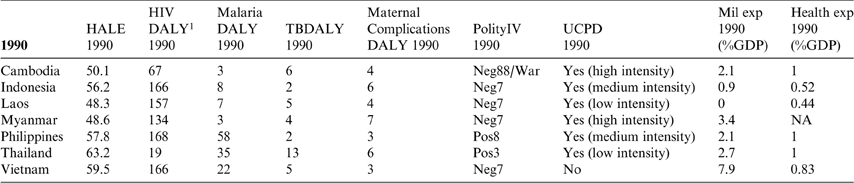
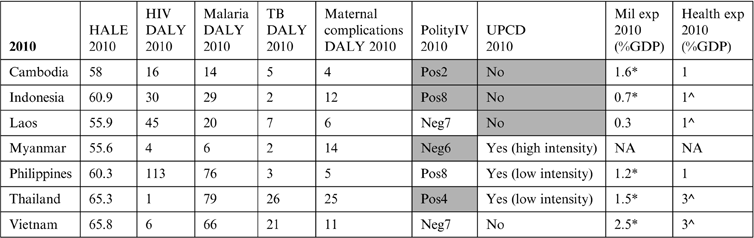
Likewise, World Bank data is available for ASEAN member states’ public health and military expenditure from 1990–2010;Footnote 72 while data from Polity IV and Uppsala Conflict Data Programme (UCDP) were both consulted to measure regime type and conflict prevalence/intensity, respectively, for the same years (see Tables 1 and 2).Footnote 73 As such, we can deepen the comparative analysis by folding in all the variables identified above as crucial to test the dependence between (1) stability of postconflict environment (presence of low-intensity conflict and/or civil unrest); (2) disease burden (HALE and DALY infectious disease and maternal mortality ranking); (3) level of public health expenditure (comparative to military expenditure); and (4) regime type.Footnote 74
1990 Southeast Asian postconflict states – status of health inequalities

1 DALY score represents the disease burden ranking for that country in terms of years of life lost (YLLs) due to premature death from that disease. IHME, The Global Burden of Disease: Generating Evidence, Guiding Policy (Washington: IHME, 2010), p. 13. http://www.healthmetricsandevaluation.org/gbd/publications/policy-report/global-burden-disease-generating-evidence-guiding-policy (accessed 22 April 2014).
2010 Southeast Asian postconflict states – status of health inequalities
Change since 1990: Increase since 1990: *; Decrease since 1990: ^.
A snapshot of the region in 1990 shows the following trends for each postconflict state in the region.
Analysis and findings
The purpose of analysing Southeast Asia's performance in relation to the factors identified in the first part of the article is twofold. First, to understand the relationship between sustained postconflict stability, health inequalities (disease burden), and public health expenditure (comparative to military expenditure) and regime type – related to the Southeast Asia context (see Tables 1 and 2). Second, to examine the relationship between health expenditure and regime type, and specifically the role played by democracy in generating health expenditure that is higher than that seen in non-democracies. The dataset – seven countries and eighteen variables – is too small a sample size to make strong inferences.Footnote 75 The analysis here serves to make the case for deeper examination of the relationship between postconflict recovery, regime type, social expenditure, and health outcomes. As such, what is observed here are basic relationships between the two snapshots drawn from 1990 to 2010. These snapshots produce four findings that seek to prompt exploration into how we understand the relevant relationships in a region-specific case.
First, concerning the argument that democratic regimes are more inclined to increase the proportion of state expenditure on health and social welfare, relative to other goods (specifically, military),Footnote 76 the Southeast Asian suggests a general drift towards increased provision for health and social welfare as a percentage of GDP. Significantly, this occurred irrespective of regime type. With the exception of Cambodia, Philippines, and Myanmar, where data was not available, the remaining states reduced their public expenditure on military equipment as a percentage of GDP. Some reductions were quite small – Indonesia, a democracy - has reduced its proportion from 0.9 per cent (1990) to 0.7 per cent (2010). Other countries have had notable reductions – Vietnam, measured as an autocracy in both 1990 and 2010 – had the largest reduction from 7.9 per cent (1990) to 2.5 per cent (2010). Of course, in most cases, an increased GDP means that although the proportion spent on the military has declined, real spending on the military has increased but the same rule will apply to public health spending (see below). That is not significant for our purposes, however, as we are primarily interested in the relative allocation of resources to public health and sectors of the government.
At the same time as there was a reduction in the relative spending on defence, there were significant increases in health expenditure as a proportion of GDP across all states from 1990 to 2010. Generally speaking, public health expenditure increased fourfold with Vietnam making the largest jump from 0.83 per cent in 1990 to 3 per cent in 2010, followed by Thailand, 1 per cent to 3 per cent, while Indonesia made the smallest increase in contribution from 0.52 per cent (1990) to 1 per cent (2010). Again, Myanmar was the only country with incomplete data. Significantly, these findings hold true irrespective of a state's level of democracy, suggesting no apparent relationship between increased health spending as a proportion of national spending and democratisation. Thus, relatively more autocratic Vietnam increased its health spending the most, whilst health spending in more democratic Indonesia grew the least. Likewise, Vietnam had the largest reduction in military expenditure as a proportion of GDP, while Indonesia's military expenditure has had the smallest reduction.
Second, over the twenty-year period studied here, the region has experienced a marked decline in armed conflict. Three countries secured a cessation of hostilities and established enduring peace – Cambodia, Indonesia, and Laos (and potentially the Philippines). While Vietnam was not listed as a country engaged in hostilities in 1990 in the UCDP, its withdrawal from Cambodia in 1989 means that in the 1990 period it could be identified as a postconflict country – and it has not relapsed into conflict. Whether or not we include Vietnam, the progress towards peace both within countries and amongst countries is notable in the ASEAN case.
Third, and no doubt related to the second finding, health trends have been positive across the region with all countries making improvements that range from marginal to quite dramatic. The average life expectancy has remained lowest amongst those countries that experienced high intensity conflicts in 1990: Myanmar (55.6 years) retains the lowest HALE in 2010, followed by Laos (55.9 years), Cambodia (58 years), Philippines (60.3 years), and Indonesia (60.9 years). However, Vietnam made one of the greatest leaps in HALE measures from 59.5 to 65.8.
Individual DALYs for infectious diseases reveal a more complicated picture.Footnote 77 For HIV, in 1990 one country reporting HIV had a DALYs ranking worse than the global mean (Thailand), and in 2010 Myanmar was added to this list. For Malaria, there was an improvement from three countries in 1990 experiencing higher than average Malaria burden amongst their population compared to only one country (Myanmar) in 2010. TB has consistently exacted a heavy burden in the region with six countries having a high DALY burden for TB – well above the global average in 1990 and continuing with five countries in 2010 (Cambodia, Indonesia, Laos, Myanmar, and Philippines).Footnote 78 Concerning maternal complications, Cambodia, Laos and Philippines continued to fair worse than the global mean, while Vietnam improved its own DALY rank in this area.
Finally, of particular interest regarding the relationship between regime type and health expenditure, there was a relatively weak trend in the region towards internal democratisation. This reflects previous research noting the region's general failure to follow the presumed positive relationship between economic development and democratisation.Footnote 79 According to the Polity IV scale, four countries moved closer towards democratisation, with Indonesia making the most dramatic transition from −7 (1990) to +8 (2010); Myanmar made the least significant jump from −7 to −6 over the same period; and Vietnam score remained static over the twenty years as an autocratic regime (−7). In other words, the region's significant overall advances in peace and in health were made in the absence of significant democratisation, and there was no correlation between democracy and the most rapid improvements in health.
Southeast Asia has therefore experienced a shift of priorities in government spending with the proportion of government spending on the military declining while the proportion spent on public health has increased. The fact that in several of the region's postconflict states, spending on health has outstripped military expenditure as a proportion of GDP, appears to confirm Price-Smith's and, especially, Iqbal's argument concerning the importance of postconflict government investment, especially given the region's relative success in maintaining stability after conflict. This further echoes the findings of others concerning the positive relationship between welfare spending and its pacifying effect on civil conflict.Footnote 80
Reductions in the proportion of government spending dedicated to the military, relative to investments in public health, may indicate a reduction in the relative significance attached to war-readiness by the state. The four countries that increased their public health expenditure as a proportion of GDP in the 2010 table were all postconflict countries (Indonesia, Laos, and Vietnam), or still experiencing low intensity conflict (Thailand). Only one postconflict country (Cambodia) and two countries still embroiled in conflict (Myanmar and Philippines) did not increase their health expenditure in the period covered. Myanmar consistently ranked the poorest across all measures, yet despite this the Southeast Asia case seems to indicate a positive relationship between health and stability when investment in social welfare is prioritised in postconflict settings. What is more, such transformations do not seem to be dependent on democratisation.Footnote 81 In fact, the outstanding performer in terms of health outcomes was Vietnam (even if we remove its postconflict status), which according to Polity IV dataset, made no move towards democratisation during the same period.
Amongst those listed as still experiencing low to medium intensity conflict in 2010, (Thailand, the Philippines, and Myanmar), the Philippines and Thailand have demonstrated more trending towards democracy than Cambodia, Laos, Myanmar, and Vietnam. Cambodia and Philippines are of particular interest in this regard because both are recorded as democracies, health expenditure in both countries is greater in 2010 than twenty years earlier, but the proportion of spending on health has remained lower than the proportion of GDP spent on the military. Additionally, it is worth recalling that Cambodia and Philippines’ HALE scores are amongst the lowest in the region – at the same level as Myanmar and Laos (autocracies). To repeat, this performance stands in contrast with the dramatic advancement of Vietnam's health indicators and changed spending priorities (away from military and towards health) – achieved under conditions of autocracy.
What role, then, does democracy and democratic consolidation play in influencing public health expenditure in postconflict environments? The study shows a subtle trend towards democratisation (four out of seven states) in the region but it is slight and inconsistent. Most importantly, the snapshots cast doubt on the view that democracies are more likely than autocracies to increase health expenditure as a proportion of the national budget or in preference to military expenditure. On the one hand, the democratisation trend itself in the region is not sufficiently strong to posit a connection between regime type and the generally positive health trends seen in the region. On the other, the individual results for states is decidedly mixed. Indonesia, for example, had the most significant positive change in its Polity IV score over the twenty-year period but had one of the smallest increases in health expenditure, smallest decrease in military expenditure and relatively small gains in health improvement measures. The same is true of Cambodia, which twenty years on has produced a positive democracy score but failed to preference health expenditure over military expenditure as a proportion of GDP. In contrast, Vietnam, which is clearly identified as an autocratic regime and consistently did not score well on the Polity scorecard (−7), had the largest increase in health expenditure, largest decrease in military expenditure, and one of the largest health improvements over this period. Thailand consistently had positive Polity scores over this period, and had increased health expenditure while decreasing military expenditure, but not of the magnitude of Vietnam. As noted above, Cambodia (+2) and Philippines (one of the strongest Polity scorers at +8) still spend more public money on military goods than public health (as percentage of GDP).
In terms of the health of the populations examined here there is no doubt that Ghobarah et al.'s finding about the sustained negative effect of armed conflict on health apply.Footnote 82 Cambodia, Indonesia, Laos, Myanmar, and the Philippines were all listed in 1990 as experiencing medium to high levels of armed conflict and their consistently lowest HALE scores in 1990 and 2010 reflects the ongoing cost of civil war to the population's health. In 2004, Ghobarah and his colleagues ranked, in order, HIV, Malaria, TB, and maternal complications as the principal sources of harm to postconflict populations and, unsurprisingly, those countries in Southeast Asia with scores worse than the global mean were those with experience of armed conflict from 1990 to 2010.Footnote 83 However, the only relevant disease where all except Myanmar made improvements was Malaria and the only country to dramatically improve its total DALY scores was Vietnam. The degree to which Malaria improvement is a discrepancy or indicative of focused action targeting this particular disease requires further exploration. Again, Vietnam is the only (postconflict) country that appears to have consistently made dramatic health improvements over this period, while remaining an autocracy and despite significant health vulnerabilities that plagued its population long into the aftermath of the Indochina conflict.Footnote 84
In summary, therefore, the intergenerational consequences of armed conflict are relatively clear in this case in that significant health burdens and inequalities continue in postconflict states. Moreover, the findings here support the view that the allocation of public resources to health care can lead to improvements in health and support postconflict stability. This may be facilitated by reductions in military spending (but it is not essential).Footnote 85 What is clear is that Iqbal's argument that the failure to prioritise public health care spending over military spending as a proportion of GDP (Cambodia, Myanmar, the Philippines, and even to some extent, Indonesia) results in less than optimal performance in the field of health. The key point of departure, however, lies in the role of democracy generating these effects. Whilst the consensus thus far has been that democracy pushes regimes into moving from military spending to welfare spending, and therefore that democracy produces improved health outcomes and great political stability (conflict avoidance), the Southeast Asian experience suggests no such link. Autocratic states can be just as likely to spend money on health and welfare as democracies; democratisation does not necessarily produce a realignment of those priorities. What is significant, therefore, may be not whether a post-conflict regime is democratic but whether it is committed to improve the health of its people and allocate resources to health.
Conclusion
Studies on the relationship between health and armed conflict suggest that postconflict states can expect at least a decade of ongoing health crises as a result of war. During this period, the population has little health resilience, which proportionately increases individual and societal risk of infectious disease and maternal mortality. These particular health risks are not only costly and labour-intensive to manage, but also exact social costs if left unresolved. It is widely thought that if these health risks are not addressed they weaken the capacity of the country to govern effectively, damage the state's legitimacy, and foster social conflict. As conflicts develop, the distribution of resources almost inevitably flows towards military expenditure. This scenario is most likely to occur in autocratic regimes. The key to escaping this trap appears to lie in the allocation of resources to health aimed at easing burdens and reducing inequalities. Democratic states, it is often argued, are more likely to do this than nondemocracies.
The Southeast Asian experience, from 1990 to 2010, shows democratic regimes are not more likely to allocate additional resources to public health expenditure (or greater improvements) and thus achieve better health indicators than autocracies. At the regional level, health overall has improved. At the same time, the region has seen reduced armed conflict accompanied by a reduction in the percentage of wealth dedicated to military expenditure. But, again outcomes have been achieved without any concomitant rise in democratisation across the region. Nor does it seem that democratisation is a necessary prerequisite for significant increases in health expenditure or improvements in the population's health: spending in ‘democratic’ Cambodia and Philippines grew much more slowly than spending in ‘autocratic’ Laos and Vietnam.
A previous history of armed conflict, as well as the presence of ongoing armed conflict, certainly seems to affect on the state's capacity to improve the overall health status of the population (as Philippines and Myanmar demonstrate) and this seems to hold true irrespective of whether the state is a democracy. In these situations, military expenditure continues to be prioritised over health expenditure. At the same time, Indonesia, a postconflict country that has undergone dramatic democratisation has not produced the greatest improvements in health outcomes, nor increased health expenditure nearly as much compared to its military expenditure. Yet, postconflict autocracy Vietnam outscores Indonesia in health outcomes (HALE), health expenditure, and military expenditure (percentage of GDP compared to health).
These findings call for a reassessment of the specific role played by democratisation in shaping post-conflict regime behaviour. Whilst it seems to be the case that the prioritisation of public health expenditure in postconflict settings can assist in reducing inequalities and the conflicts that arise from them, and thus contribute to peacebuilding,Footnote 86 there are significant doubts about the role that regime type plays in determining a state's decision to allocate resources in this direction. In short, the assumption that democratic regimes are more inclined to improve health equality does not hold. The four countries that increased health expenditure from 1990 to 2010 were Indonesia, Laos, Thailand, and Vietnam, all postconflict countries; two countries with ongoing conflicts (Myanmar and Philippines) did not increase health expenditure (but military expenditure did increase), and the same for postconflict Cambodia. However, these three countries (Philippines, Myanmar, and Cambodia) scored more positively than Vietnam or Laos against the Polity IV score for regime type. This case refutes the presumption that democracy necessarily reorients state priorities away from areas such as the military and towards social welfare and health. What is needed is more fine-grained differentiation between regime type and the actual behaviour and capacity of institutions in postconflict environments.Footnote 87
The provision of social welfare and allocation of resources to health seems vital for breaking the traps caused by health inequalities in postconflict situations.Footnote 88 Yet, contrary to what others have suggested, this is not contingent on prior democratisation. Indeed, as Helen Clark, Administrator of United Nation Development Programme (UNDP), argued in a recent speech on the relationship between health and development – ‘economic growth … may be an enabler of health. It is not destiny.’Footnote 89 Individual policy choices and investments matter more than the type of regime issuing them. Indeed, others such as Michael Ross have gone further and argued that the broader links between democracy and welfare spending are in fact weak.Footnote 90 What is more, it cannot be assumed that democratic regimes address poverty, particularly the type of entrenched health inequalities that affect a postconflict population.Footnote 91
In this vein, the Southeast Asian experience suggests that we need to look beyond regime type in order to understand how governments set priorities and allocate resources. For example, to what extent are we observing a relationship between public health expenditure and ‘good governance’? Obviously, good governance may correlate higher with democratic institutions, but the two are not path-dependent.Footnote 92 Understanding this relationship in the postconflict environment is not exclusive to health, as Håvard Hegre has recently argued.Footnote 93
In conclusion, there is clearly a relationship between health improvements and postconflict stability, but in the Southeast Asian case at least there is little evidence that democracy plays a determining role in shaping public health expenditure. There is no doubt from the Southeast Asian experience that the overall decline in armed conflict has led to improved health outcomes across the region (with some notable exceptions), and that political stability provides greater opportunity for government resources to be deployed to areas such as public health. However, regime type does not appear to determine welfare expenditure or prioritisation of health welfare. In Southeast Asia at least, democratic transition is not a necessary precondition for health systems strengthening after armed conflict, and health systems do not necessarily improve simply as a function of democracy. The prioritisation of health welfare and addressing health inequalities is at risk in the postconflict phase, but this can be addressed and be prioritised by any political regime.