


Genistein and daidzein are phyto-oestrogens interacting with oestradiol receptors and highly concentrated in soybeans. The current interest in these isoflavones has resulted in a significant number of publications on their potential efficacy in improving welfare and health. However, much data on their consumption and their bioavailability are still lacking even though several reviews exist on their bioavailability(Reference Cassidy, Brown and Hawdon1–Reference Rowland, Faughnan and Hoey3). Soya products are traditionally used in many Asian countries. In Japan, the mean total intake of isoflavones is estimated between 39 and 47·2 mg/d(Reference Arai, Watanabe and Kimira4–Reference Nagata, Shimizu and Takami6). In China, the mean intake was evaluated at 17·7 mg/d(Reference Liu, Li and Sun7) or at 25·4 mg/d(Reference Mei, Yeung and Kung8). In Korea, the soya isoflavone intake was estimated at 20·9 mg/d(Reference Surh, Kim and Koh9). In contrast, in Western countries, daily isoflavone intake was evaluated at < 2 mg(Reference Keinan-Boker, Peeters and Mulligan10). However, clinical studies were often performed on Westerners using high isoflavone intake from 10 mg up to 240 mg/d(Reference Bennetau-Pelissero, Arnal-Schnebelen and Lamothe11–Reference Gooderham, Adlercreutz and Ojala13) with a current exposure between 60 and 100 mg(Reference Cassidy, Brown and Hawdon1). Isoflavone concentrations in the plasma of Asians under a traditional diet were found to be higher than those of non-Asians under their traditional diet(Reference Adlercreutz, Markkanen and Watanabe14). However, to date, no study has assessed the influence of ethnic origin either on the bioavailability or on the pharmacokinetics of isoflavones. The ethnic origin was shown to influence the bioavailability of dietary components either via inter-ethnic genetic differences(Reference Klotz15) or gut flora inter-ethnic differences(Reference Alam, Saha and Dobkin16). Over the past 10 years, Westerners have been increasingly exposed to soya isoflavones through the consumption of soya food or isoflavone supplements(Reference Messina, Nagata and Wu17). Nevertheless, the knowledge of isoflavone pharmacokinetics especially on chronic ingestions is required to determine an appropriate intake of soya isoflavones, and allow health professionals to give appropriate advice. Recent reviews have dealt with several factors influencing the bioavailability of isoflavones(Reference Rowland, Faughnan and Hoey3, Reference Chen18). The effect of chronic soya exposure is still controversial. Several data showed metabolism adaptation and others did not(Reference Lu, Grady and Marshall19–Reference Wiseman, Casey and Bowey22). Traditional Asian food is considered to be different from Western food(Reference Adlercreutz, Honjo and Higashi23) and responsible for specific health characteristics. To our knowledge, no studies comparing the effects of either Asian or Western background diets on the pharmacokinetics of soya isoflavones have so far been conducted.
This clinical trial investigates for the first time whether: (i) ethnicity (Asian v. Caucasian); (ii) once only v. chronic soya exposure or (iii) background diet may influence isoflavone pharmacokinetics of the main soya isoflavones.
Methods
Twelve French Caucasian and twelve Chinese Asian healthy young male volunteers were recruited. Most of the Asians were visiting students and had been in France for 2 months when the experiment began. Subjects were interviewed in their native language on their usual dietary preferences. Asians were mainly on a traditional Asian diet served at the school restaurant with the agreement of dieticians. They could also have Asian or Western food from a takeaway restaurant collaborating with the study with the agreement of dieticians, and consumed in the subjects' private accommodation. Caucasians were invited to follow their usual Western dietary habits currently proposed at the French school restaurant and checked by dieticians. Volunteers were mainly non-smokers (nineteen out of twenty-four, four smokers among Caucasian volunteers). None of the smokers had more than ten cigarettes per day, and they were asked not to consume alcohol and to keep on with their usual physical activities. Cigarette consumption was maintained in order not to modify liver metabolism just before the study. All subjects were aged between 20 and 30 years old, with a BMI between 19·4 and 25·5 kg/m2 (Table 1). The protocol was explained to subjects in their native language and they provided written informed consent. The previous medical history of the volunteers was checked as well as their current health status. A biological blood test was performed to check for digestive, liver or kidney disease. Exclusion criteria were any digestive, liver or kidney pathologies, excessive cigarette or drug consumption, and excessive alcohol, coffee or tea consumption. Secondarily, equol production became an exclusion criterion to homogenise the volunteer population. The subjects had to abstain from consuming any drugs, especially antibiotics, for at least 30 d before the beginning of the study and during it. Subjects were not authorised to consume soya-containing foods for 10 d before the study and until its completion. This was carefully checked with school restaurants and takeaway restaurants involved in the study. Moreover, the main foods containing polyphenols, such as red fruits, red wine, chocolates, tea or coffee, were prohibited for 3 d before the beginning of the study, and during the study. Items consumed all through the study are summarised in Table 2 with the main characteristics of the diets.
(Mean values and standard deviations)
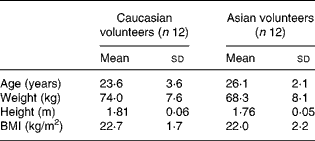
* No significant differences were noticed between the groups, except for height (P = 0·04).
Main characteristics of the Western and Asian diets

* Na, K, Mg, P, Ca, Fe and Zn.
† Vitamins A, D, E, B1, B2, B3, B5, B6, B9, B12 and C.
The study was performed at the Clinical Investigation Center (INSERM and Bordeaux University Hospital, Haut-Levêque Hospital, Pessac, France) and approved on 28 April 2004 by the regional Medical Ethics Committee (Comité Consultatif pour la Protection des Personnes se prêtant à des Recherches Biomédicales, CCPPRB A, Bordeaux, France). The present study was conducted according to the guidelines laid down in the Declaration of Helsinki, and all procedures involving human subjects/patients were approved by the CCPPRB A, Bordeaux, France. Written informed consent was obtained from all subjects.
Two interventional comparative trials of 10-d soya-based cheese administration were carried out. The first trial was a randomised, two-way cross-over design with an 18-d wash-out period that assessed the influence of the dietary context, i.e. Western or Asian, on isoflavone pharmacokinetics in Asian subjects (Fig. 1, right side). The second trial assessed the influence of ethnic origin by blindly comparing isoflavone pharmacokinetics in Caucasians and Asians under a Western diet (Fig. 1). These two trials were nested in one design allowing the participation of Asians in both trials at once. Moreover, it allowed the comparison of isoflavone pharmacokinetics in each ethnic group under its usual diet. Caucasians were divided at random into two groups participating in the experiment at two different periods of time to improve their comparability with Asians with regard to the time period of the experimentation. Isoflavone plasma levels and pharmacokinetics were determined blind to the ethnic origin and the nature of the dietary context. Each volunteer received a 56 g portion of a soya-based cheese daily for 10 d, associated either with a traditional Western or a traditional Asian diet according to the trial. As mentioned earlier, diets previously composed by dieticians were provided either by the school restaurant or by a takeaway restaurant collaborating with the study. Soya-based-cheeses were from Le Sojami® (Agen, France). The soya-based cheese contained 45·97 (sd 1·57) mg of isoflavones in aglycone equivalent, (genistein: 25·45 (sd 0·85) mg; and daidzein: 20·51 (sd 0·80) mg). This was checked at the beginning of the trial, at mid-time and at the end. Isoflavones were mainly in the glycosylated form (>95 %) as assed by a double ELISA assay with or without hydrolysis of the samples (see below for hydrolysis procedure and sample treatments). Meals eaten in the hospital unit were all identical and checked by a dietician. During the 10-d-periods out of the hospital, subjects were provided with pre-prepared meals from the takeaway restaurant or from the school restaurant with recipes approved by dieticians and complying with the specific dietary recommendations based on the age and sex of the subjects and the specific protocol. Table 2 presents the main characteristics of each type of diet.
Experimental design of the study. Asian volunteers were included in a randomised, two-way, cross-over design that assessed the influence of the dietary context. Caucasian volunteers were divided at random into two groups, in order to be compared to Asians under the Western diet at the same periods of time.

In both trials, a baseline of 10 ml blood sample was collected before soya food ingestion (T 0). Furthermore, blood samples were collected after 4, 6, 8, 10, 12, 18 and 24 h. On the 10th day, a plasma kinetic was performed again based on the analysis of samples collected at 0, 4, 6, 8, 10, 12, 18, 24, 48 and 72 h following the last ingestion of soya-based cheese. Blood samples were collected in Vacutainer® glass tubes (Becton Dickinson, Le Pont-De-Claix, France) containing heparin and lithium as anticoagulants, through an indwelling cannula for samples up to 24 h, and thereafter by venepuncture. Plasma samples were centrifuged at 5000 g for 5 min at 4°C and stored frozen at − 20°C until analysis. Isoflavone concentrations in blood samples were measured by ELISA as previously described(Reference Bennetau-Pelissero, Arnal-Schnebelen and Lamothe11, Reference Bennetau-Pelissero, Le Houerou and Lamothe24, Reference Le Houerou, Bennetau-Pelissero and Lamothe25). Briefly, before assay, plasmas were first hydrolysed using β-glucuronidase–arylsulphatase (Roche Diagnostic, Mannheim, Germany) for 24 h at 37°C in acetate buffer 0·05 m, pH 5. After hydrolysis, plasmas were extracted using three times, three volumes of acidified ethyl acetate. Solvent was evaporated to dryness and the extract was resuspended in an assay buffer by sonication. ELISA is a competitive assay using immobilised antigen as the competitor. Specificity tests demonstrated that none of the antibodies recognised equol or O-desmethylangolensin, dihydrodaidzein and dihydrogenistein significantly (i.e. < 0·3 % in all cases). In addition, a good parallelism was observed between standard curves and plasma dilution curves(Reference Bennetau-Pelissero, Le Houerou, Le Menn, Bausch-Goldbohm, Kardinaal and Serra26), showing that no cross-reaction with plasma metabolites could alter genistein or daidzein measurements in plasmas. Any of the conjugates is recognised by any of our antibodies. The method was validated against HPLC(Reference Mathey, Lamothe and Coxam20) and was previously used for isoflavone pharmacokinetic measurements in human subjects(Reference Vergne, Bennetau-Pelissero and Lamothe27, Reference Vergne, Titier and Bernard28), giving results in accordance with previous studies performed using other assay methods.
Pharmacokinetic parameters were obtained using the pharmacokinetic software PK-FIT version 1.2 (RDPP, Montpellier, France). Non-compartmental pharmacokinetic analysis was used to analyse plasma isoflavone concentration–time data. The parameters of maximum concentration (C max), and time for maximum concentration (T max), were obtained from experimental observations without interpolation. The terminal slope (K e) of the concentration–time curve was determined by log-linear regression. Elimination half-life (t 1/2) of the terminal log-linear phase was calculated following the equation 0·693/K e. The area under the plasma concentration–time curve (AUC) was extrapolated to infinity (AUC∞) or was calculated on a 24 h basis (AUC24 h). AUC were determined by trapezoidal and log-trapezoidal methods summing the areas from time 0 to the time of the last time taken into consideration (t) with or without an extrapolation from t to infinity (AUC∞). The extrapolated area was determined by dividing the last detectable concentration by the slope of the terminal log-linear phase. To ensure that comparisons were valid in the parallel controlled studies, C max, AUC24 h and AUC∞ values for daidzein and genistein were adjusted to the individual body weight (BW).
In the tables, data are expressed as means and standard deviations. For AUC24 h, the number of data is twelve. Comparisons of all parameters were performed on paired Wilcoxon signed-rank tests when comparing day 1–10, and by Wilcoxon rank-sum tests for other, non-paired comparisons. The effect of the dietary context on the pharmacokinetic parameters of each isoflavone in Asians was studied using a cross-over analysis where intra-subject comparisons were based on paired Wilcoxon signed-rank tests. It followed the strategy proposed by Grizzle(Reference Grizzle29). Interaction between dietary context and intake period was first studied. If significant at a nominal significance level 0·10 (bilateral analysis), the comparison of dietary contexts should have been only used for the first intake period. Otherwise, comparisons of dietary contexts were to be performed using the two intake periods. Except for interaction analysis in the cross-over strategy, all tests were considered statistically significant at P < 0·05. All analyses were performed with Statistical Analysis Systems Software version 9.2 (SAS Institute, Cary, NC, USA).
Results
Some data were withdrawn from some analyses because in a few cases, the compliance of the subjects to the protocol was not complete. An Asian volunteer did not present for plasma sampling at day 11, and a second at day 12. One Caucasian and four Asians had hidden soya in a sauce during the second kinetic evaluation of one or the other trials, as discovered while analysing dietary records and plasmas. The analyses were still possible since only one, two or three sets of data were lost at the maximum (see figures and tables for number of datasets used). During the hospital phase, the compliance was total and all the data obtained on the first 24 h could be integrated. In each case, it was considered that the results would be greater impaired if the defecting set of data was kept than if it was removed.
Effect of ethnicity, Asian v. Caucasian, on plasma isoflavone pharmacokinetics under Western diet
Fig. 2 shows the plasma concentrations time course after acute and chronic ingestions in these cases n 12. Table 3 reports AUC24 h, AUC∞, C max, t 1/2 and T max computed from the individual plasma concentration for both ethnic groups. For AUC∞, T max and t 1/2 values were withdrawn when the dietary protocol was not strictly followed. This is mentioned in the tables' headings.
Pharmacokinetics in Asians and Caucasians on Western diet. Means with their standard errors' plasma concentrations of daidzein (A) and genistein (B) after an acute and a 10-d period of daily ingestion of a soya-based cheese containing 20·51 (sd 0·80) of daidzein and 25·45 (sd 0·85) mg of genistein, associated with traditional Western diets. n 12 Caucasian men (△) and n 12 Asian men (♦).

(Mean values and standard deviations)

AUC24 h, area under the time–concentration curve calculated on a 24 h basis; AUC∞, AUC extrapolated to infinity; C max, maximum concentration measured in plasma; T max, time at which C max is measured; t 1/2, half-life period.
For all AUC24 h, n 12.
Comparisons between ethnic groups were based on Wilcoxon rank-sum tests. Comparisons between acute and chronic administrations were based on paired Wilcoxon signed-rank tests.
* Differences are significant for P < 0·05.
Acute ingestion
Following the acute ingestion of soya-based cheese in a Western dietary context, the AUC24 h and C max for both daidzein and genistein were significantly higher in Asians than in Caucasians. For daidzein, AUC were 29·2 (sd 11·2) v. 19·6 (sd 6·1) ng/ml per h per kg BW for Asians and Caucasians, respectively; and C max were 2·9 (sd 1·1) v. 1·7 (sd 0·5) ng/ml per kg BW for Asians and Caucasians, respectively (AUC24 h, P = 0·008 and C max, P = 0·006). For genistein, AUC were 43·7 (sd 15·5) v. 30·1 (sd 9·8) ng/ml per h per kg BW for Asians and Caucasians, respectively. C max were 3·7 (sd 1·1) v. 2·4 (sd 0·7) ng/ml per kg BW for Asians and Caucasians, respectively (AUC24 h, P = 0·032 and C max, P = 0·005). In addition, in both ethnic groups, serum concentrations had not returned to baseline concentrations 24 h after isoflavone ingestion (Fig. 2).
Chronic ingestions
Daidzein and genistein concentrations in plasma were not nil at T 0 of day 10 (Fig. 2). They progressively returned to baseline 72 h after the last intake. At day 10, daidzein AUC24 h and C max were still significantly higher in Asians (AUC24 h: 32·5 (sd 11·5) v. 25·6 (sd 5·3) ng/ml per h per kg BW for Asians and Caucasians, respectively; P = 0·0032) (C max: 2·9 (sd 1·1) v. 1·7 (sd 0·5) ng/ml per kg BW for Asians and Caucasians, respectively; P = 0·03). At day 10, genistein C max were the only parameter to be significantly higher in Asians (4·5 (sd 1·6) v. 3·2 (sd 1·2) ng/ml per kg BW for Asians and Caucasians, respectively; P = 0·05).
Comparisons between acute and chronic ingestions
A 10-d period of isoflavone intake significantly increased AUC24 h, AUC∞ and C max of genistein in Caucasian volunteers (P = 0·003, 0·01 and 0·01, respectively). For daidzein, differences were significant for AUC24 h and AUC∞ (P = 0·04 and 0·002, respectively), and C max were insignificantly different (P = 0·08). In Asians, genistein AUC24 h, AUC∞ and C max were increased (P = 0·004, 0·007 and 0·01, respectively), but not those of daidzein.
Effect of the dietary context, Asian v. Western diet, on plasma isoflavone pharmacokinetics in Asian volunteers
No significant interaction between period and dietary context was observed, except for the T max of genistein after chronic ingestions (P = 0·06).
Pharmacokinetic parameters are summarised in Table 4 and curves are presented in Fig. 3.
(Mean values and standard deviations)

AUC24 h, area under the time–concentration curve calculated on a 24 h basis; AUC∞, AUC extrapolated to infinity; C max, maximum concentration measured in plasma; T max, time at which C max is measured; t 1/2, half-life period.
For all AUC24 h, n 12.
Statistical analysis was performed according to a cross-over analysis strategy (see text), except for AUC24 h comparisons. All intra-subject comparisons were based on paired Wilcoxon signed-rank tests.
* Differences are significant for P < 0·05.
Pharmacokinetics in Asians under Asian or Western dietary context. Means with their standard errors' plasma concentrations of daidzein (A) and genistein (B) after an acute and a 10-d period of daily ingestion of a soya-based cheese containing 20·51 (sd 0·80) of daidzein and 25·45 (sd 0·85) mg of genistein. n 12 Asian men who consumed a traditional Western diet (♦) or a traditional Asian diet (○) in a cross-over trial, except when a number is apposed into brackets.

Acute ingestion
Daidzein AUC24 h were significantly higher in Asians under an Asian diet (40·8 (sd 15·6) v. 29·2 (sd 11·2) ng/ml per h per kg BW for Asian and Western diets, respectively; P = 0·003), and genistein AUC24 h were significantly lower (33·3 (sd 10·6) v. 43·7 (sd 15·5) ng/ml per h per kg BW for Asian and Western diets, respectively; P = 0·02). This was sustained by differences in T max (P = 0·04).
Chronic ingestions
There were no differences between the dietary contexts for any of the parameters considered.
Comparisons between acute and chronic ingestions
Genistein AUC24 h, AUC∞ and C max were increased in subjects on a Western diet (P = 0·005, 0·007 and 0·01, respectively). This is not the case for daidzein. An increase in AUC24 h and AUC∞ was also seen for genistein in Asians under an Asian diet (P = 0·003 and 0·02, respectively), but not for C max. For daidzein, the only parameters that were increased under acute ingestion were AUC∞. (P = 0·02) and t 1/2 (P = 0·03).
Comparison between ethnic groups each under its own diet
Pharmacokinetic parameters are exposed in Table 5 and curves are presented in Fig. 4.
(Mean values and standard deviations)

AUC24 h, area under the time–concentration curve calculated on a 24 h basis; AUC∞, AUC extrapolated to infinity; C max, maximum concentration measured in plasma; T max, time at which C max is measured; t 1/2, half-life period.
For all AUC24 h, n 12.
Comparisons between groups were based on Wilcoxon rank-sum tests. Comparisons between acute and chronic administrations were based on Wilcoxon signed-rank tests.
* Differences are significant for P < 0·05.
Pharmacokinetics in Asians and Caucasians each under their own dietary context. Means with their standard errors' plasma concentrations of daidzein (A) and genistein (B) after an acute and a 10-d period of daily ingestion of a soya-based cheese containing 20·51 (sd 0·80) of daidzein and 25·45 (sd 0·85) mg of genistein. n 12 Caucasian men consuming their Western diets (△) and n 12 Asian men consuming their traditional Asian diets (○), except when a number is apposed into brackets.

Acute ingestion
Only daidzein AUC24 h were higher in Asians under an Asian diet (40·8 (sd 15·6) v. 19·6 (sd 6·1) ng/ml per h per kg BW for Asians and Caucasians, respectively; P = 0·0003). No differences were recorded for genistein.
Chronic ingestions
Both AUC24 h and AUC∞ of daidzein were higher in Asians under an Asian diet than in Caucasians under a Western diet (AUC24 h: 38·5 (sd 13·3) v. 25·6 (sd 5·3) ng/ml per h per kg BW for Asians and Caucasians, respectively; P = 0·009 and AUC∞: 49·9 (sd 23·8) v. 33·5 (sd 11·1) ng/ml per h per kg BW for Asians and Caucasians, respectively; P = 0·04). C max were not different. For genistein, no differences were recorded.
Comparisons between acute and chronic ingestions
In Caucasians under a Western diet, AUC24 h, AUC∞ and C max values of genistein all increased significantly (P = 0·003, 0·01 and 0·01, respectively), whereas only AUC24 h and AUC∞ values increased in Asians under an Asian diet (P = 0·002 and 0·02, respectively). C max were not increased in Asians after chronic intakes. In Caucasians, AUC24 h and AUC∞ of daidzein were significantly increased (P = 0·04 and 0·002, respectively) sustained by an insignificant increase in C max and t 1/2 (P = 0·08 for both). This increase was not noticed for Asians under an Asian diet. Only AUC∞ was increased (P = 0·02), sustained by a significant increase in t 1/2 (P = 0·03).
Discussion
Study design
For the first time, the pharmacokinetics of isoflavones were compared between two ethnic groups in the same periods, in the same study using a homologous assay method. As far as we know, it is the first time that the effect of a dietary context was examined for its ability to modify the pharmacokinetics of isoflavones, and it is the first time that isoflavones pharmacokinetics were compared after acute and chronic ingestions. We included healthy young male subjects in order to avoid the interaction with oestrogens that can occur in women(Reference Nagel, vom Saal and Welshons30, Reference Pfeiffer, Treiling and Hoehle31). The experimentation was carried out over two distinct periods of time separated by a wash-out period of 18 d, using the cross-over design for the assessment of the role of dietary context in Asians. Caucasians were also divided at random into two groups, to be studied during the same periods of time to improve the comparability with their Asian counterparts (Fig. 1). For practical reasons, the wash-out period was fixed at 18 d since at least seven t 1/2 are required. Recent data have mentioned t 1/2 durations over 25 h(Reference Vergne, Bennetau-Pelissero and Lamothe27, Reference Vergne, Titier and Bernard28, Reference Richelle and Pridmore-Merten32). We chose to chronically expose volunteers for a 10-d duration since 10-d adaptation phenomena had already been registered for carbohydrates(Reference Albert, Legaspi and Horowitz33). There were great differences in the individual weight of volunteers, so the pharmacokinetic parameters were adjusted to this parameter to reduce its impact on the inter-individual variations. Daidzein concentrations in plasma were lower than those of genistein due to respective concentrations of both compounds in soya-based cheese and to a shorter plasma residence time for daidzein(Reference Vergne, Bennetau-Pelissero and Lamothe27, Reference Vergne, Titier and Bernard28, Reference Setchell, Brown and Desai34, Reference Watanabe, Yamaguchi and Sobue35). AUC24 h were always lower than AUC∞. This meant that at 24 h, the elimination process was far from over. In some cases, differences were seen on AUC24 h and were not on AUC∞; this can be explained because some volunteers exhibited recirculation phenomena after 24 h. Indeed, it was shown by other authors that, after passing the gut wall, isoflavones are sent to the liver for the first step of conjugation. A portion of the compounds are metabolised as bile compounds and return to the gut. Once in the gut, they can re-enter the bloodstream via the enterocyte uptake. These phenomena increased the residence time in the blood and therefore the area under the curve. This recirculation did not appear in all volunteers. As a consequence, this raised the standard deviation about the mean values of AUC∞ leading to a decrease in significance. None of the volunteers presented an equol production as tested using the specific ELISA previously set up(Reference Bennetau-Pelissero, Arnal-Schnebelen and Lamothe11, Reference Mathey, Lamothe and Coxam20, Reference Le Houerou, Bennetau-Pelissero and Lamothe25). This reduced the inter-individual variability of pharmacokinetic parameters. Indeed, as shown in a previous paper, equol production modifies the bioavailability of daidzein(Reference Vergne, Bennetau-Pelissero and Lamothe27, Reference Vergne, Titier and Bernard28).
Effect of ethnicity, Asian v. Caucasian, on plasma isoflavone pharmacokinetics under Western diet
The values of pharmacokinetic parameters fitted with previous data from other authors(Reference Rowland, Faughnan and Hoey3, Reference Vergne, Bennetau-Pelissero and Lamothe27, Reference Vergne, Titier and Bernard28, Reference Setchell, Brown and Desai34) validating the relevancy of the assay methods.
Acute ingestion
The higher values of AUC24 h and C max obtained in Asians indicate that Asians better absorb isoflavones than Caucasians on acute ingestion of isoflavones included in a soya-based cheese. The absorption efficiency may be different between ethnic groups since the T max and t 1/2 two parameters influenced by the speed of absorption and elimination processes were similar.
Chronic ingestions
After 10 d of chronic ingestions, differences were reduced for daidzein since the AUC and C max increased more in Caucasians than in Asians. For genistein, it was the same and only C max remained higher in Asians.
Comparisons between acute and chronic ingestions
The absence of increases in the combination of AUC24 h, AUC∞ and C max of daidzein in Asians was unexpected. Indeed, because t 1/2 varies from 6 to 24 h for daidzein and genistein(Reference Vergne, Bennetau-Pelissero and Lamothe27, Reference Vergne, Titier and Bernard28, Reference Richelle and Pridmore-Merten32), it was expected to find isoflavones in plasmas collected at T 0 of day 10 and to observe an increase in AUC24 h, AUC∞ and C max values. This was true for genistein and for daidzein in Caucasians, but not for daidzein in Asians (Table 3). This may indicate a modification of the daidzein enzymatic pathways involved in pharmacokinetic phenomena in these specific conditions. This observation was linked to a diminution of T max, suggesting a shorter absorption process. This is possibly due to an interaction of the Western food with the gut wall and flora. In Asian and Caucasian women, it was shown that gut transit time depending on diet can influence urine isoflavone excretion(Reference Zheng, Hu and Murphy36). Daidzein is the only compound to be influenced after a 10-d period of chronic ingestion, probably as a result of its shorter residence time in plasma.
Effect of dietary contexts in Asians
Acute ingestion
No statistical differences appeared when parameters were compared for daidzein or genistein in one or the other dietary contexts, except when AUC were calculated on a 24 h basis. However, in that case, the superiorities were inverted for the two isoflavones, values being higher in Asians under an Asian diet for daidzein and higher in Asians under a Western diet for genistein (Table 4). Therefore, no significant impact of the dietary context on isoflavone bioavailability can be concluded from these data.
Chronic ingestions
Comparing the dietary context and after chronic ingestions, there were no longer differences in any of the parameters analysed, whatever the isoflavone considered. This leads to the conclusion that the pharmacokinetics of both daidzein and genistein delivered in soya-based cheese are not influenced by the dietary context in Asians.
Comparisons between acute and chronic ingestions
The expected increases in AUC and C max linked to long t 1/2 of the two isoflavones were only noticed for genistein. For daidzein, whatever the dietary context there were no consistent increases in AUC and C max. This would suggest that a metabolic adaptation could occur in Asians after chronic ingestion of daidzein affecting the efficiency of daidzein absorption. Because t 1/2 were not affected, it can be hypothesised that this adaptation affects the absorption process and may take place at the gut level. It may be linked to a slight modification of the gut flora composition linked to the nature of the food item ingested.
Comparisons of ethnic groups under their own traditional diet
Classically, when Asians are compared to Westerners, this comparison includes both ethnic and dietary characteristics. Therefore, we compared the pharmacokinetics of each ethnic group on its own habitual diet. In these conditions, daidzein AUC were consistently higher in Asians than in Caucasians when each was on their traditional food and whatever the exposure duration: acute intake or ten chronic intakes. This finding was sustained by previous data(Reference Zheng, Hu and Murphy36) obtained in Asian and Caucasian women challenged with higher doses of isoflavones. It was also observed that AUC24 h, AUC∞ and C max for genistein and daidzein consistently increased in Caucasians after chronic ingestion, whereas it was not the case for daidzein and for genistein C max in Asians. This would suggest that under ten chronic ingestions, in these specific conditions (doses, rhythm of ingestion and food intake), Caucasians were able to experience an increase in AUC and C max, but not Asians.
Because t 1/2 were never modified whatever the ethnic group or the dietary context, it could be suggested that the differences reported here may be linked to differences at the gut level. Indeed, when genetic differences between groups were observed in previous studies for other compounds, it was shown that t 1/2 were different(Reference Klotz15, Reference Chen18). This indicates that, here, the endogenous enzymes involved in absorption, cell storage and elimination and which influence t 1/2 of isoflavones were probably not very different between Asians and Caucasians. At any rate, the inter-individual differences may have masked the inter-ethnic differences. If enzymes were not fundamentally different between the two ethnic groups, the difference in absorption could possibly be due to differences either in the background diet or in gut flora activity(Reference Atkinson, Frankenfeld and Lampe37). Indeed, gut flora is known to be influenced by the dietary context(Reference Rowland, Faughnan and Hoey3) and to influence isoflavone bioavailability(Reference Zheng, Hu and Murphy36, Reference Atkinson, Frankenfeld and Lampe37). Moreover, a microflora difference between Asians and Caucasians was already hypothesised previously(Reference Zheng, Hu and Murphy36), although never demonstrated as far as we know.
The present study also showed that Caucasians experienced a greater increase in AUC24 h, AUC∞ and C max of daidzein than Asians after ten chronic ingestions when each ethnic group was on its own traditional diet. If this phenomenon is maintained on longer exposure, it may lead to an accumulation in Caucasians and not in Asians. Therefore, on chronic daily exposure, Asians would have lower isoflavone plasma levels than Caucasians and this for a similar intake. This was already suggested by Gooderham & Adlercreutz(Reference Gooderham, Adlercreutz and Ojala13) comparing their results to those obtained by Adlercreutz(Reference Adlercreutz, Markkanen and Watanabe14). In both studies, the assay method and the isoflavone delivery were similar and the plasma levels were 371 (sd 93) and 107 ng/ml for Caucasians and Asians, respectively. Looking at the scattered literature produced either on Asians or on Caucasians, the effect observed in the present study seems to be confirmed. Indeed, several studies produced on Asians(Reference Uehar, Arai and Watanabe38–Reference Ozasa, Nakao and Watanabe41) found isoflavone plasma levels of 185, 159 (sd 80), 219 (sd 330) and 148 ng/ml, respectively. In all these studies, volunteers were on traditional Asian diet (from 39 to 46·4 mg isoflavones/d). They were followed without fasting, and the blood sampling was performed in the morning between 10 and 12 h post-ingestion. At the same time in studies dealing with long-term exposure of Caucasians to isoflavones(Reference Bennetau-Pelissero, Arnal-Schnebelen and Lamothe11, Reference Gooderham, Adlercreutz and Ojala13, Reference Vedrine, Mathey and Morand42), the isoflavones plasma levels were 371 (sd 93), 177 (sd 104) and 941 (sd 370) ng/ml for a daily intake of 45, 10 and 100 mg of isoflavone, respectively. This time again the delay between isoflavone intake and plasma collection was between 10 and 12 h.
Conclusion
The present manuscript provides evidence that on acute intake, Asians absorb isoflavones from soya cheese better than Caucasians, regardless of whether the background diet is Western or Asian. In Asians, the pharmacokinetics of isoflavones from soya-based cheese were not influenced by dietary context. Finally, chronic ingestions lead to a consistent increase in the AUC and C max of isoflavones in Caucasians under a Western diet, but this was not true for daidzein in Asians whatever the background diet, Asian or Western. This could have consequences on isoflavone bioavailability after chronic ingestions. A greater understanding of isoflavone pharmacokinetics could strengthen some hypothesis so far on a variety of potential health outcomes.
Acknowledgements
The present study was supported by the Research Ministry of France, RARE Program No. 03P221 and by the Région Aquitaine through Isle Royale Natural History Association funding. S. V. is the recipient of a fellowship (CIFRE No. 856/2003) from Arkopharma Pharmaceutical Laboratories and the National Association of Technical Research, Research Ministry of France. There is no conflict of interest regarding the present work. The authors thank the volunteers, Danièle Lamazière, the dietician, Marcelle Pontgahet and Claude Maïs, the nurses, Dr Virginie Bernard for inclusion visits and Dr Demotes-Mainard the CIC director. We acknowledge Dr Jean-James Garreau for the soya-based cheeses and Russell Wallace and Dr Mylene Potier for their kind help with the English. C. B.-P. applied to the Regional Applied Research Efforts funding program. C. B.-P., N. M. and P. P. conceived and designed the study, M. D. was responsible for organising and incorporating volunteers and collecting blood samples, S. V. and V. L. were responsible for assaying isoflavones in blood samples, N. M. was responsible for conducting the pharmacokinetic analysis; P. P. and J. A. were responsible for conducting the statistical analysis; S. V., P. C. and C. B.-P. for analysing the results; S. V., M. D., P. S. and C. B.-P. for co-ordinating the scientific and technical part of the study; and S. V. and C. B-.P for writing the manuscript. All authors provided input to the manuscript, and none of the authors had any conflict of financial or personal interest.



