


A nutritious diet is a key component that can assist with reducing the risk of being overweight or obese as well as reducing the risk of CVD, diabetes and some cancers( Reference Ness and Powles 1 – Reference Buijsse, Feskens and Schulze 3 ). A common indicator of healthy eating is fruit and vegetable intake, which is integral to a healthy dietary profile( 4 ). At population level, the consumption of fruit and vegetables is below recommended guidelines for the majority of the population in high-income countries including Australia( Reference Magarey, McKean and Daniels 5 ), the USA( Reference Tamers, Agurs-Collins and Dodd 6 ), the UK( Reference Roos, Johansson and Kasmel 7 , Reference Swan 8 ) and other European nations( Reference Tamers, Agurs-Collins and Dodd 6 , Reference Roos, Johansson and Kasmel 7 , Reference Billson, Pryer and Nichols 9 ).
Although adherence to nutritional guidelines remains a concern in most countries, for a significant proportion of the population of high-income countries the interrelated issue of food insecurity is an additional cause for concern. Being food secure entails having access to, and the means to acquire, sufficient food that is nutritious, of good quality, safe, meets cultural needs, and has been acquired in socially acceptable ways( Reference Anderson 10 ). Those burdened by food insecurity tend to have less healthy diets( Reference Tarasuk and Beaton 11 , Reference Tingay, Tan and Tan 12 ), lower self-rated health( Reference Stuff, Casey and Szeto 13 ), poorer mental health( Reference Heflin, Siefert and Williams 14 , Reference Siefert, Heflin and Corcoran 15 ) and may be at greater risk of some chronic diseases( Reference Seligman, Laraia and Kushel 16 ). Compared with wealthier households, low-income households are at an increased risk of food insecurity as they spend less money on food even though their food budget represents a higher proportion of their total income( Reference Cassady, Jetter and Culp 17 – 19 ).
A less than optimal dietary profile is more often observed among those experiencing socio-economic disadvantage at either the individual or the area level( Reference Roos, Johansson and Kasmel 7 , Reference Thornton, Bentley and Kavanagh 20 – Reference Ball, Abbott and Cleland 26 ). A lower income may restrict the ability to purchase healthy foods while living in a disadvantaged area may reduce an individual's opportunity to eat healthily if fresh produce, high-fibre and low-fat options are not readily available within stores in these neighbourhoods( Reference Moore and Diez Roux 27 – Reference Cheadle, Psaty and Curry 29 ). The combination of low income and neighbourhood disadvantage can lead to ‘deprivation amplification’( Reference Macintyre 30 ) whereby people with low levels of personal resources are further restricted in their ability to engage in healthy behaviours by living in disadvantaged neighbourhoods with low levels of healthy resources. It is important to acknowledge however that although the socio-economically disadvantaged are at increased risk of an unhealthy dietary profile and food insecurity, some manage to avoid such outcomes and identifying predictors of these healthier profiles could inform intervention efforts. Where this situation occurs, the degree to which sociodemographic factors are important correlates of health and healthy eating is likely to vary across nations as they may be dependent upon context-specific factors( Reference Cummins and Macintyre 31 ) such as national dietary recommendations, cultural differences in the way food is viewed and broader social differences (e.g. social norms around food-related practices such as consuming takeaway or convenience foods, social support for the unemployed, etc.).
In the present paper we use data from the UK and Australia to undertake a cross-national investigation of the sociodemographic correlates of eating behaviours and food security among women living in low-income households in socio-economically disadvantaged neighbourhoods. Studies involving more than one country are useful in that they help to elucidate the generalisability of findings across nations and can offer significant policy insights. In our study we undertook a cross-national comparison to better understand whether correlates of eating behaviours and being food secure are internationally transferable or context-specific. Although the data sets we used were not derived from precisely matched study designs, we have improved comparability by coding variables as similarly as possible. While international comparison studies of health behaviours and outcomes are common, relatively few have focused on eating behaviours( Reference Tamers, Agurs-Collins and Dodd 6 , Reference Dowler 32 ) or on socio-economically disadvantaged populations. The focus on women is prudent because (i) women's diets are qualitatively and quantitatively different from those of men( Reference McLennan and Podger 33 , Reference Johansson, Thelle and Solvoll 34 ) and (ii) in many cases women remain the primary suppliers and preparers of food for households( Reference Lester 35 ). As the UK and Australia are both high-income nations with close historical ties and many connected cultural values, we hypothesised that factors associated with healthy eating and remaining food secure among disadvantaged women would be similar across nations.
Methods
We compared data from women living in low-income households in disadvantaged neighbourhoods across the UK and within the State of Victoria, Australia. Data were drawn from two cross-sectional studies: the 2003–05 Low Income Diet and Nutrition Survey (LIDNS) from the UK and the 2007–08 Resilience for Eating and Activity Despite Inequality (READI) survey from Australia. Data collection methods for these surveys are described briefly below, with further details reported elsewhere( Reference Nelson, Erens and Bates 36 , Reference Ball, Jeffery and Abbott 37 ).
Study design
Low Income Diet and Nutrition Survey – UK
The sample for the LIDNS study was obtained from households across the whole of the UK during the period November 2003 to March 2005. Households were considered materially deprived if they were in approximately the bottom 15 % of the population in terms of material deprivation, which was derived through numerous questions including receipt of benefits, household composition, car ownership and employment status (identified via a doorstep screening process)( Reference Nelson, Erens and Bates 36 ). Data were collected via face-to-face computer-assisted personal interviews. Questions related to household food shopping practices were directed to the main household food shopper only. The final sample comprised 2430 households (72 % of the eligible households) from which 3728 individuals completed the necessary survey data (55 % response rate)( Reference Nelson, Erens and Bates 36 ). Ethical approval for LIDNS was obtained from the London Multi-Centre Research Ethics Committee (MREC).
Resilience for Eating and Activity Despite Inequality – Victoria, Australia
The READI study was undertaken within the State of Victoria, in south-eastern Australia. Suburb disadvantage was classified by the Australian Bureau of Statistics’ SocioEconomic Index for Areas (SEIFA) Index of Relative Socioeconomic Disadvantage (IRSD)( 38 ) with sampled suburbs coming from the most disadvantaged tertile. From this sample, eighty suburbs (forty urban and forty rural) were randomly selected and, from each of these, 150 women aged 18–45 years were also randomly selected from the electoral roll (voting is compulsory for Australian citizens aged 18 years and over).
The sample participants were mailed self-report postal surveys between August 2007 and May 2008. These included questions on health behaviours such as eating practices and other individual-level health and sociodemographic characteristics. After excluding participants who were deemed ineligible (e.g. because they were outside the study age range or had moved to another suburb prior to completing the survey), the final READI sample consisted of 4349 women (response rate 39 % of those eligible). Ethics approval for READI was obtained from the Deakin University Human Research Ethics Committee, the Victorian Department of Education and the Catholic Education Office.
Sample characteristics
As we wanted to be able to compare results from the UK and Australia, it was important to ensure that the study populations were as closely matched as possible. Key differences between the studies included that the Australian study was restricted to women, those aged 18–45 years and living within disadvantaged neighbourhoods, although this still captured some high-income households. Therefore, we restricted both samples to women, aged 18–45 years, with low household incomes and located in disadvantaged neighbourhoods. Because of different currencies between the two countries, it was important to ensure a consistent definition of low income. To make certain only lower-income households were included, we used a threshold of approximately 80 % of the national median household income (2004/05 UK median was £24 700 per annum (£475 per week)( 39 , Reference Jones 40 ); 2007/08 Australian median was $AU 66 890 per annum ($AU 1286 per week)( 41 )). The 80 % cut-off equates to a maximum weekly income of £360 in the UK and $AU 999 in Australia (Table 1). The next income response category for the READI study ($AU 1000–1499 per week) meant that households with incomes above the national median would have been included and therefore these were not considered low-income households. For the UK, neighbourhood disadvantage was defined as residing in an area that was among the two most socially deprived quintiles of wards (Index of Multiple Deprivation)( Reference Noble, Wright and Dibben 42 ) for their respective country (i.e. England, Scotland, Wales and Northern Ireland).
Percentage of national median income for the income categories used in the present analysis

pa, per annum; pw, per week; LIDNS, Low Income Diet and Nutrition Survey 2003–05; READI, Resilience for Eating and Activity Despite Inequality 2007–08.
For both samples, respondents were excluded from the analysis when they had missing values for one or more key variables (LIDNS n 4; READI n 138). In eight LIDNS households, two eligible participants completed the survey; however for comparative purposes only the first respondent in these households was retained. Final analysis was based on 643 LIDNS participants (17 % of the sample); while for READI we had complete data on 1340 participants (31 % of the sample).
Dependent variables
All variables were coded to ensure consistency across the two studies.
Dietary outcomes
Fruit and vegetable consumption was captured in the two studies using different response scales. For the UK sample, consumption was measured on a monthly time scale whereas for the Australian study it was measured by the number of pieces eaten per day. To make the data as comparable as possible, we re-coded the measures for both studies to ‘never or less than 1/d’ and ‘at least 1/d’. Although we recognise that consuming only one piece per day does not constitute meeting the dietary guidelines, these categories allow us to distinguish within-sample differences between those who consume more often compared with less frequent consumers and were comparable across data sets. We also explored the type of milk often consumed, as this may act as proxy for other healthy (low-fat) eating behaviours( Reference Hampl and Betts 43 ). Responses were coded based on whether the healthier alternatives (e.g. low-fat milk) or regular options (e.g. full-fat milk) were consumed.
Food security
Frequency of running out of money to buy food was measured for both studies and was used as our measure of food security status (acknowledging it is only one indicator of food security, although such measures have been shown to differentiate between different socio-economic groups( Reference Burns, Bentley and Thornton 44 )). In the UK, the question asked was ‘The food that I (we) bought just didn't last, and I (we) didn't have money to get more’ with the response categories: ‘often true’; ‘sometimes true’; ‘never true’ (re-coded to: sometimes/often true; never true). For Australia, this was measured by asking ‘In the last twelve months, were there any times that you ran out of food, and couldn't afford to buy more?’ Responses options were listed as: ‘never’; ‘once per week’; ‘once every two weeks’; ‘once per month’; ‘less than once per month’. For comparative purposes, all options in the Australian sample more frequent than never were reclassified sometimes/often true. Thus, for both samples, those who reported ‘never’ were classified as food secure according to this single indicator.
Independent variables and covariates
Age was categorised into five groups (18–<25 years; 25–<30 years; 30–<35 years; 35–<40 years; 40–45 years). Binary measures were created for the respondent's nationality (LIDNS)/country of birth (READI), coded as British (LIDNS)/Australian (READI) or other. Marital status was coded similarly for both studies (married; separated/divorced/widowed; never married). The presence of one or more children in the household was coded as a binary measure (yes/no). As this was measured differently in the two surveys, a child is classified as someone aged 17 years or below in the UK sample and as someone aged 18 years or below in the Australian sample. Education categories were created based on equivalent qualifications between the UK (no formal qualifications; low (O-levels/GCSE or equivalent); mid (A-levels or equivalent); high (higher education qualifications); and other) and Australia (no formal qualifications; low (Year 10 or equivalent); mid (Year 12 or equivalent/trade/apprenticeship/diploma/certificate); and high (higher education qualification)). The use of education categories was viewed as more comparable across the two countries than the number of years of education as years of education do not necessarily indicate educational attainment. For analysis, the mid and high education categories of education in the UK sample were combined due to the low numbers (<2 %) with higher education qualifications. Employment status for both studies was coded as a binary variable: in employment/education; or not employed. Four household-level low income categories were used for each study to allow us to explore the impact of different levels of low income. These are presented in Table 1 along with the percentage of the median national income that the upper income figure of each category equates to.
Statistical analyses
Proportions were calculated for the dependent and independent variable response categories. Logistic regression analysis was undertaken to assess whether sociodemographic factors were associated with the indicators of healthy diet (daily consumption of fruits and vegetables, consuming low-fat milk) and being food secure. Results for the logistic regression are presented as odds ratios. All analysis was conducted using the Stata statistical software package version 11·2.
Each analytical model differed in terms of which covariates were adjusted for based on an a priori conceptualisation using existing literature( Reference Turrell and Kavanagh 45 , Reference Turrell, Hewitt and Patterson 46 ). The variables included were each considered a potential cause (not an effect) of both the predictor and outcome being modelled. This approach was used to avoid over-adjustment. For example, income is conceptualised as an effect of education, not a cause; thus in models where education was the predictor, income was not controlled for.
Results
Sociodemographic characteristics
Sociodemographic characteristics of the two samples are presented in Table 2. The UK sample was reasonably evenly spread across the age categories although a slightly higher percentage was observed in the youngest age group (24 %). This differed from the Australian sample where only 14 % fell into the youngest age group and a third of the sample were aged 40–45 years. Both studies contained a high proportion of respondents of local nationality/country of birth (93 % British and 89 % Australian). Only 15 % of the UK sample was currently married while 29 % were separated/divorced/widowed and the remaining 56 % never married. In Australia 70 % of the sample were currently married. Over 70 % of households in both studies had a child present. No formal qualification was the most often reported education level in the UK (45 %). In Australia this was the least reported option (6 %), with over half the sample reporting mid-level education qualifications (54 %) and a further 19 % reporting high-level qualifications. Almost 80 % of the UK participants reported they were currently not working while this was the case for only 40 % of Australian participants. In the UK, 60 % of the sample occupied the bottom two household income categories. Almost half of the Australian sample (46 %) fell into the highest of the four low income categories.
Sample characteristics: low-income women from socio-economically disadvantaged neighbourhoods in the UK and Australia

pw, per week; LIDNS, Low Income Diet and Nutrition Survey 2003–05; READI, Resilience for Eating and Activity Despite Inequality 2007–08.
Proportion of participants who reported eating healthy foods and being food secure
The diet and food security outcomes for the two samples are presented in Table 3. Large differences in the proportion of respondents eating fruit and vegetables daily were observed between the two samples, with less than one-quarter of the UK participants eating fruit (22 %) and vegetables (24 %) once daily or more. In the Australian sample, eating fruit daily was reported by 76 % of the sample and eating vegetables daily by 93 %. The proportion consuming healthy milk was similar for both studies (54 % in the UK and 56 % in Australia). The proportion of respondents stating that they were food secure was lower among the UK sample (60 %) compared with the Australian sample (85 %).
Proportion with healthy dietary indicators and food security: low-income women from socio-economically disadvantaged neighbourhoods in the UK and Australia
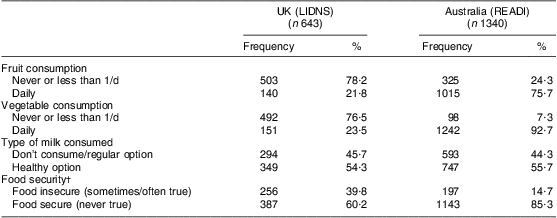
LIDNS, Low Income Diet and Nutrition Survey 2003–05; READI, Resilience for Eating and Activity Despite Inequality 2007–08.
†Whether in the last 12 months the woman ran out of food and couldn't afford to buy more.
Sociodemographic associations
Associations between the sociodemographic factors explored and the dietary and food security outcomes are presented in Table 4.
Results of logistic regression analysis of associations between sociodemographic factors and healthy eating and being food secure: low-income women from socio-economically disadvantaged neighbourhoods in the UK and Australia

pw, per week.
Association was statistically significant: *P < 0·05, **P < 0·01, ***P < 0·001.
Healthy eating
In the UK, non-British nationality was strongly associated with higher odds of daily fruit (OR = 2·97; 95 % CI 1·56, 5·66) and vegetable consumption (OR = 4·69; 95 % CI 2·48, 8·86), but lower odds of low-fat milk consumption (OR = 0·33; 95 % CI 0·17, 0·65; Table 4). The presence of children in the household reduced the likelihood of consuming low-fat milk (OR = 0·67; 95 % CI 0·45, 0·99). Mid/high education compared with no formal qualifications was associated with increased odds of vegetable consumption (OR = 2·29; 95 % CI 1·43, 3·67) and low-fat milk consumption (OR = 1·58; 95 % CI 1·02, 2·45). Being in employment or education was linked to higher odds of fruit consumption (OR = 1·57; 95 % CI 1·00, 2·44) and low-fat milk consumption (OR = 1·98; 95 % CI 1·30, 3·00).
In Australia, lower odds of daily fruit consumption were found among those with children in the household (OR = 0·66; 95 % CI 0·48, 0·91; Table 4). Conversely, higher odds were reported among those with the highest education qualifications (OR = 2·55; 95 % CI 1·41, 4·62). Both mid and high education levels were also associated with higher odds of daily vegetable consumption (OR = 2·37; 95 % CI 1·11, 5·03 and OR = 3·79; 95 % CI 1·51, 9·50, respectively), while lower odds were observed among those not married (OR = 0·37; 95 % CI 0·20, 0·69 for separated/divorced/widowed and OR = 0·41; 95 % CI 0·25, 0·69 for never married). A higher odds of low-fat milk consumption was found among respondents born in Australia (OR = 0·47; 95 % CI 0·33, 0·67 for born outside Australia), those who never married compared with married (OR = 1·46; 95 % CI 1·08, 1·98), those with children present in the household (OR = 1·78; 95 % CI 1·31, 2·40), those with high education qualifications compared with no formal education (OR = 2·31; 95 % CI 1·37, 3·91) and those in employment/education (OR = 1·62; 95 % CI 1·27, 2·07).
Food security
In the UK, being food secure was more likely among those in the highest income group (OR = 2·10; 95 % CI 1·14, 3·87) compared with the lowest income group. Within Australia, being food secure was more likely among those born outside Australia (OR = 2·30; 95 % CI 1·18, 4·46), those employed (OR = 2·45; 95 % CI 1·73, 3·47) and those in the top two income categories (OR = 1·99; 95 % CI 1·18, 3·35 for $AU 499–≤699 per week and OR = 2·82; 95 % CI 1·69, 4·71 for $AU 699–≤999 per week). A lower odds for being food secure was found among those separated/divorced/widowed (OR = 0·57; 95 % CI 0·34, 0·94) compared with those who were currently married.
Discussion
In the present study we explored sociodemographic correlates associated with healthy eating and remaining food secure among vulnerable populations in two samples from the UK and Australia. By ensuring the variables were as closely matched as possible we were able to identify how sociodemographic factors were either similarly or differently related to diet indicators and food security in two different contextual settings. A key theme to emerge from our analysis was that, despite the odds conferred by their socio-economic disadvantaged status, certain sociodemographic characteristics may promote resilience against unhealthy outcomes and behaviours although some differences between the nations were observed.
Nationality and country of birth showed different relationships to our outcomes between the two nations. In the UK, non-British respondents had significantly higher odds of daily fruit and vegetable consumption while in the Australian sample being born outside Australia was found to be associated with being food secure. Although the measures of nationality/country of birth are not a direct indicator of cultural background, they may relate to cultural characteristics, in which case these variations in fruit and vegetable consumption may be linked to variations in norms across different cultural groups. Interestingly, for both nations the likelihood of consuming low-fat milk was much lower in non-British and non-Australian respondents. It is unclear whether this was related to variations in taste and dietary preferences or the affordability and availability of low-fat milk options.
The household composition variables (marital status and presence of children) were more consistently associated with diet and food security in Australia than in the UK. In Australia, fruit consumption was less likely in households with children while vegetable consumption was less likely among those who were not married. It is plausible that the taste preferences of children and the search for more convenient meal options such as fast food( Reference French, Harnack and Jeffery 47 ) in single-occupant households contribute to these findings. In contrast, those who never married and those with children present were also most likely to consume low-fat milk. The findings related to milk differ from those in the UK setting where the presence of children was related to a lower likelihood of low-fat milk consumption and may be due to a number of plausible factors (e.g. provision of milk at school meaning only regular milk (the cheaper option) is bought for the home environment). Those separated/divorced/widowed were least likely to be food secure in Australia. A loss of household income may be a contributing factor for this, particularly given the association between higher income and food security which we observed. It is important that greater financial support be provided for women placed in this situation so that they do not find themselves not being able to afford food because a relationship has ended.
Our analysis indicated that healthier eating behaviours were associated with increased levels of education in both nations although some variance in the significance and magnitude of effect sizes between the two studies were observed. These may be attributable to a number of possible factors, including differences in the UK and Australian education systems (e.g. minimum leaving age and training opportunities for early school leavers). Prior work has identified education as an important contributor to diet quality( Reference Thornton, Bentley and Kavanagh 20 , Reference Ball, Crawford and Mishra 23 ). While we cannot determine the causal pathways involved on the basis of the present results, it may simply be that education is a good marker for socio-economic position or alternatively it has been argued that education may act as a promoter of healthier eating behaviours through increasing one's knowledge and ability to understand nutrition and health( Reference Galobardes, Shaw and Lawlor 48 , Reference Galobardes, Shaw and Lawlor 49 ).
Measuring work status for women is often problematic as typical measures of employment status do not fully acknowledge the combination of paid employment with parenting duties or difficulties re-entering the workforce after a significant time off during the early parenthood period( Reference Dutton, Turrell and Oldenburg 50 ). In the UK employment was associated with a higher likelihood of daily fruit consumption while in both studies the odds of consuming low-fat milk were higher among those who were employed/in education. We found that low-fat milk consumption was not associated with income in either nation (although the trend for Australia suggests it is more likely among higher income earners). Nestle and colleagues propose a scenario where a behaviour change in a woman who wishes to change to skimmed milk is hindered by numerous barriers including the potential barrier of obtaining skimmed milk at work( Reference Nestle, Wing and Birch 51 ). In the current study, it may be that the workplaces of employed women actually provided low-fat milk, thus removing price and availability barriers that may be faced by socio-economically disadvantaged women. In Australia we also observed that employment increased the odds of being food secure. Again, it may be that financial factors are at play here, although we cannot discount alternative explanations such as the possible provisions of food in workplaces, or the shared social norms and support generated by being employed. Variations observed here may be due to macro-level differences in policy and government support that exist between the UK and Australia with regard to welfare payments for women who are not in the workforce (either unemployed or having parenting duties).
With regard to income, we found no evidence that different levels of low income were associated with the examined eating behaviours. This is possibly because all participants were considered disadvantaged and therefore our small exposure gradient for income may have lowered the likelihood of detecting a graded effect as all individuals below a certain income threshold do not (or perceive they do not) have the financial resources to afford fruit, vegetables and healthier alternatives. Therefore this finding should not be interpreted as a case against considering subsidisation of healthy foods, since evidence suggests that improving the affordability of these items is likely to have population-wide benefits( Reference Herman, Harrison and Afifi 52 – Reference Ni Mhurchu, Blakely and Jiang 54 ). Furthermore, importantly we found among both samples that a higher level of income helped participants report being food secure. Previous research has demonstrated that at-risk populations are more likely to suffer from food insecurity( Reference Tingay, Tan and Tan 12 , Reference Burns, Bentley and Thornton 44 , Reference Booth and Smith 55 ). Data from the most recent Australian Household Expenditure Survey (2009/10) show that across all of Australia, households spend approximately 12 % of their total weekly gross income on the purchasing of food and non-alcoholic beverages( 19 ). However, this percentage is as high as 28 % in the lowest income quintile, compared with just 8 % in the highest income quintile( 19 ).
Despite a greater prevalence of food-insecure household in the UK sample, out of all the characteristics explored, only those in the highest income category differed in their likelihood of being food secure. This may well be because, of the two samples, the low-income sample in the UK appeared more socio-economically homogeneous (e.g. 80 % reported no formal or low educational qualifications) and therefore there may have been insufficient variability in socio-economic characteristics to detect factors correlated with food security.
An additional consideration in interpreting study findings is that, because the study samples were restricted to disadvantaged neighbourhoods, it may be assumed that all participants had reduced opportunities to purchase fruit and vegetables and low-fat options due to poorer local access to stores selling these products. While this may be the case in some contexts, such assumptions do not consistently hold for the UK and Australia( Reference Cummins and Macintyre 31 ) and as such we cannot make a firm conclusion related to deprivation amplification.
Strengths and weaknesses
The current study has a number of strengths. First, the use of data sets from two nations provides insights into whether associations between individual characteristics and eating behaviours and food security in low-income women are context-specific or transferable between nations. Second, the sampled population (women, aged 18–45 years, low household income, living in disadvantaged neighbourhoods) represents an important target group as, compared with those of higher socio-economic position, women with a lower socio-economic position have a worse profile of biomarkers of CVD and diabetes( Reference Kavanagh, Bentley and Turrell 56 ) and are therefore increasingly recognised as an important group for public health interventions( Reference Michie, Jochelson and Markham 57 , Reference Dammann and Smith 58 ). All variables used in the analyses were coded as consistently as possible to ensure their comparability. Finally, analysis was strengthened by the inclusion of multiple outcomes and multiple sociodemographic characteristics, each of which contributes unique information as to possible mechanisms influencing dietary outcomes( Reference Galobardes, Morabia and Bernstein 59 ).
A number of limitations should be recognised. First, the data collection for the two studies was conducted in different years (2003–05 for LIDNS, UK; 2007–08 for READI, Australia). However, this discrepancy is unlikely to have altered the comparability of the data sets or our substantive findings as there is no reason to expect major shifts in the observed associations over a relatively short time period. Second, there were some key differences in the sampling strategies adopted in the two studies. The LIDNS sample was nationwide whereas the READI sample was restricted to eighty areas around the southern Australian State of Victoria. Thus, unlike LIDNS, it cannot be considered nationally representative despite providing a reasonable representation of low-income areas in this State (by including both urban and rural areas). Third, although inclusion criteria were the same for participants of both samples, it is important to recognise that a number of key differences remained in the sociodemographic characteristics. For instance, 45 % of participants in the UK sample reported no formal qualifications compared with only 6 % in the Australian sample. While these differences are likely due to a combination of factors including contextual differences in the educational systems and lower levels of inequalities in education outcomes in Australia, we must remain aware that these differences have the potential to bias estimates where small numbers exist within some subgroups. However these differences may also be an important finding in themselves as they suggest differences in social support for disadvantaged communities across the two nations. Additionally, although the present study was restricted to disadvantaged neighbourhoods, the levels of relative disadvantage and environmental exposures faced by individuals in these neighbourhoods may differ between the UK and Australia. The fourth limitation is that the comparisons may also be biased by the different modes of data collection (computer-assisted personal interviews v. postal survey) and the different time periods with which some variables were collected (e.g. fruit and vegetable consumption was collected daily v. monthly). Fifth, food security can be measured in numerous ways and we acknowledge we only have a single indicator of this. Finally, despite our best efforts to code data to maximise comparability, it is feasible that the different response options for the outcome measures between the two data sets may explain some of the between-country differences observed. Although this does not detract from the study's aim of assessing sociodemographic correlates in two nations, we recommend that future studies attempt to include standardised dietary measures so that future cross-country studies are directly comparable.
Conclusions
As health authorities worldwide struggle to curb the decline in healthy eating behaviours and the growing prevalence of food insecurity, it is essential to better understand the drivers of these, particularly among groups suffering socio-economic hardship. The present study explored sociodemographic correlates of healthy eating and food security among an at-risk population, low-income women living in socio-economically disadvantaged neighbourhoods. Findings revealed that dietary indicators and food security are each correlated with different sociodemographic factors and that while some of these correlates may be internationally transferable, others appear to be context-specific. Hence, it is advocated that unless findings have been replicated across different contexts, any policy responses are best informed by the best available local evidence. Stemming from the findings presented herein, policy makers from both nations may wish to focus on increasing minimum education levels while an increase in minimum wages may help low-income individuals avoid food insecurity.
Acknowledgements
Sources of funding: The LIDNS study was funded by the Food Standards Agency and conducted by researchers from the National Centre for Social Research in collaboration with King's College London, University College London, the Institute of Food Research and the Northern Ireland Statistics and Research Agency. Data were supplied by the UK Data Archive. The READI study was funded by an Australian National Health and Medical Research Council (NHMRC) Strategic Award (Grant#374241) and a Deakin University Faculty of Health, Medicine, Nursing and Behavioural Sciences Research Development Grant. L.E.T. is supported by a Deakin University Alfred Deakin Postdoctoral Research Fellowship. J.R.P. is currently the recipient of a European Research Council Starting Grant. K.B. is funded by an NHMRC Senior Research Fellowship (ID 479513). Conflicts of interest: This present work was undertaken independent of any influence of the funding agencies and the authors declare no conflicts of interest. Authors’ contributions: L.E.T. led the conceptualisation of the study design, undertook the analysis and wrote the first draft of this paper. J.R.P. and K.B. contributed to the study design and redrafting of the paper. K.B. conceived the idea for and implemented the READI study, and developed the measures and methods. Each author has read and approved the final version of this manuscript.



