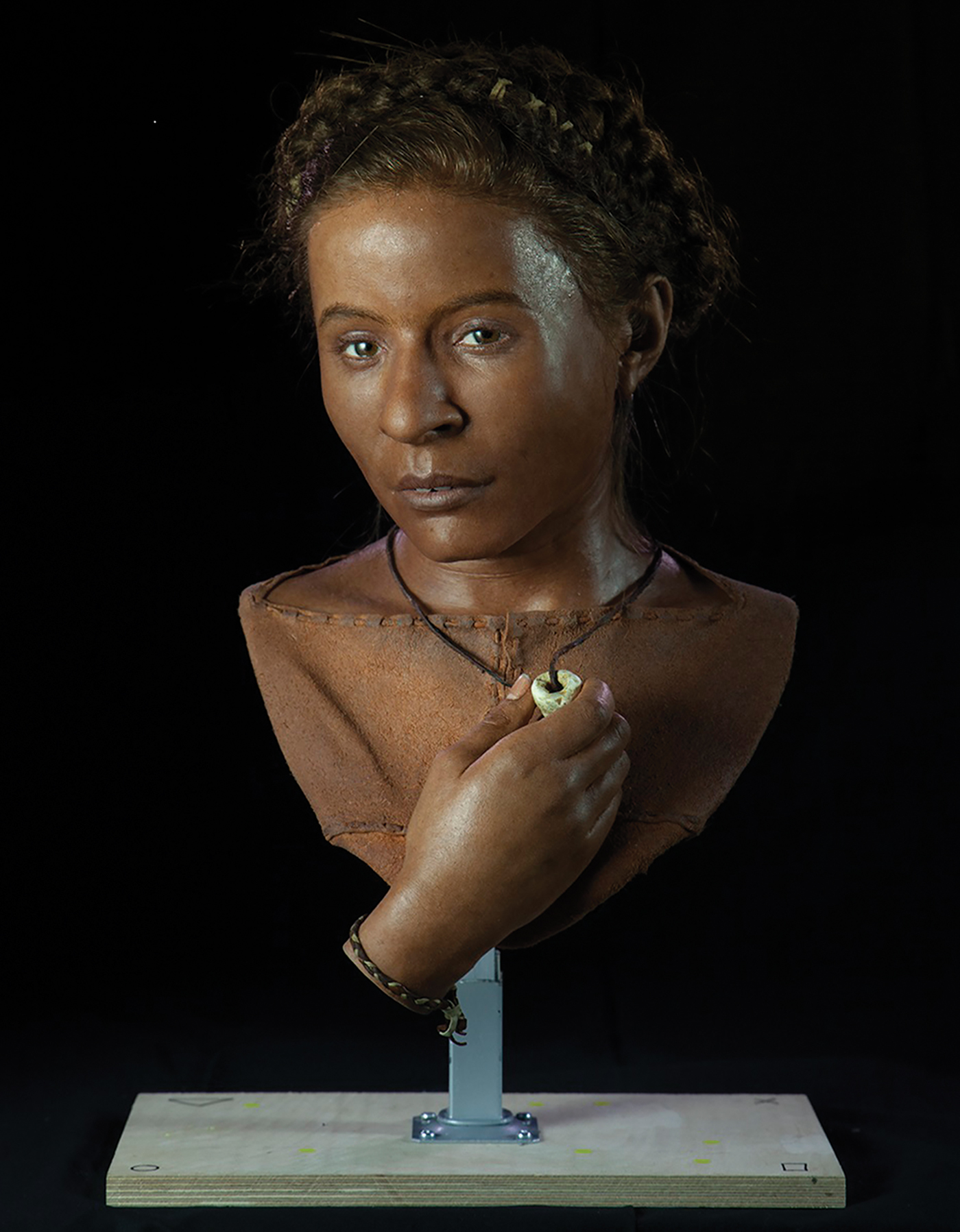
Whitehawk Woman was discovered in 1933 during excavations by Cecil Curwen at Whitehawk Camp, Brighton. Probably born in the west of Britain, she migrated several hundred kilometres to settle on the south coast. Here, she appears to have died in childbirth, aged no more than 25. She was buried alongside her child in a ditch at one of the entrances to the Whitehawk Neolithic causewayed enclosure. Oscar Nilsson, well known for his forensic facial reconstructions on show in museums around the world, drew on recent aDNA studies to recreate her skin, hair and eye colour. She can be seen, alongside other reconstructions, in the newly opened Elaine Evans Archaeology Gallery, Brighton Museum & Art Gallery (http://www.brightonmuseums.org.uk; photograph by courtesy of Royal Pavilion & Museums, Brighton & Hove).
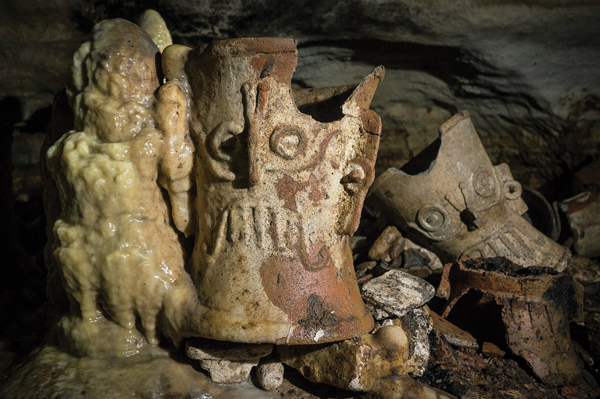
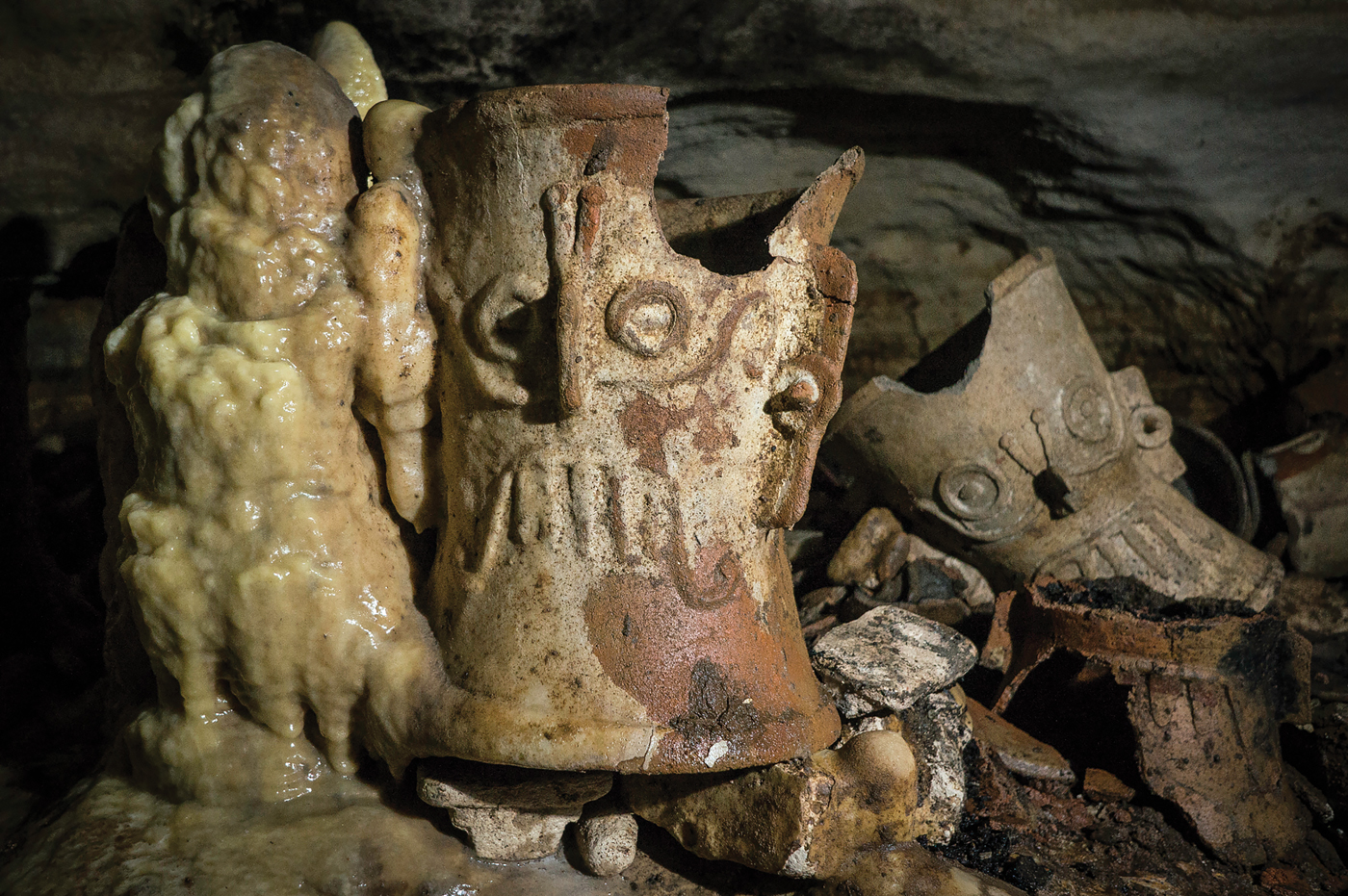
Incense burners with appliqué faces, representing the Mexican rain god Tlaloc, found in the Maya cave of Balamkú near Chichén Itzá. The cave contains more than 150 whole and broken incense burners dating to between AD 900 and 1100. Balamkú was discovered by Maya living in the area and reported to the Instituto Nacional de Antropología in 1966. The entrance was then resealed and forgotten until July of 2018 when Guillermo de Anda, director of the ‘Gran Aquífero Maya’ project, rediscovered it while searching for access to the aquifer. The cave is reported in Arqueología Mexicana 156 (March 2019; https://arqueologiamexicana.mx/mexico-antiguo/chichen-itza-y-el-gran-acuifero-maya; photograph by Karla Ortega).
The Wizard of Oz
 In 1845, during the peak of industrial Britain's ‘railway mania’, a new line was planned between Hastings and Brighton. The route cut through the grounds of Lewes Priory, and, as the construction work got underway, the navvies soon came across two lead burial chests. Inscriptions named the deceased as ‘Willem’ and ‘Gundrada’, quickly recognised as William de Warenne, First Earl of Surrey, and his wife Gundred.Footnote 1 The discovery stirred great interest: William was one of only a small number of Norman noblemen known to have fought at the Battle of Hastings in 1066, and, in the context of the social and economic revolution transforming Victorian Britain, his mortal remains embodied a tangible link back to the very foundation of England. As noted by some observers at the time, the progress and modernity promised by the construction of the sprawling new railway network, and the nation's wider industrialisation, had ironically also revealed material traces of the deep past that demanded new attention.
Roll forward 175 years and the construction of a high-speed railway line from London to Birmingham, and beyond to the north of England, is being touted as the UK's largest infrastructure project. High Speed 2 (HS2) is a multi-billion-pound project—currently hovering around the £55bn mark—that will connect eight of Britain's ten largest cities and, if the hype is to be believed, will transform the geography and economy of the UK. In preparation for the start of construction, which gets underway this year, £1bn ‘enabling’ works, including archaeological investigations, have been ongoing since 2017. The initial 200km route is 50 per cent longer than the UK's first high-speed track (HS1, linking London with the Channel Tunnel) and dwarfs most other major recent infrastructure projects around the country. The amount of information that is expected to be recovered by ‘Europe's largest archaeological dig’ is equally impressive.
Over the past 30 years in the UK, development-led archaeology projects such as HS2 have helped to revolutionise understanding of the range, types and distribution of all kinds of sites and landscapes. This work has also stimulated debate about how best to focus archaeological effort, constrained by time and money, in advance of development: how to sample, what to record and the challenges of processing, publishing and synthesising the results. The HS2 investigations are set to provide much new material for these debates, as well as significant new data on sites ranging in date from the Palaeolithic to the nineteenth century.
The scale of some of the archaeological interventions demanded by HS2 is extraordinary. In advance of the construction of the London terminus at Euston, excavations at the former St James's burial ground, sealed beneath the current rail station, are expecting to encounter tens of thousands of late eighteenth- to early nineteenth-century burials. This is industrial-scale archaeology. From an archaeological perspective, the analysis of human remains on this sort of scale promises unparalleled quantitative samples of post-medieval urban populations, informing us about their demography, diet and health, for example. But such aggregate figures and statistical trends feel removed from the human lives involved, and inevitably we might turn to individual burials to provide more personal insight into this community. How then to select these individuals? At random? The best-preserved? Those representative of a particular social group or type of burial? Or, as the example of William and Gundred suggests, the burials of historical individuals for whom we already have names and biographies?
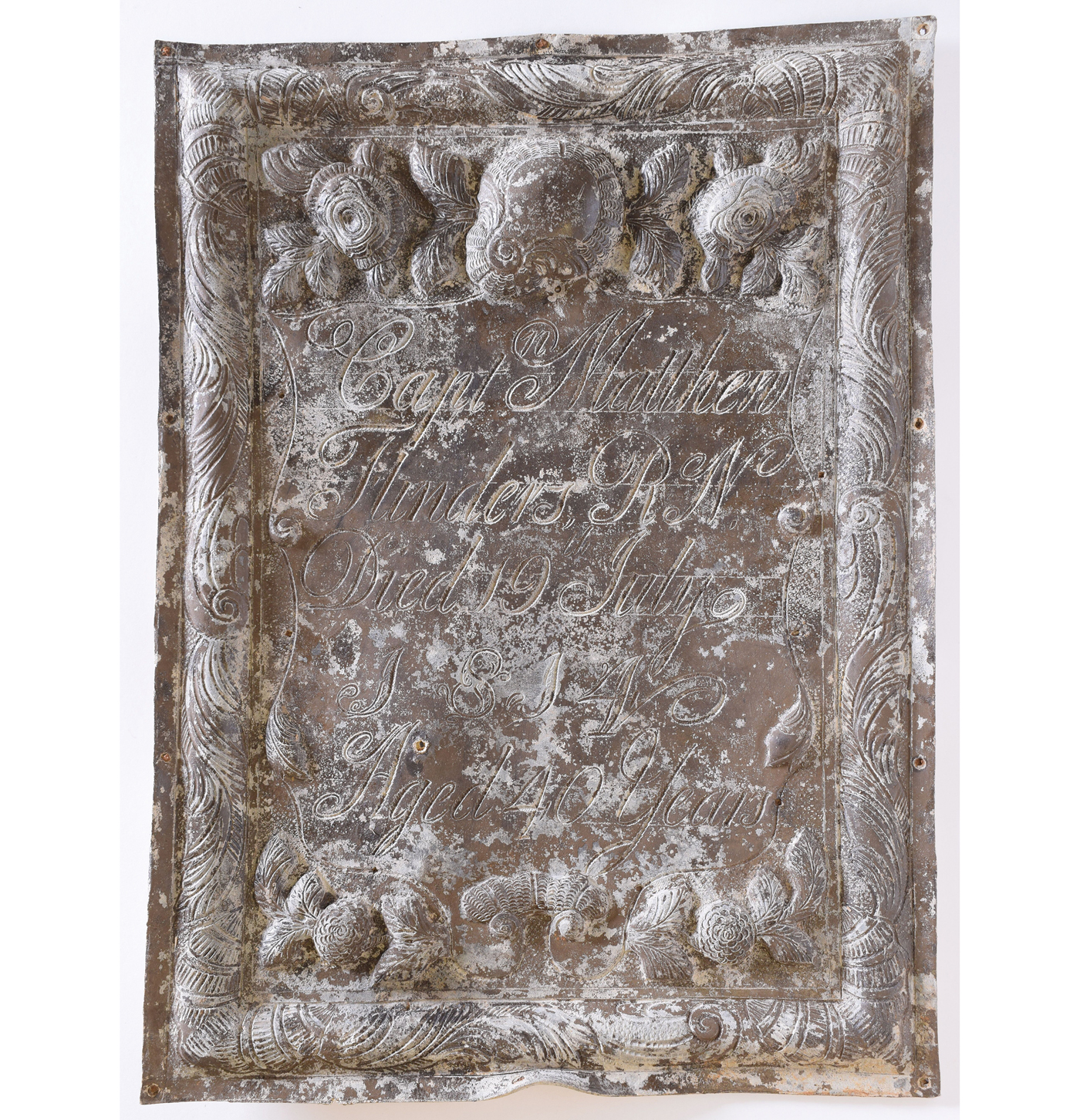
In late January, the excavators of the St James's burial ground duly announced the discovery of the grave of one such candidate: Captain Matthew Flinders (1774–1814), the identification clinched by the lead breast plate on his coffin (Figure 1). Flinders is not a particularly well-known figure in the UK (his grandson, the Egyptologist Sir Flinders Petrie, is probably more famous). In contrast, the name of Captain Flinders is woven into Australian history. As the first European to sail around the continent, he is commemorated in the names of dozens of places, landmarks and institutions across Australia. Flinders travelled three times to the southern hemisphere and it was on his last journey that he circumnavigated Australia (1801–1803), establishing that it was indeed a continent. Back in London, he set to work on an account of his journey, accompanied by an atlas: Voyage to Terra Australis. The day following its publication in 1814, Flinders died and was laid to rest at the St James's burial ground. Only 30 years later, however, St James's chapel was demolished and the cemetery decommissioned to make way for an expansion of Euston station. Flinders's headstone was retrieved, but his grave, along with thousands of others, disappeared beneath the tracks and platforms. The same railway mania that had revealed William and Gundred at Lewes Priory simultaneously concealed all trace of Flinders's final resting place in London.
The lead depositum plate (breast plate) discovered on a coffin during the HS2 excavations at Euston station in London in 2018. It reads: “Capt. Matthew Flinders, RN. Died 18th July 1814, Aged 40 years”.
Why has Captain Flinders returned now, two centuries after his death and burial? What will his remains tell us? And what other questions does the rediscovery raise? Isotopic analysis of his teeth and bones may allow us to compare his chemical signatures to the historically attested details of his life, and examination of his bones may identify undocumented traumas or conditions. All interesting matters no doubt. But in what ways might these scientific confirmations of, or additions to, text-based biographies transform our understanding beyond the individual concerned? As the public ‘face’ of the HS2 excavations, Flinders is certainly valuable. Yet scientifically, his isotopic signatures and skeletal pathologies are no more inherently meaningful or significant than those from any of the other thousands who might be subject to such studies. Archaeologically speaking, he is just one more data point.
The search for the mortal remains of historical individuals has a powerful allure: the discovery of Richard III is only one—if spectacular—example in a long tradition.Footnote 2 The obvious danger is that this fascination collectively leads to a focus on a narrow selection of lives, burnishing the reputations of the great and good, rather than expanding our knowledge of wider populations. The practicalities of developer-led archaeology certainly work against that temptation; Flinders's burial is, after all, only one of thousands recovered, yet it is also the only one to merit a press release, so far. Of course, in focusing on Flinders at length, is yours truly not open to the same accusation of bias? If so, my defence is one of tenuous genealogy: my great great great grand aunt was the great niece of Matthew Flinders's stepmother.
Too many Cooks
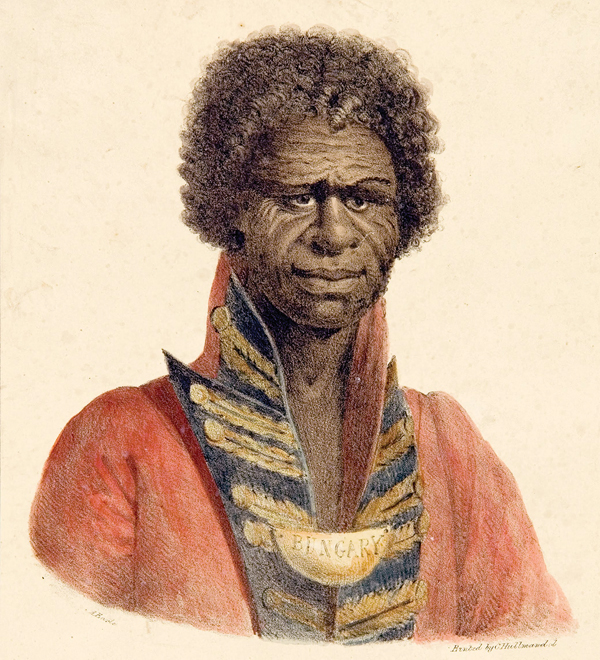
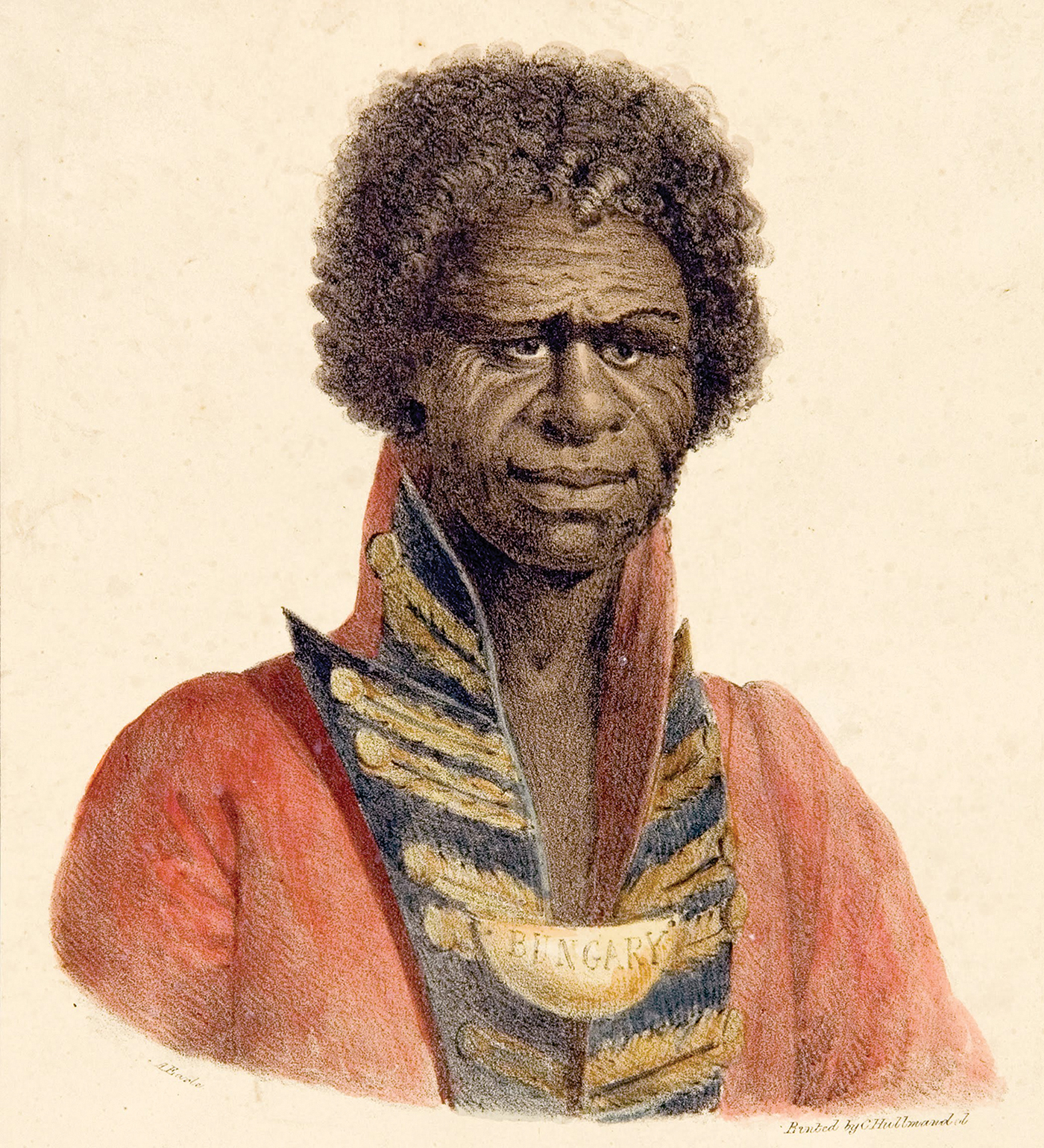
 The less visible lives around Captain Flinders do not only include those interred alongside him at St James's in London. His story features a cast of many others stretching to the other side of the world. Key among these is Bungaree, an Aboriginal man who sailed with Flinders on several voyages, including the aforementioned circuit of the Australian coast on the Investigator. Bungaree (c. 1775–1830) was a member of the Kuringgai people, who moved from the Broken Bay area to live at the expanding colonial settlement at Sydney (Figure 2). There, through his mastery of English, he become a well-known and active figure in the community and joined a number of British expeditions sailing from the port. Bungaree played a crucial role on Flinders's journey to map the Australian coast, acting as an intermediary with the many local populations encountered. He was subsequently honoured by several governors for his civic role at Sydney, and King Bungaree, as he came to be known, was also granted land at George's Head near the colony. Despite such accolades, his name today is much less well recognised than that of Flinders. There are no statues of Bungaree and, although his name is commemorated in several toponyms, the number pales in comparison to those that celebrate his British shipmate. Perhaps, therefore, the discovery of Flinders's grave provides an opportunity not just to relive tales of European exploration, but to contextualise these accounts with other voices from the recent colonial past. In the Brexit-torn landscape of modern Britain, perhaps Flinders has returned at this particular moment to encourage collective reflection on the nation's role in the world—past, present and future.
Hand-coloured lithograph of Bungaree by Augustus Earle.
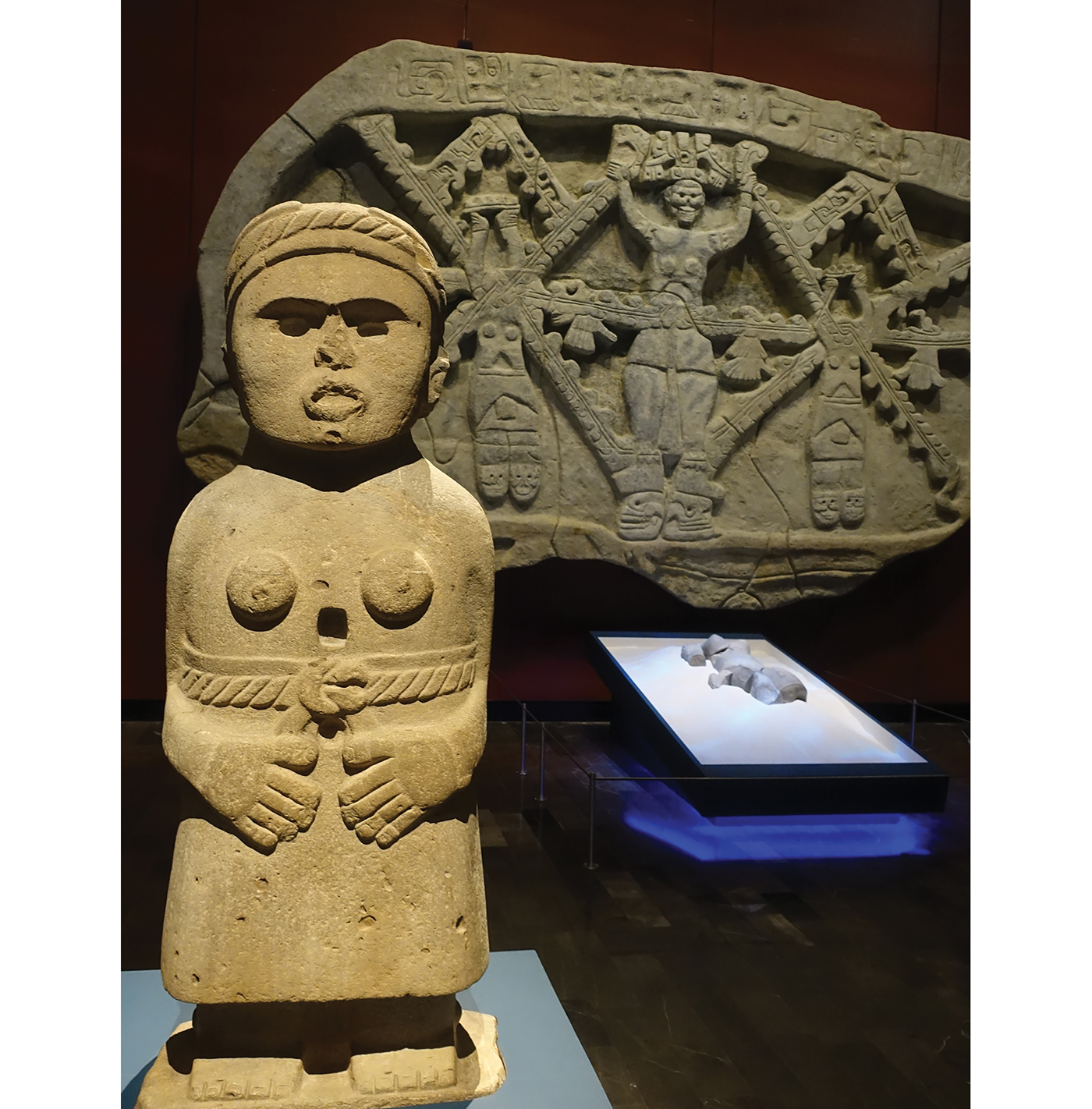
Meanwhile, the reappearance of Flinders made awkward timing for the Australian Prime Minister, Scott Morrison, and his announcement of further details of the planned celebrations for the 250th anniversary in 2020 of Captain James Cook's arrival on the east coast of Australia. Some AUD$48.7m have been set aside to mark the occasion, including AUD$6.7m for the Australian National Maritime Museum to fund a replica of Cook's HMS Endeavour to circumnavigate the continent. This expedition is intended, in Morrison's words, to “help Australians better understand Captain Cook's historic voyage and its legacy for exploration, science, and reconciliation”. Flinders—if still in his grave—would be turning, for Cook, as was rapidly pointed out on social media, never sailed around Australia. But, more important than the question of who did what first is the issue of how such historical commemorations play into contemporary politics and the opportunities for indigenous populations, past and present, to be represented and involved. On the other side of the world, in Mexico, for example, the National Museum of Anthropology is marking the 500th anniversary of the arrival of the Spanish on the Gulf coast with an exhibition showcasing the plurality of cultures that characterised the region in the years preceding the appearance of the Europeans. ‘Golfo: Mosaico Ancestral’ features 354 objects narrating the pre-Conquest multiculturalism of Mexico and its legacy down to the present (Figure 3). Hopefully, similar celebrations of Aboriginal culture prior to the advent of Cook, not just during and after his visit, will accompany the 250th anniversary events.
Goddess of fertility from Castillo del Teayo and ‘La Sacrerdotisa' from Tamtoc on show at ‘Golfo: Mosaico Ancestral’ in the National Museum of Anthropology, Mexico City. The exhibition showcases the Gulf Coast cultures of ancient Mexico, including the Olmec, Central Veracruz and Huastec peoples; it brings together hundreds of objects—some on show to the public for the first time. ‘Golfo’ runs from February to the end of April 2019. Photograph by Rebecca B. González Lauck.
Homeward bound?
 Following the discovery of Richard III back in 2012, a dispute developed between the cities of Leicester and York as to where his remains should be reburied. It was only a matter of time before a similar claim was made on behalf of the hometown of Flinders—Donington, Lincolnshire—for the return of his remains from London. Such calls are a reminder of the potent role of ancestors—both their mortal remains and their material culture. Demands for the repatriation of bones and objects are nothing new, but over the past few months, there has been an uptick of publicity around such claims. At the end of last year, for example, a delegation from Easter Island (Rapa Nui) visited the British Museum to request the return of Hoa Hakananai'a,Footnote 3 with the offer of a modern moai in its place (or, as more recently reported in the press, the suggestion of the museum retaining the statue in exchange for regular payments to support the conservation of in situ moai). Zambia has renewed its call for the return of the Kabwe skull (or Broken Hill Man), a 300 000-year-old fossil currently in the Natural History Museum collection, and, most recently, Gibraltar has submitted a request for the repatriation of two Neanderthal skulls, also currently in London. Such claims may have been reinvigorated by a recent report commissioned by the French President, Emmanuel Macron, on the repatriation of African cultural heritage held outside the continent. Announcing the report, he stated:
I cannot accept that a large part of the cultural heritage of several African countries is in France. There are historical explanations for this but there is no valid, lasting and unconditional justification. African heritage cannot be only in private collections and European museums—it must be showcased in Paris but also in Dakar, Lagos and Cotonou. Footnote 4
The report coincides with the opening, in December 2018, of the Museum of Black Civilisations (Musée des civilisations noires) in the Senegalese capital, Dakar. This new institution hosts galleries narrating the role of Africa as the ‘Cradle of Humankind’ and as a meeting place of different religions, as well as Africans and African cultures outside of the continent. Meanwhile, plans are advancing for a new institution, the Benin Royal Museum, to be located in Benin City, Nigeria. This will feature a rotation of Benin objects to be ‘loaned’ by European museums, alongside those from Nigerian collections. Most recently, in March, the culture ministers of Germany's 16 states agreed a new cooperation with museums to advance the repatriation of artefacts from former colonies. It is far too early to say that we have reached a tipping point with regard to the repatriation of collections currently held in Western museums. Many institutions still actively collect, and the model of the ‘universal museum’ furthermore remains attractive for nations seeking to demonstrate their global status. But there are also signs that some objects are homeward bound.
In this issue
 This issue features our usual broad geographic coverage: from Central America via the Caucasus and the Gobi Desert to China, and from the North Atlantic through Europe and the Levant to East Africa and on to Madagascar. A theme explored in recent Antiquity articles concerns the problem of defining the Neolithic in tropical contexts such as AmazoniaFootnote 5 and Southeast AsiaFootnote 6. In this issue, Hsiao-chun Hung adds to the debate with an analysis of the evidence of the rich mid Holocene coasts of southern China and northern Vietnam. She demonstrates that despite the presence of ‘typically’ Neolithic traits such as large villages and pottery, the complex societies that inhabited this ecosystem between 5000 and 3000 BC were supported not by rice farming—as practised farther north in the Yangtze valley from c. 6500 BC—but rather by hunting, fishing and the gathering and management of plant foods. Meanwhile, on the east coast of China, Dong et al. question some of the assumptions about the long-term societal effects of the adoption of agriculture. It has been argued, for example, that during the Late Neolithic Dawenkou period (c. 3000–2500 BC), the disproportionate material wealth buried in male graves indicates the enhanced authority of men over women. The authors’ analyses of both skeletal and material cultural evidence from recent excavations demonstrate a more nuanced picture of gender relations. This emphasises the intersection of multiple social identities and their expression through varied means, including the potential role of rice as a status foodstuff.
At the other end of Eurasia, we turn to one of the most famous megalithic monuments of the European Neolithic—Avebury. Despite the renown of this vast site, its constructional sequence is much less understood than nearby Stonehenge. Gillings et al. combine the results of a new geophysical survey with a critical review of the earlier excavations to propose a new account of the site's development, which they argue begins with a modest dwelling, commemorated as a foundational house. Domestic structures have been found beneath a number of other Neolithic monuments across Britain and have been argued to represent the commemoration of social lineages. But if Avebury can now be seen as part of a wider process through which Neolithic societies created a sense of time and place, the ongoing process of monumentalisation at this particular site evidently led to a megalithic complex of exceptional size.
Maritime journeys are the subject of two articles in this issue. Atholl Anderson addresses the date of the human colonisation of Madagascar. In recent years, an ‘early’ date, in the mid Holocene, has gained acceptance in the scholarly literature with implications for a wide range of environmental and cultural debates about East African and Indian Ocean maritime mobility. But how secure is the evidence? Anderson critically reviews the OSL dates from the rockshelter site of Lakaton'i Anja and identifies significant stratigraphic disturbance, concluding that there is no evidence for human activity until the first millennium AD. It was not long after this date, in the North Atlantic, that the Vikings were instigating their own brand of maritime colonisation, as so evocatively recounted in the medieval sagas. David Griffiths draws attention to the early involvement of Viking war-bands in Francia and southern England and proposes, against conventional thinking, that Britain and Ireland were not colonised across the North Sea from north to south, but rather via a ‘southern route’ across the English Channel and northwards through the Irish Sea.
This issue also features a pair of articles on caves. Ruiz-Redondo et al. present the first evidence for Upper Palaeolithic figurative rock art from the Balkans. The discovery of painted figures, including a bison and an ibex, at Romualdova Pećina in Croatia, begins the process of filling a 1000km ‘gap’ in the rock art record between northern Italy and western Romania. It seems, however, that the wall motifs were known about by at least some earlier visitors to the cave, as one image is overlain by an inscription dated 1880. Coincidentally or otherwise, this is the same year that the sensational discoveries in the Altamira Cave in Cantabria were publicly rejected at the International Congress of Anthropology and Prehistoric Archaeology in Lisbon. Meanwhile, 50 years earlier during the late 1820s, in the depths of Manitou Cave in modern-day Alabama, Cherokee stickball players were practising ceremonial rituals in preparation for a game. Some of the details are revealed through inscriptions on the walls and ceiling of the cave written using the Cherokee syllabary. In an innovative collaboration between modern Cherokee scholars and Euro-American archaeologists, Carroll et al. document and interpret the significance of the inscriptions, created on the eve of the forcible relocation of the tribe along the ‘Trail of Tears’.
In addition to all these articles, you can also read in April's issue about the selection of stone for tool making in North America, an unusually well-preserved Neolithic oven discovered in Belgium, Bronze Age cultures in Mongolia and the Caucasus, isotopic analyses of the monastic community of Mount Nebo in Jordan, a jadeite gouge from a Maya salt works, the discovery of an Olmec celt in a museum collection and the organisation of iron production at ancient Meroe in Sudan. Finally, a reminder to turn to our reviews section for a varied collection of review articles, book reviews and a list of books received, as well as the New Book Chronicle, the first penned by our new Reviews Editor, Claire Nesbitt.
If you are attending the Society for American Archaeology in Albuquerque this month, we look forward to meeting you there. If not, please email us at editor@antiquity.ac.uk to share your ideas, thoughts, news and research. We look forward to hearing from you!
Durham, 1 April 2019