


The social reproductive process is always based on past labour, we may trace it back as far as we like. Social labour has no beginning, just as it has no end. Footnote 1
Rosa LuxemburgIntroduction
As World War II came to an end and the victorious Red Army pushed on towards Berlin, a different kind of battle was unfolding in Eastern Europe. The year 1945 marked the beginning of an all-encompassing struggle to control the cities, villages, and factories, as local communist parties moved towards political leadership of the countries newly liberated from Nazi rule. This struggle represented the onset of a radical reconfiguration of labour and property relations, which would cut deeply through the social fabric of the next four decades.
The structuring lines of what would constitute the “blueprint” for the Eastern European transition to socialism had initially been drawn up by Bolshevik economist Yevgeny Preobrazhensky as a response to the crisis of Soviet industrialization in the 1920s.Footnote 2 Preobrazhensky's notion of “primitive socialist accumulation” denoted a configuration of surplus extraction mechanisms, which relied on “the accumulation in the hands of the state of material resources obtained chiefly from sources lying outside the state economic system”.Footnote 3 It brought together two dimensions: the squeezing of the private sector (mainly agricultural) in order to feed the growth of the state sector (largely industrial) through financial policies that would establish unequal terms of exchange between the two; and workers’ “self-exploitation”, which translated into keeping wages low and work norms high.
Marx proposed the concept of “primitive accumulation” to refer to the process through which a mass of available capital and a commodified labour force emerged as conditions of possibility for the advent of capitalism. For Marx, the commodification of labour was based on two historically entangled notions of “freedom”: on the one hand, workers had to be legally free to temporarily alienate their labour power on the market; on the other hand, they had to be “freed” from their means of production, so their survival depended solely on wages.Footnote 4 Capitalist production could begin only after “the abolition of serfdom has long since been completed, and the most brilliant achievement of the Middle Ages, the existence of independent city-states, has already been on the wane for a considerable length of time”.Footnote 5 Only then could the enclosure of common land, “[t]he expropriation of the agricultural producer, of the peasant, from the soil”,Footnote 6 and, finally, the establishment of legal property rights be accomplished. In this process, the state supported the landowning class against the rural population, established the modern system of taxation, and led the violent colonial expansion.
Marx's account became the cornerstone of a decades-long debate about the transition from feudalism to capitalism in Europe. A clear delineation between the Western and the Eastern European transitions was drawn early on in the Dobb–Sweezy debate.Footnote 7 In the 1970s, Robert Brenner pointed to particular forms taken by class struggle as the engine for the rapid advance of Western Europe compared to the Eastern part of the continent.Footnote 8 Brenner's post-serfdom “agrarian capitalism” was a complex landscape of class tensions between landlords, tenant farmers, and wage labourers. What accounted for the spectacular take-off of Western European political formations was the power balance between peasants and landlords, the landlords’ openness to class alliances with the urban bourgeoisie, their dynamic relationship with the state, and the high degree of internal coherence where their interests and strategies were concerned. For Perry Anderson, Eastern Europe's backwardness was explained by the nature and aims of its absolutist states, which repressively acted to consolidate serfdom precisely at the time of its dissolution in Western Europe.Footnote 9 The most important Romanian participant in the debate, Henri Stahl, endorsed the idea of a late serfdom in the Romanian Principalities as a consequence of their absorption into the nineteenth-century grain trade. For the Romanian Principalities, the nominal emancipation coincided with a stage when a centuries-long attack against communal land had largely been completed, and the foundation of village life was crumbling. Nevertheless, in contrast to Anderson's interpretation of this process, the absence of feudal institutions and the long life of communal property on Romanian territory made Stahl conclude that these evolutions had to be read not as a second but as the first Romanian serfdom.Footnote 10
In the interwar Soviet context, the feudalism-to-capitalism debate was supposed to elucidate the mechanisms of another transition: from capitalism to socialism.Footnote 11 It was in this half-pragmatic post-revolutionary context that the idea of a primitive accumulation necessarily preceding the socialist organization of production gained momentum.Footnote 12 On the one hand, the idea of socialist primitive accumulation had a practical, contingent character, as one among other possible solutions to the short-term food shortages, rampant inflation, lack of control over the countryside, and mounting working-class discontent. On the other hand, it was also a key to the puzzle of socialism in an agrarian society and the absence of international revolution.
Closely following Marx, Preobrazhensky saw primitive accumulation not only as an act of expropriation to ensure the start of capital formation (as in the classical liberal sense), but also as a fundamental transformation of class relations that would function as a matrix for a self-sustainable socialism. Ultimately, establishing a non-socialist “outside” that was going to provide the necessary food, capital, and working hands was the core of socialist primitive accumulation as a political project.Footnote 13 When translated into Stalin's violent key and transferred to the post-World War II Eastern European context, primitive socialist accumulation involved direct dispossession of the capitalist class and of the middle and well-off peasantry through the collectivization of land and the nationalization of industry, trade, and finances; the constitution of the village as a reservoir of cheap resources for rapidly expanding industry; the externalization of labour's reproduction costs, mainly through strategic reliance on peasant-workers; and a generalized policy of “self-restraint” through restricted consumption and low wages.Footnote 14
In the context of the broader dialogue in this Special Theme, Primitive Accumulation under Socialism, this article develops a four-step argument about primitive socialist accumulation in Romania. First, I argue that, in Romania, peasant dispossession had underpinned capital formation for roughly 150 years before the communist takeover. Second, these mechanisms of primitive accumulation constituted crucial matrices for class formation that were irreducible to ideal-typical processes of proletarianization. Third, the articulation between peasant dispossession and strategies of keeping labour cheap was state-led, mandated, or protected, and stood at the core of all modernization projects for the whole period under scrutiny. And fourth, seen through these lenses, the communist collectivization and nationalization in the 1950s appear as one instance, among others, in a longue-durée history of primitive accumulation in the region.Footnote 15
According to Marxist tradition, achieving the complete separation between people and their means of production, capital confronting not workers but “labour-power, stripped of all material wealth”,Footnote 16 represented the core of primitive accumulation. Yet, historically, attempts to proletarianize have never been linear nor immediate.Footnote 17 They met with resistance both from landlords’ interests in maintaining feudal relations and from the strategies of social reproduction of the peasants themselves. The transition from land-bound human existence to lives exclusively run by wages has repeatedly proved fragile and the ambiguous relationship between the countryside as a reservoir of cheap labour and the establishment of the wage system has left a mark upon processes of proletarianization everywhere.
As this article will show, the Romanian proletarianization was also a slow and convoluted process. Its structural feature was the strategy of keeping people on the land but starving them enough to force them into either servile or wage labour relations (i.e. work for someone else). As part of different socio-economic constellations, this strategy proved profitable both for the great estates in the Romanian Principalities and for the state factories of the 1950s. While the compulsion through which surplus labour was called into existence took different forms, an infrastructure of class relations conducive to primitive accumulation had been either supported or directly engineered by the Romanian state since the nineteenth century. Using its monopoly on the law, taxation, and coercion, the state stood as a guardian of capital accumulation both for the great landlords until the end of World War I and for the nascent urban bourgeoisie in the interwar period. During socialism, the state came to act simply as capital – bureaucratically creating and managing social production processes in the name of the working class.
This article takes a stance against conceiving state socialism through the lens of exceptionalism and proposes an analysis that (re)integrates socialist projects in a broader history of modernization, capital formation, and struggles over labour and land. It briefly outlines the forms taken by primitive accumulation in the nineteenth century, in the regions that would form Greater Romania after World War I, analysing the relationship between the integration of Romanian cereal production into the world market and the intensification of peasant exploitation. It then moves on to the interplay between the rural–urban divide and the labour question in the interwar industrialization debates, before analysing how these long-term dynamics of capital formation and surplus extraction played out in the translation of the “Soviet blueprint” into a “Romanian experience”. The article thus marks the continuities between different forms of peasant dispossession and struggles for cheap labour to show that they constituted an intrinsic dimension of capital formation, both in Romania's transition to capitalism and in its transition to socialism. Both depended on a constitutive “outside”: feudal labour relations in the countryside to support the integration of Romanian grain into the world markets in the nineteenth and early twentieth centuries, an immiserated countryside to sustain the incoherent developmental policy of the interwar period, and peasant economy to feed socialist industrialization in the 1950s.
Class Relations and The Land Question
The idea that, since the sixteenth century, all regions of the globe were part of the same relational matrix but in radically diverse ways has become the orthodoxy in the analysis of capitalism.Footnote 18 Historically, contact with the capitalist core had contradictory effects for East-Central Europe: in sixteenth-century Poland, it created an all-powerful nobility, an immiserated peasantry, and a weak urban trade. German, then English and Dutch entrepreneurs in the textile industry created a successful form of protoindustrialism in seventeenth-century Bohemia, to which the Austrians responded with mercantilist policies encouraging the rapid growth of Bohemian coal mining, sugar beet refineries, and machine industry. Further east, the incorporation of Hungary in the Habsburg world – itself semi-peripheral in the global system – did not bear the fruits of progress until the nineteenth century, when railway construction allowed for the full exploitation of Hungarian agriculture.Footnote 19 For the Ottoman Balkans it was isolation from Western trade between the fifteenth and nineteenth centuries that produced “peripheral retardation by another imperial but less capitalist core”.Footnote 20 None of these imperial provinces abolished servile labour before the end of the eighteenth-century, and, in most cases, feudal relations fully crumbled only after the 1848 Revolution.
In the Romanian Principalities, bondage emerged in the late sixteenth century as a desperate solution in the perpetual struggle of the boyars against peasants hiding from agents gathering the tithe, the collection of the tribute for the Ottomans, and from their work obligations. Then, the peasants’ bodies became the property of the boyar, who could sell them, make them part of dowries, and use them as domestic servants. Due to fierce resistance and as the population scattered, boyars found themselves forced to contract peasants’ work while, at the same time, violently trying to tie them to the soil. According to Stahl, the 300-year struggle over the villages produced a complex rural fabric comprising “peasants belonging to free village communities, free peasants without land, serf peasants, some bound to the soil but others not, free peasants with serfs, peasants with serfs who sold themselves into serfdom with their serfs, and even serf villages with lordship over another serf village”.Footnote 21 The combination of serfdom and quasi-voluntary corvée survived for more than two centuries, until the mid-1700s, when the reforms instituted by Constantin Mavrocordat mixed serfs and corvée peasants in a new category (clăcași), who could not be sold but whose land-use rights depended on rendering corvée and tithes to the landlord. The reforms merely acknowledged the processes already unfolding in the Romanian villages, where the dissolution of bondage had become economically more advantageous.
The nineteenth century was an eventful one for the provinces that would form Greater Romania after World War I: Moldavia; Wallachia; Transylvania; Bukovina; and Bessarabia. For most of the century, they pursued political coagulation against the conflicts accompanying the disintegration of the Ottoman, Habsburg, and Russian empires. Their capitalist transitions were slow and feeble, and, even if unevenly developed, all were marginal in the global market dynamics of the time. An agrarian landscape dominated by great estates, with patches of small property and some villages still using land in common (devălmăşie), as well as crude, labour-intensive agriculture, were characteristic of all of them. All provinces went through land reforms that would nominally put an end to serf labour and restructure class relations in the countryside. Nevertheless, their respective exit routes from serfdom produced different geographies of primitive accumulation.
Two provinces – Bukovina and Transylvania – went through these processes as territories subjected to the Habsburg monarchy, where the forms of land tenure, labour obligations (Robot), provision of draft animals (Spanndienste), and duties in kind or money (Zehent) had diverged considerably among the constituent provinces since the eighteenth century.Footnote 22 The rise of mercantilism led to almost one hundred years of dancing between imperial reforms meant to limit the burden of peasants’ hereditary subjection, increased pressure from profit-oriented landlords, and attempts to solve the problem of decreasing tax revenues. The 1848 Revolution marked the de jure end to peasants’ obligations through the abolition of compulsory labour. The emancipation laws determined the terms of the financial compensation offered for the lost duties and rents, which were shared among the new landholder, the landlord, and the state. Grassroots politics after the 1848 Revolution continued to inflame the peasantry around the issues of debt and traditional rights to forests and pastures, on which village communities depended.
The medium- and long-term consequences of the emancipation laws were different across the Empire. In Austrian Bukovina, emancipation from serfdom was supported by credit institutions, peasant associations, and educational initiatives.Footnote 23 However, the land distributed by the Reform was insufficient and dwarf property predominated. Adding to the high birth rates, lack of primogeniture, and subsequent land fragmentation, most plots were below subsistence level and rural poverty became chronic. In Transylvania, the end of serfdom was highly impacted by Hungary's position in the Habsburg world. As Hungarian agriculture benefited from access to imperial capital and to a quasi-secure internal market, its manufacturing system required less heavy taxation and “forced transfers of value from agriculture through low agricultural prices”.Footnote 24 When serfdom was abolished in the Hungarian provinces, the costs of emancipation were paid by the state, not by peasants, and were partly transferred to the landlords themselves through a sudden increase in the land tax.Footnote 25 Most peasants could therefore avoid debt bondage and sustain self-sufficient, independent rural households, which fitted well with Transylvania's complicated ethnic history and mixed geography. Following the Reform, land was divided into properties of between two-and-a-half and ten hectares, which were for the most part self-sufficient.Footnote 26 Proletarianization was minimal in both provinces, both because of how land was distributed in the Reform and because of the extra income generated by forestry, cattle raising, and metallurgical proto-industry. In addition, immigration to the United States became an important outlet for the landless.Footnote 27
Part of the unsettled Tsarist realm, Bessarabia benefited from a special status given by Alexander I to all territories Russia annexed in 1812, being thus protected from the vagaries of Russian serfdom and its post-emancipation land shortage and redemption taxes. The ancient rights of the Bessarabian peasants were recognized even before the official emancipation of serfs in the rest of the Empire in 1861. Even in the first part of the nineteenth century, only a small proportion of its peasants performed labour dues for the boyars, while the others were either landed peasants with historical rights awarded by the Moldavian princes for military service (răzeşi), or descendants of small boyars, who kept their privileges but came to possess little land of their own (mazils).Footnote 28 Not having to bear the burden of servile relations like other provinces in the Empire, remaining largely debt-free throughout the nineteenth century, and benefiting from fertile land, the Bessarabian peasants were among the lucky few who could establish self-sufficient rural households in the Tsarist Empire.
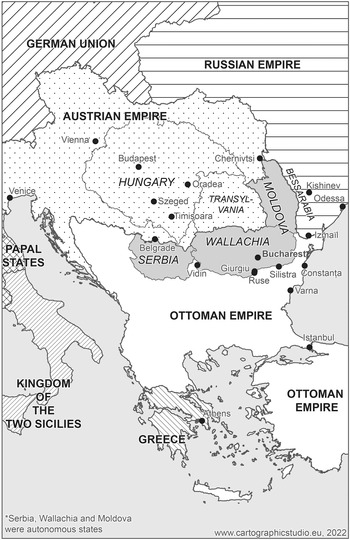
Moldavia and Wallachia started the nineteenth century as part of the Ottoman world, and ended it as an independent, unified polity. This evolution was made possible by the Treaty of Adrianople (1829), a landmark in the Russo-Turkish conflict, which placed the two Danubian Principalities under Russian protectorate and allowed them to engage in international trade on an unprecedented scale (Figure 1). Clout on the Western cereal markets required a cheap and disciplined labour force, at a time when dissolution of bondage became the norm in Europe. For the principalities, this translated into a type of servile bondage that could function as corvée labour on the ground, while assuming the appearance of modern property relations. Every decree concerning the modernization of the countryside can be read as the legal punctuation of a process whereby the boyars became both de jure and de facto owners of the land and defined their rights against the peasants’ genealogy-based claims. The formal backbone of feudal-capitalist rural relations in the nineteenth century was the Organic Regulation [Regulamentul Organic] (1831–1832), the constitutional frame of the Principalities under Russian protectorate. The Regulation set a legal minimum for peasants’ delivery quotas and cut off their access to pasture and forest land, making them dependent on the good will of local landlords. Hence, although by law the corvée was restricted to twelve days a year, local agreements involved more workdays on the boyars’ estates. In 1851, a new law translated the realities on the ground into text: the boyars’ land reserves expanded and the number of corvée days increased.Footnote 29
Eastern Europe in 1830.

The Romanian peasantry was nominally emancipated in 1864, later than anywhere in the region. Up to two thirds of the boyars’ land was turned over to the peasants who were using it, provided they paid for its redemption and not sell it for at least thirty years. The 1884 modification of the constitution extended the period of inalienability by another thirty-two years.Footnote 30 Inalienability had important consequences: it prevented a reconfiguration of the property landscape; it literally made peasants into legal minors; it made access to credit impossible given the peasants’ inability to use their plot as collateral; it furthered their dependence on landlords and leaseholders; and it put increased financial pressure on a feeble state, whose budget was never enough to sponsor rural credit. For more than a century, peasants struggled to “repurchase” their freedom. For want of financial means, debt bondage spread rapidly. Even when peasants did find the money to buy their liberty, the “free” peasants of the nineteenth century had no rights to communal land, and so they had to continue working for the boyars’ latifundia.
At the end of the century, large properties (over one hundred hectares) still accounted for almost seventy per cent of all cultivable land.Footnote 31 Less than fifteen per cent of the peasantry owned over five hectares of land and could be considered independent of local boyars.Footnote 32 They relied on rental contracts (învoieli),Footnote 33 and faced constant competition from seasonal foreign workers from neighbouring provinces.Footnote 34 Most of the time, these contracts were managed through a system of leaseholding (arendășie). Absentee landlords preferred to lease the land to intermediaries, who then sublet it to peasants at usurious rates. Since many of them were Jewish and the political context was deeply antisemitic, they were scapegoated whenever peasants tried to make their lives more bearable. These intermediaries had no reason to invest in agricultural improvements and, consequently, a plunder system based on asset stripping dominated the countryside for decades.
Rented property was split between Romanians (approximately 63 per cent), foreigners (around 18 per cent), and Jews (around 19 per cent), but with a decrease in the proportion of Romanian leaseholders and an increase in the proportion of Jewish ones when large estates (over 5,000 hectares) were concerned.Footnote 35 The most brutal leaseholders formed regional monopolies, sometimes structured around kinship relations, which functioned as de facto cartels by controlling rents and land redistribution. According to Stahl's analysis, these trusts also represented the penetration of financial capitalism in the Romanian countryside, since they were funded by foreign banks, whose aim was a “colonial”-type form of exploitation.Footnote 36 Between 1870 and 1906, the leaseholding system pushed rents up by 150 to 500 per cent.Footnote 37 While in 1870 a corvée labourer had to work an average of twenty days a year for a leased hectare, in 1906 he had to work forty days. More than sixty per cent of the peasants had to rent over two hectares to ensure their families’ subsistence, which meant at least sixty days of weather-dependent work on the great estates.Footnote 38 To this, peasants had to add the days worked to earn their seasonal rights to pastureland, which also rose from fifteen working days in 1870 to thirty in 1907, the year of a bloody peasant uprising. Bearing a strong anti-Semitic charge, the revolt was a direct response to land grabbing and impoverishment, as well as to constant humiliation, physical violence, and threats by the local administration, gendarmes, and arendaşi.Footnote 39 The revolt revealed how far the state was ready to go to support the landlords in their systematic war against the peasants. The murderous rage of the peasants was met with army canons, and the revolt ended in a bloodbath.
In a sense, the Romanian agriculture of this period was nothing short of a miracle: land was cultivated without capital, without machinery, without technical knowledge, and without livestock, and the result was indeed cheap wheat. The magic behind this, of course, was the endless exploitation of the peasants, which deepened the more dependent the two provinces became on Western cereal markets. At the turn of the century, the Romanian peasantry still buckled under the weight of their redemption payments,Footnote 40 and would have to wait until after World War I to see genuine land distribution.
Industrialization from above and The Agrarian Question in The Interwar Period
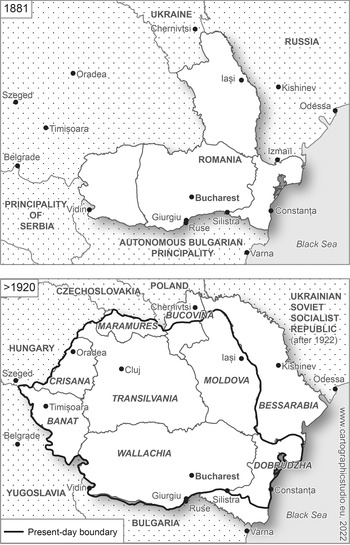
As one of the conjunctural winners of World War I, the Romanian state articulated all these geographies of accumulation into a new “agrarian question”. The 1921 Land Reform was the first substantial attempt to support the creation of an independent peasantry in the countryside (Figure 2). The Reform expropriated approximately 6.5 million hectares, partly to create a reserve of pasture and forest for the village communes, and partly to allocate land to more than 1.5 million rural households.Footnote 41 Although the Land Reform gave agrarian relations in Greater Romania a progressive form, it could not stop the centrifugal tendencies of land fragmentation on the one hand, and big capital's push for land concentration on the other. In 1930, around thirty-two per cent of the sown areas was still constituted by large estates (over fifty hectares). Agriculture remained extensive and unproductive, access to credit difficult, and expertise inexistent. The internal stagnation was augmented by falling cereal prices and the relative oversupply throughout the agrarian crisis of 1928–1936.Footnote 42 Price scissors increasingly opened in the 1930s, as the industrialized European countries endeavoured to achieve self-sufficiency in wheat production, and some of Romania's main competitors on the cereal market made a technological and productivity leap forward (especially through the diffusion of the tractor) that Romania could not follow.Footnote 43 Despite the good intentions behind the 1921 Land Reform, the peasantry's living standards dropped in the following decades: child mortality was the highest in Europe; consumption of basic items decreased; and more than half of the peasants remained illiterate.
Romania before and after the Trianon.

Although many peasants still worked as corvée labourers, wage labour also made its appearance in the Romanian countryside, as landless and poor peasants could now find jobs in the nascent urban industry.Footnote 44 The post-1921 Romanian villages produced a growing category of highly mobile journeymen, a flexible and politically unrepresented workforce wandering in search of seasonal and daily work. Apart from contributing to the formation of city slums and arousing fear of disorder and chaos, peasants’ mobility encountered competition from “foreign” workers of ethnic minorities, who were better educated, more highly skilled, and more “modern” than the Romanian population.
In the cities, the ethnic Romanians had to face the ethnicized barriers of industry and trade, dominated by Hungarians, Jews, and Austrians. Despite legislation to “encourage the national industry” that regulated the proportion of ethnic Romanians’ participation in the workforce,Footnote 45 the skilled cadres in Transylvania, Bukovina, and Bucharest remained markedly ethnicized, with only fifty per cent of workers and artisans being Romanians in the beginning of the twentieth century.Footnote 46 The Jewish dominance of craftsmanship in the Old Kingdom made one moderate liberal politician remark:
the strange and unique fact in the modern history of the nations that trades are almost completely outside national activity. The foreigner cuts us to pieces, the foreigner dresses us, the foreigner builds our houses, the foreigner manufactures the various tools necessary to our living. In a word, the foreigner produces, and the Romanian consumes.Footnote 47
The fate of the countryside was now increasingly intertwined with the Romanians’ aspirations to develop a national industry. The Romanian industrialization debate conveyed a sense of historical urgency coupled with Gerschenkronian awareness that industrialization in a backward country must come from above.Footnote 48 Liberals, social democrats, socialists, peasantists, and fascists faced the same pressing issues: “the abyss between urban and rural Romania”;Footnote 49 Romania's peripheral position in the world economy; and the (im)possibility of transcending both without substantial capital input. The solutions reflected the different ideological orientations of these various groups but can be organized along four main axes. First, the belief in a linear developmental trajectory of the country. Second, the benefits of following the “necessary” stages of Western development versus finding a “Romanian” path to progress. Third, the challenges to liberal democracy in a backward country. Fourth, whether to pursue an industry- or an agriculture-led modernization course.Footnote 50 These issues raised two further questions: Who (read: what class) was going to be the agent of change in Romania? And where would this change come from – the West or the Romanian elites themselves?
The liberal programme had its roots in the class position of its representatives – lesser boyars moving into the expanding state apparatus. At a time when “the great landowners embraced the institution of neo-serfdom in an overall arrangement that recognized a market in grain but not in land and labour”,Footnote 51 the political careers of the new bureaucrats increasingly aligned with the interests of the nascent urban bourgeoisie. The liberals saw Romania's newly gained territorial enlargement, the inflow of German capital, the rise of foreign and domestic banking, and the prospects of new infrastructural projects as a call for top-down industrialization supported by protective tariffs and strategic investments. Their main theoretician, Ştefan Zeletin, saw Romania's history as an outcome of fixed, universal developmental stages – mercantilism, liberalism, and financial imperialism, which would lead to a nationalist programme to drive foreign capital – and the Jews as its embodiments – out of the country. This process, in his view, would have saved the Romanian economy from becoming a supplier of oil and grains to Western markets, dependent upon Germany's manufacturing sector. A capitalist oligarchy, formed as a political elite and not in opposition to centralized governance, appeared as the only class capable of leading Romania into industrial modernization, which would then “spread through the dead pastoral past and revive the nation, creating a new society and a new type of man”.Footnote 52 This capitalist oligarchy would transform “Greater Romania” into “Closed Romania” through protectionist measures and strong state intervention.
Mihail Manoilescu, the main promoter of fascist corporatism in interwar Romania, offered a more extreme version of this programme. For him, a new future for Greater Romania demanded the rule of a single party, which would engineer the country's way out of its peripheral destiny. It would aim for efficiency and resource control by bureaucratic rationality. At a time when Keynesianism appeared as a solution to mass unemployment and declining consumption, Manoilescu addressed the underemployment of agrarian societies, where labour was wasted instead of being an economic resource.Footnote 53 The bourgeoisie's “destiny” was to integrate Romania into a totalitarian centralized European plan, as supplier of raw materials and highly processed food commodities, and as an importer of industrial products.
The National Peasants’ Party, which represented middle peasants and village elites in parliament for the entire interwar period, opposed the liberals’ policy of accelerating industrialization through protectionist measures and strongly supported foreign investments in Romania as the only solution for “saving” Romanian villages from immiseration and bringing them into the twentieth century. Capital inflows were deemed necessary to enhance military capacity, strengthen the state administration, and boost wheat exports, key to the survival of the middle peasants’ household and to the fortunes of the landlord. One of the leading voices of the Party, economist Virgil Madgearu, sadly remarked how heavily taxed imports required the rural population to pay more for better tools, a price scissors policy that further hindered technological advancement.Footnote 54 Leftist intellectuals, for their part, denounced the local elites’ obsession with the West and the transformation of Romania into a “district” of the more advanced part of the world.Footnote 55 Socialist and social-democratic opposition to the meagre inflows of foreign capital stemmed from awareness that Romania “had been absorbed into the world capitalist market for a long time and yet remained backward”, and that “this backwardness corresponded neither to a development stage nor to some romantic ‘traditionalism’”.Footnote 56 Romania was not feudal but “a monstrous distortion of capitalism”.Footnote 57 Predictions were grim: since the only thing foreign capital wanted from Romania was cereal, and Romanian agriculture was unprepared for this challenge, neo-serfdom would remain the only structural possibility to force wheat out of the peasants’ hands. The left mocked the possibility that the weak, corrupt local bourgeoisie would lead Romania's industrial development. One of its leading theoreticians, social democrat Ştefan Voinea, forecast that even with successful industrialization a protected oligarchy would have no incentive to increase efficiency but would rather transpose exploitation from peasants to workers.Footnote 58 As to the question of a leading revolutionary class, the bitter response of Romanian leftists was that an oppressed peasantry could hardly be the equivalent of an exploited proletariat, so that counting on progressive class consciousness in the countryside was a mere chimera.Footnote 59
For all these political forces, the chronic scarcity of capital was key to Romania's making itself “intelligible and recognizable to the West”.Footnote 60 So, where should capital come from? From agricultural exports and foreign investments, as the representatives of the National Peasants’ Party suggested? From strategic investments in primary commodities such as oil, heavily taxed imports, and international credit, as well as from a price balance that would favour industry over agriculture, as the liberals claimed? Since the latter's hold on power was much longer than that of their counterparts, the liberal ideas of fiscal protectionism and nostrification (the encouragement of industry founded by Romanian citizens) prevailed.Footnote 61
Liberal governments led an incoherent developmental policy that systematically exhausted the agricultural sector in order to cover the needs of a growing administration, repay external debt, and support timid industrialization.Footnote 62 Heavily taxed agricultural exports drained the landlords and peasants of any liquidities that might otherwise have been reinvested in agricultural improvements; the state itself refused to invest in machinery and local expertise; and access to credit remained beyond reach. This trend was briefly reversed in 1928–1932, when the National Peasants’ Party was in power and supported agriculture through tax exemptions, export bonuses, and transfer of the fiscal burden on imports. But the reversal had negligible effect because the world cereal market was collapsing exactly at the same moment, and because it did not last long enough to lead to systemic restructuring of the agricultural sector.Footnote 63 This uninspired dance between protectionism and irrational prostrating to foreign capital left mid-twentieth century Romania as one of the most backward countries in Europe, a neo-colony that constantly failed to transform its small transfers of capital into coherent development.
Dispossession and Postponed Proletarianization in Primitive Socialist Accumulation
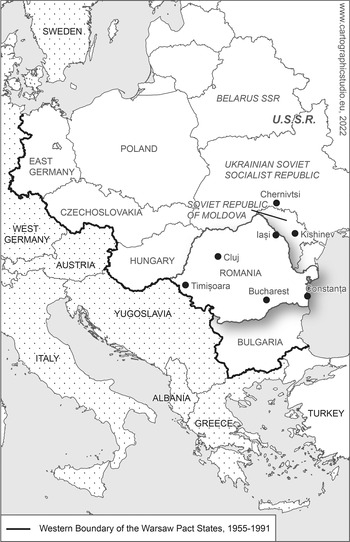
When integrated into a processual perspective, the post-1945 societal transformation can be seen as one instance in a series of modernizing programmes that struggled with the country's backwardness and thorny labour relations in ways that allowed for the accumulation of capital in new contexts (Figure 3). The Romanian Workers’ Party, which obtained full political power in 1947, faced the same problem as its interwar predecessors: a chronic scarcity of capital (aggravated by war reparations and disadvantageous trade relations with the Soviet Union); fragmentated land, unproductive agriculture and immiseration in the countryside; an ethnicized class structure; and increasing reliance on cheap labour. The proposed remedy was rapid industrialization, steered by a party bureaucracy that would now stand not for a capitalist oligarchy, but for the working class.
Cold-War Eastern Europe.

Following in Preobrazhensky's footsteps, the Party relied on two initial sources of accumulation: draining private resources to feed the state sector; and placing the costs of labour reproduction on the workers’ shoulders through harsh austerity policies. Since industry became state-owned and centrally planned at the end of the 1940s, the private sector to be drained was once more the Romanian countryside, whose land and labour were to serve again as sources of accumulation elsewhere.
With an ambitious industrialization programme in place, the new economic executives were, however, confronted with two new dilemmas that their predecessors had never faced. First, the proletarians tasked with laying down the foundations of a workers’ state were thin as a class and difficult to integrate into the old industrial centres, where a perpetual crisis of food and housing overwhelmed local administration and pitted denizens against the newcomers.Footnote 64 Second, the proletarians might have been the political base of the party, but the austerity measures on which early socialist accumulation depended meant that the existing proletarians could barely survive on wages alone. Communist politics required the moulding of workers into historical subjects, converting overt exploitation into a conscious project of the self. But shopfloor tensions, old hierarchies, calcified routines and, more than anything, people's reactions to low wages made the “self” in Preobrazhensky's “self-exploitation” into a constant battleground, both for keeping production going and for negotiating the political legitimacy of the party.Footnote 65 The ways in which the state confronted these dilemmas set the long-term parameters of the Romanian proletarianization process, as well as the conditions of possibility for accumulation on the shopfloor. As we will see, these lines of force would prove essential when the two main processes of socialist primitive accumulation – the nationalization of industry and the collectivization of land – were concerned.
The nationalization of the means of production and of the financial system was mostly accomplished in June 1948 and completed by 1952. Hailed by the Romanian Workers’ Party as “the first act of socialist accumulation”, it was also a step forward in the long-term struggle to establish control over the industrial units. Nationalization was eased by the fact that, since the late 1930s, the Romanian economy had been highly dependent on German capital. In addition, following the Vienna Diktat, Northern Transylvania had been part of the Hungarian war economy between 1940 and 1944. This allowed the most important industrial units to be seized as enemy assets and placed under a special Office at the end of the war. By June 1948, when nationalization officially took place, the state already had a strong grip on the internal market through an extensive network of department stores, and complete control over foreign trade. The earlier establishment of several “Industrial Offices”Footnote 66 for coordinating the activity of key economic units had already been considered by the Romanian industrialists as de facto expropriation.Footnote 67 Monetary reform in 1947 also prepared the ground for nationalization through a mop-up operation. It involved capping the sums that could be exchanged for the new currency, and thus directly appropriating liquidities from the population and businesses.Footnote 68
The largest industrial and financial units – transportation infrastructure, mines, and banks – became the property of the state from the start. Local industry and small service providers were kept alive for another four years to allow for flexibility in supply and demand, and to be scapegoated when provisioning systems collapsed in the cities. Small-scale private economic activity was still tolerated but subject to increasing restrictions. Small businesses were requisitioned in order to redirect popular anger towards “saboteurs” and “profiteers”, and to provide people with a sense of restorative justice. The nationalization of these economic units was immediate, responding to rapid shifts in the moral economy of an impoverished population, and contributing to a sense that, in terms of popular empowerment, the best was yet to come. Between 1945 and 1952, when nationalization was completed, the private sector was subject to suffocating taxes, difficulties in accessing raw materials, a ban on hiring labour, and the total collapse of the apprenticeship system. The communists were turning the logic of primitive accumulation on its head: it was now the state sector that was benefiting from the exchange between capitalist and non-capitalist domains. This trend would intensify with land collectivization in the countryside.
One of the first things the communist-leaning Romanian government did at the end of the war was to implement agrarian reform that redistributed small-size land plots to poor peasants in order to gain their sympathy.Footnote 69 However, not only were peasants unresponsive to the communists’ strategy (massively voting for the National Peasants’ Party in the 1946 elections), but they also remained poor and dependent on the old structures of rural employment. Informally, parcel fragmentation continued despite the ban on land sales and leasing. An agricultural census in 1948 revealed that, while over half of the Romanian population owned some land, only 2.3 per cent of the plots were larger than ten hectares. Reproducing the long-term historical pattern, most of them produced below subsistence level.Footnote 70
Communist leaders believed that rapid industrialization had to be supported by adequate agricultural production, but disagreed on the pace of implementing an agriculture of scale and on the class relations it would engender. Replaying in a different context the struggle of the late 1920s between Bukharin and the Stalinist majority in the Politburo, Secretary of Agriculture Ana Pauker and Minister of Finance Vasile Luca proposed the voluntary combination of collective farms, systematic investment in mechanization, price parity between city and countryside, and balanced growth of heavy and light industrial sectors. Against their vision of organic development, Prime Secretary of the Romanian Workers’ Party Gheorghe Gheorghiu Dej supported a classic Stalinist project to advance collectivization: fast-paced; violent if needed in order to curb peasant resistance; and completely subordinated to industrialization through price scissors and investment policies (during the first five-year plan, only ten per cent of investment was allocated to agriculture). His vision would prevail and, in 1952, both Ana Pauker and Vasile Luca fell victim to the most important wave of purges in the history of the Romanian Workers’ Party.
The Romanian collectivization was a convoluted process, which started one year after the nationalization of factories, in 1949; it was completed in 1962.Footnote 71 It proceeded in waves that ebbed and flowed, both strategically and as a response to peasant resistance. Only ten per cent of the land was collectivized between 1949 and 1953, and the pace slowed even more after Stalin's death. Well into the mid-1950s, with two thirds of the state budget coming from the socialist sector, three quarters of the total cultivable land was still in private hands.Footnote 72 No matter how small and insufficient the land plots, peasants’ centuries-long experience of dispossession and hunger for a modicum of independence rendered attempts to attract them to collective farms futile. Peasants were sticking to their land. In 1955, the Party resumed collectivization, which accelerated after 1957 in the final and most brutal stage. By 1962, over a decade after industry had been nationalized, the Party could declare collectivization complete.Footnote 73
Collectivization was met with resistance, especially from well-off and middle peasants, as well as from local elites, but brought new hope for poor villagers, who gained new sources of income, and whose living standards would eventually improve. Before the war, well-off peasants could send their sons to the cities to pursue secondary or higher education. With collectivization, access to universities was no longer possible for their children, and some career paths were closed to them, while opening up for the rural poor. Ultimately, collectivization flattened local hierarchies, although the Party had a tough time dismantling the status order and the kinship systems they sprang from. Complaints about the decisions of certain collectives to reduce the size of the land plots allotted to members according to partisan interests were still to be heard as late as 1967, when peasants from the Romanian Southern regions sent over 1,200 letters to the Party Central Committee, denouncing the collectives’ boards, which favoured established kinship and village hierarchies when redistributing land.Footnote 74 With the nationalization of industry completed, the stakes for class relations in the countryside got higher. The state could operate now with distinct categories of rule to expand political control over the villages. The peasantry was divided into five categories: chiaburi (the equivalent of the Soviet kulaks) – land and business owners who hired labour on a regular basis; large landowners – owning over twenty hectares of land; middle peasants – owning between five and twenty hectares of land; poor peasants – owning less than five hectares; and landless peasants.Footnote 75 These categories carried not only symbolic but also economic consequences. They constituted the foundation for the taxation of agricultural products and for forced deliveries, both set by law but often left to the discretion of an incompetent, corrupt, and often vengeful local bureaucracy.Footnote 76
Resistance in the countryside proved disastrous for Romania's status as agricultural exporter. The state's lack of control over agricultural supply had immediate financial consequences on the three forms of trade: the state-owned stores selling food at set prices; the private market that still offered peasants the possibility to sell their products at prices that could fluctuate within limits; and the black market, where one could purchase anything at exorbitant prices. Industrial centres were losing the advantage that the state was trying to achieve through price scissors. In addition, the soaring prices set by the government for industrial products discouraged spending and often blocked the circulation of liquidities in the rural areas. Not that being on the descending curve of the price scissors was a new reality for the Romanian countryside, which had already been the “beneficiary” of liberal pro-urban financial policy during the interwar period. This may be why they responded fast by cutting off the city supply lines and strengthening the black market, thus contributing to the two postwar inflationary spirals that the state managed to control only in the mid-1950s, later than any other country in the region, and only with the help of further financial reform.Footnote 77
The financial reform of 1952 was meant to prevent peasants from hoarding their output, raise workers’ real wages, curb agricultural prices, strengthen the Romanian leu through a new gold content, and tie it to the rouble instead of the US dollar.Footnote 78 Like its 1947 precursor, the 1952 reform functioned as de facto expropriation. The preamble of the law was the most explicit expression of the intentionally unequal exchange between city and village. It also expressed the state's incapacity to control this relation, since food prices on the free market had been pushed up “by the capitalist elements in the cities and in the villages” more than three times compared to 1947.
The collectivization of Romanian agriculture was marked by a contradiction. On the one hand, the squeezing of the rural population through price scissors, compulsory quotas, taxation, and confiscations of liquidities, as well as the disintegration of employment relations in the countryside, allowed the countryside to remain a non-socialist exterior: a cheap source of food and raw materials along the lines of Preobrazhensky's initial model. On the other, the slow pace of collectivization and its violence can be read as a state failure. The expectation of the new economic executives that they would get a fast grip on the financial mechanisms of this juncture proved unrealistic, and rural areas refused to function as an internal market for urban industrial output (thus decreasing the effectiveness of price scissors).
The Romanian early socialist proletarianization was likewise contradictory. Within the limits set by a strong paternalism, postwar communist governments aspired to a rapid and decisive commodification of labour. By the time the factories had been nationalized in 1948, urban workers were already dependent for their survival on wages, as consumption, leisure, healthcare, and continuing education were organized through the paternalist, all- encompassing universe of the industrial units. An oversized accumulation fund relative to the consumption fund condensed the state's “self-restraint” policy that made workers’ survival on industrial employment alone difficult, and affected entire provisioning systems. To illustrate how the actual cost of living increased during the postwar years, we can compare the 7.7 hours worked on average for a subsistence basket in 1938 to the 10.05 hours worked in 1951, and eleven hours in 1955, at the conclusion of the first five-year plan.Footnote 79 Framed as a transitional moment of hardship, the exploitative nature of industrial employment painfully contradicted the discursive tropes of party activists organizing a “dictatorship of the proletariat”.
The two pillars of primitive socialist accumulation were already clearly established at the end of the first five-year plan, when a new economic executive could write that socialist accumulation was “the partial use of the net income created in agriculture for the expansion of production, as well as for the accretion of material reserves and for the increase of social and cultural funds”, and to confidently state that its high level could be attained “due to the advantages held by the socialist economic system: the planned character of the economy, the rapid growth of national income, and the elimination of parasitic consumption”.Footnote 80
While industrial employment did not suffice to cover the subsistence of urban workers, it did represent an important contribution to the combined resources of the rural household, whose members were “starved” enough to need the factory wage, but not enough to leave the village and flood the cities. In this way, the village could function as a reservoir of cheap and flexible labour for the industrializing urban centres, which were dealing with a systemic shortage of manpower. The disorganized labour market counteracted the desperate attempts of the government to stop workers’ turnover and mobility and prevent factory managers from luring the best.Footnote 81
The fact that the two forms of direct appropriation on which primitive socialist accumulation depended had different temporal horizons created a historically specific form of “postponed proletarianization”.Footnote 82 It was marked by a partly contingent, partly strategic choice to slow down the release of the workforce from the villages in order to tame the shortage of housing and the generalized postwar penury, while still ensuring a steady flow of manpower towards the factories. As collectivization advanced, villagers responded by integrating commuting into a broader social reproduction strategy in which industrial employment generated liquidities and partly compensated for state acquisitions and taxes.Footnote 83 In 1962, when the Party declared the success of full collectivization, almost thirty per cent of industrial workers were commuters.Footnote 84 This process allowed the early socialist factories to function while the population bore the brunt of social reproduction costs: the peasant-workers, by continuing to eat off and live on the land; and workers at large, by grudgingly accepting below-subsistence-level wages.
The inequitable exchange between the city and the countryside that emerged in the process of collectivization became established as a systemic feature and inscribed in the labour and social security legislation of the 1960s and beyond. Agricultural incomes remained significantly lower than in other sectors for the whole period: in 1950, state employees earned on average 337 lei per month and collective farmers 172 lei; in 1985, state employment offered an average monthly wage of 2,670 lei, while farm work ensured an average of 1,741 lei.Footnote 85 Continuing the trend of price scissors inherited from the liberal industrialization programmes of the interwar period, the disparity between rural and urban areas remained a daily reality. In the 1980s, prices for basic consumption items in the countryside were still ten per cent higher than in the city. Since payments in kind meant that collective farmers had less cash available for consumer goods, the issue often became contentious.
Pensions for collective farmers were established in the mid-1960sFootnote 86 as a mixed system – with contributions in money and products. The contribution for members’ retirement benefits was calculated as a percentage of the total value of the annual production of a particular collective farm (3.5 per cent). In an effort to link the retirement fund directly to the productivity of the collective farms, the prices taken into account for evaluating global production were calculated as averages of all the prices actually realized through state contracts, through direct supply to state stores, and on farmers’ market. Some experts tried to sink the retirement fund even further by suggesting that, where pensions were concerned, “global production” should not include the extra gains of the collective through secondary crops, artisanal work, or the monetarization of waste. The difference between the collective members’ pensions and the social insurance pensions increased sharply in the 1970s. In 1987, the average pension of state employees was double the average pension of the collective members.Footnote 87 The government received thousands of requests for pension increases annually, with some peasants threatening to withdraw the land they had contributed to the collective if their pensions were not raised.Footnote 88 Some letters were accompanied by lists of monthly basic consumption items including meat, sugar, oil, or soap that “any worker could buy and a collective member couldn't”.Footnote 89 While the threats of withdrawing were rather empty given the repressive measures such a move would have triggered, the peasants’ awareness of a systematic disadvantage of the collective farms was well founded. Their letters were bitter expressions of the ways in which this disadvantage affected the most mundane aspects of peasants’ existence.
Conclusions
In sum, in the nineteenth century, labour relations in the countryside reflected diverse geographies of primitive accumulation: self-sufficient rural households in Transylvania and Bessarabia, a thin layer of proletarians and peasant poverty in Bukovina, and neo-serfdom in the Romanian Principalities. None of these configurations led to proletarianization. On the contrary, in Romania, legal provisions such as the inalienability of land were to prevent peasants’ “decaying” into a proletarian condition. During the interwar period, despite progressive land reform, unequal exchange between industry and agriculture became an integral part of the country's industrialization debate, and an underlying theme in struggles to produce an ethnically Romanian working class. As foreign capital was interested in Romania's natural resources rather than its growth potential, industry remained marginal for the Romanian economy, which preserved its markedly agrarian character for decades. Romania's “workers” continued to be a small, highly mobile, and politically ambiguous category, with a high proportion of rural commuters, who used industrial employment as one of several sources of income.
Reintegrated into a long history of land ownership and labour relations, primitive socialist accumulation loses its exceptionalism. After World War II, when the communist government constituted the rural as socialism's perpetual Other, they were not following just “the Soviet blueprint”, but also a centuries-long local experience of unequal exchange, dispossession, and exploitation in the village. In addition, a unidimensional understanding of the nationalization of means of production and the collectivization of land as expropriation obscures their deep historical roots and the forms of capital accumulation their timing permitted. Both functioned as mechanisms to pull resources into the state sector so as to enable industrial investment. The degradation of life in the countryside and the postponed proletarianization that characterized Romanian primitive socialist accumulation created a category of peasant-worker, who entered the factory gates without overwhelming postwar urban centres. Part of their subsistence was supported by the village, releasing pressure on workers’ reproduction. In turn, industrial employment would pour liquidities into starved rural households, allowing them to breathe a bit longer. The state would also face considerable resistance from “real” proletarians, those urban workers whose lives were completely dependent on their wages and whose restraint had to appear self-imposed.
The Romanian case reveals a different facet of primitive accumulation, from a corner of the world where the role of the state was crucial. In the nineteenth century, it created the legal backbone for peasants’ exploitation within the matrix of hybrid labour relations that constituted the Romanian neo-serfdom. In 1907, it met peasants’ rebellion with cannons, to prevent the dismantling of this matrix. During the interwar period, the representatives of the nascent urban bourgeoisie prioritized strategic investments financed through protectionist tariffs and Western loans, while Western capital assumed full control over Romania's oil. The state's fiscal policy of heavily taxing imports made it impossible for peasants to access tools, delaying agricultural improvement. And finally, under socialism, the state acted as capital in creating and managing social production processes.
While this story comes from an unlikely place, temporarily (self-)identified with “socialism”, let there be no mistake: it is a story of primitive capital accumulation in which the Other – here the rural Other – subsidized the creation and realization of value that made early socialist industrialization possible. As such, this story questions more than the traditional history of “workers’ states”. It also interrogates capital's seemingly magic capacity to make use of whatever social worlds of difference it encounters in its trail.