


An estimated 1·6 million deaths were directly caused by diabetes in 2015(1) and in terms of the number of deaths worldwide, it is estimated that diabetes will be ranked seventh by 2030(Reference Mathers and Loncar2). In Japan, the number of patients with diabetes is estimated to be 3 166 000 according to the 2014 Patient Survey(3). The age-standardised prevalence of diabetes has remained constant at approximately 8 % between 2003 and 2012 in Japan, with men and people aged ≥65 years being most affected(Reference Ikeda, Nishi and Noda4). A healthy diet, regular physical activity, maintaining normal body weight and avoiding tobacco use are effective in preventing the onset of type 2 diabetes(1). Regarding the effect of dietary habit on diabetes, assessment of the overall dietary intake is required because diets involve multiple nutrients and food groups.
Recently, the association between healthy diet and diabetes risk has been investigated in Western and Asian countries. Results from previous studies suggest that the Mediterranean diet, the Dietary Approaches to Stop Hypertension (DASH) diet and diets with high Alternate Healthy Eating Index (AHEI) scores have the potential for preventing type 2 diabetes in general populations(Reference Chiuve, Fung and Rimm5–Reference Romaguera and Guevara9). In previous meta-analyses, a posteriori-defined dietary patterns identified as healthy/prudent were associated with a reduced risk of developing type 2 diabetes and those identified as unhealthy/Western patterns were associated with an increased risk(Reference Jannasch, Kröger and Schulze10–Reference Maghsoudi, Ghiasvand and Salehi-Abargouei13). The Japanese diet consists of a wide variety of foods(Reference Katanoda, Kim and Matsumura14) and is different from diets in Western countries, being characterised by high intakes of soya products, mushrooms and seaweeds. In Japan, it has been reported that a dietary pattern featuring frequent intake of white rice may impair glucose metabolism(Reference Nanri, Mizoue and Yoshida15) and a high-dairy, high-fruit-and-vegetable, low-alcohol pattern may be associated with a decreased risk of developing abnormal glucose tolerance(Reference Mizoue, Yamaji and Tabata16). On the other hand, another prospective study showed that dietary patterns were not associated with type 2 diabetes risk in Japanese individuals(Reference Nanri, Shimazu and Takachi17). These previous results were inconsistent, partly due to the different methods applied to identify glucose tolerance abnormalities and the dietary methods used in developing dietary patterns. The methods used to assess diabetes in epidemiological studies include blood glucose levels (fasting; 75-g oral glucose tolerance test; casual), glycated Hb (HbA1c) levels and self-reporting of physician-diagnosed diabetes. Therefore, the association between dietary patterns and abnormal glucose tolerance reflecting dietary intake among the Japanese population remains unknown.
In the present study, we aimed to explore the association between dietary patterns and glucose tolerance abnormality identified by HbA1c levels among Japanese adults using nationwide data from the 2012 National Health and Nutrition Survey (NHNS).
Methods
Data source: the National Health and Nutrition Survey
The NHNS is a cross-sectional survey conducted by the Ministry of Health, Labour and Welfare in Japan every November since 1947. Details of the survey design have been described elsewhere(Reference Ikeda, Takimoto and Imai18). Briefly, in 2012, the NHNS used a stratified single-stage cluster sample design across forty-seven prefectures. Census enumeration areas were drawn from each prefecture and residents aged ≥1 year in all households from 475 selected census enumeration areas were eligible for participation in the survey. The NHNS is composed of three surveys: the dietary intake survey (a self-administered questionnaire including questions on the household population, meal patterns, daily step counts and dietary records); the lifestyle survey (a self-administered questionnaire including questions on smoking status, alcohol intake and sleep time); and a physical examination (measurement of height, weight, abdominal circumference and blood pressure; blood tests; and a medical interview). The 2012 survey sampled 24 555 households and 12 750 households responded (response rate: 51·9 %)(Reference Ikeda, Takimoto and Imai18). Based on official application procedures under Article 33 of the Statistics Act, we obtained approval from the Ministry of Health, Labour and Welfare, Japan and used individual-level data from the NHNS for the present study. In accordance with the Ethical Guidelines of Epidemiological Research(19), our study was exempt from the application of these guidelines because we used anonymised data only.
Dietary assessment
The dietary intake survey, which used semi-weighed household dietary records to assess dietary intake, was conducted on a single day between 25 October and 7 December, excluding Sundays and public holidays. Trained interviewers visited each household to explain the method of generating dietary records before the survey. Dietary records were weighed by taking an inventory of all foods, beverages, food waste, leftovers and foods eaten away from home that were consumed in the household. For shared dishes within the household, approximate proportions of each food were assigned to individual household members to estimate individual food intakes. Interviewers checked for any missing information and errors during household visits to collect the dietary records.
Nutrient intakes were calculated based on the Standard Tables of Food Composition in Japan, 2010, which were updated from the fifth revised and enlarged edition published in 2005. Foods were classified into seventeen large food groups (e.g. cereals; vegetables; fish and shellfish; etc.), thirty-three medium groups (e.g. rice and rice products; wheat flour and wheat products; green and yellow vegetables; other vegetables; raw fish and shellfish; seafood and processed products; etc.) and ninety-eight small groups (e.g. rice; bread; tomatoes; carrots; horse mackerels and sardines; salmon and trout; etc.) based on the food group tables in the NHNS(20). The details of the food groups have been previously reported(21).
HbA1c measurement
HbA1c concentration was measured using the latex agglutination nephelometry method (measuring instrument: BM9030) on non-fasting blood samples. Glucose tolerance abnormality was defined as elevated HbA1c concentration ≥6·5 % determined by the National Glycohaemoglobin Standardization Program, based on the diabetes mellitus diagnostic criteria of the Japan Diabetes Society(22). The Japan Diabetes Society defines diabetic type cases as having HbA1c level of 6·5 % or above.
Study participants
Out of 36 408 participants from 12 750 households in the 2012 survey, the following were excluded: 12 888 participants aged <40 years, 11 812 participants whose HbA1c levels were not measured in blood tests, and eight pregnant women or breast-feeding women. Furthermore, 1801 participants who answered in the affirmative to ‘have been previously diagnosed as having diabetes’ in the medical interview and thirty-nine participants who were being treated for diabetes at the time of the survey, using either insulin or oral drugs, were excluded because they were likely to have different dietary patterns by dietary instruction. The following were also excluded: participants with incomplete data on the dietary intake survey (n 179) and those with extremely low or high reported total energy intake, defined as consuming less than 50 % or more than 150 % of the estimated energy requirement for physical activity levels by age and sex based on the Dietary Reference Intakes for Japanese (2015)(23) (n 131). Finally, a total of 9550 participants aged ≥40 years were included in the present analysis. We analysed the results of the present study using the NHNS as a simple random sample.
Statistical analysis
First, dietary patterns based on energy-adjusted intake using the residual method for food items were analysed by factor analysis using a varimax rotation. In the present study, most food items used for factor analysis belonged to the medium food groups based on the food group tables in the NHNS (e.g. rice and rice products; wheat flour and wheat products; green and yellow vegetables; other vegetables; raw fish and shellfish; seafood and processed products), excluding seasonings and spices. Wheat flour/wheat flour products, fats/oils and beverages were reconstituted from five items of the small group, into three items. Variables based on these data with a CV≤0·3 were excluded because these variables had approximately the same intake values among almost all participants and therefore contributed little to the factor analysis(Reference Cattell24). Finally, twenty-five food items were included in subsequent factor analysis: (i) rice and rice products; (ii) wheat flour; (iii) bread and Japanese buns; (iv) noodles (Japanese and Chinese noodles, buckwheat and buckwheat products, macaroni and spaghetti); (v) potatoes and potato products; (vi) sugars and sweeteners; (vii) soyabeans and soyabean products; (viii) green and yellow vegetables; (ix) other vegetables; (x) pickles; (xi) fruits; (xii) mushrooms; (xiii) algae; (xiv) raw fish and shellfish; (xv) seafood and processed seafood products; (xvi) animal meats and poultries; (xvii) eggs; (xviii) milk and dairy products; (xix) butter and margarine; (xx) vegetable fats and oils; (xxi) confectioneries; (xxii) alcoholic beverages; (xxiii) teas; (xxiv) coffee and cocoa; and (xxv) other beverages. To determine the number of factors to be retained, we considered components with an eigenvalue >1·0, as well as the scree test results and interpretability of the factors. Factor scores were calculated for each participant, standardised to a mean value of 0 and an sd of 1, and each participant was assigned a factor score for every identified pattern.
Second, participants were divided into quartiles based on factor scores for dietary patterns. Third, the associations of dietary pattern scores with participant characteristics and food and nutrient intakes were assessed by using simple linear regression analysis for continuous variables and the χ 2 test for categorical variables. Finally, a sex- and age-adjusted model and multivariate model logistic regression analyses were performed to evaluate associations between dietary patterns and elevated HbA1c levels (≥6·5 %). OR for elevated HbA1c levels were evaluated with dietary pattern scores in the second through fourth quartiles and compared with those in the first quartile. To examine the linear relationship, P trend values were obtained using the quartile factor scores for the dietary patterns as ordinal variables. The following variables were included in the multivariate models based on a review of the previous literature: sex, age (continuous variable), BMI (<18·5, 18·5–24·9 or ≥25·0 kg/m2), smoking status (never, former, current smoker or unknown) and exercise habit (yes, no or unknown). Alcohol consumption status was not included in the multivariate models because alcohol intake was included in the factor analysis for dietary patterns. There were no significant interactions of sex between dietary patterns and elevated HbA1c levels. All statistical analyses were performed using the statistical software package SAS for Windows version 9.4. Differences were considered statistically significant at P<0·05.
Results
From the result of factor analysis, three dietary patterns were identified in the present study (the factor loading matrix for the three dietary patterns is presented in the online supplementary material, Supplemental Table 1). The first pattern had higher factor loadings of bread, milk and dairy products, and fruits, and lower factor loading of rice. The second pattern had higher factor loading of meat, and lower factor loadings of rice and fish. The third pattern had higher factor loadings of vegetables, mushrooms, soyabeans and soyabean products. These dietary patterns were labelled as follows: (i) high-bread and low-rice; (ii) high-meat and low-fish; and (iii) vegetable.
Participant characteristics for the three dietary patterns by factor score quartiles are shown in Table 1. Participants in the highest quartiles for the high-bread and low-rice pattern and vegetable pattern were older, more likely to be women, more likely to report exercise habits, and less likely to be current smokers and current drinkers, compared with those in the lowest factor score quartiles. Participants in the highest quartile for the high-meat and low-fish pattern were younger, more likely to be women, and more likely to be current smokers and current drinkers.
Characteristics of participants according to factor score quartiles for the three dietary patterns found among Japanese adults (n 9550) aged ≥40 years, 2012 National Health and Nutrition Survey
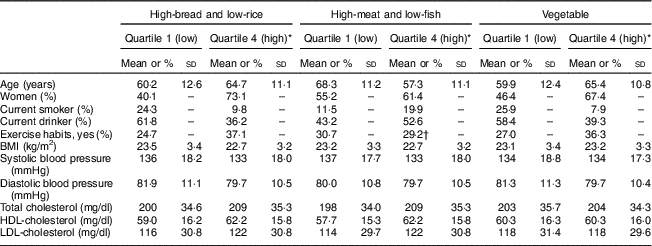
* Simple linear regression analysis and the χ 2 test were used for continuous and categorical variables, respectively. P were all <0·001, with one exception.
† P=0·074.
Table 2 shows food intakes for the three dietary patterns by factor score quartile. The highest quartile for the high-bread and low-rice pattern had higher intakes of bread, green and yellow vegetables, fruits, milk and dairy products, butter and margarine, confectioneries, and coffee and cocoa, and lower intakes of rice, meat, eggs and alcoholic beverages, compared with the lowest quartile for factor score. The highest quartile for the high-meat and low-fish pattern had higher intakes of meat, bread, noodles, alcoholic beverages, and coffee and cocoa, and lower intakes of fish, rice, pickles, fruits, algae and tea. The highest quartile for the vegetable pattern had higher intakes of vegetables, potatoes, soyabeans and soyabean products, fruits, mushrooms, algae and tea, and lower intakes of bread, alcoholic beverages, and coffee and cocoa.
Food intakes according to factor score quartiles for the three dietary patterns found among Japanese adults (n 9550) aged ≥40 years, 2012 National Health and Nutrition Survey

* P trend used in the general linear model were all <0·001.
Table 3 shows the nutrient intakes for the three dietary patterns by factor score quartile. The highest quartiles for the high-bread and low-rice, and vegetable patterns had higher intakes of nutrients such as protein, fats, minerals, vitamins and dietary fibre, but not some nutrients. The highest quartile for the high-meat and low-fish pattern had lower intakes of most nutrients, except for total fat and fatty acids, compared with the lowest quartile.
Nutrient intakes according to factor score quartiles for the three dietary patterns found among Japanese adults (n 9550) aged ≥40 years, 2012 National Health and Nutrition Survey

RE, retinol equivalent.
* P trend used in the general linear model were all <0·001.
The results of multivariate logistic regression analysis models for OR of elevated HbA1c levels (≥6·5 %) according to the three dietary patterns by factor score quartiles are shown in Table 4. There were 309 participants with HbA1c≥6·5 %. The high-bread and low-rice pattern was marginally inversely associated with the prevalence of elevated HbA1c levels (P trend=0·047). For the vegetable pattern, higher factor score quartiles were associated with decreased prevalence of elevated HbA1c levels, with multivariate OR of 0·94 (95 % CI 0·69, 1·28), 0·70 (95 % CI 0·50, 0·98) and 0·68 (95 % CI 0·49, 0·95) for quartiles 2 to 4, respectively, compared with quartile 1 (P trend=0·007). No significant association between the high-meat and low-fish pattern and elevated HbA1c levels was observed.
OR for elevated glycated Hb levels (HbA1c≥6·5 %) according to factor score quartiles for the three dietary patterns found among Japanese adults (n 9550) aged ≥40 years, 2012 National Health and Nutrition Survey

Ref., reference category.
* The logistic model adjusted for sex, age, BMI, smoking status and exercise habit.
Discussion
We identified three major dietary patterns in a general Japanese population aged ≥40 years from the nationwide NHNS: high-bread and low-rice; high-meat and low-fish; and vegetable. The vegetable pattern, characterised by higher frequent consumption of vegetables, mushrooms, soyabeans and soyabean products, was associated with decreased prevalence of elevated HbA1c levels. The high-bread and low-rice pattern, characterised by higher frequent consumption of bread, milk and dairy products, and fruits, and low rice, showed a marginally inverse association with elevated HbA1c levels.
The inverse association for the vegetable pattern is consistent with the literature, including Western studies, that showed a linear relationship of reduced risk of diabetes among participants with healthy or prudent dietary patterns, characterised by high intakes of mainly vegetables, legumes and fruits( Reference Morimoto, Ohno and Tatsumi 25 – Reference Erber, Hopping and Grandinetti 27 ). However, some studies in Japan have also shown no association between so-called healthy dietary patterns and glucose metabolism( Reference Nanri, Mizoue and Yoshida 15 – Reference Nanri, Shimazu and Takachi 17 ). Our study methods differ from those used in previous studies in Japan which based dietary assessment on the FFQ and included one prospective study. Although the NHNS is a survey based on a single day, consumption of vegetables, fruits, mushrooms, soyabeans and algae is generally habitual. These recorded food consumptions were reflected in dietary patterns; therefore, it is possible that the vegetable pattern was associated with a decline in elevated HbA1c levels. In addition, previous studies applied different methods to identify glucose tolerance abnormalities: HbA1c, 75-g oral glucose tolerance test and self-reported physician-diagnosed diabetes( Reference Nanri, Mizoue and Yoshida 15 – Reference Nanri, Shimazu and Takachi 17 ). Because HbA1c is not influenced by dietary conditions and daily values are relatively stable, it is a useful objective indicator of glucose metabolism for epidemiological studies. A possible mechanism for the protective effect of vegetable patterns on diabetes may be due to the content of vegetables, fruits, mushrooms and soyabeans, which are rich in antioxidants, fibres, carotenoids, Mg and folic acid( Reference Schulze, Schulz and Heidemann 28 ). The vegetable pattern may reduce elevated HbA1c levels as a result of the beneficial effect of combined higher habitual consumption of foods such as vegetables, fruits, mushrooms and soyabeans.
The findings for the high-bread and low-rice pattern indicated that elevated HbA1c levels tend to be marginally higher among participants with lower factor score on the high-bread and low-rice pattern. A previous study in Japan showed that a dietary pattern characterised by frequent consumption of bread and infrequent consumption of white rice was associated with decreased HbA1c concentrations( Reference Nanri, Mizoue and Yoshida 15 ). A meta-analysis of four prospective studies (including seven data points) indicated that higher consumption of white rice is associated with an increased risk of type 2 diabetes, particularly among Asian populations( Reference Hu, Pan and Malik 29 ). The Asian population is known to consume more white rice than the Western population. White rice has a high glycaemic index, which is a value assigned to foods indicating the degree of increase in blood glucose levels following their ingestion( Reference Foster-Powell, Holt and Brand-Miller 30 ). In addition, white rice is low in insoluble dietary fibres, total minerals, lignans, phyto-oestrogens, phenolic compounds and phytic acid due to the refining process( Reference Slavin, Martini and Jacobs 31 ), and these nutrients have a potentially protective role in diabetes risk. Because our study identified the dietary patterns using dietary records from a single day, the association between the high-bread and low-rice pattern and HbA1c may not have been clearly observed although a marginal trend was identified. In Japan, the intake of staple foods such as rice or bread generically differs according to the day, so the current dietary pattern may not reflect habitual intakes of staple foods. Furthermore, the high-bread and low-rice pattern had a higher factor loading of fruits in our study. Meta-analyses of previous studies have shown that fruit intake decreases the risk of type 2 diabetes( Reference Li, Fan and Zhang 32 , Reference Wang, Fang and Gao 33 ). Fruit consumption may also contribute to the decrease in elevated HbA1c levels associated with the high-bread and low-rice pattern.
The high-meat and low-fish pattern was not associated with elevated HbA1c levels. Unhealthy/Western patterns, characterised mainly by high intakes of red meat, processed foods, high-fat dairy and refined grains, have been associated with an increased risk of developing type 2 diabetes in Western studies( Reference Erber, Hopping and Grandinetti 27 , Reference Fung, Schulze and Manson 34 , Reference van Dam, Rimm and Willett 35 ). Red and processed meat intake among Japanese in the NHNS (corrected mean: 48·7 g/d for men and 36·8 g/d for women (red meat); 12·0 g/d for men and 10·0 g/d for women (processed meat)) is considerably lower than that of Western populations, such as the US population, whose mean value is 87·6 g/d for men and 52·8 g/d for women (red meat), and 29·0 g/d for men and 17·7 g/d for women (processed meat)( Reference Daniel, Cross and Koebnick 36 ). One prospective study in Japan indicated no association between the Westernised pattern, characterised by higher intakes of red and processed meat, and type 2 diabetes risk( Reference Nanri, Shimazu and Takachi 17 ). Therefore, differences in intake quantities could explain the disparate results compared with previous Western studies.
The present study has some limitations. First, an association derived from a cross-sectional study could reverse the causal association between dietary patterns and HbA1c levels. Participants with HbA1c levels of 6·5 % or above may have changed their previous dietary pattern by dietary instruction. Dietary patterns of household members with diabetes risk may influence the dietary patterns of other household members. However, we excluded participants with a diagnosis of diabetes and participants undergoing treatment for diabetes mellitus using either insulin or oral drugs from our analysis. Second, we evaluated dietary patterns using factor analysis from dietary records of households with proportional distribution within the house. The proportion of participants to which more than one per household belongs was 27 % of the total. Reliance on household representatives to record dietary intakes in the survey may have resulted in misreporting of various foods, since Japanese working-age men typically eat out for lunch during the week. A previous study investigated the validity of determining consumption by individual family members through household-based and individual-based food weighing methods, and showed that total energy and macronutrient consumption of individual participants showed a high level of agreement among the household-based and individual-based food weighing methods( Reference Iwaoka, Yoshiike and Date 37 ). Therefore, dietary records from households with proportional distribution is a valid method to estimate individual intake in the NHNS, which is a large-scale survey. Third, dietary records may not reflect average individual dietary habits, because this survey used dietary records from a single weekday. Also, individual habitual dietary intakes naturally vary from weekdays to weekends. Thus, estimated dietary intake values may be underestimated or overestimated, although this survey was able to assess the habitual dietary intake of a population. Finally, although trained interviewers explained the method of generating dietary records before the survey and checked for any missing information and errors during household visits, dietary intake may have been under- or over-reported because the NHNS used self-administered dietary records. Despite these limitations, these findings will benefit public health in Japan because we used nationwide data representing Japanese people from all geographic regions.
Conclusion
In conclusion, the vegetable pattern was associated with decreased prevalence of elevated HbA1c levels. Our findings suggest that the vegetable pattern, characterised by higher consumption of vegetables, mushrooms, soyabeans and soyabean products, may help in preventing elevated HbA1c levels occurring with abnormal glucose tolerance among Japanese individuals. Further prospective studies are required to examine the association between Japanese diets and type 2 diabetes using dietary patterns.
Acknowledgements
Financial support: This research received no specific grant from any funding agency in the public, commercial or not-for-profit sectors. Conflicts of interest: None. Authorship: E.O. analysed the data and wrote the article. K.T. analysed the data. H.T. implemented the survey. A.T., K.N., S.U., S.T., M.N. and all other authors critically revised the article. Ethics of human subject participation: The National Health and Nutrition Survey is a survey that is conducted by the Ministry of Health, Labour and Welfare in Japan. Therefore, this study is exempt from Institutional Review Board review because these data are publicly available data in which the participants cannot be identified.
Supplementary material
To view supplementary material for this article, please visit https://doi.org/10.1017/S1368980019000120



