


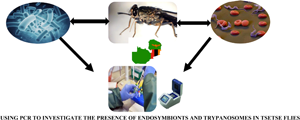



Introduction
African trypanosomiasis, caused by protozoa belonging to the genus Trypanosoma, is a vector-borne disease endemic in sub-Saharan Africa. African trypanosomes are transmitted to the mammalian hosts by the bite of an infected tsetse fly (Diptera: Glossinidae) causing a fatal disease commonly known as Nagana in cattle and sleeping sickness in humans (WHO, 2017; Franco et al., Reference Franco, Cecchi, Priotto, Paone, Diarra, Grout, Simarro, Zhao and Argaw2020; Franco et al., Reference Franco, Cecchi, Paone, Diarra, Grout, Kadima Ebeja, Simarro, Zhao and Argaw2022). Trypanosoma congolense is the major cause of African animal trypanosomiasis (AAT) in eastern and southern Africa whilst Trypanosoma vivax (together with Trypanosoma congolense) is a more important cause of AAT in cattle in West Africa (Cox et al., Reference Cox, Tosas, Tilley, Picozzi, Coleman, Hide and Welburn2010; Laohasinnarong et al., Reference Laohasinnarong, Goto, Asada, Nakao, Hayashida, Kajino, Kawazu, Sugimoto, Inoue and Namangala2015; Mulenga et al., Reference Mulenga, Namangala, Chilongo, Mubamba, Hayashida, Henning and Gummow2021). The 2 human-infective trypanosome sub-species are Trypanosoma brucei gambiense (found in west and central Africa), which accounts for over 98% of reported cases of sleeping sickness, and Trypanosoma brucei rhodesiense (found in eastern and southern parts of Africa, including Zambia), which only accounts for less than 2% of reported cases (Nakamura et al., Reference Nakamura, Yamagishi, Hayashida, Osada, Chatanga, Mweempwa, Chilongo, Chisi, Musaya, Inoue, Namangala and Sugimoto2019; Franco et al., Reference Franco, Cecchi, Priotto, Paone, Diarra, Grout, Simarro, Zhao and Argaw2020).
Tsetse flies host the following 3 endogenous symbionts: Wigglesworthia glossinidia, Sodalis glossinidius and Wolbachia (Wamiri et al., Reference Wamiri, Alam, Thande, Aksoy, Ngure, Aksoy, Ouma and Murilla2013; Makhulu et al., Reference Makhulu, Villinger, Adunga, Jeneby, Kimathi, Mararo, Oundo, Musa and Wambua2021). Wigglesworthia, found in all tsetse flies, provides nutritional and immunological benefits to its tsetse host. In the absence of this bacteria, intrauterine larval development is stunted, and progeny aborted (Weiss and Aksoy, Reference Weiss and Aksoy2011). Wigglesworthia's contracted genome, encodes an unusually high number of putative vitamin biosynthesis pathways, which support the theory that Wigglesworthia supplements its tsetse host with nutritious metabolites that are naturally present in low titres in vertebrate blood (Wang et al., Reference Wang, Wu, Yang and Aksoy2009; Rio et al., Reference Rio, Wang, Lohs, Wu, Snyder, Bjornson, Oshima, Biehi, Perna, Hattori and Aksoy2012). Sodalis on the other hand can be found both intra- and extra-cellular in various tissues of tsetse flies, including midgut, body fat, milk gland, salivary glands and haemocoel (Doudoumis et al., Reference Doudoumis, Blow, Saridaki, Augustinos, Dyer, Goodhead, Solano, Rayaisse, Takac, Mekonnen, Parker, Abd-Alla, Darby, Bourtzis and Tsiamis2017). Sodalis contains features associated with pathogenic lifestyles, including secretion systems, which function during the tsetse's juvenile developmental stages (Dennis et al., Reference Dennis, Durkin, Horsley Downie, Hamill, Anderson and Macleod2014). Sodalis can be cultured in cell free medium, and, unlike Wigglesworthia, it is usually absent in several natural tsetse populations. Lastly, Wolbachia is a wide-spread bacteria endosymbiont infecting approximately 70% of surveyed insects. It manipulates the reproductive biology of its host mechanisms, which include cytoplasmic incompatibility (CI), male killing, feminization and parthenogenesis (Wamiri et al., Reference Wamiri, Alam, Thande, Aksoy, Ngure, Aksoy, Ouma and Murilla2013).
Symbiotic interactions are widespread in insects (as well as animals and plants) and may provide an avenue for disease control. The use of biological methods for the control of vector-transmitted diseases is becoming popular globally (Ricci et al., Reference Ricci, Ulissi, Epis, Cappelli and Favia2012; Utarini et al., Reference Utarini, Indriani, Ahmad, Tantowijoyo, Arguni, Ansari, Supriyati, Wardana, Meitika, Ernesia, Nurhayati, Prabowo, Andari, Green, Hodgson, Cutcher, Rances, Ryan, O'neill, Dufault, Tanamas, Jewell, Anders, Simmons and Group2021). Symbionts influence several aspects of the tsetse's physiology, including reproduction, nutrition and vector competence. Several studies have suggested the involvement of insect microbiota in the ability of insect disease vectors to transmit pathogens (Geiger et al., Reference Geiger, Ravel, Mateille, Janelle, Patrel and Cuny2007; Ricci et al., Reference Ricci, Ulissi, Epis, Cappelli and Favia2012; Weiss et al., Reference Weiss, Wang, Maltz, Wu and Aksoy2013; Hamidou Soumana et al., Reference Hamidou Soumana, Loriod, Ravel, Tchicaya, Simo, Rihet and Geiger2014; Makhulu et al., Reference Makhulu, Villinger, Adunga, Jeneby, Kimathi, Mararo, Oundo, Musa and Wambua2021) thus providing hope in the potential use of symbionts to control African trypanosomiasis (Medlock et al., Reference Medlock, Atkins, Thomas, Aksoy and Galvani2013). The presence of tsetse microbiota in Zambia's tsetse flies has been described in studies conducted by Mbewe et al. (Reference Mbewe, Mweempwa, Guya and Wamwiri2015) and Dennis et al. (Reference Dennis, Durkin, Horsley Downie, Hamill, Anderson and Macleod2014) on wild tsetse flies. While the earlier study observed significant association between present endosymbiont and trypanosome infection, the later study found it difficult to establish if some tsetse microbiota could play a role in the susceptibility of tsetse flies to trypanosomiasis infection. Little is known about the presence of symbionts in tsetse species found along the Luangwa tsetse belt of the eastern province of Zambia and the role that tsetse endosymbionts may play in the transmission and control of trypanosomiasis. Thus, the potential use of endosymbionts in trypanosomiasis control seems attractive because trypanocide-based management of Nagana has proven to be costly and not sustainable. Furthermore, increasing resistance of trypanosomes to the available trypanocides has also been seen to threaten the efficacy of current control approaches. The study was therefore conducted to establish the prevalence of Sodalis and Wolbachia in tsetse species found in the eastern province of Zambia, and to determine the relationship that exists between these symbionts and trypanosomiasis infected tsetse flies.
Materials and methods
Study area and sample collection
Polymerase chain reaction (PCR) was used in a survey of tsetse symbionts and trypanosomes in tsetse species of eastern Zambia. Taking into consideration tsetse characteristics, Epsilon traps baited with 3-n-prophyphenol and 1-octe-3-nol released at 5 g h−1 from open bottles and 0.5 g h−1 from polythene sachets, respectively, were used for collecting tsetse flies. In areas where fly density was low, flies trapped within a moving vehicle in the trapping site was used as a supplementary method to maximize catches. Traps were deployed within, and along peripheral known tsetse affected villages (Katemo, Ncheka, Nsefu, Chilanga, Chinzombo, Malama and Chikowa) of Mambwe district in Zambia's eastern Province between the years 2019 and 2020, during the dry-hot and wet-hot seasons. Deployment of traps was determined by the availability of suitable environments to maximize tsetse catches. Each trapping site was given a unique identifier and global positioning system (GPS) coordinates recorded and maintained for cross-referencing purposes. Milking of traps was done 24 h after deployment.
Sample preparation and storage
Tsetse samples collected were stored as whole flies in well-labelled bottles containing ethanol. Each bottle contained all tsetse samples captured from one trapping site. Tsetse flies caught from supplementary techniques (e.g., moving vehicle) were stored together with samples captured from the nearest possible trapping site. Prior to storage, identification data were recorded (date of collection, location, numbers captured, sex and species). During sample preparation, captured flies were removed from ethanol storage, blotted with tissue paper towel, and left to air dry overnight at room temperature. Unique identifiers given during sample collection were maintained.
Laboratory analysis
Total genomic deoxyribonucleic acid (DNA) was extracted from individual flies after removing wings and legs. Manufacturer's instructions on DNA extraction kits (QIAamp® DNA mini kit) were followed during the extraction process. Extracted DNA was stored in 1.5 mL tubes, labelled with unique trapping numbers related to where they were trapped. The eluted DNA was stored at 4°C for use within 12 h and at −20°C for use after 12 h.
The presence of symbionts from the extracted DNA was determined using a symbiont species-specific PCR amplification assay as described by Pais et al. (Reference Pais, Lohs, Wu, Wang and Aksoy2008). Four nanograms of the extracted DNA template was used for each PCR. For identification of Sodalis, HemF (ATGGGAAACAAACCATTAGCCA) and HemR (TCAAGTGACAAACAGATAAATC) primers (Pais et al., Reference Pais, Lohs, Wu, Wang and Aksoy2008) were used to amplify the 650-bp fragment of the haemolysin gene (accession no. AP008232). The presence of Wolbachia was detected by the amplification of a 610-bp fragment of the wsp gene with primers 81F (TGGTCCAATAAGTGATGAAGAAAC) and 691R (AAAAATTAAACGCTACTCCA) (Pais et al., Reference Pais, Lohs, Wu, Wang and Aksoy2008). For DNA quality control, the G. morsitans subsp. morsitans tubulin gene (accession no. DQ377071) were amplified with primers GmmTubF (TAGTTCTCTTCAACTTCAGCCTCTT) and GmmTubR (TCGTTGACCATGTCTGGTGT) (Pais et al., Reference Pais, Lohs, Wu, Wang and Aksoy2008). Bacteria-specific PCR amplification conditions consisted of initial denaturation at 94°C for 2 min, followed by 30 cycles of 94°C for 30 s, 54°C for 40 s and 72°C for 1 min with a final elongation at 72°C for 7 min. For gmmtub amplification, an annealing temperature of 60°C was used. The amplification products were analysed by agarose gel electrophoresis using ethidium bromide and visualized using a transilluminator (Pais et al., Reference Pais, Lohs, Wu, Wang and Aksoy2008).
ITS-PCR was undertaken in 25 μL reaction mixtures containing primers AITS-F: CGGAAGTTCACCGATATTGC and AITS-R: AGGAAGCCAAGTCATCCATC (Gaithuma et al., Reference Gaithuma, Yamagishi, Martinelli, Hayashida, Kawai, Marsela and Sugimoto2019), One Taq 2 @ master mix (New England BioLabs, Ipswich, MA, USA), nuclease-free water and 5 μL of extracted DNA sample. For the detection of T. b. rhodesiense, SRA F (5′-ATAGTGACAAGATGCGTACTCAACGC-3′) and SRA R (5′-AATGTGTTCGAGTACTTCGGTCACGCT-3′) (Radwanska et al., Reference Radwanska, Chamekh, Vanhamme, Claes, Magez, Magnus, De Baetselier, Bã¼Scher and Pays2002) were used (procured from Inqaba Biotec, Pretoria, South Africa). Thermocycler amplification conditions were at 94°C for 5 min, followed by 40 cycles of 94°C for 40 s, 58°C for 40 s, 72°C for 90 min and 72°C for 5 min. ITS-PCR targets the internal transcribed spacer 1 of the ribosomal RNA (100–200 copies per genome), producing different sized products for different trypanosome species (Desquesnes et al., Reference Desquesnes, Mclaughlin, Zoungrana and Davila2001; Njiru et al., Reference Njiru, Constantine, Guya, Crowther, Kiragu, Thompson and Davila2005; Gaithuma et al., Reference Gaithuma, Yamagishi, Martinelli, Hayashida, Kawai, Marsela and Sugimoto2019). ITS-PCR products were separated by electrophoresis (95 V for 60 min) in a 2% (w/v) agarose gel containing ethidium bromide. The separated products were then visualized under ultraviolet light in a transilluminator. Known positive controls of T. congolense, T. vivax, T. b. rhodesiense and T. brucei and a negative control were included in each reaction. All samples that were positive for T. brucei were subjected to a multiple PCR using a serum resistance-associated antigen (SRA) targeting primer for the detection of T. b. rhodesiense (Welburn et al., Reference Welburn, Picozzi, Fevre, Coleman, Odiit, Carrington and Maudlin2001; Radwanska et al., Reference Radwanska, Chamekh, Vanhamme, Claes, Magez, Magnus, De Baetselier, Bã¼Scher and Pays2002; Gaithuma et al., Reference Gaithuma, Yamagishi, Martinelli, Hayashida, Kawai, Marsela and Sugimoto2019).
Statistical analysis
The prevalence data of trypanosome and symbiont infection from captured tsetse flies were summarized as frequencies and percentages and analysed using descriptive statistics in Epi-info 7.2. Odds ratios were used as measures of association. A chi-square test was used to determine statistical differences between proportions. For expected values under 5, Fisher's exact test was used. Statistical significance was acceptable at P < 0.05. Pearson's correlation test was used to see if the presence of symbionts correlated with the presence of trypanosomes. Scores were used to determine the degree of correlation present. The scale of correlation coefficients were classified as follows: negative values (negative association), positive values (positive association), no association (0.00), very low (0.00–0.19), low (0.20–0.39), moderate (0.40–0.69), high (0.70–0.89) and very high (0.90) (Schober et al., Reference Schober, Boer and Schwarte2018).
Results
The combined prevalence for Sodalis and Wolbachia in captured tsetse flies was 95.3% (n = 278, 95% CI = 92.8–97.8) while the overall trypanosome prevalence in captured tsetse flies was 25.5% (n = 278, 95% CI = 20.4–30.7). Trypanosome prevalence was 10.8% (n = 30, 95% CI = 7.1–14.4) for T. brucei, 1.4% (n = 4, 95% CI = 0.0–2.8) for both T. congolense and T. vivax and 0.7% (n = 2, 95% CI = −0.3–1.7) for T. b. rhodesiense.
Out of 278 tsetse flies that were captured for the study, a total of 237 (85.3%) flies belonged to the group of Glossina pallidipes while 41 (14.8%) were G. morstitans morsitans. Total symbiont infections in G. pallidipes was 94.9% (n = 225, 95% CI = 92.2–97.7) while in G. m. morsitans was 97.6% (n = 40, 95% CI = 92.8–102.3), trypanosome infections in G. pallidipes was 26.6% (n = 63, 95% CI = 21.0–32.2) while in G. m. morsitans was 19.5% (n = 8, 95% CI = 7.4–31.6). No significant difference was observed in both symbiont (P = 0.46) and trypanosome (P = 0.34) infections in the 2 tsetse species sampled. The prevalence of symbionts and trypanosomes in the 2 tsetse species detected by PCR is summarized in Table 1.
Prevalence (%) of symbionts and trypanosomes in tsetse species captured in the Luangwa valley, eastern Zambia

The likelihood of female flies harbouring Sodalis (OR = 1.9, 95% CI 0.8–4.4) and Wolbachia (OR = 1.3, 95% CI 0.7–2.5) was higher than in male flies (Table 2).
Symbiont and trypanosome infection in relation to the sex of caught tsetse flies in the Luangwa valley, eastern Zambia

Of the 240 tsetse flies that were positive for Sodalis, the prevalence of T. brucei was 12.9% (95% CI 8.7–17.2) while that of T. congolense was 1.7% (95% CI 0.1–3.3), T. vivax 1.3% (95% CI −0.2–2.7) and T. b. rhodesiense 0.8% (95% CI −0.3–2.0). Similarly, of the 220 tsetse flies that were positive for Wolbachia, trypanosome prevalence for T. brucei was 12.7% (95% CI 8.3–17.1) while that of T. congolense was 1.8% (95% CI 0.1–3.6), T. vivax 1.4% (95% CI −0.2–2.9) and T. b. rhodesiense 0.9% (95% CI −0.4–2.2).
Analysis of the association between trypanosomes and endosymbiont infection in the caught tsetse flies (Table 3) found a 1.3 (95% CI 0.5–3.2) times likelihood of T. brucei infection when Wolbachia is present and 1.7 (95% CI 0.5–6.0) likelihood of T. brucei infection when Sodalis is present. Similarly, results indicate a 0.8 (95% CI 0.1–7.7) likelihood of T. vivax infection when Wolbachia is present and a 0.5 (95% CI 0.0–4.6) likelihood of T. congolense infection when Sodalis is present.
Measures of association between trypanosome and symbiont infection in tsetse flies caught in the Luangwa valley, eastern Zambia

Analysis of the correlation between the presence of tsetse endosymbionts and trypanosome infection showed no correlation (Table 4).
Correlations between trypanosome and symbiont infection in tsetse flies caught in the Luangwa valley, eastern Zambia

Discussion
The tsetse fly has established symbiotic associations with bacteria which influence its reproduction, nutrition and vector competence. Symbiotic interactions are widespread in insects (and also animals and plants) and may provide an avenue for disease control (Ricci et al., Reference Ricci, Ulissi, Epis, Cappelli and Favia2012; Wamiri et al., Reference Wamiri, Alam, Thande, Aksoy, Ngure, Aksoy, Ouma and Murilla2013). The current study provided the prevalence of selected tsetse symbionts and trypanosomes in Glossina tsetse species from eastern Zambia. Results showed no statistical difference in the prevalence of both symbionts and trypanosomes in the 2 tsetse species (G. m. morsitans and G. pallidipes) analysed. No association was either observed between symbiont and trypanosome infection in the 2 tsetse species, suggesting that endosymbionts play no role in tsetse vector competence and reproduction in the area. These data are in agreement with those obtained by Dennis et al. (Reference Dennis, Durkin, Horsley Downie, Hamill, Anderson and Macleod2014) but disagree with those by Farikou et al. (Reference Farikou, Njiokou, Mbida Mbida, Njitchouang, Djeunga, Asonganyi, Simarro, Cuny and Geiger2010) and Mbewe et al. (Reference Mbewe, Mweempwa, Guya and Wamwiri2015), who established the existence of a relationship between tsetse bacteria and trypanosomes and the potential role of endosymbionts in tsetse vector competence and reproduction. However, later studies were conducted in different geographical areas with different species of tsetse flies (G. p. palpalis and G. m. centralis, respectively).
Tsetse symbionts (Wolbachia and Sodalis) were detected in about 95% of the tsetse samples examined with varying prevalence within tsetse species. Both symbionts were found in relative abundance in the 2 tsetse species examined, with Sodalis prevalence slightly higher than Wolbachia. This agrees with findings from similar studies on tsetse symbionts though with varying levels of infection rates which may be attributed to differences in the sensitivity of the screening methods (Doudoumis et al., Reference Doudoumis, Tsiamis, Wamwiri, Brelsfoard, Alam, Aksoy, Dalaperas, Abd-Alla, Ouma, Takac, Aksoy and Bourtzis2012; Dennis et al., Reference Dennis, Durkin, Horsley Downie, Hamill, Anderson and Macleod2014; Doudoumis et al., Reference Doudoumis, Blow, Saridaki, Augustinos, Dyer, Goodhead, Solano, Rayaisse, Takac, Mekonnen, Parker, Abd-Alla, Darby, Bourtzis and Tsiamis2017). The low numbers of Wolbachia have been associated with low sensitivity of the standard PCR assay (Wamiri et al., Reference Wamiri, Alam, Thande, Aksoy, Ngure, Aksoy, Ouma and Murilla2013), which was also used in our laboratory analysis of tsetse samples. The presence of Sodalis and Wolbachia infection in the tsetse population sampled re-affirms the presence of tsetse bacterium in tsetse species found in Zambia and particularly the Luangwa valley (Doudoumis et al., Reference Doudoumis, Tsiamis, Wamwiri, Brelsfoard, Alam, Aksoy, Dalaperas, Abd-Alla, Ouma, Takac, Aksoy and Bourtzis2012; Dennis et al., Reference Dennis, Durkin, Horsley Downie, Hamill, Anderson and Macleod2014; Mbewe et al., Reference Mbewe, Mweempwa, Guya and Wamwiri2015).
The overall trypanosome prevalence in the captured tsetse flies (25.5%) was similar to what was found by Nakamura et al. (Reference Nakamura, Hayashida, Delesalle, Qiu, Omori, Simuunza, Sugimoto, Namangala and Yamagishi2021). The identification of T. congolense, T. brucei and T. vivax from tsetse samples analysed confirms the presence of AAT in the community (Mekata et al., Reference Mekata, Konnai, Simuunza, Chembensofu, Kano, Witola, Tembo, Chitambo, Inoue, Onuma and Ohashi2008; Laohasinnarong et al., Reference Laohasinnarong, Goto, Asada, Nakao, Hayashida, Kajino, Kawazu, Sugimoto, Inoue and Namangala2015; Mulenga et al., Reference Mulenga, Namangala, Chilongo, Mubamba, Hayashida, Henning and Gummow2021; Nakamura et al., Reference Nakamura, Hayashida, Delesalle, Qiu, Omori, Simuunza, Sugimoto, Namangala and Yamagishi2021). The presence of T. b. rhodesiense further indicated the circulation of the human-infective trypanosomes in the area, responsible for sleeping sickness and the importance of the tsetse species in trypanosomiasis transmission. Taken together, the presence of pathogenic trypanosomes in tsetse species examined provide insights to the risk of contracting sleeping sickness and AAT by the local communities and their livestock (Mekata et al., Reference Mekata, Konnai, Simuunza, Chembensofu, Kano, Witola, Tembo, Chitambo, Inoue, Onuma and Ohashi2008; Djohan et al., Reference Djohan, Kaba, Rayaisse, Dayo, Coulibaly, Salou, Dofini, Kouadio Ade, Menan and Solano2015; Auty et al., Reference Auty, Morrison, Torr and Lord2016).
In agreement with Mekata et al. (Reference Mekata, Konnai, Simuunza, Chembensofu, Kano, Witola, Tembo, Chitambo, Inoue, Onuma and Ohashi2008), high infections of both symbionts and trypanosomes were reported in the G. pallidipes species compared to G. m. morsitans. However, unlike observations from the current study, Doudoumis et al. (Reference Doudoumis, Tsiamis, Wamwiri, Brelsfoard, Alam, Aksoy, Dalaperas, Abd-Alla, Ouma, Takac, Aksoy and Bourtzis2012) found G. m. morsitans to be more likely to harbour Wolbachia than G. pallidipes. On the other hand, current study findings were in concordance with findings obtained elsewhere, where G. pallidipes was captured with other tsetse species other than G. morsitans (Wamiri et al., Reference Wamiri, Alam, Thande, Aksoy, Ngure, Aksoy, Ouma and Murilla2013). Further, the high prevalence of female G. pallidipes found agree with findings by Laohasinnarong et al. (Reference Laohasinnarong, Goto, Asada, Nakao, Hayashida, Kajino, Kawazu, Sugimoto, Inoue and Namangala2015). Overall, both symbiont and trypanosome prevalence were, however, higher in female tsetse flies than in male tsetse flies and were associated with the host tsetse species as previously reported (Wamiri et al., Reference Wamiri, Alam, Thande, Aksoy, Ngure, Aksoy, Ouma and Murilla2013; Dennis et al., Reference Dennis, Durkin, Horsley Downie, Hamill, Anderson and Macleod2014). Such findings prompt for further research in the importance of G. pallidipes tsetse species with regards to host genetic diversity and vectoral capacity in areas where other tsetse species are present.
The weak relationship between tsetse symbiont prevalence and trypanosome prevalence shown in the current study does not support the synergistic role between symbiont and trypanosomiasis transmission in the surveyed area. However, the low number of tsetse flies infected with trypanosomes could explain the poor correlation observed, which suggest the need for further work on the importance of Sodalis in tsetse species in the Luangwa valley tsetse belt. Understanding insect–parasite–symbiont interactions is necessary in establishing opportunities for biologically based trypanosomiasis control strategies (Boulanger et al., Reference Boulanger, Brun, Ehret-Sabatier, Kunz and Bulet2002). The importance of understanding this relationship is emphasized by the urgent need for environmentally friendly methods for both tsetse and trypanosomiasis control. The high prevalence of Wolbachia in female flies need to be investigated further as a possible basis for environmentally sustainable tsetse population control for Glossina species.
Data
The data that support the findings of this study are available from the corresponding author upon reasonable request.
Acknowledgements
The authors would like to thank Chihiro Sugimoto for his support and for allowing us to use his laboratory at the University of Zambia for quality control, the technical team of Kakumbi research station (Petronella Mwansa, Winter Hanamwanza, Kalaluka Mbumwae and Lingster Phiri) and Mwamba Sichande for their assistance with specimen collection.
Author contributions
GMM developed, conceptualized and drafted the manuscript. GMM conducted specimen collection and analysis. BG offered guidance during specimen collection and contributed to the development of the manuscript. BG and BN were involved in supervision and project administration. All authors reviewed, read, edited the draft and final manuscript.
Funding support
This research received no external funding.
Conflicts of interest
The authors declare no conflict of interest.
Ethical standards
Human and animal ethical clearances were obtained from James Cook University (H7226 and A2498) and the Zambian Ethics Committee (Ref. No. 2018-Oct-001), and the research was approved by the Zambia National Health Research Authority.


 Open access

