


The relationship between food insecurity and the weight status of populations is quite heterogeneous, depending on the socio-economic situation and age group of the studied population(1–Reference Nettle, Andrews and Bateson3). Evidence shows that in vulnerable populations in developed countries, there is a positive relationship between food insecurity and obesity, particularly in adult women(Reference Laraia, Siega-Riz and Gundersen4,Reference Olson and Strawderman5) . This relationship seems to be less clear with regard to children(Reference Eisenmann, Gundersen and Lohman6,Reference Morais, Dutra and Franceschini7) . Moreover, there is evidence that participation in government food-supply programmes, such as food assistance programmes (FAP), seems to be a possible confounding factor in this relationship(Reference Franklin, Jones and Love8). Investigations in adults demonstrate that participation in these programmes is associated with increased BMI in food-insecure households(Reference Webb, Schiff and Currivan9), but longitudinal evidence does not corroborate these findings(Reference Jones and Frongillo10). Although more scarce, studies in children indicate that participation in such programmes seems to reduce the risk of obesity in those children living in food-insecure households, at least in developed countries(Reference Nguyen, Ford and Yaroch11,Reference Kohn, Bell and Grow12) .
In Brazil, several national and local policies and programmes converge to improve the food security of the population(13,14) . The sample from the present study participates in a FAP, referred to as the Milk Program, which aims to encourage family farming and to promote food access to poor families. The government purchases milk produced by local farmers and donates 1 litre of whole milk per day to families in social vulnerability with at least one child aged 24–96 months, with the aim to improve child development during this crucial stage. In Maceió, Alagoas, the municipality of the present study, about 20 % of the population is considered poor and/or extremely poor, and the Milk Program benefits about 15 000 families(15,16) . Among families that were beneficiaries of a cash-transfer programme in Maceió, 33 % were in severe food insecurity and only 6·5 % of the children had excess weight(Reference Cabral, Vieira and Sawaya17). Considering that individuals in cash-transfer programmes do not necessarily use the financial resources received to buy food, the crosstalk between food security status and weight status among families in FAP, in this setting, remains unclear. The present study aimed to determine the association between household food insecurity and the weight status of children who are beneficiaries of the Milk Program in the municipality of Maceió, Alagoas, Northeast Brazil.
Methods
Experimental design
Cross-sectional study. The data collected for the present analysis arise from an initiative of the local government to independently assess the effectiveness of the Milk Program in reducing food insecurity and undernutrition in the participating population. All data were collected by individuals who are part of the research team of the authors. The study was approved by the local institutional review board and the head of each included family gave written informed consent.
Location and sample selection
Children aged 24–96 months who belonged to beneficiary families of the Milk Program of the municipality of Maceió were included. To be eligible for this programme, the family must present a monthly income of less than half a minimum wage per capita.
At the time of collection, there were 106 milk distribution points in Maceió. For the study, the forty-seven points that had the longest participation time in the Program were identified. After selecting each point and quantifying the people, it was defined for convenience to use 30 % of the beneficiaries of the forty-seven distribution points, totalling 3426 children in 2036 households. Because 1390 households had more than one child, the youngest child from each of these households was evaluated, totalling 2036 children. From these children, 538 (26·4 %) did not have complete anthropometric data and eleven (0·5 %) presented a BMI-for-age Z-score (BAZ) that was <−5 or >+5, and/or a height-for-age Z-score (HAZ) that was <−6 or >+6, and were excluded, totalling 1487 children initially included in the analysis.
Variables
The anthropometric variables were weight and height. The socio-economic variables were: sex of the child; sex, education (illiterate/literate) and labour status (work/not working) of the household’s responsible adult; and household crowding index (i.e. the number of resident individuals divided by the number of rooms in the household). These socio-economic data were collected through a previously tested questionnaire. The questionnaire of the Brazilian Food Insecurity Scale was used to evaluate the food security situation of the families(Reference Pérez-Escamilla, Segall-Corrêa and Maranha18). The questionnaires were reviewed and tabulated in the Epi Info™ version 7.0 software (Centers for Disease Control and Prevention, Atlanta, GA, USA, 2013).
Anthropometry
The children, wearing light clothes, barefoot and without diapers, were weighed using a portable digital scale with a precision of 100 g. Height was measured using a portable stadiometer, with a precision of 1 mm. The children were measured barefoot, positioned with their feet parallel, arms relaxed and palms facing the body.
The children’s weight and height obtained in the collection were used to calculate their HAZ and BAZ with the aid of the WHO Anthro and AnthroPlus software. Children were considered stunted when they presented a HAZ < −2. Regarding body weight, those children with a BAZ < −2 were considered underweight; those with a BAZ between −2 and +1 as normal weight; those with a BAZ between +1 and +2 as overweight; and those children with a BAZ ≥ +2 as presenting with obesity.
Food security
Based on the questionnaire of the Brazilian Food Insecurity Scale with fourteen questions, the food security level of each household was classified into four categories: (i) food security, when the household has regular and permanent access to quality food; (ii) mild food insecurity, when the household is concerned or uncertain about the future availability of food in quantity or quality; (iii) moderate food insecurity, when there is a quantitative reduction of food and/or a break in eating patterns among adults; and (iv) severe food insecurity, when quantitative reduction and/or rupture occurs among children, or when there is food deprivation and hunger(Reference Pérez-Escamilla, Segall-Corrêa and Maranha18).
Statistical analysis
The main outcome was obesity (BAZ ≥ +2). The main exposure was the four household food security classes. The following variables were investigated as confounding factors: age, sex and stunting of the child; sex, literacy and labour status of the person in charge of the household; and the household crowding index. Univariable associations between exposure and outcomes and between exposure and confounding factors were measured using the χ 2 test. Poisson regression models with robust estimates of variances were constructed to estimate the prevalence ratio of the outcomes among the four classes of food insecurity, adjusted for the confounding factors(Reference Barros and Hirakata19). These factors were selected because they were at the most distal hierarchical level in relation to the outcomes, thus avoiding problems of multicollinearity in the model, because many of the socio-economic variables are associated with each other. To compare the length of participation in the programme among the four classes of food insecurity, ANOVA was used. To better explore the relationship between food security and overweight/obesity, and to avoid aggregation of underweight children with normal-weight children, the former class of children were excluded from the inferential analysis, resulting in 1460 children. In all cases, a significance level of 5 % was adopted. Statistical analysis was performed using the software R version 3.5.1 (R Foundation for Statistical Computing, Vienna, Austria), with the packages ‘Rcmdr’ and ‘sandwich’.
Results
Table 1 shows the characteristics of the studied sample. Regarding food insecurity classification, 357 (24·0 %) of the families were in food security, and 407 (27·4 %) were in mild, 402 (27·0 %) in moderate and 321 (21·6 %) were in severe food insecurity. The families were participating in the Milk Program for a mean time of 26·7 (sd 19·0) months, a result which was similar among the four categories of food insecurity (F = 0·108, df = 1486, P = 0·95). There were only two significant differences between the included children and those children excluded from the analysis because of insufficient or inadequate anthropometric data (n 549). The head of the families of the included children had a lower unemployment rate (46·6 v. 39·3 %; P < 0·01) and lower illiteracy (34·2 v. 28·9 %; P = 0·02).
Socio-economic characteristics of the families and weight status of the child beneficiaries of the Milk Program in Maceió, Alagoas, Northeast Brazil (n 1487)

HCI, household crowding index.
* P value for the χ 2 test.
The multivariable association between food insecurity and weight status in the 1460 children without underweight is provided in Table 2. No overall association was found. In the specific comparison, children living in a household with severe food insecurity were less likely to present obesity than those children living in a food-secure household (prevalence ratio = 0·60; 95 % CI 0·38, 0·96; P = 0·03).
Association between food insecurity, measured by the Brazilian Food Insecurity Scale (BFIS), and overweight or obesity status, measured by BMI-for-age Z-score (BAZ), of the child beneficiaries of the Milk Program in Maceió, Alagoas, Northeast Brazil (n 1460). Underweight children (n 27) were excluded from this analysis
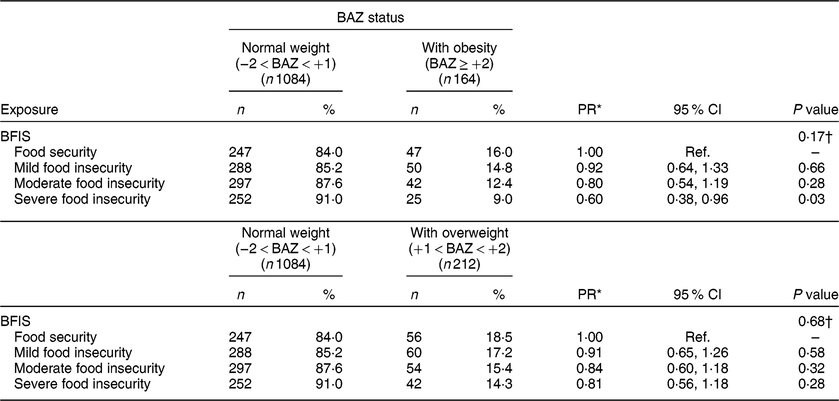
PR, prevalence ratio; ref., reference category.
* Prevalence ratio of the individual living in a mildly, moderately or severely food-insecure household to present obesity (BAZ ≥ +2) or overweight (BAZ between +1 and +2), compared with the reference category. Analyses adjusted for the age, sex and height-for-age status of the children, illiteracy, occupation and sex of the responsible adult and household crowding index.
† P value for the omnibus test between BFIS status and BAZ status.
Discussion
The present study demonstrated that, in a highly socially vulnerable population participating in a FAP with the direct donation of whole milk, there was no overall association between food insecurity and weight status of children aged 24–96 months. Nevertheless, children who lived in a severely food-insecure household were less likely to present with obesity compared with those children living in a food-secure household. In addition, the prevalence of food insecurity in the present population (76 %) was higher than that found in the state of Alagoas (58 %)(Reference Costa, Santos and Carvalho20) and in Brazil (22 %)(13).
The association between food insecurity and weight status in Brazilian children has not been explored to a significant degree. Different authors have investigated a national representative sample of children derived from the 2006 Brazilian Demographic and Health Survey, using various inclusion criteria and statistical approaches(Reference Gubert, Spaniol and Bortolini21–Reference Reis23). Most of the authors did not report any significant association between food insecurity and weight status in this national representative sample(Reference Gubert, Spaniol and Bortolini21,Reference Kac, Schlüssel and Pérez-Escamilla22) , a result which is in accordance with the overall finding of our study. Nevertheless, one of the studies affirmed that household food insecurity was associated with worse anthropometric measures(Reference Reis23), which is in disagreement with the specific comparison presented in our study that showed that children living in severe food insecurity were actually less likely to present with obesity than those children living in food security. This result may possibly be because, as stated, the sample from the present study arises from a poorer population when compared with the national population.
The interaction among FAP participation, food security status and children’s weight status is less clear(Reference Larson and Story24). Nguyen et al.(Reference Nguyen, Ford and Yaroch11) studied 4–17-year-old Americans and did not find significant associations between household food security and BAZ in the sub-sample of families participating in the Supplemental Nutrition Assistance Program. The authors affirmed the presence of a non-significant trend towards increasing BMI percentile with decreasing household food security in those participating in the National School Lunch Program. It is important to emphasize that these programmes differ from the Milk Program because they offer an increased variety of foods for their participants, subsequently contributing to increasing the dietary diversity and quality of the beneficiary families. In turn, the Milk Program provides only whole milk for the beneficiary families, thus substantially increasing the energy and protein intakes of the children. This impact can be seen in the lower prevalence of underweight and stunting found in this population in relation to the Brazilian population. However, in those families that remained in severe food insecurity, the prevalence of obesity was significantly lower than in food-secure families, indicating that in this population in extreme social vulnerability, the participation in a FAP with direct milk donation does not appear to result in increased obesity levels, in contrast to observations in other studies’ contexts(Reference Kohn, Bell and Grow12).
The present study has some limitations. First, the measure of food security used was at the household level, and not at the level of the child; and the Brazilian Food Insecurity Scale is a measure of the perceived food insecurity of the head of the family, an approach which may introduce bias in the results(Reference Kaur, Lamb and Ogden25). Second, the measure of obesity used was exclusively BAZ, with no additional measures of adiposity. Alone, BAZ may not be sufficiently sensitive to detect differences in adiposity in children, particularly in the leaner ones(Reference Freedman and Sherry26). Third, it is common for longitudinal studies to present association estimates that differ from those estimates presented by cross-sectional studies(Reference Whitaker and Sarin27,Reference Metallinos-Katsaras, Must and Gorman28) . Fourth, the absence of a control group prevented the formal analysis of the interaction between the participation in a FAP and the association between household food insecurity and obesity. Finally, we could not measure children’s dietary intake and were therefore not able to assess its role as an effect modifier of the association between food insecurity and weight status. All families participating in this programme are formally instructed to give the milk received to their youngest children. Still, we are not able to state that the included children are receiving the donated milk. Hence, considering these limitations and the nature of the study, which used a convenience sampling and a cross-sectional design, conclusions must be taken cautiously. Nevertheless, the present work contributes in an important way to the discussion of the current theme because it brings a little-explored investigation since the population studied here is beneficiary of a FAP and resides in a place of extreme social vulnerability, thereby presenting another facet of the association between food insecurity and obesity. In addition, considering the sample size, the present study has adequate statistical power to detect significant differences, which increases the confidence in the estimates encountered.
Conclusion
In conclusion, in a population that is extremely socially vulnerable and is beneficiary of a FAP, there were no overall associations between the household food security status and the weight status of children. Hence, even in a context of extreme social vulnerability, the association between these two variables is similar to what is observed in more developed contexts.
Acknowledgements
Acknowledgements: The authors acknowledge the Department of Agriculture of Alagoas State (SEAGRI) for providing technical information regarding the milk distribution points. Financial support: This research received no specific grant from any funding agency in the public, commercial or not-for-profit sectors. Conflict of interest: None. Authorship: P.N.L., K.A.V. and M.J.C. collected data; N.B.B. conducted the statistical analysis; P.N.L., T.M.M.T.F. and N.B.B. wrote the first draft of the manuscript; N.B.B. and A.P.G.C. revised the manuscript for intellectual content; all authors read and approved the final version of the manuscript. Ethics of human subject participation: This study was conducted according to the guidelines laid down in the Declaration of Helsinki and all procedures involving human subjects were approved by the Research Ethics Committee of the Federal University of Alagoas (protocol number 1,393,366). Written informed consent was obtained from all subjects.



