In recent years there has been an increase in the incidence of mental illnesses, with depression now being the leading cause of disability worldwide(1–3). According to the 2007 National Survey of Mental Health and Wellbeing, approximately 45 % of the Australian population have experienced a mental illness in their lifetime and the incidence is increasing by approximately 20 000 cases per annum(Reference Slade, Johnston and Teesson2). Women, in particular young women, were found to be more likely to experience anxiety and depression, the most common forms of mental illness(Reference Slade, Johnston and Teesson2). The rise in mental illnesses has correlated with changes in dietary intake in Western countries, in particular a decreased consumption of n-3 fatty acids (FA) and concomitant increases in intakes of n-6 and most likely n-9 FA(Reference Klerman and Weissman4–Reference Goldney, Eckert and Hawthorne8).
The n-3, n-6 and n-9 FA are collectively referred to as unsaturated fats. Unsaturated FA are found in high concentrations in cell membranes and are thought to influence membrane fluidity and thus cell signalling, neurotransmitter release and receptor sensitivity(Reference Jumpsen and Clandinin10–Reference Yanfeng, Qi and Ekperi13). Therefore higher concentrations of unsaturated FA in neural membranes are thought to improve the communication between brain neurons and the transport of neurotransmitters such as dopamine and serotonin, and thus play a role in mental health(Reference Jumpsen and Clandinin10, Reference Appleton, Rogers and Ness12). The focus of past research has been primarily on n-3 FA due to the particularly high concentration of long-chain (LC) n-3 FA found in the brain and nervous system tissues(Reference Wainwright9–11).
The majority of experimental studies investigating the potential therapeutic effect of n-3 FA on pre-existing mental health issues have often used supplementation rather than a dietary source. The role of n-3 FA in the prevention of mental health issues in observational studies to date has yielded mixed results(Reference Appleton, Rogers and Ness12). These studies commonly measure dietary sources of n-3 FA using fish consumption as a proxy measure, rather than individual n-3 FA, thereby excluding n-3 FA derived from non-fish sources. There are conflicting results about gender-specific differences in the association of n-3 FA and mental health. Also, the literature suffers as a variety of measures of mental health outcomes have been used, making direct comparison of the evidence base difficult. A longitudinal study by Yanfeng et al. (2011) found that among 5068 adults, infrequent fish consumption was a risk factor for severely depressed mood in men, but not in women, measured using the ten-item Center for Epidemiological Studies Depression Scale (CESD-10)(Reference Yanfeng, Qi and Ekperi13). However, a longitudinal cohort study of 3317 African-American and Caucasian young adults by Colangelo et al. (2009) found that fish intake and intakes of EPA, DHA and EPA + DHA were all significantly related to depressive symptoms, measured using the CESD-10, in women only(Reference Colango, Whooley and Daviglus14). Additionally Tanskanen et al. (2001) found that infrequent fish consumption was significantly associated with depressive symptoms measured using the Beck Depression Inventory scale among both genders, but especially in women, in a cross-sectional study of 3204 Finnish adults(Reference Tanskanen, Hibbeln and Tuomilehto15). In contrast, a population-based study of 2416 New Zealand adults that measured EPA and DHA in serum phospholipids found inconsistent associations between the LC n-3 FA and mental well-being measured using the Short Form Health Survey questionnaire (SF-36)(Reference Crowe, Skeaff and Green16).
There has been far less focus on anxiety than depression in relation to n-3 FA intakes in the research literature, despite the probability that mood and anxiety disorders are mechanistically related(Reference Ross17). One prospective cohort study of 7903 university graduates showed that dietary n-3 fat intake provided a potential benefit to total mental disorders (anxiety, depression, stress) at baseline(Reference Sanchez-Villegas, Henriquez and Figueiras18). However, the study also found that participants who had a high fish consumption at baseline, which had then increased further by the 2-year follow-up, was then associated with an increased risk of mental disorders(Reference Sanchez-Villegas, Henriquez and Figueiras18).
The majority of the literature to date focuses on the association between n-3 FA and mental health, in particular depression; however, there are a few studies investigating n-6 and n-9 FA in relation to mental health. A prospective cohort study of 4856 adults aged 25–74 years by Wolfe et al. (2009) found that increased intake of oleic acid (OA; 18: 1n-9) was associated with a reduced risk of severe depressed mood in women, while an increased intake of linoleic acid (LA; 18: 2n-6) was associated with an increased risk of severe depressed mood in men(Reference Wolfe, Ogbonna and Lim19). Furthermore Yary and Aazami (2011) found an inverse association between total PUFA intake and depressive symptoms among 402 Iranian postgraduate students in Malaysia(Reference Yary and Aazami20).
Overall, the association between LC n-3 FA and depression is still unclear. In addition, despite being metabolically plausible, few studies exist that investigate a range of different FA in relation to depression and anxiety. The present study aimed to assess whether a range of dietary unsaturated FA are associated with mental health status in a cross-sectional analysis of data from the Australian Longitudinal Study on Women’s Health (ALSWH) Young Cohort Survey 3 (2003).
Methods
Study sample
The ALSWH is a population-based prospective longitudinal study funded by the Commonwealth Department of Health and Ageing. The study commenced in 1996 and was established to investigate the changes in the health of Australian women by distributing self-reported questionnaires over a 20-year period(Reference Lee, Dobson and Brown21). Approximately 45 000 women were recruited by random selection from the Australian Medicare database, which includes all permanent residents of Australia(Reference Lee, Dobson and Brown21). Women from three age groups were selected (‘younger’ women aged 8–23 years, ‘mid-age’ women aged 45–50 years, ‘older’ women aged 70–75 years)(Reference Lee, Dobson and Brown21). Women living in rural or remote areas were over-sampled to ensure adequate numbers for statistical analysis(Reference Lee, Dobson and Brown21). The respondents have been shown to be broadly representative of the national population of women in the target age groups, with a slight over-representation of Australian-born, better-educated non-smoking women(Reference Lee, Dobson and Brown21, Reference Brown, Bryson and Byles22).
The present study is a cross-sectional data analysis of the Young Cohort Survey 3, which was distributed in 2003 when the participants were aged 25–30 years. At baseline (survey 1 in 1996) 14 247 women aged 18–23 years participated(Reference Brown, Bryson and Byles23). At survey 3 in 2003, 9067 women responded to the survey (retention rate of 64 %); however, this response rate compares well with other surveys of this highly mobile age group(Reference Lee, Dobson and Brown21, 24). Survey 3 included an FFQ and questions that explore factors influencing the health of Australian women(24).
The ALSWH has been approved by the Human Research Ethics Committees of the University of Newcastle and the University of Queensland.
Fatty acid measures
The Dietary Questionnaire for Epidemiological Studies (DQES) version 2, developed by the Cancer Council Victoria, is a seventy-four-item FFQ that assesses usual dietary intake for the previous 12 months, but does not include questions on vitamin or mineral supplement use(Reference Giles and Ireland25). This FFQ has previously been validated in a cohort of young to middle-aged Australian women(Reference Hodge, Patterson and Brown26).
All FA intakes were estimated from the analysis of the FFQ responses, using the NUTTAB95 and Royal Melbourne Institute of Technology FA databases that have been shown to give accurate indications of intake levels(Reference Giles and Ireland25–Reference Williams and Burdge27). The n-9 FA are MUFA that are synthesised in the body, but can also be obtained from dietary sources such as olive, rapeseed and peanut oils(11). The main n-9 FA is OA (18: 1n-9). The n-3 and n-6 FA are PUFA. The main n-6 FA, LA (18: 2n-6), is an essential FA found primarily in seed oils(11). The essential n-3 FA is α-linolenic acid (ALA; 18: 3n-3) found in plant-based foods such as rapeseed, linseed and walnuts(11). ALA can be converted within the body into the LC n-3 FA, EPA (20: 5n-3), docosapentaenoic acid (DPA; 22: 5n-3) and DHA (22: 6n-3); evidence suggests that 9 % of ALA is converted to LC n-3 FA in women(11, Reference Williams and Burdge27). The LC n-3 FA are mostly found in oily fish, seafood and in red meats (especially DPA) in the Australian diet(Reference Howe, Meyer and Record28).
Unsaturated FA variables used in the present analysis included: (i) individual n-3 FA intakes (ALA, EPA, DPA, DHA); (ii) total n-3 FA intake; (iii) total LC n-3 FA acid intake (EPA+DPA+DHA); (iv) total n-6 FA intake; (v) intake of the individual n-6 FA, LA; (vi) total n-9 FA intake; and (vii) intake of the individual n-9 FA, OA.
Mental health outcome measures
The CESD-10 tool was used to measure depressive symptoms experienced ‘during the last week’. CESD-10 has good internal consistency and validity and was specifically designed to identify depressive symptoms by self-report in non-clinical population research(Reference Roberts and Vernon29). Responses are converted to a score out of 30, where higher scores indicate increased depressive symptomatology. Scores ≥10 were used to indicate depression(Reference Boey30).
The five-item mental health (MH) subscale of the Medical Outcomes Study SF-36 specifically targets depression and anxiety experienced ‘during the past 4 weeks’(Reference Mishra and Schofield31). Responses are converted to a score out of 100, with higher scores indicating better mental health. The scales of the SF-36 have high internal consistency and have been tested extensively for reliability and validity with adults of all ages(Reference McCallum32). The MH subscale was used as it is highly correlated with other measures of depression and is a validated screening tool for depression, at a cut-off point of ≤52(Reference Byles, Robinson and Gibson33–Reference Berwick, Murphy and Goldman35).
Participants were asked if they had been diagnosed with or treated for depression or anxiety (self-reported data) in the last 3 years (yes/no). The responses to these items were both also used as separate mental health outcome variables in the present analysis.
Statistical analysis
All analyses were performed using the JMP statistical software package (version 9·0, 2010). To improve the validity of the dietary analyses, women with reported daily energy intakes <4·5 or >20·0 MJ/d were excluded (n 1432) as energy values outside this range were considered biologically improbable and indicative of misreporting(Reference Hure, Young and Smith36). Therefore a total of 7635 women were included in the analysis. Logistic regression analyses were conducted as the outcome variables are binary.
First, unadjusted logistic regression analyses were conducted using all unsaturated FA listed above as continuous variables. Each FA value was compared with each categorical outcome variable; self-reported diagnosed depression, self-reported diagnosed anxiety, CESD-10 (cut-off point ≥10) and SF-36 MH subscale (cut-off point ≤52).
Adjusted analyses were then conducted using logistic regression models. The association was reported after the following confounders were adjusted for after consideration of their potential influence on mental health outcomes: BMI(37) (<18·5 kg/m2 underweight, 18·5–24·99 kg/m2 normal weight, 25·0–29·99 kg/m2 overweight, ≥30·0 kg/m2 obese); energy intake (kJ); physical activity categorised in total metabolic equivalent (MET) minutes(Reference Brown and Bauman38) (<40 none, 40–600 low, 600–1200 moderate, >1200 high); whether they had been diagnosed with/treated for any of seventeen medical conditions in the previous 3 years such as type 2 diabetes, heart disease, postnatal depression, anxiety, a sexually transmitted infection, hepatitis B or C or cancer (anxiety and depression conditions were excluded from this count in models as appropriate); whether they had experienced any of twenty-one symptoms ‘often’, such as severe tiredness, leaking urine, back pain and skin problems (anxiety and depression symptoms were excluded from this count in models as appropriate); alcohol status (low risk, non-drinker, rare drinker, risky/high risk drinker); highest qualification completed (high school, trade/apprenticeship/certificate/diploma, university degree or higher); pattern of drug use (no use of any drugs in the last 12 months/ever, only used marijuana in last 12 months, used multiple/single drug other than marijuana in last 12 months); smoking status (never smoked, ex-smoker, >10/d, 10–19/d, ≥20/d); pregnancy status (yes/no, ‘don’t know’ was replaced with missing); experienced any kind of abuse in last 3 years (yes/no); area of residence (major city, inner regional, outer regional, remote/very remote); ability to manage on income (impossible/difficult all the time, difficult some of the time, not too bad, easy); marital status (never married, married/de facto, separated/divorced/widowed); whether they had experienced any of twenty-eight major life events in the last 12 months (e.g. major personal injury, illness, surgery, having a child with a serious disability or illness, divorce/separation, becoming a sole parent, death of partner/close family member, loss of job, natural disaster, involvement in a serious accident, sexual abuse, legal troubles). Additionally, participants taking antidepressant medications were also adjusted for in the analyses involving CESD-10 and SF-36 MH subscale. P values of <0·05 were considered statistically significant and odds ratios and their 95 % confidence intervals were calculated.
Results
In survey 3, 9067 women completed and returned the questionnaire. Of these, 1432 (15·8 %) were excluded as they had implausible energy intakes of <4·5 or >20·0 MJ/d(Reference Hure, Young and Smith36). Overall, 7635 young Australian women between the ages of 25 and 30 years were included in the analyses. The mean energy intake for this population was 7526 (sd 2389) kJ/d, 51 % were of a healthy weight and 52 % were moderately-highly active. In terms of education, 43 % had a university degree or higher, 55 % lived in a major city and 76 % had never smoked or were an ex-smoker.
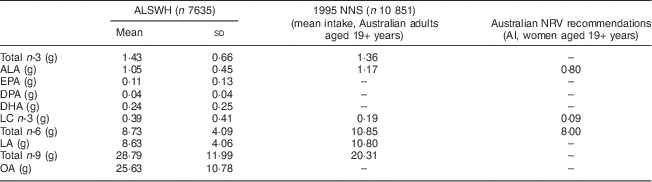
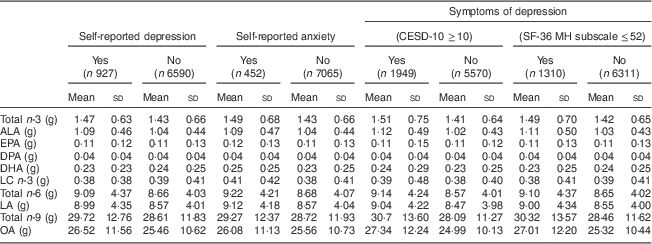
Mean FA intakes for the ALSWH young women are presented in Table 1. The 1995 National Nutrition Survey data on FA intakes(Reference McLennan and Podger39) (for Australian adults) and the Nutrient Reference Value recommendations(11) (for women 19+ years) are also presented here for comparison (Table 1). Unadjusted mean intakes of each explanatory FA variable for each categorisation of the mental health outcomes are shown in Table 2.
Mean intakes of fatty acids in the young cohort of women aged 25–30 years (n 7635) from the Australian Longitudinal Study on Women’s Health (ALSWH) compared with the mean intakes derived from the 1995 Australian National Nutrition Survey (NNS; n 10 851)(Reference McLennan and Podger39) and the Australian Nutrient Reference Value (NRV) recommendations(11)
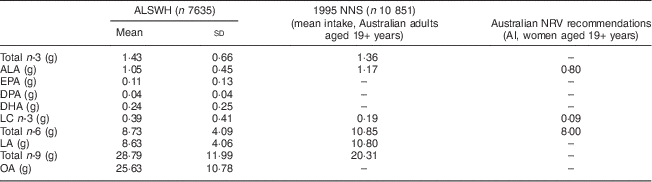
AI, Adequate Intake; ALA, α-linolenic acid; DPA, docosapentaenoic acid; LC, long chain; LA, linoleic acid; OA, oleic acid.
Mean intakes of fatty acids categorised by mental health status in young women aged 25–30 years (n 7635) from the Australian Longitudinal Study on Women’s Health

CESD-10, ten-item Center for Epidemiological Studies Depression Scale; SF-36 MH subscale, Medical Outcomes Study Short Form Health Survey mental health subscale; ALA, α-linolenic acid; DPA, docosapentaenoic acid; LC, long chain; LA, linoleic acid; OA, oleic acid.
The prevalence of mental health outcomes is presented in Table 3. In the previous 3 years in this cohort, the prevalence of self-reported diagnosed or treated depression was 12·1 % (n 927) and anxiety was 5·9 % (n 452). The number experiencing symptoms of depression in the previous week, indicated by the CESD-10 screening tool, was 25·5 % (n 1949). The SF-36 MH subscale, which considers the previous 4 weeks, identified 17·2 % (n 1310) with risk of depressive symptoms.
Mental health outcomes in the young cohort of women aged 25–30 years (n 7635) from the Australian Longitudinal Study on Women’s Health

CESD-10, ten-item Center for Epidemiological Studies Depression Scale; SF-36 MH subscale, Medical Outcomes Study Short Form Health Survey mental health subscale.
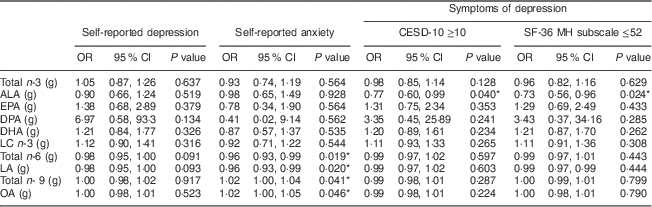
Table 4 shows the results of the adjusted logistic regression analyses between dietary intake of unsaturated FA and mental health outcomes. There were no statistically significant associations between self-reported diagnosed depression and the intake of any of the unsaturated FA. There was a statistically significant association between the individual n-3 FA, ALA, and the CESD-10 score (OR=0·77; 95 % CI 0·60, 0·99; P=0·040; Table 4). Additionally, there was a statistically significant association between increased ALA and the SF-36 MH subscale (OR=0·73; 95 % CI 0·56, 0·96; P=0·024). There was also a statistically significant association between higher intakes of total n-6 FA and LA and decreases in self-reported diagnosed anxiety, although the effect was considerably smaller (OR=0·96; 95 % CI 0·93, 0·99 for both; P=0·019 and P=0·020, respectively). Small, but statistically significant associations were also found between self-reported diagnosed anxiety and intakes of total n-9 FA (OR=1·02; 95 % CI 1·00, 1·04; P=0·041) and OA (OR=1·02; 95 % CI 1·00, 1·05; P=0·046), although these were in the opposite direction.
Adjusted logistic regression results between dietary intake of unsaturated fatty acids and mental health outcomes in the young cohort of women aged 25–30 years (n 7635) from the Australian Longitudinal Study on Women’s Health
CESD-10, ten-item Center for Epidemiological Studies Depression Scale; SF-36 MH subscale, Medical Outcomes Study Short Form Health Survey mental health subscale; ALA, α-linolenic acid; DPA, docosapentaenoic acid; LC, long chain; LA, linoleic acid, OA, oleic acid.
Adjusted for BMI, energy intake, physical activity, chronic illnesses, alcohol intake, education, drug use, smoking status, pregnancy status, abuse, area of residence, managing on income, marital status, major life events, symptoms, depression medications (for CESD-10 and SF-36 MH subscale only).
* Statistically significant (P<0·05).
Discussion
Despite the acknowledged metabolically plausible role of unsaturated fats in mental health, the present study appears to be the first to compare a range of unsaturated FA derived from dietary intake data with various mental health outcomes using a large nationally representative cohort of young women.
Our findings demonstrated that women with higher consumptions of ALA were less likely to have depressive symptoms. A study by Panagiotakos et al. (2010) in 853 healthy adults from the province of Attica found that increases in plasma total PUFA, total MUFA, total n-3 FA, DHA, EPA, LA and ALA were all associated with lower scores on Zung’s Self-rating Depression Scale(Reference Panagiotakos, Mamplekou and Pitsavos40). To the authors’ knowledge, no one has previously shown an association between dietary intakes of ALA and reduced risk of depression using the SF-36 MH subscale and CESD-10 validated screening measures. Despite the significant relationship with the validated screening tools, our analyses showed no significant relationship between ALA intake and self-reported diagnosed depression. This is possibly due to the wording in the ALSWH survey, which asked women to report if they had been ‘treated or diagnosed’ for depression in the ‘last 3 years’. This is a much longer timeframe than for the FFQ, and therefore the outcome has really been measured before the exposure, and it may be expected that anyone diagnosed and undertaking treatment for depression would not currently be experiencing depressive symptoms. However, the SF-36 and the CESD-10 ask about depressive symptoms experienced over the previous 4 weeks and 1 week, respectively, which are within the timeframe for the FFQ.
Contrary to much of the existing literature which shows an inverse association between LC n-3 FA and/or fish intake, there were no significant associations found between the LC n-3 FA and the mental health outcomes in the present analyses(Reference Colango, Whooley and Daviglus14, Reference Tanskanen, Hibbeln and Tuomilehto15, Reference Silvers and Scott41). ALA is the primary n-3 FA consumed in a Western diet, but it is generally believed that the conversion rate of ALA to the LC n-3 FA is very limited, at approximately 8 % in adults(Reference Williams and Burdge27, Reference Burdge and Wootton42, Reference Pawlosky, Hibbeln and Novotny43). However, there is recent evidence to suggest that ALA may be more efficiently converted to LC n-3 FA in women, in particular women of reproductive age, as a result of a variation in their metabolic capacity to meet the DHA demands of a fetus and neonate during pregnancy and lactation(Reference Burdge and Wootton42, Reference Burdge44, Reference Burdge and Calder45). As the literature focuses primarily on fish consumption as a marker of LC n-3 FA, there is little reported in the literature about ALA and depression in young women. It is possible that the association with ALA but not with LC n-3 is a result of the FFQ more effectively assessing ALA in the diet compared with LC n-3, as the coverage of fish intake is limited.
Our results also showed that women with higher consumptions of total n-6 FA or LA were less likely to have self-reported anxiety. The agreement between these two explanatory variables is not surprising as for the present analysis LA comprised approximately 98 % of total n-6 intake. To the authors’ knowledge, this is the first comparison of dietary intake of n-6 FA and anxiety in an observational study of a large cohort. There is some evidence for total dietary PUFA and decreases in anxiety in a study by Yehuda et al. (2005), which found that higher intakes of PUFA in a group of college students reduced previously elevated cortisol levels and improved sleep quality, thereby reducing test anxiety(Reference Yehuda, Rabinovitz and Mostofsky46). Similarly, a randomised control trial by Williams et al. (1992) found that individuals who exhibited more psychological stress had altered proportions of total plasma esterified n-6 FA compared with their less stressed counterparts, although n-3 FA were found in similar proportions in both groups(Reference Williams, Kiecolt-Glaser and Horrocks47). This suggests that stress-related metabolic processes may bypass n-3 FA pathways, and higher intakes of n-6 FA may prevent metabolism of n-3 FA within the body(Reference Williams, Kiecolt-Glaser and Horrocks47).
The results of our study showed that young women with lower consumptions of total n-9 FA or OA were less likely to have self-reported diagnosed anxiety. Again, for this analysis, OA comprises 89 % of the total n-9 intake. The authors are not aware of any studies that have previously investigated n-9 FA and anxiety; however, there has been some research into the relationship between MUFA and depression. Unlike the present analysis, the results of these studies suggest that increased MUFA are associated with decreased risk of depression(Reference Wolfe, Ogbonna and Lim19, Reference Panagiotakos, Mamplekou and Pitsavos40). While these studies were not directly measuring anxiety, it is thought that depression and anxiety are mechanistically related(Reference Ross17) and this justified the current investigation.
The strengths of the present study are the large population-based sample, the ability to control for multiple confounding variables, and the inclusion of validated dietary intake and depression-screening tools in the analysis. The dietary intake data used in the study were plausible with regard to energy intake(Reference Hure, Young and Smith36) and comparable with other Australian data(3), and the outcome variables were not dissimilar to similar population data, making the results of the study meaningful to the population of interest(3, Reference Taylor, Wilson and Grande48). Furthermore, having the data that enabled the study to be designed to include numerous markers of mental health and both total and individual FA strengthen the study as this allowed a unique and more comprehensive examination of the association between dietary FA intake and mental health measures.
The findings are limited by a potential for measurement error associated with the use of a self-reported FFQ, with a reduced range of foods included in the dietary evaluation. It should be noted however that all methods of dietary data collection have some form of measurement error. While this FFQ is a validated dietary intake tool for this population, it has not been validated for FA intakes(Reference Hodge, Patterson and Brown26). However, data analysis was limited to plausible energy ranges using a previously published method(Reference Hure, Young and Smith36) and average intakes of FA were within realistic ranges of national dietary averages(11, Reference McLennan and Podger39). Participants may have been taking supplementary sources of various FA (n-3 in particular), which would impact the analyses, but this information was not available from the ALSWH survey. Data from the 1995 National Health Survey demonstrate that over 9 % of the Australian population uses natural/herbal medications (including fish-oil supplements), and women were almost twice as likely to use them than men(49). Finally, the cross-sectional study design means that causal relationships and the direction of those relationships cannot be determined; therefore longitudinal studies are needed to assess temporal associations.
The findings of the present study were unexpected as no associations were revealed between the LC n-3 FA and anxiety or depression. While most of the recent research has been conducted in this area, the present findings suggest that further studies are needed of all dietary unsaturated FA as they may be associated with these common and debilitating mental health issues.
Overall, there is limited knowledge about the preventive potential of each type, source, dose or combination of unsaturated FA and the mental health outcomes of depression and anxiety due to a limited literature(Reference Schachter, Kourad and Merali50). Further well-designed, large cohort studies are needed that use comparable measures of mental health and validated tools to measure unsaturated FA to ensure consistency in results. This in turn will strengthen the current evidence base to be able to confidently confirm or refute an association.
Conclusion
The current study demonstrated that among a nationally representative sample of young Australian women, an increased intake of ALA but not other n-3 FA was associated with a decreased likelihood of experiencing depressive symptoms. Furthermore, increased intakes of n-6 FA and LA and decreased intakes of n-9 FA and OA were associated with a decreased likelihood of having self-reported diagnosed anxiety. These findings deviate from the current literature and indicate that further studies are needed into the relationship between all unsaturated FA and the mental health outcomes of depression and anxiety.
Acknowledgements
Acknowledgements: The research on which this paper is based was conducted as part of the Australian Longitudinal Study on Women’s Health (ALSWH), the University of Newcastle and the University of Queensland. The authors are grateful to the Australian Government Department of Health and Ageing for funding the ALSWH and to the women who provided the survey data. The authors also thank Professor Graham Giles of the Cancer Epidemiology Centre of Cancer Council Victoria, for permission to use the Dietary Questionnaire for Epidemiological Studies (Version 2). Financial support: The research reported in this paper received no specific grant from any funding agency in the public, commercial or non-for-profit sectors. Conflict of interest: None. Authorship: This study was conducted as an honours research project by C.D. under the supervision of L.M.-W., A.P. and D.S., who designed the study. L.M.-W. and A.P. had the dietary and fatty acid expertise while D.S. assisted with the statistical analysis. C.D. conducted the data analysis, under the supervision of D.S., and drafted the first version of the manuscript. All authors contributed to reviewing, editing and approving of the final version of the paper. Ethics of human subject participation: The ALSWH has been approved by the Human Research Ethics Committees of the University of Newcastle and the University of Queensland.