


Nutrition-related chronic non-communicable diseases are a major cause of illness and death among adults in the Caribbean( 1 ) and have become a major public health challenge among Caribbean governments. The alacrity of the change from infectious to non-communicable diseases has left many countries in the region having to address simultaneously health issues associated with over- and undernutrition( Reference Warraich, Javed and Faraz-ul-Haq 2 ). This change has paralleled the nutritional transition with improvements in socio-economic status of the region in the post-colonial era. During this period, diets changed from those where nutrients were derived from unrefined plant foods to diets where the main nutrients come from foods high in refined sugars, fats and salt( Reference Popkin 3 ). Epidemiological analyses have shown several linkages between consumption of refined plant grains and fats and the obesity epidemic( Reference Drewnowski 4 ). Moreover, occupations have changed from those that were labour intensive to those that were better paying but primarily sedentary in nature. The result of these activities reduced energy expenditure while increasing energy intakes, with a concomitant increase in body weight and the prevalence of obesity( Reference Popkin 5 ). For many of these chronic non-communicable diseases, overweight and obesity appear to be consistent and important risk factors( Reference Lloyd, Langley-Evans and McMullen 6 ).
These chronic non-communicable diseases seem to have their genesis very early in life( Reference Kavey, Daniels and Lauer 7 ), with hypertension, hyperlipidaemia, insulin resistance and diabetes mellitus being apparent in the child and adolescent population globally( Reference Dietz and Robinson 8 ). Similar to the situation among adults, these diseases seem to be driven by childhood and adolescent overweight and obesity( Reference Burns, Letuchy and Paulos 9 ). In May 2004, the International Obesity Taskforce (IOTF) of the WHO, in collaboration with the International Association for the Study of Obesity, issued a report that indicated at least 155 million school-aged children worldwide to be overweight or obese, with 2–3 % of them being classified as obese. A further 22 million children under the age of 5 years, which includes the pre-school age, are also affected( Reference Lobstein, Baur and Uauy 10 ). Martorell et al. in 2000( Reference Martorell, Kettel Khan and Hughes 11 ) reported the prevalence of obesity in Caribbean pre-schoolers to be as high as that found in the USA. This rise in childhood obesity is probably the most worrying aspect of the obesity epidemic( Reference Cattaneo, Monasta and Stamakis 12 ). Given these trends, it is surprising to find a paucity of published studies documenting the obesity epidemic in the region( Reference Martorell, Khan and Hughes 13 ). The pre-school years are formative years in a child's life, where children develop healthful eating habits essential for normal growth and the prevention of nutrition-related diseases later in life( Reference Matheson, Spranger and Saxe 14 ). The present study therefore sought to investigate the prevalence of excess adiposity, as well as to evaluate the anthropometric and ethnic correlates of adiposity, in a multi-ethnic Trinidadian pre-school population. The importance of defining the extent of adiposity in children from different ethnic groups has been documented in the literature( Reference Nightingale, Rudnicka and Owen 15 ). The findings from the present study would provide a base from which to inform public policy and develop appropriate and tailored interventions specific to this population.
Experimental methods
Design
The ethnic make-up of Trinidad and Tobago is reflected by its historical background. Of the 1·3 million inhabitants residing in Trinidad and Tobago, there are two major ethnic groups. The Indo- and Afro-Trinidadians and the Tobagonians each make up about 40 % of the population, while people of Mixed descent make up just over 16 %. The remainder is accounted for mainly by the Whites and Chinese( 16 ). In the present cross-sectional study, seventeen Government Early Childhood Care and Education Centres were randomly selected from all seven educational districts in Trinidad, namely: St. George East, North Eastern, Victoria, South Eastern, Caroni, Port of Spain & Environs, and St. Patrick. Although schools were not selected based on a socio-economic basis, each of the seventeen public schools was matched to its nearest privately owned Early Childhood Care and Education Centre, giving a total of thirty-four participating schools. Private schools require that parents pay for the child's education, while public schools are free. The sampling frame was obtained from the Ministry of Education, Trinidad and Tobago website( 17 ). This represented approximately 11 % of the sampling frame for Government schools. Prior to commencement of the study, permission was obtained from both the Early Childhood Care and Education Centre Unit of the Ministry of Education, Trinidad and Tobago and the principals of the selected schools. Parents were asked to complete a consent form to demonstrate their willingness to have their child participate in the study. Only those pupils whose parents gave written consent were enrolled in the study. There was a response rate of 43·7 % and a participation rate of 90 %.
Participants and anthropometry
A total of 596 children with ages ranging from 31 to 73 months were measured by a registered dietitian, who also served as the Principal Investigator. Standardized approved protocols were used throughout the investigation( Reference Lee and Nieman 18 ). All measurements were taken at the respective schools with children in school uniforms and barefoot, with pocket contents removed. Measurements were done during the morning period between 08.30 and 11.30 hours from June 2008 to July 2009. Height was measured to the nearest millimetre using a Seca stadiometer (model 214; Seca Corp., Hanover, MD, USA) with participants standing on a horizontal surface with their bodies stretched upward to the fullest extension and their heads in the Frankfort plane( Reference Lohman, Roche and Martorell 19 ). Hair ornaments were removed prior to height measurements among female pre-schoolers.
Body weight was recorded to the nearest 0·1 kg and body fat was recorded to the nearest 0·5 % using a Tanita foot-to-foot bioelectric impedance device (model 531; Tanita Corp., Tokyo, Japan). This device required participants to stand on the foot pad electrodes of the machine for measurements( Reference Spencer, Lingard and Bermingham 20 ). Body fat estimates from this device show high levels of correlation (r > 0·8) with percentage body fat (%BF) estimated by conventional bioelectric impedance and dual-energy X-ray absorptiometry( Reference Goldfield, Cloutier and Mallory 21 , Reference Jebb, Cole and Doman 22 ). Foot-to-foot bioelectric impedance may under- or overestimate adiposity depending on the size and gender of the individuals being measured and is therefore more suitable for estimating adiposity in groups rather than in individuals( Reference Frisard, Greenway and Delany 23 – Reference Lazzer, Boirie and Meyer 25 ).
A flexible, non-stretchable tape measure was used for measuring body circumferences. Waist circumference (WC) was measured at the level of the umbilicus with the tape measure placed in a horizontal plane against the bare skin. Triceps skinfold thickness (TSF), biceps skinfold thickness (BSF) and mid-upper arm circumference (MUAC) were taken on the right side of the child's body with the use of a plastic ‘Slim Guide’ skinfold calliper. Biceps and triceps measurements were done in triplicate to the nearest 0·2 mm or until the variation in consecutive measurements was less than 1 mm. Gender, date of birth, religion and ethnicity were also recorded. Ethnicity was categorized as East Indian, African, Mixed, Chinese or Caucasian.
BMI was calculated as weight in kilograms divided by the square of height in metres (kg/m2). The WHO Anthro calculator version 3·2·2 and Anthro Plus 1·0·4 software were used to calculate percentiles and Z-scores for weight-for-age, BMI-for-age, MUAC-for-age and TSF-for-age. Overweight and obesity were defined according to the recommendations suggested by the IOTF, using the international standard definition by Cole et al.( Reference Cole, Bellizzi and Flegal 26 ) (2000), as well as by the US Centres for Disease Control and Prevention (CDC)( Reference Grummer-Strawn, Reinold and Krebs 27 ) (2010).
A cut-point of ≥25 % body fat as determined by bioelectrical impedance was used to define excess adiposity in this population. This is in accordance with Taylor et al., who reported a 24–30 % body fat that coincided with an obese BMI in younger boys and a similar %BF in young girls( Reference Taylor, Jones and Williams 28 , Reference Washino, Takada and Nagashima 29 ).
Statistical analysis
All statistical analyses were conducted using the statistical software package SPSS version 15 for Windows. Results were expressed as means and standard deviations or as percentages. Kolmogorov–Smirnov tests for normality were performed on all variables prior to analysis. Continuous variables that were non-normal were log transformed. Parametric tests were performed on the log-transformed variables, while non-parametric versions were done on the untransformed variables; for example, the independent-samples t test was used to determine gender differences in log-transformed BMI, while the Mann–Whitney U test was used to evaluate gender differences in the untransformed BMI. Similarly, the Kruskal–Wallis test and ANOVA were used to evaluate ethnic differences in the untransformed and log-transformed continuous variables, respectively. Levene's test was done to test for equality of variances, while the χ 2 test analysed the association of excess adiposity for categorical variables. Post hoc procedures (Bonferroni and Tukey tests) were used to determine which groups had significant differences in anthropometric and body composition measures by ethnicity. Both simple and multiple linear regression analyses were used to determine the variance in adiposity as explained by the anthropometric variables.
Results
General characteristics of participants
The proportion of boys (n 301, 50·5 %) and girls (n 295, 49·5 %) in the study was similar, and their mean ages were 53·6 (sd 7·41) months and 52·9 (sd 6·97) months, respectively. Children of African descent accounted for 31·2 % of the sample (n 186), while there were 43·6 % children of East Indian descent (n 260) and 24·0 % Mixed (n 143). Pre-schoolers of Caucasian and Chinese descent made up the remaining 1·2 % of the sample and were not used in further analyses. There were no significant differences in religion by gender, with Christians making up over half of the study population. This was followed by Hindus (25 %), then ‘undeclared’ (those who did not declare a religion; 11·6 %) and Muslims (8·9 %). Approximately 55 % of the pre-schoolers attended government schools, while the remainder went to private schools. There were no significant differences in anthropometry between children attending private and public schools, hence both groups were analysed together.
Anthropometric characteristics and correlates of adiposity
Boys were significantly taller (P = 0·038), heavier (P = 0·009), had higher WC (P = 0·016) and higher %BF (P < 0·0 0 1) as obtained by bioelectrical impedance analysis than girls, while girls displayed significantly higher TSF and BSF (both P < 0·0 0 1) than boys. The prevalence of excess adiposity (≥25 % body fat) as determined by bioelectrical impedance analysis was 12·2 % for boys and 5·1 % for girls (χ 2 (1) = 9·468, P = 0·002; Table 1). Table 2 shows the anthropometric characteristics by ethnic group. Pre-schoolers of African descent were significantly taller (P < 0·0 0 1) and heavier (P < 0·0 0 1) than those of East Indian and Mixed descent, respectively. They also had significantly higher BMI (P < 0·0 0 1), WC (P < 0·0 0 1) and MUAC (P < 0·0 0 1) than their East Indian and Mixed descent counterparts. On the other hand, pre-schoolers of East Indian descent possessed significantly higher TSF (P = 0·026) than their Mixed counterparts. Although Mixed pre-schoolers were significantly younger than their African and East Indian counterparts (P = 0·005), this age difference was negated by using BMI Z-scores adjusted for age.
Anthropometric characteristics of participants by gender: nationally representative sample of pre-school children aged 31–73 months (n 596), Trinidad, June 2008 to July 2009
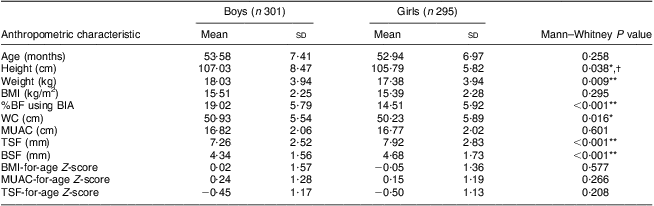
%BF, percentage body fat; BIA, bioelectrical impedance analysis; WC, waist circumference; MUAC, mid-upper arm circumference; TSF, triceps skinfold thickness; BSF, biceps skinfold thickness.
*Significance at the 0·05 level, **significance at the 0·001 level.
†The P value reported for height was obtained from the independent-samples t test, since height was normally distributed.
Anthropometric characteristics of participants by ethnicity: nationally representative sample of pre-school children aged 31–73 months (n 596), Trinidad, June 2008 to July 2009
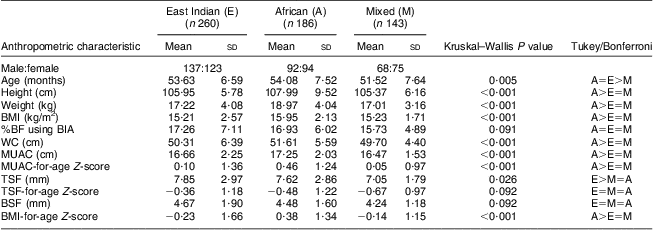
%BF, percentage body fat; BIA, bioelectrical impedance analysis; WC, waist circumference; MUAC, mid-upper arm circumference; TSF, triceps skinfold thickness; BSF, biceps skinfold thickness.
Among boys, the overall prevalence of overweight and obesity using the IOTF criteria was 9·3 % and 4·7 %, respectively, while 8·5 % and 6·8 % of girls were overweight and obese. The CDC criteria identified a lower percentage of boys as overweight (7·3 %) but almost tripled the prevalence of obese boys (12·3 %) when compared with the IOTF cut-off. It also identified 8·8 % of girls as overweight and 8·8 % as obese (Table 3). Approximately 2·9 % of children were classified as undernourished by the WHO criterion of weight-for-age Z-score <−2. On comparing ethnicities, although more African children were overweight and obese with the IOTF and CDC criteria, significant differences in prevalence were observed with the CDC criteria only, with 11·9 % of Mixed and 17·7 % of East Indian pre-schoolers being overweight and obese compared with 25·3 % of African pre-schoolers (P = 0·007; Table 4).
Prevalence of overweight and obesity by BMI classification system and gender: nationally representative sample of pre-school children aged 31–73 months (n 596), Trinidad, June 2008 to July 2009
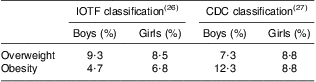
IOTF, International Obesity Taskforce; CDC, Centers for Disease Control and Prevention.
Prevalence of overweight and obesity by BMI classification system and ethnicity: nationally representative sample of pre-school children aged 31–73 months (n 596), Trinidad, June 2008 to July 2009

CDC, Centers for Disease Control and Prevention; IOTF, International Obesity Taskforce.
Table 5 shows the percentage variance in adiposity explained by each anthropometric variable by gender. Weight, BMI, WC and MUAC explained 78·9 %, 87·3 %, 83·2 % and 83·1 % of the variance in adiposity among females, while in males these variables accounted for 23·9 %, 30·5 %, 32·3 % and 30·3 %, respectively. In boys, TSF and BSF each accounted for 39·2 % and 32·0 % of the variance in adiposity, while in girls they explained over 55 %. While many indices worked well in explaining excess adiposity in girls, TSF performed best in boys. Within each ethnic group, the percentage variance in adiposity explained was also higher in girls as compared with boys. The percentage variance in adiposity explained by the various anthropometric measures tended to be highest for boys of African descent, compared with boys of other ethnicities (Table 6).
Univariate anthropometric correlates of excess adiposity by gender: nationally representative sample of pre-school children aged 31–73 months (n 596), Trinidad, June 2008 to July 2009
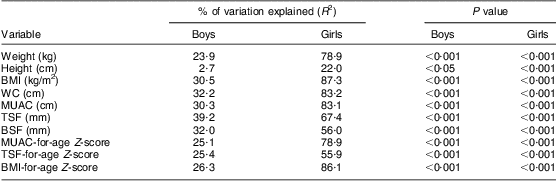
R 2, coefficient of determination; WC, waist circumference; MUAC, mid-upper arm circumference; TSF, triceps skinfold thickness; BSF, biceps skinfold thickness.
Univariate anthropometric correlates of excess adiposity by ethnicity: nationally representative sample of pre-school children aged 31–73 months (n 596), Trinidad, June 2008 to July 2009
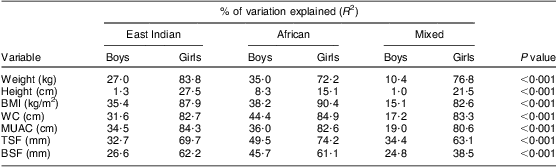
R 2, coefficient of determination; WC, waist circumference; MUAC, mid-upper arm circumference; TSF, triceps skinfold thickness; BSF, biceps skinfold thickness.
Discussion
The present study evaluated the prevalence of excess adiposity, as well as the ability of various anthropometric indices (weight, height, MUAC, WC, TSF, BSF and %BF by bioelectrical impedance) to explain adiposity, in a multi-ethnic pre-school Trinidadian population. The choice of cut-off of 25 % body fat used here is in accordance with Taylor et al., who reported a 24–30 % body fat that coincided with an obese BMI in younger boys and a similar %BF in young girls( Reference Taylor, Jones and Williams 28 , Reference Washino, Takada and Nagashima 29 ). Our findings suggest that in this pre-school population there were gender differences in the ability of anthropometry to explain adiposity. In particular, anthropometric variables explained more of the variation in adiposity among females as compared with males( Reference Taylor, Jones and Williams 28 , Reference Mei, Grummer-Strawn and Pietrobelli 30 , Reference Pietrobelli, Faith and Allison 31 ). This may be an indication of differences in location of body fat between males and females. Although boys presented with a higher overall total body fat, they had a larger WC, but lower TSF and BSF. The larger WC may imply a greater percentage of visceral fat, while the lower TSF and BSF may point to less fat accumulation in the upper peripheral regions of the body. In addition, the bioelectrical impedance analysis device measured total overall fat and not body fat by segment. The body fat locations in female pre-schoolers may also have had a stronger association with the anthropometric variables of interest in the present study, leading to a higher percentage of variation in adiposity being accounted for. Future research should therefore seek to highlight alternative indices that will explain more of the variation in adiposity among male pre-schoolers.
This higher level of adiposity among pre-school males has been demonstrated in other studies( Reference Maffeis, Consolaro and Cavarzere 32 – Reference Dieu, Dibley and Sibbritt 36 ). It may be linked to the higher consumption of energy-dense foods and increased sedentary activity( 37 – Reference Harnack, Jeffrey and Boutelle 40 ) among males in this age group. Growing evidence suggests that overweight and obesity are socially patterned( Reference Due, Damsgaard and Rasmussen 41 , Reference Roskam, Kunst and Van Oyen 42 ) and may also be linked to the cultural environment( Reference Dehghan, Akhtar-Danesh and Merchant 43 , Reference Ali and Crowther 44 ) and cultural practice of food distribution and consumption within households locally( 45 ). In fact, our report of dietary intakes in this population suggests that more girls consumed fruit and vegetables at least five times per week, while twice as many boys were in the highest tertile for soda and fizzy beverage consumption (A Ramcharitar-Bourne, unpublished results). Furthermore, more girls than boys ate meals together with their families every day (41·2 % v. 26·9 %) and family meals have been identified as a protective factor against obesity among youth( Reference Goldfield, Murray and Buchholz 46 ). Regarding hours of television viewing, more girls met the American Academy of Pediatrics recommendations for total media time to be limited to less than 2 h/d in children aged 2 years and older( 47 ). Only 3·8 % of boys met this recommendation on the weekend as compared with 14·7 % of girls. Our finding suggests that Trinidadian pre-school children, especially boys, may be highly susceptible to obesity and to the early adoption of obesogenic lifestyles( Reference Reilly 38 ).
Adiposity by classification system
The prevalence of adiposity varied by classification system( Reference Deurenberg-Yap, Niti and Foo 48 ) with the BMI-based CDC criteria identifying almost three times the number of obese boys and two times more obese girls than the IOTF. Marrodán et al.( Reference Marrodán, Mesa Santurino and Alba Díaz 49 ) also noted that the IOTF criteria tended to underestimate obesity and overestimate overweight. This difference in estimates may possibly be due to the fact that these systems differ in their overall conceptual approach to describing growth( Reference Grummer-Strawn, Reinold and Krebs 27 ). They define cut-offs differently and also select samples based on different criteria( Reference Cattaneo, Monasta and Stamakis 12 ). The IOTF uses age-specific BMI curves that pass through the adult standards for overweight and obesity at age 18 years (25 kg/m2 and 30 kg/m2, respectively) and then track backwards to younger ages( Reference Cole, Bellizzi and Flegal 26 ), while the CDC charts represent a growth reference and describe how certain children grew in a particular place and time( Reference Grummer-Strawn, Reinold and Krebs 27 ).
The prevalence of obesity via the IOTF criteria was similar to that seen in countries such as Italy, Iran, Canada and Sweden( Reference Maffeis, Consolaro and Cavarzere 32 , Reference Dorosty, Siassi and Reilly 33 , Reference Twells and Newhook 50 , Reference Blomquist and Bergström 51 ). This may suggest that we have caught up with the levels of obesity present in these more industrialized economies( Reference Dehghan, Akhtar-Danesh and Merchant 43 , Reference Ali and Crowther 44 ). This early patterning of excess fat among males may increase their risk of chronic disease as adults( Reference Freedman, Khan and Serdula 52 ). This is important as over 50 % of all health visits by adults to health facilities in Trinidad and Tobago are due to hypertension and diabetes mellitus( Reference Nichols and Crichlow 53 ). For these diseases, overweight and obesity remain important and consistent risk factors( Reference Lloyd, Langley-Evans and McMullen 6 ). Also, children who are overweight and obese are known to track into adulthood( Reference Singh, Mulder and Twisk 54 ). Thus the current visits to health facilities for hypertension and diabetes may represent the prevalence of risk factors acquired two to three decades ago, when the prevalences of overweight and obesity were much lower than they are today. These relatively higher levels of adiposity among children suggest that the prevalence of adult diseases in this population will continue to increase in the absence of suitable interventions( Reference Dehghan, Akhtar-Danesh and Merchant 43 , Reference Gaskin and Walker 55 ). Given the serious implications of these findings for population health, monitoring of overweight and obesity trends beginning in early childhood is recommended( Reference Esquivel and González 34 ) and a national surveillance system may be required to follow the development of childhood obesity in different ethnic groups in our population. Intervention programmes should be considered for the school( Reference Freia, Breitenstein and Fischer 56 ) as well as the home setting( Reference Briggs and Lake 57 ), as these have been shown to be more successful at reducing adiposity and decreasing sedentary behaviours( Reference Summerbell, Moore and Vögele 58 ).
Ethnic differences in fat patterning
Ethnicity or race may contribute to the development of childhood obesity( Reference Hernandez, Uphold and Graham 59 ). In the present study, African children exhibited significantly higher height, weight, BMI, WC and MUAC than their East Indian and Mixed counterparts. People of African descent have greater bone and muscle mass at a given BMI( Reference Wagner and Heyward 60 ) and this may be reflected as early as age 3 years in our population, especially since there were no significant differences in %BF among ethnic groups in our study. The higher weight in African children may possibly be attributed to a greater bone and muscle mass. Although they also presented with a larger BMI, BMI does not differentiate between fat mass and fat-free mass( Reference Sweeting 61 ). Gulliford et al. ( Reference Gulliford, Mahabir and Rocke 62 ) (2001) reported similar findings in Trinidad and Tobago with respect to ethnicity, with Afro-Trinidadian children being taller than Indo- and Mixed Trinidadians. Several studies have reported a greater adiposity in taller children( Reference Freedman, Thornton and Mei 63 ), where taller populations appear to have a higher prevalence of obesity( Reference Franklin 64 ). In Indian and Mixed children, BMI values may be biased to lower levels by their lower mean height. In our study, there was a strong positive correlation (r = 0·74) between weight and height and it has been noted that obese children are considerably taller than their non-obese counterparts( Reference Gulliford, Mahabir and Rocke 62 ).
In our study, the CDC criteria classified more African children as being overweight and obese compared with their East Indian and Mixed counterparts (P < 0·0 0 1). Thus, genetic factors may play an important role in the BMI differences seen in our study( Reference Ali and Crowther 44 , Reference Bouchard 65 ). The higher TSF and BSF observed in the East Indian pre-schoolers may indicate a higher accumulation of body fat in the arms, and suggests a different profile of body fat patterning( Reference Gulliford, Mahabir and Rocke 62 ) that may be dependent on ethnic group. Our finding that girls possessed higher TSF than boys was also demonstrated in Iranian children( Reference Ayatollahi and Mostajabi 66 ). Our data also revealed that WC had an excellent correlation with BMI (r = 0·907), and it is a highly sensitive and specific measure of truncal adiposity and a strong predictor of visceral adiposity even in the paediatric population. It may also be related to the risks for future metabolic complications and it is therefore crucial to identify and treat children with central adiposity at the earliest possible time( Reference Mazicioğlu, Hatipoğlu and Öztürk 67 ).
Correlates of adiposity by gender and ethnicity
BMI, WC, MUAC and TSF remained significant correlates of adiposity in Trinidadian pre-schoolers (P < 0·0 0 1), even after controlling for age. In pre-school girls, these anthropometric measures may be a simple and quick way of estimating adiposity, as weight and height are quick, cheap and easy to obtain in most research settings. In boys, TSF explained 39·2 % of the variance in adiposity. TSF, being conveniently accessible, simple, cheap and quick, is therefore recommended for use among male Trinidadian pre-schoolers. In the ethnic-specific univariate correlates of adiposity, the largest variances were explained by BMI (90·4 %) and WC (84·9 %), and this occurred among girls of African descent. The percentage variance in adiposity explained by the various anthropometric measures also tended to be highest for boys of African descent, compared with boys of East Indian or Mixed ancestry. It is possible that the differences observed may have been due to differences in fat distribution among ethnicities. In addition, the body fat locations in pre-schoolers of African descent may have had a stronger association with the anthropometric variables of interest in our study. Future longitudinal studies are therefore needed to examine changes in adiposity over time, as well as to unlock the mechanisms that may be involved. Since ethnic differences were evident, it is recommended that ethnicity be factored into any analyses being conducted in this population.
Strengths and limitations
The most notable strengths of the present study were that schools were randomly selected and all measurements were taken by one trained person, which would have ensured a high degree of consistency. Since the last published study on adiposity in Trinidad was done at least 10 years ago, the present study not only provides timely and relevant information on the current nutritional status of our pre-school children, but also allows for international comparisons with other studies. In addition, we have demonstrated that it is possible to screen for excess adiposity in pre-school Trinidadian children using only age and a single, easily and cheaply obtained anthropometric measurement. In the absence of more sophisticated techniques, our methods may prove beneficial for monitoring in this population. The study's cross-sectional nature does not allow us to gauge changes in adiposity in individual children over time. A longitudinal study design may further improve our understanding of adiposity in this population, especially in males and in children of African descent.
Conclusions
The present study demonstrates specific differences in adiposity patterning by both ethnicity and gender, with children of African descent exhibiting overall higher anthropometric measurements and pre-school boys being twice as likely as girls to have excess adiposity. While weight, BMI and WC served as excellent correlates of adiposity in females, TSF was the best correlate in males. It may be particularly cost-effective to employ these indices in any research setting, as they are simple, quick, non-invasive and easy to obtain, and – most importantly – convenient and agreeable in this young population.
Acknowledgements
Sources of funding: This research received no specific grant from any funding agency in the public, commercial or not-for-profit sectors. Conflicts of interest: There are no conflict of interest issues or financial interest issues to be declared. Ethics: The Ministry of Education and the SERVOL Board of Trinidad and Tobago approved the study. Authors’ contributions: All authors (A.R.-B., S.N. and N.B.) played a role in the design of the investigation, as well as revision of the many drafts and final manuscript. A.R.-B. was responsible for the recruitment, implementation of field work and preparation of the final manuscript. Statistical analyses were done by S.N. and A.R.-B. Acknowledgements: Special thanks are extended to Salima Ramcharitar and Gregory Bourne for their assistance in recording of measurements during data collection. The authors also wish to thank all participating principals, teachers, parents and pre-school students without whom this research would not have been possible.



