


It has been widely reported that meals with a higher proportion of energy as protein are more satiating than isoenergetic meals lower in protein content, both in acute tests of satiety using short-term measures of rated appetite and/or intake(Reference Bertenshaw, Lluch and Yeomans1–Reference Latner and Schwartz10) and longer-term studies on manipulated protein content of the diet(Reference Westerterp-Plantenga, Nieuwenhuizen and Tome11–Reference Weigle, Breen and Matthys14). However, there remains some uncertainty about the mechanisms underlying the enhanced satiating efficiency of protein-based foods and drinks. Although there is clear evidence that protein ingestion results in a different profile of satiety-related hormonal signals compared with other macronutrients(Reference Batterham, Heffron and Kapoor15–Reference Hall, Millward and Long17) that have been interpreted as the basis of protein-based satiety(Reference Veldhorst, Smeets and Soenen18), a confounding issue in interpretation of many short-term studies of protein-based satiety is the difficulty in fully disguising the addition of protein. This often results in orosensory differences between protein and control conditions, which could also contribute to the behavioural effects of these foods and drinks. It is well established that orosensory cues are an important component of short-term satiety. For example, high-energy preloads have been shown to be more satiating when ingested by the participant than when infused directly into the stomach or intestine(Reference Cecil, Francis and Read19). Observations like this add weight to the satiety-cascade model(Reference Blundell and Tremblay20), where learned and sensory cues from food are suggested to be critical components of the short-term satiating effects of nutrients. Several recent studies provide additional evidence to support this view. First, sensory characteristics that were consonant with the presence of energy (thickness and creaminess) enhanced the satiating effects of energy in the context of a drink(Reference Yeomans and Chambers21). Second, the sensory characteristics, but not protein content, of a snack preload altered subsequent selection of protein-rich foods(Reference Griffioen-Roose, Mars and Finlayson22). The present study extends these findings to ask whether perceived thickness and creaminess imparted by addition of protein in a beverage may at least, in part, explain why protein-enriched foods and drinks are found to be more satiating than are other macronutrients in short-term tests of satiety.
A key driver for the present study was an earlier investigation in our laboratory that found that a drink preload containing 50 % of additional energy as protein was more satiating than an isoenergetic drink enriched with carbohydrate only(Reference Bertenshaw, Lluch and Yeomans23). Indeed, in that study, there was no evidence of satiety, either through reduced intake at a test lunch or in altered appetite ratings after the consumption of the high-energy (1250 kJ) carbohydrate-enriched drink compared with the low-energy (LE, 327 kJ) control drink. This finding is consistent with broader suggestions that energy consumed in beverage form generates weak satiety(Reference Mattes24). In the previous study, we attempted to disguise the nutritional differences between the two high-energy drinks; however, evaluations by participants clearly reported subtle sensory differences, with the high-protein drink rated as slightly creamier, slightly thicker in texture and less pleasant than the carbohydrate drink. Therefore, sensory differences may have contributed to the short-term satiating effects of the protein drink rather than simply post-ingestive effects. More recent studies suggest a key role for sensory characteristics in determining the satiating effects of beverages(Reference Yeomans and Chambers21).
The present study directly assessed the importance of sensory properties by contrasting the satiating effects of three isoenergetic high-energy drinks relative to a LE control. Two versions of the high-energy drinks were enriched with protein, but differed sensorially: one high-sensory protein (HP+) drink was created to taste slightly thicker and creamier than the other (HP − , low-sensory protein). The third high-energy drink (HC+, high-sensory carbohydrate) was enriched purely by carbohydrate and had its flavour adjusted to match that of the HP+ protein drink. Since the same high-carbohydrate formulation, in the absence of sensory cues, was not satiating in our previous study(Reference Bertenshaw, Lluch and Yeomans23), any evidence that the sensory-enhanced HC+ drink resulted in satiety would be clear evidence that sensory characteristics, such as thicker texture and creamy flavour, may be a key element in the generation of satiety by nutrients in a beverage context. Thus, if the enhanced satiating effects of addition of protein are only a consequence of post-ingestive actions, the prediction would be that the HP − and HP+ drinks would have similar effects on subsequent rated appetite and intake at a test meal. In contrast, if protein-induced satiety is dependent on the sensory characteristics imparted by the added protein, then the two sensory-enhanced drinks (HP+ and HC+) would be predicted to be more satiating than the high-protein low-sensory (HP − ) drink. Thus, the present design provided a clear means of dissociating the potential roles of sensory and post-ingestive effects of the satiating effects of protein.
Method
Design
A repeated measures design contrasted satiety (changes in rated appetite and test lunch intake) following consumption of four preload drinks. Three preloads had a higher energy content, two with 44 % of energy added as protein either with (HP+) or without (HP − ) enhanced creaminess and thickness, and the third (HC+) had energy added as carbohydrate, but thickness and creaminess matched to the HP+ condition. The fourth preload was a LE control.
Participants
Potential participants were recruited from participant databases held by the School of Psychology, University of Sussex, on the basis that they were participating in a study about mood and food. Inclusion criteria were young men aged 18–35 years and whose BMI was within the normal range (18–25 kg/m2). Healthy normal-weight men were tested to minimise demand effects generated by the laboratory testing setting. Exclusion criteria included smoking more than five cigarettes per week; eating, metabolic or respiratory disorder; any athletes in training; and those having a restrained eating style defined as individuals scoring seven or more on the restraint scale score from the Three Factor Eating Questionnaire(Reference Stunkard and Messick25). Participants gave written informed consent, and the protocol was approved by the Sussex University Ethics Committee. Two participants failed to attend all sessions and their data were excluded. The twenty-six male participants who completed all sessions had a mean age of 21·1 (sd 2·3) years, a mean Three Factor Eating Questionnaire restraint of 2·7 (sd 2·4) and normal BMI of 21·9 (sd 1·6) kg/m2. Participants received £40 for participation.
Test preload drinks
Drinks were developed iteratively using taste tests with volunteers to create two high-protein drinks (HP+ and HP − ) with similar energy content, one resembling a juice drink and the other perceived by volunteers to be a creamy drink. The HC+ drink was developed to match the HP+ in terms of perceived thickness and creaminess, but with the additional energy added as carbohydrate only. The final prototype drinks were assessed by an untrained panel of ten male volunteers, who were provided with 20 ml samples of each of the high-energy preloads served in 50 ml containers covered in foil to obscure visual cues. They were instructed to take a sufficient mouthful to allow completion of a series of sensory ratings, and were provided with water to cleanse the palate between mouthfuls. Sensory evaluations were made using 100 mm pen and paper visual analogue scales. Ratings confirmed that the two high-energy high-sensory drinks (HP+ and HC+) were significantly thicker (F(1·1,8·8) = 9·74, P <0·05) (HP+: 73 (se 6); HC+: 72 (se 5)), and had higher ‘dairy-like’ characteristics (F(1·1,9·1) = 8·16, P <0·05) (HP+: 59 (se 8); HC+: 66 (se 8)) than the HP − beverage (dairy: 32 (se 9); thickness: 38 (se 10)). HP+ and HC+ also tended (F(2,16) = 2·42, NS) to be perceived as creamier (HP+: 59 (se 8); HC+: 66 (se 8)) than the HP − drink (32 (se 9)). The overall pattern of data confirmed that HP+ and HC+ were reasonably well-matched on the sensory characteristics that we were interested in, and both were perceived as thicker and creamier than was HP − .
The composition of the preloads is summarised in Table 1, and all were prepared from a base of LE fruit–yoghurt drink (Apricot and Peach drink Danao®, Danone). HP+ and HP − were developed to provide 44 % of energy as protein and HC+ contained 87 % of added energy as carbohydrate and 13 % as protein. Protein content was varied through use of different amounts of virtually fat-free fromage-frais (Waitrose brand) and a whey isolate (CMC Whey®, Fast Research), which at the concentrations used had reduced bitterness compared with other whey sources and so was easier to disguise. Carbohydrate was added as a combination of maltodextrin (Cerostar) and sucrose. HP+ and HC+ had added yoghurt and vanilla flavours (IFF) to enhance perceived creaminess and a small amount of guar gum (Meyprodor, a water-soluble fibre; Danisco) to enhance perceived thickness. The LE condition used the base drink diluted with water.
Final nutritional composition of the four test preloads

LE, low energy; HP − , low-sensory protein; HC+, high-sensory carbohydrate; HP+, high-sensory protein.
Test meals
Participants consumed a standardised breakfast in the laboratory on each test day, consisting of breakfast cereal (either crunchy-nut cornflakes or Special K cereal, both Kellogg's UK), orange juice and semi-skimmed milk (1710·2 kJ). The test lunch comprised ad libitum consumption of pasta (fusilli variety, Sainsbury's UK) mixed with commercial tomato-based herb sauce (Napoletana, Sainsbury's UK) and served in bowls at a ratio of 250 g cooked pasta to 250 g sauce. The test meal provided 500 kJ of energy (3·7 g protein; 19·8 g carbohydrate and 1·5 g fat) per 100 g.
Assessment of rated appetite, mood and food intake at the test lunch
Data were collected using the Sussex Ingestion Pattern Monitor (SIPM: University of Sussex), a computer-based Universal Eating Monitor(Reference Kissileff, Kilngsberg and Van Italie26) for measuring food intake and recording rated appetite(Reference Yeomans27). This ensured minimal monitoring or disturbance from the experimenter. SIPM consisted of a disguised electronic balance (Sartorius BP 4100-S, Sartorius) fitted into the desktop and connected to an Apple Macintosh G3 computer (Apple Computer, Inc.), with the balance surface obscured by a placemat. The system was custom programmed using FutureBasic (Staz Software) to read the balance weight on stability to 0·1 g accuracy during the test meal. At the start of the lunch session, a 500 g plate of pasta was placed on the balance and the experimenter left the cubicle. The computer instructions were to ‘Eat as much as you want’. A separate side plate was provided to place cutlery on when not eating so that the weight of cutlery did not interfere with weighing. The SIPM system prompted participants to call the experimenter for a refill after the sixth interruption to their meal, by which time 300–400 g had been consumed, which ensured that participants could not use an empty bowl as an external cue to end their meal. This process was repeated until the participants indicated that they had ‘finished’ their meal.
Before and after each preload and meal, participants completed computerised ratings of hunger, fullness, thirst, clear-headed, happy, friendly, jittery, nauseous, energetic and relaxed, presented in the form ‘How < descriptor> do you feel?’. Mood ratings were included as distractors. Ratings were made by electronic visual analogue scales end-anchored with ‘Not at all’ (scored zero) and ‘Extremely’ (scored 100). Sensory and hedonic ratings (familiar, sweet, pleasant, sour, bitter, creamy, fruity, refreshing, thick, novel, dairy and fatty) of the preload were made using the same style of visual analogue scales when the drink was first tasted and once it had been consumed in full, and participants also rated the lunch when first tasted and at the end of the meal. Polarity of all computerised ratings was randomised to minimise carry-over effects.
Procedure
Participants were instructed to eat as normal on the day before testing, but consume only water from 23.00 hours the previous evening. On each test day, breakfast was served between 08.30 and 10.00 hours, and participants left the laboratory after breakfast before returning for their later appointments, but were restricted to drink water only during this period. A 500 ml bottle of water was provided to encourage water consumption throughout the morning. To encourage compliance with instructions not to eat or drink anything other than water, participants were warned that random samples of saliva could be collected at any time during the study (this was not followed up). Participants returned to the laboratory 180 min after breakfast and consumed the relevant preload in a small, ventilated cubicle, where they also completed the mood and appetite ratings. Preloads were served in a 400 ml polystyrene cup with an opaque lid and straw, and participants were instructed to consume the entire drink within 10 min. To monitor compliance, each preload was weighed before and after consumption and preload session duration recorded. Once they had consumed the preload and completed the associated ratings, they rested in an adjacent waiting room until lunch, which was served 30 min after the preload session began. The delay between preload and lunch was selected based on an earlier study, where similar drinks had the same impact on subsequent appetite, regardless of whether they were consumed 30 or 120 min prior to the test meal(Reference Bertenshaw, Lluch and Yeomans23). Once they had consumed as much of the lunch as they wanted and had completed all ratings, they were free to leave, except on the final session, when they had a structured debriefing where they were asked about the purpose of the study. Participants were also asked if they had noticed differences between the preloads, breakfast or lunch meals across the test days and were asked: ‘Have you ever tasted a high-protein shake – otherwise known as body building drinks?’ to judge familiarity with products like the drinks under test.
Data analysis
Intake data were contrasted between the four preload conditions using one-way repeated measures ANOVA, with the prediction that all three higher-energy preloads would reduce intake but that HP+ and HC+ would have a larger effect than HP − . Total energy intake was calculated as the sum of energy consumed at breakfast, preload and test meal, and these were contrasted using ANOVA. The degree of compensation at the ad libitum meal for the energy consumed in the preloads was calculated as the energy difference between each high-energy test preload and the LE, expressed as a fraction of the reduction(Reference Rolls, Kim and McNelis28, Reference Shide, Cabellero and Reidelgerger29). Computer failure meant all rating data were lost for one participant on 1 d, and initial analysis of changes in hunger after preload consumption identified one participant as a significant outlier (data more than two standard deviations from the mean) in two preload conditions and his data were excluded from further analysis. After confirming that there were no spurious baseline differences, changes in hunger and fullness immediately after consuming the preload and at the start of lunch were calculated and contrasted using two-way ANOVA. Similarly, sensory and hedonic ratings before and after preload consumption were contrasted between preloads to confirm that the expected sensory differences were evident and that these did not generate confounding differences in liking. Within-subjects contrasts were used to test specific predictions and Bonferonni post hoc corrections applied when making post hoc comparisons. Data were analysed using SPSS 18 for Macintosh (PASW Ltd).
Results
Intake
Lunch intake varied significantly between preload conditions (F(3,75) = 6·26, P <0·01: Fig. 1(a)), with intake following the two thicker and creamier drinks (HP+ and HC+) significantly less than after the LE control (P <0·01 and P <0·001, respectively). Critically, intake after the thick/creamy high-protein HP+ drink was significantly less than after the high-protein drink without thick/creamy sensory characteristics (HP − , P< 0·05), and intake after the HP − drink did not differ significantly from that after LE (Fig. 1(A)). Short-term total energy intake (Fig. 1(B)) also differed significantly between conditions (F(3,75) = 11·13, P <0·001), with significantly greater energy intake in all three high-energy conditions compared with LE, although total energy intake was significantly lower in the HP+ than HP − condition (F(1,25) = 5·46, P <0·05). Overall compensation for preload energy was 22·4 % in the HP − condition compared with 50·2 % in the HC+ and 52·6 % in HP+ conditions.
(A) Test food intake at lunch and (B) total energy consumed in the laboratory tests in the four preload conditions: low energy (LE), low-sensory protein (HP − ), high-sensory carbohydrate (HC+) and high-sensory protein (HP+). Values are means, with their standard errors represented by vertical bars, n 26. a,b,cMean values with unlike letters were significantly different (P< 0·05 or higher).

Rated hunger and fullness
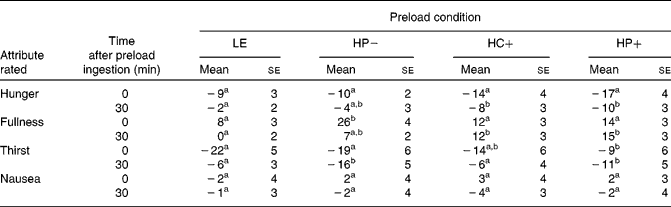
Rated hunger and fullness immediately before preload consumption did not differ significantly between preload conditions (hunger: F(3,72) = 2·23, NS; fullness: F(3,72) = 2·48, NS). As expected, changes in hunger depended on time of rating (F(1,72) = 14·07, P< 0·001), with a larger initial decrease in hunger immediately after preload consumption and some recovery of hunger by the lunch test. There was a trend for a significant overall effect of preload (F(3,72) = 2·67, P= 0·056), but the interaction between time and preload was not significant (F(3,72) = 0·86, NS). As can be seen (Table 2), hunger decreased immediately after consuming all four preloads, but this decrease was only sustained in the HP+ and HC+ conditions. The decrease in hunger in both the HP+ and HC+ conditions immediately before lunch was significantly greater than that in the LE control condition (both P< 0·05), with changes after HP − being intermediate and not significantly different from other preloads. A similar pattern was seen with fullness ratings (Table 2), and here the effects of time (F(1,72) = 14·87, P< 0·001), preload (F(2,72) = 8·37, P< 0·001) and the preload × time interaction (F(3,72) = 3·09, P< 0·05) were all significant. Rated fullness increased in all four conditions immediately after consuming the drinks, although this increase was significantly greater in the HC+ than in the other three conditions (LE, P< 0·001; HP − , P< 0·05; HP+, P< 0·01). However, the initial increase in fullness was not sustained in the LE condition, and immediately before lunch, the largest increases in fullness were seen in the HP+ and HC+ conditions.
Changes in hunger, fullness, thirst and nausea immediately and 30 min after consuming the four test preload drinks (Mean values with their standard errors)
LE, low energy; HP − , low-sensory protein; HC+, high-sensory carbohydrate; HP+, high-sensory protein.
a,bMean values within a row with unlike superscript letters were significantly different (P< 0·05 or less using Bonferroni-protected contrasts).
Rated thirst and nausea
Protein-elicited thirst presented a possible confound for interpretation of the present study (Table 2). As baseline values did not differ significantly between conditions, change data were used to contrast effects of preloads. Thirst varied with time (F(1,72) = 6·88, P< 0·05), with the expected large decrease immediately after drink consumption; however, although the main effect of preload condition was not significant (F(3,72) = 1·33, NS), there was a significant interaction between preload and time (F(3,72) = 3·22, P <0·05). Surprisingly, thirst was reduced more after the two high-protein preloads relative to the LE control and HC+ preloads prior to lunch.
Differences in lunch intake could also have been confounded by any gastric discomfort from consuming these drinks. However, if so, then we would have expected differences in nausea ratings between preloads; however, there was no significant difference in baseline nausea (F(3,72) = 1·66, NS), and no significant effects of preload (F(3,72) = 0·29, NS), time (F(1,72) = 1·43, NS) or time × preload interaction (F(3,72) = 2·39, NS) for changes in nausea immediately and 30 min after preload ingestion were observed.
Sensory and hedonic ratings of the test meal and preloads
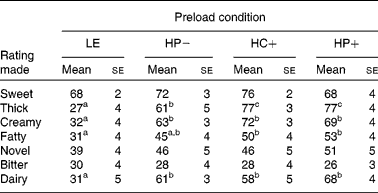
To assess whether the sensory differences evident during pilot work were detectable during the satiety tests, evaluations of the four preloads at the start and end of ingestion were examined. To allow comparisons between pilot and test data, only ratings at the initial taste test are shown (Table 3). As expected, preloads differed significantly in perceived creaminess (F(3,75) = 37·00, P< 0·001), thickness (F(3,75) = 23·82, P< 0·001), fattiness, (F(3,75) = 16·39, P< 0·001) and perceptions of dairy (F(3,75) = 17·01, P< 0·001). HP − was rated as significantly less thick and less fatty than were the HP+ and HC+, but (in contrast to pilot data) was rated similarly on creaminess and dairy-like characteristics. Sensory ratings did not differ between the start and end of preload ingestion, with only one significant interaction arising from evaluation of ratings of the ‘dairy-like’ characteristics (F(2·0,47·6) = 2·80, P <0·05), although within-subjects contrasts did not identify the cause of that interaction, which may be spurious. The drinks did not differ significantly in sweetness (F(3,75) = 1·10, NS), bitterness (F(3,75) = 0·47, NS) or novelty (F(3,75) = 1·93, NS). As expected, rated novelty declined significantly between the start and end of ingestion (F(1,25) = 10·48, P< 0·01).
Sensory and hedonic evaluations of the preloads at the initial taste test (Mean values with their standard errors)
LE, low energy; HP − , low-sensory protein; HC+, high-sensory carbohydrate; HP+, high-sensory protein.
a,b,cMean values with unlike superscript letters were significantly different for ratings which differed between conditions (thick, creamy and dairy) (P< 0·05 or less using Bonferroni-protected contrasts).
There were no overall significant differences in rated pleasantness of the four preloads (F(3,75) = 2·70, NS), but there was a significant interaction between preload and rating time (F(3,75) = 6·27, P< 0·001). Ratings before ingestion did not differ significantly between conditions (F(3,75) = 0·86, NS). However, pleasantness decreased significantly for the HP+ and HP − preloads, but did not change in HC+ or LE conditions (Fig. 2).
Rated pleasantness of the four test drinks before (start,  ) and after (end,
  ) they had been consumed: low energy (LE), low-sensory protein (HP − ), high-sensory carbohydrate (HC+) and high-sensory protein (HP+). Values are means, with their standard errors represented by vertical bars, n 26. ** Mean value was significantly different between start and end ratings (P< 0·01).

There were no significant differences in overall rated pleasantness of the pasta between conditions (F(3,75) = 1·92, NS), nor any interaction between preload and taste (F(2·4,59·7) = 1·59, NS). Rated pleasantness of the pasta declined significantly from start to end of the meal in all conditions (F(1,25) = 26·60, P <0·001).
Participant awareness
The majority of participants (20/26) believed that the experiment was investigating ‘food and mood’, in line with the explanation provided during recruitment. In all, two participants correctly identified: ‘effects of the drink upon appetite/the meal’. A total of ten participants correctly said they received different drinks each test day, while nine participants recalled noticing only two different drinks. Overall, these responses indicate that many participants were not overtly aware of the purpose of the experiment. None of the participants reported regular consumption of commercially available protein drinks.
Discussion
In the present study, the addition of protein to a beverage only resulted in short-term satiety when the addition of protein was combined with small increases in thickness and creamy flavour. Thus the sensory-enhanced HP+ drink was more satiating than the same level of protein added in the absence of sensory cues (HP − ). Moreover, whereas the addition of extra energy purely as carbohydrate was previously found to be ineffective at generating satiety in this context(Reference Bertenshaw, Lluch and Yeomans23), when the same carbohydrate was added alongside increased creamy flavour and thickness (the HC+ preload), the drink was as satiating as the HP+ drink. Together, both the difference in satiety response between protein drinks, which differed in sensory characteristics, and similarity of response to drinks that were perceived as similarly thick and creamy, but which differed in macronutrient content (HP+ and HC+), suggest that the sensory characteristics of beverages are critical in determining short-term satiety.
The key question is what explains the difference in satiety between HP+ and HP − conditions. This effect cannot easily be attributed to nutritional differences, as these preloads had similar amounts of added protein, both chiefly through different extracted versions of whey protein. Many studies suggest that whey protein is more satiating than other forms of protein, based on both greater compensatory eating responses(Reference Anderson, Tecimer and Shah30), greater suppression of rated appetite(Reference Hall, Millward and Long17, Reference Veldhorst, Nieuwenhuizen and Hochstenbach-Waelen31) and increased release of satiety hormones(Reference Hall, Millward and Long17, Reference Veldhorst, Nieuwenhuizen and Hochstenbach-Waelen31) after consuming preloads enriched in whey protein, although some studies failed to confirm whey as more satiating than other protein sources(Reference Bowen, Noakes and Trenerry16). However, as HP+ and HP − had similar levels of whey protein, it is difficult to attribute the difference in effects on appetite to small differences in the type of protein. A more consistent finding in the literature is that preloads enriched with carbohydrate are less satiating than are energy-matched protein preloads(Reference Barkeling, Rossner and Bjorvell2, Reference Hill and Blundell4, Reference Bertenshaw, Lluch and Yeomans23, Reference Marmonier, Chapelot and Louis-Sylvestre32, Reference Booth, Chase and Campbell33). Thus, the prediction, based on nutrient composition, would be that the HC+ preload would have been less satiating than the HP+preload. The finding that altering the thickness and creamy flavour of the HC+ preload to make it more similar to the HP+ preload resulted in similar satiety responses to the two drinks implies that may be sensory rather than macronutrient differences are critical in determining different short-term satiety responses between carbohydrate and protein-enriched beverages. This finding fits well with a recent study in our laboratory, which also found that making drinks thicker in texture and creamier in flavour enhanced the degree to which added protein was satiating(Reference Yeomans and Chambers21). In relation to the present study, the HC+ drink was more satiating than a similar carbohydrate drink without added thickness or creaminess in an earlier study(Reference Bertenshaw, Lluch and Yeomans23). It would have been useful to have included this HC − (the high carbohydrate without added sensory quality) drink in the present study. However, conditions equivalent to the HC+/HC − contrasts were included in our recent study(Reference Yeomans and Chambers21), and again altering thickness and creamy flavour enhanced satiety.
How then might altering the thickness and creaminess of a drink enhance the satiating efficiency of ingested nutrients? In line with recent ideas about sensory–nutrient interactions in satiety(Reference de Graaf34), we hypothesised that products with higher protein content, particularly in a dairy context, have some sensory characteristics in common, including both a thicker texture and creamy flavour. Past experience of both these sensory characteristics and consequent effects of ingestion on appetite of such products should lead to an expectation that drinks with these sensory characteristics would be more filling, thereby facilitating the consumer to respond to actual nutrient ingestion. Several lines of evidence support this suggestion. First, differences in the profile of release of satiety hormones have been shown between protein and carbohydrate preloads(Reference Bowen, Noakes and Trenerry16, Reference de Graaf, Blom and Smeets35). Many of these studies do not report the sensory analysis of the preloads, but it is likely that subtle sensory differences would have existed. It is established that orosensory cues can solicit release of hormones related to appetite control(Reference Teff36, Reference Teff37), probably as part of learned preparatory responses that prepare the body to process nutrients(Reference Woods38). Thus, subtle sensory differences between beverages, such as in thickness and creaminess, could modify post-ingestive processing of nutrients by facilitating anticipatory hormone release. Sensory cues also generate explicit expectations about how satiating foods will be(Reference Brunstrom39), and recent data from our laboratory confirm that the subtle differences in sensory characteristics between preloads in the present study would have resulted in explicit expectations of satiety(Reference McCrickerd, Chambers and Brunstrom40). This interpretation of the differences in response to the three high-energy preloads in the present study relies on subtle sensory differences between stimuli. The analysis of participants' evaluations of the drinks during testing suggests which of these sensory features were most important, but it is possible that preloads varied on other dimensions that were not captured by the evaluations used here. HP+ and HP − preloads differed significantly in rated thickness only, with non-significant trends for greater creaminess, fattiness and dairy-like qualities. Although there was a trend for higher creaminess in both HP+ and HC+ conditions relative to HP − , all of these were rated as creamier than was the control. Differences between high-energy conditions were less clear in the main study than in the pilot studies, possibly due to contrast effects making this more evident when products were rated alongside each other in the absence of the LE condition, an effect that we have seen in other studies(Reference Yeomans and Chambers21) and which fits with more general contrast effects in sensory evaluation(Reference Riskey, Parducci and Beauchamp41). Importantly, HC+ and HP+ appeared well-matched in terms of thickness and creaminess, with only a trend for HC+ having less dairy-like qualities than HP+. The finding that perceived thickness was important fits with other studies that suggest that this characteristic is an important orosensory satiety cue(Reference Mattes and Rothacker42–Reference Russell and Delahunty44). Studies also suggest that viscosity is an important component of the satiating efficiency of beverages, with greater satiety from more viscous drinks(Reference Juvonen, Purhonen and Salmenkallio-Marttila45–Reference Zijlstra, Mars and de Wijk48), and texture appearing to be more important than flavour in determining satiation in a dairy context(Reference Hogenkamp, Stafleu and Mars49). The present literature implies that textural differences, probably viscosity, may be the most likely explanation for why HC+ was more satiating here than would be expected based on nutrient content alone and why HP − was less satiating than HP+.
An alternative explanation for differences between preloads, however, could be the small differences in soluble fibre content generated by the use of guar gum as thickening agent. Increased viscosity generated by the addition of insoluble fibres has been shown to enhance satiety(Reference Slavin and Green50, Reference Wanders, van den Borne and de Graaf51), increase release of satiety-related gastric hormones(Reference Zijlstra, Mars and de Wijk52) and modify gastric emptying(Reference French and Read53). In all of these studies, differences in post-ingestive effects of fibre were confounded by likely differences in sensory characteristics through changed viscosity, and the present literature does not allow easy separation of orosensory and post-ingestive effects. However, it has been suggested that the dilution effects of small amounts of added fibre on viscosity in the stomach make orosensory explanations more likely(Reference Marciani, Gowland and Spiller54). Most studies exploring effects of fibre use much greater quantities than was used to subtly thicken HP+ and HC+: for example 12 g of guar gum was added to explore effects on gastric emptying(Reference French and Read53) and enhanced satiety was reported after addition of 12 g of inulin in a protein-rich beverage(Reference Perrigue, Monsivais and Drewnowski55), compared with 1·2 g guar gum used here. No study that we are aware of has demonstrated enhanced satiety or physiological response to such small quantities; however, the only way to truly isolate sensory v. post-ingestive effects would be to contrast the same preloads when infused into the stomach to see whether the apparent sensory/nutrient interactions suggested here persist in the absence of orosensory cues. However, past research suggests that orosensory cues are necessary for the full expression of satiety, with reduced satiety when the same foods are infused into the stomach or intestine than when ingested(Reference Cecil, Francis and Read19), and although a nutrient effect of the added guar gum or very small differences in fat content between preload cannot be excluded, such explanations are less plausible than would be effects through sensory–nutrient interactions.
In the present study, there was a relatively short delay between beverage consumption and the test meal (minimum of 20 min), and this may have exaggerated the effects of sensory quality and reduced the impact of post-ingestive satiety cues. However, the delay we used was chosen since an earlier study found no difference in effect of protein preloads between 30 and 120 min delays(Reference Bertenshaw, Lluch and Yeomans23), and other preload studies suggest that short delays are most effective(Reference Rolls, Kim and McNelis28). However, it may be that some participants treated the drink as a course of the test meal, implying that the responses were more related to satiation than satiety.
We did find a decrease in the rated pleasantness of the preload after ingestion in both protein conditions, but not in the HC+ or control conditions. This finding is consistent with previous research suggesting that protein foods produce greater sensory-specific satiety than do other macronutrients(Reference Vandewater and Vickers56), although sensory-specific satiety effects did not emerge in previous experiments in our laboratory(Reference Bertenshaw, Lluch and Yeomans1, Reference Bertenshaw, Lluch and Yeomans23). This difference between protein and non-protein preloads cannot readily explain the differences in intake and appetite at the test lunch, since intake and appetite after HC+ and HP+ preloads were similar and significantly different from those after HP − .
Overall, the critical finding in the present study was that matching high-protein and carbohydrate preloads in terms of perceived thickness and creaminess resulted in very similar satiety responses to these drinks, whereas, normally, protein has been found to be more satiating than carbohydrate. In contrast, there were significant differences in satiety following consumption of protein preloads that were matched in nutritional content but which differed in thickness and creaminess, with the less thick and creamy version (HP − ) less satiating. These findings have implications both for the future conduct of human preload studies, where greater care is needed to match stimuli at a sensory level and in terms of our understanding of the nature of satiety. In particular, differences in the satiating effects of different types of foods, such as liquid v. solid etc, may be, in part, attributed to the role of sensory cues in facilitating post-ingestive satiety.
Acknowledgements
The reported study was conducted as part of a DPhil thesis funded by Danone Research. None of the authors has any conflict of interest. E. J. B. conducted the study as part of her DPhil thesis, conducted the primary analyses and drafted the initial methods and results for this manuscript. A. L. provided advice on study design, technical support for the formulation of the test drink preloads and provided some of the test ingredients. M. R. Y. supervised the project, and had primary responsibility for production of the final manuscript and the analysis of rating data.



