


Introduction
Many community-based conservation projects seek to reduce tropical biodiversity loss through rural livelihood development initiatives. This reconciliation has not always succeeded and failure tends to be caused by weak governance and institutional frameworks (Smith & Walpole, Reference Smith and Walpole2005), not identifying and therefore not addressing the main drivers of biodiversity loss (Ferraro & Kiss, Reference Ferraro and Kiss2002), and tenuous links between receiving a project benefit and conserving biodiversity (Linkie et al., Reference Linkie, Smith, Zhu, Martyr, Suedmeyer, Pramono and Leader-Williams2008). In times of economic crisis achieving conservation gains through community-based projects is made even more difficult. Such a situation was created by the 26 December 2004 earthquake and subsequent tsunami in Aceh's coastal settlements, which caused significant loss of life (an estimated 167,000 people) and livelihoods (Wilson & Linkie, Reference Wilson and Linkie2012).
The national and international response to the Aceh crisis was unprecedented in its generosity, with an estimated USD 7.8 billion pledged for rapid rehabilitation and reconstruction (World Bank, 2008). However, there were also genuine concerns that unless conservation objectives were explicitly incorporated into government planning these reconstruction efforts would accelerate the pressures on already vulnerable coastal and forest ecosystems and cause substantial and long-lasting environmental impacts. In turn this situation was predicted to have an acute impact on the 21% of the Aceh people that depended on the fisheries sector for their livelihoods (UNDP, 2008). In response, FFI launched its marine programme on Pulau Weh, at the northern tip of Aceh.
The goal of FFI's marine programme was to develop a model conservation strategy that ensured that coastal communities received fair and ongoing livelihood benefits from a post-tsunami fisheries sector and a strengthened legal base from which to operate. After consultation with the key community and government stakeholders the most effective and culturally appropriate way to achieve this was considered to be through establishing a locally-managed marine area network around Pulau Weh to facilitate co-management by the coastal community and local government. This involved three main components: developing and implementing a new and improved marine management system, strengthening the coastal community economy, and mainstreaming marine conservation into Government of Aceh policy.
The focus of this study is on the programme's third component and assesses the performance of a community-based micro-credit revolving fund (i.e. a fund that is replenished as loans are repaid). From the outset the fund was designed as a mechanism for rebuilding devastated livelihoods and providing fresh economic opportunities to develop new livelihoods based on small-scale nature tourism, whilst ensuring there was no discernible harm caused to the natural environment in the process. Here, we investigate the (1) demographic and socio-economic status of those community members borrowing from the fund, (2) potential for the fund to deliver long-term livelihood benefits, (3) locally perceived livelihood benefits delivered by the fund, and (4) change in environmental attitudes and behaviour after borrowing.
Study area and revolving fund establishment
The FFI project focused on the community of Iboih (northern Pulau Weh) because it had received little post-tsunami support for generating income, livelihoods almost completely rely on recovery of the natural environment, and the area is rich in marine and forest resources. The 25 km2 coastal village is inhabited by 766 people in 208 households. Of the 52 households involved in fishing, 69% lost their fishing boats during the tsunami (Campbell et al., Reference Campbell, Cinner, Ardiwijaya, Pardede, Kartawijaya and Mukmunin2012). Within this community the customary system used for managing marine resources and coastal areas, and adjudicating over rule violation, is the responsibility of the Panglima Laot (the name of the institution and its head).
To support the post-tsunami recovery of the Iboih community FFI sought to establish a revolving fund, in 2006, to enable access to low interest credit business loans, by community user groups or individuals, which had to be repaid over a pre-agreed period of time. To develop the fund a slow and engaging approach was taken, heeding the lessons learned from three previous community development projects in Iboih that had tried but ultimately failed to deliver livelihood benefits. These failures had greatly reduced local belief in the value of such international NGO projects. To gain the community's trust and, from this, generate a strong commitment towards the fund's sustainability and potential benefits, FFI established an office in Iboih and held daily meetings over 9 months. Meetings were conducted in formal settings (e.g. the village hall) and informal settings (e.g. coffee shops and the FFI office, often lasting until 2 a.m.). Gradually, the community members engaged and their households became more aware of FFI's commitment to them as the project began implementing complementary marine conservation activities and building local partnerships (e.g. empowering the customary marine leaders and supporting local marine management area policy development).
The first major milestone was achieved through the establishment of the Revolving Fund Committee, which was represented by the different community stakeholder groups (month 12) and that gave partial ownership of the fund and its management to the community. Next, the standard operation procedures, which matched the socio-economic characteristic of the Iboih community, were developed (month 15). The procedures clearly outlined the community role in the fund (and as its direct beneficiaries) and detailed the rules and procedures for loan application and repayment. The Committee developed the criteria used to evaluate the granting of loans: amount requested, likelihood of generating a profit, lending risk, likelihood of activity completion within 1–2 years, anticipated benefits to the wider community, and environmental impact of the proposed activity. The Committee then explained these criteria and the benefits of the revolving fund to the Iboih community.
Based on the loan application assessment and ability to repay the loan, the revenue generation mechanism of the fund was based on profit sharing and fixed interest rates. Profit sharing was used for the livestock livelihood groups whereas the other groups used a fixed interest rate repayment of 1% per month, as agreed by the Committee. A special allowance was made for widows, who were exempt from paying interest rates. The money accrued from the interest was used to support the operational costs of the Committee (e.g. photocopying documents, refreshments for community meetings and transportation for assessing loan applications on location).
Through consultations between the project and the community, the Iboih Makmur Cooperative was established out of the Committee. This marked a pivotal moment in the project because it transferred full ownership of the USD 60,000 fund and responsibility for its daily management to the community (month 18). In the process, this event changed an initial overwhelmingly pessimistic community mindset to being overwhelmingly optimistic. FFI was then able to refocus its efforts on building local capacity to manage the fund, such as delivering training on loan borrowing rules, credit tracking, job fund management, Cooperative development, financial management and information technology. After 24 months the community had organized themselves into six livelihood borrowing groups that then submitted loan applications, and FFI increased its support to help these groups submit correctly developed loan applications and manage the loans thereafter. These groups comprised:
-
• Tourism An Iboih community group called Teupin Layeu View was established to increase tourism-related benefits. This group consisted of 45 people who, with assistance from FFI, were able to receive Government of Aceh training on nature guiding for diving, diving certification, trekking, cycling and tourism management.
-
• Fishing A group of 50 fishermen from Iboih who use traditional fishing gear and low-tech fishing, such as line fishing and small-sized gill nets.
-
• Trade A group of 31 people who mostly operate small warongs (cafes), restaurants or transportation.
-
• Agriculture A group of 35 farmers who usually only work during the rainy season because they lack a regular water supply.
-
• Livestock A group of 25 farmers who keep chickens and goats for subsistence and sale.
-
• Women Female only livelihood group of 20 people, mostly housewives who obtain a small income from selling home-grown fruits or vegetables in the market.
Methods
Field methods
From the 117 people who had borrowed from the revolving fund, semi-structured interviews were administered to 103 people (76 men and 27 women) during April–June 2009. Of the remaining, five individuals could not be located, eight did not want to be interviewed and one person had a severe hearing impediment and, despite trying, the team was unable to communicate adequately with this person. Two project staff administered questionnaires during a 30–40 minute interview, conducted either in the local Aceh language or in the national Indonesian language. Demographic and socio-economic information, including gender, age, family size, highest level of formal education attained, key assets owned, occupation and revolving fund livelihood group membership were collected for all respondents. Questions then focused on why people had borrowed from the fund, changes in attitudes towards the fund (and why), perceived success of the fund, perceived linkages between conservation and the livelihood project, and changes in attitude and behaviour towards the environment (and, where relevant, what had stimulated this).
A control group of 29 people was randomly selected from those who had not borrowed from the fund but were from the community and, therefore, eligible. The fund recipients and those from the control group were asked to cite their livelihood constraints before and after the fund's establishment. For those respondents who had experienced the removal of a key livelihood constraint, discussions then focused on what they attributed this to.
Statistical analyses
All data were imported into SPSS v.14.0 (SPSS, Chicago, USA) for analysis. Transaction details for the fund, provided by the Cooperative, were used to calculate the amount in loans borrowed and repaid by the different livelihood groups and individuals. A linear regression analysis was performed to determine which combination of demographic and socio-economic factors (age, gender, education, livelihood group and household size) best explained loan size. Two factors exhibited collinearity, gender and livelihood group, and were not included within the same regression models. Candidate models were ranked by their delta Akaike information criterion values and by their Akaike weights (w i ; Burnham & Anderson, Reference Burnham and Anderson2002). A logistic regression analysis was then performed, following a similar procedure, to determine whether overcoming a reported livelihood constraint during the course of the project was related to participating in the revolving fund or not (i.e. being part of the control group), while controlling for the possible influence of the five demographic and socio-economic factors above. χ2 tests were performed to determine: whether livelihood constraints had been removed in the fund recipient group and control group after the revolving fund's establishment, which factors (if any) explained changes in attitudes towards the fund, correctly identifying the linkage between livelihood support and conservation, and attitudes and behaviour towards the environment.
Results
Demographic and socio-economic profile of beneficiaries
The mean respondent (beneficiary) age was 42.0±SD 12.3 years, with a mean family size of 4.5±SD 1.9 people. Most respondents had attained a formal level of education: primary (34.0%), junior high school (22.1%), senior high school (29.1%) and university (4.9%), with only 3.9% having no formal education. Most respondents were from a household that owned a motorbike (74.7%), refrigerator (65.0%), television set (78.8%) and satellite dish (66.0%). It was less common for a household to own a gas stove (47.5%) or a car (14.5%).
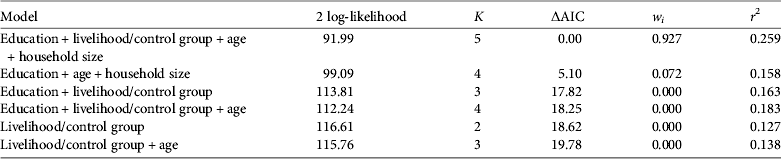
The revolving fund mainly disbursed loans to individuals (74.8%) from the various livelihood groups rather than to the group itself (25.2%). The regression analysis indicated that the individuals who borrowed most money from the fund tended to have a higher level of formal education and be from the livestock livelihood group, and the women's and agriculture livelihood groups tended to borrow the least (Table 1).
Demographic, social and economic regression models for factors that best explained the size of a loan borrowed amongst individual community members.

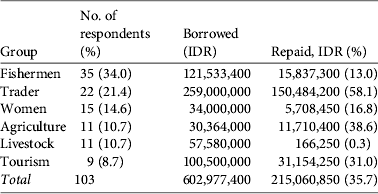
The main reason for borrowing from the fund was to expand a pre-existing business (63.1%). Some (22.3%) respondents set up a new business, and 9.7% borrowed to buy materials for a business (new or pre-existing) or for other reasons (4.9%). From the six livelihood groups, 34.0% of the loans were disbursed to fishermen and 21.4% to traders (Table 2). Of the total number of borrowers over a third had repaid their loan, with the highest percentage of repayments being made by the trading group; i.e. those able to make the quickest return on their loan. The lowest repayment percentage was for the livestock group; i.e. those that had to wait longest until their products were ready for sale or experienced loss of stock. Of the scheduled repayments, only two borrowers ever defaulted on a single repayment tranche.
Occupation of direct beneficiaries of the revolving fund interviewed during this study and size of loan borrowed and amount repaid. IDR 9,100=USD 1 at the time of the interviews and therefore a total of USD 66,261 was borrowed.
Community evaluation of the fund performance
When asked if their opinion of the revolving fund had changed since its establishment (i.e. at month 24), 53.4% said it had not, as they were positive about the fund at its launch and remained so. Of the remainder (46.6%), nearly all (91.5%) said they now viewed the fund positively because it had boosted the local economy (34.9%), provided greater opportunities for economic growth (30.2%), established a community cooperative (14.0%), increased social cohesion (11.6%) or other (9.4%). Of those respondents (8.5%) that had experienced a negative change towards the fund, all said they were disappointed at the resulting loss in their daily income. A positive change in opinion was significantly correlated with being a member of the tourism group or the women's group rather than any of the other four groups (χ 2=11.79, df=5, P<0.05), and not correlated with loan size (χ 2=28.14, df=25, P=0.302).
The majority (92.0%) of the respondents thought that the fund had been a success because it had increased their daily income (55.9%), enabled the establishment of small local businesses (16.1%), enabled increased community access to low interest credit (14.0%) or other (14.0%). Approximately half (54.9%) of the respondents thought that the fund needed no further improvements. Of those that did (45.1%), suggestions given included increasing the maximum loan size (49.9%), ensuring equal access amongst community members to the fund (21.7%), reducing the disbursement time for approved loans (10.9%), or other (17.5%), which included lowering loan interest rates and establishing a short-term borrowing scheme for emergencies.
Economic benefits
Comparing livelihood constraints between the revolving fund recipients and the control group showed that significant changes had been experienced by the recipient group (χ 2=19.12, df=1, P<0.001) but not by the control group (χ 2=8.80, df=1, P=0.05). Before the fund had been established 72.8% of the recipient group reportedly claimed to have some form of livelihood constraints that reduced (to 44.7%) after borrowing. Over the same period the control group members experienced no change in livelihood constraints before (37.9%) and after (31.0%) the fund's establishment. Questionnaire respondents were significantly more likely to have overcome a reported livelihood constraint during the project duration if they had a higher level of formal education, borrowed from the revolving fund (rather than being in the control group), were younger and from a smaller-sized household, as shown in the regression analysis (Table 3).
Demographic, social and economic regression models for factors that best explained the removal of a livelihood constraint amongst individual community members.
Examining the types of livelihood constraints removed found that 56.8% of the fund recipients did not have enough money or material to run their business adequately prior to the fund, which reduced to 30.4% after the fund's establishment. However, 29.7% said they did not have enough money to meet their daily needs, which slightly increased (34.8%) after the fund was established. Some (4.1%) claimed that previously there was not enough frequent work but that this had increased (13.0%) as their main livelihood constraint.
Linking conservation and livelihood development
There was frequent contact between FFI staff and revolving fund recipients during the project, with respondents having met with FFI staff more than once per month (44.7%) or on average once per month (14.6%), with the remainder being less than a few times per year (18.4%), only once (7.8%) or never (14.6%). When asked about the main reason for establishing the fund in their community 60.2% of respondents thought this was to support the economic recovery of Iboih after the tsunami. Others (9.7%) stated that it was because Iboih was an important tourist area, because FFI was already present in Iboih and therefore trusted the community (6.8%), to provide a positive outlook for the local people (5.8%), other reasons (12.6%) or did not know (4.9%).
When asked whether they thought there was a link between the environment and the fund, 39.8% thought there was, 23.3% thought there was not and 36.9% were unsure, indicating that the linkage should have been more explicit. However, from those responding positively, 46.3% correctly stated that the linkage was supporting livelihoods that did no environmental harm, or that because FFI is an environmental organization they were required to protect the environment (39.0%) or other reasons (14.7%). An understanding of this linkage significantly differed between the sexes and livelihood groups. Men were more likely than women to reply that there was a linkage (χ 2=12.50, df=2, P<0.001) and the fisherman and agriculture livelihoods groups (all male) were more aware than the other four groups (χ 2=15.32, df=5, P<0.05), with no effect of age (χ 2=3.96, df=4, P=0.412) or education (χ 2=4.55, df=4, P=0.337).
Changes in attitudes and behaviour towards the environment
No respondents reported a negative change in attitude or behaviour towards the terrestrial or marine environment (Table 4). From those respondents experiencing a positive change in attitude towards the terrestrial environment 41.2% were now aware of the negative factors related to destroying the forest (i.e. landslides and floods), or more conscious about the linkage between tourism and an intact ecosystem (23.5%), that the fund provides alternative livelihoods that alleviate unsustainable pressures on the forest (17.6%), and had increased awareness over the negative impact of littering on nature (17.7%). There was no significant difference in attitudinal changes between age groups (χ 2=2.51, df=3, P=0.437), livelihood groups (χ 2=6.85, df=5, P=0.232), sex (χ 2=0.52, df=1, P=0.470) or education levels (χ 2=1.45, df=3, P=0.695).
Respondents’ self-reported change in attitude towards the environment since receiving a revolving fund loan.
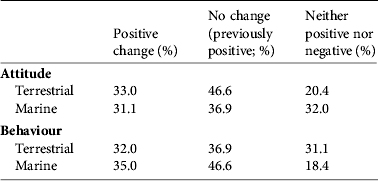
Amongst those who had changed their behaviour towards the terrestrial environment 36.4% stated they had become more vocal about not destroying community forests, 21.2% no longer used the forest for their daily needs, 21.2% no longer littered, 15.2% actively protected the forest as an important tourism resource, or other (6.0%). Men were significantly more likely than women to claim a change in their behaviour (χ 2=4.16, df=1, P<0.05), with no effect of age (χ 2=3.44, df=4, P=0.487), livelihood group (χ 2=3.62, df=5, P=0.606) or education (χ 2=5.97, df=4, P=0.202).
Amongst those with a change in attitude towards the marine environment, 56.7% attributed this to increased awareness of the importance of protecting the coral, 32.4% that an unpolluted ocean was good for tourism, or other (10.9%). A change in attitude towards the marine environment was not influenced by age (χ 2=5.77, df=4, P=0.217), livelihood group (χ 2=3.53, df=5, P=0.618), sex (χ 2=0.04, df=1, P=0.848) or education (χ 2=3.35, df=4, P=0.501).
Amongst those with a change in behaviour towards the marine environment 48.7% stated that they now act if they encounter someone violating customary marine laws (e.g. reminding people not to throw litter into the ocean, remove coral or spear fish), including confronting offenders and bringing them to answer to the customary marine leader, whom FFI was working to empower during the study period. Some (17.9%) stated that they have to respect the oceans as FFI is a conservation organization and if they are willing to receive a revolving fund loan they must abide by FFI's conservation principles. Some (12.8%) said that they no longer disturbed the coral, littered (7.7%) or dynamite fished (7.7%), and the remainder (5.2%) indicated other. A change in behaviour was not influenced by age (χ 2=4.02, df=4, P=0.403), livelihood group (χ 2=4.82, df=5, P=0.438), sex (χ 2=0.27, df=1, P=0.602) or education (χ 2=1.31, df=4, P=0.854).
Discussion
The Iboih project succeeded in overcoming several of the most commonly cited reasons associated with the failures of community-based conservation and development projects. It involved local people through joint decision making and benefit sharing (i.e. establishing livelihood groups; Barrett et al., Reference Barrett, Brandon, Gibson and Gjertsen2001), developed a strong institutional framework (i.e. a Cooperative with standard operation procedures; Berkes, Reference Berkes2004) and aimed to tackle a principal threat to biodiversity (i.e. by providing loans to fishermen who, in return, did not practice destructive fishing; Ferraro & Simpson, Reference Ferraro and Simpson2002). The built-in environmental impact assessments made by the Cooperative and field checks made by FFI throughout the project found no evidence of detrimental practices being proposed or conducted by loan recipients. However, this study was unable to clearly separate the impacts of the different project activities because over the same period FFI was conducting parallel work on strengthening local governance systems and empowering the customary marine leaders to also tackle these threats. Nevertheless, this dual approach yielded the desired conservation behavioural changes; e.g. a ban on spear fishing is now actively enforced and adhered to in Iboih.
From a livelihood perspective the revolving fund achieved its central aim of establishing a micro-credit scheme that provided low interest credit to affected coastal community groups for conducting economic activities that did not harm the environment. The diligent loan repayment rates strongly suggest that the fund is capable of delivering benefits over the long-term. The disbursement of loans to marginalized groups such as women, who are typically unable to capitalize on such opportunities (Berk & Akdemir, Reference Berk and Akdemir2006), suggests that the fund made progress towards being equitable (the second part of the project's aim). Whilst the project stressed that all applicants were free to borrow, there may have been societal pressures that prevented women from doing so, as mostly men borrowed from the fund. Nevertheless, it was the women's group that developed the most diverse set of business initiatives, ranging from baking and selling cakes to repairing motorbike tyres, perhaps explaining their positive change in attitude over the project. Their initial scepticism may partly have been explained by an anticipated lack of participation in the initiative based on past development project experience but any such notions were dispelled with the establishment of their own livelihood group and, in addition, the community deciding that widows would be exempted from paying interest on a loan.
One of the most commonly cited benefits of the revolving fund was that it increased access to low interest credit. For the Iboih community and coastal communities across Aceh this is a major economic constraint, as fishermen who are desperate to repair damaged nets or boats are often forced to take out private loans at a high interest rate (20–30%) so that they can return to work as quickly as possible. This helped the project in successfully overcoming a major obstacle that often limits community-based conservation projects; i.e. local negativity, pessimism and distrust towards the development scheme and, specific to this project, an initial unwillingness to repay loans. For FFI, an invaluable, yet intangible, benefit provided by the fund's establishment was the strong relationship that it then formed with the community. This acted as an entry point for effectively implementing a broader set of conservation activities, which continues.
The evaluation conducted in this study identified several areas where the fund management should be improved to ensure that equitable benefits are delivered to the community. One of the limitations cited with the revolving fund was the amount of time taken to disburse an approved loan, which for several respondents was >3 months (although for fishermen with nets in urgent need of repair this was not the case). These delays were caused by a lack of money within the revolving fund itself that was, in turn, dependent on the number of borrowers at any one time. This therefore raises a question about why seven people were able to borrow twice (mean IDR 50 million, range 9–125 million) and two people three times (mean IDR 65 million, range 33–126 million) when others had not borrowed at all, even though their applications were pending at the time. For these people it was felt there was no adequate mechanism for voicing their concerns or querying the process.
An essential feature of the revolving fund is its complete transparency. We therefore recommend that regular (e.g. quarterly) community meetings are held (chaired by the Cooperative) to enable scrutiny by the intended beneficiaries and that a complaint handling mechanism be established. This should be written within the fund's standard operation procedures. Furthermore, an independent body should audit the fund on a regular basis. Based on a community consensus, these results would be published in the village hall. Tracking the total amount of money borrowed and repaid revealed that the fiscal management was prudent, with steady increases in loan disbursements and repayments, demonstrating that the community members were adhering to the standard operation procedures and that the Cooperative was exercising tight financial control. Our final recommendations relate to restructuring the Iboih Makmur Cooperative. Firstly, the Panglima Laot should be involved in assessing all relevant loan applications, to avoid potential transgressions of customary marine law and to reinforce the conservation–development linkage (Cinner & Aswani, Reference Cinner and Aswani2007). Secondly, there should be stronger community representation of women on the Cooperative, to ensure increased female participation in the fund initiative, as identified in the regression analysis, and improved conservation outcomes (Agarwal, Reference Agarwal2009; Sodhi et al., Reference Sodhi, Davidar and Rao2010).
For the fishing and agricultural livelihood (male only) groups in Iboih, the conservation–development linkage appeared to be well understood. Loans taken out by these groups had the greatest potential to cause environmental damage and, therefore, were more rigorously assessed on-site with the applicant as part of the Cooperative's decision making process, as well as by FFI thereafter. It is expected that this action would have greatly increased the groups’ awareness. However, the fishermen were also the recipients of conservation capacity-building activities that focused on sustainable marine resource use and this is likely to explain, in part, this finding (Webb et al., Reference Webb, Maliao and Siar2004). For the other livelihood groups a greater emphasis on awareness raising is predicted to improve their understanding of the conservation–development linkages. Ideally, a set of socio-economic and biodiversity indicators would have been identified and intermittently monitored over the project to quantitatively assess its impact (Coudouel et al., Reference Coudouel, Hentschel and Wodon2002), rather than relying on perceived impacts. These could also consider the social stratifications that govern resource acquirement; e.g. kin relations and customary titles that are held within the community. However, the reality of working in a highly challenging post-disaster situation meant that this was not prioritized.
Additional livelihood benefits were created from the revolving fund initiative. The establishment of a credible community-based organization generated strong confidence within government partners and led to the Cooperative leveraging funds (IDR 300,600,000) from the Government of Aceh's post-tsunami transitional body. These funds were specifically provided for diversifying livelihoods and assigned to establish a training and lobster farming programme for three community groups in Iboih. Furthermore, in January 2009 FFI added IDR 100,000,000 to the revolving fund so that it could expand its geographical network to include interested community partners from the neighbouring village of Batesok, at the Cooperative's request. The expansion was trialled for 15 people from Batesok (comprising two groups) who received loans totalling IDR 55,000,000. Although increasing the number of beneficiaries was considered a measure of success, an unintended consequence was the jealousy that it created amongst those Iboih community members with a loan application pending. That this additional money was specifically allocated for Batesok should have been more clearly explained to the Iboih community.
Based on the Iboih revolving fund successes FFI established a second fund in April 2010. Similar challenges of overcoming local pessimism towards a conservation and development project and building a relationship with FFI existed in the Keuneukai community (western Pulau Weh) but, this time, these were quickly overcome because the head of the Iboih Makmur Cooperative supported FFI in setting up the fund. Within 8 months a fully functioning Cooperative and standard operation procedures had been established, with USD 30,000 disbursed through 64 loans (50 to men and 14 to women) and with 18 borrowers having already repaid their first tranche (representing a 100% adherence to the loan agreement plans). This same process took 24 months in Iboih.
Immediately after the 2004 tsunami almost all government and non-government organization attention was focused on recovering lost livelihoods and thus focusing government and community partners on conservation issues was challenging. Whilst direct payment schemes have been shown to conserve components of biodiversity successfully in South-East Asia (Clements et al., Reference Clements, John, Nielsen, An, Tan and Milner-Gulland2010), these were unlikely to succeed in Aceh as cash for work programmes and a mass influx of donor funding had greatly distorted the local economy. Instead, FFI's longer-term approach set out to clarify property rights (through supporting locally-managed marine area policy development) and build local institutions for improved livelihoods (e.g. the Cooperative) and conservation (e.g. customary marine leaders). Whilst a more pernicious threat, in the form of illegal deep sea fishing by international vessels, remains this was beyond the project's geographical range and scope but nevertheless is a key area for future conservation intervention. At the coastal level the revolving fund initiative created the enabling conditions required for the implementation of a locally-managed marine area that would ensure improved natural resource use by the coastal community in Iboih and others on Pulau Weh (Pomeroy et al., Reference Pomeroy, Ratner, Hall, Pimoljinda and Vivekanandan2006). The locally-managed marine area approach piloted in Iboih is currently being scaled-up across Aceh's small islands and mainland, based on the results of a conservation planning programme conducted by the Government's Aceh Green Initiative (Saykur et al., Reference Saykur, Wibowo, Firmansyah, Azam and Linkie2012).
Acknowledgements
We would like to thank Newmont, the Spanish Agency for International Cooperation, the Merchant Foundation and USAID/Serasi for their generous support of FFI's Marine Programme in Aceh, Frank Momberg for technical project advice, and Jeanne McKay and Helen Schneider for constructive comments on a draft of this article.
Biographical sketches
Novriyanto previously helped with FFI's post-tsunami relief response. He then set up the Iboih revolving fund and spent 9 months drinking coffee with the Iboih community, explaining and answering questions about the fund. He now works on fisheries advocacy issues for the national conservation organization Yayasan Telapak Indonesia. Joni T. Wibowo's research interests focus on the socio-economic aspects of marine conservation. Wiwin Iskandar coordinates FFI's community-based livelihood initiatives on Pulau Weh, which includes nature tourism, revolving funds and an environmentally-friendly soap initiative for women's groups, as well as education and awareness campaigns. Gail Campbell-Smith is a primatologist specializing in orang-utan conservation. Matthew Linkie manages FFI's Aceh Programme, which is empowering community and government partners to protect the Ulu Masen forest ecosystem by mitigating human–wildlife conflicts, tackling illegal logging and developing a sustainable carbon (REDD) financing mechanism. He also manages FFI's Aceh marine project, which is working with local stakeholders to establish a network of marine protected areas in priority coastal zones.



