



Sugar-sweetened soft drinks (‘soft drinks’) are energy-dense and offer little nutritional value. Consumption of these carbonated beverages is associated with increased energy intake as individuals do not adequately adjust their overall food intake to compensate for the extra energy provided by these drinks( Reference Vartanian, Schwartz and Brownell 1 ). Sugar-sweetened beverages (SSB), which include soft drinks as well as energy drinks, fruit drinks, sports drinks and cordial, have been linked to weight gain and obesity in both adults and children( Reference Malik, Pan and Willett 2 – 4 ). The acidity of soft drinks also likely contributes to dental erosion and caries in children( Reference Moynihan and Petersen 5 , Reference Shenkin, Heller and Warren 6 ).
In Australia, adolescents are among the highest consumers of soft drinks( 7 ). Cross-sectional data from the 2007 Australian Children’s Nutrition and Physical Activity Survey found that 38 % of males and 28 % of females aged 14–16 years reported consuming soft drinks on the day of the survey, with a mean intake of 591 g and 507 g, respectively (compared with 600 g/470 g for cordial and 473 g/311 g for fruit drinks)( Reference Clifton, Chan and Moss 8 ). Although a decline in the proportion of Australian children consuming soft drinks has been observed since the 1995 National Nutrition Survey( Reference Rangan, Kwan and Flood 9 ), current prevalence levels are still of concern given the negative health impacts associated with these beverages. Consequently, interventions aimed at reducing intake of soft drinks among young Australians are needed.
An understanding of factors related to adolescents’ soft drink consumption is important to enable interventions to be targeted where they are likely to have most impact. While soft drinks belong within the broader category of SSB and are often studied at this combined level, prior research among middle- and high-school students in Texas suggests that dietary and activity correlates of SSB may vary by type of SSB( Reference Ranjit, Evans and Byrd-Williams 10 ). For example, consumption of non-carbonated flavoured and sports beverages was found to be positively associated with several healthy behaviours including fruit and vegetable intake and physical activity, whereas soft drink consumption (referred to as ‘regular soda’ in the USA) showed either no association or a negative association( Reference Ranjit, Evans and Byrd-Williams 10 ). Such patterns are unsurprising given that sport drinks are typically marketed in a way that aligns them with exercise and optimal athletic performance. However, these possible differences between specific types of SSB indicate there may be value in considering soft drinks as their own distinct category.
Globally, there have been few large national studies that have investigated factors associated with soft drink consumption among adolescent populations. Using data from 11 029 US high-school students surveyed as part of the 2010 National Youth and Physical Activity and Nutrition Study, researchers explored cross-sectional associations between consumption of regular soda (≥1 time/d) and a number of characteristics including age, sex, weight status, availability of school vending machines, physical activity, television viewing and frequency of eating at fast-food restaurants( Reference Park, Blanck and Sherry 11 ). They found that drinking regular soda on a daily basis was positively associated with being male, less physically active, watching higher amounts of television and eating at fast-food restaurants more regularly. In a similar US school-based study (2009 Youth Risk Behavior Survey; n 16 188) that examined a more comprehensive list of dietary and other behavioural factors, daily sugar-sweetened soda intake was found to be positively associated with male sex, inadequate sleep, spending more time in sedentary behaviours, being less physically active and cigarette smoking, but inversely associated with low intake of vegetables and trying to lose weight( Reference Park, Sherry and Foti 12 ). A Norwegian study of 9th and 10th graders (n 2870) which took an ecological approach and assessed personal and environmental factors, in addition to demographic factors, found that taste preferences, accessibility of soft drinks at home, modelling of the behaviour by family/friends and positive attitudes towards soft drinks, along with being male and dieting, were the strongest determinants of adolescents’ soft drink consumption( Reference Bere, Glomnes and te Velde 13 ). Clifton et al. utilised data from 4834 Australian children aged 2–16 years who participated in the 2007 Australian National Children’s Nutrition and Physical Activity Survey to look at how soft drink consumption related to socio-economic position (SEP), physical activity and television viewing( Reference Clifton, Chan and Moss 8 ). Their analyses found that lower SEP and higher television viewing hours were associated with higher intake of soft drinks.
The aim of the present study was to build on this relatively small body of research by examining associations between high consumption of soft drinks and selected demographic characteristics, weight status and health behaviours among Australian adolescents. Given the influence of personal and environmental factors on behaviour( Reference Stokols 14 ), we also aimed to explore whether adolescents’ perceptions of the availability, convenience and value for money of soft drinks, and the purchasing of soft drinks at school, is associated with their consumption.
Method
Design and procedure
Data were obtained from students participating in the 2012–13 National Secondary Students’ Diet and Activity (NaSSDA) survey. A nationally representative sample of students from Years 8 to 11 (aged 12–17 years) was surveyed from schools across Australia. The sampling procedure used a stratified two-stage probability design, with schools randomly selected at the first stage of sampling and classes selected within schools at the second stage. Within each State and Territory, schools were stratified by the three education sectors (government, Catholic and independent) and randomly selected from each sector to ensure that the distribution of schools by sector within each State or Territory was reflected in the sample.
Measures
Soft drink consumption
Students’ consumption of soft drinks (i.e. all non-alcoholic sugar-sweetened carbonated drinks excluding energy drinks) was assessed by asking: ‘Thinking about just soft drinks such as Coke and lemonade, how much soft drinks do you usually drink?’ (1 cup=250 ml, one can of soft ${\rm drink}{\equals}1\raise.5ex\hbox{$\scriptstyle 1$}\kern-.1em/ \kern-.15em\lower.25ex\hbox{$\scriptstyle 2$} $
cups). Students were specifically instructed not to include diet soft drinks. Response options included: ‘I don’t drink soft drinks’; ‘less than one cup a week’; ‘about 1–3 cups a week’; ‘about 4–6 cups a week’; ‘about 1–2 cups a day’; ‘about 3–4 cups a day’; and ‘5 cups or more a day’. Students who indicated they consumed four or more cups (≥1 litres) per week were classified as ‘high soft drink consumers’.
${\rm drink}{\equals}1\raise.5ex\hbox{$\scriptstyle 1$}\kern-.1em/ \kern-.15em\lower.25ex\hbox{$\scriptstyle 2$} $
cups). Students were specifically instructed not to include diet soft drinks. Response options included: ‘I don’t drink soft drinks’; ‘less than one cup a week’; ‘about 1–3 cups a week’; ‘about 4–6 cups a week’; ‘about 1–2 cups a day’; ‘about 3–4 cups a day’; and ‘5 cups or more a day’. Students who indicated they consumed four or more cups (≥1 litres) per week were classified as ‘high soft drink consumers’.
Demographic characteristics
All students reported their sex, school year level and home postcode. A measure of SEP was determined according to the Socio-Economic Index for Areas Index of Relative Socio-Economic Disadvantage, based on the student’s home postcode( 15 ). This index ranks areas on a continuum of disadvantage (from most disadvantaged to least disadvantaged), taking into consideration characteristics that may enhance or reduce socio-economic conditions of the area, such as income, education, occupation and housing. Using the national deciles to create quintiles, students were categorised into the following SEP groups: low (first and second quintiles); medium (third and fourth quintiles); and high (fifth quintile). Postcode of residence was also used to classify the geographic location of students as metropolitan or rural/regional according to the Australian Statistical Geography Standard Remoteness Structure( 16 ). Finally, students reported the amount of money they have available to spend on themselves (e.g. from pocket money, part-time job) during a typical week, with responses ranging from ‘none’ to ‘$AU 100 per week or more’.
Weight status
Measurements of students’ height and weight, taken in accordance with standardised protocols by trained researchers( Reference Davies, Roodveldt and Marks 17 ), were used to calculate students’ BMI (=weight/height2). Students were categorised as overweight or obese based on internationally recognised cut-offs developed for children and adolescents( Reference Cole, Bellizzi and Flegal 18 ).
Health behaviours
Items from a short dietary questionnaire developed by the NSW Centre for Public Health Nutrition were used to assess students’ core and non-core food consumption habits( Reference Flood, Webb and Rangan 19 ). Using the provided response categories, students reported the number of servings of vegetables (excluding potatoes, hot chips and fried potatoes) and fruit (excluding fruit juice) they usually consume each day, the number of cups of fruit juice and non-alcoholic energy drinks they usually drink and how often they have meals or snacks (such as burgers, pizza, chicken or chips) from fast-food or takeaway-food places. Four items (‘ice cream, icy poles or ice blocks’, ‘potato crisps/chips or other salty snacks’, ‘confectionery’ and ‘sweet foods’) were used to measure students’ frequency of consuming snack foods (a detailed description of how this variable was computed has been reported elsewhere( Reference Niven, Scully and Morley 20 )).
The 60 min moderate-to-vigorous physical activity screening measure was used to assess physical activity, which has been shown to be reliable, valid and correlate well with accelerometer data( Reference Prochaska, Sallis and Long 21 ). Television viewing was assessed by asking students to indicate how long they spend watching commercial television on a usual school day, Saturday and Sunday (recorded in hours and minutes). These responses were then used to calculate students’ weighted average daily time spent watching commercial television.
Sleep duration was determined by computing the difference between students’ usual wake-up time on a school day and bedtime on a school night.
Each variable measuring students’ eating, physical activity, television viewing and sleeping patterns was binary coded to indicate poor behaviours (e.g. low intake (≤1 daily serving) of vegetables and fruit, at least weekly consumption of fast foods, television viewing >2 h/d (consistent with national guidelines)( 22 )).
Perceptions of soft drinks
Students were asked to indicate their level of agreement (from 1= ‘strongly disagree’ to 5= ‘strongly agree’) with the following statements: (i) ‘Soft drinks are usually available in my home’; (ii) ‘Soft drinks are convenient to buy’; and (iii) ‘Soft drink is good value for money’. Responses were collapsed into those who agreed v. those who disagreed or neither agreed nor disagreed.
Purchasing of soft drinks at school
Students nominated what kind of drink they usually buy from the (i) school canteen and (ii) school vending machine, respectively. Response options were: ‘I don’t buy drinks from the canteen/vending machine’; ‘100 % fruit juice’; ‘sport drink’; ‘water’; ‘soft drink’; ‘diet soft drink’; ‘milk (plain or flavoured)’; and ‘iced tea’. An additional response option of ‘Our school doesn’t have a vending machine’ was provided for the school vending machine question only. A binary variable was created to identify students who reported usually buying soft drinks when making a beverage purchase from the school canteen and/or school vending machine.
Statistical analyses
Data were analysed using the statistical software package Stata SE 14.1 and weighted by state, education sector, school year and sex to bring the sample obtained in line with the population distribution. The ‘svy’ prefix command in Stata was used to account for the weighting, clustering and stratification of the survey design. Three separate multivariable logistic regression models were conducted to examine the association between high consumption of soft drinks and: (i) demographic, weight status and behavioural factors; (ii) students’ perceptions of soft drinks; and (iii) the purchasing of these drinks at school. Each multivariable model adjusted for school type (government, Catholic and independent) and school-level clustering. The second and third models also controlled for demographic characteristics and weight status. Given the large sample size, a more conservative significance level of P<0·01 was applied.
Results
A total of 196 secondary schools were surveyed nationally (school response rate=21 %), with data collected from 11 044 students in Years 8 to 11 (student response rate=53 %). The present paper reports on data for 7835 students aged 12–17 years who recorded their soft drink consumption and for whom complete demographic information is available.
Of the 7835 students included in the final sample for analyses, 51 % were male. There was a lower proportion of students in Year 11 (20 %) compared with Years 8, 9 (both 27 %) and 10 (26 %). About one-third of students (35 %) were classified as low SEP, 36 % as medium SEP and 28 % as high SEP (compared with 34 % low, 41 % medium and 25 % high for the Australian population when using the same SEP categorisation criteria)( 23 ), while 58 % of students resided in a metropolitan location. Thirty-one per cent of students indicated they had less than $AU 10 weekly spending money, 40 % had between $AU 10 and $AU 39, and 30 % had at least $AU $40 available to spend on themselves during a typical week. Just over one in five students (22 %) were categorised as overweight or obese.
Overall, 14 % of students reported consuming four or more cups of soft drinks per week, classifying them as high consumers. Adjusted proportions and odds of being a high soft drink consumer associated with each demographic, weight status and health behaviour characteristic (i.e. model 1) are presented in Table 1. After adjustment for all covariates in the model, high consumption of soft drinks was found to be independently associated with two demographic factors: sex and weekly spending money. Males were more likely than were females to be high soft drink consumers, while students who had at least $AU 40 per week to spend on themselves were more likely than those who had less than $AU 10 available in weekly spending money to consume a high amount of soft drinks. The proportion of students who were high consumers of soft drinks did not vary significantly by weight status.
Results from a multivariable logistic regression analysis examining demographic and behavioural correlates of soft drink consumption among Australian secondary-school students (n 7750)Footnote * aged 12–17 years; 2012–13 National Secondary Students’ Diet and Activity (NaSSDA) survey

Ref., referent category.
* Sample size smaller due to missing values.
† Adjusted for all other covariates listed in the table, school-level clustering and school type.
‡ Based on internationally recognised BMI cut-offs developed for children and adolescents( Reference Cole, Bellizzi and Flegal 18 ).
In terms of health behaviours, students who reported eating one serving or less of fruit were more likely to be high soft drink consumers than those who ate two or more daily servings of fruit. The odds of being a high soft drink consumer were also greater among students who reported eating fast foods at least once weekly and snack foods fourteen or more times per week (equivalent to two or more times daily on average), as well as those who consumed energy drinks on a weekly basis. While students’ physical activity behaviour was unrelated to their consumption of soft drinks, there were significant associations found for both television viewing and sleep duration. Spending more than 2 h watching television daily and sleeping for less than 8 h on a usual school night were both independently associated with increased odds of consuming a high amount of soft drinks.
Table 2 presents the results from the second multivariable model examining the associations between students’ perceptions of soft drinks and their consumption of these drinks. After controlling for demographic characteristics and weight status, the odds of being classified as a high soft drink consumer were about four times higher among students who agreed that soft drinks are usually available in their home compared with those who did not hold this perception. Believing that soft drinks are convenient to buy and are good value for money also significantly increased the odds of students being classified as high consumers, but to a lesser degree (only ~1·5 times higher).
Associations between soft drink consumption and perceptions of soft drink availability, convenience and value for money among Australian secondary-school students (n 7835) aged 12–17 years; 2012–13 National Secondary Students’ Diet and Activity (NaSSDA) survey
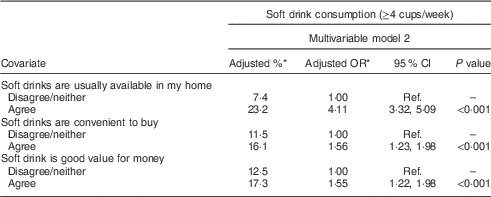
Ref., referent category.
* Adjusted for all other covariates listed in the table, demographic characteristics, weight status, school-level clustering and school type.
Finally, the third multivariable model found that, after controlling for demographic characteristics and weight status, students who reported usually buying a soft drink when making a beverage purchase from the school canteen and/or school vending machine were significantly more likely to be a high soft drink consumer compared with students who either did not purchase drinks at school or more commonly bought other types of beverages at school (adjusted %: 29·7 v. 11·6; adjusted OR =3·47; 95 % CI 2·74, 4·39, P<0·001).
Discussion
Overall, the results of the current study indicate that high consumption of soft drinks among Australian secondary-school students is more prevalent among males and those with more weekly spending money. High soft drink consumption also clusters with a number of other unhealthy lifestyle behaviours, namely low intake of fruit, high intakes of fast foods and snack foods, weekly consumption of energy drinks, greater exposure to commercial television and short sleep duration. To our knowledge, ours is the first national study conducted in Australia to show that both dietary and sedentary behaviours are independently associated with high soft drink consumption within an adolescent population.
The finding that male students are more likely to be high consumers of soft drinks compared with female students is in line with earlier studies conducted both in Australia( Reference Hafekost, Mitrou and Lawrence 24 ) and overseas( Reference Park, Blanck and Sherry 11 – Reference Bere, Glomnes and te Velde 13 ). While similar gender differences are evident across all age groups, consumption levels are at their highest during adolescence and young adulthood( 7 ), making this a critical period in which to intervene and implement strategies with a specific focus on reducing soft drink intake among males. Adolescents are at a stage in their life where they are beginning to exert greater control over their own dietary choices as they gain more independent buying power (e.g. through having a part-time job and earning their own money), which likely influences the types of drinks they consume. Indeed, we noted that students with higher amounts of available weekly spending money were more likely to be high soft drink consumers, suggesting at least some purchasing of soft drinks by adolescents themselves.
Students residing in low-SEP neighbourhoods were no more likely to be high soft drink consumers than those who lived in high-SEP neighbourhoods. Socio-economic disparities in adolescents’ soft drink consumption have previously been reported in cross-national studies of school-aged children and adolescents in Europe, albeit with some variations between countries and genders, when using parental occupation, parental education and familial wealth as indicators of SEP( Reference Vereecken, Inchley and Subramanian 25 – Reference Inchley, Currie and Young 28 ). In Australia, mean intake of soft drinks has been shown to be higher among 14–16-year-olds living in low-SEP areas compared with those residing in high-SEP areas; however, the difference between the highest and lowest SEP groups in the proportion consuming soft drinks on the day of the survey was not found to be statistically significant for this age group( Reference Clifton, Chan and Moss 8 ). For future studies, it would be beneficial to include individual-level indicators such as household income to further elucidate the relationship between SEP and adolescents’ soft drink consumption within the Australian context.
In our study, high soft drink consumption was unrelated to measured weight status, a result that concurs with findings from two national school-based surveys conducted in the USA( Reference Park, Blanck and Sherry 11 , Reference Park, Sherry and Foti 12 ). However, it contrasts with a systematic review and meta-analysis of prospective cohort studies and randomised controlled trials that concluded there was evidence of a positive association between SSB consumption and body weight gain in children and adolescents( Reference Malik, Pan and Willett 2 ). It is possible that overweight students may have under-reported their soft drink consumption in the present study. Alternatively, they may be consuming high quantities of other types of SSB such as cordial and fruit drinks. Overweight students may also have moderated their intake of soft drinks as a weight control method, an explanation that is supported by evidence that dieting( Reference Bere, Glomnes and te Velde 13 ) and trying to lose weight( Reference Park, Sherry and Foti 12 ) are associated with decreased frequency of consuming soft drinks among high-school students.
The observation that soft drink consumption clusters with other unhealthy dietary behaviours has been reported previously, with adolescent studies also finding intake of these drinks to be positively associated with consumption of fast foods( Reference Park, Blanck and Sherry 11 , Reference Verzeletti, Maes and Santinello 29 , Reference Collison, Zaidi and Subhani 30 ), snack foods (e.g. potato crisps, ice cream)( Reference Niven, Scully and Morley 20 , Reference Collison, Zaidi and Subhani 30 ) and energy drinks( Reference Larson, Dewolfe and Story 31 ). Further, we found that students who reported low consumption of fruit, but not vegetables, had increased odds of being high soft drink consumers. This pattern corresponds with results from a 2007 national survey of Australian children that examined factors associated with high consumption of carbonated drinks (i.e. soft drinks and energy drinks) using 2 d dietary recall data( Reference Hafekost, Mitrou and Lawrence 24 ). Given the apparent clustering of unhealthy dietary practices among adolescents, it is crucial that interventions aimed at reducing intake of soft drinks monitor how changes in consumption of these types of beverages may possibly impact on other eating behaviours. In addition, whole-of-diet interventions that recognise these interrelationships may prove more effective than interventions with a singular focus on soft drinks.
While some previous US studies have found there to be an inverse association between students’ physical activity behaviour and soft drink consumption( Reference Ranjit, Evans and Byrd-Williams 10 , Reference Park, Blanck and Sherry 11 ), no such evidence was forthcoming in the present study (or the 2007 Australian National Children’s Nutrition and Physical Activity Survey)( Reference Clifton, Chan and Moss 8 ). We used a relatively blunt physical activity measure, which combined moderate and vigorous activity into a single, self-reported question. However, factors such as the duration and intensity of the activity and the setting/behavioural context in which it occurs likely impact on adolescents’ rehydration needs and the beverage choices available to them. For example, soft drinks have been identified as one of the top-selling food and drink items sold in canteens and vending machines at community-level children’s sports clubs in two Australian States/Territories( Reference Kelly, Baur and Bauman 32 ). Thus, it is important that future studies aim to validate our null finding using multiple, and more specific, indicators of physical activity (e.g. time spent participating in organised sport outside school).
Higher television viewing (>2 h/d) was related to high soft drink consumption, in line with findings from a systematic review showing clear associations among adolescents between sedentary behaviour and unhealthy dietary practices, including intake of energy-dense drinks( Reference Pearson and Biddle 33 ). The effects of television viewing on diet have commonly been attributed to food advertising; however, non-advertising mechanisms, such as distraction and interruption of physiological food regulation (e.g. satiety cues), may also possibly explain this link( Reference Marsh, Ni Mhurchu and Maddison 34 ). As observed in the 2009 US Youth Risk Behavior Survey( Reference Park, Sherry and Foti 12 ), we found that students who reported shorter sleep duration (<8 h/school night) were more likely to be high soft drink consumers. Caffeine is a common additive used in cola soft drinks to enhance flavour( Reference Keast and Riddell 35 ) and high caffeine intake among adolescents (primarily in the form of soft drinks) is correlated with difficulty sleeping and feeling tired in the morning( Reference Orbeta, Overpeck and Ramcharran 36 ). The removal of caffeine (which reduces the sweetness of sucrose) from soft drinks could have potential benefits beyond improving sleep quality, by allowing for a reduction in sucrose (and by extension energy content) without affecting flavour( Reference Keast, Sayompark and Sacks 37 ).
Consistent with previous research( Reference Bere, Glomnes and te Velde 13 , Reference Denney-Wilson, Crawford and Dobbins 38 , Reference Grimm, Harnack and Story 39 ), we found evidence of a strong link between the perceived availability of soft drinks in the home and students’ consumption of these drinks. With the majority of Australian adolescents’ intake of SSB (which includes soft drinks) occurring at home( Reference Hafekost, Mitrou and Lawrence 24 ), it is important that parents and children are better educated about the negative health impacts of soft drinks. One possible population-level educational strategy that warrants careful consideration is the introduction of mandatory health warning labels on soft drinks. Health warning labels on tobacco packages and alcohol containers have been shown to have positive effects on knowledge, attitudes, intentions and/or behaviour( Reference Hammond 40 – Reference White, Webster and Wakefield 44 ); however, their utility on soft drinks is less clear. Recent experimental study findings indicate that SSB health warning labels are able to reduce adolescents’ and young people’s preferences for SSB in hypothetical purchasing scenarios( Reference VanEpps and Roberto 45 , Reference Bollard, Maubach and Walker 46 ). Further research is needed to assess how adolescents respond to such warning labels on soft drinks, rather than SSB more broadly.
Students who perceived that soft drinks are convenient to buy and good value for money were more likely to be consuming a high amount of soft drinks, reflecting a need for interventions that reduce the accessibility of these drinks. Increasing the price of soft drinks via a tax on SSB could have potential to discourage consumption and influence demand among adolescents for healthier alternatives such as water. For example, in Mexico, where a tax on SSB was introduced at the beginning of 2014, a small decline has been observed in the average volume of household SSB purchases and an increase in purchases of untaxed beverages (in particular bottled water)( Reference Colchero, Popkin and Rivera 47 ). In addition, economic studies suggest that consumers are sensitive to price changes for soft drinks, with higher prices corresponding to lower consumption( Reference Andreyeva, Chaloupka and Brownell 48 – Reference Thow, Downs and Jan 50 ). Within the Australian context, it is estimated that an excise tax of 40 cents per 100 g of sugar contained within SSB would reduce consumption by approximately 15 % and generate about $AU 500 million in annual revenue that could be used to fund obesity prevention initiatives( Reference Duckett, Swerissen and Wiltshire 51 ).
In our study, students had significantly greater odds of being a high soft drink consumer if they usually bought soft drinks when making a beverage purchase at school. This finding indicates that the availability of soft drinks for purchase by students in school settings may be facilitating their high consumption. While the percentage of SSB consumed at school by Australian adolescents is much lower than at home (~11 v. ~63 %)( Reference Hafekost, Mitrou and Lawrence 24 ), this percentage could be substantially reduced through implementation of a total ban on soft drinks in schools. At present, Australian State Government policy guidelines generally impose restrictions on the sale of these drinks in school canteens. Yet, many secondary schools do not adhere to these guidelines, with an overall lack of monitoring and enforcement likely contributing to non-compliance( Reference Woods, Bressan and Langelaan 52 ). Thus, any future legislative attempts to prohibit soft drinks from being sold in schools should be supported by a stringent monitoring and enforcement system to increase compliance.
Some study limitations should be acknowledged. First, given the cross-sectional study design, we are unable to draw any causal inferences regarding the observed associations. Second, due to survey length constraints, we used a single item question with response categories to measure soft drink consumption rather than a more rigorous dietary assessment tool (e.g. FFQ, 24 h dietary recall). Third, the data were self-reported and may be affected by recall and social desirability. For example, prior research suggests that young people have a tendency to underestimate their intake of soft drinks when responding to a short dietary question( Reference Gwynn, Flood and D’Este 53 ). Fourth, we did not examine correlates of other types of SSB such as energy drinks, fruit drinks, sports drinks and cordial. As such, our findings are specific to soft drinks and cannot be generalised to all SSB. Finally, the response rates achieved were relatively low, reflecting the growing challenges researchers face in gaining access to schools and recruiting students using active consent procedures. However, the use of replacement schools with similar characteristics to originally selected schools did, to some extent, preserve the representativeness of the large sample.
Conclusion
The results of the current large, national, school-based study highlight the clustering of high soft drink consumption with other unhealthy lifestyle behaviours among Australian secondary-school students. Interventions that strive to reduce the availability of soft drinks (e.g. increased taxes, restricting their sale in schools), as well as improved population-level education on the harms of these drinks, are needed to lower adolescents’ soft drink intake.
Acknowledgements
Acknowledgements: The NaSSDA Study Team comprises Cancer Council Victoria: Belinda Morley, Maree Scully, Philippa Niven, Melanie Wakefield; Technical Advisory Group: Louise Baur (Chair), David Crawford, Victoria Flood, Anthony Okely, Iain S. Pratt, Jo Salmon. The authors thank the school principals, teachers and students who participated in the study, and I-view who were responsible for fieldwork coordination. Financial support: The NaSSDA survey was jointly funded by State Cancer Councils through Cancer Council Australia, the National Heart Foundation of Australia, and the State and Territory Government Health Departments. M.W. is supported by a Principal Research Fellowship from the National Health and Medical Research Council. The funders had no role in the design, analysis or writing of this article. Conflict of interest: None. Authorship: All authors have contributed to the present paper by being involved in conceiving and designing the study or in analysis and interpretation of the data, and in writing and revising the paper. Ethics of human subject participation: The NaSSDA Study was approved by the Human Research Ethics Committee of Cancer Council Victoria. In addition, approval was obtained from the education authority for each sector in each State and Territory, as well as the principal at each selected school.



