

Burnout syndrome comprises emotional exhaustion, depersonalisation and a reduced sense of personal accomplishment and is a major problem for health professionals. Reference Maslach, Schaufeli and Leiter1,Reference Freudenberger2 A high degree of burnout is very common among nursing staff. Reference Raftopoulos, Charalambous and Talias3–Reference Mann and Cowburn5 According to the demands-control model of Karasek, the job content reveals that certain sources of job stress, high job demands and low level of control by the employee over their work are responsible for the stress experienced in the workplace. Reference Karasek and Theorell4
The staff of psychiatric hospitals and institutions are particularly exposed to stress factors which are related to the nature of care they provide, as well as the organisational frame of the psychiatric nursing institutions. The emotional stress of taking care of patients with psychiatric problems, workload, the feeling of control at work and the social and economic rewards associated with work are factors related to job stress and professional exhaustion. Reference Mann and Cowburn5,Reference Lasalvia, Bonneto, Bertani, Bissoli, Cristofalo and Marrella6 Specifically, staff who have close, face-to-face interactions with patients and those with longer job tenure in mental health were more likely to develop burnout. A study of 510 psychiatric workers in 28 different units found that high levels of emotional exhaustion and depersonalisation were correlated with negative attitudes (e.g. distant, rejecting) toward patients on their ward. Reference Holmqvist and Jeanneau7 Another study of 93 nurses from 11 acute adult mental health wards showed that difficult or demanding patients were the most stressful aspect of their job for unqualified staff. Reference Jenkins and Elliott8 Approximately half of all nursing staff showed signs of high burnout in terms of emotional exhaustion. Higher stressor scores were associated with higher levels of depersonalisation. Reduced level of support and increased administrative pressures were leading to an increase in stress and burnout. Reference Barling9
The full extent of the problems arising from the provision of institutionalised care only came to light in the early 1990s, when the first deinstitutionalisation project in Greece for people with intellectual, physical, motor and other disabilities was implemented. The Leros Medical-Social Welfare (formerly PIKPA) Asylum Deinstitutionalisation and Rehabilitation Project concerned an institution for children with special needs on the Greek island of Leros. This project was carried out under the direction of J. Tsiantis, professor of child psychiatry. At the beginning of the project, there were 165 residents aged 8–46, out of whom 32 (20%) were children and adolescents up to 18 years old. Living conditions and sanitation within the setting were found to be degrading and unacceptable, nutrition was poor, residents were packed into 40-bed wards, and the number of beds was insufficient. There was also a lack of trained personnel, a lack of medical, nursing and physiotherapeutic care, a total absence of special equipment or educational materials, and an extensive use of violence and physical restraint by the personnel. At the end of the intervention project, improvements in the care system and patients' quality of life in the Leros PIKPA Asylum were obvious. Following training, the care staff changed their unacceptable care methods and negative attitude towards people with disabilities. Reference Kordoutis, Kolaitis, Perakis, Papanikolopoulou and Tsiantis10 However, since then no other intervention effort was pursued in Leros PIKPA.
Twenty-five years after the first deinstitutionalisation, the aim of the present study was to investigate the correlation between job content and burnout syndrome among the staff of Leros PIKPA Asylum. Previous studies showed the significance of the application of intervention programmes for deinstitutionalisation and rehabilitation, Reference Kordoutis, Kolaitis, Perakis, Papanikolopoulou and Tsiantis10–Reference Tsiantis, Diareme and Kolaitis12 as well as the need for supporting employees with high levels of stress and difficulties in their workplace. Reference Tsiantis, Diareme and Kolaitis12
Method
Study design and procedure
This is a cross-sectional study that took place between August and November 2013 in Leros PIKPA Asylum on the Greek island of Leros. It was conducted with the help of nursing managers at the four sectors of the asylum. The head nurse of each sector distributed the questionnaires and the study included asylum employees (nursing and administrative staff). To maintain the privacy of the participants, all questionnaires were delivered to the main investigator in closed envelopes. The inclusion criteria were permanent employment in the asylum and no pre-existing mental illness.
The study was approved by the PIKPA Hospital Ethics Committee (trial registration number UoAMedPR-4716-180211-19) and complied with the 2013 World Medical Association Declaration of Helsinki. All participants were given a letter containing information about the study's aims and procedures. The voluntary nature of participation and anonymity were emphasised in the informed consent form.
Measures
All participants received four questionnaires: a sociodemographic questionnaire, the Maslach Burnout Inventory (MBI), the Job Content Questionnaire (JCQ) and the Perceived Stress Scale (PSS). Reference Anagnostopoulos and Papadatou13–Reference Alexopoulos, Argyriou, Bourna and Bakoyannis15
The sociodemographic questionnaire included the following: gender, age, level of education, marital status, number of children (if any), work type, work hours, monthly salary, previous experience at the asylum and shift flexibility (ability to change shifts).
The MBI, Reference Anagnostopoulos and Papadatou13 validated in Greek, Reference Freudenberger2 consists of 22 items distributed across the 3 dimensions of burnout: emotional exhaustion (9 items), depersonalisation (5 items) and the feeling of personal accomplishment (8 items). Participants rated the frequency of burnout symptoms on a seven-point Likert scale, ranging from 0 (‘never happens to me’) to 7 (‘it happens to me every day’). Depersonalisation represents the interpersonal burnout dimension and refers to negative and cynical confrontation with service recipients (patients). A typical example of such behaviour is an inclination to refer to patients not by name but by their bed or room number, or their illness. Cronbach's alpha coefficient was 0.838 for professional exhaustion, 0.902 for emotional exhaustion, 0.820 for personal attainment and 0.508 for depersonalisation.
The JCQ Reference Karasek, Brisson, Kawakami, Houtman, Bongers and Amick14 was designed to measure the ability to make decisions at work, work demands (psychological, physical), job insecurity, coworker and supervisor support, and quality of life. The employees' quality of life includes the following subcategories: lack of job satisfaction, depressive emotions, psychosomatic stress (fatigue, perspiration, and decreased appetite and eating) and sleep disorders, as well as complex psychosomatic stress (combined stress of the above factors). The participants were called to indicate on a four-level scale whether they agreed with the statements (‘totally disagree’, ‘disagree’, ‘agree’, ‘totally agree’). The psychometric abilities of this questionnaire have been validated in a Greek population; Reference Alexopoulos, Argyriou, Bourna and Bakoyannis15 JCQ Cronbach's alpha was 0.878.
The PSS Reference Cohen, Kamarck and Mermelstein16 has been validated in the Greek population by Andreou et al. Reference Andreou, Alexopoulos, Lionis, Varvogli, Gnardellis and Chrousos17 Seven out of the fourteen items of the PSS-14 are considered negative and the remaining seven positive. The negative part is intended to assess lack of control and negative affective reactions, while the positive elements measure the degree of ability to cope with existing stressors. Each item was rated on a 5-point Likert scale (ranging from 1 ‘never’ to 5 ‘very often’). Total scores (ranging from 0 to 56) were calculated after reversing the positive items' scores and then summing up all scores. PSS Cronbach's alpha was 0.803.
Statistical analysis
Continuous variables are presented with mean and standard deviation. Quantitative variables are presented with absolute and relative frequencies. Pearson's χ2-test and Fisher's exact test were used for the comparison of frequencies between two subgroups. Where dependent variables were continuously scaled, we performed either a parametric independent samples t-test, if assumptions of normality and/or homogeneity of variance held, or a non-parametric Mann-Whitney U test (for the difference of mean values between two groups) and the control of Kruskal-Wallis (for the difference between mean values of more than two groups), if the assumptions were violated. The Kolmogorov-Smirnov test or the Shapiro-Wilk test were used for assessment of normality. Spearman's correlation coefficient was used to explore the association of two continuous variables. All P-values reported are two-tailed. Statistical significance was set at 0.05 and analyses were conducted using the SPSS statistical software (version 19.0).
Results
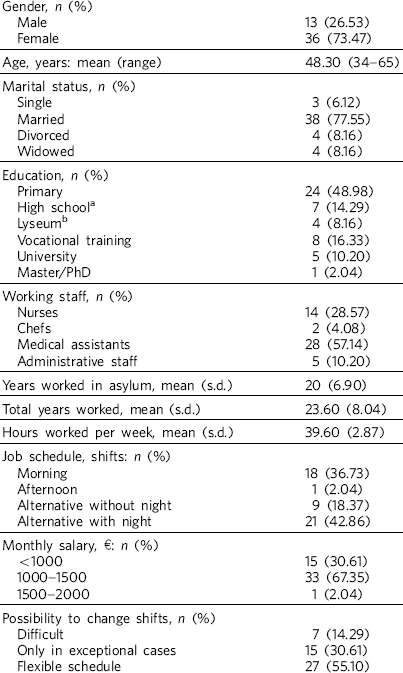
Sixty employees of Leros PIKPA were invited to participate in this study; 49 agreed and subsequently completed the questionnaires. The basic demographic characteristics of the participants are presented in Table 1.
Demographic characteristics of participants
| Gender, n (%) | |
| Male | 13 (26.53) |
| Female | 36 (73.47) |
| Age, years: mean (range) | 48.30 (34–65) |
| Marital status, n (%) | |
| Single | 3 (6.12) |
| Married | 38 (77.55) |
| Divorced | 4 (8.16) |
| Widowed | 4 (8.16) |
| Education, n (%) | |
| Primary | 24 (48.98) |
| High school a | 7 (14.29) |
| Lyseum b | 4 (8.16) |
| Vocational training | 8 (16.33) |
| University | 5 (10.20) |
| Master/PhD | 1 (2.04) |
| Working staff, n (%) | |
| Nurses | 14 (28.57) |
| Chefs | 2 (4.08) |
| Medical assistants | 28 (57.14) |
| Administrative staff | 5 (10.20) |
| Years worked in asylum, mean (s.d.) | 20 (6.90) |
| Total years worked, mean (s.d.) | 23.60 (8.04) |
| Hours worked per week, mean (s.d.) | 39.60 (2.87) |
| Job schedule, shifts: n (%) | |
| Morning | 18 (36.73) |
| Afternoon | 1 (2.04) |
| Alternative without night | 9 (18.37) |
| Alternative with night | 21 (42.86) |
| Monthly salary, €: n (%) | |
| <1000 | 15 (30.61) |
| 1000–1500 | 33 (67.35) |
| 1500–2000 | 1 (2.04) |
| Possibility to change shifts, n (%) | |
| Difficult | 7 (14.29) |
| Only in exceptional cases | 15 (30.61) |
| Flexible schedule | 27 (55.10) |
a. Compulsory education from 13 to 16 years of age.
b. 16 to 18 years of age.
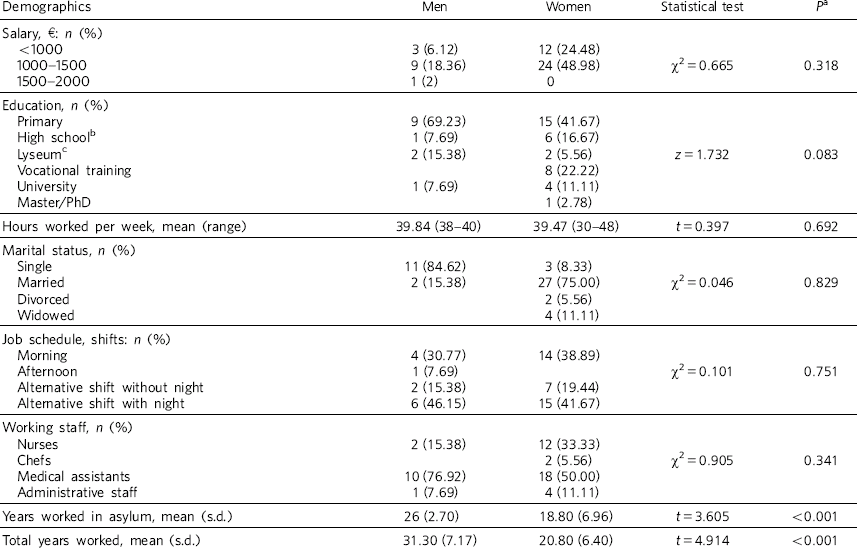
From the statistical analysis of the demographic characteristics of the employees (Table 2a, 2b & 2c), it emerged that higher salaries are correlated with older age as well as years of work. The mean values of years of work at the institution and total years of work were higher in male employees in relation to females (t = 3.605, P<0.001).
Comparison of demographic characteristics of employees: differences per gender
| Demographics | Men | Women | Statistical test | P a |
|---|---|---|---|---|
| Salary, €: n (%) | ||||
| <1000 | 3 (6.12) | 12 (24.48) | ||
| 1000–1500 | 9 (18.36) | 24 (48.98) | χ2 = 0.665 | 0.318 |
| 1500–2000 | 1 (2) | 0 | ||
| Education, n (%) | ||||
| Primary | 9 (69.23) | 15 (41.67) | ||
| High school b | 1 (7.69) | 6 (16.67) | ||
| Lyseum c | 2 (15.38) | 2 (5.56) | z = 1.732 | 0.083 |
| Vocational training | 8 (22.22) | |||
| University | 1 (7.69) | 4(11.11) | ||
| Master/PhD | 1 (2.78) | |||
| Hours worked per week, mean (range) | 39.84 (38–40) | 39.47 (30–48) | t = 0.397 | 0.692 |
| Marital status, n (%) | ||||
| Single | 11 (84.62) | 3 (8.33) | ||
| Married | 2 (15.38) | 27 (75.00) | χ2 = 0.046 | 0.829 |
| Divorced | 2 (5.56) | |||
| Widowed | 4 (11.11) | |||
| Job schedule, shifts: n (%) | ||||
| Morning | 4 (30.77) | 14 (38.89) | ||
| Afternoon | 1 (7.69) | χ2 = 0.101 | 0.751 | |
| Alternative shift without night | 2 (15.38) | 7 (19.44) | ||
| Alternative shift with night | 6 (46.15) | 15 (41.67) | ||
| Working staff, n (%) | ||||
| Nurses | 2 (15.38) | 12 (33.33) | ||
| Chefs | 2 (5.56) | χ2 = 0.905 | 0.341 | |
| Medical assistants | 10 (76.92) | 18 (50.00) | ||
| Administrative staff | 1 (7.69) | 4 (11.11) | ||
| Years worked in asylum, mean (s.d.) | 26 (2.70) | 18.80 (6.96) | t = 3.605 | < 0.001 |
| Total years worked, mean (s.d.) | 31.30 (7.17) | 20.80 (6.40) | t = 4.914 | < 0.001 |
a. P<0.05 significant.
b. Compulsory education from 13 to 16 years of age.
c. 16 to 18 years of age.
Comparison of demographic characteristics of employees: differences in salary and years worked in the asylum per age

| Age, years | |||||
|---|---|---|---|---|---|
| < 45 | 45–55 | >55 | Statistical test | P | |
| Salary, €: n (%) | χ2 = 9.908 | 0.007 | |||
| < 1000 | 2 (4.08) | 7 (14.28) | 6 (12.24) | ||
| 1000–1500 | 13 (26.53) | 20 (40.81) | 0 | ||
| 1500–2000 | 0 | 1 (2.04) | 0 | ||
| Years worked in asylum, mean (s.d.) | 16.80 (6.70) | 21.22 (6.14) | 27.14 (5.00) | χ2 = 10.094 | 0.006 |
Comparison of demographic characteristics of employees: differences in salary per educational level

| Salary, €: n (%) | Primary | High school | Lyseum | Technical institution | University | Master/PhD | Statistical test | P |
|---|---|---|---|---|---|---|---|---|
| <1000 | 10 (20.4) | 2 (4) | 1 (2) | 0 | 2 (4) | 0 | χ2 = 3.254 | 0.660 |
| 1000–1500 | 14 (28.6) | 5 (20.2) | 3 (6.12) | 8 (16.3) | 2 (4) | 1 (2) | ||
| 1500–2000 | 0 | 0 | 0 | 0 | 1 (2) | 0 |
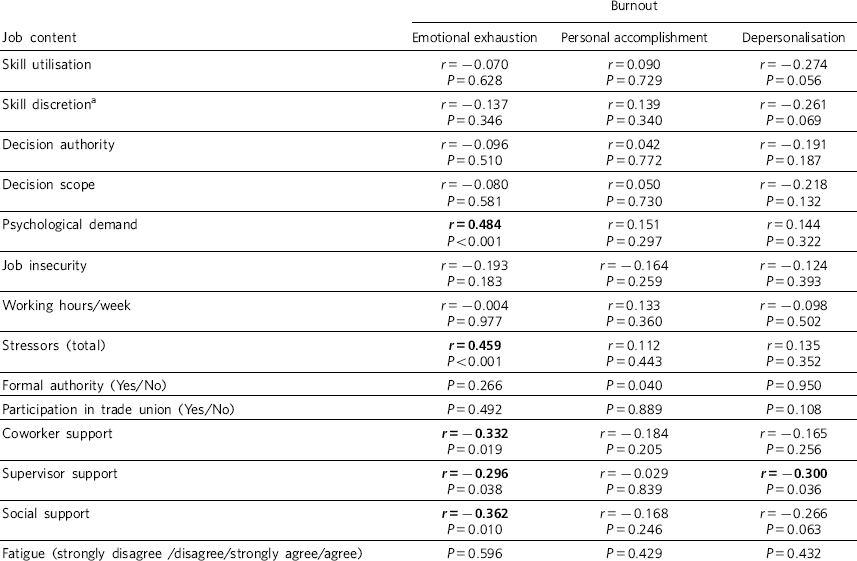
The correlations of job content with the three dimensions of professional burnout showed a statistically significant relation of the emotional exhaustion dimension of burnout to the parameters associated with psychological demands and stress factors of work in total (Table 3). Low emotional exhaustion was reported for nursing staff with coworker and supervisor support. The dimension of lack of personal achievements has a significant statistical difference in the two categories of formal authority (yes/no) (P = 0.04), and employees with low formal authority have an increased score in the dimension of lack of personal achievements. High levels of depersonalisation are correlated with lack of supervisor support (P = 0.036).
Correlations between job content scores (Job Content Questionnaire) and burnout
| Burnout | |||
|---|---|---|---|
| Job content | Emotional exhaustion | Personal accomplishment | Depersonalisation |
| Skill utilisation | r = −0.070 | r = 0.090 | r = −0.274 |
| P = 0.628 | P = 0.729 | P = 0.056 | |
| Skill discretion a | r = −0.137 | r = 0.139 | r = −0.261 |
| P = 0.346 | P = 0.340 | P = 0.069 | |
| Decision authority | r = −0.096 | r = 0.042 | r = −0.191 |
| P = 0.510 | P = 0.772 | P = 0.187 | |
| Decision scope | r = −0.080 | r = 0.050 | r = −0.218 |
| P = 0.581 | P = 0.730 | P = 0.132 | |
| Psychological demand | r = 0.484 | r = 0.151 | r = 0.144 |
| P<0.001 | P = 0.297 | P = 0.322 | |
| Job insecurity | r = −0.193 | r = −0.164 | r = −0.124 |
| P = 0.183 | P = 0.259 | P = 0.393 | |
| Working hours/week | r = −0.004 | r = 0.133 | r = −0.098 |
| P = 0.977 | P = 0.360 | P = 0.502 | |
| Stressors (total) | r = 0.459 | r = 0.112 | r = 0.135 |
| P<0.001 | P = 0.443 | P = 0.352 | |
| Formal authority (Yes/No) | P = 0.266 | P = 0.040 | P = 0.950 |
| Participation in trade union (Yes/No) | P = 0.492 | P = 0.889 | P = 0.108 |
| Coworker support | r = −0.332 | r = −0.184 | r = −0.165 |
| P = 0.019 | P = 0.205 | P = 0.256 | |
| Supervisor support | r = −0.296 | r = −0.029 | r = −0.300 |
| P = 0.038 | P = 0.839 | P = 0.036 | |
| Social support | r = −0.362 | r = −0.168 | r = −0.266 |
| P = 0.010 | P = 0.246 | P = 0.063 | |
| Fatigue (strongly disagree /disagree/strongly agree/agree) | P = 0.596 | P = 0.429 | P = 0.432 |
r, Pearson correlation coefficient.
P<0.05 significant.
Significant scores are shown in bold type.
a. Skill discretion refers to the degree to which the job involves a variety of tasks, low levels of repetitiveness, occasions for creativity and opportunities to learn new things and develop special abilities.
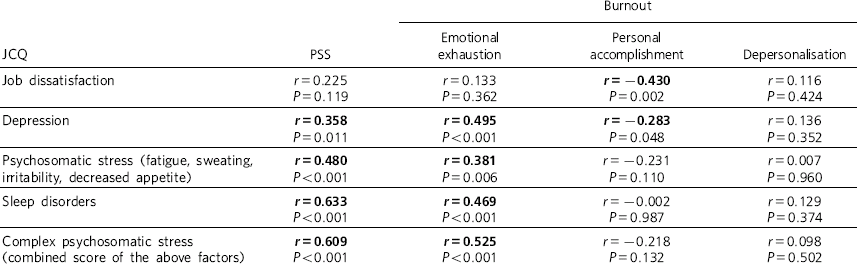
The correlations of the employees' quality of life with the three dimensions of professional burnout and the perceived stress are detailed in Table 4. Emotional exhaustion was significantly correlated with psychosomatic stress (r = 0.381, P<0.001), sleep disorders (r = 0.469, P<0.001) and complex psychosomatic stress (r = 0.525, P<0.001). The lack of personal achievements is significantly related to depressive feelings (r = −0.283, P = 0.048) and lack of work satisfaction (r = −0.430, P = 0.002). Employees with high levels of perceived stress present with depressed emotion (r = 0.358, P = 0.011) and sleep disorders (r = 0.633, P<0.001), as well as psychosomatic (r = 0.480, P<0.001) and complex psychosomatic stress (r = 0.609, P<0.001).
Job Content Questionnaire (JCQ): correlation with perceived stress scale and burnout
| Burnout | ||||
|---|---|---|---|---|
| JCQ | PSS | Emotional exhaustion |
Personal accomplishment |
Depersonalisation |
| Job dissatisfaction | r = 0.225 | r = 0.133 | r = −0.430 | r = 0.116 |
| P = 0.119 | P = 0.362 | P = 0.002 | P = 0.424 | |
| Depression | r = 0.358 | r = 0.495 | r = −0.283 | r = 0.136 |
| P = 0.011 | P<0.001 | P = 0.048 | P = 0.352 | |
| Psychosomatic stress (fatigue, sweating, irritability, decreased appetite) |
r = 0.480 | r = 0.381 | r = −0.231 | r = 0.007 |
| P<0.001 | P = 0.006 | P = 0.110 | P = 0.960 | |
| Sleep disorders | r = 0.633 | r = 0.469 | r = −0.002 | r = 0.129 |
| P<0.001 | P<0.001 | P = 0.987 | P = 0.374 | |
| Complex psychosomatic stress (combined score of the above factors) |
r = 0.609 | r = 0.525 | r = −0.218 | r = 0.098 |
| P<0.001 | P<0.001 | P = 0.132 | P = 0.502 | |
PSS, Perceived Stress Scale; r, Pearson correlation coefficient
P< 0.05 significant.
Significant scores are shown in bold type.
Discussion
This is the first study to assess the relation between professional burnout and work stress in the Leros PIKPA Asylum. Our main findings were significant positive correlations between emotional exhaustion and psychological demands of work-related life stressors, psychosomatic stress and complex psychosomatic stress.
It seems that psychological demands due to the nature of work at Leros PIKPA may be responsible for emotional exhaustion among the nursing staff. Reference Shen, Cheng, Tsai, Lee and Guo18 Furthermore, stressors that manifest with the psychological demands of work combined with job insecurity lead to the emotional exhaustion of the employees, since the workload is not matched by rewards such as a stable workplace environment and potential for career advancement. Reference Schultz, Damkroger, Heins, Wehlitz, Lohr and Driessen19 The expression of psychosomatic symptoms in employees with emotional exhaustion is interpreted by the incidence of intense stress at work with mental and physical health consequences. Reference Mark and Smith20,Reference Bergman, Ahmad and Steward21 A study by Kozak et al points in the same direction. Reference Kozak, Kersten, Schillmoller and Nienhaus22 It illustrates that the negative impact of physical and psychological exhaustion on employees providing care services to people with cognitive disorders in Germany influences their health status, while being responsible for the reduction of satisfaction derived from work and life.
Social support (from colleagues and supervisors) may be a protective factor against the negative consequences of the demands of work and subsequent emotional exhaustion. Reference Pisaniello, Winefield and Delfabbro23,Reference Schmieder and Smith24 According to the model of demands-control-support in the work environment, Reference Johnson and Hall25 support at work can promote the good health of employees and may be proposed as an element of interventional programmes for coping with stress. Reference Gilbody, Cahill, Barkham, Richards, Bee and Glanville26
In the present study, the dimension of professional burnout that evaluates the employee's lack of personal achievements shows a statistically significant difference between participants with or without formal authority. It is possible that employees with formal authority have the feeling of control over their work in contrast with those without such authority who lack work control, a fact that can also be reinforced by their lower position in the work hierarchy.
The contradictory finding of a negative correlation between the lack of personal achievements and experience of depressive feelings is probably due to intermediate variables which interfere with the above relations, such as work object, age, previous work experience, education, economical gain, and position in work hierarchy. Reference Ozkan, Celik and Younis27 A study among nursing staff in China showed that employees with a high educational level experienced more severe depression and job dissatisfaction than those with a lower level of education. Reference Gao, Pan, Sun, Wu, Wang and Wang28 Depersonalisation also constitutes a significant dimension of professional burnout among employees having direct contact with patients presenting multiple problems, such as those at PIKPA Asylum. Reference Perakis, Kolaitis, Kordoutis, Kranidioti and Tsiantis29 Supervisor support seems to have a negative impact in terms of employee depersonalisation, since the majority have received a basic level of education and do not receive any other kind of supervision in regard to patient care.
‘Perceived stress’ is a subjective construct of the stress experienced by employees and it appears to be associated with feelings of depression, sleep disorders, psychosomatic stress and complex psychosomatic stress. The way in which employees perceive stress factors may mediate the impact of job stress on the employee. In a study by Lee et al of nursing staff in Korea Reference Lee, Joo and Choi30 the perceived stress mediated the effect of job stress, resulting in the development of depression among the employees. A future study could clarify the mechanism of the effect of perceived stress on factors related to job content.
The limitations of the present study include a small sample size, which affects the generalisation of the results to other teams of employees in relative structures. The cross-sectional nature of the study highlighted correlations between variables which are not all necessarily causative. It is probable that there are other indirect variables that may have a stronger acting role (level of education, earnings, possibilities of progress, conflict of roles, quality of collaboration between personnel, etc.). Finally, lack of a control group limits the significance of the findings. Future studies should take into consideration the methodological limitations of the present study and extend the results related to job stress and burnout.
The results of the present study highlight the need for a stress management training programme in an in-patient facility such as the Leros Asylum. This is very important keeping also in mind the particular framework in the Leros Asylum (lack of trained personnel and educational material). Despite the enduring financial recession in Greece, we strongly believe that in work environments such as Leros PIKPA Asylum the application of programmes for stress management and the training of the nursing staff in new models of nursing care can significantly help the majority of the personnel.


 Open access


eLetters
No eLetters have been published for this article.