


Introduction
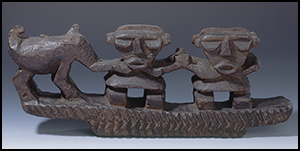
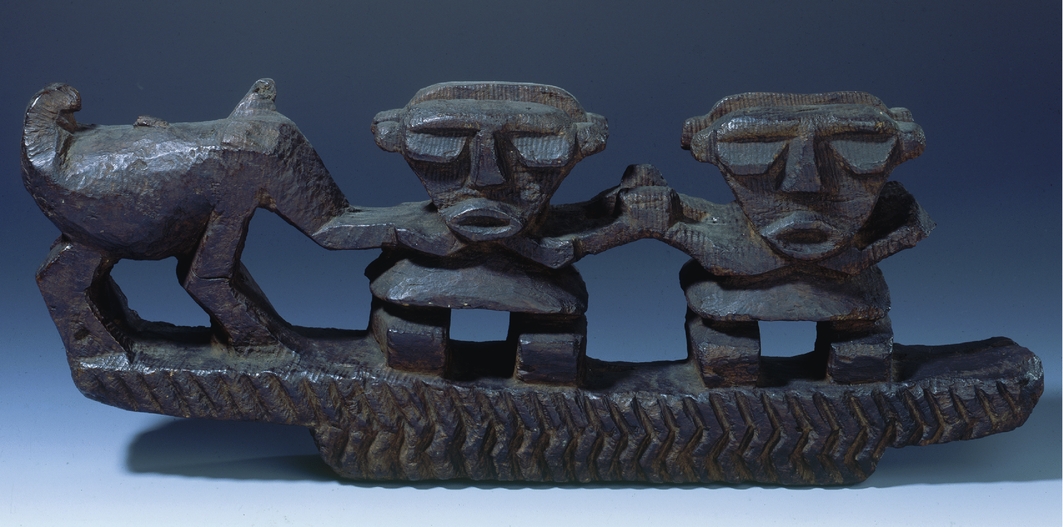
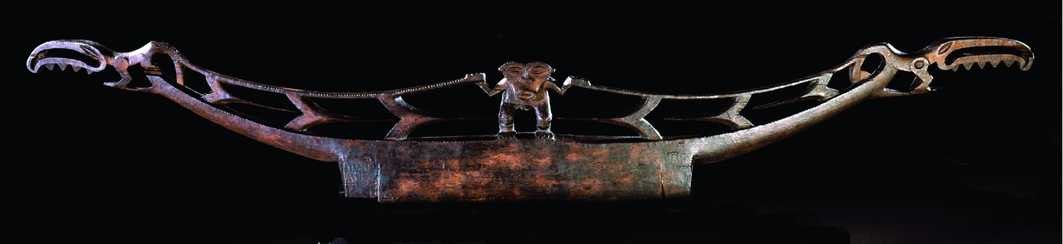
The techniques of archaeological science have been fundamental to advances in understanding the prehistoric past, but are also of great importance for the interpretation of world art, and especially of artefacts in ethnographic collections, which are too often provenanced and dated impressionistically. The Museum of Archaeology and Anthropology in Cambridge holds a collection of some 100 artefacts collected during the first voyage of James Cook to the Pacific. The objects are of exceptional historical significance for two reasons. Firstly, the growth of interest in indigenous material culture was itself an important strand in the history of the expeditions; indeed, far fewer artefacts were obtained during the first voyage than in the course of either the second or third voyages. Secondly, this group of artefacts was brought together by Cook personally and given by him to his Admiralty patron, Lord Sandwich, and then presented by Sandwich to Trinity College in October 1771, only three months after the Endeavour’s return to England. A delivery note in the form of a list, and an early inventory, are extant in the College's archives and constitute the core of the documentary evidence for the collection's provenance (Gathercole Reference Gathercole and Lincoln1998; Salmond Reference Salmond and Coote2016; Thomas et al. Reference Thomas, Adams, Lythberg, Nuku and Salmond2016). The collection was placed on deposit at the Museum of Archaeology and Anthropology in two stages, in 1914 and 1924, and has been held there since. The objects included a sculpture of unique form, comprising two double figures and a quadruped, referred to as an ‘ornamental carving’ in the early inventories. This is one of the most celebrated works in the Museum's collections (Figure 1; accession number D 1914.34). From the 1930s onwards, the piece was cited by ethnologists for its affinities with the Kaitaia carving, an important prehistoric gateway element from northern New Zealand (Figure 2; Auckland Museum, Ethno 6341). Although its own place of origin was uncertain, the Cambridge work appeared to exemplify the affinities between archaic Maori art and forms in eastern Polynesia, the region from which New Zealand was settled (Emory Reference Emory1931; Skinner Reference Skinner1931). The piece has also been considered a masterpiece of Oceanic art and included in major exhibitions in Honolulu, Washington, Paris, Bonn, Vienna and Bern, among other places, since the 1970s.
Sculpture of two double figures and a quadruped, L 530mm, Museum of Archaeology and Anthropology, Cambridge (D1914.34).
The Kaitaia lintel, fourteenth century (attributed), L 2.25m, Auckland Museum (Ethno 6341).
Where is it from?
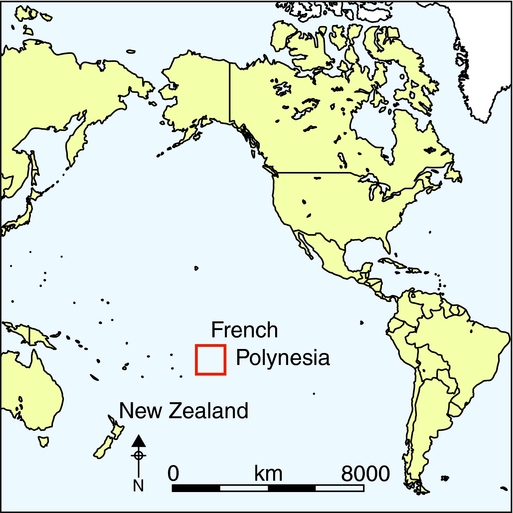
Although the carving has become well known, there has been no certainty or consensus concerning what it is or where it is from. Stylistic features prompted Kenneth Emory and H.D. Skinner to associate it with the Austral Islands, a view shared by Adrienne Kaeppler, author of studies of foundational importance relating to the Cook-voyage ethnographic collections (Kaeppler Reference Kaeppler1978, Reference Kaeppler2011; Kaeppler & Fleck Reference Kaeppler and Fleck2009). Although Steven Hooper is more hesitant, stressing the piece's sheer singularity, he also notes that features, including the zigzags, are consistent with Austral styles (Hooper Reference Hooper2006: 198). Kaeppler (Reference Kaeppler1978: 159) claims that a museum label identified the work as from ‘Oheteroa’ (the name given to Rurutu in the first-voyage journals and records), but this appears to be an error: no such label is now known to exist and the earliest records—the delivery note and the Trinity Librarian's inventory—both state that the carving was from Tahiti.
It is unlikely that the carving was obtained in the Austral Islands during the brief encounter between the Endeavour and a few men in canoes off Rurutu that took place over 14–15 August 1769 (Beaglehole Reference Beaglehole1955: 155–56). Bartering occurred, and some barkcloth in the Cambridge collection was almost certainly collected at this time (Adams Reference Adams, Thomas, Adams, Lythberg, Nuku and Salmond2016), but the accounts of the encounter contain no hint that anything like an ‘ornamental carving’ might have been acquired, nor is it likely that such a sculpture, presumably a highly valued representation of ancestors or deities, would have happened to have been in a canoe at the time, still less that it would have been presented in the context of casual traffic. Yet the piece was not necessarily created where it was collected; scholars of Africa as well as Oceania point increasingly to the fluidity of artistic identities and to the propensity of objects to circulate through exchange or otherwise well beyond their milieu of origin (Berns et al. Reference Berns, Fardon and Kasfir2011). The sculpture might have been made in the Austral Islands, but found its way to Tahiti either as a gift or as loot some time prior to the four-month 1769 sojourn of the Endeavour. Most commentators have not addressed this question, but simply attribute the work to the Austral Islands; this is how it has been provenanced in all relevant catalogues and publications of recent decades, including those published by Museum of Archaeology and Anthropology curators (Kaeppler Reference Kaeppler1978: 159–60; Gathercole et al. Reference Gathercole, Kaeppler and Newton1979: 99; Kaeppler et al. Reference Kaeppler, Kaufmann and Newton1993: 414; Tanner Reference Tanner1999: 46; Hooper Reference Hooper2006: 198; Kaeppler & Fleck Reference Kaeppler and Fleck2009: 165; Elliott & Thomas Reference Elliott and Thomas2010: 50; Brunt et al. Reference Brunt, Thomas, Mallon, Bolton, Brown, Skinner and Kuechler2012: 73).
What is it?
The carving consists of a base that is deeper in its central section than at each end, upon which are mounted linked anthropomorphic figures and an animal. The four-legged creature is certainly either a dog or a pig; to a European eye, it resembles the former rather than the latter. If, given the stylisation of the whole composition, no definitive identification can be made, the upturned tail makes a pig more likely. Pigs were more significant as gifts and prestigious feast foods than dogs, and while the representation of either in sculpture from the period of early European contact is rare, pigs do appear in whale-ivory and bone works from the Austral Islands (Hooper Reference Hooper2006: 210, 213).
While the animal is sculpted in the round, the quasi-human figures are doubled, hence the work can be viewed from either side; it has no front or back. The sides of the support bear vigorous diagonal hatching that is extended to form a zigzag in the deeper part, which is approximately, but not fully, centred. If the object is oriented so that the quadruped is on the right, the left end of the deeper base coincides with the outer leg of the left-hand figure, but the right end of this base extends farther on the right-hand side, and is beneath the point at which the second figure's arm becomes the snout or nose of the animal.
The perplexing feature of the carving is its compositional incompleteness. The conjoined figures suggest a chain that ‘should’ have continued. The arm of the figure on the left is broken off, so we have no sense of how it might have terminated. The downward angle of the ‘free’ arm indicates that whatever was once present did not simply balance the linked right-hand figure and the creature. A need for balance is suggested by the arrangements of figures that are otherwise conventional in related Polynesian sculptural traditions. Figures that we know or presume to represent ancestor-divinities may be free-standing, they may fully occupy an architectural space, a pair may be balanced, or a chain may join to form a circle, as in the well-known drums from the Austral Islands. Although there are exceptions to the principle, such as Rarotongan staff gods (which also feature a cleft between double figures), the Cambridge carving has the marked appearance of a residual work, the detached end of a longer piece, that has been sculpturally tidied through the smoothing and shaping of something that now has the look of a short handle, where figures might formerly have continued.
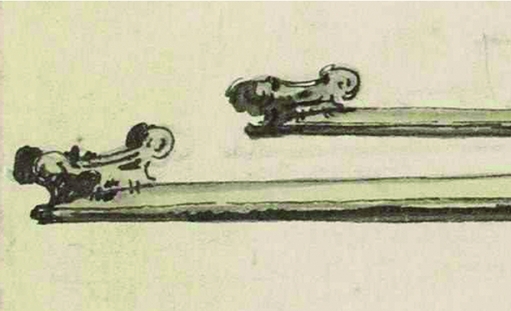
Kaeppler has suggested in various publications that the piece may have been a ‘canoe ornament’ or ‘end-piece’, referring to a sketch made, most likely in September 1777, by John Webber of a Tahitian canoe (Figure 3; Kaeppler Reference Kaeppler1978: 159–61; Kaeppler & Fleck Reference Kaeppler and Fleck2009: 165). Close examination of the drawing, however, reveals that the relevant feature bears no resemblance to the carving (Figure 4). Although a sculpted form of some kind, it does not appear to incorporate either ancestral or animal imagery, and is curvilinear, not angular. The claim for a canoe setting is not inherently implausible, given the importance of canoes as expressive vessels and as bearers of other figurative art, and the appearance of back-to-back figures on Marquesan canoe prows of similar scale; in these cases, however, a larger, forward-facing figure is the dominant element of the sculpture. Even if the carving is a remnant of a larger form, it is hard to relate the part that remains to anything even loosely analogous to the Marquesan prows, or to a canoe carving of any other kind.
John Webber, A canoe of a chief of Tahiti, September 1777, pen, wash and watercolour, 364 × 527mm, BL Add MS 15513, f. 26.

Detail of A canoe of a chief of Tahiti by John Webber, September 1777, BL Add MS 15513, f. 26.
More probably, the work formed part of a gateway over an entry into a ritual precinct, or the compound of a person of high status. It could have formed one end of a beam and been matched by an opposed counterpart; some other element, such as a larger central figure, might well have formed part of the structure. The suggestion that the piece might havebelonged in such a setting is inspired by the affinity with the Kaitaia carving (although that work has a front and back; the central figure is not janiform, i.e. having faces looking in two directions). It is important here to be explicit that we do not postulate any particular link between the two carvings, except in the deeper sense that both are products of a Polynesian and Oceanic art history in which architectural forms were often vehicles for the expression of ancestral power, reinforced by doubled figures, and that both drew on a range of conventions including the angular presentation of the face, present in both works as well as in others from many parts of the Pacific.
The sculpture embodies a further anomaly in the sense that the upraised tail of the quadruped exposes the anus, implying defilement, or perhaps specifically a directional defilement—that the area to the side of the carving was noa rather than tapu, a space free of sanctity.
New evidence
The apparent historical significance of this sculpture, and the longstanding nature of speculation concerning it, prompted us to undertake analysis that might resolve the question of where the carving originated. A series of wood shavings across eight or more tree-rings were taken from the base of the carving, totalling less than 10mm3 of material. All material was processed in the Dorothy Garrod Laboratory for Isotopic Analyses at the McDonald Institute for Archaeological Research, University of Cambridge. Samples were separated for two distinct scientific analyses for both regional and temporal context. One group of samples were processed into α-cellulose for analysis of the oxygen isotope ratio in tree-rings in order to identify the climatic region, and therefore the probable provenance of the wood used for the carving. A small portion of the samples was also sent to the University of Oxford Radiocarbon Accelerator Unit for 14C radiocarbon dating.
Isotopic analysis of cellulose from sampling tree-ring data has great potential for climatic reconstruction, as trees are archives of the carbon, hydrogen and oxygen extracted from the environment each year and fixed in the annual rings. Carbon dioxide and water from the environment are ultimately converted by the tree into cellulose. This process has been modelled, and the final chemical composition of the cellulose, expressed as variations in isotopic ratios of the elements, can be used to reconstruct the original environmental conditions at the time of the tree's growth (McFarlane et al. Reference McFarlane, Warren, White and Adams1999; McCarroll & Loader Reference McCarroll and Loader2004).
Isotope ratio measurements are expressed using the delta (δ) notation; for example, the ratio between the different oxygen isotopes 16O and 18O is expressed as a δ18O value measured in parts per mil (‰). Ocean water is the largest body of water on the planet and has a defined stable isotope ratio of 0‰ for both δD (hydrogen isotope) and δ18O (oxygen isotope). As water vapour forms over the oceans, the mass differences between water molecules formed with various isotopes of H and O cause lighter water molecules to evaporate first; the water within a cloud is therefore isotopically lighter than ocean water itself (Dansgaard Reference Dansgaard1953). As the cloud moves inland from the ocean, heavier water molecules condense first and cause precipitation along the coast; the water within this precipitation is isotopically heavier than the water vapour remaining in the cloud, although it is lighter than ocean water. The continual evaporation and condensation fractionation processes within a moving cloud create a geographic pattern of isotope ratios within water across landscapes. Plants and animals incorporate H and O isotopes directly from their local water sources (Rozanski et al. Reference Rozanski, Araguás-Araguás, Gonfiantini, Swart, Lohmann, Mckenzie and Savin1993). Thus, the stable isotope analysis of collected organic materials may reflect geographic isotope differences, and may be useful in determining the region of origin of a given sample.
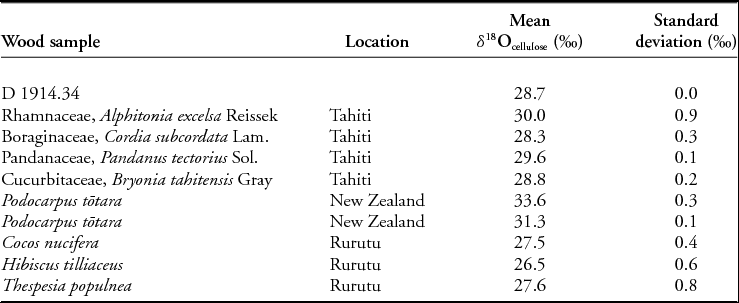
Following the α-cellulose extraction protocol based on Loader et al. (Reference Loader, Robertson, Barker, Switsur and Waterhouse1997), analyses were conducted on D 1914.34, and comparative wood samples (cellulose isotopes) from Tahiti, Rurutu (Australs, French Polynesia), and New Zealand—the islands considered to be potential candidates for the origin of the wood (Table 1). The oxygen isotope values for the comparative islands show Rurutu as having the lowest range in δ18Ocellulose at 26.5–27.6‰. Tahiti falls in a middle range, with mean δ18Ocellulose values of 28.3–30.0‰. New Zealand has the highest range of oxygen isotope cellulose values at 31.3–33.6‰. The ranges seen in these values are supported by those for water samples from the islands (International Atomic Energy Agency 1998–2014). The δ18Ocellulose for the carving, D 1914.34, falls directly into the same range as Tahiti, with a value of 28.7‰. Despite environmental variation for each island, McCarroll and Loader (Reference McCarroll and Loader2004: 771) suggest that the use of stable isotopes in tree-rings could provide “perfect annual resolution and statistically defined confidence limits” within palaeoclimate research. Caroline Cartwright (pers. comm., Wood Anatomist, Department of Conservation and Scientific Research, The British Museum) has identified the wood as Ficus sp. This is consistent with the Tahitian provenance, although without a firm species identification, conclusions drawn from the isotopic data must remain cautious, as there is isotopic variation amongst tree species in the same climatic region. In particular, the possibility of the wood originating elsewhere within the Society Islands archipelago cannot be excluded; the islands are close and contacts among them were very frequent, hence objects often moved between these inter-connected communities.
Oxygen isotope values for α-cellulose samples. Each wood specimen was analysed twice using a Thermo Finnigan mass spectrometer coupled to a high temperature elemental analyser (TC/EA).
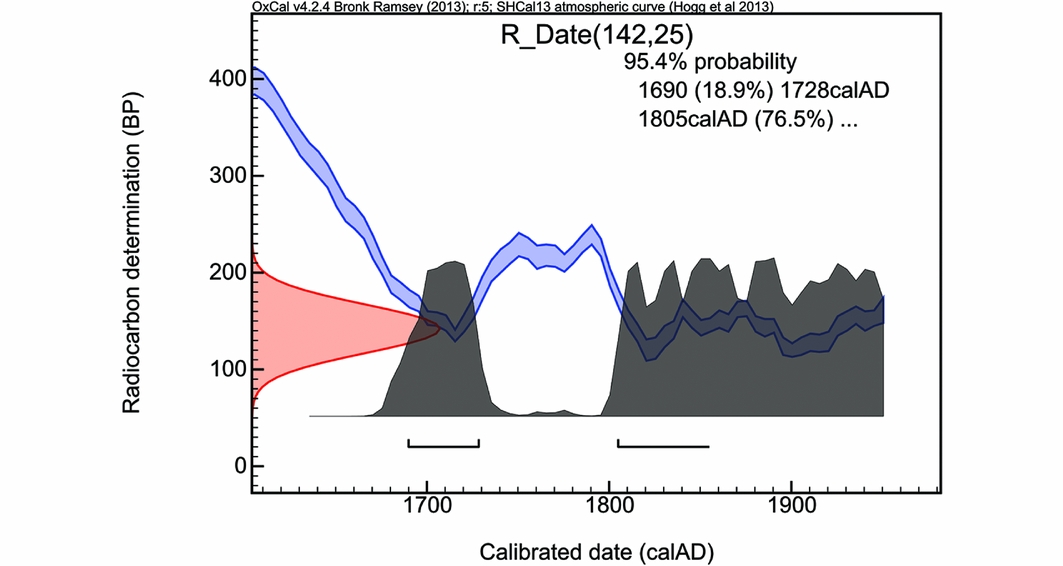
One sample of wood was sent for dating at the Oxford University Radiocarbon Accelerator Unit (ORAU). This sample comprised sub-surface shavings of wood from varied locations on the carving (one from each area sampled for isotopes) and thus should capture the ‘average’ age of the tree. Pre-treatment procedures used by ORAU would have removed any contaminates not visible. The uncalibrated radiocarbon date produced is 142±25 years cal AD (i.e. before 1950). This date was calibrated using the Southern Hemisphere calibration curve, SHCal13 (Hogg et al. Reference Hogg, Hua, Blackwell, Niu, Buck, Guilderson, Heaton, Palmer, Reimer, Reimer, Turney and Zimmerman2013), in OxCal version 4.2 (Bronk Ramsey Reference Bronk Ramsey2009). Two possible date ranges (at 95% confidence) were produced by the calibration: 1690–1728 cal AD and 1805–1950 cal AD (Figure 5). While the probability for the earlier date range (1690–1728 cal AD) is only 18.9% compared to 76.5% for the latter range, the firmly documented acquisition of the piece excludes the latter date range as incorrect, and an artefact of the calibration curve. Thus, it is most likely that the tree from which the piece was carved was living during the period AD 1690–1728, and was felled no earlier than 1690 and no later than 1728.
Single plot calibration of the date produced for D 1914.34. The calibration curve is in blue, the radiocarbon determination from the laboratory (142±25) is in red and the calibrated date ranges are in grey.
Implications
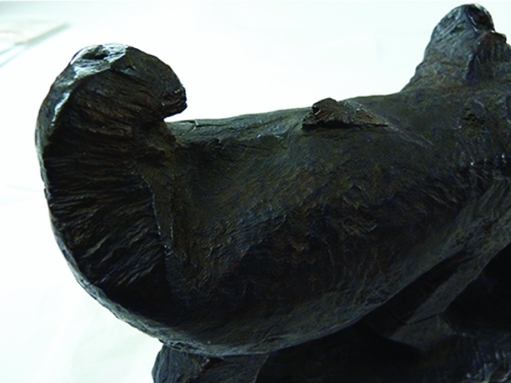
Steven Hooper (Reference Hooper2006: 198) suggested in his important survey of early Polynesian ritual arts that this sculpture “could already have been an antiquity” at the time of its acquisition. We too had noted that several areas of breakage on the piece were as heavily patinated as its overall surface (Figures 6 & 7), implying that in its broken form it was already old: it had led, perhaps, one life as part of a lintel or gateway carving and a further life as a relic ortrophy of some sort, kept as a detached work, probably within a marae or temple precinct. The dating exercise does not substantiate this particular intuition, but indicates that the sculpture was a half-century old, perhaps 80 years old, at the time it was collected by—or most probably, for whatever reasons, presented to—Captain Cook.
Sculpture of two double figures, detail. Photograph: Maia Nuku.
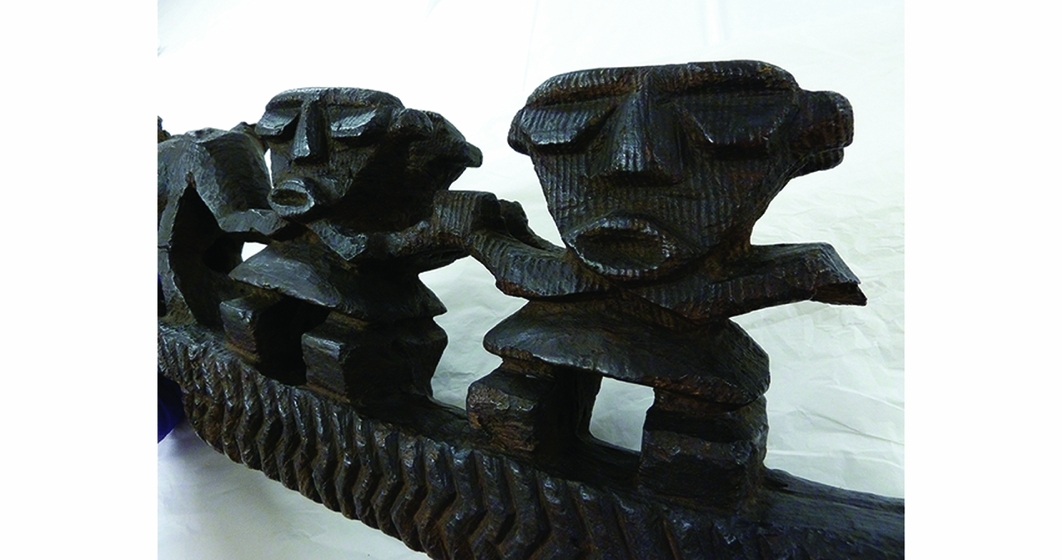
Sculpture of two double figures, detail. Photograph: Maia Nuku.
These discoveries not only alter decisively our understanding of this iconic work, but also imply fresh perspectives on the art history of the Pacific. First, it is clear that the association of region and style, upon which the cataloguing and identification of objects routinely depends, must be reconsidered. What has been referred to as the ‘one tribe, one style’ approach has long been questioned for both Africa and Oceania (Kasfir Reference Kasfir1984), and it has been well understood that motifs and forms travelled within regions, blurring what were presumed to be tribal boundaries or ‘style provinces’. Major recent projects, such as the collaborative investigation of Benue River arts showcased in a Fowler Museum and Quai Branly exhibition, have extended our sense of this fluidity of artistic identities (Berns et al. Reference Berns, Fardon and Kasfir2011). In the valid and, indeed, essential work of associating specific stylistic traits with particular places or cultures, we need to be more aware of the cases where people, artistic conventions and artefacts themselves moved, for instance through exchange networks or by way of creative appropriations. We also need to bear in mind that the styles associated with particular islands or island groups of a certain period may have been in place for mere decades, as opposed to generations or centuries. Distinctions between various Tahitian and Austral Island works of the end of the eighteenth century or the first decades of the nineteenth are readily apparent. But, if the sculpture in Cambridge is in any way representative, a late seventeenth- or early eighteenth-century ‘Tahitian’ style may have well had ‘Austral’ traits, perhaps because artists from the Australs were resident in Tahiti. These populations certainly interacted in ways that cannot at this stage be precisely reconstructed (Hooper Reference Hooper2006: 208).
There is a second significant implication. While tribal art dealers emphasise the antiquity of the pieces they offer for sale, scholars assume that if an ethnographic artefact is known to have been collected in 1800 or 1850, it was not old at that time. Without usually articulating their assumptions, they typically consider that environmental conditions, among other factors, make it improbable that objects are more than a few decades old. In the case of ritual assemblages made out of wicker, fibre and light-sensitive cloth and paint, most examples were indeed probably obtained by field collectors when the pieces were new, in the immediate aftermath of their use. But in the case of solid wooden objects, the issue is less clear. If a sculpture was on the outside of a house or in some other exterior setting, it will have been exposed not only to rain and wind, but periodically to tropical cyclones. We would also expect canoe carvings to have suffered sustained exposure, and thus to have weathered and rotted over a relatively short period, although the fact that prestigious canoes were commonly sheltered under cover for extended periods, out of the water, complicates the inference. While it is not helpful to speculate further about the probable life-spans of historic objects, it is clear that if a portable sculpture is wrapped and protected, there is no reason why it should not be preserved for a century or longer. If, in all likelihood, there are pieces in collections with the same antiquity as the lintel, then a major endeavour is potentially required around the dating of works of Oceanic art.
The third implication of our findings is more specific. If the sculpture is Tahitian, and was collected on that island, it was acquired during the Endeavour’s visit between mid April and mid July 1769. The date of its presentation may be narrowed down, albeit speculatively. It is unlikely that the piece was given suddenly to Cook upon his arrival. Elite Tahitians needed time to get the measure of the mariners, and to consider what they had to gain or lose from the encounter. It is most likely that Cook obtained the carving while making a circuit of the island between 26 June and 1 July, in part by boat and largely on foot, in the company of Joseph Banks and Tahitian guides. During this tour, they stopped at many marae and noticed numerous representations of divinities (atua); this was the period when, away from the ship and from routine preoccupations, Cook was most fully absorbed by the encounter with Tahitian culture and its art forms (Beaglehole Reference Beaglehole1955: 105–13). No particular date would, however, alter the conclusion that the work is the first piece of figure sculpture collected by a European person from any part of Oceania that remains extant and identifiable today. In March 1700, William Dampier collected ‘images’ from New Britain, but they almost certainly never reached England, or entered any collection. It is possible that Quiros, Roggeveen, Byron or Bougainville obtained objects of one sort or another, but no reference appears to be made to any acquisition in any journal or publication, nor was the project of acquisitive natural history part of, or vital to, these voyages (other than Bougainville's), as it so notably was for that of the Endeavour. Just two months after leaving the Society Islands, participants in Cook's first voyage would reach New Zealand and collect extensively there, but this ‘ornamental carving’ was perhaps the very first work acquired beyond implements or utensils. Alongside sketches of ornaments, carvings and other works by Banks’s draughtsman, and remarks Cook made about god-images (e.g. Beaglehole Reference Beaglehole1955: 112; Joppien & Smith Reference Joppien and Smith1985: 121–23, 155), its acquisition inaugurated European interest in, commentary upon, and regard for the arts of Oceania.
Acknowledgements
The research reported here has taken place in the context of two projects: ‘Artefacts of Encounter’, funded by the UK Arts and Humanities Research Council between 2010 and 2013; and ‘Pacific Presences’, funded by the European Research Council from 2013–2018. We are grateful to both agencies for their support. We also thank: Julie Adams and Caroline Cartwright (British Museum); Peter Brunt (Victoria University of Wellington); Steven Hooper (University of East Anglia); Jean-Yves Meyer (Ministère des Ressources marines, des Mines et de la Recherche, Polynésie Française); Mark Nesbitt (Economic Botany Collection, Royal Botanic Gardens, Kew); Tamsin O'Connell (Dorothy Garrod Laboratory for Isotopic Analysis, McDonald Institute for Archaeological Research); Jessica Royles (Department of Plant Sciences, University of Cambridge); Matthew Spriggs (Australian National University); and the University of Oxford Radiocarbon Accelerator Unit.



