





1. Introduction
Glaciers are integral to many high-latitude and high-altitude environments. As we move toward a world with less ice, in addition to vanishing charismatic symbols of climate change, we also lose glaciers’ important ecosystem services (Huss and others, Reference Huss2017). Despite glaciers’ multifaceted societal contributions, there is a clear consensus that the world will lose much of its ice, and that the extent of this loss is dependent on the emissions and warming pathways that society chooses in the future (e.g. Rounce and others, Reference Rounce2023; Zekollari and others, Reference Zekollari2025).
Global glacier volume change estimates (Zemp and others, Reference Zemp2025) are dominated by changes to larger glaciers, but accelerating reductions in global glacier ice volume will also necessarily mean both the increase in numbers of small glaciers and the disappearance of many currently existing small glaciers. When does that transition from glacier to not-a-glacier happen? How do we consider or talk about this transition? Is this simply a theoretical question or does it have real-world impacts? In the context of the United Nations declaring 2025 as the International Year of Glaciers’ Preservation (UN General Assembly, 2022), this paper will explore these questions.
2. Importance of vanishing glaciers
Significant portions of the world have deglaciated since the last glacial maximum. No matter what a glacier’s retreat looks like, deglaciation has enormous impacts. Small glaciers, while diminutive, are critical components of the cryosphere. As glaciers recede and vanish, impacts will be felt differently nearest to their (former) locations versus downstream, and some impacts will be gradual while others are step changes. Shrinking and vanishing glaciers, in particular, are important to consider for their highly varied roles, including:
Water Resources. Glaciers, including small glaciers, serve an important role in buffering and smoothing variability in interseasonal and interannual water resources (e.g. Ultee and others, Reference Ultee, Coats and Mackay2022; Schuster and others, Reference Schuster2025) whether for agricultural, hydropower or other uses. At different stages of glacial retreat, glacier recession and disappearance can either increase or decrease available water resources (i.e. “peak water”, Mark and others, Reference Mark2017), as well as change sediment and nutrient loading and water quality of meltwater and runoff. The framing of glaciers as water resources itself is nuanced (Gascoin, Reference Gascoin2024) and requires translation of knowledge into effective policy (Fox and others, Reference Fox, Schwartz-Marin, Rangecroft, Palmer and Harrison2024).
Climate Proxies. Retreating glaciers can be good climate indicators, especially as small glaciers can respond quickly to climate changes (e.g. Hinzmann and others, Reference Hinzmann2024). In addition, as glaciers melt more and lose their accumulation areas, we lose the unique climate records that they store (e.g. Kehrwald and others, Reference Kehrwald2008; Moser and others, Reference Moser, Thomas, Nehrbass-Ahles, Eichler and Wolff2024). However, as glaciers retreat, they can also expose unique climate proxies in the form of tree stumps, other plant materials, soils and more (e.g. Menounos and others, Reference Menounos, Clague, Osborn, Luckman, Lakeman and Minkus2008).
Biodiversity. Glaciers are unique ecological niches themselves, and they also contribute to cooler air and water temperatures and unique nutrient conditions downstream; changing the glacierized proportion of catchments therefore also changes downstream ecosystems in glacial streams (e.g. Tsuji and others, Reference Tsuji, Vincent, Tanabe and Uchida2022; Sudlow and others, Reference Sudlow, Tremblay and Vinebrooke2023). In addition, as glaciers vanish, some existing ecotones may expand and new ecosystems emerge (Bosson and others, Reference Bosson2023; Valle and others, Reference Valle, D’Adda, Scotti, Gobbi and Caccianiga2025).
Archaeology. As glaciers shrink and vanish, they can uncover unique records of human history. From people like Austria’s 5,300-year-old Ötzi and other ancient mountaineers in the Alps, Himalayas and Andes to arrows, spears and other tools in Norway, Alaska and Peru, vanishing ice can expose treasures, with glaciers’ status leading archaeologists to search in particular areas (e.g. Caspari and others, Reference Caspari, Schou, Steuri and Balz2023; Baril, Reference Baril2024).
Cultural Value. The disappearance of glaciers leaves voids in culture and heritage, including recreation, tourism (both through last-chance tourism and loss or change of tourist attraction), landscape, identity, religion and more (e.g. Cruikshank, Reference Cruikshank2007; Jackson, Reference Jackson2015b; Huss and others, Reference Huss2017; Altemus Cullen and others, Reference Altemus Cullen, Ayala and Spencer2025; López-Moreno and others, Reference López-Moreno, Revuelto, Izagirre, Alonso-González, Vidaller and Bonsoms2025).
Communication and Advocacy. Glacier recession and disappearance can be an important tool in climate change communication and environmental advocacy. In public communication, glaciers are a highly visible and emotive demonstration of climate change (NSIDC, 2002). In addition, the retreat and projected disappearance of glaciers (e.g. UNESCO, 1970; López-Moreno and others, Reference López-Moreno, Revuelto, Izagirre, Alonso-González, Vidaller and Bonsoms2025) can also be used as a call to collaborative climate action with regards to different emissions scenarios (Howe and Boyer, Reference Howe and Boyer2025).
Hazards. As glaciers recede and vanish, they leave unstable terrain in their wake, increasing the potential for a variety of geohazards like landslides, floods and detachments (e.g. Ding and others, Reference Ding2021; Svennevig and others, Reference Svennevig2024; Walden and others, Reference Walden, Jacquemart, Higman, Hugonnet, Manconi and Farinotti2025). Ironically, there are potential conflicts between glacier protection legislation and managing glacial hazards related to glacier retreat and disappearance (Anacona and others, Reference Anacona2018).
Legal Protections. Some glaciers are specially protected natural resources, and so the specifics of glacier definitions in the law can have great significance (Fernández and others, Reference Fernández, MacDonell, Somos-Valenzuela and González-Reyes2021). As of publication, Tajikistan (Republic of Tajikistan, 2024) and Argentina (Wetherbee, Reference Wetherbee2025) still retain the world’s only glacier protection laws, which define monitoring requirements and limit industrial activity on or near glaciers; however, a respected Argentine glaciologist was indicted related to creation of the mandated national industry despite it being in compliance with international norms and standards (Fraser, Reference Fraser2017; Tollefson and Rodríguez Mega, Reference Tollefson and Rodríguez Mega2017). Although glacier protection legislation was drafted and eventually rejected in Kyrgyzstan and many times in Chile (Anacona and others, Reference Anacona2018), Chilean glaciers are protected through broader environmental impact assessment processes (Rivera, Reference Rivera2022), and Swiss and Russian civil codes include their own forms of glacier protection via other environmental protections (Cox, Reference Cox2016).
Clearly, there are many reasons to focus attention on vanishing glaciers, encouraging glaciologists and policymakers to characterize and identify that process and/or point of transition.
3. Glacier definitions
As befits fundamental questions in understanding landscapes and environmental processes, it is important to be clear about what constitutes a glacier. However, while defining a glacier might seem straightforward, there is a surprising amount of ambiguity. Cogley and others (Reference Cogley2011) document a community-consensus definition of ‘a perennial mass of ice, and possibly firn and snow, originating on the land surface by the recrystallization of snow or other forms of solid precipitation and showing evidence of past or present flow’. Flow, as defined by Cogley and others (Reference Cogley2011), includes both internal deformation and basal sliding.
Clarke (Reference Clarke1987) agrees with many glaciologists in stating that, ‘The most interesting property of glaciers is that they flow’. However, the inclusion of past flow in Cogley and others’ definition means that some features may retain their status as ‘glacier’ even if they might not have it applied anew. Put another way, according to the Cogley and others (Reference Cogley2011) definition, ice must start flowing to become a glacier, but it does not have to keep flowing to stay a glacier. Post and LaChapelle (Reference Post and LaChapelle1971) also pose the question in two directions: ‘When does a snowfield reach a sufficient size to become a glacier? Or, conversely, when does a retreating glacier cease to be one?’ As glaciologists, they discuss both physical ice properties and evidence of current flow, while acknowledging that geomorphologists might point to evidence like moraines or glacial scratches/gouges in bedrock. This opens the door to evidence of past flow and ultimately contradictory definitions of a glacier. Practically, the definitions that include past flow can both allow glaciers not to lose their status as quickly and also potentially allow for a glacier to re-grow without needing to change its status, at the expense of not requiring what some glaciologists consider to be a fundamental characteristic.
3.1. Glacier definitions in practice
As in many cases, context matters in defining a glacier or whether a glacier has disappeared. Where theory meets the real world, practical, pragmatic, operational definitions of glaciers are required. In this section, I attempt to provide examples of widely applied methods of glacier definition (and loss) by glaciologists. Some of these criteria are objective, others are more subjective, and the application of particular criteria can be a nuanced decision. There is, however, a consistent thread of recognizing the importance of local knowledge and context and deferring to local glaciologists in determining what criteria to apply when identifying glaciers and/or declaring them vanished (e.g. Boyer and Howe, Reference Boyer and Howe2024; Raup and others, Reference Raup, Andreassen, Boyer, Howe, Pelto and Rabatel2025).
3.1.1. Area
Many glacier inventories adopt an area-based threshold for glacier identification, as well as declaring glaciers as no longer glaciers. In addition to a minimum glacier area, size thresholds have been used to categorize glaciers: glacierets are smaller glaciers, typically defined as < 0.25 km2 (Cogley and others, Reference Cogley2011; Ugalde and others, Reference Ugalde2025), and ‘very small glaciers’ are < 0.5 km2 (Huss and Fischer, Reference Huss and Fischer2016), although this threshold is somewhat arbitrary and varies in usage (Fischer, Reference Fischer2018). While earlier glacier inventories used topographic maps and photography (UNESCO, 1970), modern minimum-area-based glacier definitions are often a solution to operational issues raised by using digital satellite imagery in glacier inventories. The selection of a glacier area threshold balances both glaciological factors and technological limitations.
These minimum glacier areas range widely, from 0.1 km2 (USGS, 2025) and 0.09 km2 (Selkowitz and Forster, Reference Selkowitz and Forster2015) down to 0.005 km2 (Huss and Fischer, Reference Huss and Fischer2016) or 0.001 km2 (Li and others, Reference Li2025; Ugalde and others, Reference Ugalde2025), with the latter sometimes applying additional criteria. By far, the most common area threshold for glacier identification is 0.01 km2 (e.g. Pelto, Reference Pelto2008; Pfeffer and others, Reference Pfeffer2014; Way and others, Reference Way, Bell and Barrand2014; Barcaza and others, Reference Barcaza2017; Baumann and others, Reference Baumann2021; Linsbauer and others, Reference Linsbauer2021; He and Zhou, Reference He and Zhou2022; Tielidze and others, Reference Tielidze, Nosenko, Khromova and Paul2022; Paul and others, Reference Paul, Baumann, Anderson and Rastner2023), with many surveys referencing a set of community recommendations (Paul and others, Reference Paul2009). Some surveys choose to use higher thresholds like 0.05 km2 (Bolch and others, Reference Bolch, Menounos and Wheate2010; Bevington and Menounos, Reference Bevington and Menounos2022) and 0.09 km2 (Selkowitz and Forster, Reference Selkowitz and Forster2015) in order to reduce the inclusion of non-glaciers at the expense of excluding very small glaciers; the latter also included a requirement that the area of snow or ice be detected in over 80% of available imagery.
While present-day glacier area is usually determined using satellite imagery and Uncrewed Aerial Vehicles (UAVs), in situ GPS measurements of glacier boundaries have also been used frequently in the past to track glacier change and recession. For example, Braun and Bezada (Reference Braun and Bezada2013), building on a rich history of glacial fieldwork in Venezuela, used GPS to measure the Humboldt Glacier in 2009 and 2011, then Venezuela’s last remaining glacier, before its demise was declared in 2024 (Howe and Boyer, Reference Howe and Boyer2025). In addition, some studies which aim to project glacier disappearance extrapolate to zero surface area (e.g. Hinzmann and others, Reference Hinzmann2024) and thus also zero thickness (e.g. Monty and others, Reference Monty, Flowers, Crompton, Menounons and MathiasIn Review).
Relative Size
In addition to absolute area, some approaches use relative size to determine glacier disappearance. For example, Huss and Fischer (Reference Huss and Fischer2016) ‘define the disappearance date of very small glaciers as the year in which their area is either 3% of their extent in 2010, or <0.005 km2. Similarly, the Goodbye Glaciers Project (2025) provides outreach materials and defines glaciers as ‘mostly gone ... when either less than 10% of the glacier’s 2020 volume or less than 0.01 km2 is expected to remain - whichever threshold is crossed first’.
3.1.2. Ice flow and thickness
Some definitions of glaciers require current movement to qualify as a glacier. A requirement of current ice flow would imply a glacier definition based upon measurable movement and/or some theoretical combination of minimum glacier thickness (e.g. 30 m for pure ice; Cuffey and Paterson, Reference Cuffey and Paterson2010) and surface slope. This also implies that the setting of an ice mass could determine whether it becomes and/or remains a glacier.
Using a theoretical basis, Fountain and others (Reference Fountain, Glenn and Basagic2017) distinguished glaciers and perennial snowfields from each other by estimating the basal shear stress from topographic data. Using high-resolution satellite imagery, Zalazar and others (Reference Zalazar2020) distinguished glaciers from snowfields by identifying indicators of past or present flow; similarly, Linsbauer and others (Reference Linsbauer, Huss, Hodel, Bauder and Barandun2025) cite both a minimum area and identification of ‘evidence of glacier-like flow structures’ to qualify as a glacier. Arie and others (Reference Arie, Narama, Fukui and Iida2025) used in situ observations of thickness and flow to determine that two previously identified perennial snow patches in the Japanese Alps are actually glaciers. In Iceland, Hannesdóttir and others (Reference Hannesdóttir2020) used DEMs to identify flowing versus non-flowing ice, and in Chile remote sensing methods were also used to identify glaciers and rock glaciers as flowing (Falaschi and others, Reference Falaschi, Blöthe, Berthier, Tadono and Villalba2025), also implementing a minimum glacier area of 0.01 km2. Hartz and Carlson (Reference Hartz and Carlson2020) also regressed thickness and glacier area to identify their higher minimum surface area threshold of 0.1 km2. It is not uncommon to combine thickness and flow with area, with the USGS (2025) discussing surface area as a proxy for thickness and therefore flow. In Indonesia, the remaining ice on Puncak Jaya has been tracked both for thickness (Permana and others, Reference Permana2019) as well as area (Ibel and others, Reference Ibel, Mölg and Sommer2025) to project its utility as a climate record, as well as its expected complete disappearance.
Conversely, thickness and lack of ice flow were used to determine that Uganda’s Mount Speke no longer hosts a glacier (Dieckman, Reference Dieckman2025), and lack of flow was used to declare Germany’s Southern Schneeferner as no longer a glacier (Bayerische Akademie der Wissenschaften, 2022). Direct observations of stagnation caused Yosemite National Park’s Lyell Glacier to be downgraded in 2013, with the neighboring Maclure Glacier still demonstrating movement by sliding but not deformation (Stock and Anderson, Reference Stock and Anderson2012; Miller, Reference Miller2013; National Park Service, 2013).
3.1.3. Multiple factors, checklists and scorecards
While Pelto and Pelto (Reference Pelto and Pelto2025) shared the demise of the Iceworm Glacier by observing that its thickness is now ‘insufficient to generate movement’, multiple factors were identified as contributors, including thinning but also including crevasses and other melt features extending through to the glacier bed and an ice cave traversing the full length of the glacier. Increasingly, glaciologists are pointing to a convergence of direct observations and proxies to identify vanishing glaciers in a range of complex environments.
The first of these was Leigh and others (Reference Leigh, Stokes, Carr, Evans, Andreassen and Evans2019), also partially applied by others (e.g. Andreassen and others, Reference Andreassen, Nagy, Kjøllmoen and Leigh2022), who used satellite imagery and sub-meter aerial orthoimagery to classify ‘certain’, ‘probable’ or ‘possible’ glaciers using weighted criteria, including identifying crevasses, flow features/deformed stratification, multiple debris bands in ice, visible ice, a bergschrund, moraine and/or unbroken snow accumulation with a possibly convex surface. Carlson and others (Reference Carlson, Bakken-French, Thayne, Pappas, Molnar and RoodIn Review) applied criteria from Leigh and others (Reference Leigh, Stokes, Carr, Evans, Andreassen and Evans2019) and terminology from the Global Glacier Casualty List (”disappeared,” “almost disappeared,” and “critically endangered”; Boyer and Howe, Reference Boyer and Howe2024) to update the status of some glaciers in Oregon, USA, with a combination of fieldwork and satellite imagery. They emphasize presence and status of crevasses, ice fragmentation, the curve of the terminus (i.e. convex indicating flow and concave indicating wasting), significantly reduced area, the presence/lack of an accumulation area and the glacier’s accumulation area ratio (Carlson and others, Reference Carlson, Bakken-French, Thayne, Pappas, Molnar and RoodIn Review).
Similarly, Izagirre and others (Reference Izagirre2024) require a minimum number of 2 to 3 features demonstrating the demise of a glacier, including an absence of crevasses, melting processes leading to collapse, water incisions in the ice, disconnection of the accumulation area, no upper crevasses or separation from the headwall, debris cover and fragmentation in relict ice bodies. Note that glacier disconnection or segmentation does not necessitate glacier disappearance, as glaciers may also ‘regenerate’ from falling ice (e.g.
Engen and others, Reference Engen2024). In applying these criteria, Izagirre and others (Reference Izagirre2024) identified eight ice masses in the Pyrenees as no longer classified as glaciers, and one more nearby glacier has also since been added to that list (Revuelto and others, Reference Revuelto2025). Recently, Ugalde and others (Reference Ugalde2025) developed a schema to classify possible glacierets in Chile between  $0.01\,\mathrm{km}^{2}$ and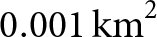 $0.001\,\mathrm{km}^{2}$ by using a decision tree based upon surface conditions and morphological context; glaciers were categorized as either extant, ‘presumably vanished’ or ‘entirely vanished’.
This transition from a glacier to a not-a-glacier can be messy. Thanks to varying topography, precipitation, melt and other local characteristics, a glacier’s vanishing looks different in each case. The approaches using multiple criteria (e.g. Leigh and others, Reference Leigh, Stokes, Carr, Evans, Andreassen and Evans2019; Izagirre and others, Reference Izagirre2024; Ugalde and others, Reference Ugalde2025) are perhaps more accurate than others as they consider individual glaciers and reflect their varying local conditions. However, these multi-criteria approaches are also more time-consuming and depend on data availability, which can limit their usage. In addition, while these schemas follow a consistent structure, they provide guidelines rather than strict definitions and therefore still leave some uncertainty. The application of particular criteria can also conform with different definitions of glaciers, which require evidence of past and/or present flow. Interestingly, based upon the needs of different use cases, they take two opposite approaches of either accumulating evidence to identify a glacier as existing (Leigh and others, Reference Leigh, Stokes, Carr, Evans, Andreassen and Evans2019; Andreassen and others, Reference Andreassen, Nagy, Kjøllmoen and Leigh2022) or identifying a glacier as vanished (Izagirre and others, Reference Izagirre2024; Ugalde and others, Reference Ugalde2025).
4. If not a glacier, then what?
The identification of glaciers implies the existence of non-glaciers, and so it begs the question of what a glacier may be called once it is no longer a glacier but before its ice completely vanishes. So, if it is not a glacier, these are a few terms that might apply (acknowledging this is in an English language context and some terms may or may not align with and/or translate well to other language contexts):
Terms Including ‘Ice’. Serrano and others (Reference Serrano, González-trueba, Sanjosé and Del Rio2011) discuss a glacier in Spain transitioning into an ‘ice patch’ (of glacial origin) as it no longer flows under its own weight, as do Securo and others (Reference Securo2025) in the Dolomites; in theory, ice patches can become glaciers again under the right conditions. Note that the term ‘ice patch’ has also been used in non-glacial contexts (e.g. Davesne and others, Reference Davesne, Fortier, Domine and Kinnard2023). Similarly, Cogley and others (Reference Cogley2011) allow for the use of the terms ‘ice body’ or ‘ice mass’, which are inclusive of both glacial (e.g. Way and others, Reference Way, Bell and Barrand2014) and non-glacial ice (e.g. López-Moreno and others, Reference López-Moreno, Revuelto, Izagirre, Alonso-González, Vidaller and Bonsoms2025). In addition, ice aprons are ‘very small ice bodies covering steep rock slopes’ (Ravanel and others, Reference Ravanel2023).
Remnant. The terms ‘remnant’, ‘glacier remnant’ and ‘remnant glacier’ have been used (e.g. Field, Reference Field1947; UNESCO, 1970; Rippin and others, Reference Rippin, Sharp, Van Wychen and Zubot2020; Whalley, Reference Whalley2021) and continue to be used colloquially in cases of significant deglaciation. These terms explicitly address the glacial source of ice bodies; ‘glacier remnant’ implies that the ice mass is no longer a glacier, while ‘remnant glacier’ implies that it still qualifies as a glacier.
Glacieret. While Cogley and others (Reference Cogley2011) adopt an area-based definition of glacieret of a glacier typically <0.25 km2 with no marked flow pattern on the surface, the term has also been used to describe any small ice, or possibly snow, mass of indefinite shape (UNESCO, 1970). Both definitions require persistence for at least two consecutive years.
Terms Including ‘Snow’. In the context of possibly not ever having been considered a glacier, various terms including ‘snow’ are applied when asking if something is a glacier or not. Leigh and others (Reference Leigh, Stokes, Carr, Evans, Andreassen and Evans2019) apply the terms ‘snow’ or ‘perennial snow’ to those features not meeting sufficient glacial criteria. Similarly, Fountain and others (Reference Fountain, Glenn and Basagic2017) and Zalazar and others (Reference Zalazar2020) apply the term ‘perennial snowfields’, while Selkowitz and Forster (Reference Selkowitz and Forster2015) prefer the adjective ‘persistent’, and Securo and others (Reference Securo2025) prefer the term ‘snow patch’. Conversely, Post and LaChapelle (Reference Post and LaChapelle1971) apply the term ‘marginal glacier’ in cases where there is uncertainty about a glacier’s status. Interestingly, the Cogley and others (Reference Cogley2011) glossary includes the terms ‘snowfield’ and ‘snowpatch’ but does not include ‘ice patch’; this is consistent with a glacier definition that includes evidence of past flow rather than requiring current flow.
Dead / Stagnant Ice. These terms refer to ‘any part of a glacier that does not flow at a detectable rate’, including ice-cored moraines (Cogley and others, Reference Cogley2011). ‘Dead’ and ‘stagnant’ are frequently also used to refer to former glaciers rather than glacier components. Indeed, the term ‘dead’ calls to mind the funerals and memorials held to recognize glacier disappearance, as well as implicitly recognizing ecological grief (see next section).
Debris-Related Terms. Anderson and others (Reference Anderson, Anderson, Armstrong, Rossi and Crump2018) identify a continuum in which climate warming can cause debris-covered glaciers to transform into (much shorter) rock glaciers. As with non-rock glaciers, Cogley and others (Reference Cogley2011) define rock glaciers as demonstrating evidence of past or present flow and could therefore face questions like those asked in this paper about non-rock glaciers. However, under future conditions, for example only about 3% of glacierized areas (namely cold, high elevation, moderate precipitation zones) in the contiguous western United States will have potential for glacier to rock glacier transformation (Lute and others, Reference Lute, Abatzoglou, Fountain and Bartholomaus2024). However, Harrison and others (Reference Harrison2025) suggest that a transition to rock glaciers may prolong the life of glaciers in High Mountain Asia more widely. The above-mentioned terms ‘ice mass’ and ‘ice body’ may also apply to ice-cored moraines. These peri- and post-glacial features, and identifying the extent of ice still present under debris, are important for understanding the post-glacial hazards, like landslides, that they may pose (Bernard and others, Reference Bernard, Friedt, Prokop, Tolle and Griselin2024).
5. Recognizing vanishing glaciers
There are a range of ways that both scientists and society more broadly are acknowledging vanishing glaciers. At the international level, glacier databases are now including former glaciers in their datasets (GLIMS Consortium, 2005; Raup and others, Reference Raup, Andreassen, Boyer, Howe, Pelto and Rabatel2025), maps are literally having to be redrawn in response to glacier disappearance (e.g. Sigur∂sson and others, Reference Sigurðsson, Williams and Víkingsson2017; Poll and Buricelli, Reference Poll and Buricelli2022), and the Global Glacier Casualty List was started in 2024 to share stories of vanished glaciers in a dynamic, web-based format (Boyer and Howe, Reference Boyer and Howe2024). Increasingly, the emotional component of glacier loss, and climate change more broadly, is also being recognized. Albrecht and others (Reference Albrecht2007) articulate the concept of solastalgia as ‘the distress that is produced by environmental change impacting on people while they are directly connected to their home environment’, in opposition to nostalgia, which is ‘melancholia or homesickness experienced by individuals when separated from a loved home’. Relatedly, Cunsolo and Ellis (Reference Cunsolo and Ellis2018) define ecological grief as ‘emotional responses to climate change and the impacts of climate change’, which may be in response to either current loss or anticipated future losses. When we mourn the death of glaciers, though, we are not just thinking about water and nutrients; glaciers are also cherished parts of the environment and representative sentinels of anthropogenic climate change. In alignment with the desire to mourn glacier loss, people around the world have held glacier funerals and memorials in Iceland (2019), Switzerland (2019), Mexico (2019), the United States (2020), Austria (2023), France (2023) and Nepal (2025) to mark and solemnize the disappearance of glaciers (BBC, 2019; Holson, Reference Holson2019; Milman, Reference Milman2021; ORF, 2023; Howe and Boyer, Reference Howe and Boyer2025; Huss and others, Reference Huss, Fischer, Linsbauer and Bauder2025; Mountain Wilderness, 2025).
6. Discussion and conclusion
Small and vanishing glaciers provide interseasonal water storage, which in turn reduces drought resilience, changes sediment and nutrient fluxes, can reduce water quality, opens new habitats while removing existing ecological niches, impacts recreational opportunities, threatens cultural connections to the cryosphere and more. As communities are holding glacier funerals to mourn vanishing glaciers, glacier loss is inspiring the glaciology community to rethink its approach to glacier inventories. Paradoxically, due to glacier fragmentation, the number of very small glaciers is increasing as glaciers recede. Thus, conversations about the definition of a glacier and when it vanishes are more important than ever and are moving from the theoretical to the real.
There are a range of definitions of a glacier, considering various aspects of past and/or present flow, thickness, area, relative size and more. These different definitions and their application embody an inherent tension and subjectivity in classifying glaciers, which glaciologists have struggled with for many decades. Some glaciological terms may even have conflicting popular usage and also be terms of art (e.g. ice cap). Other terms, like ice patch or glacier remnant, may be more appropriate terms for former glaciers. In a very literal sense, a glacier vanishes only when all of its ice is gone, which would be a logical interpretation and application. Indeed, many studies projecting ice loss adopt this approach of total disappearance. However, that has not been the implementation of what observationally constitutes a vanished glacier. Similarly, in the sea-ice literature, an ‘ice-free Arctic’ includes some remnants of summer sea ice (i.e.  $ \lt 1 \mathrm{million\,km}^{2}$; Jahn and others Reference Jahn, Holland and Kay2024). Understanding that the glaciology community uses a variety of terms and methods to describe what happens as a glacier nears its demise, it is critical that we are careful and clear in the determination of glacier disappearance and how it is described.
In many academic disciplines that involve classification, there is a tension between lumpers and splitters; the former opting for merging into broader, inclusive categories and the latter advocating for recognition of specific, smaller categories. Glaciology is no different. Hooke (Reference Hooke2019) articulates, however, that while glaciologists may attempt categorization, ‘the natural world persistently upsets these schemes by presenting us with particular items that fit neither in one such pigeonhole nor the next, but rather have characteristics of both, for continua are the rule rather than the exception. This is as true of glaciers as it is of other natural systems’.
There are some areas where glaciers need to be considered in a glacier versus non-glacier binary, for example in some legal contexts. In addition, there are certain ecosystem services that glaciers may provide that non-glaciers do not (e.g. erosion contributing to downstream nutrient fluxes). However, much as how glaciers typically earn their title after existing as snow and stationary ice before flowing, there are many other ways in which glaciers progressively disappear following a continuum of behavior, for example protected by climatic and/or topographic factors (Fischer, Reference Fischer2018); there may even be snow and ice there while no longer a glacier. The observation of glacier loss depends on the technology we use (e.g. Bernard and others, Reference Bernard, Friedt, Prokop, Tolle and Griselin2024). For example, as sensors like satellite imagers and GNSS receivers have improved, so has our ability to observe glaciers in higher temporal and spatial resolution; with higher resolution comes a reduction in the minimum glacier size or flow speed that we can detect and therefore use before potentially determining a glacier’s demise.
Different lenses also provide different outcomes. Indeed, Meier and Post (Reference Meier and Post1995) write that, ‘A strict definition of “glacier” is virtually impossible. ... Few scientists would call ... tiny ice patches “glaciers”, yet they are hydrologically indistinguishable from glaciers in all characteristics but size and rate of flow’. As a perfect illustration, Paul and others (Reference Paul, Baumann, Anderson and Rastner2023) chose to include smaller ice patches in their inventory ‘as they can still be considered as a water resource’. A similar decision might be equally valid for, for example, ecologists or archaeologists studying these cryospheric features. Zooming out, considering catchment-scale or regional averages may be more useful in some contexts than attempts at the individual glacier level.
While this paper is framed around defining vanishing glaciers, there is a problem with focusing only on the vanishing rather than the survival of glaciers. As Jackson (Reference Jackson2015a) identifies, ‘a glacier-ruins narrative is understood as a narrative about glaciers that tends to overlook the existing state of a glacier and/or glacier systems and speaks instead to imagined states of loss’. This, in turn, can possibly lead to increased solastalgia (Albrecht and others, Reference Albrecht2007) and ecological grief (Cunsolo and Ellis, Reference Cunsolo and Ellis2018). Projections of glacier ice loss (e.g. Rounce and others, Reference Rounce2023; Zekollari and others, Reference Zekollari2025) walk an important line by acknowledging widespread glacier disappearance while crucially also identifying the importance of human agency in determining the extent of glacier loss and deglaciation.
Headlines of vanishing glaciers grab attention, but they can hide the important nuance behind how that determination has been made. Classification can be a useful tool, but at times it can also be somewhat subjective or arbitrary. Understanding the implications of defining a glacier in a particular way is critical before selecting how the decision is made. Careful consideration of methodology is also important before intercomparison (e.g., Linsbauer and others, Reference Linsbauer, Huss, Hodel, Bauder and Barandun2025). Some applications might even call for novel criteria because of a unique context (e.g. water resource evaluation and management in the Southern Andes; Schaffer and MacDonell, Reference Schaffer and MacDonell2022). As discussed above, the global glaciology community tends to defer to the determinations of specific experts, especially local glaciologists.
As the UN Year of Glaciers’ Preservation transitions to the UN Decade of Action for Cryospheric Sciences (UN General Assembly, 2024), it is important to recognize that society has some control over how many more glaciers vanish. In considering and discussing vanishing glaciers, we need to understand the nuance in the creation and use of definitions of glaciers. We, as a glacier-interested community, must continue to reflect on how best language can communicate the research we aim to share, keeping in mind audiences that range from other glaciologists to politicians, resource managers, decision-makers, interested public, the media and more. Ultimately, the reason that we ask whether something is a glacier should determine which definitions, methods and terminology are applied, because while glaciers are receding, the consequences of their loss will be felt around the globe.
So, when is a glacier no longer a glacier? Ultimately, the answer to that question depends on who is asking and why.
Acknowledgements
The author would like to thank the U.S. National Science Foundation for supporting some of this work under an Independent Research/Development plan. I would also like to sincerely thank the reviewers and Editor whose contributions improved this piece, as well as my colleagues who engaged in conversations on this topic, including during traverses on the Juneau Icefield Research Program, over the past several years. In addition, I wish to express sincere appreciation to Cryolist for hosting a vibrant discussion thread on this topic, and to thank the contributors to that thread, including Andrea Fischer, Andrew Fountain, Chris Shuman, Hester Jiskoot, Lucas Ruiz, Mauro Fischer and Todd Albert.


 Open access

