



The impact of parent feeding practices on children has been studied widely. Restrictive practices are related to increased eating and weight among children( Reference Faith, Scanlon and Birch 1 ), while pressure to eat and emotional feeding are related to overeating and emotional eating in children( Reference Rodgers, Paxton and Massey 2 ). Positive effects also are observed, including increased fruit and vegetable consumption within homes where authoritative, supportive feeding practices are used (e.g. modelling intake, making fruits and vegetables available)( Reference Blissett 3 ). Parents, however, are not the only influence on children’s development of food-related behaviours and preferences. Outside the home environment, childcare is often the first influence on children’s eating.
The impact of early care and education teachers’ (ECET) feeding practices and feeding communications on child outcomes has been researched to a lesser extent than that of parents. While descriptive studies have begun to document ECET feeding interactions( Reference Ward, Bélanger and Donovan 4 – Reference Gibson, Kreichauf and Wildgruber 6 ), the direct link between these interactions and child outcomes is emerging. A review by Wolfenden et al.( Reference Wolfenden, Wyse and Britton 7 ) of available trials designed to increase fruit and vegetable intake in early childhood found that a pre-school-based intervention resulted in significant increases in fruit consumption for children, whereas home visiting interventions did not have observable impacts. This demonstrates the potential impact of the ECET context and suggests a need to understand the mechanisms that contribute to change in child nutritional outcomes (e.g. dietary variety, neophobia, willingness to try) through early intervention and the interactions with the adults in early care and education settings.
Considering the gap between the potential for ECET to impact children and what is known about the influence of ECET feeding practices on children, additional information on ECET feeding interactions is needed. ECET may eat up to three meals or snacks with children per day, which is more than 500 meals in a school year. For the most at-risk children, meals in the early education setting may represent most, if not all, of their daily dietary intake( Reference Frisvold and Lumeng 8 ). As early childhood is a sensitive time for establishing self-regulation and dietary preferences( Reference Fox, Devaney and Reidy 9 ), ECET are in an important position to create a responsive feeding environment that will support healthy habits for children.
Recognizing the importance of ECET in child feeding, Mita et al.( Reference Mita, Gray and Goodell 10 ) presented a conceptual framework of characteristics of a positive meal environment (PME). A PME is conceptualized to consist of opportunities for learning, socializing and eating. The focus in a PME is on the people, emotional tone and rules/routines involved in meals. Mita’s model, consistent with the existing literature and recommendations from the American Academy of Nutrition and Dietetics( Reference Benjamin Neelon and Briley 11 ), provides a strong basis for observational study to quantify PME characteristics such as verbal feeding communications. Extending upon Mita’s model, the absence of PME characteristics and the addition of undesirable interactions would relate to a negative mealtime experience (NME), a feeding environment that is not nurturing for healthy habits. Measuring PME and NME characteristics would provide important information on the childcare feeding environment.
Currently, self-report measures are frequently used to assess ECET knowledge, attitudes and self-efficacy about child nutrition and feeding( Reference Derscheid, Umoren and Kim 12 – Reference Sharma, Dortch and Byrd-Williams 15 ). Validated feeding assessment measures developed for use with parents (e.g. Child Feeding Questionnaire (CFQ); Caregiver Feeding Style Questionnaire (CFSQ))( Reference Birch, Fisher and Grimm-Thomas 16 , Reference Hughes, Cross and Hennessy 17 ) have been used in some educational settings, but efforts to understand the psychometric properties in this group have been limited( Reference Hughes, Patrick and Power 18 ). One recently developed tool, the sixty-three-item Child-care Food and Activity Practices Questionnaire (CFAPQ)( Reference Gubbels, Sleddens, Raaijmakers and Gies 19 ), was developed specifically for use with childcare staff. However, validation efforts of the CFAPQ to date have been limited to internal consistency and item correlation estimates. Self-assessment tools of nutrition policy and procedure are available to support programmes to evaluate and improve the mealtime environment but do not provide tools to quantify distinct verbal feeding communications initiated by ECET (e.g. Nutrition and Physical activity Self-Assessment for Child Care (NAPSACC); Building Mealtime Environments and Relationships (BMER); Environment and Policy Assessment and Observation (EPAO))( Reference Benjamin, Ammerman and Sommers 20 – Reference Ward, Hales and Haverly 22 ).
Despite the progress of observational studies( Reference Gable and Lutz 23 – Reference Ramsay, Branen and Fletcher 25 ) to describe the pre-school mealtime environment, studies have not used standard instruments to capture the quantity of specific verbal ECET feeding communications in real time. This is a critical gap given that emerging research suggests a lack of correspondence between educator-reported and observed feeding behaviours( Reference Fallon 26 ). To address this gap, the current study presents the development of a new observational tool to quantify verbal ECET feeding communications (i.e. supportive and unsupportive comments) consistent with the PME framework, as well as extant literature and recommendations.
Methods
Research design
Head Start programmes serve low-income families (100 % of the federal poverty level or below) with children from birth to age 5 years through federal support from the US Administration for Children and Families Early Childhood Learning & Knowledge Center. To represent the childcare setting, Head Start agencies in two Southern states with a high prevalence of overweight and obesity were enrolled to participate in the implementation and evaluation of a nutrition education and food experience curriculum. All Head Start programmes in this sample were full-day programmes. The observations detailed in the present study represent baseline observations of the classrooms before ECET training and implementation of a nutrition education curriculum. Assessment of ECET feeding communications at mealtime was collected as a potential moderating variable of the impact of the curriculum; however, the Table Talk tool was not designed to be specific to the curriculum or training the ECET received and has wider applicability.
Observations were completed in three cohorts across a total of thirty-seven classrooms: (i) ten classrooms in autumn 2013; (ii) twelve classrooms in spring 2014; and (iii) fifteen classrooms in autumn 2015. All classrooms in the study served children between the ages of 3 and 5 years. Of the thirty-seven classrooms, six classrooms in Cohort 1 were in an urban area serving families who were a majority African American (72·4 %); sixteen classrooms in Cohorts 1 and 2 were in rural areas serving families who were a majority White (68·1 %); and fifteen classrooms (Cohort 3) were in a suburban area serving families who were a majority African American (83·6 %). A sub-sample of ECET (lead ECET, n 7) was observed twice in spring 2014 within 3 weeks (mean 1·26 weeks) to assess test–retest reliability. The study was conducted according to the guidelines laid down in the Declaration of Helsinki and all procedures involving human subjects were approved by the University of Arkansas for Medical Sciences Institutional Review Board. Written informed consent was obtained from all ECET.
Table Talk development
The Table Talk tool was developed based on the empirical literature and preliminary mealtime observations. A review of the extant literature was conducted to compile evidence-based practices and recommendations in child feeding and mealtime interactions. Selected targets for the Table Talk observation tool were based on: (i) the benefits of vocal, positive adult role( Reference Gibson, Kreichauf and Wildgruber 6 , Reference Brown, Ogden and Vögele 27 , Reference Hendy and Raudenbush 28 ); (ii) the counterproductive impact of pressuring children to eat( Reference Batsell, Brown and Ansfield 29 – Reference Hendy 32 ); (iii) the value of guiding children to attune to cues of hunger and satiety and valuing children’s choice to eat( Reference Benjamin Neelon and Briley 11 , Reference Ramsay, Branen and Fletcher 25 , Reference Birch, McPheee and Shoba 30 , Reference Hendy 32 , Reference Orrell-Valente, Hill and Brechwald 33 ); (iv) the benefits of appropriate food exploration and encouraging children’s interest in foods( Reference Benjamin Neelon and Briley 11 , Reference Birch, McPheee and Shoba 30 , Reference Dazeley and Houston-Price 34 – Reference Stark, Collins and Osnes 36 ); (v) the undesirable impacts (i.e. overjustification effect) of coercive feeding practices such as promise of a food to increase intake of another food( Reference Birch, Marlin and Rotter 37 – Reference Wardle, Herrera and Cooke 40 ); and (vi) the advantage of a positive social context at mealtimes( Reference Mita, Gray and Goodell 10 , Reference Benjamin Neelon and Briley 11 , Reference Birch, Zimmerman and Hind 41 , Reference Koivisto, Fellenius and Sjödén 42 ). After the first cohort of observations, comments that focused on behavioural control of children (e.g. ‘turn around’, ‘sit up straight’) were added to Table Talk to provide additional measurement of the mealtime climate. Consistent with a PME framework( Reference Mita, Gray and Goodell 10 ) and previous research on punitive and authoritarian interactions in childcare settings( Reference Arnett 43 ), firm, harsh directives and inappropriate transitions or redirections were coded in this category and included in the count of unsupportive behaviours.
Two authors (T.S. and B.D.) led the development of the tool. T.S. is trained as a mixed-methods researcher with graduate education in child development, educational psychology and nutrition. B.D. has graduate training in Applied Communication with a focus on adult learning. Our literature review provided sensitizing concepts (i.e. a start list)( Reference Crabtree and Miller 44 ), which we observed during our preliminary observations prior to the study. After each preliminary observation, we would meet immediately to discuss application of the list during the observations. That is, we made notes of how we coded communications we heard and compared counts for each category. During this process, we engaged in consensus building to define examples of each category, revise our categories and outline criteria for differentiation between categories. For example, we documented examples of the difference between pressuring children to eat (e.g. ‘I need to see you take a bite’) and encouraging trying in a positive way (e.g. ‘What did you notice about the carrots?’). We developed overarching rules to guide distinctions (e.g. ‘Comments that do not respect a child’s choice about how much to eat are pressure’). We continued this process until we demonstrated reliability (>85 % agreement) on three sequential occasions. We used our notes and examples from this process to develop the training materials.
Table Talk was designed to facilitate quick identification of supportive or unsupportive verbal ECET comments (see first column of Table 1 for content of the observational tool). Observations recorded on the top portion of the tool are positive (n 4); observations recorded on the bottom portion of the tool are negative (n 8). This promotes efficient categorization of verbal ECET comments. Tally marks are used during the observation and total scores are created for each item by totalling comments after the observation for each ECET.
Mean observed number of communications of early care and education teachers (ECET), by teacher type, in thirty-seven classrooms in eight Head Start centres of two Southern US states, 2013–2015

Observation training
Observers completed a standardized training consisting of an in-person session with instruction on: (i) the intent of each item with provision of examples; (ii) distinguishing between categorizations; and (iii) discreet integration into the classroom setting. This training included coding a video example with the guidance of a gold-standard observer and then independently. Thereafter, observers completed pilot field observations with the lead investigators to establish inter-rater reliability. Inter-rater reliability was calculated by determining the percentage of items on which observers rated within a narrow margin of error (±1 for counts ≤4, ±2 for counts >4) relative to the gold-standard observer. Before observing classrooms independently, each observer was required to exhibit inter-rater reliability of 85 % with one of three gold-standard observers on two occasions. Gold-standard observers exhibited greater than 90 % agreement with one another. This level of reliability was obtained within three live observations for all observers after video training. Observers (n 10) included undergraduate students of sociology and child development, graduate-level students in nutrition and psychology, and professionals from education and public health.
Data collection
In total, thirty-seven classrooms across eight centres from three Head Start agencies were observed at lunch. These classrooms included a total of seventy-five ECET – thirty-seven lead ECET, thirty-seven assistant ECET and one family-service coordinator – who regularly ate meals with children. Table 2 presents the demographics of the ECET observed in the study. Observers arrived 10 min prior to the mealtime to select an unobtrusive observation position and to allow children and staff time to adjust to their presence. Observations lasted from the time the food was served to the first child to the time the food was removed from the last child. On average, observations lasted 27·8 (sd 6·9) min (range 13–45 min). Observers focused on coding the unique verbal expressions with children as they related to the categories presented in Table 1. That is, if an ECET repeated the same phrase to the same child twice in a row (e.g. ‘Eat your green beans’, ‘Eat your green beans’), a single comment was recorded. If the ECET interacted with another child (i.e. initiated a different interaction) and returned to the previous child to provide the directive again, another comment was recorded. Directing the same phrase to a different child was considered a unique expression. Expressions were considered pressuring rather than encouraging when the child’s choice of intake was not recognized (e.g. ‘Try the carrots’ v. ‘Would you like to try the carrots with me? I think they’re yummy’). When meals were served in the classroom (n 32), one observer recorded communications of both lead and assistant ECET. When meals were served in a cafeteria setting (n 5), two observers were assigned to a class; one observer recorded communications of the lead ECET, and the other observer recorded the communications of the assistant ECET. This allowed for more accurate capturing of verbal ECET communications in the noisier cafeteria environment.
Demographic characteristics of early care and education teachers (ECET), by teacher type, in thirty-seven classrooms in eight Head Start centres of two Southern US states, 2013–2015
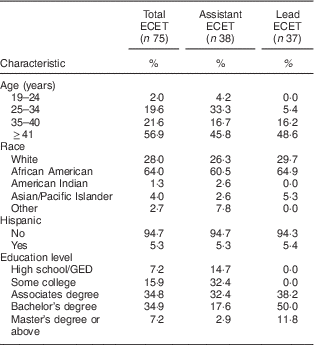
GED, General Educational Development.
Analyses
Analyses were conducted with using the statistical software package IBM SPSS Statistics version 22.0. Test–retest reliability was determined by correlating items of the first and second observations. Summary scores were created for Supportive and Unsupportive Comments by totalling the number of observed verbal ECET communications within these areas. Means were compared on Table Talk summary scores between lead and assistant ECET using one-way ANOVA, controlling for demographic information. Intraclass correlation coefficients (ICC) were calculated to indicate the variance in Table Talk items and summary scores shared between lead and assistant ECET in the same classroom( Reference Snijders and Bosker 45 ). Thus, the ICC reflect how ECET communications in the same classroom co-vary. ICC in the present study do not indicate reliability.
Results
Table Talk observations
Table 1 presents a summary of the mean number of recorded verbal feeding communications by lead and assistant ECET. For lead ECET, the most prevalent Supportive Comment was Exploring Foods, whereas for assistants Making Positive Comments was the most prevalent. These were observed 4·1 and 2·3 times per meal, respectively. Lead ECET consistently had higher Supportive Comment scores than assistant ECET, which was reflected by the overall supportive summary scores (leads, mean=10·7; assistants, mean=6·7). The least used Supportive Comment by both lead and assistant ECET was Hunger Cues, which was used less than 1 time per meal on average. A significant difference was found between lead and assistant ECET on Supportive Comments (F(2,72)=4·8, P=0·03), with lead ECET providing more supportive comments than assistants (see Table 3).
One-way AVOVA comparing supportive and unsupportive communications of early care and education teachers (ECET), by teacher type, in thirty-seven classrooms in eight Head Start centres of two Southern US states, 2013–2015

The most common Unsupportive Comment was Pressure to Eat. This was the case for both lead and assistant ECET, with observed means of 3·8 times per meal. The maximum number of Pressure to Eat Comments was 25 times in a meal. For a given classroom, children could hear up to 39 directives to eat in one meal from their lead and assistant ECET combined. This averages to hearing Pressure to Eat comments more frequently than once per minute. The most uncommon Unsupportive Comments were Negative Comments, Threats and Food as a Reward. Notably, up to 47 Unsupportive Comments were observed per meal in a given classroom. Combined, ECET were similar in their use of Unsupportive Comments (mean=8·5) and Supportive Comments (mean=8·7). No differences on Unsupportive Comments were found between lead and assistant ECET (Table 3).
Interclass correlation coefficients indicating shared classroom variance
ICC for Supportive Comments examining the shared variance between ECET in the same classroom ranged from a minimum of 0·1 (Hunger Cues) to a maximum of 0·3 (Positive Comments). ICC indicating shared variance between lead and assistant ECET for Unsupportive Comments were a minimum of 0·01 and a maximum of 0·6 (Discourage Manipulation and Hurries to Finish, respectively). ICC could not be estimated for two items (Hunger Cues and Threats) due to restricted variability in their occurrence. The ICC indicating shared variance within classrooms for overall Supportive Comments was 0·1; the ICC for overall Unsupportive Comments was 0·5.
Test–retest reliability
Item-level correlations indicating test–retest reliability ranged from 0·4 (Behaviour Control) to 0·9 (Pressure to Eat). The next lowest observed correlation was 0·5 (Positive Comments). All other correlations were greater than 0·6; several were greater than 0·8 (Hurries, Discourage Manipulation and Exploring Foods). Correlations could not be estimated for five items (Hunger Cues, Negative Comments, Threats, Preference for Unhealthy Foods, Food as a Reward) that were infrequent and constant across time in this sample.
Discussion
The purpose of the present study was to develop and assess a new tool for quantifying verbal ECET feeding communications. To that end, we proposed a systematic way to measure distinct verbal ECET communications consistent with a PME (i.e. supportive comments) and NME (i.e. unsupportive comments)( Reference Mita, Gray and Goodell 10 ). Results suggest that Table Talk has the potential to capture variability in verbal ECET communications. The observed numbers of Supportive and Unsupportive Comments at a mealtime captured by Table Talk were comparable on average.
Previous reviews on mealtime interactions among ECET have suggested room for improvement( Reference Ward, Bélanger and Donovan 4 , Reference Larson, Ward and Neelon 46 ). To move towards greater adoption of evidence-based practices, the field may benefit from pragmatic tools to measure aspects of the meal environment such as verbal feeding communications in real time. The results of the current study are consistent with previous studies which highlighted areas for improvement in mealtimes in early care and education settings. The study also offers a simple measure that may be the type of pragmatic measure needed to document and address these deficits. In the current study, Table Talk documented that ECET pressured children to eat approximately every 7 min, with a maximum rate of once every 1·2 min. This is greater than the rate reported by Gable and Lutz( Reference Gable and Lutz 23 ), which was approximately every 15 min, and is consistent with reports from Ramsay et al.( Reference Ramsay, Branen and Fletcher 25 ) who found that ECET were ten times more likely to direct children to eat than to provide cues to hunger or satiety. Using Table Talk, the current study also documents the frequency with which ECET engage in other unsupportive verbal communications that have not been included in previous studies (e.g. Discourage Manipulation).
Use of the Table Talk tool documented differences between ECET of different roles, with lead ECET providing more supportive comments than assistant ECET. The ability of Table Talk to capture communications of both ECET roles is important as both are typically present and interacting with children during mealtimes. Further, analysis of data collected using the Table Talk tool illustrated that a large amount of variance in communications was shared between ECET in the same classroom (i.e. ICC), especially for Unsupportive Comments. Potential reasons for this could be shared organizational culture or similar training opportunities. Further, previous studies have documented that physical activity and eating behaviours are predicted by those in individuals’ immediate surroundings( Reference Ball, Jeffery and Abbott 47 – Reference Pelletier, Graham and Laska 49 ). A similar peer influence could be at work between ECET in the early childhood classroom, and the Table Talk tool may be a useful way to capture this phenomenon. The cause of the shared variance between lead and assistant ECET in the present study is unknown and deserves further exploration.
Some verbal ECET feeding communications included in the Table Talk tool occurred infrequently in this sample. In fact, seven communications occurred less than once per meal on average. The infrequency of these verbal ECET feeding communications in this sample does not necessarily mean that these communications will be infrequent in other settings, such as state-funded childcare, private childcare or family childcare homes. Other studies have shown differences in self-reported feeding practices by programme type, with Head Start teachers faring better than those in other programmes( Reference Dev and McBride 50 , Reference Dev, McBride and Speirs 51 ). Thus, it is likely that higher rates of these verbal feeding communication behaviours would be seen elsewhere, and these communications should be retained as part of the tool until further work in additional settings is complete.
Table Talk may be a useful for several reasons. First, inter-rater reliability levels are consistent with NAPSACC( Reference Ward, Hales and Haverly 22 ), a standard measure in the field, and were obtained with a diverse group of observers. High rates were achieved due to the variety of training methods that each observer completed before reliability was measured, including video and field training. Our training methods, topics and standards were comparable to those used to train NAPSACC observers (e.g. observation techniques, mock observations, 85 % reliability with gold standard)( Reference Ward, Hales and Haverly 22 ). This provides an indication of the potential feasibility of the instrument for wider use. Second, Table Talk captures observed rather than reported verbal feeding communication behaviour, which eliminates self-report bias that may be an issue with measures such as the CFAPQ( Reference Gubbels, Sleddens, Raaijmakers and Gies 19 ), BMER( Reference Fletcher, Branen and Price 21 ) or NAPSACC( Reference Benjamin, Ammerman and Sommers 20 ) when a self-assessment is completed. Although observation may impact verbal ECET feeding communications, it is reasonable to expect that it would increase the ‘correct’ communications because of social desirability. Given that unsupportive verbal ECET feeding communications are still observed, there may be other barriers (e.g. lack of knowledge( Reference Sharma, Dortch and Byrd-Williams 15 ), contextual factors such as training and regulations( Reference Dev and McBride 50 , Reference Dev, McBride and Speirs 51 ), personal dietary factors( Reference Sharma, Dortch and Byrd-Williams 15 , Reference Dev and McBride 50 , Reference Swindle, Ward and Bokony 52 )) to ECET being able to consistently use evidence-based feeding communications. Finally, Table Talk may contribute to understanding the predictive power of PME and NME for children. By using a tool such as this in connection with collection of health outcomes data for children, researchers may be able to determine how the mealtime environment in early childhood settings can impact health outcomes in children.
There are also limitations to the Table Talk tool. First, Table Talk was not designed to take the place of other assessment tools that capture environmental characteristics (e.g. NAPSACC, BMER, EPAO( Reference Benjamin, Ammerman and Sommers 20 – Reference Ward, Hales and Haverly 22 )) or broader aspects of ECET practice related to nutrition (e.g. CFAPQ( Reference Gubbels, Sleddens, Raaijmakers and Gies 19 )). It should be used and further developed (e.g. convergent validity) in combination with other nutrition assessment tools. Further, Table Talk includes more unsupportive communication than supportive communication categories. This reflected the available literature and our pilot observations. We added a category to capture general statements that would capture a harsh mealtime climate (i.e. Behavioural Control) but not a similar category to reflect general statements unrelated to food that would reflect a positive mealtime climate (e.g. ‘What did you do last night at home?’). This should be considered for further development of the tool. However, Table Talk was designed as a live observation tool that has the potential for use as an immediate intervention and that would require fewer resource demands than coding recorded mealtimes (e.g. staff time, cost of coding software/equipment). This limits the amount of information that can be collected in the real-time observation, and it is expected the tool will have to remain focused to have validity and reliability. As such, the Table Talk tool will never capture the full complexity of teacher–child interactions at mealtime but is proposed to capture an important aspect.
Implications for research and practice
The current study was restricted to Head Start classrooms in Southern US states. Head Start has specific mealtime regulations which encourage family-style dining, emphasize supportive teacher–child interactions, and require compliance with US Department of Agriculture meal patterns( 53 ). Head Start classrooms may be more accustomed to observation as well. Thus, further efforts are needed to assess generalizability to other settings such as state-funded programmes, private childcare and family childcare homes. Pilot observations by our team suggest utility of the Table Talk tool to capture communications at mealtime in these additional settings but suggest different patterns of ECET communication than in Head Start. Comparisons of ECET verbal communications between centre types is a promising area for research which could inform intervention. Additionally, future efforts need to explore the predictive validity of this tool for predicting child outcomes (e.g. intake of healthy foods, willingness to try new foods). A tool shown to predict these outcomes concurrently and/or across time could be valuable to the field.
There are several additional opportunities for future research. First, studies should explore differences in Table Talk scores on ECET characteristics (e.g. level of nutrition training, food security status). Further analyses (e.g. item-level demographic comparisons, correlational analyses) were not conducted in the present study due to the restricted range and limited number of observations of some verbal ECET feeding communications. Collection of Table Talk observations across a wider range of settings and demographic groups could allow for these types of analyses. Cultural differences may be reflected in the communications of ECET, as suggested by recent work documenting the influence of family history on ECET mealtime practices with children in their classrooms( Reference Swindle, Patterson and Boden 54 ). As no standard, self-report measures of feeding communications or behaviours have been validated in ECET, validation against the CFQ and CFSQ may be useful as well.
Although not documented in the present study, Table Talk is designed to be sensitive to change and to capture wide variability in verbal ECET feeding communications. This is an important feature of the measure because it has the potential to eliminate ceiling effects, which may impact other measures in the field( Reference Gubbels, Sleddens, Raaijmakers and Gies 19 – Reference Fletcher, Branen and Price 21 ), particularly those designed to evaluate the impact of interventions. Future studies should assess if the tool is in fact sensitive to change across time. Table Talk can be used to identify individual verbal ECET feeding communications that naturally occur, offering observable, concrete information that can help shape effective interventions. This measure also has potential for local use at early childhood education agencies or on a broader scale to inform intervention. A trained observer could provide a baseline assessment of how ECET in a given setting relate to supportive and unsupportive verbal feeding communications. Information gathered may inform tailored training at the agency or individual level. Additional observational assessments throughout the school year may be useful to provide ECET with feedback on how their interactions are improving relative to evidence-based practice.
At a broader level and in line with recommendations from Story et al.( Reference Story, Kaphingst and French 55 ), the current study provides a descriptive environmental exploration of verbal feeding communication as part of the classroom food environment. Apart from the measure development aspect of the study, the observed verbal ECET feeding communications highlight areas for improvement in the use of recommended mealtime interactions in early care and education settings. Due to the shared variance found between lead and assistant ECET in the same classroom, future work can explore the potential mechanisms that lead to these similarities, and verbal feeding communication trainings can be conducted accordingly. Further, policy makers should consider how well current training requirements address supporting ECET to enact supportive verbal feeding communications. A tool such as Table Talk can play a role in identifying parts of the feeding environment that can be improved. Additionally, to individualize feeding communication training, future work in larger samples can explore differences based on ECET characteristics such as education level and ethnicity, as well as diversity among eating settings (e.g. classroom, cafeteria).
Acknowledgements
Acknowledgements: The authors would like to acknowledge and thank the participating Head Start agencies and educators involved in this work. They also thank the research assistants who aided in data collection and processing. Financial support: This project was supported by an Agriculture and Food Research Initiative Competitive Grant (T.S. and L.W.-M., grant number 2011-68001-30014) from the US Department of Agriculture, National Institute of Food and Agriculture. The project was also supported, in part, by the Translational Research Institute (TRI) (T.S., grant numbers UL1TR000039 and KL2TR000063) through the National Institutes of Health, National Center for Research Resources and the National Center for Advancing Translational Sciences; as well as the Lincoln Health Foundation of Lincoln Parish, Louisiana (J.M.R. and T.S.), the Arkansas Biosciences Institute (the major research component of the Arkansas Tobacco Settlement Proceeds Act of 2000), and the National Institutes of Health (T.S., grant number K01 DK110141-01). The content is solely the responsibility of the authors and does not necessarily represent the official views of the funding agencies. Conflict of interest: The authors have no financial or other interests in this content to disclose. Authorship: T.S. was responsible for the conception of the instrument as well as analysis and interpretation of data and leading the writing of this article; J.M.R. contributed to the acquisition of data, interpretation of the data and drafting the article; B.D. contributed to the conception of the content and the protocol for data acquisition and drafting of the article; and L.W.-M. contributed to the conception of the content, data acquisition and drafting of the article. All authors have provided approval of the final version and agree to be accountable for all aspects of the work. Ethics of human subject participation: This study was conducted according to the guidelines laid down in the Declaration of Helsinki and all procedures involving human subjects were approved by the University of Arkansas for Medical Sciences Institutional Review Board. Written informed consent was obtained from all ECET.



