


Childhood obesity has emerged as a major public health concern of the 21st century. In Canada alone, the prevalence of overweight and obesity has doubled in the past 40 years, now affecting roughly 30 % of children aged 5–17 years(Reference Roberts, Shields and de Groh1,Reference Rao, Kropac and Do2) . There is strong evidence to suggest that overweight and obese children are at an increased risk of a number of non-communicable diseases and socio-psychological issues including CVD, type 2 diabetes, hypertension and depression(3). These complications follow a child throughout his/her life course, affecting adult morbidity and mortality(Reference Cawley4).
Children’s beverage consumption habits have been linked to the rising levels of overweight and obesity observed globally(Reference Keller and Bucher Della Torre5–Reference Ludwig, Peterson and Gortmaker10). According to the Academy of Nutrition and Dietetics, children require approximately 6 to 8 cups of water in total each day to maintain sufficient hydration(Reference Mullen and Shield11) and healthy body weight(Reference Lee, Okechukwu and Emmons12). Nationwide survey data, however, suggest that few American children are consuming enough water(Reference Kant and Graubard13,Reference Drewnowski, Rehm and Constant14) . Similarly, findings from the Canadian Community Health Survey (CCHS) demonstrate that just 60 % of children’s beverage intake consists of healthy drinks such as water, milk and 100 % fruit juice, with sugar-sweetened beverages (SSB), including pop, fruit-flavoured drinks, sports drinks and energy drinks, thought to make up the majority of the difference(Reference Garriguet15). These beverages account for approximately 44 % of daily sugar intake for Canadian children and adolescents, contributing a substantial proportion of daily energy(Reference Roberts, Shields and de Groh1,Reference Hu16) , and there is moderate-quality evidence linking their consumption to excess weight gain in children(Reference Keller and Bucher Della Torre5,Reference Trumbo and Rivers6,Reference Malik, Willett and Hu8,Reference Gibson9,Reference Te Morenga, Mallard and Mann17,Reference Langlois and Garriguet18) . Given these findings, it is not surprising that SSB consumption has been identified as a key risk factor for being overweight or obese(Reference Malik, Pan and Willett7), and recent systematic reviews suggest that reducing SSB intake in young children and/or replacing SSB with water, an energy- and sugar-free alternative, is an effective strategy for reducing obesity(Reference Trumbo and Rivers6,Reference Ludwig, Peterson and Gortmaker10) .
Most water and SSB interventions can be categorized into three types: (i) health/nutrition education programmes, such as educating children about the adverse health effects of consuming SSB; (ii) environmental changes to discourage SSB or encourage water consumption, such as installing water fountains or removing soft drinks from vending machines; and (iii) policies relating to nutrition, such as banning the provision of SSB at school events. Although these approaches are often used in combination, a review of the published literature reveals that education programmes are the most common, particularly when targeting child populations(Reference Avery, Bostock and McCullough19). Education interventions aim to positively influence behaviour through improving knowledge: it is believed that by providing children with the information and skills they require to make healthy and balanced food choices, they will automatically begin to incorporate this into their everyday lives, fostering healthy habits(Reference Angelopoulos, Tsitsas and Milionis20–Reference Cunha, Souza and Pereira33). It is particularly important to establish healthy dietary habits in childhood, as behaviours formed during this period tend to persist into adulthood and thereby affect long-term health status(Reference Maynard, Gunnell and Ness34–Reference Breinbauer and Maddaleno37).
While an association between health-related knowledge and behaviour has been demonstrated in other contexts, there is mixed evidence concerning the effectiveness of nutrition education programmes in altering dietary habits. A number of studies have assessed the relationship between nutrition knowledge and dietary intake, with the majority finding a weak positive association(Reference Spronk, Kullen and Burdon38); however, only a few have focused on child populations(Reference Asakura, Todoriki and Sasaki39–Reference Reinehr, Kersting and Chahda44) and just one of these included beverages(Reference Grosso, Mistretta and Turconi40). That study identified a negative association between children’s nutrition knowledge and sugary drink consumption; however, it was conducted in a restrictive sample of children and adolescents living in rural Sicily and thus may not be generalizable to other populations(Reference Grosso, Mistretta and Turconi40).
Given these gaps, the purpose of the present study was to describe the beverage consumption habits and knowledge of elementary-school children aged 8–14 years in London, Ontario, Canada, and to assess whether greater knowledge is associated with healthier beverage habits. The results will inform the design of future SSB and water education-based interventions targeted towards children.
Methods
Setting and participants
The Water Does Wonders project occurred in the city of London, Ontario, Canada, throughout the 2016/17 school year and targeted children in thirteen priority neighbourhoods, as identified by a community needs assessment conducted through the Child and Youth Network(Reference Gilliland45). Compared with the city of London as a whole, priority neighbourhoods were more likely to contain households that had lower incomes, lower levels of educational attainment and were headed by single parents(Reference Gilliland45). Of the seventy-eight elementary schools in these neighbourhoods, nineteen were invited and agreed to participate in the study; of these, seventeen were included in the data collection. Data were collected from children in grades 4–8, who were approximately 8 to 14 years old. All children were required to have written parental consent, as well as provide personal assent in order to participate.
Data collection and tools
Data collection for the present study took place in October–November 2016. Teams of research assistants, volunteers and graduate students from the Human Environments Analysis Laboratory at Western University administered surveys to participating students. The research teams provided verbal instructions and while they were available to answer questions related to comprehension, spelling and process throughout the survey period, they did not prompt students in any way. Students were provided with a complimentary colour-changing pencil upon completing the survey. Students who were absent on the day of the survey were not given the opportunity to complete the survey at a later date.
The youth survey consisted of ninety-one items under five domains including demographics, beverage consumption habits, food and beverage consumption frequencies, eating and drinking during the school day, and nutrition and water knowledge. Response options included multiple-choice, yes/no, Likert-scale and fill-in-the-blank questions. A parental/guardian version of the survey consisting of fifty items under four domains, measuring basic demographics, the child’s eating and drinking habits, and eating and drinking during the school day, was used to supplement information collected from the youth survey.
Outcome measures
Dietary habits were assessed using an FFQ adapted from a survey developed for a previous study, described elsewhere(Reference Mitchell, Clark and Gilliland46).
Water consumption
Water consumption was measured as the number of times per day a child reported consuming water, with response categories ranging from 0 to 7+. In order to account for potential differences in children’s interpretation of ‘times per day’, for analysis water consumption frequency was divided by the total beverage consumption frequency reported by each child to obtain standardized proportions. For example, if a child reported consuming water 6 times/d and his/her total beverage intake frequently was 18 instances, 33·3 % of the child’s total daily beverage consumption would be attributable to water.
Sugar-sweetened beverage consumption
SSB consumption was an aggregate variable, derived from summing the number of times per day a child reported consuming regular pop, fruit-flavoured drinks (including sports drinks), energy drinks and chocolate milk, each ranging from 0 to 7+, for a total SSB frequency possible range of 0 to 28+. Although there is some debate as to whether sweetened milks and milk alternatives should be considered SSB due to the high number of essential nutrients they contain, we included them in our analysis based on a report published by the Dietitians of Canada(47) and using the definition of SSB defined by the Centers for Disease Control and Prevention(48). Conversely, while sweetened coffee and tea drinks are considered SSB under the Centers for Disease Control and Prevention’s definition, they were not included in the current analysis because the nature of the survey did not allow respondents to specify whether or not the tea and coffee beverages they consumed contained added sugar. Additionally, despite the fact that 100 % fruit juices are high in sugar and have a similar effect to SSB on the body(Reference Gill and Sattar49), they were excluded from the analysis because their sugar is naturally occurring. Diet beverages were also excluded. As with water consumption, for analysis SSB consumption frequency was divided by total beverage consumption frequency to generate the percentage of overall reported beverage consumption frequency attributable to SSB.
Water and nutrition knowledge
Nutrition knowledge was measured by summing the scores of thirty-six individual questions assessing children’s knowledge of the sugar, caffeine and water contents of various foods and beverages. Examples include: ‘From the list below, choose the beverages that are high in sugar and/or high in caffeine’ (100 % apple juice, black/green tea, cappuccino, chocolate milk, Coca-Cola, coffee, fruit punch, Nestea iced tea, peach drink, Red Bull energy drink, Rock Star energy drink, Sprite, SunnyD, water, white milk); and ‘Check the fruit or vegetable that has the most water from each pairing’ (cucumber or carrots, apple or peach, carrots or tomatoes, cucumber or beans, strawberries or pears, spinach or corn). The minimum possible score a child could achieve was 0 and the maximum was 36.
Water knowledge was measured by summing the scores of eight individual questions assessing children’s knowledge of the water treatment system, the health benefits of water and the world’s water. Examples include: ‘Where does the water from your tap come from?’ (ground water; Lake Ontario & Erie; Lake Huron & Erie; Thames River; I don’t know); ‘How much water do we need to drink each day?’ (3–4 cups, 5–6 cups, 7–8 cups, 9–10 cups); ‘Can you name one way that your tap water is treated?’; ‘Can you list two ways to conserve water at home or at school?’; ‘True or false, bottled water is better than tap water’; ‘True or false, water is an unlimited resource’; and ‘True or false, we have enough water in Canada for everyone, forever’. The minimum possible score a child could achieve was 0 and the maximum was 8.
Total knowledge was determined by summing the scores of the nutrition and water knowledge subscales. The minimum score that could be achieved was 0 and the maximum was 44. For analysis purposes, knowledge scores were treated as continuous.
Other covariates
Sociodemographic characteristics, including sex (male/female), age, race (white/non-white), living arrangement (single-parent household/two-parent household/other), parent education (high school or less/college or university/graduate school), parent employment status (employed/unemployed) and household income level (low/low–middle/high–middle/high), were determined using self-administered surveys completed by both the parent and child. Income level classifications were made based on reported annual household income and number of people in the household using methods described in the CCHS Derived Variable Specifications(50). Parent-reported data were used wherever possible, due to increased likelihood of accuracy; however, where missing, child-reported data were substituted.
Dietary intake, including daily servings of fruits and vegetables and weekly junk food consumption frequency, was assessed using the FFQ component of the youth survey. Junk food consumption was an aggregate variable, derived from summing the number of times per week a child reported consuming sweetened breakfast cereal, cake/pie/doughnuts, potato chips, chocolate bars, pizza, French fries, hot dogs, ice cream, candy, granola bars and cookies, each ranging from 0 to 6+, for a possible total junk food frequency range of 0 to 66+. Information on drinking habits such as frequency of use of a refillable water bottle (never/rarely/sometimes/usually/always), milk programme participation (yes/no) and permission to leave school grounds at lunchtime (yes/no) was also collected using the youth survey.
Data analysis
Data cleaning was performed using the statistical software package IBM SPSS Statistics version 24, while all other statistical analyses were conducted using SAS version 9.4.
Written parental consent was obtained for 1504 (36·8 %) of 4086 eligible children, of whom 1099 provided assent, were present on the day of the study and thus completed the youth survey. One school (n 26) withdrew from the study following data collection and was thus excluded from the present analysis, resulting in a final sample of sixteen schools. Among the remaining study participants, twenty-four children did not have a corresponding parent survey and were excluded from the analysis due to a lack of sociodemographic information. Wilcoxon Mann–Whitney tests, Fisher’s exact tests and Monte Carlo estimation simulations with 40 000 simulations revealed no significant differences between children with a parent survey and children without, however, indicating that selection bias on this variable is unlikely. The final number of analysed participants was 1049 parent–child dyads, representing 25·67 % of eligible children and 85·08 % of children who completed surveys.
Fully conditional specification multiple imputation with arbitrary missing data patterns was performed to impute values using SAS version 9.4. Fifty imputed data sets were created, based on the guideline that the number of imputations should be approximately equal to the percentage of incomplete cases(Reference Bodner51,Reference White, Royston and Wood52) . In our sample, just 58·7 % of participants had complete data for all variables of interest and missing data among the imputed variables ranged from 0·5 % (total knowledge score) to 27·6 % (father’s employment status). Approximately 33·9 % of participants were missing data on household income level; however, this variable was not imputed due to the high probability that it was not missing at random. Variables included in the imputation model were all of those included in the final analysis, as well as a number of auxiliary variables that were correlated with or predicted missing variables.
Descriptive statistics including means and frequencies were used to describe the characteristics of the sample, as well as participants’ beverage consumption habits and water and nutrition knowledge. Hierarchical multivariable regression models with generalized estimating equations to account for clustering at the school level were used to assess the relationship between knowledge and water and SSB consumption, controlling for potential confounders, and to determine which variables were most predictive of knowledge and water and SSB consumption frequency. Intra-cluster correlation coefficients ranged from 0·04 (95 % CI 0·00, 0·09) for water consumption to 0·06 (95 % CI 0·002, 0·17) for SSB consumption, to 0·09 (95 % CI 0·01, 0·17) for total knowledge score, indicating minimal correlation within schools.
Model 1 adjusted for sociodemographic characteristics including sex, age, ethnicity, household income level, maximum household education, child living arrangement and parental employment status. Model 2 added the dietary variables unhealthy food consumption frequency and daily servings of fruits and vegetables. Model 3 added behavioural factors including frequency of refillable water bottle use, participation in a school milk programme and permission to leave school grounds at lunchtime. These variables were selected based on the literature as well as theoretical plausibility and are hypothesized to affect children’s water and/or SSB consumption. Unadjusted and adjusted results are presented. P values of <0·05 were considered statistically significant. Sensitivity analyses were performed using only non-imputed data and using absolute beverage consumption frequencies rather than proportions. No collinearity between covariates was identified.
Results
Characteristics of the sample
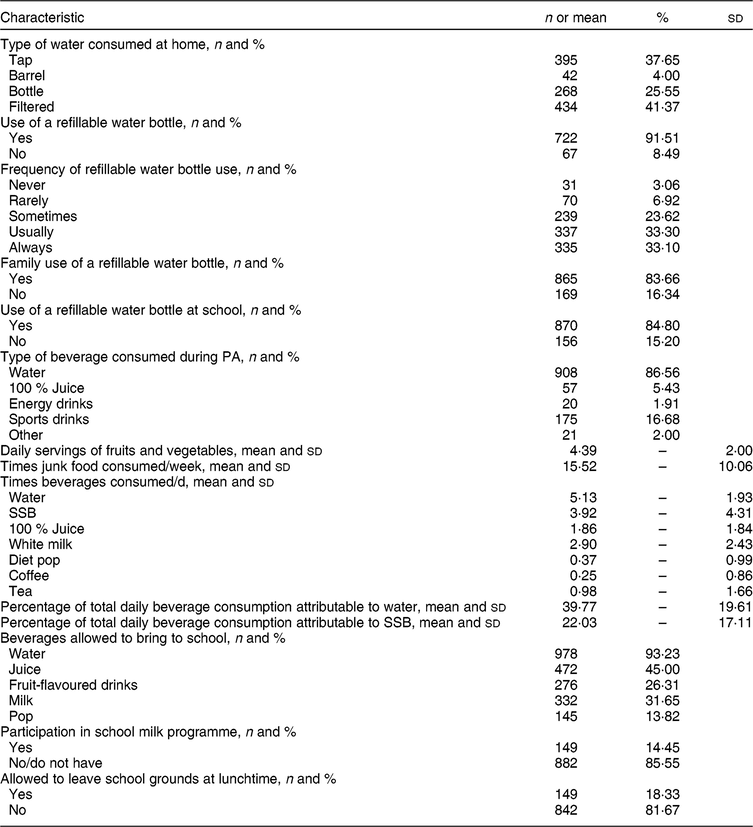
Sample demographics, dietary habits and nutrition/water knowledge are presented in Tables 1–3. The mean age of respondents was 10·6 (sd 1·4) years, and 56·7 % were female. The majority of participants were Caucasian (62·7 %), lived in two-parent households (78·6 %) and had college/university-educated parents (88·1 %). Of mothers and fathers, 74·4 and 93·6 %, respectively, were employed, and 32·3 % of households were classified as high income, compared with 8·1 % classified as low income.
Demographics of the sample of elementary-school children aged 8–14 years and their parents/guardians (n 1049), London, Ontario, Canada, October–November 2016

Dietary behaviours of the sample of elementary-school children aged 8–14 years (n 1049), London, Ontario, Canada, October–November 2016
PA, physical activity; SSB, sugar-sweetened beverage.
Water and nutrition knowledge of the sample of elementary-school children aged 8–14 years (n 1049), London, Ontario, Canada, October–November 2016

Beverage consumption and dietary intake
Participants self-reported consuming water a mean of 5·1 (sd 1·9) times/d, accounting for approximately 39·8 (sd 19·6) % of their total daily beverage intake, and SSB a mean of 3·9 (sd 4·3) times/d, accounting for approximately 22·0 (sd 17·1) % of their total daily beverage intake. About four out of five (79·4 %) children reported consuming an SSB at least once daily, and half (49·6 %) reported consuming an SSB three or more times daily. Comparatively, 98·3 % of students reported consuming water at least once daily, and 86·4 % reported consuming water three or more times daily. On average, participants consumed 4·4 (sd 2·0) servings of fruits and vegetables/d, with approximately 29·6 % meeting Canada’s Food Guide recommendation of six or more servings daily. Junk foods were consumed a mean of 15·5 (sd 10·1) times/week, or about 2·2 times/d.
Over one-third (37·7 %) of children reported consuming tap water at home, and 91·5 % reported using a refillable water bottle in their everyday life. Additionally, 84·8 % used a refillable water bottle at school, and 83·7 % said their family members used refillable water bottles. Water was the most frequently consumed beverage during physical activity, selected by 86·6 % of respondents, and also the most common beverage brought to school, reported by 93·2 %. Just 14·5 % of respondents participated in their school’s milk programme. Fewer than one in five (18·3 %) were allowed to leave the school grounds at lunchtime.
Water and nutrition knowledge
The mean total knowledge score was 29·2 (sd 6·5) out of a possible 44 points (approximately 66·4 %), with mean subscale scores of 26·0 (sd 5·8) out of 36 for nutrition knowledge (approximately 72·2 %) and 3·2 (sd 1·6) out of 8 for water knowledge (approximately 40 %). Table 3 presents the proportion of students who responded correctly to each question. Children generally scored well on the questions related to nutritional aspects of different foods and beverages; however, knowledge of water, including its health benefits, conservation and treatment, was lacking. Just 6·5 % of respondents knew the origin of their tap water, and only 22 % could name two ways to conserve water. Furthermore, just over half (51·7 %) of children knew how many cups of water they should consume in a day, and almost half (48·4 %) believed bottled water to be superior to tap water.
Relationship between water and nutrition knowledge and beverage consumption habits
The relationship between children’s beverage consumption and water and nutrition knowledge is presented in Table 4. Higher total knowledge scores, along with higher water and nutrition subscale scores, were associated with significantly higher water and lower SSB consumption in both crude and adjusted analyses.
Relationship between knowledge score and proportion of water and sugar-sweetened beverage (SSB) consumption among the sample of elementary-school children aged 8–14 years (n 1049), London, Ontario, Canada, October–November 2016

**P < 0·01, ***P < 0·001.
† SSB include fruit-flavoured drinks, regular pop, energy drinks and chocolate milk.
‡ Model 1 adjusted for the sociodemographic characteristics sex, age, ethnicity, household income level, maximum household education, child living arrangement and parental work status.
§ Model 2 added daily servings of fruits and vegetables and weekly junk food consumption frequency.
‖ Model 3 added participation in school milk programme, permission to leave school grounds at lunchtime and frequency of refillable water bottle use.
A one-point increase in total knowledge score was associated with a 0·34 % (95 % CI 0·16, 0·52 %; P = 0·0002) increase in total daily beverage consumption attributable to water and a 0·33 % (95 % CI −0·49, −0·18 %; P < 0·0001) decrease in total daily beverage consumption attributable to SSB, adjusting for sociodemographic, dietary and behavioural factors. In looking at water and nutrition knowledge subscales separately, a one-point increase in water knowledge was associated with a 1·12 % (95 % CI 0·39, 1·85 %; P = 0·0026) increase in total daily beverage consumption attributable to water and a 1·41 % (95 % CI −2·03, −0·79 %; P < 0·0001) decrease in total daily beverage consumption attributable to SSB, while a one-point increase in nutrition knowledge was associated with a 0·32 % (95 % CI 0·12, 0·52 %; P = 0·0015) increase in total daily beverage consumption attributable to water and a 0·29 % (95 % CI −0·46, −0·12 %; P = 0·0008) decrease in total daily beverage consumption attributable to SSB, adjusting for sociodemographic, dietary and behavioural factors.
Determinants of water and sugar-sweetened beverage consumption and knowledge
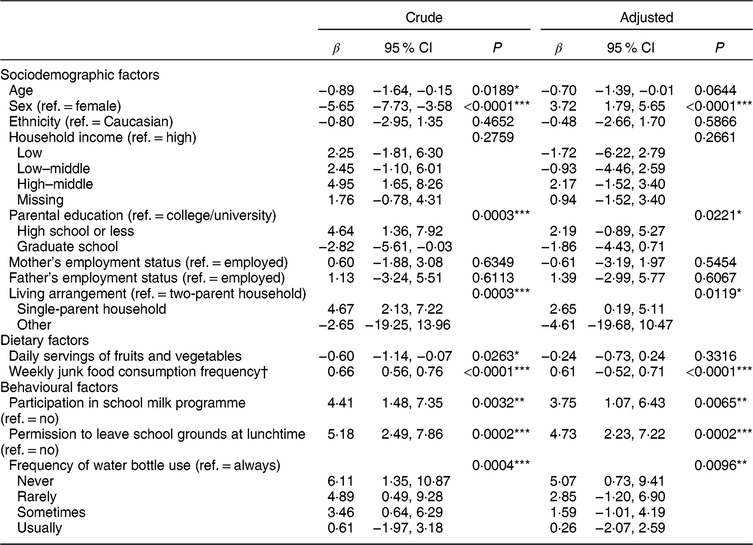
Tables 5–7 present the associations between water and SSB consumption and knowledge and various sociodemographic, dietary and behavioural factors. Older age, higher household income level and more educated parents/guardians were associated with higher total knowledge scores.
Predictors of water consumption among the sample of elementary-school children aged 8–14 years (n 1049), London, Ontario, Canada, October–November 2016

Ref, reference category.
*P < 0·05, **P < 0·01, ***P < 0·001.
† Junk food includes sweetened cereal, cake/pie/doughnuts, potato chips, chocolate bars, pizza, French fries, hot dogs, ice cream, candy, granola bars and cookies.
Predictors of sugar-sweetened beverage (SSB) consumption among the sample of elementary-school children aged 8–14 years (n 1049), London, Ontario, Canada, October–November 2016
Ref, reference category.
*P < 0·05, **P < 0·01, ***P < 0·001.
† Junk food includes sweetened cereal, cake/pie/doughnuts, potato chips, chocolate bars, pizza, French fries, hot dogs, ice cream, candy, granola bars and cookies.
Predictors of total knowledge score among the sample of elementary-school children aged 8–14 years (n 1049), London, Ontario, Canada, October–November 2016

Ref., reference category.
*P < 0·05, **P < 0·01, ***P < 0·001.
Higher water consumption was associated with being female, having a more educated parent/guardian, living in a two-parent/guardian household, consuming junk food less frequently, consuming fewer servings of fruits and vegetables, not participating in a school milk programme and using a refillable water bottle more frequently.
Higher SSB consumption was associated with being male, having a less educated parent/guardian, consuming junk food more frequently, living in a single-parent/guardian household, participating in a school milk programme, using a refillable water bottle less frequently and being allowed to leave the school grounds at lunchtime.
Sensitivity analyses
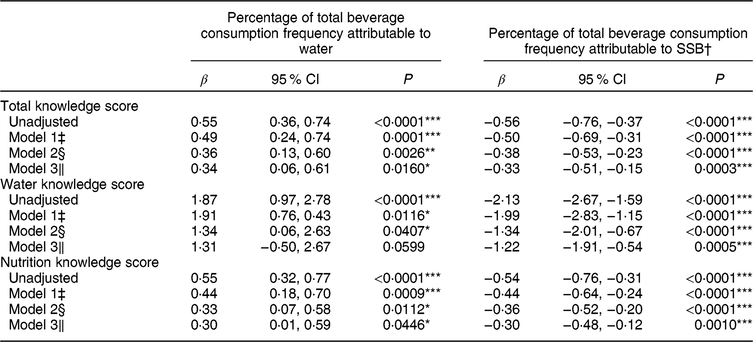
A sensitivity analysis was performed using non-imputed data only. The results of this complete case analysis are presented in Table 8. Although effect estimates were less precise, they were similar in size and direction, and all associations remained significant, except for that between water knowledge score and percentage of total daily beverage consumption attributable to water (β = 0·30; 95 % CI −0·50, 2·67; P = 0·0599). An additional sensitivity analysis using absolute beverage consumption frequencies rather than proportions was also conducted and is presented in Table 9. Again, trends were similar, with a positive association observed between knowledge and water consumption in adjusted models and a negative association observed between knowledge and SSB consumption; however, only the estimates for SSB consumption were statistically significant.
Sensitivity analysis, using non-imputed data (complete case analysis), for the relationship between knowledge score and proportion of water and sugar-sweetened beverage (SSB) consumption among the sample of elementary-school children aged 8–14 years (n 1049), London, Ontario, Canada, October–November 2016
*P < 0·05, **P < 0·01, ***P < 0·001.
† SSB include fruit-flavoured drinks, regular pop, energy drinks and chocolate milk.
‡ Model 1 adjusted for the sociodemographic characteristics sex, age, ethnicity, household income level, maximum household education level, child living arrangement and parental employment status.
§ Model 2 added daily servings of fruits and vegetables and weekly junk food consumption frequency.
‖ Model 3 added participation in a school milk programme, permission to leave school grounds at lunchtime and frequency of refillable water bottle use.
Sensitivity analysis, using absolute frequencies of beverage consumption, for the relationship between knowledge score and proportion of water and sugar-sweetened beverage (SSB) consumption among the sample of elementary-school children aged 8–14 years (n 1049), London, Ontario, Canada, October–November 2016

*P < 0·05, ***P < 0·001.
† SSB include fruit-flavoured drinks, regular pop, energy drinks and chocolate milk.
‡ Model 1 adjusted for the sociodemographic characteristics sex, age, ethnicity, household income level, maximum household education level, child living arrangement and parental employment status.
§ Model 2 added daily servings of fruits and vegetables and weekly junk food consumption frequency.
‖ Model 3 added participation in a school milk programme, permission to leave school grounds at lunchtime and frequency of refillable water bottle use.
Discussion
The present study described the beverage consumption habits of a sample of elementary-school children in London, Ontario, Canada, and examined the association between knowledge and water and SSB intake. As far as we know, the present study is the first to specifically evaluate the relationship between knowledge and beverage consumption.
Knowledge is a determinant of beverage consumption habits
Our results indicate that knowledge is a significant predictor of beverage consumption habits, with higher-scoring children consuming a higher proportion of water and a lower proportion of SSB than their lower-scoring peers. This association remained significant when nutrition and water knowledge sub-scores were analysed separately. These findings are consistent with the previous research investigating the association between knowledge and dietary intake in this population, which identified a weak positive correlation overall. A survey performed in Iceland among 11-year-old children, for example, found that knowledge was a significant determinant of fruit and vegetable consumption(Reference Kristjansdottir, Thorsdottir and De Bourdeaudhuij41), while a Japanese study identified a strong association between nutrition knowledge and vegetable intake in elementary-school children(Reference Asakura, Todoriki and Sasaki39). A positive correlation between nutrition knowledge and eating behaviour was additionally observed in American children, particularly as they increased in age(Reference Pirouznia42), and a study of Sicilian children found that nutrition knowledge was negatively associated with a number of unhealthy foods including sugary drinks(Reference Grosso, Mistretta and Turconi40).
These findings are also supported by a qualitative study examining the perceptions and determinants of SSB consumption in London elementary-school children, in which participants identified improving knowledge as a necessary strategy to help reduce their intake of sugary drinks(Reference Battram, Piché and Beynon53). Children specifically noted the need for hands-on and engaging educational programmes, and believed that education should be incorporated into the curriculum as early as possible(Reference Battram, Piché and Beynon53).
Water and nutrition knowledge is limited
Our results also provide valuable insights into the gaps in knowledge that exist within this population, which can be used to develop more effective interventions. For example, although we observed a significant association between knowledge and practice, knowledge in our sample was relatively low overall, with children scoring an average of 66 % in total and 72 % and 40 % on the nutrition and water subscales, respectively. Indeed, an evaluation of the survey results demonstrated that children had very little knowledge of the water treatment system or water conservation, and almost half were unaware of the amount of water they should consume in a day.
Even more concerning, a lack of knowledge about the safety of tap water was identified and the belief that bottled water was superior to tap was widespread. Although London’s tap water is of high quality and is rigorously monitored(54), these findings are in line with the existing literature, which has identified negative perceptions of tap water among North American children and adolescents pertaining to taste and cleanliness(Reference Onufrak, Park and Sharkey55,Reference Huerta-Saenz, Irigoyen and Benavides56) , and may explain the low number of children reporting consuming tap water at home in our study. Given that larger point estimates were observed for water knowledge than nutrition knowledge, suggesting that water knowledge may have a greater influence on drinking behaviours than nutrition knowledge, future education programmes to improve children’s drinking habits must incorporate lessons on water specifically and should attempt to dispel negative attitudes and beliefs about water in order to achieve the best possible results.
Children have poor dietary habits overall
Corresponding with the low levels of knowledge observed, children in our sample consumed relatively low proportions of water, accounting for approximately 39·8 % of their total daily beverage intake, and high proportions of SSB, accounting for approximately 22·0 % of their total daily beverage intake. This substantially exceeds the guidelines set by the American Heart Association, which has recommended that children consume no more than 8 fluid ounces (237 ml) of SSB per week(Reference Johnson, Appel and Brands57), approximately 1·7–2·25 % of the total daily fluid intake recommendations. These findings, however, are in agreement with other studies of SSB intake in Canadian children and adolescents, which have also observed an overconsumption of these beverages(Reference Garriguet15,Reference Danyliw, Vatanparast and Nikpartow58,Reference Danyliw, Vatanparast and Nikpartow59) . A survey of youths from three Canadian cities, for instance, found that 80 % of respondents consumed at least one SSB daily, and 44 % consumed three or more(Reference Vanderlee, Manske and Murnaghan60). This is comparable to our sample, of which 79·4 % reported consuming an SSB at least once daily, and half 49·6 % reported consuming an SSB three or more times daily.
In addition to knowledge, we identified several independent predictors of more frequent SSB consumption which can potentially be used to identify individuals who may benefit most from interventions. These included male sex, more frequent junk food consumption, living in a single-parent household, having less educated parents, participating in a school milk programme, using a refillable water bottle less frequently and having permission to leave school grounds at lunchtime. Independent predictors of more frequent water consumption included female sex, having more educated parents, living in a two-parent household, consuming junk food less frequently, having fewer daily servings of fruits and vegetables, not participating in a school milk programme and using a refillable water bottle more frequently. These factors are in line with those examined in previous research, except the observed association between more frequent water consumption and fewer servings of fruits and vegetables. While this seems counterintuitive, with water and fruit and vegetable intake both markers of a healthy diet, children who consume more fruits and vegetables may get more of their daily water requirements through foods, which may translate to drinking less overall to compensate. We were also surprised to find that milk programme participation was negatively associated with water consumption but positively with SSB consumption. Although the effect of milk provision on water and SSB intake has not been studied directly in previous literature, we were expecting that children who participated in their school’s milk programme would consume less of both beverages due to displacement caused by increased milk consumption. Interestingly, this was the case for water but not SSB. This could indicate that most children who participated in the programme receive chocolate milk rather than white, which was considered an SSB in the present study and thus potentially drove the observed association.
Along with poor beverage consumption habits, we also observed suboptimal diet quality in this sample. Just under 30 % of children met Canada’s Food Guide recommendation of six or more servings of fruits and vegetables daily, and junk foods such as candy, pizza and cake were consumed more than twice daily, on average. This is in line with previous studies of children’s diets. For example, an examination of 2004 CCHS data indicated that 65 % of 9–13-year-old children did not meet the recommended servings of fruits and vegetables(Reference Garriguet61), while another study found that just 26 % of Canadians met the minimum daily fruit and vegetable servings for their age–sex group and that, in adolescents and teens, this number dropped to less than 20 %(Reference Black and Billette62).
Implications for policy and practice
Our results support the continued implementation of education programmes as a potentially effective strategy for reducing SSB consumption and/or increasing water consumption in child and adolescent populations. This is encouraging, as education interventions are cost-effective and easy to implement, compared with environmental and policy interventions, and are also highly reproducible, with successful programmes being adaptable for different populations and different settings. Given that children spend the majority of their waking hours in school, this is the ideal environment through which to deliver standardized evidence-based programmes targeting healthy behaviours(Reference Flynn, McNeil and Maloff63). Furthermore, when delivered in the school environment, education interventions are capable of reaching many children at once and may serve as an equalizer, minimizing differences in knowledge and access to information between children of different socio-economic statuses and backgrounds(Reference Hahn and Truman64,Reference Cohen and Syme65) . This is particularly important as we observed that, in addition to age, household income level and parental education were significant predictors of baseline knowledge in this population.
It must be noted, however, that although we identified a statistically significant association between high knowledge scores and healthier beverage consumption habits, the observed effects were small in magnitude and thus improvements in knowledge may not translate to clinically significant improvements in behaviour. Indeed, this may explain why education-only interventions to improve beverage consumption habits are often unsuccessful in the long term(Reference Kipping, Howe and Jago26,Reference Rosário, Araújo and Oliveira28,Reference Al Khalifah, Mok and Legault66–Reference Heneman, Junge and Zidenberg-Cherr73) . Further research is therefore needed to understand how to maximize the effect of education interventions in order to capitalize on the association between knowledge and behaviour.
Limitations
Our results should be interpreted in light of several limitations. First of all, although the study targeted children residing in disadvantaged neighbourhoods throughout the city of London, the descriptive statistics of the sample as presented in Table 1 reveal that only a small proportion (8·10 %) of respondents came from low-income households and just 11·89 % of parents had not completed post-secondary education. This is not representative of the overall population of the neighbourhoods under study and likely reflects selection bias, wherein children from more disadvantaged households were less likely to enrol in the study, potentially due to language barriers or lower parental education, which may have limited a parent’s ability to understand the consent form and parent survey.
Second, it is important to note that, in addition to knowledge, there are a number of other factors that influence children’s food and beverage choices including taste preferences, advertising and parental control(Reference Battram, Piché and Beynon53). Given that the participants evaluated in the current study were relatively young, ranging from 8 to 14 years of age, parental control was likely a major determinant of dietary intake in those children who are restricted to what is available to them at home. Indeed, a number of studies have identified the importance of parental knowledge and maternal knowledge specifically on children’s diet quality, finding that children with more knowledgeable parents had better diets(Reference Asakura, Todoriki and Sasaki39,Reference Grosso, Mistretta and Turconi40) . Although our study was not able to assess parental knowledge, we did measure parental education, which can be considered a proxy. We found that higher parental education was associated with a significantly higher percentage of total daily beverage consumption attributable to water and with higher total knowledge scores for children; however, no significant association with SSB intake was observed.
Additionally, the ambiguous ‘times per day’ measure of water and SSB consumption, as opposed to a standardized volume measure such as cups or millilitres per day, may have been reported differently by each child, potentially resulting in measurement error. We attempted to correct for this by converting absolute frequencies into proportions in order to standardize responses. Moreover, some studies have suggested that children may have difficulties estimating volumes and portion sizes(Reference Baranowski and Domel74–Reference Livingstone, Robson and Wallace77), making instance frequencies the better choice for assessing beverage intake in this population. Indeed, instances have been used in the past in similar studies in child populations(Reference Korwanich, Sheiham and Srisuphan27,Reference Cunha, Souza and Pereira33,Reference Grosso, Mistretta and Turconi40,Reference Glen, Thomas and Loebach78,Reference Blinkhorn, Freeman and Oliver79) .
Furthermore, as with most studies on children’s dietary behaviours, our study used self-reported dietary data, which are vulnerable to recall bias and may be inaccurate, especially in children. Self-reported measures can be useful in that they are more suited to assessing usual intake, however, whereas observations and other objective measures assess recent intake, and there is also no risk of children changing their behaviours because they know they are being observed when using self-reported compared with objective measures(Reference Grummon, Sokol and Hecht80).
Finally, the present study was cross-sectional. This prevents us from establishing temporality, and the direction of the relationship between knowledge and beverage consumption habits cannot be discerned.
Conclusions
In the present cross-sectional study of schoolchildren in Southwestern Ontario, we provided new evidence of an association between dietary intake and knowledge. We were able to demonstrate that children with higher knowledge scores had significantly healthier beverage consumption habits; however, knowledge in our sample was low overall, which was reflected in water and SSB intake. Future interventions to increase water and/or decrease SSB consumption in young children should therefore target water and nutrition knowledge through education programmes, as they may be effective at changing behaviour. Additional research is required to evaluate whether or not changes in knowledge actually yield clinically significant improvements in behaviour in practice, and should investigate the optimal characteristics of education interventions so that a framework can be developed for use in a variety of settings, populations and contexts.
Acknowledgements:
Acknowledgements: The authors gratefully thank the students and families who participated in this study, along with the teachers and principals of each school and the research boards from the Thames Valley District School Board and the London District Catholic School Board. They would also like to acknowledge the many research assistants and volunteers from the Human Environments Analysis Laboratory who helped with data collection and entry for the HKCC project, as well as the invaluable contributions of Dr Andrew Clark, who coordinated the project, and Dr Piotr Wilk, who assisted with the statistical techniques. Financial support: This study was jointly funded by the Ontario Ministry of Health and Long Term Care as part of the City of London’s Healthy Kids Community Challenge (HKCC) and the Children’s Health Foundation through the Children’s Health Research Institute. Additionally, the Canadian Institute of Health Research (CIHR) provided graduate student funding in the form of a Canada Graduate Scholarship (CGS-M). Funders did not have any role in the study design, data collection/analysis, writing or publication of this study. Conflict of interest: None. Authorship: B.R.I. assisted with data collection and was responsible for the analysis of the data and the writing of the manuscript. M.R.S. provided input on the analysis and read and reviewed the manuscript. J.A.G. is Principal Investigator of the project and conceived of and designed the study, formulated the research question, provided input on the analysis, and read and reviewed the manuscript. Ethics of human subject participation: This study was conducted according to the guidelines laid down in the Declaration of Helsinki and all procedures involving human subjects were approved by Western University’s Non-Medical Human Research Ethics Board (NM108328) and the research boards of the Thames Valley District School Board and the London District Catholic School Board. Parents/guardians provided written informed consent to participate in the study and parental consent for their children to participate. All child participants provided written assent to complete the survey.
Author ORCID
Jason A Gilliland, 0000-0002-2909-2178.



