

Implications
We examined weaning strategies and impact of shipment for beef calves under common North American management conditions. Abrupt weaning with immediate shipment had a negative impact on calf performance, while growth was improved by delaying shipment until 28 days rather than 7 days after weaning. Fence line weaning produced better gain than other approaches. Nose flaps negatively impacted gains, both prior to and after weaning – this is in contrast with some studies but in agreement with others. Pre-weaning interventions offered inadequate benefit to justify labor and stress on calves. Studies of health were inconclusive due to few cases of disease.
Introduction
Weaning of beef calves from their dams is widely recognized as a stressful event (Enriquez et al., Reference Enriquez, Hotzel and Ungerfeld2011). Historically, weaning has entailed abrupt separation of calves from their dam, often with immediate shipment and sale. However, combining weaning with other stressors in this fashion is considered a contributing factor to development of bovine respiratory disease (BRD) (Taylor et al., Reference Taylor, Fulton, Lehenbauer, Step and Confer2010). There has therefore developed greater interest in weaning calves at the source ranch prior to shipping and commingling with other cattle. Indeed, weaning calves prior to shipping has been shown to be effective in reducing BRD, even without vaccination (Step et al., Reference Step, Krehbiel, DePra, Cranston, Fulton, Kirkpatrick, Gill, Payton, Montelongo and Confer2008).
The source of stress in weaning is likely multifactorial, and includes loss of nutritional support through milk, disruption of the social bond with the dam, increased social stress as calves seek to establish dominance in a population lacking adults and impacts of introduction to a novel environment (Enriquez et al., Reference Enriquez, Hotzel and Ungerfeld2011). It has been hypothesized that the overall stress of weaning could be reduced by mitigating these factors as fully as possible, or at least via imposition of the factors in steps rather than all at once. In addition to the traditional approach of abrupt and complete separation from the dam, other weaning methods include initial separation from the dam by a fence which precludes suckling but permits auditory, visual and tactile contact between dam and calf (fence line weaning); use of an anti-suckle device to effect cessation of suckling prior to separation from the dam (nose-flap weaning); and recently, a novel approach has been described whereby the calf is transiently removed from contact with the dam for 24 h on two separate occasions, prior to complete weaning. A number of studies have examined fence line (FL) weaning and anti-suckle nose flaps (NF), either in comparison to abrupt weaning (Price et al., Reference Price, Harris, Borgwardt, Sween and Connor2003; Haley et al., Reference Haley, Bailey and Stookey2005; Campistol et al., Reference Campistol, Kattesh, Waller, Rawls, Arthington, Carroll, Pighetti and Saxton2016) or to each other (Burke et al., Reference Burke, Scaglia, Boland and Swecker2009; Enriquez et al., Reference Enriquez, Ungerfeld, Quintans, Guidoni and Hotzel2010). To the best of our knowledge, no published research has evaluated transient separation from the dam prior to complete weaning.
Much of the work done thus far examining weaning approaches has focused on assessing stress via indirect methods. The most commonly evaluated indicator is calf behavior, including walking; vocalizing; efforts to suckle; and time spent lying, grazing or eating. These methods are labor intensive, can be difficult to interpret and may preclude comparison across all treatment options (efforts at suckling cannot be documented in calves abruptly weaned and completely separated). Moreover, these efforts have reached conflicting results in terms of best approach for reducing stress. Haley et al. (Reference Haley, Bailey and Stookey2005) reported use of NF appeared to reduce the stress of weaning, while Enriquez et al. (Reference Enriquez, Ungerfeld, Quintans, Guidoni and Hotzel2010) reported no evidence of benefit to two-stage weaning using either NF or FL. Indeed, Enriquez reported that FL may increase the level of frustration in calves compared to abrupt weaning, which contrasts with the findings of Price et al. (Reference Price, Harris, Borgwardt, Sween and Connor2003), which reported improved welfare in FL weaned calves.
Weaning has been shown to alter various physiologic biomarkers, many of which may be considered indicators of stress (Enriquez et al., Reference Enriquez, Hotzel and Ungerfeld2011). Little work has been done examining impacts of various weaning approaches on these markers, but one study examining biomarkers of antioxidant stress determined two-stage weaning via NF or FL had little effect on the evaluated markers (Burke et al., Reference Burke, Scaglia, Boland and Swecker2009). Similarly, no evidence of difference was reported for levels of cortisol, haptoglobin, ceruloplasmin and interferon gamma in FL v. abrupt weaned calves (Campistol et al., Reference Campistol, Kattesh, Waller, Rawls, Arthington, Carroll, Pighetti and Saxton2016). The only difference in biomarkers in that study was associated with protein supplement prior to weaning; abruptly weaned, adapted steers having lower cortisol than abruptly weaned, non-adapted steers (but no substantive evidence of difference from adapted or non-adapted FL calves). Importantly, the clinical significance of differing levels of these biomarkers is not clear, and is likely not always consistent with or predicted by statistically significant differences (which is what is typically assessed).
While stress is important to consider from a welfare perspective, it cannot be measured directly and therefore must be inferred from various parameters. As the above described work shows, it can be difficult to quantify and interpret, particularly when seemingly contradictory findings are encountered. A more objective assessment is growth performance, as measured via average daily gain (ADG). Gain also has the advantage of being the most meaningful measure for the producer, who typically is compensated primarily or exclusively based upon weight of the calves. Unfortunately, inconsistent effects of weaning method have also been observed with ADG. Use of NF frequently decreases ADG while the clips are in place. In some cases, the initial decrease in ADG is mitigated by compensatory gain after the clips are removed and weaning completed (Burke et al., Reference Burke, Scaglia, Boland and Swecker2009), while in other studies the negative impact is not overcome (Haley et al., Reference Haley, Bailey and Stookey2005; Enriquez et al., Reference Enriquez, Ungerfeld, Quintans, Guidoni and Hotzel2010). Use of FL weaning approaches has also produced contradictory findings. Campistol’s group (Campistol et al., Reference Campistol, Kattesh, Waller, Rawls, Arthington, Carroll, Pighetti and Saxton2016) used a 2 × 2 factorial design to examine FL v. abrupt weaning and pre-weaning adaptation to a supplement v. no adaptation prior to weaning. They found that steers adapted to a supplement prior to weaning had poorer gain in the first 7 days after weaning if weaned via FL as compared to abrupt. However, FL was better than abrupt in non-adapted calves. Gain over the entire 35-day period did not differ by treatment.
It is unclear why previous studies have yielded inconsistent or conflicting conclusions. Potential reasons include the use of relatively small groups (e.g., Burke et al. (Reference Burke, Scaglia, Boland and Swecker2009) utilized 36 steers, while Campistol et al. (Reference Campistol, Kattesh, Waller, Rawls, Arthington, Carroll, Pighetti and Saxton2016) enrolled 48); inadequate nutritional support to detect differences in performance (Haley et al., Reference Haley, Bailey and Stookey2005); or use of a single herd/source, which precludes in-study replication and may therefore hinder assessment of reproducibility (Bello and Renter, Reference Bello and Renter2018). Regardless of cause, the general lack of repeatability makes recommendations difficult. It remains unclear what weaning method is most effective for maximizing calf growth and performance, maintaining adequate welfare, and minimizing morbidity. The objective of the study reported here was to compare weight gain and occurrence of clinical disease for calves undergoing FL weaning, use of NF prior to weaning, pre-weaning separation followed by FL, and abrupt weaning. To permit some assessment of external validity, two herds were used, with both utilizing common management conditions for the North American cow–calf industry. We hypothesized that two-stage weaning approaches would result in greater gains and less morbidity than abrupt weaning, and that delayed shipment would improve outcomes over immediate shipment.
Materials and methods
Cattle
University-owned, spring calving herds were used, and all protocols were approved by the Oklahoma State University Institutional Animal Care and Use Committee (AG-15-21). Cow–calf pairs were managed similarly on two geographically distant locations. Location 1 had 217 calves and location 2 had 81 calves. All calves received two rounds of commercially available modified live viral vaccine (Bovi-Shield 5, Zoetis Animal Health Parsippany-Troy Hills, NJ, USA) prior to weaning, as well as a clostridial bacterin/toxoid product (Vision® 7 with Spur®, Merck Animal Health Madison, NJ, USA). First vaccination was done approximately 5 weeks prior to weaning, with second vaccination done 3 weeks later. Calves were weighed at initial vaccination, and then blocked into two categories of sex (steers and heifers) and four categories of weight. Calves were then randomly assigned to treatment group from each block, while ensuring roughly equal numbers of calves in each treatment group. All calves were managed similarly through the second vaccination and weighing period, with colored ear tags put in at that time to indicate treatment group (Figure 1). Calves assigned to the pre-weaning separation group (SEP) were separated from the dam for 24 h 13 days prior to weaning, and again 6 days prior to weaning. During the separation period, calves were kept in a drylot and had access to the same protein supplement ration as used post-weaning, at a rate of 1.8 kg/head per day. After 24 h, calves were returned to their dam until weaning. At weaning, SEP calves were separated from dams but permitted fence line contact with the dam for 7 days. After 7 days, the dams were moved to a pasture where no visual or auditory contact was possible. Calves in the NF group had commercially available nose flaps (Orange plastic calf weaner, Syrvet, Inc. Lexington, KY, USA) placed 6 days prior to weaning, then were returned to the dam on pasture. The flap was removed on weaning day, and calves were separated from the dam where no visual or auditory contact was possible. Calves in the FL group were separated from the dam on the day of weaning, but permitted fence line contact with their dams for 7 days. At day 7 (D7) cows were moved to a pasture where no visual or auditory contact was possible. The abruptly weaned (AW) group was separated from the dam on weaning day, so that no auditory or visual contact was possible.
Schematic representation of study design. Calves were assigned to treatment after blocking by weight and sex, but managed similarly until D13, when pre-weaning interventions were begun. Half of AW calves were shipped on D0 (AW-I), with commingling from the two locations. The other groups were commingled with calves from the same source location and remained on the ranch of origin until D7 (1/2 of each group, at which point they were commingled with calves from the other location) or D28. AW calves that were delayed in shipment (AW-D) also remained at the source ranch until D28. AW = abruptly weaned.

Each treatment was further divided into two groups for shipment date, again blocked by sex and weight, ensuring equal numbers in each group. For the AW group, calves were either shipped on weaning day (day 0 (D0); abrupt weaned, immediately shipped (AW-I)) or day 28 (D28) (abrupt weaned, delayed shipment (AW-D)). For all other groups, shipping days were D7 or D28. Shipping entailed loading into a single-level stock trailer and transportation for approximately 240 miles (approximately 5 h). Calves in the FL and SEP groups were pastured together after weaning until shipment, with fence line contact with other treatment groups. Calves in the NF and AW treatment groups were pastured together until shipment, with fence line contact with other treatment groups (but not with dams). Calves in the AW group that were immediately shipped (AW-I) were commingled with AW-I calves from the other source after arrival at final destination on D0. Calves from FL, NF and SEP treatments were commingled with all other FL, NF and SEP calves from the other location after shipment (either on D7, or after completion of the study). Thus, there were three possibilities for commingling: D0 (AW-I from two sources), D7 (half of FL, NF and SEP calves being commingled from two sources) or not at all (half of the AW, FL, NF and SEP calves that were not commingled with other source calves until after completion of the study). Following commingling, all groups were managed similarly, on pasture, with access to hay, and approximately equal bunk space per head.
Calves were kept on pasture at all times except during the 24-h separation periods for the SEP group. During that separation period, those calves were in a drylot pen, with access to grass hay and a pelleted feed. At weaning, all calves received a custom-made weaning ration. Guaranteed analysis was 15.9% protein, 74% total digestible nutrients and 11.8% fiber (all on dry matter basis). The feed included lasalocid (114.4 mg/kg) and chlortetracycline (154 mg/kg), and was fed at a rate of approximately 1 kg/head per day initially and increased to approximately 2 kg/head per day. Calves also had ad libitum access to bermudagrass hay, with a crude protein of 16.4% (dry matter basis). Based upon the supplement amount provided, calves were projected to gain 0.3 to 0.5 kg/head per day. All feed was consistently consumed, but because of combined grouping of treatment groups, determination of feed intakes within a treatment group was not possible.
All calves were weighed on days of processing (day -42 (D-42), day -21 (D-21)), initial separation for SEP group (day -13 (D-13)), second separation and nose-flap placement (D-6), weaning (D0; which included shipment for AW-I group but not others), first day of shipping for all other groups (D7), D14, and second shipment date for all groups (D28). After shipment (either D0 or D7), calves were weighed on different scales than prior to shipment. Scales at all locations are certified by the Oklahoma Department of Agriculture, Food and Forestry on an annual basis. Feed and water were not withheld prior to weighing. Calves were observed each day by ranch personnel for evidence of disease. Any calf subjectively determined to be ill was removed from the pens and further examined by treatment personnel. If the calf had signs consistent with BRD (cough, copious nasal discharge, respiratory effort, etc.) and was febrile ( >103.5°F (39.7°C)) standard ranch treatment protocol was employed and the calf was recorded as having BRD. Due to the management differences between treatment groups and the use of color-coded ear tags, personnel were not blinded to treatment.
Statistical methods
Data were recorded and initial calculations were done using Microsoft Excel (Microsoft, Redmond, WA, USA). Observations with missing weights or biologically impossible changes in weight were removed from the database. Analysis of variance comparisons were done with SAS 9.4 (SAS, Cary, NC, USA), with a MIXED model analysis. Specifically, a random coefficient multilevel model approach was employed (details about model specification as SAS code and analysis output provided in Supplementary Materials S1 and S2). In all analyses, calf was the unit of interest. If a given analysis examined multiple time points, weight or gain was considered a repeated measure within calf as the individual and location as a grouping factor. If interactions were present involving location, each source farm was examined individually (in which case calf was the unit of interest, repeated measures were accounted for within the individual calf, but no group effect was included). For analyses spanning multiple time periods, time × time as well as three-way interaction terms were included to account for how the effect of time may vary across different periods. Model diagnostics were done as part of the initial model to identify outliers with undue influence on the model. For diagnostic purposes, only impact on fixed effects was considered (effect on covariance parameters was not considered, as the primary purpose of the model was to assess fixed effects, not predict performance values). Selected models were used to generate predicted weights, from which gains were calculated. These gains were then compared via one-way ANOVA, including only weaning method, or two-way ANOVA for examination of both weaning method and shipment day. The Tukey’s adjustment was used for pair-wise comparisons. Occurrence of disease treatments was compared using Chi-square analysis.
Results
Calves from location 1 were weaned at a mean of 241 days of age (range of 182 to 287), with mean weaning weight of 249 kg (range of 166 to 338). Calves from location 2 averaged 258 days of age at weaning (range of 210 to 292), with a mean weaning weight of 278 kg (range of 189 to 343). No calves were withdrawn from the study for any reason. As expected with blocking prior to random assignment, counts and means were very similar across treatments at initiation of the study, with no meaningful differences (74 calves with a mean weight of 250 kg in the SEP group; 37 calves with a mean weight of 250 kg in the AW-L group; 38 calves with a mean weight of 251 kg in the AW-D group; 75 calves with a mean weight of 249 kg for the FL group; and 75 calves with a mean weight of 250 kg for the FL group). Graphic representation of raw weights and treatment means for each location are provided in the supplemental materials (Supplementary Figures S1–S2 and S4–S5, respectively). These figures show that, in general, variability of body weight within each treatment increased modestly over time. The minimal magnitude of those increases, as well as the use of predicted weights for final analysis, would suggest this increasing variation would have no substantive impact upon results of analysis, conclusions or interpretation.
Graphic representation of the predicted weights from selected analyses is shown in the supplemental materials (Supplementary Figure S3). The first comparison was for pre-weaning impact of nose flaps and separation from dam, analyzing gain from D-13 (time of first separation) to D0. Because there was an interaction between source and treatment effect for pre-weaning ADG, the two locations were examined individually. For location 1, treatment affected gain through D0, with NF calves having less gain (0.25kg/day) than those receiving no intervention (0.64 kg/day; P < 0.0001). SEP calves also gained less than those with no intervention (0.48 kg/day; P < 0.001). The impact of pre-weaning activities on weight gain at location 2 was notable but different from location 1. For location 2, NF group was closer to the performance of the non-intervention calves (0.36 v. 0.45 kg/day; P = 0.056). Moreover, SEP had a more notable impact than at location 1 (0.25 kg/day ADG; P < 0.0001 when compared to non-intervention).
Comparison of treatments from D-13 to D7 permitted assessment of whether the loss in performance for SEP and NF during pre-weaning was offset by improved performance immediately post-weaning. It also allowed for examination of the effect of immediate shipment at D0 v. staying at the ranch of origin. Abrupt weaning had a deleterious impact on gains, with the calves remaining on the ranch (AW-D) falling to the lowest ADG (0.12 kg/day) (Figure 2). The diminished performance in SEP group for both pre-weaning and post-weaning put that group at the second poorest overall gain (0.22 kg/day). Improved post-weaning gain in the NF group resulted in ADG from D-13 to D7 of 0.33 kg/day, with AW-I performing well from D-13 to D0 (0.47 kg/day), and FL group having the highest gain (0.54 kg/day).
Mean predicted average daily gain values from model examining all calves and all treatment groups for the period D13 (first intervention) through D7 (day of shipment for half of the calves in the fence line (FL), nose flap (NF) and 24-h separation (SEP) treatment groups. AW calves were shipped either immediately (AW-I) or delayed until D28 (AW-D). Means for each location are reported due to interactions between treatment and location. AW = abruptly weaned.
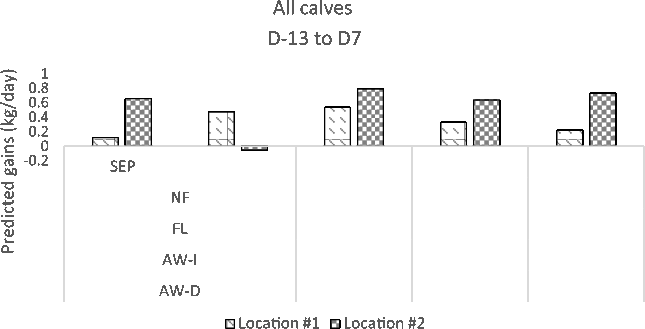
At location 2, abrupt weaning had severe negative impacts on ADG (Figure 2). In contrast to location 1, the AW-I group fared poorest, losing enough in those 7 days post-weaning to create an overall negative ADG from D-13 to D7 (−0.05 kg/day). The AW-D group performed better than AW-I, but was still lower than most other groups (0.66 kg/day). Similar to location 1, the NF group had better post-weaning gain than during the pre-weaning period, bringing their ADG for D-13 to D7 up to 0.64 kg/day. This still was lower than gains for AW-D, FL (0.79 kg/day) and SEP (0.73 kg/day).
Examination of performance between treatment groups beyond D7 required examination of shipment status. Because there was no abruptly weaned group shipped on D7, analysis could not compare both the impact of abrupt weaning and shipment time of D7 v. D28. Therefore, the AW group was excluded from these analyses. ADG from D7 to D28 was impacted by an interaction of location by shipment time; thus, each location was examined individually. For location 1, the model for D7 to D28 showed an interaction of weaning method by time period, as well as a time × time polynomial. Shipment day was not statistically significant in the model as either an interaction or main effect. ANOVA comparison of predicted weights generated by the model over the post-shipment period detected an interaction of weaning method by shipment day (P < 0.0001) (Figure 3). Post hoc analysis of the interaction found no evidence that shipment day had an effect on calves in the NF group (ADG of 0.18 v. 0.17 kg/day for those remaining at the ranch v. those shipped on D7; P = 1.0). Shipment day also had minimal impact on calves in the SEP group (ADG of 0.44 v. 0.52 kg/day for those remaining at the ranch v. those shipped on D7; P = 0.36). Delayed shipment benefited calves weaned via FL (ADG of 0.55 v. 0.34 for those remaining at the ranch v. those shipped on D7; P < 0.0001).
Mean predicted average daily gain values from model examining the period D7 to D28, with calves from location #1, excluding all abruptly weaned calves. This permits examining effect of shipment on D7 v. staying at ranch of origin until conclusion of study for calves in the FL), nose flap (NF) and 24-h separation (SEP) groups.

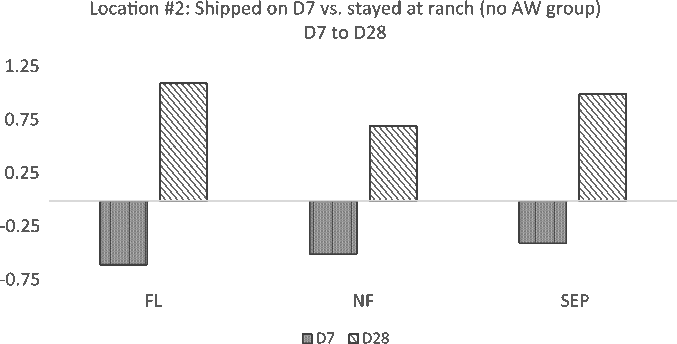
Performance from D7 to D28 for calves from location 2 had interactions between period and shipment day as well as interaction of weaning method with shipment day, and time × time. Analysis of predicted post-shipment gains (D7 to D28) showed an interaction of treatment by shipment day (P < 0.0001) (Figure 4). Similar to location 1, delayed shipment was most beneficial to calves in the FL group (ADG of 1.1 v. −0.6 kg/day for calves remaining at the ranch v. those shipped on D7; P < 0.0001). Shipment day was nearly equally impactful for SEP calves (ADG of 1.0 v. −0.4 kg/day; P < 0.0001). Benefit of delayed shipment was least dramatic (but still notable) for NF calves (ADG of 0.7 kg v. −0.5; P < 0.0001). Comparisons of weaning method within the delayed shipment day determined that the minor difference between FL and SEP (1.1 v. 1.0 kg/day) was not statistically significant. The lower gain in NF group (0.7 kg/day) represents a roughly 30% reduction in performance compared to either FL or SEP, which is likely economically important (P < 0.0001 for both comparisons). There was no evidence of difference in gains across treatments for calves shipped on D7 (P = 0.10 or higher for all pair-wise comparisons).
Mean predicted average daily gain values from model examining the period D7 to D28, with calves from location #2, excluding all abruptly weaned calves. This permits examining effect of shipment on D7 v. staying at ranch of origin until conclusion of study for calves in the fence line (FL), nose flap (NF) and 24-h separation (SEP) groups.
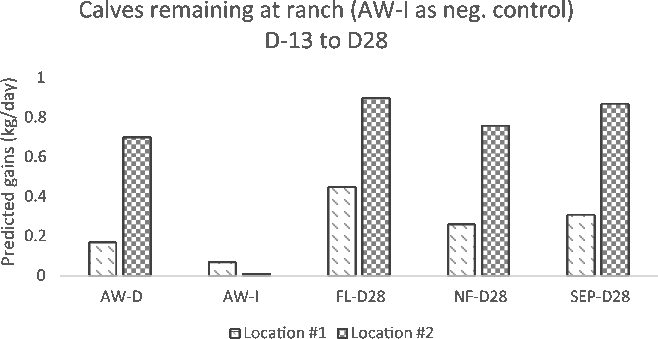
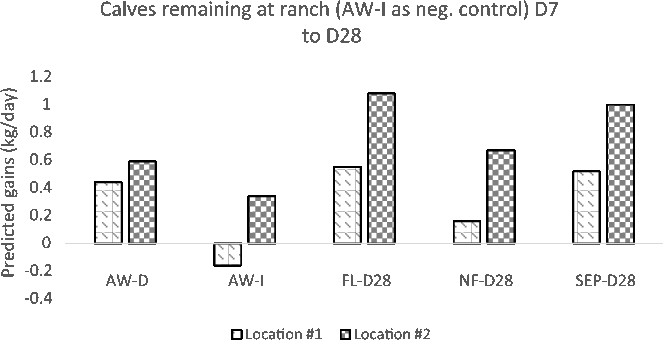
To examine the effect of weaning method unconfounded with shipment time, analysis was done to compare gains across all calves that remained at the ranch of origin through D28. Because the AW-D group remained at the ranch of origin for 28 days, this analysis permits comparison of all four treatment approaches across the entire study period (D-13 to D28). The AW-I group was retained in the model as a negative control. There were numerous statistically significant two-, three-, and four-way interactions of source with weaning method and period. Thus, each location was examined separately. For location 1, use of predicted weights showed an overall significant impact of weaning methods on gains (P < 0.0001) (Figure 5). The FL group had the highest ADG (0.45 kg/day), and was better than all other methods (P < 0.0001 for all comparisons). The difference between the SEP and the NF groups (0.31 v. 0.26 kg/day) was not practically or statistically significant (P = 0.25). Both of these methods had higher ADG than either abruptly weaned group (AW-D had an ADG of 0.17 kg/day, while AW-I had an ADG of 0.07 kg/day; all comparisons with P < 0.0005). Examination of calves that remained at the ranch for location 2 also had significant treatment × time interactions. Analysis of predicted weights for the full study period (D-13 to D28) at that location detected significant differences in gains between weaning methods (P = 0.006) (Figure 5). As for location 1, FL calves again had the highest ADG (0.90 kg/day), followed closely by SEP (0.87 kg/day), NF (0.76 kg/day) and AW-D (0.70 kg/day), with AW-I performing very poorly (0.01 kg/day). Performance of the AW-I group was lower than all other groups (P < 0.0001 for all comparisons). While the gains for FL, SEP, NF and AW-D are similar, the difference between FL and AW-D is worth noting (P = 0.02). The clinical importance of this 0.2 kg/day difference in ADG is less clear-cut but still worthy of economic consideration.
Mean predicted average daily gain values from model examining the period D13 to D28, with calves from both locations. Analysis excluded the groups shipped on D7. It included calves shipped on D28 for the AW, delayed shipment (AW-D), fence line (FL-28), nose flap (NF-28) and 24-h separation (SEP-28) groups. The AW immediately shipped (AW-I) calves were retained as a negative (neg.) control group. This permits examining effect of weaning method over full study period without confounding by shipment day. AW = abruptly weaned.
Because FL and SEP calves had fence line contact with dams from D0 to D7, gains for D7 to D28 were examined to determine if subsequent loss of contact negatively impacted gain for calves remaining at the ranch of origin (Figure 6). For location 1, FL group had the best performance from D7 to D28 (ADG of 0.55 kg/day), followed closely by SEP (0.52 kg/day) and AW-D (0.44), with NF gaining only 0.16 kg/day. The AW-I had the poorest performance, with ADG of −0.16 kg/day. For location 2, FL group held only a modest advantage of SEP (1.08 v. 1.00 kg/day). Similarly, NF was only modestly better than AW-D (0.67 v. 0.59 kg/day), with AW-I gaining 0.34 kg/day.
Mean predicted average daily gain values from model examining the period D7 to D28, with calves from both locations. Analysis excluded the groups shipped on D7. It included calves shipped on D28 for the AW, delayed shipment (AW-D), fence line (FL-28), nose flap (NF-28) and 24-h separation (SEP-28) groups. The AW immediately shipped (AW-I) calves were retained as a negative (neg.) control group. This permits examining effect of weaning method after termination of fence line contact with dam, without confounding by shipment day. AW = abruptly weaned.
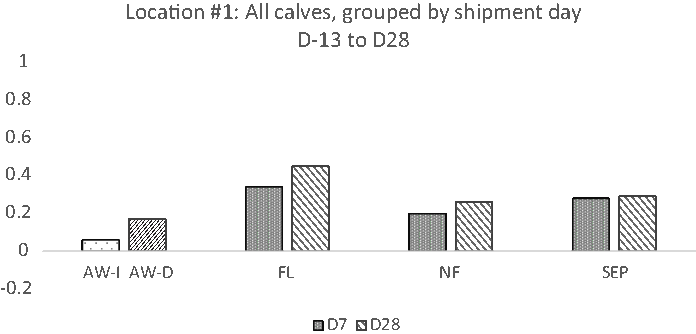
Final analysis was done to examine ADG from beginning of interventions to the conclusion of the study (D-13 to D28). Because of the absence of a D7 shipped, abrupt wean group, a single variable was created to include shipment day and weaning method, resulting in eight treatment groups (AW-I, AW-D, FL-D7, FL-D28, NF-D7, NF-D28, SEP-D7 and SEP-D28). A number of location × treatment × time interactions were present, necessitating examination of each location individually (Figures 7 and 8). For location 1, FL groups performed best, yielding the highest and second highest gains overall (the group that stayed on the ranch (FL-D28) had a better-predicted gain than the group that shipped on D7 (FL-D7); 0.45 v. 0.34 kg/day, P = 0.04). The SEP groups were next, with practically equivalent gains between the two shipment groups (0.29 v. 0.28 kg/day, P = 1.0). The NF groups were third in performance, with no statistically significant difference between NF-D8 (0.26 kg/day), NF-D (0.20 kg/day) and AW-D (0.17 kg/day). All groups were superior to AW-I (0.06 kg/day).
Mean predicted average daily gain values from model examining the period D13 to D28, with all calves from location #1. This permits examining interaction of weaning method and shipment day over the full study period. Treatments examined include AW immediately shipped (AW-I), AW, delayed shipment (AW-D), fence line weaned (FL), nose flap (NF) and 24-h separation (SEP). AW = abruptly weaned.
Mean predicted average daily gain values from model examining the period D13 to D28, with all calves from location #2. This permits examining interaction of weaning method and shipment day over the full study period. Treatments examined include AW immediately shipped (AW-I), AW, delayed shipment (AW-D), fence line weaned (FL), nose flap (NF) and 24-h separation (SEP). AW = abruptly weaned.
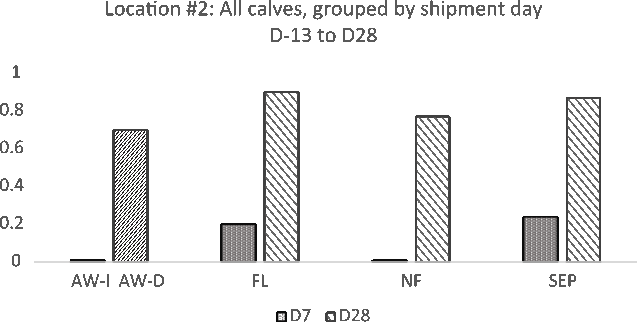
Results for location 2 were less clear-cut. Calves which stayed on the ranch for 28 days again had higher gains than those shipped on D0 or D7, with these differences being larger than at location 1. Within treatment comparisons of shipment day found notable differences between early and delayed shipment for all weaning methods (P < 0.0001 in all cases). For calves shipped on D28, FL and SEP had nearly identical gains (0.90 and 0.87 kg/day, respectively), followed by NF (0.77 kg/day) and AW-D (0.70 kg/day). For calves shipping on D7, SEP performed best (0.24 kg/day), although only slightly better than FL (0.20 kg/day; P = 0.99). Both were much better than AW-I (0.01 kg/day; P < 0.0001 and P = 0.0016, respectively) and NF-D (0.00 kg/day; P < 0.0001 and P = 0.0011, respectively).
Only the initial mixed model was submitted for diagnostics, as it contained all data points. One subject was identified as exerting extreme influence on the fixed effects of the model (as determined by restricted likelihood distance and multivariate difference in fits (MDFFITS)). This calf had substantial weight loss post-weaning, but did not regain the weight through D28. While this was unusual, there was no single observation that was biologically implausible or out of line with other weights. Deletion of this subject from the data set had minimal impact on the complete model, and thus the subject was retained for all analyses.
No mortality occurred throughout the trial period. Eleven calves were treated with an antimicrobial, each with a presumptive diagnosis of BRD. Eight were from location 1 and three were from location 2. Six of the 11 treated calves remained at the ranch of origin for 28 days while 4 were shipped on D7 and 1 was abruptly weaned and shipped on D0. One calf treated for BRD was from the SEP group, four were from the AW group, three were from the FL group and three were from NF group. Formal statistical hypothesis testing was not meaningful due to low morbidity and sample size.
Discussion
It is well recognized that weaning is a stressful event for calves, and it has been shown that weaning before shipping to a feedlot significantly decreases BRD (Step et al., Reference Step, Krehbiel, DePra, Cranston, Fulton, Kirkpatrick, Gill, Payton, Montelongo and Confer2008). However, it is imperative that producers be financially remunerated for the labor, expense and risk associated with weaning calves on the ranch of origin. While a premium may not always be received based upon the health improvements that are typically derived from the process, calves that gain weight during the weaning process result in better net financial return to the rancher (Hilton, Reference Hilton2015). Indeed, an 11-year study with over a thousand calves attributed 63% of additional profit to weight gain (rather than any price premium) (Hilton and Olynk, Reference Hilton and Olynk2011). Given this, while it is important to consider various indicators of stress, weight gain may be the most critical assessment when determining preferred weaning methods.
The study reported here examined multiple methods of weaning, including previously described approaches as well as a novel approach not reported in the literature (two periods of 24-h separation from the dam prior to weaning). While behavior and biomarkers were not employed to assess stress, the size of this study and the use of two different locations provide notable advantages over previous studies, including improved statistical power and broader external validity. The use of two locations, with a large number of calves and under commercial management, also introduced some challenges to results and interpretation. In some cases, discrepancies in results from the two sources are difficult to explain, and may be due to non-biological causes. For example, AW-I calves from location 1 appeared to have very good gain from D0 to D7. This is unexpected, and may be attributable to difference in scales between the two locations the calves were weaned (D-13, D-6 and D0 weights at ranch of origin, but D7 weights at a separate location). This speculation is supported by the finding that performance in the AW-I group from location 1 after D7 was generally poor (where gains from D7 to D28 were assessed using the same scale), while performance during that period was notably better for calves from location 2. If the favorable growth for calves from location 1 during D0 to D7 was real, one would have expected it to continue. The most likely explanation is that the D0 to D7 gain was artificial, and the subsequent poor performance was exaggerated by the apparent early gains. Discrepancies between scales may have also played a role in the absence of evidence of effect of shipment interval (D7 v. remained at ranch until D28) for location 1 calves (Figure 3): results suggested that there was little to no impact of early shipment for calves from this location (D7 shipped calves would have been weighed on D14 and D28 at a different location compared to where baseline weights were established). The effect of scale discrepancy is again supported by comparison to results from location 2, where all D7 shipped groups fared notably worse than those shipped on D28.
Additional complications derive from the challenge of individually weighing large number of calves in an efficient manner. Thirty-nine recorded weights were biologically implausible, and were thus removed from analysis. In no case was a calf’s complete record removed from the analysis, and in most cases, only one weight per calf was excluded. Elimination of extreme values has the potential for introducing bias, and therefore exclusion of outliers was kept to a minimum. Retention of as many values as possible produced large variability and occasional erratic changes (i.e., a given calf may have been shown a 25-kg loss over 7 days, followed by a 15-kg gain over the next 7-day period). The random coefficient multilevel model approach was chosen as one means to deal with these issues. It permits retention of multiple observations over the course of the study, rather than simply examining the weights obtained at the beginning and end. One drawback of this approach is that final analysis is done on predicted weights generated by the model, rather than observed weights. It is important to emphasize that a variety of statistical methods were employed (results of which are not reported), and all produced generally similar conclusions. The graphical displays in supplementary material illustrate within- and between-treatment variability in the data (Supplementary Figures S4 and S5).
Several findings were consistent and appear to be important, despite relatively modest variation between locations and statistical methods:
1. Abrupt weaning followed by immediate shipping of calves had a negative impact on performance (over the course of the study, even if not present in the first post-weaning intervals; Figures 7 and 8).
While this seems simply to confirm conventional wisdom, it is contradictory to at least two previous reports (Enriquez et al., Reference Enriquez, Ungerfeld, Quintans, Guidoni and Hotzel2010; Lippolis et al., Reference Lippolis, Ahola, Mayo, Fischer and Callan2016).
2. Delaying shipping appears to positively impact subsequent gains. Abruptly weaned calves that were not shipped until D28 had better gains than those shipped on D0 for both locations. For other treatment groups, shipping calves at 7 days post-weaning negatively impacted growth through D28, compared to not shipping until day 28. For location 1, this effect was modest (Figure 3; again, perhaps due to scales). For location 2, the benefit of delayed shipment was quite notable (1.4–1.6 kg/day), clinically significant and consistent across weaning methods (Figure 4).
However, it is unclear whether the impact would still be observed if observation was continued beyond D28, or whether shipping on D28 would negatively impact subsequent gains; further follow-up would be needed to assess this.
3. Fence line weaning was, in general, superior to other weaning methods, in post-weaning and cumulative ADG (Figures 7 and 8).
The impact of abrupt weaning and immediate shipment persisted, to some degree, throughout the 28 days following weaning. AW-I shipped calves demonstrated good gains from D14 to D28, numerically better than other treatments, and statistically significantly better than some treatments for location 2 (data not shown). However, this compensatory gain was insufficient to completely offset body weight losses occurring immediately after weaning, and thus ADG values were lower for the longer time intervals. Determining if this negative impact persists beyond D28 would require longer follow-up.
Interpretation and utilization of this work will depend somewhat upon the goals, expectations and resources of a given producer. Pre-weaning interventions, such as placement of nose flaps or 24-h separation from the dam, appear to have the potential to negatively impact growth. Both interventions had negative impacts for both locations, although the magnitude differed (NF had more effect at location 1, while SEP decreased growth more notably at location 2). Given this negative impact, as well as the labor costs to implement the interventions, any benefits derived from those treatments after weaning must be sufficient to re-coup the pre-weaning losses before a net improvement is observed. Such compensatory gain was not observed in our study, although longer follow-up may show that initial losses are eventually regained. If facilities do not exist to permit fence line weaning and calves are to be sold within 28 days or less after weaning, abrupt weaning may be preferred to use of nose flaps (at least in terms of weight and the monetary compensation the producer will receive). The SEP group was allowed fence line contact with the dam for the first 7 days following weaning. During this interval, their gains were similar to the FL group for location 2 but very poor at location 1 (only slightly better than abrupt weaning). The reason for this disparity at the two locations is unclear, but it is important to note that gains after D7 (when fence line contact with dams ceased) were good for both FL and SEP groups, and examination of longer intervals consistently found FL and SEP to be superior to NF or AW. Thus, this study suggests that the short-term benefits of fence line weaning are not lost after fence line contact is terminated, and that fence line weaning offers notable benefits when facilities exist to permit the approach. In our study, the additional work required for the SEP weaning approach offers no advantages over simple fence line weaning. Additional research is warranted to confirm this finding, since ours is the first investigation of the SEP approach.
Previous studies have reported on potential negative impact of nose flaps on the nares of calves, including development of abrasions, increased nasal discharge and even pituitary abscesses (Fernandes et al., Reference Fernandes, Schild, Riet-Correa, Baialardi and Stigger2000; Lambertz et al., Reference Lambertz, Bowen, Erhardt and Gauly2015). Modest-to-moderate injury was observed in the nares of NF calves of the current study, but no effort was made to document severity or duration. Hemorrhage, ulcers and erosions were present in many calves at time of removal but no long-term complications were noted. Another potential complication with use of flaps is the loss of flaps and return of the ability of calves to suckle. Only one flap was lost prior to the time for removal. Use of larger flaps may reduce the injury and damage caused by their presence, but likely also increases the risk of loss.
Additional work is also needed to determine the ideal duration of time that calves must be separated from the dam prior to shipment, commingling or other stressors. It has been shown that calves kept for 45 days prior to shipping had lower incidence of BRD than calves shipped to a feedlot immediately after weaning (Step et al., Reference Step, Krehbiel, DePra, Cranston, Fulton, Kirkpatrick, Gill, Payton, Montelongo and Confer2008). However, most studies examining various methods of weaning only employ interventions for a shorter period of time: nose flaps for 5 to 14 days prior to separation from dam, or fence line weaning for 7 days prior to shipping. Our study employed these same conventions, but additional work may find that different intervals are preferred. Nonetheless, based upon the study reported here, it is unlikely that any alterations of the NF protocol would make it preferable. In general, NF calves had poorer gain over most periods of the study, including while flaps were in place and after removal.
This study had several limitations that bear consideration. Only ADG and morbidity were assessed as outcomes of interest, and the very low morbidity combined with the sample size precludes a meaningful statistical assessment of weaning method on health outcomes. That should not be taken to mean that no difference would exist in other herds, where BRD is more prevalent. Additional work is needed to assess health impact, possibly with higher risk populations, or in the absence of pre-weaning vaccination. Other studies have utilized behavior and/or biomarkers in place of, or in addition to, weight gain, while our study did not. However, those measures have often offered no discrimination ability (Burke et al., Reference Burke, Scaglia, Boland and Swecker2009; Campistol et al., Reference Campistol, Kattesh, Waller, Rawls, Arthington, Carroll, Pighetti and Saxton2016). It is uncertain whether the absence of evidence of differences is due to no impact of weaning method on the calf, too much variability in the data or the inappropriateness of the analytes in assessing the nature of stress induced by weaning. Moreover, results of these assessment methods may be difficult to interpret. For example, observation that calves with flaps spend more time grazing than abruptly weaned calves may be because those calves have less stress and are therefore more likely to graze, or it could be that the flap interferes with grazing efficiency, and more time is required to achieve the same intake. Similarly, assessment of proximity to dam following fence line weaning has shown calves spend most time close to the dams (Enriquez et al., Reference Enriquez, Ungerfeld, Quintans, Guidoni and Hotzel2010). This may be viewed favorably (i.e., calves receive comfort from proximity to the dam) or negatively (the ability to be close without the reward of suckling leads to frustration and increases stress) (Enriquez et al., Reference Enriquez, Hotzel and Ungerfeld2011).
Another limitation of the study reported here was the fact that the ration provided did not allow for maximum performance. While in some cases calves outgained what was initially predicted, overall growth was notably lower than what has been reported by other researchers. It is possible that more differences among treatments could have been observed if the plane of nutrition had been more favorable. Additional work is needed to examine this possibility. Further, the mixing of treatment groups precluded assessment of feed intakes or feed efficiency. It is possible that treatments impacted intakes or efficiency; additional work would be necessary to assess this. Nonetheless, the relatively limited amount of feed provided and the fact that all feed was consumed each day suggest such differences would likely be minimal. Moreover, as explained previously, weight gain is the most critical consideration for producer profit, and it also indicates that other metabolic needs (homeostasis and immunity) are being met.
While the use of two separate locations and slightly different management at those locations improves external validity, the frequent interactions of treatment with location made interpretation of some results difficult. This was particularly true for calves shipped from location 1. Crude results are consistent with the possibility of a systematic bias between the two scales used at the different locations. If so, this could have resulted in distortions of analyses that included comparison of weights obtained from location 1 prior to shipment to weights obtained at a different location after shipping. There is no way to account for such a systematic error after the fact, which is why results from this location are reported, while acknowledging the possibility of bias. To reduce random error, as well as to make use of all data points, final reported results were generated through analysis of predicted weights, derived from a random coefficient multilevel model approach. Most importantly, this approach permits development of a very robust model, including more weight values, as well as numerous variables, such as calf weight at beginning of the study and a time × time interaction to assess non-linear impacts of the differing periods on performance. Once the robust model was used to generate predicted weights, it was possible to use those predicted weights to do simpler ANOVA assessment of main treatment effects, despite the presence of numerous interactions in the original model (as the predicted weights are created through inclusion of the interaction terms). For consistency, reported results were derived exclusively from this approach. However, it is important to note that other analytical methods produced very similar conclusions (data not reported). Without completely dismissing the possibility of scale bias, the consistency of results across locations and coherence with previous empiric evidence seem sufficient to allow us to conclude that abrupt weaning and immediate shipment is deleterious, based upon the cumulative performance from D-13 to D28. Beyond this issue, there were inconsistencies in results from the two sources, including differences in conclusions regarding relative ranking of weaning approaches, and magnitude of impact for delayed shipment. These differences in results between the two sources were in relative ranking and magnitude, and not contradictory regarding conclusions such as FL weaning being preferred over NF. Additional work is needed to clarify why different sources had such effects on results. Nonetheless, it is informative to recognize outcomes may differ between two locations even when using similar management approaches. Perhaps most important, the demonstration of some differences between the two locations further bolsters the importance of findings that were consistent across both, as it demonstrates repeatability (Bello and Renter, Reference Bello and Renter2018).
In conclusion, the study reported here builds on others in comparing weight gain of calves abruptly weaned and immediately shipped to multiple-step approaches, and is the first to examine the use of two 24-h separation periods prior to institution of fence line weaning. We conclude that, in general, abrupt weaning with immediate shipment has a negative impact on calf performance. Further, delaying shipment until 28 days rather than 7 days after weaning improved growth during that 28-day period. In contrast with some studies (but in agreement with others), we found that the use of nose flaps negatively impacted gains, both prior to and after weaning. We found that fence line weaning produced better gain than other approaches. There was little to no evidence that 24-h separation periods prior to weaning provide benefit to performance.
Acknowledgements
The authors would like to acknowledge the employees and management of the Field & Services Research unit for cooperation in the research, and use of the herd.
Jared D Taylor, 0000-0002-7484-085X
Declaration of interest
The authors declare no conflicts of interest in any aspect of the research or publication efforts.
Ethics statement
All procedures were conducted in accordance with Oklahoma State University Institutional Animal Care and Use Committee guidelines and requirements. All activities were approved under Animal Care and Use Protocol AG-15-21.
Software and data repository resources
None of the data were deposited in an official repository.
Supplementary material
To view supplementary material for this article, please visit https://dx.doi.org/10.1017/S1751731119001228.



