

Introduction
The influence of organisational culture on performance in health and social care, in particular its impact on care experiences, is of increasing concern (Commission for Social Care Inspection 2008). The public inquiry into failures at the Mid Staffordshire National Health Service Foundation Trust was directed to examine organisational culture, and the Chairman commented that ‘culture’ is used as an explanation of what went wrong ‘when no-one can think of anything else’ (Francis Reference Francis2011).
The importance of care home culture for people living with dementia has long been recognised as a key concept in the provision of good care. Kitwood (Kitwood and Benson Reference Kitwood and Benson1995; Kitwood and Bredin Reference Kitwood and Bredin1992) contrasted the New and Old Cultures of Dementia Care, examining the underlying beliefs and assumptions about the nature of dementia and the day-to-day behaviours associated with these in practice. He emphasised the importance of authentic contact and communication between the person with dementia and the carer, with relationships developing through day-to-day interactions, and these relationships supporting the sense of identity of the person with dementia (Kitwood Reference Kitwood1997). He proposed that interactions had the potential to either uphold or undermine the personhood of people with dementia. Crucially, he proposed the more damaging interactions were related to the care culture rather than being intentional.
Organisational culture emerged as a field of study from the 1970s onwards primarily as a study of the role of leadership in organisations (Scott et al. Reference Scott, Mannion, Davies and Marshall2003a), and as a counterpoint to scientific management approaches (Bellott Reference Bellott2011). Schein (Reference Schein1990) proposed a definition of organisational culture in order to underpin further research into the observation, measurement and application of the concept. The theoretical perspective of the author (e.g. modern or post-modern) will suggest a particular meaning and purpose for studying organisational culture, such as providing a management tool or revealing dynamics of power (Hatch and Cunliffe Reference Hatch and Cunliffe2013). Schein (Reference Schein1990) defined organisational culture as a pattern of shared basic assumptions developed by a group and found to work as it adapts to problems, and taught to new members as the correct way to perceive, think and feel. The strength and internal consistency of such a culture will relate to the stability and longevity of the group, the intensity of shared experiences, and the strength and clarity of assumptions held by leaders. In Schein's definition, culture is manifest at three levels: visible artefacts; values, norms and attitudes; and assumptions. Artefacts include those that can be observed such as what people wear, how they speak to one another, the physical environment and documented policies, and less tangible artefacts including stories told about the organisation. Schein warned that all such artefacts, while observable, are difficult to interpret as the onlooker may not react to them in the same way as the group member. Digging deeper, the values of the culture, including norms, ideologies and philosophies, may be revealed in how people describe their thoughts and feelings about the organisation. The underpinning assumptions may have started as values that come to be taken for granted as they are consistent with solutions to problems that the group deals with over time. Such values become increasingly closed to discussion and may then become unconscious assumptions. Therefore group, organisational, culture is understood as a learned response to the tasks a group has to perform.
Background
Having investigated the body of research explicitly examining organisational culture in care homes, it is evident that the concept of organisational culture has been used in two related ways in research in these settings. Firstly, there has been a move to identify and promote an ‘ideal’ culture for care and, secondly, there are related but distinct efforts to develop instruments to examine organisational culture and possible associations with performance, outcomes and the management of change.
In health care, no simple relationships between culture and performance have been found, rather the evidence indicates that culture, performance and the relationships between them are multi-faceted (Scott et al. Reference Scott, Mannion, Marshall and Davies2003b). In the United States of America (USA), social movements supporting ‘Culture Change’ towards resident-centred care emerged in the early 1990s (Banaszak-Holl et al. Reference Banaszak-Holl, Castle, Lin and Spreitzer2013) and there are now a range of models of nursing home culture change (Sterns, Miller and Allen Reference Sterns, Miller and Allen2010). As this movement has gained momentum, a body of research has grown using the Competing Values Framework (CVF) and associated tool (Organizational Culture Assessment Instrument (OCAI)) in efforts to track the progress and impact of the movement. The OCAI categorises organisational culture using the competing values of flexibility versus rigidity and internal focus versus external focus and differentiates four core cultural types: group, developmental, hierarchical and market (Cameron and Quinn Reference Cameron and Quinn2006).
Using the CVF approach, Scott-Cawiezell et al. (Reference Scott-Cawiezell, Jones, Moore and Vojir2005) carried out over 1,700 staff questionnaires with a sample drawn from 31 nursing homes (Scott-Cawiezell et al. Reference Scott-Cawiezell, Jones, Moore and Vojir2005). They hypothesised that a ‘group’ culture in nursing homes would be best able to achieve and sustain improvements. Previous experience in practice, however, led them to expect that strongly hierarchical organisational cultures would be most common in the nursing home sample. Contrary to their expectation, they found group culture was the most frequently reported culture type, reported in 84 per cent (N=26) of the homes studied. They concluded this showed greater opportunity for quality improvements in the sector than previously thought. Banaszak-Holl et al. (Reference Banaszak-Holl, Castle, Lin and Spreitzer2013) surveyed 1,056 nursing homes with a CVF instrument, comparing the cultural values of homes with espousal of ‘Culture Change’. They found that although most nursing homes do not report that they are affiliated to the culture change movement, many do report high levels of values that are consistent with the movement, in particular, valuing employee participation. They conclude there is more to examine about the relationship between espoused organisational values and those held by smaller teams and individual staff. An Australian study has measured relationships, communication, teamwork and leadership in care homes to begin to investigate care home culture. The study combined surveys of staff and of family members and 30-minute structured observations of care quality (Etherton-Beer, Venturato and Horner Reference Etherton-Beer, Venturato and Horner2013). Although many participants were positive about the levels of relationships, communication, teamwork and leadership, there was variation both within and between facilities.
In contrast, Tyler and Parker (Reference Tyler and Parker2011) used a qualitative approach to investigate the relationship between teamwork and organisational culture in long-term care settings in the USA. They argued that teamwork was a key component of supporting direct care workers in the stronger and more autonomous relationships with residents required to achieve resident-centred care. Long-term care settings were purposively sampled for high and low teamwork, and staff were interviewed. High teamwork was found to be associated with positive attitudes between staff and these were also modelled by managers. Low teamwork was associated with negative attitudes between staff and with staff setting themselves apart from negative attitudes they ascribed to others. The authors point out that culture change is an on-going process needing support at all levels, raising the question of what it is that enables some managers to model positive cultural attitudes (Tyler and Parker Reference Tyler and Parker2011).
The My Home Life movement in the UK has been aligned with the culture change movement in the USA (Meyer and Owen Reference Meyer and Owen2008). The My Home Life movement, founded on extensive review of research, promotes collaboration between stakeholders including the care industry and academics, and aims to influence culture within care homes through leadership, management and expertise, but also more broadly in society so that residence in a care home is seen as a positive option. The My Home Life programme has identified ‘positive culture’ as an important element in the complex work of providing high-quality care (National Care Homes Research and Development Forum 2007).
In one of the few UK empirical studies examining organisational culture and care provision, Kirkley et al. (Reference Kirkley, Bamford, Poole, Arksey, Hughes and Bond2011) defined organisational culture (after Harrison and Stokes Reference Harrison and Stokes1992) as shared beliefs, values, rituals and myths that influence behaviour and decisions. Using qualitative methods, they examined the role of organisational culture in supporting or undermining person-centred care for people with dementia in respite care settings. They found that only a minority of participants in respite care settings spoke explicitly about organisational culture, yet many implied that aspects of organisational culture played a part in preventing or facilitating person-centred care. They identified five aspects of organisational culture influencing person-centred care (understanding of person-centred care, attitudes to service development, service priorities, valuing staff and a solution-focused approach). They argue that person-centred approaches are far from embedded in short-term respite care settings and organisations should recruit staff with values that are consistent with person-centred approaches.
Research explicitly investigating organisational culture and long-term care settings includes largely US-based quantitative work, with existing research almost exclusively considering espoused values. A review of quantitative instruments for examining organisational culture found that the instruments reviewed failed to deal effectively with unspoken assumptions (Scott et al. Reference Scott, Mannion, Davies and Marshall2003a). Scott et al. (Reference Scott, Mannion, Davies and Marshall2003a) argue that research instruments chosen need to be consistent with the underpinning conceptual approach taken to organisational culture. The analysis of Kirkley et al. (Reference Kirkley, Bamford, Poole, Arksey, Hughes and Bond2011) is based on interviews and focus groups with professionals, and therefore provides data on participants' accounts about culture, values and practices, but without examining these in action. There is a need for investigation of relationships between espoused values, unconscious assumptions and behaviour, and an approach that engages with the layered and diffuse nature of organisational culture, to realise the potential of the concept to inform our understandings and develop practice.
Study rationale
We have worked from Schein's (Reference Schein1990) conceptualisation of organisational culture because the emphasis on the role of shared unconscious assumptions has the potential to go beyond defining culture as ‘the way things are done around here’ (Scahill Reference Scahill2012) towards exploring underlying reasons and potential resistance to change (Scott et al. Reference Scott, Mannion, Marshall and Davies2003b). We chose research methods that would allow interrogation of expressed values, behaviour and practices because participants may not either recognise or choose to reveal contradictory values and behaviours (Kirkley et al. Reference Kirkley, Bamford, Poole, Arksey, Hughes and Bond2011). There is a need to examine the relationship between espoused values of organisations and the values held by individual staff (Banaszak-Holl et al. Reference Banaszak-Holl, Castle, Lin and Spreitzer2013). People with dementia who have complex needs have not typically been consulted about their experiences of care, and yet are likely to be highly sensitive to the artefacts of organisational culture (Kitwood and Benson Reference Kitwood and Benson1995; Kitwood and Bredin Reference Kitwood and Bredin1992). Sensitive observation of their care offers particular critical insights (Brooker et al. Reference Brooker, La Fontaine, de Vries and Latham2013). Comparative case study methodology provided a methodological framework for the combination of interview, structured and semi-structured observation methods that were consistent with the conceptual approach.
This study examined links between organisational culture and residents' experiences of care and identified seven elements of care home culture associated with quality care. The final report of the study is available on the Preventing Abuse and Neglect in Care of Older Adults website (Killett et al. Reference Killett, Bowes, Brooker, Burns, Kelly, La Fontaine, Latham, O'Neill, Poland and Wilson2013). Our paper contributes to the literature by examining the dynamic creation of culture as shaped by local and broader contexts. The report sets out and illustrates in detail and depth the elements of a positive care culture. In this paper we examine the interplay as assumptions and values are shaped in practice, while reciprocally shaping that practice and the organisational culture.
Methods
The study addressed the research question: ‘What are the individual circumstances, organisational cultures and practices most likely to encourage, or inhibit, the provision of high-quality care for older people living in residential and nursing homes?’ In order to address this question, we examined experiences of care that reflected both high-quality care and poor care, including abuse, neglect and loss of dignity. The following definition of person-centred care informed the understanding of high-quality care:
Person-centred care values all people regardless of age and health status. It is individualised, it emphasises the perspective of the person with dementia and stresses the importance of relationships. The primary outcome of person-centred care for people with dementia is to maintain their personhood, in the face of cognitive decline. (Brooker and Surr Reference Brooker and Surr2005: 13)
Design
This study had three phases: contextualising work, case study and cross-case analysis (Killett et al. Reference Killett, Bowes, Brooker, Burns, Kelly, La Fontaine, Latham, O'Neill, Poland and Wilson2013). This paper draws on data from the case study research and cross-case analysis. The case study method provided structure for systematic collection and analysis of a range of data from different sources (Stake Reference Stake, Denzin and Lincoln2005) to provide in-depth understanding of context and relationships (Colon-Emeric et al. Reference Colon-Emeric, Plowman, Bailey, Corrazzini, Utely-Smith, Ammarell, Toles and Anderson2010; Wright et al. Reference Wright, Tinker, Hanson, Wojgani and Mayagoita2009). It provided a framework to support the combination of qualitative observation and interview approaches with structured observations of care experiences from a person-centred perspective. Panel groups representing older people with experiences of care, care staff and care home managers were involved at key stages to refine the focus, methods, analysis and findings development. This element of participative research aimed to actively involve the group of people most affected by the research topic so that their priorities, insight and experience could shape the research (Burns et al. Reference Burns, Hyde, Killett, Poland and Gray2014).
Context of the study: UK provision of residential and nursing care for older people
Residential care in the UK is provided by a combination of for-profit and not-for-profit organisations. The majority of care is purchased by the local authority contracting with the provider and collecting a contribution from the resident according to financial means (Hancock and Hviid Reference Hancock and Hviid2010). However, a significant minority (45%) of care home places are occupied by people paying for themselves (Care Quality Commission 2012).
Case study sample
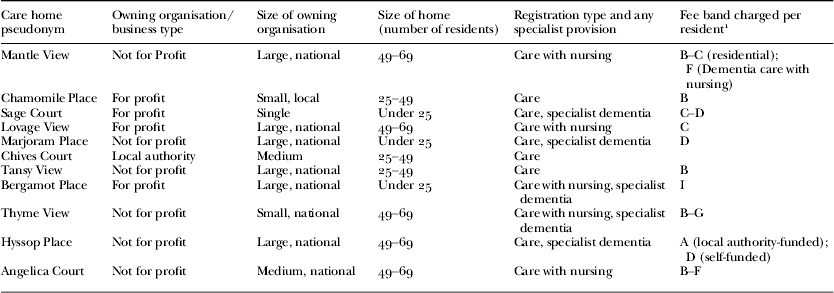
The ‘cases’ studied were residential care homes or nursing homes. In some cases the data collection incorporated the whole of the home. In others it focused on specific units within the home where distinct units were delineated by organisational factors such as separate staff teams or distinct resident populations. Eleven care homes participated from across England, Wales and Scotland between September 2011 and August 2012. Sampling was purposive and strategic to address the following differences in care home provision: size and business model of provider organisation; care home size, location and registration; care needs and funding of the resident population, as we considered these characteristics to be relevant to organisational culture. For summaries of each care home's characteristics, see Tables 1 and 2. Of the sample of care homes, six were located in England, three in Scotland and two in Wales. Four research teams carried out the case studies between them, with a research co-ordinator facilitating consistent data collection, analysis and cross-case analysis.
Care homes taking part as case study sites and their key characteristics

Note: 1. For fee bands, see Table 2.
Key for fee bands

Data collection
Case study data collection began with the Person Interaction Environment Care Experience in Dementia (PIECE-dem) observational framework, and was followed by qualitative observations, interviews and documentary analysis. There was some flexibility in this plan to respond to circumstances in each individual setting.
The PIECE-dem observational framework is designed to give insight into the care experiences of residents who may have considerable difficulty communicating their needs through cognitive impairment caused by dementia or through frailty. The PIECE-dem framework is set out in detail in Brooker et al. (Reference Brooker, La Fontaine, de Vries and Latham2013). In summary, two researchers observe the care experience of four residents in alternate 15-minute blocks over a two-day period, with the aim of capturing a typical waking day for each individual. Using one-minute time-frames, the researchers take qualitative notes of their observations of the person, their interactions with others and their engagement with their environment. The PIECE-dem observation data were analysed to identify key care experiences, events and people that enacted elements of organisational culture such as norms of practice, routines, rituals or understandings of care. These data were used to help direct the focus of the qualitative phase of data collection in each case study. Qualitative data collection included general observations of life in the home, collection of documentary data (such as policies, staff rotas, management memos, etc.) and semi-structured interviews (3–15 per case study) with a purposive sample of staff, residents, relatives and visitors to the home. Through this approach, organisational culture was examined both from ‘bottom up’, grounded in the care experiences of the most vulnerable residents and the work of care staff, and from the ‘top down’ via discussions and fact finding with managers and senior staff.
Data analysis
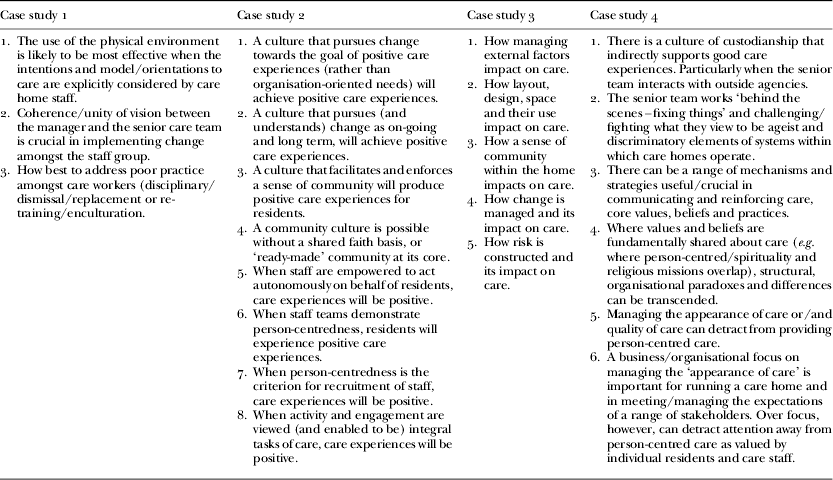
The dataset for each case study, including observation data, interview transcripts, documents, and researcher field notes and reflections was anonymised and stored electronically on a shared NVivo9 database. Within-case analysis through systematic, iterative cycling (Eisenhardt Reference Eisenhardt1989; Eisenhardt and Graebner Reference Eisenhardt and Graebner2007) was used to establish and test out understandings of the relationship between key indicators, organisational culture and experience of care. A set of propositions was developed following the within-case analysis of the first four case studies (see Table 3) and these were then refined by cross-case analysis and in subsequent case studies.
Initial propositions from case studies 1–4
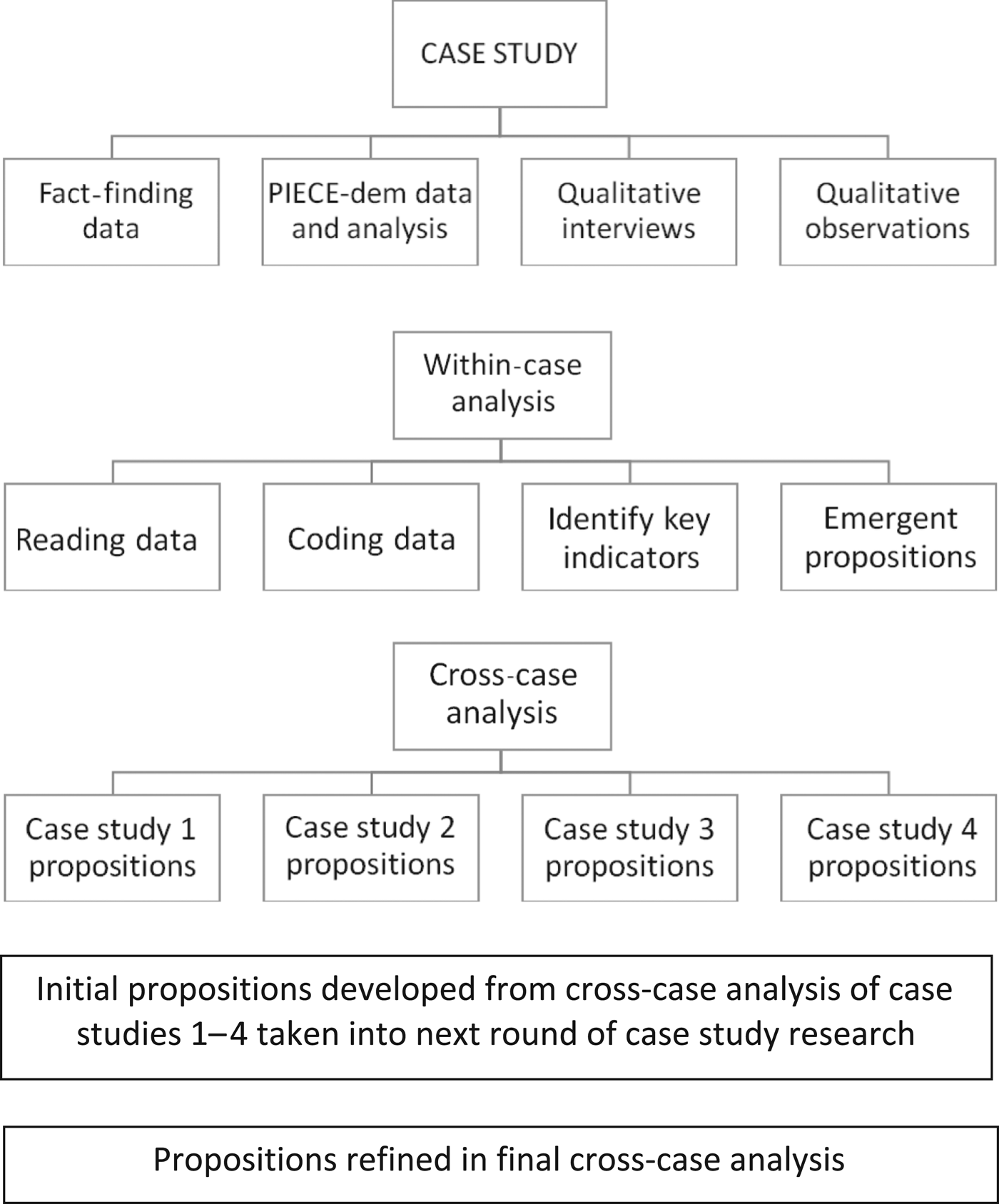
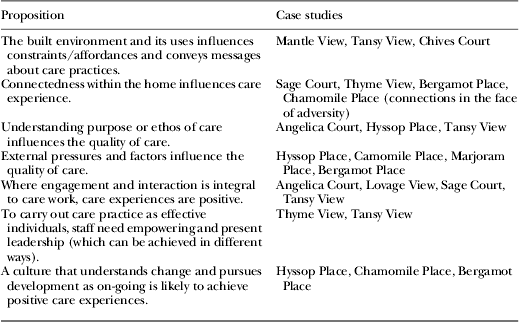
For cross-case analysis, researchers used a common coding frame generated from the propositions, identifying key themes addressing the research question, and this was used to re-examine the data, searching for re-occurring or common patterns. The propositions generated from the early within-case analyses guided the comparisons that were made. The process of comparison included seeking corroborative and contradictory evidence to support, refine or oppose the propositions, as well as to ensure that the analysis captured the subtlety of the situations in care homes. This process continued until no new insights emerged and the key themes appeared developed as far as the data would allow. The analysis process is illustrated in Figure 1. Table 4 shows the final propositions, and the identified cases further analysed for supporting and contradictory data.
Choice analytical process.
Final propositions and case studies used to refine each proposition
The trustworthiness (Guba and Lincoln Reference Guba and Lincoln1981) and rigour (Morse et al. Reference Morse, Barrett, Olson and Spiers2000) of the analysis was ensured by continuous cross-checking between the researchers, and procedures within the analytical process, including thorough exploration of contrary findings and the iterative development of the analysis. This was achieved through document sharing, email correspondence, regular teleconferences and face-to-face meetings between the four research teams.
Ethical conduct
This study raised two particular ethical issues in addition to issues of confidentiality, anonymity, voluntary participation and prevention of harm. The research site was a home and workplace in which clearly some individuals would not choose to be involved in the study, and a number of potential participants had moderate to severe cognitive difficulties.
We sought written consent from potential participants. We only continued with case study research in care homes where sufficient staff and residents gave consent for the range of core practices and activities in a home to be observed while protecting those who did not consent from its impact. Every effort was made to conduct research in spaces and at times involving only those who had consented (e.g. by ensuring non-consenting staff were working in a different area, not collecting data regarding non-consenting individuals and halting research activity if it appeared the presence of the researcher was disturbing to those who did not wish to be involved). Research only took place in public areas of the home and intimate care-giving was not observed. Where individuals possibly lacked the capacity to consent, advice about their participation was sought from someone in a position to know them and to give this advice (following the Mental Capacity Act 2005 and Adults with Incapacity (Scotland) Act 2000 where relevant).
Findings: elements of organisational culture
Whilst all of our 11 case studies sought to provide good care for their residents, our research showed that each of the homes provided care of differing quality. We found some homes providing consistently excellent care, some that struggled to provide consistently good care, and those in which positive care events were isolated incidents as opposed to the norm. The analysis did not reveal a ‘typology’ of cultures. Each of the care homes had their own distinctive culture and these varied in strength and internal consistency (Schein Reference Schein1990). Across these cultures there were seven interrelated cultural elements that recurred, and appeared of key importance to fostering and maintaining positive care experiences for residents. Where these cultural elements were in evidence, positive care experiences were found more consistently.
Drawing on Schein's notion of organisational culture as a linked hierarchy, the cultural elements we identified can be grouped in the following way.
Key values, attitudes and behaviour:
1. There is shared purpose in providing best possible person-centred care. To achieve this there is consistent espousal of values at an organisational and individual level.
2. Management mediate external pressures so that they do not negatively impact care, as demonstrated in the attitude, skills and behaviour of managers.
3. Staff are empowered to take responsibility for resident wellbeing through management and leadership, through values and attitudes of the organisation.
4. Staff and managers are open to change for the benefit of residents, as shown in their attitudes and behaviours.
These values, attitudes and behaviours support the following artefacts (observable practices):
5. There is a sense of community between all involved in the home.
6. Person-centred activity and engagement is integral to care work. This is supported by consistent organisational policies and procedures, knowledge and skills.
7. The care home environment is used actively to the benefit of residents, through the knowledge and understanding of the staff.
Values, attitudes and behaviour
Element 1: Shared purpose in providing the best possible person-centred care
Organisations are clearly aware of the importance of establishing a shared purpose and all but one of the care homes espoused values about the individualised treatment and the dignified care of the residents of the organisation. All care homes, except Lovage View, had written documentation explicitly espousing values relating to person-centred care. For example, each of the other care homes reported philosophies, visions and ethos statements involving the treatment of residents as individuals with rights to ‘privacy, dignity, independence, security, choice and fulfilment’ (Hyssop Place, Tansy View, Marjoram Place, Mantle View, Chamomile Place, Angelica Court) and in some cases worked to facilitate ‘relationships, empowerment and rights to self-determination’ (e.g. Thyme View, Sage Court, Bergamot Place). The exception, Lovage View, had a value of caring for residents ‘as if they were a member of their family’, suggesting insufficient consideration or understanding of person-centredness as an aspect of good care. Where positive care was more consistently observed, we found the espoused values, as expressed in organisational documents and by managers, were consistent with the values articulated by care and other staff and shown in the day-to-day practices, behaviours and interactions of people in the care homes. The following quote and observation from Bergamot Place are typical and illustrative of the consistency in that home between what the staff express as their values about good care and the observed behaviour:
Good care means if somebody needs attention, just attend straight away rather than leave them. And just to look after them as a person, like an individual, you know, what she likes to be, does she want to be dressed at this time or does she want to go to bed at this time, it's up to her, if she wants to go, whatever the time. (Bergamot Place, interview with nurse)
The personal choice for residents is important in this home. The participant was engaged in her own activities of daily living and was supported with warmth and a positive approach from staff … Her social needs were met by warm, engaged and authentic social connection. For example when the care assistant went in to help her get up she made comments about the weather and other things and when the senior carer joined her for breakfast this kind of connection was made again about getting up, the day, breakfast. (Bergamot Place, PIECE-dem summary)
Person-centred values underpin rituals such as receiving new residents and visitors to the home. Such ‘transition’ points are opportunities for introducing newcomers to what is deemed to be important in these homes; the respect and privacy of residents, the individual nature of needs and empathy with how the resident may be experiencing the moment. Staff understandings of what may be needed to practise person-centred care, such as compassion and making emotional connections, developed into assumptions:
…you've got to have a compassionate side and be able to connect with someone before you can do any personal care, because it's not fair otherwise. I wouldn't like a stranger looking after me that I couldn't talk to. (Tansy View, interview with care assistant)
There was a long history of shared purpose and value for person-centred care in Bergamot Place but in Tansy View it was a relatively recent shift. Senior members of staff explained the shift was necessary to counter an overly task-focused and regulatory-driven approach to care:
Staff were becoming too hooked up on tasks ‘got to get all this done by 12 o'clock, got to get all the beds done, got to get this done’. And we sat them down and said ‘no, it's 24-hour care, what's not done by the time you go off shift somebody else can do when they come on’, you know, ‘think of the person, not that you've got to wash them…’. (Tansy View, interview with manager)
Here there is also permission for staff behaviour to be consistent with the values, in this case to hand on tasks to staff on a later shift. Where the purpose and values in the home are not shared this has an impact on care practices and experiences. For example, in Lovage View we found a lack of a detailed organisational vision of the purpose of the home, with the onus placed on individual staff to interpret the value to provide ‘the best’ care. Combined with an enduring problem of low staff levels, this created a situation where responsibility for interpreting the purpose of the home and compensating for organisational shortfalls became an individualised responsibility of members of staff. The manager saw training as the mechanism through which individual staff would develop and therefore be in a position to deliver ‘the best’ care, but staff were not provided with either time or course fees by their employer to engage in anything other than mandatory training. Hence the organisational value, as well as being vague, was not enacted:
…on a minimum wage of £6.80 I can't afford to take any, any courses whatsoever, I am only just getting by… (Lovage View, interview with care assistant)
…I was working 48 hours a week, I've not got time to go and sit and do that when I go home. (Lovage View, interview with care assistant)
The care experiences in Lovage View were mixed, with some examples of positive experiences but also numerous examples of residents' needs not being met, and care not being personalised:
There is a resident needing the toilet (bowels). I nipped out before starting the PIECE-dem observation period and told a member of staff. He said they were busy and she would have to do it in her trousers. Just as the observation period finished [12 minutes later] he arrived and took her away in her wheelchair much to her relief. (Lovage Place, PIECE-dem observations)
Shared understanding of the purpose of a care home needs to exist across all levels of staff and to be evident both in articulated values and in management and care practices. However, having a shared purpose is unlikely, in and of itself, to create the cultures necessary to achieve good care if the workforce is not stable enough for shared values to become embedded or resources are not matched to values.
Element 2: Management able to mediate external pressure so that they do not negatively impact care
Care homes in the study were impacted by various external factors including regulation (through the relevant care inspectorate), the owning organisation, residents' families and visitors, and financial pressures. However, when management demonstrated efforts to mediate the impact on the daily work of their staff then care experiences appeared more positive. Mediation involved managers seeking to either cushion the impact of those factors on staff, or to translate the impact of such factors into staff practice in a way that was understood by staff to be consistent with values of care in the home.
Mediation could involve, for example, thoughtful consideration by management on some aspects of regulation, deciding on a course of action or way to help staff through what could be contradictory requirements. The manager at Marjoram Place explained:
Sometimes if you're following what some of the things that the Care Commission come up with [for example] the lady with the low BMI [body mass index], the framework states one thing but if you were following through on the framework it could be detrimental to the resident's wellbeing because … if you're following the guidelines in that situation you have to put up the weight. In order to put the weight up then you would have to be more… [Interviewer: Antagonistic?] you would – yes … That would not have helped her. That would have turned the tables and she would have become more unwell and would have eaten less. (Marjoram Place, interview with manager)
Other examples included, training members of a management committee in dementia awareness and manual handling (Thyme View), use of an external advocate in relation to relatives' concerns (Sage Court), obtaining financial support from the parent organisation (e.g. Thyme View, Marjoram Place) and involving senior staff in budget planning (Tansy View). In some care homes, mediation of external factors was lacking and it appeared to contribute to poorer care experiences for residents. This was most commonly evidenced in relation to paperwork. For example, Hyssop Place had received a number of requirements in relation to a safeguarding incident and two inspections which referenced the need for better record keeping. The manager at Hyssop Place explained the impact of this type of external pressure, apparently seeing no alternative but to transfer the pressure directly on to the care staff:
Making sure the Ts are crossed and the Is dotted … constantly nagging about ‘have you completed this form, please makes sure this is done, is this new care plan in place, have you reviewed this.’ That's what the job is mainly about now. (Hyssop Place, Interview with manager)
In her concluding words the manager is perhaps voicing an assumption about the main purpose or value of the care work, which is inconsistent with the espoused values of the home. There was evidence from observations that behaviour of care staff frequently operated from such assumptions:
A member of staff is finishing off care plans and food charts (before they've finished eating). (Hyssop Place, qualitative observation)
There was also some evidence, however, that the care plans here failed to capture some positive interactions between residents and staff.
There were examples of considerable coercion for staff to bear the costs of external demands personally:
We've just not got the time to do it. Head office are saying it is not a valid excuse anymore and people are now having to come in on their day off … they are threatening staff that they'll report them to the NMC [Nursing and Midwifery Council] if they don't come in and do the paperwork. (Lovage Place, interview with nurse)
Some homes mediated family carer requests, such as for example in Thyme View where relatives were reluctant for their relative to be moved within the home but the manager and head of care were confident that this would lead to improvements in care. This is in contrast to, for example, Hyssop Place where there was a sense that staff were there to do as families instructed, even where this appeared to contradict the residents' preferences. It is noteworthy that those homes which appeared to show the most effective mediation in respect of family and visitors, were also those homes which demonstrated high levels of connectedness and community within them. This could suggest that mediation facilitates the conditions for care home community, which in turn eases the on-going process of mediation between care home and family/visitors by creating a level of trust and clear expectations of roles.
Element 3: Staff are empowered to take responsibility for resident wellbeing by active management processes
Where management and leadership contributed to effective working, this was often through practices which demonstrated shared values (such as leading by example), enhanced connectedness (such as through responsiveness to staff input and being present in the home) and mediated the impact of external factors. For positive care experiences, it appeared necessary for staff to be able to exercise both autonomy and personal responsibility in their caring roles with residents. Examples in the previous section illustrate the issue of staff having responsibility (e.g. for their own training or for addressing inspection deficits) but not the resources to meet this. On the other hand, a carer who had acted autonomously in not waking up residents commented on being ‘told off’ by a more senior member of staff:
‘What's the point of waking people up to walk up and down the corridors all day?’ (Angelica Court, researcher's field notes)
There did not seem to be a sense of efficacy from the carer that anything could be done, for example through activity or engagement, which could change the residents' experience. This echoed staff's lack of confidence in management support in that home:
And they said ‘oh we're having a meeting, I'll make sure that's brought up’, I've had no feedback … I think with people who want to get on and want to progress, that's just not a good sign for management … but management want to blame everybody else… (Angelica Court, interview with staff member)
In contrast, more supportive approaches included practical help from management ‘on the floor’:
Exchange between two members of staff – resident needing extra help and staff seem under pressure ‘I could do without this’. One went to inform manager. Manager appeared within 5 minutes. (Thyme View, researcher's field notes)
and showing that stressful shifts were noticed:
Interactions between manager, deputy and other senior staff re: issue/change in one of the units. Senior staff asking manager/deputy to praise the staff in the unit as they had been working under stress throughout the morning. (Thyme View, researcher's field notes)
Element 4: Openness to change for the benefit of residents
Our analysis indicates that a culture that emphasises change towards the goal of person-centred care experiences rather than organisation-oriented needs is more likely to achieve positive care experiences for residents. However, how change is managed is crucial for its success both in terms of achieving the goals of change and for ensuring the welfare of those for whom change will have an impact: care home staff, residents and families. Pace of change, commitment to change, recognition of need for change and whether change is forced on, or managed by, care home staff, all appear to impact on care practices and the care experiences for residents. In Lovage View, lack of responsiveness to change at management level along with failings at organisational level were cited as contributing factors to the serious, chronic, understaffing.
Change pursued in a gradual and on-going way, towards a resident-oriented (rather than organisation-oriented) goal, appeared to be associated with positive care experiences. For example, this manager describes negotiating change for the benefit of residents:
When we first had animals I had terrible trouble upstairs with the Committee because they said ‘we don't like animals, why have you got them in?’ So we talked to them about it and then we wrote it in the Newsletter, the benefit that it gave to residents and things like that, and just kept talking about it and saying ‘but it's not going away, whether you think it's good or not, we know it is’. And eventually they came in. But it can be difficult. (Thyme View, interview with manager)
In examining the role of change in our case studies, the interactions with other aspects of care home culture become apparent. Most significantly, the role of care home management in mediating the impact of change caused by external factors (such as organisational or regulatory requirements) is shown to be crucial.
Observable practices
Element 5: A sense of community between all involved in a care home
Our findings showed an association between the extent to which care homes demonstrated a sense of connectedness within them and the quality of care experienced by residents. It is notable that this concept was difficult to unpack as it often referred to a ‘feeling’ or ‘atmosphere’ expressed by residents, relatives and staff. Characteristically, a sense of connectedness within a care home was also associated with an approach where staff focused on residents, recognising their workplace as primarily the residents' home. This was demonstrated in, for example, a lack of gossip about staff or residents among staff groups, communicating with relatives and visitors in ways they deemed meaningful, creating opportunities for relatives to become involved and offering support, as the following example indicates:
The tears were coming down. One of the carers, I don't know where he came from but he put his hand on my shoulder, squeezed it and said, ‘I know, are you alright?’ and by golly that made such a difference, knowing they cared not just for Mum, but for the family as well. (Thyme View, interview with relative)
The connected community appeared to be made up of frequent friendship-like relationships and close, micro-level connections in care-giving and social interaction:
Carer approaches resident, ‘Do you want a biscuit. I've got posh ones, don't tell anyone’. Resident seems very excited by this ‘Oh! Lovely’ giggles to carer. Singing starts again and several residents start to join in. Resident calls carer over with a big smile on her face. Carer says ‘give us a kiss!’ (Thyme View, qualitative observations)
These relationships were reciprocal, in which others' needs were considered and all were thought of as community members with contributions to make. This reciprocity was demonstrated by residents, visitors and relatives, as well as those employed in the home. This resonates with Brown Wilson's findings (Reference Brown Wilson2009) on the importance of staff being sensitive to residents' initiation of reciprocal relationships.
In a community I can hardly do that can I, speak personally about what I would like. I've got to see the other side of the picture a little bit, you know. (Thyme View, interview with resident)
Where care homes did not exhibit such connectedness there was a tendency for staff to approach the home as a workplace, in which the primary purpose was to nurture relationships with each other rather than ensuring a positive living experience for residents, as described below:
[Used to be] a small seating [area] in centre of hall where care station now is. But it got very busy and the computer was installed. ‘Caused an obstruction’. Residents really liked it as they could see what was going on. Since moved down to end it is hardly used. (Angelica Court, qualitative observations)
It appeared that visitors to such homes were more likely to make brief or functional visits to their family members or to check on or facilitate an aspect of their relative's care, rather than develop a sense of belonging to the place. For example, visitors to Hyssop Place were seen frequently, and had connections with each other, but primarily saw their role as checking on their relative's care.
In homes lacking connectedness it was more common regularly to see situations in which residents were either not known or not engaged with beyond their physical care needs by at least some of their care staff.
The [care worker] spoke with Resident on several occasions but always ‘in passing’, never with any intensity or empathy. (Marjoram Place, PIECE-dem observations)
Element 6: Person-centred activity and engagement are integral to care work
The understandings of and behaviours related to activity and engagement in our case studies appear to demonstrate that in order for residents' care experiences to be predominantly positive, care homes must enable activity and engagement to be embedded into their staff's work. This required not only shared understanding across the home of the importance of this but also of whose responsibility it is and, crucially, the practical circumstances (such as sufficient staff, resources, etc.) to make it happen. The PIECE-dem observation summary from Bergamot Place (above) and interview with the Angelica Court staff member provide contrasting examples from the data. While activity was often recognised as part of what should be provided, this was not always person-centred. For example, residents in Chamomile Place commented that the activities were ‘a waste of time’ and ‘I'm not cooking. I've cooked all my life’. In some care homes activity was seen as solely the responsibility of an activity co-ordinator, such as in Mantle View where the co-ordinator described the expectation that she should set up activities for groups of 10 or 15 people, but that this caused tensions between residents with different needs.
…So rather than trying to do maybe 10 or 15, which was … what was expected, we've now come down to about three or four because each resident needs that little bit more time spent with them, which I can now give them, it's so much better. (Mantle View, interview with staff)
When homes were inconsistent in providing positive care experiences, or exhibited a preponderance of poorer care experiences, activity and engagement were not integral to care work and dependent on the availability of sufficient staff and the skills and ability of individual staff.
Element 7: Use of the care home environment to the benefit of residents
Our case studies suggest that in homes where staff demonstrated a will and an ability to reflect on the environment (whether holistically or in relation to an individual resident) then care experiences appeared to be more positive. Some care home managers and owners had invested financially to improve the environment, reflecting an awareness of the importance of environment to good care experiences. In Chamomile Place, the new owner had made financial investment to maintain and upgrade the building:
You have to improve it because, you know, everything looked dated here. (Chamomile Place, interview with new owner)
However, again this was no guarantee of high-quality care experiences, unless it was also accompanied by reflective practice of staff within the (new) environment. Hyssop Place had recently been awarded a grant from the local authority and had used it to provide items of interest for corridors, redesign certain rooms and to buy a reminiscence pod. However, a number of these rooms or objects were never seen to be used. In Chives Court, Hyssop Place and Angelica Court there appeared to be little reflection on the potential impact of noise on residents. This seemed to be particularly the case for residents who spent all or most of their time in bedrooms and where care staff seldom lingered beyond the time required to carry out tasks. Intrusion of noise became obvious during observations in some care homes:
It is noisy outside with people gathering for lunch, hoover, beeper, squeaky door, crockery clattering. Partially drowned out by the radio in her room. (Chives Court, PIECE-dem observations)
Good design or thoughtful purchase of decoration or equipment only led to good care experiences where staff were able to reflect on their use at all times.
The dynamics of organisational culture in care homes
The cultural elements described above were in dynamic interaction, creating the particular culture of each care home. The examination in the section above of the cultural artefact of ‘use of the environment’ illustrates the interplay between cultural elements. Where a home demonstrated shared values related to person-centred care, then this value shaped reflection on the environment. Moreover, the extent to which staff were enabled to be effective in their roles also appeared to determine the extent of their reflection on the environment and ability to make necessary changes to impact residents positively.
Schein (Reference Schein1990) conceived of organisational culture as a hierarchy of linked elements, with observable artefacts underlain with values, attitudes and behaviours, and below these, not necessarily in conscious awareness, assumptions. The elements that we identified as highly relevant to the care experience of residents of care homes can be seen to be at two different levels of culture: at the level of values, attitudes and behaviours, that then produce the artefacts visible as the daily life of the home and the operation of the community, activity and environment. Of particular relevance in understanding the impact of culture on care practices is the approach to ‘assumptions’. It is these ‘assumptions’, taken-for-granted ways of viewing the world at the deepest level of ‘culture’, that determine how people perceive, think and feel, and hence, behave. Schein asserts that shared assumptions develop within groups of people as the group solves problems together. This insight shows us that the local relationship between ‘problems’ and their ‘solutions’ is crucial in the development of the care culture in a care home.
Local organisational cultures and conflicting assumptions
One pressing problem faced regularly in the sector, and faced by all the care homes in our study to a greater or lesser extent, was providing care in the face of shortages of staff. At such times, the staff of a care home as a group are working towards a solution. What is accepted as a solution will relate to what the group understands as its main task. With an empowered workforce with supportive and present management, problem solving is more likely to be explicitly shared. If the values of person-centredness are held on to as the group come to a solution and the solutions are successful, then gradually the values become embedded, unspoken assumptions. This might be achieved in different ways such as the Thyme View example above where the manager came to the floor to help within minutes of hearing about a difficulty. In this case, the value of the worth of individuals was becoming embedded. However, if solutions such as residents being given less time, time being taken from residents' activities or staffs own time are seen as successful, then the implicit values associated with these solutions will become embedded. Hence the organisation may espouse person-centred values, but groups within the organisation develop assumptions such as ‘this is a workplace’ which then come to underpin their attitudes and behaviours, as illustrated in this observed interaction at Angelica Court:
Two staff members chatting in kitchen … not focused on residents at all, chat about rates of pay … Resident says something and staff 1 corrects her ‘we're on about staff not residents’. (Angelica Court, qualitative observation)
A key demand with care work is the ‘emotional labour’ (Lee-Treweek Reference Lee-Treweek1997) and the ‘problem’ of meeting this demand has a range of potential solutions. If the organisation avoids responsibility for enacting solutions conducive to espoused values, groups of workers at shift level will find solutions to the potential emotional demands on them, which may include lack of emotional engagement with residents. Examples included medication being given to a resident or a catheter being checked with no meaningful communication from the nurse carrying out these tasks, snacks handed out to residents with no communication or calls for help being ignored (Lovage Place). Where such behaviour becomes a ‘successful’ solution, in other words the staff member avoids uncomfortable or demanding emotional engagement and the behaviour is not challenged or alternatives implemented through leadership, reflection and supervision, then attitudes underlying it are likely to become unconscious assumptions. Assumptions in Lovage Place appeared to be ‘I can't do anything about it’, assumptions of lack of efficacy:
Normally what's recommended is often diluted by the time it gets down the chain. A fantastic recommendation's made, but what I've seen happen, it's become a shadow of what it should be. It is maybe financial restrictions, staff restrictions and environment restrictions. What the manager sees as a priority. (Lovage View, interview with nurse)
Equally, however, there was an apparently contradictory assumption that doing good care work was the responsibility of the individual.
It's just down to an individual's personality whether they are going to make it work or not. (Lovage View, interview with care assistant)
As the manager put it, ‘It's about the right staff’. However, an individual's understanding and interpretation of a situation, and their actions, are affected by underlying assumptions. These assumptions are likely to evolve in the social milieu and on-going problem solving of their work in the care home. We found that where there is a lack of fit between the cultural elements there are contradictory assumptions. As demonstrated in Lovage View, there is an assumption that good care is reliant on individual staff and their personal, pre-existing values, but also a contradictory assumption that individual staff cannot effect change or overcome barriers to good care. This produces what could be termed a cultural bind, in which effective provision of care is not compatible with the assumptions held by members of the organisation. The disengagement in care evident in Lovage View is currently a major systemic concern nationally in both social care and health care (Francis Reference Francis2013). There is concern to recruit staff or health professional students with the ‘right’ values (Kirkley et al. Reference Kirkley, Bamford, Poole, Arksey, Hughes and Bond2011; National Health Service England 2013), but this is unlikely to be sufficient: we did find individual care staff in Lovage View who espoused positive values such as ‘give everything the time that it needs’ but, as indicated above, the care observed did not consistently reflect such values.
Staff assumptions and management actions
Lack of efficacy was also associated with a lack of management responsiveness to the input of care staff, for example in Hyssop Place where management seemed dismissive of any care staff insights about individual residents. On the other hand, where such insights were sought out and respected by leaders (for example in Thyme View and Tansy Place), staff assumptions, ‘you're just really motivated for the residents’, seemed a consistent fit with the many instances of sensitive interactions observed.
Banaszak-Holl et al. (Reference Banaszak-Holl, Castle, Lin and Spreitzer2013) found that many US nursing homes hold values associated with the participation of employees, and these organisational or management values, and the employee involvement, need to be translated into new practices. Our research indicates that in order to develop sustainable cultures of positive care, care home organisations will need to demonstrate empowering practices of leadership, and support the staff to solve on-going problems of day-to-day practice in ways which are consistent with espoused person-centred values.
Conclusion
Organisational culture is an important component in ensuring that residents have positive experiences of care in residential settings. It is recognised as relevant in shaping the behaviour and attitudes of staff across health and social care settings, forming part of the informal sub-system of an organisation which is in dynamic interaction with the formal sub-systems of management structure, strategy and goals (Senior and Fleming Reference Senior and Fleming2006).
Our research identified seven elements of organisational culture that are key to providing good care. Each of these could be seen to interact with, and be interdependent on, the other elements. These elements were also seen to be locally specific; they develop as people work together as a staff group in the organisational structure of a care home. Therefore, organisational care culture is a dynamic and locally developed phenomenon. Previous approaches to address culture through organisational espousal of values or through recruitment of individuals with compatible values are unlikely to be sufficient to achieve a positive culture. As assumptions are learned in dynamic resolution of the problems of everyday practice, values need to be shared at all levels of the organisation. Managers need to be active in empowering staff and mediating resources and external influences in order to address practice issues in ways that are compatible with positive values.
Rather than there being one ‘right’ culture that could be ‘applied’, thereby guaranteeing desired behaviour (for a critique of modernist perspectives on organisational culture, see Hatch and Cunliffe Reference Hatch and Cunliffe2013), organisational cultures that support positive care may well manifest these elements in different ways. The illustrations of each element demonstrate that it is the relationship between the elements that facilitates a positive care culture. The implication of this is that a particular organisational culture in a care home cannot be achieved simply by importing a set of organisational values or a strong leader or the ‘right’ staff. Rather, it is necessary to find ways of resolving the everyday demands of practice in ways that are consistent with espoused values. It is through this everyday practice that assumptions continuously evolve, either consistent with or divergent from, espoused values.
These findings have implications for care providers and funders who need to ensure that the organisation espouses appropriate values and that there are sufficient, appropriate resources for the everyday problems of care practice to be resolved in ways that are consistent with these espoused values. For managers and leaders, the implications are that there is a need to be engaged with on-going problem solving in practice. Managers need to be aware of day-to-day problems and how staff deal with these. They need to help to find solutions that explicitly fit with the espoused values of the organisation. The implication for care staff is that if they endeavour to communicate about everyday problems and compromises in practice, they can contribute actively to the development of a positive care culture. Staff should tell senior colleagues about everyday problems and how they are dealing with these. Care staff and their employers need to remain vigilant to any changes in their values and assumptions in response to the on-going challenges of their work and the day-to-day solutions that are developed. A practical action to achieve this is to use ‘reflective practice’, for example in handovers and staff supervision.
Schein (Reference Schein1990) indicates that organisational cultures change in response to decree or example from top managers but that employees have a role too (Hatch and Cunliffe Reference Hatch and Cunliffe2013). In the particular context of care home organisations, however, where external regulation, constrained resources and highly value-based interpersonal work are particular features, we argue that the situation is more complex and mediated. Understanding care home organisational culture as locally produced, contextual, shifting and delicate could facilitate more explicit recognition of problematic organisational cultures and foster more widespread development of organisational cultures congruent with positive care. Further research could usefully examine the development and shifting of assumptions in care practice, and such work would also contribute to current moves to address problematic cultures in health and social care settings more widely.
Acknowledgements
The study was funded by the Department of Health and the charity Comic Relief through the programme of research, Preventing Abuse and Neglect in Care of Older Adults (PANICOA). The views expressed in this publication are not necessarily the views of the Department of Health or Comic Relief. The research protocol was reviewed and approved by the Social Care Research Ethics Committee (reference 11/EC08/0011) in relation to research sites in England and Wales, and by the Scotland A Research Ethics Committee (reference 11/AL/0325) in relation to research sites in Scotland. The team gratefully acknowledges the important contribution of Dr Bridget Penhale, Professor Paula Hyde, Professor Fiona Poland, Professor Richard Gray, Dr Nick Jenkins, Heather Strange and the residents, relatives, visitors and staff who volunteered to take part in the project.


 Open access

