

The increasing institutionalization of the international system represents a major development of the past two centuries. Scholarship has generally focused on the positive consequences of this transformation, arguing from rationalist or idealist perspectives that international institutions among other things facilitate interstate cooperation,Footnote 1 reduce militarized conflict,Footnote 2 and diminish various forms of discrimination.Footnote 3 However, institutions also often perpetuate biases in favor of specific states, creating distortions in policymaking with global consequences.Footnote 4 In recent work, Christina Davis argues that international institutions are “discriminatory clubs” that allow states to reward geopolitical allies while withholding cooperation from potential adversaries.Footnote 5
We propose a theory of institutional racism in international relations. We argue that international institutions generate bias and discrimination not only based on geopolitical alignment and economic interests, but also based on race. In domestic politics, scholars have increasingly called attention to the institutionalization of racist practices despite formal and informal taboos against outright racism. The international system has evolved analogously: even as overt expressions of racism have diminished, international institutions have come to play a central role in perpetuating racial disparities. Institutions effectively function as discriminatory racial clubs, disproportionately promoting cooperation among white-majority countries at the exclusion of others.
We build on growing scholarship that calls attention to the neglect of race in international relations.Footnote 6 Critics argue that international relations theories were developed from perspectives rooted in racist assumptions and structural power asymmetries.Footnote 7 Racist ideas played an important role in early twentieth-century international relations scholarship, illustrated by The Journal of Race Development, which was later renamed Foreign Affairs.Footnote 8 These legacies came to be neglected as racist theories fell to the wayside and the subfield increasingly portrayed itself in objective, scientific terms. However, recent scholarship calls attention to the continuing relevance of racism in contemporary international politics across a wide range of domains.Footnote 9
Our article advances the research program on racism in international relations by providing a novel quantitative assessment of institutional racism over the past two centuries. We evaluate our theory by examining original data on racist language and racial bias in membership patterns in international organizations. Consistent with diminishing overt racism, founding documents of international organizations more often use antiracist rather than racist language over time. However, membership patterns are consistent with persistent distortions along racial lines. First, white-majority countries continue to dominate membership in international organizations, including organizations newly created in recent years. Furthermore, even after controlling for a variety of potential confounders, international organizations that overrepresent white-majority countries at inception tend to disproportionately expand membership to other white-majority countries. Our mechanism tests suggest that this disparity is more likely attributable to persistent racial bias rather than path dependence of formal institutional rules.
Our analysis focuses on patterns of bias in the membership of international organizations, consistent with an important dimension of institutional racism in the domestic context: disparate access to key societal institutions and racial segregation in domains such as political participation, civic society, residential communities, and education.Footnote 10 Of course, institutional racism is not only about representation and having a seat at the table. We present qualitative evidence from several international organizations to demonstrate how racially distorted membership can influence policy outcomes by creating asymmetric access to gains from cooperation, segregating states into separate and unequal institutions, and influencing institutional decision making. Our findings complement studies that examine other forms of nonovert racial bias, such as racialized workforces within institutions,Footnote 11 paternalism and other legacies of colonial racism,Footnote 12 and racialized domestic politics that affect international outcomes like immigration or trade.Footnote 13
Theory and Hypotheses
We propose a theory of institutional racism in international relations. Overt expressions of racism in international relations have been replaced by institutionalized patterns of racialized bias. This mirrors the evolution of racism in national political and legal systems, which has seen overt expressions of racism subject to increasing condemnation and ostracization even while institutionalized racial disparities prove stubbornly persistent. At the international level, international institutions play a key role in perpetuating racialized bias.
To develop our theory, we draw on studies of institutionalized racism in domestic politics. Such studies begin from the observation that overt articulation of racist beliefs, prejudice, and laws became increasingly delegitimized in favor of race-neutral discourses after the end of World War II. Many white-majority countries now have explicit laws prohibiting discrimination based on race. In the United States, a flurry of post-civil-rights-era legislation banned racial discrimination and allowed race to be considered only to counteract historical disparities in domains like education and housing.Footnote 14 The United Kingdom also enacted antiracist lawsFootnote 15 and eschewed racialized language in areas like immigration.Footnote 16 In Canada, the trend began from the use of race-neutral laws and proceeded to include laws acknowledging racial inequalities.Footnote 17 South Africa resisted this trend until the 1990s, maintaining a racist apartheid regime, but it faced considerable international pressure and ostracization.
Despite shifts away from open expressions of racism and explicitly racist laws, racial inequalities have persisted across societies. Thus scholarship on race has increasingly turned its attention to institutional racism. While varied in terminology and theoretical frameworks, these studies share a common recognition of the persistent, insidious effects of institutions, practices, and norms that perpetuate racial inequalities notwithstanding the absence of racist justification or even intention.Footnote 18 Banting and Thompson provide the following definition, which can be applied directly to international relations, and which we will use for the remainder of this article: “Institutional racism manifests as the rules, norms and/or patterns of behaviour that perpetuate relative disadvantage for some racial groups and advantage for others; the institutionalization of implicit racial bias; the ways that seemingly universal rules affect populations differently and result in the reification of pre-existing racial inequalities; the way that seemingly universal rules are, in fact, designed to advantage white populations and disadvantage nonwhite populations; or any combination of these tendencies.”Footnote 19
Scholarship has examined how race shapes state formation and structures elite alliancesFootnote 20 and conversely, how the state apparatus has been used to create a racialized population.Footnote 21 In these racialized environments, seemingly benign institutions can be leveraged to protect and perpetuate allocations of opportunities and resources in a manner that disproportionately benefits members of a specific race.Footnote 22 Among others, these include institutions and policies related to welfare, education, and immigration.Footnote 23
We theorize that the international system is characterized by an analogous pattern of institutional racism. We focus our attention on international institutions, which are by definition the mechanisms through which the principles, norms, rules, and decision-making procedures among states are institutionalized.Footnote 24 International institutions play a central role in facilitating cooperation by reducing transaction costs, increasing transparency, and creating stable expectations.Footnote 25 Early skeptics argued that international institutions are irrelevant or epiphenomenal to the interests of powerful states,Footnote 26 but recent scholarship demonstrates that institutions are subject to contestation precisely because they matter.Footnote 27 States with outsized formal or informal influence over international institutions can bias rules, decisions, and outcomes in their favor, securing valuable economic and geopolitical advantages.Footnote 28 Crucially, the existing literature on bias and discrimination associated with international institutions has predominantly focused on race-neutral factors, such as geopolitical alignment and economic interests. We argue that such discrimination also extends to race, with important consequences for patterns of cooperation and contestation in the international order.
There are two distinct mechanisms that can contribute to institutional racism in international relations. The first mechanism is the persistence of formal rules. International institutions are prone to path dependence, locking in initial conditions despite underlying shifts.Footnote 29 Even if underlying racist beliefs and norms have genuinely evolved, institutions may lag behind and perpetuate patterns of interaction from an earlier era. For example, the permanent membership of the UN Security Council is dominated by white-majority countries with the exception of China, effectively freezing in time the composition of major allied states from World War II. This is in part because of the high bar set by the amendment procedure of the UN Charter, which requires a two-thirds majority in the General Assembly and no vetoes by current permanent members. Hence, despite widespread support for reform, it has been difficult to secure sufficient backing for a specific plan. If the Security Council were reconstituted today from scratch, it would plausibly reflect greater racial balance with the inclusion of members like Japan, India, and African states. Many other international organizations use supermajority or consensus rules that can hold up change even if most members prefer reform.
The second mechanism is persistent racial bias. Despite normative taboos against outright expressions of racism, it is possible that underlying racist beliefs and attitudes remain entrenched. Both country representatives and staff in international organizations are shaped by their own racial biases formed within a domestic political context.Footnote 30 These biases may directly shape decision making irrespective of constraints imposed by institutional rules. In important recent work, Christina Davis demonstrates that international organizations have functioned as “discriminatory clubs,” in which existing members often ignore functionalist or merit-based criteria to prioritize the membership and interests of geopolitical allies.Footnote 31 Davis shows that considerable discretion exists in institutional decisions. For example, few institutions articulate clear membership criteria, and even for those that do, the rules can be twisted to favor geopolitical friends. This notion of discriminatory clubs can be extended to encompass racism: discretion allows for favoritism not only based on geopolitical alignment, but also based on race.
Importantly, racial discrimination may be intentional or the product of unconscious biases. In both domestic and international politics, racist intent is difficult to establish in the presence of normative taboos against overt racism. For example, in the United States, white-dominated homeowner associations successfully defended neighborhood exclusivity without explicitly racist rules through land use regulations limiting new housing developments.Footnote 32 Similarly, white-majority countries have designed immigration policies that effectively favor white migrants through purportedly race-blind criteria.Footnote 33 The taboo against outright racism gives racists and nonracists alike strong incentives to appeal to universalistic principles to justify their actions. Thus both legal remedies and empirical studies of institutional racism focus on establishing disparate impact rather than explicit intent.Footnote 34 We will follow a similar approach in our empirical analysis.
Hypotheses
Turning to operationalization, we focus on formal international organizations for the empirical analysis. This is for several reasons. First, the universe of international organizations is well defined, and we can conduct a systematic analysis of all organizations in a way not possible for the universe of international institutions. Second, while the universe of institutions includes unwritten norms and principles for which the boundaries of participation are ambiguous, all international organizations are associated with at least some published language and well-defined memberships. It is thus possible to examine the presence of both racist language and patterns of racial bias in membership among a comparable set of institutions. In the robustness checks, we consider a wider set of institutions including informal institutions, which provides some leverage over causal mechanisms.
One premise of institutional racism is that overt expressions of racism have become less common over time. Although subject to contestation, a taboo against outright racism has become firmly entrenched across societies since the end of World War II, albeit to different degrees and not necessarily at the same time. The normative shift against open racist expression should affect language use by international organizations. Member states are unlikely to advocate for racist language that is delegitimized or illegal within their own societies. States are also more likely to support the inclusion of antiracist language if such principles pose no conflict with their own laws and domestic practices. Furthermore, at the international level, racial diversity regimes have evolved over time from outright racist discrimination to transformative efforts reflecting decolonization and civil rights movements.Footnote 35 These normative shifts should make it more likely for international organizations to eschew racism in favor of antiracist expressions in their use of language. This leads to our first hypothesis:
H1 The use of racist language in international organizations should decline over time, while the use of antiracist language should increase.
For the purposes of operationalizing nonovert, institutional racism, we focus on patterns of membership according to white-majority status. Olson describes “whiteness” as both “an interest in and an expectation of favored treatment within a color-blind society.”Footnote 36 In Bhopal’s study of white privilege, she refers to “white spaces” as places where “whiteness and white Western practices are the norm and those which do not comply with these are seen as outsiders and others.”Footnote 37 Institutional racism is associated with segregation through seemingly race-neutral policies and rules that carve out or reinforce such “white spaces.”
In a similar vein, we examine the degree of domination of international organizations by white-majority states to the relative exclusion of others. Our focus on membership is motivated by both substantive importance and empirical tractability. Segregation and disparate access to key societal institutions—for example, legislatures, courts, banks, civic associations, educational institutions—is one of the most basic manifestations of institutionalized racism.Footnote 38 Much like these domestic institutions, international organizations play an important role in setting policy, marking status, and mediating access to resources in the international system. Furthermore, unlike other manifestations of institutional racism—such as racially biased policy implementation or internal practices—membership is readily observable and subject to direct comparison across a diverse range of international organizations.
We evaluate two observable implications of institutional racism on membership patterns. First, if institutional racism remains persistent, this should manifest in the overrepresentation of white-majority states in international organizations. Exclusion from structures of power and influence is the most visible and among the most pernicious manifestations of institutional racism. Thus we predict:
H2a White-majority states are overrepresented in the membership of international organizations.
Second, we predict a pattern of segregation in which membership expansion for white-dominated international organizations is biased in favor of white-majority countries. This reflects two plausible mechanisms. First, membership requests from white states may be prioritized or be subject to less scrutiny at the accession stage by current white members. This is the international analogue of how white-dominated workplaces and career networks advantage white job seekers at the expense of minority applicants.Footnote 39 Second, nonwhite countries may eschew organizations dominated by the prerogatives and normative priorities of white-majority countries. In the domestic context, perceptions of hostility and the absence of role models can lead racialized minorities to forgo participation in white-dominated groups and organizations.Footnote 40 Analogously, institutional membership comes with both benefits and obligations. If countries foresee being marginalized or mistreated upon joining a white-dominated organization, the expected utility and thus incentive to seek membership will diminish. We thus predict:
H2b International organizations dominated by white-majority countries will tend to disproportionately admit new white members.
We test an analogous proposition for the cessation of membership. Unlike accession, exit decisions involve states that are existing members of an organization. Hence, exits are more likely to stem from conflicts over operations and implementation of organizational rules. We predict that white-dominated organizations are relatively more welcoming and accommodating of white-majority country interests, reducing the likelihood of irreconcilable differences and conflicts. Conversely, nonwhite countries are more likely to become dissatisfied and disgruntled with the status quo, which can lead to membership termination. Thus:
H2c International organizations dominated by white-majority countries will tend to face disproportionately less exit by white members.
Finally, we consider causal mechanisms. As noted before, there are two plausible mechanisms that may contribute to institutional racism. First, institutionalization may contribute to path dependence, locking in and perpetuating racist patterns of interaction from earlier time periods. Once established, formal features and rules of international organizations, such as those that govern membership criteria, can be sticky. This mechanism implies a genuine decline in underlying racist attitudes and beliefs. Despite being less racist compared to their predecessors, policymakers are effectively trapped into patterns of racist behavior by institutions established in an earlier era. Hence:
H3 Persistent racial disparities in the membership patterns of international institutions are attributable to the path dependence of formal rules.
Second, institutional racism may be attributable to persistent racial bias. A decline in open expressions of racism does not necessarily imply a decline in racist beliefs. It may be that policymakers of white-majority states feel normative pressures to adopt antiracist language in public pronouncements but behave similarly to their counterparts from earlier eras. Racist attitudes may persist as implicit biases that subconsciously shape evaluations of racialized countries or officials.Footnote 41 Institutions in this case are more properly understood as vehicles of power and exclusion rather than sources of path dependence. While the first mechanism suggests a gap between preferences and outcomes (that is, antiracist beliefs cannot be realized due to persistent institutional constraints), the second mechanism suggests a gap between racism professed publicly and as reflected in actual behavior. We expect that persistent racial bias will affect membership from both the supply and demand side, reducing the relative incentives of nonwhite countries to join white-dominated institutions while also diminishing their relative chances of admission subject to expressions of interest. Hence:
H4 Persistent racial disparities in the membership patterns of international institutions are attributable to persistent racial bias.
We will test H3 against H4 in the empirical section by leveraging several observable implications of each mechanism.
Racist Language in Founding Documents
To evaluate H1, we collected an original data set of racist and antiracist language contained in the founding documents of intergovernmental organizations (IGOs).Footnote 42 IGOs produce a wide variety of written documents, including annual reports, treaty agreements, and internal policy memos. We focus on founding documents for two reasons. First, essentially all IGOs have a founding document, while the range and availability of other written output varies considerably. Focusing on founding documents thus avoids potential bias according to document availability and publication volume. Second, founding documents serve a similar purpose across IGOs, laying out the basic purposes and structures of the organization. They are thus broadly comparable across organizations. Third, they are public documents for which the precise language is carefully negotiated by founding members. The wording is thus likely to be sensitive to prevailing norms about appropriate phrasing and taboos.
It is important to emphasize that we use founding documents primarily on account of their availability and comparability, not because they are the most likely outlets for expressions of racism or antiracism. There is no intrinsic reason that a founding document needs to reference race. The documents likely understate the volume of racist language in private correspondence and conversations behind closed doors. However, they allow us to trace the evolution of language use by IGOs over time in public documents that serve the same functional purpose.
To define the universe of IGOs, we rely on the Correlates of War Intergovernmental Organizations Version 3.0 data set.Footnote 43 The data set contains data on state membership in intergovernmental organizations between the years 1816 and 2014. IGOs need at least three member states to be included in the data set among other characteristics.Footnote 44 The number of IGOs in the data set range from one in 1816 in an international system with twenty-three states to a peak of 336 IGOs in 1998 in a system with 187 states. In total, the data set contains information on 534 IGOs.
Of these 534 IGOs, we were able to identify and code the founding documents for 415. We coded founding documents based on two types of racism: explicit and implicit racism. Explicit racism is coded based on the presence of terms that clearly concern race or specific racialized groups, such as “race,” “racial,” “coloured,” or “natives of —.” An IGO was coded as explicitly racist if the term (1) refers to a particular race in a derogatory manner; (2) establishes or presumes a clear hierarchy among races; or (3) explicitly distributes rights, privileges, or obligations differently according to race. It was coded explicitly antiracist if the reference was made to reject or oppose discrimination based on race. Implicit racism is coded based on the inclusion of terms historically associated with racial hierarchy or designating a group of predominantly nonwhite-majority countries. These include terms like “colony,” “possession,” “dominion,” and “Third World.” An IGO is coded implicitly racist if the founding document uses the terminology in a way that (1) presumes or affirms a hierarchy between predominantly white countries and nonwhite entities, or (2) grants authority over a nonwhite majority entity to a white-majority country. It is coded as antiracist if the terminology is used to diminish hierarchy by granting equal treatment or autonomy to a nonwhite majority entity. More detailed information about the coding is provided in Appendix A1.
For consistency, we focus on original founding documents, ignoring subsequent amendments.Footnote 45 Founding documents were coded as either racist, antiracist, or neutral based on the incidence of the language described earlier. Only IGOs using exclusively antiracist language were coded antiracist: ten IGOs in the data with founding documents containing both racist and antiracist language were thus coded as racist.
Based on the data, Figure 1 plots the proportion of IGOs founded in each decade since the 1850s based on the presence of racist (positive values) and antiracist language (negative values) in their founding document. The figure pools explicit and implicit racism as there were relatively few identified instances of explicit racism in founding documents (two instances of explicit racism and eight instances of explicit antiracism). The figure suggests that the use of racist language by IGOs has been falling over time. There is a noticeable decline in the use of racist language starting in the 1940s, and this has been accompanied by an increase in antiracist language. There were no instances of IGO founding documents that used only antiracist language prior to the 1940s. In contrast, there were no IGOs founded in the 2000s and 2010s that used racist language.
Racist language in founding documents of IGOs by decade
Note: Racism expressed in the founding documents of intergovernmental organizations has declined over time, while antiracist language has become more common.

The trend illustrated in Figure 1 is consistent with H1 and existing scholarship that suggests a shift away from overt racism in the international system.Footnote 46 The downward trend to some degree reflects an evolution in how language is used—for example, it is unlikely for an IGO founded today to include language like that in the founding treaty of the International Sugar Council (1937), describing “sugar produced by primitive methods by natives of Java.” However, it also reflects tangible changes in the relationship between white-majority countries and other peoples, most obviously decolonization, which means references to colonies and possessions are now less necessary to incorporate into IGO founding documents. This can be considered analogous to changes in the formal, legal status of racialized peoples in domestic political systems, which is reflected in the decreasing use of terms like “slave” in legal documents.
Institutional Membership
We next consider membership in IGOs. The previous section suggests that language use by IGOs has shifted in the direction of antiracism, particularly since the end of World War II. This is consistent with existing narratives, which observe transformative shifts away from open racial discrimination in international relations. However, it is possible that rhetoric does not match practice. Thus in this section, we consider the role race might play in the membership patterns of IGOs.
Operationalizing Race
To operationalize race for the purpose of analyzing membership, it is necessary to code race at the country level. We code race dichotomously as “white” and “nonwhite” following scholarship that identifies white supremacy as central to the historical and contemporary role of racism in international relations, along with associated perceptions of nonwhite countries as inherently deficient.Footnote 47 We also consider an alternative, nondichotomous coding of race in the empirical analysis later.
We code “white” countries as follows. First, the origins of scientific racism and the distinction between “white” and other races have been traced to Eurocentric ideas that emerged along with Western Imperialism and the international slave trade.Footnote 48 We thus code as “white” countries located within the European region according to the UN geoscheme classification. Second, to account for countries outside of Europe that acquired white identities through settlement, we draw on the Ethnic Power Relations (EPR) data set to identify countries characterized by a white-majority demographic and white-dominant access to power throughout the period from 1946 to 2021.Footnote 49 Because the EPR data is unavailable prior to 1946, we further conducted a survey of primary and secondary literature on the demographics of these countries. Based on this information, we only code as “white” countries that had white demographic majorities and white political control throughout the entire period covered by our data set, 1816–2014, or since the country’s inception if later than 1816. In addition to Australia, Canada, New Zealand, and the United States, this results in ten Latin American countries being coded as “white.” Full details of the coding are available in Appendix A3.
Our coding emphasizes not only white demographics but also white-dominant access to power. We require white-dominant access to power as international relations is conducted by government elites, and the status of those elites is likely to play a significant role in how countries are racialized. The requirement that white demographics and political control be maintained during 1816–2014 is introduced to avoid sharp disjunctures in the racialized status of countries that are unlikely to match perceptions in reality. A potential disadvantage of this coding scheme is that we may be classifying some countries perceived as white during some periods as nonwhite (for example, South Africa during apartheid). In the empirical analysis, we will conduct a variety of robustness checks to confirm that the results are not sensitive to specific coding decisions.
Raw Data
To evaluate H2a, we first examine the membership composition of IGOs during their year of founding. Inception members in IGOs play a critical role in rule making and institutional design. They often create and lock in outsized privileges for themselves, such as persistent disparities in formal and informal leadership roles and decision-making authority.Footnote 50 It is thus informative to examine the relative weight of white countries among inception members in IGOs, and to what extent this has changed over time.
Figure 2 depicts the share of white countries among inception members in all IGOs in the Intergovernmental Organizations Version 3.0 data set.Footnote 51 Each dot represents an IGO plotted at the founding year (x-axis) with the white share of founding members (y-axis), for example the League of Nations in 1919 (0.70), International Monetary Fund in 1945 (0.61), NATO in 1949 (1.0), United Nations in 1945 (0.61), WTO in 1995 (0.36). The solid line is a loess curve, and the dotted line is the share of white countries in the international system.
White share of member states in intergovernmental organizations at founding
Notes: The figure shows that the share of white countries among inception members in IGOs has consistently exceeded the share of white countries in the international system. Although the shares almost converged in the 1970s, the gap has widened in recent years. The dots indicate the year of founding (x-axis) and white share of members at founding (y-axis) for each intergovernmental organization. The solid line is a loess curve of the same data. The dotted line depicts the white share of countries in the international system for each year.

As the figure shows, most IGOs prior to World War II overrepresented white members among their ranks at inception, even accounting for the large share of white states in the international system. This seems intuitive during a period of imperialism and racist ideologies espoused by leading Western states. During the postwar period, a large number of IGOs were created with nonwhite members, reflecting inclusive principles of United Nations organizations and greater assertiveness of nonwhite countries as decolonization progressed. However, the gap has subsequently widened again. The mean share of white countries among inception members in IGOs founded in the 1970s was 0.33 against a 0.29 share of white countries in the international system, while the same shares in the 2000s were 0.44 against 0.29.
Figure 3 depicts the average annual white share of member states in IGOs. This figure is produced by separately calculating the white share for each IGO in each year and then computing the average annual value across all IGOs. The figure thus accounts for both inception membership and subsequent membership changes. As the figure shows, membership of IGOs has consistently skewed toward white countries. The gap between white share of IGO membership and white share of the international system has persisted during the entire time period depicted.
Average annual white share of member states in intergovernmental organizations, inclusive of membership changes
Notes: This figure depicts the average white share of current membership in IGOs on an annual basis, accounting for both inception members and subsequent membership changes. IGOs have consistently overrepresented white countries throughout the past two centuries.

Membership Changes
To consider H2b and H2c, we examine the evolution of IGO membership after inception. In the domestic political context, institutional approaches to the study of racism have highlighted systematic exclusion of racialized groups from important civic and political institutions.Footnote 52 Do IGOs dominated by white states analogously exhibit a bias against potential nonwhite member states? Alternatively, do they exhibit a preference toward remedying their lack of diversity by courting and prioritizing the admission of nonwhite members?
We compute a measure of white overrepresentation by dividing the share of white countries among an IGO’s founding members by the share of white countries in the international system during the founding year, f. The equation is computed as follows:

The measure effectively takes the vertical location of each data point plotted on Figure 2 and divides by the location of the dotted line. The measure will equal 1 if an IGO’s membership is representative of the racial composition of all states in the international system during the year of founding, for example, if all countries are included as members. The measure will be greater than 1 if white countries are overrepresented in the IGO relative to the international system, while it will be less than 1 if white countries are underrepresented.
We then compute an analogous measure of white overrepresentation among all postinception members added to the IGO. For this measure, we first calculate the white share of countries added to the IGO after the IGO’s inception through the end of its life or 2014, the last year of available data, $g$
. This is then divided by the white share of “available” states during the same time period, that is, states that existed in the international system but that were not inception members of the IGO. The equation is thus computed as follows:
$g$
. This is then divided by the white share of “available” states during the same time period, that is, states that existed in the international system but that were not inception members of the IGO. The equation is thus computed as follows:

Figure 4 plots our measure of white overrepresentation among IGO founding members against white overrepresentation among new members.Footnote 53 There is a remarkably stark association between the two measures: IGOs that overrepresent white countries exhibit a strong tendency to admit new members that are also white countries. Combined with the relatively large number of IGOs that overrepresent white countries at their founding (Figure 2), this is suggestive of considerable structural bias against nonwhite countries in the international system. Rather than diversifying their membership, white-dominated IGOs tend to disproportionately expand their ranks among other white countries.
White-overrepresented IGOs tend to add new white members
Notes: The figure shows that IGOs founded with more white member countries relative to the international system tend to overrepresent white countries among their new members as well. Overrepresentation of white countries among founding members (x-axis) is computed by calculating the share of white countries among IGO founding members (white inception IGO members/total inception IGO members) and then dividing this number by the white share of countries in the international system during the same year (white countries/total countries). Analogously, overrepresentation of white countries among new members is computed by calculating the share of white countries among new IGO members for all years subsequent to founding (white new IGO members/total new IGO members) and then dividing this number by the white share of all potential new members in the years after inception (white potential new members/total potential new members). Values exceeding one indicate overrepresentation of white members, while values below one indicate underrepresentation. If IGOs added new member states at random from the pool of nonmember states in the international system, we would expect the data points to fall on the depicted dotted horizontal line. The dots depict actual values, and the solid line is a loess curve.

Analysis
There are plausible alternative explanations for the apparent affinity of white-dominated IGOs toward new white members. Existing statistical analyses suggest that factors like alliance relationships,Footnote 54 democratization,Footnote 55 development, trade dependence, regional proximity,Footnote 56 regional strategic rivalry,Footnote 57 and risk of militarized conflictFootnote 58 are associated with joint membership in IGOs. These can be considered potential confounders. For example, white countries are clustered regionally, and many are wealthy, democratic countries that share some degree of geopolitical alignment. They thus plausibly share common interests that are not necessarily related to race.
This race-neutral framing is the conventional wisdom in the study of IGOs. None of the existing studies of IGO membership cited before mentions race as a potential explanatory variable. It may be that any purported association between IGO membership and race is spurious. However, in light of the broader neglect of race in the study of international relations, it is also plausible that variation related to racism has been attributed to closely correlated race-neutral variables. In the domestic context, the hallmark of institutional racism is the justification or rationalization of racially disparate outcomes based on seemingly universalistic, race-neutral principles. Furthermore, it is plausible that some of the potential confounders are themselves endogenous to racism, such as the delineation of regions or alliance relationships according to racial lines. It is nonetheless useful to consider whether the association between white-dominated IGOs and subsequent membership changes favoring white members is attributable entirely to race-neutral variables identified in the existing literature.
To evaluate H2b and H2c, we draw on Davis and Pratt,Footnote 59 who assembled a data set drawing on COW IGO Version 3.0 to analyze the determinants of IGO membership, expansion, and exit.Footnote 60 All three are binary measures that respectively measure at the state-IGO-year level whether a state in the international system is an existing member, whether a nonmember state joined the IGO, and whether an existing member state exited the IGO. We build on the logistic regression model from Davis and Pratt by adding our time-invariant coding of “white” countries and the Inception Ratio (white overrepresentation in the IGO at the point of founding) to estimate IGO expansion and exit for state i in IGO j and year t:

In the robustness check section, we analogously model the current membership of state i in IGO j and year t as the dependent variable, though current membership is partially attributable to inception membership and should be interpreted with appropriate caution.
We begin by running the model in the postwar period (1949–2014), for which values on all relevant control variables are available. X ijt-1 controls for other potential determinants of membership outcomes in IGOs that may be correlated with the white status of a country or white overrepresentation in an IGO.Footnote 61 Several variables are measured at the state level: logged GDP and GDP per capita to account for economic size and development and Trade Openness, measured as the trade-to-GDP ratio;Footnote 62 IGO membership, which records the total the number of IGOs that a state is a member of; and Polity, which captures the country’s level of democracy.Footnote 63 At the IGO level, control variables include a dummy Regional IGO that codes IGOs that are regionally defined in their charter or title;Footnote 64 a count of the number of states in the IGO;Footnote 65 and a dummy Stringent Accession for IGOs that require at least a supermajority vote by existing members to permit new membership.Footnote 66 To consider the relationship between each state and the existing IGO members, we control for Average Alliances, operationalized as the proportion of members in IGO j with which state i has an alliance;Footnote 67 the number of Fatal Militarized Disputes between state i and members of IGO j;Footnote 68 Members from Region, which indicates the number of states in the same geographic region as state i who are members of IGO j;Footnote 69 Trade with Members measuring average volume of bilateral trade state i has with members in IGO j;Footnote 70 potential effects of colonial history using a variable for Shared Colonial History that measures proportion of members with colonial history under the same colonizer as state i as well as Former Colonizer in IGO that measures the proportion of members who were former colonizers or colonies of state i; and the logged Average Geographic Distance between state i and members of IGO j.Footnote 71 Last, we consider the effects of time by including a cubic polynomial t for time dependence;Footnote 72 and a dummy variable Cold War that codes the period 1947 to 1991 to account for polarized membership of IGOs during this period. Standard errors are adjusted for clustering at the state level to account for correlation in the error term.
The statistical results are presented in Table 1. Each column depicts the coefficients and standard errors respectively for the dependent variables, expansion and exit. Columns 1–2 exclude the control variables, which are included in columns 3–4.Footnote 73 As the results indicate, inclusion of the control variables for the most part does not meaningfully alter the statistical association between the independent variables of interest and the dependent variables, with the exception of the interaction term for the exit variable, which falls short of statistical significance in the model without control variables.
Effect on IGO expansion and exit

Note: ${{\rm{\;}}^{\rm{*}}}$
p
${{\rm{\;}}^{\rm{*}}}$
p $ \lt $
.05.
$ \lt $
.05.
To interpret the results, we calculate the change in predicted probabilities of the dependent variables when increasing the inception ratio by one standard deviation (that is, when an IGO is more white-dominated at inception), based on a simulation of counterfactuals using observed values. Figure 5 depicts the predicted probabilities for the models in column 3–4, that is, including the full set of controls. As the figure shows, there is a statistically meaningful difference between the predicted probability of a white state and nonwhite state joining an IGO according to the share of white members in the IGO at inception. Substantively, a one standard deviation increase in the inception ratio is associated with about a 55 percent increase in the probability of a white state joining the IGO and a corresponding 20 percent decrease in nonwhite states joining the IGO.Footnote 74 This is consistent with H2b. In terms of exit, a one standard deviation increase in the inception ratio suppresses the probability of exit by a white state by 33 percent, while the point estimate for nonwhite states is positive but indistinguishable from zero.Footnote 75 Combined with the statistically weak results for the baseline model in column 2, support for H2c is suggestive but unstable. This is likely attributable to the relative rarity of exits from IGOs.Footnote 76
Predicted probabilities: white-overrepresented IGOs tend to disproportionately add and retain white members
Notes: Even in models that control for a wide variety of other determinants of IGO entry and exit, a one standard deviation increase in the white share of IGO membership at inception is associated with a higher likelihood of expansion involving new white members and lower likelihood of expansion involving new nonwhite members. White members are also less likely to exit from IGOs with a high inception ratio of white states. On the other hand, the inception ratio is not meaningfully associated with changes in likelihood of exit by nonwhite states.

Robustness Checks
We conducted a variety of robustness checks. We reran the models using current membership status in IGOs as the dependent variable in place of expansion and exit. Membership at any given time includes inception members and is thus a less precise measure of bias, but the results are consistent with our main analysis: white countries are relatively more likely to be members of IGOs with high inception white shares (Table 2). We also ran an IGO-level analysis that strips out time and regresses the inception ratio against the ratio of white states among all subsequent new members for each IGO along with IGO-level control variables. Consistent with the main analysis, the results show a strong association between the inception ratio and the white ratio of subsequent members (Appendix B2).
Effect on IGO membership

Note:
 p
p $ \lt $
.05.
$ \lt $
.05.
Due to data availability, the main model including the full set of controls can only be run on the post-World War II period. To consider a longer time horizon, we reran the models while limiting control variables to those available for the entire period of available data (1817–2014; Appendix B3). The results are substantively similar to those reported for the postwar period for entry and membership, while the results for exit are sensitive to specification. As a further robustness check, we also reran models using a logistic regression with bias correction to account for the rare occurrence of accession and exit in the data (Appendix B4, B5) and found substantively similar results.Footnote 77
To consider the sensitivity of our results to how we coded white states, we ran the analysis with different coding of ambiguous cases as well as an alternative measure of race from the existing literature. First, we excluded Latin American states, such that only European countries and Australia, Canada, New Zealand, and the United States are coded as white. Second, to consider countries characterized by white-minority rule, such as apartheid South Africa, we also ran a separate analysis recoding as “white” any states characterized by at least one instance of white dominant access to power.Footnote 78 The substantive results were similar (Appendix B6, B7). We also reran the analysis using an independently coded country-level categorization of race based on visible minority status classifications in Canada.Footnote 79 This yields similar results (Appendix B8). This data also allows for the disaggregation of nonwhite countries into specific racial categories. Rerunning the models on this disaggregated data, we find that higher inception ratios are only associated with higher rates of IGO accession for white states. Among nonwhite states, higher inception ratios are associated with particularly low probabilities of accession by Black, Central Asian, South Asian, and Southeast Asian states (Appendix B9).
It is possible that our results are biased by patterns of regionalism, such as the concentration of white countries and regional institution building in postwar Europe. We would note that boundaries of regions are themselves artificial and malleable constructs, which may be shaped by race. Boundary-breaking membership patterns among regional organizations are themselves informative about what kinds of states receive exceptional treatment.Footnote 80 However, it is useful to consider whether our results depend on the inclusion of IGOs with geographically targeted membership. First, we considered whether regional IGO acts as a moderator by running a three-way interactive model between the regional IGO dummy, inception ratio, and white country status. The results suggest that the substantive patterns of expansion and exit are similar for regional and nonregional institutions (Appendix B10). We then reran the analyses while excluding regional IGOs, European IGOs, and commodity IGOs.Footnote 81 We also reran the models while constraining the potential pool of new members vis-à-vis regional institutions to: (1) states sharing the same region as founding members, (2) states sharing the same region or located in a neighboring region of the founding members. These results were similar with one exception: the coefficient for nonwhite expansion for nonregional IGOs was statistically indistinguishable from zero. However, there was still a clear and large difference in the relative rates of expansion for white and nonwhite states (Appendix B11, B12, B13, B14).
The COW data set includes a variety of IGOs ranging from universalistic organizations with large portfolios like the United Nations to relatively inactive and obscure organizations with small memberships. We therefore reran the analysis by limiting the sample to IGOs identified as important in Hooghe and colleagues’ Measuring International Authority data set.Footnote 82 There are seventy-six such IGOs, of which seventy-four are present in the COW data set. Limiting the data to this set of IGOs shows a consistent pattern of IGOs with high inception ratios disproportionately expanding membership among white countries. On the other hand, the estimates for exit do not exhibit a meaningful difference between white and nonwhite countries (Appendix B15).
Despite these robustness checks, the impossibility of randomizing the assignment of race raises intractable challenges of causal identification. We thus supplement our analyses with Imai and Lo’s nonparametric sensitivity analysis, a method originally proposed to assess the effect of democracy on peace, which raises similar problems of nonrandomization.Footnote 83 This approach offers an indication of the strength of any potential confounder required to reject the hypothesized relationship and how proposed confounders perform against this standard. We ran the analysis on combinations of Inception Ratio and eleven confounders with statistically meaningful effects in the regression models (Appendix B16). The analysis calls for dichotomized variables. However, unlike democracy, which is conventionally defined as a polity score greater than +6, there is no accepted cutoff for the Inception Ratio. We thus ran dichotomized Inception Ratio separately at its 50th-, 70th-, and 90th-percentile values. The 50th percentile value includes many IGOs with near-equal representation, while the higher percentile values only include IGOs with high degrees of white overrepresentation. Based on the results, there were only two instances that met the threshold for a confounder: Members from Region and Shared Colonial History when the Inception Ratio was dichotomized at the 50th percentile for expansion. When the Inception Ratio was dichotomized to include only relative high degrees of white overrepresentation, none of the variables met the threshold for either expansion or exit. Notably, for an Inception Ratio in the 90th percentile, the relative risk of expansion to a new white member is about 27, which exceeds the relative risk of smoking to lung cancer.Footnote 84
Overall, the robustness checks indicate a pattern similar to the main analysis: IGOs that overrepresent white countries at inception tend to attract new white members at disproportionate rates, even after accounting for a variety of potential confounders. The results for exit are suggestive but more sensitive to specification.
Mechanisms: Formal Constraints or Persistent Racial Bias?
The findings reported here are consistent with two distinct mechanisms with different implications for how we understand institutional racism in international relations. The first possibility, H3, is that membership patterns remain distorted due to path dependency of the formal rules of IGOs. H3 implies that current members of IGOs are effectively locked into discriminatory patterns of behavior by institutional rules designed in an earlier, more racist era. The second possibility, H4, is that membership patterns are not distorted due to institutional constraints but due to current preferences, which continue to reflect racial biases. In this section, we evaluate H3 and H4 by considering several observable implications of each mechanism. We focus our analysis only on IGO membership expansion because the results for exit were unstable in the main analysis. Overall, the evidence is more consistent with H4, though we find limited support for H3 as well.
Formal and Informal IGOs
H3 posits that path dependence stemming from formal features of IGOs is responsible for the membership patterns we observe. If so, informal IGOs—which inherently lack formal rules—should be less subject to bias. To evaluate this, we reran our analysis on Roger and Rowan’s data set of 260 informal organizations in lieu of formal IGOs.Footnote 85 We calculate the change in predicted probabilities of white and nonwhite states joining informal IGOs when the inception ratio increases one standard deviation from the mean, based on a simulation of counterfactuals using observed values (Appendix B17). Holding other things constant, a one standard deviation increase in the inception ratio is associated with an increase in the probability of a white state joining of about 83 percent, whereas the same probability for a nonwhite state decreases by 28 percent. The findings are largely in line with our main results that examine formal IGOs. This suggests that, at a minimum, formal rules are not a necessary condition for the biased patterns of membership we observe in the main analysis.
Stringent Accession Rules
The preceding analysis demonstrated that patterns of membership bias appear to persist even among institutions with no formal rules. We next examine whether the substance of formal rules has an impact on bias. To do so, we use Davis and Pratt’s coding of Stringent Accession, which considers “organizations that require a supermajority or unanimous consent of existing member states to admit new members, according to the founding charter.”Footnote 86 Decision making about membership expansion is more likely to exhibit path dependence among IGOs with stringent accession rules. In such IGOs, a relatively small number of countries can block accession, allowing a minority with extreme preferences to determine outcomes. This is akin to the use of supermajority filibuster rules by Southern senators in the United States to veto racial equality legislation prior to the Civil Rights Act of 1964. On the other hand, if patterns of bias are invariant to accession rules, it would be suggestive of broader bias among a large share of IGO members.
We reran the main analysis separately for IGOs with stringent and nonstringent accession rules (Appendix B18). The changes in predicted probabilities associated with a one standard deviation increase in the inception ratio are greater in the case of IGOs with stringent rules for accession: there is a 71 percent increase in the predicted probability of white states joining IGOs with stringent rules, compared to a 36 percent increase for IGOs with nonstringent rules. For nonwhite states, the same increase in the inception ratio is associated with a 24 percent decrease in joining an IGO with stringent rules and 14 percent decrease for an IGO with nonstringent rules.
These results suggest that stringent accession rules are associated with stronger patterns of bias, which is supportive of H3. However, IGOs with nonstringent rules also exhibit similar—albeit weaker—bias. This is supportive of H4: even in IGOs where membership expansion cannot be vetoed by a small group of present members, white states are disproportionately preferred by white-dominated IGOs. The evidence from accession rules is thus consistent with both mechanisms.Footnote 87
Over-Time Variation
If underlying racism has genuinely diminished—an important premise of H3—we would expect racial bias in membership to be less pronounced for IGOs founded in recent years. Members of IGOs created prior to World War II may be constrained by rules or practices carried over from a more racist era, but IGOs founded in recent years should not constrain their members in the same way. On the other hand, H4 is predicated on the persistence of racist attitudes and behavior, and we would expect less variation based on founding year.
We thus examine membership patterns for IGOs founded in different time periods. We separated IGOs into six groups according to their founding years and ran an IGO-level analysis (Appendix B19).Footnote 88 If underlying racism has diminished over time consistent with H3, we would expect the relationship between the inception ratio and new member ratio to be largest in the first period and diminish for IGOs founded more recently. However, our analysis shows that the relationship remains similar for IGOs established across time periods. This is more consistent with H4 rather than H3: new IGOs do not exhibit less biased patterns of membership expansion despite being created in a “less racist” era.
IGO Language and Membership
As Figure 1 illustrates, many IGOs now include antiracist language in their founding documents. Are such organizations less prone to bias in their membership patterns? H3 posits that policymakers today are genuinely less racist, but their behavior is constrained by institutional rules. If so, institutions that explicitly adopt antiracist language may exhibit less racist behavior for several reasons. First, antiracist language in founding documents may serve as a formal constraint against discriminatory practices. For example, the rules could be invoked by aspiring members or current members that support nondiscrimination to facilitate a more diverse membership. Second, there may be a selection effect, that is, antiracist language is more likely written into IGO charters by inception members that have a genuine preference to avoid discrimination on account of race. On the other hand, H4 posits a gap between language and action—despite normative taboos against racist language, attitudes and behavior remain largely unchanged. If so, antiracist language may be better interpreted as performative cheap talk that bears little relationship to behavior and outcomes.
To evaluate the relationship between language, race, and membership, we ran a modified version of our main model with an additional variable based on our coding of racist language as described earlier, which takes on three possible values: -1 (antiracist); 0 (neutral); 1 (racist). This variable is interacted with the time-invariant coding of white countries and the inception ratio. All subinteractions and control variables from the main analysis are included in the model. If antiracist language is associated with less discriminatory membership outcomes, we would expect the point estimates for the predicted probabilities for antiracist language to be closer to zero compared to those for racist and neutral language. The findings indicate that this is not the case: there is no meaningful difference in the membership patterns of IGOs using antiracist language compared to IGOs using racist language (Appendix B20). We also ran alternative specifications that use separate models for each IGO language category in lieu of interactions. The results are substantively similar (Appendix B21).Footnote 89
Discussion
Overall, these results are more consistent with H4 than H3. If membership bias is primarily attributable to the constraints of path-dependent formal rules, we should observe less bias where such rules are less binding. In most of our tests, this is not the case: informal IGOs, formal IGOs established more recently, and formal IGOs that profess antiracism do not diverge meaningfully from the patterns identified in the main analysis. H3 receives some support based on our analysis of stringent accession rules: bias appears to be stronger for IGOs where accession requires a supermajority or consensus support. However, IGOs with nonstringent IGOs also exhibit bias, which is consistent with H4. These findings are summarized in Table 3.
Mechanism tests

Note: H4 finds consistent support, while H3 is only supported in the case of stringent accession rules. See the appendix for details.
Case Study: International Criminal Court (ICC)
Our statistical findings indicate that race is strongly associated with membership patterns in IGOs, even after controlling for a variety of other potential determinants. Furthermore, the mechanism tests suggest that these patterns are, at a minimum, not entirely due to the path dependence of formal institutional rules. In this section, we complement the quantitative analysis by providing a brief case study of the International Criminal Court (ICC). This case study serves two purposes. First, it supports the plausibility of our theory by illustrating how perceived racism shapes membership outcomes in an important international organization. Second, it offers an additional opportunity to examine causal mechanisms.
The ICC was founded in 2002 to adjudicate cases of heinous crimes that are of concern to the international community. Based on our measures the ICC had an inception ratio of 1.73, reflecting considerable overrepresentation of white states: at founding, the proportion of white states in the ICC was 0.51 (forty-four white states, forty-three nonwhite states), compared to 0.29 for the international system (fifty-six white states, 136 nonwhite states).
The ICC’s founding document, the Rome Statute, erects no formal barriers to institutional membership. Under Article 125, the Statute is open to signature by all states, and membership is a voluntary, sovereign decision that is not subject to objection or veto by current members. Furthermore, the Statute includes language that reflects the Court’s commitment to antiracism not only in terms of its functional goals but also application of law.Footnote 90
Despite these stated commitments to antiracism, critics have accused the Court of applying double standards, especially toward African countries. African states have criticized the ICC for being “condescending”Footnote 91 toward them and exercising “selective prosecution of Africans.”Footnote 92 According to Jalloh, the African Union (AU) made two requests for deferral of ICC investigations in the Sudanese case in 2009 and the Kenyan case in 2013.Footnote 93 The first of these, pertaining to the arrest of Sudanese leader Al Bashir, received only cursory consideration despite the AU’s repeated appeals that the investigation risked jeopardizing Sudan’s peace process.Footnote 94 In addition, the ICC has been criticized for alleged bias in its selection of cases. Ssenyonjo questions the process of case initiation by the ICC Prosecutor, noting that the cases tended to target African states, and there were no safeguards in place to mitigate the “politicization of prosecutorial discretion.”Footnote 95
The ICC has also been accused of racially biased treatment of countries after investigations are initiated. For example, in the first two investigations initiated by the Prosecutor toward Kenya and Côte d’Ivoire, the process of preliminary examination of evidence, request for authorization of investigation, and the granting of authorization were completed within a year.Footnote 96 In contrast, preliminary examinations into crimes committed by British armed forces in Iraq were closed in 2020, fourteen years after the first examination and six years after the case was re-opened by the Prosecutor.Footnote 97 Another case involving crimes committed in Afghanistan resumed in September 2021, fifteen years after preliminary examinations had begun.Footnote 98 Moreover, investigations resumed with the stance to “deprioritize” crimes committed by US national and Afghan forces—the original focus of the investigationFootnote 99 —despite evidence to support the case.Footnote 100 DeFalco and Mégret argue that the ICC’s refusal to acknowledge race as an influence on its decision making perpetuates racial stereotypes akin to the “self-fulfilling prophecy” of the association of Blackness with crime in the United States.Footnote 101
Expansion of ICC membership has heavily overrepresented white states despite the relatively small pool of nonmember white states remaining after inception. In Appendix C, we simulate ICC membership expansion based on random selection and show that the actual share of new white states is exceptionally high (97th percentile) and unlikely due to chance. In addition, Burundi and the Philippines have withdrawn from the ICC,Footnote 102 and South Africa and The Gambia submitted statements of withdrawal but have since rescinded their decisions.Footnote 103 No white members have withdrawn from the institution. Decisions by nonwhite members to join or withdraw from the ICC have been closely tied to the perception that the institution is dominated by white countries and their prerogatives. On its withdrawal decision, the Gambian Information Minister Sheriff Bojang stated, “the ICC despite being called International Criminal Court, is in fact an International Caucasian Court for the persecution and humiliation of people of color, especially Africans.”Footnote 104 The withdrawal threats by Burundi, South Africa, and Gambia were a coordinated effort supported by the AU, which sought to pressure the ICC to adopt reform proposals to address such bias.Footnote 105
To be sure, the ICC has not always favored the interests of white-majority states. As Ba argues, the ICC has also been used as an instrument by weaker states to advance their own interests, such as to achieve legitimacy or eliminate domestic political adversaries.Footnote 106 The issuance of arrest warrants against Russian nationals, including Vladimir Putin, demonstrates that white-majority status does not confer blanket immunity. The International Criminal Tribunal for the former Yugoslavia (ICTY) preceded the creation of the ICC, but it demonstrated that white individuals are not immune to international prosecution for war crimes. Nonetheless, it is clear that many members and nonmembers alike see the application of justice by the ICC as racially biased, and this has contributed to a persistent disparity in membership status. While white-majority states like Russia and the United States have notably failed to ratify the Rome Statute, the ranks of nonmembers continue to be dominated by nonwhite states, with more than sixty refusing to become signatories.
In summary, the principles proclaimed in the Rome Statute express a strong normative commitment to antiracism. Nonetheless, the ICC has been heavily criticized for aiding and abetting unequal treatment toward nonwhite states. This “drift” has been the source of considerable criticism and open accusations of racism against the institution.Footnote 107 Membership of the ICC has been heavily biased toward white-majority states since inception. Claims that prosecutorial decisions discriminate against nonwhite states have been publicly and vocally asserted by countries weighing membership decisions.
In terms of causal mechanisms, the ICC has been subject to recurrent accusations of racial discrimination, and nonwhite states have disproportionately eschewed membership citing this bias. This is broadly consistent with the racial bias mechanism, H4. Evidence for H3 is weaker. H3 holds that racially biased membership patterns can be attributed to formal institutional rules that remain entrenched from an earlier, more racist era. However, the ICC is a relatively new institution that explicitly enshrines antiracist principles and erects no formal barriers to membership. This is inconsistent with the premises of H3.Footnote 108
Impact on Policy Outcomes
The primary objective of this article is to examine the extent to which institutional racism shapes membership patterns in international organizations. Having a seat at the table is itself an important outcome: representation is something that countries actively seek and value for the sake of legitimacy, status, and reputational benefits.Footnote 109 Membership composition and descriptive representation can also affect the perceived neutrality and legitimacy of international organizations.Footnote 110 However, it is worth considering how distortions in membership affect broader policy outcomes. Although an extensive analysis goes beyond the scope of this article, there are at least three principal mechanisms through which biased membership likely impacts substantive outcomes: asymmetries in access to the gains from cooperation, the impact of segregation on the quality of cooperation, and influence on institutional decision making.
Gains from Cooperation
First, the overrepresentation of white countries among the ranks of IGO members implies asymmetries in access to the gains from cooperation. This is perhaps the most obvious and intuitive mechanism that connects racial bias in membership to policy outcomes. Foundational theories of neoliberal institutionalism posit that institutions facilitate cooperation by allowing states to overcome barriers like the absence of rules, transaction costs, and information asymmetries.Footnote 111 By implication, the relative disparity in membership among white and nonwhite states implies that the latter have enjoyed fewer opportunities to secure gains from cooperation.
More practically speaking, many international organizations restrict access to benefits according to membership status. Security institutions generally limit guarantees of mutual assistance to member states.Footnote 112 International financial institutions like UN aid agencies and the World Bank tie lending to membership.Footnote 113 Changes in membership status, such as through accession or expulsion, have been shown to significantly alter state behavior in a variety of issue areas.Footnote 114 Aside from access to direct benefits, institutional membership can confer voting power and representation that states can leverage as bargaining chips to secure quid pro quo deals.Footnote 115 Ceteris paribus, the underrepresentation of nonwhite states among IGO members implies relatively less access to such benefits.
Segregation and the Quality of Cooperation
Second, outcomes may be further distorted through membership segregation and variation in institutional quality. After the enactment of the Fourteenth Amendment in the United States, racial segregation was defended based on the “separate but equal” doctrine. An analogous rationalization could be offered for racial bias in IGO membership: even if IGOs dominated by white states tend to disproportionately attract other white states as new members, nonwhite states may not be at a great disadvantage if they form or join equally effective IGOs. On the other hand, membership disproportionality is more problematic if IGOs are “separate and unequal,” with more resources and activities concentrated in white-dominated institutions. If disparities in membership patterns are also associated with disparities in access to effective IGOs, it will tend to reinforce racial hierarchy.
To consider this question, we examine the relationship between racial disproportionality in IGO founding membership and the vitality of organizations.Footnote 117 Gray’s data set codes the vitality of seventy economic international organizations, where she defines vitality as “regular convocation and a basic level of output consistent with their goals.”Footnote 118 Of the seventy organizations, thirty-eight correspond to IGOs in the COW data set. A cross-tabulation of the inception ratio and vitality of these thirty-eight IGOs can be found in Table 4. As the table shows, a large majority of white-overrepresented IGOs fall into the “Life” category, while white-underrepresented IGOs tend to be “Zombie” organizations or “Dead.” Although this data covers only a subset of institutions, it is more consistent with a “separate and unequal” configuration, in which white-dominated institutions are more active and effective compared to nonwhite-dominated institutions. By implication, nonwhite states tend to suffer not only from relatively fewer IGO memberships, but also from lower quality of cooperation in the IGOs that they do join.
Inception ratios and IGO vitality

Notes: Average vitality is calculated from Gray’s binary coding of “life,” coded based on the occurrence of at least one meeting a year and higher than expected trade output predicted by a standard gravity trade model.Footnote 116 We collapse Gray’s two categories of low vitality, “zombie” and “death,” into a single category due to paucity of data in the “death” category.
IGO Decision Making
Finally, distortions in membership can affect policy outcomes by shaping the decision making of IGOs. We would caution that attributing specific policy outcomes to institutional racism is challenging for the same reason it is difficult to attribute individual hiring decisions or police shootings to racism. By definition, institutional racism is nonovert and occurs in the absence of clear statements of racist intent. It is also extremely difficult to rule out confounding factors without examining broader patterns in the aggregated data as we did in the analysis earlier. Here, we provide illustrative examples in which white-dominated IGOs have been criticized for biased decision making and policies, drawing on public statements and analyses by scholars, public officials, and nongovernmental organizations.
Some of the most white-dominated IGOs within our data set play long-standing roles in global rulemaking and agenda setting, which have wide-ranging effects that extend beyond member countries. This has led to accusations of racial bias and neocolonialism. Institutions like the International Institute for the Unification of Private Law (UNIDROIT) and Hague Conference on Private International Law (HCCH) have predominantly white memberships but nonetheless play pivotal roles in promulgating legal principles with global scope. This has led to recurrent criticism that the institutions privilege Eurocentric biases while overseeing rulemaking over issues with deep-seated racial and colonial legacies, such as international adoptions and stolen cultural artifacts.Footnote 119 For example, the UNIDROIT 1995 Convention on Stolen or Illegally Exported Cultural Objects was written to be explicitly nonretroactive and has been criticized for the “‘white-washing’ of looted or illegitimately acquired colonial objects through auction houses.”Footnote 120 The Global Health Security Initiative (GHSI), an institution comprised of 75 percent white-majority states, has similarly been criticized for conceptualizing health security narrowly in terms of “the protection of developed Western states from exogenous disease threats”Footnote 121 and allocating resources away from Global South countries most severely affected by health crises.
The Organisation for Economic Co-operation and Development (OECD) has also been frequently criticized for seeking to impose the prerogatives of its membership—which is composed of about 85 percent white countries—on global rules and standards. The organization’s Base Erosion and Profit Shifting (BEPS) initiative, which seeks to combat tax avoidance, has been formally criticized by UN experts—including the Special Rapporteur on Contemporary Forms of Racism, Racial Discrimination, Xenophobia and Related Intolerance—who stated in a public letter to the OECD that, “In reifying patterns of economic extraction with historical origins in systems of colonialism and slavery, the deal has the potential to prejudice the predominantly nonwhite nations of the Global South.”Footnote 122 Nongovernmental organizations like the Tax Justice Network and Center for Economic and Social Rights point out that the OECD has turned a blind eye toward tax haven arrangements among its own members like Ireland, Switzerland, and the United Kingdom while explicitly blacklisting and targeting similar practices among countries in the Global South.Footnote 123 Other OECD initiatives, such as the Programme for International Student Assessment (PISA) and the Learning Compass 2030, have also been accused of “educational colonialism” and seeking to impose Western norms through one-size-fits-all approaches that neglect local culture and practices.Footnote 124
Another organization that has been frequently criticized for its white-dominated membership and biased priorities is the Union for the Protection of New Varieties of Plants (UPOV). UPOV was founded by the United Kingdom, the Netherlands, and Germany in 1961. UPOV subsequently expanded its membership but notoriously included no members from the Global South except apartheid South Africa when it negotiated its most recent convention in 1991. As of 27 February 2025, UPOV membership consisted of seventy-eight states and two regional organizations, with a 65.2 percent share of white countries.Footnote 125 UPOV is part of the regime complex for plant genetic resources,Footnote 126 and its decision making is widely perceived as skewing in favor of white-majority states, which make up the lion’s share of its membership. The organization’s prioritization of breeders’ rights over farmers’ rights has been the subject of intense criticism as a form of “seed colonialism.”Footnote 127 The UPOV convention is widely seen as privileging Western multinational firms at the expense of smallholder and Indigenous farmers in the Global South.Footnote 128 Despite these concerns of bias, Global South countries have often been compelled to adopt the UPOV Convention due to the inclusion of intellectual property terms in trade agreements with European countries and the United States.Footnote 129
Conclusion
Institutional racism in international relations may be hiding in plain sight. Scholarship on the institutionalization of international relations has generally focused on race-neutral explanatory variables, such as interests, power, rules, and norms. In the domestic political context, increasing attention has turned to how seemingly benevolent, race-neutral institutions perpetuate racist hierarchies and biased outcomes. International institutions may play an analogous role in international relations. We conclude with several suggestions for future research.
First, it would be informative to disentangle the demand-side and supply-side sources of institutional membership. As we discussed earlier, concerns about potential marginalization and bias within white-dominated organizations may disincentivize membership requests from nonwhite countries. However, skewed membership may also reflect supply-side impediments, such as greater scrutiny of accession requests by nonwhite states. Detailed information about accession processes is available only for a handful of prominent IGOs, making a direct examination of these mechanisms challenging. Our empirical analyses provide some suggestive evidence for both mechanisms. Stringent accession rules are associated with a stronger tendency for white states to join white-dominated IGOs, which is suggestive of a supply-side mechanism. Furthermore, the empirical results are more robust for IGO entry rather than exit: only the former involves an accession process. On the other hand, the ICC case study demonstrates that perceptions of white-dominated decision making and fears of marginalization can deter membership even in an IGO with open membership. Furthermore, the quantitative results suggest bias is still present in IGOs with nonstringent accession rules. Both mechanisms are important manifestations of institutional racism, but investigating when and how each predominates is an important task for future research.
We have focused on membership as an important indicator of institutional racism. However, there are a variety of other avenues for scholarship to explore. Future research could examine racial bias in personnel hiring practices and the allocation of leadership positions in international organizations. Analyses of personnel hiring decisions by the UN Secretariat suggest persistent favoritism for citizens of Western countries.Footnote 130 Is such bias exacerbated in the white-dominated organizations? Studying personnel decisions will also make it possible to analyze whether citizens of a particular racial background are favored cross-nationally, such as white citizens from nonwhite-majority countries. It may also be interesting to further examine racial hierarchies beyond the white/nonwhite dichotomy we considered. Our results suggest that there is intriguing variation in membership patterns among nonwhite countries, with particularly low rates of membership in white-dominated institutions among Black, Central Asian, South Asian, and Southeast Asian countries. This variation deserves further scrutiny.
Although language and membership are readily quantifiable and important manifestations of institutional racism, systematically examining variation in policy outcomes remains an important agenda for future research. Given the diversity in mandates and activities of international organizations, such research will need to focus on specific issue areas, examining how the racialization of target states affects outcomes such as the disposition of disputes, distribution of financial benefits, or imposition of conditionality. We do not expect accusations of racism to be publicly aired in every institutional context: by its nature, institutional racism is nonovert. Public contestation about racism may be less likely in contexts where discrimination is more subtle or opaque. In such contexts, quantitative approaches akin to the one we developed here will be useful in complementing qualitative studies to reveal patterns of bias that are otherwise difficult to observe. Although it does not focus on the role of international organizations, Rosenberg’s study on racial bias in nominally race-neutral immigration policies provides a useful model.Footnote 131
In answering all of these questions, it is important to carefully consider alternative explanations such as those we examined. Although race cannot be assigned randomly, identifying potential opportunities for credible causal inference will also advance our understanding of institutional racism. Nonetheless, we would caution against over-deference to race-neutral explanations and variables, which have dominated existing scholarship. The hallmark of institutional racism is the association of persistent, discriminatory outcomes with nominally universalistic or even antiracist arrangements. It is important to acknowledge the possibility that seemingly race-neutral variables, such as the delineation of geographic regions and formal rules favoring the status quo, may reflect and perpetuate racist patterns of interaction. There is a compelling rationale for a broad research program on institutional racism in international relations.
Acknowledgments
We are very thankful to John De Bahl, Zoltán Búzás, Jonathan Chu, Wilfred Chow, Costin Ciobanu, Ricky Clark, Christina Davis, Janina Dill, Desh Girod, Julia Gray, Randall Henning, Amoz Hor, Miles Kahler, D.G. Kim, Jiyoung Ko, Richard Maass, Matias Margulis, Michael Masterson, Kennedy Mbeva, Charlie McClean, Daniel McDowell, Carl Müller-Crepon, Pamela Nwakanma, Tyler Pratt, Jim Raymo, Bernhard Reinsberg, Samuel Ritholtz, Isabel Rodriguez-Toribio, Drew Rosenberg, Andrea Ruggeri, Duncan Snidal, David Steinberg, Tomoko Takahashi, Mike Tomz, Lora Viola, and participants of the Princeton Global Japan Lab and The Niehaus Center for Globalization and Governance speaker series, Oxford International Relations Colloquium, Yale MacMillan Center speaker series, SAIS speaker series, 2022 Annual Meeting of the American Political Science Association, 2023 Annual Meeting of the International Studies Association, 2023 Political Economy of International Organizations, and 2023 Pacific International Politics Conference for their helpful feedback. Christal Cheng provided excellent research assistance.
Funding
This article draws on research supported by the Social Sciences and Humanities Research Council (430-2022-000671483 and 435-2024-0361).
Data Availability Statement
Replication files for this article may be found at <https://doi.org/10.7910/DVN/ZQ3EER>.
Supplementary Material
Supplementary material for this article is available at <https://doi.org/10.1017/S0020818325101252>.
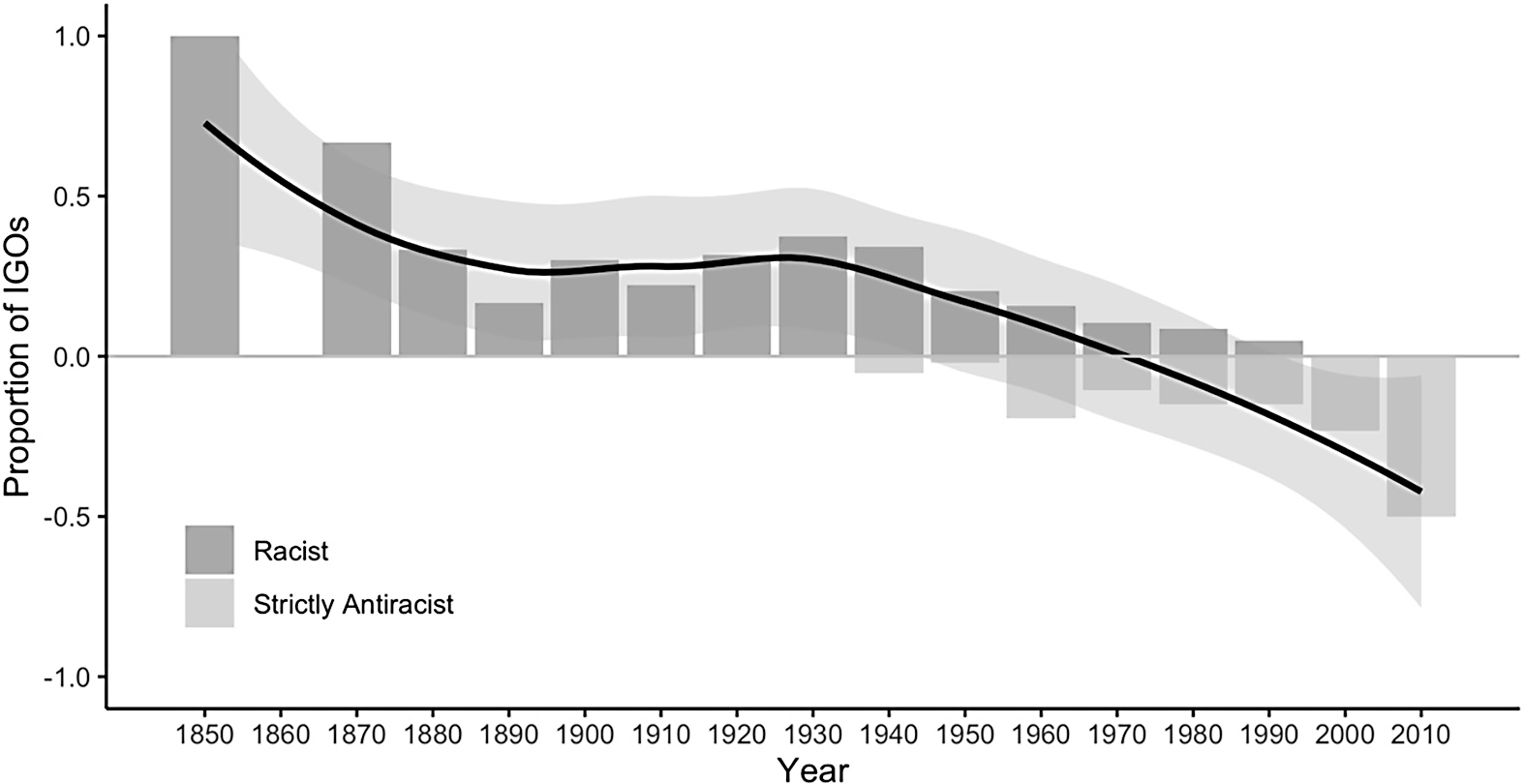
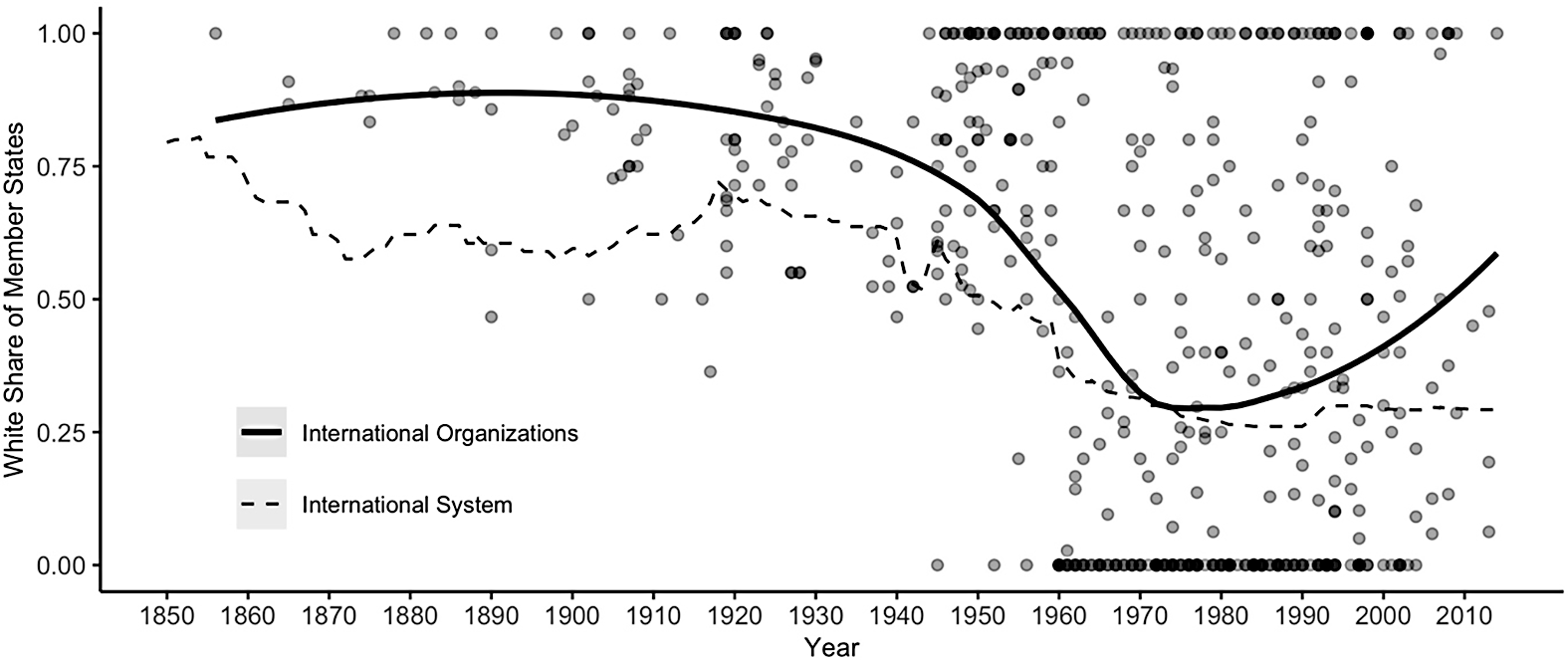
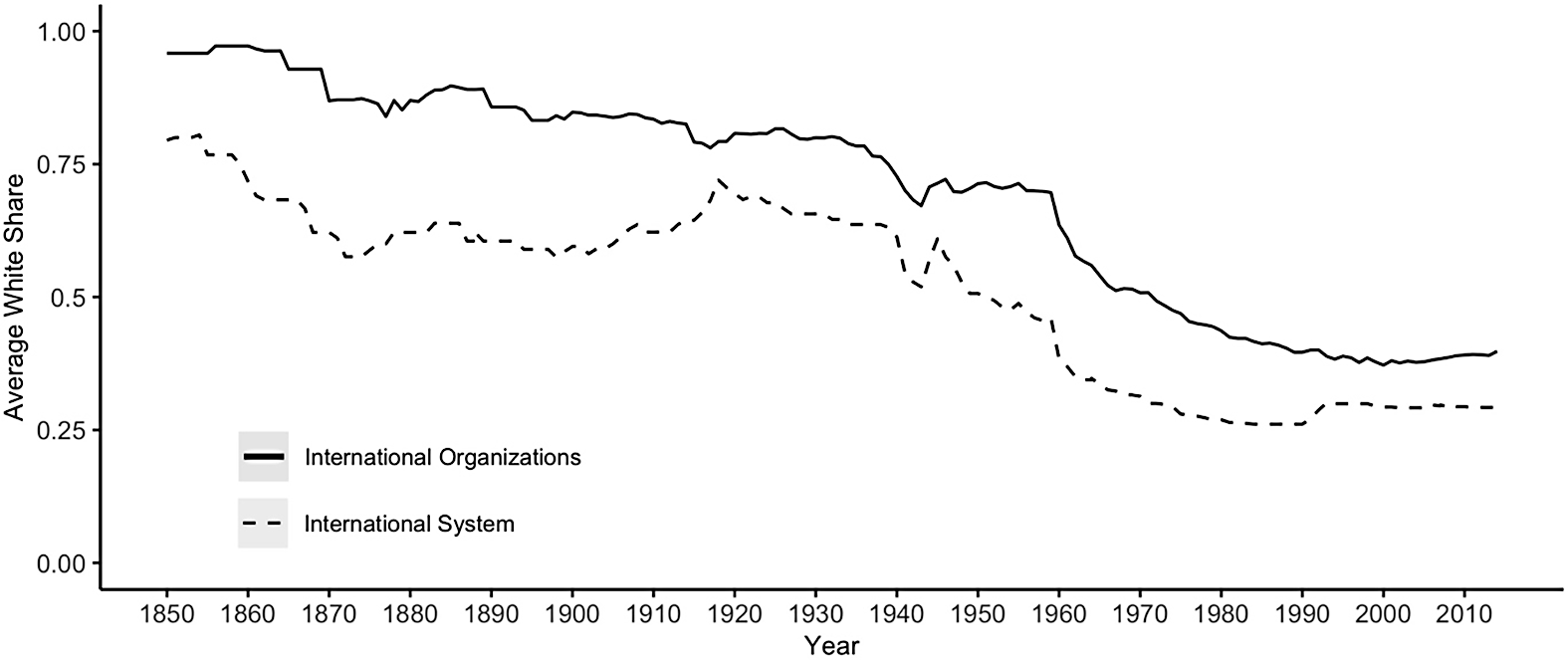
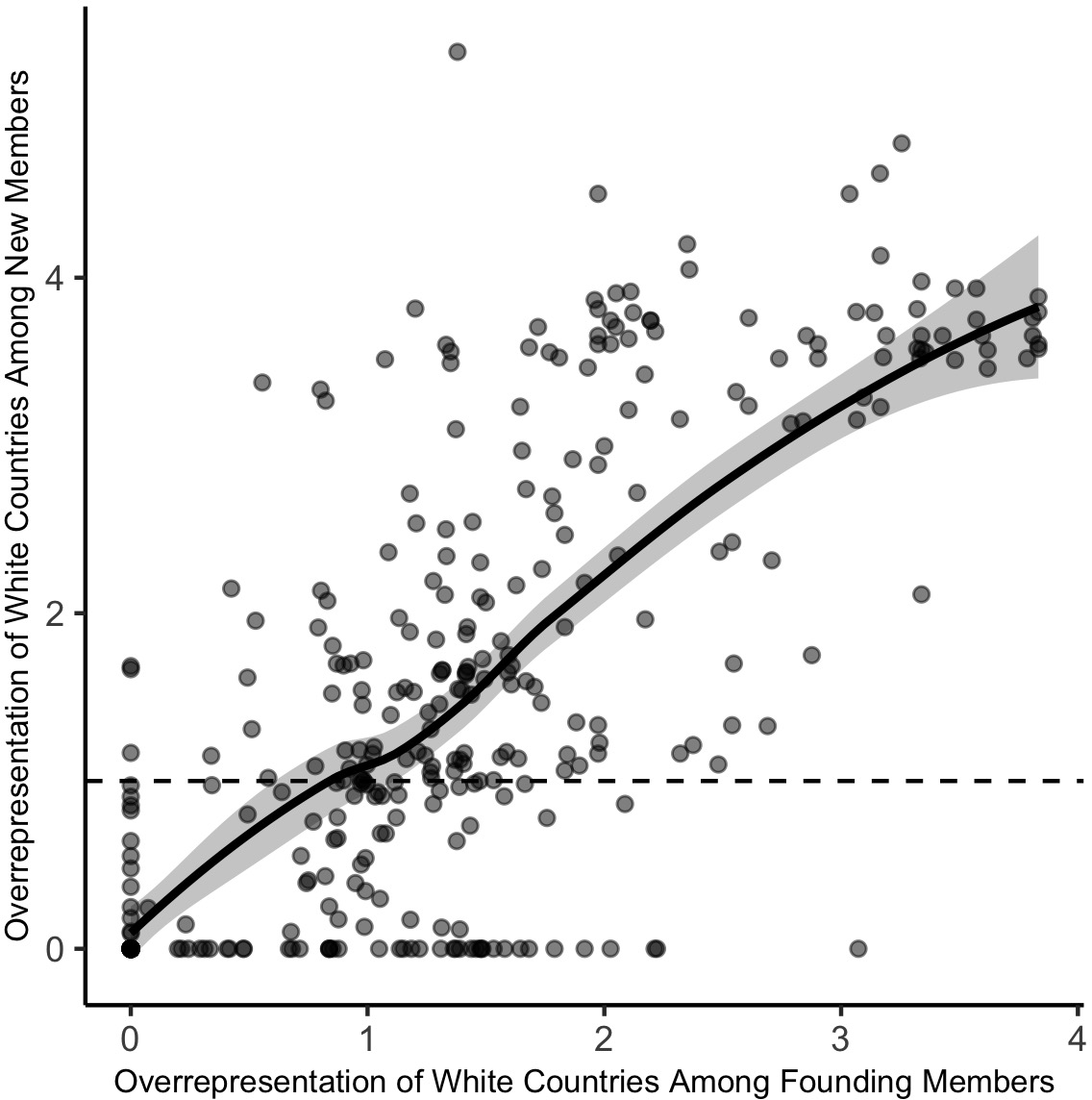
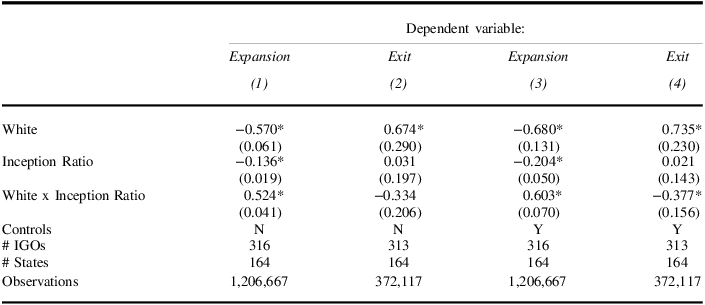
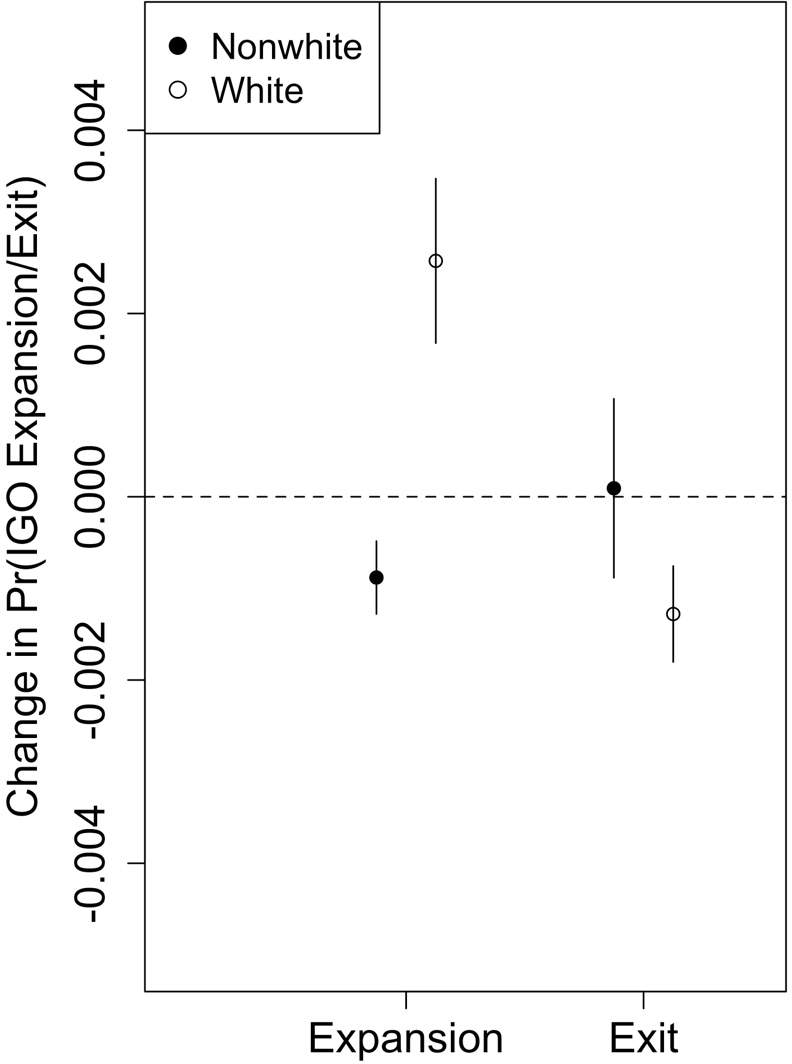
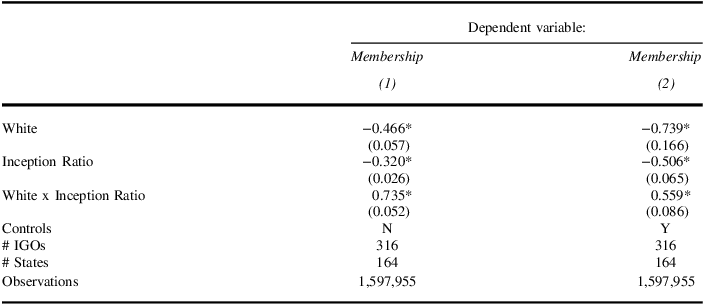
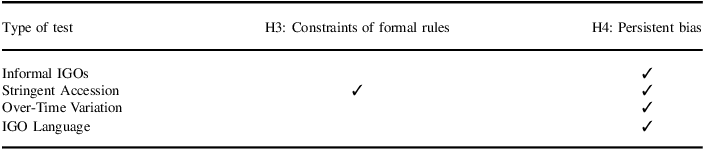
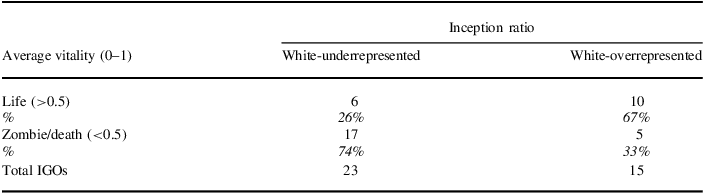

 Open access

