


Introduction
Spurred by current concerns about the care and wellbeing of older people, the academic interest in intergenerational solidarity has led to important insights into the relations between parents and their adult children in Western Europe (for overviews, see Moor and Komter Reference Moor and Komter2008; Nauck and Steinbach Reference Nauck and Steinbach2009). At the same time, scant attention has been paid to immigrant families. Yet, besides ageing, populations have become increasingly culturally diverse. To broaden our understanding of contemporary families, therefore, it is vital to include intergenerational relations among immigrants. In addition, we should be aware that immigrants may be involved in family relations that stretch beyond national borders. Immigration often results in a family situation whereby members at least temporarily reside in different countries. Although it was long assumed that connections with the origin country fade, scholars are more and more recognising the continued involvements of immigrants in origin country affairs (Basch, Glick Schiller and Szanton-Blanc Reference Basch, Glick Schiller and Szanton-Blanc1994; Bryceson and Vuorela Reference Bryceson and Vuorela2002; Levitt and Glick Schiller Reference Levitt and Glick Schiller2004). Advancements in communication and transport technologies have eased and accelerated the maintenance of such transnational bonds. Our knowledge of transnational family relations, however, is limited. Until now, transnationalism has mostly been studied in terms of economic, political or socio-cultural practices, while research in the domain of family relations remains sparse. Parent–child relations in particular, moreover, have mostly been the interest of studies on transnational child-raising. With the exception of conceptual and explorative work on arranging care-giving for elderly parents in the origin country (e.g. Baldock Reference Baldock2000; Zechner Reference Zechner2008), few looked into parent–child relations in adulthood.
The present study contributes to the field by examining (trans)national mother–child relations among non-Western immigrants in the Netherlands. First, we questioned how patterns of support characterised different types of mother–child relationships among immigrant adult children. We used a previously constructed mother–child relationship typology which combined information about emotional and practical bonds in a Latent Class Analysis (LCA; Rooyackers, De Valk and Merz Reference Rooyackers, De Valk and Merz2014) and extended this typology to transnational relations. Next to distinguishing various forms of support, we accounted for the different directions of support flows. Because of public concerns about care for the elderly, many studies focused on the support that children provide to their parents (Aboderin Reference Aboderin2004). Nonetheless, parents can also play an important role in supporting their adult children (Attias-Donfut, Ogg and Wolff Reference Attias-Donfut, Ogg and Wolff2005). In this paper, therefore, we considered whether support was given, received or exchanged. Second, by using the outcomes of LCA as dependent variables in Logistic Regression models, we examined how acculturation affected these mother–child relationships. Migration, specifically from a non-Western to Western society, means that people encounter different cultural norms surrounding family life. The question is whether and how this in fact changes family relations. The process of immigration can reshape families in multiple ways, enhancing certain ties and reducing others. Examining relationship types allowed us to consider the different impacts that acculturation may have across families. Furthermore, instead of focusing on either families within the destination country or transnational families, we looked at mother–child relationships within as well as across Dutch borders.
Data came from the Netherlands Kinship Panel Study (NKPS; Dykstra et al. Reference Dykstra, Kalmijn, Knijn, Komter, Liefbroer and Mulder2004). The Netherlands has been in particular a destination for Turkish, Moroccan, Surinamese and Antillean immigrants in past decades, who have been arriving since the 1960s. This context thereby offers the possibility for studying immigrant families who are living in the destination country as well as transnational relations. Because of the key role of women and especially mothers in maintaining family relations (Gerstel and Gallagher Reference Gerstel and Gallagher2001), our study focused on the relationship between adult children and their mothers.
Patterns of intergenerational solidarity
Mothers and adult children in immigrant families
Theories of ‘cultural family systems’ have explained differences between Western and non-Western family relations by the varying importance of kinship in these societies (Reher Reference Reher1998; Todd Reference Todd1985). In economically advanced Western countries, the dominant cultural norms encourage individual self-reliance and autonomy. By contrast, non-Western societies tend to be organised around cultural norms that put the family in a central position. Based on the assumption that norms are acquired through early socialisation, non-Western immigrants have been expected to maintain close family ties. There are various dimensions to family relations, however, and the process of migration may affect these differently. By distinguishing between emotional and practical bonds, the Model of Family Change (MFC; Kagitçibasi Reference Kagitçibasi1996) offered a multi-dimensional account of immigrant family relations. According to this theory, the conditions of non-Western societies enforce family relations that are ‘full-interdependent’ in emotional and practical respect, but practical reliance may diminish as a result of improved economic conditions and adaptation to Western norms. Migration to Western societies, therefore, would foster so-called ‘emotional-interdependent’ relationships: family ties that revolve around emotional but not practical support. Empirical research on mother–child relations in the Netherlands showed that the distinction between emotional and practical ties is helpful for characterising immigrant families (Rooyackers, De Valk and Merz Reference Rooyackers, De Valk and Merz2014). In addition to the kind of support, moreover, the direction of support was found to be important: there were three types of full-interdependent relationships in which emotional support was exchanged, but the direction of practical support varied (i.e. reciprocal, upwards or downwards, seen from the perspective of the child). Of the three, full-reciprocal relations came closest to the traditional family model. In line with the idea that immigrant families tend to be interdependent, this relationship type was the most common, followed by relations in which practical support was extended to the mother. Emotional-interdependent mother–child relations were also found. This fourth type was characterised by reciprocal emotional support but not practical help. Quite uncommon was a fifth type, ‘detached’ mother–child relationship, which excluded both forms of support.
Transnational mother–child relations
Our first research question was whether the same typology would apply to transnational relationships between immigrant adult children and their mother abroad. Affective ties, on the one hand, have been highlighted as an important element of transnational families. Many immigrants maintain frequent contacts with family in the place of origin, especially with today's widely accessible telephone services (Baldock Reference Baldock2000; Wilding Reference Wilding2006). Moral support forms an essential part of the contact and frequent phone calls can be experienced as a mutual expression of care (De Bruine et al. Reference De Bruine, Hordijk, Tamagno and Arimborgo2013; Parreñas Reference Parreñas2005). On the other hand, the process of immigration has been shown to lead to a decline of emotional family ties. Stay-behind family can interpret the decision to immigrate as desertion and emotionally distance themselves from the relationship (Baldock Reference Baldock2000). Immigrants sometimes cut ties with family back home as well, for instance if the pressure for remittances becomes too great (Schmalzbauer Reference Schmalzbauer2004). Furthermore, the challenges that immigrants initially face in the settlement process and the social relations that are established in the destination country over time can cause transnational relations to weaken (Creese, Dyck and McLaren Reference Creese, Dyck and McLaren1999). Thus, whereas emotional ties remain strong in some transnational families, they may wither in others.
Whereas the extent to which parents and adult children emotionally invest in their relationship may vary between transnational families, the possibility to offer practical support across borders is generally limited. Studies showed that despite the advancing transportation technologies, regular visits abroad remain costly and are not very common for immigrants or their family to undertake (De Bruine et al. Reference De Bruine, Hordijk, Tamagno and Arimborgo2013). The geographical distance thereby obviously complicates matters for helping each other with concrete chores such as cleaning, fetching groceries or cooking. Also if special care for the elderly parent is required, this is often arranged by family members in the origin country rather than by the immigrant him- or herself (Baldock Reference Baldock2000). As opposed to practical help, financial support is not hampered by geographical distance. Families that live dispersed over different countries may thus assist each other financially instead. Immigration can clearly be a livelihood strategy of families, with parents enabling the immigration of their children (Cong and Silverstein Reference Cong and Silverstein2011) or children financially supporting their parents back home (Pozo Reference Pozo2007). Nonetheless, there are also instances in which immigrants do not or barely send remittances to family (Burholt Reference Burholt2004; Gowricharn Reference Gowricharn2004; Schmalzbauer Reference Schmalzbauer2004). Among others, the importance of financial support depends on the economic situation of the family in the origin and destination country and the motivation to migrate. In addition, the type of relative for whom remittances are intended matters. Financial help is most frequently given to partners, for example (De Bruine et al. Reference De Bruine, Hordijk, Tamagno and Arimborgo2013). Moreover, few studies specifically looked into the financial support that families provide each other in an enduring transnational context. Even when financial transfers between parents to children are important in the initial phase of immigration, the question remains whether this continues to be the case. Also the amount of remittances could be influenced by the expected duration of the transnational situation. For example, immigrants have been found to remit less to family when they did not expect to return home (Sana Reference Sana2005).
Similar to immigrant families in general, these various aspects of transnational relations have mostly been studied separately. Studying different facets of family bonds simultaneously, however, is informative about the meanings of relationships (e.g. Dykstra and Fokkema Reference Dykstra and Fokkema2011; Silverstein et al. Reference Silverstein, Gans, Lowenstein, Giarusso and Bengtson2010). Using the multi-dimensional MFC theory as a starting point, and combining this with the empirical evidence gathered so far, gives us an idea how patterns of solidarity will characterise transnational mother–child relations. As discussed, the MFC theory states that families in non-Western societies tend to be characterised by full-interdependence: family members rely on each other for both emotional and practical support. The theory furthermore posits that the migration process may cause practical reliance to diminish while leaving emotional bonds intact, resulting in so-called emotional interdependent family relations. In line with this reasoning, a study on immigrant mothers and children living in the Netherlands showed that full-reciprocal relations were most prevalent, followed by upward-interdependence and, to a lesser extent, emotional-interdependence (Rooyackers, De Valk and Merz Reference Rooyackers, De Valk and Merz2014). In the transnational context, by contrast, considering the general limitations for providing practical help and inconclusive findings on financial support, we expected full-interdependent mother–child relations to be less likely. At the same time, empirical research on affective ties in transnational families corresponded with the assumption that emotional support retains a central role, thus making emotional-interdependence especially likely. What the MFC did not discuss is how the process of migration can also challenge families and put a strain on affective ties. Yet, studies which focused on the difficulties that immigrant families encounter indicated that living dispersed over different countries can also lead to an emotional distance and even a break of contact. Taken together, this meant we expected that:
-
• Hypothesis 1: Transnational mother–child relations, compared to immigrant families living in the Netherlands, would be (a) less characterised by full-interdependence, (b) more by emotional-interdependence, and (c) more by detachment.
The impact of acculturation on family relations
Our second question of interest was whether and how the acculturation of immigrant adult children would affect the relationship with their mother. Acculturation is a process whereby people, after coming into contact with another culture over a longer period of time, change their beliefs or behaviours in response to the prevailing norms, values and social institutions. This process is shaped by both the wish of immigrants to maintain the culture of origin and the degree to which they desire involvement in the new society and contact with natives (Berry Reference Berry1997). Considering that second-generation immigrants grew up in the destination country and consequently have been partly socialised into the cultural norms that prevail there, it is commonly assumed that over generations, immigrants are increasingly likely to adopt the cultural values of the destination country. This assumption has been supported by empirical studies, among others on family values (Phalet and Güngör Reference Phalet, Güngör, Bekman and Aksu-Koç2009) and sex role attitudes (Phinney and Flores Reference Phinney and Flores2002). Other research found that for some immigrant groups, a better command of the language of the destination country is associated with less strong beliefs about filial obligation (De Valk and Schans Reference De Valk and Schans2008). What these studies also indicated, however, is that such changes occur gradually. Yet, whereas value adjustment may need time and become apparent over generations, behaviours may change more rapidly. Values concern psychologically central beliefs that tend to resist change, but behaviours can be reinforced by everyday conditions that make them more fitting or functional. A study on immigrant groups in the Netherlands indeed suggested that changes in family behaviours precede changes in family values (Arends-Tóth and Van de Vijver Reference Arends-Tóth and Van de Vijver2008). Although immigrants remained more inclined to adhere to traditional family norms than Dutch natives, cultural differences in family ties were smaller and even non-existent for second-generation immigrants. At the same time, whether and how fast behaviours change may also depend on the kind of behaviour. The MFC proposes, for instance, that practical dependencies may fade while close emotional family ties linger. Moreover, since acculturation is partly an individual process that depends on personal attitudes towards cultural maintenance and adoption, not everyone nor every immigrant group necessarily acculturates in a uniform way (Sam and Berry Reference Sam and Berry2006). Whereas cross-cultural theories are inclined to emphasise the lasting importance of family bonds, another strand of research highlights the problematic consequences of migration. For immigrant parents and adolescent children who both live in the destination country in particular, the different paces of acculturation and the cultural value discrepancies that accordingly arise have been highlighted as potential sources of misunderstandings and conflict (Birman and Poff Reference Birman, Poff, Bornstein, Tremblay, Boivin and Peters2011; Phinney and Vedder Reference Phinney, Vedder, Berry, Phinney, Sam and Vedder2006). Diverging ideas about maintaining cultural customs and parental authority, for instance, can invigorate the struggles that adolescents already tend to have with their parents (Foner and Dreby Reference Foner and Dreby2011).
We combined these different perspectives in order to formulate hypotheses about the impact of acculturation on mother–child relations within the Netherlands. Thus, based on the MFC theory and studies on the challenges that migration poses to families, our expectation was that:
-
• Hypothesis 2: Adult immigrant children who are more acculturated to the Netherlands, compared to immigrant adult children who are less acculturated, would be (a) less likely to maintain a full-interdependent relationship, (b) more likely to have an emotional-interdependent relationship, and (c) more likely to have a detached relationship with their mother.
With respect to transnational family relations, very little is known about the impact of acculturation. Nonetheless, the idea that integration in the destination country necessarily leads to a loss of ties with the origin country has been contested (Levitt and Glick Schiller Reference Levitt and Glick Schiller2004). Other authors have shown that socio-structural integration can even encourage economic and political transnational practices (Portes, Haller and Guarnizo Reference Portes, Haller and Guarnizo2002). In terms of contact with family, however, empirical studies indicated that transnational relations diminish over time (De Bruine et al. Reference De Bruine, Hordijk, Tamagno and Arimborgo2013; Schans Reference Schans2009). Establishing and sustaining a family and social network of one's own in the destination country requires an investment of time and energy that may limit the attention immigrants spend on family abroad. Moreover, being involved in transnational ties can engender issues of belonging and cause tensions among families by challenging shared understandings about religious, cultural or political practices (Mason Reference Mason2004). Immigrants may thereby experience an increasing cultural distance with their country of origin and family members who live there. Therefore, for transnational mother–child relations, we expected that:
-
• Hypothesis 3: Adult immigrant children who are more acculturated to the Netherlands, compared to immigrant adult children who are less acculturated, would be (a) less likely to have an emotional-interdependent relationship and (b) more likely to have a detached relationship with their mother abroad.
Immigrant groups of study
In the past, there have been two large-scale flows of immigrants who make up the majority of the non-Western immigrant population in the Netherlands today (Vermeulen and Penninx Reference Vermeulen and Penninx2000). Due to labour shortages during the 1960s and early 1970s, labour workers were recruited from various Mediterranean countries, in particular Turkey and Morocco. The predominantly male, unskilled workers were initially envisioned to stay temporarily, but most of them settled in the Netherlands and were later joined by family members. A second large flow of immigrants originated from former Dutch colonies in the Caribbean area: Suriname and the Dutch Antilles. Immigrants from these countries have been arriving since the 1960s, mainly for purposes of education and family reunification. Because of the colonial ties with the Netherlands, immigrants from Suriname and the Dutch Antilles, unlike the ‘guest workers’ from Turkey and Morocco, often had some familiarity with the Dutch language and society before migrating. Transnational ties between the Netherlands and the different regions of origin are forged in various ways. Among Turkish and Moroccan immigrants, arranged marriages with kin in the home country strengthen transnational loyalties and family obligations (Hooghiemstra Reference Hooghiemstra2003). Additionally, many annually return to their family abroad during summer holidays. For Surinamese and Antillean families, it is commonplace to live dispersed over countries and family members sometimes visit each other for extended periods of time (Oostindie Reference Oostindie2011).
Method
Data and participants
Analyses were based on data of the first round of the NKPS (Dykstra et al. Reference Dykstra, Kalmijn, Knijn, Komter, Liefbroer and Mulder2004), a national survey on family relationships in the Netherlands. The data were collected in 2002/2003 in collaboration with the survey Social Position and Use of Facilities by Ethnic Minorities (SPVA) of Statistics Netherlands. Participants were drawn from a representative cross-section of the Dutch population, amounting to 8,161 individuals between 18 and 79 years of age. This sample was then supplemented by a random stratified sample of 1,402 respondents with a Turkish, Moroccan, Surinamese or Antillean immigration origin. Response rates for the four immigrant groups in the SPVA survey varied between 40 and 52 per cent. These were thereby comparable to the overall response rate of the NKPS (47%) and other large-scale family surveys in the Netherlands (Dykstra et al. Reference Dykstra, Kalmijn, Knijn, Komter, Liefbroer and Mulder2004; Feskens et al. Reference Feskens, Hox, Lensvelt-Mulders and Schmeets2006; Stoop Reference Stoop2005).
We included respondents with at least one parent who was born in Turkey, Morocco, Suriname or the Dutch Antilles, and excluded respondents with any other immigration background. Because of the similar regional histories of immigration, individuals of Turkish or Moroccan origin were ascribed a Mediterranean background and those with an Antillean or Surinamese immigration origin were considered Caribbean immigrants. Since we used the same data to elaborate a previously distinguished mother–child relationship typology (Rooyackers, De Valk and Merz Reference Rooyackers, De Valk and Merz2014), the focus on the perspective of the immigrant (adult) child was retained. Naturally, no information was available for respondents whose mother was deceased. The analyses were additionally restricted by excluding adult children who shared the same household with their mother, considering that such a living arrangement affects the mother–child relationship in a way that may interfere with the analyses. Finally, taking into account non-response on the dependent and explanatory variables resulted in two samples: 360 respondents whose mother lived in the Netherlands (145 with a Mediterranean background and 215 of Caribbean origin) and 316 respondents whose mother lived abroad (161 and 155 with a Mediterranean and Caribbean immigration background, respectively). In what follows, these will be referred to as the uni-national and transnational sample, respectively.
Dependent variables: solidarity indicators
We used LCA to (re)construct typologies of mother–child relations. Indicators for LCA are commonly dichotomised to prevent problems with sparseness (cf. Dykstra and Fokkema Reference Dykstra and Fokkema2011; Silverstein et al. Reference Silverstein, Gans, Lowenstein, Giarusso and Bengtson2010). Likewise, we created dichotomous measures of intergenerational solidarity. LCA was applied to our uni-national and transnational sample. Firstly, we repeated the previous analyses of immigrant mother–child relations within the Netherlands, combining information about frequency of contact, given/received practical support and given/received emotional support (Rooyackers, De Valk and Merz Reference Rooyackers, De Valk and Merz2014). Secondly, we conducted LCA to construct a typology of transnational relationships between immigrant adult children and their mother abroad. The solidarity indicators for these are discussed at length below, comprising six in total: two measuring contact frequency (face-to-face/other means), two on financial support (given/received) and two on emotional support (given/received).Footnote 1
Contact frequency
The frequency of contact between the respondent and his/her mother over the last year was measured by one item on face-to-face contact and another concerning contact by phone, letter or e-mail. The initial seven answering options on a Likert scale ranging from ‘Never’ (1), ‘Once’, ‘A few times’, ‘At least monthly’, ‘At least weekly’, ‘Several times a week’ to ‘Daily’ (7), were converted into two dichotomous measures. For face-to-face contact, frequencies of ‘A few times’ or more were coded 1 and all lower frequencies were coded 0. To account for the comparative ease to keep in touch by other means, ‘At least monthly’ and more regular contact by phone, letter or e-mail (1) were contrasted to all lower frequencies of contact by these means (0).
Financial support
Respondents were asked whether they had given valuable objects or a substantial amount of money to their mother in the last year and whether they had received such a contribution from their mother. We used the initial answering options to distinguish between who did (coded 1) and who did not (0), amounting to two indicators of financial support.
Emotional support
Emotional support was captured by items that inquired into the number of times respondents had shown an interest in their mothers' personal life in the last three months and how often the mother had shown an interest in theirs. For both items, the three ordinal answering options were dichotomised by collapsing ‘Once or twice’ and ‘Several times’ (coded 1) to indicate emotional support and ‘Never’ (coded 0) for no such support.
Independent variables: acculturation indicators
Acculturation, as explained, is a multifaceted process that develops over time. Nonetheless, we aimed to capture different aspects of the process by using three measurements to indicate the level of acculturation of the adult child. First, immigrant generation status was considered as an implicit measure of orientation to the receiving country, given that second-generation immigrants were born and raised in the Netherlands. Second, whether respondents celebrated St Nicolas, a traditional Dutch national holiday, represented a behavioural indicator of acculturation. Third, opinions about intermarriage with Dutch natives were taken as an attitudinal dimension of acculturation, since these can be interpreted as both an expressed value of maintaining the origin culture and preferring social contact across group boundaries (Huijnk Reference Huijnk2011).
Immigrant generation status
All respondents had at least one parent who was born in Turkey, Morocco, Suriname or the Dutch Antilles. Respondents were classified as first-generation immigrants if they themselves were born abroad as well, and regarded second-generation immigrants if they were born in the Netherlands. To allow a higher score to indicate a higher level of acculturation, second-generation immigrants were coded 1 and first-generation immigrants were coded 0.
Celebrating St Nicolas with household members
A dichotomous measure specified whether the respondent had celebrated St Nicolas in the presence of household members. Again, a higher score indicated a higher level of acculturation (1 = yes, 0 = no).
Social acceptance of the Dutch
Respondents were asked to state their opinion about the hypothetical situation in which one of their children would marry someone of Dutch decent. Answers were rated on a Likert scale ranging from (1) ‘I would mind a lot’ to (5) ‘I wouldn't mind at all’, with ‘No opinion’ as the middle option. The scale was maintained in order to allow a higher score to indicate a greater social acceptance.
Control variables
To take into account possible differences between immigrant groups, we controlled for the immigration origin of respondents, distinguishing Caribbean immigrants (coded 1) from Mediterranean immigrants (coded 0). Furthermore, previous research has consistently shown that involvement in family relations differs with age and between men and women (Dykstra et al. Reference Dykstra, Kalmijn, Knijn, Komter, Liefbroer and Mulder2006; Merz, Schuengel and Schulze Reference Merz, Schuengel and Schulze2008; Rossi and Rossi Reference Rossi and Rossi1990). Similarly, the distribution of mother–child relationships among immigrants in the Netherlands varied according to the life-phase and sex of the adult child (Rooyackers, De Valk and Merz Reference Rooyackers, De Valk and Merz2014). We therefore controlled for these characteristics as well. The life-phase of respondents was measured by three dummy variables, capturing three important life-phases: young-adulthood ( < 30 years of age coded 1, otherwise 0), middle-age (ages 30–45 coded 1, otherwise 0) and older-adulthood (>45 years coded 1, otherwise 0). We used middle-age as the reference category. Lastly, a dummy variable accounted for the sex of respondents, indicating whether the respondent was a daughter (1) or son (0).
Analytical procedure
The analyses comprised two parts. In the first part, our aim was to construct a typology of mother–child relations empirically, comparing uni-national and transnational immigrant families (Hypothesis 1). For mothers and children living in the Netherlands, earlier analyses were repeated, but after excluding the native Dutch respondents.Footnote 2 For transnational relations, the same procedure of LCA was followed, using the program Latent Gold 4.0 (Vermunt and Magidson Reference Vermunt and Magidson2005). Two model fit indices guided our choice for a model that adequately described the associations among solidarity indicators with the least number of classes: the likelihood ratio chi-square and Bayesian Information Criterion (BIC) (Vermunt and Magidson Reference Vermunt, Magidson, Hagenaars and McCutcheon2002). After establishing the preferred model, we made a theoretical interpretation of the classes by inspecting conditional class probabilities. These parameters indicate how likely individuals within a particular class are to respond affirmatively to each observed indicator. Respondents were subsequently assigned to the class for which their estimated posterior probability of class membership was the highest. This allowed us to calculate the prevalence of the relationship types. In the second part of the analyses, we examined the effects of acculturation on the types of relationship that adult children maintained with their mother (Hypotheses 2 and 3), while controlling for their immigration background, life-phase and sex. To this end, relationship assignments from LCA in both samples served as dependent variables in Logistic Regression models. We used Stata Statistical Software, version 12.0.
Results
Descriptive findings
Table 1 provides an overview of the distribution of the acculturation indicators and demographic features of respondents, presented separately for the uni-national and transnational sample.
Descriptive statistics of respondents in uni-national (mother lives in the Netherlands) and transnational sample (mother lives abroad)
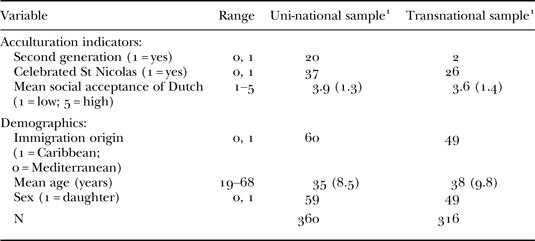
Note: 1. Mean scores for continuous variables are presented with the standard deviation in parentheses; scores for dichotomous measurements indicate percentages.
Source: Netherlands Kinship Panel Study, wave 1, 2002/2003.
Although mean scores in the uni-national and transnational sample fell out on the same side of the mid-lines of the acculturation indicators, respondents in the uni-national sample scored on average higher on all three. Whereas not many respondents in general were designated a second-generation immigrant, this situation was especially sparse among adult children whose mother lived abroad (2% compared to 20% in the uni-national sample). St Nicolas was celebrated by less than half but still a substantial number in both samples (37% in the uni-national sample and 26% in the transnational sample). Mean scores on social acceptance of the Dutch came close in the two samples, with respondents whose mother lived in the Netherlands scoring on average 3.9 and respondents whose mother lived abroad 3.6, on a scale from 1 to 5. Somewhat more than half of the adult children whose mother lived in the Netherlands were of Caribbean origin (60%). In the transnational sample, the number of Mediterranean and Caribbean respondents was approximately equal (51 and 49%, respectively). In terms of demographic features, respondents in the uni-national sample were on average somewhat younger than in the transnational sample (35 compared to 38 years) and included more daughters (59% compared to 49%).
For the transnational sample, we report the mean scores on the LCA solidarity indicators, split out for the two immigrant groups (see Table 2). Since all measures are dichotomous, percentages are shown.
Mean scores on solidarity indicators for the transnational sample as a whole and per immigrant group

Source: Netherlands Kinship Panel Study, wave 1, 2002/2003.
Regardless of immigrant origin, we found either relatively many or few affirmative answers per item. On the one hand, a small group of respondents reported having frequent face-to-face contact with their mother abroad (20%) or to have given or received financial support (17 and 8%, respectively). A large majority, on the other hand, reported having frequent contact by other means (77%) and to have given (85%) and received (83%) emotional support. Despite the overall correspondence in scores between immigrants of Mediterranean and Caribbean origin, there were some slight differences. Whereas fewer Mediterraneans reported frequent face-to-face contact (17% versus 24% among Caribbeans), a somewhat larger number in this group reported having had frequent contact by other means (82% versus 72%). Furthermore, more Mediterranean than Caribbean immigrants reported having given financial support (24% versus 11%), but fewer said they had received this type of help (4% versus 12%). Finally, percentages concerning emotional support were slightly lower among Mediterranean immigrants, both in terms of giving (81% versus 88%) and receiving (80% versus 86%).
Latent Class Analyses
The LCA we repeated on our uni-national sample suggested that a four-class rather than five-class solution was preferable.Footnote 3 Upon inspection of the five-class model, we found that the downward-oriented relationship type was not sufficiently distinguished from the remaining four. This finding was not surprising, considering that such a mother–child relationship was most common among native Dutch (Rooyackers, De Valk and Merz Reference Rooyackers, De Valk and Merz2014) and our sample included only immigrants. We therefore proceeded with the four-class model, consisting of a full-interdependent, an upward-interdependent, emotional-interdependent and detached mother–child relationship.
Next, we conducted LCA on our transnational sample. When analysing respondents of Mediterranean and Caribbean origin separately, a two-class model with similar class structures emerged. This indicated that the same types of transnational mother–child relationships characterised both immigrant groups. We hence no longer differentiated the sample by immigrant origin. Goodness-of-fit statistics again improved up to a two-class solution, in which the likelihood ratio statistic was non-significant and the lowest BIC was obtained (see Table 3).
Model fit statistics for Latent Class Models with one to five classes
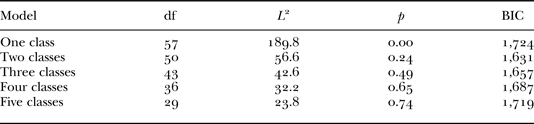
Notes: N = 316. Preferred model is selected based on non-significant L 2 and smallest Bayesian Information Criterion (BIC). df: degrees of freedom.
Source: Netherlands Kinship Panel Study, wave 1, 2002/2003.
Table 4 displays the conditional class probabilities of the final model. As mentioned earlier, these parameters give the likelihood of individuals within each class responding affirmatively on the solidarity indicators. On the one hand, both types of mother–child relationships showed low probabilities for face-to-face contact (0.22 and 0.14) and financial support, given (0.20 and 0.04) as well as received (0.09 and 0.02). This confirmed our expectations that these aspects would not be distinctive for different types of transnational mother–child relations. The two classes diverged, on the other hand, in the likelihood for frequent contact by phone, letter or e-mail and the giving and receiving of emotional support. The first type showed high probabilities on these indicators (0.82, 0.97 and 0.98, respectively) and thereby evidenced a mother–child relationship in which contact via other means and emotional support played an important role. In contrast, the second type showed no such prominence of these aspects, as indicated by an intermediate probability for frequent contact by other means (0.56) and low probabilities for giving and receiving of emotional support (0.28 and 0.12, respectively). Thus, we found two types of transnational mother–child relationships: one characterised by emotional but not financial support and another characterised by little contact and support, neither financial nor emotional. We accordingly labelled the two classes (transnational) emotional-interdependent and (transnational) detached mother–child relationships. In terms of prevalence, emotional-interdependent mother–child relationships were clearly more common than detached transnational relations, with 83 per cent of the respondents being assigned to the former and 17 per cent falling into the latter (see Table 4). Taken together, the results corroborated our hypotheses that not full-interdependence, but emotional-interdependence and detachment would notably characterise transnational mother–child relationships in adulthood (Hypothesis 1a–c).
Results of Latent Class Analyses in the transnational sample: conditional probabilities and class prevalence
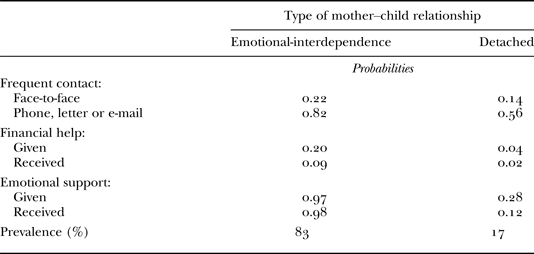
Notes: N = 316. Probabilities range from 0 to 1.
Source: Netherlands Kinship Panel Study, wave 1, 2002/2003.
Acculturation effects
The second part of the analyses involved estimating the effects of acculturation on the likelihood of adult children maintaining a certain type of mother–child relationship. We start by discussing the results of the analyses on our uni-national sample. Table 5 shows the marginal effects of the acculturation indicators on the likelihood that respondents were assigned to a full-, upward-, emotional-interdependent or detached mother–child relationship, controlling for their immigration background, life-phase and sex. We hypothesised that a higher level of acculturation would make full-interdependent relations less likely and emotional-interdependent and detached relationships more likely (Hypothesis 2a–c). A higher level of acculturation was taken to be indicated by second-generation immigration status, celebrating a Dutch holiday and expressing more social acceptance of the Dutch, rather than being of the first generation, not celebrating the holiday and expressing less social acceptance. We firstly noted that Hypothesis 2a was not confirmed. None of the indicators were significantly related to upward-interdependence. Contrary to our expectations, full-interdependence was actually more likely among adult children who celebrated St Nicolas. Celebrating this Dutch holiday, furthermore, decreased the likelihood of adult children having an emotional-interdependent relationship with their mother, a finding which also opposed Hypothesis 2b. Finally, detached mother–child relationships were significantly predicted by all three indicators, but only the direction of the effect of social acceptance was in line with our Hypothesis 2c. As expected, immigrant adult children who were more accepting of the Dutch, an indication for a higher level of acculturation, were more likely to have a detached relationship with their mother. Counter to expectations, first-generation children and those who did not celebrate the Dutch holiday were more likely to have a detached mother–child relationship than second-generation children and those who celebrated St Nicolas. Thus, overall, the results offered limited support for our hypotheses and in some cases even suggested the opposite.
Predictors of uni-national mother–child relations: marginal effects of Multinomial Logistic Regressions
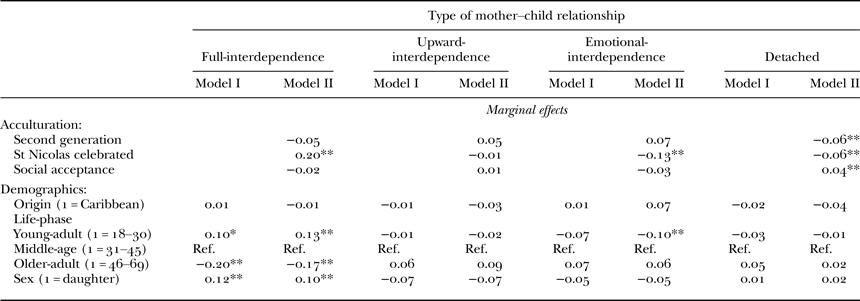
Notes: Model I includes control variables only, Model II additionally includes predictors. N = 360. Marginal effects indicate the change in probability of being assigned to a class by one unit change in an explanatory variable, holding all other variables constant. Ref.: reference category.
Source: Netherlands Kinship Panel Study, wave 1, 2002/2003.
Significance levels: * p < 0.10, ** p < 0.05 (two-sided).
With respect to our control variables, we found that the life-phase and sex of the adult child affected full-interdependence. In line with a broad body of research (Dykstra et al. Reference Dykstra, Kalmijn, Knijn, Komter, Liefbroer and Mulder2006; Merz, Schuengel and Schulze; Rossi and Rossi Reference Rossi and Rossi1990), reciprocal mother–child relationships were more common among daughters and young-adults than among sons and older children. In addition, compared to middle-aged children, young-adults were less likely to have an emotional-interdependent relationship with their mother. No significant differences were found between Caribbean and Mediterranean immigrants.
We continued by examining acculturation effects on transnational mother–child relationships, again controlling for the immigration origin, life-phase and sex of the adult child. Odds ratios are displayed in Table 6. Since practically all respondents in the transnational sample were first-generation immigrants themselves, we could not estimate whether belonging to the first or second generation explained the type of relationship they maintained with their mother. Furthermore, no significant effects were found for the remaining two indicators of acculturation. Despite being statistically insignificant, however, the directions of effects were in line with our hypotheses that immigrant children who celebrated St Nicolas and expressed more social acceptance of the Dutch, indicative of a higher level of acculturation, tended to have a detached rather than emotional-interdependent relationship with their mother (Hypothesis 3a and b). In terms of the demographic features we controlled for, we found that transnational mother–child relations neither differed between Caribbean and Mediterranean immigrants nor between sons and daughters, but that the life-phase of adult children did matter. Compared to middle-aged children, young-adults were less likely to have a detached relationship with their mother abroad. This finding suggests that also in a transnational context, younger people are more likely to maintain more intensive relations with their mother.
Predictors of transnational mother–child relations: odds ratios of Logistic Regressions
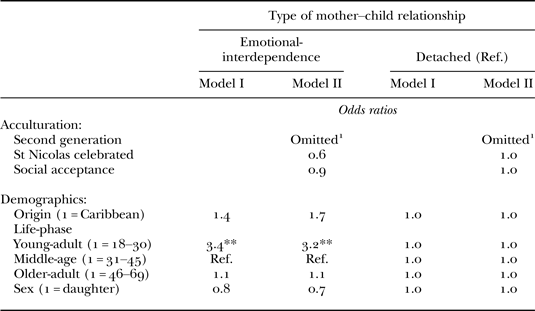
Notes: Model I includes control variables only, Model II additionally includes predictors. N = 316. By design, the odds ratio in the reference category (Ref.) is 1. 1. Omitted by Stata due to lack of variation (‘predicted success perfectly’).
Source: Netherlands Kinship Panel Study, wave 1, 2002/2003.
Significance level: ** p < 0.05 (two-sided).
Discussion
The first aim of this paper was to give a multi-dimensional portrayal of mother–child relationships among non-Western immigrants in the Netherlands, extending previous research to a transnational setting. To this end, we combined information about various forms and different directions of support. The results corroborated our expectation that relationships between immigrant adult children in the Netherlands and their mother abroad would be less prominently characterised by full-interdependence and more so by emotional-interdependence and detachment (Hypothesis 1a–c). A vast majority of immigrant children had regular contact with their mother by phone, letter or e-mail and showed a mutual interest in each other's personal life. Only a smaller number of immigrants were not frequently in touch with their mother abroad. Our findings support the assumption that affective ties tend to be of enduring importance but nuance the role of financial and practical support in transnational families. Previous studies have highlighted the increasing durability of transnational ties by focusing on remittances (e.g. De Haas and Plug Reference De Haas and Plug2006; Mazzucato Reference Mazzucato2010). In our study, neither financial nor practical support were defining features of transnational mother–child relationships, regardless of whether it was given or received. At the same time, these types of support were not contingent upon emotional support. Apparently, a lack of material help need not exclude emotional involvement between mother and child. In fact, it might be that affective expressions of care compensate for other types of support. Insofar as migration is a decision of households (Stark Reference Stark1991), moreover, the finding that emotional ties lasted in the absence of financial support suggests that decisions may be driven by relational considerations just as much as by economic ones. Migration studies have not yet taken this aspect into account.
Our second aim was to examine how acculturation affected the mother–child relations we found. In addition to immigrant generation, we used a behavioural and attitudinal indicator of acculturation: celebrating a main Dutch holiday and expressing acceptance of intermarriage with Dutch natives. We started by considering mothers and children of immigrant origin who both lived in the Netherlands. Our results were mixed, indicating the diverse impacts that acculturation has across families. Although we had assumed that family relations become less traditional as immigrants are more acculturated to the Netherlands, we found no indication that acculturation made full-interdependent relationships less likely or fostered mother–child relationships where emotional support takes precedence over practical support (Hypothesis 2a and b). Moreover, children who celebrated the Dutch national holiday were actually more likely to maintain a traditional relationship with their mother, indicating that acculturation may nurture cultural practices from the place of origin. Since we cannot assess the direction of causality, however, it may also be the case that immigrants with more traditional family relations were more inclined to celebrate the Dutch St Nicolas holiday. This interpretation is not improbable, given that the holiday is a traditional family celebration that revolves around gift-giving, in particular between parents and (adult) children. With respect to acculturation, this reading raises interesting discussions about the meaning of the process. First, considering that celebrating St Nicolas concerned a behavioural aspect of acculturation, this finding supports the assumption that cultural behaviours are more readily adopted than cultural beliefs. Second, acculturation is sometimes treated as a conflict between cultures that is resolved by choosing the one over the other. The possibility that immigrants adopt some elements of the destination country while retaining elements of the origin culture has been recognised in concepts of integration (Berry Reference Berry1997) and theories such as selective acculturation (Portes and Rumbaut Reference Portes and Rumbaut2001). Nonetheless, these bi-dimensional approaches regard the orientation towards the destination and origin culture as relatively independent. Yet, complementarities exist across cultures as well. Our findings suggest that coming into contact with different cultural behaviours may also offer ‘new’ ways to carry out ‘old’ cultural values. Adaptation to the destination country and maintaining one's origin culture could thereby actually reinforce each other.
At the same time, we found some indication that in other families, acculturation may create difficulties. As expected, detached mother–child relationships were more likely among immigrant children who were more accepting of the Dutch (Hypothesis 2c). This finding corresponds with studies that emphasised the problematic consequences of intergenerational discrepancies in acculturation (Birman and Poff Reference Birman, Poff, Bornstein, Tremblay, Boivin and Peters2011; Foner and Dreby Reference Foner and Dreby2011; Phinney and Vedder Reference Phinney, Vedder, Berry, Phinney, Sam and Vedder2006). Detached relationships were also more likely among immigrant children who were born abroad. This finding opposed our assumption that mother–child relations would be less problematic among first-generation immigrant children, given their shared direct ties to the country of origin. Alternatively, however, it could be that distinguishing between first- and second-generation immigrants concealed the distinct experiences of people who migrated in different life-phases (Rumbaut Reference Rumbaut2004). Immigrating as a child or adolescent, for instance, means that an important part of the socialisation process takes place in the destination country. Although such information was unfortunately not available for all our respondents, we can determine that at least one-third of children with a detached relationship was 12 years or younger at the time of migration. As such, our findings do not offer counter-evidence for the view that acculturation also contributes to problematic parent–child relationships.
For transnational mother–child relations, acculturation effects were statistically insignificant. This might be a consequence of our relatively small sample size, which is an unfortunate drawback of our study. Nonetheless, given this limitation, it is relevant to note that the effects were in the expected direction, indicating that acculturation would foster detached rather than emotional-interdependent transnational relationships (Hypothesis 3). Empirical evidence on the linkages between immigrant incorporation and transnationalism is still limited, especially regarding family relations. The diverging results up to now suggest that answers to the question whether immigrant integration weakens or strengthens transnational involvement depend on the type of transnational practice and particular dimension of integration (Schunk Reference Schunk, Wingens, Windzio, De Valk and Aybec2011). Our study indicates that, additionally, effects vary between uni-national and transnational family relations: acculturation tended to strengthen the relationship between immigrant children and their mother living in the Netherlands but not between immigrant children and their mother living abroad.
It is important to place this conclusion in the larger context of our findings, however, which most prominently demonstrate the overall importance of affective ties between adult children and mothers, whether both lived in the Netherlands or in different countries. The frequent transnational contacts that we found indicated that many immigrants take advantage of contemporary opportunities to stay in touch with family members abroad without being physically present. Moreover, we may have underestimated the practical help that transnational families provide by lacking information about indirect support. Phone and e-mail contact can enable immigrants to assess the needs of family members, for instance, and organise local support from a distance (Zechner Reference Zechner2008). Conversely, parents in the origin country can help their immigrant children by taking care of grandchildren (Cong and Silverstein Reference Cong and Silverstein2012). At the same time, we should be aware that enduring affective ties do not necessarily imply that family relations are unproblematic. Quite the contrary, strong affective ties may actually help to manage tensions and conflicts. Especially immigrant parent–child relations can be complicated, harbouring frustrations and struggles over parental constraints and filial obligations and at the same time involving feelings of loyalty, appreciation and shared cultural pride (Suárez-Orozco, Suárez-Orozco and Todorova Reference Suárez-Orozco, Suárez-Orozco and Todorova2008). Nonetheless, our study indicates that conflicts are not very often problematic to the extent that they lead to a breach of contact.
Finally, we should mention again that our measures of acculturation, despite being revealing, were also limited. Acculturation is a multi-dimensional concept, entailing an individual orientation towards the destination as well as origin country and comprising behavioural and psychological aspects (Berry Reference Berry1997). The diverging acculturation effects that we found across families are illustrative of the heterogeneous ways in which immigration impacts family relations. A broader collection of measurements is necessary to account for this complexity and give a fuller grasp of how acculturation affects (transnational) family relations. Moreover, the cross-sectional nature of our data prevented us from examining acculturation as a process that develops over time. Longitudinal data on the topic would be of value in this respect. In addition, we should not forget that the receiving context plays an essential role in acculturation processes. Our study dealt with immigrant groups with a specific history in the Netherlands. Comparing various types of immigrant groups across European countries could assess the general applicability of our findings. The regularity of contemporary immigration flows have not only changed the demography of the Netherlands but of many Western European countries. Together with the enhanced possibilities for communication and travelling, this has added new dimensions to the process of ageing and family support. Only by addressing those will we acquire a comprehensive picture of the diverse family relations that make up today's Western European societies.
Acknowledgements
This research was supported by the European Research Council Starting Grant project (number 263829) ‘Families of Migrant Origin: A Life Course Perspective’. The Netherlands Kinship Panel Study was funded by grant 480-10-009 from the Major Investments Fund of the Netherlands Organization for Scientific Research (NWO), and by the Netherlands Interdisciplinary Demographic Institute (NIDI), Utrecht University, the University of Amsterdam and Tilburg University. A statement of ethical approval was not required.


 Open access

