


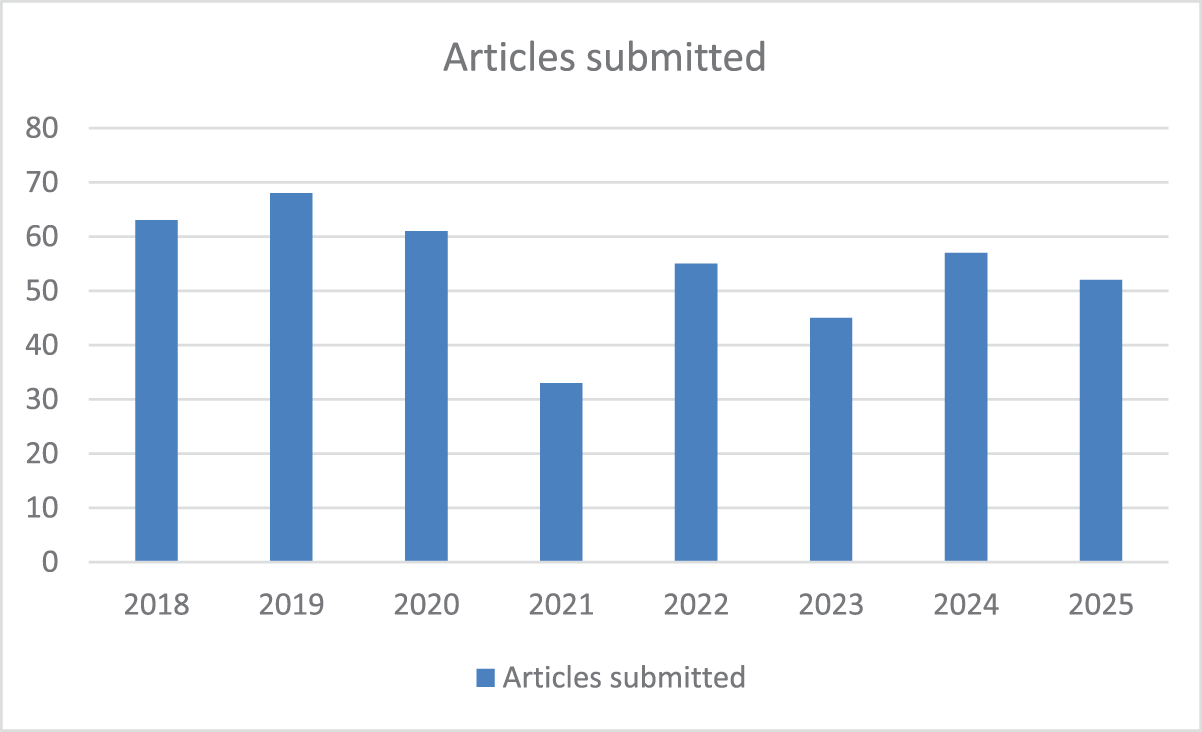
As usual, at the beginning of the year, we publish our traditional editorial note, presenting basic statistics and data on the Journal’s evolution during 2025. RHE-JILAEH received 52 original research papers in 2025 (two of them were research notes and one was an introduction to a special issue). Figure 1 shows the evolution of submissions since 2018.
Number of original articles submitted to RHE-JILAEH, 2018–2026.
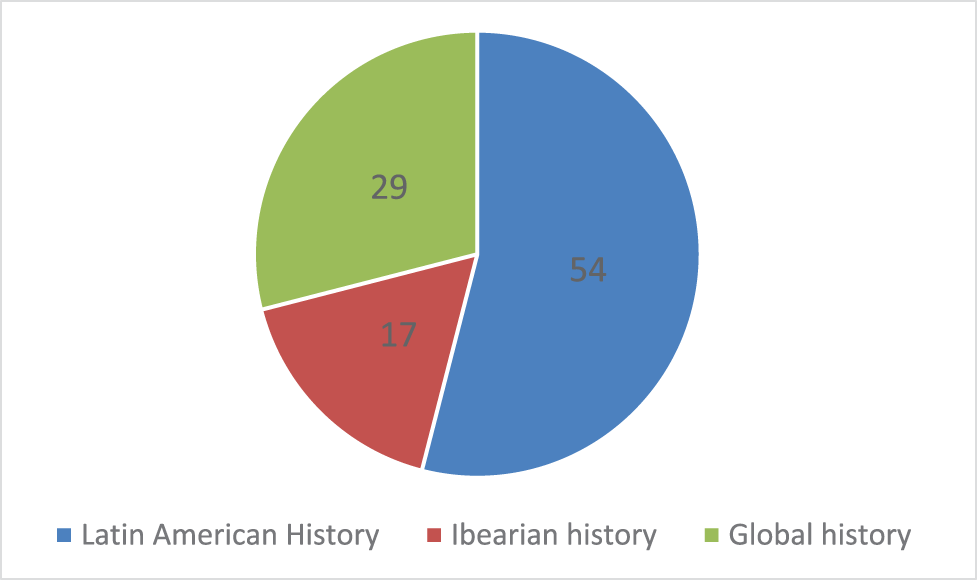
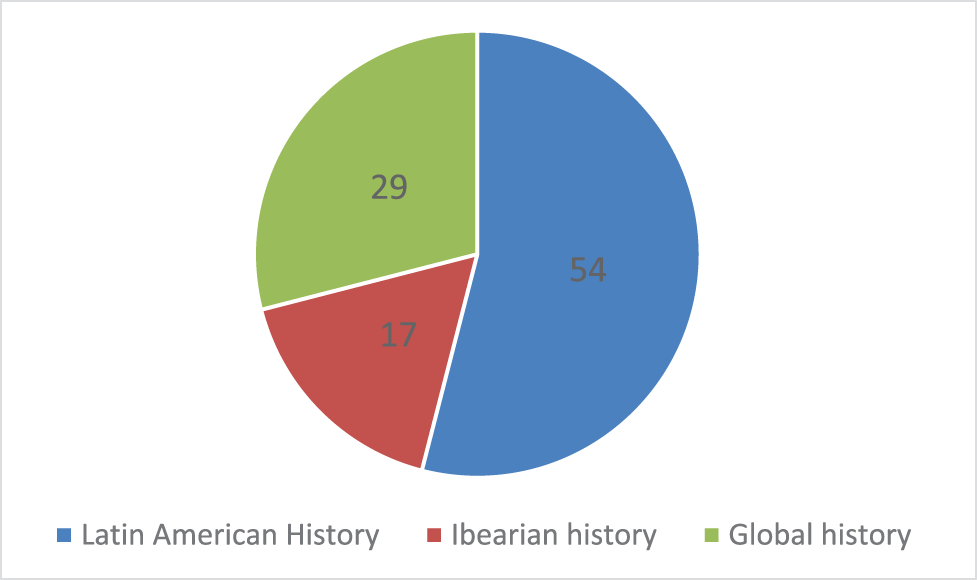
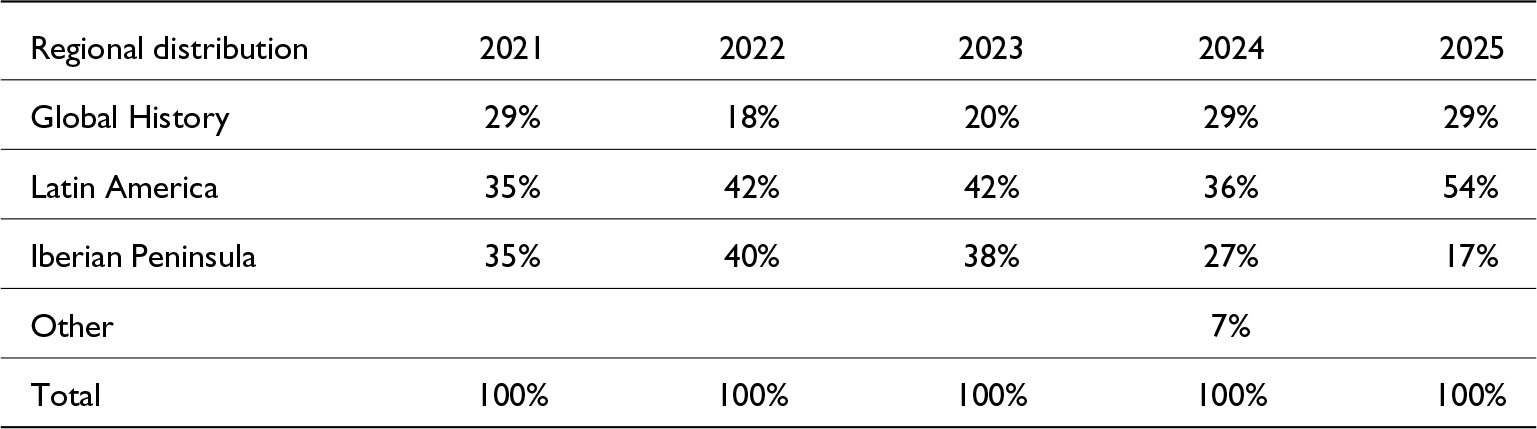
As seen in Table 1, compared with 2024, submissions on Latin American history increased substantially, accounting for nearly 54% of total submissions. Articles on Spanish and Portuguese economic history represented 17% of the total. Additionally, the journal continues to maintain a high proportion of original research papers on global economic history (29%) (see Figure 2).
Regional distribution of topics. Total submissions in 2025 (%).
Geographical distribution and topics of articles in 2023
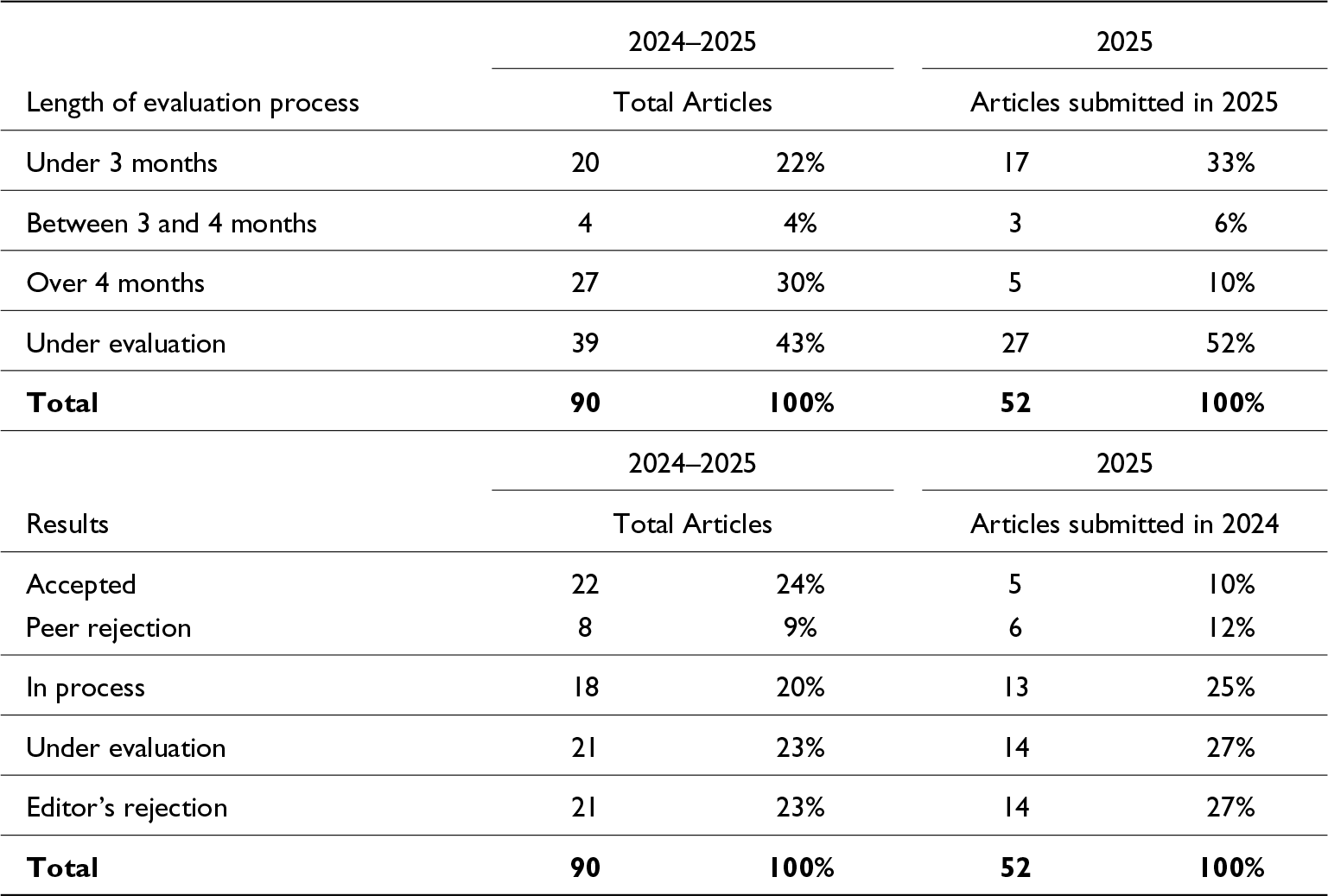
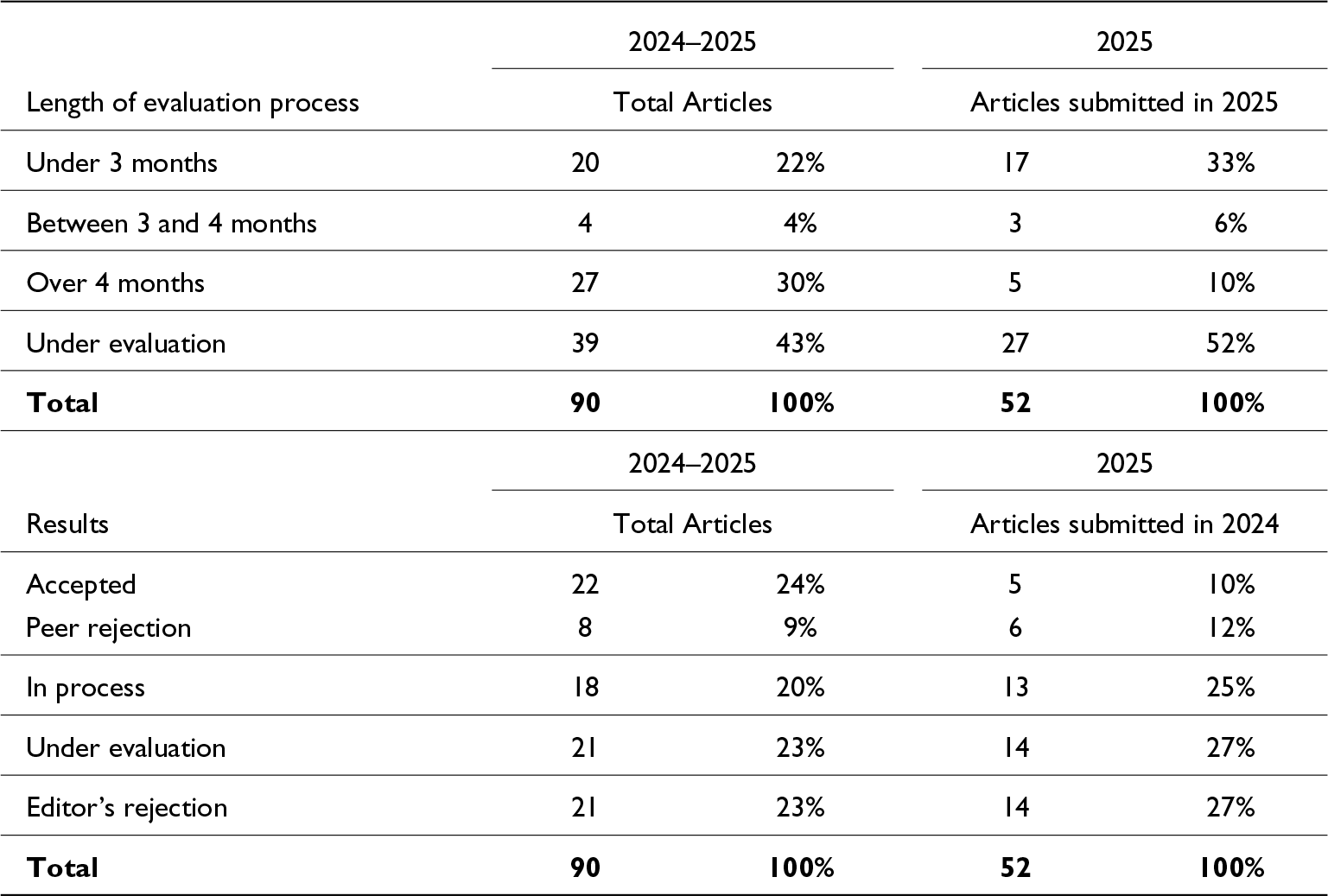
Regarding the length of evaluation periods and the Editors’ acceptance and rejection decisions, the Journal experienced some delays due to technical difficulties. We have been working to resolve these problems, and, fortunately, preliminary 2025 data show a gradual recovery, with a substantial reduction in response times (Table 2). This process of normalization allows us to be moderately optimistic about the Journal’s ability to return to more competitive standards in the short term. The rejection rate increased from 31% in 2024 to 39% in 2025, mainly driven by higher peer-review rejections and a slight rise in editorial rejections.
Statistics for evaluation periods and the situation of original research papers during 2025
There has also been a substantial improvement in the number of article downloads from the Journal:
2016—5,335
2017—6,293
2018—10,609
2019—20,753
2020—35,544
2021—40,106
2022—32,018
2023—32,386
2024—41,282
2025—73,000
In 2024, the impact factor of RHE-JILAEH stood at 0.5, representing a slight decline from the previous year (0.6). Nevertheless, the Journal remains in the first quartile (Q1) in the category of History. According to the SJR (SCImago Journal Rank), the Journal is classified in Q1 in History and in Q2 in Economics and Econometrics. The Scopus H-index of RHE-JILAEH is 25, placing the Journal in Q1 in History and Q3 in Economics and Econometrics.
The editorial team will make every possible effort to improve these impact indicators in the coming years.
We would like to express our sincere gratitude to the referees of RHE-JILAEH for their outstanding collaboration. Their names are listed at the end of this editorial note.