


It is well established that the problems caused by the rise in non-communicable diseases originate, among others, from a wide array of changes in modern consumers’ dietary habits and eating behaviours( 1 ). Thus, a diverse set of public actions is suggested to tackle the challenges and inform citizens and consumers as well as guide them towards healthier habits( 2 ). Among these actions is the development of dietary guidelines, which establish the basis for the development of public policies as well as nutrition education programmes, communication campaigns and provision of simple information to guide individual food choices( Reference Smitasiri and Uauy 3 ).
Dietary guidelines consist of a short list of easily understandable messages, tailored to meet the specific needs of the population, which have been developed in several countries( 2 ). However, consumer awareness and use of dietary guidelines have been reported to be limited, and this has caused concern about their efficacy to modify consumers’ dietary behaviour and improve the health status of the population( Reference Brown, Timotijevic and Barnett 4 ).
Although it is often assumed that behaviour that deviates from health/nutrition recommendations arises due to lack of knowledge, research has shown that the way nutrition information and education is provided is not effective in encouraging consumers to eat healthily( Reference Capacci, Mazzocchi and Shankar 5 ). It is increasingly acknowledged that a more consumer-targeted approach to behaviour change is needed. In accordance with this approach, barriers and constraints to healthy eating have been recognized as major determinants of lack of compliance with recommendations( Reference Farmer 6 , Reference Mielby and Takeda 7 ). Consequently, an in-depth understanding of the current level of consumers’ comprehension of healthy diets and the barriers they face is needed to select and fine-tune accompanying policies or social marketing strategies that encourage effective changes in consumers’ dietary behaviour( Reference Andreasen 8 , Reference Grier and Carol 9 ).
In this sense, it has been increasingly discussed that successful dietary guidelines should be targeted to the current consumer environment and situation in terms of the cultural and social context and the prevalent eating patterns in the country( Reference Brown, Timotijevic and Barnett 4 , Reference Montagnese, Santarpia and Buonifacio 10 , Reference Monteiro, Cannon and Moubarac 11 ). In other words, dietary guidelines should reach the consumer where he/she is in terms of understanding and behaviour, in order to then be able to further improve dietary knowledge and behaviour.
Changing consumers’ eating patterns has proven to be a difficult task, as eating habits and behaviour are influenced by several physiological, psychological, social and environmental factors( Reference Barker and Swift 12 ). Consumers might express intentions to eat healthily, but factors such as attitudes and preferences, social context and norms, and perceived or actual lack of behavioural control can cause a gap between favourable attitudes, ‘good intentions’ and behaviour( Reference Armitage and Conner 13 – Reference Ajzen 16 ). Thus, successful dietary guidelines and their accompanying public policies and communication campaigns should try to encompass ways to tackle barriers to behaviour change, for example by tapping into already existing beliefs, making use of favourable social norms, and being phrased in an understandable manner and accompanied with tips that are easy to handle. This approach can contribute to improving consumers’ confidence into their own capability to follow the guidelines and increasing their motivation to changing their dietary behaviour.
Previous research has explored consumers’ barriers to and facilitators of adhering to dietary guidelines. Most notably, a review has found that while several studies have explored consumer awareness and understanding of dietary guidelines, relatively little is known about their use( Reference Brown, Timotijevic and Barnett 4 ). Barriers reported in the literature include lack of cooking skills, persistence of habits, cost, taste preferences( Reference Nicklas, Jahns and Bogle 17 ) and context( Reference Jahns, McDonald and Wadsworth 18 ). Facilitators, in turn, have been suggested to be those closely tackling barriers( Reference Nicklas, Jahns and Bogle 17 ), or active changes in the social context( Reference Brown, Timotijevic and Barnett 4 , Reference Jahns, McDonald and Wadsworth 18 ). However, research about consumers’ own accounts of dietary behaviour change is scarce so far.
Dietary guidelines have traditionally underestimated the influence of the food environment on people’s eating patterns, as well as the importance of the way in which foods are prepared, combined and consumed. The new Brazilian dietary guidelines, however, change this as they include food processing and eating context as central components of the recommendations( 19 ). These new phrasings of dietary guidelines served as inspiration for the development of the new Uruguayan dietary guidelines during 2015 and 2016( 20 ). The 2016 edition of the Uruguayan dietary guidelines acknowledges the importance of lifestyle and the food environment on food choice and emphasizes the importance of consuming home-made foods based on natural or minimally processed foods.
The aim of the current study was to assess Uruguayan consumers’ accounts of their own need to change their dietary patterns, their intended changes and the barriers to doing so, without yet being knowledgeable of the new Uruguayan dietary guidelines. More precisely, the objectives of the present work were: (i) to explore consumers’ own expression of intention to change and the experienced or expected barriers to doing so; and (ii) to compare the intentions and barriers with the recommendations of the dietary guidelines. The goal was to use the respective results for assessing the phrasing of the dietary guidelines, as well as to consider which kind of accompanying communication and policy measures are needed to support good understanding and applicability of the guidelines in the general Uruguayan population.
Materials and methods
Participants
The study sample frame was a database of 40 000 Uruguayan adult workers, owned by company that sells tickets for meals. This type of ticket is commonly added to the salary of Uruguayan workers across a wide range of companies, which provides access to a diverse set of employed adults. Although this database constitutes a good alternative to reach respondents across the country due to the lack of online consumer panels, it should be highlighted that it is not necessarily representative of the whole Uruguayan population. Participants were invited by email to participate in the study. They were informed that the study was related to their eating patterns and that they would participate in a raffle for two tablet computers. The study was approved by the ethics committee of the School of Chemistry of Universidad de la República (Uruguay).
Data collection
Participants completed an online survey composed of a total of eight questions. The first two questions were related to intentions for and barriers to healthy dietary change. Respondents were asked to answer two open-ended questions: ‘Mention some changes you could make in the foods you eat and/or the way in which you eat to improve the quality of your diet’ and ‘Mention some of the reasons why you have not implemented those changes yet’. The additional questions were specifically about the recommendations of the Uruguayan dietary guidelines (questions on understanding and opinion), but results are not analysed in the present work nor published elsewhere. The questionnaire was developed by the authors based on recommendations for the development and testing of dietary guidelines( 21 ). A pilot test with twenty consumers was conducted to ensure understanding. Data collection was carried out using Compusense Cloud (Compusense Inc., Guelph, Ontario, Canada). The survey was conducted in December 2015.
Data analysis
Data were analysed using content analysis. Responses to each of the open-ended questions were grouped into categories using inductive coding( Reference Hsieh and Shannon 22 , Reference Krippendorff 23 ). Two researchers with more than 4 years of experience in content analysis were involved in the coding. After they had individually coded the data, a meeting was held and consensus was reached to select the final categories. For each of the questions, the frequency of mention of each category was calculated by counting the number of participants who used that category. Categories were grouped into dimensions following the same coding procedure. Exemplar responses within each category were selected and translated into English.
Results
A total of 5241 people responded to the invitation to participate in the study, resulting in a response rate of 13 %. Participants with a degree in medicine or nutrition were excluded to obtain responses from ‘average’ Uruguayan consumers with no specific nutrition knowledge. Participants who did not answer all questions were also excluded, which led to 2381 responses in total in the final data set. Participants were aged between 18 and 65 years (18–25 years, 8 %; 26–35 years, 33 %; 36–50 years, 38 %; 50–65 years, 21 %). Of the respondents, 65 % were female. The maximum educational level of most participants was high school (45 %), whereas 24 % had not completed high school and 32 % had a university degree. Even though the sample was not representative, it can be regarded as fairly representing the Uruguayan population in terms of age distribution. However, the sample exhibited a higher share of respondents with a high level of education, as commonly found in survey studies. Female respondents were over-represented in the answers, which can be attributed to the fact that the topic of the survey had greater relevance for females, as they are usually more frequently engaged in the household food purchase and preparation than males.
Intentions to change
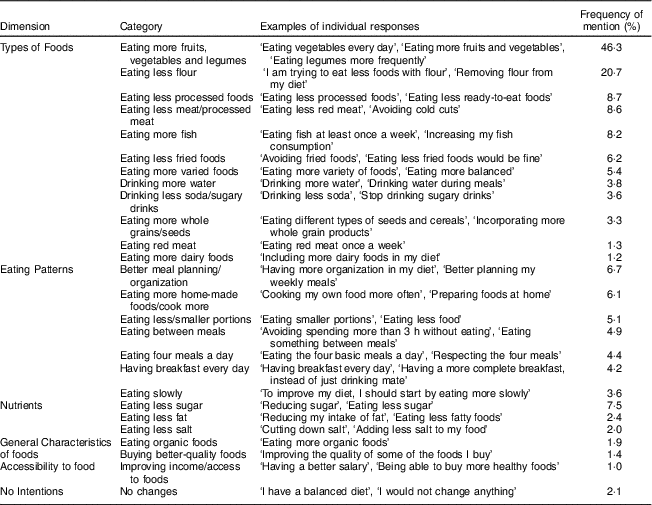
The intentions to change towards healthier eating mentioned by the respondents were grouped into twenty-seven categories and further clustered into six higher-level dimensions (Table 1). The dimensions that emerged from the data were: Types of Foods (e.g. eating or drinking more or less of specific food categories, such as fruits, vegetables or legumes, or processed meat, or more varied foods); Eating Patterns (e.g. meal organization, types of meals, portion size); Nutrients (e.g. eating less fat, sugar or salt); General Characteristics that can apply across food groups (e.g. eating organic or better-quality foods); Accessibility to food (e.g. improving income); and No Intentions to change.
Dimensions and categories of intentions to change towards healthier eating as mentioned by Uruguayan consumersFootnote *. For each category, examples of responses and frequency of mention are shown
* Online survey conducted with 2381 Uruguayan employed adults, aged 18–65 years (65 % females) in December 2015.
As shown in Table 1, very few consumers (2·1 %) mentioned that they did not intend any changes to their diet. On the contrary, the great majority of the participants mentioned at least one intention to change in order to improve their diet. The largest share of these intentions was related to the dimension Types of Foods, particularly to the category ‘eating more fruits, vegetables and legumes’ (46·3 %) and ‘eating less flour’ (20·7 %). All the other categories identified through the content analysis were mentioned with a frequency lower than 10 %. Among the latter, the categories mentioned by more than 5 % of the participants were related to eating less of a food, nutrient or overall (‘eating less processed foods’, ‘eating less meat/processed meat’, ‘eating less fried foods’, ‘eating less/smaller portions’, ‘eating less sugar’), eating more of specific foods (‘eating more fish’), eating more varied foods (‘eating more varied foods’) or changing eating patterns (‘better meal planning/organization’, ‘eating more home-made foods/cook more’; Table 1).
Barriers to the intentions to change
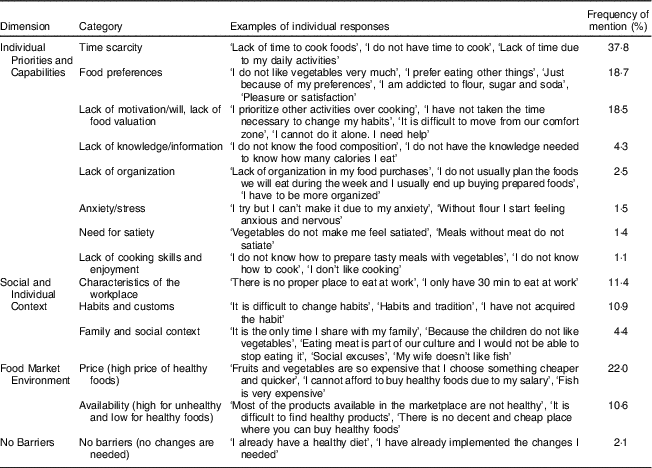
Several barriers were identified that hindered efforts to achieve changes in dietary behaviour. Responses were classified into fourteen categories and clustered into four dimensions (Table 2). The dimensions that emerged were labelled Individual Priorities and Capabilities (such as taste preferences, perceived lack of time and lack of motivation or capabilities to change diet or engage in cooking), Social and Individual Context (which subsumes barriers relating to the individuals’ social or environmental immediate context, such as the preferences of other family members, cultural context, habits and work environment) and Food Market Environment (price and availability of healthy v. unhealthy food products in the marketplace). Lastly, a few respondents answered that they did not perceive barriers for behaviour change, given they did not intend or need to engage in changes.
Dimensions and categories of barriers to the intentions to change reported by Uruguayan consumersFootnote *. For each category, examples of responses and frequency of mention are shown
* Online survey conducted with 2381 Uruguayan employed adults, aged 18–65 years (65 % females) in December 2015.
Most categories pertained to the dimension Individual Priorities and Capabilities. This dimension included the most frequently mentioned category, ‘time scarcity’ (37·8 %), which was related to participants’ lack of time for cooking due to the need to spend time on other daily activities. Other individual priorities and capabilities mentioned by participants included ‘food preferences’ and ‘lack of motivation/will, low food valuation’, which were mentioned by approximately 19 % of the participants. They stated that their preferences for the sensory characteristics of unhealthy foods or their dislike of healthy foods, such as vegetables, constituted a barrier to healthy eating, as well as their own lack of motivation or lack of willpower (Table 2).
The second most frequently mentioned category was ‘price’, which was categorized under the dimension Food Market Environment (Table 2). Participants stated that the high price of healthy food products in the marketplace and the relatively low price of unhealthy products made it difficult for them to make healthier food choices. In addition, participants referred to the unfavourable broad ‘availability’ of unhealthy foods in contrast to the difficulty they faced to access healthy foods.
The last dimension identified in the study was related to consumers’ Social and Individual Context, which encompassed the categories ‘characteristics of the workplace’, ‘habits and customs’ and ‘family and social context’ (Table 2). The category ‘characteristics of the workplace’ included barriers related to the environmental or habitual context in the workplace, such as the lack of an adequate place to eat or the limited time available for eating. The other category within this dimension that was mentioned by more than 10 % of the participants was ‘habits and customs’, which represents cultural habits and traditions or usual practices that impede or complicate favourable dietary behaviour change.
Comparison of intentions with dietary recommendations
The new edition of the Uruguayan dietary guidelines had not been launched at the time of the study and therefore its content was unknown to participants. In the present work, the recommendations included in the guidelines were compared with the intentions to change which participants suggested in the survey.
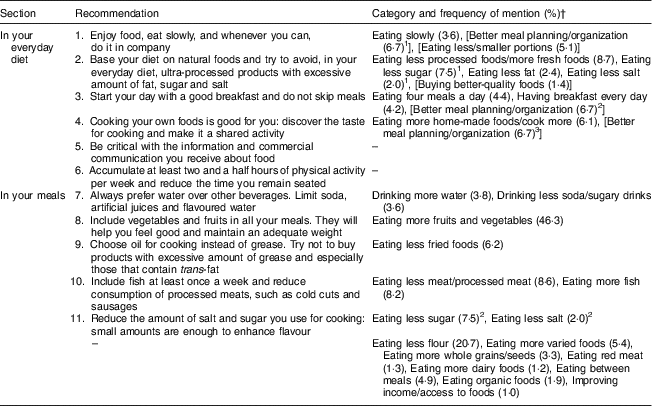
As shown in Table 3, it was possible to match the majority of the twenty-six categories identified as intentions to change for participants of the survey with one of the eleven recommendations of the guidelines, or at least a specific aspect of one of the recommendations. However, two of the recommendations (5 and 6) were not observed in the intentions to change mentioned by respondents in the online study. However, it is worth noting that these recommendations are not directly related to dietary behaviour as such (Table 3).
Recommendations included in the 2016 edition of the Uruguayan dietary guidelines( 20 ) and comparison with categories of intention to change towards healthier eating elicited from Uruguayan consumersFootnote *
* Online survey conducted with 2381 Uruguayan employed adults, aged 18–65 years (65 % females) in December 2015.
† Superscript numbers indicate that the category of intention is mentioned in more than one recommendation. […] indicates that it is an interpretation whether the intention mentioned by the consumers is similar to the respective recommendation.
Interestingly, some aspects of the dietary recommendations were not mentioned by the respondents in the open-ended question: they did not refer to ‘enjoy food’ nor to ‘do it in company’, ‘discover the taste for cooking’ and ‘make it a shared activity’. This indicates that the open question worded as ‘Mention some changes you could make in the foods you eat and/or the way in which you eat to improve the quality of your diet’ encouraged participants to think about nutrients and specific foods but did not trigger them to think about enjoyment and social interaction related to food and cooking. In addition, the explicitly mentioned aspect of using oil and not grease for cooking was not mentioned by respondents.
Furthermore, it is also interesting to note that some of the intentions to change mentioned by participants were not included in the recommendations of the dietary guidelines (Table 3). Three of those intentions were particularly pronounced: ‘eating less flour’, i.e. to reduce flour or flour-based foods in their diet as an intention for a healthy dietary change, ‘eating more varied’ and ‘eating between meals’, meaning eating small snacks between meals to reduce hunger and avoid overeating during meals. These intentions were phrased explicitly by the participants, even though the dietary guidelines do not suggest these as particularly recommended behaviours.
Discussion
An in-depth understanding of consumers’ accounts on dietary behaviour change can provide useful insights to the development of dietary guidelines and to decide on supporting public policies and interventions to overcome the barriers to healthy eating( Reference Worsley 24 ). In this context, the present research explored Uruguayan consumers’ intention to change their dietary behaviour as well as the reasons why they have not implemented those changes.
Consumers’ intentions to change
The findings of the present work showed that when Uruguayan consumers thought about improving the quality of their diet, they mainly came up with intentions to eat more of or to reduce the share of certain types of foods, rather than thinking of changing their eating patterns. This suggests that consumers’ conceptualization of ‘healthy eating’ kept close to eating as nutrition, which mirrors the traditional form of dietary guidelines( Reference Montagnese, Santarpia and Buonifacio 10 ). Previous research has shown that consumers in Western societies tend to conceptualize diet in a functional way of ingesting nutrients and often avoiding food categories( Reference O’Brien, McConnon and Hollywood 25 ). This might also be explained by the rise in ‘functional foods’ that stress the relationship between specific nutrients/compounds and health( Reference Kaur and Das 26 ). Considering that the nutritional composition of foods is just one aspect of diets that influences health and well-being, results from the present work stress the importance of more innovative phrasings of the dietary guidelines that acknowledge the diverse factors that influence dietary patterns and the multiple roles that food plays within consumers’ environmental and social context( Reference Barley and Lawson 14 , Reference Trapp, Hickling and Christian 27 ).
Consumers seemed to have a clear understanding of the foods they should consume more. Eating more fruits, vegetables and legumes was the most frequently mentioned intention to change, showing that nutritional education and information campaigns about this issue, which have been widespread around the world( Reference Rekhy and McConchie 28 ), have been successful in increasing consumer awareness. Otherwise, the intentions to change were mainly characterized by reducing certain ‘negative foods’, first and foremost flour. At first sight this might suggest that consumers’ healthy eating intentions often show similarities to intentions of dieting, which would not be surprising against the background of the high share of overweight and obesity in the Uruguayan population( 29 ). Second, though, it might indicate that consumers are impacted by international trends such as ‘low carb’( Reference Stein 30 ) and thus phrase respective intentions, even though these are in fact not dietary changes recommended by the dietary recommendations in Uruguay. Interestingly, consumers mentioned eating less processed and ready-to-eat foods as one of the changes they should implement to improve their diet, in agreement with the increasingly acknowledged association between the dietary contribution of processed and ultra-processed foods and the growing prevalence of obesity and non-communicable diseases worldwide( Reference Monteiro 31 ).
Most of the recommendations of the dietary guidelines were reflected in consumers’ accounts when asked to mention their intentions to change their dietary behaviour. This suggests that consumers can reasonably understand the recommendations included in the guidelines, in agreement with previous research( Reference Brown, Timotijevic and Barnett 4 ). However, the part of the recommendations which is related to changes in eating patterns was mentioned by only less than 7 % of the consumers. Therefore, the importance of eating patterns and modes of eating for healthy eating should be emphasized in communication campaigns and nutritional education programmes during the implementation of the new Uruguayan dietary guidelines.
Barriers to and facilitators of the intentions to change behaviour
Although awareness of nutritional recommendations has been recognized as a prerequisite to behaviour change( Reference Contento, Balch and Bronner 32 ), multiple barriers can impede their implementation in consumers’ everyday life( Reference Brown, Timotijevic and Barnett 4 ). In the present work, multifaceted barriers to the intentions to change were identified, in agreement with previous work( Reference Mielby and Takeda 7 , Reference Nicklas, Jahns and Bogle 17 , Reference de Mestral, Khalatbari-Soltani and Stringhini 33 , Reference Davison, Share and Hennessy 34 ). Although most participants were aware of nutritional recommendations, lack of motivation and willpower were major barriers to behaviour change. These results stress the need to implement more engaging and consumer-relevant media campaigns based on social marketing principles to increase motivation to change attitude and behaviour( Reference Flay and Cook 35 ).
Respondents in the survey regarded the perceived lack of time, particularly for cooking, as a major barrier to enacting the intended changes. This is in line with previous research reporting that consumers perceive time constraint and a hectic daily schedule as a challenge( Reference Mielby and Takeda 7 , Reference Jabs and Devine 36 ), and that the use of convenience foods has thus increased markedly( Reference Brunner, van der Horst and Siegrist 37 ). Lack of time has been reported to be a behavioural barrier to following up on good intentions in industrialized societies due to the increased prevalence of employed parents in the household, the pressure to work longer hours and the acquisition of goods and services that require time to use( Reference Jabs and Devine 36 ). However, time scarcity can just as well be a perceived barrier, as it is related to priorities( Reference Ajzen 16 ), for example prioritizing cooking over other activities. Communication campaigns targeted at increasing the importance attached to food preparation and meals could reduce perceived time constraints( Reference Kaur and Das 26 ). These campaigns should put emphasis on the pleasure of food consumption( Reference Pettigrew 38 ) and the added benefits of enjoying food, meals and the process of cooking, as well as food preparation, as a joint and social activity.
Another crucial barrier mentioned by the respondents was the price of healthy foods relative to unhealthy foods. Previous research has pointed out that monetary constraints are a major barrier to healthy eating, particularly among lower socio-economic groups( Reference Walker, Keane and Burke 39 , Reference Ares, Machín and Girona 40 ). In the specific case of Uruguay, there has been a major increase in the sales of relatively cheap processed and ultra-processed foods in the past years( 41 ), while prices of some healthy foods such as fish are relatively high. Consequently, consumers reported unfavourable price relations. These are often discussed as an issue needed to be tackled by policy actions such as taxes on unhealthy foods( Reference Capacci, Mazzocchi and Shankar 5 ). In addition, differences in the availability of healthy and unhealthy foods were also perceived as barriers to healthy eating, in agreement with the large market penetration of ultra-processed products, particularly in Latin America( 41 ).
Furthermore, Uruguayan consumers perceived barriers in their individual and social context. In particular, they acknowledged the importance of their habits and customs as barriers to behaviour change. Habitual behaviours have been reported to make up a significant part of our daily eating behaviour and habits are among the most powerful predictors of consumption of food products( Reference van’t Riet, Sijtsema and Dagevos 42 ). This suggests that strategies aimed at encouraging behaviour change should modify the situational cues that trigger those habits( Reference Verplanken and Wood 43 ). In this sense, policies that favour changes in the workplace can be an effective channel for health promotion( Reference Chu, Driscoll and Dwyer 44 , Reference Moy, Sallam and Wong 45 ). According to consumers’ accounts, public policies that favour healthy working environments should include extending the time available for having lunch and having a comfortable staff lunch room.
Preferences for unhealthful products with high sugar, fat and salt content were acknowledged as a barrier to changing eating habits. Therefore, considering that changes in food preferences are difficult to achieve in the short term, policies aimed at improving the nutritional profile of industrialized food products could contribute to an improvement in the health status of the population. In a similar vein, gradual reformulation of processed products could contribute to improving the health status of the population and encourage changes in their preferences( Reference Wyness, Butriss and Stanner 46 ).
Despite the relevance of contextual factors as barriers to behaviour change, consumers did not express intentions to change their social context towards favourable habits of joint food preparation and meals, nor did they express intentions to change their own individual priorities towards enjoyment of healthy foods and cooking, even though both are crucial elements of the dietary guidelines. Thus, the holistic view of healthy diets in the new dietary guidelines( Reference Andreasen 8 ) is not yet mirrored in consumers’ conceptualizations of healthy eating intentions. The aspects of enjoyment, joint experience and favourable emotions, which have been suggested as a potentially successful element of social marketing for healthier eating( Reference Aschemann-Witzel, Perez-Cueto and Niedzwiedzka 47 ), might help to create associations between these aspects and a healthy diet in consumers’ minds.
Conclusions
Results from the present work underline that consumers are largely aware of the issues they should tackle to achieve healthful changes in their eating patterns. In particular, they seem to understand the role of fruits and vegetables and the relative role of healthy and less healthy food categories. However, the importance of eating patterns and habits for achieving a healthy diet needs to be highlighted in accompanying information and educational strategies. Thus, it is important to make consumers more aware of the fact that healthy diets are more than ‘eating more or less’ of certain foods, and that they are determined by the ways of eating those foods as well. Educational campaigns should stress the added benefits of enjoying food, meals and the process of cooking, as well as enjoying this as a joint and social activity. This approach might increase the likelihood that consumers embrace the recommendations of the dietary guidelines and see the enjoyable side of the holistic idea of healthy dietary patterns that the guidelines portray.
Although consumers showed awareness of nutritional recommendations, they recognized the existence of several multifaceted barriers that hinder behaviour change. This suggests the need to implement policy measures that increase perceived control of the situation and facilitate behavioural change. In this sense, strategies aimed at changing beliefs about healthy eating and making it a shared and enjoyable activity may be one way to tackle perceived time constraint, which is in part a question of priority setting. In addition, policy measures to modify the food market environment seem necessary to facilitate behaviour change. Emphasis should be placed on policies that reduce the availability of unhealthy products in the marketplace and improve the price gradient between healthy and unhealthy foods (e.g. subsidies or taxes).
Consumers phrased a number of intentions to behaviour change, as well as specific ideas and hands-on tips on how to put the recommendations into practice, which could be picked up in a revision of the guidelines or in accompanying material or education programmes. These include eating smaller portions, better planning of meals, choosing a variety of food types and eating something between meals. These ideas could also be altered to align with the recommendations, as for example when the idea of having a snack between meals is changed into the hands-on suggestion of eating fruits as a between-meal snack.
Acknowledgements
Financial support: The authors are grateful to Espacio Interdisciplinario (Universidad de la República, Uruguay) for financial support. The funder had no role in the design, analysis or writing of this article. Conflict of interest: None. Authorship: All authors participated in the design of the study. G.A., L.V. and L.M. were involved in the analysis of the data. J.A.-W. and G.A. wrote the first draft of the paper, to which all other authors then contributed. Ethics of human subject participation: The study was approved by the ethics committee of the School of Chemistry of Universidad de la República (Uruguay).



