





Impact statement
The study contributes to ongoing research on material experience in design by addressing the gap of experiential material understanding in design education, focusing on biomaterials. The focus on biomaterials also stands by the essential sustainability knowledge, instructing students on alternative materials that support circularity. By engaging with biomaterials through hands-on experimentation and self-production, design students are encouraged to reflect on material identities and their meanings. The positioning of Grow It Yourself biomaterial kits as supportive educative tools will also contribute to the field of educative design tools by getting insights into design students’ interactions and reflections on toolkit-based approaches.
Introduction
Materials are essential elements in industrial design practice, selected for their technical properties and functional performance traditionally. However, contemporary design discourse increasingly investigates materials for their experiential qualities and capabilities of evoking emotions, communicating meanings and shaping user behaviors (Karana, Pedgley et al. Reference Karana, Pedgley and Rognoli2015; Pedgley et al. Reference Pedgley, Rognoli and Karana2016). This shift toward material experience, defined as the experiences people have with and through materials, acknowledges that materials influence how people think, feel and act when interacting with them (Veelaert et al. Reference Veelaert, Du Bois, Moons and Karana2020). Besides the recognition of materials’ experience, the sustainability of the materials is gaining traction with the accelerating environmental challenges. To ensure a circular economy, materials are expected to be sourced responsibly, ideally derived from renewable or waste-based resources, produced in ways that support biodiversity and designed to biodegrade safely at the end of their use phase (EMF 2016). The design discipline is responsible for developing production and consumption scenarios that support these initiatives.
With recent developments in materials science and initiatives that bridge biology and design, biomaterials have gained attention as tools for ensuring sustainable materiality and for discovering novel scenarios in which unique production methods and uses emerge. Biofabrication, defined as a way of creating materials through the growth of living organisms and cells, emerged as a method allowing designers to co-perform with living organisms (Camere and Karana Reference Camere and Karana2018). Biofabricated materials present distinct advantages. Materials derived from bacteria, fungi and algae enable the utilization of food waste and agricultural by-products, support localized production and reduce dependence on extractive supply chains. These materials are inherently biodegradable and customizable, and at the end of their life cycle, they can serve as feedstock for the fabrication of new biomaterials (Gjøderum Hartvigsen Reference Gjøderum Hartvigsen2023), positioning biofabrication as a materially and conceptually congruent approach within circular economy models.
Biofabricated materials enable hands-on engagement, allowing designers to actively grow, modify and shape materials through do-it-yourself (DIY) approaches. DIY refers to practices in which individuals actively use raw or semi-raw materials and component parts to create, modify, or rebuild products, driven not only by practical needs but also by lifestyle preferences and psychosocial motivations such as autonomy, self-expression and personal satisfaction (Trivedi et al. Reference Trivedi, Pandey and Trivedi2022; Wolf and McQuitty Reference Wolf and McQuitty2011). Within design contexts, such approaches expand the role of the designer from specifying materials to cultivating and co-forming them.
A key practice within the DIY-materials approach is Material Tinkering: an iterative and systematic process of manipulating materials creatively for discovery and experimental purposes. Through tinkering, designers work with open-source recipes and unconventional sources, altering formulas and combining ingredients to generate novel material samples that can range from underdeveloped “material drafts” to intentionally designed “material demonstrators” that explore specific sensorial or performative qualities (Rognoli and Parisi Reference Rognoli and Parisi2021). Crucially, the accessibility of biomaterials positions them as particularly suitable for material tinkering practices. By allowing designers to intervene during formation, these materials support experiential exploration and iterative engagement, enabling designers to achieve tacit knowledge (Pollini and Jimenez Reference Pollini, Jiménez Rodriguez, Builes and Builes Escobar2022). In this sense, biomaterials offer a promise for studying material experience, as the designer-material relationship develops over time through processes of growth and co-creation.
When considering material experience as a complex phenomenon within product design, holistic experiential characterizations that capture this complexity remain limited, along with the tools and methods required to support them (Veelaert et al. Reference Veelaert, Du Bois, Moons and Karana2020). There is still a gap in translating subjective material experiences into usable forms of data (Wilkes et al. Reference Wilkes, Wongsriruksa, Howes, Gamester, Witchel, Conreen and Miodownik2016). As a result, designers play a critical role in identifying materials that not only meet economic and environmental sustainability requirements but also contribute to users’ quality of life by creating satisfying and emotionally engaging experiences via materials (Van Kesteren et al. Reference Van Kesteren, Stappers and De Bruijn2007). One approach to this shift is the concept of “Grow-It-Yourself (GIY) kits,” toolkits that enable users to cultivate their own biofabricated materials at home or in local settings. The GIY concept emerged from DIY material practices discussed within design research (Rognoli et al. Reference Rognoli, Bianchini, Maffei and Karana2015) and the name stems from industry-driven biofabrication initiatives such as Ecovative and Grown.bio. By engaging users directly in material growth, GIY kits offer opportunities for hands-on material tinkering, experiential learning and personal customization, distinguishing them from conventional manufacturing systems.
Recent design-oriented studies have begun to explore experiential qualities of biomaterials and how they are perceived through hands-on engagement and material-driven approaches (Bell et al. Reference Bell, Wu, Campo Woytuk, Lazaro Vasquez, Alistar and Buechley2024; Correa and Holbert Reference Correa and Holbert2021; Dobal and Lalioti Reference Dobal and Lalioti2021; Laamanen and Kääriäinen Reference Laamanen and Kääriäinen2022; Papile et al. Reference Papile, Sossini, Marinelli and Del Curto2022). These contributions have advanced the understanding of how biomaterials can be perceived, shaped and interpreted within design contexts. The experiential dimension of working with biomaterials, their behavior dynamics, sensory qualities and temporal transformations, may fundamentally shape user acceptance (Alexandre et al. Reference Alexandre, Reynaud, Osiurak and Navarro2018) and design possibilities. While growing attention has been paid to the experiential qualities of individual biomaterials, comparative studies that examine how materials derived from different organisms produce distinct experiential profiles within a single educational setting remain scarce. Moreover, structured toolkits that bring these materials together in an accessible, non-laboratory format have not yet been systematically examined as mediating tools for material experience.
This research investigates biomaterial GIY kits as mediating tools for material experience in design education. By engaging senior design students in hands-on material tinkering with carrageenan derived from algae, bacterial cellulose produced through kombucha fermentation and mycelium grown from fungal cultures, the study examines how the distinct experiential qualities of these materials are perceived, articulated and integrated into design responses. The study primarily contributes to the understanding of how a GIY kit structured around biomaterials with contrasting properties can enable various material experiences to form in educational settings, positioning the kit as a structured medium for comparative material exploration across biological sources. By foregrounding material experience rather than technical optimization or commercial scalability, this study contributes to the growing discourse on biodesign by examining how biomaterial GIY kits can function as experiential tools that support material exploration, articulation and reflection within design practice.
Background
In contemporary design research, attention has increasingly shifted from products to experience. Product experience is defined as the subjective response that emerges from the interaction between a person and a product (Hekkert and Schifferstein Reference Hekkert, Schifferstein, Schifferstein and Hekkert2008). Experience is not merely connected to the product but created through users’ interaction with it; the created experience is a collaborative result. Hekkert and Schifferstein (Reference Hekkert, Schifferstein, Schifferstein and Hekkert2008) classify experiential components into aesthetic, emotional and meaning-related, emphasizing that experience is constructed through both sensory perception and personal interpretation. Understanding these experiential layers enables designers to intentionally shape how products are perceived and valued. The responsibility of developing the future experiences and interactions of our everyday lives via artifacts is in designers’ hands (Van Bezooyen Reference Van Bezooyen, Karana, Pedgley and Rognoli2014). Within this framework, materials function as critical mediators of experience.
Karana et al. (Reference Karana, Hekkert and Kandachar2008) referred to the experiential dimension specific to the materials as “material experience.” Materials contribute to experience through six descriptive categories that capture how people relate to materials: sensorial descriptions, physical descriptions, use-related descriptions, perceptive descriptions, associative descriptions and emotional descriptions, influencing the user-product interaction (Karana and Van Kesteren Reference Karana, van Kesteren, Desmet, van Erp and Karlsson2008). For designers, engaging directly with materials is not merely a technical exploration but a necessary process for understanding and shaping intended experiences. Such hands-on engagement aligns with approaches that place material exploration as a central design activity. The Material Driven Design (MDD) method positions material experience at the core of the design process by encouraging designers to iteratively interact with materials in order to uncover their experiential qualities and translate them into meaningful product visions, rather than prioritizing functional optimization, commercial viability, or scalability (Karana, Barati et al. Reference Karana, Barati and Rognoli2015). Within this framework, design requirements for material experience are conceptualized through four iterative action steps: (1) understanding the material through technical and experiential characterization, (2) creating a material experience vision, (3) manifesting material experience patterns and (4) designing material/product concepts. The first step, understanding the material, involves both technical investigation and experiential exploration. At this stage, designers engage in material tinkering to gain insight into what the material affords, its mechanical and structural properties and how it may be shaped, formed or embodied within product contexts. Through such hands-on interaction, a reflective relationship between designer and material begins to form (Parisi and Rognoli Reference Parisi and Rognoli2017). Materials thus function not merely as passive resources but as active drivers of creative direction, generating ideas through the opportunities and constraints they present (Van Bezooyen Reference Van Bezooyen, Karana, Pedgley and Rognoli2014). In this study, the MDD method informed the GIY kit development process primarily through its emphasis on experiential characterization and iterative material exploration. Rather than following all four stages in sequence, the method was selectively applied to guide material tinkering and translate experiential observations into kit design decisions.
Recent developments in biodesign extended the material options available to designers by incorporating organisms as collaborators in material creation. Bio-fabrication is a practice that incorporates living organisms into material design through the growth of organisms and cells (Mironov et al. Reference Mironov, Trusk, Kasyanov, Little, Swaja and Markwald2009). Bio-fabrication offers new design possibilities and ways to produce and use materials beyond creating environmental advantages (Camere and Karana Reference Camere and Karana2018). Biological organisms that can be utilized in bio-fabrication of materials are mainly algae, bacteria and fungi. Biofabricated materials derived from these organisms have been explored across product, textile and architectural contexts, often as sustainable alternatives to conventional materials. They act as more than material sources: depending on how the organism is engaged, they may function as active collaborators in material formation, or as biological origins of derived compounds whose experiential potential lies in their sensory and formal properties rather than ongoing biological activity (Camere and Karana Reference Camere and Karana2017). Materials derived from algae, bacteria and fungi each encompass a range of material expressions depending on how the organism is engaged. When organisms remain biologically active, they open possibilities for co-creation and temporal transformation; when dried, processed, or combined with substrates, they yield materials with distinct structural and sensory qualities; and when further refined into extracted compounds they offer bio-derived alternatives to conventional materials with tunable properties. When the organisms stay biologically active the material is defined as a living material. Livingness is conceptualized as a material quality associated with growth, responsiveness, adaptation, change and care-related relations (Karana et al. Reference Karana, Barati and Giaccardi2020). Living materials are increasingly discussed in design research not only through their technical properties, but also through the dynamic relationships they establish with designers and users. This perspective shifts attention from material performance alone to the experiential and relational qualities that emerge through direct engagement with such materials.
The most used form of fungi, mycelium materials, can show properties similar to foam, paper, leather, or polymer, with differing levels of flexibility, stiffness and translucency depending on the fungal species, growth conditions and additives (Bitting et al. Reference Bitting, Derme, Lee, Van Mele, Dillenburger and Block2022; Vandelook et al. Reference Vandelook, Elsacker, Van Wylick, De Laet and Peeters2021). Beyond their technical properties, fungal materials hold culturally embedded perceptions and symbolic meanings. As Delvendahl et al. (Reference Delvendahl, Dienel, Meyer, Langen, Zimmermann and Schlecht2023) discuss, fungi evoke both positive and negative narratives ranging from associations with rot, mold and dirt and feelings of fear and danger to ideas of luck, well-being, health and prosperity, which can influence how these materials are experienced and accepted. Therefore, understanding mycelium not only as a biomaterial but also as a culturally charged material entity becomes relevant when examining material experience. While recent studies indicate that fungal composite materials are generally viewed positively and that consumers express openness towards their implementation, concerns related to safety, toxicity and quality remain central to broader acceptance. In particular, the presence of living mycelium, spore formation, or contamination risks can shape user perceptions of material safety (Jansen Reference Jansen2026).
Bacterial cellulose (BC) is one of the most used structures made by bacterial strains, which is the end product of bacteria and yeast that are commonly found in fermented foods such as vinegar, nata de coco and kombucha (Gregory et al. Reference Gregory, Tripathi, Fricker, Asare, Orlando, Raghavendran and Roy2021). Recent research has demonstrated that BC is perceived differently depending on disciplinary background. Quijano et al. (Reference Quijano, Fischer, Ferrero-Regis and Navone2025) report that individuals with scientific training often approach bacteria-derived materials as technical or functional tools, whereas participants from creative disciplines are more likely to attribute emotional or relational qualities to the material, at times perceiving it as a living entity. In contrast, individuals without prior exposure to either scientific or creative practices frequently expressed discomfort or even disgust upon learning that the material originates from bacteria. Complementing these findings, Papile et al. (Reference Papile, Bolzan, Parisi, Pollini, Duarte and Di Roma2021) examined the sensorial perception of BC among design students. While visual impressions were often described as organic, futuristic, or aesthetically intriguing, tactile engagement elicited ambivalent reactions. Qualities such as stickiness were associated both with discomfort and with curiosity or warmth. Participants also attributed unconventional associations to the material, including edible or cosmetic qualities, suggesting that BC evokes distinctive and interpretative sensory responses.
Algae are a group of photosynthetic organisms that can live in various habitats and have many unique features. Algae-based materials can be derived from either macroalgae (seaweeds) or microalgae. Macroalgae are typically harvested, dried and processed to extract components such as agar, alginate and carrageenan, which can serve as bio-based material binders or film-forming agents (Camere and Karana Reference Camere and Karana2018). Microalgae, commonly cultivated in controlled environments, are widely studied for their polymer-producing capacity and potential to serve as alternatives to petrochemical plastics (Johnsson and Steuer Reference Johnsson and Steuer2018). Although algae-based bioplastics often require additives to enhance mechanical performance, variations in species, chemical composition and processing parameters enable the tuning of flexibility, durability and thermal properties (El Semary et al. Reference El Semary, Alsuhail, Al Amer and AlNaim2022). This variability offers designers a controllable yet biologically grounded material system with adaptable properties. Recent design research has explored algae not just as a bio-based material but as an interactive, living medium due to algae’s bioluminescence (Barati et al. Reference Barati, Karana, Pont and Van Dortmont2021; Breed et al. Reference Breed, Van Der Putten and Barati2024). While algae’s bioluminescent properties have opened directions for exploring livingness as a design quality, algae are more commonly engaged in design practice as bio-derived materials, processed into stable, non-living forms that offer sustainable alternatives to conventional binders, films and bioplastics. In this study, algae is approached in this latter sense: carrageenan, extracted from macroalgae, is used as a bio-based, non-living material whose experiential potential lies in its sensory and formal properties rather than biological activity.
Working with biomaterials translates into everyday life through applications like GIY kits. These kits position biomaterials as raw materials that enable the creation of materials and products. GIY kits represent an intersection of biofabrication, DIY culture and distributed production. Commercial examples enable users to cultivate materials at home without specialized laboratory environments (Zeller and Zocher Reference Zeller and Zocher2012). These kits typically include dehydrated substrate, molds, nutrients and instructions that allow users to grow material forms within a few days. Beyond their technical functionality, GIY kits hold experiential potential. In educational settings, such practices support material tinkering and the articulation of sensory, emotional and meaning-related attributes (Pollini and Jimenez Reference Pollini, Jiménez Rodriguez, Builes and Builes Escobar2022). By participating in the material creation and tinkering processes, designers shift from being passive selectors of materials to active co-performers (Rognoli et al. Reference Rognoli, Bianchini, Maffei and Karana2015).
While biomaterials and DIY practices have been explored in design education, structured kits that contain materials derived from algae, bacteria and fungi and observe material engagement of these organisms remain limited. This study therefore examines how a GIY kit can support material tinkering and facilitate the articulation of material experience.
Methods
The study employs a two-part methodology to investigate GIY kits as a toolkit that enables material tinkering and support material experience. The first phase consists of a kit development process, while the second phase involves a workshop-based empirical study with senior industrial design students. For the first part, Research through Design methodology is followed to develop the “Grow-It-Yourself” biomaterial kit as the primary research artifact (Frayling Reference Frayling1994; Zimmerman et al. Reference Zimmerman, Forlizzi and Evenson2007). The Research through Design approach was particularly suited to this study as it positions the designed artifact, in this case the GIY kit, as both the outcome and the instrument of inquiry, allowing knowledge to emerge through the making process itself. This approach enabled iterative cycles of material making, testing and reflection, where each tinkering experiment informed subsequent decisions about material selection, kit structure and workshop design.
The development process was informed by principles of Material Driven Design (Karana, Barati et al. Reference Karana, Barati and Rognoli2015), particularly its emphasis on experiential characterization and iterative material exploration, rather than full implementation of all stages of the method. Material exploration focused on three organism-related material categories: algae-derived carrageenan as a bio-derived non-living material, bacterial cellulose produced through kombucha fermentation and fungi-based mycelium in two different samples one being lab inoculated mycelium and a mixture of oyster mushroom and substrate that can be cultivated at home settings. The fungal cultures were obtained from the fungal collection of the Phytopathology Laboratory at Isparta University of Applied Sciences, Department of Plant Protection. Inoculation and subsequent growth processes were carried out in the same laboratory under controlled conditions. Fungi species selection was informed by previous research by the first author (Karaca and Karaca Reference Karaca and Karaca2023) and the availability of fungal species. A broader comparative analysis of biomaterials in industrial design contexts has been previously presented by the authors (Karaca and Küçüksayraç Reference Karaca, Küçüksayraç, Korkut, Börekçi and Öztürk Şengül2024), where sustainable material applications and case studies were examined. The iterative tinkering process with algae-, bacteria- and fungi-based materials informed the development of GIY kit. Rather than selecting materials based on technical performance criteria, the accessibility for non-specialist users, suitability for hands-on shaping within a workshop setting, the capacity to demonstrate material growth or transformation without a laboratory environment and the potential to offer experientially distinct material encounters across the materials derived from algae, bacteria and fungi guided the material selection.
For the second phase of the study, an in-person workshop was conducted with 18 senior industrial design bachelor students as part of an elective course on Sustainable Product Design at the Department of Industrial Design, Istanbul Technical University. Students who participated and completed the assignment and the surveys received extra points in the course, but the entire process was voluntary. The participant group primarily consisted of industrial design students including four Erasmus + Programme students including one mechanical engineering student from Germany, two industrial design students from Italy and one industrial design engineering student from the Netherlands. The participant group demonstrated a strong engagement with design for sustainability practices. Two individual and two group projects developed by students during this course were selected as finalists in the Green Product – Concept Award (Germany). In total, 18 students attended the workshop; 17 completed both the pre- and post-workshop surveys, and 13 submitted the final design concept assignment.
The workshop was planned to function as a structured experiential environment in which participants are invited to engage with biomaterials and reflect on their material identities. The session was structured in three stages. Firstly, a 60-minute introductory lecture was provided to give information on biomaterials, the production and shaping methods of these materials and their use in design practice. The first author delivered the lecture and facilitated the workshop activities; student engagement was supported by the second author as the course instructor. The sequencing was designed to move participants progressively from conceptual introduction to embodied engagement and finally to reflective articulation, ensuring that hands-on tinkering was both contextually grounded through the introductory lecture and experientially processed through structured survey reflection.
Following the introduction, participants completed a pre-workshop survey (N = 18) that gathered data on participants’ prior experience with biomaterials, familiarity with GIY or DIY kits, and expectations for the session. The second stage consisted of guided material tinkering and experimentation with the GIY kit, during which students were encouraged to manipulate, shape, combine and observe the materials. In the final stage, participants completed a post-workshop survey (N = 17) that included multiple-choice questions on sensory perception (22 sensory descriptions rated per material) and behavioral attributions (13 semantic descriptions), as well as Likert-scale questions (1–5 scale) on aesthetic pleasure, materials’ influence on design thinking, kit accessibility, perceived kit structure and likelihood of future experimentation. In addition, open-ended questions were asked for emotional responses, evoked memories, design concepts, challenges and reflections. Pre- and post-workshop surveys were administered digitally using Google Forms and are provided in the Appendix A and B.
After the workshop, students were asked to complete an individual concept design assignment, the template for which is given in Appendix C. The assignment required students to propose a design concept inspired by their material experience, describing the material(s) selected, the experiential qualities that informed the concept and how material behavior influenced their design decisions. A qualitative thematic analysis approach was used to cluster responses into recurring experiential categories, focusing on sensory perception, emotional response and meaning attribution. Thematic analysis is generally used for identifying, analyzing and interpreting patterns in qualitative data, serving to organize and report research observations (Clarke and Braun Reference Clarke and Braun2017). It is selected as a method due to its flexibility, accessibility and ability to help capture underlying meanings within the data. Thematic analysis was conducted by systematically organizing participant responses and design concepts into a visual mapping tool, enabling the identification and clustering of recurring patterns across sensory descriptions, emotional responses and meaning attributions, which is provided in the Appendix D.
This study was approved by the institutional ethics committee (Istanbul Technical University Social and Human Sciences Scientific Research and Publication Ethics Committee, No: 2025-12-805). Written informed consent was obtained from the workshop participants.
Findings
The following subsections describe the tinkering processes carried out for fungi, BC and algae-based materials, the development of the GIY kit and the workshop study conducted with senior industrial design students, including material interactions, sensory responses, behavioral attributions and design concept outcomes.
Material tinkering and developing the GIY kit
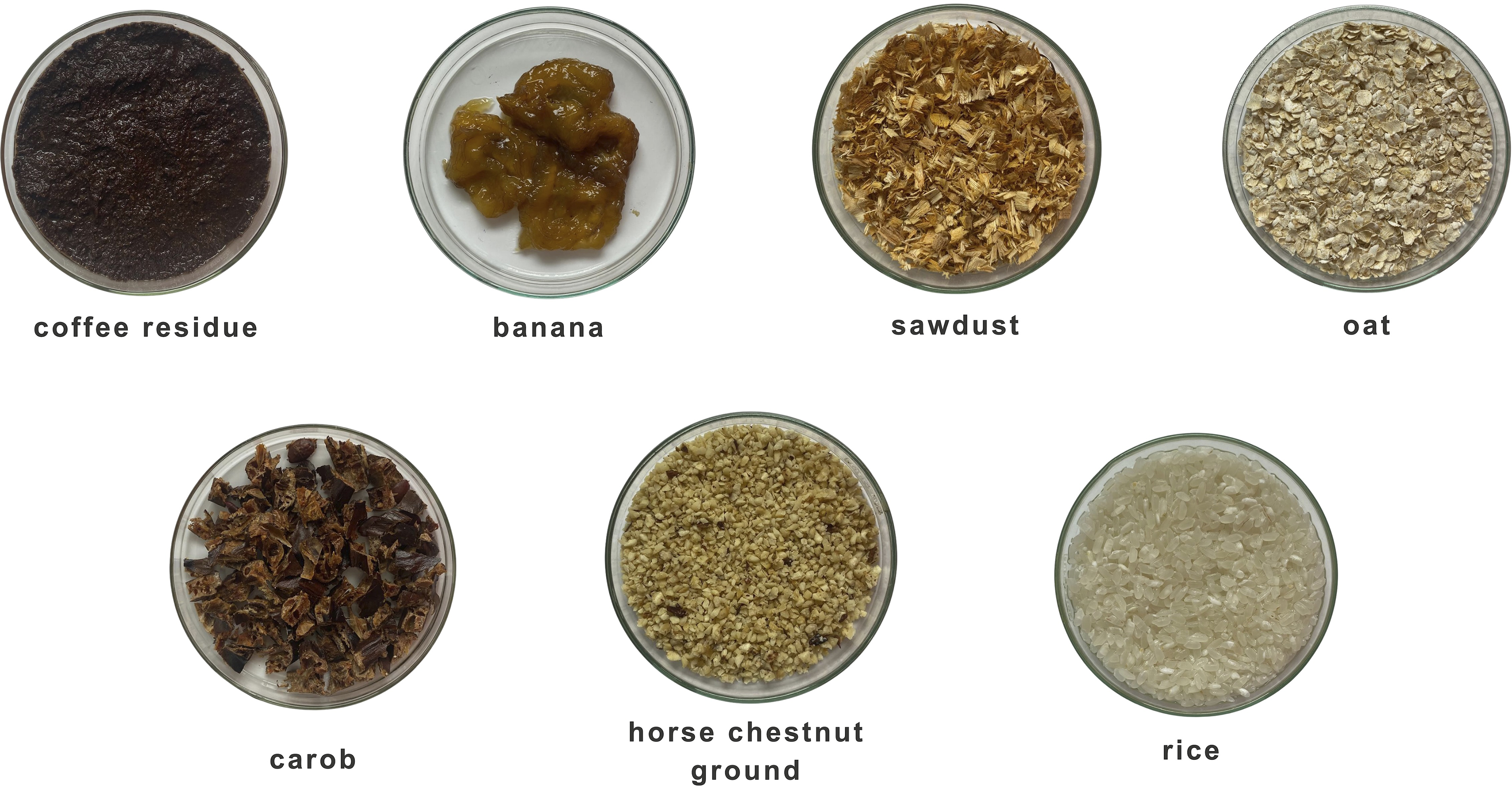
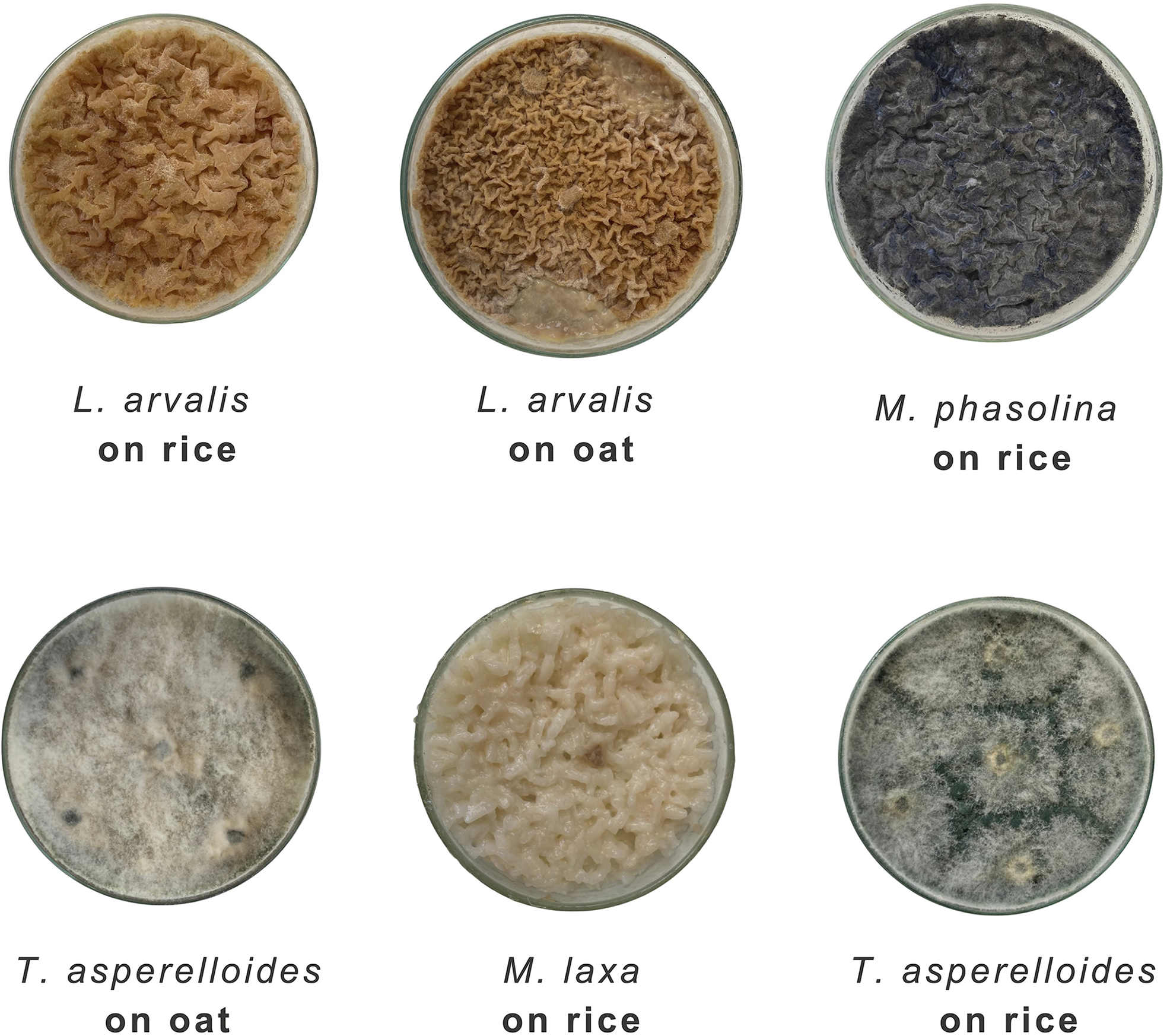
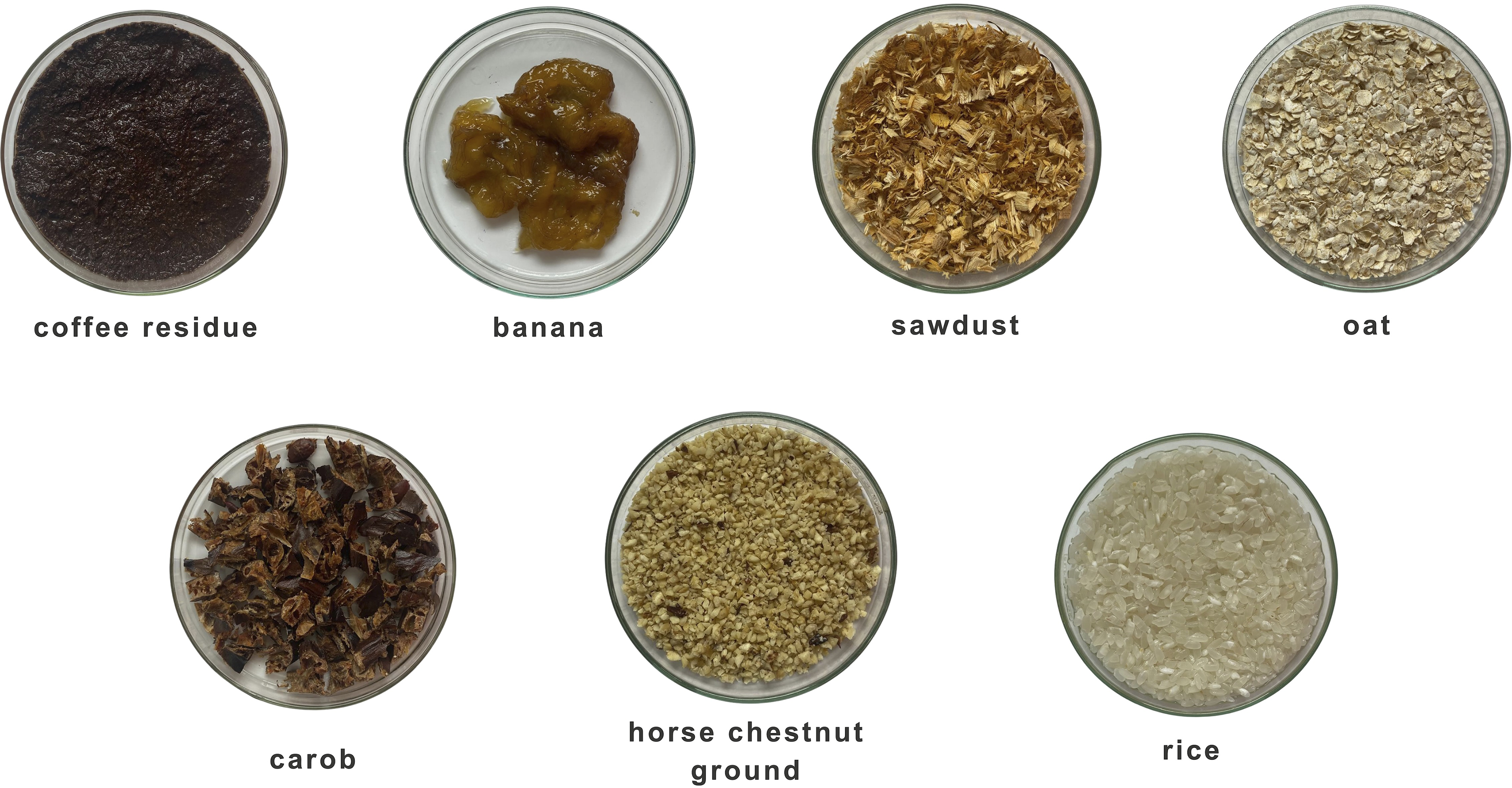
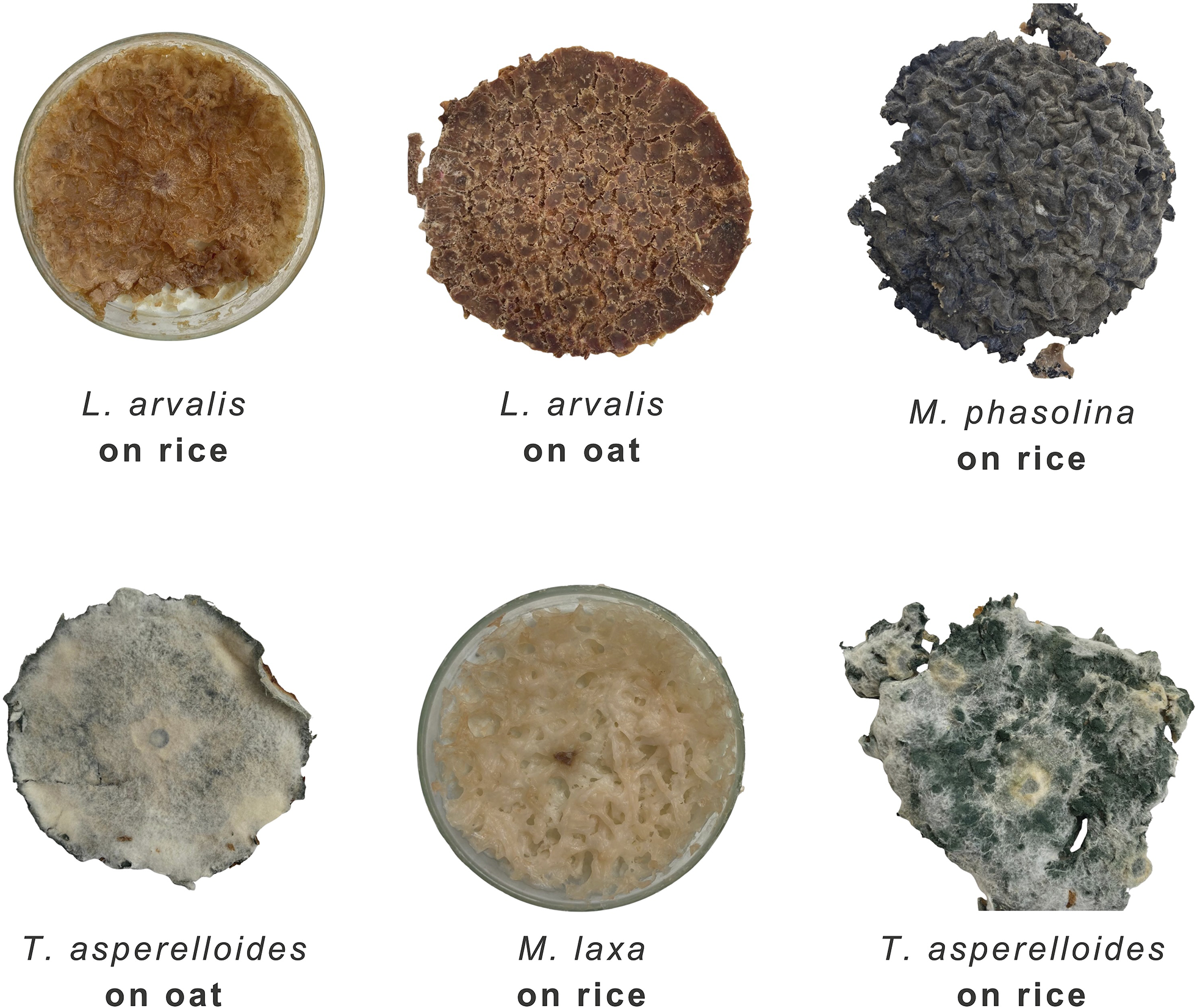
Seven organic substrates were tested: coffee residue, overripe banana, sawdust, oat, carob, horse chestnut ground and rice to examine how substrate composition influences growth rate, surface formation and structural integrity after drying (Figure 1). Five microscopic fungal species were selected for their potential to yield visual and textural distinctions on material outcomes: Trichoderma asperelloides, known for its characteristic green pigmentation; Laetisaria arvalis, which produces orange tonalities; Alternaria alternata, with pigmented or dark-colored mycelium, generally appearing gray, greenish, dark olivaceous, dark blackish-brown, or black; Macrophomina phaseolina, with dark brown to black mycelium covering the surface; and Monilinia laxa, which forms flower-like or patterned growth structures (Karaca and Karaca Reference Karaca and Karaca2023; Lawrence et al. Reference Lawrence, Rotondo and Gannibal2016; Martini and Mari Reference Martini, Mari and Bautista-Baños2014; Siddiquee Reference Siddiquee and Siddiquee2017). These species are less frequently utilized in design-oriented biomaterial research, which typically favors macro-fungi such as oyster mushrooms (Pleurotus ostreatus) or Ganoderma species for their rapid colonization and ease of cultivation. The deliberate inclusion of these unconventional species aimed to investigate alternative material potentials emerging from their distinct biological behaviors, particularly the formation of sclerotia, dense structural forms, in certain species.
Substrates used in the fungi cultivation process.
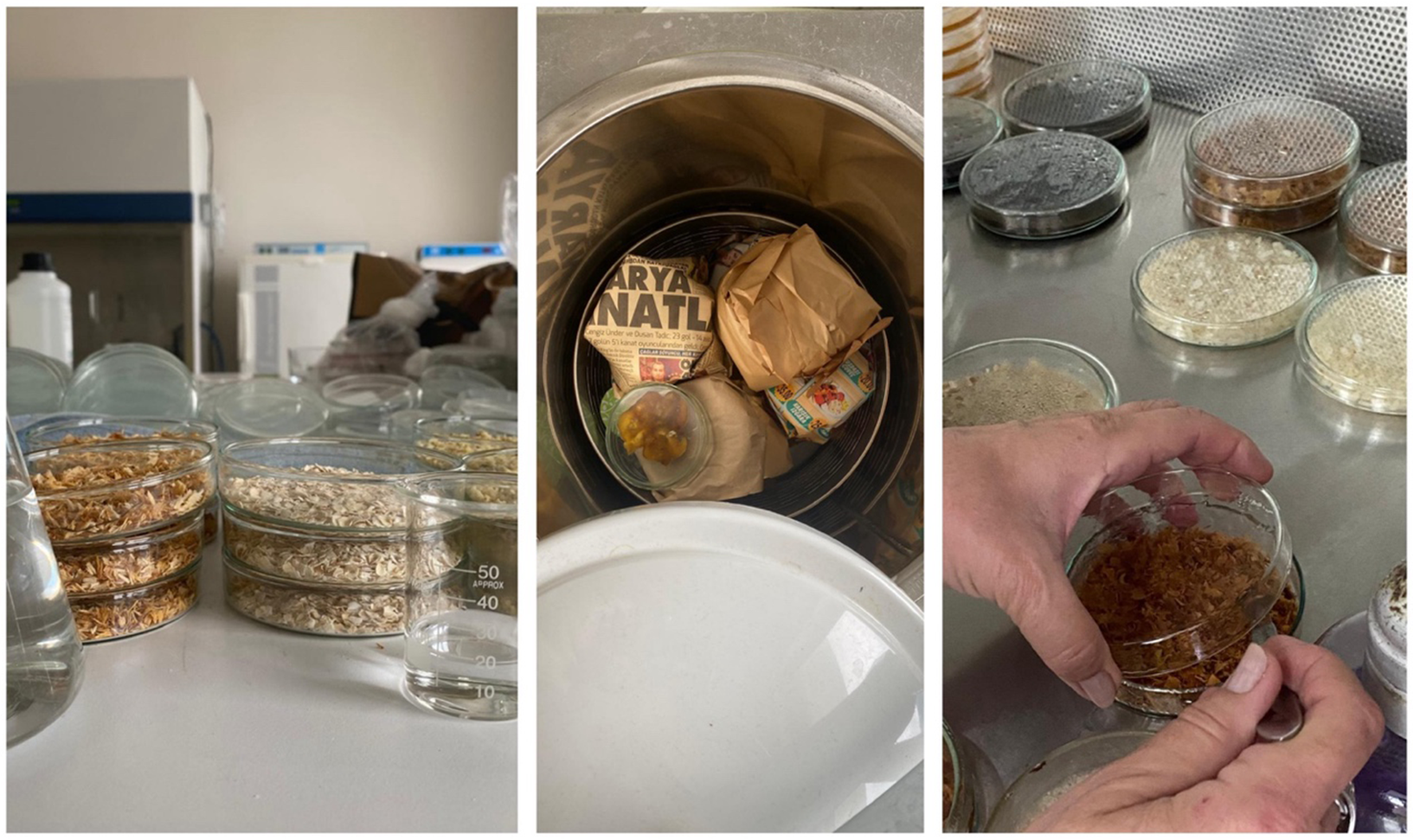
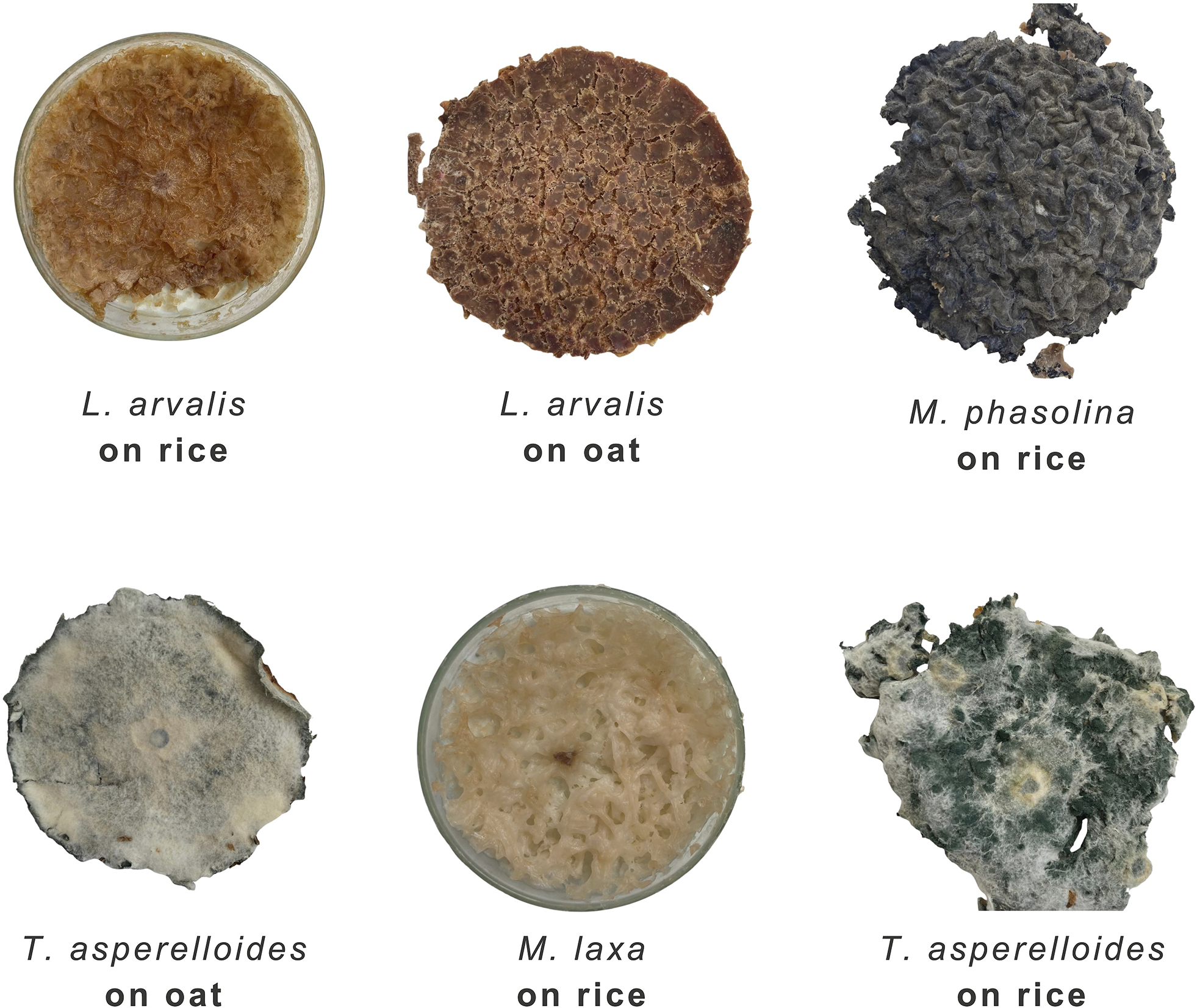
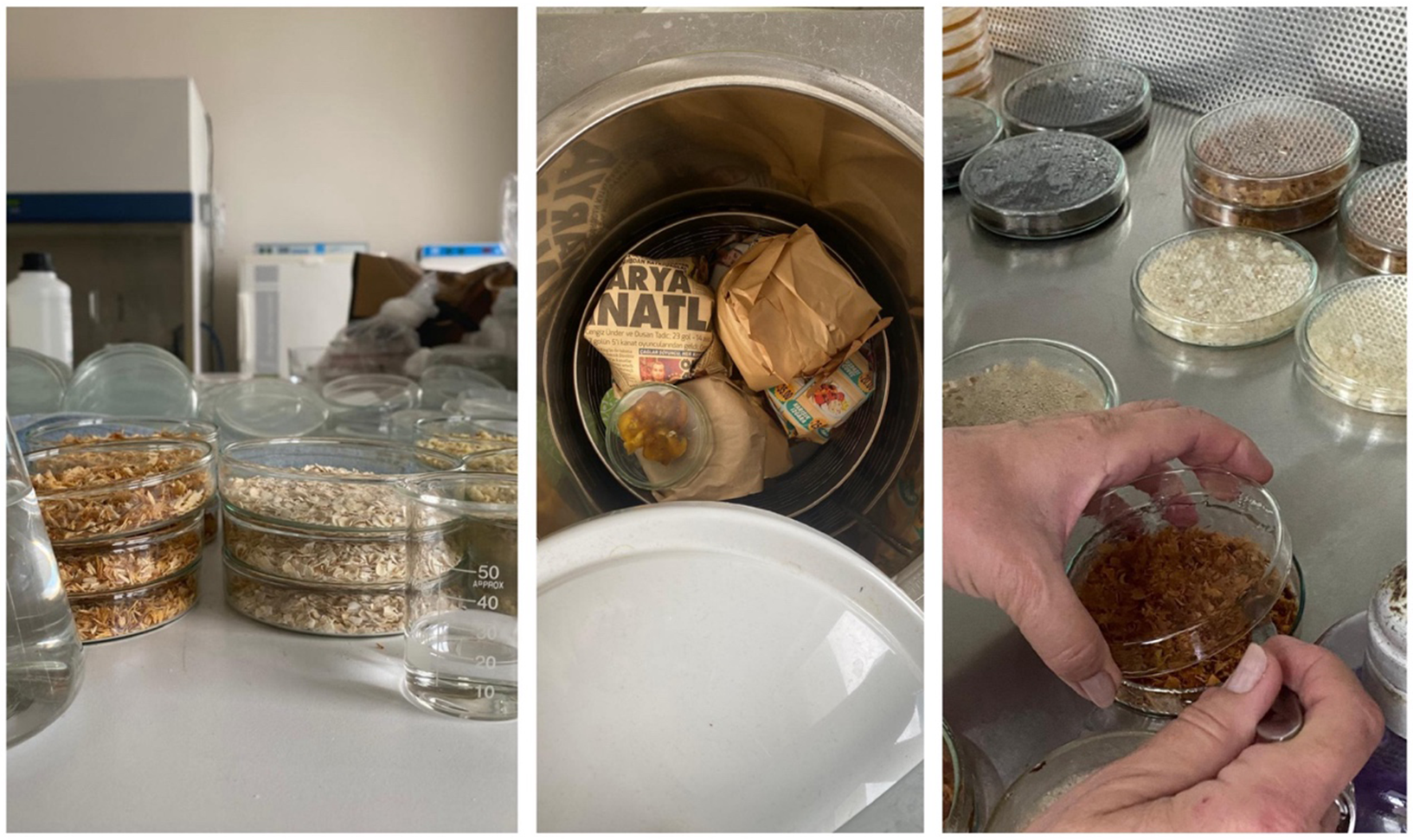
Substrates were sterilized by autoclaving and inoculated with fungal spores under controlled laboratory conditions (25°C incubation). The preparation of the samples is shown in Figure 2: preparing substrates by mixing with a sucrose-water mixture, autoclaving for sterilization and inoculating the fungi spores on the prepared substrate media. After the active growth phase, samples were dried in an oven at 50°C for 24 hours. This dehydration process resulted in dimensional shrinkage and increased structural rigidity. The applied temperature was sufficient to inactivate fungal spores, rendering the materials non-living and safe for direct handling within the workshop setting. Across all species-substrate combinations, the tinkering process documented variations in growth rate, surface pattern formation, pigmentation, binding capacity and post-drying rigidity.
Preparation stages of fungal material tinkering: substrate preparation (left), sterilization by autoclaving (center) and inoculation under controlled laboratory conditions (right).
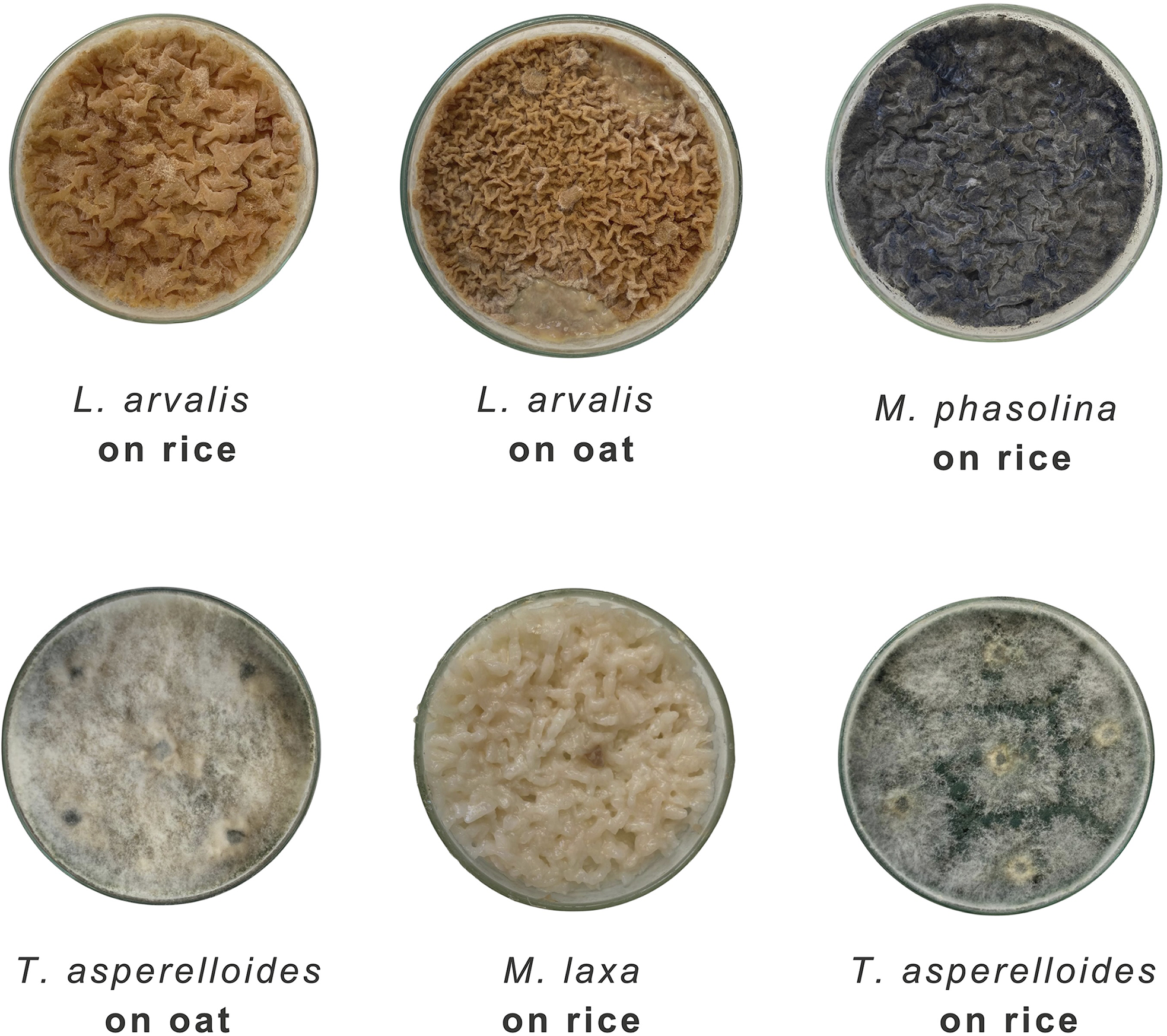
Observations were recorded both during active growth (Figure 3) and after drying stages (Figure 4) to compare structural stability and visual/sensory attributes.
Active growth stage of fungal materials.
Post-drying fungal material samples.
In addition to these microscopic species, a commercially available oyster mushroom (Pleurotus ostreatus) strain, commonly used in home mushroom cultivation kits, was included for comparative purposes. Microscopic species required laboratory inoculation and sterile preparation of substrates. The oyster mushroom strain was provided in pre-inoculated substrate mixtures and was tested under non-sterile conditions to evaluate handling and shaping feasibility. This strain was provided in a pre-inoculated compost block within a small container, accompanied by instructions for users to mix it with additional substrates, such as used coffee grounds, which were presented during the workshop as an example, to experiment with material formation.
Material tinkering with BC was conducted using a commercially available home kombucha kit. A pre-formed SCOBY pellet was cultivated in sweetened black tea at room temperature. To introduce variation, different sugar concentrations and fermentation durations were tested, with results showing that both variables influenced the thickness and density of the resulting cellulose pellicle. Rose hip tea was used as an alternative nutrient base to examine chromatic differences in the produced material. After harvesting, pellicles were subjected to three drying conditions: air drying, oven drying at 140°C and oven drying at 200°C, each producing distinct differences in shrinkage, surface texture and final material stiffness. Fermentation was also conducted in containers of varying size and geometry, revealing that the pellicle conforms precisely to the surface area and shape of its container, a finding with direct implications for mold-based shaping within the GIY kit.
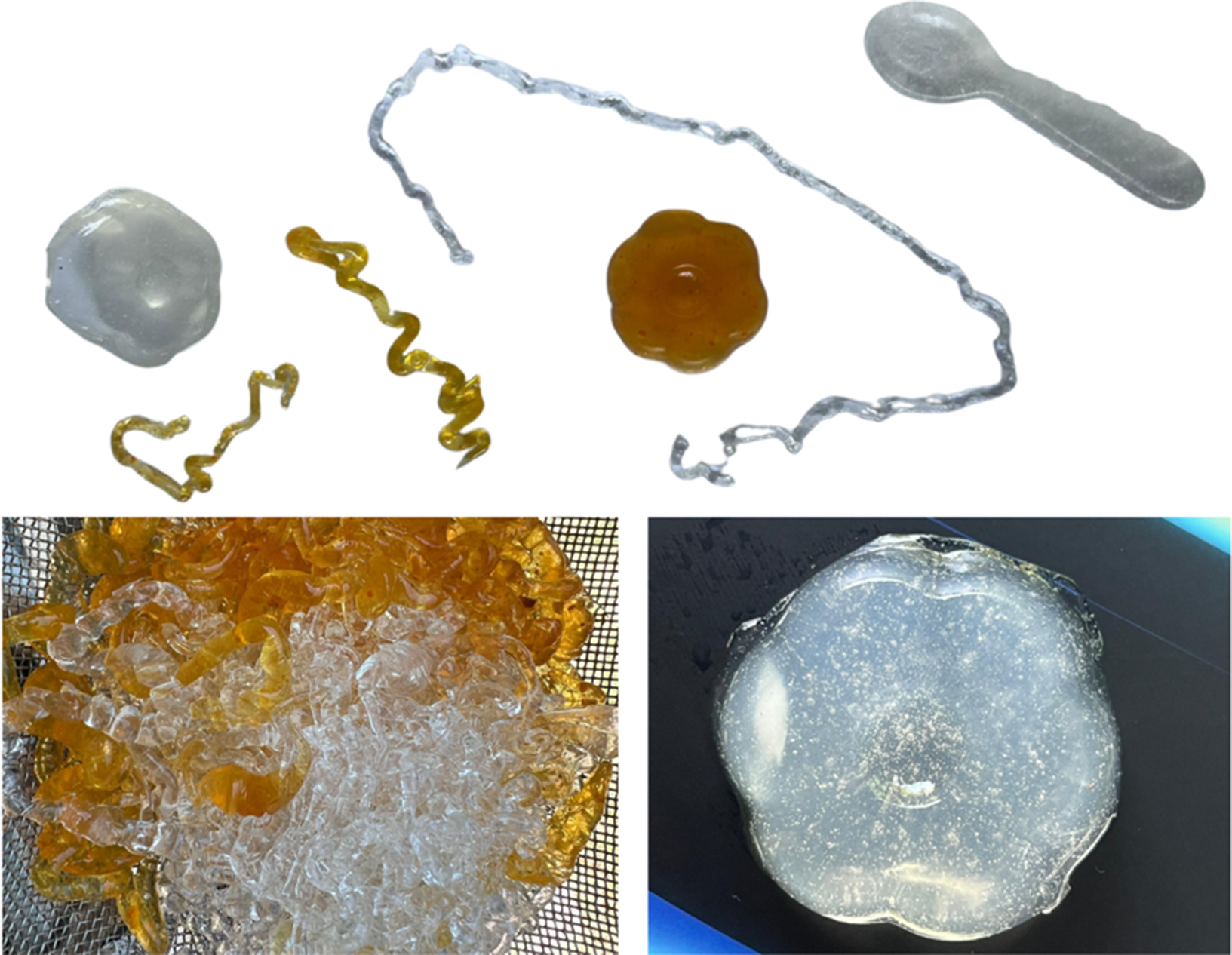
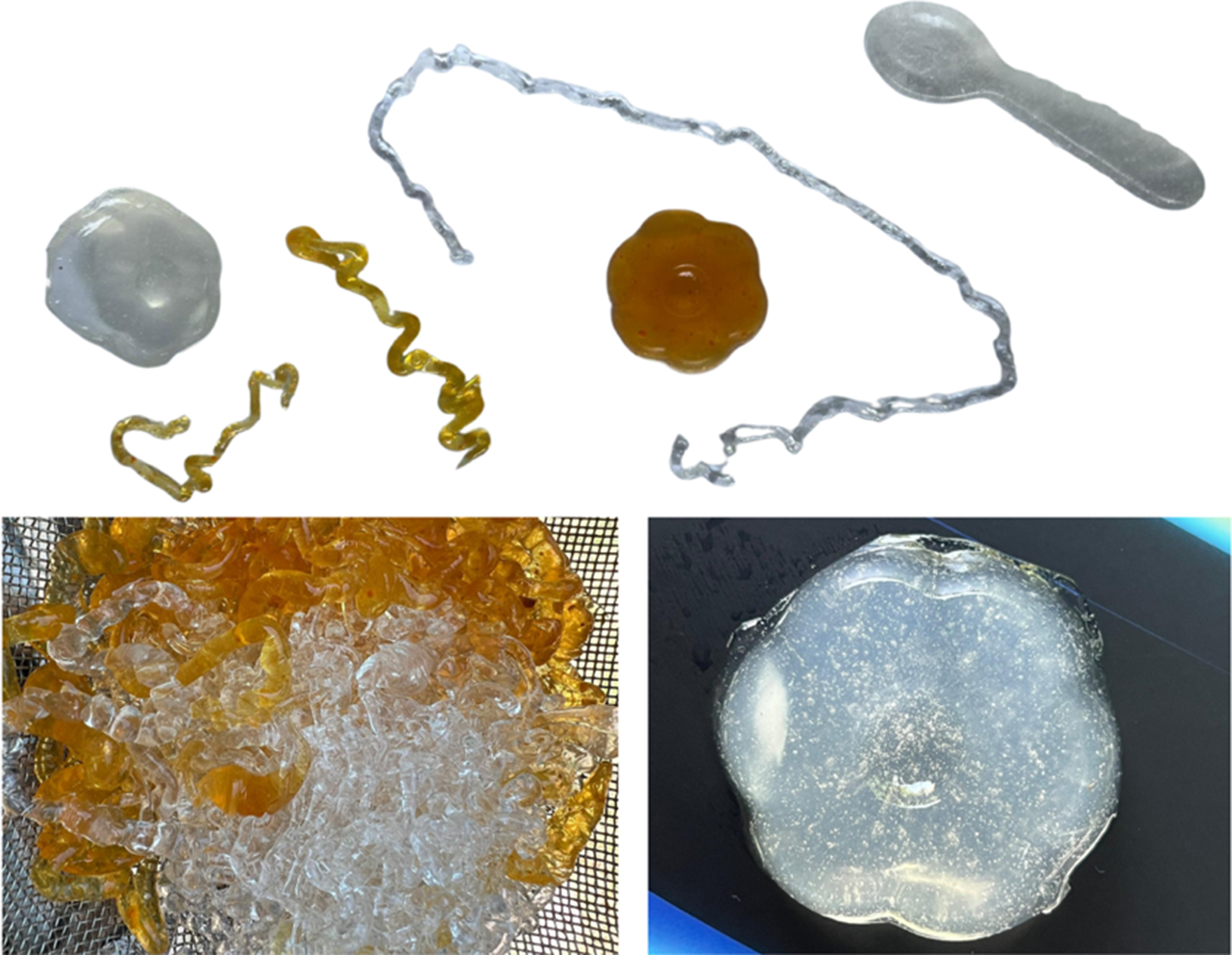
Carrageenan, a polysaccharide derived from seaweed and widely used for its gel-forming properties (Lopez Rodriguez Reference Lopez Rodriguez2023), was selected for algae-based material exploration. A formulation of 5 g/L of carrageenan was prepared and heated until fully dissolved. While still in liquid form, the mixture was poured into molds of varying size and geometry; upon cooling, the material solidified and retained the shape of the container (Figure 5). Variations in mold geometry produced differences in thickness distribution and edge definition. Additional shaping experiments involved extruding the heated mixture directly into ice water, producing filament-like strands that demonstrated the material’s capacity for form variation without the use of rigid molds. Natural colorants, including turmeric, were used to test color variations.
Algae material samples.
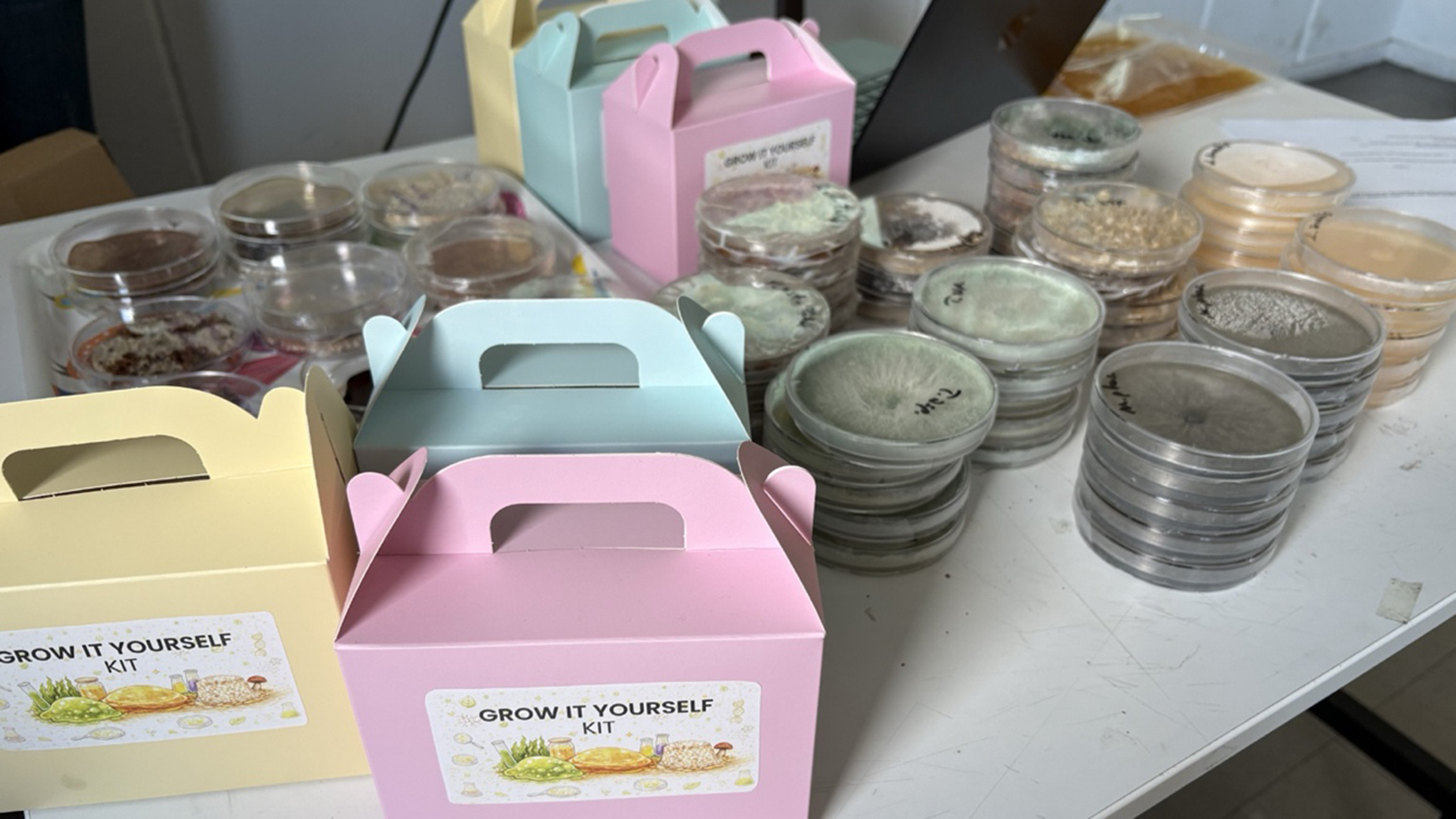
The GIY kit was structured around three organism-related material categories: algae-derived carrageenan, kombucha-derived bacterial cellulose and fungi-based mycelium materials, which were selected to create experiential variation within a single kit while remaining feasible to prepare outside of a laboratory setting. Each kit contained a small portion of carrageenan powder for algae-based material shaping, a small jar of kombucha SCOBY (symbiotic culture of bacteria and yeast) for BC cultivation, a small jar containing a pre-inoculated oyster mushroom strain grown on corn substrate and a selection of microscopic fungal specimens for observation of growth variation.
Grow it yourself kit and tinkering workshop
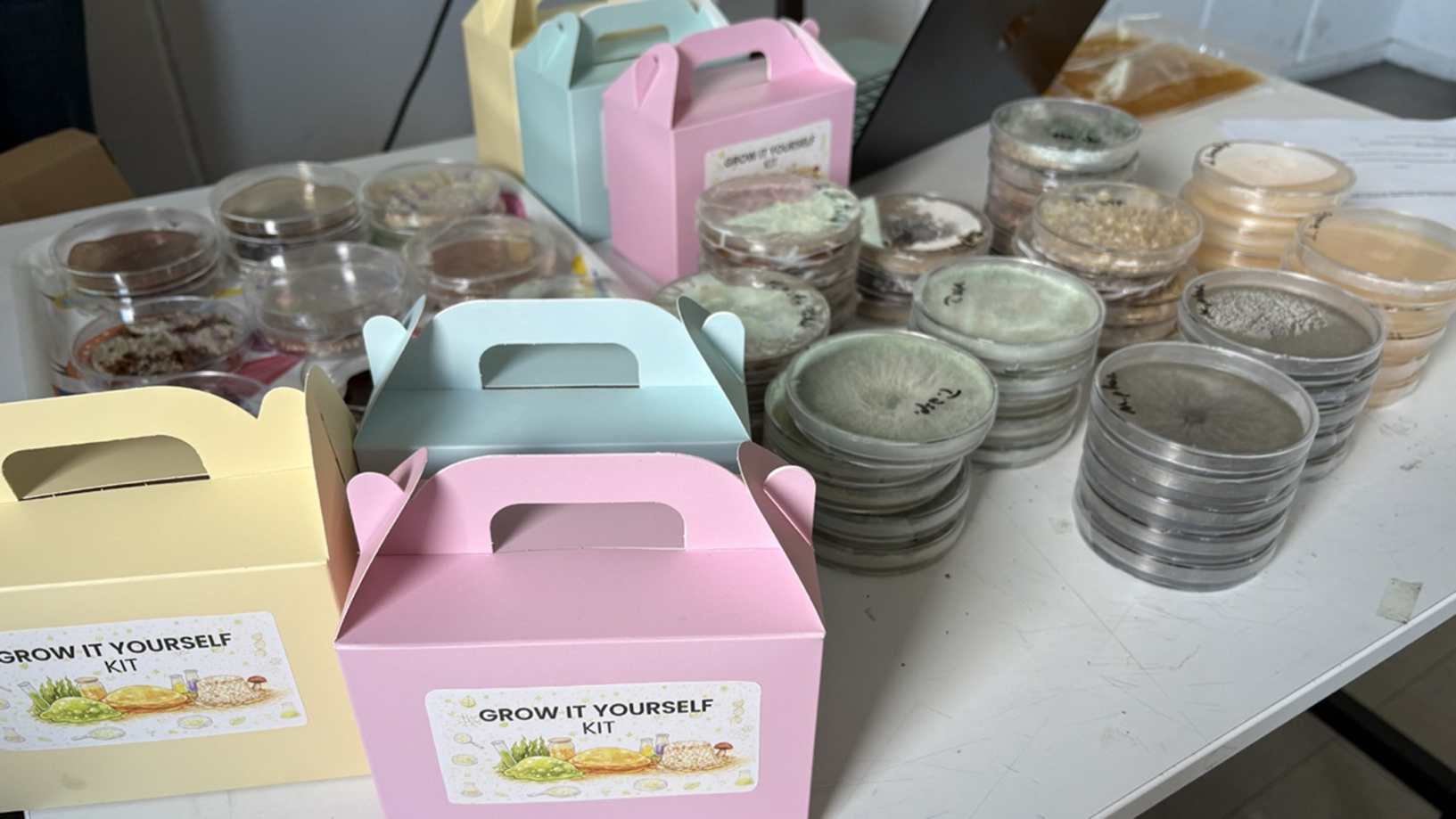
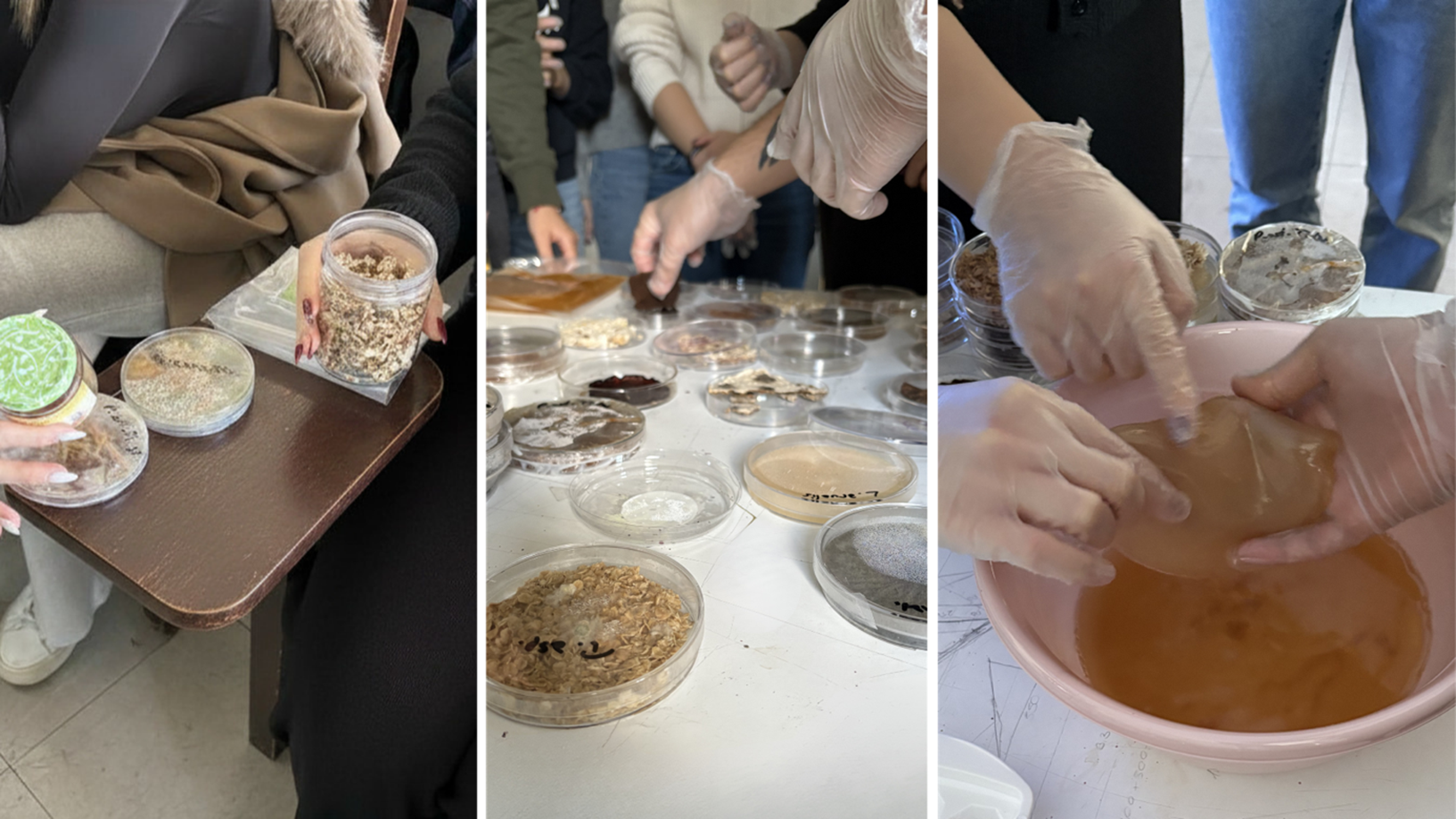
The GIY kits developed through the iterative tinkering process are shown in Figure 6. Each kit was prepared to enable hands-on engagement with all three material categories within a single workshop session. 18 senior industrial design students attended the workshop (pre-workshop survey N = 18; post-workshop survey N = 17) and participated in hands-on tinkering. Of the 17 post-survey respondents, 14 directly handled algae, 11 handled BC and 10 handled mycelium; two participants indicated they observed but did not directly engage with the materials (Figure 7).
Grow It Yourself Kits.
Students working with materials.
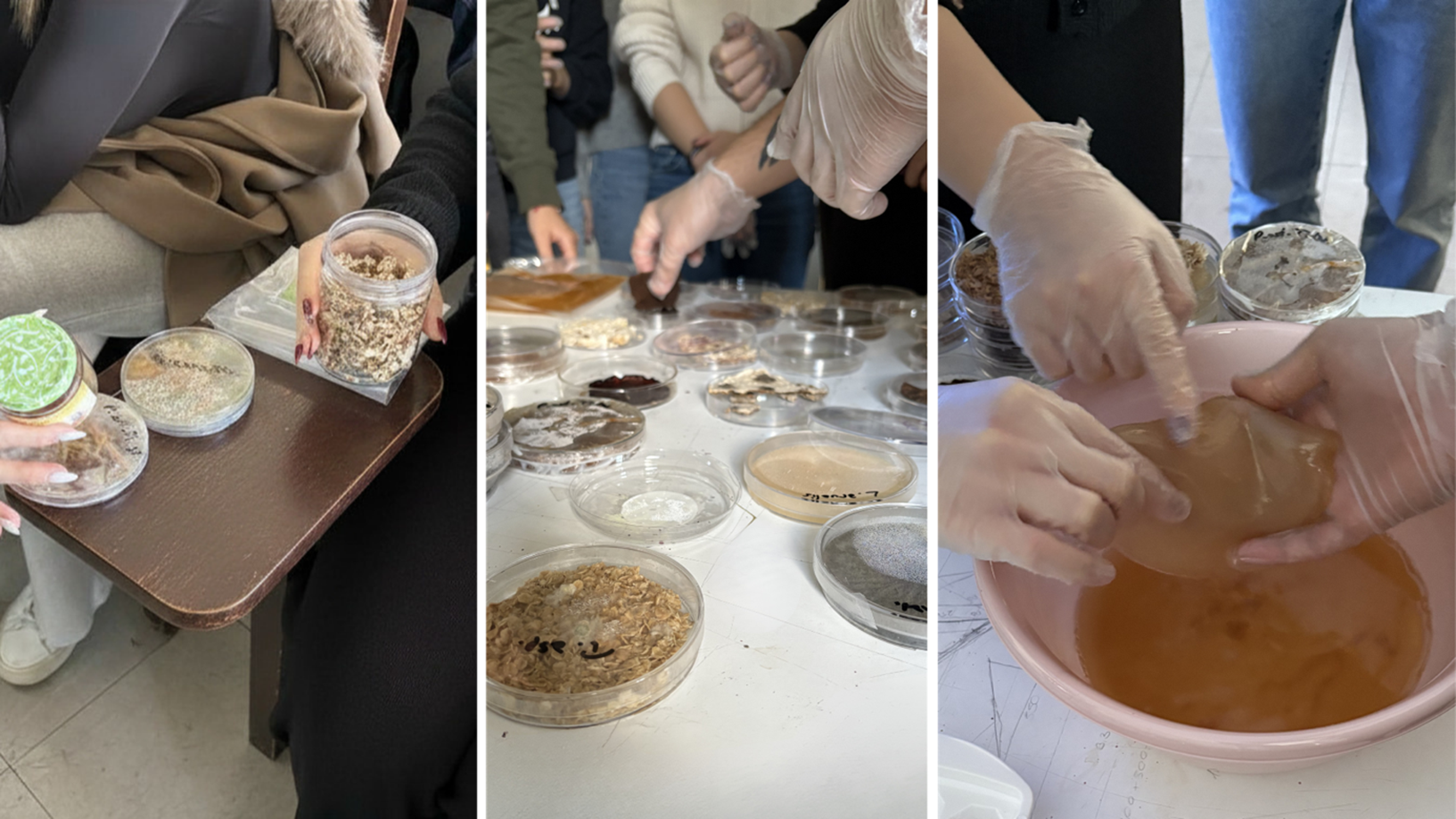
During the workshop students played with the BC, pulling it to break and feeling the texture making them comment about its strength. Most of the students prefer to use gloves while interacting with it, showing discomfort about its texture and the smell.
Pre-workshop surveys revealed that 15 of 18 participants were encountering biofabricated materials for the first time; two had engaged briefly through a class or personal experiment and one had attended a dedicated course or workshop. Prior material familiarity was low overall, with self-rated familiarity scores (1–5) averaging 1.72. Regarding kit experience, eight participants had no prior experience with any GIY or DIY kit, while the remaining ten had worked with plant-growing kits (N = 6), craft kits such as ceramics and soap (N = 7), food fermentation kits (N = 3), educational or science kits (N = 3), or material experimentation kits (N = 2). Notably, five participants reported having had hands-on experience with algae-based materials in some form before, two had with BC and three had worked with mycelium.
The most commonly stated expectations for the session were “hands-on material experimentation” and “learning about biofabricated materials” (each cited by 13 of 18 participants), followed by “exploring sustainability-related materials” (N = 9), “creative exploration without a defined outcome” (n = 6) and “gaining technical knowledge” (n = 4).
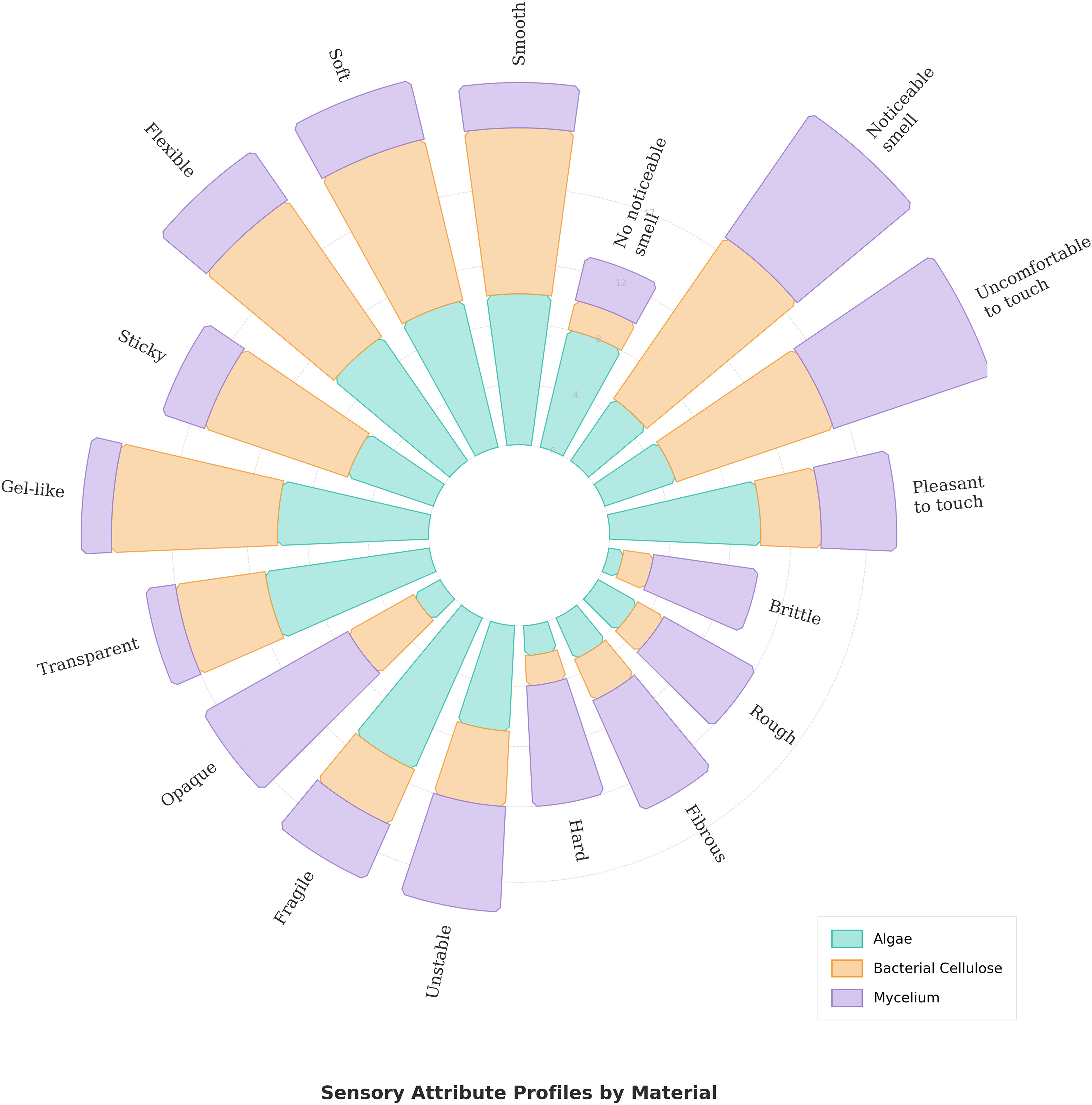
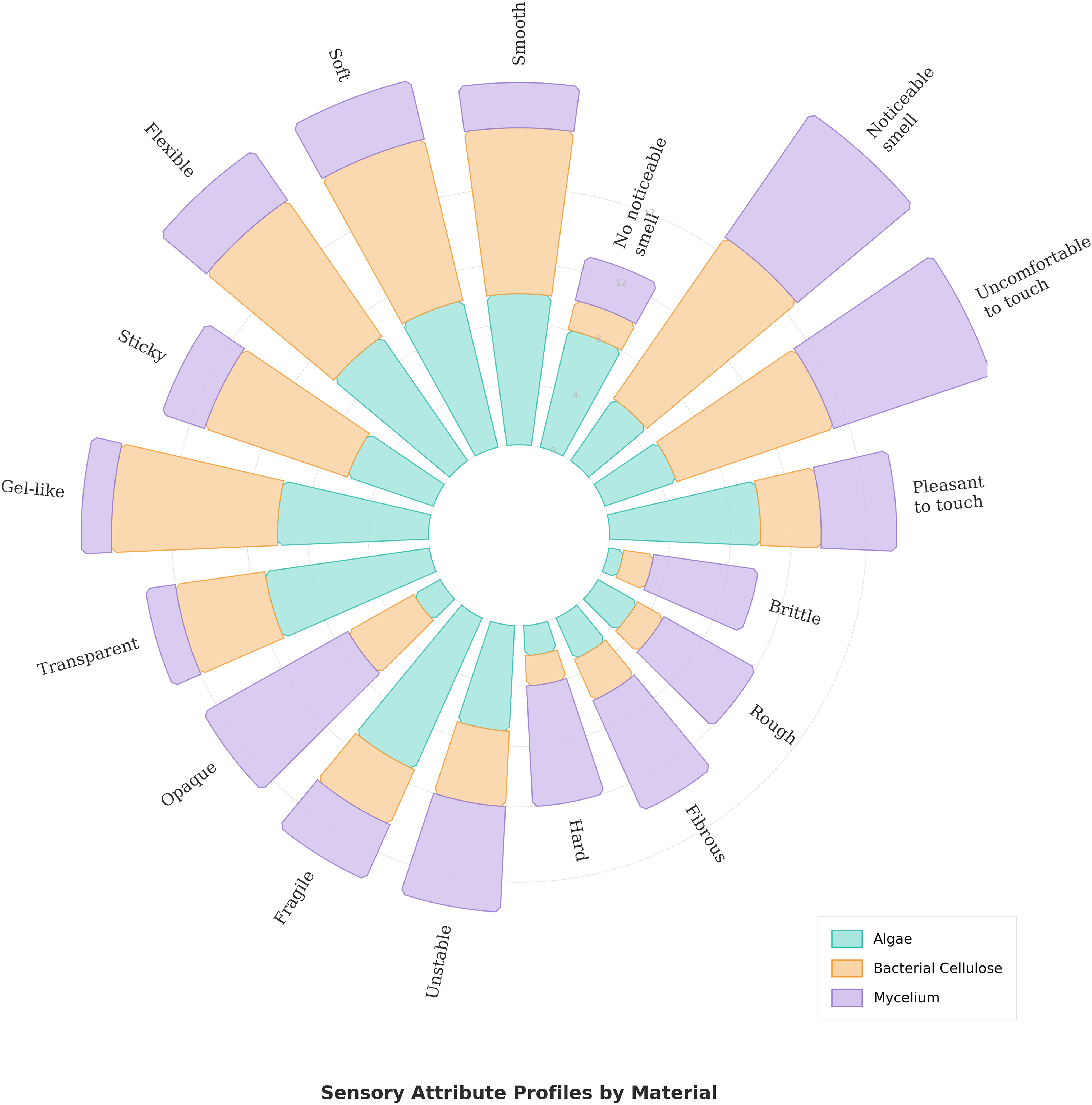
Analysis of post-workshop survey responses, combining structured attribute ratings with qualitative open-ended reflections, revealed distinct sensory profiles across the materials in the GIY kit (Figure 8). Across the post-workshop responses, tactile and sensory descriptors were frequently used to characterize the materials. Algae-derived carrageenan was the most positively received material across all sensory dimensions. The most frequently attributed descriptors were “fragile” and “transparent”, followed by “smooth,” “flexible,” “gel-like,” and “pleasant to touch”. “No noticeable smell” was also noted for algae, the only material for which odor absence was a widely reported positive quality. Qualitative comments reflected this positive tone: one participant described algae as feeling “like a transparent membrane,” another noted it “was way easier to work with than I imagined,” and a third likened it to “slinky” material reminiscent of fish skin and nature. Several were struck by its plastic-like optical qualities, with one participant observing that “plastic-like materials can also be produced in different ways.” BC from kombucha presented the most complex perceptual profile. It was overwhelmingly associated with “noticeable smell”, “uncomfortable to touch” and “smooth,” “soft,” and “flexible”. Qualitative descriptions were as following: one participant described the BC as “like chicken breast skin,” another said it felt “slimy and disgusting,” and a third noted it “reminded me of touching a human.” Surprisingly, a handful of participants reported BC as “pleasant to touch” and one remarked that “kombucha was really hard to break”, an unexpected structural quality also stated by another, who described it as “nearly unbreakable with brute force.” Mycelium-based fungal material was marked above all by its visual and sensory characteristics. It was most frequently described as “organic-looking”, “opaque”, “uncomfortable to touch” and “noticeable smell”. Structural terms such as “hard”, “fibrous”, “rough”, “brittle” and “unstable” further characterize it as a dry, crumbling, organically textured material. Yet some participants reacted positively, describing mycelium as “pleasant to touch,” and one evoked a naturalistic metaphor, noting that “the green fungi looked a bit like moss and wood.”
Tactile and Sensory Qualities by Material.
Smell emerged as the dominant challenge across all three organisms. Among the 14 participants who described a specific challenge in open-ended responses, the majority cited smell or a combination of smell and texture. Representative responses included “survive the smell,” “tolerate the smell,” and “the smell and overcoming the textures.” A smaller number cited visual aversion (“the way they look and the feeling of not wanting to touch it”) or conceptual unfamiliarity (“getting to know them and seeing how they react to different organic materials”).
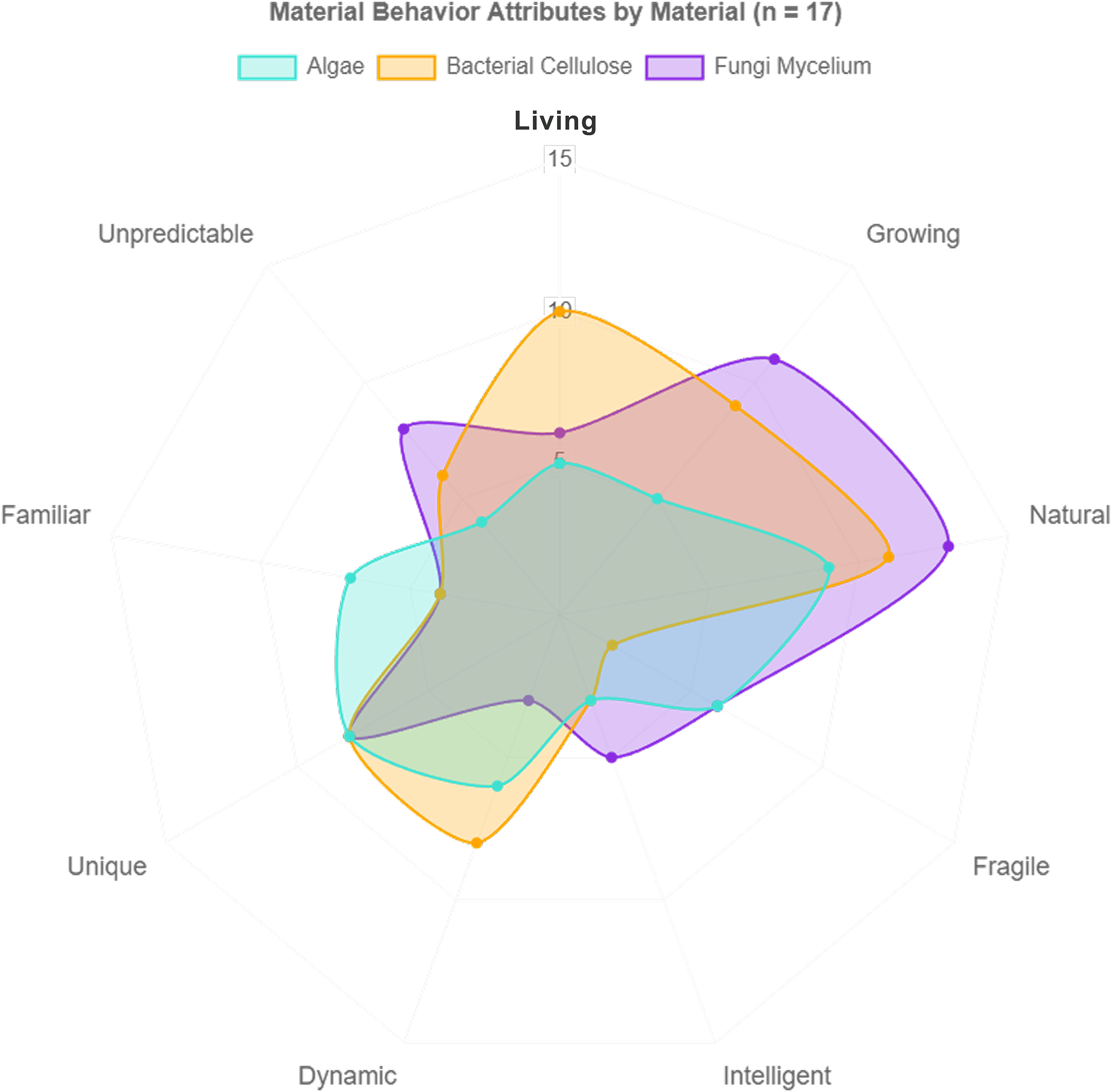
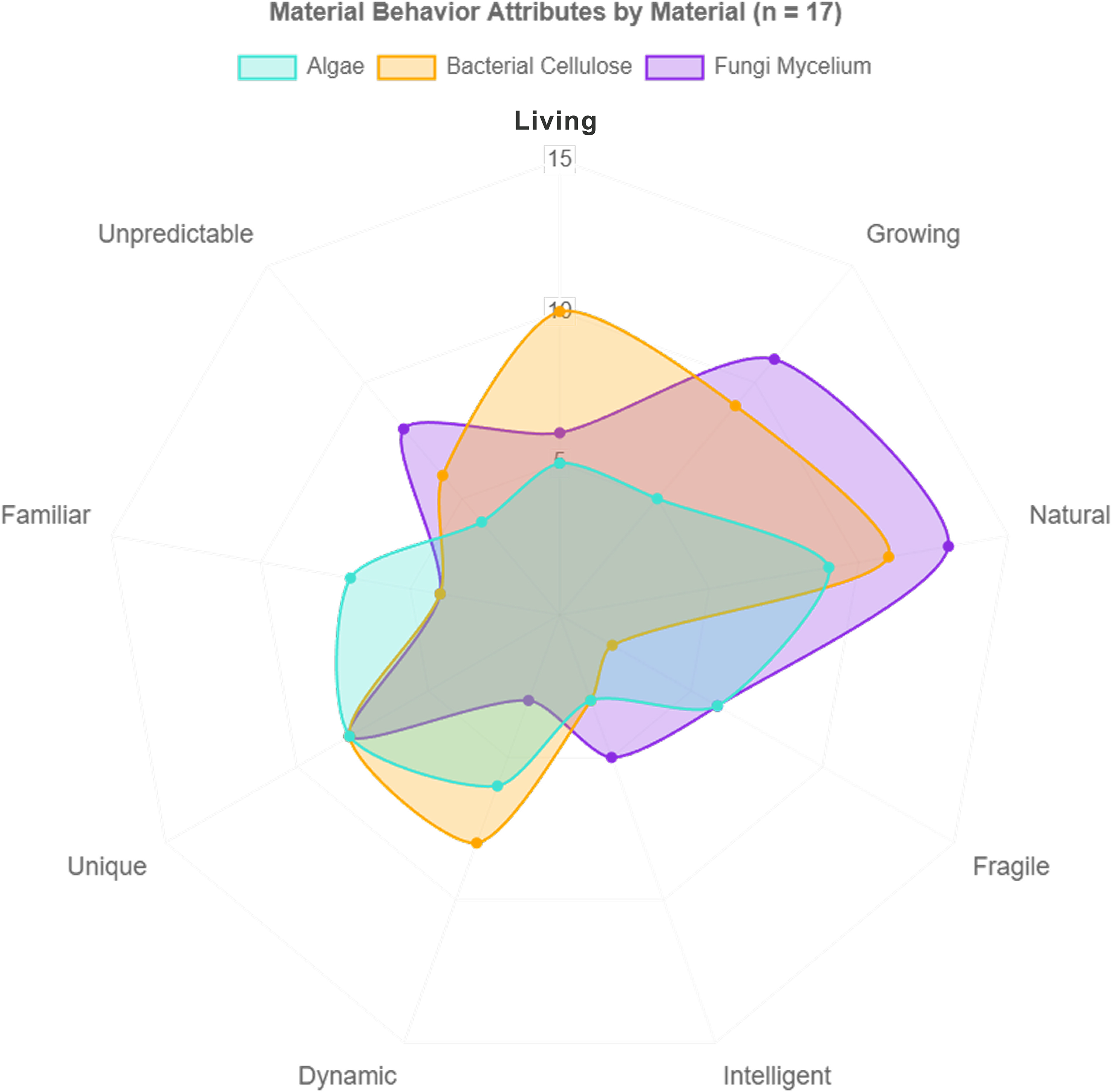
Participants’ attributions of material behavior revealed a consistent set of meaning-related categories shown in Figure 9. Across all three organisms, “natural” was the most frequently selected behavioral descriptor, “Growing” ranked second for both fungi and BC and fifth for algae. The attribution of “unique” was strong across all three. “Unpredictable” was particularly prominent for fungi and BC, whereas algae were more frequently described as ‘predictable’ and ‘familiar,’ receiving the highest familiarity rating among the three materials. “Living” was most prominently attributed to BC while “intelligent” was most frequently assigned to fungi. Qualitative reflections supported these attributions: one participant noted that working with the organisms “felt like touching nature.” Post-workshop reflection questions asking participants about values communicable through biofabricated materials yielded a strikingly homogeneous response. “Sustainability” was selected by 16 of 17 respondents, the nearly universal value across all biomaterials and engagement styles. “Experimentation” was cited by 15 of 17, making it the second most prevalent value.
Material Behavior Attributes by Material.
Post-workshop design concepts showed how participants referred to material qualities when developing design rationales. Participants’ self-rated scores for the extent to which materials influenced their thinking about form, function, or use (1–5 scale) averaged 3.06. The majority of scores fell at 3 or above (11 of 17), with five participants rating the influence at 4 or 5. Aesthetic pleasantness was rated at a mean of 2.65, suggesting a moderate overall aesthetic response that varied considerably between materials.
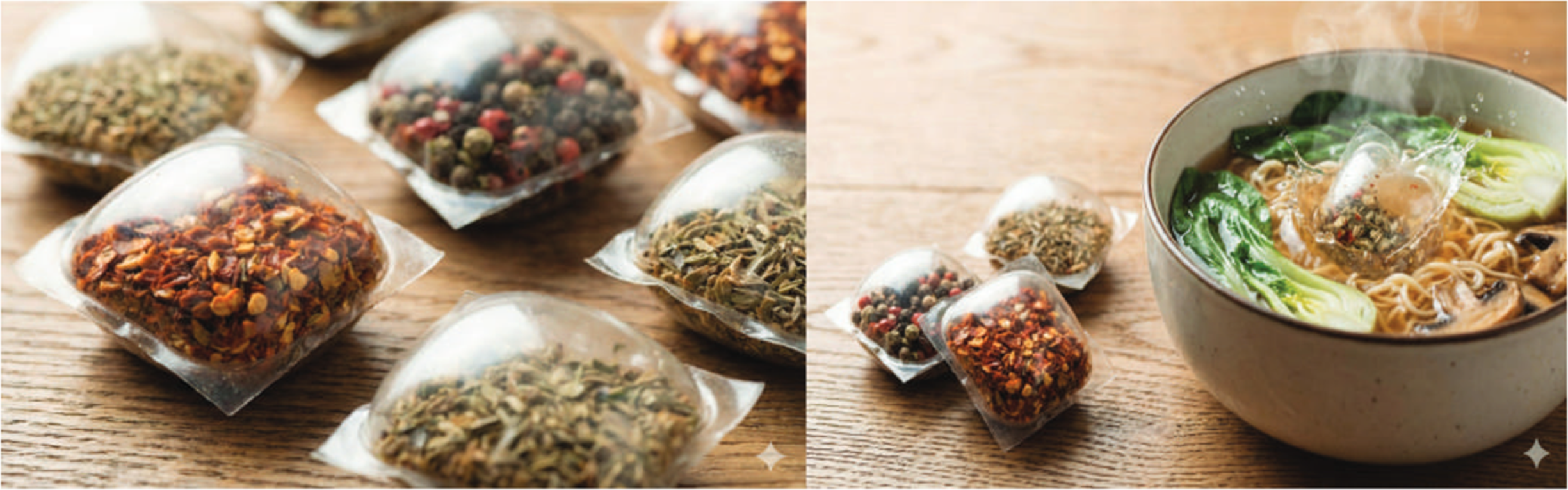
13 of 17 participants submitted a design concept. Algae was featured in ideas such as dissolvable food packaging (“food packaging can be made with algae instead of using plastic wraps”), a children’s motor development play kit leveraging algae’s pliable, gel-like properties, a food dressing application exploring its edible potential and translucent lighting, interior space dividers for parks or homes exploiting its optical clarity. Notably, two-thirds of the concepts involving algae-based materials specifically emphasized translucency as a defining material quality. The Dissolvable Spice Pods concept (Figure 10) reimagined single-use plastic/paper food packaging with a sealed seasoning pod made entirely from edible algae bioplastic; the participant’s material reflection noted: “I chose algae because of its solubility and food-safe properties. Instead of designing a package that needs to be torn and thrown away, the material’s properties allowed me to design a package that becomes part of the meal itself.” Another participant proposed translucent interior space dividers benefiting from algae’s translucency, reasoning as follows “because algae is translucent, I think you can convey the emotion and feeling you want to give to users very well by using algae panels.”
Student design concept Dissolvable Spice Pods.

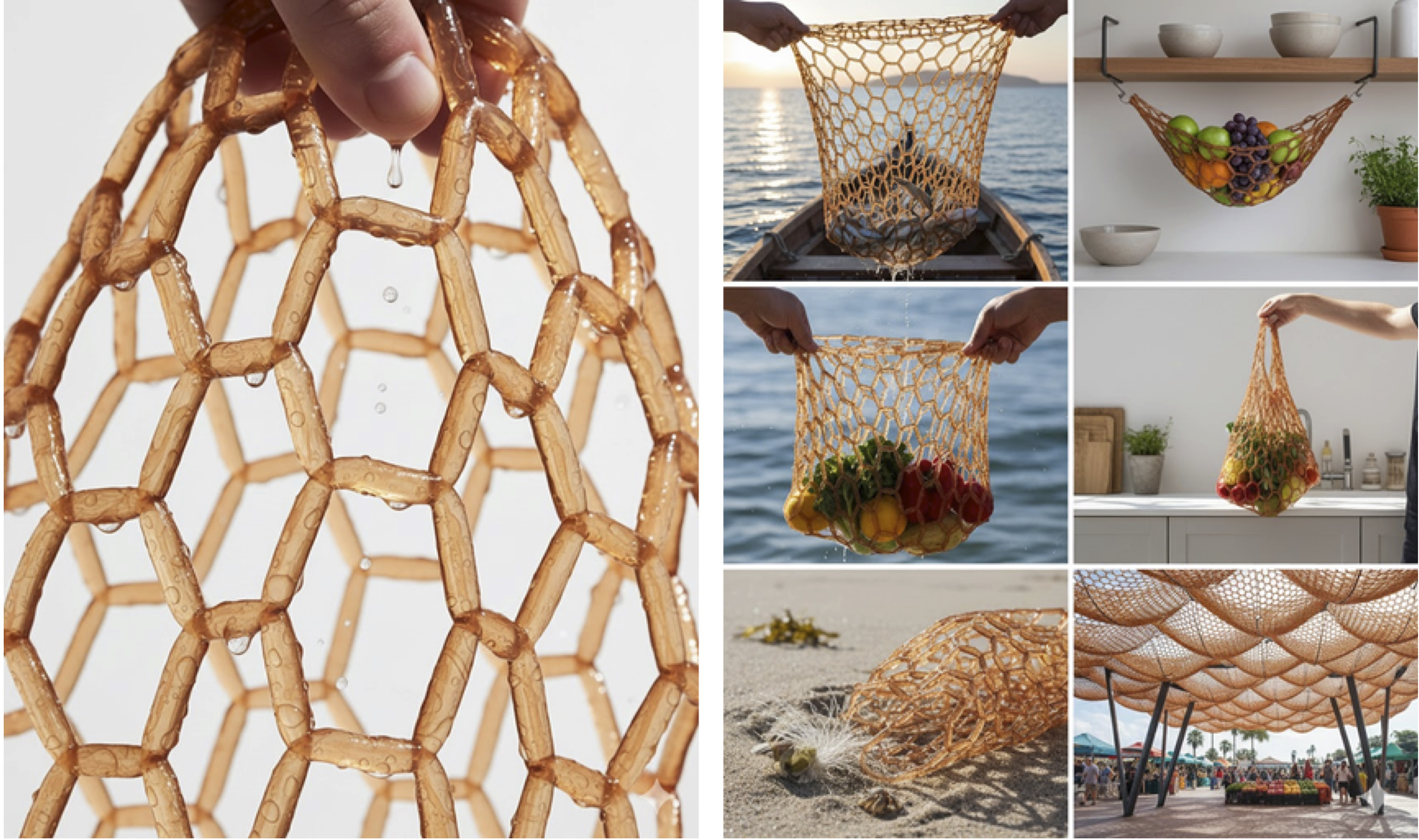
Although BC was often described unfavorably in sensory terms, several BC-related submissions engaged closely with specific material qualities such as tensile strength, translucency, skin-like texture and temporal transformation. One participant developed BioNet (Figure 11), a hybrid concept combining BC due to its tensile strength with algae due to its cleaner look: “I chose to combine it with algae because algae samples felt cleaner, lacked the strong odor of kombucha, and were much faster to produce. I decided to use this hybrid approach to merge the strength of one material with the cleanliness and speed of the other to solve a real-world environmental problem.” Two concept submissions treated BC at a more aesthetic and conceptual level. The Veil concept positioned BC as a “living membrane” to be suspended in space, exploiting its translucency, skin-like surface and sensitivity to light rather than any functional application saying: “the material’s organic irregularities added depth without disrupting the overall purity of the concept” and that “replacing it with an artificial material would compromise the softness, depth, and aesthetic authenticity of the design.” The Growth Table concept proposed BC as a living tabletop surface that “grows, dries, and transforms over time,” treating thickness variations and imperfections from the growth process not as defects but as “evidence of growth and interaction” and framing maintenance as part of ownership, engaging with the livingness of the material as a design value.
Student design concept BioNet.

Concepts generated with mycelium were fewer and the material properties that inform the concepts were due to it being hard, fibrous, brittle and organic-looking. One participant proposed temporary biodegradable acoustic sound panels for concert and event venues (The Node, Figure 12), directly motivated by mycelium’s sound-absorbing property: “the aim is to produce temporary stands or use them as sound panels in concert or event venues. The material traps sound, naturally preventing sound propagation in open spaces. This reduces the amount of plastic waste generated after use in such events and creates biodegradable organic waste.”
Student design concept The Node.

Kit accessibility scores averaged 3.88 out of 5, indicating that participants generally found the GIY kit accessible as a design exploration tool. In terms of perceived kit structure, 9 of 17 respondents characterized the kit as one that “encouraged open-ended experimentation,” 5 described it as offering a “balance of guidance and freedom,” and 3 found it “mostly prescriptive or step-based.” When asked what would need to change to better support design exploration, participants most frequently requested printed instructions, illustrated guides, or step-by-step booklets to enable independent replication at home. Representative suggestions included “a small booklet with images describing the process,” “a trial booklet so users could replicate experiments outside the workshop setting,” and “an information card with images describing the products and their processes.” One noted the need for physical forming aids such as flexible molds or frame structures.
The likelihood of experimenting with biofabricated materials in future design projects averaged 2.71 out of 5. One participant rated re-engagement at 5 while describing the workshop as “an engaging event because it was a topic that sparked curiosity.” Another, despite noting that the smell was challenging, reflected that “I will try to do more experiments in the future” and that she had previously assumed a laboratory was necessary for such experiments. A third stated they were “now more curious about creating different materials and thinking about sustainability more.” Conversely, some participants who struggled with all three materials rated future likelihood at 1 or 2, with one stating, “I don’t think these materials are going to be used to make any object or product,” although product examples were shown during the workshop lecture and throughout the course.
Discussion
This study reveals interconnected patterns that extend existing knowledge on material experience, biomaterial perception and biodesign education, particularly concerning material familiarity, sensory discomfort and the mediating role of GIY kits in experiential material exploration. The first pattern concerns the relationship between material familiarity and the depth of design engagement. Algae-derived carrageenan was the most positively received material and generated the highest number of design concepts; however, several of these concepts engaged primarily with surface qualities (translucency, flexibility and plastic-like appearance) rather than with the material’s biological origin or behavior. Participants who likened carrageenan to plastic were assimilating an unfamiliar material into a known category rather than developing a genuinely new material understanding. This tendency aligns with previous studies suggesting that users often interpret unfamiliar materials through sensorial and associative comparisons with known materials. Bahrudin et al. (Reference Bahrudin, Kian, Zakariya, Daud and Dong-Myung2025) argue that first encounters with biomaterials are frequently shaped by familiar visual and tactile references, as participants attempt to position unfamiliar materials within existing material categories.
Similarly, Wilkes et al. (Reference Wilkes, Wongsriruksa, Howes, Gamester, Witchel, Conreen and Miodownik2016) highlight that prior knowledge and material preconceptions strongly influence how people perceive and evaluate novel materials, sometimes overriding direct sensory engagement. In this study, carrageenan’s translucency and softness appeared to activate familiar associations with plastic materials, making the material easier to approach and imagine within existing product contexts. However, this familiarity may also have constrained deeper engagement with the material’s origin, temporality, or ecological implications. This suggests that familiarity can function simultaneously as an entry point for engagement and as a perceptual shortcut that limits the emergence of alternative material imaginaries. This finding partly differs from Sayuti et al. (Reference Sayuti, Sommer and Ahmed-Kristensen2022), who reported algae as generally unfamiliar and negatively perceived in terms of desirability and aesthetic pleasantness. This contrast may be explained by differences in categorization and material presentation. They classified algae under “real natural element: microorganism,” together with fungi and beneficial bacteria and assessed perceptions through visual survey stimuli without direct material exposure. In the present study, however, algae, fungi and bacteria were presented as distinct material sources and algae was encountered in the form of processed algae-derived carrageenan rather than as a living microorganism. As a result, participants may not have perceived it primarily through a microorganism-related frame. Instead, carrageenan’s translucency, stability, odor absence and plastic-like tactility may have foregrounded its material qualities, reducing possible prejudice linked to biological unfamiliarity and supporting a more favorable evaluation. This also suggests that participants’ perceptions of the three biomaterials derived from algae, bacteria and fungi were shaped not only by their biological source, but also by the degree and form in which livingness is experienced. Based on Karana et al.’s (Reference Karana, Barati and Giaccardi2020) definition of livingness, living materials are characterized by behaviors such as growth, responsiveness, adaptation, change and care-related interactions. In this study, BC and mycelium materials were more strongly associated with “growing,” “living,” and “unpredictable,” suggesting that participants perceptions are affected from the livingness and biological activity. These attributes may have supported perceptions of naturalness and uniqueness. At the same time, it may also have intensified affective barriers such as disgust, hesitation, or sensory discomfort, particularly when livingness was expressed through odor, texture, unpredictability, or associations with microbial growth. This was visible in qualitative reflections, where smell emerged as the dominant challenge across all three organisms. Algae-derived carrageenan, however, was perceived as more predictable and familiar, suggesting that its processed form made the it seems similar to familiar materials from everyday life.
BC presented the most complex perceptual profile among the three materials. Although most participants described it as uncomfortable to touch and strongly odorous, it also prompted curiosity and relational attributions. This suggests that BC provoked a more active engagement between the participant and the material that were specific to the material’s behaviors. Similarly, mycelium’s biological strangeness, its smell, texture and organic appearance, appeared to prompt participants to think beyond surface aesthetics and engage with the material’s structural and functional behaviors, producing concepts grounded in its acoustic, biodegradable and spatial properties. This pattern points to an interesting dynamic: sensory discomfort did not prevent meaningful design engagement, and in some cases appeared to deepen it. Participants who engaged with BC or mycelium often produced concepts more closely aligned with the materials’ characteristics despite describing their sensory attributes as uncomfortable. In the Veil concept, BC was positioned as a living membrane whose skin-like surface and translucency became central to the design’s atmospheric and sensory qualities. In the Growth Table concept, another participant engaged directly with BC’s temporality: the tabletop was conceived as a surface that grows, dries and transforms over time, with thickness variations and imperfections framed as evidence of interaction and growth. Maintenance was positioned as part of ownership, suggesting that the object is not complete at the point of production but develops through an ongoing relationship with the user. On the contrary, discomfort appeared to redirect attention from surface-level aesthetic appreciation toward material behavior, transformation and meaning. This is consistent with Karana et al.’s (Reference Karana, Blauwhoff, Hultink and Camere2018) observation that designing with growing materials requires openness to the unexpected and unplanned influences of biological processes. It also supports Parisi et al.’s (Reference Parisi, Rognoli and Sonneveld2017) framing of material tinkering as an experiential learning process in which unexpected material behaviors generate knowledge that cannot be acquired through passive observation alone. For biodesign and design education fields, this suggests that materials which provoke discomfort, uncertainty, or hesitation may still be pedagogically valuable, as they can encourage students to articulate more nuanced relationships between material qualities, design possibilities and user experience.
As Karana et al. (Reference Karana, Barati and Rognoli2015) argue, novel materials present a challenge for designers because their experiential and functional characteristics are often not yet fully understood through existing applications. There is also a risk that the novelty of a material may lead designers to assume that transforming it into any product is inherently valuable, without sufficiently investigating how it will be experienced, received, or situated in relation to people and society. In the present study, the GIY kit functioned as a structured environment for experiential exploration, allowing participants to engage directly with unfamiliar biomaterials through hands-on tinkering, sensory reflection and concept development. Rather than positioning biomaterials as inherently valuable because of their biological origin or novelty, the workshop revealed a more complex set of responses involving attraction, discomfort, curiosity, hesitation and uncertainty.
In addition to the workshop activities, informal conversations during the break provided further insight into how the topic is approached. Several participants approached the researcher to discuss their own material experiments and ongoing practices. Among them were design students who were working with coffee-ground-based materials and an architect who had previously experimented with mycelium in spatial applications. Some students also brought their peers during the break to show them the materials and share their impressions, showing that interest in biofabricated materials extends to a broader curiosity.
The near-universal selection of “sustainability” as a communicable value suggests that participants strongly associated biomaterials with environmental responsibility, independently of whether they found them sensorially pleasant. However, this association did not directly determine material acceptance or design potential. As Bahrudin et al. (Reference Bahrudin, Kian, Zakariya, Daud and Dong-Myung2025) argue, the sustainability narrative or “biography” of biomaterials can attract users, yet evaluations remain strongly shaped by visual and tactile qualities, perceived naturalness, quality, and functionality. Similarly, in this study, participants recognized sustainability as a shared value across the materials while responding very differently to their smell, tactility, stability, and usability. While circular design frameworks highlight safe and circular material choices as important drivers of innovation and contributors to the circular economy (EMF 2016), these findings suggest that the design potential of novel biomaterials may also be influenced by their sensory and emotional reception. This points to the need to consider material acceptance alongside circularity and technical performance, particularly through the experiential qualities that shape how users perceive and engage with emerging materials.
GIY kits are positioned in this study as tools that support designers’ active engagement with material experience. Through the kit, materials were not selected only as passive inputs for design, but were encountered as elements that could inform concept development through their behaviors, affordances, and sensory qualities. In the development of the kit, material tinkering and the Material Driven Design method were used to translate experiential qualities into a structured educational format. As Rognoli et al. (Reference Rognoli, Bianchini, Maffei and Karana2015) suggest, experiential experiments with materials require methodological support so that they do not remain unarticulated or disconnected from design reasoning. In this study, students were asked to describe sensory impressions, reflect on behavioral attributions, and translate these insights into design concepts. In this sense, the workshop followed the logic of Material Driven Design, where experiential characterization and concept development are treated as connected stages rather than separate activities.
This framing also shaped the way the fungal components of the kit were developed. Rather than presenting fungi through a single material format, the kit included different levels of engagement to make visible both its material-making potential and its biological diversity. The oyster mushroom sample was included to demonstrate how a living organism can act as a binder creating composite materials that can be shaped and dried to create artifacts. The microscopic fungal specimens in petri dishes included to show the variety of colors, textures, and growth patterns that fungi can produce, and to allow students to observe fungi as living organisms that continue to change over time. Since these specimens required sterilization, inoculation, and controlled growth conditions, they were not positioned as fully user-grown kit components, but rather as reference materials. Previously grown and dried samples also supported this comparison by showing that fungal materials are not limited to one appearance or texture. Therefore, the kit should be understood as a hybrid educational kit that combines hands-on GIY experimentation with laboratory-mediated material samples. This hybrid structure expanded the range of experiential comparison available to students, while also limiting the claim that all components could be independently cultivated outside laboratory conditions.
The findings also suggest directions for improving the kit. Participants’ requests for printed instructions, illustrated guides, and material information cards indicate that the kit could better support independent exploration if it combined open-ended experimentation with clearer material knowledge resources. Adding information about each material’s properties, behaviors, growth processes, limitations, and design precedents could help participants make more informed connections between material experience and design decisions. In this way, future versions of the GIY kit could function not only as a tinkering tool but also as a material knowledge resource that supports experiential, reflective and sustainability-oriented design learning.
Conclusion
This study explored GIY biomaterial kits as mediating tools for material experience in design education, contributing to three intersecting themes: the experiential characterization of organism-derived materials through sensory, behavioral and meaning-related qualities; the role of material familiarity, discomfort and perceived livingness in shaping design engagement; and the pedagogical potential of structured exploration with biomaterials. Through iterative material tinkering, a GIY kit development and a structured workshop with senior design students, the research demonstrated that hands-on engagement with biomaterials produces distinct and contrasting experiential profiles. These contrasts constitute the core experiential and pedagogical value of the kit. By bringing together materials with fundamentally different sensory, temporal and relational properties within a single toolkit, GIY kits can function as structured yet open-ended tools for comparative material exploration, supporting sensory engagement, meaning attribution and design ideation simultaneously.
The GIY kit developed in this study aims to serve three functions. First, an accessibility tool enabling hands-on engagement with biomaterials with reduced dependence on dedicated infrastructure, lowering the threshold for biodesign exploration in educational settings. Second, it functioned as an experiential mediator, bringing materials into direct contact with designers’ sensory and meaning-making processes, encouraging participants to articulate sensory impressions, emotional responses and material associations that informed design ideation. Third, it functioned as a comparative material environment: by bringing together three organism-derived materials with fundamentally different sensory, temporal and relational properties within a single GIY kit, it created a space for differentiated material encounters that no single material could offer alone.
The study has several limitations due to being a single session workshop, which meant participants engaged with materials as finished or partially developed samples rather than as organisms in active formation. Additionally, the participant group was drawn from a single course mostly at a single institution and their strong orientation toward sustainability may have predisposed them toward a more open engagement with biomaterials despite sensory discomfort.
Future studies could extend this work by adopting a longitudinal research design, allowing participants to cultivate materials over several weeks before the workshop encounter to observe how engagement with full growth cycles shapes material perception and design thinking, or alternative material selection strategies can be explored to examine how different kit configurations can create diverse comparative discussions. Studies involving designer groups with varying levels of experience and disciplinary backgrounds could further examine how prior material knowledge influences biomaterial engagement. More broadly, the GIY kit format points toward a mode of material practice that aligns with distributed production and DIY culture, one in which designers, users and bio-makers grow, shape, and iterate with locally sourced biomaterials.
Data availability statement
The authors confirm that the data supporting the findings of this study are available within its supplementary materials.
Acknowledgements
The authors deeply appreciate the constructive and insightful feedback provided by the anonymous reviewers, which considerably helped in improving the manuscript.
Author contributions
Conceptualization: C.K, E.K. Methodology: C.K, E.K. Data curation: C.K. Data visualization: C.K. Writing original draft: C.K. All authors approved the final submitted draft.
Financial support
This research received no specific grant from any funding agency, commercial or not-for-profit sectors.
Competing interests
None.
Ethical standards
The research meets all ethical guidelines, including adherence to the legal requirements of the study country.
Appendix A
Exploring Biofabricated Materials and Grow-It-Yourself Kits – Pre Workshop Survey
*Indicates required question
-
1. Email*
-
2. Name – Surname*
-
3. Before this workshop, had you ever worked with biofabricated or living materials? Check all that apply.
-
• No, this was my first experience
-
• Yes, briefly (e.g. a short experiment, class demo, or personal trial)
-
• Yes, through a course or workshop
-
-
4. Which of the following materials had you encountered before today? Check all that apply.
-
• Algae-based materials (e.g. bioplastics, gels)
-
• Bacterial cellulose/kombucha SCOBY
-
• Mycelium/fungal materials
-
• Other bio-based or living materials
-
• None of the above
-
• Other:
-
-
5. Before this workshop, had you ever used a “Grow-It-Yourself (GIY)” or DIY-style kit? Check all that apply.
-
• No, I had no prior experience with GIY or DIY kits
-
• Yes – Plant growing kits (e.g. herbs, plants, seeds)
-
• Yes – Mushroom/mycelium growing kits
-
• Yes – Food-related fermentation kits (e.g. kombucha, sourdough, kefir)
-
• Yes – Craft or making kits (e.g. ceramics, soap making, textiles)
-
• Yes – Educational or science kits
-
• Yes – Design or material experimentation kits
-
• Other:
-
-
6. How familiar did you feel with biofabricated materials before attending this workshop? Mark only one oval. (1 = Not familiar, 5 = Very familar)
-
7. Before the workshop, what kind of experience did you expect this session to provide? Check all that apply.
-
• Hands-on material experimentation
-
• Learning about biofabricated materials
-
• Exploring sustainability-related materials
-
• Developing a design concept
-
• Gaining technical knowledge
-
• Creative exploration without a defined outcome
-
• I did not have a clear expectation
-
• Other:
-
Appendix B
Exploring Biofabricated Materials and Grow-It-Yourself Kits – Post Workshop Survey
*Indicates required question
-
1. Name – Surname*
-
2. Which material(s) did you work with during the workshop? Check all that apply.
-
• Algae-based material (Carrageenan)
-
• Bacterial cellulose (Kombucha SCOBY)
-
• Mycelium/Fungal material
-
• I observed but did not directly work with the material
-
-
3. How would you describe the material you worked with? Check all that apply.
Fungi Mycelium/Bacterial Cellulose (Kombucha Scoby)/Algae
-
• Smooth
-
• Rough
-
• Soft
-
• Hard
-
• Flexible
-
• Brittle
-
• Sticky
-
• Fibrous
-
• Gel-like
-
• Transparent
-
• Opaque
-
• Organic-looking
-
• Artificial-looking
-
• Stable
-
• Unstable
-
• Responsive to touch
-
• Fragile
-
• Robust
-
• Pleasant to touch
-
• Uncomfortable to touch
-
• Noticeable smell
-
• No noticeable smell
-
-
4. Which terms best describe how the material behaved or felt to you? Check all that apply.
Fungi Mycelium/Bacterial Cellulose (Kombucha Scoby)/Algae
-
• Living
-
• Growing
-
• Dynamic
-
• Fragile
-
• Unstable
-
• Predictable
-
• Unpredictable
-
• Natural
-
• Engineered
-
• Familiar
-
• Unfamiliar
-
• Intelligent
-
• Unique
-
-
5. How “aesthetically pleasing” did you find the material in its current state? Mark only one oval. (1 = Not appealing, 5 = Very appealing)
-
6. Did the material evoke any emotions, memories, or metaphors for you? (For example: “It felt alive,” “It reminded me of skin/food/animal/nature ”)
-
7. Which values do you think this material could communicate through design? Check all that apply.
-
• Sustainability
-
• Local Production
-
• Craft/Making Culture
-
• Slowness/Time-awareness
-
• Experimentation
-
-
8. To what extent did the material influence how you thought about form, function, or use? Mark only one oval. (1 = No influence, 5 = Strong influence)
-
9. Describe a design idea or concept where this material’s properties or behaviors are central.
-
10. What was the most surprising or unexpected insight you gained while working with this material?
-
11. As a designer, how accessible did this material feel when approached through the GIY kit? (1 = Requires specialized lab conditions, 5 = Feels approachable in any setting (home/design studio)
-
12. How would you describe the structure of the GIY kit? Mark only one oval.
-
• Encouraged open-ended experimentation
-
• Balanced guidance and freedom
-
• Felt mostly prescriptive or step-based
-
-
13. What would need to change or improve for this GIY kit to better support design exploration?
-
14. How likely are you to experiment with biofabricated materials in your future design projects? Mark only one oval. (1 = Very unlikely, 5 = Very likely)
-
15. What was the most challenging part of working with the material?
-
16. Did working with biofabricated materials change the way you think about materials in design? If yes, how?
-
17. Is there anything else you would like to share about your experience, thoughts, or reflections from the workshop?
Appendix C
Design Concept Assignment template.

Appendix D
Overview of the coding process.


 Open access

