

1. Introduction
Contrary to Jakobson's (Reference Jakobson1968) assertion that there is no relation between babbling and early speech forms, longitudinal investigations of the transition from canonical babbling to speech have shown continuity between the phonetic forms in infant pre-linguistic vocalizations and the earliest speech forms (Oller et al. Reference Oller, Wieman, Doyle and Ross1976, Oller Reference Oller, Yeni-Komshian, Kavanagh and Ferguson1980, Stark Reference Stark, Yeni-Komshian, Kavanagh and Ferguson1980, Locke Reference Locke1983, Stoel-Gammon and Cooper Reference Stoel-Gammon and Cooper1984, Vihman et al. Reference Vihman, Macken, Miller and Simmons1985, Vihman et al. Reference Vihman, Ferguson and Elbert1986)Footnote 1. Babbling is considered as a crucial first step in understanding the nature of the young child's journey toward mastery of ambient language phonology. In addition, comparing canonical babbling patterns with sound patterns in contemporary languages can help in characterizing the basis of phonological patterns in languages. This comparison can potentially highlight common patterns as well as underscore the diversity of language complexity that must be mastered by infants to achieve intelligible message transmission in their ambient language.
1.1 From babbling to first words
A consistent developmental trajectory has been proposed to describe early vocalizations in young children. According to a large number of studies (e.g., Zlatin Reference Zlatin1975, Oller Reference Oller, Yeni-Komshian, Kavanagh and Ferguson1980, Stark Reference Stark, Yeni-Komshian, Kavanagh and Ferguson1980, Koopmans-van Beinum and van der Stelt Reference Koopmans-van Beinum, van der Stelt, Lindblom and Zetterström1986, Roug et al. Reference Roug, Landberg and Lundburg1989, Oller et al. Reference Oller, Eilers, Neal and Schwartz1999, Nathani and Oller Reference Nathani and Oller2001), canonical babbling appears around six to eight months of age in typically developing children. It has been defined as rhythmic alternations between consonant and vowel-like properties, giving the appearance of rhythmic speech without conveying meaning (Oller Reference Oller2000). Two types of canonical babbling have been described: reduplicated babbling, composed of repeated syllables (mamama), and variegated babbling, in which children change vowels and/or consonants in two successive syllables (papi, pada or padi). Earlier views of the period between onset of canonical babbling and first word use were of an initial stage of reduplicated babbling, followed by variegated babbling (Oller Reference Oller, Yeni-Komshian, Kavanagh and Ferguson1980, Reference Oller, Lindblom and Zetterström1986; Stark Reference Stark, Yeni-Komshian, Kavanagh and Ferguson1980; Elbers Reference Elbers1982; Roug et al. Reference Roug, Landberg and Lundburg1989). Later studies failed to replicate this tendency, instead showing concurrent use of both types with a higher frequency of reduplicated babbling at the beginning of babbling (Smith et al. Reference Smith, Brown-Sweeney and Stoel-Gammon1989; Mitchell and Kent Reference Mitchell and Kent1990; Davis and MacNeilage Reference Davis and MacNeilage1995, Reference Davis and MacNeilage2000). However, this failure to find a developmental shift from reduplicated to variegated babbling has recently been explained by a masking effect due to the asynchronous appearance of new syllable types. Lipkind et al. (Reference Lipkind, Marcus, Bemis, Sasahara, Jacoby, Takahasi, Suzuki, Feher, Ravbar, Okanoya and Tchernichovski2013) tracked the frequencies of reduplicated transitions in nine children learning American English from nine to 28 months, aligning the data in reference to the age where the speech/babbling ratio reached 50%. They did not observe any changes in the use of reduplicated syllables with age. In a second step, they calculated the same measure, this time aligning the data in reference to the time of appearance of each syllable type. They found a clear shift from high to low reduplication frequency, occurring over 20–30 weeks from time of appearance: syllables tended to be reduplicated when first acquired, before a gradual transition to variegation.
First words are typically produced around the first birthday (Fenson et al. Reference Fenson, Dale, Reznick, Thal, Bates, Hartung, Pethick and Reilly1993) and words and babble coexist for several months thereafter.
1.2 Children's preferences in babbling and first words
Strong similarities in sound and syllable types, and intrasyllabic and intersyllabic preferences in canonical babbling and first words across different language communities have been documented. These preferences have suggested a potentially universal basis for perceptually apparent speech-sound types emerging from infant production system capacities. In this article, we will consider similarities in consonants, vowels, syllable types, and intrasyllabic association.
1.2.1 Consonants in babbling and first words
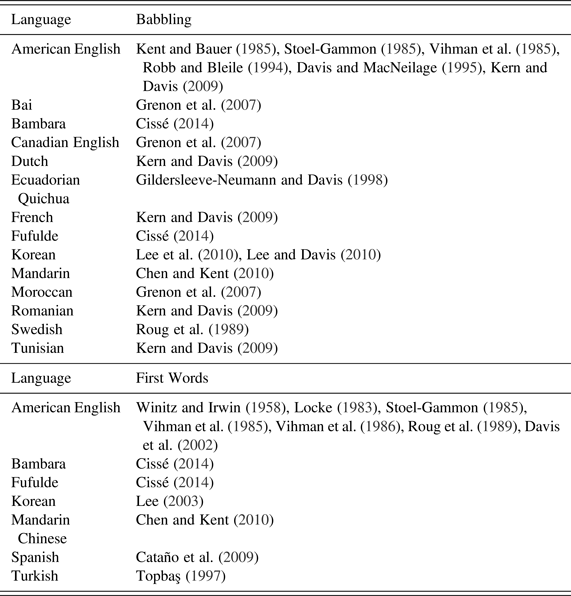
For consonants, in babbling and first words of children acquiring several different languages, oral [b, p] or nasal labial stops [m], oral [t, d] or nasal [n] coronal stops and to a lesser extent glides [w, j] (see Table 1 below) are the most preferred sounds. Based on available studies, children from different ambient language backgrounds appear to most frequently produce consonants with a complete closure in the front part of the vocal tract.
List of studies that mention the preferred consonant trend (oral/nasal–labial/coronal stops) by languages and developmental stages (babbling/first words).
These preferences are not shared by all children in their first words, as is particularly evident in children acquiring different varieties of Arabic. Rosenhouse (Reference Rosenhouse2000) observed an important use of velars, uvulars, pharyngeals and glottals in children acquiring Arabic spoken in Israel before the age of 24 months. In certain cases, the use of fricatives has been reported in children's first words: in children learning Egyptian Arabic (Omar Reference Omar1973), Jordanian Arabic (Amayreh and Dyson Reference Amayreh and Dyson2000), and Arabic spoken in Israel (Rosenhouse Reference Rosenhouse2000), as well as in children learning Mandarin Chinese (Zhu and Dodd Reference Zhu and Dodd2000). The glottal fricative [h] is often used by children in all these languages as well as in English (Ingram Reference Ingram1981, Locke Reference Locke1983, Stoel-Gammon Reference Stoel-Gammon1985, Roug et al. Reference Roug, Landberg and Lundburg1989) and Korean (Lee Reference Lee2003). Finally, children learning Mandarin Chinese (Zhu and Dodd Reference Zhu and Dodd2000, Chen and Kent Reference Chen and Kent2010) or Quiche (Pye et al. Reference Pye, Ingram, List, Nelson and Van Kleeck1987) use many affricates in their words before two years of age.
1.2.2 Vowels in babbling and first words
Children also exhibit vocalic sound type preferences in babbling and first words. Their productions have been reported as most often composed of vowels from the lower left quadrant of the vowel space (Table 2 below). In particular, children produce mid [ε] / [e] and low front [æ] / [a] and central vowels [ə] in higher numbers.
List of studies which mention the preferred vowel trend (vowels from the lower left quadrant) according to languages and developmental stages (babbling/first words).

Some counterexamples to these preferences have been shown in a few studies. De Boysson-Bardies et al. (Reference de Boysson-Bardies, Hallé, Sagart and Durand1989) performed spectral analysis on vowels produced by 10-month-old children from four linguistic communities. They found that the categories of front-low and mid-central vowels accounted for the vast majority of vowels across languages. However some crosslinguistic differences were shown: more high-front vowels were found for English, and more low-back vowels for Chinese. Concerning Chinese, two back vowels were produced by children early on: /ɑ/ in Mandarin and /ɔ/ in Cantonese (Stokes and Wong Reference Stokes and Wong2002, Chen and Kent Reference Chen and Kent2010). In Egyptian Arabic, the high vowels /i/ and /u/ are both acquired before the age of 18 months, and 13.2% of /i/ have been found in the first words of children learning Jordanian Arabic (Amayreh and Dyson Reference Amayreh and Dyson2000). The vowels /i/ and /u/ made predominant appearance in children six to twelve months of age learning Kannada and Hindi (Shyamala and Devi Reference Shyamala and Devi2003, Anjana and Sreedevi Reference Anjana and Sreedevi2008).
1.2.3 Syllable types in babbling and first words
Most represented syllable types in babbling and first words are CVs and C1V1C1V1s (see Table 3). Open syllables are the most-used syllables in children's productions. Closed syllables were found to be very limited in the children's repertoire at these early stages of development.
List of studies that mention the preferred syllable type (CV or C1V1C1V1) by languages and developmental stages (babbling/first words).

While most studies support the preferred trend for CV/C1V1C1V1, there are some exceptions. For instance, Fee and Ingram (Reference Fee and Ingram1982) and Stoel-Gammon and Cooper (Reference Stoel-Gammon and Cooper1984) found inter-individual differences among English-learning children in their babbling and first words productions: some had dominant open syllables and some had dominant closed syllables. One Dutch child followed by Elbers and Ton (Reference Elbers and Ton1985) produced the following types of syllable patterns: VC(V), (V)CVC(V), with no predominant CV preference in his first word stage. The same results have been shown in bilingual children. Ingram (Reference Ingram1981) found the same inventories in a two-year-old Italian-English child for both languages, but the syllabic patterns were not the same for the two languages. In Italian, the child produced mostly open syllables in multisyllabic utterances, whereas in English, he produced mostly monosyllabic utterances with closed syllables. A very similar result has been showed by Shi (Reference Shi1988) for an English-Chinese bilingual child between 12 and 18 months. In that case, there was no open-syllable preference in English but the child had a dominant CV pattern for Chinese words.
1.2.4 Consonant-Vowel association in babbling and first words
In a typical utterance, consonants and vowels do not appear in isolation but are produced serially. Children also exhibit preferences for within-syllable patterns in their prelinguistic babbling vocalizations and in their first words. Three preferred trends have been observed at greater-than-chance levels in children learning different languages: labial consonants + central vowels, coronal consonants + front vowels and dorsal consonants + back vowels (see Table 4).
List of studies which mention the three preferred CV associations according to languages and developmental stages (babbling/first words).

Some counterexamples to these intrasyllabic CV preferences have been documented in the babbling and first words periods. For the coronal-front association, counterexamples are rare. Only Vihman (Reference Vihman, Ferguson, Menn and Stoel-Gammon1992) observed significant individual differences in her data, from the Stanford Child Phonology Project. The majority of children (out of 23 children aged eight to 24 months – eight American English, five Japanese, five French, and five Swedish) followed the preferred trends. Three American English and two Swedish-speaking children did not show a significant association of coronals with front vowels. However, in this study, vowels were categorized differently than in other studies: the vowel /æ/ was considered to be a central vowel whereas in all other studies, /æ/ was considered to be a front vowel; this difference could explain the difference in her results. The second case comes from de Boysson-Bardies (Reference de Boysson-Bardies, de Boysson-Bardies, de Schönen, Jusczyk, MacNeilage and Morton1993), who showed that coronal–front association was observed in all children in utterance-initial position, but that in second syllable position, coronals were associated with either central or back vowels in French, Swedish and Yoruba. Finally, Sussman et al. (Reference Sussman, Minifie, Buder, Stoel-Gammon and Smith1996) did not find a preferred trend in a longitudinal single case study of one American English-speaking child from 12 to 21 months: coronals were produced next to a variety of vowels.
Similarly, the labial-central association is not always preferred by children. At least three studies (Fudge Reference Fudge1969, Stoel-Gammon Reference Stoel-Gammon1985, Langsdale Reference Langsdale1993) showed an equal distribution between labial-central vowel and labial-back vowel patterns in English, whereas Sussman et al. (Reference Sussman, Minifie, Buder, Stoel-Gammon and Smith1996) and de Boysson-Bardies (Reference de Boysson-Bardies, de Boysson-Bardies, de Schönen, Jusczyk, MacNeilage and Morton1993) had an equal distribution between labial-central vowel and labial-front vowel associations. The labial-central vowel association is not preferred in other languages such as French (Jakobson Reference Jakobson1968), Dutch (Levelt Reference Levelt, Bernhardt, Gilbert and Ingram1996), or Mandarin (Chen and Kent Reference Chen and Kent2005), where children prefer to associate labials to back vowels.
Even more variability is found for the association of vowels with dorsal consonants. In their babbling study of six American English, five French and five Mandarin children at six, nine, and 12 months, Giulivi et al. (Reference Giulivi, Whalen, Goldstein, Nam and Levitt2011) did not find a preference for dorsal-back association. Sussman et al. (Reference Sussman, Minifie, Buder, Stoel-Gammon and Smith1996) did not find a preferred trend in a longitudinal single case study of one American-English-speaking child from 12 to 21 months: dorsals were associated with high front and low back vowels, and labials with high front or back vowels. According to de Boysson-Bardies (Reference de Boysson-Bardies, de Boysson-Bardies, de Schönen, Jusczyk, MacNeilage and Morton1993), Langsdale (Reference Langsdale1993) and Fudge (Reference Fudge1969), velar consonants were preferentially associated with central vowels in children acquiring English. Moreover, according to de Boysson-Bardies (Reference de Boysson-Bardies, de Boysson-Bardies, de Schönen, Jusczyk, MacNeilage and Morton1993), velar consonants were associated with central vowels in Swedish-learning children and to front vowels in Yoruba. In Cissé’s (Reference Cissé2014) babbling data in Bambara and Fufulde, dorsal consonants were associated with central vowels. In one Italian infant (Zmarich and Miotti Reference Zmarich and Miotti1999) the dorsal-back vowel association was not noted in either babbling or first words.
1.3 From motor constraints to learning from ambient language
The preferred trends in children's early production have been explained from different perspectives (Jakobson's (Reference Jakobson1968) theory of universals, and Stampe's (Reference Stampe, Binnick, Davison, Green and Morgan1969) Natural Phonology, among others). Another way to conceptualize the preferred trends is to adopt a biomechanical constraints perspective. MacNeilage and Davis (Reference MacNeilage, Davis and Jeannerod1990a, Reference MacNeilage, Davis, Hardcastle and Marchal1990b, Reference MacNeilage, Davis, de Boysson-Bardies, de Schönen, Jusczyk, MacNeilage and Morton1993) have proposed “Frame–Content” (F/C) as a metaphor to describe spatio-temporal and biomechanical characteristics of the babbling and early-speech periods of development. The F/C account posits that the earliest form of speech is the result not of speech per se but of rhythmic mandibular oscillation, what has been called the “Frame”. The lips and tongue are hypothesized not to be actively controlled at this stage. “Content” refers to the later phases of acquisition wherein children master the capacity for independent movements of articulators from the jaw cycle when producing strings of syllables. This independent movement results in the ability of young children to program other articulators independently of the jaw. With increasing mastery over accurate placement of independent articulators, they begin the process of accurately reproducing diverse ambient language sound types in their early language output.
Browman and Goldstein (Reference Browman and Goldstein1986) as well as Goldstein et al. (Reference Goldstein, Byrd, Saltzman and Arbib2006) in their Articulatory Phonology (AP) provide an alternative model, also physiologically motivated, for the preference for certain types of CV associations in babbling and first words. They attribute preferences to demands placed on shared articulators: the favoured preferences result from inherent articulatory compatibility, so that coordinated movements to produce the C and V constrictions can begin synchronously. CV preferred associations are those where articulations are either mechanically independent or constricted at the same locations. Both F/C and AP support the preferred patterns, but only the F/C model predicts a decrease in these preferred patterns with age, as infants gain articulatory control. Moreover, articulatory synergy is present not only in the three predicted preferred CV patterns, but should also affect other combinations which could also potentially reach an expected-to-observed ratio greater than 1.0.
These two models have been challenged by a number of counterexamples, as described above. But these counterexamples can partly be explained by methodological limitations and/or differences that make the comparability of results very complicated. In general, studies are limited in the number of participants and/or in data samples for participants, so conclusions must be taken as requiring further confirmation. Another important methodological issue which hinders direct comparison of results across languages and studies lies in the heterogeneity of data collection, transcription and data coding conventions. Oller and Steffans (Reference Oller, Steffans and Yavas1993), for example, analyzed expected frequencies of consonants without taking vowels into account, while other studies included both consonant and vowel patterns (e.g., Davis and MacNeilage Reference Davis and MacNeilage1995). In most available research, frequencies of segments or segmental combinations in prelinguistic infant vocalizations are not systematically compared to frequencies in the ambient language. Only few studies, like those of Lee et al. (Reference Lee, Davis and MacNeilage2008) and Lee and Davis (Reference Lee and Davis2010), which compared American English and Korean, have systematically compared infants’ speech to the adult input speech directed at infants. Moreover, studies by de Boysson-Bardies et al. (Reference de Boysson-Bardies, Sagart and Durand1984) and Weir (Reference Weir, Smith and Miller1966), which postulated a capacity in naïve adults to correctly identify ambient language by listening to babbling of children from different linguistic communities, have been challenged (see Atkinson et al. Reference Atkinson, MacWhinney and Stoel1970, Olney and Scholnick Reference Olney and Scholnik1976, Thevenin et al. Reference Thevenin, Eilers, Oller and Lavoie1985). Some of the counterexamples may also be explained by the influence of ambient-language characteristics. It is generally acknowledged that input from the ambient language plays a role in children's very early perception as early as eight to ten months (Werker and Lalonde Reference Werker and Lalonde1988). It has also been proposed that learning from input may influence and shape vocalization output preferences in the late babbling and/or first word periods. Researchers have observed the appearance of ambient-language prosodic characteristics in children's prelinguistic utterances (de Boysson-Bardies et al. Reference de Boysson-Bardies, Sagart and Durand1984, Konopczynski Reference Konopczynski1986, Snow and Stoel-Gammon Reference Snow, Stoel-Gammon and Yavas1994). In other cases, the appearance of ambient-language influences in production repertoires has been observed in utterance and syllable structures (Levitt and Uttman Reference Levitt and Aydelott Utman1992, de Boysson-Bardies Reference de Boysson-Bardies, de Boysson-Bardies, de Schönen, Jusczyk, MacNeilage and Morton1993, Kopkalli-Yavuz and Topbaş Reference Kopkalli-Yavuz, Topbaş, Göksel and Kerslake2000), in vowel and consonant repertoires (de Boysson-Bardies et al. Reference de Boysson-Bardies, Sagart and Durand1984) as well as in CV co-occurrence preferences (Chen and Kent Reference Chen and Kent2005, Lee et al. Reference Lee, Davis and MacNeilage2008, Lee and Davis Reference Lee and Davis2010). But until now, these empirical investigations of early ambient-language learning have not been able to provide clear evidence of the appearance and timing of ambient-language patterning in young children's spontaneous output.
1.4 Goals and hypotheses of the study
The aim of this article is to evaluate the role of biomechanical constraints on babbling and first words production in two Berber children acquiring Tashlhiyt. First, we examine whether children exhibit preferred forms in their babbling and first words stages. In other words, we aim to verify whether Berber children follow the general preferred trends observed in babbling and first words of children acquiring other languages. If this is the case, we expect to find the following:
- A greater use of oral and nasal stops and glides in comparison to other manners of articulation;
- More labial and coronal consonant places of articulation than other places of articulation;
- More vowels from the lower left quadrant of the vocalic space than other types of vowels;
- More open syllables than closed syllables;
- Three preferred C/V associations: labial consonants + central vowels, coronal consonants + front vowels, dorsal consonants + back vowels.
Second, we compare the production of sounds and sound combinations in babbling and first words, to discover any evidence for a continuity between the two periods. This study will be the first to examine babbling and first words development in Tashlhiyt, a Berber language that presents very peculiar phonetic and phonological characteristics from a developmental perspective.
1.4.1 Tashlhiyt: a Berber language
Berber is an Afroasiatic language spoken in large parts of North Africa, mainly in Morocco and Algeria, and to a lesser extent in Mali, Niger, Libya, Egypt, Tunisia and Burkina Faso. Three main varieties are found in Morocco: Tashlhiyt, the variety investigated here, is spoken in Southern Morocco; Tamazight is spoken in the Middle Atlas, and Tarifit is spoken in Northern Morocco. Kabyle is the main variety spoken in Algeria. Tamashek or Touareg is found in Niger, Mali and Southern Algeria (see Chaker Reference Chaker1992).
Tashlhiyt, whose native speakers are estimated at four million (based on data from the official census of 2004)Footnote 2 presents interesting phonetic and phonological features which can serve as a testing ground for important theoretical proposals. Probably the most important feature is the use of complex consonant clusters, allowing even utterances without any vocalic segment (e.g., ts:kʃft:nt ‘you faded them (fem.)’). Based on these facts, Dell and Elmedlaoui (Reference Dell and Elmedlaoui1985, 2002) argue that in Tashlhiyt any segment, even a voiceless obstruent, may act as a syllabic nucleus. Another remarkable feature relates to geminates: Tashlhiyt has highly uncommon word-initial geminates along with word-medial and word-final geminates (e.g., ddu ‘go’, aggu ‘smoke’, ass ‘day’).
Tashlhiyt has only three vowels /i, a, u/, two of which are generally analysed as being in complementary distribution with the corresponding glides. That is, any high vowel /i/ or /u/ adjacent to another vowel surfaces as a glide /j/ or /w/ (e.g., kmi ‘smoke’ / akm:aj ‘smoker’; gru ‘pick up’ / agraw ‘assembly’). The phenomenon has been thoroughly documented in Guerssel (Reference Guerssel1986), Dell and Elemdlaoui (Reference Dell and Elmedlaoui2002) and Lahrouchi (Reference Lahrouchi and Tifrit2013), among others. In addition to the three cardinal vowels, Tashlhiyt has also so-called ‘transitional vocoids’, often referred as to schwa, which appear in certain consonant clusters (e.g., tigəmmi ‘house’, agərtil ‘mat’). According to Dell and Elmedlaoui (Reference Dell and Elmedlaoui2002), these vowels have no syllabic status in the language, while Coleman (Reference Coleman, Durand and Laks1996, Reference Coleman2001) suggests that they are actually epenthetic, filling syllabic nuclei that would otherwise remain empty. As to consonants, Tashlhiyt has 33 phonemic consonants and two semi-consonants /j, w/ if one accepts that the later are phonemic. The consonants are listed in Table (5).
The phonological consonant inventory of Tashlhiyt Berber.

Each of these segments has a geminate counterpart. As mentioned earlier, geminates are found in word-medial position as well as in initial and final position. Table 5 also shows phonemic pharyngealized coronals and labialized dorsals, as opposed to their plain counterparts. It also displays a series of dorsal and guttural consonants, which are known to be acquired later than the consonants produced in the front part of the vocal tract. All of these phonological properties will prove interesting in the study of language acquisition. In what follows, we examine how these properties arise during the babbling and first words periods.
2. Method
In the following sections, we will present data collection design as well as details about the collected corpora.
2.1 Data collection
Two Moroccan children acquiring Tashlhiyt Berber language participated in the study: a girl called Imane and a boy called Reda. These data were collected as a part of a longitudinal project on early language acquisition from seven to 24 months of age (Agence Nationale de Recherche: Premiers Mots (PREMS), PI: Sophie Kern). One hour of spontaneous vocalization data was audio and video recorded every two weeks in the children's homes. Parents were told to follow their normal types of activities with their child. No extra objects were introduced into the environment, so that samples reflected the children's typical vocalizations in familiar surroundings. The observer was present and interacted with the parent informally. Family members or guests were occasionally present. A digital audio recorder was used for both data collection and subsequent transcription. Each infant wore a wireless microphone in a cloth vest. The microphone was clipped at the shoulder to keep a consistent mouth-to-microphone distance and to discourage the infant from handling the microphone. At the rate of two recording sessions per month, we ended up with 31 sessions of one hour each for Reda and 26 for Imane; the difference being due to the fact that Reda was monitored from the age of seven months while Imane started two months later.
2.2 Data selection
To examine potential for change from babbling to first words, collected data was divided into two periods: period 1 (from seven to 12 months), and period 2 (from 13 to 24 months). Both periods include both babbling and word utterances, though the first period is typically characterized by babbling productions while the second period favours words. In this study, only babbling utterances were considered in the first period and only word utterances in the second one. Data selected for analysis included all perceptually rhythmic canonical babbling and first words occurring during each session. Vocalizations analyzed were produced with minimally a consonant-like closure phase (articulatory obstruents, sonorants, and glides), and a vowel-like open phase within a single utterance string. This criterion resulted in either CV or VC monosyllables as minimal units for analysis; polysyllables included CV or VC alternations. All utterance strings analyzed were comfort state vocalizations produced without background noise. Consonant, vowel, and syllable counts and percentages as well as sequential consonant-vowel association counts and percentages within syllables were produced for each child participant.
2.2.1 Consonants and vowels
Consonants were grouped for analysis according to manner of articulation as follows: oral stops, nasal stops, fricatives, liquids, glides and others. The category ‘others’ was composed of manners of articulation which had a frequency of occurrence under 5% in both children and both time-periods, that is trills, taps and affricates. Consonants were also grouped according to place of articulation: labials, coronals, dorsals and gutturals. Glides were considered as consonants, as they share the consonantal property of accompanying the mouth-closing phase of babbling. The glide [w] was classified as labial because the paucity of high back vowels in babbling suggests that the usual dorsal component of this glide is probably not prominent. The palatal glide [j] was classified as coronal.
Vowels were grouped for analysis according to backness – front, central and back – and height – high (high and lowered-high), mid (higher-mid, mid and lower-mid) and low (raised-low and low).
2.2.2 Syllables
Open and closed syllables are distinguished, regardless of the weight of the margin positions (i.e., onset and coda). This is all the more tenable since no phonological argument has been made in the literature calling for a distinction in Berber between heavy and light syllables, except for poetry (see Dell and Elemdlaoui 2002) which may be argued to rely on different rules than everyday speech. The situation becomes even more complex when dealing with consonant clusters, which tend to appear later in children's productions. In this case, it is necessary to implement an explicit theoretical approach to syllable structure accounting for all types of syllables in Tashlhiyt Berber. For the purpose of our analysis, we will be adopting the hypothesis that any segment, even a voiceless obstruent, can appear in the nucleus position. The data is processed by means of a set of syllabic constraints based on Dell and Elmedlaoui's (Reference Dell and Elmedlaoui2002) model of syllabification. The version adopted here involves the rules as advocated by Dell and Elmedlaoui, some of which have been slightly changed. They are listed below.
Two principles:
- The licit consonantal nuclei thesis, which states that any segment – even a voiceless obstruent – can act as a syllabic nucleus.
- The sonority-driven syllabification thesis, which holds that in the competition for the status of syllabic nucleus, more sonorous segments are favoured over less sonorous segments.
To do this, segments are ranked along the following scale, where segments appear in order of decreasing sonority: a > high vocoids > liquids > nasals > fricatives > stops (see Dell and Elmedlaoui Reference Dell and Elmedlaoui2002: 76).
Six constraints:
- Complex onsets are prohibited (Dell and Elmedlaoui Reference Dell and Elmedlaoui2002: 114). This constraint has been slightly modified here, such that only domain-initial onsets can be complex.
- Any rime contains at most three consonants. If so, the last consonants form a geminate (Dell and Elmedlaoui Reference Dell and Elmedlaoui2002: 98).
- The coda position cannot be more sonorous than the nucleus (Dell and Elmedlaoui Reference Dell and Elmedlaoui2002: 102).
- Every syllable has an onset, except domain-initially where the onset may be empty (Dell and Elmedlaoui Reference Dell and Elmedlaoui2002: 92).
- Any sequence with a sonority peak must contain a nucleus (Dell and Elmedlaoui Reference Dell and Elmedlaoui2002: 100).
- A geminate cannot branch into an onset followed by a nucleus (Dell and Elmedlaoui Reference Dell and Elmedlaoui2002: 102). However, in cases where none of the above constraints leads to the appropriate syllabification, such as in words made of one geminate (e.g., kk ‘go through’) as well as in domain-initial position (e.g., ʃʃtnt ‘eat them (fem.)’), the geminate seems to constitute an onset-nucleus sequence, inevitably running counter to Dell and Elmedlaoui's proposal.
2.3 Data Transcription
Fifty hours of spontaneous data were broadly transcribed using the 1999 International Phonetic Alphabet system of notation by a native language transcriber who was familiar with transcription of young children's vocalizations. Tokens considered as single utterance strings were separated by one second of silence, noise or adult speech. All singleton consonants and vowels as well as perceptually rhythmic syllable-like vocalizations were transcribed. Transcribed data was entered into Phon software (Rose et al. Reference Rose, MacWhinney, Byrne, Hedlund, Maddocks, O'Brien and Warehem2006) for the analysis of patterns for the dimensions noted above.
2.4 Data analysis
Chi-square tests of independence were used to evaluate the statistical significance of our results. First, this allowed us to test whether the distribution of a variable in a sample was approximately equal in each cell. For instance, we used it to compare the use of different manners of articulation.
Second, the Chi-square test of independence was used to test independence between two variables. In other words, it tested whether or not a statistically significant relationship existed between two variables. In our work, we used the Chi-square test to verify whether specific consonant places of articulation (labial, coronal, dorsal, guttural) were preferentially combined with specific vowel types (front, central, back).
In both cases, the Chi-square test of independence allowed us to compare the observed values of a series of coded categories and the values that would be expected if all categories were randomly distributed in the data. In very few cases, where the expected cell size was below five, we used the Fisher exact test, which can be used on small samples (which is not possible with the Chi-square test of independence). Chi-square or Fisher test results with a p value below 0.05 were considered to be significant.
To know more about the weight of each category on the result, we calculated the deviation from independence for each category. A category that had a high positive deviation from independence was considered to be overrepresented in relation to the reference distribution which would have been obtained if the choice of category had been made randomly. A category that received a high negative deviation was considered to be underrepresented.
3. Results
In the next sections, we present the main results. We begin with the main characteristics of the data before turning to the results for isolated segments (consonants and vowels). Finally, the CV combinations will be explored.
3.1 Main characteristics of the data
Table 6 displays a few global characteristics of the analyzed data. It gives number of sessions, number of utterances, consonants, vowels, and syllables, and the C/V ratio in both babbling (Bab) and words (Word). Reda was much more talkative than Imane: the number of utterances, consonants and vowels for Reda exceeded those produced by Imane. Only the number of syllables produced by Imane in the word period exceeded Reda's syllable number. Another difference concerns the C/V ratio: Imane obtained a C/V ratio over one, whereas Reda's C/V ratio was close but still lower than one. Moreover, Imane's C/V ratio was higher in babbling than in words.
Main characteristics of analyzed data

3.2 Consonant manner of articulation
Oral and nasal stops as well as glides, as opposed to other manners of articulation, have been crosslinguistically described as appearing early in children's productions. As shown in Figure 1, these early-appearing sounds had the highest percentage of occurrence in both children, and in both babbling and words. Oral and nasal stops combined with glides represented 87.55% and 56.48% of all consonants in Imane's babbling and first words, and 84.55% and 72.02% in Reda's case. Sounds crosslinguistically considered to be acquired late (i.e., fricatives and liquids) were less represented in both children's repertoire (both in babbling and in first words). Figure 1 also shows a smaller difference between the two categories in the word period than in the babbling period, indicating an increase in fricatives and liquids for both children in the second period.
Consonant manner of articulation in both children and production type (babbling and words)

The Chi-square test of Independence confirmed a non-random use of different manners of articulation for both periods and participants (Reda Bab: χ2 = 551.21, df = 1, p = 0.0001, Reda Word: χ2 = 329.75, df = 1, p = 0.0001; Imane Bab: χ2 = 167, df = 1, p < 0.001; Imane Word: χ2 = 51, df = 1, p < 0.001). The analysis showed a clear overrepresentation of the first group (oral/nasal stops + glides) over the second one (fricatives + liquids) in both babbling and words for both children. Even without the grouping in two larger categories (see Figure 2 below), the results were statistically significant for both periods and children (Reda Bab: χ2 = 710.26, df = 5, p = 0.00000, Reda Word: χ2 = 815,98 df = 5, p = 0.000000; Imane Bab χ2 = 297, df = 5, p < 0.001; Imane Word: χ2 = 542, df = 2, p < 0.001).
Consonant manners of articulation, Imane and Reda

In babbling, Reda showed a clear overrepresentation of stops (Independence deviation of 593.17) of nasals (ID = 104.17) and to a lesser extend of glides (ID = 17.17). On the other hand, fricatives, glottal fricatives and liquids were underrepresented (ID of –208.93, –182.83 and –312.83 respectively). In Reda's word period, oral stops and nasal stops were even more overrepresented (649.17 and 412.17). Whereas the glides were overrepresented in the babbling period, they are among the least represented categories in the word period (–346.83 for glides and –403.83 for liquids), while fricatives have roughly the same underrepresentation in the word period as in the babbling period.
Imane's productions differ in several respects from Reda's productions. Stops and nasals were overrepresented in both children's babbling, but Imane used twice as many nasals as Reda (45% vs. 22%). Another difference in babbling is the use of glides, with Imane using one-third as many glides as the other child (4% vs 17.5%). In words, the trend is reversed for nasals, with Reda's repertoire including 29% nasals (vs. only 16.5% in Imane's repertoire). A final noticeable difference concerns the number of fricatives (note that the glottal fricatives are considered separately) with Imane's percentage being twice as high as Reda's (12.7% vs. 25.2%).
3.3 Consonant place of articulation
Both children preferred to use labial and coronal consonants over dorsals and gutturals in both the babbling and word periods. Among all consonants found over the entire period of analysis, between 70 and 80% are labials and coronals followed by gutturals (from 12 to 20% in both children) and dorsals (less than 10% in both children), as presented in Figure 3.
Consonant place of articulation in both children and production type (babbling and words)

In addition, the data showed that taken together, the percentage of occurrence of labials and coronals decreased by 10% from Bab (80%) to Word (70%) whereas gutturals and dorsals grouped together exhibited the reverse pattern (18% and 28%). Figure 3 clearly indicates as well that Imane and Reda differed in their use of labials and coronals only in babbling, with approximately twice as many labials as coronals in Imane's production and the reverse in Reda's production. This reflects the fact that coronals went from being slightly underrepresented in Imane's babbling (–11) to being clearly overrepresented in Imane's first words (617.25).
The Chi-square test of independence confirmed an uneven representation of all four categories (Reda Bab: χ2 = 490.75, df = 3, p = 0.000000, Reda Word: χ2 = 384.06, df = 3, p = 0.000000; Imane Bab: χ2 = 164, df = 3, p < 0.001; Imane Word: χ2 = 454, df = 3, p < 0.001) with a significant overrepresentation of labials (Reda Bab: ID = 44.25; Reda Word: ID = 193.25; Imane Bab: ID = 178; Imane Word: ID = 56.25) and coronals (Reda Bab: ID = 573.25; Reda Word: ID = 525.25; Imane Bab: ID = −11; Imane Word: ID = 617.25) in both periods and children with the exception of Imane's babbling, in which coronals were slightly underrepresented (ID = −11). Dorsal (Reda Bab: ID = −363.75; Reda Word: ID = −467.75; Imane Bab: ID = −108; Imane Word: ID = −525.75) and guttural (Reda Bab: ID = −253.75; Reda Word: ID = −250.75; Imane Word: ID = −59; Imane Word: ID = −147.75) manners of articulation were clearly underrepresented in both children and periods of investigations.
3.4 Vowel types
For vowel analysis, we first combined the vowels from the lower left quadrant of vocalic space (LLQ) as this group of vowels are crosslinguistically the first to be used by children. We then compared their frequency of occurrence to that of other vowel types. Figure 4 shows clearly that both children preferred LLQ vowels to other vowels in both babbling and words. This preference is confirmed by the Chi-square test of independence for both children and time-periods (Reda Bab: χ2 = 644.46, df = 1 p = 0.000000; Reda Word: χ2 = 56.85, df = 1, p = 0.000000; Imane Bab: χ2 = 231, df = 1, p < 0.001; Imane Word: χ2 = 231, df = 1, p < 0.001).
Vowel types (LLQ vs. others) in both children and production type (babbling and words)

This figure also clearly indicates a decrease in the percentages of LLQ vowels from period 1 to period 2, whereas the other vowel types show an increase. The ratio of LLQ vowels in Reda's productions decreased from 1.73 to 1.18 and from 1.87 to 1.31 in Imane's productions during the observed periods.
A second step in the analysis was to consider vowel use according to backness (Figure 5). Chi-square tests of independence were statistically significant for both periods and children (Reda Bab: χ2 = 1798.16, df = 2 p = 0.000000; Reda Word: χ2 = 833.69, df = 2, p = 0.000000; Imane Bab: χ2 = 332, df = 2, p < 0.001; Imane Word: χ2 = 455, df = 2, p < 0.001). Percentages of use for back vowels were very low (under 5%) in the babbling data but represented around 20% in the first words data. In babbling, back vowels were clearly underrepresented for both children (Reda ID = –663.67, Imane ID = –156.33). The underrepresentation was still present in Imane's word productions (ID = −455.67) whereas back vowels were overrepresented in Redas’ word productions (ID = 486.67). The children exhibited a very different profile for front and central vowels: Reda used in both periods a very high percentage of front vowels, and less than 5% of central ones, in both periods, whereas Imane did the reverse. Front vowels were overrepresented in Reda's productions (Reda Bab: ID = 1303.33, Reda Word: ID = 1109) and underrepresented in Imane's productions (Imane Bab: ID = −122.33, Imane Word: ID = −296.67). In both cases, the most heavily represented category in babbling (front vowels for Reda and central vowels for Imane) decreased in words.
Vowel backness in both children and production type (babbling and words)

A third step in the study of vowels was to observe their use by height (Figure 6). Here again Chi-square tests of independence were statistically significant for both time periods and children (Reda Bab: χ2 = 1283.17, df = 2, p = 0.000000; Reda Word: χ2 = 1226.80, df = 2, p = 0.000000; Imane Bab: χ2 = 323, df = 2, p < 0.001; Imane Word: χ2 = 854, df = 2, p < 0.001). With respect to vowel height, Reda and Imane were behaving globally the same way: they both used more low vowels than high vowels, which in turn were used less than mid vowels. Independence deviation calculations showed that in babbling, high vowels (Reda Bab: ID = −415.67, Imane Bab: ID = −137.33) and mid vowels (Reda Bab: ID = −668.67, Imane Bab: ID = −141.33) were underrepresented, while low vowels were overrepresented (Reda Bab: ID = 1084.33, Imane Bab: ID = 278.67). In the word stage, the same pattern is found in Imane's productions (high vowels ID = −28.67, mid vowels ID = −761.67, and low vowels ID = 790.33) but not in Reda's productions, where high vowels were overrepresented (high vowels ID = 247).
Vowel height in both children and production type (babbling and words)

The changes between babbling and words were also the same for both children, with an increase in high vowels and a decrease in low vowels from babbling to words.
Finally, we examined the individual vowels used by the children in both periods in more detail. Tashlhiyt Berber has only three phonemic vowels, two of which are high closed vowels /i, u/, generally considered to be acquired later than the open vowel /a/. Given this phonological property, /a/ is expected to be more frequent in the children's productions than the two closed vowels. Figure 7 gives the percentages of use of specific vowels in both periods by both children.
Vowels distribution in both children and production type (babbling and words)

Children's babbling production involved the three corner vowels that form the vocalic system of Tashlhiyt Berber. Reda mainly used the low front vowel [æ], which accounted for 97% of of his vowels. Imane's vowels were more diverse, though [a] accounted for 84.5%. Two other vowels were used, albeit less frequently: 10.5% were [i] and 5% were [ε]. For vowels produced in the first words period, 62% of Imane's productions were [a] while Reda preferred the front [æ] (51.7%). Imane's first words also included instances of the back low [ɑ], which did not exceed 2% on average. Of interest is the decreasing frequency of [a] in Imane's productions, dropping from 84% to 62%. In the words period, Reda's preference for [æ] fell from 97% to 51%. Moreover, Reda started to use the high vowels [i] and [u], with a mean percentage of 23.5% for [u] and 11% for [i], and significantly increased his use of [a] (11%). Imane's first words included 10% of mid vowels [e] and [ε] and very few occurrences of schwa, as opposed to Reda, 2.53% of whose vowels were schwa while no mid vowels were reported.
Of particular interest is the status of the vowel /a/: not only does it represent about 80% of the vowels found in babbling, but it also occurred mostly as a low front [æ], specifically in Reda's productions. This is not at all unexpected from a developmental perspective and in adult languages as well. Cross-linguistically, it has been shown that the phonetic space occupied by each vowel depends on the number of vowels a language contains, and that languages with small vocalic systems are therefore more likely to exhibit variation in vowel quality than languages with larger systems (Lindblom Reference Lindblom, Ohala John and Jaeger1986, Al-Tamimi and Ferragne Reference Al-Tamimi and Ferragne2005). Tashlhiyt Berber is such a language, given the fact that it has only three vowels. Studies in language acquisition further corroborate the variation in the phonetic value of the low central vowel: infants acquiring Tunisian Arabic, whose vowel system is similar to that of Tashlhiyt Berber, have been reported to use the front [æ] much more than the central variant [a] (see Kern and Davis Reference Kern, Davis, Pellegrino, Marsico, Chirotan and Coupé2009). In our data, this phonetic feature is not the only inter-individual difference: Figure 5 further shows that Imane had mid vowels in her vocalic inventory, especially the front mid [e], which occurred as early as nine months and represented 23% of all vowels in babbling. However, both children produced a few instances of schwa, which deserve to be examined given their controversial status in Tashlhiyt Berber.
3.5 Syllable types
During the babbling period, Imane produced 348 syllables, 82% of which were open, while Reda had 2175 open syllables, out of 2902 in total (90%). In the second period, Imane produced 1830 syllables, of which 1560 (85%) were open, whereas Reda produced 2406, 75% of which were open. These results are presented in Figure 8.
Open vs. Closed syllables in both children and production type (babbling and words)

For both children and both time-periods, open syllables were significantly more common, as confirmed by the statistical analyses (Reda Bab: χ2 = 677.49, df = 1, p = 0.000000; Reda Word: χ2 = 704.55, df = 1, p = 0.000000; Imane Bab: χ2 = 79, df = 1, p < 0.001; Imane Word: χ2 = 606, df = 1, p < 0.001).
Following the syllabic algorithm adopted here (see section 2.2), 10 syllabic patterns arose in the data: CV, V, CCV, C, CC, VC, CVC, VCC, CC, CCC where C represents a syllabic consonant. We included in the analysis all open syllable types that represented at least 5% of the data. We ended up with four categories: CV, V, CCV and C. Figure 9 shows the proportion of each of these four open syllable types in both children's production.
Distribution of open syllables in both children and production type (babbling and words)

The open syllable CV was the most commonly used syllable type in both children and production types, followed by the V type open syllable. The other types were rarely used by the children in either babbling or words. Chi-square analyses showed highly significant results (Reda Bab: χ2 = 942.79, df = 3, p = 0.000000; Reda Word: χ2 = 1333.24, df = 1, p = 0.000000; Imane Bab: χ2 = 253, df = 3, p < 0.001; Imane Word: χ2 = 1871, df = 3, p < 0.001). In three cases (Reda's babbling and words as well as Imane's words), CV syllables were overrepresented, whereas the three other types were all underrepresented. In Imane's babbling, V type was also an overrepresented category, but to a lesser extent (V type ID = 704.25 vs. CV type ID = 10.25).
As far as closed syllable types were concerned, the children used predominantly CVC and VC types (Figure 10).
Distribution of closed syllables in both children and production type (babbling and words)

Among closed syllables, CVC was the most preferred type, showing a relatively high percentage, particularly in Imane's productions. This pattern was present in Reda's babbling (χ2 = 14.88, df = 1, p = 0.00011), Imane's babbling (χ2 = 22.621, df = 1, p < 0.001) and Imane's words (χ2 = 131.033, df = 1, p < 0.001). Only Reda's words differed from the preferred pattern, with statistically more VC types than CVC types (Reda Word: χ2 = 6.88, df = 1, p = 0.00869). This suggests an effect of the frequency of geminates in babbling as well as in first words, which, according to the syllabic model used here, are ambisyllabic – typically branching into coda and onset positions – thus resulting in closed syllables.
Very few syllabic patterns other than those shown in the last two figures are found in our data. They include, among other types, CCVC and CVCC syllables, which barely exceeded 1% of syllables in either babbling or first words. Syllable types containing syllabic consonants do not exceed 4% in babbling or first words.
3.6 Intrasyllabic association according to age and production type (babbling and words)
The final analysis looks at the intrasyllabic CV associations in babbling and words. Table 7 and Table 8 present respectively Imane's and Reda's results for both production types (babbling and words). Ratios of observed to expected frequencies for the nine CV combinations were generated for each subject at each stage. A value of 1.00 denotes chance occurrence. Values greater than 1.00 indicate CV pairings occurring at above-chance levels. The numbers in boldface correspond to the ratios of observed to expected frequencies for the three types of CV combinations predicted as favoured by the F/C and AP accounts, namely labial-central, coronal-front and dorsal-back.
Ratios of observed to expected frequencies in Imane's babbling and first words

Ratios of observed to expected frequencies in Reda's babbling and first words.

In Imane's production, 12 of 24 possible combinations had a ratio greater than 1. Labials were significantly more associated with central vowels in babbling and words (Bab: ratio = 1.08, Fisher exact test: p = 0.04; Word: ratio = 1.2, χ2 = 25, df = 2, p = 0.01). Coronals were statistically more frequently associated to front vowels (Bab: ratio = 3.14, Fisher exact test: p = 0.000052; Word: ratio = 1.46, χ2 = 33, df = 2, p < 0.001) and, to a lesser extent, to back vowels (Bab: ratio = 1.22, Word: ratio = 1.02). In babbling, dorsals were only associated with central vowels, whereas as in words, dorsal + front and dorsal + back ratios were greater than 1 (Word: χ2 = 9, df = 2, p = 0.01158). Finally, Imane associated gutturals more frequently to back vowels in babbling (Fisher exact test: p = 0.000052) and to central vowels in the words (χ2 = 68, df = 2, p < 0.001).
In Reda's production, 11 of 24 possible combinations had ratios greater than 1. In babbling, although labial/back, coronal/central, dorsal/central, dorsal/back, and guttural back had ratios greater than 1, Chi-square calculations showed no significant results, indicating that there were no preferred CV associations in Reda's babbling. In words, however, Reda exhibited a very different profile. Labial consonants were preferentially associated with central vowels (Word: ratio = 1.22; χ2 = 8.06, df = 2, p = 0.01), coronals to front and back vowels (Word: ratio C/F = 1.3, ratio C/B = 1.7; χ2 = 8.5, df = 2, p = 0.01) and dorsals to front vowels (Word: ratio = 1.54, χ2 = 17.33, df = 2, p = 0.0001). For gutturals, the preferred associations were gutturals + central (Word: ratio = 1.47) and gutturals + back (Word: ratio = 1.09) but they were not as strongly preferred as with other places of articulation (χ2 = 5.46, df = 2, p = 0.06).
4. Discussion
The two Tashlhiyt children reported on here, who were followed for 15 months (i.e., during babbling and first words periods) exhibited production preferences often found in children learning other languages. This was particularly true for isolated segments, consonants and vowels. In both babbling and first words, Imane and Reda produced many oral stops, but very few liquids. They also favoured labial and coronal places of articulation, dorsals and gutturals being less heavily represented in their repertoire. The two clearly dominant vowels in babbling and in first words were [a] and [æ] which both belong to the lower left quadrant of vocalic space. Both children seem to start with easy-to-produce isolated sound types. As for syllable type, the same preference for ease of production is again present: both children in both production types produced more open syllables (CVs and Vs represented over 80%) than closed ones. Among the rare closed syllables, CVC type was the most frequent, at around 10%.
Our longitudinal design for data collection allowed us to observe the differences between the babbling period and first words. Our data confirm a diversification and increasing complexity of production with more laryngeal fricatives, rounded back vowels, closed syllables and consonant clusters in first words as compared to babbling. These trends were also described in the literature on early language development in typologically different languages.
The data also revealed a few differences that may be linked to input characteristics. First of all, the children obtained C/V ratios close to or greater than 1.0, unlike the patterns observed in other languages such as French, Turkish, German and Tunisian Arabic (see Kern and Davis Reference Kern, Davis, Pellegrino, Marsico, Chirotan and Coupé2009). This is probably due to the ambient-language effect, given that Tashlhiyt Berber has common complex consonant clusters. The same conclusion could be drawn regarding the early use and high frequency of pharyngeal fricatives and of the vowel /i/ in our data. To test this hypothesis, the sound frequencies in children's production should be compared with the sound frequencies in Tashlhiyt adult language. Unfortunately, we were able to find only descriptions of Tashlhiyt phonetic and phonological systems, but no information about phoneme frequencies, either in Tashlhiyt adult language or in Tashlhiyt child-directed speech. Having this kind of information at our disposal could help us to determine more conclusively whether there is an early influence of the ambient language input (no later than the late babbling stage) on very early production.
Finally, in our analysis, we focused on testing the co-occurrence of specific consonant types with specific vowel types according to their place of articulation. Fifty percent (3/6) observed-to-expected ratios predicted by both the F/C and AP accounts were found in babbling and 83% (5/6) in words. These results partially contradict the F/C account, according to which babbling is dominated by the movement of the mandible, without any independent action of other articulators. The F/C account explains these combinations as due to a slight preference for greater ease of articulation. In addition, our data showed ratios greater than 1.0 for CV combinations other than the favoured ones. However, in babbling, χ2 calculations showed a significant preference in the case of only one of these CV combinations, the coronal/back association in Imane's productions. In words, two other CV combinations were preferred by both children: dorsal + front and coronal + back associations. According to the AP account, all preferred combinations are preferred over others because C and V can be produced in phase. This explanation fits the preferred coronal-back associations we found in our data: these associations are mechanically independent, or constrict at the same location. But this argument does not explain the presence of dorsal + front associations in words.
In addition, the comparison between babbling and first word production has shown that in only two cases the ratios of expected associations decreased from babbling to the first words period. As we have no information about the ratio of expected associations, either in the adult language or in child-directed speech in Tashlhiyt, nothing conclusive can be said about this very small decrease: do children begin to be influenced by input characteristics, or are the changes due simply to an increase in their production capacities? At this stage, it is very difficult to say, especially if we consider Whalen et al.’s (Reference Whalen, Giulivi, Nam, Levitt, Hallé and Goldstein2012) work, which shows that consonant-vowel combinations in babbling do not appear in all adult spoken corpora: the correlation between spoken corpora and babbling were significantly positive in French, uncorrelated in Mandarin and significantly negative in English. Globally, therefore, our data seem to fit the AP predictions more closely than those of the F/C approach.
This two-child longitudinal case study confirmed the preference for easy-to-produce sounds in Tashlhiyt-learning children, supporting a universal biomechanical foundation for early production patterns. However, they only partially confirm the crosslinguistic existence of preferred CV combinations. In addition, our work showed a continuity between babbling and first words, with some differences possibly explained either by an increase in production capacity and/or by the influence of input characteristics. This last hypothesis should be confirmed by studying more participants and comparing children's and child-directed speech segments and CV association frequencies.



