Understanding eating behaviours has significant implications for population health promotion and prevention of chronic diseases, including obesity, heart disease and some cancers( 1 – 3 ). Most eating behaviour research has focused on individual characteristics and physiological and psychological determinants of eating( Reference Guilaumie, Godin and Vezina-Im 4 , Reference Shaikh, Yaroch and Nebeling 5 ). Recent emphasis on ecological models supports a continued expansion of eating behaviour research to include the study of physical and social contexts in order to better account for patterns of food intake, eating routines and food choice( Reference Kumanyika, Obarzanek and Stettler 6 ).
An episode of eating/drinking is a singular occurrence of eating/drinking behaviour. A comprehensive characterization of eating behaviours includes several dimensions, including the temporal pattern of intake, as well as the social (who are you with?) and physical (where are you?) context of eating( Reference Belk 7 , Reference Belk 8 ). Contexts( Reference Bisogni, Falk and Madore 9 ) are factors that are external to the person and food consumed, but are elements that are known to be associated with eating behaviours( Reference Bisogni, Falk and Madore 9 ). Food choice theorists argue these contexts of eating interact to influence daily routines of eating( Reference Jastran, Bisogni and Sobal 10 , Reference Beardsworth and Keil 11 ), traditional and socio-cultural meanings of ‘meals’ (i.e. breakfast, lunch), timing of episodes( Reference Jastran, Bisogni and Sobal 10 , Reference Delormier, Frohlich and Potvin 12 ), food choices and social norms( Reference Blake, Bisogni and Sobal 13 ). Context is also associated with food availability and influences food values and preferences (e.g. taste, convenience)( Reference Bisogni, Falk and Madore 9 ). However, there are few population studies that describe the physical and social contexts of eating/drinking episodes and address how they are distributed across population subgroups. Characterizing how eating is distributed across different contexts and demographic groups is an important first step for testing hypotheses about the determinants of eating behaviour and for targeting unhealthy behaviour.
Bisgoni et al.'s framework (2007) on eating/drinking episodes hypothesizes a combination of one or more dimensions of location, time, social setting, mental processes, physical condition and recurrence in predicting episodes of eating and drinking throughout a day( Reference Bisogni, Falk and Madore 9 ). As such, information about individual characteristics, households, and location and social dimensions could be used to predict individual or population patterns of eating/drinking episodes. Building on work by Bisgoni et al. to identify dimensions of episodes of eating/drinking, the current study describes the distribution of eating/drinking episodes across physical and social contexts (two of the multiple dimensions of the framework), and the extent to which such distributions vary by demographic groups, in a national sample of US adults.
In a recent report (2011), Hamrick et al. presented unadjusted results describing the predominant physical and social contexts of eating/drinking episodes among adults using the American Time Use Survey (ATUS)( Reference Hamrick, Andrews and Guthrie 14 ). The current study extends past analyses by exploring the effects of adjusting for a number of sociodemographic variables to identify episodes of eating/drinking by major population subgroups within particular contexts. This analysis conceptualizes physical and social contexts as dimensions which can describe episodes of eating and drinking. Because of the documented overlapping and multidimensional nature of describing these episodes, the current study also seeks to explore the potential association between social dimensions of episodes of eating/drinking within physical environments.
Methods
The present study is a secondary analysis of the 2006–2008 ATUS Eating and Health Module, collected by the US Bureau of Labor Statistics through telephone interviews( 15 ). Households that complete the Current Population Survey are eligible for the ATUS. The sample is nationally representative, including an oversampling of Hispanic and non-Hispanic Black households. More information about the sample and survey methodology can be found at www.bls.gov/tus. The Eating and Health Module collects data on eating and drinking behaviours, specifically, when, where and with whom respondents reported eating/drinking, and any concurrent activities during a 24 h period.
Respondents over the age of 21 years reporting at least one episode of eating/drinking during the reported 24 h period in the 2006–2008 ATUS were included in the study. An episode of eating/drinking was any reported eating/drinking occurring ≥1 min in duration and reported as the primary activity during the 24 h period. Respondents with an incomplete Eating and Health Module, with missing BMI or who had BMI ≤ 18·49 kg/m2, and who responded ‘Don't know’ or ‘Missing’ on time spent eating/drinking or physical and social contexts were excluded. Analyses were conducted at the episode level for a total of 65 351 primary episodes of eating/drinking, reported by 21 315 respondents.
Measures
Physical context
The physical context of eating/drinking episodes was defined as ‘where’ (i.e. the physical space/place) respondents reported they were while eating/drinking. From twenty-five reported categories of physical contexts, responses were collapsed into four major categories based on conceptual definitions, distribution of data and ease of interpretation. The categories included: ‘home/yard’, ‘workplace’, ‘restaurant/bar/retail’ and ‘other place’ (place of worship, school, outdoors away from home, library, other place, bank, gym/health club, post office, unspecified place). The distribution for these categories can be found in Appendix 1.
Social context
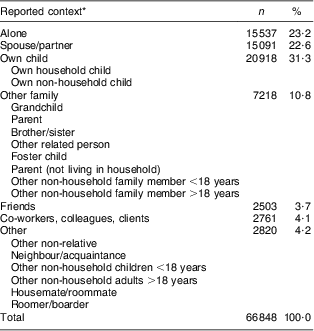
The social context of eating/drinking episodes was defined as ‘whom’ respondents reported they were with when eating/drinking. From twenty reported social context categories, responses were collapsed into five major categories based on conceptual definitions, data distribution and ease of interpretation: ‘alone’, ‘immediate family’, ‘extended family’, ‘friends/colleagues/others’ and ‘multiple categories’. ‘Multiple categories’ included reported eating/drinking with at least two of the four categories listed above. The distribution for these categories can be found in Appendix 2.
Demographic characteristics
Demographic characteristics included age, gender, education, employment status and presence/absence of children <18 years old in the household. Age was categorized as: 21–34 years, 35–44 years, 45–59 years and ≥60 years. Education was recoded into: ‘less than high school’, ‘high-school graduate/GED’, ‘some college/associates degree’ and ‘bachelor's degree or more’ (where GED is General Educational Development). Employment was defined as paid employment and categorized as ‘full-time’ (working >35 paid h/week), ‘part-time’ (working 1–34 paid h/week), ‘not employed’ (looking for work or not working at a job/business or unable to work for health reasons/disabled) or ‘not in the labour force’. Household children was defined as children aged <18 years living within the household.
BMI
Respondents’ self-reported height and weight were used to calculate BMI. BMI was coded as normal weight (18·5–24·9 kg/m2), overweight (25·0–29·9 kg/m2) and obese (≥30·0 kg/m2).
Time
The start time for reported eating/drinking episodes was used to assign the following time categories based on the distribution of the data: 05.00–10.59 hours, 11.00–15.59 hours, 16.00–22.59 hours and 23.00–04.59 hours.
Analysis
Multinomial logistic regression models tested whether subpopulations, based on demographic characteristics, were more or less likely to report an eating/drinking episode for physical and social contexts. Odds ratios and predicted marginal proportions (predicted probabilities) were generated( Reference Korn and Graubard 16 ); employment status was excluded from models examining the physical environment due to correlations with workplace contexts. Associations between social context and episodes of eating/drinking within physical contexts were tested in models including social context as an independent variable, controlling for demographics. Sample weights, to make the sample nationally representative, were applied. Data were analysed using the statistical software package SUDAAN version 9·0.
Results
The analytical sample was even by gender (50·0 % female) and largely non-Hispanic White (71·7 %; Table 1). Overall, 55·9 % of the sample reported some college/associates degree or more, 53·4 % were over 44 years old, 36·4 % of adults were overweight and 27·3 % were obese. Most episodes of primary eating/drinking occurred in the home/yard (71·8 %), with the remainder largely at work (13·6 %) or commercial venues (11·6 %; Table 2). Most episodes of eating/drinking occurred with the immediate family or alone (70·9 %; Table 2).
Demographic characteristics of adult respondents, American Time Use Survey, USA, 2006–2008

GED, General Educational Development; API, Asian Pacific Islander; AI, American Indian; AN, Alaskan Native.
Physical and social context of eating and drinking episodes, American Time Use Survey, USA, 2006–2008
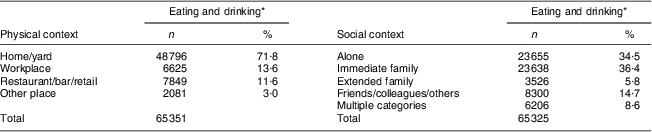
Further detail on the breakdown for each physical and social context category may be found in Appendix 1 and Appendix 2, respectively.
*Numbers reported are weighted.
Regression models of associations between demographic variables and physical contexts of eating/drinking revealed a complex set of patterns (Table 3). We present odds ratios for episodes occurring at the workplace, a restaurant/bar/retail or other location v. the home/yard. Eating in the workplace was negatively associated with female gender (OR = 0·65 (95 % CI 0·60, 0·70)) and having children in the household (OR = 0·90 (95 % CI 0·83, 0·98)), while positively associated with non-white status (OR = 1·14 (95 % CI 1·01, 1·29) to 1·47 (95 % CI 1·32, 1·65)) and time of day (OR = 0·25 (95 % CI 0·28, 0·30) to 5·65 (95 % CI 4·66, 6·85)). Respondents aged ≥60 years were much less likely to eat at the workplace (OR = 0·17 (95 % CI 0·15, 0·19)) v. the home/yard. Women (OR = 0·80 (95 % CI 0·74, 0·86)), people over 34 years old (OR = 0·48 (95 % CI 0·43, 0·54) to 0·83 (95 % CI 0·74, 0·93)), non-whites (OR = 0·56 (95 % CI 0·48, 0·64) to 0·79 (95 % CI 0·70, 0·90)) and respondents with children (OR = 0·69 (95 % CI 0·63, 0·75)) were less likely to eat in a restaurant/bar/retail than at home. Eating in a restaurant/bar/retail was more likely in greater than normal weight respondents (OR = 1·12 (95 % CI 1·03, 1·23) to 1·14 (95 % CI 1·05, 1·24)), respondents with a high-school education and above (OR = 1·56 (95 % CI 1·34, 1·82) to 2·07 (95 % CI 1·79, 2·41)) and in the middle of the day (OR = 4·35 (95 % CI 3·45, 5·47)). Odds ratios for ‘other’ locations v. home/yard were similar to those for eating/drinking in restaurant/bar/retail locations.
Odds ratios and 95 % confidence intervals for the odds of eating/drinking episodes reported within physical contexts by sociodemographic characteristics and time, American Time Use Survey, USA, 2006–2008. For this model the adjusted Wald F = 538·5 (P < 0·01)
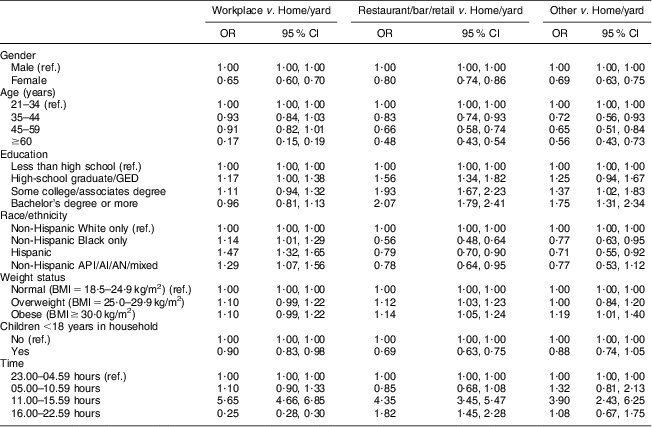
ref., reference category; GED, General Educational Development; API, Asian Pacific Islander; AI, American Indian; AN, Alaskan Native.
Multinomial logistic regression models performed the regression of physical context (home/yard, workplace, restaurant/bar/retail, other) v. gender, age, education, race/ethnicity, BMI and time.
All variables were significant at P < 0·01 except weight status.
Social context was also strongly associated with the distribution of eating/drinking episodes by demographic characteristics (Table 4). Table 4 results present the odds of episodes occurring within social contexts of the immediate family, extended family, friends/colleagues/others and combinations of these (multiple categories) v. alone. Eating/drinking with immediate family was positively associated with age (OR = 1·15 (95 % CI 1·04, 1·27) to 1·23 (95 % CI 1·09, 1·39)), education level (OR = 1·16 (95 % CI 1·03, 1·30) to 1·36 (95 % CI 1·21, 1·54)), obesity (OR = 1·13 (95 % CI 1·04, 1·22)), children in the household (OR = 3·39 (95 % CI 3·14, 3·66)) and time of day (OR = 1·70 (95 % CI 1·39, 2·07) to 5·73 (95 % CI 4·70, 6·99)), but was not associated with gender or employment status except for those not in the labour force (OR = 1·83 (95 % CI 1·67, 2·00)). In contrast, eating/drinking with extended family was positively associated with being female (OR = 1·58 (95 % CI 1·38, 1·81)) and strongly negatively associated with age >34 years (OR = 0·25 (95 % CI 0·20, 0·31) to 0·39 (95 % CI 0·32, 0·47)). Younger people were more likely to eat/drink with friends and colleagues or multiple categories. Note that Hispanics consistently reported a greater likelihood of eating with other people compared with Whites, Blacks and other race/ethnic groups (OR = 1·10 (95 % CI 1·00, 1·22) to 1·49 (95 % CI 1·22, 1·81)).
Odds ratios and 95 % confidence intervals for the odds of eating/drinking episodes reported within social contexts by sociodemographic characteristics and time, American Time Use Survey, USA, 2006–2008. For this model the adjusted Wald F = 357·9 (P < 0·01)

ref., reference category; GED, General Educational Development; API, Asian Pacific Islander; AI, American Indian; AN, Alaskan Native.
Multinomial logistic regression models performed the regression of social context (alone, immediate family, extended family, friends/colleagues/others, and multiple categories) v. gender, age, education, race/ethnicity, weight status and time.
All variables were significant at P < 0·01 except weight status.
Table 5 describes predicted probabilities of eating/drinking episodes within physical context by social context (i.e. whom the respondent reported they were with when eating/drinking in physical contexts). For ease of interpretation, predicted probabilities are reported which are the standardized values that adjust for all covariates in the model. Among eating/drinking episodes occurring at the home/yard, the greatest proportion of episodes occurred with immediate family (87 %), followed by eating alone (77 %) and extended family (76 %). Episodes occurring in the workplace were most common with friends/colleagues/others and extended family, followed by eating alone. Episodes of eating/drinking at a restaurant/bar/retail location were most likely to occur with family/friends/colleagues. Eating/drinking in physical contexts outside the home/yard was more likely to occur with friends/colleagues/others in the workplace (41 %) and in restaurant/bar/retail (26 %) locations.
Predicted probabilities (PP) for eating/drinking episodes within physical contexts by social context, American Time Use Survey, USA, 2006–2008

Multinomial regression models performed the regression of physical context v. social context (alone, family, extended family, friends/colleagues/others and multiple categories), gender, age, education, race/ethnicity, weight status and time. Results for gender, age, education, race/ethnicity, weight status and time not shown here because trends are similar to those observed in Tables 4 and 5.
All predicted probabilities shown were significant at P < 0·01.
Discussion
The present study describes the physical and social contexts of eating/drinking episodes in a nationally representative sample of US adults from 2006–2008. Distinct patterns of eating/drinking episodes within particular contexts were observed in subpopulations by gender, age, education, employment status and presence of children <18 years old in the household. These results confirm and extend the concept that everyday eating and drinking episodes can be categorized in multiple dimensions. Location and social setting are two of the eight dimensions explored by Bisogni et al. and the ATUS is a particularly rich and novel source of data to examine these dimensions.
Several major themes emerged regarding the role of physical and social contexts of eating and drinking episodes and next steps for research at a national level. Despite recent attention to increased eating outside the home, the current study finds that most primary episodes continue to occur in the home, especially in women, older adults and those not in the labour force. The high probability of adults reporting episodes of eating with family contributes to evidence supporting development of eating/drinking behavioural interventions within the home and family. Work in this area could build on current literature related to the family as a social context for taste preferences, cues for intake( Reference Bellisle, Dalix and Slama 17 ), eating patterns and routines( Reference Delormier, Frohlich and Potvin 12 , Reference Hughes, Power and Fisher 18 , Reference Hughes, Power and Papaioannou 19 ). Field studies on food intake report a positive relationship between the number of people that individuals report eating with and the amount of energy consumed( Reference de Castro and Brewer 20 , Reference Hirsch and Kramer 21 ). This finding appears to be consistently reported regardless of whether the meals are eaten at home or away from home, and hunger( Reference Bellisle and Dalix 22 ). Bisogni et al. suggest that just as important as the social context, in describing eating episodes, is the role of the particular individual and his/her relationships with others in the social context. These factors can contribute to mental processes, moods and feeling happy when eating with others, and foods may be rated as better tasting( Reference Bisogni, Falk and Madore 9 , Reference Bellisle and Dalix 22 ).
Strong associations between eating/drinking episodes and the social and physical dimensions of eating examined with gender, age and presence of children in the household suggest that it might be useful to adopt a life-course perspective in characterizing eating behaviour( Reference Wethington and Johnson-Askew 23 ). Such a perspective could enrich the Bisogni framework of eating behaviour by embedding their existing dimensions in the life course. For example, trends observed for age groups within social contexts emphasize the changing social networks associated with ageing and greater age. Gender roles and gender stereotypes associated with lifestyles, caretaking responsibilities for children, food preparation, and other familial roles and responsibilities could be factors that may contribute to observed patterns of eating and drinking( Reference Devine 24 ).
Employment places constraints on personal schedules, which may explain the greater probability of eating/drinking episodes with family for those not employed full-time. Trends highlight the importance of exploring the potential interplay between time of day, daily routines, time spent eating, and physical and social contexts of episodes( Reference Bisogni, Falk and Madore 9 ). Most episodes of eating/drinking with family occurred in the evening, which can reflect family meal times. However, findings also identify a subgroup of individuals eating late at night, alone and at home. More information on stimuli within these contexts during late night hours would enhance understanding of occurrence of these episodes.
Sociological theory and ecological models( Reference Delormier, Frohlich and Potvin 12 ) suggest potential interplay between social and physical contexts on behaviours. Models examining physical by social contexts found a complementary nature, indicating both dimensions should be studied in combination and future studies should continue to examine episodic trends by sociodemographics. Because the present data are cross-sectional, it was not possible to determine if physical or social contexts caused reported episodes of eating. Some observed associations seem likely to represent reciprocal causation. For example, social circumstance may cause eating episodes but hunger, social norms or circadian effects lead to social interactions and eating. Thus, the associations reported here are directions requiring future causal analysis using time-intensive measures such as ecologic momentary assessment. Findings from the current study underscore the multiple and overlapping dimensions of eating/drinking episodes and the interaction between these factors to shape how people make choices about what they eat and how this may be situation dependent. As discussed in the Bisogni framework, these combinations of physical and social contexts with other dimensions such as mental processes and time could further delineate and describe patterns of episodes and foods consumed at each episode.
The present study found overweight and obese respondents had a greater odds of reporting an episode of eating in social situations v. alone (e.g. immediate family and extended family) as well as episodes occurring in restaurant/bar/retail locations. These findings parallel extant literature highlighting the higher energy content of meals eaten outside the home. Findings regarding the slightly greater social nature of episodes in this population subgroup provide support for consideration of the broader multidimensional nature of eating/drinking episodes, where social meaning and mental processes( Reference Bisogni, Falk and Madore 9 , Reference Blake, Bisogni and Sobal 13 ) associated with these social contexts (e.g. purpose of meal such as celebration, values)( Reference Blake, Wethington and Farrell 25 ), role of the individual and other persons (e.g. parent, host, guest)( Reference Bisogni, Falk and Madore 9 , Reference Blake, Wethington and Farrell 25 ) and social norms for foods consumed can further influence and characterize an episode( Reference Bisogni, Falk and Madore 9 ). Other ATUS studies examining patterns of eating report positive relationships between weight and television viewing activities( Reference Hamrick, Andrews and Guthrie 14 , Reference Blake, Wethington and Farrell 25 ), food preparation and clean up, and working( Reference Zick, Stevens and Bryant 26 , Reference Hamrick 27 ), as well as positive associations between duration of episodes and weight status( Reference Kolodinsky and Goldstein 28 ). Cumulatively, these studies( Reference Dunton, Berrigan and Ballard-Barbash 29 ) highlight the complexity of examining multi-way interactions between the specific contexts highlighted in these results and other dimensions of eating/drinking episodes, particularly mental processes and other activities that may occur along with the consumption of foods/drinks.
There are a number of limitations to the current study. Recall bias and cognitive challenges associated with reporting eating/drinking episodes and context are likely to occur. However, the reliability of self-report in time use surveys has been tested in behavioural research (e.g. physical activity) with high reliability (intra-class correlation = 0·73–0·74)( Reference van der Ploeg, Merom and Chau 30 ). Future studies examining the reliability of 24 h recall using objective measures of time use in combination with 24 h diaries would contribute to methodology in this field. A measured BMI is preferred, but differences between self-reported and measured BMI are minimal( Reference Cawley and Burkhauser 31 , Reference Kuczmarski, Kuczmarski and Najjar 32 ) and biases associated with reported height and weight appear to be minimal in the ATUS( Reference Hamrick 27 ). Because the present study focused on discrete episodes of eating/drinking, it examined primary eating/drinking episodes (which were the only activities reported at a particular time). It did not capture episodes of eating/drinking that occurred concurrent with other activities, such as working or driving, because they were outside the scope of this study. Analyses did not account for seasonality and other temporal factors, but the ATUS design and weighting by month and day of the week allow results to be generalizable to any given day.
Measurement of physical context is also limited to categorizing types of locations. There is also considerable variation in physical context within these locations and some of this variation could help explain differences in eating behaviour. For example, there could be distinct differences in aspects of eating in the home in the dining room, kitchen or in a room with a television. Similarly, in a restaurant, dining at the bar v. at a table may have distinct social and behavioural consequences that influence the amount and type of foods served and consumed( Reference Bisogni, Falk and Madore 9 ). Despite these limitations, time use data concerning eating behaviour complement other national survey data by placing episodes in a more complete social and physical context at a national level.
Understanding eating/drinking episodes, particularly where and with whom people are eating/drinking, offers important implications for public health researchers, nutritionists and behavioural scientists interested in promoting healthy diets and reducing risks for obesity and other chronic diseases, including cancer. The environment predisposes, enables and reinforces both individual and collective behaviours( Reference Sallis and Owen 33 ). Thus, identification of contexts for these episodes may have implications for tailored health communication messages and inform intervention efforts by identifying where and when episodes may occur at a population level and the joint relationships between physical and social context on eating/drinking. Additionally, documenting the demographic correlates of the social and physical contexts of eating will allow estimates of the potential scope of interventions designed for particular contexts. Our study highlights the multidimensional nature of eating/drinking behaviour. Further research that can highlight common norms, mental processes and food availability within these contextual situations could identify leverage points for health promotion efforts to support and maintain healthy eating. This type of research would include measurement of context and other situational factors characterizing episodes, as well as intake, routine and time.
Acknowledgements
Sources of funding: This project has been funded in whole or in part with federal funds from the National Cancer Institute, National Institutes of Health, under Contract No. HHSN261200800001E. The content of this publication does not necessarily reflect the views or policies of the Department of Health and Human Services, nor does mention of trade names, commercial products or organizations imply endorsement by the US Government. The National Cancer Institute had no role in the design, analysis or writing of this article. Conflicts of interest: The authors have no conflicts of interest to report. Ethics: Ethics approval was not required. Authors’ contributions: A.O. conceptualized the paper, led the analyses and wrote the manuscript; T.E. contributed to paper conceptualization and drafting of the manuscript; G.D. contributed to the drafting of the manuscript and interpretation of the results; F.M.P. reviewed the manuscript; D.B. contributed to the conceptualization and interpretation of the results as well as the discussion and implications of the research.
Physical context for eating/drinking episodes, American Time Use Survey, USA, 2006–2008

Social context for eating/drinking episodes, American Time Use Survey, USA, 2006–2008