



Snack foods are generally energy-dense and nutrient-poor and are commonly consumed by adolescents, especially in their leisure time( Reference Savige, Macfarlane and Ball 1 ). Ninety per cent of Australian secondary-school students report consuming extra or non-essential foods on a daily basis, with energy-dense snacks comprising the greatest proportion of the extra foods consumed( Reference Savige, Ball and Worsley 2 ). Research suggests that intake of extra foods and an energy-dense diet may displace the consumption of core foods such as fruit and vegetables( Reference Webb, Lahti-Koski and Rutishauser 3 , Reference Kant and Graubard 4 ), and energy-dense, high-fat diets have been identified as risk factors in the development of obesity during childhood and adolescence( Reference Ambrosini, Emmett and Northstone 5 ).
Despite the health risks associated with frequent consumption of unhealthy snack foods, literature assessing the demographic and behavioural correlates of adolescent snacking is limited. Given that studies use different definitions of snack foods, it is difficult to determine just how frequent snacking is for this age group( Reference Gregori, Foltran and Ghidina 6 , Reference Johnson and Anderson 7 ). Some studies define snack foods as anything consumed between main meals (core or non-core food items), while other studies focus on individual snack-food items or only on snacks consumed at a specific time of day. Snacking habits in relation to frequency, size and energy content of snacks also differ across countries( Reference Adair and Popkin 8 ), making it difficult to compare studies conducted overseas with those undertaken in Australia.
In line with the differing methodologies, results assessing demographic differences in snack-food consumption are inconsistent. Most Australian studies have found no sex difference in adolescent snack-food consumption( Reference Savige, Ball and Worsley 2 , Reference Magarey and Boulton 9 , Reference Scully, Dixon and White 10 ); however, other studies conducted in Australia and internationally suggest that boys are consuming more snacks( Reference Campbell, Crawford and Salmon 11 , Reference Field, Austin and Gillman 12 ) and high-fat foods( Reference Wardle, Jarvis and Steggles 13 ) than are girls, whereas a Swedish study found girls to be consuming more in between meals than boys( Reference Persson Osowski, Fjellström and Olsson 14 ). While two Australian studies have found that snacking increases with age( Reference Scully, Dixon and White 10 , 15 ), some contradictory results have also been reported. Specifically, Cameron et al. ( Reference Cameron, Ball and Pearson 16 ) found that snack consumption was similar for 4- to 16-year-olds, while a longitudinal study found snacking actually decreased with age( Reference Magarey and Boulton 9 ). A review by Larson and Story( Reference Larson and Story 17 ) indicated that the majority of studies either showed no evidence of a relationship between snacking and weight status or found that those who consumed more snacks were less likely to be obese. Gregori et al. ( Reference Gregori, Foltran and Ghidina 6 ) also noted that the use of different definitions of snack foods, and the different BMI profiles of participants in the studies reviewed, makes it difficult to conclude what role snacking has in relation to obesity and thus why the literature is equivocal.
Studies examining the impact of socio-economic position (SEP) on snack-food intake also differ on the measure of snack foods applied and on the measure of SEP employed (area-based, parental education or income). Despite this, studies have generally found that low SEP adolescents are likely to consume more snacks( Reference Macdiarmid, Loe and Craig 18 ), especially those which are fat-dense( Reference Ruxton, Kirk and Belton 19 ), and have a higher intake of dietary fat in general( Reference Wardle, Jarvis and Steggles 13 , Reference Patrick and Nicklas 20 , Reference Crawford, Obarzanek and Schreiber 21 ) compared with adolescents from relatively higher SEP groups. In contrast, an Australian state-based school survey that used an area-based measure of SEP reported no association between socio-economic background and the consumption of specific snack foods( Reference Hardy, King and Espinel 22 ).
There is consistent evidence to show that consumption of snack foods is positively associated with television viewing( Reference Patrick and Nicklas 20 , Reference Snoek, van Strien and Janssens 23 – Reference Pearson, Ball and Crawford 30 ), yet research assessing the relationship between snacking and other eating, physical activity and sedentary behaviours and sleep duration is scarce. A small number of studies have looked at the association between snack consumption and fruit and vegetable intake in adolescents. Lazzeri et al. ( Reference Lazzeri, Pammolli and Azzolini 31 ) reported a significant association between irregular snack consumption (defined as not having snacks both mid-morning and afternoon) and low frequency of fruit intake but no significant difference for vegetable consumption. Sebastian et al. ( Reference Sebastian, Cleveland and Goldman 32 ) found a similar association, reporting that fruit intake increased with higher snacking frequency for both adolescent boys and girls but did not differ for vegetable consumption. In regard to the influence of sleep duration on snacking, Weiss et al. ( Reference Weiss, Xu and Storfer-Isser 33 ) found that shorter sleep duration was associated with high energy intake from snacks in unadjusted analyses; however, this association was attenuated and no longer statistically significant after adjusting for participant characteristics. Other studies have found a similar negative association between sleep and snack-food consumption in adults( Reference Heath, Roach and Dorrian 34 – Reference Nedeltcheva, Kilkus and Imperial 36 ). To our knowledge, no studies have assessed the relationship between adolescent snacking and physical activity and non-core dietary intake.
Adolescents’ perceptions of the availability and convenience of foods could also influence their dietary intake. Snack foods are commonly perceived to be available within adolescents’ home environments( Reference Martens, Van Assema and Brug 37 , Reference MacFarlane, Crawford and Ball 38 ) and the availability of unhealthy foods at home appears to be a robust predictor of consumption of obesity-promoting foods and drinks( Reference Campbell, Crawford and Salmon 11 ). Pearson et al. ( Reference Pearson, Ball and Crawford 39 ) and Cutler et al. ( Reference Cutler, Flood and Hannan 40 ) found similar results, reporting that home availability of snack foods was positively associated with energy-dense snack consumption. Adolescents perceive the inconvenience of food options to be a barrier to healthy eating( Reference O’Dea 41 , Reference Giskes, Patterson and Turrell 42 ) and sweet and salty snack foods are attractive options because they require little or no preparation( Reference Croll, Neumark-Sztainer and Story 43 , Reference Hill, Casswell and Maskill 44 ). Therefore, even if foods are readily available to adolescents, if they are perceived to be inconvenient they are less likely to be consumed.
The aim of the present study was to identify what factors are associated with frequent consumption of snack foods among Australian secondary-school students. Specifically, we aimed to explore whether there are demographic and behavioural differences in students’ frequency of consumption of snack foods and whether individual perceptions of availability, convenience and intake are associated with their consumption.
Methods
Design and procedure
Data were obtained from students participating in the 2009–10 National Secondary Students’ Diet and Activity (NaSSDA) survey (school response rate: 39 %; student response rate: 54 %). The cross-sectional survey collected data from students in Years 8 to 11 (ages 12 to 17 years) from a representative sample of Australian schools. A full description of the methods has been reported elsewhere( Reference Morley, Scully and Niven 45 ). In brief, the sampling procedure was a stratified two-stage probability design, with schools randomly selected at the first stage of sampling and classes selected within schools at the second stage. Students completed a web-based questionnaire assessing their eating, physical activity and sedentary behaviours as well as their intake and perceptions of snack foods. Students also had height and weight measured by trained researchers in a confidential setting. Informed written parent/carer and student consent was required for participation in each component of the study.
Measures
Demographics
Information on students’ sex, school year level and postcode was recorded. Residential postcode was used to classify students into low, medium or high SEP according to the Socio-Economic Index for Areas Index of Relative Socio-economic Disadvantage( 46 ) and into metropolitan or rural/regional geographic location according to the Rural, Remote and Metropolitan Areas classification( 47 ). Students’ height and weight were taken in accordance with standardised protocols( Reference Davies, Roodveldt and Marks 48 ) and used to calculate BMI (weight/height2). Students were classified as either healthy weight/underweight or overweight/obese according to internationally recognised cut-offs developed for children and adolescents( Reference Cole, Bellizzi and Flegal 49 ). Students’ weekly spending money was also assessed.
Behaviours
Measures used to assess students’ core and non-core food consumption, physical activity and sleeping patterns have been reported in greater detail elsewhere( Reference Morley, Scully and Niven 45 ). In summary, core and non-core food consumption was assessed using short dietary questions developed by the NSW Centre for Public Health Nutrition( Reference Flood, Webb and Rangan 50 ). Students were asked how many servings of vegetables and fruit they usually eat each day and how often they consume sugary drinks and meals or snacks from fast-food or takeaway-food places. Physical activity was assessed using the 60 min moderate-to-vigorous physical activity screening measure, which is reliable, valid and correlates well with objective measures of physical activity( Reference Prochaska, Sallis and Long 51 ). Sleeping patterns were assessed by asking students to record the time they went to bed and turned the light out the previous night and the time they woke up that morning; or, if either time was not ‘usual’, the time they usually went to bed on a school night or woke up on a school day. To assess television viewing, students were asked to indicate how long they spent watching commercial television on a typical school day, Saturday and Sunday. A weighted average daily time spent watching commercial television was calculated and dichotomised to indicate those watching for >2 h/d (high viewers).
Snack-food consumption
Students were asked to indicate how often they consume: (i) ice cream, icy poles or ice blocks; (ii) potato crisps/chips or other salty snacks (such as Twisties™, corn chips); (iii) confectionery (such as lollies and chocolates); and (iv) sweet foods (such as sweet biscuits, cakes or muffins). Response options included ‘never’, ‘less than once a week’, ‘about 1–2 times a week’, ‘about 3–4 times a week’, ‘about 5–6 times a week’, ‘about once a day’ and ‘2 or more times a day’. As per previous studies( Reference Hu, Rimm and Stampfer 52 – Reference Ball, MacFarlane and Crawford 54 ), we assigned each response option a weekly equivalent value and then summed students’ responses for the four snack-food items (range 0–56 times/week). Given the Australian Dietary Guidelines( 55 ) recommend limiting foods containing saturated fat, added salt and added sugars, we chose to classify ‘frequent snackers’ as those with a score of ≥14 times/week (equivalent to snacking two or more times daily on average).
Perceptions of snack foods
Students were asked to indicate the extent to which they agreed or disagreed with the following six statements relating to their perceptions of snack foods: (i) ‘Snack foods are usually available in my home’; (ii) ‘Snack foods are convenient to buy’; (iii) ‘I eat too many snack foods’; (iv) ‘It is easy to find healthy snacks (e.g. fruit, yoghurt) in my home’; (v) ‘Fruit is a convenient snack’; and (vi) ‘I eat enough fruit’. For each question, five-point response scales ranged from ‘strongly disagree’ to ‘strongly agree’. Responses were dichotomised to indicate those who agreed v. those who disagreed or neither agreed nor disagreed.
Statistical analyses
Data analyses were conducted using the statistical software package Stata SE 12.1. Data were weighted by state, education sector, school year and sex to ensure the sample obtained reflected the population distribution( 56 ). All analyses accounted for the complex survey design by using the svy: prefix command in Stata SE 12.1. Two multivariable logistic regression models were analysed. The first model tested the association between frequent consumption of unhealthy snacks and demographic and behavioural factors. The second model tested the association between frequent consumption and students’ perceptions of availability, convenience and intake of unhealthy snack foods. Both models controlled for all covariates, school-level clustering and school type and the second model also controlled for demographic characteristics. Due to the large sample size, a conservative significance level of P<0·01 was applied.
Results
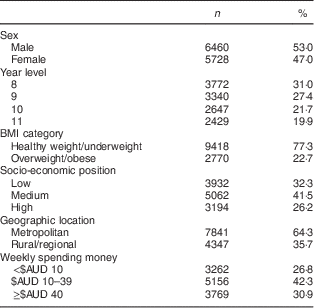
As shown in Table 1, overall, 53 % of students in our sample were male and there was a slightly higher proportion of students in Years 8 (31 %) and 9 (27 %) compared with the older year levels (22 % in Year 10 and 20 % in Year 11). Thirty-two per cent of students were categorised as low SEP, 42 % as medium SEP and 26 % as high SEP (compared with 33 % low, 42 % medium and 26 % high SEP for the Australian population)( 57 ). The majority of the students were classified as not overweight or obese (77 %) and resided in a metropolitan location (64 %). Approximately one-quarter of students (27 %) had less than $AUD 10 disposable income each week while almost one-third (31 %) had $AUD 40 or more.
Characteristics of the sample: secondary-school students aged 12–17 years participating in the 2009–10 National Secondary Students’ Diet and Activity (NaSSDA) survey (n 12 188), Australia
Based on unweighted data.
Percentages are rounded so may not sum to 100 %.
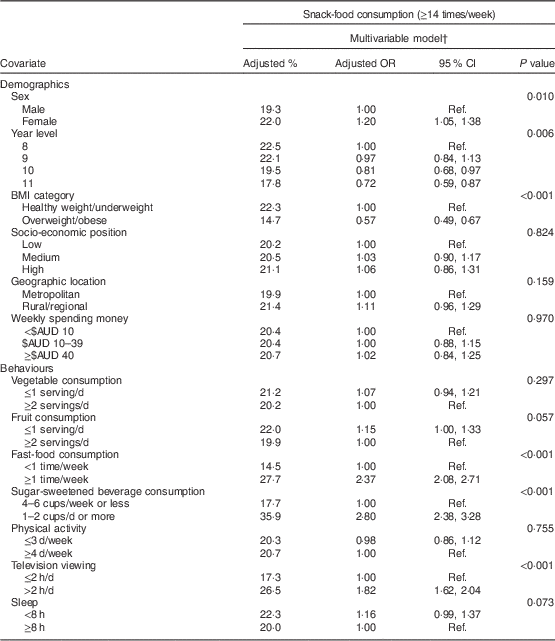
Overall, 21 % of students were classified as ‘frequent snackers’, reporting they consume ice cream, potato crisps/chips, confectionery and/or sweet foods fourteen or more times per week. As shown in Table 2, frequent snacking differed significantly by year level, BMI, fast-food and sugar-sweetened beverage consumption and daily television viewing. Students in Year 11 and those who were classified as overweight or obese were significantly less likely to be frequent snackers compared with Year 8 students and those not overweight or obese, respectively. On the other hand, students who reported consuming fast food at least weekly and 1–2 cups of sugar-sweetened beverages each day, as well as those who reported watching commercial television for >2 h/d, were significantly more likely to be frequent snackers.
Results from logistic regression analyses examining demographic and behavioural predictors of snack-food consumption among secondary-school students aged 12–17 years participating in the 2009–10 National Secondary Students’ Diet and Activity (NaSSDA) survey (n 11 971)Footnote *, Australia
Ref., referent category.
* Sample size smaller due to missing values.
† Adjusted for all covariates, school-level clustering and school type.
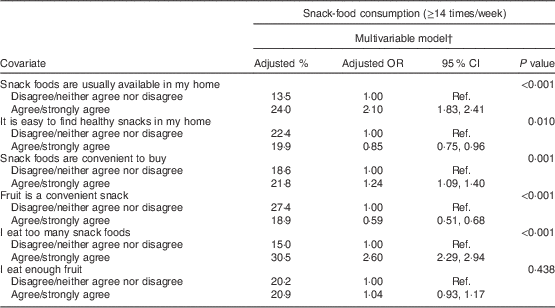
As Table 3 highlights, students who agreed that snack foods are usually available at home, are convenient to buy and that they eat too many snack foods were significantly more likely to be frequent snackers. In contrast, those who agreed that fruit is a convenient snack were significantly less likely to be classified as frequent snackers. Snacking frequency was unrelated to students’ perceived ease of finding healthy snacks at home or whether they believed they eat enough fruit.
Influence of adolescents’ perceptions of availability, convenience and intake on adolescents’ snack-food consumption: secondary-school students aged 12–17 years participating in the 2009–10 National Secondary Students’ Diet and Activity (NaSSDA) survey (n 11 923)Footnote *, Australia
Ref., referent category.
* Sample size smaller due to missing values.
† Adjusted for demographic characteristics, all covariates, school-level clustering and school type.
Discussion
These results indicate that frequent snack-food consumption among Australian secondary-school students appears to be similar across demographic groups, with the exception of year level and BMI. Further, frequent snacking was associated with high fast-food and high sugar-sweetened beverage consumption and with watching commercial television for >2 h/d. To the best of our knowledge, the present study is the first one to show that frequent snack-food consumption clusters with other poor eating behaviours among adolescents.
Our results indicate a trend for frequent snack-food consumption to decline with increasing year level. This pattern is consistent with an earlier Australian cohort study which found that snacking in general decreased with increasing age( Reference Magarey and Boulton 9 ). However, a more recent Australian cross-sectional study suggested that consumption of energy-dense snacks was relatively similar in children aged 4 to 16 years( Reference Cameron, Ball and Pearson 16 ). The smaller sample size and broader age groups assessed in the latter study may partly explain these different findings. The lower prevalence of frequent snacking among Year 11 students in our study could be due to this group consuming more snacks from fast-food outlets.
We also found that overweight/obese adolescents were less likely to be frequent snackers, as has been reported by many other studies( Reference Larson and Story 17 ). It is possible that dieting (not assessed in the current study) is a mediating factor between BMI and snacking. Overweight or obese adolescents may be restricting their intake of snack foods in an attempt to lose weight. Howe et al. ( Reference Howe, Black and Wong 58 ) found that there was a significant interaction between New Zealand adolescents’ treat food scores and dieting status, suggesting there was a positive association between treat food scores and BMI only among non-dieters. There is also evidence from the USA which indicates that overweight and obese respondents may underestimate their consumption in self-report( Reference Champagne, Baker and DeLany 59 , Reference Perks, Roemmich and Sandow-Pajewski 60 ).
In line with other Australian studies, we found no significant difference in adolescents’ frequent snack-food consumption by sex( Reference Savige, Ball and Worsley 2 , Reference Magarey and Boulton 9 , Reference Scully, Dixon and White 10 ) or area-based SEP( Reference Hardy, King and Espinel 22 ). Available weekly spending money, which is likely to be higher among more advantaged students, was also unrelated to snacking frequency. However, given there is some evidence of social disparities in snack-food consumption among Scottish schoolchildren( Reference Macdiarmid, Loe and Craig 18 , Reference Ruxton, Kirk and Belton 19 ), it would be beneficial for future research to validate our findings using a range of individual-level SEP measures (e.g. household income and parental education). Inclusion of parental nutrition knowledge as an additional measure of SEP may be important as there is evidence from the USA that the majority of adolescent snacking occurs within the home environment( Reference Cross, Babicz and Cushman 61 ).
We found that frequent consumption of unhealthy snack foods was more common among adolescents who reported high fast-food and high sugar-sweetened beverage consumption. This clustering of poor eating behaviours highlights the need for interventions to take a whole-of-diet approach rather than focusing on reducing snack-food consumption alone. Interestingly, frequent snacking was unrelated to low intake of fruit or vegetables. This is contrary to what we would expect if energy-dense foods were to displace the consumption of healthier foods( Reference Webb, Lahti-Koski and Rutishauser 3 , Reference Kant and Graubard 4 ). This lack of association may indicate that snack foods are being consumed in addition to, rather than instead of, fruit and vegetables. This assumption is also supported by the fact we found no association between frequent snacking and students’ perceptions that they eat enough fruit.
Frequent snacking was not associated with low physical activity. It is possible that adolescents may consume snack foods as a treat after participating in physical activity given that unhealthy foods and beverages are commonly available( Reference Young, Kennedy and Kingsland 62 , Reference Kelly, Chapman and King 63 ) and sold at sporting clubs and venues( Reference Kelly, Chapman and King 63 , Reference Kelly, Baur and Bauman 64 ). Sporting clubs are also a location in which exposure to unhealthy food marketing via sports sponsorship is high( Reference Kelly, Bauman and Baur 65 ). Food marketing has consistently been shown to influence children’s food preferences, purchases and consumption( Reference Cairns, Angus and Hastings 66 – 68 ). Therefore, adolescents participating in sport more often may have greater exposure to unhealthy food marketing and thus increased consumption of unhealthy snack foods.
Adolescents who agreed that snack foods are usually available at home were more likely to be consuming snack foods on a frequent basis. This suggests a need to reduce the availability of these unhealthy snack options and increase the availability of healthier options. However, our study also found that frequent snack-food consumption was unrelated to perceived ease of finding healthy snacks at home. Alternatively, we found students who agreed that fruit is a convenient snack were significantly less likely to be frequent snackers. This suggests that making healthy snacks available within the home is not sufficient to prompt behaviour change. Adolescents need to perceive these food items as convenient in order to choose the healthy option. Frequent snacking was more common among adolescents who agreed that snack foods are convenient to buy. Improving the convenience of healthy options, such as peeled and cut fruit and vegetables, at places where adolescents purchase snack foods (e.g. the school canteen and fast-food outlets) could be important in reducing unhealthy snack-food consumption.
In considering these findings, it is important to acknowledge the limitations of the present study. First, the cross-sectional study design precludes the inference of causality. Second, self-reported behaviour allows the possibility of recall and social desirability bias (e.g. under-reporting of snack-food consumption). Third, given the use of an active consent procedure, the rate of student participation was low, although the response rate was comparable to similar Australian state-based school surveys( Reference Martin, Rosenberg and Miller 69 , Reference Hardy, King and Espinel 70 ). Fourth, our measures focused on snacking frequency and did not assess the portion size or energy content of the snacks being consumed. Future research in this area should take these important snacking attributes into account. Lastly, the study employed an area-based measure of SEP. As mentioned above, future research may benefit from including individual-level measures such as parental education or nutritional knowledge. Strengths of the present study include the large representative sample and the use of student self-report rather than parent proxy report. This enabled the capture of snacking behaviour that may occur outside the home environment and out of parent control, view or knowledge.
The present study indicates that a high proportion of Australian adolescents are snacking on a frequent basis, in conflict with the new Australian Dietary Guideline recommendation that discretionary foods be limited( 55 ). Of particular concern, frequent snacking appears to cluster with other poor health behaviours, such as high fast-food and sugar-sweetened beverage consumption and frequent television viewing. Perceptions of availability and convenience influence frequent snack-food consumption. Given these are factors most readily amenable to change, interventions that focus on decreasing the availability of unhealthy snack foods in the home, in conjunction with promoting healthy and convenient snack options such as fruit, may prove most effective.
Acknowledgements
Acknowledgements: The authors thank the school principals, teachers and students who participated in the study. Financial support: The NaSSDA survey was jointly funded by state Cancer Councils through Cancer Council Australia; and by the National Heart Foundation of Australia. M.W. is supported by a Principal Research Fellowship form the National Health and Medical Research Council. The funders had no role in the design, analysis or writing of this article. Conflict of interest: None. Authorship: All authors have contributed to the present paper by being involved in conceiving and designing the study or in analysis and interpretation of data, and in writing and revising the paper. I-View was responsible for fieldwork coordination. Ethics of human subject participation: The NaSSDA study was approved by the Human Research Ethics Committee of Cancer Council Victoria. In addition, approval was obtained from the education authority for each sector in each State and Territory, as well as the principal at each selected school.



