





Introduction
Climate instability, ecological degradation and widening social inequity present urgent and interconnected challenges – so-called ‘wicked problems’ – that demand new forms of design practice (Rittel and Webber Reference Rittel and Webber1973). The Intergovernmental Panel on Climate Change confirms that human influence has unequivocally altered atmospheric, oceanic and terrestrial systems, with rapid and widespread consequences across the biosphere (IPCC 2021, p. 4). However, these impacts are unevenly distributed; low- and middle-income countries (LMICs) as defined by the World Bank, despite contributing least to global emissions, are disproportionately affected by climate-related disruptions, including resource scarcity, health impacts and economic precarity (Abdallah et al. Reference Abdallah, Moses and Prakash2014; Campbell-Lendrum and Corvalán Reference Campbell-Lendrum and Corvalán2007; Hallegatte Reference Hallegatte2016; Kaijser and Kronsell Reference Kaijser and Kronsell2014; World Bank 2024). Climate change must therefore be understood not solely as a scientific or environmental issue, but as a socially mediated crisis shaped by intersecting systems of inequality, culture and power (Kaijser and Kronsell Reference Kaijser and Kronsell2014; Mikulewicz et al. Reference Mikulewicz, Caretta, Sultana and Crawford2023; Thomas Reference Thomas2022).
Design cannot remain detached from these dynamics; the textile industry alone contributes 8–10% of global carbon emissions and global fibre production nearly doubled between 2000 and 2020 (Burnstine and Ghattas Reference Burnstine and Ghattas2025; Ellen Mac Arthur Foundation 2020; Textile Exchange 2021; Leal Filho et al. Reference Leal Filho, Perry, Heim, Dinis, Moda, Ebhuoma and Paço2022; UNFCCC 2018). In response, contemporary design research has increasingly shifted towards systems-oriented approaches, including Regenerative Design and Participatory Design, which seek to move beyond product-focused outputs towards ecological integration, stakeholder co-creation and long-term systemic change (Capra Reference Capra1996; Manzini Reference Manzini2015; Raworth Reference Raworth2017; Mang and Reed Reference Mang, Reed and Loftness2020; Reed Reference Reed2007). While these frameworks expand the scope of design, they still remain limited in how they are operationalised in regard to materials, which are deeply embedded in cultural identity, everyday life and craft traditions (Barber Reference Barber1994; Gale and Kaur Reference Gale and Kaur2002). Therefore, textile- and material-based design interventions can be seen as a ground for both environmental challenge and transformative opportunity (Goldstein and Foulkes-Arellano Reference Goldstein and Foulkes-Arellano2024).
In parallel, biodesign has emerged as a field that integrates living systems such as fungi, algae and bacteria into material and architectural applications (Das Reference Das2024; Myers Reference Myers2012). By exploring growth, decay and circular ecological systems within design processes, biodesign offers new pathways for understanding material creation and regeneration (Myers Reference Myers2012; Solanki Reference Solanki2018). However much of this work remains laboratory-based or high-tech, often prioritising ‘scientific’ measurements, Western standards of performance and profitable scalability over cultural specificity and place-based knowledge. When applied in non-Western and Indigenous contexts, such approaches risk reproducing extractive and colonialist dynamics, in which local material practices and knowledge systems are treated as resources rather than as their own sites of innovation and knowledge production (Costanza-Chock Reference Costanza-Chock2020; Or Reference Or, Leitão, Men, Noël, Lima and Meninato2021; Smith Reference Smith1999).
Across these intersecting areas of theory and practice, a methodological gap emerges. Existing frameworks articulate strong ethical and conceptual ambitions, yet lack structured approaches for integrating material innovation, systemic-level circularity and culturally embedded practices within real-world (and particularly non-Western) contexts. This paper addresses how a materially grounded and culturally situated biodesign methodology which integrates biological systems, participatory processes and culturally significant material practices can respond to systemic challenges. It does so through the development of Material Re-Mixing, a structured methodological framework grounded in but extending biodesign principles for application within new contexts. The framework is applied and examined through a case study of bio-composite innovation for Mongolian gers, enabling both technical and cultural dimensions of material performance to be evaluated. This case study explores the potential of Material Re-Mixing as a transferable approach for integrating material, biological and cultural systems within design practice.
By foregrounding material agency, cultural specificity and biological integration, the research responds to the need for design methodologies capable of engaging with complex, place-based challenges. Material Re-Mixing offers a pathway towards more situated and participatory forms of biodesign that move beyond abstraction and towards materially grounded, context-responsive practice.
Biodesign and material agency in socio-ecological systems
Biodesign has emerged as a field that integrates living organisms into design processes, introducing growth, decay and ecological lifecycle through adapting and innovating with material (Camere and Karana Reference Camere and Karana2018; Das Reference Das2024; Myers Reference Myers2012). By working with organisms such as fungi, algae, lichen and bacteria, biodesign challenges conventional distinctions between natural and artificial systems, positioning materials as dynamic and evolving rather than static and inert (Franklin and Till Reference Franklin and Till2019; Solanki Reference Solanki2018).
This shift aligns with broader theoretical developments in new materialism, which reframes materials not as passive substrates but as active participants within socio-ecological systems (Plate Reference Plate2020). Scholars including Ingold (Reference Ingold2013), Bennett (Reference Bennett2010) and Barad (Reference Barad2007) argue that materials possess relational capacities that emerge through interaction and environmental entanglement rather than through fixed or isolated properties. Material performance cannot be understood solely through technical metrics, but through the dynamic relationships between materials, bodies, ecologies and practices. Ingold (Reference Ingold2013) proposes that materials should be understood as sites of continual becoming rather than static objects, while Bennett (Reference Bennett2010) emphasises the ‘vibrancy’ of matter and its capacity to shape human and non-human systems alike. Barad’s (Reference Barad2007) concept of intra-action further challenges traditional divisions between material and social agency, positioning meaning and materiality as co-constitutive. Within textile contexts, these perspectives are particularly relevant, as materials are experienced through embodied interaction, sensory engagement and situated cultural use (Gale and Kaur Reference Gale and Kaur2002).
However, biodesign work remains largely situated within labs, high-tech scientific environments and industrial production chains. Innovations are often evaluated primarily through traditional performance metrics such as strength, durability or scalability, while less attention is given to how materials operate within lived environments and cultural systems. This creates a disconnect between material innovation and everyday practice, particularly in contexts where technological infrastructure is limited or where materials carry significant cultural meaning.
Furthermore, biodesign risks reproducing extractive or destructive patterns when applied universally within cultural contexts. Without explicit attention to decolonial ethics, biological materials and local knowledge systems may be incorporated into design processes without properly redistributing authorship or agency (Ostendorf-Rodriguez and González Reference Ostendorf-Rodriguez and González2023). This raises questions about who benefits from innovation, whose knowledge is legitimised and how materials are positioned within global systems of production and consumption (Costanza-Chock, Reference Costanza-Chock2020; Smith Reference Smith1999). Biodesign introduces biological agency yet is often detached from the lived and cultural material ecologies in which such systems must operate (Solanki Reference Solanki2018). As a result, materials are frequently treated as means to an end within design innovation, and cultural constraints are viewed contextual rather than central to relevance and application (Franklin and Till Reference Franklin and Till2019).
Theoretical positioning: regenerative and participatory design
Regenerative Design and Participatory Design provide important foundations for this work, yet both reveal limitations when applied to material-based intervention.
Regenerative Design seeks to shift design practice from reducing harm towards actively restoring ecological systems through co-evolutionary relationships between human and natural processes (Cole Reference Cole2011; du Plessis Reference du Plessis2012; Mang and Reed Reference Mang and Reed2011; Reed Reference Reed2007). While this framework emphasises place-based thinking and ecological integration, it often prioritises systems-level analysis and ecological metrics over material-level practices and cultural knowledge. As a result, materials are frequently treated as components within larger systems rather than as sites of innovation in their own right.
Participatory Design, which originated in democratic design movements, aims to involve stakeholders directly in design processes, thus redistributing decision-making power and incorporating community-held knowledge (Bødker et al. Reference Bødker, Ehn, Sjögren and Sundblad2000; Kensing and Blomberg Reference Kensing and Blomberg1998; Sanders and Stappers Reference Sanders and Stappers2008). However, participatory processes are often structured through designer-led frameworks, in which stakeholder contributions are mediated, interpreted and ultimately authored by designers. This limits the extent to which participation translates into genuine shifts in authorship and agency. Participatory workshops which rely on design-based knowledge, language and technical skills (sketching, modelling and prototyping) negate their aim to democratise design and instead maintain existing patterns of designer-held ‘expertise’ being required to mediate community needs and inputs.
Across both frameworks, cultural practices are frequently positioned as contextual considerations rather than as exciting catalysts of change. Materials embedded within cultural systems, such as tacit or craft traditions or vernacular architecture, are rarely treated as sites of forward-looking innovation. Material Re-Mixing addresses this gap by operationalising the ambitions of both frameworks at the site of material innovation. It integrates regenerative principles through biological and circular material systems, while extending participatory design through embodied co-making processes that redistribute authorship and mirror traditional community practices of tacit fabrication.
Methodology
This study employs a mixed-methods, practice-based research design in which material experimentation, ethnographic engagement and participatory co-creation are integrated within a single iterative process (Cresswell Reference Creswell2003). The approach is grounded in a post-positivist paradigm, which is suitable for this study because it acknowledges that while objective reality exists, our understanding of it is imperfect and influenced by context, bias and interpretation (Phillips and Burbules Reference Phillips and Burbules2000). This aligns well with the study’s aim to identify and address wicked problems and recognises that multiple factors influence these issues which cannot be controlled or measured with absolute precision (Cresswell Reference Creswell2003; Phillips and Burbules Reference Phillips and Burbules2000).
The research is explored through a case study situated in Ulaanbaatar, Mongolia, focusing on peri-urban ger districts experiencing intersecting environmental and social pressures – including rapid urbanisation, severe winter air pollution caused by coal-burning stoves, economic precarity, cultural flux and increasing climate variability (Bao Reference Bao, Bao, Sanjjava, Qin, Zhou and Xu2015; CRED 2020). The ger provides a critical site for investigation due to its reliance on wool felt as a primary material system and its historical adaptability within changing environmental conditions. Within this context, the study examines how biological materials can be integrated into existing cultural material practices without disrupting their spiritual or functional integrity. Methodologically, the study combines quantitative material testing with qualitative and practice-based approaches, enabling triangulation across data types and scales of investigation (Ritchie et al. Reference Ritchie, Lewis, McNaughton Nicholls and Ormston2014). This reflects established textile research practices in which knowledge is generated through the interplay of technical analysis, embodied making and contextual understanding (Gale and Kaur Reference Gale and Kaur2002, Igoe Reference Igoe2021).
Material methods
The research methodology draws on approaches within material-led and experiential design research that position making itself as a mode of inquiry. Parisi et al. (Reference Parisi, Rognoli and Sonneveld2017) describe ‘material tinkering’ as a process through which material understanding emerges iteratively through manipulation, testing and sensory engagement rather than solely through analytical evaluation. Similarly, Woodward’s (Reference Woodward2020) concept of ‘material methods’ frames materials not only as subjects of investigation, but as active participants in the production of knowledge. Within this study, wool felt and mycelium composites are therefore approached as methodological agents through which technical, sensory and cultural insights emerge simultaneously. This supports a form of embodied and materially situated inquiry developed through iterative interaction with materials across laboratory, workshop and lived contexts.
The study also draws on principles common to biodesign methodology, particularly iterative prototyping and process-led experimentation. While biodesign investigations are often conducted within controlled laboratory environments, this study extends these principles by situating biological experimentation within existing material ecologies and lived contexts, taking sample development out of the lab and into the communities in which the interventions will live. Mycelium is introduced into an already-established wool ecosystem and evaluated not only in terms of performance, but in relation to cultural acceptability and environmental adaptability.
Material investigation begins with fibre-level understanding; the analysis of five ger felt samples sourced from different regions of Mongolia were examined using compound and Scanning Electron Microscopy to identify composite fibre composition and structural qualities of each felt composite. Standardised textile testing methods were then employed to establish baseline performance characteristics, including pH (ISO 3071:2020), thermal dimensional stability (ISO 9866-2:1991), thermal conductivity (ASTM D1518-85), water repellence (ISO 23232:2009) and vertical wicking (AATCC TM197-2011e2). These tests generated a reproducible dataset through which the technical properties of ger felt could be universally understood while remaining grounded in its specific material context.
Building on this baseline, biomaterial experimentation explored the integration of fungal mycelium within the wool fibres to produce bio-composite materials. Iterative prototyping was undertaken to establish a reproducible fabrication process, after which composite samples were subjected to the same testing protocols as the original felt. This enabled direct comparison between materials and positioned testing as an iterative feedback mechanism within the design process rather than a discrete evaluative stage.
Situated ethnography
These technical investigations were conducted alongside ethnographic fieldwork, which included homestays, semi-structured interviews and participation in the traditional feltmaking ritual. This enabled the material system to be understood in relation to its cultural, historical and sensory dimensions. In line with sensory ethnography, knowledge was generated not only through observation and verbal accounts, but through embodied participation and material interaction, reflecting the central role of tacit knowledge within textile practice.
Fieldwork was conducted between August and September 2022 within the ger district in Ulaanbaatar, Töv aimag (Central Mongolia) and Khövsgöl region (Western Mongolia). Primary research included 4 semi-structured interviews, 2 stakeholder workshops, 3 homestays with ger-dwelling families, collaborative feltmaking activities and urban feltmaking factory visits. Living alongside participants within domestic settings enabled engagement with everyday material practices and the lived realities of ger environments, rather than approaching felt solely as a technical material system.
A participatory workshop within the Ger Innovation Hub (September 24th, 2022) extended this approach by involving 40 local ger district residents of all ages in hands-on material experimentation. Participants engaged directly with wool fibres and mycelium composites through manipulation, observation and discussion. Rather than eliciting feedback on predefined outcomes, the process centred on co-making, enabling insights to emerge through shared material engagement and shifting participation from consultation towards co-production.
Ethics
Ethical approval for the study was granted through institutional research ethics procedures prior to fieldwork and participatory engagement (De Montfort University, Worktribe REF 422794). Informed consent was obtained from all participants involved in interviews, homestays, workshops, material experimentation, photography and documentation activities. Workshop participants were informed of the aims of the research, the experimental nature of the material investigations and their right to co-define the research outputs of the study.
The research adopted a collaborative and practice-based approach that positioned participants as contributors to material exploration rather than subjects of observation alone. In line with the decolonial and participatory principles underpinning the study, local knowledge, feltmaking practices and workshop contributions were recognised as forms of expertise and co-production. Participants whose opinions and practices appear within the research outputs provided explicit consent for direct attribution and representation within the study. This approach sought to avoid the erasure of participant authorship and situated knowledge that can occur through typical anonymisation practices.
At the same time, the research acknowledges the ethical tension inherent in conducting culturally situated design research as a non-Mongolian researcher. While the methodology seeks to resist extractive models of knowledge production and externally imposed designer-mediated solutions, the study cannot position itself as existing outside of the broader dynamics of cultural and academic power (Smith, Reference Smith1999). Rather than obscuring this complexity, the research worked reflexively within it by prioritising long-term engagement, collaborative authorship and reciprocal knowledge exchange throughout the project. Fieldwork involved living alongside participants within family and domestic contexts, participating directly in feltmaking practices and conducting interviews fluidly across Mongolian and English to reduce ‘after the fact’ synthesis, and support mutual understanding and participant comfort. Key findings, interpretations and proposed interventions were discussed iteratively with participants and stakeholders throughout the research process to ensure that emerging directions aligned with community perspectives and that participants remained comfortable with how ideas and outcomes were being developed and represented.
The broader aim of Material Re-Mixing is therefore not to reinterpret cultural practices externally, but to develop a system through which communities maintain ownership, authorship and agency over material innovation within their own cultural contexts and feel empowered and enabled to develop innovations that support positive visions for their communities’ futures.
Triangulation and facet methodology
Data generated through material testing, ethnographic engagement, workshops and prototyping was interpreted through triangulation and facet methodology (Leavy Reference Leavy2017; Ritchie et al. Reference Ritchie, Lewis, McNaughton Nicholls and Ormston2014; Woodward Reference Woodward2020). Triangulation enabled relationships to be identified across quantitative, qualitative, sensory and participatory forms of evidence, supporting the interpretation of material performance in relation to lived and cultural experience rather than through isolated datasets. Triangulation supports more robust and reflexive decision-making, helping to reveal tensions, alignments and gaps between material behaviour, social use and systemic impact (Woodward Reference Woodward2020). This is particularly valuable where embodied making, sensory evaluation and cultural meaning intersect with technical performance and sustainability concerns (Gale and Kaur Reference Gale and Kaur2002; Igoe Reference Igoe2021). As such, triangulation operates not only as a method of data validation, but as a generative tool that facilitates critical reflection, iterative development and the synthesis of complex, interdependent knowledge across scales.
Facet methodology further informed the research by positioning each method as a partial and situated perspective into a complex socio-material system. Rather than seeking a single objective account, this methodology operates through the accumulation of interconnected ‘facets’ generated through testing, making, observation, participation and material interaction (Mason Reference Mason2011; Woodward Reference Woodward2020).
Across these combined methods, the study operates through an iterative process that forms the basis of the Material Re-Mixing methodology. This process involves cycles of material mapping, baseline analysis, biological integration, prototyping, participatory co-making and re-evaluation. Rather than functioning as a fixed sequence, these stages remain adaptive and responsive to context, allowing material, cultural and technical insights to continuously inform one another. By integrating material science, ethnographic research and participatory making within a single framework, this methodology enables an extension of biodesign practice that is both technically rigorous and culturally situated. It reflects a shift from solution-driven design towards material-led inquiry, in which making operates as a mode of investigation and materials are approached as active socio-material systems.
Case study context: Mongolian Gers and felt
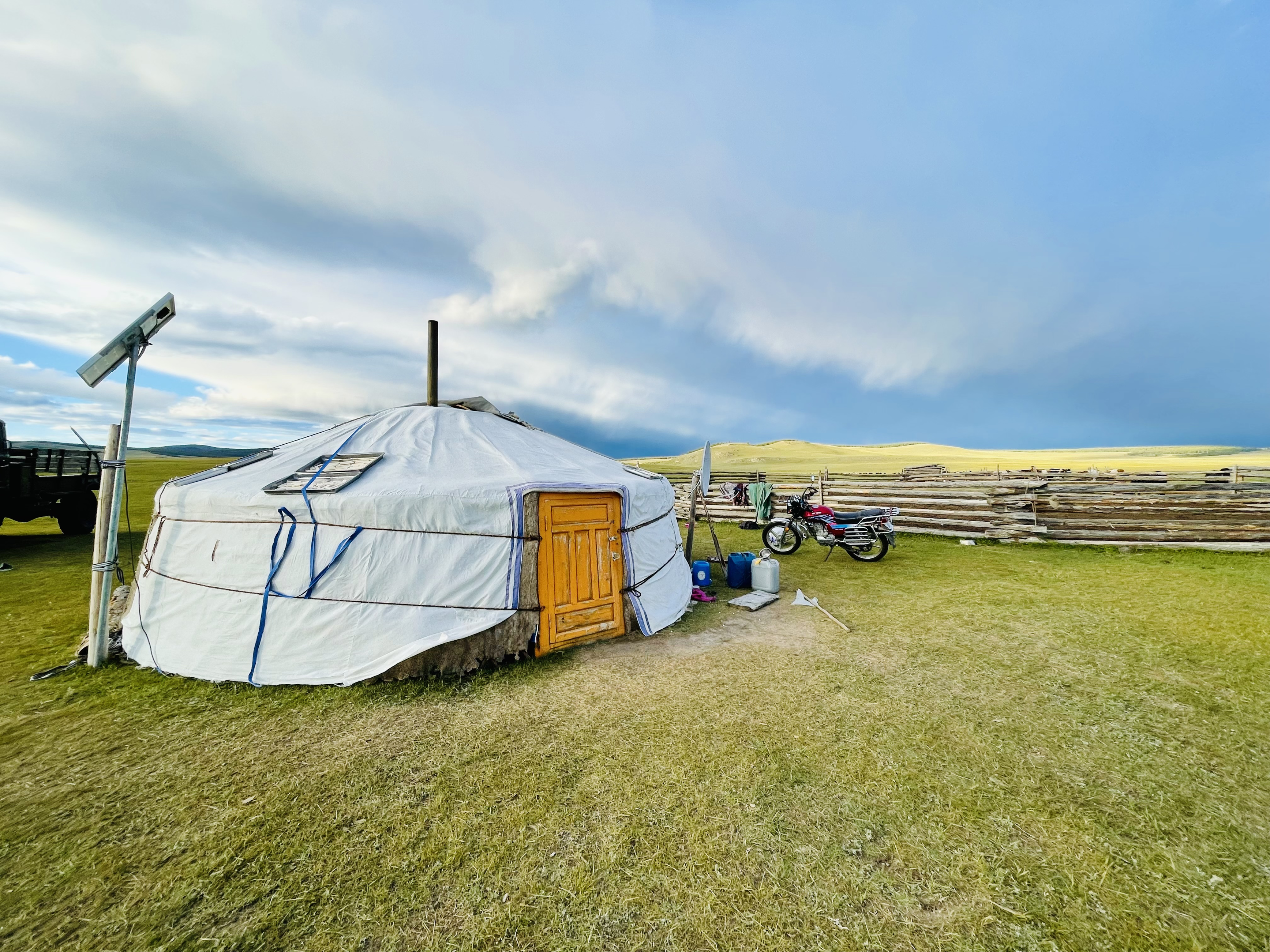
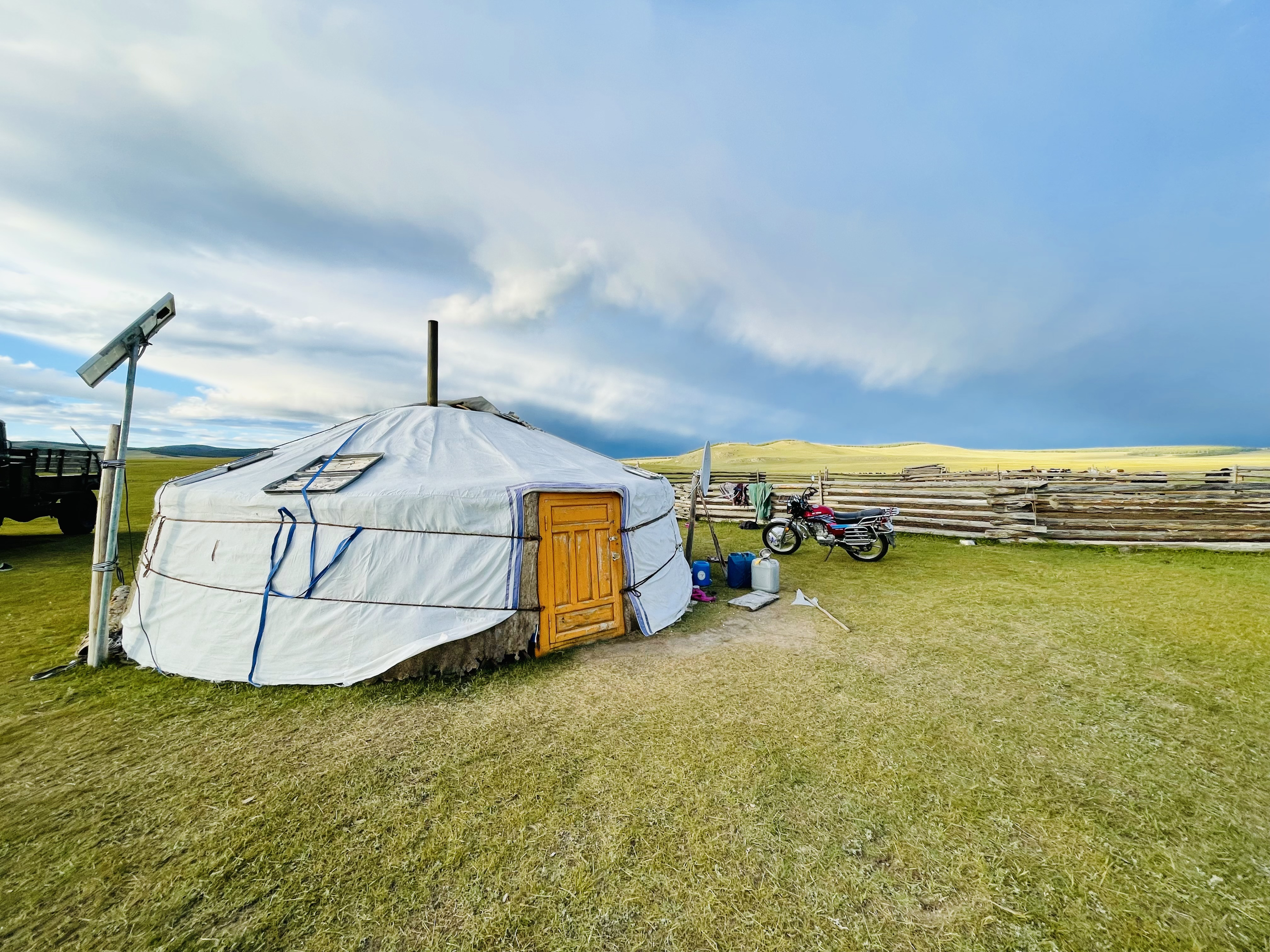
The Mongolian ger is a portable circular dwelling constructed from a collapsible wooden frame and layered wool felt wall, roof and floor coverings, used by nomadic pastoral herding communities across the Mongolian steppe for nearly 3,000 years (as shown in Figure 1) (Baimandulatu and Baasan Reference Baimandulatu and Baasan2025; Breniquet and Michel Reference Breniquet, Michel, Breniquet and Michel2014; Bunn Reference Bunn2010; Jargalsaikhan Reference Jargalsaikhan2013; Paddock and Schofield Reference Paddock and Schofield2017). Perfectly adapted to address a punishing natural climate, the felt envelope of the ger balances insulation, ventilation and moisture regulation through permeable wool felt layers and adjustable openings, functioning as a responsive environmental system rather than a static, permanent construction (Baimandulatu and Baasan Reference Baimandulatu and Baasan2025). The flexible and portable nature of the ger also reflects the pastoralist connection to environment and ecosystem; living lightly on the land and leaving no permanent building footprint, and utilising all by-products of mixed-flock herding (Allsen, Reference Allsen2002; Paddock and Schofield Reference Paddock and Schofield2017).
Nomadic family ger of horse guide Ganbat Marush and wife Nadmid in Khövsgöl region showing timber lattice walls, felt coverings and horsehair tension ropes (photograph by author, used with permission).
The ger is also a culturally embedded spatial system shaped by social organisation, ritual practice and pastoral lifeways (Paddock and Schofield Reference Paddock and Schofield2017). Composite ger felt is closely tied to communal labour, seasonal herding cycles and produced through a ritual of intergenerational tacit knowledge. As a result, ger felt operates not only as a technical material, but as part of a broader sociocultural and ecological system (Altangerel, Reference Altangerel2020; Jargalsaikhan, Reference Jargalsaikhan2013; Myadar, Reference Myadar2011).
Contemporary ger districts in Ulaanbaatar present new environmental pressures, particularly severe winter air pollution associated with gers’ central coal-burning stoves and the transition from nomadic mobility to more permanent peri-urban settlement (Cousins, Reference Cousins2019; GerHub, n.d.). These changing conditions reflect a disconnect between the intended context of a ger’s design and their use within contemporary and urban environments and reflect the strain of maintaining tradition under increasing environmental and performance demands (Ritchie et al. Reference Ritchie, Lewis, McNaughton Nicholls and Ormston2014; Sarlagtay Reference Sarlagtay2004).
This context provides a critical site for investigating materially grounded biodesign interventions. Rather than replacing existing structures or practices, the study explores how mycelium-based composites can be integrated into wool felt systems to enhance environmental performance while maintaining cultural continuity. Material Re-Mixing therefore positions the ger as a platform for context-responsive innovation grounded in existing material ecologies and embodied knowledge.
Results
Material performance of Ger felt
Material Re-Mixing begins with detailed material literacy. Five handmade composite ger felt samples, labelled A to E, were collected from different regions of Mongolia to capture regional variation in composition and performance. Mongolian ger felt is produced manually from the wool and hair of sheep, goat, yak, sarlag (cattle-yak crossbreeds), camel, horse and cattle, depending on local herd composition, geography and season of feltmaking (Bunn Reference Bunn2010; Fijn Reference Fijn2011; Norov Reference Norov2010). Visual comparison of the five samples revealed substantial variation in colour, density and fibre composition, reinforcing the composite nature of Mongolian ger felt (Figure 2).
(L-R): Five composite felt samples, A-E used within the research and purchased within Mongolia in 2022 (photographs by author).

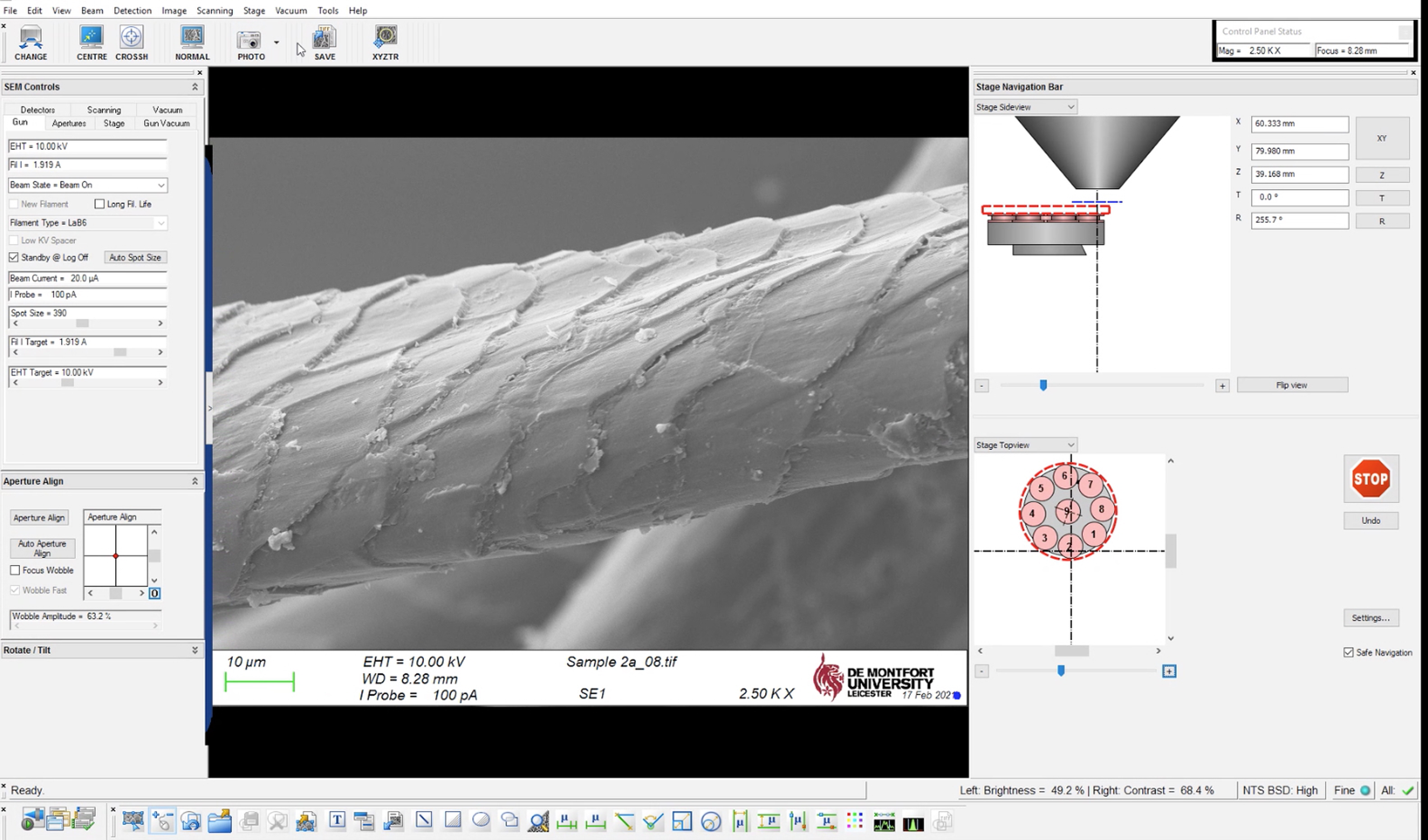
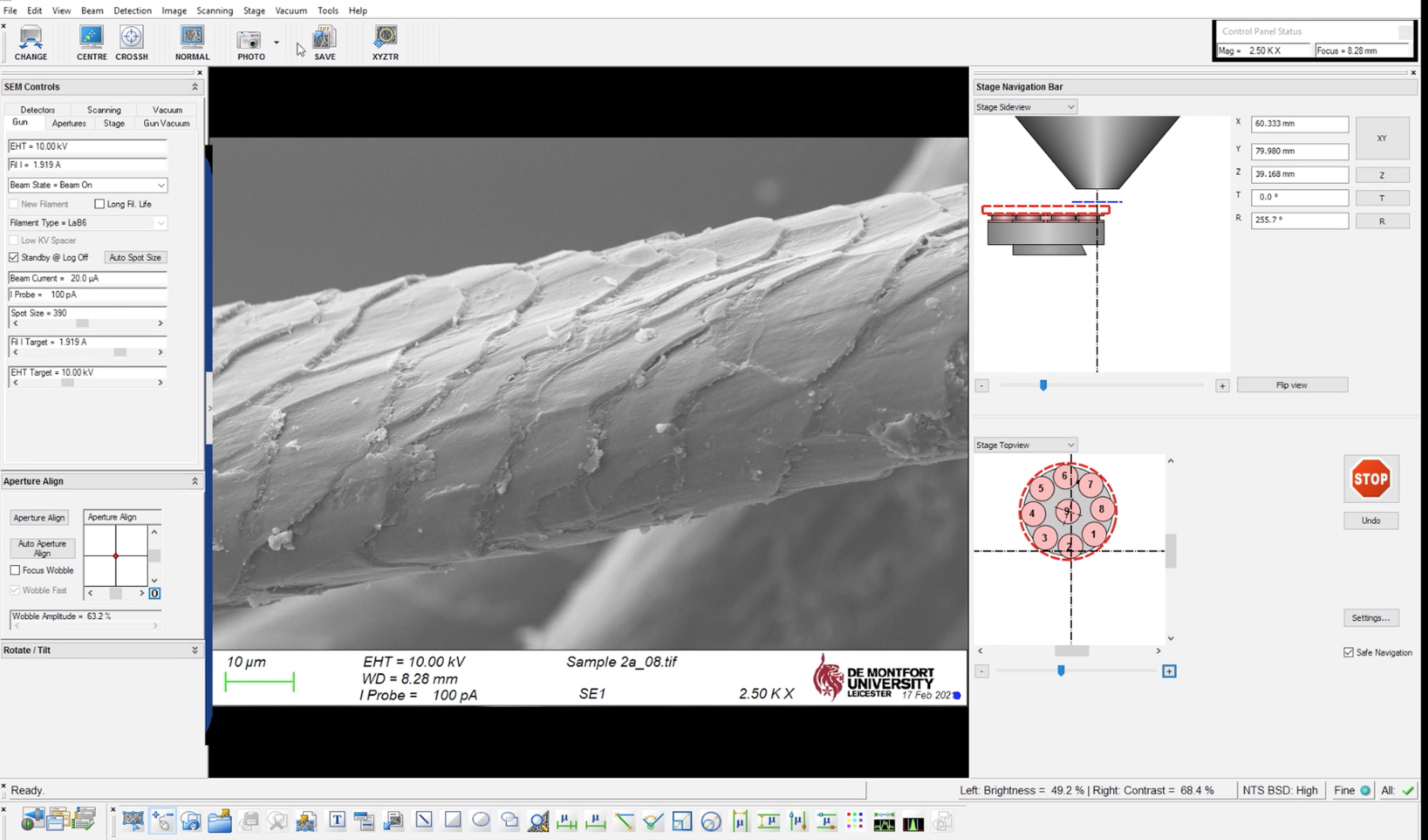
To quantify fibre ratios and correlate composition with performance, fibres were analysed using compound microscopy and Scanning Electron Microscopy at De Montfort University. Scanning electron microscope (SEM) imaging demonstrated significant differences in fibre scale and physical properties. Horsehair exhibited smooth and uniform scales, while yak and sarlag fibres (as shown in Figure 3) displayed irregular and raised scale structures. Because felting relies on interlocking scales under heat, moisture and agitation, fibres with more pronounced scale structures may generate tighter mechanical bonding (Lim Reference Lim2017). Optical sorting and compound microscopy enabled the calculation of fibre ratios across samples, providing a measurable baseline for comparing structural and thermal behaviour across different fibre types.
Screenshot of the Scanning Electron Microscope (SEM) dashboard showing the process of measuring and photographing fibres within composite felt samples. This image shows the irregular and loose scale structure on the surface of a yak fibre, 2021 (image taken by SEM technician Rachel Armitage and used with permission).
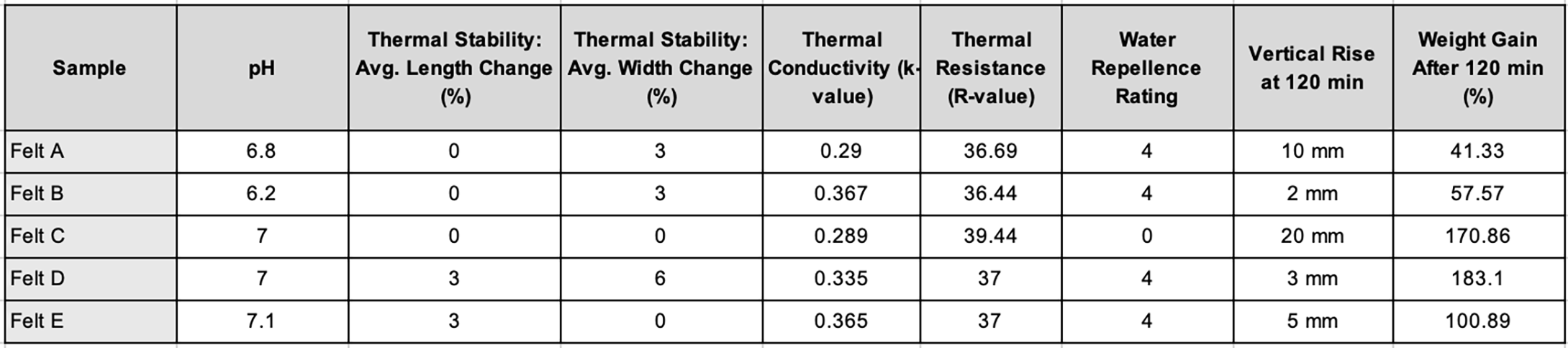
Technical performance was then assessed under internationally recognised standards. The samples were tested for pH (ISO 3071:2020), thermal dimensional stability (ISO 9866-2:1991), thermal transmittance (D 1518-85), water repellence (ISO 23232:2009) and water wicking (AATCC TM197-2011e2(2018)e) under sterile and reproducible lab conditions in De Montfort University’s Textile Testing labs and in accordance with accepted methods (Booth Reference Booth1968). Results are shown in Figure 4; the tests establish reproducible performance metrics and provide a novel dataset for ger felt, as no prior standardised testing data currently exists in published literature.
Comparative physical and environmental performance data for five regional Mongolian ger felt samples tested under standardised textile testing protocols.
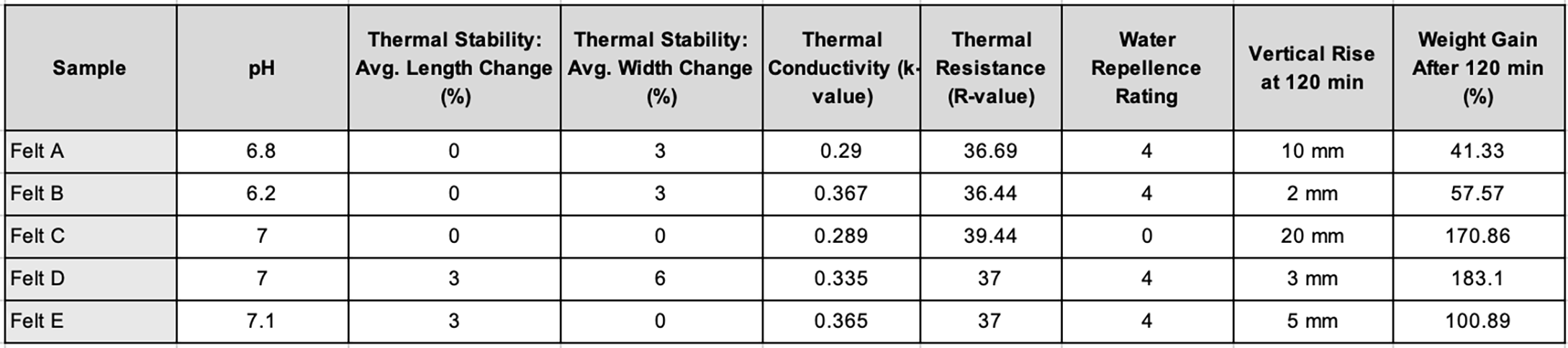
The pH values indicate slightly acidic conditions, which reflect wool’s natural bacterial resistance and aligns closely with human skin pH, reinforcing the felt’s suitability for interior domestic use and its potential for use in bio-material combinations (Booth Reference Booth1968). Thermal dimensional stability tests under ISO 9866-2:1991 demonstrated minimal distortion under heat and low pressure, with no significant discolouration in most samples. These findings confirm wool felt’s fire resistance and dimensional stability within the interior conditions of a ger.
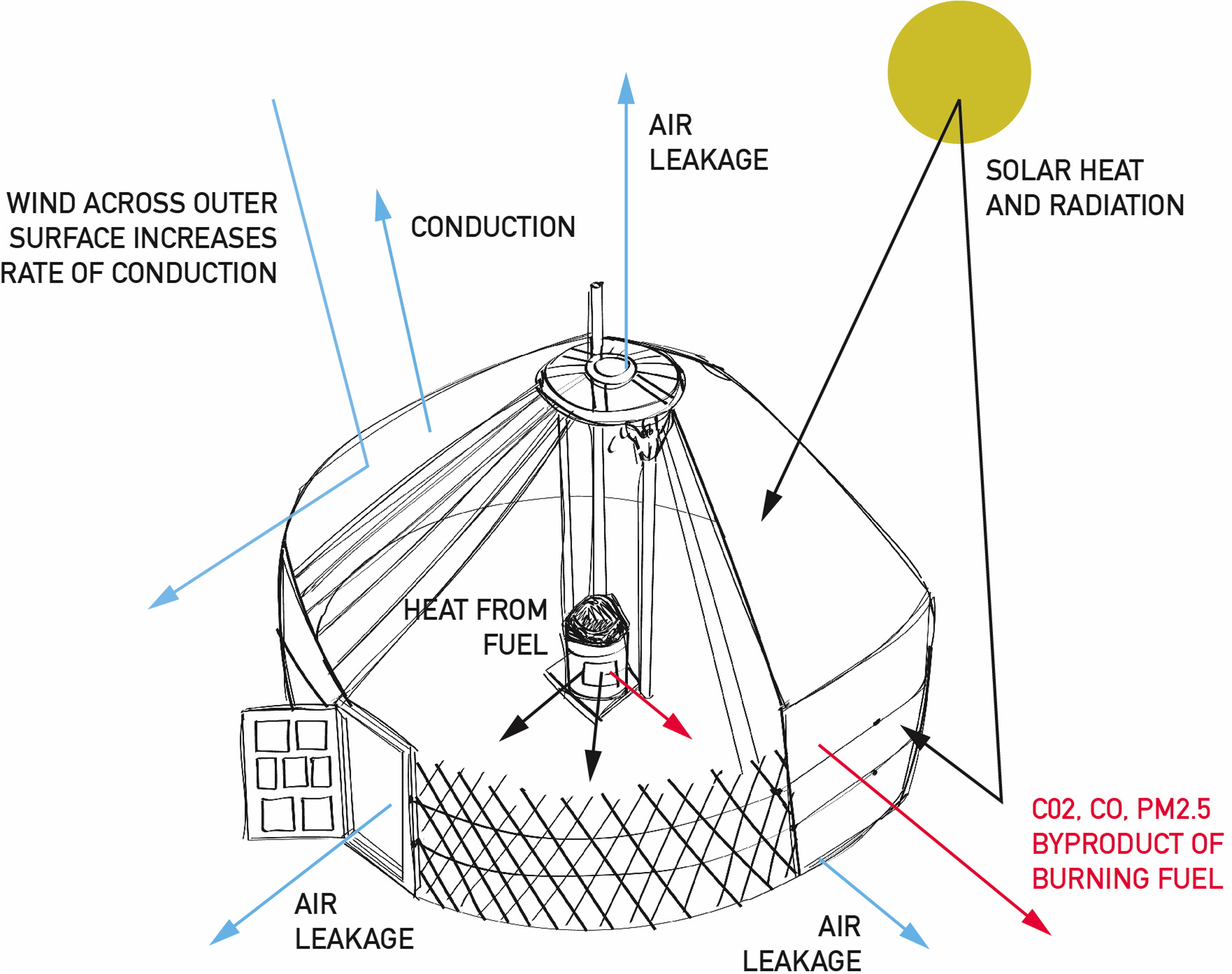
Thermal transmittance testing under ISO D 1518-85 revealed relatively high thermal conductivity when compared to common Western insulation materials. In isolation, this might be interpreted as a performance limitation, however, within the ger context, airflow through the felt envelope is essential (Figure 5). Gers are heated by central coal-burning stoves, producing high levels of indoor CO, CO2 and PM2.5 pollution – particularly during winter months, when the stove must be kept burning all day to counteract the freezing temperatures outside (−40°C) (Amarsaikhan et al. Reference Amarsaikhan, Battsengel, Nergui, Ganzorig and Bolor2014; Cousins Reference Cousins2019; Davy et al. Reference Davy, Gunchin and Markwitz2011; Environment 2019; Hasaskenopf Reference Hasaskenopf2012). Increased insulation and reduced thermal transmittance without a transition to different fuel sources would exacerbate indoor air pollution and create unsafe conditions for residents; concurrent studies proposing enhanced ger insulation always propose alternative energy sources such as electric heating (Braham et al. Reference Braham, Oskierko-Jeznacki and Hakkarainen2019; phys.org n.d). In this application, the permeability of wool felt functions as an intentional architectural feature that balances heat retention with necessary ventilation.
Diagram of heat inputs and flows within Mongolian gers to contextualise thermal conductivity of felt and other components of the building envelope (infographic and illustration created by author).

Water repellence testing under ISO 23232:2009 yielded ratings of 4 for four samples and 0 for one sample, reflecting the protective role of lanolin in untreated wool (Xu et al. Reference Xu, Jin and Kang2019). Vertical water wicking under AATCC TM197-2011e2(2018)e showed slow upward movement of water between 0 and 10 mm over 20 minutes, significantly lower than rates documented for woven wool fabrics (Ratnapandian et al. Reference Ratnapandian, Wang, Fergusson and Naebe2011). The irregular multi-directional structure of Mongolian felt likely inhibits capillary transport (Lu et al. Reference Lu, Wang and Gao2018). However, once absorbed, the felt retained substantial moisture, consistent with documented sponge-like applications of technical felt, a quality which could be intentionally exploited in growth of biological components in novel composite materials (Kaltsidi et al. Reference Kaltsidi, Fernández-Cañero, Franco-Salas and Pérez-Urrestarazu2020).
Taken together, these results established a detailed understanding of Mongolian ger felt as a composite textile system. They also revealed latent performance capacities, particularly in airflow and moisture retention, that could be strategically leveraged within a biological composite rather than treated as deficiencies.
Performance of mycelium-wool composites
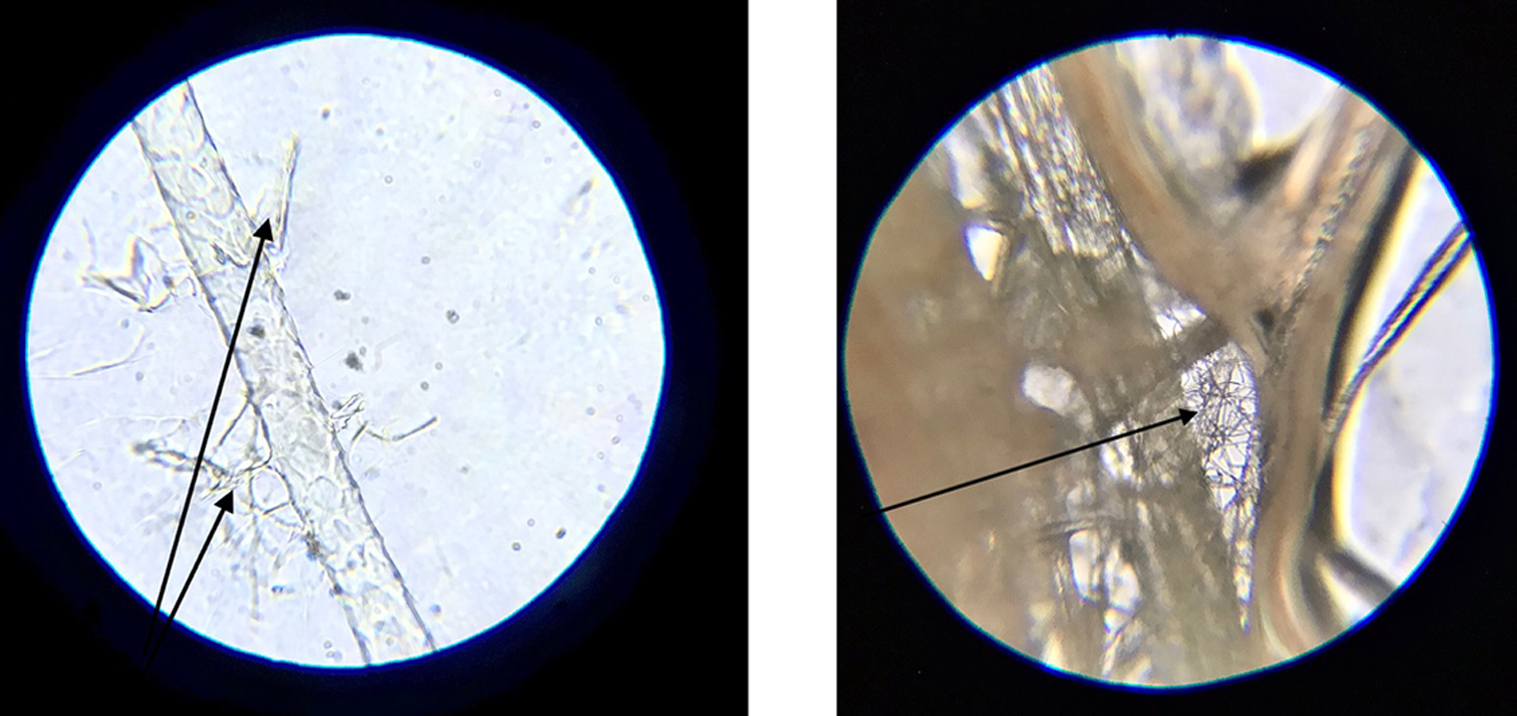
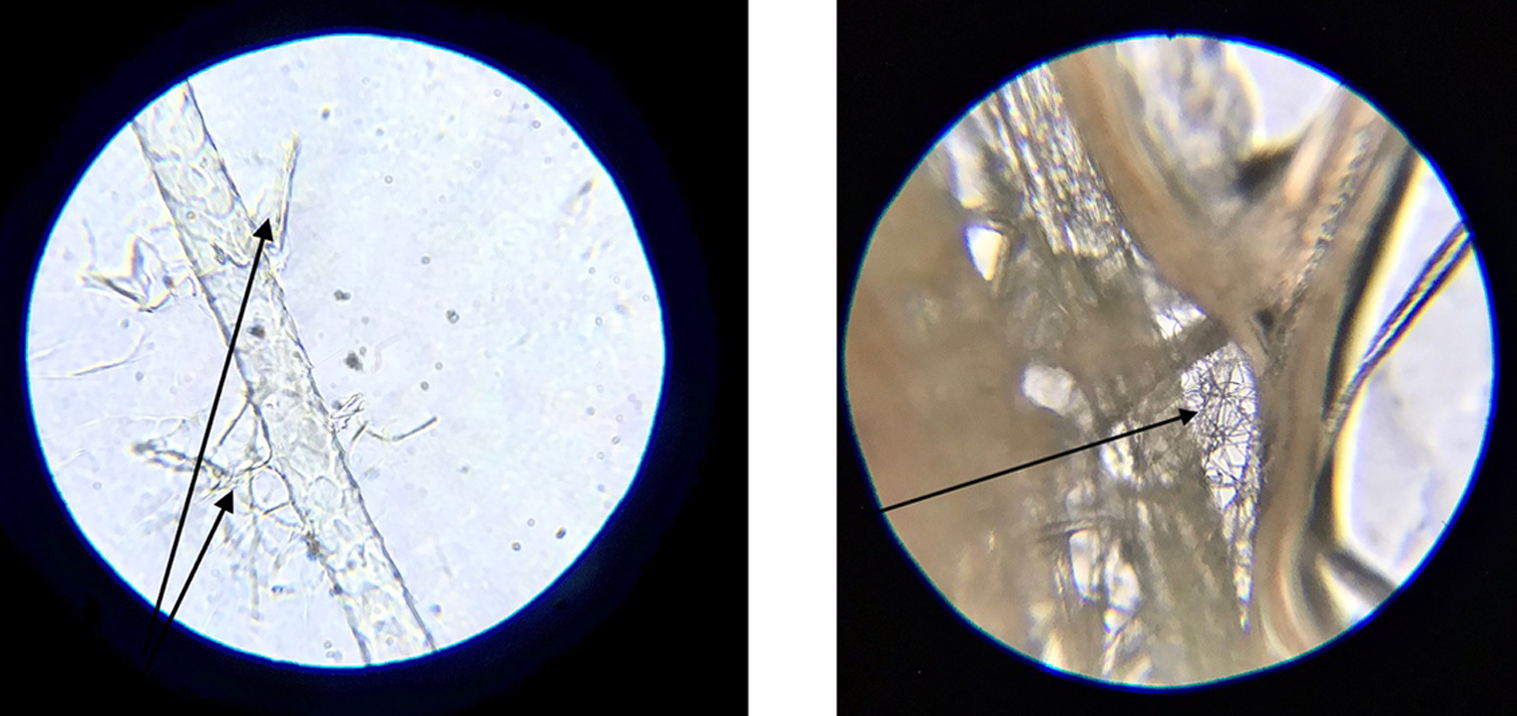
The next phase of the investigation examined biological elements compatible with wool felt. Secondary research explored algae, lichen, moss and fungal mycelium as potential agents of integration (Morrow et al. Reference Morrow, Bridgens and Mackenzie2023; Ostendorf-Rodriguez and González Reference Ostendorf-Rodriguez and González2023). Fungal mycelium demonstrated the strongest potential due to its structural, insulative and myco-remediation capacities. Mycelium functions ecologically as a decomposer and filtration network capable of breaking down pollutants and absorbing contaminants (Bray Reference Bray2021; Sheldrake Reference Sheldrake2020; Seifert and Dunn Reference Seifert and Dunn2022), and it is increasingly researched as a biodegradable composite for architectural and product applications (Cerimi et al. Reference Cerimi, Akkaya, Pohl, Schmidt and Neubauer2019; Williams et al. Reference Williams, Cenian, Golsteijn, Morris and Scullin2022; Zeller and Zocher Reference Zeller and Zocher2012). Initial experiments demonstrated that mycelium utilised wool fibres both as scaffolding and as a nutrient source, as demonstrated in Figure 6 (Bray Reference Bray2021; Sheldrake Reference Sheldrake2020).
Compound microscope images of mycelium growth and wool fibres, 2021. Figure 5 (L) shows mycelium hyphae (the small fine strands) breaking into the cuticle of the hair fibres and using the keratin as a protein source, and Figure 6 (R) shows the negative space between wool fibres being filled by mycelium (photographs by author).
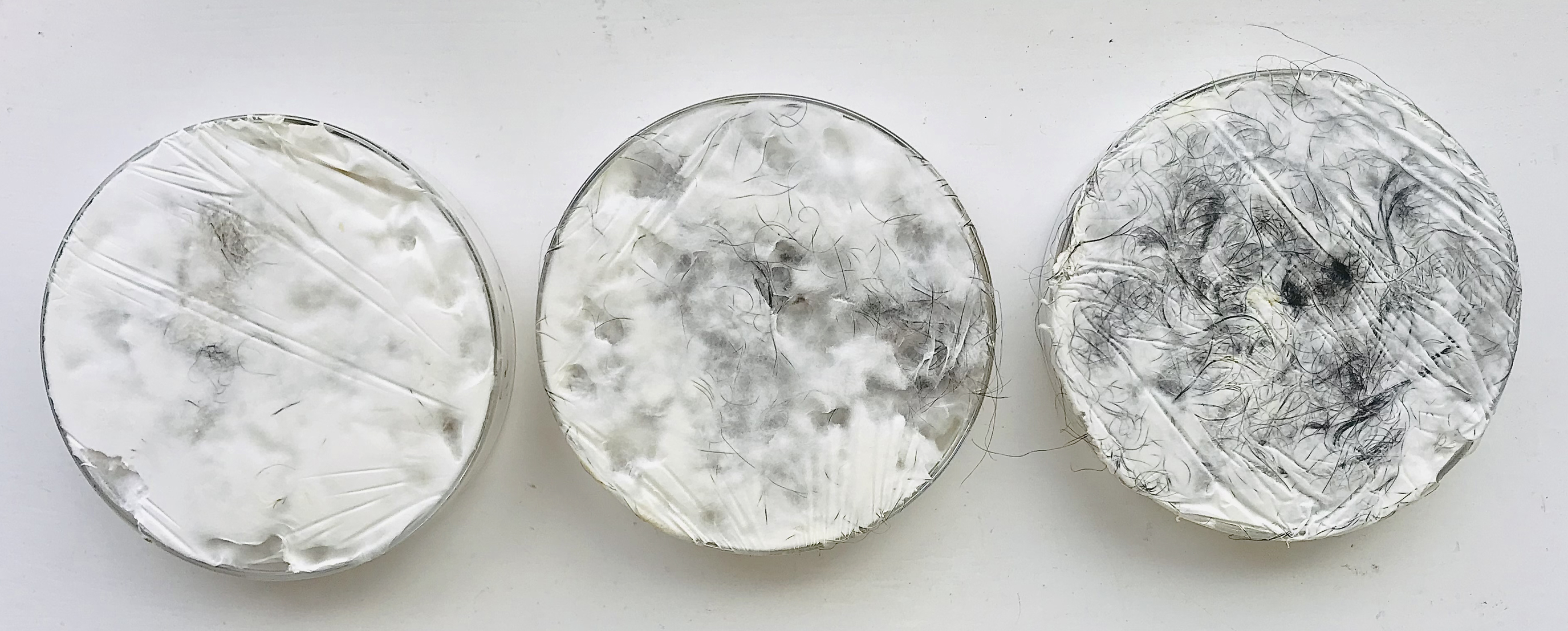
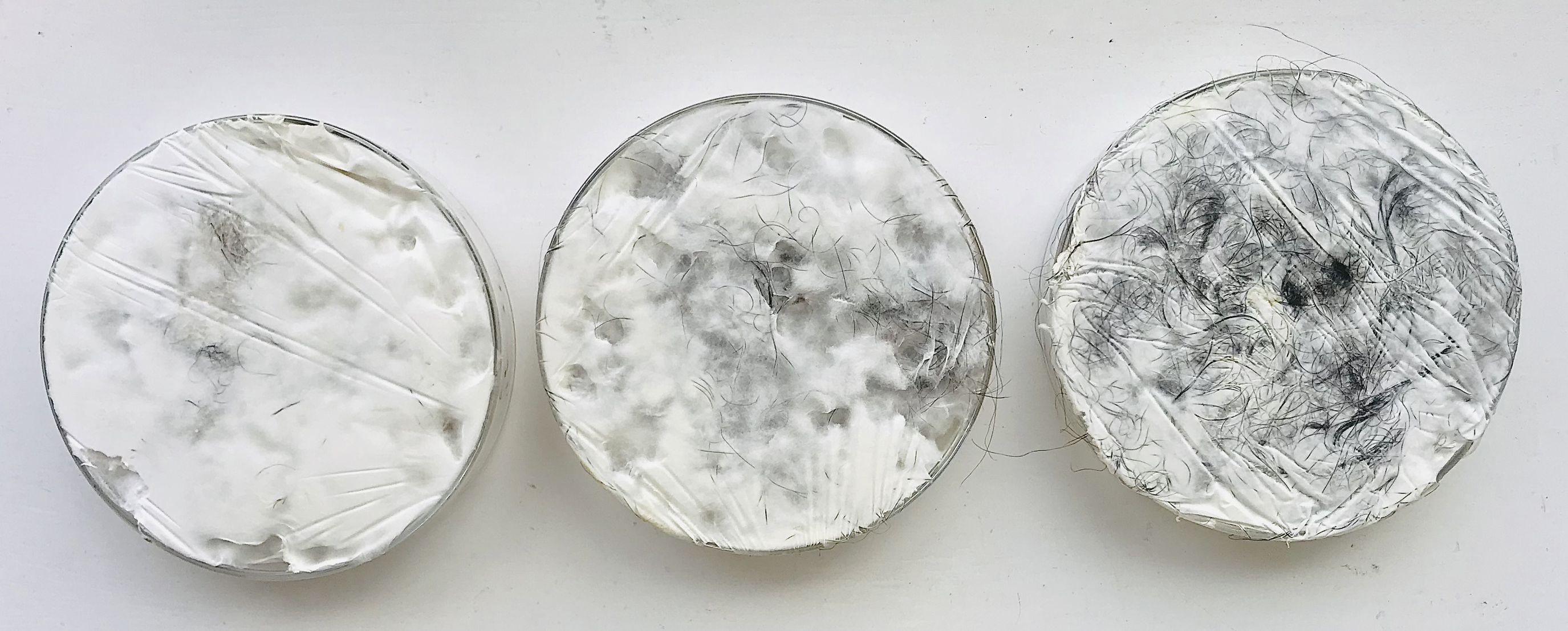
Through iterative trials, a reproducible fabrication process was developed to cultivate consistent mycelium-wool composite samples under environmental conditions approximating those found inside gers. After air drying for 14 days to ensure stability, the composite samples were subjected to the same technical tests as the felt baseline. Three uniform bio-composite samples created from mycelium and ger felt used to conduct technical tests are shown in Figure 7.
Uniform material samples created for technical textile and performance testing (photograph by author). Before testing, the samples were air dried for 14 days to ensure they were a stable material.
As shown in Figure 8 above, the average pH of the composites was 6.73, closely aligned with wool alone. Thermal dimensional stability under ISO 9866-2:1991 showed no measurable dimensional change. Although samples discoloured at 200°C, they retained structural integrity and exhibited only slight compression. Despite their lightweight, foam-like texture, the composites demonstrated notable strength and resilience.
Physical and environmental performance data for mycelium-wool composite samples tested under standardised textile testing protocols (table created by author).

Thermal transmittance testing under ISO D 1518-85 (shown in Figure 8) revealed values comparable to felt, despite the composite samples being only 1 mm thick compared to 10 to 13 mm for the felt panels. When normalised for thickness, the composite exhibited lower thermal conductivity, indicating higher insulative efficiency per millimetre. Modelling scenarios combining three layers of felt with one layer of mycelium composite indicated a measurable increase in overall R-value, supporting a modular additive strategy rather than material replacement.
Water repellence under ISO 23232:2009 for the bio-composites yielded a rating of 3, slightly lower than wool felt alone (Figure 8). This difference is likely attributable to the absorptive hyphal structure of mycelium. However, vertical water wicking tests under AATCC TM197-2011e2(2018)e demonstrated no upward movement during the 120-minute testing window; although the composite absorbed water rapidly, increasing in weight by over 150 percent, it did not distribute moisture vertically (Figure 8). This suggests potential for condensation absorption without unwanted capillary spread.
Given the acute winter air pollution in ger districts, preliminary filtration tests were conducted to explore whether actively growing mycelium composites could reduce particulate matter. Secondary research documented winter indoor PM2.5 levels ranging from 100 to 375 µg/m3 in 60 occupied gers using coal stoves (Lim et al. Reference Lim, Myagmarchuluun, Ban, Hwang, Ochir, Lodoisamba and Lee2018). Two sealed chambers were constructed, each replicating stove conditions by burning 40 g of raw coal daily, producing initial PM2.5 concentrations of approximately 400 µg/m3.
One chamber served as a control, while the second contained a growing mycelium composite panel during days 10 to 15 of its growth cycle. PM2.5 levels were measured at 10:00, 12:00 and 14:00 each day. The chamber containing mycelium consistently demonstrated a more rapid decrease in particulate concentration over time. After seven days of repeated coal combustion, distilled water was introduced into both chambers and tested for heavy metals using an aqueous method adapted from ISO 3071:2020. Preliminary findings suggest lower heavy metal accumulation in the chamber containing mycelium. Although these experiments require further controlled validation, they provide an initial proof of concept to suggest that actively growing mycelium composites may contribute to indoor air filtration during peak pollution periods.
Participatory and cultural findings
Technical validation alone is insufficient for intervention within a culturally embedded domestic system. Archival research, including museum artefacts and historical literature, situates feltmaking within a 6,000-year lineage (Bunn Reference Bunn2010; Howell and Prevenier Reference Howell and Prevenier2001; Ingold Reference Ingold2013). In Mongolia, ger felt is passed down matrilineally and is understood to hold the memories of female ancestors (Bunn Reference Bunn2010). This symbolic dimension and significance within Mongolian culture and identity cannot be separated from material performance and is a vital factor for consideration within design-based future interventions.
Primary research included homestays, interviews and participation in the traditional hand feltmaking ritual, which foregrounded both tacit material knowledge and contemporary inclination towards adaptation (Pink Reference Pink2009; Smith Reference Smith1999; Walker et al. Reference Walker, Evans, Cassidy, Jung and Twigger Holroyd2018). Through these interviews and interactions, residents described the ger not as a static relic of their cultural history, but as a contemporary and adaptable structure continually modified to suit changing needs, thus framing additional intervention as relevant and culturally acceptable.
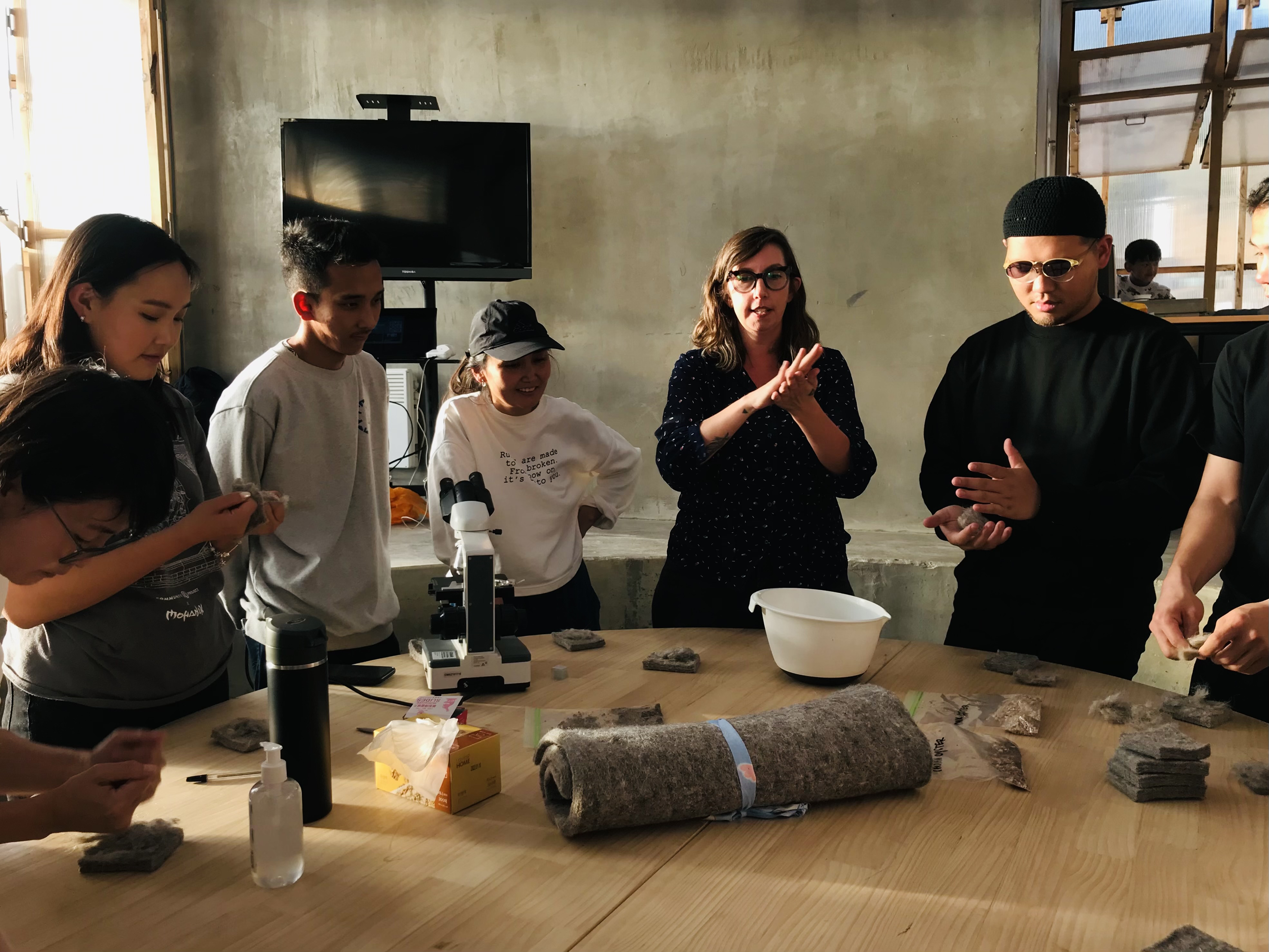
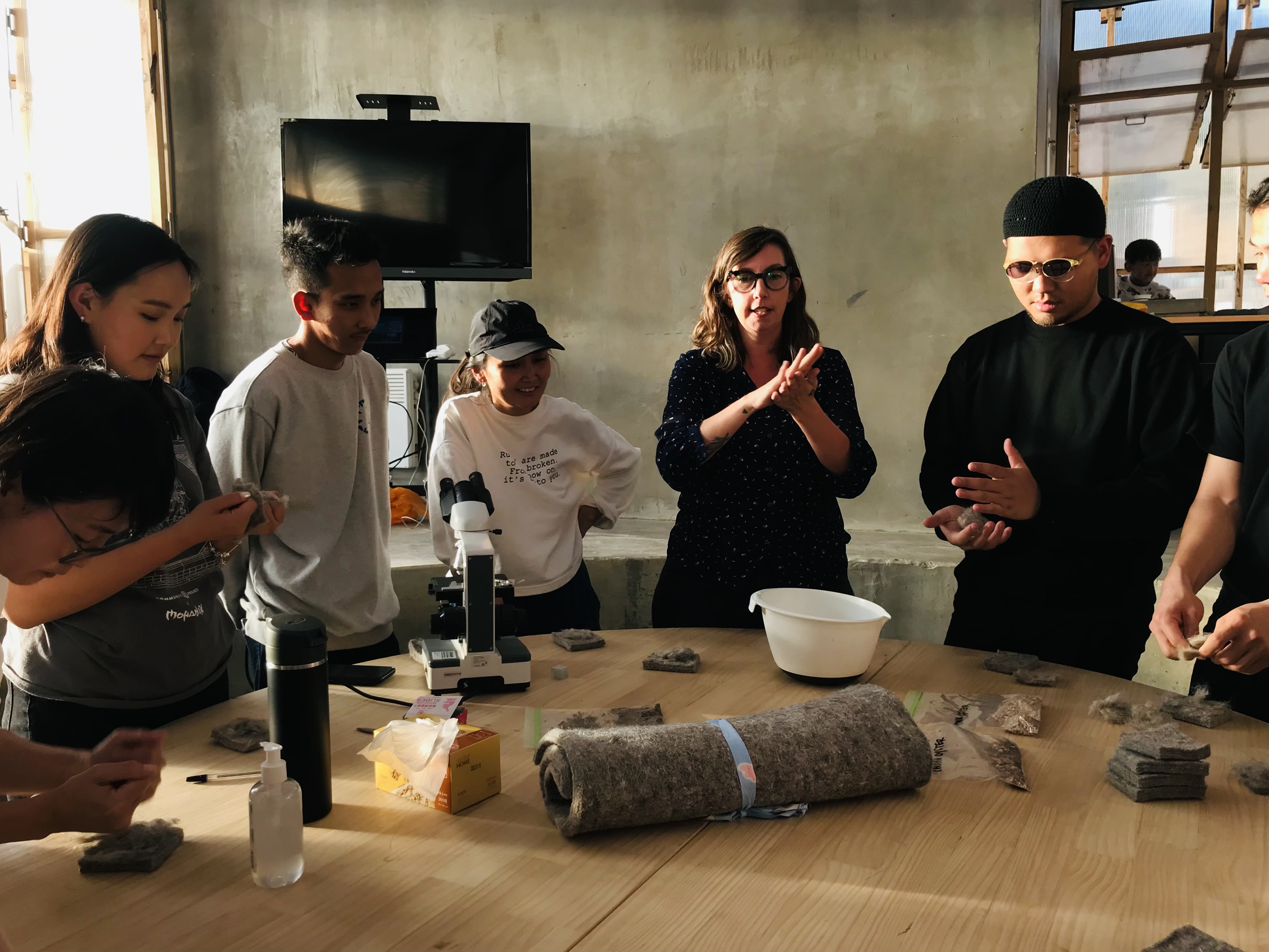
Participatory and stakeholder workshops at the Ger Innovation Hub then helped to translate laboratory findings into embodied experimentation. As shown in Figure 9, participants engaged directly with wool fibres, cellulosic waste (straw and grass) and mycelium-embedded grain (starter culture), co-fabricating samples through re-creating the steps of the traditional feltmaking processes documented in the countryside (Dranttel, Reference Dranttel2026). In fact, many participants weren’t previously familiar with Mongolian feltmaking as most had grown up in Ulaanbaatar’s ger district or had purchased factory-made felt for their own homes. This positions Material Re-Mixing as a method of not only adapting traditions but carrying on legacies that are dwindling or nearing extinction in modern life.
The researcher co-creating mycelium and ger felt samples through the integration of the traditional Mongolian feltmaking with the process for embedding mycelium during a material workshop with Ger District residents, 2022 (photograph by Uurtsaikh Sangi and used with permission and participant consent).
The addition of fungal mycelium to the ger wool was perceived by stakeholders not as an external technological imposition but as an extension of existing ecological relationships already embedded within pastoral life and an added element to improve value and circularity of the utilised materials. Through material play, participants also explored prefabricated samples and evaluated perceived insulative qualities, strength, moisture retention and symbolic and cultural resonance. This process generated insight not only into technical feasibility but also into acceptability and desirability by the stakeholders themselves.
During the workshop, stakeholders proposed the use of mycelium bio-composites within the ger as modular interior panels that can be inserted seasonally to enhance insulation and potentially contribute to air filtration during winter months. After active growth ceases, panels may remain as structural elements or be composted to improve soil quality for grazing herds. Mycelium-enhanced compost has been shown to improve soil health and accelerate decomposition, contributing to circular nutrient flows and re-energising closed loop systems building on from traditional pastoralist knowledge (Li et al. Reference Li, Yang, Zhang, Shang, Zhang, Chang, Wu and He2024). Because gers operate as lightweight textile systems rather than rigid masonry structures, the composite’s low density and flexibility align with architectural requirements distinct from Western construction systems that demand high compressive strength (Saez and Márföldi Reference Saez, Márföldi, Rinke and Hvejsel2025). The intervention therefore augments rather than replaces the existing felt building envelope and the intentionally refined qualities of the Mongolian ger.
This case study demonstrates that Material Re-Mixing functions as a materially rigorous, biologically informed and culturally embedded approach to design intervention. By establishing a technical baseline, integrating compatible biological agents, re-testing under identical standard and embedding hands-on material experimentation within participatory processes, the methodology produces bio-composite interventions that are both scientifically grounded and culturally situated.
Discussion
The findings demonstrate that material performance cannot be separated from the sociocultural and environmental systems in which materials operate. Across technical testing, biological experimentation and participatory engagement, the study positions materials not as isolated products, but as components within dynamic socio-ecological relationships. This has implications for how material innovation is conceptualised within biodesign and design research more broadly.
Contextual material performance
The performance of Mongolian ger felt highlights the limitations of evaluating materials through universalised performance metrics alone. While testing confirmed stable pH, dimensional stability and moderate water repellence, these characteristics acquire different significance within the lived conditions of the ger. In particular, the permeability of felt, which may be interpreted as a limitation within conventional insulation frameworks, functions as an adaptive feature supporting airflow and ventilation in environments affected by severe indoor air pollution.
This demonstrates that material optimisation cannot be understood solely through maximising efficiency or insulation values. Instead, material performance emerges relationally through interactions between technical properties, environmental conditions and everyday use. The findings therefore reinforce the need for context-specific evaluation frameworks within material research and biodesign practice.
Biological integration as material extension
The integration of mycelium within wool felt demonstrates how biological systems can function as extensions of existing material ecologies rather than replacements for them. While the composites demonstrated improved thermal efficiency relative to thickness, their significance lies more broadly in the introduction of biological processes such as growth, filtration and decomposition into established material systems.
This reframes biodesign from a model of technological substitution towards one of material augmentation and adaptation. Rather than introducing entirely new materials detached from existing practices, biological agents are integrated into familiar structures capable of evolving incrementally over time. Such an approach aligns more closely with lived environments, where materials are continually repaired, modified and maintained rather than fully replaced. At the same time, the increased moisture absorption observed within the composites highlights the trade-offs inherent within biomaterial development. Improvements in one area of performance may introduce new environmental or structural challenges, reinforcing the need for iterative and context-responsive testing processes.
Participatory co-making and material acceptance
The ethnographic and participatory findings demonstrate that material innovation is shaped as much by cultural perception and embodied familiarity as by technical performance. Participants evaluated mycelium composites through direct material interaction, enabling the material to be understood in relation to existing ecological and pastoral practices rather than as an external technological intervention.
This suggests that material acceptance is closely tied to continuity with existing systems of use and knowledge. Participatory co-making therefore plays a critical role within Material Re-Mixing by shifting participation from consultation towards co-production. Knowledge emerges through shared experimentation, allowing participants to interpret and adapt material innovations in relation to their own lived practices. In doing so, the methodology challenges designer-led hierarchies of expertise and supports more situated forms of material innovation.
Extending design frameworks through material practice
The study extends Regenerative Design, Participatory Design and biodesign by operationalising their principles through material practice. Regenerative Design often remains focused on systems-level ecological thinking, while Participatory Design frequently structures participation through designer-mediated processes. Material Re-Mixing translates these frameworks into embodied processes of making in which biological integration, material experimentation and participation occur simultaneously.
The research also challenges dominant orientations within biodesign, which frequently privilege laboratory-based innovation and technologically intensive production systems. By contrast, this study demonstrates that biological integration can emerge through materially grounded and low-tech processes operating within existing cultural and environmental systems. In doing so, the research expands biodesign towards more context-responsive and participatory forms of practice.
Towards Material Re-Mixing as methodological contribution
Taken together, the findings support Material Re-Mixing as a methodology integrating material, biological and cultural systems within a single iterative framework. Rather than positioning innovation as externally imposed technological replacement, the methodology works through existing material ecologies, embodied knowledge and lived infrastructures.
Importantly, Material Re-Mixing is not defined by specific materials or fabrication techniques, but by a process through which material investigation, biological integration and participatory engagement continuously inform one another. Its emphasis on material specificity, shared authorship and iterative development supports a form of biodesign practice that is simultaneously technically rigorous, culturally situated and adaptable across contexts.
Limitations
While the study demonstrates the potential of Material Re-Mixing as a culturally situated biodesign methodology, several limitations must be acknowledged. Technically, the material testing and environmental simulations remain exploratory and were conducted at a limited scale. The PM2.5 and heavy metal filtration experiments involving active mycelium composites provide only preliminary indications of air filtration capacity and require further validation under controlled laboratory conditions and extended testing periods. Similarly, the composites were evaluated over relatively short cultivation and testing durations, meaning that long-term durability, biodegradation behaviour, seasonal variation and maintenance requirements remain insufficiently understood. No full-scale architectural deployment within occupied gers was undertaken, and the findings should therefore be understood as proof-of-concept rather than fully validated construction applications.
Methodologically, the research is intentionally situated and practice-based, prioritising contextual understanding over universal generalisability. The ethnographic and participatory components therefore involve interpretive subjectivity shaped by the researcher’s embodied engagement within the field. Workshop participation was also limited in scale and geographically specific, meaning that perceptions of material desirability and usability cannot be assumed to represent all Mongolian communities or pastoral groups. Furthermore, while Material Re-Mixing is proposed as a transferable methodology, its application within other cultural and environmental contexts would require adaptation to local material systems, ecological conditions and social practices.
The findings are also closely tied to the environmental realities of contemporary ger districts, particularly the widespread use of coal-burning stoves and the resulting indoor air pollution conditions. As heating infrastructures, urban conditions and environmental policies evolve, the performance requirements and relevance of the proposed interventions may also shift. Future research should therefore explore long-term testing, larger-scale deployment, alternative biological integrations and comparative applications across different material cultures and climatic contexts.
Material Re-Mixing framework
The findings outlined above inform the development of Material Re-Mixing as a structured biodesign methodology. Emerging inductively through material testing, biological experimentation and participatory co-making, the framework translates the ambitions of Regenerative Design, Participatory Design and biodesign into a materially grounded operational process.
Material Re-Mixing is structured through five interrelated principles that operate collectively rather than sequentially:
-
• Material literacy establishes an understanding of material systems across technical, sensory and cultural dimensions. Materials are investigated not only through measurable properties, but through embodied interaction, environmental context and everyday use (Parisi et al. Reference Parisi, Rognoli and Sonneveld2017; Woodward Reference Woodward2020).
-
• Biological integration introduces living systems into existing material ecologies. Biological processes such as growth, filtration and decomposition are embedded within established material structures, enabling functional enhancement while maintaining material continuity.
-
• Participatory co-making positions stakeholders as active contributors within material experimentation. Knowledge is generated through collective making, observation and evaluation, shifting participation from consultation towards co-production.
-
• Circular systems thinking situates materials within broader ecological cycles of growth, use, decay and reintegration. Materials are understood as components within regenerative systems rather than isolated products.
-
• Decolonial ethics underpin the framework through reciprocity, contextual integrity and recognition of communities as knowledge holders and co-producers within material innovation processes.
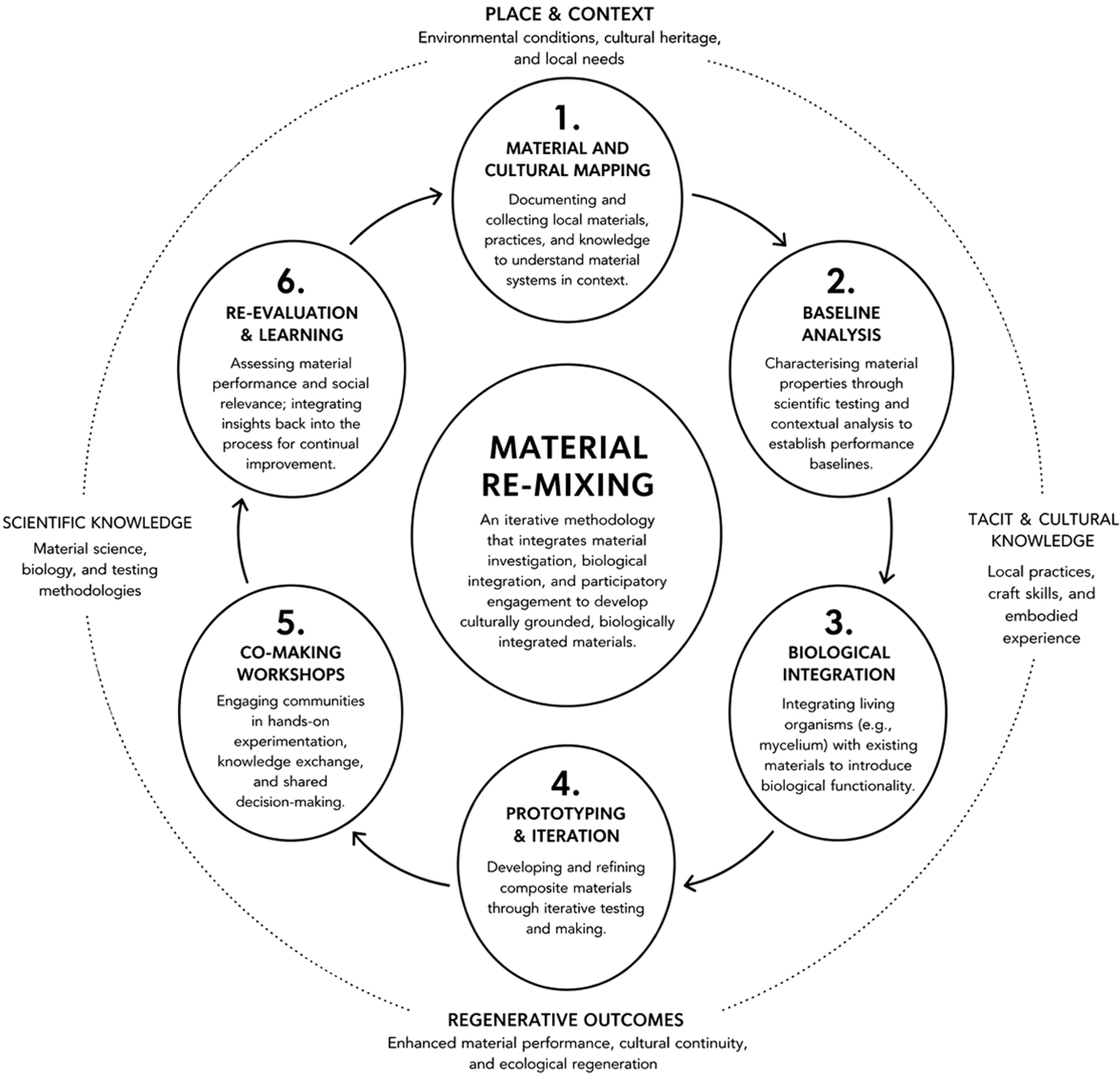
Together, these principles operate through an iterative process in which material investigation, biological experimentation and participatory engagement continuously inform one another. Figure 10 (below) visualises the iterative and non-linear structure of Material Re-Mixing, demonstrating how material investigation, biological integration and participatory engagement continuously inform one another. Rather than functioning as a fixed sequence, these stages remain adaptive and responsive to context.
Material Re-Mixing methodology diagram, created by author.

Figure 10. Long description
A diagram of the Material Re-Mixing methodology, representing a circular process with six interconnected steps. The diagram is divided into sections labeled 1 through 6, each representing a different phase of the methodology. The central circle is labeled Material Re-Mixing and describes an iterative methodology that integrates material investigation, biological integration, and participatory engagement to develop culturally grounded, biologically integrated materials. The surrounding sections are labeled as follows: 1. Material and Cultural Mapping, which involves documenting and collecting local materials, practices, and knowledge to understand material systems in context. 2. Baseline Analysis, which characterizes material properties through scientific testing and contextual analysis to establish performance baselines. 3. Biological Integration, which integrates living organisms with existing materials to introduce biological functionality. 4. Prototyping and Iteration, which develops and refines composite materials through iterative testing and making. 5. Co-Making Workshops, which engage communities in hands-on experimentation, knowledge exchange, and shared decision-making. 6. Re-Evaluation and Learning, which assesses material performance and social relevance, integrating insights back into the process for continual improvement. The diagram also includes annotations indicating the integration of scientific knowledge, tacit and cultural knowledge, and regenerative outcomes.
As a methodological contribution, Material Re-Mixing offers a transferable approach to biodesign that does not prescribe specific materials or technologies, but establishes a process through which locally available resources, cultural practices and biological systems can be recombined to adapt or innovate material and address systemic issues at a grassroots level. Its adaptability lies in its emphasis on process over outcome, enabling application across diverse socio-ecological contexts.
Conclusion
This paper has introduced Material Re-Mixing as a culturally situated biodesign methodology integrating technical and cultural material investigation, biological integration and participatory co-making within a single iterative framework. Responding to the limitations of existing Regenerative, Participatory and Bio-Design approaches, the research demonstrates the importance of engaging directly with materials as sites of ecological, cultural and social intervention.
Through the case study of Mongolian ger felt and development of novel mycelium-based composites, the research demonstrates that biological integration can enhance environmental performance without severing materials from their cultural and ecological contexts. Rather than positioning innovation as technological replacement, Material Re-Mixing frames design as an adaptive process operating through existing material systems, embodied knowledge and lived practices. The study further demonstrates that material performance emerges relationally through interactions between technical properties, environmental conditions and everyday use, reinforcing the need for context-responsive evaluation frameworks within biodesign research and material innovation. By embedding experimentation within participatory co-making processes, the methodology positions material development as a site of shared inquiry and distributed authorship rather than designer-led intervention.
The contribution of the study is threefold. Methodologically, it establishes Material Re-Mixing as a structured yet adaptable framework connecting laboratory experimentation with community-based material practice. Empirically, it provides new technical data relating to the performance of Mongolian ger felt and mycelium-wool composites. Theoretically, it contributes to emerging discussions surrounding material agency and culturally embedded biodesign by positioning materials, biological systems and tacit knowledge as interconnected components within socio-ecological systems.
More broadly, the research expands the scope of biodesign beyond laboratory and industrial contexts by demonstrating how biological integration can emerge through materially grounded, low-tech and participatory processes. In doing so, it challenges assumptions that innovation must be technologically intensive, universally scalable or externally driven in order to generate meaningful environmental impact. This is particularly relevant for the development of biodesign case studies within non-Western and less technologically advanced communities and countries.
In the context of accelerating climate instability, resource precarity and socio-ecological inequality, this shift has wider implications for design research and practice. Material Re-Mixing does not propose a universal solution, but a transferable methodological structure through which biological systems, local materials and community knowledge can be integrated within context-specific forms of innovation. By foregrounding material agency, cultural continuity and participatory knowledge production, the methodology offers a foundation for more situated, equitable and regenerative approaches to biodesign capable of engaging with complex environmental challenges across diverse contexts.
Data availability statement
The author confirms that the data supporting the findings of this study are available within the article and its supplementary materials.
Author contributions
The author approved the final submitted draft.
Financial support
This research was undertaken as part of a funded PhD programme at De Montfort University, with additional fieldwork funding contributed by the Pasold Research Fund.
Competing interests
None.
Ethical standards
Ethical approval for this research was granted by the De Montfort University Research Ethics Committee (Worktribe REF 422794). All participants provided informed consent for participation, photography and attribution where applicable. The research complied with all relevant institutional and national ethical guidelines.



 Open access

