




Introduction
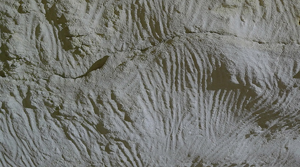
Since at least the early 1970s, the use of Indigenous Australian art, whether ritualised or secular, to vividly convey aspects of story, myth and belief has been recognised (Kupka Reference Kupka1965; Baglin & Mullins Reference Baglin and Mullins1972; Munn Reference Munn1973; Berndt et al. Reference Berndt, Berndt and Stanton1982). As Berndt and colleagues (Reference Berndt, Berndt and Stanton1982: 20) observe, “art was part of everyday life. It was a living reality, never ‘art for art's sake’.” Nonetheless, previous approaches to studying and interpreting digital traces (or ‘finger flutings’) in Australian rock art have primarily drawn on models developed in European contexts, with a particular focus on identifying the age and sex of individual mark-makers, rather than exploring the Australian Indigenous context (Walshe et al. Reference Walshe, Nowell and Floyd2024). Digital traces are channels drawn in the soft sediments that cover the walls, floors and ceilings of some limestone caves in Europe and Australia (Figure 1). In Europe, some of these markings are at least 50 000 years old (Marquet et al. Reference Marquet2023) but in Australia they are yet to be recognised as older than 30 000 years (Walshe Reference Walshe2017).
Koonalda Cave wall section with digital tracings (photograph by authors).

While a few figurative images are included in the European tracings, most digital traces in Australia appear to be non-figurative. Drawing on extensive ethnographic data, we argue that digital tracings in Australia are best understood within a dynamic, Indigenous, performative tradition, in a similar fashion to other parietal art forms. We further argue that digital tracings are used more for spiritual propagation and less for storytelling than other art forms. Spiritual propagation here replaces the more familiar term of ‘increase’ which is inaccurate in the Australian context (Sutton & Walshe Reference Sutton and Walshe2021: 34–35). It is the regular, seasonal appearance rather than the unusual abundance of a species, that is sought in spiritual propagation, which further differs from storytelling by employing a narrow spectrum of repetitive, performative actions (Sutton & Walshe Reference Sutton and Walshe2021: 24–45). This makes it distinct from a narrative performance, which tends to incorporate highly visual art with a wider range of motifs and figures.
Using Koonalda Cave—a site in South Australia with digital tracings that may be more than 30 000 years old (Walshe Reference Walshe2017)—as a case study, we argue that digital tracings arise from ritualised acts of propagation, to ensure the seasonal return of a prized food and/or trade item. The repetitious nature of the digital tracings is critical for specific spiritual propagation and, as such, holds meaning for the whole group. There is no sense of an individual artist or ‘art for art's sake’. Pintupi people of central Australia value repetition rather than originality in their art (Myers Reference Myers2002: 59–60) and Berndt and colleagues (Reference Berndt, Berndt and Stanton1982: 32) found this to be the case more widely in that the quality or mastery of any work is measured by the artist's faithfulness to the Dreaming story. Thus, variation and individuality are met with criticism; a work must fall within an acceptable range of deviation.
Digital tracings at Koonalda Cave
Koonalda Cave is located on the southern margin of the Nullarbor Plain, which is the largest arid karst system in the world (Figure 2). It is one of numerous caves across southern Australia that contains engravings (digital tracings and incisions), but it remains exceptional due to the breadth of display and state of preservation of the digital tracings in particular (Edwards & Maynard Reference Edwards and Maynard1967; Gallus Reference Gallus1968, Reference Gallus and Ucko1977; Maynard & Edwards Reference Maynard, Edwards and Wright1971; Maynard Reference Maynard and Ucko1977). From its large central chamber approximately 80m below ground, a small antechamber is reached after scaling some 20m of roof collapse. No natural light reaches this antechamber, presenting issues for photogrammetry (Jalandoni et al. Reference Jalandoni, Haubt, Walshe and Nowell2024), and yet it is here that the bulk of digital tracings are found as the walls are coated in a soft, white powdery precipitate that is readily marked without losing its structure.
Map of the region: the light grey area shows the location of South Australia while the small rectangle indicates the Nullarbor Plain where Koonalda Cave is located (figure by authors).

In the 1970s, archaeologist Alexander Gallus invited art historian Christine Sharpe to investigate the engravings in Koonalda Cave. Sharpe was impressed by Alexander Marshack's (Reference Marshack1972, Reference Marshack and Ucko1977) positioning of cultural symbols as a form of proto-language and applied this to incised boulders in the cave (Sharpe Reference Sharpe1973a & Reference Sharpeb, Reference Sharpe1977; Sharpe & Sharpe Reference Sharpe and Sharpe1976). At the same time, rock art specialist Lesley Maynard classified the digital tracings in Koonalda as ‘miscellaneous’ and placed them within an evolutionary sequence from non-art to art (Maynard Reference Maynard and Ucko1977: 80). Proto-language or proto-art, Sharpe and Maynard independently sensed that engravings may hold meaning while recognising that deriving meaning was problematic. From here on, the focus slowly shifted to the proficiency of the mark-makers, with a preference for emphasising the individual rather than the collective (Sharpe & Van Gelder Reference Sharpe and Gelder2006a & Reference Sharpe and Gelderb). Sharpe and Van Gelder (Reference Sharpe and Gelder2006a & Reference Sharpe and Gelderb) sought evidence for age, sex and identity of individual mark-makers rather than ‘meaning’, debating the position of digital tracings within an imagined evolution of language and art. The methods applied by Sharpe and Van Gelder (Reference Sharpe and Gelder2006a & Reference Sharpe and Gelderb) are now understood to be substantially flawed due to unreliable comparative data (Walshe et al. Reference Walshe, Nowell and Floyd2024), thus undermining notions of individual artists, particularly children.
The earlier interest in symbolic expression by Christine Sharpe (Reference Sharpe1977) was overshadowed by Maynard's (Reference Maynard and Ucko1977) categorisation of digital tracings as ‘miscellaneous’. This was unfortunate given a burgeoning interest in the 1970s for seeing Australian Indigenous art, including rock art, as symbolic behaviour related to story, myth or ritual. As stated by Baglin and Mullins (Reference Baglin and Mullins1972), artistic figures and motifs used in traditional Aboriginal art are used to ensure continuity, propagation and fertility by affirming links with phenomena from spirit worlds. The status of digital tracings by contrast, having been posited as ‘not quite art, not quite language’ and definitely non-figurative, led to the exclusion of this type of engraving from having even the most elemental role in ritual performance; instead, it was assigned to individual (and often a child's) idiosyncratic behaviour (Sharpe & Van Gelder Reference Sharpe and Gelder2006a & Reference Sharpe and Gelderb).
Motifs and meaning in Indigenous art in Australia
Archaeologically, the best-known form of non-sculptural Indigenous art in Australia is rock art created by the use of pigments and pecking or abrading. Non-sculptural art was traditionally also produced on bark, wooden implements and human bodies. Today, contemporary art continues to be created on these same mediums, as well as on canvas, cloth and pottery. Across each of these mediums, archaeologically and contemporarily, there is a range of familiar motifs including circles, dots, sinuous or wavy (journey) lines and bands (Munn Reference Munn1973; Chaloupka Reference Chaloupka1988a; Sutton Reference Sutton1988; Layton Reference Layton1992; Godden & Malnic Reference Godden and Malnic1997; Johnson Reference Johnson, Kleinert and Neale2000). These forms convey the details of a story that typically involves individuals, animals and a journey wherein spiritual elements are encountered. Berndt and colleagues (Reference Berndt, Berndt and Stanton1982: 24) describe the artist as a “re-creator, responsible for re-activating the spiritual powers of Dreaming spirits, bringing them into direct relationship with man so that he can draw on their powers”.
Sand drawings
Of all mediums, sand drawings (Figure 3) offer the greatest parallel to digital tracings, as both rely on a soft surface, and both are created by direct application of the fingers and hands without pigment. As Munn (Reference Munn1973: 58) noted for central desert people, sand is a “natural drawing board permanently at hand”. In Koonalda Cave, the soft carbonate-coated walls offer an equally natural drawing board.
Child creating a sand drawing, Northern Territory, Australia, 1957 (photograph by Gilbert Joyce; image courtesy Library and Archives Northern Territory https://hdl.handle.net/10070/747811; photo number: PH0048/0180).

Sand drawings are a form of cultural symbolism used particularly by central desert communities to emphatically relate a story (Nunn Reference Munn1973; Johnson Reference Johnson, Kleinert and Neale2000). They were also noted by Bardon (Reference Bardon, Kleinert and Neale2000: 208–209) to be a popular medium for children when drawing games in the sand, thus creating various patterns. Myers (Reference Myers2002: 34) found that narrative meanings in everyday conversation are also illustrated in sand drawings by “men, women and children”.
Sand drawings were recorded extensively in the 1960s–80s by social anthropologist Nancy Munn (Reference Munn1973) and later by linguist Jennifer Green (Reference Green2019). Sand drawings start with preparing the ‘screen’ followed by the use of hand gestures and graphic elements to enable the narrative to move within a three-dimensional space, along with objects such as a leaf, a shell or a stone to represent a character in motion (Green Reference Green2019). Kral and Giles Ellis (Reference Kral and Giles Ellis2020: 13) also explored sand drawing as an act of storytelling which deploys “multiple modalities … sign, drawing, mimetic sound symbolism, mimetic action represented by movement of parts of the body and the use of leaves or props”. Without the sand drawer being physically present to add intonation, objects, gestures and novelty, such as detailed by Kral and Giles Ellis (Reference Kral and Giles Ellis2020), the marks in the sand might well be described as meaningless. Indeed, contemporary canvases by renowned Aboriginal artists generally portray multiple levels of complex cultural meaning, all of which are ‘hidden’ unless revealed through direct interview or conversation, taking place over many days, if not weeks (Macintosh Reference Macintosh and Ucko1977; Myers Reference Myers2002).
According to anthropologist Françoise Dussart (quoted in West Reference West1988: 35), “canvasses display a core of traditional graphic symbols, including circles, semi-circles and lines, meanders and dots, animal and human footprints spread across the newfound surface, mimicking the traditional sand stories which are drawn on the ground during storytelling, paintings on ritual artefacts and body paintings”. The story gains impact by isolating a motif or line and repeating it on different, but related, mediums as detailed here by Dussart. It becomes apparent that each motif and line hold meaning and purpose in their own right, including what appears to westerners as ‘abstract’ infill such as swirls of repetitive patterns and icons. As Isaacs (Reference Isaacs1992: 111) points out, ‘abstract’ is quite misleading for these “intricate, repetitive, pleasing patterns” which are used deliberately to symbolise bush food, geographical features, excerpts from stories, animal tracks or sand patterns made by ancestors from the Tjukurpa (the Dreaming). The term abstract can be used as a poor proxy for what outsiders do not understand. For insiders—the Indigenous artists who narrate and perform their work while painting it—motifs or graphic elements are definitely not abstract. As Myers (Reference Myers, Ryan and Batty2011: 32) observes, “even in the geometric simplicity of the circle and the line, the movements of dance and body … inform the imagery … as if dance and body inhabit their paintings”.
This is evocatively described by central Australian artist, Nellie Patterson (Isaacs Reference Isaacs1992: 110) who said, “when we paint we cause the stories to rise up”. Nellie recounts:
Our grandmothers are always talking. Always speaking, sitting around, telling stories, drawing in the sand. And we listen to the stories … the children listening, say : ‘Yes. Yes. Go on.’ And the grandmothers always tell stories … talking, drawing in the sand … and little grandfather also. Talking, talking and talking. And the children and us say ‘Yes. Yes, grandmother.’ And it is said in the olden times, beating the sand with a stick, they were telling stories. And now, thinking of these stories, we tell them and draw them (Patterson in Isaacs Reference Isaacs1992: 110).
Similarly, for Pintupi people the paintings are ‘dear’ to them, meaning that they are not important for their technical proficiency, nor their appealing “abstraction” but because they are from the Dreaming (Myers Reference Myers2002: 3). Narrations and artistic creations are not undertaken in isolation, as noted by well-known artist Michael Nelson Tjakamarra:
My grandfather taught me sand painting, body painting and shield painting when I was very young … My mother taught my sisters and my daughters about women's painting and their ceremonies. When I paint I always have my children around me. I talk to them, tell them stories about our country and the place where different things happen … All of my paintings are spiritual and tell the stories of ancestors (Crumlin Reference Crumlin1991: 128).
Nelson then continues narrating a painting while pointing out a kangaroo and its tracks as well as the fear of the kangaroo. This level of detail, the intricate dynamics and sense of drama is much more apparent in Nelson's narration than in the art making but each, along with the narrator and performer, are reliant on the other. It is in the storytelling that layers of meaning behind motifs, icons and seeming abstractions on various canvases, including distinctive sinuous or wavy lines, are revealed (Sutton Reference Sutton1988; Johnson Reference Johnson2010; Bardon & Bardon Reference Bardon and Bardon2018).
In the same vein, internationally renowned artist, Emily Kam Kngwarray, who spent her life in the central Australian community of Utopia, focused her work on ancestral yam dreaming. Her paintings are described by Christopher Hodges as a world “imbued with spiritual meaning that has a tradition many thousands of years old and that embraces the whole of life -story, myth, seeds, flowers, wind, sand- everything” (Hodges Reference Hodges and Crumlin1991: 72). For outsiders, this description is not easily realised among the largely repetitive sinuous lines, or strokes, covering an entire canvas (Figure 4). Offering an interpretation for English speakers, Emily Kam Kngwarray said: “Whole lot, that's whole lot, Awelye (grass), arlatyeye (pencil yam), arkerrthe (mountain devil lizard), ntange (grass seed), tingu (dreamtime pup), anker (emu), intekwe (favorite food of emus, a small plant), atnwerle (green bean), and kame (yam seed). That's what I paint, whole lot” (Boulter Reference Boulter1991: 61). The term ‘whole lot’ has generally been accepted as a reference to interlinking cultural principles, but Green (Reference Green, Cole, Green and Perkins2023: 153) recently added that Kngwarray may have intended to emphasise the “bounded and localised nature of her cultural inspiration”. The notion that a work is seemingly repetitive while being embedded within a tension of constrained inspiration, was reflected in a statement by Ngarinyin artist Paddy Neowarra:
Everything comes from underneath the ground, the rain, the lightning, the people. They go up to the sky and come back down, but everything starts from underneath. They reflect each other, the top and the bottom. We are the people with the story and the feeling from underneath the ground (Neowarra & Redmond Reference Neowarra, Redmond, Kleinert and Neale2000: 124).
Anwerlarr anganenty (Big yam Dreaming), canvas painting by E. Kam Kngwarray, c. 1995. synthetic polymer paint on canvas (2911 × 8018mm). National Gallery of Victoria, Melbourne. Presented through The Art Foundation of Victoria by Donald and Janet Holt and family, Governors, 1995. (© Emily Kam Kngwarray/licensed by Copyright Agency, Australia; image courtesy National Gallery of Victoria, Melbourne).

Darby Jampijinpa Ross painted a series of sinuous lines and concentric circles that rely entirely on an accompanying story to realise its depiction of an ancestral journey with specific geographic and climatic elements culminating in a seasonal water source that becomes perennial (Crumlin Reference Crumlin1991: 66). Water is a common theme in central desert art and is often signified by wavy or meander lines, as for example in a work by Lajamanu artist Abie Jangala, titled Water Dreaming (Crumlin Reference Crumlin1991; O'Ferrall Reference O'Ferrall1993; Brody Reference Brody1997) and described by Johnson (Reference Johnson, Kleinert and Neale2000: 217) as an example of the “loose, ebullient iconographies” of Lajamanu artists. Here, the wavy lines are water courses and accompanying straight bars represent clouds and rain bursts, denoting the path of a great rainstorm travelling across the desert. Other meandering lines are lesser rains that break off in small bursts, but all of this is not just about water, instead representing the travels of ‘Warnagarna’, the rain-snake (O'Ferrall Reference O'Ferrall1993: 44).
Although the motif of sinuous wavy lines is commonly used to depict ‘water’, such as in the work titled Running Water by Johnny Warrankula Tjupurrula, it is not restricted to symbolising this element alone. A line may also mean spun hair or string, such as in works by Pansy Napangati, while for other Papunya artists sinuous lines mean rising smoke, snakes and so on (West Reference West1988). For Luritja artist Dick Pantimatju Tjupurrula, in his work titled Rain Dreaming, “sinuous lines depict the path of a storm, or running water, or lightning, or all three at once” (Crocker Reference Crocker1981: 28). Wavy lines to David Corby Tjapaltjarri in his 1972 work, titled Women's Dreaming are bush strings made from rattlepod, a native legume used for making fibre for string. Rattlepod also features in a 1980 painting by Dick Pantimatju Tjupurrula titled Ngalebi in which a series of wavy lines appears in bands of different colours to celebrate the rattlepod tree and a small salt lake, which is its “proliferation centre” (O'Ferrall Reference O'Ferrall1993: 26). The use of coloured wavy bands is found in works by Billy Stockman Tjapaltjarri to variously depict Dreamings of budgerigar, spider, yam and wild potato, while for Clifford Possum Tjapaltjarri, the same bands depict Narripi (worm) Dreaming (Corbally Stourton Reference Corbally Stourton1996: 34). Coloured non-linear and discontinuous lines in a work by Warlpiri artist Petra Nampitjinpa follows the story of two old men who carry fire across land to burn it, thus catching large amounts of food (Amadio & Kimber Reference Amadio and Kimber1988: 88–89).
Wavy lines were also used by Ngaanyatjarra artist Joella Butler when telling a story about hunting through sandhill country on Ngaanyatjarra lands in Western Australia, although the medium was a digital tablet rather than sand or canvas (Schwab et al. Reference Schwab, Sainsbury, Judd, Arthur and Morphy2005: 138, pl. 11.34 ‘Telling a sand story’). Similarly, a circle, the most common element in Warlpiri iconography (central Australia) “is no mere line that continued until it ends where it began … it is instead a water hole, or a tree, a ceremonial site, a cave or a combination of those things read at different levels. And a line … can be a person, a tree, a path, an animal, a digging stick … [but] in the hands of the uninitiated, they are just dots and dashes” (Munn Reference Munn1973: 73–74).
Ada Bird Petyarr created a work titled Bush Yam Awelye that O'Ferrall (Reference O'Ferrall1993: 45) described as depicting a women's ceremony for grass Dreaming (awelye) (Figure 5). In reference to the same work, Boulter (Reference Boulter1991) remarked on Petyarr's use of sinuous, flowing bands to set up a rhythmic field that provides a ‘current’ across the picture. Pictures and their individual motifs are introduced to convey movement, allowing the Dreaming to fuse with the present and the fulfilment of cultural obligation. Another Utopian artist, Gloria Tamer Petyarr, “elaborates on patterns found in nature, such as leaves blowing in the wind, as a metaphor for the presence of ancestral forces” and the work comes across as a “seemingly endless … [series of] … white strokes” (McClusky Reference McClusky2012: 114).
Arnkerrth (Mountain devil lizard Dreaming), canvas painting by Gloria Pitjara/Petyarr, c. 1997. Synthetic polymer paint on canvas (830 × 1235mm). National Gallery of Victoria, Melbourne Presented through The Art Foundation of Victoria by William Fellows, Fellow, 1998. (© The artist/licensed by Aboriginal Artists Agency; image courtesy National Gallery of Victoria, Melbourne).

Repetition and multiple meaning
Repetition is seemingly paramount in Indigenous Australian art; very few motifs or lines are employed but each may hold multiple meanings. Some motifs are also applied on related mediums, such as the body or artefacts. George Chaloupka (Reference Chaloupka and West1988b: 13) observes that geometric motifs found among ancient rock paintings on the edge of the Simpson Desert (central Australia) are also reproduced when decorating ritual objects or human bodies and sand sculptures. This connection or transference between motifs in ancient rock art and those in modern art has long been recognised (Crocker Reference Crocker1981: 7; Corbally Stourton Reference Corbally Stourton1996: 17). Myers (Reference Myers2002: 36) observes that common motifs “may be designs (walka) that the ancestors wore on their bodies and contemporary ritual actors wear in ceremonies, or they may be what are understood to be ancestral body decoration that have been metamorphosed onto rock faces, as circle and line designs or ritual objects turned into stone formations, or hills”. Similarly, Crocker (Reference Crocker1981) had earlier suggested a relationship between ceremonial song and dance movements and the painted stories. Myers (Reference Myers2002) emphasises this connection by noting the importance of tracks left by dancers in the sand and their depiction in paintings.
A further consideration is that each layer of meaning attributed to a single motif is extracted according to the status of the recipient (Macintosh Reference Macintosh and Ucko1977; Crocker Reference Crocker1981: 46). Koolmatrie (Reference Koolmatrie2017) was told during interviews with Adnyamathanha elders in South Australia that a circle may be a waterhole to a young initiate, but the same circle gains ever more layers of meaning as the initiate gains status. In this way, objects and even sites can be seen alternately by men, women or children, so long as the teaching is filtered accordingly, and often works shown to westerners will be given only a basic interpretation. Linguist Ian Green (Reference Green and West1988: 47) goes beyond the single motif to find that repetition, such as the patterning of dots, “gives life, depth and movement to the story elements of the painting. It provides us with the direct visual access to the artist's feelings for those organising forces in all their richness and multiplicity, which live beneath the emptiness of the country and out of which it has emerged. It is not so much physical as metaphysical.”
The digital tracings in Koonalda with their series of sinuous, discontinued lines may also hold multiple levels of meaning, to be revealed according to the status of the listener. It may also be that no essential story is being related and instead a performance utilises repetitive motions for maintenance behaviour as opposed to narrated art.
Performative art: narrative or spiritual propagation
Indigenous Australians routinely use expressions such as ‘singing the country awake’ or ‘rising up’ and it is in this sense that digital tracings too, can be ‘woken up’ to revivify meaning and connectedness. Sinuous, wavy lines, made by fingers on the soft carbonate surfaces and by sharp objects cutting into the harder surfaces, are the only motifs recorded in Koonalda Cave. This highly repetitive form is without notable variation across some 300m2 of wall surface, resulting in a stunning array of lines with a concomitant absence of other motifs. The visual impact is substantial, but it fails to suggest an essential binding narrative such as an ancestral journey. A single, repetitive motif finds meaning in maintenance ceremonies for spiritual propagation (Sutton & Walshe Reference Sutton and Walshe2021). This gives rise to ritualised behaviour that utilises a narrow range of repetitive behaviours.
Kngwarray, Neowarra and others emphasise maintenance for ensuring the continued supply of high value items. Lofty Bardayal Nadjamerrek (traditional owner and custodian, Western Arnhem Land, Australia) was interviewed about the meaning of numerous grooves abraded into the walls of a cave (AGNSW 2004). Lofty explained that the lines are entrance tubes used by bees to get into their hives and that these entrances were made by the long fingers of the spirits scratching the walls to make the tubes. During the narration, Lofty simultaneously made marks in the sand on which he sat. He continued by saying that the rock was once soft like sand and the marks were made just as he was doing—by dragging his finger through the sand. Lofty connected abraded grooves (incisions) on the cave walls with the sand drawings by telling the story of ancestral figures ensuring a supply of honey. Here we have performative art as maintenance activity to ensure the supply of a highly valued food. Thus, a motif holds little to no meaning when disassociated from performative behaviour (Berndt et al. Reference Berndt, Berndt and Stanton1982).
The digital tracings in Koonalda Cave are unique for their degree of repetition and for their preservation. Graphic elements in sand drawings may overlay each other (Munn Reference Munn1973) and be erased to clear the ‘scene’ for the next instalment but the final scene is not deliberately erased. It is the subsequent dancing, trampling, children playing, dogs wandering across and natural elements that cause erasure. Figurative rock art may at times be reinvigorated or ‘touched up’ as anthropologist Charles Mountford witnessed at Uluru in the 1950s, but not erased; Mountford was informed by senior men these works were inspired (and thus created) by ancestral figures of the Tjukurpa and no human has the authority to destroy them. West (Reference West1988: 10) writes that “[a]rtists talk of dreaming a particular design or way of expressing traditional designs and stories. The ‘dream’ is not a means of individual creativity but a way of tapping directly into the source of ancestral power.”
In the environmentally stable confines of Koonalda Cave, protected from wind, sun and rain, and from gross physical movement, digital tracings have remained intact across many thousands of years, and across these millennia there have been additions and overlay rather than erasures. Again, this suggests deliberation in their creation and deliberation in leaving them be. As marks were added across 30 000 years or so, the walls have become filled with lines; superimposition is obvious in more accessible areas but erasure is absent.
Conclusion
[A]ll aboriginal art rested on the need for explanation … accompanying oral communication … Some recurrent symbols can be identified over fairly wide areas: circles, curves and meandering lines, various tracks of creatures and so on. But it was not possible from one area to the next, to interpret any one overall design, in its combination of symbols, without aid from the design's owners (Berndt et al. Reference Berndt, Berndt and Stanton1982: 33).
Since the early 1970s, we have come to regard all forms of Indigenous rock art in Australia as conveying an aspect of a story, belief or myth and, as presented here, digital tracings (and other engraving styles) are also a form of cultural expression within a dynamic, energetic, hyper sensory, performative space. Abstracted from this context and without a narrator, they are rendered immobile and most certainly silent. Sinuous, wavy lines have been used artistically to depict water, fire, lightning, storm path, hunting path, string, dreaming totem or other items and actions. Context is imperative to elucidating meaning as is the appropriate narrator. Koonalda Cave displays a vast expanse of wavy lines made by human fingers or a hand-held object and this strongly suggests performative art for propagation—the maintenance of a vital item (food, raw material or both). Whether this item was identical across the 30 000 years or so of Indigenous engagement with Koonalda Cave is yet to be tested, but it is clear that digital tracings must be understood as more than proto language, proto art and idiosyncratic acts by lone operators. They are deliberate and purposeful and more than capable of ensuring the maintenance of a vital element. Or, in the theme of Kngwarray, not one element, but the ‘whole lot’.
Acknowledgements
We thank Senior Mirning Custodians Mr Clem Lawrie and Mr Anton Mundy for ongoing support and contribution to this research.
Funding statement
This research was funded in part by the Social Science and Humanities Research Council of Canada [435-2019-0656].


 Open access

