

Over the past decade, the People’s Republic of China (PRC) has significantly expanded its global security engagements. In 2017, it opened its first overseas military base in Djibouti.Footnote 1 Since 2018, the PLA Navy has conducted escort missions in the Gulf of Aden.Footnote 2 Under Xi Jinping’s leadership, the Chinese government has deepened security cooperation with strategic partners like Russia, Iran, and North Korea,Footnote 3 while expanding military engagement with a growing number of authoritarian regimes across Asia, Africa, the Middle East, and Latin America, for example, through drone exports to Saudi ArabiaFootnote 4 and joint development of fighter jets with Pakistan.Footnote 5 The expansion of China’s security engagements with other autocracies often unfolds in informal, ambiguous, and opaque ways, without formal declarations of alliance.
While recent scholarship on alignment has begun to pay attention to informality and ambiguity,Footnote 6 traits commonly associated with autocracies,Footnote 7 systematic analyses of security cooperation between China and other autocracies beyond RussiaFootnote 8 remain scarce. Established frameworks, mostly developed in democratic contexts, focus on formal alliances, institutionalised defence cooperation, and observable military integration. Autocracies, in contrast, often engage in security cooperation that is selectively disclosed, weakly institutionalised, and shaped primarily by regime survival. To some extent, research has caught up with real-world developments and tries to capture the dynamics of authoritarian alignment: Korolev’s stadial model of military alignment and Mastro’s warfighting-oriented framework make suggestions for measuring stages of cooperation and operational preparedness, both for Sino–Russian alignment,Footnote 9 but fail to account for the importance of regime security concerns.Footnote 10 This makes it difficult to fully grasp the scope and strategic logic of China’s alignment with other autocracies, as well as to reflect on their broader implications for international security.
This article fills this gap by offering a new conceptualisation of ‘security ties’ grounded in the logic of authoritarian rule. It allows us to trace security ties between autocracies along depth, durability, and domestic involvement, all critical dimensions for gaining insights into authoritarian alignment. Its empirical application provides an in-depth assessment of how China’s security ties with other key autocracies have evolved between 2019 and 2024. The article’s time frame coincides with a strategic realignment of China’s security posture. Beginning the analysis in 2019 allows for covering the onset and evolution of the COVID-19 pandemic. It covers the deterioration of relations with the United States and, to a lesser extent, also with European countries. Against this background, the Chinese government recalibrated its relationships with countries from the Global South, many of which are autocracies. In addition to the escalation of tensions with the United States, the period also saw Russia’s full-scale invasion of Ukraine and China’s increasingly open support for the Russian war effort.
Understanding the evolving security ties among autocracies is crucial because these ties can pose significant risks to the international order, particularly to liberal democracies. Deepening security ties could further enhance geopolitical fragmentation, reduce the leverage of liberal democracies, and undermine the effectiveness of diplomatic pressure and sanctions aimed at isolating adversarial regimes. Strengthened ties might facilitate arms transfers, nuclear cooperation, and technology sharing among autocracies, further weakening global arms control and non-proliferation efforts. Coordination among autocracies increases the likelihood that conflicts will escalate simultaneously across regions, potentially exhausting the diplomatic and military capacities of democracies. Finally, cooperation in cyber warfare, surveillance technologies, and censorship could contribute to the global diffusion of authoritarian practices and a more repressive digital landscape. While not all of these effects are inevitable, deepening cooperation between autocracies makes them more likely and, hence, warrants urgent scholarly attention.
The article proceeds as follows. The next section situates the conceptual framework within existing scholarship on authoritarian alignment, defines ‘security ties’, and conceptualises the three dimensions that characterise them: depth, durability, and domestic involvement. The data and methods section operationalises security ties and describes measures for depth, durability, and domestic involvement. The section further explains the case selection and data collection processes. The empirical findings section details China’s security ties to autocracies, focusing on depth, durability, and domestic involvement. The following section then details what these results reveal about emerging patterns of authoritarian alignment. Finally, the conclusion summarises the article’s contributions, details its limitations, and outlines areas for future research.
Authoritarian alignment
Recent international relations scholarship is characterised by a renewed focus on alignment examining Global South countries’ non-alignment in the context of the Ukraine war,Footnote 11 new tendencies of multi-alignment,Footnote 12 and in-depth assessments of realignment processes of US allies, including the UK and FranceFootnote 13 or South Korea.Footnote 14 The PRC continues to emphasise its non-alliance policy despite debates among its experts questioning whether it still holds.Footnote 15 Regardless of definitional disputes, the Chinese government fosters strategic partnerships that enable China to maximise economic and political benefits while minimising military responsibilities vis-à-vis the partner country.Footnote 16
Alignment among authoritarian states has received increasing scholarly attention. The alliance literature has long moved away from its neorealist foundations, which claimed that regime type does not matter because states were assumed to be unitary actors.Footnote 17 Much of the empirical focus lies on deepening ties between China, Russia, North Korea, and Iran,Footnote 18 with a heavy emphasis on making sense of changes in alignment patterns between China and Russia,Footnote 19 but some attention has also been devoted to alignment between smaller authoritarian states.Footnote 20
Recently, there has been a push to develop frameworks for measuring such cooperation. Korolev develops a stadial model of alignment formation. He distinguishes seven indicators of military cooperation that build on each other, specifically, confidence building measures, mechanisms of regular consultations, military technical cooperation/personnel exchanges, regular joint military drills, integrated military demands, joint troop placement/military bases, and common defence policy, and groups them into early, moderate, and advanced stages of cooperation.Footnote 21 Similarly, Mastro examines how great powers prepare for joint warfighting, assessing how countries enhance each other’s capabilities and how they might strengthen their collective capacity to fight together. Her framework encompasses the provision of weapons and equipment, the defence industrial base, and coordinating mechanisms, extending to operational preparations. While these models underscore the importance of systematically tracking alignment among states through an empirically operationalised set of criteria, they fail to adequately capture the logic of authoritarian rule; as a result, domestic actors are not distinguished, and the models therefore offer only limited insights into the dynamics of authoritarian alignment.
Political actors in autocracies operate under a fundamentally different logic than those in democracies. Whereas democratic leaders accept the possibility of electoral defeat and continue to compete for power,Footnote 22 authoritarian rulers prioritise political survival, often as a matter of personal safety.Footnote 23 Threats to their rule may originate from the general population or the ruling elite. Authoritarian leaders thus face two core problems: maintaining control over a largely excluded population and managing power-sharing arrangements that prevent elite defection or coups.Footnote 24 To address these challenges, they rely on a combination of legitimation, repression, and co-optation, with the relative emphasis varying depending on the source of domestic threats. This domestic logic of authoritarian rule has implications for states’ external alignment choices. Although not framed in the language of authoritarianism, David’s analysis of ‘Third World’ alignment behaviour articulates a closely related logic. He argues that alignment decisions are primarily driven by leaders’ calculations about which external partners are most likely to help them remain in power, emphasising the high domestic stakes and personal vulnerability of political leaders.Footnote 25 While David associates this logic with ‘weak states’, the core insight is not state weakness per se, but regime vulnerability: alignment choices are shaped by leaders’ concerns about political and physical survival.
Today, autocracies often possess far greater state capacity than those examined by David. This expands the range of foreign policy instruments available to them but does not negate the underlying survival logic. Rather, stronger state capacity allows authoritarian leaders to pursue alignment in more flexible, informal, and opaque ways while remaining guided by the same fundamental concern with regime security. For this reason, systematically accounting for the logic of authoritarian rule is essential. Explanations that focus narrowly on reputational concerns or strategic ambiguity, such as the claim that autocracies prefer opacity to avoid reputational costs or to reduce provocation, remain incomplete unless they are embedded in a broader understanding of how alignment serves the domestic imperatives of authoritarian survival. Security ties with other autocracies can expand the material, symbolic, and institutional resources needed to pursue these strategies. To account for the specifics of many of today’s autocracies, regime insecurity is not treated as an immediate or existential condition. Instead, I understand regime security as an anticipatory concern that shapes preferences over time. Hence, certain forms of security cooperation, particularly in areas related to internal control, policing, and technology, can serve regime interests even in otherwise stable autocracies.
This article understands ‘security ties’ as sustained, security-related interactions between actors from at least two states that serve the goal of regime survival. The conceptualisation draws on the common usage of ‘tie’ as a ‘connection or relationship between people, organisations, and countries’,Footnote 26 to which I added a state-focused understanding of security as security for states from threats identified by state leaders,Footnote 27 and the idea that regime survival is the central objective of security policy in autocracies. I understand sustained, security-related interactions to unfold across five functional areas: diplomatic and military contacts, support for regime security, military capacity building, non-combat operations, and wartime support. Interactions are considered ‘sustained’ if they occur more than once or if their continuation is planned. Actors who may be involved in these interactions include heads of state or government, foreign and defence ministers, lower-level officials, military personnel, experts, intelligence officials, and representatives of defence industries. While security ties are often articulated in defence cooperation agreements, they can also take less institutionalised forms. A one-off meeting between heads of state to discuss an ongoing war does not, by itself, constitute a security tie. However, such a meeting may form the basis of a security tie if it leads to further interaction, for example, if follow-up consultations at lower levels of government are announced.
Security ties can vary across three dimensions: depth, durability, and domestic involvement. Depth captures the intensity of cooperation, operationalised as the frequency of security-related interactions and the political level at which they occur (e.g., leader-level summits versus working-level contacts). This dimension draws on research on variation in security cooperation and alliance design, which highlights differences in the scope of collaboration, the precision of commitments, and the degree of institutionalisation.Footnote 28 Durability is analytically distinct from depth and captures the temporal continuity of security-related interactions between actors, ranging from individuals to states. It originates in scholarship on the robustness and longevity of security cooperation and alignment.Footnote 29 Since shallow ties can be long-lasting and deep ties can be short-lived, distinguishing depth from durability is critical for describing variation in security ties. Domestic involvement refers to the domestic actors who initiate and drive the interactions. Its intellectual origins lie in comparative authoritarianism and foreign policy analysis emphasising that regime survival concerns shape external behaviour; that rulers manage mass and elite threats through strategies of legitimation, repression, and co-optation; and that these strategies can be externalised through international cooperation, including via cross-border institutional and elite linkages that enable security collaboration (e.g., in policing, intelligence, military-to-military ties, or regime-protective capacity building).
These three dimensions are examined across the functional domains in which security ties between autocracies can unfold. In contrast to much alliance research, I treat formality not as a primary dimension of variation but rather as a background condition that can shape how depth, durability, and domestic involvement manifest. Its influence is indirect and multi-directional. Greater formalisation may enhance depth and durability by institutionalising commitments, creating regularised channels of interaction, and signalling resolve and reliability to domestic and international audiences. However, highly durable and deep cooperation can also be formed in the absence of formal agreements. Conversely, authoritarian regimes may deliberately maintain informal arrangements to preserve plausible deniability, avoid domestic scrutiny, and maintain flexibility in adjusting the scope or intensity of cooperation. Thus, while formality interacts with other dimensions of security ties, it neither determines their depth nor guarantees their durability.
Data and methods
My operationalisation of security ties is inspired by Wilkin’s work on strategic partnerships. Wilkins distinguishes ‘hierarchical connections’ across levels of interaction, specifically the executive and ministerial level, the military, state, and private enterprises, and the domestic public, and differentiates cooperation across functional areas, that is, diplomatic security, defence/military, economic, societal, and cultural.Footnote 30 While I share this commitment to capturing variation across functional areas and domestic actors, I focus on security policy, which enables a more granular and targeted assessment of how security cooperation varies in practice. To operationalise this domain, I draw on the defence diplomacy literature, which identifies concrete activities through which states develop and maintain security cooperation, thereby helping me flesh out the different areas. It is drawn upon to operationalise security ties. In a widely cited study, Cottey lists bilateral and multilateral contacts between senior defence officials, appointment of defence attachés, cooperation agreements, training of foreign personnel, provision of expertise, exchanges between military units and ship visits, placement of personnel in partner countries’ defence ministries and armed forces, deployment of training teams, provision of military equipment and other material aid, and joint exercises.Footnote 31 Others also include arms sales and participation in humanitarian operations.Footnote 32
Building on this activity-based understanding of defence diplomacy, I operationalise security ties by grouping the identified practices into functional areas. To account for the specificities of autocracies, I add support for regime security as a fifth area of focus. Diplomatic and military contacts on security issues refers to regular and ad hoc interactions between government officials and experts on security-related matters. Support for regime security covers security cooperation that directly strengthens authoritarian regimes’ capacity to suppress domestic opposition, control their population, and prevent leadership turnover. Military capacity building encompasses activities that enhance the respective countries’ abilities to fight together in future military conflicts or improve their independent warfighting capabilities. Non-combat operations refer to joint or coordinated military activities in non-combat contexts. Wartime support encompasses direct or indirect military assistance provided by one state to another during an ongoing armed conflict, aimed at enhancing the recipient’s capacity to conduct operations. Table 1 provides an overview of the observable activities within each functional area and includes illustrative examples beyond the study window.
Overview of observable activities that constitute security ties.

In the following, I detail how I measured depth, durability, and domestic involvement. The depth of security ties varies slightly across functional areas. For diplomatic and military contacts and support for regime security, I considered the frequency of interactions and the political levels at which they occur to calculate depth scores. For military capacity building, I considered three factors: (1) the intensity of joint military training exercises between two countries, measured as the number of exercises multiplied by their duration (in days); (2) the sophistication and quantity of weapons traded, as well as whether countries jointly develop weapons; (3) participation in military education programmes, ranging from no participation to short courses and full-length degree programmes. In the area of non-combat operations, I counted the number of missions to which both countries have contributed. For wartime support, I relied on qualitative assessments.
Durability and domestic involvement were measured in the same way across all five functional domains. To assess durability, I calculated the continuity rate for each type of security-related interaction between two or more states by dividing the ‘active years’, that is, the number of years in which an interaction was recorded, by the ‘time span’, calculated from the start to the end year of recorded interactions. For example, if two heads of state met annually to discuss security issues over a given period, the continuity rate would be 1. In contrast, if such meetings were held between 2014 and 2023 (ten years), but only every other year (resulting in five active years), the continuity rate would be 0.5. Hence, any continuity rate below 1 indicates that interactions did not take place every year. For domestic involvement, I considered which domestic actors are involved. The following domestic actors were distinguished: heads of state are located at the highest level of politics. At the ministerial level, foreign and defence ministers, as well as other high-ranking officials, are considered. The working level consisted of mid-level officials, defence attachés, military officers, and parliamentarians. Finally, experts and representatives from defence companies were considered.
To collect details about China’s security interactions with other autocracies, I relied on a range of primary sources, including the websites of the Chinese Ministry of Foreign Affairs (MFA), Ministry of Defense (MoD), and the National People’s Congress (NPC), the online versions of important Chinese newspapers, such as People’s Daily and People’s Liberation Army Daily as well as international news databases like LexisNexis, Factiva, and Google News. I conducted searches in both English and Chinese to ensure broad coverage and cross-validation of data. Where necessary, I supplemented primary sources with relevant academic literature and think tank reports. To ensure consistency throughout the different functional areas and across the selected autocracies, I developed a standardised coding scheme capturing the following dimensions: year, start/end date, countries involved, multilateral/bilateral setting, description of the activity, categorisation of the activity, actors involved, details on security-related issues discussion, location, frequency, and source type. This approach enabled me to build a detailed and comparable dataset that captures both formal and informal dimensions of China’s security engagements with autocratic regimes between 2019 and 2024.
To examine variation in China’s security ties to autocratic regimes, I constructed a representative sample based on the ‘Regimes of the World’ dataset,Footnote 33 which identifies 107 autocracies with which China could form security ties. Following established sampling practices, I selected approximately 10 per cent of these cases (n = 10), ensuring diversity across key dimensions: world region based on UN categories, regime type,Footnote 34 level of repression based on V-Dem and Freedom House data, degrees of international isolation, population size, GDP, territorial size, natural resources, and military expenditures. The final sample includes autocracies from all major world regions (Russia, Turkmenistan, Iran, Saudi Arabia, Vietnam, Myanmar, North Korea, Cuba, Nigeria, and Sudan); autocratic regime types, each with distinct characteristics in terms of repression; isolation; demographic and economic capacity; territorial size; natural resources; and military spending.Footnote 35 This variation enables comparative insights into how domestic regime characteristics and international position shape the form and depth of China’s security ties.
Due to the opacity of authoritarian rule, the availability and reliability of data vary across different functional areas and countries. Data on support for regime security and wartime support are particularly difficult to obtain. Additionally, some countries, particularly North Korea, pose exceptional challenges for open-source research. While the dataset reflects the range of information that can be systematically collected from publicly available sources, and the coding scheme enhances transparency and replicability, these challenges should be acknowledged when interpreting the data collected for this study.
China’s security ties to autocracies
This section demonstrates how China’s security ties with ten representatively selected autocracies vary in depth, durability, and domestic involvement across the five functional domains: diplomatic and military contacts, support for regime security, military capacity building, non-combat operations, and wartime support. Taken together, the patterns documented below illustrate how China’s security ties to other autocracies reflect a logic of selective and differentiated alignment rather than uniform bloc formation. These patterns are consistent with the framework outlined above.
Depth
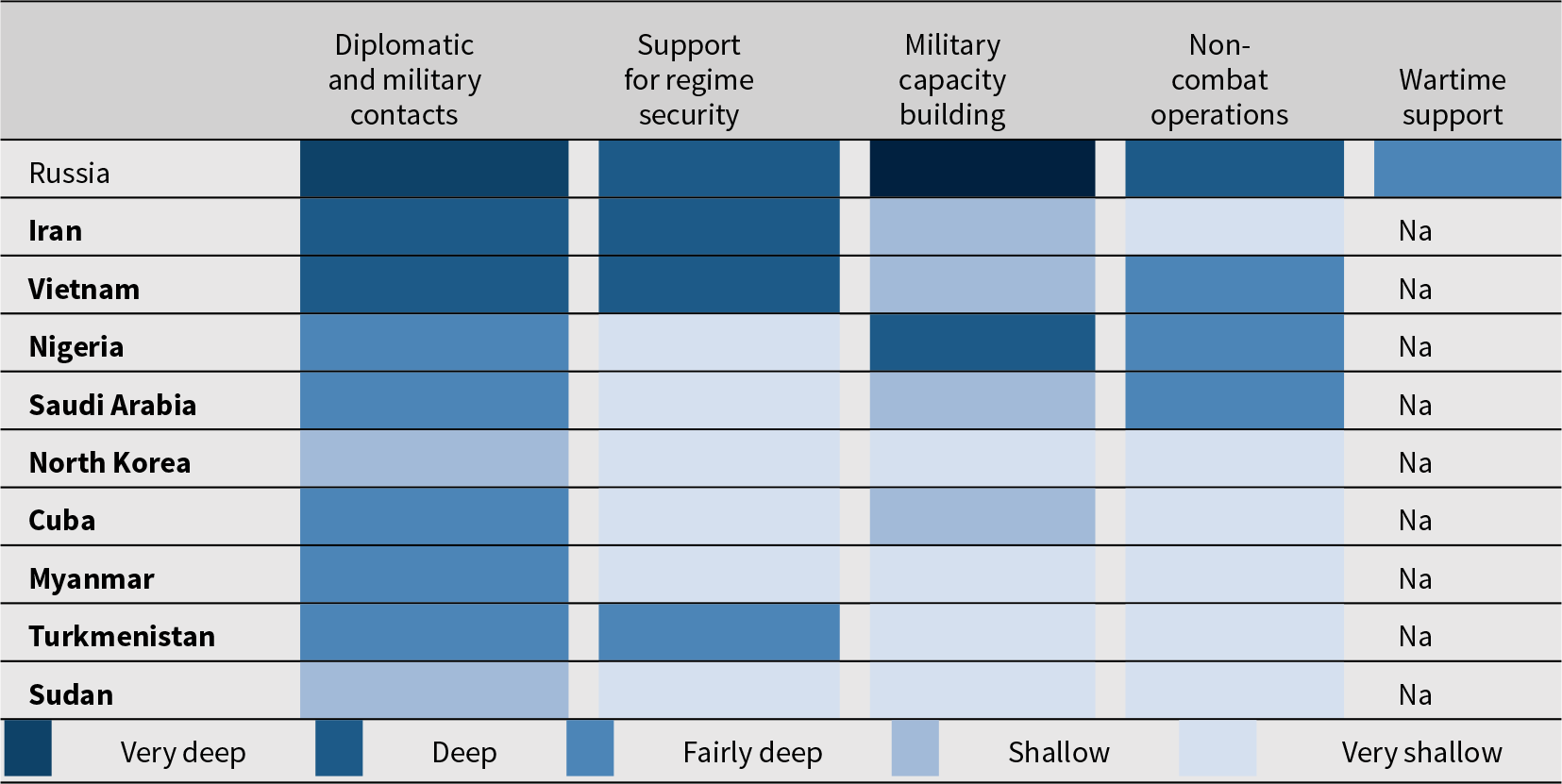
China’s security ties to the selected autocracies vary considerably in depth. Diplomatic and military contacts range from very deep (Russia) to shallow (Sudan and North Korea). The observed asymmetries have become more pronounced over time, with diplomatic and military contacts with Russia crowding out contacts with other autocracies since 2022. In matters related to regime security, China’s engagement with other autocracies appears selective. It only entertains deep ties with Russia, Iran, and Vietnam. There is substantial variation in the forms and intensity of cooperation in military capacity building. Regarding military exercises, China and Russia showcase exceptional levels of engagement. In arms transfers and participation in military education, which are other core components of military capacity building, Nigeria plays a pronounced role. China maintains shallow ties with other autocracies through non-combat operations. In terms of wartime support, China is a critical enabler of Russia’s war effort in Ukraine. Hence, its ties to Russia in this area can also be considered deep. In the following section, I will assess the depth of China’s security ties with the ten representative autocracies by focusing on five functional domains. The fact that security ties to some autocracies are much deeper than to others, and that there are considerable differences in depth across functional areas, is consistent with the expectation that authoritarian alignment is selective and tailored to the regimes’ needs.
Diplomatic and military contacts
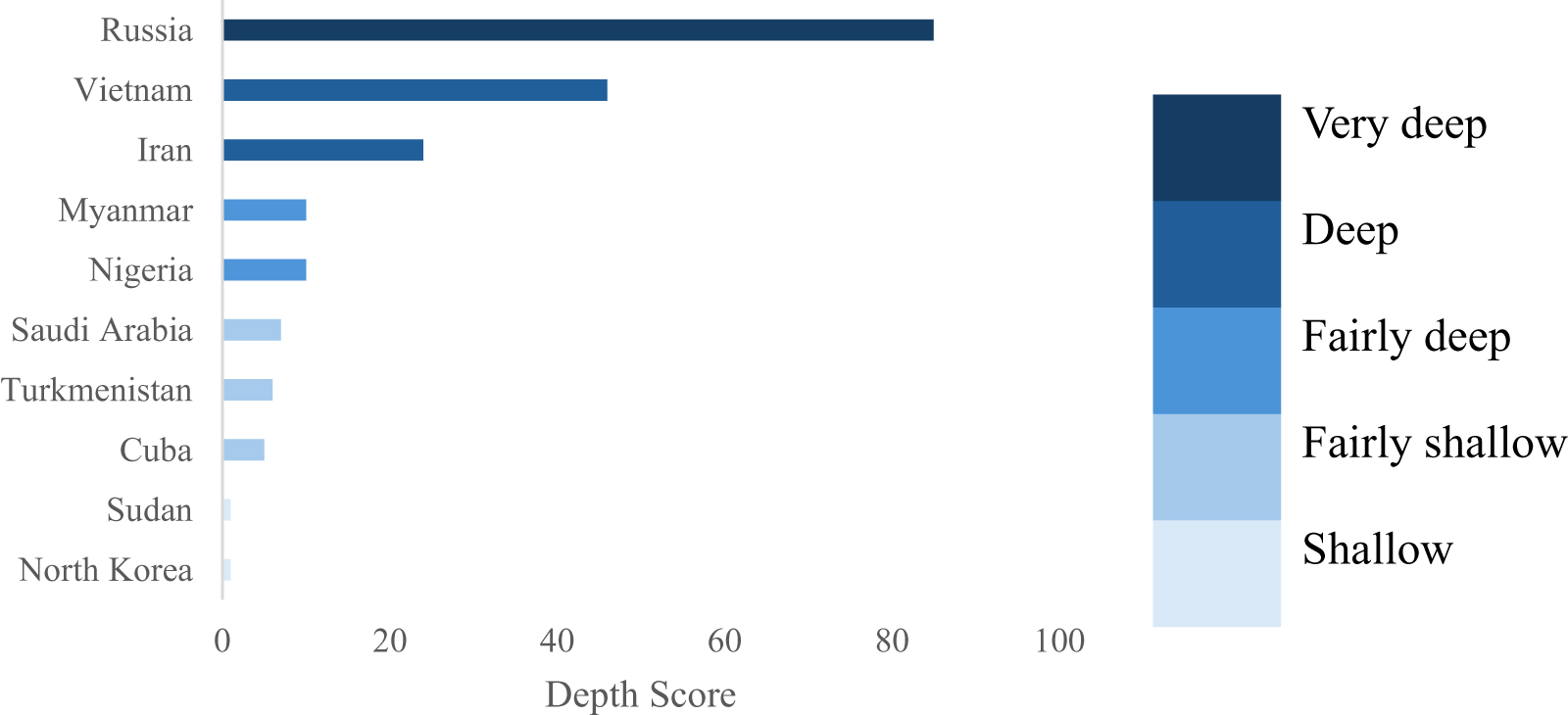
Among the ten selected autocracies, China entertains by far the deepest diplomatic and military contacts with Russia, as Figure 1 illustrates. Russia is followed by Vietnam and Iran, which also register high frequencies of interactions in diplomatic and military contacts. China’s contacts with Myanmar and Nigeria can still be considered ‘fairly deep’, whereas contacts with Saudi Arabia, Turkmenistan, and Cuba are best described as ‘fairly shallow’. Finally, based on publicly available data, diplomatic and military contacts with North Korea and Sudan seem to be infrequent. Given that North Korea is the only country with which China has signed an alliance treaty, this dearth of diplomatic and military contacts is striking. Given the high degree of opacity associated with the North Korean regime, it might partly be explained through a lack of reliable data. However, since Chinese government sources were considered as well, just like for the other autocracies, this observation showcases that formal treaties do not equal observable interactions. The conceptualisation of security ties drawn upon here intentionally privileges enacted cooperation rather than commitments that might be codified but not acted on.
Depth scores for diplomatic and military contacts.

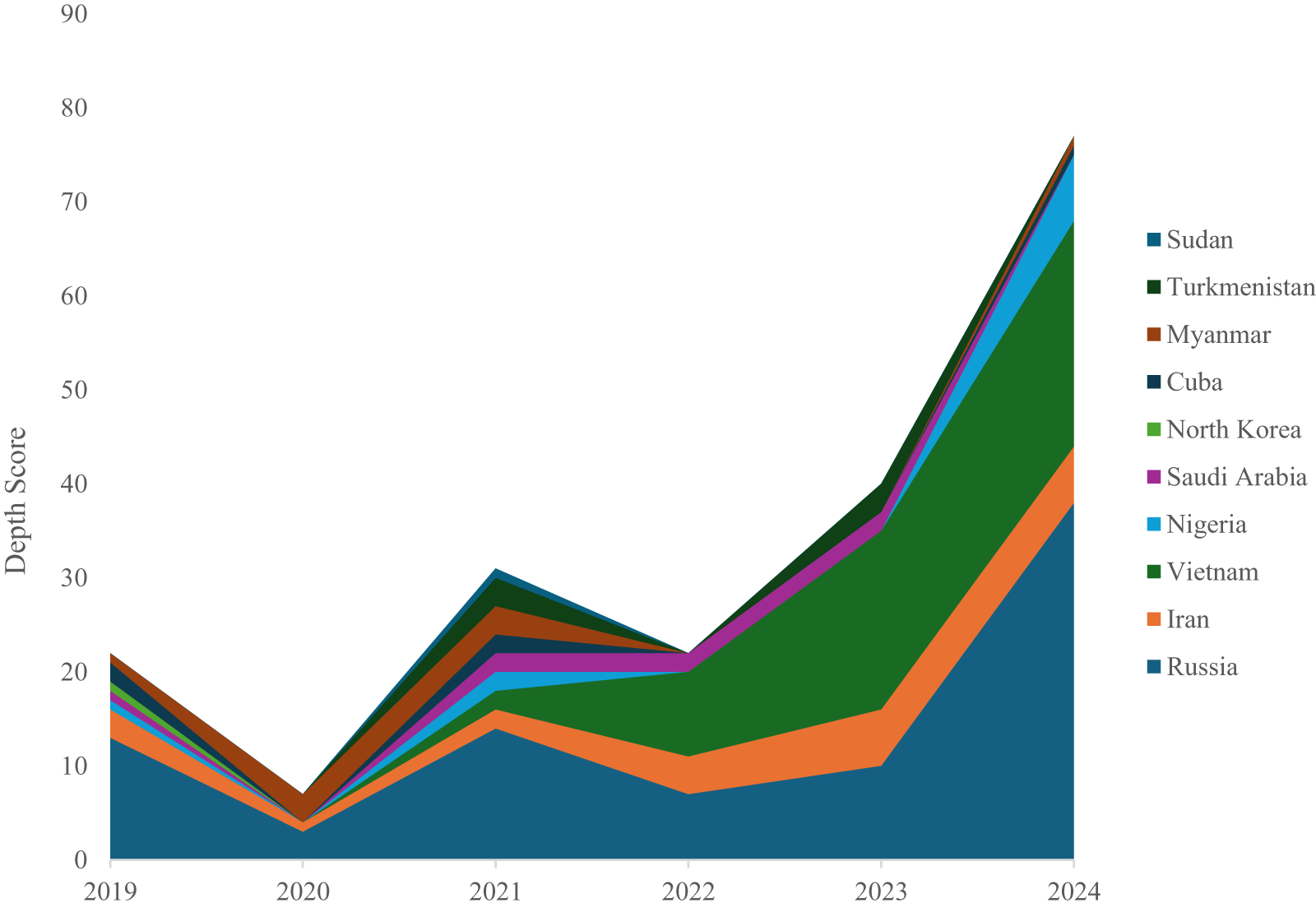
These findings highlight considerable asymmetries in China’s security ties: while most states receive sporadic attention, Russia remains a sustained focal point. This trend has become even more pronounced over time. Figure 2 shows that, although China restored diplomatic and military relations with most countries after the COVID-19-induced decline in 2020, interactions with Russia began to dominate from 2022 onward, crowding out relations with other autocracies. This renewed focus on Russia coincided with the Kremlin’s full-scale invasion of Ukraine. By 2023, contacts with many other autocracies had declined significantly, and only with Vietnam, Iran, and Nigeria did regular contacts continue.
Depth score for diplomatic and military contacts over time.

The observed crowding-out dynamic suggests that authoritarian alignment is highly responsive to external shocks, here, the Ukraine war, which for China at least can be considered an ‘external shock’, while remaining concentrated on partnerships perceived as most critical for guaranteeing the regime’s security.
Support for regime security
Zooming in on matters related to regime security, China only engaged in deep cooperation with a handful of autocracies: Vietnam, Russia, and Iran. They all have extradition treaties with China.Footnote 36 These treaties can serve as instruments of transnational repression when they are used to facilitate the return of political dissidents to China.
The intensification of cooperation, specifically focused on regime security between China and Vietnam since Xi Jinping’s 2023 visit, is particularly noteworthy. The two sides agreed to expand intelligence sharing and jointly counter perceived threats, such as interference, separatism, and ‘color revolutions’.Footnote 37 Cooperation with Russia focuses on law enforcement. Combating terrorism and maintaining social security and stability are critical features of this cooperation. The recent MoU with Iran emphasises cooperation in law enforcement and support for surveillance.Footnote 38 In addition, the Iranian Revolutionary Guard has received considerable support in building up its surveillance capacities. Counter-terrorism cooperation and law enforcement cooperation also featured in cooperation with Turkmenistan.
The narrow set of partners with which China pursues sustained regime security cooperation underscores the article’s core claim that alignment among autocracies is driven less by generalised affinity and more by specific regime survival concerns. These patterns illustrate how focusing on regime security reveals forms of alignment that remain invisible in frameworks that focus on formal alliances or warfighting.
Military capacity building
The forms and intensification of engagement in military capacity building vary considerably across the ten cases. In this section, I consider the intensity of joint exercises, the sophistication and quality of weapons traded and jointly developed, and participation in military education programmes.
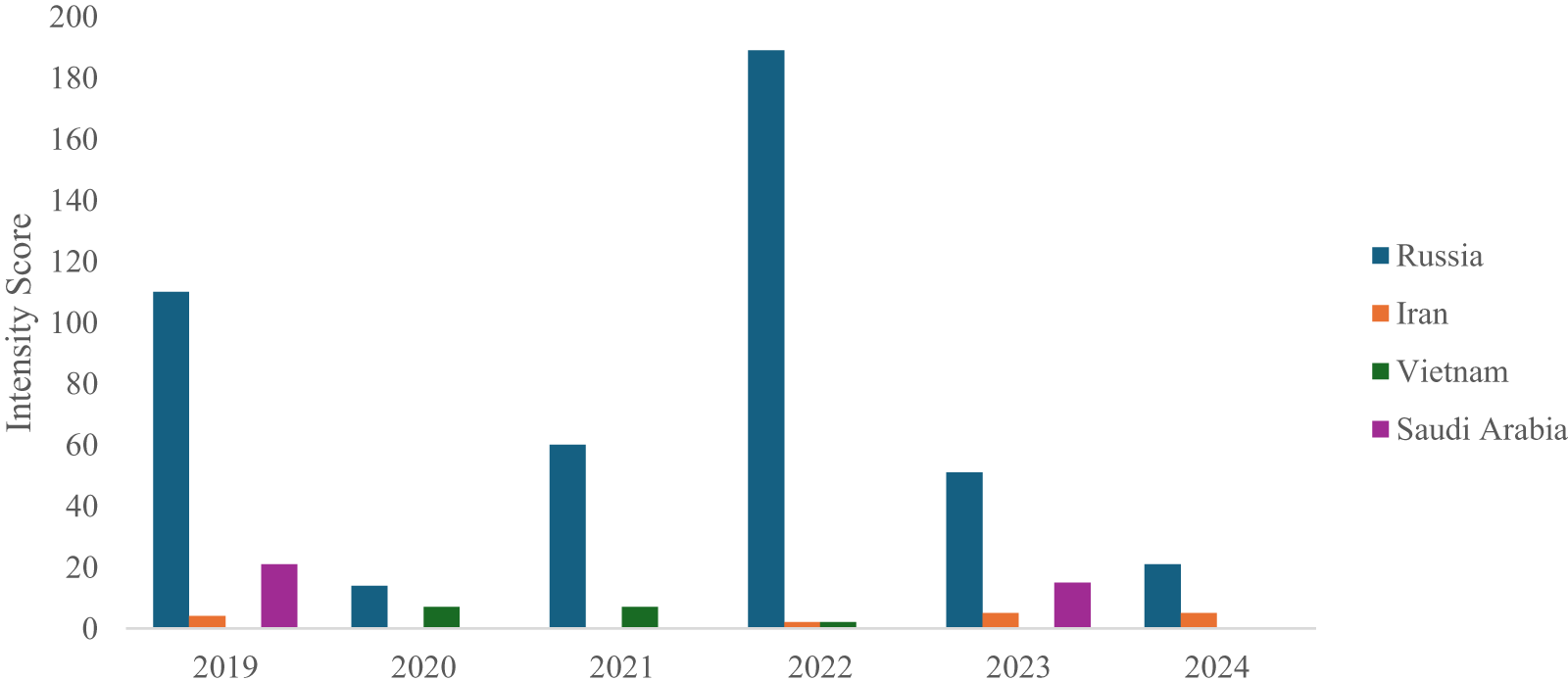
Between 2019 and 2024, China conducted joint military exercises with four of the ten autocracies: Russia, Iran, Vietnam, and Saudi Arabia. The level of engagement with Russia was exceptional. The intensity score, which I calculated by multiplying the frequency and duration of military exercises, was thirty-six times higher than that of Iran, the next partner. Zooming in on joint military exercises between China and Russia, Figure 3 shows a dip related to COVID-19 in 2020, followed by a sharp increase in 2021 and a peak in intensity in 2022. In 2023 and 2024, a decline was observable. This suggests that these activities have been concentrated in the early years of Russia’s war. The intensity of activity with Vietnam declined gradually, while the intensity of military exercises with Iran and Saudi Arabia increased slightly. The exceptional intensity of military exercises with Russia, contrasted with more limited engagement elsewhere, reinforces the finding that depth in authoritarian security ties is highly uneven across partners.
Intensity score for military exercises.

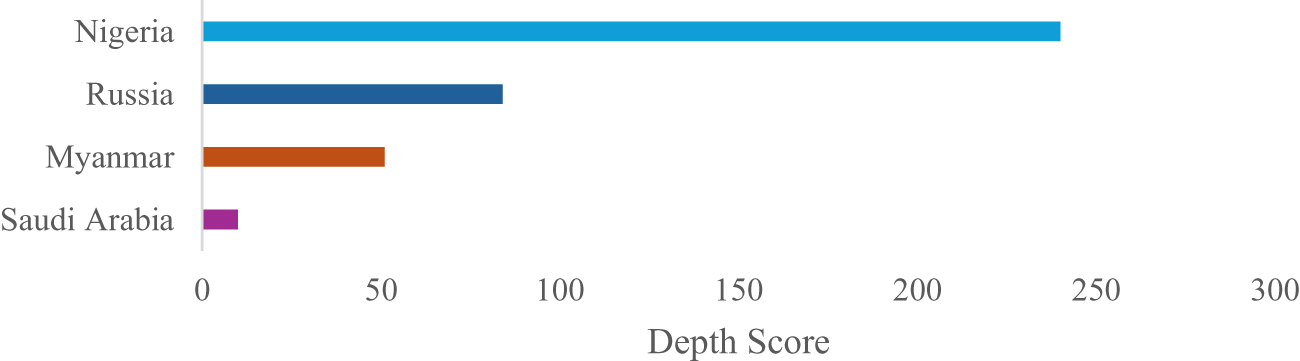
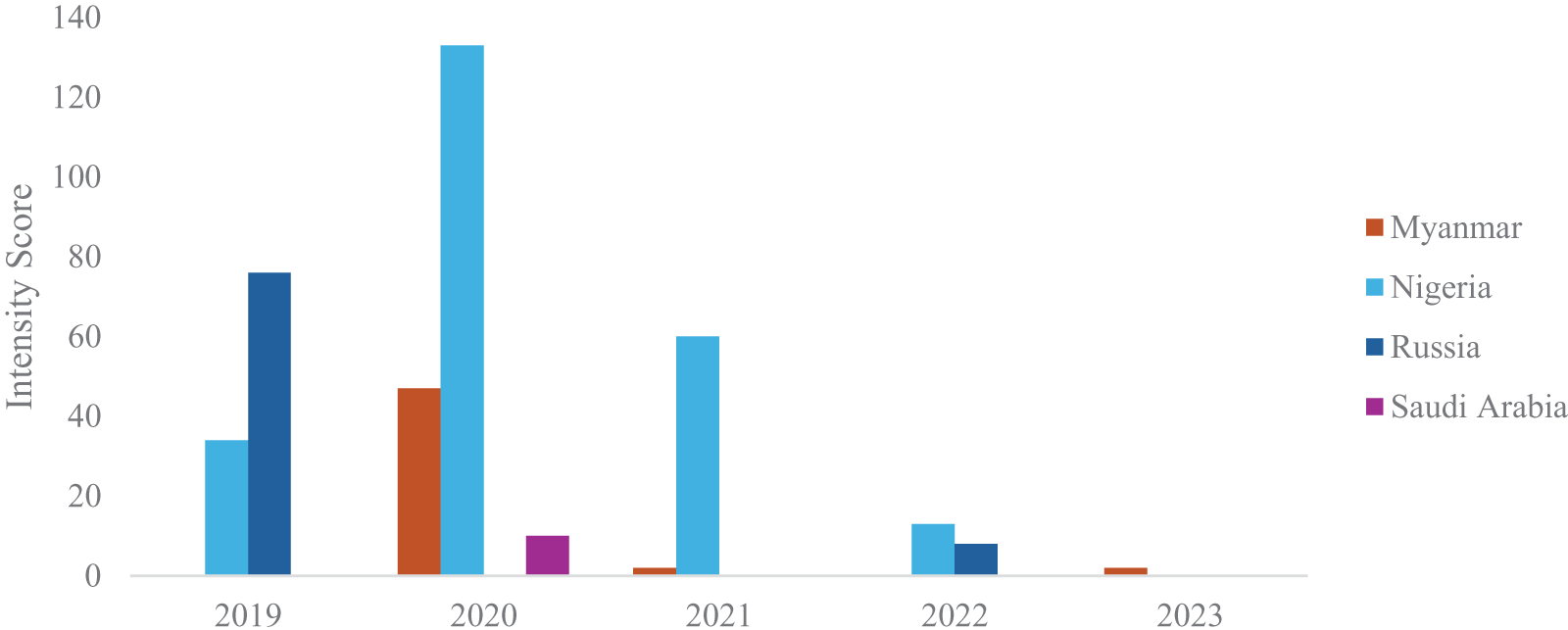
For arms transfers, a completely different picture emerges when one considers the sophistication and quantity of weapons traded. Figure 4 reveals that Nigeria ranks highest, followed by Russia and Myanmar. Figure 5 illustrates a stark overall decline in Chinese arms exports across all selected countries after 2022. At the same time, the prominence of Nigeria in arms transfers and military education highlights that military capacity building can serve different strategic purposes across dyads, a point returned to in the discussion.
Depth score arms trade aggregated.

Depth score arms trade over time.

China has also pursued joint development of weapons with partners of several of the selected autocracies. In 2021, China and Russia signed a contract to co-develop a multi-purpose heavy helicopter.Footnote 39 Soon after, international media reported that Saudi Arabia had started to manufacture its own ballistic missiles with China’s help.Footnote 40 A year later, China and Saudi Arabia were reported to be setting up a joint venture to produce UAVs.Footnote 41 This suggests that deep engagement in specific capacity building activities does not necessarily coincide with broader institutionalised security ties.
Finally, participation in military training programmes is a critical component of military capacity building. Nigerian officers have built particularly deep ties with Chinese institutions. Between 2012 and 2013, Nigeria’s current Chief of Defense Staff, Christopher Musa, obtained an Advanced Diploma in Defence and Strategies Course, and a Master of Science (Military Science at the International College of Defence Studies at China’s National Defence University). Emmanuel Undiandeye, the current Chief of Defence Intelligence, completed a master’s programme in defence studies at the same institution. Vietnam’s president reportedly attended a Chinese cadre training programme, but this was not exclusively focused on security issues. In the other countries in the sample, no participation in military training programmes was observed.
Non-combat operations
China’s security ties in the realm of non-combat operations remain shallow. Overall, they are limited and largely symbolic. Activities such as joint patrols, humanitarian missions, and escort operations are the least developed functional area across the ten autocracies examined. Only a few interactions among China, Cuba, Vietnam, and Russia were identified within the study’s time frame. Ties with Vietnam stand out as the most consistent. Since 2006, China and Vietnam have conducted joint coast guard patrols in the Beibu Gulf. In September 2024, China and Russia conducted joint coast guard patrols and drills in the Russian Arctic. China’s military hospital ship Peace Ark has, since its commissioning in 2008, undertaken dozens of missions, including visits to selected countries, such as Cuba. For the other autocracies, no confirmed non-combat operations could be identified. These findings underscore how the new conceptualisation can capture areas of engagement that are often overlooked but are nevertheless integral to security ties. The marginal role of non-combat operations across most cases suggests that not all low-risk forms of cooperation are equally salient for authoritarian alignment.
Wartime support
Since the start of Russia’s full-scale invasion of Ukraine, China has been a critical enabler of the Kremlin’s war economy by supplying vast quantities of dual-use goods, circumventing Western sanctions, and directly bolstering Russia’s defence industrial base. While China has not openly provided lethal aid, US intelligence, trade data, and Russian customs records reveal a significant surge in Chinese exports of machine tools, microelectronics, navigation systems, and components for aircraft, missiles, and tanks. In 2023, approximately 90 per cent of Russia’s microelectronics imports and nearly 70 per cent of its machine-tool imports originated in China. Notably, the sharp rise in Chinese exports of CNC machines, essential for precision manufacturing in arms production, has increased tenfold from pre-war levels.Footnote 42 Chinese firms, including state-owned defence companies, have also shipped jamming equipment, jet fighter parts, military optics, and UAV components to sanctioned Russian defence entities. Joint UAV production ventures and the provision of satellite imagery further highlight deepening strategic collaboration. In addition, there have been more allegations of China supplying Russia with attack drones. This example illustrates how the wartime support dimension can be operationalised, even where cooperation is deliberately opaque. China’s wartime support for Russia exemplifies how authoritarian security cooperation can be both deep and consequential while remaining intentionally opaque, consistent with expectations about informality and deniability.Footnote 43
Overall assessment of the depth of China’s security ties
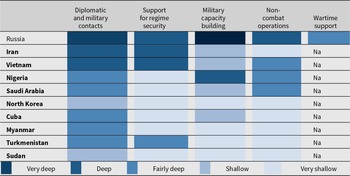
Table 2 summarises the variation in the depth of China’s security ties across selected autocracies and functional areas. The data show that China maintains by far the deepest and most diversified relations with Russia. Diplomatic and military contacts, as well as military capacity building, appear particularly pronounced. In contrast, ties with Sudan and North Korea appear consistently shallow. In the case of North Korea, this might be due to limited publicly available data. Across the sample, diplomatic and military contacts are the most frequently observed form of engagement, followed by military capacity building. Table 2 further indicates that support for regime security was only present in a small number of partnerships. Non-combat operations appear even more marginal. Wartime support is limited to Russia. Overall, the assessment demonstrates that China’s security ties to other autocracies are fairly asymmetric and selective. While Russia constitutes a clear case of deep alignment, security ties with other autocracies tend to focus on specific areas. The asymmetric and domain-specific distribution of depth across cases reinforces the view that authoritarian alignment unfolds through differentiated webs of security ties rather than cohesive blocs.
Overall assessment of the depth of China’s security ties to other states across all functional areas.
Durability
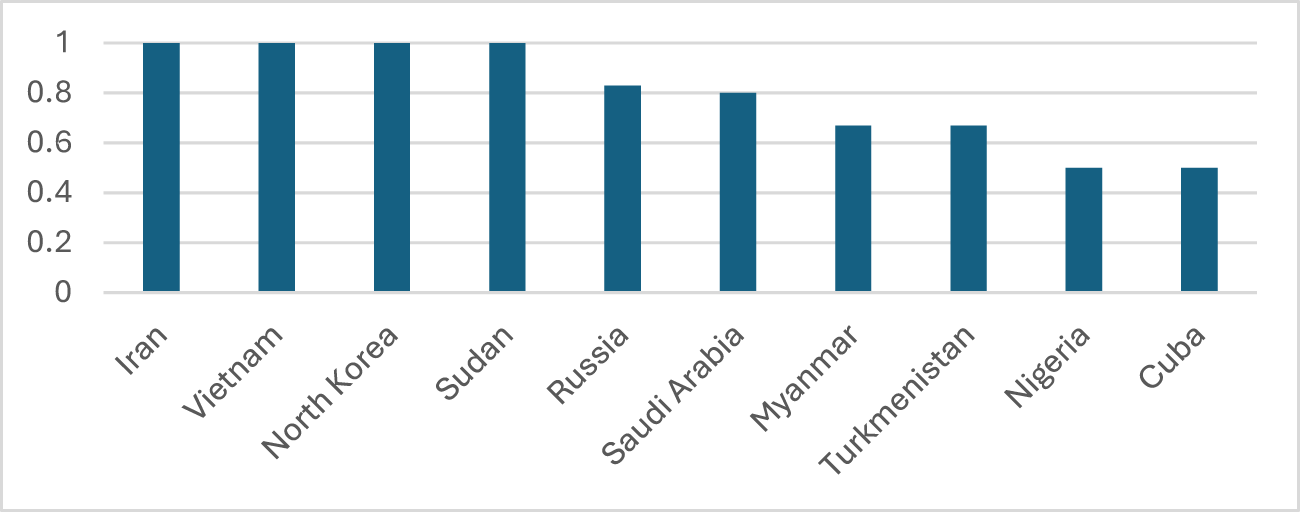
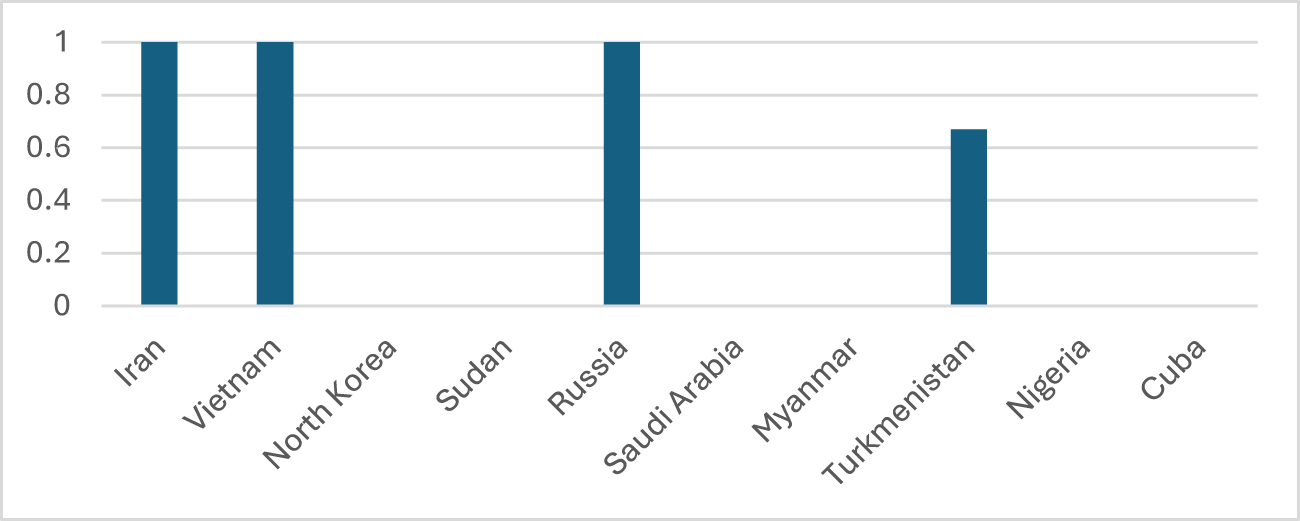
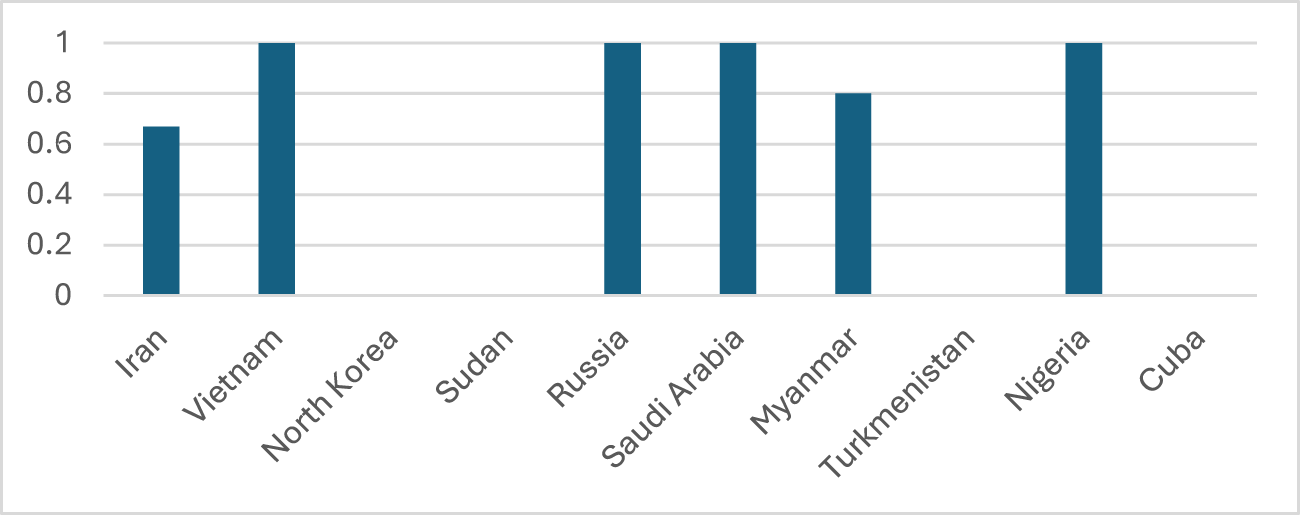
In addition to examining the depth of security ties, it is also worth assessing their durability. The continuity rate, as conceptualised above, helps me determine how durable security ties are across countries and issue areas. Figures 6–8 provide an overview of continuity rates across diplomatic and military contacts, support for regime security, and military capacity building. As demonstrated in the previous section, China’s security ties to the selected other autocracies in the domains of non-combat operations and wartime support are sporadic. Hence, the durability of security ties in these domains cannot be examined.
Continuity rates for diplomatic and military contacts.

Continuity rates for support for regime security.

Continuity rates for military capacity building.

China’s security ties to other autocracies were most durable in the realm of diplomatic and military contacts. China maintained repeated interactions with most countries throughout the 2019–24 period. Russia and Iran showed the highest continuity rates with interactions spanning the entire period. Vietnam, Nigeria, Cuba, and Myanmar also maintained relatively sustained contacts. In contrast, North Korea and Sudan appear as outliers. Each shows activity in only one year. Security ties in the domain of regime support proved to be much less durable. Ties that spanned more than one year were maintained only with Russia and Turkmenistan. For Iran and Vietnam, one-off security-related interactions were recorded. In most cases, particularly in Nigeria, Saudi Arabia, North Korea, Cuba, Myanmar, and Sudan, no durable activity was identified. In comparison, China’s security ties to other autocracies were more durable in the domain of military capacity building. However, interactions in this area were limited to a smaller subset of countries in the sample. Russia, Iran, Nigeria, and Saudi Arabia exhibited consistent activity across multiple years. In contrast, no sustained capacity building efforts were recorded for North Korea, Cuba, Turkmenistan, or Sudan. These assessments of durability reinforce the article’s broader findings: China maintains deep and durable security ties, primarily with Russia and a handful of other autocracies, including Iran, Vietnam, and Nigeria. Diplomatic and military contacts are most consistently maintained across all cases, followed by military capacity building. The other three functional areas appear less frequently. These findings demonstrate that durability varies independently of depth, underscoring the analytical value of treating the two dimensions separately.
Domestic involvement
To examine how China’s security ties are formed and maintained, this section analyses the domestic actors involved in diplomatic and military contacts. As the previous two sections have demonstrated, security ties in this functional domain are deepest and most durable. Domestic involvement refers to the scope of participation, specifically which types of actors are involved, and the directionality, that is, who initiates and drives cooperation, to the extent that this is observable.
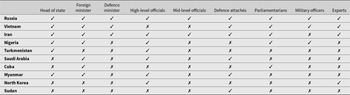
As Table 3 demonstrates, China’s security ties to Russia are characterised by the most diversified participation of domestic actors. Domestic actors from all categories, that is, heads of state, foreign and defence ministers, as well as other high-level and mid-level officials, are involved. Additionally, security ties are sustained through interactions among defence attachés, parliamentarians, military officers, and experts. Ties to Iran, Vietnam, and Nigeria also span a wide range of actors. At the other end of the spectrum, China’s security ties to Sudan seem to be uniquely driven by defence attachés. This suggests that the interactions are limited to fairly technical discussions. China’s ties to North Korea, Turkmenistan, and Cuba are each driven by two different types of domestic actors. For Cuba, I observed interactions between the foreign ministers and between parliamentarians. China and Turkmenistan held interactions between their heads of state and high-level officials. High-level officials and experts sustained North Korea’s security ties to China.
Domestic actors involved in China’s security ties.

✓ = actor is involved in at least one confirmed interaction between 2019 and 2024.
In most security ties, the heads of state were involved. This applied to Russia, Iran, Vietnam, Nigeria, Myanmar, and Turkmenistan. A striking finding is the disproportionate prominence of foreign ministers in shaping China’s security ties to other autocracies. While foreign ministers played prominent roles in maintaining relations with all selected countries except Turkmenistan and North Korea, defence ministers were involved only in relations with Russia, Iran, and Vietnam. This suggests that the Ministry of Defense plays a limited role in China’s foreign security policy, with the dominance of the Ministry of Foreign Affairs and the Central Military Commission, as represented by senior officials, in coordinating China’s security ties.
Finally, experts, primarily representatives of think tanks, play a key role in sustaining China’s security ties with other autocracies. They play a particularly pronounced role in China’s relations with Russia, Iran, and North Korea. These interactions are often less visible than those at the highest levels of politics, yet they play a crucial role in sustaining long-term cooperation. The absence of experts and lower-level officials from many of China’s security ties, particularly those with Turkmenistan, Saudi Arabia, and Myanmar, suggests that these ties are not yet well developed.
In summary, the scope of participation by domestic actors offers further insight into China’s security ties with other autocracies. With Russia, Vietnam, Iran, and, to a lesser extent, Nigeria, China entertains deep and multifaceted relations. The involvement of numerous domestic actors across various levels of the political system evidences the depth of these ties. The security ties are embedded in the countries’ institutions. In contrast, in some countries, only a limited number of domestic actors are involved. Important examples are Sudan, Cuba, and Turkmenistan. In these instances, security ties seem to be focused more on specific issues. In addition, in many cases, China’s security ties are driven by the Ministry of Foreign Affairs. This pattern supports the argument that security ties among autocracies are often politically managed and embedded in broader diplomatic strategies rather than driven primarily by military institutions. The following section builds on these findings to assess what these patterns reveal about the nature, scope, and limits of contemporary authoritarian alignment.
Insights into authoritarian alignment
This section summarises what the new conceptualisation of security ties reveals about authoritarian alignment. Compared with existing models, it adds breadth by considering five functional domains. It explicitly accounts for the logic of regime survival and introduces the idea that different domestic actors sustain and benefit from these ties. In the following, it first highlights what the various dimensions of security ties, depth, durability, and domestic involvement tell us about new patterns of authoritarian alignment. Second, it delves deeper into the specific features of contemporary authoritarian alignment that can be identified by applying the conceptualisation of security ties proposed in this article. Taken together, these additions demonstrate that authoritarian alignment contributes to regime survival. It is selectively activated across domains and channelled through different domestic actors rather than expressed primarily through formal alliance commitments.
While it should not come as a surprise that China’s ties to Russia are the deepest and most diversified in terms of security, the new conceptualisation also reveals substantial variation across domains, even within these ties. More specifically, it demonstrates, for example, that while military exercises appear to be areas of intense activity, there is little activity in other domains, such as cooperation on non-combat missions. This unevenness within the dyad underlines how autocratic cooperation contributes to regime security. The new approach also enables us to track changes over time, for example, how diplomatic and military contacts with Russia crowded out those with other countries after 2022. Additionally, the approach facilitates comparison of China’s security ties with various states. Apart from highlighting the oversized role that ties to Russia play, it also identifies other countries that play an important role in individual areas, for example, cooperation with Nigeria in military capacity building. These differences support the claim that authoritarian alignment is better captured as a differentiated web of ties rather than a cohesive bloc. Some countries, such as Nigeria, can be central in specific domains without becoming full-fledged allies.
In addition to the depth of security ties, the analysis provides insights into their durability and the involvement of domestic actors. Regarding durability, the focus is on temporal change, whereas existing approaches distinguish only stages of cooperation. The continuity rate and the granular data collected to measure it allow tracing changes over time in greater detail. Finally, the conceptualisation enables the inclusion of various types of domestic actors. This will allow me to demonstrate how security ties are embedded in domestic institutions. While these dimensions correlate with depth and durability, they also provide insights from a more domestic-oriented perspective.
China’s security ties with Russia are by far the deepest among the ten cases selected for representativeness. They span all five functional areas. They feature the highest levels of intensity, durability, and domestic actor participation throughout. In particular, the intensity of joint military exercises is exceptional relative to those of other partners. In addition, China’s wartime support for Russia also sets its security ties to Russia apart from those of others. Even functional areas that are less developed overall, for example, support for regime security and non-combat operations, feature prominently in China’s security ties to Russia. Hence, ties in this dyad exemplify a deeply institutionalised and multidimensional form of authoritarian alignment. Systematic tracking of interactions across all functional areas indicates that China’s alignment with Russia is sustained and diversified. However, it is crucial to note that, given the breadth of its security ties and the intensity in each functional area, Russia emerges as a clear outlier. China’s security ties to other autocracies are more limited and selective. Hence, we need to carefully trace security-related interactions and determine on a case-by-case basis how deeply China’s security ties extend to the other state.
These findings refine theories of authoritarian alignment in three ways. First, they show that alignment is frequently domain-specific. Second, the strongest evidence of an authoritarian logic appears in regime security cooperation, which is systematically less transparent and therefore under-captured by alliance-centric measures. Third, variation in domestic involvement suggests that authoritarian alignment is mediated by bureaucratic and institutional channels, shaping both the forms of cooperation and their durability.
Beyond Russia, China’s security ties to other autocracies are more selective and more narrowly focused on individual functional areas. Vietnam, for example, stands out for cooperation in regime security, while Nigeria features prominently in arms trade and military education. Security ties with Cuba, Sudan, and North Korea appear shallow across all functional areas and dimensions. In these cases, few domestic actors are involved, and their overall engagement is limited. These patterns suggest that China pursues differentiated security strategies tailored to its specific needs, on the one hand, and to particular opportunities, on the other. When it comes to aligning itself with other autocracies, China does not take a one-size-fits-all approach. Authoritarian alignment, hence, unfolds more within webs of ties than within a uniform bloc.
Military capacity building is a key pillar of China’s security ties, one of the five functional areas. A closer look across the ten different cases examined reveals that the concrete forms of engagement vary. With Russia, for example, the focus is on jointly developing weapons and on military exercises. Nigeria stands out as the most important arms importer. Additionally, many of its high-level military officers have established deep ties to China through their participation in military training programmes. Saudi Arabia has recently placed a strong emphasis on military technology, particularly in collaboration on UAV development and missile production. These examples demonstrate that China is playing an increasingly important role in helping other autocracies modernise their militaries, a development that merits scrutiny.
Security ties that emphasise support for regime security are limited to a few key partners, specifically Vietnam, Iran, Russia, and Turkmenistan. With these partners, collaboration in this area takes different forms. With Vietnam, China focuses on intelligence sharing and training its police forces to counter ‘color revolutions’. With Iran, cooperation in law enforcement and the transfer of surveillance technology have become central. These patterns illustrate that authoritarian alignment is most evident when cooperation targets internal threats rather than external battlefield interoperability. In Russia, much of this cooperation focuses on counter-terrorism. However, in many of the selected autocracies, the focus of China’s security ties lies elsewhere. While I was able to collect solid data on this area as well, it is important to acknowledge that it is particularly sensitive, which makes it more difficult to obtain information about activities there.
One of the distinctive contributions of this article is that it draws attention to the various domestic actors involved in forming and maintaining security ties between autocracies. The finding that foreign ministers are more involved than defence ministers is reflective of the marginal role that China’s defence ministry plays. Instead, much of China’s security ties with other autocracies seem to be managed and coordinated by the Ministry of Foreign Affairs and by China’s Central Military Commission. From this, one could infer that, ultimately, entertaining security ties with other autocracies is a tool for developing political relations with these countries, rather than for obtaining specific defence-related benefits. This provides a domestic-institutional mechanism for authoritarian alignment: which bureaucratic actors dominate the relationship shapes which functional areas deepen, for example a focus on diplomacy versus military integration, helping explain why some ties are durable yet remain shallow in warfighting terms. The analysis has further demonstrated that the presence of a more diversified set of actors correlates with deeper and more durable security ties. At the same time, because some military-to-military interactions are likely to be underreported, the observed prominence of the MFA should be interpreted as a strong indicator rather than a complete account of the PLA’s role.
While the focus of this article has been on domestic aspects, China’s security ties to other autocracies do not unfold in a vacuum. Instead, they are vulnerable to external shocks at both the global and regional levels. The data indicate that the COVID-19 pandemic disrupted diplomatic and military contacts for an extended period. Meanwhile, Russia’s invasion of Ukraine also functioned as an external shock that has reshaped China’s security posture. After 2022, China prioritised its relationship with Russia at the expense of other relationships. This responsiveness to shocks is theoretically consistent with the expectation that authoritarian alignment, when maintained through partnerships and informal ties rather than treaty alliances, can be reweighted quickly as leaders recalibrate regime security needs in response to changing geopolitical constraints. These shifts underscore that while domestic considerations significantly influence China’s security alliances with other autocracies, these alliances also evolve in response to geopolitical developments.
Conclusion
The systematic tracking of China’s evolving security ties with ten representatively selected autocracies (specifically Russia, Turkmenistan, Vietnam, Myanmar, Nigeria, Sudan, Saudi Arabia, Iran, North Korea, and Cuba) across the five functional areas (diplomatic and military contacts, support for regime security, military capacity building, non-combat operations, and wartime support), analysed through the dimensions depth, durability and domestic involvement, revealed the following key empirical insights: China’s security ties to Russia stand out as the deepest and most institutionalised across all dimensions. China’s security ties to other autocracies are selective and uneven. Some functional areas feature more prominently in some dyads than in others. Military capacity building emerges as a central pillar of cooperation, but in different forms. Support for regime security, non-combat operations, and wartime support is limited to some of China’s security ties with other states, underscoring further diversity in China’s authoritarian alignment practices.
This article advances the study of authoritarian alignment by introducing a new conceptual and methodological framework for analysing security ties between autocracies, which are often characterised by greater informality and opacity. By breaking down security ties into five functional dimensions and examining them along the measurable dimensions of depth, durability, and domestic involvement, the article offers a systematic approach to tracing security interactions. This approach is particularly well suited to capturing the security ties of autocracies, which often unfold outside formal agreements. Methodologically, the article shows that sustained, security-related interactions can be systematically traced even in opaque environments. It thereby underlines the importance of collecting data and triangulating the sources. The newly developed conceptualisation enables cross-case comparisons and reveals forms of cooperation that existing approaches, typically modelled on democratic alliance practices, fail to capture. While I developed this conceptualisation within the context of China’s ties to other autocracies, it is adaptable to other authoritarian dyads and could also be tested in constellations in which democracies and autocracies collaborate. Most importantly, the analysis has revealed considerable variation across partners and functional areas. This underlines the importance of systematically tracking security-related interactions rather than extrapolating from prominent cases, such as the deepening of ties between China and Russia.
This article relies uniquely on open-source data, which presents important limitations. Most importantly, the availability of information varies significantly across regimes and functional areas. North Korea, in particular, poses serious challenges in that regard. This affects the dataset’s comprehensiveness. Nevertheless, my analysis has demonstrated that systematic, comparative insights are possible through multi-source triangulation. Future studies could enhance this by incorporating additional data collection methods, such as expert interviews or satellite-based tracking, where appropriate.
Future research should expand the empirical scope of this study in three ways: first, expanding the geographic coverage beyond the current 10 per cent sample of autocracies; second, extending the timeframe to capture longer-term trends, especially because even the relative time frame studied here has revealed critical shifts over time; and third, applying the framework to other dyads beyond China. The conceptualisation of security ties and the suggested operationalisation could be replicated or, if necessary, adapted to examine how different autocracies engage with one another over time.
In addition, future research should aim to provide explanations. Based on the identified patterns, the most important question is: what drives the variation in China’s security ties across partners and functional areas? How do domestic institutions in both countries, leadership preferences, or geopolitics shape the observed patterns? Finally, the effects that the identified patterns might have on international security deserve scrutiny. For instance, it would be worthwhile to investigate how China’s varying levels of engagement in military capacity building affect the military modernisation efforts of its partner countries. More broadly, one should assess how security ties with China affect the capabilities and behaviour of other autocracies. Finding answers to these questions would help grasp the implications of China’s growing role in international security.
Acknowledgements
I wish to thank Ursula Schröder, Ulrich Kühn, Holger Niemann, Ondrej Rosenberg, and colleagues working in the research area ‘Arms Control and Emerging Technologies’ at the Institute for Peace Research and Security Policy at the University of Hamburg for their constructive comments and encouragement. In addition, I thank the anonymous reviewers for their helpful comments and the journal’s editorial team for their speedy processes.
Funding statement
This work was supported by project funding from the German Federal Foreign Office.
Competing interests
No conflicts of interest to declare.
Data availability data
Data is available upon request.
Declaration of the use of AI
The author used ChatGPT (OpenAI GPT-5) to improve the manuscript’s clarity and structure. All research design, data collection, analysis, and interpretation are the author’s own.
Sabine Mokry is a researcher at the Institute for Peace Research and Security Policy at the University of Hamburg. She holds a PhD in Political Science from Leiden University (Netherlands). For the 2023–4 academic year, she was a postdoctoral fellow in the Columbia–Harvard China and the World Program.


 Open access

